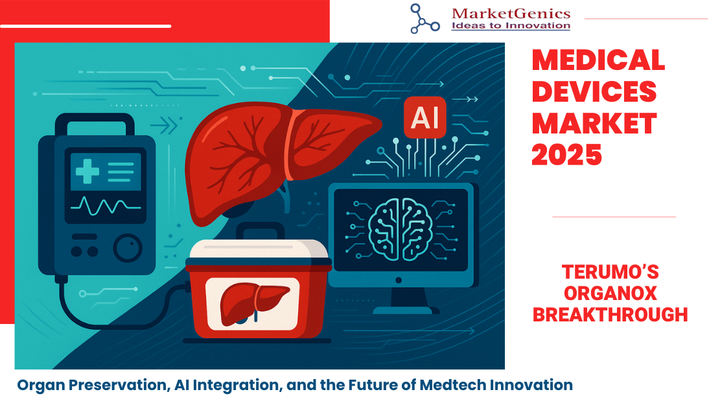
Medical Devices Market 2025 | What Terumo’s $1.5B OrganOx Deal Really Means
Livers, Tech, and the Next Phase of Medtech
Terumo just made a move that’s going to turn heads in the medical devices market. The Japanese giant bought OrganOx, a UK startup specializing in liver transplant technology, for $1.5 billion. That’s not small change—and it’s not just about owning a company. This is Terumo stepping firmly into organ preservation, a segment that’s quietly shaping the future of the medical devices market.
Here’s the kicker: OrganOx isn’t some untested gadget shop. Their Metra system uses normothermic machine perfusion (NMP), keeping donor livers alive longer and giving surgeons a way to assess organ function in real time. Over 6,000 liver transplants have already relied on this tech—and it’s cleared regulatory hurdles in the U.S., EU, U.K., Canada, and Australia. For Terumo, that’s instant credibility in a high-stakes market.
Why This Matters
This isn’t just a “Terumo buys a startup” story. It’s a snapshot of where the medical devices market is heading.
- Revenue today vs. potential tomorrow: Sure, OrganOx’s revenue is modest compared to the price tag. But the value here isn’t in last year’s numbers—it’s in the market potential. Organ preservation devices are high-margin, recurring-use products, and the segment is set to grow fast as transplant demand rises globally.
- Shifting tech priorities: Terumo’s traditional devices—catheters, infusion systems, and such—are low-risk, low-growth staples. OrganOx gives them a tech-driven, outcome-focused portfolio. Across medtech, the lesson is clear: the future isn’t in selling “more of the same,” it’s in devices that meaningfully improve patient outcomes.
- Global strategy counts: The acquisition also comes with a UK R&D hub and regulatory approvals that cover multiple regions. In other words, Terumo isn’t just buying tech—they’re buying a springboard to global scale, which is increasingly what matters in the medical devices market.
The Bigger Picture | Organs as Platforms
It may sound strange, but think of this like connected devices in other industries. The organ isn’t just something to transplant—it’s now part of a data-rich ecosystem. NMP devices monitor organ function, extend viability, and feed surgeons actionable insights. Companies that treat organs as smart, connected assets are the ones that will dominate.
So, in the medical devices world, the real question isn’t “who makes the liver machine?” It’s “who can turn these devices into platforms that integrate data, AI, and workflow?”
Takeaways for the Medical Devices Market in 2025
-
High-tech, high-value wins: Basic, low-margin devices are losing attention. Investors and acquirers are chasing transformative, clinically validated tech.
- M&A is accelerating: Expect more deals like Terumo–OrganOx, particularly in transplant and other niche areas.
- Beyond the liver: Kidneys, hearts, and other organs will follow—there’s a pipeline of opportunity.
- Collaboration matters: University spinouts and academic partnerships are increasingly where innovation comes from.
- Infrastructure is key: IP alone isn’t enough. Global distribution, regulatory reach, and production networks matter as much as the device itself.
The Reality Check
Terumo’s deal is bold, yes, but it’s also strategic. The winners won’t just make devices—they’ll turn them into intelligent, integrated clinical platforms. Data, outcomes, and predictive analytics will become as important as the hardware.
Investors might see headlines about big-ticket acquisitions and think “expensive,” but the underlying market story is intact: organ preservation is emerging as a high-growth, high-value segment within the medical devices market.
What’s Next in Medical Devices Market
-
More acquisitions of startups and spinouts.
- Multi-organ preservation devices gaining traction.
- AI, IoT, and predictive analytics becoming standard in device platforms.
- Western companies focusing on high-margin markets while emerging markets see new entrants.
- Data and outcomes becoming the real differentiators.
The headline says $1.5B. The real story? Organ preservation is no longer niche. It’s shaping the medical devices market’s future—high-value, tech-driven, and outcome-focused.
Stay Ahead with MarketGenics
At MarketGenics, we turn medtech deals into actionable insights. From organ preservation to broader medical devices trends, our research helps businesses anticipate growth, identify opportunities, and navigate a rapidly evolving market.
For tailored intelligence or consulting support, reach out.
Follow MarketGenics on LinkedIn for the latest analysis and insights.