Oral Biologics & Peptide Stabilization Market Size, Share & Trends Analysis Report by Product Type (Oral Insulin, Oral Vaccines, Oral Peptide Hormones, Oral Monoclonal Antibodies, Oral Enzymes, Other Biologics), Technology, Therapeutic Application, Molecule Size, Formulation Type, Distribution Channel, End-User, Stability Enhancement Method, and Geography (North America, Europe, Asia Pacific, Middle East, Africa, and South America) – Global Industry Data, Trends, and Forecasts, 2025–2035
|
|
|
Segmental Data Insights |
|
|
Demand Trends |
|
|
Competitive Landscape |
|
|
Strategic Development |
|
|
Future Outlook & Opportunities |
|
Oral Biologics & Peptide Stabilization Market Size, Share, and Growth
The global oral biologics & peptide stabilization market is experiencing robust growth, with its estimated value of USD 2.1 billion in the year 2025 and USD 5.8 billion by the period 2035, registering a CAGR of 10.7%, during the forecast period. The oral biologics and peptide stabilization market is growing as more people are using oral biologics in chronic and metabolic illnesses. The introduction of new technologies in the field of formulations like nano-encapsulation and enteric coatings is enhancing stability and absorption. Strategic alliances, research and development and biotech dealings are hastening development and commercialization. Positive regulatory backing and patient-centric innovations are also contributing to the adoption of the global market.

Dr. Jennifer Bath, CEO of ImmunoPrecise Antibodies, said: “This is not a one-off success. We’ve demonstrated a scalable, first-principles mechanism to design potent, stable, and biologically active peptide therapeutics. HYFT-guided design unlocks repeatable workflows for other validated targets—whether in cardiometabolic disease, oncology, or infectious disease. It represents a foundational shift in how therapeutics are discovered. The same LENSai-driven approach has already transformed our vaccine and antibody discovery programs, and we are now applying that rinse-and-repeat methodology to metabolic diseases—starting with GLP-1.
The increased adoption of sophisticated formulation technology, AI-driven modeling, and molecular stabilization methods are becoming a significant force in the oral biologics and peptide stabilization market. The technologies can be used to enhance bioavailability, exact dosing, and gastrointestinal protectability of peptide- or protein-based therapeutics. For instance, in March 2025, Arecor Therapeutics plc signed a formulation development agreement with a clinical-stage biopharmaceutical firm to use Arestat platform to formulate next-generation stabilized peptide formulations. This partnership is aimed at the development of traditionally injectable peptides into effective oral solutions with enhanced stability and absorption characteristics. These developments are causing a paradigm shift in the delivery of peptides to enhance therapeutic convenience, accessibility by more patients, and facilitate the overall commercialization of oral biologic to drugs worldwide.
The use of predictive modeling based on AI, computational drug design, and digital formulation optimization is changing the development of peptides. For instance, in July 2025, Hybio Pharmaceutical collaborated with iCarbonX Intelligent Peptide to utilize AI-based platforms to conjugate peptides with drugs, with Hybio assisting in formulation, optimization, and large-scale manufacturing. This partnership spurred the creation of stable orally deliverable peptides, and it serves as evidence of AI accelerating innovation and feasibility in making injectable biologics oral.
Additionally, the growing investment in patient-centered, non-invasive therapy, and the partnership of pharma and biotech firms is driving the speed of market expansion. Nanoencapsulation, lipid nanoparticles, and mucoadhesive systems development are innovative processes that promote scalable production, effective delivery, and successful treatment in the long term, promoting oral biologics as the next stage of therapeutic evolution
Oral Biologics and Peptide Stabilization Market Dynamics and Trends

Driver: Rising Demand for Patient-Friendly and Non-Invasive Drug Delivery Options
- The growing preference across the globe towards non-invasive and convenient processes of drug administration is also a major driver in oral biologics and peptide stabilization market. Oral dosage forms are replacing injectable therapy in more and more patients with chronic conditions, including diabetes, obesity, and autoimmune disorders. This change is driven by the need to have better comfort, compliance, and adherence to treatment in long-term therapeutic regs.
- Pharmaceutical and biotech firms are stepping up efforts to develop improved oral delivery systems that will keep biologics and peptides intact against enzyme degradation in the gastrointestinal tract. These new advances combine nano encapsulation, lipid carriers, and permeability enhancers in order to enhance stability and absorption. For instance, in 2025, Rani Therapeutics reported the progress of its RaniPill robotic capsule technology to allow the targeted delivery of biologics to the intestines to avoid the reliance on injections.
- Such developments allow improving patient accessibility, improve disease management, and uphold the efficiency of the healthcare system, making oral biologics one of the primary contributors to the next-generation evolution of drug delivery. Such a tendency enhances commercial viability through better patient retention, as well as expansion of the therapeutic coverage of global healthcare markets.
Restraint: Bioavailability Limitations Require Higher Doses and Complex Formulations
- The oral biologics and peptide stabilization market remains limited by the low bioavailability of peptide molecules in an oral delivery method. Such biologics are extremely vulnerable to destruction by gastric enzymes and adverse pH environments and induce less therapeutic effect and require specialized delivery strategies.
- To overcome these obstacles, programmers must develop advanced formulations based on enzyme inhibitors, mucoadhesive carriers and nanoencapsulation technology. Although these methods improve absorption and protection, they are highly complex in terms of R&D, costly, and development time.
- Furthermore, increased dose demands can pose a problem with regard to stability, patient adherence, and safety. These manufacturing and scientific challenges limit commercial scalability, and delay the overall shift of injectable to oral biologic therapies across major areas of medicine.
Opportunity: Peptide Drug Pipeline Expansion Creates Growing Addressable Market
- The emergent opportunities in oral peptide therapeutics are associated with the rapid increase in peptide drug development pipelines and ongoing product innovation in the area of oral delivery. Drug developers are now developing oral formulations at an early discovery phase to boost the stability of peptides and enhance absorption and patient friendly alternatives to injectable biologics.
- Innovation in peptide-based therapy is increasing at a rapid pace due to the emergence of strategic partnerships between pharmaceutical companies, CDMOs, and research institutions. These collaborations are aimed at uniting formulation science, manufacturing potential, and clinical skills to build development pipelines and increase market accessibility.
- The partnerships are enabled by the growing interest in combination peptides and advanced formulation platforms that will lead to the availability of next-generation oral biologics in the market. For instance, in March 2025, CordenPharma collaborated with Viking Therapeutics to develop and provide the GLP-1/GIP co-agonist candidate VK2735, in injectable formulation and in oral formulation.
- Growing oral peptide programs against obesity, diabetes, and chronic diseases provide new growth strategies through enhancement of bioavailability, adherence to treatment and accessibility. These developments make oral biologics one of the frontiers of personalized and sustainable peptide therapeutics in the world.
Key Trend: Next-Generation Delivery Technologies Improve Bioavailability and Reduce Complexity
- The oral biologics/peptide stabilization market is shifting towards advanced systems of oral delivery, including nanoformulations, permeation enhancers, and mucoadhesive carriers. These technologies enhance the stability of peptides, enhance bioavailability, and reduce the need of complex injections.
- Pharmaceutical companies are now embracing next generation encapsulation and oral formulation platforms to help protect peptides against enzyme degradation and increase their absorption at the intestine. For instance, in 2025, Lonza introduced an oral biologic therapy delivery service employing its Capsugel Enprotect technology, which allows delivering oral peptides in a more effective way.
- Moreover, AI-based peptide stability forecasting, novel excipients, and oral drug delivery gadgets make integration and personalization of formulations, efficiency in operations, and convenience to the patient. Such patterns encourage a wider use of the oral biologics in the treatment of chronic diseases, metabolic conditions, and immunotherapies.
- Strategic alliances and research associations between biotech companies, CDMOs and academic institutions are increasing the rate of new oral peptide therapy development, allowing new therapies to reach the market more swiftly, deliver technology breakthroughs and reach more patients.
Oral-Biologics-&-Peptide-Stabilization-Market Analysis and Segmental Data

Diabetes Management Dominate Global Oral Biologics & Peptide Stabilization Market
- The diabetes management segment leads the oral biologics and peptide stabilization market due to increasing prevalence of type 2 diabetes, increasing use of oral peptide based therapy and heightened pressure on patient friendly therapy that enhances glycemic control and compliance. Oral GLP-1 receptor agonists, stabilized insulin formulations, and advanced peptide delivery systems are valuable products in improving the treatment outcomes and customization of care.
- Technological innovations are enhancing precision of treatment and its effectiveness. The development of enzyme-resistant stabilization of peptides, the use of nanocarriers to deliver therapeutic drugs, and AI-assisted dosing algorithms help clinicians to maximize treatment reactions, enhance bioavailability, and make specific changes in therapy. Digital integration enables the constant monitoring of glucose levels and a patient-specific change of regimen, which increases clinical efficacy.
- Approved therapy expansion and commercial launches are expanding patient access and commercial penetration. For instance, in September 2025, Novo Nordisk was granted EMA approval of oral semaglutide, a peptide-based GLP-1 therapy of type 2 diabetes. The achievement expands access to patients, aids in territorial growth, and strengthens the position of the diabetes treatment as a major segment of the global oral biologics and peptide stabilization market.
North America Leads Global Oral Biologics & Peptide Stabilization Market Demand
- North America is the most competitive in the oral biologics and peptide stabilization market because of the early acceptance of the advanced oral biologic formulations, AI-based peptide design systems, and robust adoption of digital health technologies. High awareness of chronic diseases, patient preference of non-invasive therapies, and the need to develop individual approaches to treatment supports market growth.
- The area has an already established pharmaceutical ecosystem, consisting of developed CDMOs, biotech startups, and research institutions, which promotes faster clinical development and adoption of new oral peptide treatments. For instance, in May 2025, Asahi Kasei Bioprocess America collaborated with PeptiSystems to streamline next-generation peptide-synthesizing platforms. The partnership also improves the stability, scalability and cost-effectiveness of oral peptide formulations, and demonstrates the leadership of the North American in developing oral biologics technologies.
- North America dominance is further enhanced by strong government support, good reimbursement policies and high investment in research and development. Together with a sophisticated manufacturing network, digital innovations, and proactive biotech partnerships, it remains a hub of international investment in the oral biologics and peptide stabilization technologies.
Oral-Biologics-&-Peptide-Stabilization-Market Ecosystem
The global oral biologics and peptide stabilization market is moderately fragmented with different levels of competition with respect to the maturity of the delivery platform and peptide therapeutic portfolio. The Tier 1 companies such as Enteris BioPharma, Inc. and Emisphere Technologies, Inc. are at the forefront with established delivery platforms, proven technologies and commercialized products. Tier 2 companies, including Oramed Pharmaceuticals, Inc., Rani Therapeutics Holdings, Inc., and Diasome Pharmaceuticals, Inc. are involved in new oral delivery technology and peptide development in an early-to-mid-stage clinical validation program.
The degree of buyer concentration is medium with large pharmaceutical companies influencing the platform licensing and with patients affecting the adoption of commercialized therapies. Reliance on specific excipients and permeation enhancers among suppliers is also quite high, which predisposes to vulnerability in the supply chain. There is a high demand of intellectual property protection and clinical validation, which create switching costs and competitive moats of companies that have established oral biologics platforms.

Recent Development and Strategic Overview:
- In August 2025, BioMed X and Novo Nordisk announced a partnership in the oral delivery of peptide drugs. The project aims at elongating the intestinal retention with an aim to enhance peptide absorption and bioavailability. The study will be conducted in the Heidelberg branch of BioMed X with the help of advanced formulation technologies. The project will develop injectable peptides into oral biologics that are patient friendly.
- In September 2024, Vivtex Corporation signed a research deal with Equillium, Inc. to use GI‑ORIS technology of Vivtex to create a GI-targeted oral dosage of EQ302, a first-in-class bi-specific peptide inhibitor of IL-15 and IL-21.
Report Scope
|
Detail |
|
|
Market Size in 2025 |
USD 2.1 Bn |
|
Market Forecast Value in 2035 |
USD 5.8 Bn |
|
Growth Rate (CAGR) |
10.7% |
|
Forecast Period |
2025 – 2035 |
|
Historical Data Available for |
2021 – 2024 |
|
Market Size Units |
US$ Billion for Value
|
|
Report Format |
Electronic (PDF) + Excel |
|
North America |
Europe |
Asia Pacific |
Middle East |
Africa |
South America |
|
|
|
|
|
|
|
Companies Covered |
|||||
|
|
|
|
|
|
Oral Biologics & Peptide Stabilization Market Segmentation and Highlights
|
Segment |
Sub-segment |
|
Oral Biologics & Peptide Stabilization Market, By Product Type |
|
|
Oral Biologics & Peptide Stabilization Market, By Technology |
|
|
Oral Biologics & Peptide Stabilization Market, By Therapeutic Application |
|
|
Oral Biologics & Peptide Stabilization Market, By Molecule Size |
|
|
Oral Biologics & Peptide Stabilization Market, By Formulation Type |
|
|
Oral Biologics & Peptide Stabilization Market, By Distribution Channel |
|
|
Oral Biologics & Peptide Stabilization Market, By End-User |
|
|
Oral Biologics & Peptide Stabilization Market, By Stability Enhancement Method |
|
Frequently Asked Questions
Table of Contents
- 1. Research Methodology and Assumptions
- 1.1. Definitions
- 1.2. Research Design and Approach
- 1.3. Data Collection Methods
- 1.4. Base Estimates and Calculations
- 1.5. Forecasting Models
- 1.5.1. Key Forecast Factors & Impact Analysis
- 1.6. Secondary Research
- 1.6.1. Open Sources
- 1.6.2. Paid Databases
- 1.6.3. Associations
- 1.7. Primary Research
- 1.7.1. Primary Sources
- 1.7.2. Primary Interviews with Stakeholders across Ecosystem
- 2. Executive Summary
- 2.1. Global Oral Biologics & Peptide Stabilization Market Outlook
- 2.1.1. Oral Biologics & Peptide Stabilization Market Size (Value - US$ Bn), and Forecasts, 2021-2035
- 2.1.2. Compounded Annual Growth Rate Analysis
- 2.1.3. Growth Opportunity Analysis
- 2.1.4. Segmental Share Analysis
- 2.1.5. Geographical Share Analysis
- 2.2. Market Analysis and Facts
- 2.3. Supply-Demand Analysis
- 2.4. Competitive Benchmarking
- 2.5. Go-to- Market Strategy
- 2.5.1. Customer/ End-use Industry Assessment
- 2.5.2. Growth Opportunity Data, 2025-2035
- 2.5.2.1. Regional Data
- 2.5.2.2. Country Data
- 2.5.2.3. Segmental Data
- 2.5.3. Identification of Potential Market Spaces
- 2.5.4. GAP Analysis
- 2.5.5. Potential Attractive Price Points
- 2.5.6. Prevailing Market Risks & Challenges
- 2.5.7. Preferred Sales & Marketing Strategies
- 2.5.8. Key Recommendations and Analysis
- 2.5.9. A Way Forward
- 2.1. Global Oral Biologics & Peptide Stabilization Market Outlook
- 3. Industry Data and Premium Insights
- 3.1. Global Healthcare Industry Overview, 2025
- 3.1.1. Healthcare Industry Ecosystem Analysis
- 3.1.2. Key Trends for Healthcare Industry
- 3.1.3. Regional Distribution for Healthcare Industry
- 3.2. Supplier Customer Data
- 3.3. Technology Roadmap and Developments
- 3.4. Trade Analysis
- 3.4.1. Import & Export Analysis, 2025
- 3.4.2. Top Importing Countries
- 3.4.3. Top Exporting Countries
- 3.5. Trump Tariff Impact Analysis
- 3.5.1. Manufacturer
- 3.5.1.1. Based on the component & Raw material
- 3.5.2. Supply Chain
- 3.5.3. End Consumer
- 3.5.1. Manufacturer
- 3.6. Raw Material Analysis
- 3.1. Global Healthcare Industry Overview, 2025
- 4. Market Overview
- 4.1. Market Dynamics
- 4.1.1. Drivers
- 4.1.1.1. Rising prevalence of chronic diseases such as diabetes and metabolic disorders increasing demand for oral biologics.
- 4.1.1.2. Advancements in peptide stabilization and oral delivery technologies improving bioavailability and patient compliance.
- 4.1.1.3. Growing R&D investments and strategic collaborations by pharmaceutical and biotech companies to develop novel oral peptide therapies.
- 4.1.2. Restraints
- 4.1.2.1. High development and manufacturing costs of stable oral peptide formulations.
- 4.1.2.2. Regulatory complexities and stringent approval requirements slowing market entry for new products.
- 4.1.1. Drivers
- 4.2. Key Trend Analysis
- 4.3. Regulatory Framework
- 4.3.1. Key Regulations, Norms, and Subsidies, by Key Countries
- 4.3.2. Tariffs and Standards
- 4.3.3. Impact Analysis of Regulations on the Market
- 4.4. Value Chain Analysis
- 4.4.1. Raw Material & Excipient Suppliers
- 4.4.2. Formulation & Manufacturing
- 4.4.3. Distribution & Logistics
- 4.4.4. End Users
- 4.5. Cost Structure Analysis
- 4.5.1. Parameter’s Share for Cost Associated
- 4.5.2. COGP vs COGS
- 4.5.3. Profit Margin Analysis
- 4.6. Pricing Analysis
- 4.6.1. Regional Pricing Analysis
- 4.6.2. Segmental Pricing Trends
- 4.6.3. Factors Influencing Pricing
- 4.7. Porter’s Five Forces Analysis
- 4.8. PESTEL Analysis
- 4.9. Global Oral Biologics & Peptide Stabilization Market Demand
- 4.9.1. Historical Market Size – Value (US$ Bn), 2020-2024
- 4.9.2. Current and Future Market Size - Value (US$ Bn), 2025–2035
- 4.9.2.1. Y-o-Y Growth Trends
- 4.9.2.2. Absolute $ Opportunity Assessment
- 4.1. Market Dynamics
- 5. Competition Landscape
- 5.1. Competition structure
- 5.1.1. Fragmented v/s consolidated
- 5.2. Company Share Analysis, 2025
- 5.2.1. Global Company Market Share
- 5.2.2. By Region
- 5.2.2.1. North America
- 5.2.2.2. Europe
- 5.2.2.3. Asia Pacific
- 5.2.2.4. Middle East
- 5.2.2.5. Africa
- 5.2.2.6. South America
- 5.3. Product Comparison Matrix
- 5.3.1. Specifications
- 5.3.2. Market Positioning
- 5.3.3. Pricing
- 5.1. Competition structure
- 6. Global Oral Biologics & Peptide Stabilization Market Analysis, by Product Type
- 6.1. Key Segment Analysis
- 6.2. Oral Biologics & Peptide Stabilization Market Size (Value - US$ Bn), Analysis, and Forecasts, by Product Type, 2021-2035
- 6.2.1. Oral Insulin
- 6.2.2. Oral Vaccines
- 6.2.3. Oral Peptide Hormones
- 6.2.3.1. Growth Hormones
- 6.2.3.2. Calcitonin
- 6.2.3.3. PTH (Parathyroid Hormone)
- 6.2.3.4. Others
- 6.2.4. Oral Monoclonal Antibodies
- 6.2.5. Oral Enzymes
- 6.2.6. Other Biologics
- 7. Global Oral Biologics & Peptide Stabilization Market Analysis, by Technology
- 7.1. Key Segment Analysis
- 7.2. Oral Biologics & Peptide Stabilization Market Size (Value - US$ Bn), Analysis, and Forecasts, by Technology, 2021-2035
- 7.2.1. Encapsulation Technologies
- 7.2.1.1. Microencapsulation
- 7.2.1.2. Nanoencapsulation
- 7.2.1.3. Liposomal Encapsulation
- 7.2.1.4. Others
- 7.2.2. Permeation Enhancers
- 7.2.2.1. Chemical Enhancers
- 7.2.2.2. Enzyme Inhibitors
- 7.2.3. Mucoadhesive Systems
- 7.2.4. Enteric Coating Technologies
- 7.2.5. Carrier-Based Systems
- 7.2.5.1. Polymer-Based Carriers
- 7.2.5.2. Lipid-Based Carriers
- 7.2.6. Protease Inhibitor Technologies
- 7.2.7. Self-Emulsifying Drug Delivery Systems (SEDDS)
- 7.2.1. Encapsulation Technologies
- 8. Global Oral Biologics & Peptide Stabilization Market Analysis, by Therapeutic Application
- 8.1. Key Segment Analysis
- 8.2. Oral Biologics & Peptide Stabilization Market Size (Value - US$ Bn), Analysis, and Forecasts, by Application Area, 2021-2035
- 8.2.1. Diabetes Management
- 8.2.2. Oncology
- 8.2.3. Cardiovascular Diseases
- 8.2.4. Gastrointestinal Disorders
- 8.2.5. Autoimmune Diseases
- 8.2.6. Osteoporosis
- 8.2.7. Growth Disorders
- 8.2.8. Infectious Diseases
- 8.2.9. Metabolic Disorders
- 8.2.10. Others
- 9. Global Oral Biologics & Peptide Stabilization Market Analysis, by Molecule Size
- 9.1. Key Segment Analysis
- 9.2. Oral Biologics & Peptide Stabilization Market Size (Value - US$ Bn), Analysis, and Forecasts, by Distribution Channel, 2021-2035
- 9.2.1. Small Peptides (<10 amino acids)
- 9.2.2. Medium Peptides (10-50 amino acids)
- 9.2.3. Large Peptides (>50 amino acids)
- 9.2.4. Proteins
- 10. Global Oral Biologics & Peptide Stabilization Market Analysis, by Formulation Type
- 10.1. Key Segment Analysis
- 10.2. Oral Biologics & Peptide Stabilization Market Size (Value - US$ Bn), Analysis, and Forecasts, by Age Group, 2021-2035
- 10.2.1. Tablets
- 10.2.1.1. Immediate Release
- 10.2.1.2. Sustained Release
- 10.2.1.3. Delayed Release
- 10.2.2. Capsules
- 10.2.2.1. Hard Gelatin Capsules
- 10.2.2.2. Soft Gelatin Capsules
- 10.2.2.3. HPMC Capsules
- 10.2.3. Powders
- 10.2.4. Oral Films/Strips
- 10.2.5. Oral Liquids/Solutions
- 10.2.1. Tablets
- 11. Global Oral Biologics & Peptide Stabilization Market Analysis, by Distribution Channel
- 11.1. Key Segment Analysis
- 11.2. Oral Biologics & Peptide Stabilization Market Size (Value - US$ Bn), Analysis, and Forecasts, by Gender, 2021-2035
- 11.2.1. Retail Pharmacies
- 11.2.2. Online Pharmacies
- 11.2.3. Specialty Clinics
- 11.2.4. Direct-to-Patient Distribution
- 12. Global Oral Biologics & Peptide Stabilization Market Analysis, by End-User
- 12.1. Key Segment Analysis
- 12.2. Oral Biologics & Peptide Stabilization Market Size (Value - US$ Bn), Analysis, and Forecasts, by Service Model, 2021-2035
- 12.2.1. Hospitals
- 12.2.1.1. General Hospitals
- 12.2.1.2. Specialty Hospitals
- 12.2.2. Ambulatory Surgical Centers
- 12.2.3. Homecare Settings
- 12.2.4. Specialty Clinics
- 12.2.4.1. Diabetes Clinics
- 12.2.4.2. Oncology Clinics
- 12.2.4.3. Endocrinology Clinics
- 12.2.4.4. Others
- 12.2.5. Research Institutions
- 12.2.1. Hospitals
- 13. Global Oral Biologics & Peptide Stabilization Market Analysis, by Stability Enhancement Method
- 13.1. Key Segment Analysis
- 13.2. Oral Biologics & Peptide Stabilization Market Size (Value - US$ Bn), Analysis, and Forecasts, by End-users, 2021-2035
- 13.2.1. Chemical Modification
- 13.2.1.1. PEGylation
- 13.2.1.2. Glycosylation
- 13.2.1.3. Acylation
- 13.2.1.4. Others
- 13.2.2. Physical Stabilization
- 13.2.3. pH Modification
- 13.2.4. Ionic Strength Adjustment
- 13.2.5. Co-Formulation with Excipients
- 13.2.1. Chemical Modification
- 14. Global Oral Biologics & Peptide Stabilization Market Analysis and Forecasts, by Region
- 14.1. Key Findings
- 14.2. Oral Biologics & Peptide Stabilization Market Size (Value - US$ Bn), Analysis, and Forecasts, by Region, 2021-2035
- 14.2.1. North America
- 14.2.2. Europe
- 14.2.3. Asia Pacific
- 14.2.4. Middle East
- 14.2.5. Africa
- 14.2.6. South America
- 15. North America Oral Biologics & Peptide Stabilization Market Analysis
- 15.1. Key Segment Analysis
- 15.2. Regional Snapshot
- 15.3. North America Oral Biologics & Peptide Stabilization Market Size (Value - US$ Bn), Analysis, and Forecasts, 2021-2035
- 15.3.1. Product Type
- 15.3.2. Technology
- 15.3.3. Therapeutic Application
- 15.3.4. Molecule Size
- 15.3.5. Formulation Type
- 15.3.6. Distribution Channel
- 15.3.7. End-User
- 15.3.8. Stability Enhancement Method
- 15.3.9. Country
- 15.3.9.1. USA
- 15.3.9.2. Canada
- 15.3.9.3. Mexico
- 15.4. USA Oral Biologics & Peptide Stabilization Market
- 15.4.1. Country Segmental Analysis
- 15.4.2. Product Type
- 15.4.3. Technology
- 15.4.4. Therapeutic Application
- 15.4.5. Molecule Size
- 15.4.6. Formulation Type
- 15.4.7. Distribution Channel
- 15.4.8. End-User
- 15.4.9. Stability Enhancement Method
- 15.5. Canada Oral Biologics & Peptide Stabilization Market
- 15.5.1. Country Segmental Analysis
- 15.5.2. Product Type
- 15.5.3. Technology
- 15.5.4. Therapeutic Application
- 15.5.5. Molecule Size
- 15.5.6. Formulation Type
- 15.5.7. Distribution Channel
- 15.5.8. End-User
- 15.5.9. Stability Enhancement Method
- 15.6. Mexico Oral Biologics & Peptide Stabilization Market
- 15.6.1. Country Segmental Analysis
- 15.6.2. Product Type
- 15.6.3. Technology
- 15.6.4. Therapeutic Application
- 15.6.5. Molecule Size
- 15.6.6. Formulation Type
- 15.6.7. Distribution Channel
- 15.6.8. End-User
- 15.6.9. Stability Enhancement Method
- 16. Europe Oral Biologics & Peptide Stabilization Market Analysis
- 16.1. Key Segment Analysis
- 16.2. Regional Snapshot
- 16.3. Europe Oral Biologics & Peptide Stabilization Market Size (Value - US$ Bn), Analysis, and Forecasts, 2021-2035
- 16.3.1. Product Type
- 16.3.2. Technology
- 16.3.3. Therapeutic Application
- 16.3.4. Molecule Size
- 16.3.5. Formulation Type
- 16.3.6. Distribution Channel
- 16.3.7. End-User
- 16.3.8. Stability Enhancement Method
- 16.3.9. Country
- 16.3.9.1. Germany
- 16.3.9.2. United Kingdom
- 16.3.9.3. France
- 16.3.9.4. Italy
- 16.3.9.5. Spain
- 16.3.9.6. Netherlands
- 16.3.9.7. Nordic Countries
- 16.3.9.8. Poland
- 16.3.9.9. Russia & CIS
- 16.3.9.10. Rest of Europe
- 16.4. Germany Oral Biologics & Peptide Stabilization Market
- 16.4.1. Country Segmental Analysis
- 16.4.2. Product Type
- 16.4.3. Technology
- 16.4.4. Therapeutic Application
- 16.4.5. Molecule Size
- 16.4.6. Formulation Type
- 16.4.7. Distribution Channel
- 16.4.8. End-User
- 16.4.9. Stability Enhancement Method
- 16.5. United Kingdom Oral Biologics & Peptide Stabilization Market
- 16.5.1. Country Segmental Analysis
- 16.5.2. Product Type
- 16.5.3. Technology
- 16.5.4. Therapeutic Application
- 16.5.5. Molecule Size
- 16.5.6. Formulation Type
- 16.5.7. Distribution Channel
- 16.5.8. End-User
- 16.5.9. Stability Enhancement Method
- 16.6. France Oral Biologics & Peptide Stabilization Market
- 16.6.1. Country Segmental Analysis
- 16.6.2. Product Type
- 16.6.3. Technology
- 16.6.4. Therapeutic Application
- 16.6.5. Molecule Size
- 16.6.6. Formulation Type
- 16.6.7. Distribution Channel
- 16.6.8. End-User
- 16.6.9. Stability Enhancement Method
- 16.7. Italy Oral Biologics & Peptide Stabilization Market
- 16.7.1. Country Segmental Analysis
- 16.7.2. Product Type
- 16.7.3. Technology
- 16.7.4. Therapeutic Application
- 16.7.5. Molecule Size
- 16.7.6. Formulation Type
- 16.7.7. Distribution Channel
- 16.7.8. End-User
- 16.7.9. Stability Enhancement Method
- 16.8. Spain Oral Biologics & Peptide Stabilization Market
- 16.8.1. Country Segmental Analysis
- 16.8.2. Product Type
- 16.8.3. Technology
- 16.8.4. Therapeutic Application
- 16.8.5. Molecule Size
- 16.8.6. Formulation Type
- 16.8.7. Distribution Channel
- 16.8.8. End-User
- 16.8.9. Stability Enhancement Method
- 16.9. Netherlands Oral Biologics & Peptide Stabilization Market
- 16.9.1. Country Segmental Analysis
- 16.9.2. Product Type
- 16.9.3. Technology
- 16.9.4. Therapeutic Application
- 16.9.5. Molecule Size
- 16.9.6. Formulation Type
- 16.9.7. Distribution Channel
- 16.9.8. End-User
- 16.9.9. Stability Enhancement Method
- 16.10. Nordic Countries Oral Biologics & Peptide Stabilization Market
- 16.10.1. Country Segmental Analysis
- 16.10.2. Product Type
- 16.10.3. Technology
- 16.10.4. Therapeutic Application
- 16.10.5. Molecule Size
- 16.10.6. Formulation Type
- 16.10.7. Distribution Channel
- 16.10.8. End-User
- 16.10.9. Stability Enhancement Method
- 16.11. Poland Oral Biologics & Peptide Stabilization Market
- 16.11.1. Country Segmental Analysis
- 16.11.2. Product Type
- 16.11.3. Technology
- 16.11.4. Therapeutic Application
- 16.11.5. Molecule Size
- 16.11.6. Formulation Type
- 16.11.7. Distribution Channel
- 16.11.8. End-User
- 16.11.9. Stability Enhancement Method
- 16.12. Russia & CIS Oral Biologics & Peptide Stabilization Market
- 16.12.1. Country Segmental Analysis
- 16.12.2. Product Type
- 16.12.3. Technology
- 16.12.4. Therapeutic Application
- 16.12.5. Molecule Size
- 16.12.6. Formulation Type
- 16.12.7. Distribution Channel
- 16.12.8. End-User
- 16.12.9. Stability Enhancement Method
- 16.13. Rest of Europe Oral Biologics & Peptide Stabilization Market
- 16.13.1. Country Segmental Analysis
- 16.13.2. Product Type
- 16.13.3. Technology
- 16.13.4. Therapeutic Application
- 16.13.5. Molecule Size
- 16.13.6. Formulation Type
- 16.13.7. Distribution Channel
- 16.13.8. End-User
- 16.13.9. Stability Enhancement Method
- 17. Asia Pacific Oral Biologics & Peptide Stabilization Market Analysis
- 17.1. Key Segment Analysis
- 17.2. Regional Snapshot
- 17.3. East Asia Oral Biologics & Peptide Stabilization Market Size (Value - US$ Bn), Analysis, and Forecasts, 2021-2035
- 17.3.1. Product Type
- 17.3.2. Technology
- 17.3.3. Therapeutic Application
- 17.3.4. Molecule Size
- 17.3.5. Formulation Type
- 17.3.6. Distribution Channel
- 17.3.7. End-User
- 17.3.8. Stability Enhancement Method
- 17.3.9. Country
- 17.3.9.1. China
- 17.3.9.2. India
- 17.3.9.3. Japan
- 17.3.9.4. South Korea
- 17.3.9.5. Australia and New Zealand
- 17.3.9.6. Indonesia
- 17.3.9.7. Malaysia
- 17.3.9.8. Thailand
- 17.3.9.9. Vietnam
- 17.3.9.10. Rest of Asia Pacific
- 17.4. China Oral Biologics & Peptide Stabilization Market
- 17.4.1. Country Segmental Analysis
- 17.4.2. Product Type
- 17.4.3. Technology
- 17.4.4. Therapeutic Application
- 17.4.5. Molecule Size
- 17.4.6. Formulation Type
- 17.4.7. Distribution Channel
- 17.4.8. End-User
- 17.4.9. Stability Enhancement Method
- 17.5. India Oral Biologics & Peptide Stabilization Market
- 17.5.1. Country Segmental Analysis
- 17.5.2. Product Type
- 17.5.3. Technology
- 17.5.4. Therapeutic Application
- 17.5.5. Molecule Size
- 17.5.6. Formulation Type
- 17.5.7. Distribution Channel
- 17.5.8. End-User
- 17.5.9. Stability Enhancement Method
- 17.6. Japan Oral Biologics & Peptide Stabilization Market
- 17.6.1. Country Segmental Analysis
- 17.6.2. Product Type
- 17.6.3. Technology
- 17.6.4. Therapeutic Application
- 17.6.5. Molecule Size
- 17.6.6. Formulation Type
- 17.6.7. Distribution Channel
- 17.6.8. End-User
- 17.6.9. Stability Enhancement Method
- 17.7. South Korea Oral Biologics & Peptide Stabilization Market
- 17.7.1. Country Segmental Analysis
- 17.7.2. Product Type
- 17.7.3. Technology
- 17.7.4. Therapeutic Application
- 17.7.5. Molecule Size
- 17.7.6. Formulation Type
- 17.7.7. Distribution Channel
- 17.7.8. End-User
- 17.7.9. Stability Enhancement Method
- 17.8. Australia and New Zealand Oral Biologics & Peptide Stabilization Market
- 17.8.1. Country Segmental Analysis
- 17.8.2. Product Type
- 17.8.3. Technology
- 17.8.4. Therapeutic Application
- 17.8.5. Molecule Size
- 17.8.6. Formulation Type
- 17.8.7. Distribution Channel
- 17.8.8. End-User
- 17.8.9. Stability Enhancement Method
- 17.9. Indonesia Oral Biologics & Peptide Stabilization Market
- 17.9.1. Country Segmental Analysis
- 17.9.2. Product Type
- 17.9.3. Technology
- 17.9.4. Therapeutic Application
- 17.9.5. Molecule Size
- 17.9.6. Formulation Type
- 17.9.7. Distribution Channel
- 17.9.8. End-User
- 17.9.9. Stability Enhancement Method
- 17.10. Malaysia Oral Biologics & Peptide Stabilization Market
- 17.10.1. Country Segmental Analysis
- 17.10.2. Product Type
- 17.10.3. Technology
- 17.10.4. Therapeutic Application
- 17.10.5. Molecule Size
- 17.10.6. Formulation Type
- 17.10.7. Distribution Channel
- 17.10.8. End-User
- 17.10.9. Stability Enhancement Method
- 17.11. Thailand Oral Biologics & Peptide Stabilization Market
- 17.11.1. Country Segmental Analysis
- 17.11.2. Product Type
- 17.11.3. Technology
- 17.11.4. Therapeutic Application
- 17.11.5. Molecule Size
- 17.11.6. Formulation Type
- 17.11.7. Distribution Channel
- 17.11.8. End-User
- 17.11.9. Stability Enhancement Method
- 17.12. Vietnam Oral Biologics & Peptide Stabilization Market
- 17.12.1. Country Segmental Analysis
- 17.12.2. Product Type
- 17.12.3. Technology
- 17.12.4. Therapeutic Application
- 17.12.5. Molecule Size
- 17.12.6. Formulation Type
- 17.12.7. Distribution Channel
- 17.12.8. End-User
- 17.12.9. Stability Enhancement Method
- 17.13. Rest of Asia Pacific Oral Biologics & Peptide Stabilization Market
- 17.13.1. Country Segmental Analysis
- 17.13.2. Product Type
- 17.13.3. Technology
- 17.13.4. Therapeutic Application
- 17.13.5. Molecule Size
- 17.13.6. Formulation Type
- 17.13.7. Distribution Channel
- 17.13.8. End-User
- 17.13.9. Stability Enhancement Method
- 18. Middle East Oral Biologics & Peptide Stabilization Market Analysis
- 18.1. Key Segment Analysis
- 18.2. Regional Snapshot
- 18.3. Middle East Oral Biologics & Peptide Stabilization Market Size (Value - US$ Bn), Analysis, and Forecasts, 2021-2035
- 18.3.1. Product Type
- 18.3.2. Technology
- 18.3.3. Therapeutic Application
- 18.3.4. Molecule Size
- 18.3.5. Formulation Type
- 18.3.6. Distribution Channel
- 18.3.7. End-User
- 18.3.8. Stability Enhancement Method
- 18.3.9. Country
- 18.3.9.1. Turkey
- 18.3.9.2. UAE
- 18.3.9.3. Saudi Arabia
- 18.3.9.4. Israel
- 18.3.9.5. Rest of Middle East
- 18.4. Turkey Oral Biologics & Peptide Stabilization Market
- 18.4.1. Country Segmental Analysis
- 18.4.2. Product Type
- 18.4.3. Technology
- 18.4.4. Therapeutic Application
- 18.4.5. Molecule Size
- 18.4.6. Formulation Type
- 18.4.7. Distribution Channel
- 18.4.8. End-User
- 18.4.9. Stability Enhancement Method
- 18.5. UAE Oral Biologics & Peptide Stabilization Market
- 18.5.1. Country Segmental Analysis
- 18.5.2. Product Type
- 18.5.3. Technology
- 18.5.4. Therapeutic Application
- 18.5.5. Molecule Size
- 18.5.6. Formulation Type
- 18.5.7. Distribution Channel
- 18.5.8. End-User
- 18.5.9. Stability Enhancement Method
- 18.6. Saudi Arabia Oral Biologics & Peptide Stabilization Market
- 18.6.1. Country Segmental Analysis
- 18.6.2. Product Type
- 18.6.3. Technology
- 18.6.4. Therapeutic Application
- 18.6.5. Molecule Size
- 18.6.6. Formulation Type
- 18.6.7. Distribution Channel
- 18.6.8. End-User
- 18.6.9. Stability Enhancement Method
- 18.7. Israel Oral Biologics & Peptide Stabilization Market
- 18.7.1. Country Segmental Analysis
- 18.7.2. Product Type
- 18.7.3. Technology
- 18.7.4. Therapeutic Application
- 18.7.5. Molecule Size
- 18.7.6. Formulation Type
- 18.7.7. Distribution Channel
- 18.7.8. End-User
- 18.7.9. Stability Enhancement Method
- 18.8. Rest of Middle East Oral Biologics & Peptide Stabilization Market
- 18.8.1. Country Segmental Analysis
- 18.8.2. Product Type
- 18.8.3. Technology
- 18.8.4. Therapeutic Application
- 18.8.5. Molecule Size
- 18.8.6. Formulation Type
- 18.8.7. Distribution Channel
- 18.8.8. End-User
- 18.8.9. Stability Enhancement Method
- 19. Africa Oral Biologics & Peptide Stabilization Market Analysis
- 19.1. Key Segment Analysis
- 19.2. Regional Snapshot
- 19.3. Africa Oral Biologics & Peptide Stabilization Market Size (Value - US$ Bn), Analysis, and Forecasts, 2021-2035
- 19.3.1. Product Type
- 19.3.2. Technology
- 19.3.3. Therapeutic Application
- 19.3.4. Molecule Size
- 19.3.5. Formulation Type
- 19.3.6. Distribution Channel
- 19.3.7. End-User
- 19.3.8. Stability Enhancement Method
- 19.3.9. Country
- 19.3.9.1. South Africa
- 19.3.9.2. Egypt
- 19.3.9.3. Nigeria
- 19.3.9.4. Algeria
- 19.3.9.5. Rest of Africa
- 19.4. South Africa Oral Biologics & Peptide Stabilization Market
- 19.4.1. Country Segmental Analysis
- 19.4.2. Product Type
- 19.4.3. Technology
- 19.4.4. Therapeutic Application
- 19.4.5. Molecule Size
- 19.4.6. Formulation Type
- 19.4.7. Distribution Channel
- 19.4.8. End-User
- 19.4.9. Stability Enhancement Method
- 19.5. Egypt Oral Biologics & Peptide Stabilization Market
- 19.5.1. Country Segmental Analysis
- 19.5.2. Product Type
- 19.5.3. Technology
- 19.5.4. Therapeutic Application
- 19.5.5. Molecule Size
- 19.5.6. Formulation Type
- 19.5.7. Distribution Channel
- 19.5.8. End-User
- 19.5.9. Stability Enhancement Method
- 19.6. Nigeria Oral Biologics & Peptide Stabilization Market
- 19.6.1. Country Segmental Analysis
- 19.6.2. Product Type
- 19.6.3. Technology
- 19.6.4. Therapeutic Application
- 19.6.5. Molecule Size
- 19.6.6. Formulation Type
- 19.6.7. Distribution Channel
- 19.6.8. End-User
- 19.6.9. Stability Enhancement Method
- 19.7. Algeria Oral Biologics & Peptide Stabilization Market
- 19.7.1. Country Segmental Analysis
- 19.7.2. Product Type
- 19.7.3. Technology
- 19.7.4. Therapeutic Application
- 19.7.5. Molecule Size
- 19.7.6. Formulation Type
- 19.7.7. Distribution Channel
- 19.7.8. End-User
- 19.7.9. Stability Enhancement Method
- 19.8. Rest of Africa Oral Biologics & Peptide Stabilization Market
- 19.8.1. Country Segmental Analysis
- 19.8.2. Product Type
- 19.8.3. Technology
- 19.8.4. Therapeutic Application
- 19.8.5. Molecule Size
- 19.8.6. Formulation Type
- 19.8.7. Distribution Channel
- 19.8.8. End-User
- 19.8.9. Stability Enhancement Method
- 20. South America Oral Biologics & Peptide Stabilization Market Analysis
- 20.1. Key Segment Analysis
- 20.2. Regional Snapshot
- 20.3. Central and South Africa Oral Biologics & Peptide Stabilization Market Size (Value - US$ Bn), Analysis, and Forecasts, 2021-2035
- 20.3.1. Product Type
- 20.3.2. Technology
- 20.3.3. Therapeutic Application
- 20.3.4. Molecule Size
- 20.3.5. Formulation Type
- 20.3.6. Distribution Channel
- 20.3.7. End-User
- 20.3.8. Stability Enhancement Method
- 20.3.9. Country
- 20.3.9.1. Brazil
- 20.3.9.2. Argentina
- 20.3.9.3. Rest of South America
- 20.4. Brazil Oral Biologics & Peptide Stabilization Market
- 20.4.1. Country Segmental Analysis
- 20.4.2. Product Type
- 20.4.3. Technology
- 20.4.4. Therapeutic Application
- 20.4.5. Molecule Size
- 20.4.6. Formulation Type
- 20.4.7. Distribution Channel
- 20.4.8. End-User
- 20.4.9. Stability Enhancement Method
- 20.5. Argentina Oral Biologics & Peptide Stabilization Market
- 20.5.1. Country Segmental Analysis
- 20.5.2. Product Type
- 20.5.3. Technology
- 20.5.4. Therapeutic Application
- 20.5.5. Molecule Size
- 20.5.6. Formulation Type
- 20.5.7. Distribution Channel
- 20.5.8. End-User
- 20.5.9. Stability Enhancement Method
- 20.6. Rest of South America Oral Biologics & Peptide Stabilization Market
- 20.6.1. Country Segmental Analysis
- 20.6.2. Product Type
- 20.6.3. Technology
- 20.6.4. Therapeutic Application
- 20.6.5. Molecule Size
- 20.6.6. Formulation Type
- 20.6.7. Distribution Channel
- 20.6.8. End-User
- 20.6.9. Stability Enhancement Method
- 21. Key Players/ Company Profile
- 21.1. Alkahest, Inc.
- 21.1.1. Company Details/ Overview
- 21.1.2. Company Financials
- 21.1.3. Key Customers and Competitors
- 21.1.4. Business/ Industry Portfolio
- 21.1.5. Product Portfolio/ Specification Details
- 21.1.6. Pricing Data
- 21.1.7. Strategic Overview
- 21.1.8. Recent Developments
- 21.2. Aphios Corporation
- 21.3. Applied Molecular Transport Inc.
- 21.4. AstraZeneca PLC
- 21.5. Biocon Limited
- 21.6. Biomics Biotechnologies Co., Ltd.
- 21.7. Catalent, Inc.
- 21.8. Chiasma, Inc. (Amryt Pharma)
- 21.9. Diasome Pharmaceuticals, Inc.
- 21.10. Eli Lilly and Company
- 21.11. Emisphere Technologies, Inc.
- 21.12. Enteris BioPharma, Inc.
- 21.13. Generex Biotechnology Corporation
- 21.14. Novartis AG
- 21.15. Novo Nordisk A/S
- 21.16. Oramed Pharmaceuticals Inc.
- 21.17. Pfizer Inc.
- 21.18. Provention Bio, Inc.
- 21.19. Proxima Concepts
- 21.20. Rani Therapeutics Holdings, Inc.
- 21.21. Sanofi S.A.
- 21.22. Sigmoid Pharma Limited
- 21.23. Other Key Players
- 21.1. Alkahest, Inc.
Note* - This is just tentative list of players. While providing the report, we will cover more number of players based on their revenue and share for each geography
Research Design
Our research design integrates both demand-side and supply-side analysis through a balanced combination of primary and secondary research methodologies. By utilizing both bottom-up and top-down approaches alongside rigorous data triangulation methods, we deliver robust market intelligence that supports strategic decision-making.
MarketGenics' comprehensive research design framework ensures the delivery of accurate, reliable, and actionable market intelligence. Through the integration of multiple research approaches, rigorous validation processes, and expert analysis, we provide our clients with the insights needed to make informed strategic decisions and capitalize on market opportunities.
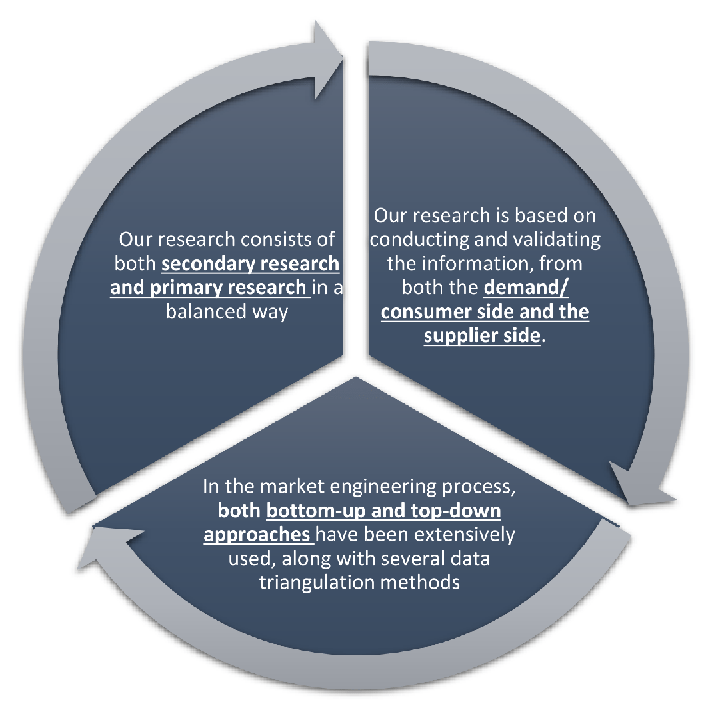
MarketGenics leverages a dedicated industry panel of experts and a comprehensive suite of paid databases to effectively collect, consolidate, and analyze market intelligence.
Our approach has consistently proven to be reliable and effective in generating accurate market insights, identifying key industry trends, and uncovering emerging business opportunities.
Through both primary and secondary research, we capture and analyze critical company-level data such as manufacturing footprints, including technical centers, R&D facilities, sales offices, and headquarters.
Our expert panel further enhances our ability to estimate market size for specific brands based on validated field-level intelligence.
Our data mining techniques incorporate both parametric and non-parametric methods, allowing for structured data collection, sorting, processing, and cleaning.
Demand projections are derived from large-scale data sets analyzed through proprietary algorithms, culminating in robust and reliable market sizing.
Research Approach
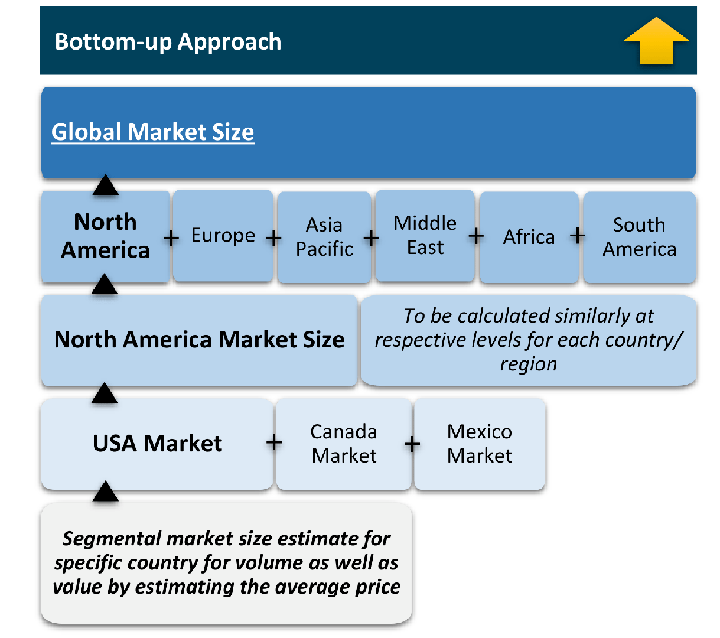
The bottom-up approach builds market estimates by starting with the smallest addressable market units and systematically aggregating them to create comprehensive market size projections.
This method begins with specific, granular data points and builds upward to create the complete market landscape.
Customer Analysis → Segmental Analysis → Geographical Analysis
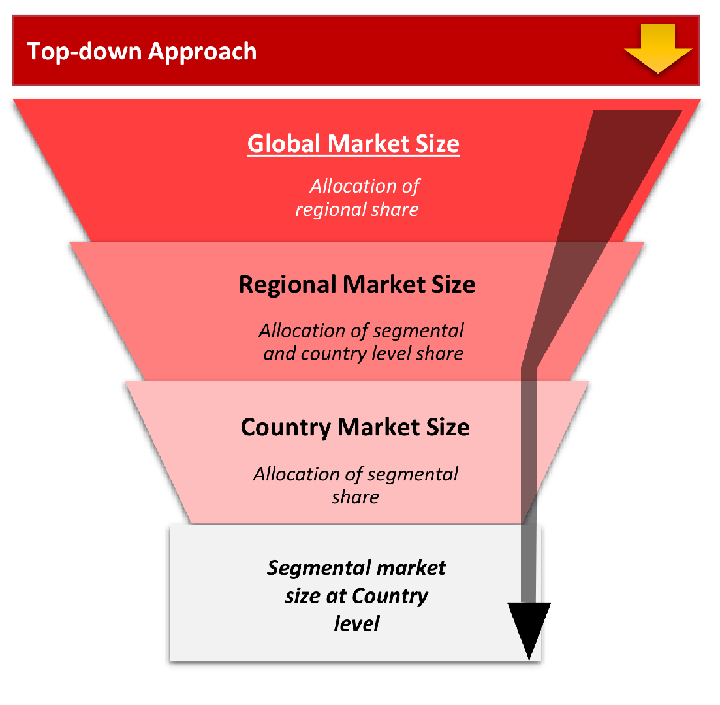
The top-down approach starts with the broadest possible market data and systematically narrows it down through a series of filters and assumptions to arrive at specific market segments or opportunities.
This method begins with the big picture and works downward to increasingly specific market slices.
TAM → SAM → SOM
Research Methods
Desk / Secondary Research
While analysing the market, we extensively study secondary sources, directories, and databases to identify and collect information useful for this technical, market-oriented, and commercial report. Secondary sources that we utilize are not only the public sources, but it is a combination of Open Source, Associations, Paid Databases, MG Repository & Knowledgebase, and others.
- Company websites, annual reports, financial reports, broker reports, and investor presentations
- National government documents, statistical databases and reports
- News articles, press releases and web-casts specific to the companies operating in the market, Magazines, reports, and others
- We gather information from commercial data sources for deriving company specific data such as segmental revenue, share for geography, product revenue, and others
- Internal and external proprietary databases (industry-specific), relevant patent, and regulatory databases
- Governing Bodies, Government Organizations
- Relevant Authorities, Country-specific Associations for Industries
We also employ the model mapping approach to estimate the product level market data through the players' product portfolio
Primary Research
Primary research/ interviews is vital in analyzing the market. Most of the cases involves paid primary interviews. Primary sources include primary interviews through e-mail interactions, telephonic interviews, surveys as well as face-to-face interviews with the different stakeholders across the value chain including several industry experts.
| Type of Respondents | Number of Primaries |
|---|---|
| Tier 2/3 Suppliers | ~20 |
| Tier 1 Suppliers | ~25 |
| End-users | ~25 |
| Industry Expert/ Panel/ Consultant | ~30 |
| Total | ~100 |
MG Knowledgebase
• Repository of industry blog, newsletter and case studies
• Online platform covering detailed market reports, and company profiles
Forecasting Factors and Models
Forecasting Factors
- Historical Trends – Past market patterns, cycles, and major events that shaped how markets behave over time. Understanding past trends helps predict future behavior.
- Industry Factors – Specific characteristics of the industry like structure, regulations, and innovation cycles that affect market dynamics.
- Macroeconomic Factors – Economic conditions like GDP growth, inflation, and employment rates that affect how much money people have to spend.
- Demographic Factors – Population characteristics like age, income, and location that determine who can buy your product.
- Technology Factors – How quickly people adopt new technology and how much technology infrastructure exists.
- Regulatory Factors – Government rules, laws, and policies that can help or restrict market growth.
- Competitive Factors – Analyzing competition structure such as degree of competition and bargaining power of buyers and suppliers.
Forecasting Models / Techniques
Multiple Regression Analysis
- Identify and quantify factors that drive market changes
- Statistical modeling to establish relationships between market drivers and outcomes
Time Series Analysis – Seasonal Patterns
- Understand regular cyclical patterns in market demand
- Advanced statistical techniques to separate trend, seasonal, and irregular components
Time Series Analysis – Trend Analysis
- Identify underlying market growth patterns and momentum
- Statistical analysis of historical data to project future trends
Expert Opinion – Expert Interviews
- Gather deep industry insights and contextual understanding
- In-depth interviews with key industry stakeholders
Multi-Scenario Development
- Prepare for uncertainty by modeling different possible futures
- Creating optimistic, pessimistic, and most likely scenarios
Time Series Analysis – Moving Averages
- Sophisticated forecasting for complex time series data
- Auto-regressive integrated moving average models with seasonal components
Econometric Models
- Apply economic theory to market forecasting
- Sophisticated economic models that account for market interactions
Expert Opinion – Delphi Method
- Harness collective wisdom of industry experts
- Structured, multi-round expert consultation process
Monte Carlo Simulation
- Quantify uncertainty and probability distributions
- Thousands of simulations with varying input parameters
Research Analysis
Our research framework is built upon the fundamental principle of validating market intelligence from both demand and supply perspectives. This dual-sided approach ensures comprehensive market understanding and reduces the risk of single-source bias.
Demand-Side Analysis: We understand end-user/application behavior, preferences, and market needs along with the penetration of the product for specific application.
Supply-Side Analysis: We estimate overall market revenue, analyze the segmental share along with industry capacity, competitive landscape, and market structure.
Validation & Evaluation
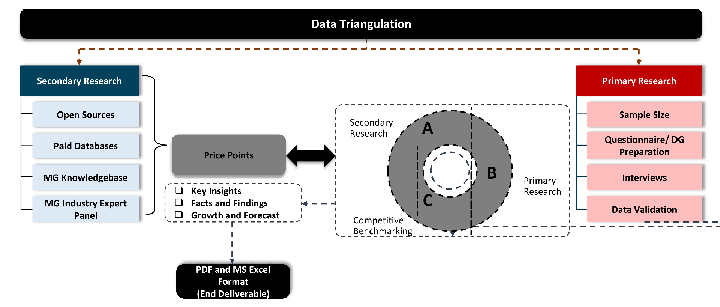
Data triangulation is a validation technique that uses multiple methods, sources, or perspectives to examine the same research question, thereby increasing the credibility and reliability of research findings. In market research, triangulation serves as a quality assurance mechanism that helps identify and minimize bias, validate assumptions, and ensure accuracy in market estimates.
- Data Source Triangulation – Using multiple data sources to examine the same phenomenon
- Methodological Triangulation – Using multiple research methods to study the same research question
- Investigator Triangulation – Using multiple researchers or analysts to examine the same data
- Theoretical Triangulation – Using multiple theoretical perspectives to interpret the same data
Custom Market Research Services
We will customise the research for you, in case the report listed above does not meet your requirements.
Get 10% Free Customisation