Semiconductor IP Market Size, Share & Trends Analysis Report by Technology Type (Processor IP, Memory IP, Connectivity IP, Interface IP), Design Complexity, Licensing Model, Technology Node, End-Use Industry, and Geography (North America, Europe, Asia Pacific, Middle East, Africa, and South America) – Global Industry Data, Trends, and Forecasts, 2026–2035
|
|
|
Segmental Data Insights |
|
|
Demand Trends |
|
|
Competitive Landscape |
|
|
Strategic Development |
|
|
Future Outlook & Opportunities |
|
Semiconductor-IP-Market Size, Share, and Growth
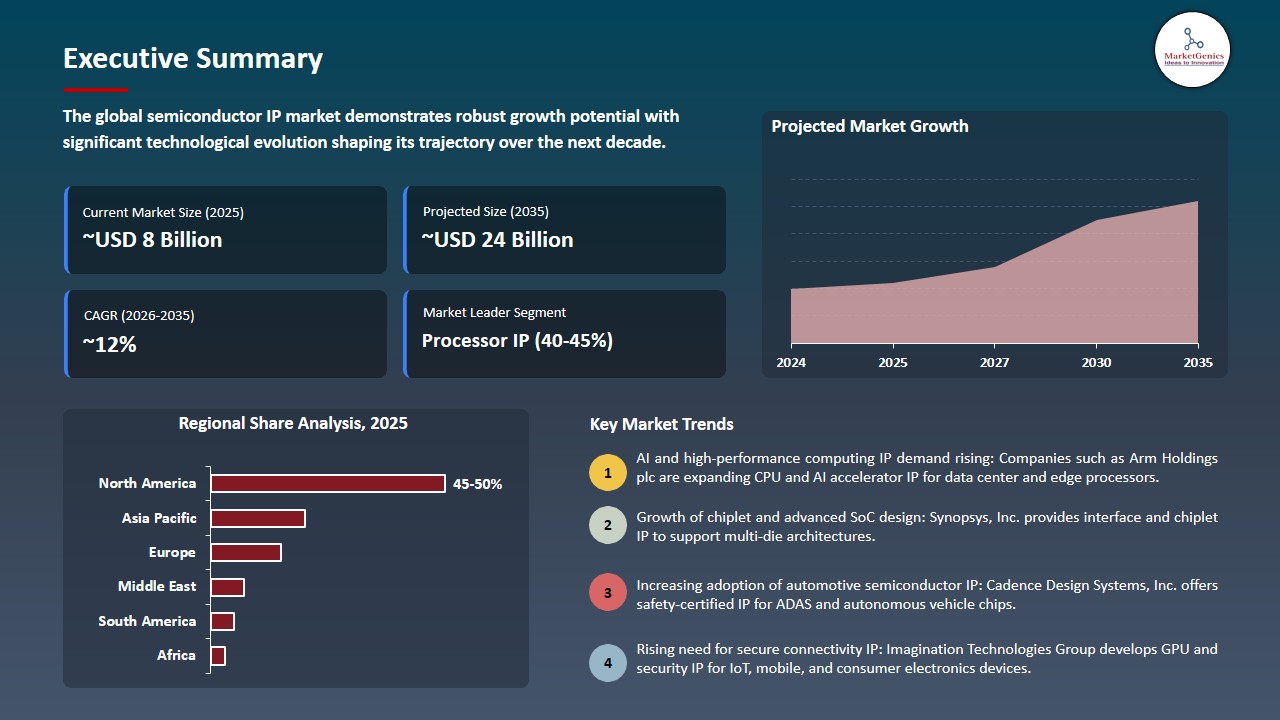
The global semiconductor IP market is witnessing strong growth, valued at USD 7.8 billion in 2025 and projected to reach USD 23.8 billion by 2035, expanding at a CAGR of 11.8% during the forecast period. Asia Pacific is the fastest-growing Semiconductor IP market due to rapid expansion of consumer electronics, rising demand for smartphones and IoT devices, increasing adoption of AI and 5G technologies, and significant investments by local semiconductor manufacturers in chip design and IP licensing.
Cristiano Amon, President and CEO of Qualcomm Incorporated, said, “Alphawave Semi’s expertise in high-speed connectivity technologies complements our Qualcomm Oryon CPU and Hexagon NPU processors, Qualcomm delivers high-performance, energy-efficient compute and AI solutions, and the addition of Alphawave’s technologies will strengthen our platforms and optimize performance for next-generation AI data centers.”
The explosion of artificial intelligence (AI) and edge computing, which demand high-performance, low-power semiconductor intellectual property (IP) cores to support neural processing and efficient data processing, and the growth of complex system-on-chip (SoC) designs that incorporate heterogeneous processor, memory, and interface blocks to speed time-to-market, are driving demand on semiconductor intellectual property (IP). The 2025 acquisition of Alphawave Semi by Qualcomm has added 2.4 billion dollars to its high-speed connectivity and AI compute IP collection and consolidated its presence in data centre and 5G infrastructure platforms.
In 2025, it was announced that Arteris had introduced its FlexGen smart interconnect IP that would deliver as much as 10X productivity gains and reduced latency to next-generation SoC and chiplet architectures, highlighting the importance of advanced IP solution development in supporting performance and energy-efficiency requirements. The use of open-standard architectures, like RISC-V, and IP-vendor and foundry alliances again encourage innovation and licensing in major markets. The increased demand of innovative AI-optimized and modular IP cores contributes to the further innovation of semiconductors and stokes the continuous market growth.
Adjacent opportunities to the semiconductor IP market include AI accelerator design, chiplet integration, RISC-V licensing, high-speed interconnect solutions, and custom SoC development for automotive and 5G applications. These areas allow IP providers to diversify offerings, capture high-value segments, and address the growing demand for specialized, performance-optimized semiconductor solutions.
Semiconductor IP Market Dynamics and Trends
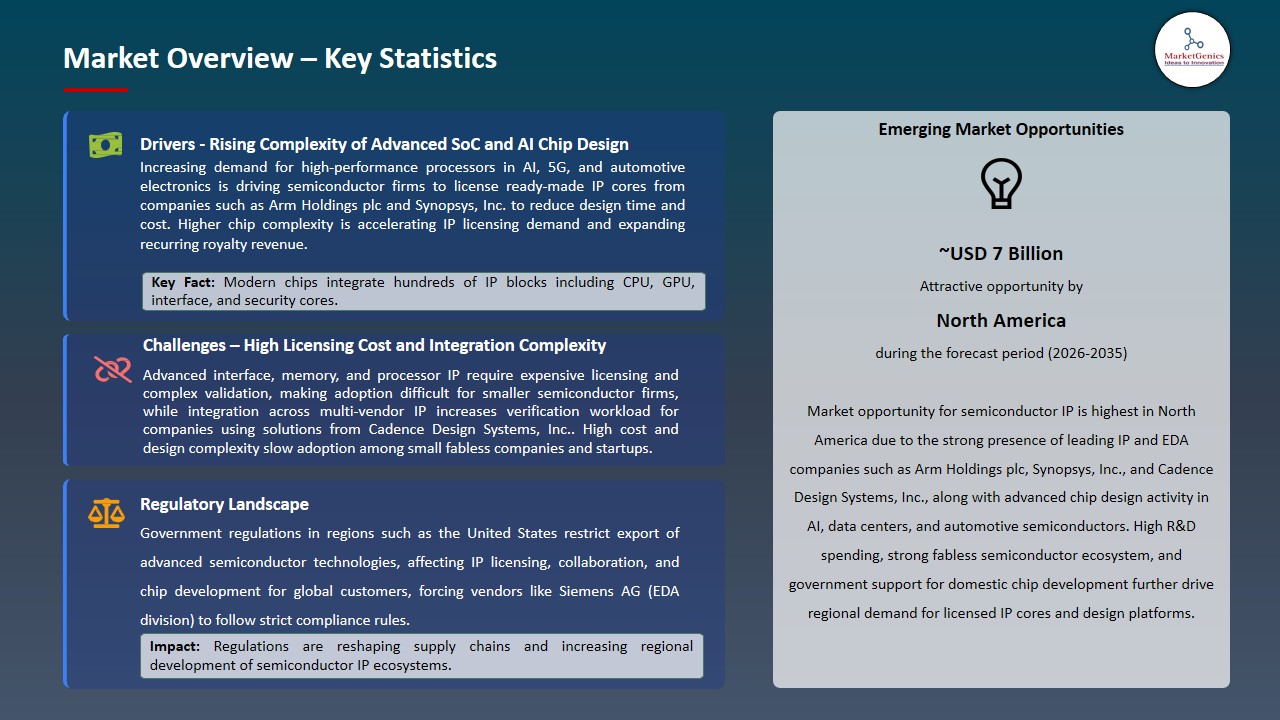
Driver: Proliferation of IoT Devices Spurs Demand for Scalable and Efficient IP Solutions
-
The proliferation of IoT devices, such as smart homes, industrial sensors, and wearable electronics, is causing high demand in scalable and energy-efficient semiconductor IP. Such applications demand processor cores, memory controllers, and communication interfaces that are efficient in terms of performance with limited power usage.
- IoT systems are being proliferated and designers are becoming more focused on IP-based solutions that allow simple connection, fast-processing of data, and cross-connectivity between heterogeneous devices, enabling both edge programs and cloud-ready applications.
- Ceva, Inc. increased its AI IP base, this time, 10 NeuPro NPU deals, including one with a leading PC OEM and Microchip Technology, and AI brought in more than 20 percent of the licensing revenue. These accolades create high demand of AI IPs that are high-performing and power efficient in edge, automotive, and consumer markets.
- The increased use of IoT increases the need to have efficient and scalable IP, which would impetrate innovation and market expansion of semiconductor.
Restraint: Stringent Security Requirements Expose Weaknesses Slowing IP Adoption in Safety‑Critical Applications
-
The growing integration of semiconductor IP in safety-critical applications, including automotive ADAS, medical equipment, and industrial control, underscores the difficulty of achieving the most stringent security and functional safety requirements. IP blocks should be thoroughly checked, formally checked, and compliance tested to meet specifications such as ISO 26262 and PSA Certified that can both lengthen design cycles and raise costs of development.
- This complexity is a frequent cause of delay in adoption especially to smaller firms that do not have the resources to install sophisticated security systems or carry out extensive functional safety certification. Also, changing cybersecurity threats and the necessity of side-channel resistance necessitate constant changes in IP designs, which not only adds to the time- and cost-expensive deployment but also costs.
- Strict security and safety standards slow down IP integration, hindering quick uptake in critical system applications.
Opportunity: Expansion into Chiplet Integration and Interconnect Standards Offers Transformational Revenue Potential
-
The transition to modular chiplet based architecture over monolithic SoCs is a huge growth opportunity to semiconductor IP vendors. Chiplet-based architecture needs strong interconnect IP, standard interfaces and integration solutions to provide high-bandwidth and low-latency communication between heterogeneous dies.
- This opens up possibilities where IP vendors can provide scalable, high performing solutions with ease in designing SoC, ease in verification and quick time to market. With the increased implementation of chiplet technologies in AI, automotive and consumer electronics, the need to implement specialized IP in interconnect and modular design is on the increase.
- Baya Systems In 2025, Baya Systems was awarded Frost and Sullivan innovation awards because of its modular, software-based interconnect IP, which can be used to design scalable chiplet and SoC designs to fulfill increasing demand of high-performance, flexible semiconductor interconnect solutions.
- Adoption of chiplet and interconnect IP enables new revenue, and improves flexibility in advanced semiconductor designs.
Key Trend: Emerging RISC‑V Adoption Catalyzes Open‑Source IP and Ecosystem Collaboration Trends
-
The IP providers, designers, and system integrators are collaborating due to increased adoption of the RISC-V open-source instruction engine architecture. Its licensing is also lower and its flexibility enables companies to create customized processor cores and growth in innovation of its applications in consumer, automotive and industrial applications is encouraged.
- Moreover, this trend is driving the rapid development of common IP libraries, verification platforms and standard interfaces, which allow a shorter time-to-market and increased ecosystem involvement. The open-source model encourages modularity, scalability and fast addition of new features to next generation SoCs.
- In 2025, Meta bought Rivos, a RISC-V chip company, to further RISC-V-based custom AI accelerators, and the industry move toward open-source IP and collaborative semiconductor ecosystems becomes apparent.
- The adoption of RISC-V enables the creation of IP that can develop faster, easier, and collaboratively semiconductor ecosystems.
Semiconductor-IP-Market Analysis and Segmental Data
Processor IP Dominate Global Semiconductor IP Market
-
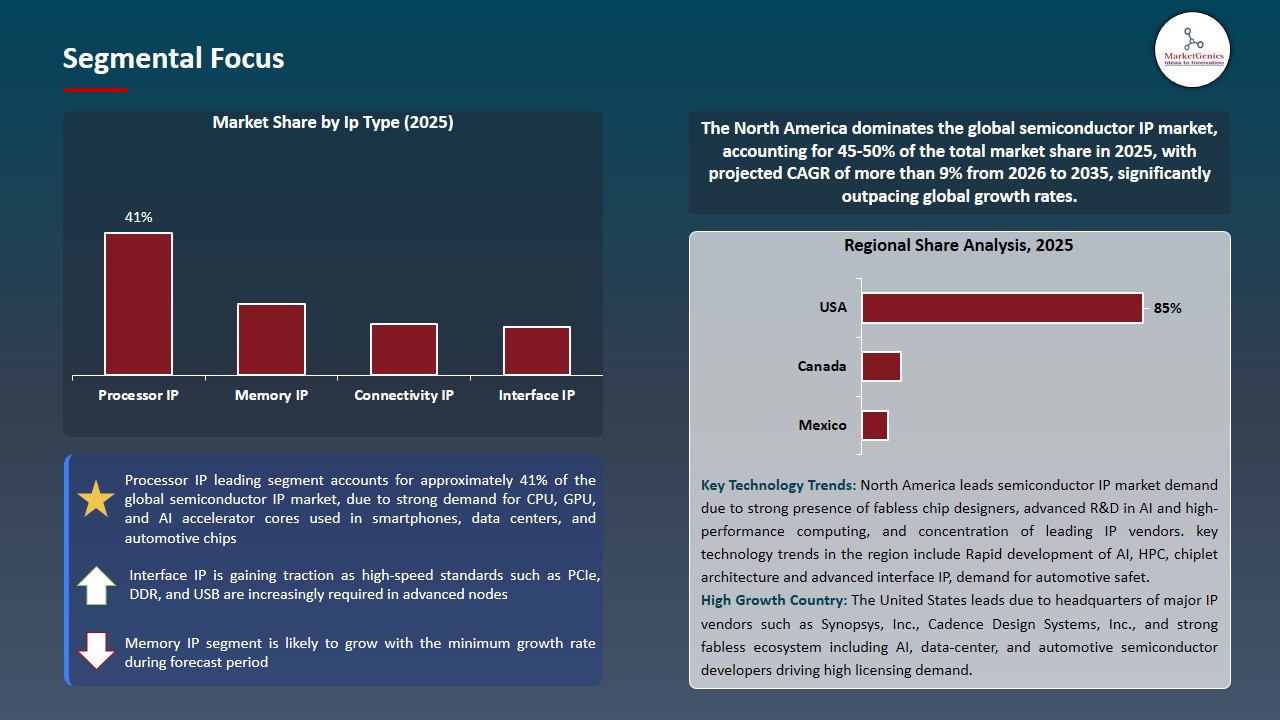
The global semiconductor IP market remains highly competitive with Processor IP keeping a dominant place because of its key contribution to the high-performance computing, AI, edge devices and automotive solutions. They consist of CPU, neural processing units and graphics (GPU), which are the building blocks of system-on-chip (SoC) designs, offering the core processing units needed and allowing the functional blocks to be easily integrated.
- The growing need of AI acceleration, edge computing, autonomous systems has only increased the supremacy of processor IP with designers focusing on scalable, high performance cores capable of executing complex workloads. As low-power architecture development, multi-core processing and dedicated AI-enabled cores have advanced, processor IP continues to be a primary source of semiconductor innovation, taking the largest market share and defining the future of next-generation computing platforms.
- IP processor leadership guarantees a high market growth and promotes innovation in AI, automotive, and edge computing applications.
North America Leads Global Semiconductor IP Market Demand
-
North America dominates the global semiconductor IP market, driven by the presence of major technology and semiconductor companies, advanced research and development infrastructure, and early adoption of emerging technologies. The region benefits from high investments in AI, cloud computing, automotive electronics, and industrial automation, all of which require sophisticated IP solutions for processors, interconnects, and specialized accelerators.
- Close integration between chip designers, system integrators and IP providers increases innovation and time-to-market of complex SoCs, such as AI-enabled and edge computers. Also, state incentives to semiconductor and high-tech production help to strengthen the North American leadership even more.
- North America is a dominant force that drives fast IP innovation, which contributes to the growth of semiconductors around the world and allows the development of next-generation computing and AI uses.
Semiconductor-IP-Market Ecosystem
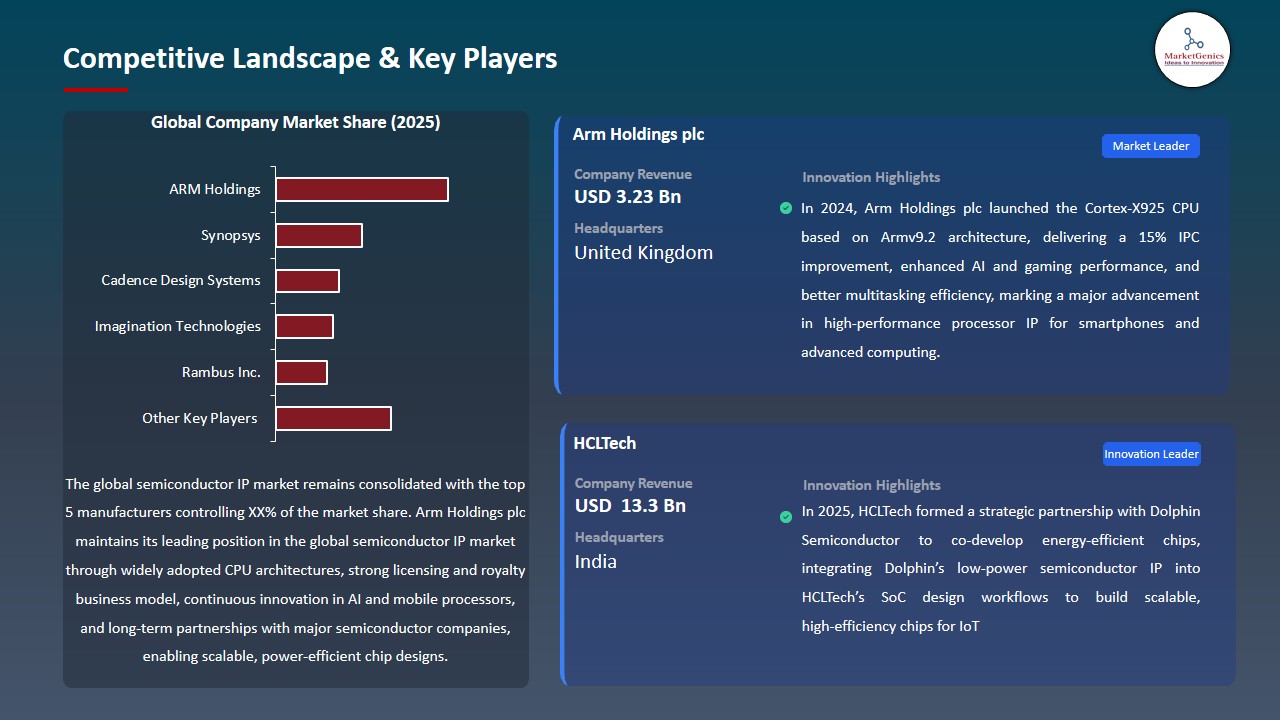
The global semiconductor IP market is moderately consolidated, with key players including ARM Holdings, Synopsys, Cadence Design Systems, Imagination Technologies, and Rambus Inc. A competitive advantage that these companies have is based on diversified IP portfolios, processor core high performances, interconnect and memory solutions, and expansive design automation platforms. Their roles are also backed by unceasing research and development, superior verification equipment, AI/ML supported IP, and tactical alliances in consumer electronics, automobile, data center, and industrial applications.
IP value chain includes architecture design, IP core development, verification and validation, synthesis and integration, performance optimization, regulatory compliance, and standard compliance and licensing and distribution. Functional safety certification, silicon validation, and ecosystem support constitute post-development activities that assure end-use applications of AI, HPC, automotive, and edge computing applications with reliable, secure, and high-performance solutions.
Complex design specifications, high standards of verification, protection of IP, and good relationship with the major manufacturers of semiconductors make entry a high barrier. The continued innovation of RISC-V, AI accelerators, interconnects, and chiplet architecture is making it differentiated and continuing to grow the global market.
Recent Development and Strategic Overview:
-
In March 2026, Allegro DVT launched its DWP300 DeWarp IP, a hybrid hardware/software solution for real-time geometric distortion correction in video pipelines. Optimized for 4Kp60 and compatible with major encoding standards, it targets automotive, consumer, and industrial applications, reinforcing Allegro DVT’s strategy to provide high-performance, silicon-efficient video processing IP.
- In December 2025, HCLTech formed a strategic partnership with Dolphin Semiconductor to co‑develop energy‑efficient chips, integrating Dolphin’s low‑power semiconductor IP into HCLTech’s SoC design workflows to build scalable, high‑efficiency chips for IoT and data‑centre applications, addressing rising demand for sustainable, high‑performance computing solutions.
Report Scope
|
Detail |
|
|
Market Size in 2025 |
USD 7.8 Bn |
|
Market Forecast Value in 2035 |
USD 23.8 Bn |
|
Growth Rate (CAGR) |
11.8% |
|
Forecast Period |
2026 – 2035 |
|
Historical Data Available for |
2021 – 2024 |
|
Market Size Units |
US$ Billion for Value |
|
Report Format |
Electronic (PDF) + Excel |
|
North America |
Europe |
Asia Pacific |
Middle East |
Africa |
South America |
|
|
|
|
|
|
|
Companies Covered |
|||||
|
|
|
|
|
|
Semiconductor-IP-Market Segmentation and Highlights
|
Segment |
Sub-segment |
|
Semiconductor IP Market, By Ip Type |
|
|
Semiconductor IP Market, By Design Complexity |
|
|
Semiconductor IP Market, By Licensing Model |
|
|
Semiconductor IP Market, By Technology Node |
|
|
Semiconductor IP Market, By End-Use Industry |
|
Frequently Asked Questions
Table of Contents
- 1. Research Methodology and Assumptions
- 1.1. Definitions
- 1.2. Research Design and Approach
- 1.3. Data Collection Methods
- 1.4. Base Estimates and Calculations
- 1.5. Forecasting Models
- 1.5.1. Key Forecast Factors & Impact Analysis
- 1.6. Secondary Research
- 1.6.1. Open Sources
- 1.6.2. Paid Databases
- 1.6.3. Associations
- 1.7. Primary Research
- 1.7.1. Primary Sources
- 1.7.2. Primary Interviews with Stakeholders across Ecosystem
- 2. Executive Summary
- 2.1. Global Semiconductor IP Market Outlook
- 2.1.1. Semiconductor IP Market Size Value (US$ Bn), and Forecasts, 2021-2035
- 2.1.2. Compounded Annual Growth Rate Analysis
- 2.1.3. Growth Opportunity Analysis
- 2.1.4. Segmental Share Analysis
- 2.1.5. Geographical Share Analysis
- 2.2. Market Analysis and Facts
- 2.3. Supply-Demand Analysis
- 2.4. Competitive Benchmarking
- 2.5. Go-to- Market Strategy
- 2.5.1. Customer/ End-use Industry Assessment
- 2.5.2. Growth Opportunity Data, 2026-2035
- 2.5.2.1. Regional Data
- 2.5.2.2. Country Data
- 2.5.2.3. Segmental Data
- 2.5.3. Identification of Potential Market Spaces
- 2.5.4. GAP Analysis
- 2.5.5. Potential Attractive Price Points
- 2.5.6. Prevailing Market Risks & Challenges
- 2.5.7. Preferred Sales & Marketing Strategies
- 2.5.8. Key Recommendations and Analysis
- 2.5.9. A Way Forward
- 2.1. Global Semiconductor IP Market Outlook
- 3. Industry Data and Premium Insights
- 3.1. Global Semiconductors & Electronics Industry Overview, 2025
- 3.1.1. Semiconductors & Electronics Industry Ecosystem Analysis
- 3.1.2. Key Trends for Semiconductors & Electronics Industry
- 3.1.3. Regional Distribution for Semiconductors & Electronics Industry
- 3.2. Supplier Customer Data
- 3.3. Technology Roadmap and Developments
- 3.1. Global Semiconductors & Electronics Industry Overview, 2025
- 4. Market Overview
- 4.1. Market Dynamics
- 4.1.1. Drivers
- 4.1.1.1. Rising demand for advanced consumer electronics.
- 4.1.1.2. Growth of AI, IoT, and 5G applications.
- 4.1.1.3. Increasing adoption of multi-core and custom SoC designs.
- 4.1.2. Restraints
- 4.1.2.1. High licensing costs.
- 4.1.2.2. Complex IP integration and verification challenges.
- 4.1.1. Drivers
- 4.2. Key Trend Analysis
- 4.3. Regulatory Framework
- 4.3.1. Key Regulations, Norms, and Subsidies, by Key Countries
- 4.3.2. Tariffs and Standards
- 4.3.3. Impact Analysis of Regulations on the Market
- 4.4. Value Chain Analysis/ Ecosystem Analysis
- 4.5. Porter’s Five Forces Analysis
- 4.6. PESTEL Analysis
- 4.7. Global Semiconductor IP Market Demand
- 4.7.1. Historical Market Size – Value (US$ Bn), 2020-2024
- 4.7.2. Current and Future Market Size - Value (US$ Bn), 2026–2035
- 4.7.2.1. Y-o-Y Growth Trends
- 4.7.2.2. Absolute $ Opportunity Assessment
- 4.1. Market Dynamics
- 5. Competition Landscape
- 5.1. Competition structure
- 5.1.1. Fragmented v/s consolidated
- 5.2. Company Share Analysis, 2025
- 5.2.1. Global Company Market Share
- 5.2.2. By Region
- 5.2.2.1. North America
- 5.2.2.2. Europe
- 5.2.2.3. Asia Pacific
- 5.2.2.4. Middle East
- 5.2.2.5. Africa
- 5.2.2.6. South America
- 5.3. Product Comparison Matrix
- 5.3.1. Specifications
- 5.3.2. Market Positioning
- 5.3.3. Pricing
- 5.1. Competition structure
- 6. Global Semiconductor IP Market Analysis, by Ip Type
- 6.1. Key Segment Analysis
- 6.2. Semiconductor IP Market Size Value (US$ Bn), Analysis, and Forecasts, by Ip Type, 2021-2035
- 6.2.1. Processor IP
- 6.2.1.1. CPU Cores
- 6.2.1.2. GPU Cores
- 6.2.1.3. AI/ML Accelerators
- 6.2.1.4. Others
- 6.2.2. Memory IP
- 6.2.2.1. SRAM Controllers
- 6.2.2.2. DRAM Controllers
- 6.2.2.3. Flash Memory Controllers
- 6.2.2.4. Others
- 6.2.3. Connectivity IP
- 6.2.3.1. PCIe
- 6.2.3.2. USB
- 6.2.3.3. Ethernet
- 6.2.3.4. 5G/Cellular
- 6.2.3.5. Others
- 6.2.4. Interface IP
- 6.2.4.1. SerDes
- 6.2.4.2. DDR
- 6.2.4.3. MIPI
- 6.2.4.4. Others
- 6.2.1. Processor IP
- 7. Global Semiconductor IP Market Analysis, by Design Complexity
- 7.1. Key Segment Analysis
- 7.2. Semiconductor IP Market Size Value (US$ Bn), Analysis, and Forecasts, by Design Complexity, 2021-2035
- 7.2.1. Standard Cell Libraries
- 7.2.1.1. Logic Libraries
- 7.2.1.2. Mixed-Signal Libraries
- 7.2.1.3. Analog Libraries
- 7.2.1.4. Others
- 7.2.2. Macro & Physical IP
- 7.2.2.1. Memory Compilers
- 7.2.2.2. I/O Libraries
- 7.2.2.3. Power Management Macros
- 7.2.2.4. Others
- 7.2.3. Custom & Specialized IP
- 7.2.3.1. Security IP
- 7.2.3.2. Analog Front-End IP
- 7.2.3.3. Others
- 7.2.1. Standard Cell Libraries
- 8. Global Semiconductor IP Market Analysis, by Licensing Model
- 8.1. Key Segment Analysis
- 8.2. Semiconductor IP Market Size Value (US$ Bn), Analysis, and Forecasts, by Licensing Model, 2021-2035
- 8.2.1. Royalty-Based
- 8.2.2. Fixed License Fee
- 8.2.3. Subscription Model
- 8.2.4. Hybrid Licensing
- 9. Global Semiconductor IP Market Analysis, by Technology Node
- 9.1. Key Segment Analysis
- 9.2. Semiconductor IP Market Size Value (US$ Bn), Analysis, and Forecasts, by Technology Node, 2021-2035
- 9.2.1. Advanced Nodes (5nm & Below)
- 9.2.1.1. 5nm
- 9.2.1.2. 3nm
- 9.2.1.3. 2nm & Below
- 9.2.2. Mature Nodes (7nm - 28nm)
- 9.2.2.1. 7nm
- 9.2.2.2. 14nm
- 9.2.2.3. 22nm
- 9.2.2.4. 28nm
- 9.2.3. Legacy Nodes (40nm & Above)
- 9.2.3.1. 40nm
- 9.2.3.2. 65nm
- 9.2.3.3. 130nm & Larger
- 9.2.1. Advanced Nodes (5nm & Below)
- 10. Global Semiconductor IP Market Analysis, by End-Use Industry
- 10.1. Key Segment Analysis
- 10.2. Semiconductor IP Market Size Value (US$ Bn), Analysis, and Forecasts, by End-Use Industry, 2021-2035
- 10.2.1. Consumer Electronics
- 10.2.1.1. Smartphones
- 10.2.1.2. Tablets
- 10.2.1.3. Wearables
- 10.2.1.4. Gaming Consoles
- 10.2.1.5. Others
- 10.2.2. Computing & Data Centers
- 10.2.2.1. CPUs
- 10.2.2.2. GPUs
- 10.2.2.3. Server Processors
- 10.2.2.4. Edge Computing Devices
- 10.2.2.5. Others
- 10.2.3. Automotive
- 10.2.3.1. Advanced Driver Assistance Systems (ADAS)
- 10.2.3.2. Infotainment Systems
- 10.2.3.3. Battery Management Systems
- 10.2.3.4. Autonomous Driving
- 10.2.3.5. Others
- 10.2.4. IoT & Smart Devices
- 10.2.4.1. Smart Home Devices
- 10.2.4.2. Industrial IoT
- 10.2.4.3. Connected Sensors
- 10.2.4.4. Others
- 10.2.5. Telecommunications
- 10.2.5.1. 5G Infrastructure
- 10.2.5.2. Network Equipment
- 10.2.5.3. Base Stations
- 10.2.5.4. Others
- 10.2.6. Medical & Healthcare
- 10.2.6.1. Diagnostic Imaging
- 10.2.6.2. Patient Monitoring Devices
- 10.2.6.3. Surgical Instruments
- 10.2.6.4. Others
- 10.2.7. Aerospace & Defense
- 10.2.7.1. Radar Systems
- 10.2.7.2. Navigation Systems
- 10.2.7.3. Military Communications
- 10.2.7.4. Others
- 10.2.8. Other Industries
- 10.2.1. Consumer Electronics
- 11. Global Semiconductor IP Market Analysis and Forecasts, by Region
- 11.1. Key Findings
- 11.2. Semiconductor IP Market Size Value (US$ Bn), Analysis, and Forecasts, by Region, 2021-2035
- 11.2.1. North America
- 11.2.2. Europe
- 11.2.3. Asia Pacific
- 11.2.4. Middle East
- 11.2.5. Africa
- 11.2.6. South America
- 12. North America Semiconductor IP Market Analysis
- 12.1. Key Segment Analysis
- 12.2. Regional Snapshot
- 12.3. North America Semiconductor IP Market Size- Value (US$ Bn), Analysis, and Forecasts, 2021-2035
- 12.3.1. Ip Type
- 12.3.2. Design Complexity
- 12.3.3. Licensing Model
- 12.3.4. Technology Node
- 12.3.5. End-Use Industry
- 12.3.6. Country
- 12.3.6.1. USA
- 12.3.6.2. Canada
- 12.3.6.3. Mexico
- 12.4. USA Semiconductor IP Market
- 12.4.1. Country Segmental Analysis
- 12.4.2. Ip Type
- 12.4.3. Design Complexity
- 12.4.4. Licensing Model
- 12.4.5. Technology Node
- 12.4.6. End-Use Industry
- 12.5. Canada Semiconductor IP Market
- 12.5.1. Country Segmental Analysis
- 12.5.2. Ip Type
- 12.5.3. Design Complexity
- 12.5.4. Licensing Model
- 12.5.5. Technology Node
- 12.5.6. End-Use Industry
- 12.6. Mexico Semiconductor IP Market
- 12.6.1. Country Segmental Analysis
- 12.6.2. Ip Type
- 12.6.3. Design Complexity
- 12.6.4. Licensing Model
- 12.6.5. Technology Node
- 12.6.6. End-Use Industry
- 13. Europe Semiconductor IP Market Analysis
- 13.1. Key Segment Analysis
- 13.2. Regional Snapshot
- 13.3. Europe Semiconductor IP Market Size Value (US$ Bn), Analysis, and Forecasts, 2021-2035
- 13.3.1. Ip Type
- 13.3.2. Design Complexity
- 13.3.3. Licensing Model
- 13.3.4. Technology Node
- 13.3.5. End-Use Industry
- 13.3.6. Country
- 13.3.6.1. Germany
- 13.3.6.2. United Kingdom
- 13.3.6.3. France
- 13.3.6.4. Italy
- 13.3.6.5. Spain
- 13.3.6.6. Netherlands
- 13.3.6.7. Nordic Countries
- 13.3.6.8. Poland
- 13.3.6.9. Russia & CIS
- 13.3.6.10. Rest of Europe
- 13.4. Germany Semiconductor IP Market
- 13.4.1. Country Segmental Analysis
- 13.4.2. Ip Type
- 13.4.3. Design Complexity
- 13.4.4. Licensing Model
- 13.4.5. Technology Node
- 13.4.6. End-Use Industry
- 13.5. United Kingdom Semiconductor IP Market
- 13.5.1. Country Segmental Analysis
- 13.5.2. Ip Type
- 13.5.3. Design Complexity
- 13.5.4. Licensing Model
- 13.5.5. Technology Node
- 13.5.6. End-Use Industry
- 13.6. France Semiconductor IP Market
- 13.6.1. Country Segmental Analysis
- 13.6.2. Ip Type
- 13.6.3. Design Complexity
- 13.6.4. Licensing Model
- 13.6.5. Technology Node
- 13.6.6. End-Use Industry
- 13.7. Italy Semiconductor IP Market
- 13.7.1. Country Segmental Analysis
- 13.7.2. Ip Type
- 13.7.3. Design Complexity
- 13.7.4. Licensing Model
- 13.7.5. Technology Node
- 13.7.6. End-Use Industry
- 13.8. Spain Semiconductor IP Market
- 13.8.1. Country Segmental Analysis
- 13.8.2. Ip Type
- 13.8.3. Design Complexity
- 13.8.4. Licensing Model
- 13.8.5. Technology Node
- 13.8.6. End-Use Industry
- 13.9. Netherlands Semiconductor IP Market
- 13.9.1. Country Segmental Analysis
- 13.9.2. Ip Type
- 13.9.3. Design Complexity
- 13.9.4. Licensing Model
- 13.9.5. Technology Node
- 13.9.6. End-Use Industry
- 13.10. Nordic Countries Semiconductor IP Market
- 13.10.1. Country Segmental Analysis
- 13.10.2. Ip Type
- 13.10.3. Design Complexity
- 13.10.4. Licensing Model
- 13.10.5. Technology Node
- 13.10.6. End-Use Industry
- 13.11. Poland Semiconductor IP Market
- 13.11.1. Country Segmental Analysis
- 13.11.2. Ip Type
- 13.11.3. Design Complexity
- 13.11.4. Licensing Model
- 13.11.5. Technology Node
- 13.11.6. End-Use Industry
- 13.12. Russia & CIS Semiconductor IP Market
- 13.12.1. Country Segmental Analysis
- 13.12.2. Ip Type
- 13.12.3. Design Complexity
- 13.12.4. Licensing Model
- 13.12.5. Technology Node
- 13.12.6. End-Use Industry
- 13.13. Rest of Europe Semiconductor IP Market
- 13.13.1. Country Segmental Analysis
- 13.13.2. Ip Type
- 13.13.3. Design Complexity
- 13.13.4. Licensing Model
- 13.13.5. Technology Node
- 13.13.6. End-Use Industry
- 14. Asia Pacific Semiconductor IP Market Analysis
- 14.1. Key Segment Analysis
- 14.2. Regional Snapshot
- 14.3. Asia Pacific Semiconductor IP Market Size Value (US$ Bn), Analysis, and Forecasts, 2021-2035
- 14.3.1. Ip Type
- 14.3.2. Design Complexity
- 14.3.3. Licensing Model
- 14.3.4. Technology Node
- 14.3.5. End-Use Industry
- 14.3.6. Country
- 14.3.6.1. China
- 14.3.6.2. India
- 14.3.6.3. Japan
- 14.3.6.4. South Korea
- 14.3.6.5. Australia and New Zealand
- 14.3.6.6. Indonesia
- 14.3.6.7. Malaysia
- 14.3.6.8. Thailand
- 14.3.6.9. Vietnam
- 14.3.6.10. Rest of Asia Pacific
- 14.4. China Semiconductor IP Market
- 14.4.1. Country Segmental Analysis
- 14.4.2. Ip Type
- 14.4.3. Design Complexity
- 14.4.4. Licensing Model
- 14.4.5. Technology Node
- 14.4.6. End-Use Industry
- 14.5. India Semiconductor IP Market
- 14.5.1. Country Segmental Analysis
- 14.5.2. Ip Type
- 14.5.3. Design Complexity
- 14.5.4. Licensing Model
- 14.5.5. Technology Node
- 14.5.6. End-Use Industry
- 14.6. Japan Semiconductor IP Market
- 14.6.1. Country Segmental Analysis
- 14.6.2. Ip Type
- 14.6.3. Design Complexity
- 14.6.4. Licensing Model
- 14.6.5. Technology Node
- 14.6.6. End-Use Industry
- 14.7. South Korea Semiconductor IP Market
- 14.7.1. Country Segmental Analysis
- 14.7.2. Ip Type
- 14.7.3. Design Complexity
- 14.7.4. Licensing Model
- 14.7.5. Technology Node
- 14.7.6. End-Use Industry
- 14.8. Australia and New Zealand Semiconductor IP Market
- 14.8.1. Country Segmental Analysis
- 14.8.2. Ip Type
- 14.8.3. Design Complexity
- 14.8.4. Licensing Model
- 14.8.5. Technology Node
- 14.8.6. End-Use Industry
- 14.9. Indonesia Semiconductor IP Market
- 14.9.1. Country Segmental Analysis
- 14.9.2. Ip Type
- 14.9.3. Design Complexity
- 14.9.4. Licensing Model
- 14.9.5. Technology Node
- 14.9.6. End-Use Industry
- 14.10. Malaysia Semiconductor IP Market
- 14.10.1. Country Segmental Analysis
- 14.10.2. Ip Type
- 14.10.3. Design Complexity
- 14.10.4. Licensing Model
- 14.10.5. Technology Node
- 14.10.6. End-Use Industry
- 14.11. Thailand Semiconductor IP Market
- 14.11.1. Country Segmental Analysis
- 14.11.2. Ip Type
- 14.11.3. Design Complexity
- 14.11.4. Licensing Model
- 14.11.5. Technology Node
- 14.11.6. End-Use Industry
- 14.12. Vietnam Semiconductor IP Market
- 14.12.1. Country Segmental Analysis
- 14.12.2. Ip Type
- 14.12.3. Design Complexity
- 14.12.4. Licensing Model
- 14.12.5. Technology Node
- 14.12.6. End-Use Industry
- 14.13. Rest of Asia Pacific Semiconductor IP Market
- 14.13.1. Country Segmental Analysis
- 14.13.2. Ip Type
- 14.13.3. Design Complexity
- 14.13.4. Licensing Model
- 14.13.5. Technology Node
- 14.13.6. End-Use Industry
- 15. Middle East Semiconductor IP Market Analysis
- 15.1. Key Segment Analysis
- 15.2. Regional Snapshot
- 15.3. Middle East Semiconductor IP Market Size Value (US$ Bn), Analysis, and Forecasts, 2021-2035
- 15.3.1. Ip Type
- 15.3.2. Design Complexity
- 15.3.3. Licensing Model
- 15.3.4. Technology Node
- 15.3.5. End-Use Industry
- 15.3.6. Country
- 15.3.6.1. Turkey
- 15.3.6.2. UAE
- 15.3.6.3. Saudi Arabia
- 15.3.6.4. Israel
- 15.3.6.5. Rest of Middle East
- 15.4. Turkey Semiconductor IP Market
- 15.4.1. Country Segmental Analysis
- 15.4.2. Ip Type
- 15.4.3. Design Complexity
- 15.4.4. Licensing Model
- 15.4.5. Technology Node
- 15.4.6. End-Use Industry
- 15.5. UAE Semiconductor IP Market
- 15.5.1. Country Segmental Analysis
- 15.5.2. Ip Type
- 15.5.3. Design Complexity
- 15.5.4. Licensing Model
- 15.5.5. Technology Node
- 15.5.6. End-Use Industry
- 15.6. Saudi Arabia Semiconductor IP Market
- 15.6.1. Country Segmental Analysis
- 15.6.2. Ip Type
- 15.6.3. Design Complexity
- 15.6.4. Licensing Model
- 15.6.5. Technology Node
- 15.6.6. End-Use Industry
- 15.7. Israel Semiconductor IP Market
- 15.7.1. Country Segmental Analysis
- 15.7.2. Ip Type
- 15.7.3. Design Complexity
- 15.7.4. Licensing Model
- 15.7.5. Technology Node
- 15.7.6. End-Use Industry
- 15.8. Rest of Middle East Semiconductor IP Market
- 15.8.1. Country Segmental Analysis
- 15.8.2. Ip Type
- 15.8.3. Design Complexity
- 15.8.4. Licensing Model
- 15.8.5. Technology Node
- 15.8.6. End-Use Industry
- 16. Africa Semiconductor IP Market Analysis
- 16.1. Key Segment Analysis
- 16.2. Regional Snapshot
- 16.3. Africa Semiconductor IP Market Size Value (US$ Bn), Analysis, and Forecasts, 2021-2035
- 16.3.1. Ip Type
- 16.3.2. Design Complexity
- 16.3.3. Licensing Model
- 16.3.4. Technology Node
- 16.3.5. End-Use Industry
- 16.3.6. Country
- 16.3.6.1. South Africa
- 16.3.6.2. Egypt
- 16.3.6.3. Nigeria
- 16.3.6.4. Algeria
- 16.3.6.5. Rest of Africa
- 16.4. South Africa Semiconductor IP Market
- 16.4.1. Country Segmental Analysis
- 16.4.2. Ip Type
- 16.4.3. Design Complexity
- 16.4.4. Licensing Model
- 16.4.5. Technology Node
- 16.4.6. End-Use Industry
- 16.5. Egypt Semiconductor IP Market
- 16.5.1. Country Segmental Analysis
- 16.5.2. Ip Type
- 16.5.3. Design Complexity
- 16.5.4. Licensing Model
- 16.5.5. Technology Node
- 16.5.6. End-Use Industry
- 16.6. Nigeria Semiconductor IP Market
- 16.6.1. Country Segmental Analysis
- 16.6.2. Ip Type
- 16.6.3. Design Complexity
- 16.6.4. Licensing Model
- 16.6.5. Technology Node
- 16.6.6. End-Use Industry
- 16.7. Algeria Semiconductor IP Market
- 16.7.1. Country Segmental Analysis
- 16.7.2. Ip Type
- 16.7.3. Design Complexity
- 16.7.4. Licensing Model
- 16.7.5. Technology Node
- 16.7.6. End-Use Industry
- 16.8. Rest of Africa Semiconductor IP Market
- 16.8.1. Country Segmental Analysis
- 16.8.2. Ip Type
- 16.8.3. Design Complexity
- 16.8.4. Licensing Model
- 16.8.5. Technology Node
- 16.8.6. End-Use Industry
- 17. South America Semiconductor IP Market Analysis
- 17.1. Key Segment Analysis
- 17.2. Regional Snapshot
- 17.3. South America Semiconductor IP Market Size Value (US$ Bn), Analysis, and Forecasts, 2021-2035
- 17.3.1. Ip Type
- 17.3.2. Design Complexity
- 17.3.3. Licensing Model
- 17.3.4. Technology Node
- 17.3.5. End-Use Industry
- 17.3.6. Country
- 17.3.6.1. Brazil
- 17.3.6.2. Argentina
- 17.3.6.3. Rest of South America
- 17.4. Brazil Semiconductor IP Market
- 17.4.1. Country Segmental Analysis
- 17.4.2. Ip Type
- 17.4.3. Design Complexity
- 17.4.4. Licensing Model
- 17.4.5. Technology Node
- 17.4.6. End-Use Industry
- 17.5. Argentina Semiconductor IP Market
- 17.5.1. Country Segmental Analysis
- 17.5.2. Ip Type
- 17.5.3. Design Complexity
- 17.5.4. Licensing Model
- 17.5.5. Technology Node
- 17.5.6. End-Use Industry
- 17.6. Rest of South America Semiconductor IP Market
- 17.6.1. Country Segmental Analysis
- 17.6.2. Ip Type
- 17.6.3. Design Complexity
- 17.6.4. Licensing Model
- 17.6.5. Technology Node
- 17.6.6. End-Use Industry
- 18. Key Players/ Company Profile
- 18.1. Accellera
- 18.1.1. Company Details/ Overview
- 18.1.2. Company Financials
- 18.1.3. Key Customers and Competitors
- 18.1.4. Business/ Industry Portfolio
- 18.1.5. Product Portfolio/ Specification Details
- 18.1.6. Pricing Data
- 18.1.7. Strategic Overview
- 18.1.8. Recent Developments
- 18.2. Advanced Micro Devices (AMD)
- 18.3. Aldec, Inc.
- 18.4. Altera Corporation
- 18.5. ANSYS
- 18.6. ARM Holdings
- 18.7. Arm IP
- 18.8. Broadcom
- 18.9. Cadence Design Systems
- 18.10. Global Unichip Corporation (GUC)
- 18.11. Imagination Technologies
- 18.12. Intel
- 18.13. MediaTek
- 18.14. Mentor Graphics
- 18.15. MIPS
- 18.16. NVIDIA
- 18.17. Qualcomm
- 18.18. Rambus Inc.
- 18.19. Siemens EDA
- 18.20. Synopsys
- 18.21. TSMC
- 18.22. VeriSilicon Holdings Co., Ltd.
- 18.23. Other Key Players
- 18.1. Accellera
Note* - This is just tentative list of players. While providing the report, we will cover more number of players based on their revenue and share for each geography
Research Design
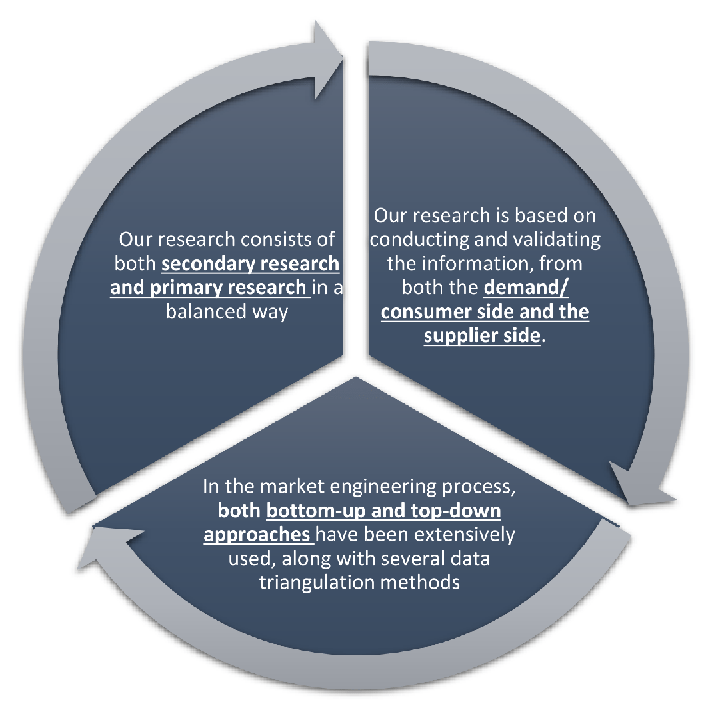
Our research design integrates both demand-side and supply-side analysis through a balanced combination of primary and secondary research methodologies. By utilizing both bottom-up and top-down approaches alongside rigorous data triangulation methods, we deliver robust market intelligence that supports strategic decision-making.
MarketGenics' comprehensive research design framework ensures the delivery of accurate, reliable, and actionable market intelligence. Through the integration of multiple research approaches, rigorous validation processes, and expert analysis, we provide our clients with the insights needed to make informed strategic decisions and capitalize on market opportunities.
MarketGenics leverages a dedicated industry panel of experts and a comprehensive suite of paid databases to effectively collect, consolidate, and analyze market intelligence.
Our approach has consistently proven to be reliable and effective in generating accurate market insights, identifying key industry trends, and uncovering emerging business opportunities.
Through both primary and secondary research, we capture and analyze critical company-level data such as manufacturing footprints, including technical centers, R&D facilities, sales offices, and headquarters.
Our expert panel further enhances our ability to estimate market size for specific brands based on validated field-level intelligence.
Our data mining techniques incorporate both parametric and non-parametric methods, allowing for structured data collection, sorting, processing, and cleaning.
Demand projections are derived from large-scale data sets analyzed through proprietary algorithms, culminating in robust and reliable market sizing.
Research Approach
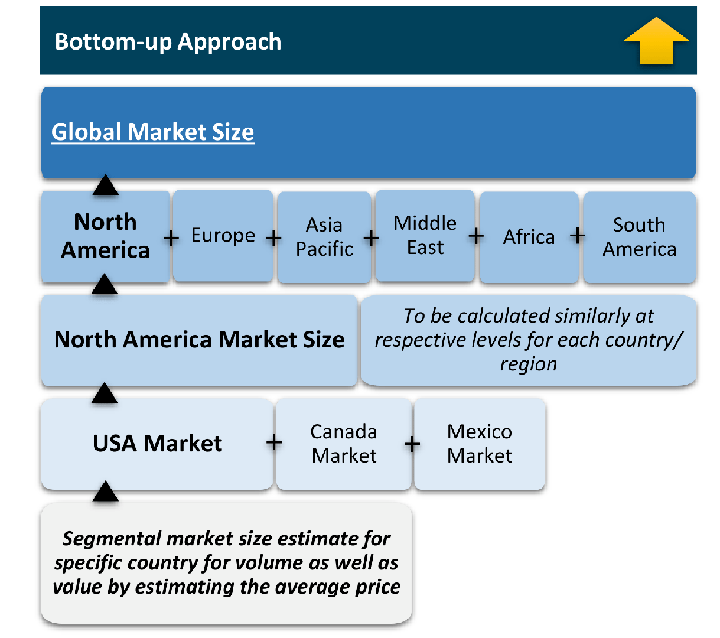
The bottom-up approach builds market estimates by starting with the smallest addressable market units and systematically aggregating them to create comprehensive market size projections.
This method begins with specific, granular data points and builds upward to create the complete market landscape.
Customer Analysis → Segmental Analysis → Geographical Analysis
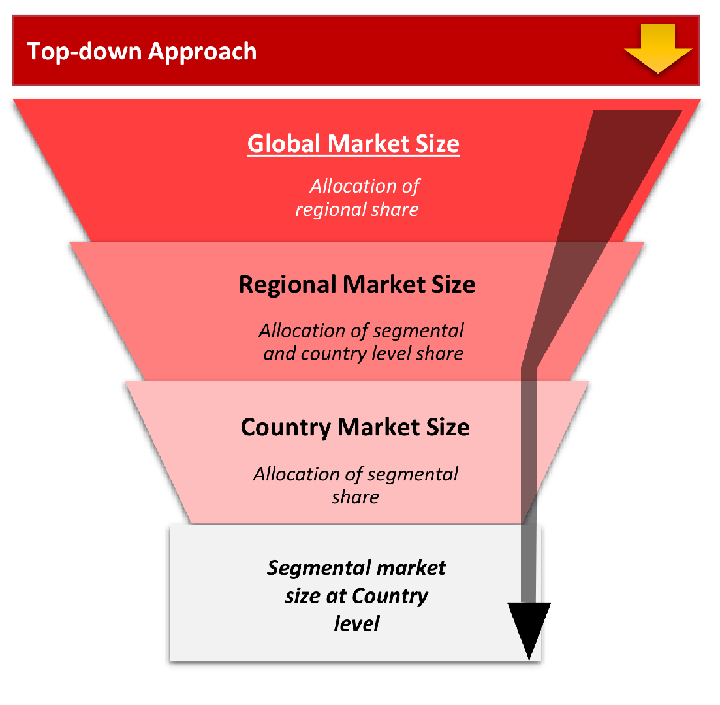
The top-down approach starts with the broadest possible market data and systematically narrows it down through a series of filters and assumptions to arrive at specific market segments or opportunities.
This method begins with the big picture and works downward to increasingly specific market slices.
TAM → SAM → SOM
Research Methods
Desk / Secondary Research
While analysing the market, we extensively study secondary sources, directories, and databases to identify and collect information useful for this technical, market-oriented, and commercial report. Secondary sources that we utilize are not only the public sources, but it is a combination of Open Source, Associations, Paid Databases, MG Repository & Knowledgebase, and others.
- Company websites, annual reports, financial reports, broker reports, and investor presentations
- National government documents, statistical databases and reports
- News articles, press releases and web-casts specific to the companies operating in the market, Magazines, reports, and others
- We gather information from commercial data sources for deriving company specific data such as segmental revenue, share for geography, product revenue, and others
- Internal and external proprietary databases (industry-specific), relevant patent, and regulatory databases
- Governing Bodies, Government Organizations
- Relevant Authorities, Country-specific Associations for Industries
We also employ the model mapping approach to estimate the product level market data through the players' product portfolio
Primary Research
Primary research/ interviews is vital in analyzing the market. Most of the cases involves paid primary interviews. Primary sources include primary interviews through e-mail interactions, telephonic interviews, surveys as well as face-to-face interviews with the different stakeholders across the value chain including several industry experts.
| Type of Respondents | Number of Primaries |
|---|---|
| Tier 2/3 Suppliers | ~20 |
| Tier 1 Suppliers | ~25 |
| End-users | ~25 |
| Industry Expert/ Panel/ Consultant | ~30 |
| Total | ~100 |
MG Knowledgebase
• Repository of industry blog, newsletter and case studies
• Online platform covering detailed market reports, and company profiles
Forecasting Factors and Models
Forecasting Factors
- Historical Trends – Past market patterns, cycles, and major events that shaped how markets behave over time. Understanding past trends helps predict future behavior.
- Industry Factors – Specific characteristics of the industry like structure, regulations, and innovation cycles that affect market dynamics.
- Macroeconomic Factors – Economic conditions like GDP growth, inflation, and employment rates that affect how much money people have to spend.
- Demographic Factors – Population characteristics like age, income, and location that determine who can buy your product.
- Technology Factors – How quickly people adopt new technology and how much technology infrastructure exists.
- Regulatory Factors – Government rules, laws, and policies that can help or restrict market growth.
- Competitive Factors – Analyzing competition structure such as degree of competition and bargaining power of buyers and suppliers.
Forecasting Models / Techniques
Multiple Regression Analysis
- Identify and quantify factors that drive market changes
- Statistical modeling to establish relationships between market drivers and outcomes
Time Series Analysis – Seasonal Patterns
- Understand regular cyclical patterns in market demand
- Advanced statistical techniques to separate trend, seasonal, and irregular components
Time Series Analysis – Trend Analysis
- Identify underlying market growth patterns and momentum
- Statistical analysis of historical data to project future trends
Expert Opinion – Expert Interviews
- Gather deep industry insights and contextual understanding
- In-depth interviews with key industry stakeholders
Multi-Scenario Development
- Prepare for uncertainty by modeling different possible futures
- Creating optimistic, pessimistic, and most likely scenarios
Time Series Analysis – Moving Averages
- Sophisticated forecasting for complex time series data
- Auto-regressive integrated moving average models with seasonal components
Econometric Models
- Apply economic theory to market forecasting
- Sophisticated economic models that account for market interactions
Expert Opinion – Delphi Method
- Harness collective wisdom of industry experts
- Structured, multi-round expert consultation process
Monte Carlo Simulation
- Quantify uncertainty and probability distributions
- Thousands of simulations with varying input parameters
Research Analysis
Our research framework is built upon the fundamental principle of validating market intelligence from both demand and supply perspectives. This dual-sided approach ensures comprehensive market understanding and reduces the risk of single-source bias.
Demand-Side Analysis: We understand end-user/application behavior, preferences, and market needs along with the penetration of the product for specific application.
Supply-Side Analysis: We estimate overall market revenue, analyze the segmental share along with industry capacity, competitive landscape, and market structure.
Validation & Evaluation
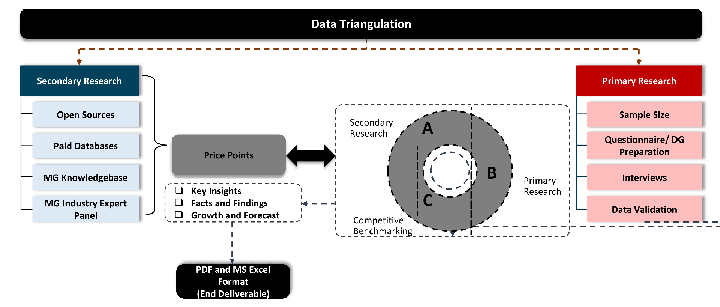
Data triangulation is a validation technique that uses multiple methods, sources, or perspectives to examine the same research question, thereby increasing the credibility and reliability of research findings. In market research, triangulation serves as a quality assurance mechanism that helps identify and minimize bias, validate assumptions, and ensure accuracy in market estimates.
- Data Source Triangulation – Using multiple data sources to examine the same phenomenon
- Methodological Triangulation – Using multiple research methods to study the same research question
- Investigator Triangulation – Using multiple researchers or analysts to examine the same data
- Theoretical Triangulation – Using multiple theoretical perspectives to interpret the same data
Custom Market Research Services
We will customise the research for you, in case the report listed above does not meet your requirements.
Get 10% Free Customisation