Semiconductor Manufacturing Equipment Market Size, Share & Trends Analysis Report by Equipment Type (Wafer Processing Equipment, Wafer Surface Conditioning Equipment, Assembly & Packaging Equipment, Test & Measurement Equipment, Metrology & Inspection Equipment), Process Type, Wafer Size, Technology Node, Material Type Processed, Chamber Configuration, Automation Level, Application Type, End-Use Industry, Sales Channel, and Geography (North America, Europe, Asia Pacific, Middle East, Africa, and South America) – Global Industry Data, Trends, and Forecasts, 2026–2035
|
|
|
Segmental Data Insights |
|
|
Demand Trends |
|
|
Competitive Landscape |
|
|
Strategic Development |
|
|
Future Outlook & Opportunities |
|
Semiconductor-Manufacturing-Equipment-Market Size, Share, and Growth
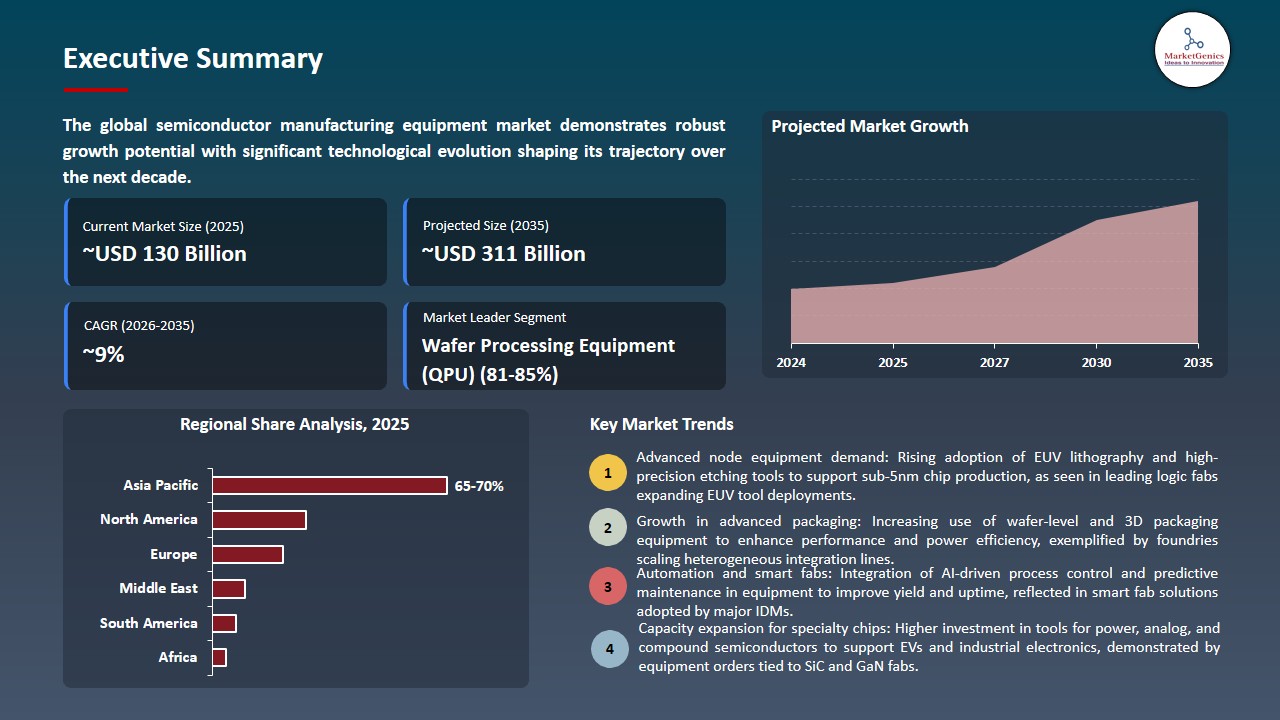
The global semiconductor manufacturing equipment market is experiencing robust growth, with its estimated value of USD 130.3 billion in the year 2025 and USD 311.3 billion by the period 2035, registering a CAGR of 9.1%, during the forecast period. The new generation of high-precision fabrication platforms, modular multi-functional SME systems, and growth through the quantifiable advancements in throughput, yield, and energy efficiency is becoming the determinant of the growth in the global semiconductor manufacturing equipment market.
Oreste Donzella, executive vice president and chief strategy officer, KLA Corporation, said: With today's portfolio news, KLA is affirming our leadership in semiconductor ecosystem innovation. IC substrates and other panel-level packaging technologies are essential to advancing connectivity within tomorrow's high-performance chips, and KLA is collaboratively engaged with customers in solving complex production challenges to maximize their yield and business success.
The global semiconductor manufacturing equipment market is becoming an area of high-performance, high-growth, and infrastructure-critical applications as semiconductor manufacturers are accumulating the demands of precision-engineered, energy-optimized equipment to support the expanded high-performance, high-growth, and infrastructure-critical needs of advanced nodes, AI chipsets, and next-generation cloud and edge computing workloads. In addition to conventional fabrication, semiconductor manufacturing equipment systems are currently supporting ultra-fine patterning, atomic deposition, and 3D multi-layer integration of high-density and heterogeneous semiconductor devices deployed in hyperscale data centers, AI accelerators, and high-performance computing systems.
New state-of-the-art technology at the system level, including AI-based process monitoring, predictive analytics, hybrid photonic-electronic fabrication, modular and software-defined control, etc. are enabling the SME platforms to provide scalable, customizable production with compatibility with the advanced CMOS and wafer-level packaging processes. The innovations enable optimization of throughput, yield, thermal efficiency and energy consumption, and semiconductor manufacturing equipment solutions are essential to a highly customized AI clusters, edge computing nodes, and infrastructure based on 5G/6G.
Adjacent opportunities to the semiconductor manufacturing equipment market include lithography systems for advanced nodes, etching and deposition tools, wafer inspection and metrology equipment, packaging and testing solutions, and automation and robotics for fabs, leveraging rising semiconductor demand and advanced process technologies, thereby expanding adoption across foundries, accelerating innovation in chip fabrication, and supporting the growth of next-generation electronics.
Semiconductor Manufacturing Equipment Market Dynamics and Trends
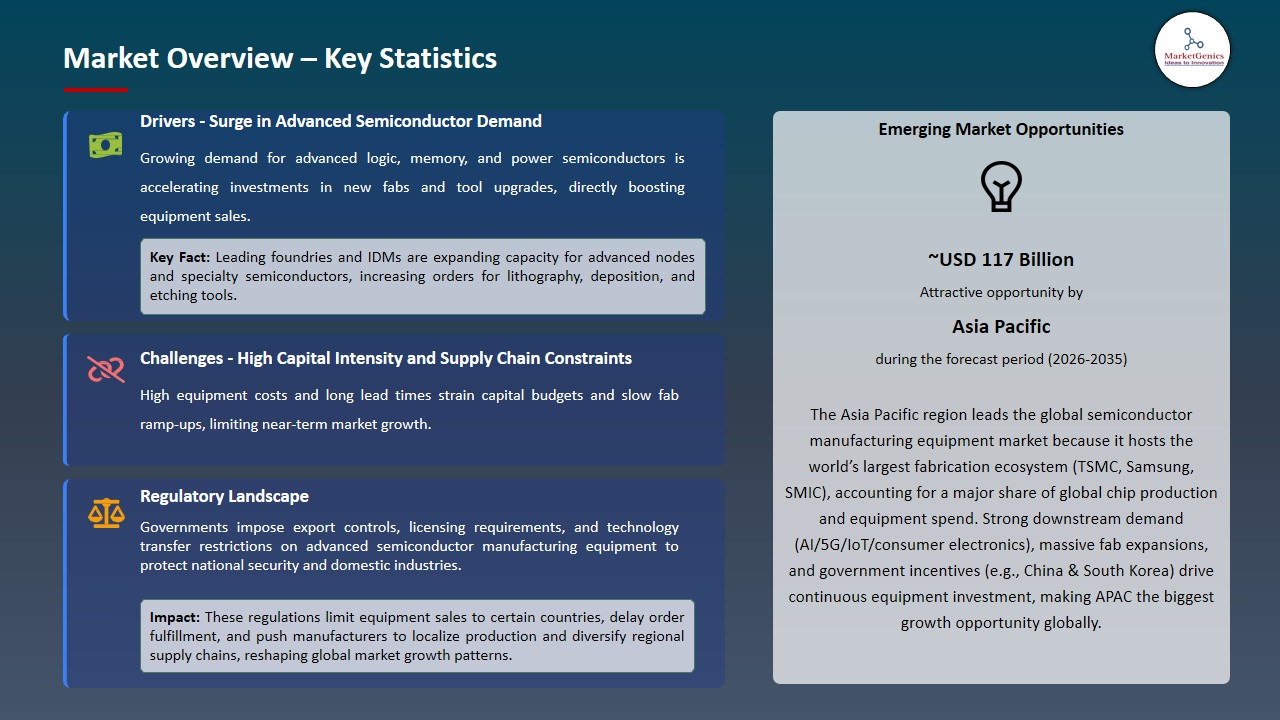
Driver: Accelerated demand for advanced nodes and high-performance applications
-
The semiconductor manufacturing equipment market is influenced by the increasingly high-density and energy efficient semiconductor devices demand to drive AI accelerator, vehicle electronics and advanced memory. The growing use of heterogeneous integration, 3D integration, and sub-5nm logic nodes is forcing fabs to acquire high precision etch, deposition and inspection equipment to ensure yield, performance and reliability.
- Equipment vendors are introducing the next generation platforms to accommodate such needs. For instance, in December 2025, Intel had ASML install its TWINSCAN EXE: 5200B High-NA EUV lithography equipment to support its 14A process node to allow finer resolution and increased throughput of high-performance semiconductor manufacturing.
- Increasing AI, cloud and HPC workload demand is prompting the use of advanced-node semiconductor gear, making semiconductor manufacturing equipment an important enabler of high-performance digital infrastructure.
Restraint: High capital intensity and long qualification cycles
-
The expensive nature of high-tech semiconductor manufacturing equipment is a major limit to the development of the market. The next-generation devices and technologies like extreme ultraviolet (EUV) lithography machines, atomic layer deposition (ALD) machines, and exceptional metrology devices demand billions of dollars in research and development, specialized manufacturing, and assembly, and are restricted to large-scale fabs and new market entrants.
- Long equipment qualification, long process integration, and complicated system validation. Indicatively, installation of EUV lithography on sub-5nm manufacturing lines requires 12-18 months, and a lot of wafer testing, calibration, and training of operators in order to attain the production levels.
- Other expenses on standards compliance, clean room facilities and experienced personnel restrict entry barriers and slack market penetration into despite the subsequent increase in demand across the globe.
Opportunity: Service-oriented business models and aftermarket solutions
-
Increasing complexity in semiconductor manufacturing and growing demand of advanced nodes is pushing the market opportunities of service-oriented and aftermarket solutions. To reduce initial expenditure, improve equipment downtime, and reduce the efficiency of production resource utilization of large volumes of logic, memory, and packaging products, wafer fabs are moving towards predictive maintenance, tool leasing, and subscription-based models.
- These solutions are combined with AI-based monitoring and analytics, which help fabs achieve better process reliability, minimize defectivity, and maximize throughput. For instance, in March 2025, ASML collaborated with IMEC to develop AI-based predictive analytics on the EUV lithography systems, which is expected to minimize unplanned downtimes and enhance the uptime of tools used in wafer fabs.
- Service-based model and aftermarket models assist the suppliers to generate recurring revenue, increase customers, and accelerate global adoption of technology, which will result in long-term market growth.
Key Trend: Integration of AI and data-driven process control
-
A rapid move in the semiconductor manufacturing equipment market towards AI-enabled, data-driven process control where equipment platforms are increasingly integrating machine learning algorithms to optimize the performance of the processes in terms of stability, tool usage, and yield performance, as complex fabrication steps are combined.
- Equipment manufacturers are progressing with smart etch, deposition, metrology and inspection systems which take advantage of real time sensor information, predictive analytics and closed loop feedback to identify defects during the early phases, process drift and unplanned downtime. For instance, in August 2025, Nordson Test and Inspection announced AI-based inspection and metrology equipment that runs on its Nordson Intelligence AI platform and provides real-time predictive maintenance and process optimization of wafer fab equipment.
- There is an increasing use of autonomous process optimization and predictive maintenance which increase efficiency and yield making AI-driven equipment a central competitive differentiator of semiconductor fabs.
Semiconductor-Manufacturing-Equipment-Market Analysis and Segmental Data
Wafer Processing Equipment Dominate Global Semiconductor Manufacturing Equipment Market
-
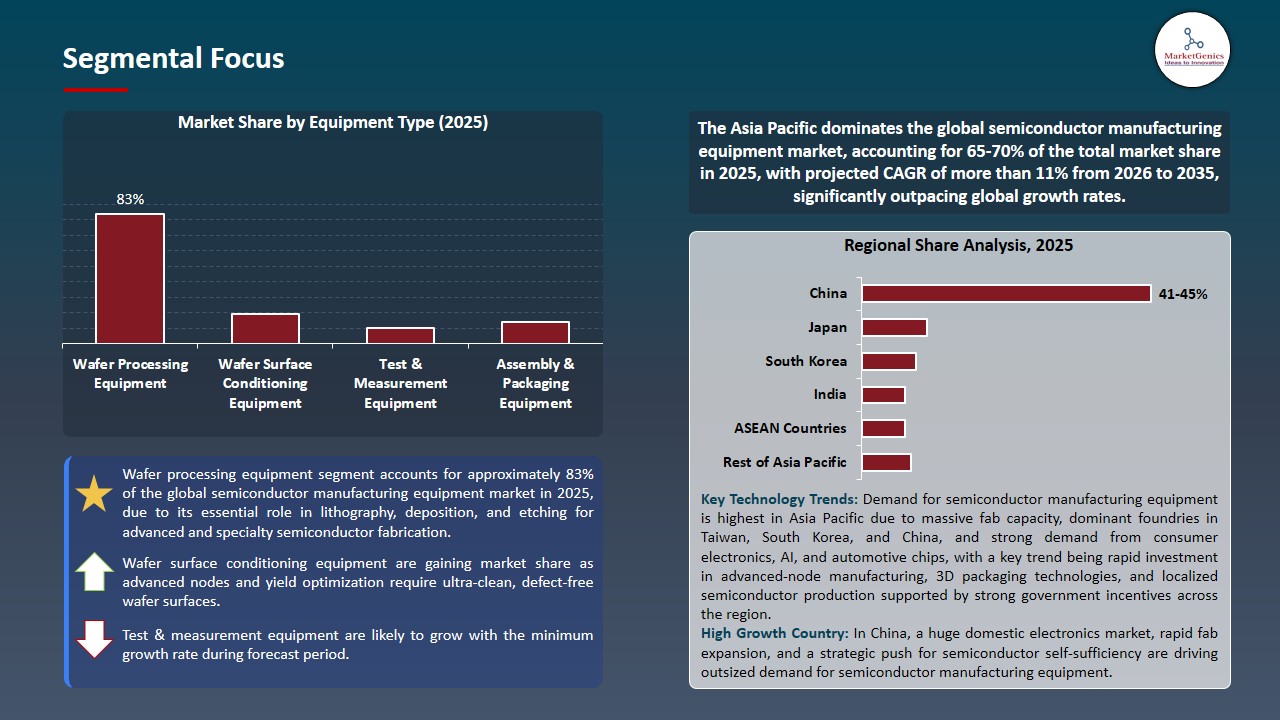
Wafer processing equipment dominates the global semiconductor manufacturing equipment marketplace as it is at the heart of front-end fabrication, and it allows transistor scaling, yield improvement, and performance optimization of advanced logic, memory and specialty semiconductor devices.
- Continuous innovation in deposition, etching, cleaning and integration of lithography processes strengthens market momentum. Suppliers of equipment are developing atomic-level accuracy, flake control, and repeatability of the processes to facilitate complicated production movements like gate-all-around (GAA) transistors and heterogeneous integration. For instance, in February 2025, Lam Research Corporation announced sophisticated plasma etch and atomic layer deposition (ALD) solutions that will increase pattern fidelity, decrease variability, and increase yields in advanced logic and memory fabs.
- Through the general market, the wafer processing equipment dominates the market because it plays a key role in the recent node scaling and fab productivity.
Asia Pacific Leads Global Semiconductor Manufacturing Equipment Market Demand
-
Asia Pacific leads the semiconductor manufacturing equipment market, which is facilitated by the presence of numerous high-volume semiconductor fabrication centers in China, Taiwan, South Korea and Japan. Sustained demand of the lithography, deposition, etch, and inspection equipment is being generated by continuous investments in high logic, memory and foundry capacity across the region.
- Market characteristics include; rapid commercialization of high node, robust cooperation between equipment suppliers and fabs, and complete integration of local supply chains. In August 2025, ASMPT unveiled next-generation packaging and assembly systems at SEMICON Taiwan, put forwarding the role of the Asia Pacific region as a key location of launch and adoption of next-generation semiconductor manufacturing systems.
- Good manufacturing base and its perpetuated fab growth makes Asia Pacific remain the biggest provider of the world semiconductor manufacturing equipment requirements and revenues.
Semiconductor-Manufacturing-Equipment-Market Ecosystem
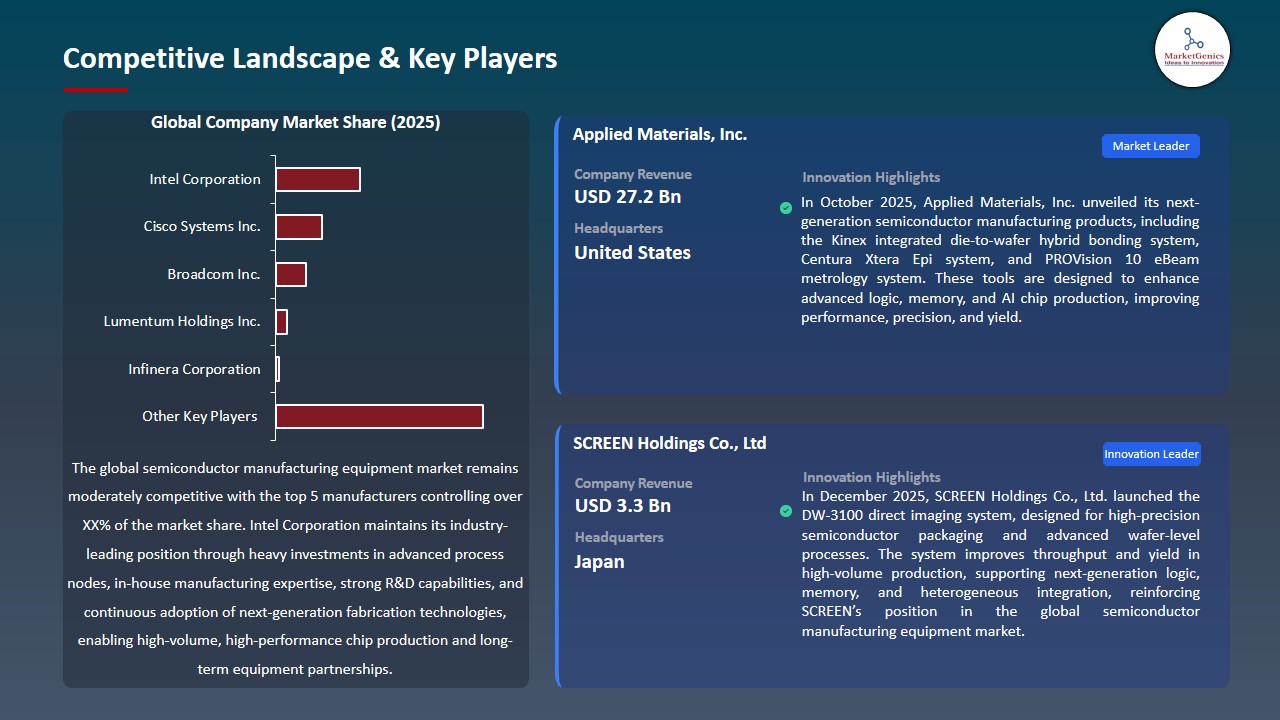
The semiconductor manufacturing equipment market is highly consolidated with the Tier-1 multinational companies having medium-high concentration with huge market share of the industry due to their advanced R&D, integrated solutions, and comprehensive global distribution networks. Tier-1 players ASML Holding N.V., Applied Materials, Lam Research Corporation, Tokyo Electron Limited and KLA Corporation have dominated the market with lithography, deposition, etch, metrology and inspection systems with technological leadership, portfolios of patents and international strategic alliances with global semiconductor fabs and foundries.
Tier 2 players comprise up-and-coming equipment experts and subsystem integrators who differentiate through niche applications, high-process solution, and high-precision metrology products and look at up-market logic, memory and packaging market segments. Tier-3 players include start-ups and regional innovators that are building next-generation automation, AI-assisted process control and energy-saving manufacturing technologies. The intensity of competition at levels is rooted in the area of innovation in process optimization, scalability, yield improvement, and enhanced node enablement in such a way that they create an ecosystem of collaboration and differentiation to lead the market and grow in the long run.
Recent Development and Strategic Overview
-
In October 2025, KLA Corporation presented an extensive large portfolio of IC substrate manufacturing solutions to support advanced packaging and heterogeneous integration. The lineup builds on the Corus direct imaging platform, adds the Serena direct imaging platform to finer patterning with the Lumina inspection and metrology system to enhance yield and quality in the production of advanced IC substrates.
- In September 2024, Tokyo Electron Limited entered into a memorandum of understanding (MoU) with Tata Electronics Private Limited with an aim of accelerating the infrastructure of semiconductor equipment in India in the first semiconductor fab in Dholera, Gujarat and the assembly and test plant in Jagiroad, Assam. The engagement involves employee education, research and development, and technology development to enhance the ecosystem of semiconductor in India.
Report Scope
|
Detail |
|
|
Market Size in 2025 |
USD 130.3 Bn |
|
Market Forecast Value in 2035 |
USD 311.3 Bn |
|
Growth Rate (CAGR) |
9.1% |
|
Forecast Period |
2026 – 2035 |
|
Historical Data Available for |
2021 – 2024 |
|
Market Size Units |
US$ Billion for Value Thousand Units for Volume |
|
Report Format |
Electronic (PDF) + Excel |
|
North America |
Europe |
Asia Pacific |
Middle East |
Africa |
South America |
|
|
|
|
|
|
|
Companies Covered |
|||||
|
|
|
|
|
|
|
Semiconductor-Manufacturing-Equipment-Market Segmentation and Highlights
|
Segment |
Sub-segment |
|
Semiconductor Manufacturing Equipment Market, By Equipment Type |
|
|
Semiconductor Manufacturing Equipment Market, By Process Type |
|
|
Semiconductor Manufacturing Equipment Market, By Wafer Size |
|
|
Semiconductor Manufacturing Equipment Market, By Technology Node |
|
|
Semiconductor Manufacturing Equipment Market, By Material Type Processed |
|
|
Semiconductor Manufacturing Equipment Market, By Chamber Configuration |
|
|
Semiconductor Manufacturing Equipment Market, By Automation Level |
|
|
Semiconductor Manufacturing Equipment Market, By Application Type |
|
|
Semiconductor Manufacturing Equipment Market, By End-Use Industry |
|
|
Semiconductor Manufacturing Equipment Market, By Sales Channel |
|
Frequently Asked Questions
Table of Contents
- 1. Research Methodology and Assumptions
- 1.1. Definitions
- 1.2. Research Design and Approach
- 1.3. Data Collection Methods
- 1.4. Base Estimates and Calculations
- 1.5. Forecasting Models
- 1.5.1. Key Forecast Factors & Impact Analysis
- 1.6. Secondary Research
- 1.6.1. Open Sources
- 1.6.2. Paid Databases
- 1.6.3. Associations
- 1.7. Primary Research
- 1.7.1. Primary Sources
- 1.7.2. Primary Interviews with Stakeholders across Ecosystem
- 2. Executive Summary
- 2.1. Global Semiconductor Manufacturing Equipment Market Outlook
- 2.1.1. Semiconductor Manufacturing Equipment Market Size Volume (Thousand Units) and Value (US$ Bn), and Forecasts, 2021-2035
- 2.1.2. Compounded Annual Growth Rate Analysis
- 2.1.3. Growth Opportunity Analysis
- 2.1.4. Segmental Share Analysis
- 2.1.5. Geographical Share Analysis
- 2.2. Market Analysis and Facts
- 2.3. Supply-Demand Analysis
- 2.4. Competitive Benchmarking
- 2.5. Go-to- Market Strategy
- 2.5.1. Customer/ End-use Industry Assessment
- 2.5.2. Growth Opportunity Data, 2026-2035
- 2.5.2.1. Regional Data
- 2.5.2.2. Country Data
- 2.5.2.3. Segmental Data
- 2.5.3. Identification of Potential Market Spaces
- 2.5.4. GAP Analysis
- 2.5.5. Potential Attractive Price Points
- 2.5.6. Prevailing Market Risks & Challenges
- 2.5.7. Preferred Sales & Marketing Strategies
- 2.5.8. Key Recommendations and Analysis
- 2.5.9. A Way Forward
- 2.1. Global Semiconductor Manufacturing Equipment Market Outlook
- 3. Industry Data and Premium Insights
- 3.1. Global Semiconductors & Electronics Industry Overview, 2025
- 3.1.1. Industry Ecosystem Analysis
- 3.1.2. Key Trends for Semiconductors & Electronics Industry
- 3.1.3. Regional Distribution for Semiconductors & Electronics Industry
- 3.2. Supplier Customer Data
- 3.3. Technology Roadmap and Developments
- 3.4. Trade Analysis
- 3.4.1. Import & Export Analysis, 2025
- 3.4.2. Top Importing Countries
- 3.4.3. Top Exporting Countries
- 3.5. Trump Tariff Impact Analysis
- 3.5.1. Manufacturer
- 3.5.1.1. Based on the component & Raw material
- 3.5.2. Supply Chain
- 3.5.3. End Consumer
- 3.5.1. Manufacturer
- 3.6. Raw Material Analysis
- 3.1. Global Semiconductors & Electronics Industry Overview, 2025
- 4. Market Overview
- 4.1. Market Dynamics
- 4.1.1. Drivers
- 4.1.1.1. Rising demand for advanced chips driven by AI, HPC, 5G, and automotive electrification.
- 4.1.1.2. Expansion of semiconductor fabrication capacity supported by government incentives and localization strategies.
- 4.1.1.3. Continuous technology scaling and transition to advanced nodes, increasing equipment complexity and demand.
- 4.1.2. Restraints
- 4.1.2.1. High capital expenditure and long return-on-investment cycles for semiconductor equipment.
- 4.1.2.2. Supply chain disruptions and export control regulations impacting equipment availability and adoption.
- 4.1.1. Drivers
- 4.2. Key Trend Analysis
- 4.3. Regulatory Framework
- 4.3.1. Key Regulations, Norms, and Subsidies, by Key Countries
- 4.3.2. Tariffs and Standards
- 4.3.3. Impact Analysis of Regulations on the Market
- 4.4. Value Chain Analysis
- 4.4.1. Component Suppliers
- 4.4.2. Equipment Manufacturers
- 4.4.3. System Integrators
- 4.4.4. Dealers/ Distributors
- 4.4.5. End-Users
- 4.5. Cost Structure Analysis
- 4.5.1. Parameter’s Share for Cost Associated
- 4.5.2. COGP vs COGS
- 4.5.3. Profit Margin Analysis
- 4.6. Pricing Analysis
- 4.6.1. Regional Pricing Analysis
- 4.6.2. Segmental Pricing Trends
- 4.6.3. Factors Influencing Pricing
- 4.7. Porter’s Five Forces Analysis
- 4.8. PESTEL Analysis
- 4.9. Global Semiconductor Manufacturing Equipment Market Demand
- 4.9.1. Historical Market Size – Volume (Thousand Units) and Value (US$ Bn), 2020-2024
- 4.9.2. Current and Future Market Size – Volume (Thousand Units) and Value (US$ Bn), 2026–2035
- 4.9.2.1. Y-o-Y Growth Trends
- 4.9.2.2. Absolute $ Opportunity Assessment
- 4.1. Market Dynamics
- 5. Competition Landscape
- 5.1. Competition structure
- 5.1.1. Fragmented v/s consolidated
- 5.2. Company Share Analysis, 2025
- 5.2.1. Global Company Market Share
- 5.2.2. By Region
- 5.2.2.1. North America
- 5.2.2.2. Europe
- 5.2.2.3. Asia Pacific
- 5.2.2.4. Middle East
- 5.2.2.5. Africa
- 5.2.2.6. South America
- 5.3. Product Comparison Matrix
- 5.3.1. Specifications
- 5.3.2. Market Positioning
- 5.3.3. Pricing
- 5.1. Competition structure
- 6. Global Semiconductor Manufacturing Equipment Market Analysis, by Equipment Type
- 6.1. Key Segment Analysis
- 6.2. Semiconductor Manufacturing Equipment Market Size Volume (Thousand Units) and Value (US$ Bn), Analysis, and Forecasts, by Equipment Type, 2021-2035
- 6.2.1. Wafer Processing Equipment
- 6.2.1.1. Lithography Equipment
- 6.2.1.1.1. Deep Ultraviolet (DUV) Lithography
- 6.2.1.1.2. Extreme Ultraviolet (EUV) Lithography
- 6.2.1.1.3. Immersion Lithography
- 6.2.1.1.4. Others
- 6.2.1.2. Etching Equipment
- 6.2.1.2.1. Dry Etching Systems
- 6.2.1.2.2. Wet Etching Systems
- 6.2.1.2.3. Plasma Etching Systems
- 6.2.1.3. Deposition Equipment
- 6.2.1.3.1. Chemical Vapor Deposition (CVD)
- 6.2.1.3.2. Physical Vapor Deposition (PVD)
- 6.2.1.3.3. Atomic Layer Deposition (ALD)
- 6.2.1.4. Ion Implantation Equipment
- 6.2.1.5. Cleaning Equipment
- 6.2.1.6. Chemical Mechanical Planarization (CMP) Equipment
- 6.2.1.7. Rapid Thermal Processing (RTP) Equipment
- 6.2.1.8. Others
- 6.2.1.1. Lithography Equipment
- 6.2.2. Wafer Surface Conditioning Equipment
- 6.2.2.1. Polishing Systems
- 6.2.2.2. Grinding Systems
- 6.2.2.3. Lapping Systems
- 6.2.2.4. Others
- 6.2.3. Assembly & Packaging Equipment
- 6.2.3.1. Die Bonding Equipment
- 6.2.3.2. Wire Bonding Equipment
- 6.2.3.3. Encapsulation Equipment
- 6.2.3.4. Molding Equipment
- 6.2.3.5. Dicing Equipment
- 6.2.3.6. Others
- 6.2.4. Test & Measurement Equipment
- 6.2.4.1. Wafer Probing Systems
- 6.2.4.2. Final Test Equipment
- 6.2.4.3. Automated Test Equipment (ATE)
- 6.2.4.4. Logic Testers
- 6.2.4.5. Memory Testers
- 6.2.4.6. Parametric Testers
- 6.2.4.7. Others
- 6.2.5. Metrology & Inspection Equipment
- 6.2.5.1. Optical Inspection Systems
- 6.2.5.2. E-beam Inspection Systems
- 6.2.5.3. Defect Review Systems
- 6.2.5.4. Others
- 6.2.1. Wafer Processing Equipment
- 7. Global Semiconductor Manufacturing Equipment Market Analysis, by Process Type
- 7.1. Key Segment Analysis
- 7.2. Semiconductor Manufacturing Equipment Market Size Volume (Thousand Units) and Value (US$ Bn), Analysis, and Forecasts, by Process Type, 2021-2035
- 7.2.1. Front-End-of-Line (FEOL) Equipment
- 7.2.2. Back-End-of-Line (BEOL) Equipment
- 7.2.3. Advanced Packaging Equipment
- 8. Global Semiconductor Manufacturing Equipment Market Analysis, by Wafer Size
- 8.1. Key Segment Analysis
- 8.2. Semiconductor Manufacturing Equipment Market Size Volume (Thousand Units) and Value (US$ Bn), Analysis, and Forecasts, by Wafer Size, 2021-2035
- 8.2.1. 150mm (6-inch)
- 8.2.2. 200mm (8-inch)
- 8.2.3. 300mm (12-inch)
- 8.2.4. 450mm (18-inch) and Above
- 9. Global Semiconductor Manufacturing Equipment Market Analysis, by Technology Node
- 9.1. Key Segment Analysis
- 9.2. Semiconductor Manufacturing Equipment Market Size Volume (Thousand Units) and Value (US$ Bn), Analysis, and Forecasts, by Technology Node, 2021-2035
- 9.2.1. Legacy Nodes (>28nm)
- 9.2.1.1. 180nm and above
- 9.2.1.2. 90nm to 130nm
- 9.2.1.3. 45nm to 65nm
- 9.2.2. Advanced Nodes (≤28nm)
- 9.2.2.1. 22nm to 28nm
- 9.2.2.2. 14nm to 16nm
- 9.2.2.3. 7nm to 10nm
- 9.2.2.4. 5nm and below
- 9.2.2.5. 3nm and emerging
- 9.2.1. Legacy Nodes (>28nm)
- 10. Global Semiconductor Manufacturing Equipment Market Analysis, by Material Type Processed
- 10.1. Key Segment Analysis
- 10.2. Semiconductor Manufacturing Equipment Market Size Volume (Thousand Units) and Value (US$ Bn), Analysis, and Forecasts, by Material Type Processed, 2021-2035
- 10.2.1. Silicon-Based Materials
- 10.2.2. Compound Semiconductors
- 10.2.2.1. Gallium Arsenide (GaAs)
- 10.2.2.2. Gallium Nitride (GaN)
- 10.2.2.3. Silicon Carbide (SiC)
- 10.2.3. Wide Bandgap Materials
- 10.2.4. Advanced Materials
- 11. Global Semiconductor Manufacturing Equipment Market Analysis, by Chamber Configuration
- 11.1. Key Segment Analysis
- 11.2. Semiconductor Manufacturing Equipment Market Size Volume (Thousand Units) and Value (US$ Bn), Analysis, and Forecasts, by Chamber Configuration, 2021-2035
- 11.2.1. Single-Wafer Processing Systems
- 11.2.2. Batch Processing Systems
- 11.2.3. Cluster Tool Systems
- 12. Global Semiconductor Manufacturing Equipment Market Analysis, by Automation Level
- 12.1. Key Segment Analysis
- 12.2. Semiconductor Manufacturing Equipment Market Size Volume (Thousand Units) and Value (US$ Bn), Analysis, and Forecasts, by Automation Level, 2021-2035
- 12.2.1. Fully Automated Systems
- 12.2.2. Semi-Automated Systems
- 12.2.3. Manual Systems
- 13. Global Semiconductor Manufacturing Equipment Market Analysis, by Application Type
- 13.1. Key Segment Analysis
- 13.2. Semiconductor Manufacturing Equipment Market Size Volume (Thousand Units) and Value (US$ Bn), Analysis, and Forecasts, by Application Type, 2021-2035
- 13.2.1. Logic Devices
- 13.2.1.1. Microprocessors
- 13.2.1.2. GPUs
- 13.2.1.3. FPGAs
- 13.2.1.4. ASICs
- 13.2.1.5. Others
- 13.2.2. Memory Devices
- 13.2.2.1. DRAM
- 13.2.2.2. NAND Flash
- 13.2.2.3. NOR Flash
- 13.2.2.4. SRAM
- 13.2.2.5. Emerging Memory (MRAM, ReRAM, PCM)
- 13.2.2.6. Others
- 13.2.3. Analog & Mixed-Signal Devices
- 13.2.4. Discrete Devices
- 13.2.4.1. Power Transistors
- 13.2.4.2. Diodes
- 13.2.4.3. Thyristors
- 13.2.4.4. Others
- 13.2.5. Optoelectronic Devices
- 13.2.1. Logic Devices
- 14. Global Semiconductor Manufacturing Equipment Market Analysis, by End-Use Industry
- 14.1. Key Segment Analysis
- 14.2. Semiconductor Manufacturing Equipment Market Size Volume (Thousand Units) and Value (US$ Bn), Analysis, and Forecasts, by End-Use Industry, 2021-2035
- 14.2.1. Consumer Electronics
- 14.2.1.1. Smartphones
- 14.2.1.2. Tablets & Laptops
- 14.2.1.3. Wearable Devices
- 14.2.1.4. Gaming Consoles
- 14.2.1.5. Digital Cameras
- 14.2.1.6. Home Appliances
- 14.2.1.7. Others
- 14.2.2. Automotive
- 14.2.2.1. Electric Vehicles (EVs)
- 14.2.2.2. Battery Management Systems
- 14.2.2.3. Power Electronics
- 14.2.2.4. Charging Infrastructure
- 14.2.2.5. Others
- 14.2.3. ADAS (Advanced Driver Assistance Systems)
- 14.2.3.1. Infotainment Systems
- 14.2.3.2. Powertrain Control
- 14.2.3.3. Lighting Systems
- 14.2.3.4. Safety Systems
- 14.2.3.5. Others
- 14.2.4. Industrial
- 14.2.4.1. Industrial Automation
- 14.2.4.2. Robotics
- 14.2.4.3. Process Control Systems
- 14.2.4.4. Industrial IoT
- 14.2.4.5. Power Management
- 14.2.4.6. Motor Drives
- 14.2.4.7. Others
- 14.2.5. Telecommunications
- 14.2.5.1. Network Infrastructure Equipment
- 14.2.5.2. Base Stations (4G/5G)
- 14.2.5.3. Data Centers
- 14.2.5.4. Communication Satellites
- 14.2.5.5. Optical Communication Systems
- 14.2.5.6. Others
- 14.2.6. Computing & Data Centers
- 14.2.6.1. Servers
- 14.2.6.2. High-Performance Computing (HPC)
- 14.2.6.3. Cloud Infrastructure
- 14.2.6.4. Edge Computing
- 14.2.6.5. AI and Machine Learning Hardware
- 14.2.6.6. Others
- 14.2.7. Healthcare & Medical
- 14.2.7.1. Medical Imaging Equipment
- 14.2.7.2. Patient Monitoring Systems
- 14.2.7.3. Diagnostic Equipment
- 14.2.7.4. Implantable Devices
- 14.2.7.5. Laboratory Equipment
- 14.2.7.6. Others
- 14.2.8. Aerospace & Defense
- 14.2.8.1. Avionics Systems
- 14.2.8.2. Radar Systems
- 14.2.8.3. Satellite Systems
- 14.2.8.4. Military Communications
- 14.2.8.5. Navigation Systems
- 14.2.8.6. Others
- 14.2.9. Energy & Power
- 14.2.9.1. Solar Photovoltaics
- 14.2.9.2. Wind Energy Systems
- 14.2.9.3. Smart Grid
- 14.2.9.4. Energy Storage Systems
- 14.2.9.5. Power Converters
- 14.2.9.6. Inverters
- 14.2.9.7. Others
- 14.2.10. Other Industries
- 14.2.1. Consumer Electronics
- 15. Global Semiconductor Manufacturing Equipment Market Analysis, by Sales Channel
- 15.1. Key Segment Analysis
- 15.2. Semiconductor Manufacturing Equipment Market Size Volume (Thousand Units) and Value (US$ Bn), Analysis, and Forecasts, by Sales Channel, 2021-2035
- 15.2.1. Direct Sales
- 15.2.2. Distributors
- 15.2.3. Third-Party Service Providers
- 16. Global Semiconductor Manufacturing Equipment Market Analysis and Forecasts, by Region
- 16.1. Key Findings
- 16.2. Semiconductor Manufacturing Equipment Market Size Volume (Thousand Units) and Value (US$ Bn), Analysis, and Forecasts, by Region, 2021-2035
- 16.2.1. North America
- 16.2.2. Europe
- 16.2.3. Asia Pacific
- 16.2.4. Middle East
- 16.2.5. Africa
- 16.2.6. South America
- 17. North America Semiconductor Manufacturing Equipment Market Analysis
- 17.1. Key Segment Analysis
- 17.2. Regional Snapshot
- 17.3. North America Semiconductor Manufacturing Equipment Market Size Volume (Thousand Units) and Value (US$ Bn), Analysis, and Forecasts, 2021-2035
- 17.3.1. Equipment Type
- 17.3.2. Process Type
- 17.3.3. Wafer Size
- 17.3.4. Technology Node
- 17.3.5. Material Type Processed
- 17.3.6. Chamber Configuration
- 17.3.7. Automation Level
- 17.3.8. Application Type
- 17.3.9. End-Use Industry
- 17.3.10. Sales Channel
- 17.3.11. Country
- 17.3.11.1. USA
- 17.3.11.2. Canada
- 17.3.11.3. Mexico
- 17.4. USA Semiconductor Manufacturing Equipment Market
- 17.4.1. Country Segmental Analysis
- 17.4.2. Wafer Processing Equipment
- 17.4.3. Process Type
- 17.4.4. Wafer Size
- 17.4.5. Technology Node
- 17.4.6. Material Type Processed
- 17.4.7. Chamber Configuration
- 17.4.8. Automation Level
- 17.4.9. Application Type
- 17.4.10. End-Use Industry
- 17.4.11. Sales Channel
- 17.5. Canada Semiconductor Manufacturing Equipment Market
- 17.5.1. Country Segmental Analysis
- 17.5.2. Wafer Processing Equipment
- 17.5.3. Process Type
- 17.5.4. Wafer Size
- 17.5.5. Technology Node
- 17.5.6. Material Type Processed
- 17.5.7. Chamber Configuration
- 17.5.8. Automation Level
- 17.5.9. Application Type
- 17.5.10. End-Use Industry
- 17.5.11. Sales Channel
- 17.6. Mexico Semiconductor Manufacturing Equipment Market
- 17.6.1. Country Segmental Analysis
- 17.6.2. Wafer Processing Equipment
- 17.6.3. Process Type
- 17.6.4. Wafer Size
- 17.6.5. Technology Node
- 17.6.6. Material Type Processed
- 17.6.7. Chamber Configuration
- 17.6.8. Automation Level
- 17.6.9. Application Type
- 17.6.10. End-Use Industry
- 17.6.11. Sales Channel
- 18. Europe Semiconductor Manufacturing Equipment Market Analysis
- 18.1. Key Segment Analysis
- 18.2. Regional Snapshot
- 18.3. Europe Semiconductor Manufacturing Equipment Market Size Volume (Thousand Units) and Value (US$ Bn), Analysis, and Forecasts, 2021-2035
- 18.3.1. Wafer Processing Equipment
- 18.3.2. Process Type
- 18.3.3. Wafer Size
- 18.3.4. Technology Node
- 18.3.5. Material Type Processed
- 18.3.6. Chamber Configuration
- 18.3.7. Automation Level
- 18.3.8. Application Type
- 18.3.9. End-Use Industry
- 18.3.10. Sales Channel
- 18.3.11. Country
- 18.3.11.1. Germany
- 18.3.11.2. United Kingdom
- 18.3.11.3. France
- 18.3.11.4. Italy
- 18.3.11.5. Spain
- 18.3.11.6. Netherlands
- 18.3.11.7. Nordic Countries
- 18.3.11.8. Poland
- 18.3.11.9. Russia & CIS
- 18.3.11.10. Rest of Europe
- 18.4. Germany Semiconductor Manufacturing Equipment Market
- 18.4.1. Country Segmental Analysis
- 18.4.2. Wafer Processing Equipment
- 18.4.3. Process Type
- 18.4.4. Wafer Size
- 18.4.5. Technology Node
- 18.4.6. Material Type Processed
- 18.4.7. Chamber Configuration
- 18.4.8. Automation Level
- 18.4.9. Application Type
- 18.4.10. End-Use Industry
- 18.4.11. Sales Channel
- 18.5. United Kingdom Semiconductor Manufacturing Equipment Market
- 18.5.1. Country Segmental Analysis
- 18.5.2. Wafer Processing Equipment
- 18.5.3. Process Type
- 18.5.4. Wafer Size
- 18.5.5. Technology Node
- 18.5.6. Material Type Processed
- 18.5.7. Chamber Configuration
- 18.5.8. Automation Level
- 18.5.9. Application Type
- 18.5.10. End-Use Industry
- 18.5.11. Sales Channel
- 18.6. France Semiconductor Manufacturing Equipment Market
- 18.6.1. Country Segmental Analysis
- 18.6.2. Wafer Processing Equipment
- 18.6.3. Process Type
- 18.6.4. Wafer Size
- 18.6.5. Technology Node
- 18.6.6. Material Type Processed
- 18.6.7. Chamber Configuration
- 18.6.8. Automation Level
- 18.6.9. Application Type
- 18.6.10. End-Use Industry
- 18.6.11. Sales Channel
- 18.7. Italy Semiconductor Manufacturing Equipment Market
- 18.7.1. Country Segmental Analysis
- 18.7.2. Wafer Processing Equipment
- 18.7.3. Process Type
- 18.7.4. Wafer Size
- 18.7.5. Technology Node
- 18.7.6. Material Type Processed
- 18.7.7. Chamber Configuration
- 18.7.8. Automation Level
- 18.7.9. Application Type
- 18.7.10. End-Use Industry
- 18.7.11. Sales Channel
- 18.8. Spain Semiconductor Manufacturing Equipment Market
- 18.8.1. Country Segmental Analysis
- 18.8.2. Wafer Processing Equipment
- 18.8.3. Process Type
- 18.8.4. Wafer Size
- 18.8.5. Technology Node
- 18.8.6. Material Type Processed
- 18.8.7. Chamber Configuration
- 18.8.8. Automation Level
- 18.8.9. Application Type
- 18.8.10. End-Use Industry
- 18.8.11. Sales Channel
- 18.9. Netherlands Semiconductor Manufacturing Equipment Market
- 18.9.1. Country Segmental Analysis
- 18.9.2. Wafer Processing Equipment
- 18.9.3. Process Type
- 18.9.4. Wafer Size
- 18.9.5. Technology Node
- 18.9.6. Material Type Processed
- 18.9.7. Chamber Configuration
- 18.9.8. Automation Level
- 18.9.9. Application Type
- 18.9.10. End-Use Industry
- 18.9.11. Sales Channel
- 18.10. Nordic Countries Semiconductor Manufacturing Equipment Market
- 18.10.1. Country Segmental Analysis
- 18.10.2. Wafer Processing Equipment
- 18.10.3. Process Type
- 18.10.4. Wafer Size
- 18.10.5. Technology Node
- 18.10.6. Material Type Processed
- 18.10.7. Chamber Configuration
- 18.10.8. Automation Level
- 18.10.9. Application Type
- 18.10.10. End-Use Industry
- 18.10.11. Sales Channel
- 18.11. Poland Semiconductor Manufacturing Equipment Market
- 18.11.1. Country Segmental Analysis
- 18.11.2. Wafer Processing Equipment
- 18.11.3. Process Type
- 18.11.4. Wafer Size
- 18.11.5. Technology Node
- 18.11.6. Material Type Processed
- 18.11.7. Chamber Configuration
- 18.11.8. Automation Level
- 18.11.9. Application Type
- 18.11.10. End-Use Industry
- 18.11.11. Sales Channel
- 18.12. Russia & CIS Semiconductor Manufacturing Equipment Market
- 18.12.1. Country Segmental Analysis
- 18.12.2. Wafer Processing Equipment
- 18.12.3. Process Type
- 18.12.4. Wafer Size
- 18.12.5. Technology Node
- 18.12.6. Material Type Processed
- 18.12.7. Chamber Configuration
- 18.12.8. Automation Level
- 18.12.9. Application Type
- 18.12.10. End-Use Industry
- 18.12.11. Sales Channel
- 18.13. Rest of Europe Semiconductor Manufacturing Equipment Market
- 18.13.1. Country Segmental Analysis
- 18.13.2. Wafer Processing Equipment
- 18.13.3. Process Type
- 18.13.4. Wafer Size
- 18.13.5. Technology Node
- 18.13.6. Material Type Processed
- 18.13.7. Chamber Configuration
- 18.13.8. Automation Level
- 18.13.9. Application Type
- 18.13.10. End-Use Industry
- 18.13.11. Sales Channel
- 19. Asia Pacific Semiconductor Manufacturing Equipment Market Analysis
- 19.1. Key Segment Analysis
- 19.2. Regional Snapshot
- 19.3. Asia Pacific Semiconductor Manufacturing Equipment Market Size Volume (Thousand Units) and Value (US$ Bn), Analysis, and Forecasts, 2021-2035
- 19.3.1. Wafer Processing Equipment
- 19.3.2. Process Type
- 19.3.3. Wafer Size
- 19.3.4. Technology Node
- 19.3.5. Material Type Processed
- 19.3.6. Chamber Configuration
- 19.3.7. Automation Level
- 19.3.8. Application Type
- 19.3.9. End-Use Industry
- 19.3.10. Sales Channel
- 19.3.11. Country
- 19.3.11.1. China
- 19.3.11.2. India
- 19.3.11.3. Japan
- 19.3.11.4. South Korea
- 19.3.11.5. Australia and New Zealand
- 19.3.11.6. Indonesia
- 19.3.11.7. Malaysia
- 19.3.11.8. Thailand
- 19.3.11.9. Vietnam
- 19.3.11.10. Rest of Asia Pacific
- 19.4. China Semiconductor Manufacturing Equipment Market
- 19.4.1. Country Segmental Analysis
- 19.4.2. Wafer Processing Equipment
- 19.4.3. Process Type
- 19.4.4. Wafer Size
- 19.4.5. Technology Node
- 19.4.6. Material Type Processed
- 19.4.7. Chamber Configuration
- 19.4.8. Automation Level
- 19.4.9. Application Type
- 19.4.10. End-Use Industry
- 19.4.11. Sales Channel
- 19.5. India Semiconductor Manufacturing Equipment Market
- 19.5.1. Country Segmental Analysis
- 19.5.2. Wafer Processing Equipment
- 19.5.3. Process Type
- 19.5.4. Wafer Size
- 19.5.5. Technology Node
- 19.5.6. Material Type Processed
- 19.5.7. Chamber Configuration
- 19.5.8. Automation Level
- 19.5.9. Application Type
- 19.5.10. End-Use Industry
- 19.5.11. Sales Channel
- 19.6. Japan Semiconductor Manufacturing Equipment Market
- 19.6.1. Country Segmental Analysis
- 19.6.2. Wafer Processing Equipment
- 19.6.3. Process Type
- 19.6.4. Wafer Size
- 19.6.5. Technology Node
- 19.6.6. Material Type Processed
- 19.6.7. Chamber Configuration
- 19.6.8. Automation Level
- 19.6.9. Application Type
- 19.6.10. End-Use Industry
- 19.6.11. Sales Channel
- 19.7. South Korea Semiconductor Manufacturing Equipment Market
- 19.7.1. Country Segmental Analysis
- 19.7.2. Wafer Processing Equipment
- 19.7.3. Process Type
- 19.7.4. Wafer Size
- 19.7.5. Technology Node
- 19.7.6. Material Type Processed
- 19.7.7. Chamber Configuration
- 19.7.8. Automation Level
- 19.7.9. Application Type
- 19.7.10. End-Use Industry
- 19.7.11. Sales Channel
- 19.8. Australia and New Zealand Semiconductor Manufacturing Equipment Market
- 19.8.1. Country Segmental Analysis
- 19.8.2. Wafer Processing Equipment
- 19.8.3. Process Type
- 19.8.4. Wafer Size
- 19.8.5. Technology Node
- 19.8.6. Material Type Processed
- 19.8.7. Chamber Configuration
- 19.8.8. Automation Level
- 19.8.9. Application Type
- 19.8.10. End-Use Industry
- 19.8.11. Sales Channel
- 19.9. Indonesia Semiconductor Manufacturing Equipment Market
- 19.9.1. Country Segmental Analysis
- 19.9.2. Wafer Processing Equipment
- 19.9.3. Process Type
- 19.9.4. Wafer Size
- 19.9.5. Technology Node
- 19.9.6. Material Type Processed
- 19.9.7. Chamber Configuration
- 19.9.8. Automation Level
- 19.9.9. Application Type
- 19.9.10. End-Use Industry
- 19.9.11. Sales Channel
- 19.10. Malaysia Semiconductor Manufacturing Equipment Market
- 19.10.1. Country Segmental Analysis
- 19.10.2. Wafer Processing Equipment
- 19.10.3. Process Type
- 19.10.4. Wafer Size
- 19.10.5. Technology Node
- 19.10.6. Material Type Processed
- 19.10.7. Chamber Configuration
- 19.10.8. Automation Level
- 19.10.9. Application Type
- 19.10.10. End-Use Industry
- 19.10.11. Sales Channel
- 19.11. Thailand Semiconductor Manufacturing Equipment Market
- 19.11.1. Country Segmental Analysis
- 19.11.2. Wafer Processing Equipment
- 19.11.3. Process Type
- 19.11.4. Wafer Size
- 19.11.5. Technology Node
- 19.11.6. Material Type Processed
- 19.11.7. Chamber Configuration
- 19.11.8. Automation Level
- 19.11.9. Application Type
- 19.11.10. End-Use Industry
- 19.11.11. Sales Channel
- 19.12. Vietnam Semiconductor Manufacturing Equipment Market
- 19.12.1. Country Segmental Analysis
- 19.12.2. Wafer Processing Equipment
- 19.12.3. Process Type
- 19.12.4. Wafer Size
- 19.12.5. Technology Node
- 19.12.6. Material Type Processed
- 19.12.7. Chamber Configuration
- 19.12.8. Automation Level
- 19.12.9. Application Type
- 19.12.10. End-Use Industry
- 19.12.11. Sales Channel
- 19.13. Rest of Asia Pacific Semiconductor Manufacturing Equipment Market
- 19.13.1. Country Segmental Analysis
- 19.13.2. Wafer Processing Equipment
- 19.13.3. Process Type
- 19.13.4. Wafer Size
- 19.13.5. Technology Node
- 19.13.6. Material Type Processed
- 19.13.7. Chamber Configuration
- 19.13.8. Automation Level
- 19.13.9. Application Type
- 19.13.10. End-Use Industry
- 19.13.11. Sales Channel
- 20. Middle East Semiconductor Manufacturing Equipment Market Analysis
- 20.1. Key Segment Analysis
- 20.2. Regional Snapshot
- 20.3. Middle East Semiconductor Manufacturing Equipment Market Size Volume (Thousand Units) and Value (US$ Bn), Analysis, and Forecasts, 2021-2035
- 20.3.1. Wafer Processing Equipment
- 20.3.2. Process Type
- 20.3.3. Wafer Size
- 20.3.4. Technology Node
- 20.3.5. Material Type Processed
- 20.3.6. Chamber Configuration
- 20.3.7. Automation Level
- 20.3.8. Application Type
- 20.3.9. End-Use Industry
- 20.3.10. Sales Channel
- 20.3.11. Country
- 20.3.11.1. Turkey
- 20.3.11.2. UAE
- 20.3.11.3. Saudi Arabia
- 20.3.11.4. Israel
- 20.3.11.5. Rest of Middle East
- 20.4. Turkey Semiconductor Manufacturing Equipment Market
- 20.4.1. Country Segmental Analysis
- 20.4.2. Wafer Processing Equipment
- 20.4.3. Process Type
- 20.4.4. Wafer Size
- 20.4.5. Technology Node
- 20.4.6. Material Type Processed
- 20.4.7. Chamber Configuration
- 20.4.8. Automation Level
- 20.4.9. Application Type
- 20.4.10. End-Use Industry
- 20.4.11. Sales Channel
- 20.5. UAE Semiconductor Manufacturing Equipment Market
- 20.5.1. Country Segmental Analysis
- 20.5.2. Wafer Processing Equipment
- 20.5.3. Process Type
- 20.5.4. Wafer Size
- 20.5.5. Technology Node
- 20.5.6. Material Type Processed
- 20.5.7. Chamber Configuration
- 20.5.8. Automation Level
- 20.5.9. Application Type
- 20.5.10. End-Use Industry
- 20.5.11. Sales Channel
- 20.6. Saudi Arabia Semiconductor Manufacturing Equipment Market
- 20.6.1. Country Segmental Analysis
- 20.6.2. Wafer Processing Equipment
- 20.6.3. Process Type
- 20.6.4. Wafer Size
- 20.6.5. Technology Node
- 20.6.6. Material Type Processed
- 20.6.7. Chamber Configuration
- 20.6.8. Automation Level
- 20.6.9. Application Type
- 20.6.10. End-Use Industry
- 20.6.11. Sales Channel
- 20.7. Israel Semiconductor Manufacturing Equipment Market
- 20.7.1. Country Segmental Analysis
- 20.7.2. Wafer Processing Equipment
- 20.7.3. Process Type
- 20.7.4. Wafer Size
- 20.7.5. Technology Node
- 20.7.6. Material Type Processed
- 20.7.7. Chamber Configuration
- 20.7.8. Automation Level
- 20.7.9. Application Type
- 20.7.10. End-Use Industry
- 20.7.11. Sales Channel
- 20.8. Rest of Middle East Semiconductor Manufacturing Equipment Market
- 20.8.1. Country Segmental Analysis
- 20.8.2. Wafer Processing Equipment
- 20.8.3. Process Type
- 20.8.4. Wafer Size
- 20.8.5. Technology Node
- 20.8.6. Material Type Processed
- 20.8.7. Chamber Configuration
- 20.8.8. Automation Level
- 20.8.9. Application Type
- 20.8.10. End-Use Industry
- 20.8.11. Sales Channel
- 21. Africa Semiconductor Manufacturing Equipment Market Analysis
- 21.1. Key Segment Analysis
- 21.2. Regional Snapshot
- 21.3. Africa Semiconductor Manufacturing Equipment Market Size Volume (Thousand Units) and Value (US$ Bn), Analysis, and Forecasts, 2021-2035
- 21.3.1. Wafer Processing Equipment
- 21.3.2. Process Type
- 21.3.3. Wafer Size
- 21.3.4. Technology Node
- 21.3.5. Material Type Processed
- 21.3.6. Chamber Configuration
- 21.3.7. Automation Level
- 21.3.8. Application Type
- 21.3.9. End-Use Industry
- 21.3.10. Sales Channel
- 21.3.11. country
- 21.3.11.1. South Africa
- 21.3.11.2. Egypt
- 21.3.11.3. Nigeria
- 21.3.11.4. Algeria
- 21.3.11.5. Rest of Africa
- 21.4. South Africa Semiconductor Manufacturing Equipment Market
- 21.4.1. Country Segmental Analysis
- 21.4.2. Wafer Processing Equipment
- 21.4.3. Process Type
- 21.4.4. Wafer Size
- 21.4.5. Technology Node
- 21.4.6. Material Type Processed
- 21.4.7. Chamber Configuration
- 21.4.8. Automation Level
- 21.4.9. Application Type
- 21.4.10. End-Use Industry
- 21.4.11. Sales Channel
- 21.5. Egypt Semiconductor Manufacturing Equipment Market
- 21.5.1. Country Segmental Analysis
- 21.5.2. Wafer Processing Equipment
- 21.5.3. Process Type
- 21.5.4. Wafer Size
- 21.5.5. Technology Node
- 21.5.6. Material Type Processed
- 21.5.7. Chamber Configuration
- 21.5.8. Automation Level
- 21.5.9. Application Type
- 21.5.10. End-Use Industry
- 21.5.11. Sales Channel
- 21.6. Nigeria Semiconductor Manufacturing Equipment Market
- 21.6.1. Country Segmental Analysis
- 21.6.2. Wafer Processing Equipment
- 21.6.3. Process Type
- 21.6.4. Wafer Size
- 21.6.5. Technology Node
- 21.6.6. Material Type Processed
- 21.6.7. Chamber Configuration
- 21.6.8. Automation Level
- 21.6.9. Application Type
- 21.6.10. End-Use Industry
- 21.6.11. Sales Channel
- 21.7. Algeria Semiconductor Manufacturing Equipment Market
- 21.7.1. Country Segmental Analysis
- 21.7.2. Wafer Processing Equipment
- 21.7.3. Process Type
- 21.7.4. Wafer Size
- 21.7.5. Technology Node
- 21.7.6. Material Type Processed
- 21.7.7. Chamber Configuration
- 21.7.8. Automation Level
- 21.7.9. Application Type
- 21.7.10. End-Use Industry
- 21.7.11. Sales Channel
- 21.8. Rest of Africa Semiconductor Manufacturing Equipment Market
- 21.8.1. Country Segmental Analysis
- 21.8.2. Wafer Processing Equipment
- 21.8.3. Process Type
- 21.8.4. Wafer Size
- 21.8.5. Technology Node
- 21.8.6. Material Type Processed
- 21.8.7. Chamber Configuration
- 21.8.8. Automation Level
- 21.8.9. Application Type
- 21.8.10. End-Use Industry
- 21.8.11. Sales Channel
- 22. South America Semiconductor Manufacturing Equipment Market Analysis
- 22.1. Key Segment Analysis
- 22.2. Regional Snapshot
- 22.3. South America Semiconductor Manufacturing Equipment Market Size Volume (Thousand Units) and Value (US$ Bn), Analysis, and Forecasts, 2021-2035
- 22.3.1. Wafer Processing Equipment
- 22.3.2. Process Type
- 22.3.3. Wafer Size
- 22.3.4. Technology Node
- 22.3.5. Material Type Processed
- 22.3.6. Chamber Configuration
- 22.3.7. Automation Level
- 22.3.8. Application Type
- 22.3.9. End-Use Industry
- 22.3.10. Sales Channel
- 22.3.11. Country
- 22.3.11.1. Brazil
- 22.3.11.2. Argentina
- 22.3.11.3. Rest of South America
- 22.4. Brazil Semiconductor Manufacturing Equipment Market
- 22.4.1. Country Segmental Analysis
- 22.4.2. Wafer Processing Equipment
- 22.4.3. Process Type
- 22.4.4. Wafer Size
- 22.4.5. Technology Node
- 22.4.6. Material Type Processed
- 22.4.7. Chamber Configuration
- 22.4.8. Automation Level
- 22.4.9. Application Type
- 22.4.10. End-Use Industry
- 22.4.11. Sales Channel
- 22.5. Argentina Semiconductor Manufacturing Equipment Market
- 22.5.1. Country Segmental Analysis
- 22.5.2. Wafer Processing Equipment
- 22.5.3. Process Type
- 22.5.4. Wafer Size
- 22.5.5. Technology Node
- 22.5.6. Material Type Processed
- 22.5.7. Chamber Configuration
- 22.5.8. Automation Level
- 22.5.9. Application Type
- 22.5.10. End-Use Industry
- 22.5.11. Sales Channel
- 22.6. Rest of South America Semiconductor Manufacturing Equipment Market
- 22.6.1. Country Segmental Analysis
- 22.6.2. Wafer Processing Equipment
- 22.6.3. Process Type
- 22.6.4. Wafer Size
- 22.6.5. Technology Node
- 22.6.6. Material Type Processed
- 22.6.7. Chamber Configuration
- 22.6.8. Automation Level
- 22.6.9. Application Type
- 22.6.10. End-Use Industry
- 22.6.11. Sales Channel
- 23. Key Players/ Company Profile
- 23.1. Advantest Corporation
- 23.1.1. Company Details/ Overview
- 23.1.2. Company Financials
- 23.1.3. Key Customers and Competitors
- 23.1.4. Business/ Industry Portfolio
- 23.1.5. Product Portfolio/ Specification Details
- 23.1.6. Pricing Data
- 23.1.7. Strategic Overview
- 23.1.8. Recent Developments
- 23.2. Applied Materials Inc.
- 23.3. ASM International N.V.
- 23.4. ASML Holding N.V.
- 23.5. Canon Inc.
- 23.6. Entegris Inc.
- 23.7. FormFactor Inc.
- 23.8. Hitachi High-Tech Corporation
- 23.9. KLA Corporation
- 23.10. Kokusai Electric Corporation
- 23.11. Kulicke & Soffa Industries Inc.
- 23.12. Lam Research Corporation
- 23.13. Nikon Corporation
- 23.14. Nordson Corporation
- 23.15. Onto Innovation
- 23.16. SCREEN Holdings Co., Ltd.
- 23.17. SEMES Co., Ltd.
- 23.18. Shibaura Mechatronics Corporation
- 23.19. Teradyne Inc.
- 23.20. Tokyo Electron Limited
- 23.21. Ushio Inc.
- 23.22. Other Key Players
- 23.1. Advantest Corporation
Note* - This is just tentative list of players. While providing the report, we will cover more number of players based on their revenue and share for each geography
Research Design
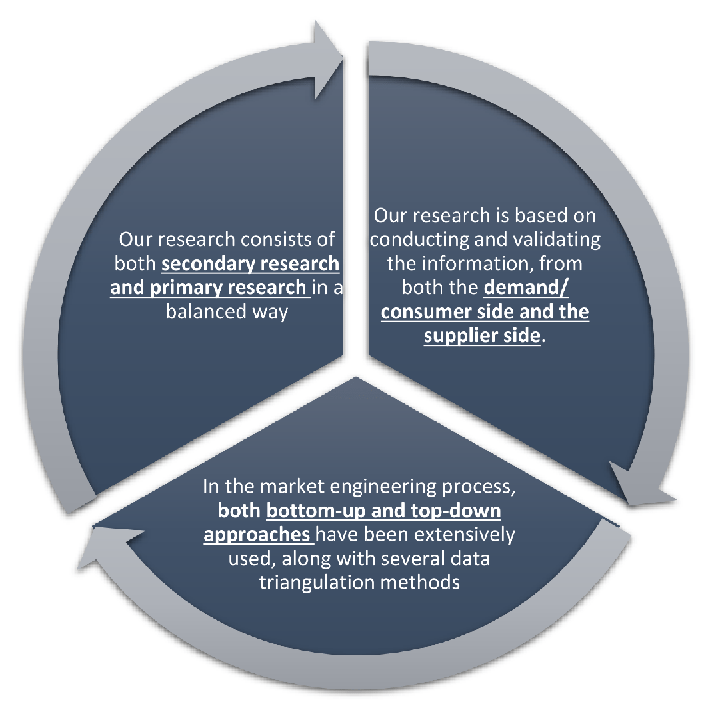
Our research design integrates both demand-side and supply-side analysis through a balanced combination of primary and secondary research methodologies. By utilizing both bottom-up and top-down approaches alongside rigorous data triangulation methods, we deliver robust market intelligence that supports strategic decision-making.
MarketGenics' comprehensive research design framework ensures the delivery of accurate, reliable, and actionable market intelligence. Through the integration of multiple research approaches, rigorous validation processes, and expert analysis, we provide our clients with the insights needed to make informed strategic decisions and capitalize on market opportunities.
MarketGenics leverages a dedicated industry panel of experts and a comprehensive suite of paid databases to effectively collect, consolidate, and analyze market intelligence.
Our approach has consistently proven to be reliable and effective in generating accurate market insights, identifying key industry trends, and uncovering emerging business opportunities.
Through both primary and secondary research, we capture and analyze critical company-level data such as manufacturing footprints, including technical centers, R&D facilities, sales offices, and headquarters.
Our expert panel further enhances our ability to estimate market size for specific brands based on validated field-level intelligence.
Our data mining techniques incorporate both parametric and non-parametric methods, allowing for structured data collection, sorting, processing, and cleaning.
Demand projections are derived from large-scale data sets analyzed through proprietary algorithms, culminating in robust and reliable market sizing.
Research Approach
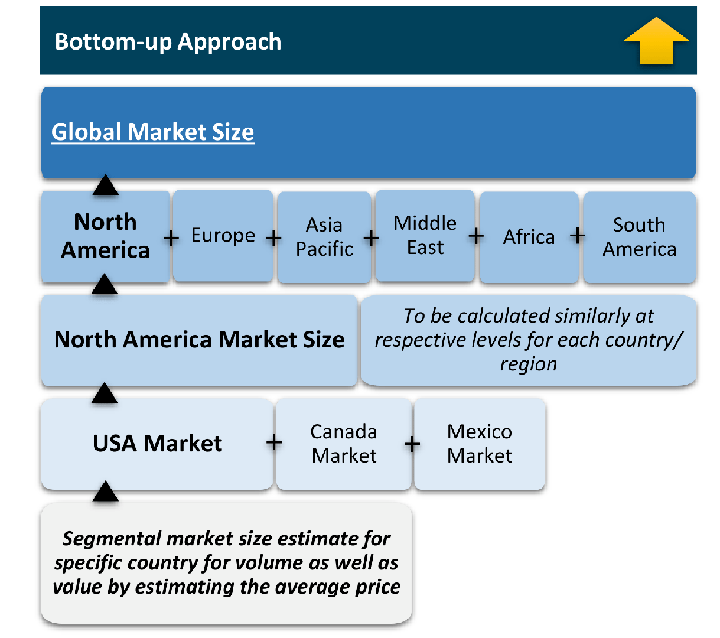
The bottom-up approach builds market estimates by starting with the smallest addressable market units and systematically aggregating them to create comprehensive market size projections.
This method begins with specific, granular data points and builds upward to create the complete market landscape.
Customer Analysis → Segmental Analysis → Geographical Analysis
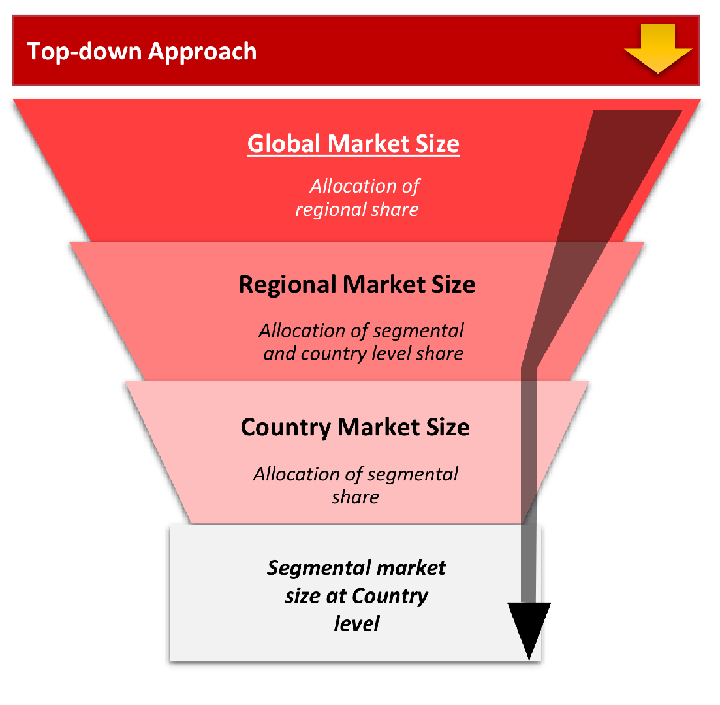
The top-down approach starts with the broadest possible market data and systematically narrows it down through a series of filters and assumptions to arrive at specific market segments or opportunities.
This method begins with the big picture and works downward to increasingly specific market slices.
TAM → SAM → SOM
Research Methods
Desk / Secondary Research
While analysing the market, we extensively study secondary sources, directories, and databases to identify and collect information useful for this technical, market-oriented, and commercial report. Secondary sources that we utilize are not only the public sources, but it is a combination of Open Source, Associations, Paid Databases, MG Repository & Knowledgebase, and others.
- Company websites, annual reports, financial reports, broker reports, and investor presentations
- National government documents, statistical databases and reports
- News articles, press releases and web-casts specific to the companies operating in the market, Magazines, reports, and others
- We gather information from commercial data sources for deriving company specific data such as segmental revenue, share for geography, product revenue, and others
- Internal and external proprietary databases (industry-specific), relevant patent, and regulatory databases
- Governing Bodies, Government Organizations
- Relevant Authorities, Country-specific Associations for Industries
We also employ the model mapping approach to estimate the product level market data through the players' product portfolio
Primary Research
Primary research/ interviews is vital in analyzing the market. Most of the cases involves paid primary interviews. Primary sources include primary interviews through e-mail interactions, telephonic interviews, surveys as well as face-to-face interviews with the different stakeholders across the value chain including several industry experts.
| Type of Respondents | Number of Primaries |
|---|---|
| Tier 2/3 Suppliers | ~20 |
| Tier 1 Suppliers | ~25 |
| End-users | ~25 |
| Industry Expert/ Panel/ Consultant | ~30 |
| Total | ~100 |
MG Knowledgebase
• Repository of industry blog, newsletter and case studies
• Online platform covering detailed market reports, and company profiles
Forecasting Factors and Models
Forecasting Factors
- Historical Trends – Past market patterns, cycles, and major events that shaped how markets behave over time. Understanding past trends helps predict future behavior.
- Industry Factors – Specific characteristics of the industry like structure, regulations, and innovation cycles that affect market dynamics.
- Macroeconomic Factors – Economic conditions like GDP growth, inflation, and employment rates that affect how much money people have to spend.
- Demographic Factors – Population characteristics like age, income, and location that determine who can buy your product.
- Technology Factors – How quickly people adopt new technology and how much technology infrastructure exists.
- Regulatory Factors – Government rules, laws, and policies that can help or restrict market growth.
- Competitive Factors – Analyzing competition structure such as degree of competition and bargaining power of buyers and suppliers.
Forecasting Models / Techniques
Multiple Regression Analysis
- Identify and quantify factors that drive market changes
- Statistical modeling to establish relationships between market drivers and outcomes
Time Series Analysis – Seasonal Patterns
- Understand regular cyclical patterns in market demand
- Advanced statistical techniques to separate trend, seasonal, and irregular components
Time Series Analysis – Trend Analysis
- Identify underlying market growth patterns and momentum
- Statistical analysis of historical data to project future trends
Expert Opinion – Expert Interviews
- Gather deep industry insights and contextual understanding
- In-depth interviews with key industry stakeholders
Multi-Scenario Development
- Prepare for uncertainty by modeling different possible futures
- Creating optimistic, pessimistic, and most likely scenarios
Time Series Analysis – Moving Averages
- Sophisticated forecasting for complex time series data
- Auto-regressive integrated moving average models with seasonal components
Econometric Models
- Apply economic theory to market forecasting
- Sophisticated economic models that account for market interactions
Expert Opinion – Delphi Method
- Harness collective wisdom of industry experts
- Structured, multi-round expert consultation process
Monte Carlo Simulation
- Quantify uncertainty and probability distributions
- Thousands of simulations with varying input parameters
Research Analysis
Our research framework is built upon the fundamental principle of validating market intelligence from both demand and supply perspectives. This dual-sided approach ensures comprehensive market understanding and reduces the risk of single-source bias.
Demand-Side Analysis: We understand end-user/application behavior, preferences, and market needs along with the penetration of the product for specific application.
Supply-Side Analysis: We estimate overall market revenue, analyze the segmental share along with industry capacity, competitive landscape, and market structure.
Validation & Evaluation
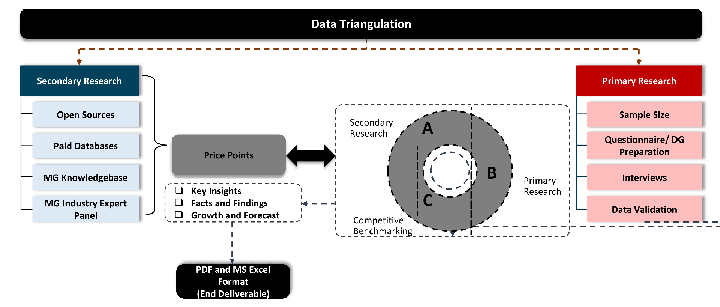
Data triangulation is a validation technique that uses multiple methods, sources, or perspectives to examine the same research question, thereby increasing the credibility and reliability of research findings. In market research, triangulation serves as a quality assurance mechanism that helps identify and minimize bias, validate assumptions, and ensure accuracy in market estimates.
- Data Source Triangulation – Using multiple data sources to examine the same phenomenon
- Methodological Triangulation – Using multiple research methods to study the same research question
- Investigator Triangulation – Using multiple researchers or analysts to examine the same data
- Theoretical Triangulation – Using multiple theoretical perspectives to interpret the same data
Custom Market Research Services
We will customise the research for you, in case the report listed above does not meet your requirements.
Get 10% Free Customisation