Biobased Coatings Market Size, Share & Trends Analysis Report by Resin Type (Acrylic, Alkyd, Polyurethane, Epoxy, Polyester, Cellulosic, Protein-based, Natural Oil-based, Others), Technology, Application, Product Type, Product Form, Formulation, Substrate Type, Distribution Channel, End-use Industry, and Geography (North America, Europe, Asia Pacific, Middle East, Africa, and South America) – Global Industry Data, Trends, and Forecasts, 2026–2035
Biobased Coatings Market Overview:
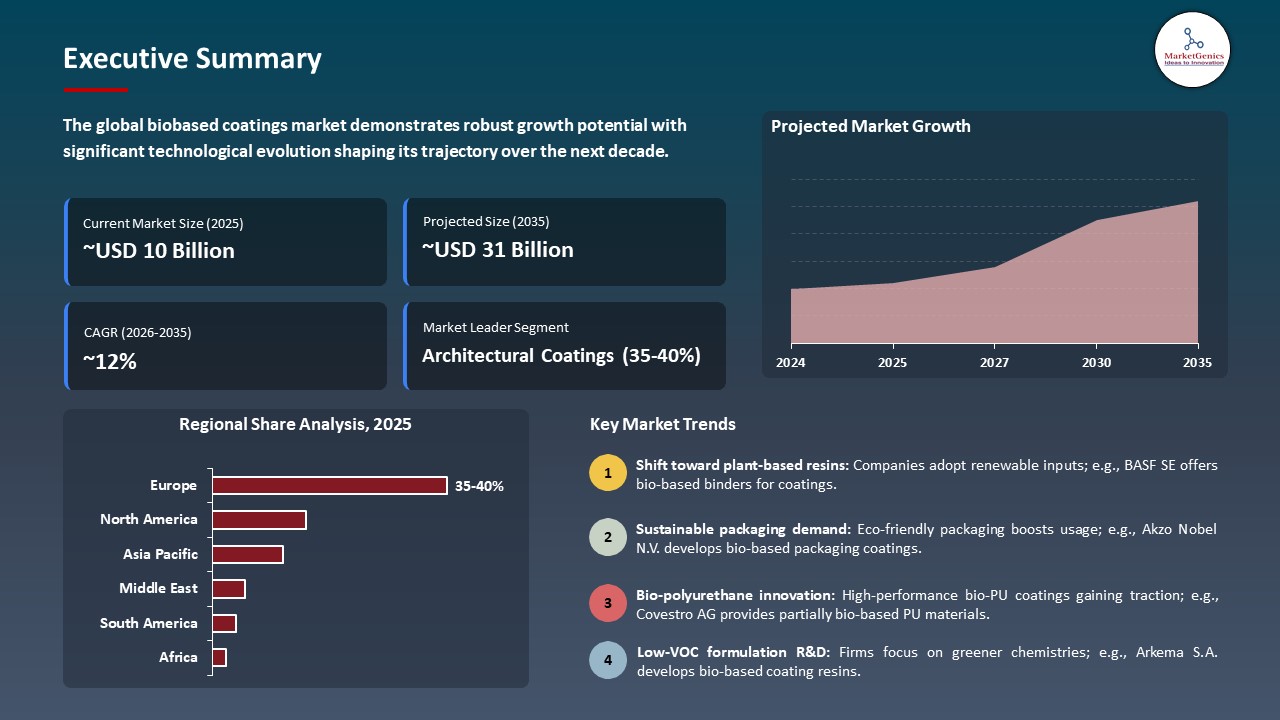
The global biobased coatings market is exhibiting strong growth, with an estimated value of USD 10.4 billion in 2025 and USD 31.4 billion by 2035, achieving a CAGR of 11.7%, during the forecast period.
|
|
|
Segmental Data Insights |
|
|
Demand Trends |
|
|
Competitive Landscape |
|
|
Strategic Development |
|
|
Future Outlook & Opportunities |
|
Biobased-Coatings-Market Size, Share, and Growth
The global biobased coatings market is driven by stringent environmental regulations on VOC emissions, increasing preference for sustainable and renewable materials, rising green building and eco-friendly packaging initiatives, and technological advancements improving the performance of bio-based resins and coatings across construction, automotive, and industrial applications.
Adds Jim Kavanagh, Director of AkzoNobel’s Industrial Coatings business: “We've successfully developed a product containing bio-based materials that matches the high-performance standards of equivalent coatings, ensuring that beauty and value endure, even in the harshest weather conditions. It represents a step forward in coatings technology which showcases our leading-edge R&D capability and aligns perfectly with the company’s commitment to sustainable innovation.”
The major coatings producers are developing sustainable product lines which include biobased powder coating solutions that maintain performance and reduce environmental impact. For instance, Axalta Coating Systems introduced its Alesta BioCore line of ISCC Plus-certified biobased powder coating which is produced using non-food organic waste and can cut CO₂ emissions by up to 25% over conventional fossil-based polymer resin. These coatings preserve the performance and the durability of conventional powders and enable the customers to attain the sustainability goals without sacrificing the quality.
Further, major companies are launching biobased materials that are high in renewable to enhance coating performance and at the same time satisfy environmental sustainability requirements. For instacne, Arkema SYNAQUA 4856 provides a maximum of 97% bio-based content in high-performing interior finishes, which provide long-term durability and a reduced carbon footprint but fulfill customer demands of sustainable and high-quality finishes. The high renewable content biobased coating promotes sustainability, better performance of a product, and the market competitiveness.
The global biobased coatings market presents opportunities in adjacent sectors such as eco-friendly adhesives, sustainable inks, bio-based plastics, low-VOC sealants, and green construction materials. By capitalizing on these markets, manufacturers can diversify product lines, increase use in both industrial and architectural market segments, and satisfy rising environmental and regulatory expectations. Growth in the adjacent sustainable markets stimulates growth in revenues, reinforces the environmental positioning, and boosts the overall competitiveness.
Biobased Coatings Market Dynamics and Trends
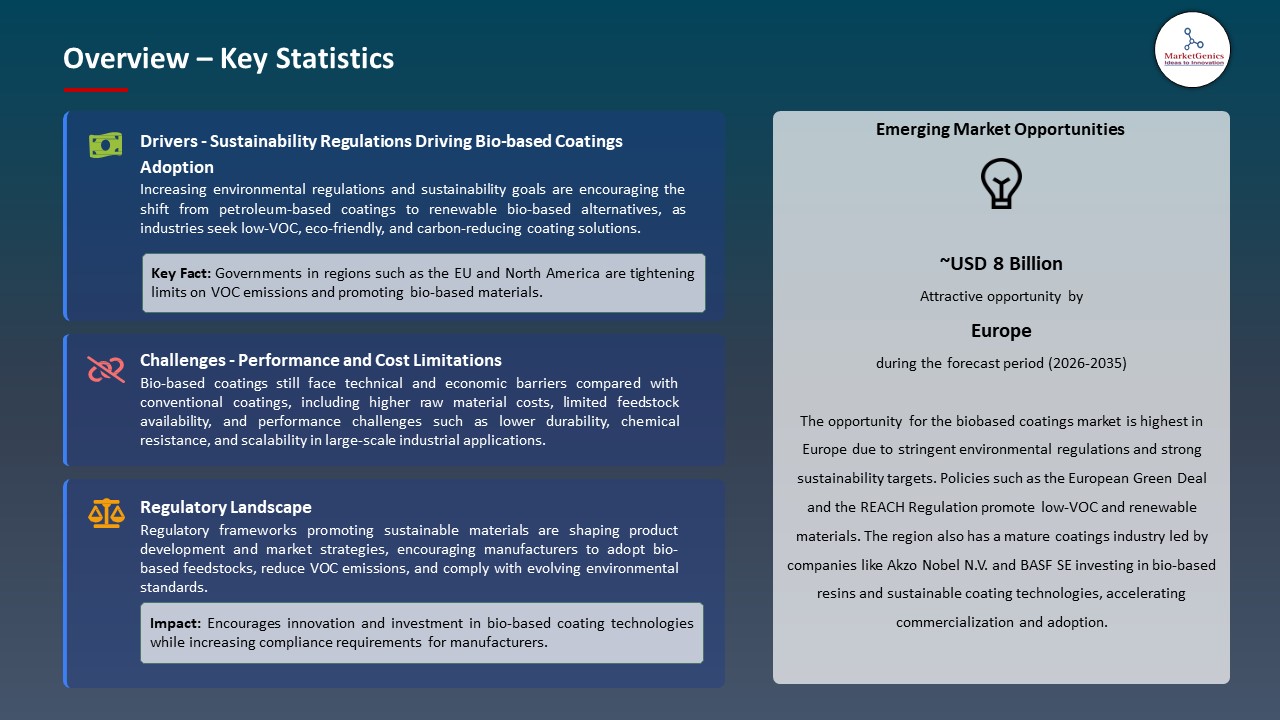
Driver: Expansion of Sustainable Biobased Product Portfolios by Leading Coatings Manufacturers
-
Leading coating manufacturers are also proactively working to promote use of renewable raw materials through expanding sustainable product lines that utilize large amounts of biobased material without deteriorating performance. For instance, AkzoNobel launched RUBBOL WF 3350, a waterborne wood coating containing 20% biobased content, which was created in its plant at Malmjo, and offers high-quality performance in interior and exterior work and supports the environmental goal and circular economy of customers.
- Introduction of biobased materials into general products lines is an indication of purposeful action of sustainable innovation and is also a reaction to the rising demand of low-carbon surface solutions. The expansion of biobased products helps to solidify the market position, avoid regulatory risks, and add differentiation in terms of competitive sustainability in the market of coats.
- Growth of sustainable biobased coating improves regulatory conformity, competitive strengths in the market, and application of low-carbon surface solutions.
Restraint: Limited Availability and Higher Cost of Biobased Feedstocks Affecting Market Penetration
-
The biobased coatings business has considerable challenges due to limited availability and high costs of biobased feedstocks, despite continued innovation efforts. Renewable raw materials, such as plant-based resin, biomass-balance components, and bio-based monomers can be typically sourced and certified in special ways, making their production more complex and more expensive than conventional petrochemical feedstocks.
- These supply limitations may limit mass consumption, especially where the cost competitiveness is paramount as in industrial and architectural coating, which are volume intensive. Moreover, availability and size of non-food biomass of a consistent quality can be traced in a traceable manner, with logistical complexities and fluctuating availability, which slows down commercialization processes and does not make formulators anxious to switch to biobased solutions completely.
- Until the supply chain of feedstock is mature and the economies of scale are enhanced, the high input costs could hamper the market penetration and price parity of the alternative coatings made with conventional methods.
- The issue of feedstock raises the cost of production, decreases the price competitiveness, and restricts the broad implementation of biobased coatings.
Opportunity: Introduction of Biobased Specialty Additives to Enable Broader Sustainable Coating Formulations
-
The research and commercialization of biobased specialty additives that improve performance, sustainability, and formulation versatility across coatings, adhesives, and sealants offers substantial growth potential for the biobased coatings market. For example, Arkema launched a set of biobased specialty additives as Rheotech, Thixol and Viscoatex brands that feature bio-sourced ethyl acrylate based on sustainable biomass to use in architectural and industrial coating. These additives are friendly to high-performance, low-VOC, eco-certified coating formation and minimize carbon footprint.
- By supporting the development of renewable-enriched surfaces without sacrificing functionality, biobased additives can expand the market to be addressed and make the shift to sustainable materials in a variety of products even faster. Their adoption enhances the capacity of the manufacturers towards the provision of environmentally viable solutions whilst keeping performances and meeting regulatory requirements that keep on changing.
- Bio-based specialty additives can help provide more formulation options, increase the adoption of renewable materials faster and reinforce sustainable product differentiation.
Key Trend: Rising Adoption of Biobased Powder Coatings to Reduce Lifecycle Carbon Emissions
-
The recent development in the biobased coatings industry is the increase in the use of biobased powder coating to achieve low carbon emissions in the lifecycle of products and yet remain highly durable and performance oriented.
- For instance, Axalta Coating Systems launched its Alesta BioCore line of ISCC Plus-approved biobased resin-based powder coating, which is made of non-food waste material, and with a CO₂ reduction of up to 25% of that of conventional polyester resin-based powders. These solutions allow architects, fabricators, and industrial clients to use green coatings without compromising performance or compliance.
- The trend of biobased powder coatings is indicative of more widespread decarbonization efforts in construction, transportation, and industry overall highlighting the fact that the market is shifting towards holistic sustainability that includes materials, processing and end-use performance.
- The use of biobased powder coating is motivating decarbonization, enhancing sustainability, and expanding the range of renewable solutions in the industrial environment.
 Biobased Coatings Market Analysis and Segmental Data
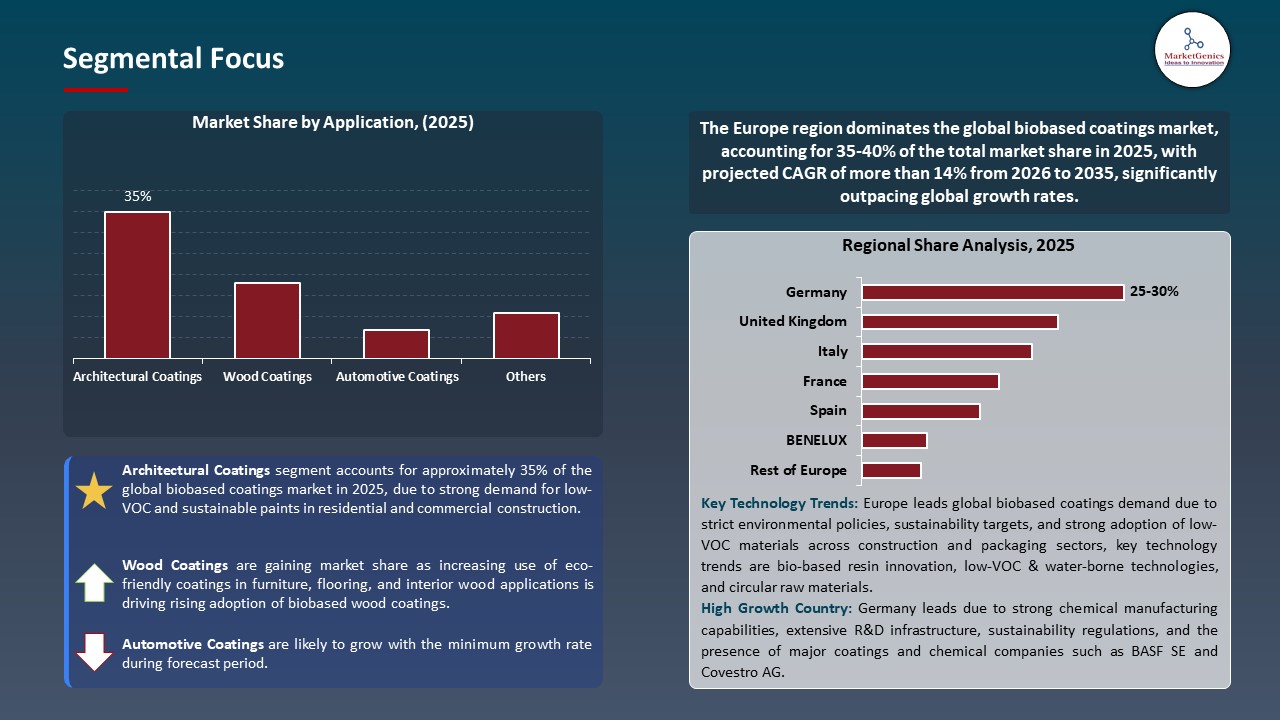
Architectural Coatings Dominate Global Biobased Coatings Market
-
The architectural coatings segment dominates the global biobased coatings market is driven by the wide use in residential, commercial and infrastructure projects that emphasize on aesthetics, durability, and environmentally-friendly nature. Biobased architectural coatings are of superior performance, but less harmful to the environment that is why they present a great opportunity to building proprietors and builders taking ecological concerns into account.
- Moreover, the major chemical producers are also developing sustainable architectural coating products. In 2025, BASF, AkzoNobel and Arkema developed jointly the super-durable architectural powder coating using bio-attributed raw materials with up to a 40 per cent reduction in the carbon footprint, in a move by the sector to decarbonize building surfaces.
- The architectural applications leadership facilitates the implementation of biobased coatings, sustainable construction, and market growth through high-performance green solutions.
Europe Leads Global Biobased Coatings Market Demand
-
Europe leads the biobased coatings market, because of the involvement of leading European chemical manufacturers in collaborative efforts to develop sustainable coating solutions that will not only reduce carbon emissions across the value chain, but also offer significant reduction. For example, BASF, AkzoNobel and Arkema collaborated to reduce the carbon imprint of long-lasting architectural powder finishes by a reduction of up to 40% using supplier-specific bio-based raw materials and enhanced carbon accounting systems, which demonstrates how coordinated innovation can support regional needs of more environmentally friendly building materials.
- Additionally, the major European manufacturers are launching increased collections of bio-based coating materials that meet performance and sustainability requirements. For instance, Arkema launched bio-based thickeners in acrylic, produced with up to 30% bio-based content in its European manufacturing facilities, to increase the formulation choices of waterborne paints, industrial coatings and adhesives without reducing quality.
- The policy-oriented sustainability agenda and the ecosystem of industrial innovation in Europe promote the AD of biobased coatings, reinforce the technology leadership, and enhance market demand growth.
Biobased Coatings Market Ecosystem
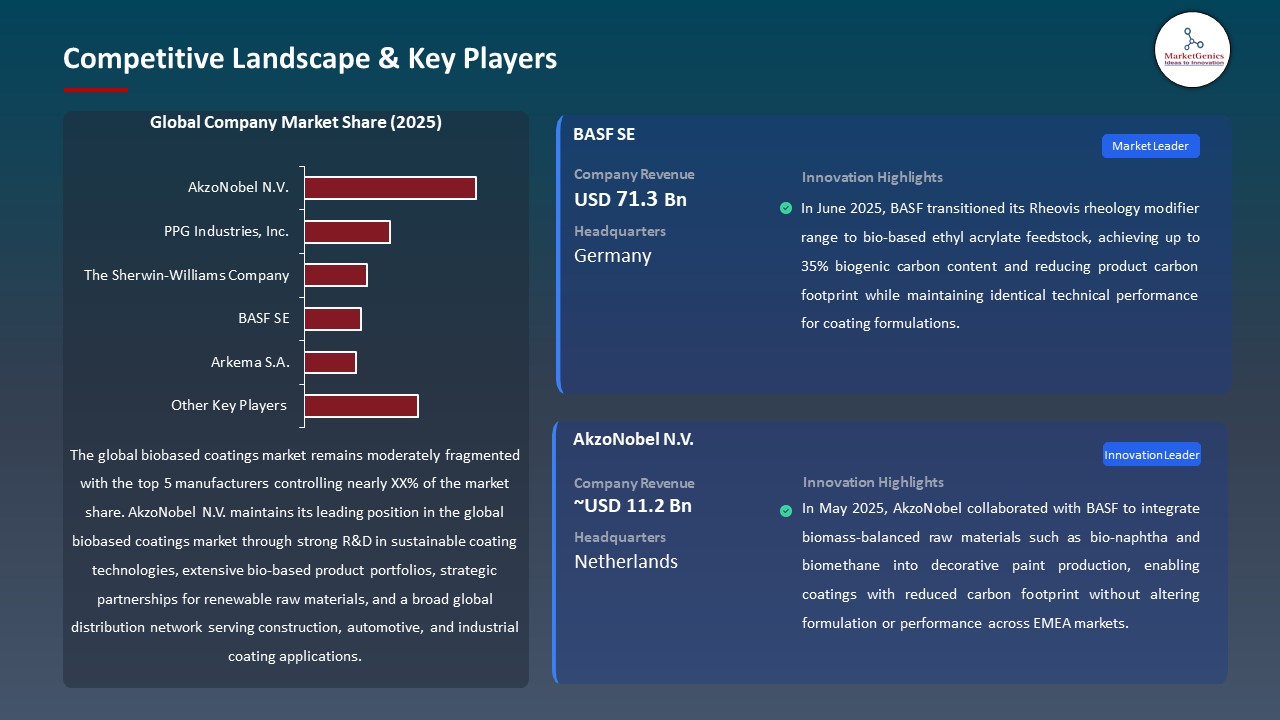
The global biobased coatings market is moderately fragmented, with leading companies such as AkzoNobel N.V., PPG Industries, Inc., The Sherwin-Williams Company, BASF SE, and Arkema S.A. dominating through advanced materials science, sustainable resin technologies, and large-scale global distribution networks. These firms use renewable feedstock, water-based formulations, and low-VOC technology to bolster their competitive advantage and meet the rising regulatory and environmental demands.
Market leaders are also stepping up product diversification and product expansion through an integrated-based coating solution, which increase sustainability and operational efficiency. Firms are increasing water-borne finishes, powder finishes and biomass balanced resins to cope with the tougher environmental laws as they enhance performance in construction, automobile and packaging industries.
In May 2025, BASF SE has added biomass-balanced automotive refinish coatings to its portfolio through sophisticated digital formulation and lifecycle assessment instruments to optimize the integration of renewable feedstock, which would allow the company to make quantifiable changes in the carbon footprint of its products, with no change in coating performance or production efficiency.
This advancement advances the shift to sustainable coating technologies at a faster rate by decreasing carbon emissions whilst preserving performance, further enhancing the shift to low-VOC and renewable materials in the global biobased coatings market.
 Recent Development and Strategic Overview:
- In May 2025, BASF SE collaborated with Metpack to develop home-compostable coated paper packaging utilizing BASF’s ecovio biopolymer coating. The solution delivers effective grease and liquid barrier performance while supporting sustainable and environmentally compliant food-packaging coating applications.
- In February 2025, AkzoNobel N.V. introduced Sikkens RUBBOL WF 3350, a waterborne wood coating formulated with 20% bio-based content, designed to increase the use of renewable raw materials while maintaining high durability, weather resistance, and performance for architectural wood coating applications.
Report Scope
|
Detail |
|
|
Market Size in 2025 |
USD 10.4 Bn |
|
Market Forecast Value in 2035 |
USD 31.4 Bn |
|
Growth Rate (CAGR) |
11.7% |
|
Forecast Period |
2026 – 2035 |
|
Historical Data Available for |
2021 – 2024 |
|
Market Size Units |
US$ Billion for Value Tons for Volume |
|
Report Format |
Electronic (PDF) + Excel |
|
North America |
Europe |
Asia Pacific |
Middle East |
Africa |
South America |
|
|
|
|
|
|
|
Companies Covered |
|||||
|
|
|
|
|
|
Biobased Coatings Market Segmentation and Highlights
|
Segment |
Sub-segment |
|
Biobased Coatings Market, By Resin Type |
|
|
Biobased Coatings Market, By Technology |
|
|
Biobased Coatings Market, By Application |
|
|
Biobased Coatings Market, By Product Type |
|
|
Biobased Coatings Market, By Product Form |
|
|
Biobased Coatings Market, By Formulation |
|
|
Biobased Coatings Market, By Substrate Type |
|
|
Biobased Coatings Market, By Distribution Channel |
|
|
Biobased Coatings Market, By End-use Industry |
|
Frequently Asked Questions
Table of Contents
- 1. Research Methodology and Assumptions
- 1.1. Definitions
- 1.2. Research Design and Approach
- 1.3. Data Collection Methods
- 1.4. Base Estimates and Calculations
- 1.5. Forecasting Models
- 1.5.1. Key Forecast Factors & Impact Analysis
- 1.6. Secondary Research
- 1.6.1. Open Sources
- 1.6.2. Paid Databases
- 1.6.3. Associations
- 1.7. Primary Research
- 1.7.1. Primary Sources
- 1.7.2. Primary Interviews with Stakeholders across Ecosystem
- 2. Executive Summary
- 2.1. Global Biobased Coatings Market Outlook
- 2.1.1. Biobased Coatings Market Size (Volume - Tons and Value - US$ Bn), and Forecasts, 2021-2035
- 2.1.2. Compounded Annual Growth Rate Analysis
- 2.1.3. Growth Opportunity Analysis
- 2.1.4. Segmental Share Analysis
- 2.1.5. Geographical Share Analysis
- 2.2. Market Analysis and Facts
- 2.3. Supply-Demand Analysis
- 2.4. Competitive Benchmarking
- 2.5. Go-to- Market Strategy
- 2.5.1. Customer/ End-use Industry Assessment
- 2.5.2. Growth Opportunity Data, 2026-2035
- 2.5.2.1. Regional Data
- 2.5.2.2. Country Data
- 2.5.2.3. Segmental Data
- 2.5.3. Identification of Potential Market Spaces
- 2.5.4. GAP Analysis
- 2.5.5. Potential Attractive Price Points
- 2.5.6. Prevailing Market Risks & Challenges
- 2.5.7. Preferred Sales & Marketing Strategies
- 2.5.8. Key Recommendations and Analysis
- 2.5.9. A Way Forward
- 2.1. Global Biobased Coatings Market Outlook
- 3. Industry Data and Premium Insights
- 3.1. Global Chemicals & Materials Industry Overview, 2025
- 3.1.1. Chemicals & Materials Ecosystem Analysis
- 3.1.2. Key Trends for Chemicals & Materials Industry
- 3.1.3. Regional Distribution for Chemicals & Materials Industry
- 3.2. Supplier Customer Data
- 3.3. Technology Roadmap and Developments
- 3.4. Trade Analysis
- 3.4.1. Import & Export Analysis, 2025
- 3.4.2. Top Importing Countries
- 3.4.3. Top Exporting Countries
- 3.5. Trump Tariff Impact Analysis
- 3.5.1. Manufacturer
- 3.5.1.1. Based on the component & Raw material
- 3.5.2. Supply Chain
- 3.5.3. End Consumer
- 3.5.1. Manufacturer
- 3.6. Raw Material Analysis
- 3.1. Global Chemicals & Materials Industry Overview, 2025
- 4. Market Overview
- 4.1. Market Dynamics
- 4.1.1. Drivers
- 4.1.1.1. Stringent environmental regulations promoting low-VOC and sustainable coatings
- 4.1.1.2. Rising demand for eco-friendly and bio-based materials across construction and packaging industries
- 4.1.1.3. Technological advancements improving durability and performance of bio-based coatings
- 4.1.2. Restraints
- 4.1.2.1. Higher production costs compared to conventional petroleum-based coatings
- 4.1.2.2. Limited availability and supply fluctuations of bio-based raw materials
- 4.1.1. Drivers
- 4.2. Key Trend Analysis
- 4.3. Regulatory Framework
- 4.3.1. Key Regulations, Norms, and Subsidies, by Key Countries
- 4.3.2. Tariffs and Standards
- 4.3.3. Impact Analysis of Regulations on the Market
- 4.4. Value Chain Analysis
- 4.4.1. Raw Material Suppliers
- 4.4.2. Manufacturers
- 4.4.3. Dealers/ Distributors
- 4.4.4. End-users
- 4.5. Cost Structure Analysis
- 4.5.1. Parameter’s Share for Cost Associated
- 4.5.2. COGP vs COGS
- 4.5.3. Profit Margin Analysis
- 4.6. Pricing Analysis
- 4.6.1. Regional Pricing Analysis
- 4.6.2. Segmental Pricing Trends
- 4.6.3. Factors Influencing Pricing
- 4.7. Porter’s Five Forces Analysis
- 4.8. PESTEL Analysis
- 4.9. Global Biobased Coatings Market Demand
- 4.9.1. Historical Market Size – in Volume (Tons) and Value (US$ Bn), 2020-2024
- 4.9.2. Current and Future Market Size – in Volume (Tons) and Value (US$ Bn), 2026–2035
- 4.9.2.1. Y-o-Y Growth Trends
- 4.9.2.2. Absolute $ Opportunity Assessment
- 4.1. Market Dynamics
- 5. Competition Landscape
- 5.1. Competition structure
- 5.1.1. Fragmented v/s consolidated
- 5.2. Company Share Analysis, 2025
- 5.2.1. Global Company Market Share
- 5.2.2. By Region
- 5.2.2.1. North America
- 5.2.2.2. Europe
- 5.2.2.3. Asia Pacific
- 5.2.2.4. Middle East
- 5.2.2.5. Africa
- 5.2.2.6. South America
- 5.3. Product Comparison Matrix
- 5.3.1. Specifications
- 5.3.2. Market Positioning
- 5.3.3. Pricing
- 5.1. Competition structure
- 6. Global Biobased Coatings Market Analysis, by Resin Type
- 6.1. Key Segment Analysis
- 6.2. Biobased Coatings Market Size (Volume - Tons and Value - US$ Bn), Analysis, and Forecasts, by Resin Type, 2021-2035
- 6.2.1. Acrylic
- 6.2.2. Alkyd
- 6.2.3. Polyurethane
- 6.2.4. Epoxy
- 6.2.5. Polyester
- 6.2.6. Cellulosic
- 6.2.7. Protein-based
- 6.2.8. Natural Oil-based
- 6.2.9. Others
- 7. Global Biobased Coatings Market Analysis, by Technology
- 7.1. Key Segment Analysis
- 7.2. Biobased Coatings Market Size (Volume - Tons and Value - US$ Bn), Analysis, and Forecasts, by Technology, 2021-2035
- 7.2.1. Waterborne
- 7.2.2. Solvent-borne
- 7.2.3. Powder-based
- 7.2.4. High Solids
- 7.2.5. Radiation Curable
- 8. Global Biobased Coatings Market Analysis, by Application
- 8.1. Key Segment Analysis
- 8.2. Biobased Coatings Market Size (Volume - Tons and Value - US$ Bn), Analysis, and Forecasts, by Application, 2021-2035
- 8.2.1. Architectural Coatings
- 8.2.2. Wood Coatings
- 8.2.3. Automotive Coatings
- 8.2.4. Industrial Coatings
- 8.2.5. Packaging Coatings
- 8.2.6. Marine Coatings
- 8.2.7. Aerospace Coatings
- 8.2.8. Leather Coatings
- 8.2.9. Textile Coatings
- 8.2.10. Others
- 9. Global Biobased Coatings Market Analysis, by Product Type
- 9.1. Key Segment Analysis
- 9.2. Biobased Coatings Market Size (Volume - Tons and Value - US$ Bn), Analysis, and Forecasts, by Product Type, 2021-2035
- 9.2.1. Paints
- 9.2.2. Varnishes
- 9.2.3. Stains
- 9.2.4. Primers
- 9.2.5. Sealers
- 9.2.6. Enamels
- 9.2.7. Lacquers
- 9.2.8. Specialty Coatings
- 10. Global Biobased Coatings Market Analysis, by Product Form
- 10.1. Key Segment Analysis
- 10.2. Biobased Coatings Market Size (Volume - Tons and Value - US$ Bn), Analysis, and Forecasts, by Product Form, 2021-2035
- 10.2.1. Liquid
- 10.2.2. Powder
- 10.2.3. Solid
- 11. Global Biobased Coatings Market Analysis, by Formulation
- 11.1. Key Segment Analysis
- 11.2. Biobased Coatings Market Size (Volume - Tons and Value - US$ Bn), Analysis, and Forecasts, by Formulation, 2021-2035
- 11.2.1. One-Component (1K)
- 11.2.2. Two-Component (2K)
- 11.2.3. Multi-Component
- 12. Global Biobased Coatings Market Analysis, by Substrate Type
- 12.1. Key Segment Analysis
- 12.2. Biobased Coatings Market Size (Volume - Tons and Value - US$ Bn), Analysis, and Forecasts, by Substrate Type, 2021-2035
- 12.2.1. Metal Substrates
- 12.2.2. Wood Substrates
- 12.2.3. Plastic Substrates
- 12.2.4. Concrete & Masonry
- 12.2.5. Glass
- 12.2.6. Composite Materials
- 12.2.7. Paper & Cardboard
- 12.2.8. Others
- 13. Global Biobased Coatings Market Analysis, by Distribution Channel
- 13.1. Key Segment Analysis
- 13.2. Biobased Coatings Market Size (Volume - Tons and Value - US$ Bn), Analysis, and Forecasts, by Distribution Channel, 2021-2035
- 13.2.1. Direct Sales
- 13.2.2. Distributors & Wholesalers
- 13.2.3. Retailers
- 13.2.4. Online Channels
- 14. Global Biobased Coatings Market Analysis, by End-use Industry
- 14.1. Key Segment Analysis
- 14.2. Biobased Coatings Market Size (Volume - Tons and Value - US$ Bn), Analysis, and Forecasts, by End-use Industry, 2021-2035
- 14.2.1. Building & Construction
- 14.2.2. Automotive & Transportation
- 14.2.3. Furniture & Woodwork
- 14.2.4. Packaging
- 14.2.5. Consumer Goods
- 14.2.6. Industrial Manufacturing
- 14.2.7. Marine
- 14.2.8. Aerospace & Defense
- 14.2.9. Leather Goods
- 14.2.10. Textiles & Apparel
- 14.2.11. Others
- 15. Global Biobased Coatings Market Analysis, by Region
- 15.1. Key Findings
- 15.2. Biobased Coatings Market Size (Volume - Tons and Value - US$ Bn), Analysis, and Forecasts, by Region, 2021-2035
- 15.2.1. North America
- 15.2.2. Europe
- 15.2.3. Asia Pacific
- 15.2.4. Middle East
- 15.2.5. Africa
- 15.2.6. South America
- 16. North America Biobased Coatings Market Analysis
- 16.1. Key Segment Analysis
- 16.2. Regional Snapshot
- 16.3. North America Biobased Coatings Market Size (Volume - Tons and Value - US$ Bn), Analysis, and Forecasts, 2021-2035
- 16.3.1. Resin Type
- 16.3.2. Technology
- 16.3.3. Application
- 16.3.4. Product Type
- 16.3.5. Product Form
- 16.3.6. Formulation
- 16.3.7. Substrate Type
- 16.3.8. Distribution Channel
- 16.3.9. End-use Industry
- 16.3.10. Country
- 16.3.10.1. USA
- 16.3.10.2. Canada
- 16.3.10.3. Mexico
- 16.4. USA Biobased Coatings Market
- 16.4.1. Country Segmental Analysis
- 16.4.2. Resin Type
- 16.4.3. Technology
- 16.4.4. Application
- 16.4.5. Product Type
- 16.4.6. Product Form
- 16.4.7. Formulation
- 16.4.8. Substrate Type
- 16.4.9. Distribution Channel
- 16.4.10. End-use Industry
- 16.5. Canada Biobased Coatings Market
- 16.5.1. Country Segmental Analysis
- 16.5.2. Resin Type
- 16.5.3. Technology
- 16.5.4. Application
- 16.5.5. Product Type
- 16.5.6. Product Form
- 16.5.7. Formulation
- 16.5.8. Substrate Type
- 16.5.9. Distribution Channel
- 16.5.10. End-use Industry
- 16.6. Mexico Biobased Coatings Market
- 16.6.1. Country Segmental Analysis
- 16.6.2. Resin Type
- 16.6.3. Technology
- 16.6.4. Application
- 16.6.5. Product Type
- 16.6.6. Product Form
- 16.6.7. Formulation
- 16.6.8. Substrate Type
- 16.6.9. Distribution Channel
- 16.6.10. End-use Industry
- 17. Europe Biobased Coatings Market Analysis
- 17.1. Key Segment Analysis
- 17.2. Regional Snapshot
- 17.3. Europe Biobased Coatings Market Size (Volume - Tons and Value - US$ Bn), Analysis, and Forecasts, 2021-2035
- 17.3.1. Resin Type
- 17.3.2. Technology
- 17.3.3. Application
- 17.3.4. Product Type
- 17.3.5. Product Form
- 17.3.6. Formulation
- 17.3.7. Substrate Type
- 17.3.8. Distribution Channel
- 17.3.9. End-use Industry
- 17.3.10. Country
- 17.3.10.1. Germany
- 17.3.10.2. United Kingdom
- 17.3.10.3. France
- 17.3.10.4. Italy
- 17.3.10.5. Spain
- 17.3.10.6. Netherlands
- 17.3.10.7. Nordic Countries
- 17.3.10.8. Poland
- 17.3.10.9. Russia & CIS
- 17.3.10.10. Rest of Europe
- 17.4. Germany Biobased Coatings Market
- 17.4.1. Country Segmental Analysis
- 17.4.2. Resin Type
- 17.4.3. Technology
- 17.4.4. Application
- 17.4.5. Product Type
- 17.4.6. Product Form
- 17.4.7. Formulation
- 17.4.8. Substrate Type
- 17.4.9. Distribution Channel
- 17.4.10. End-use Industry
- 17.5. United Kingdom Biobased Coatings Market
- 17.5.1. Country Segmental Analysis
- 17.5.2. Resin Type
- 17.5.3. Technology
- 17.5.4. Application
- 17.5.5. Product Type
- 17.5.6. Product Form
- 17.5.7. Formulation
- 17.5.8. Substrate Type
- 17.5.9. Distribution Channel
- 17.5.10. End-use Industry
- 17.6. France Biobased Coatings Market
- 17.6.1. Country Segmental Analysis
- 17.6.2. Resin Type
- 17.6.3. Technology
- 17.6.4. Application
- 17.6.5. Product Type
- 17.6.6. Product Form
- 17.6.7. Formulation
- 17.6.8. Substrate Type
- 17.6.9. Distribution Channel
- 17.6.10. End-use Industry
- 17.7. Italy Biobased Coatings Market
- 17.7.1. Country Segmental Analysis
- 17.7.2. Resin Type
- 17.7.3. Technology
- 17.7.4. Application
- 17.7.5. Product Type
- 17.7.6. Product Form
- 17.7.7. Formulation
- 17.7.8. Substrate Type
- 17.7.9. Distribution Channel
- 17.7.10. End-use Industry
- 17.8. Spain Biobased Coatings Market
- 17.8.1. Country Segmental Analysis
- 17.8.2. Resin Type
- 17.8.3. Technology
- 17.8.4. Application
- 17.8.5. Product Type
- 17.8.6. Product Form
- 17.8.7. Formulation
- 17.8.8. Substrate Type
- 17.8.9. Distribution Channel
- 17.8.10. End-use Industry
- 17.9. Netherlands Biobased Coatings Market
- 17.9.1. Country Segmental Analysis
- 17.9.2. Resin Type
- 17.9.3. Technology
- 17.9.4. Application
- 17.9.5. Product Type
- 17.9.6. Product Form
- 17.9.7. Formulation
- 17.9.8. Substrate Type
- 17.9.9. Distribution Channel
- 17.9.10. End-use Industry
- 17.10. Nordic Countries Biobased Coatings Market
- 17.10.1. Country Segmental Analysis
- 17.10.2. Resin Type
- 17.10.3. Technology
- 17.10.4. Application
- 17.10.5. Product Type
- 17.10.6. Product Form
- 17.10.7. Formulation
- 17.10.8. Substrate Type
- 17.10.9. Distribution Channel
- 17.10.10. End-use Industry
- 17.11. Poland Biobased Coatings Market
- 17.11.1. Country Segmental Analysis
- 17.11.2. Resin Type
- 17.11.3. Technology
- 17.11.4. Application
- 17.11.5. Product Type
- 17.11.6. Product Form
- 17.11.7. Formulation
- 17.11.8. Substrate Type
- 17.11.9. Distribution Channel
- 17.11.10. End-use Industry
- 17.12. Russia & CIS Biobased Coatings Market
- 17.12.1. Country Segmental Analysis
- 17.12.2. Resin Type
- 17.12.3. Technology
- 17.12.4. Application
- 17.12.5. Product Type
- 17.12.6. Product Form
- 17.12.7. Formulation
- 17.12.8. Substrate Type
- 17.12.9. Distribution Channel
- 17.12.10. End-use Industry
- 17.13. Rest of Europe Biobased Coatings Market
- 17.13.1. Country Segmental Analysis
- 17.13.2. Resin Type
- 17.13.3. Technology
- 17.13.4. Application
- 17.13.5. Product Type
- 17.13.6. Product Form
- 17.13.7. Formulation
- 17.13.8. Substrate Type
- 17.13.9. Distribution Channel
- 17.13.10. End-use Industry
- 18. Asia Pacific Biobased Coatings Market Analysis
- 18.1. Key Segment Analysis
- 18.2. Regional Snapshot
- 18.3. Asia Pacific Biobased Coatings Market Size (Volume - Tons and Value - US$ Bn), Analysis, and Forecasts, 2021-2035
- 18.3.1. Resin Type
- 18.3.2. Technology
- 18.3.3. Application
- 18.3.4. Product Type
- 18.3.5. Product Form
- 18.3.6. Formulation
- 18.3.7. Substrate Type
- 18.3.8. Distribution Channel
- 18.3.9. End-use Industry
- 18.3.10. Country
- 18.3.10.1. China
- 18.3.10.2. India
- 18.3.10.3. Japan
- 18.3.10.4. South Korea
- 18.3.10.5. Australia and New Zealand
- 18.3.10.6. Indonesia
- 18.3.10.7. Malaysia
- 18.3.10.8. Thailand
- 18.3.10.9. Vietnam
- 18.3.10.10. Rest of Asia Pacific
- 18.4. China Biobased Coatings Market
- 18.4.1. Country Segmental Analysis
- 18.4.2. Resin Type
- 18.4.3. Technology
- 18.4.4. Application
- 18.4.5. Product Type
- 18.4.6. Product Form
- 18.4.7. Formulation
- 18.4.8. Substrate Type
- 18.4.9. Distribution Channel
- 18.4.10. End-use Industry
- 18.5. India Biobased Coatings Market
- 18.5.1. Country Segmental Analysis
- 18.5.2. Resin Type
- 18.5.3. Technology
- 18.5.4. Application
- 18.5.5. Product Type
- 18.5.6. Product Form
- 18.5.7. Formulation
- 18.5.8. Substrate Type
- 18.5.9. Distribution Channel
- 18.5.10. End-use Industry
- 18.6. Japan Biobased Coatings Market
- 18.6.1. Country Segmental Analysis
- 18.6.2. Resin Type
- 18.6.3. Technology
- 18.6.4. Application
- 18.6.5. Product Type
- 18.6.6. Product Form
- 18.6.7. Formulation
- 18.6.8. Substrate Type
- 18.6.9. Distribution Channel
- 18.6.10. End-use Industry
- 18.7. South Korea Biobased Coatings Market
- 18.7.1. Country Segmental Analysis
- 18.7.2. Resin Type
- 18.7.3. Technology
- 18.7.4. Application
- 18.7.5. Product Type
- 18.7.6. Product Form
- 18.7.7. Formulation
- 18.7.8. Substrate Type
- 18.7.9. Distribution Channel
- 18.7.10. End-use Industry
- 18.8. Australia and New Zealand Biobased Coatings Market
- 18.8.1. Country Segmental Analysis
- 18.8.2. Resin Type
- 18.8.3. Technology
- 18.8.4. Application
- 18.8.5. Product Type
- 18.8.6. Product Form
- 18.8.7. Formulation
- 18.8.8. Substrate Type
- 18.8.9. Distribution Channel
- 18.8.10. End-use Industry
- 18.9. Indonesia Biobased Coatings Market
- 18.9.1. Country Segmental Analysis
- 18.9.2. Resin Type
- 18.9.3. Technology
- 18.9.4. Application
- 18.9.5. Product Type
- 18.9.6. Product Form
- 18.9.7. Formulation
- 18.9.8. Substrate Type
- 18.9.9. Distribution Channel
- 18.9.10. End-use Industry
- 18.10. Malaysia Biobased Coatings Market
- 18.10.1. Country Segmental Analysis
- 18.10.2. Resin Type
- 18.10.3. Technology
- 18.10.4. Application
- 18.10.5. Product Type
- 18.10.6. Product Form
- 18.10.7. Formulation
- 18.10.8. Substrate Type
- 18.10.9. Distribution Channel
- 18.10.10. End-use Industry
- 18.11. Thailand Biobased Coatings Market
- 18.11.1. Country Segmental Analysis
- 18.11.2. Resin Type
- 18.11.3. Technology
- 18.11.4. Application
- 18.11.5. Product Type
- 18.11.6. Product Form
- 18.11.7. Formulation
- 18.11.8. Substrate Type
- 18.11.9. Distribution Channel
- 18.11.10. End-use Industry
- 18.12. Vietnam Biobased Coatings Market
- 18.12.1. Country Segmental Analysis
- 18.12.2. Resin Type
- 18.12.3. Technology
- 18.12.4. Application
- 18.12.5. Product Type
- 18.12.6. Product Form
- 18.12.7. Formulation
- 18.12.8. Substrate Type
- 18.12.9. Distribution Channel
- 18.12.10. End-use Industry
- 18.13. Rest of Asia Pacific Biobased Coatings Market
- 18.13.1. Country Segmental Analysis
- 18.13.2. Resin Type
- 18.13.3. Technology
- 18.13.4. Application
- 18.13.5. Product Type
- 18.13.6. Product Form
- 18.13.7. Formulation
- 18.13.8. Substrate Type
- 18.13.9. Distribution Channel
- 18.13.10. End-use Industry
- 19. Middle East Biobased Coatings Market Analysis
- 19.1. Key Segment Analysis
- 19.2. Regional Snapshot
- 19.3. Middle East Biobased Coatings Market Size (Volume - Tons and Value - US$ Bn), Analysis, and Forecasts, 2021-2035
- 19.3.1. Resin Type
- 19.3.2. Technology
- 19.3.3. Application
- 19.3.4. Product Type
- 19.3.5. Product Form
- 19.3.6. Formulation
- 19.3.7. Substrate Type
- 19.3.8. Distribution Channel
- 19.3.9. End-use Industry
- 19.3.10. Country
- 19.3.10.1. Turkey
- 19.3.10.2. UAE
- 19.3.10.3. Saudi Arabia
- 19.3.10.4. Israel
- 19.3.10.5. Rest of Middle East
- 19.4. Turkey Biobased Coatings Market
- 19.4.1. Country Segmental Analysis
- 19.4.2. Resin Type
- 19.4.3. Technology
- 19.4.4. Application
- 19.4.5. Product Type
- 19.4.6. Product Form
- 19.4.7. Formulation
- 19.4.8. Substrate Type
- 19.4.9. Distribution Channel
- 19.4.10. End-use Industry
- 19.5. UAE Biobased Coatings Market
- 19.5.1. Country Segmental Analysis
- 19.5.2. Resin Type
- 19.5.3. Technology
- 19.5.4. Application
- 19.5.5. Product Type
- 19.5.6. Product Form
- 19.5.7. Formulation
- 19.5.8. Substrate Type
- 19.5.9. Distribution Channel
- 19.5.10. End-use Industry
- 19.6. Saudi Arabia Biobased Coatings Market
- 19.6.1. Country Segmental Analysis
- 19.6.2. Resin Type
- 19.6.3. Technology
- 19.6.4. Application
- 19.6.5. Product Type
- 19.6.6. Product Form
- 19.6.7. Formulation
- 19.6.8. Substrate Type
- 19.6.9. Distribution Channel
- 19.6.10. End-use Industry
- 19.7. Israel Biobased Coatings Market
- 19.7.1. Country Segmental Analysis
- 19.7.2. Resin Type
- 19.7.3. Technology
- 19.7.4. Application
- 19.7.5. Product Type
- 19.7.6. Product Form
- 19.7.7. Formulation
- 19.7.8. Substrate Type
- 19.7.9. Distribution Channel
- 19.7.10. End-use Industry
- 19.8. Rest of Middle East Biobased Coatings Market
- 19.8.1. Country Segmental Analysis
- 19.8.2. Resin Type
- 19.8.3. Technology
- 19.8.4. Application
- 19.8.5. Product Type
- 19.8.6. Product Form
- 19.8.7. Formulation
- 19.8.8. Substrate Type
- 19.8.9. Distribution Channel
- 19.8.10. End-use Industry
- 20. Africa Biobased Coatings Market Analysis
- 20.1. Key Segment Analysis
- 20.2. Regional Snapshot
- 20.3. Africa Biobased Coatings Market Size (Volume - Tons and Value - US$ Bn), Analysis, and Forecasts, 2021-2035
- 20.3.1. Resin Type
- 20.3.2. Technology
- 20.3.3. Application
- 20.3.4. Product Type
- 20.3.5. Product Form
- 20.3.6. Formulation
- 20.3.7. Substrate Type
- 20.3.8. Distribution Channel
- 20.3.9. End-use Industry
- 20.3.10. Country
- 20.3.10.1. South Africa
- 20.3.10.2. Egypt
- 20.3.10.3. Nigeria
- 20.3.10.4. Algeria
- 20.3.10.5. Rest of Africa
- 20.4. South Africa Biobased Coatings Market
- 20.4.1. Country Segmental Analysis
- 20.4.2. Resin Type
- 20.4.3. Technology
- 20.4.4. Application
- 20.4.5. Product Type
- 20.4.6. Product Form
- 20.4.7. Formulation
- 20.4.8. Substrate Type
- 20.4.9. Distribution Channel
- 20.4.10. End-use Industry
- 20.5. Egypt Biobased Coatings Market
- 20.5.1. Country Segmental Analysis
- 20.5.2. Resin Type
- 20.5.3. Technology
- 20.5.4. Application
- 20.5.5. Product Type
- 20.5.6. Product Form
- 20.5.7. Formulation
- 20.5.8. Substrate Type
- 20.5.9. Distribution Channel
- 20.5.10. End-use Industry
- 20.6. Nigeria Biobased Coatings Market
- 20.6.1. Country Segmental Analysis
- 20.6.2. Resin Type
- 20.6.3. Technology
- 20.6.4. Application
- 20.6.5. Product Type
- 20.6.6. Product Form
- 20.6.7. Formulation
- 20.6.8. Substrate Type
- 20.6.9. Distribution Channel
- 20.6.10. End-use Industry
- 20.7. Algeria Biobased Coatings Market
- 20.7.1. Country Segmental Analysis
- 20.7.2. Resin Type
- 20.7.3. Technology
- 20.7.4. Application
- 20.7.5. Product Type
- 20.7.6. Product Form
- 20.7.7. Formulation
- 20.7.8. Substrate Type
- 20.7.9. Distribution Channel
- 20.7.10. End-use Industry
- 20.8. Rest of Africa Biobased Coatings Market
- 20.8.1. Country Segmental Analysis
- 20.8.2. Resin Type
- 20.8.3. Technology
- 20.8.4. Application
- 20.8.5. Product Type
- 20.8.6. Product Form
- 20.8.7. Formulation
- 20.8.8. Substrate Type
- 20.8.9. Distribution Channel
- 20.8.10. End-use Industry
- 21. South America Biobased Coatings Market Analysis
- 21.1. Key Segment Analysis
- 21.2. Regional Snapshot
- 21.3. South America Biobased Coatings Market Size (Volume - Tons and Value - US$ Bn), Analysis, and Forecasts, 2021-2035
- 21.3.1. Resin Type
- 21.3.2. Technology
- 21.3.3. Application
- 21.3.4. Product Type
- 21.3.5. Product Form
- 21.3.6. Formulation
- 21.3.7. Substrate Type
- 21.3.8. Distribution Channel
- 21.3.9. End-use Industry
- 21.3.10. Country
- 21.3.10.1. Brazil
- 21.3.10.2. Argentina
- 21.3.10.3. Rest of South America
- 21.4. Brazil Biobased Coatings Market
- 21.4.1. Country Segmental Analysis
- 21.4.2. Resin Type
- 21.4.3. Technology
- 21.4.4. Application
- 21.4.5. Product Type
- 21.4.6. Product Form
- 21.4.7. Formulation
- 21.4.8. Substrate Type
- 21.4.9. Distribution Channel
- 21.4.10. End-use Industry
- 21.5. Argentina Biobased Coatings Market
- 21.5.1. Country Segmental Analysis
- 21.5.2. Resin Type
- 21.5.3. Technology
- 21.5.4. Application
- 21.5.5. Product Type
- 21.5.6. Product Form
- 21.5.7. Formulation
- 21.5.8. Substrate Type
- 21.5.9. Distribution Channel
- 21.5.10. End-use Industry
- 21.6. Rest of South America Biobased Coatings Market
- 21.6.1. Country Segmental Analysis
- 21.6.2. Resin Type
- 21.6.3. Technology
- 21.6.4. Application
- 21.6.5. Product Type
- 21.6.6. Product Form
- 21.6.7. Formulation
- 21.6.8. Substrate Type
- 21.6.9. Distribution Channel
- 21.6.10. End-use Industry
- 22. Key Players/ Company Profile
- 22.1. AkzoNobel N.V.
- 22.1.1. Company Details/ Overview
- 22.1.2. Company Financials
- 22.1.3. Key Customers and Competitors
- 22.1.4. Business/ Industry Portfolio
- 22.1.5. Product Portfolio/ Specification Details
- 22.1.6. Pricing Data
- 22.1.7. Strategic Overview
- 22.1.8. Recent Developments
- 22.2. Alberdingk Boley GmbH
- 22.3. Arkema S.A.
- 22.4. Asian Paints Limited
- 22.5. Axalta Coating Systems
- 22.6. BASF SE
- 22.7. Beckers Group
- 22.8. Benjamin Moore & Co.
- 22.9. Berger Paints India Limited
- 22.10. Covestro AG
- 22.11. Croda International Plc
- 22.12. DSM-Firmenich
- 22.13. Evonik Industries AG
- 22.14. Hempel A/S
- 22.15. Jotun A/S
- 22.16. Kansai Paint Co., Ltd.
- 22.17. Nippon Paint Holdings Co., Ltd.
- 22.18. PPG Industries, Inc.
- 22.19. RPM International Inc.
- 22.20. Teknos Group
- 22.21. The Sherwin-Williams Company
- 22.22. Other Key Players
- 22.1. AkzoNobel N.V.
Note* - This is just tentative list of players. While providing the report, we will cover more number of players based on their revenue and share for each geography
Research Design
Our research design integrates both demand-side and supply-side analysis through a balanced combination of primary and secondary research methodologies. By utilizing both bottom-up and top-down approaches alongside rigorous data triangulation methods, we deliver robust market intelligence that supports strategic decision-making.
MarketGenics' comprehensive research design framework ensures the delivery of accurate, reliable, and actionable market intelligence. Through the integration of multiple research approaches, rigorous validation processes, and expert analysis, we provide our clients with the insights needed to make informed strategic decisions and capitalize on market opportunities.
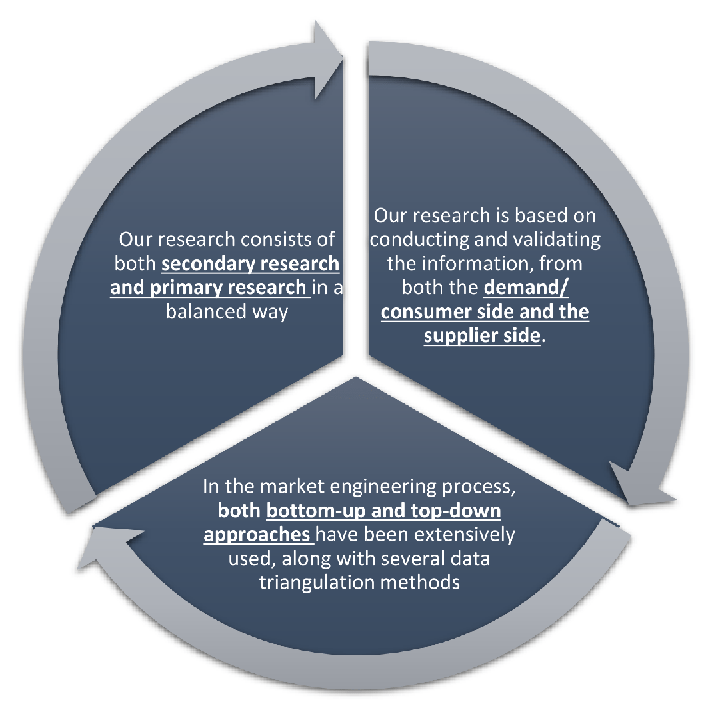
MarketGenics leverages a dedicated industry panel of experts and a comprehensive suite of paid databases to effectively collect, consolidate, and analyze market intelligence.
Our approach has consistently proven to be reliable and effective in generating accurate market insights, identifying key industry trends, and uncovering emerging business opportunities.
Through both primary and secondary research, we capture and analyze critical company-level data such as manufacturing footprints, including technical centers, R&D facilities, sales offices, and headquarters.
Our expert panel further enhances our ability to estimate market size for specific brands based on validated field-level intelligence.
Our data mining techniques incorporate both parametric and non-parametric methods, allowing for structured data collection, sorting, processing, and cleaning.
Demand projections are derived from large-scale data sets analyzed through proprietary algorithms, culminating in robust and reliable market sizing.
Research Approach
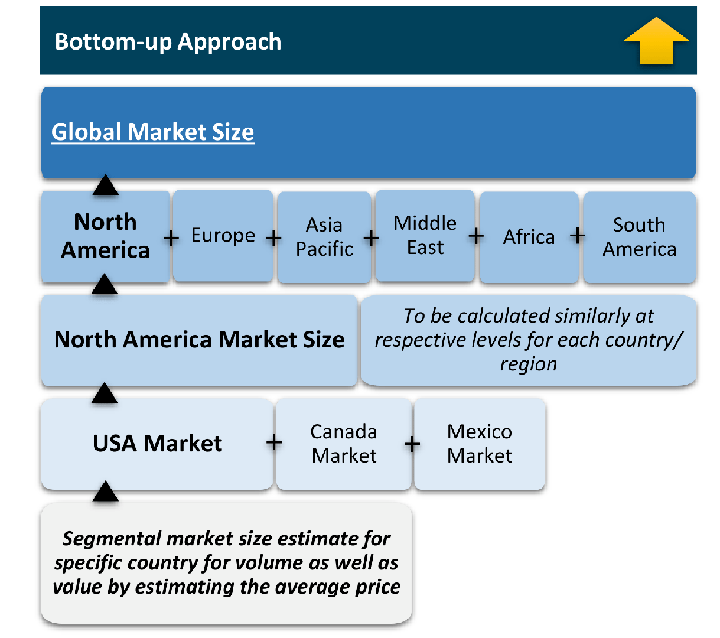
The bottom-up approach builds market estimates by starting with the smallest addressable market units and systematically aggregating them to create comprehensive market size projections.
This method begins with specific, granular data points and builds upward to create the complete market landscape.
Customer Analysis → Segmental Analysis → Geographical Analysis
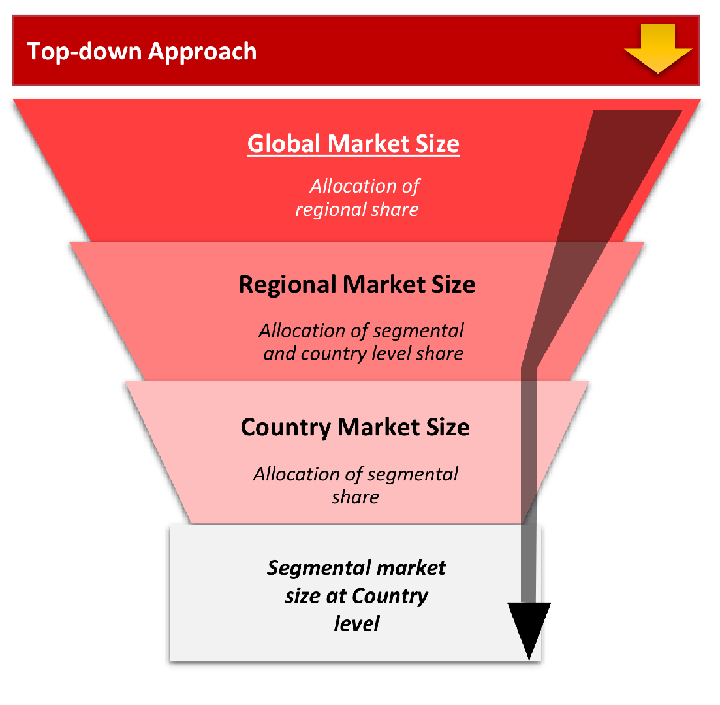
The top-down approach starts with the broadest possible market data and systematically narrows it down through a series of filters and assumptions to arrive at specific market segments or opportunities.
This method begins with the big picture and works downward to increasingly specific market slices.
TAM → SAM → SOM
Research Methods
Desk / Secondary Research
While analysing the market, we extensively study secondary sources, directories, and databases to identify and collect information useful for this technical, market-oriented, and commercial report. Secondary sources that we utilize are not only the public sources, but it is a combination of Open Source, Associations, Paid Databases, MG Repository & Knowledgebase, and others.
- Company websites, annual reports, financial reports, broker reports, and investor presentations
- National government documents, statistical databases and reports
- News articles, press releases and web-casts specific to the companies operating in the market, Magazines, reports, and others
- We gather information from commercial data sources for deriving company specific data such as segmental revenue, share for geography, product revenue, and others
- Internal and external proprietary databases (industry-specific), relevant patent, and regulatory databases
- Governing Bodies, Government Organizations
- Relevant Authorities, Country-specific Associations for Industries
We also employ the model mapping approach to estimate the product level market data through the players' product portfolio
Primary Research
Primary research/ interviews is vital in analyzing the market. Most of the cases involves paid primary interviews. Primary sources include primary interviews through e-mail interactions, telephonic interviews, surveys as well as face-to-face interviews with the different stakeholders across the value chain including several industry experts.
| Type of Respondents | Number of Primaries |
|---|---|
| Tier 2/3 Suppliers | ~20 |
| Tier 1 Suppliers | ~25 |
| End-users | ~25 |
| Industry Expert/ Panel/ Consultant | ~30 |
| Total | ~100 |
MG Knowledgebase
• Repository of industry blog, newsletter and case studies
• Online platform covering detailed market reports, and company profiles
Forecasting Factors and Models
Forecasting Factors
- Historical Trends – Past market patterns, cycles, and major events that shaped how markets behave over time. Understanding past trends helps predict future behavior.
- Industry Factors – Specific characteristics of the industry like structure, regulations, and innovation cycles that affect market dynamics.
- Macroeconomic Factors – Economic conditions like GDP growth, inflation, and employment rates that affect how much money people have to spend.
- Demographic Factors – Population characteristics like age, income, and location that determine who can buy your product.
- Technology Factors – How quickly people adopt new technology and how much technology infrastructure exists.
- Regulatory Factors – Government rules, laws, and policies that can help or restrict market growth.
- Competitive Factors – Analyzing competition structure such as degree of competition and bargaining power of buyers and suppliers.
Forecasting Models / Techniques
Multiple Regression Analysis
- Identify and quantify factors that drive market changes
- Statistical modeling to establish relationships between market drivers and outcomes
Time Series Analysis – Seasonal Patterns
- Understand regular cyclical patterns in market demand
- Advanced statistical techniques to separate trend, seasonal, and irregular components
Time Series Analysis – Trend Analysis
- Identify underlying market growth patterns and momentum
- Statistical analysis of historical data to project future trends
Expert Opinion – Expert Interviews
- Gather deep industry insights and contextual understanding
- In-depth interviews with key industry stakeholders
Multi-Scenario Development
- Prepare for uncertainty by modeling different possible futures
- Creating optimistic, pessimistic, and most likely scenarios
Time Series Analysis – Moving Averages
- Sophisticated forecasting for complex time series data
- Auto-regressive integrated moving average models with seasonal components
Econometric Models
- Apply economic theory to market forecasting
- Sophisticated economic models that account for market interactions
Expert Opinion – Delphi Method
- Harness collective wisdom of industry experts
- Structured, multi-round expert consultation process
Monte Carlo Simulation
- Quantify uncertainty and probability distributions
- Thousands of simulations with varying input parameters
Research Analysis
Our research framework is built upon the fundamental principle of validating market intelligence from both demand and supply perspectives. This dual-sided approach ensures comprehensive market understanding and reduces the risk of single-source bias.
Demand-Side Analysis: We understand end-user/application behavior, preferences, and market needs along with the penetration of the product for specific application.
Supply-Side Analysis: We estimate overall market revenue, analyze the segmental share along with industry capacity, competitive landscape, and market structure.
Validation & Evaluation
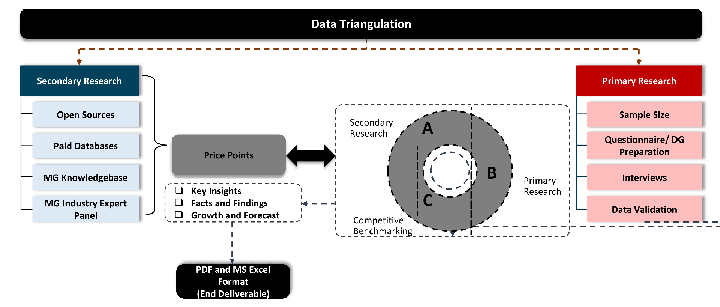
Data triangulation is a validation technique that uses multiple methods, sources, or perspectives to examine the same research question, thereby increasing the credibility and reliability of research findings. In market research, triangulation serves as a quality assurance mechanism that helps identify and minimize bias, validate assumptions, and ensure accuracy in market estimates.
- Data Source Triangulation – Using multiple data sources to examine the same phenomenon
- Methodological Triangulation – Using multiple research methods to study the same research question
- Investigator Triangulation – Using multiple researchers or analysts to examine the same data
- Theoretical Triangulation – Using multiple theoretical perspectives to interpret the same data
Custom Market Research Services
We will customise the research for you, in case the report listed above does not meet your requirements.
Get 10% Free Customisation