Biodegradable Printed Electronics Market Size, Share & Trends Analysis Report by Product Type (Active Components, Passive Components, Integrated Systems), Substrate Material, Conductive Material, Printing Technology, Form Factor, End-Use Industry, and Geography (North America, Europe, Asia Pacific, Middle East, Africa, and South America) – Global Industry Data, Trends, and Forecasts, 2025–2035
|
Market Structure & Evolution |
|
|
Segmental Data Insights |
|
|
Demand Trends |
|
|
Competitive Landscape |
|
|
Strategic Development |
|
|
Future Outlook & Opportunities |
|
Biodegradable-Printed-Electronics-Market Size, Share, and Growth
The global biodegradable printed electronics market is experiencing robust growth, with its estimated value of USD 0.13 billion in the year 2025 and USD 0.8 billion by the period 2035, registering a CAGR of 19.6%, during the forecast period. Asia Pacific leads the market with market share of 63.7% with USD 0.1 billion revenue.

In June 2025, Researchers at BITS Pilani, Hyderabad, formulated a food-based nano conductive paste (FN-CoP) composed of activated carbon, gelatin binder, and oral rehydration solution. This paste is designed for wearable, ingestible, and edible medical devices, offering a sustainable alternative to traditional conductive materials
The biodegradable printed electronics market is growing tremendously, which is supported by the rising level of environmental consciousness and the necessity to utilize sustainable technologies. In 2025, BASF declared to create a biodegradable conductive ink that will be used in printed electronics to minimize electronic waste, promoting sustainability in the electronic devices. On the same note, Fujifilm Dimatix created a biodegradable printed electronics substrate material, which allowed the creation of green electronic components. Such innovations are an indication of the effort by the industry to ensure sustainability is incorporated in the process of manufacturing electronic products.
Bio-based electronics i.e. the use of biodegradable materials in the production of printed electronics is not only more environmentally friendly but also makes electronic devices more recyclable and easier to dispose of at the end of their service. Regulatory pressure and consumer awareness of electronic waste are additional factors that support this transition in the direction of sustainable practices. Consequently, the biodegradable printed electronics market will experience significant growth, and the research and development of companies will be focused on addressing the changing needs of environmentally conscious customer segments and industries.
Flexible displays, wearable sensors, smart packaging, medical diagnostics, and environmentally-friendly IoT devices are among the adjacent opportunities of the global biodegradable printed electronics market. Biodegradable materials can be used by these sectors to develop sustainable, light, and versatile electronic solutions through biodegradable materials, and be used in more areas of consumer, healthcare, and industrial use.

Biodegradable Printed Electronics Market Dynamics and Trends
Driver: Growing Environmental Regulations and Consumer Demand for Sustainable Electronics
-
The growing adoption of the strict environmental policies and growing consumer preference towards the use of environmentally friendly products is fueling the need to have biodegradable printed electronics. In 2025, Merck KGaA initiated the Printed Organic Switches and Chips project (Polytos), a consortium that was meant to create new materials, and manufacture processes of printed organic circuits with built-in sensors with a particular focus on the packaging industry. This project places a strong emphasis on the sustainability of the industry and is in keeping with the international efforts of minimizing electronic waste.
- Moreover, the Fujifilm Corporation developed aqueous inkjet inks to achieve new environmental sustainability targets, minimize the emission of air pollutant and volatile organic compounds. The inks will be designed to use in printed electronics to show commitment of Fujifilm in promoting friendly technologies in the industry. These moves can be seen as a wider shift towards the inclusion of sustainability in the electronic manufacturing.
- The synergy between regulatory forces and the demand of the consumer in sustainable products is boosting innovation and uptake in the biodegradable printed electronics market.
Restraint: Challenges in Achieving High Performance and Durability with Biodegradable Materials
-
Nevertheless, despite these developments, the major issue with the biodegradable printed electronics market is the ability to attain desired performance and durability. DuPont de Nemours, Inc. has reported a 10.6 percent growth in net sales in its electronics and industrial division in 2025, which is a result of the high demand in the semiconductors in AI technology. Nevertheless, the company realized that biodegradable materials are environmentally friendly but, in most cases,, conductivity and durability are not as good as traditional materials. This performance difference is a hindrance to broad use in high performance applications.
- Also, studies have shown that biodegradable inks and substrates are not quite as strong, as thermal stable, as some electronic devices necessitate, and therefore cannot be used in such harsh conditions. These performance problems are critical in solving the growth of the market and the increased adoption of biodegradable electronics.
- The necessity to find the balance between sustainability and performance is one of the decisive elements that determine the rate of biodegradable printed electronics market adoption.
Opportunity: Advancements in Biodegradable Materials for Wearable and Medical Electronics
-
Wearable electronics and medical electronics have enormous opportunities in the creation of biodegradable materials. In 2025, a group of researchers headed by Professor Seung-Kyun Kang and Dr. Jae-Young Bae came up with a fully-biodegradable and high-performance conductive fiber, which could be easily incorporated into wearable electronics. The innovation enables natural degradation of the electronic components used post-use thus the electronic waste in healthcare sector is addressed.
- In addition, such companies as BASF SE are also investigating the application of biodegradable polymers into medical devices in an attempt to lighten the environmental impact of disposable medical electronics. These breakthroughs present new opportunities on the development of sustainable products in the medical arena, in line with the world trends of eco-friendly medical solutions.
- Biodegradable material in wearable electronics and medical electronics are set to transform these industries and provide greener alternatives to the conventional electronic parts.
Key Trend: Increasing Regulatory Support for Sustainable Electronics Manufacturing Practices
-
The biodegradable printed electronics market is being impacted by the increase in regulatory support of sustainable electronic manufacturing practices. Governments across the globe are adopting more stringent measures that will help to curb the production of electronic waste and the adoption of eco-friendly materials in the production of electronics in 2025. An example is the Waste Electrical and Electronic Equipment (WEEE) Directive of the European Union which promotes the utilization of biodegradable and recyclable materials in electronic products. These regulations are even making manufacturers consider biodegradable materials in their products in order to meet the environmental regulations.
- This regulatory impetus is creating innovation in biodegradable materials and production. Firms such as BASF SE and DuPont de Nemours, Inc. are also investing in research and development in order to produce material that satisfies the criteria required by the regulations and do not compromise on the performance standards. With current frameworks in the process of development, biodegradable printed electronics market is likely to grow at a faster rate, which is propelled by compliance and sustainability goals.
- Growth in the use of biodegradable substances in the production of electronics is driven by the rapidly increasing regulatory support; biodegradable materials are rapidly replacing petroleum-based substances.
Biodegradable Printed Electronics Market Analysis and Segmental Data

Logistics Sector Drives Demand for Biodegradable Printed Electronics
-
The logistics and supply chain sub-segment of the global biodegradable printed electronics market is increasing in demand because of the necessity of sustainable tracking and packaging systems. In 2025, BASF SE introduced biodegradable RFID tags and printed sensors to use in logistics applications to allow tracking in real time and minimize a negative environmental impact. DuPont de Nemours, Inc. also launched environmentally friendly printed labels in the delivery of its products, which matched the objective of the companies to reduce electronic waste in the supply chain activities.
- The implementation of biodegradable printed electronics in the logistics sector assists the firms to comply with sustainability requirements, enhance traceability, and lower the expenses across disposal of traditional electronics. With the growing focus on solutions aimed at eco-concerns in global supply chains, the logistics industry is starting to become one of the main sources of market development, which promotes new progressive environmental-friendly electronic elements.
- The sustainability of the logistics industry is considerably increasing the demand of biodegradable printed electronics, which is widening the market prospects.
Asia Pacific Leads Biodegradable Printed Electronics Market Growth
-
Asia Pacific leads the market of biodegradable printed electronics due to high levels of industrialization, strong manufacturing base and increased focus on sustainability. Countries such as China, Japan, and South Korea are pouring their money in green technologies and environmentally friendly manufacturing processes creating a climate where biodegradable electronic components can grow and be accepted. As an example, in 2025, Naxnova Technologies opened the first Flexible Hybrid Printed Electronics Research and development Centre in India, which will transform various industries by establishing the next-generation smart sensors, flexible circuits, and intelligent interfaces. This project highlights the desire of the region towards sustainable electronics.
- The leading position of the Asia Pacific region is further supported by the presence of favorable government policies and incentives that encourage sustainable technology research and development. These policies not only help in providing an environment favorable to innovation, but also foster the cooperation of both the government and the commercial sector to commercialize biodegradable printed electronics faster.
- Asian Pacific strategic investments and policies make it a global leader in biodegradable printed electronics market.
Biodegradable-Printed-Electronics-Market Ecosystem
The global biodegradable printed electronics market is highly consolidated, with Tier 1 players like BASF SE, Panasonic Holdings, and Samsung Electronics leading, while Tier 2 and Tier 3 companies such as Imprint Energy, Ynvisible Interactive, and Green Electronics hold smaller shares. Buyer concentration is moderate due to diverse end-user demand, while supplier concentration is relatively high because of reliance on specialized biodegradable materials and advanced manufacturing technologies.

Recent Development and Strategic Overview:
-
In July 2025, researchers at Seoul National University introduced a high-performance biodegradable conductive fiber integrating tungsten microparticles with poly (butylene adipate-co-terephthalate) (PBAT). This innovation enables the creation of wearable electronics that naturally decompose after use, addressing e-waste concerns.
- In January 2025, Auburn University, a tier-1 founding member of NextFlex, is advancing U.S. manufacturing of flexible hybrid electronics. The institution's efforts align with the mission to promote innovation and sustainability in the field of printed electronics.
Report Scope
|
Attribute |
Detail |
|
Market Size in 2025 |
USD 0.13 Bn |
|
Market Forecast Value in 2035 |
USD 0.8 Bn |
|
Growth Rate (CAGR) |
19.6% |
|
Forecast Period |
2025 – 2035 |
|
Historical Data Available for |
2020 – 2024 |
|
Market Size Units |
US$ Billion for Value
|
|
Report Format |
Electronic (PDF) + Excel |
|
Regions and Countries Covered |
|||||
|
North America |
Europe |
Asia Pacific |
Middle East |
Africa |
South America |
|
|
|
|
|
|
|
Companies Covered |
|||||
|
|
|
|
|
|
Biodegradable-Printed-Electronics-Market Segmentation and Highlights
|
Segment |
Sub-segment |
|
By Product Type |
|
|
By Substrate Material |
|
|
By Conductive Material |
|
|
By Printing Technology |
|
|
By Form Factor |
|
|
By End-Use Industry |
|
Frequently Asked Questions
Table of Contents
- 1. Research Methodology and Assumptions
- 1.1. Definitions
- 1.2. Research Design and Approach
- 1.3. Data Collection Methods
- 1.4. Base Estimates and Calculations
- 1.5. Forecasting Models
- 1.5.1. Key Forecast Factors & Impact Analysis
- 1.6. Secondary Research
- 1.6.1. Open Sources
- 1.6.2. Paid Databases
- 1.6.3. Associations
- 1.7. Primary Research
- 1.7.1. Primary Sources
- 1.7.2. Primary Interviews with Stakeholders across Ecosystem
- 2. Executive Summary
- 2.1. Global Biodegradable Printed Electronics Market Outlook
- 2.1.1. Biodegradable Printed Electronics Market Size (Volume - Million Units and Value - US$ Bn), and Forecasts, 2021-2035
- 2.1.2. Compounded Annual Growth Rate Analysis
- 2.1.3. Growth Opportunity Analysis
- 2.1.4. Segmental Share Analysis
- 2.1.5. Geographical Share Analysis
- 2.2. Market Analysis and Facts
- 2.3. Supply-Demand Analysis
- 2.4. Competitive Benchmarking
- 2.5. Go-to- Market Strategy
- 2.5.1. Customer/ End-use Industry Assessment
- 2.5.2. Growth Opportunity Data, 2025-2035
- 2.5.2.1. Regional Data
- 2.5.2.2. Country Data
- 2.5.2.3. Segmental Data
- 2.5.3. Identification of Potential Market Spaces
- 2.5.4. GAP Analysis
- 2.5.5. Potential Attractive Price Points
- 2.5.6. Prevailing Market Risks & Challenges
- 2.5.7. Preferred Sales & Marketing Strategies
- 2.5.8. Key Recommendations and Analysis
- 2.5.9. A Way Forward
- 2.1. Global Biodegradable Printed Electronics Market Outlook
- 3. Industry Data and Premium Insights
- 3.1. Global Electronics & Semiconductors Industry Overview, 2025
- 3.1.1. Industry Ecosystem Analysis
- 3.1.2. Key Trends for Electronics & Semiconductors Industry
- 3.1.3. Regional Distribution for Electronics & Semiconductors Industry
- 3.2. Supplier Customer Data
- 3.3. Technology Roadmap and Developments
- 3.4. Trade Analysis
- 3.4.1. Import & Export Analysis, 2025
- 3.4.2. Top Importing Countries
- 3.4.3. Top Exporting Countries
- 3.5. Trump Tariff Impact Analysis
- 3.5.1. Manufacturer
- 3.5.1.1. Based on the component & Raw material
- 3.5.2. Supply Chain
- 3.5.3. End Consumer
- 3.5.1. Manufacturer
- 3.6. Raw Material Analysis
- 3.1. Global Electronics & Semiconductors Industry Overview, 2025
- 4. Market Overview
- 4.1. Market Dynamics
- 4.1.1. Drivers
- 4.1.1.1. Growing demand for sustainable and eco-friendly electronic devices.
- 4.1.1.2. Increasing adoption of flexible, lightweight, and low-cost printed electronics.
- 4.1.1.3. Rising awareness of environmental regulations and electronic waste reduction.
- 4.1.2. Restraints
- 4.1.2.1. Limited material availability and technical challenges in large-scale production.
- 4.1.2.2. Lower durability and performance compared to conventional electronic components.
- 4.1.1. Drivers
- 4.2. Key Trend Analysis
- 4.3. Regulatory Framework
- 4.3.1. Key Regulations, Norms, and Subsidies, by Key Countries
- 4.3.2. Tariffs and Standards
- 4.3.3. Impact Analysis of Regulations on the Market
- 4.4. Value Chain Analysis
- 4.4.1. Raw Material and Component Suppliers
- 4.4.2. Biodegradable Printed Electronics Manufacturers
- 4.4.3. Distributors/ Suppliers
- 4.4.4. End-users/ Customers
- 4.5. Cost Structure Analysis
- 4.5.1. Parameter’s Share for Cost Associated
- 4.5.2. COGP vs COGS
- 4.5.3. Profit Margin Analysis
- 4.6. Pricing Analysis
- 4.6.1. Regional Pricing Analysis
- 4.6.2. Segmental Pricing Trends
- 4.6.3. Factors Influencing Pricing
- 4.7. Porter’s Five Forces Analysis
- 4.8. PESTEL Analysis
- 4.9. Global Biodegradable Printed Electronics Market Demand
- 4.9.1. Historical Market Size – in Volume (Million Units) and Value (US$ Bn), 2020-2024
- 4.9.2. Current and Future Market Size - in Volume (Million Units) and Value (US$ Bn), 2025–2035
- 4.9.2.1. Y-o-Y Growth Trends
- 4.9.2.2. Absolute $ Opportunity Assessment
- 4.1. Market Dynamics
- 5. Competition Landscape
- 5.1. Competition structure
- 5.1.1. Fragmented v/s consolidated
- 5.2. Company Share Analysis, 2025
- 5.2.1. Global Company Market Share
- 5.2.2. By Region
- 5.2.2.1. North America
- 5.2.2.2. Europe
- 5.2.2.3. Asia Pacific
- 5.2.2.4. Middle East
- 5.2.2.5. Africa
- 5.2.2.6. South America
- 5.3. Product Comparison Matrix
- 5.3.1. Specifications
- 5.3.2. Market Positioning
- 5.3.3. Pricing
- 5.1. Competition structure
- 6. Global Biodegradable Printed Electronics Market Analysis, by Product Type
- 6.1. Key Segment Analysis
- 6.2. Biodegradable Printed Electronics Market Size (Volume - Million Units and Value - US$ Bn), Analysis, and Forecasts, by Product Type, 2021-2035
- 6.2.1. Active Components
- 6.2.1.1. Organic Thin Film Transistors (OTFTs)
- 6.2.1.2. Organic Light Emitting Diodes (OLEDs)
- 6.2.1.3. Organic Photovoltaic Cells (OPVs)
- 6.2.1.4. Organic Sensors
- 6.2.1.5. Memory Devices
- 6.2.1.6. Others
- 6.2.2. Passive Components
- 6.2.2.1. Resistors
- 6.2.2.2. Capacitors
- 6.2.2.3. Inductors
- 6.2.2.4. Antennas
- 6.2.2.5. Interconnects
- 6.2.2.6. Others
- 6.2.3. Integrated Systems
- 6.2.3.1. RFID Tags
- 6.2.3.2. Smart Labels
- 6.2.3.3. Flexible Displays
- 6.2.3.4. Sensor Arrays
- 6.2.3.5. Energy Harvesting Modules
- 6.2.3.6. Others
- 6.2.1. Active Components
- 7. Global Biodegradable Printed Electronics Market Analysis, by Substrate Material
- 7.1. Key Segment Analysis
- 7.2. Biodegradable Printed Electronics Market Size (Volume - Million Units and Value - US$ Bn), Analysis, and Forecasts, by Substrate Material, 2021-2035
- 7.2.1. Natural Fiber-Based Substrates
- 7.2.2. Biodegradable Polymer Substrates
- 7.2.3. Bio-composite Substrates
- 8. Global Biodegradable Printed Electronics Market Analysis, by Conductive Material
- 8.1. Key Segment Analysis
- 8.2. Biodegradable Printed Electronics Market Size (Volume - Million Units and Value - US$ Bn), Analysis, and Forecasts, by Conductive Material, 2021-2035
- 8.2.1. Metal-Based Conductors
- 8.2.1.1. Silver Nanoparticles
- 8.2.1.2. Gold Nanoparticles
- 8.2.1.3. Copper Nanoparticles
- 8.2.1.4. Tungsten Composites
- 8.2.1.5. Others
- 8.2.2. Carbon-Based Conductors
- 8.2.2.1. Carbon Nanotubes
- 8.2.2.2. Graphene
- 8.2.2.3. Others
- 8.2.3. Conductive Polymers
- 8.2.4. Hybrid Conductive Materials
- 8.2.1. Metal-Based Conductors
- 9. Global Biodegradable Printed Electronics Market Analysis, by Printing Technology
- 9.1. Key Segment Analysis
- 9.2. Biodegradable Printed Electronics Market Size (Volume - Million Units and Value - US$ Bn), Analysis, and Forecasts, by Printing Technology, 2021-2035
- 9.2.1. Inkjet Printing
- 9.2.2. Screen Printing
- 9.2.3. Flexographic Printing
- 9.2.4. Gravure Printing
- 9.2.5. 3D Printing
- 9.2.6. Others (Offset Printing, Pad Printing, etc.)
- 10. Global Biodegradable Printed Electronics Market Analysis, by Form Factor
- 10.1. Key Segment Analysis
- 10.2. Biodegradable Printed Electronics Market Size (Volume - Million Units and Value - US$ Bn), Analysis, and Forecasts, by Form Factor, 2021-2035
- 10.2.1. Flat/2D Electronics
- 10.2.1.1. Thin Films
- 10.2.1.2. Flexible Sheets
- 10.2.1.3. Rigid Boards
- 10.2.1.4. Others
- 10.2.2. 3D Electronics
- 10.2.2.1. Curved Surfaces
- 10.2.2.2. Complex Geometries
- 10.2.2.3. Conformal Electronics
- 10.2.2.4. Others
- 10.2.3. Wearable Form Factors
- 10.2.3.1. Textile-integrated
- 10.2.3.2. Skin-conformable
- 10.2.3.3. Temporary Tattoos
- 10.2.3.4. Others
- 10.2.4. Packaging Integration
- 10.2.1. Flat/2D Electronics
- 11. Global Biodegradable Printed Electronics Market Analysis, by End-Use Industry
- 11.1. Key Segment Analysis
- 11.2. Biodegradable Printed Electronics Market Size (Volume - Million Units and Value - US$ Bn), Analysis, and Forecasts, by End-Use Industry, 2021-2035
- 11.2.1. Healthcare & Medical Devices
- 11.2.1.1. Temporary Medical Implants
- 11.2.1.2. Wound Monitoring Sensors
- 11.2.1.3. Drug Delivery Systems with Smart Release
- 11.2.1.4. Surgical Guides and Templates
- 11.2.1.5. Biodegradable Diagnostic Devices
- 11.2.1.6. Others
- 11.2.2. Food & Packaging Industry
- 11.2.2.1. Smart Food Packaging
- 11.2.2.2. Temperature and Humidity Sensors
- 11.2.2.3. Traceability and Anti-counterfeiting Tags
- 11.2.2.4. Time-Temperature Indicators
- 11.2.2.5. Others
- 11.2.3. Consumer Electronics
- 11.2.3.1. Temporary Event Electronics
- 11.2.3.2. Disposable Wearable Devices
- 11.2.3.3. Single-use IoT Sensors
- 11.2.3.4. Biodegradable Gaming Accessories
- 11.2.3.5. Temporary Display Applications
- 11.2.3.6. Promotional Electronic Devices
- 11.2.3.7. Others
- 11.2.4. Logistics & Supply Chain
- 11.2.4.1. Biodegradable RFID Tags
- 11.2.4.2. Smart Labels for Shipping
- 11.2.4.3. Cold Chain Monitoring
- 11.2.4.4. Package Authentication
- 11.2.4.5. Asset Tracking Devices
- 11.2.4.6. Inventory Management Systems
- 11.2.4.7. Others
- 11.2.5. Automotive Industry
- 11.2.5.1. Single-use Crash Test Equipment
- 11.2.5.2. Environmental Monitoring in Vehicles
- 11.2.5.3. Smart Automotive Packaging
- 11.2.5.4. Others
- 11.2.6. Defense & Security
- 11.2.7. Textile & Fashion Industry
- 11.2.8. Sports & Fitness
- 11.2.9. Research & Development
- 11.2.10. Others
- 11.2.1. Healthcare & Medical Devices
- 12. Global Biodegradable Printed Electronics Market Analysis and Forecasts, by Region
- 12.1. Key Findings
- 12.2. Biodegradable Printed Electronics Market Size (Volume - Million Units and Value - US$ Mn), Analysis, and Forecasts, by Region, 2021-2035
- 12.2.1. North America
- 12.2.2. Europe
- 12.2.3. Asia Pacific
- 12.2.4. Middle East
- 12.2.5. Africa
- 12.2.6. South America
- 13. North America Biodegradable Printed Electronics Market Analysis
- 13.1. Key Segment Analysis
- 13.2. Regional Snapshot
- 13.3. North America Biodegradable Printed Electronics Market Size Volume - Million Units and Value - US$ Bn), Analysis, and Forecasts, 2021-2035
- 13.3.1. Product Type
- 13.3.2. Substrate Material
- 13.3.3. Conductive Material
- 13.3.4. Printing Technology
- 13.3.5. Form Factor
- 13.3.6. End-Use Industry
- 13.3.7. Country
- 13.3.7.1. USA
- 13.3.7.2. Canada
- 13.3.7.3. Mexico
- 13.4. USA Biodegradable Printed Electronics Market
- 13.4.1. Country Segmental Analysis
- 13.4.2. Product Type
- 13.4.3. Substrate Material
- 13.4.4. Conductive Material
- 13.4.5. Printing Technology
- 13.4.6. Form Factor
- 13.4.7. End-Use Industry
- 13.5. Canada Biodegradable Printed Electronics Market
- 13.5.1. Country Segmental Analysis
- 13.5.2. Product Type
- 13.5.3. Substrate Material
- 13.5.4. Conductive Material
- 13.5.5. Printing Technology
- 13.5.6. Form Factor
- 13.5.7. End-Use Industry
- 13.6. Mexico Biodegradable Printed Electronics Market
- 13.6.1. Country Segmental Analysis
- 13.6.2. Product Type
- 13.6.3. Substrate Material
- 13.6.4. Conductive Material
- 13.6.5. Printing Technology
- 13.6.6. Form Factor
- 13.6.7. End-Use Industry
- 14. Europe Biodegradable Printed Electronics Market Analysis
- 14.1. Key Segment Analysis
- 14.2. Regional Snapshot
- 14.3. Europe Biodegradable Printed Electronics Market Size (Volume - Million Units and Value - US$ Bn), Analysis, and Forecasts, 2021-2035
- 14.3.1. Product Type
- 14.3.2. Substrate Material
- 14.3.3. Conductive Material
- 14.3.4. Printing Technology
- 14.3.5. Form Factor
- 14.3.6. End-Use Industry
- 14.3.7. Country
- 14.3.7.1. Germany
- 14.3.7.2. United Kingdom
- 14.3.7.3. France
- 14.3.7.4. Italy
- 14.3.7.5. Spain
- 14.3.7.6. Netherlands
- 14.3.7.7. Nordic Countries
- 14.3.7.8. Poland
- 14.3.7.9. Russia & CIS
- 14.3.7.10. Rest of Europe
- 14.4. Germany Biodegradable Printed Electronics Market
- 14.4.1. Country Segmental Analysis
- 14.4.2. Product Type
- 14.4.3. Substrate Material
- 14.4.4. Conductive Material
- 14.4.5. Printing Technology
- 14.4.6. Form Factor
- 14.4.7. End-Use Industry
- 14.5. United Kingdom Biodegradable Printed Electronics Market
- 14.5.1. Country Segmental Analysis
- 14.5.2. Product Type
- 14.5.3. Substrate Material
- 14.5.4. Conductive Material
- 14.5.5. Printing Technology
- 14.5.6. Form Factor
- 14.5.7. End-Use Industry
- 14.6. France Biodegradable Printed Electronics Market
- 14.6.1. Country Segmental Analysis
- 14.6.2. Product Type
- 14.6.3. Substrate Material
- 14.6.4. Conductive Material
- 14.6.5. Printing Technology
- 14.6.6. Form Factor
- 14.6.7. End-Use Industry
- 14.7. Italy Biodegradable Printed Electronics Market
- 14.7.1. Country Segmental Analysis
- 14.7.2. Product Type
- 14.7.3. Substrate Material
- 14.7.4. Conductive Material
- 14.7.5. Printing Technology
- 14.7.6. Form Factor
- 14.7.7. End-Use Industry
- 14.8. Spain Biodegradable Printed Electronics Market
- 14.8.1. Country Segmental Analysis
- 14.8.2. Product Type
- 14.8.3. Substrate Material
- 14.8.4. Conductive Material
- 14.8.5. Printing Technology
- 14.8.6. Form Factor
- 14.8.7. End-Use Industry
- 14.9. Netherlands Biodegradable Printed Electronics Market
- 14.9.1. Country Segmental Analysis
- 14.9.2. Product Type
- 14.9.3. Substrate Material
- 14.9.4. Conductive Material
- 14.9.5. Printing Technology
- 14.9.6. Form Factor
- 14.9.7. End-Use Industry
- 14.10. Nordic Countries Biodegradable Printed Electronics Market
- 14.10.1. Country Segmental Analysis
- 14.10.2. Product Type
- 14.10.3. Substrate Material
- 14.10.4. Conductive Material
- 14.10.5. Printing Technology
- 14.10.6. Form Factor
- 14.10.7. End-Use Industry
- 14.11. Poland Biodegradable Printed Electronics Market
- 14.11.1. Country Segmental Analysis
- 14.11.2. Product Type
- 14.11.3. Substrate Material
- 14.11.4. Conductive Material
- 14.11.5. Printing Technology
- 14.11.6. Form Factor
- 14.11.7. End-Use Industry
- 14.12. Russia & CIS Biodegradable Printed Electronics Market
- 14.12.1. Country Segmental Analysis
- 14.12.2. Product Type
- 14.12.3. Substrate Material
- 14.12.4. Conductive Material
- 14.12.5. Printing Technology
- 14.12.6. Form Factor
- 14.12.7. End-Use Industry
- 14.13. Rest of Europe Biodegradable Printed Electronics Market
- 14.13.1. Country Segmental Analysis
- 14.13.2. Product Type
- 14.13.3. Substrate Material
- 14.13.4. Conductive Material
- 14.13.5. Printing Technology
- 14.13.6. Form Factor
- 14.13.7. End-Use Industry
- 15. Asia Pacific Biodegradable Printed Electronics Market Analysis
- 15.1. Key Segment Analysis
- 15.2. Regional Snapshot
- 15.3. East Asia Biodegradable Printed Electronics Market Size (Volume - Million Units and Value - US$ Bn), Analysis, and Forecasts, 2021-2035
- 15.3.1. Product Type
- 15.3.2. Substrate Material
- 15.3.3. Conductive Material
- 15.3.4. Printing Technology
- 15.3.5. Form Factor
- 15.3.6. End-Use Industry
- 15.3.7. Country
- 15.3.7.1. China
- 15.3.7.2. India
- 15.3.7.3. Japan
- 15.3.7.4. South Korea
- 15.3.7.5. Australia and New Zealand
- 15.3.7.6. Indonesia
- 15.3.7.7. Malaysia
- 15.3.7.8. Thailand
- 15.3.7.9. Vietnam
- 15.3.7.10. Rest of Asia Pacific
- 15.4. China Biodegradable Printed Electronics Market
- 15.4.1. Country Segmental Analysis
- 15.4.2. Product Type
- 15.4.3. Substrate Material
- 15.4.4. Conductive Material
- 15.4.5. Printing Technology
- 15.4.6. Form Factor
- 15.4.7. End-Use Industry
- 15.5. India Biodegradable Printed Electronics Market
- 15.5.1. Country Segmental Analysis
- 15.5.2. Product Type
- 15.5.3. Substrate Material
- 15.5.4. Conductive Material
- 15.5.5. Printing Technology
- 15.5.6. Form Factor
- 15.5.7. End-Use Industry
- 15.6. Japan Biodegradable Printed Electronics Market
- 15.6.1. Country Segmental Analysis
- 15.6.2. Product Type
- 15.6.3. Substrate Material
- 15.6.4. Conductive Material
- 15.6.5. Printing Technology
- 15.6.6. Form Factor
- 15.6.7. End-Use Industry
- 15.7. South Korea Biodegradable Printed Electronics Market
- 15.7.1. Country Segmental Analysis
- 15.7.2. Product Type
- 15.7.3. Substrate Material
- 15.7.4. Conductive Material
- 15.7.5. Printing Technology
- 15.7.6. Form Factor
- 15.7.7. End-Use Industry
- 15.8. Australia and New Zealand Biodegradable Printed Electronics Market
- 15.8.1. Country Segmental Analysis
- 15.8.2. Product Type
- 15.8.3. Substrate Material
- 15.8.4. Conductive Material
- 15.8.5. Printing Technology
- 15.8.6. Form Factor
- 15.8.7. End-Use Industry
- 15.9. Indonesia Biodegradable Printed Electronics Market
- 15.9.1. Country Segmental Analysis
- 15.9.2. Product Type
- 15.9.3. Substrate Material
- 15.9.4. Conductive Material
- 15.9.5. Printing Technology
- 15.9.6. Form Factor
- 15.9.7. End-Use Industry
- 15.10. Malaysia Biodegradable Printed Electronics Market
- 15.10.1. Country Segmental Analysis
- 15.10.2. Product Type
- 15.10.3. Substrate Material
- 15.10.4. Conductive Material
- 15.10.5. Printing Technology
- 15.10.6. Form Factor
- 15.10.7. End-Use Industry
- 15.11. Thailand Biodegradable Printed Electronics Market
- 15.11.1. Country Segmental Analysis
- 15.11.2. Product Type
- 15.11.3. Substrate Material
- 15.11.4. Conductive Material
- 15.11.5. Printing Technology
- 15.11.6. Form Factor
- 15.11.7. End-Use Industry
- 15.12. Vietnam Biodegradable Printed Electronics Market
- 15.12.1. Country Segmental Analysis
- 15.12.2. Product Type
- 15.12.3. Substrate Material
- 15.12.4. Conductive Material
- 15.12.5. Printing Technology
- 15.12.6. Form Factor
- 15.12.7. End-Use Industry
- 15.13. Rest of Asia Pacific Biodegradable Printed Electronics Market
- 15.13.1. Country Segmental Analysis
- 15.13.2. Product Type
- 15.13.3. Substrate Material
- 15.13.4. Conductive Material
- 15.13.5. Printing Technology
- 15.13.6. Form Factor
- 15.13.7. End-Use Industry
- 16. Middle East Biodegradable Printed Electronics Market Analysis
- 16.1. Key Segment Analysis
- 16.2. Regional Snapshot
- 16.3. Middle East Biodegradable Printed Electronics Market Size (Volume - Million Units and Value - US$ Bn), Analysis, and Forecasts, 2021-2035
- 16.3.1. Product Type
- 16.3.2. Substrate Material
- 16.3.3. Conductive Material
- 16.3.4. Printing Technology
- 16.3.5. Form Factor
- 16.3.6. End-Use Industry
- 16.3.7. Country
- 16.3.7.1. Turkey
- 16.3.7.2. UAE
- 16.3.7.3. Saudi Arabia
- 16.3.7.4. Israel
- 16.3.7.5. Rest of Middle East
- 16.4. Turkey Biodegradable Printed Electronics Market
- 16.4.1. Country Segmental Analysis
- 16.4.2. Product Type
- 16.4.3. Substrate Material
- 16.4.4. Conductive Material
- 16.4.5. Printing Technology
- 16.4.6. Form Factor
- 16.4.7. End-Use Industry
- 16.5. UAE Biodegradable Printed Electronics Market
- 16.5.1. Country Segmental Analysis
- 16.5.2. Product Type
- 16.5.3. Substrate Material
- 16.5.4. Conductive Material
- 16.5.5. Printing Technology
- 16.5.6. Form Factor
- 16.5.7. End-Use Industry
- 16.6. Saudi Arabia Biodegradable Printed Electronics Market
- 16.6.1. Country Segmental Analysis
- 16.6.2. Product Type
- 16.6.3. Substrate Material
- 16.6.4. Conductive Material
- 16.6.5. Printing Technology
- 16.6.6. Form Factor
- 16.6.7. End-Use Industry
- 16.7. Israel Biodegradable Printed Electronics Market
- 16.7.1. Country Segmental Analysis
- 16.7.2. Product Type
- 16.7.3. Substrate Material
- 16.7.4. Conductive Material
- 16.7.5. Printing Technology
- 16.7.6. Form Factor
- 16.7.7. End-Use Industry
- 16.8. Rest of Middle East Biodegradable Printed Electronics Market
- 16.8.1. Country Segmental Analysis
- 16.8.2. Product Type
- 16.8.3. Substrate Material
- 16.8.4. Conductive Material
- 16.8.5. Printing Technology
- 16.8.6. Form Factor
- 16.8.7. End-Use Industry
- 17. Africa Biodegradable Printed Electronics Market Analysis
- 17.1. Key Segment Analysis
- 17.2. Regional Snapshot
- 17.3. Africa Biodegradable Printed Electronics Market Size (Volume - Million Units and Value - US$ Bn), Analysis, and Forecasts, 2021-2035
- 17.3.1. Product Type
- 17.3.2. Substrate Material
- 17.3.3. Conductive Material
- 17.3.4. Printing Technology
- 17.3.5. Form Factor
- 17.3.6. End-Use Industry
- 17.3.7. Country
- 17.3.7.1. South Africa
- 17.3.7.2. Egypt
- 17.3.7.3. Nigeria
- 17.3.7.4. Algeria
- 17.3.7.5. Rest of Africa
- 17.4. South Africa Biodegradable Printed Electronics Market
- 17.4.1. Country Segmental Analysis
- 17.4.2. Product Type
- 17.4.3. Substrate Material
- 17.4.4. Conductive Material
- 17.4.5. Printing Technology
- 17.4.6. Form Factor
- 17.4.7. End-Use Industry
- 17.5. Egypt Biodegradable Printed Electronics Market
- 17.5.1. Country Segmental Analysis
- 17.5.2. Product Type
- 17.5.3. Substrate Material
- 17.5.4. Conductive Material
- 17.5.5. Printing Technology
- 17.5.6. Form Factor
- 17.5.7. End-Use Industry
- 17.6. Nigeria Biodegradable Printed Electronics Market
- 17.6.1. Country Segmental Analysis
- 17.6.2. Product Type
- 17.6.3. Substrate Material
- 17.6.4. Conductive Material
- 17.6.5. Printing Technology
- 17.6.6. Form Factor
- 17.6.7. End-Use Industry
- 17.7. Algeria Biodegradable Printed Electronics Market
- 17.7.1. Country Segmental Analysis
- 17.7.2. Product Type
- 17.7.3. Substrate Material
- 17.7.4. Conductive Material
- 17.7.5. Printing Technology
- 17.7.6. Form Factor
- 17.7.7. End-Use Industry
- 17.8. Rest of Africa Biodegradable Printed Electronics Market
- 17.8.1. Country Segmental Analysis
- 17.8.2. Product Type
- 17.8.3. Substrate Material
- 17.8.4. Conductive Material
- 17.8.5. Printing Technology
- 17.8.6. Form Factor
- 17.8.7. End-Use Industry
- 18. South America Biodegradable Printed Electronics Market Analysis
- 18.1. Key Segment Analysis
- 18.2. Regional Snapshot
- 18.3. Central and South Africa Biodegradable Printed Electronics Market Size (Volume - Million Units and Value - US$ Bn), Analysis, and Forecasts, 2021-2035
- 18.3.1. Product Type
- 18.3.2. Substrate Material
- 18.3.3. Conductive Material
- 18.3.4. Printing Technology
- 18.3.5. Form Factor
- 18.3.6. End-Use Industry
- 18.3.7. Country
- 18.3.7.1. Brazil
- 18.3.7.2. Argentina
- 18.3.7.3. Rest of South America
- 18.4. Brazil Biodegradable Printed Electronics Market
- 18.4.1. Country Segmental Analysis
- 18.4.2. Product Type
- 18.4.3. Substrate Material
- 18.4.4. Conductive Material
- 18.4.5. Printing Technology
- 18.4.6. Form Factor
- 18.4.7. End-Use Industry
- 18.5. Argentina Biodegradable Printed Electronics Market
- 18.5.1. Country Segmental Analysis
- 18.5.2. Product Type
- 18.5.3. Substrate Material
- 18.5.4. Conductive Material
- 18.5.5. Printing Technology
- 18.5.6. Form Factor
- 18.5.7. End-Use Industry
- 18.6. Rest of South America Biodegradable Printed Electronics Market
- 18.6.1. Country Segmental Analysis
- 18.6.2. Product Type
- 18.6.3. Substrate Material
- 18.6.4. Conductive Material
- 18.6.5. Printing Technology
- 18.6.6. Form Factor
- 18.6.7. End-Use Industry
- 19. Key Players/ Company Profile
- 19.1. American Semiconductor, Inc.
- 19.1.1. Company Details/ Overview
- 19.1.2. Company Financials
- 19.1.3. Key Customers and Competitors
- 19.1.4. Business/ Industry Portfolio
- 19.1.5. Product Portfolio/ Specification Details
- 19.1.6. Pricing Data
- 19.1.7. Strategic Overview
- 19.1.8. Recent Developments
- 19.2. Avery Dennison Corporation
- 19.3. BASF SE
- 19.4. DuPont de Nemours Inc
- 19.5. Fujitsu Limited
- 19.6. Green Electronics LLC
- 19.7. Henkel AG & Co. KGaA
- 19.8. Imprint Energy, Inc.
- 19.9. LG Display
- 19.10. Merck KGaA
- 19.11. Nano Dimension Ltd.
- 19.12. Optomec Inc.
- 19.13. Panasonic Holdings Corporation
- 19.14. Printed Electronics Ltd.
- 19.15. Quad Industries
- 19.16. Samsung Electronics
- 19.17. Sony Corporation
- 19.18. Ynvisible Interactive Inc.
- 19.19. Other Key Players
- 19.1. American Semiconductor, Inc.
Note* - This is just tentative list of players. While providing the report, we will cover more number of players based on their revenue and share for each geography
Research Design
Our research design integrates both demand-side and supply-side analysis through a balanced combination of primary and secondary research methodologies. By utilizing both bottom-up and top-down approaches alongside rigorous data triangulation methods, we deliver robust market intelligence that supports strategic decision-making.
MarketGenics' comprehensive research design framework ensures the delivery of accurate, reliable, and actionable market intelligence. Through the integration of multiple research approaches, rigorous validation processes, and expert analysis, we provide our clients with the insights needed to make informed strategic decisions and capitalize on market opportunities.
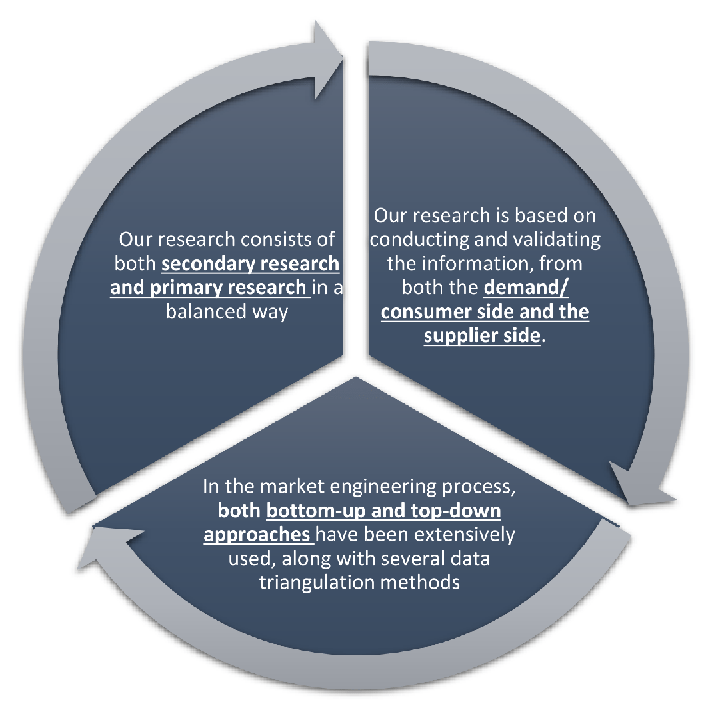
MarketGenics leverages a dedicated industry panel of experts and a comprehensive suite of paid databases to effectively collect, consolidate, and analyze market intelligence.
Our approach has consistently proven to be reliable and effective in generating accurate market insights, identifying key industry trends, and uncovering emerging business opportunities.
Through both primary and secondary research, we capture and analyze critical company-level data such as manufacturing footprints, including technical centers, R&D facilities, sales offices, and headquarters.
Our expert panel further enhances our ability to estimate market size for specific brands based on validated field-level intelligence.
Our data mining techniques incorporate both parametric and non-parametric methods, allowing for structured data collection, sorting, processing, and cleaning.
Demand projections are derived from large-scale data sets analyzed through proprietary algorithms, culminating in robust and reliable market sizing.
Research Approach
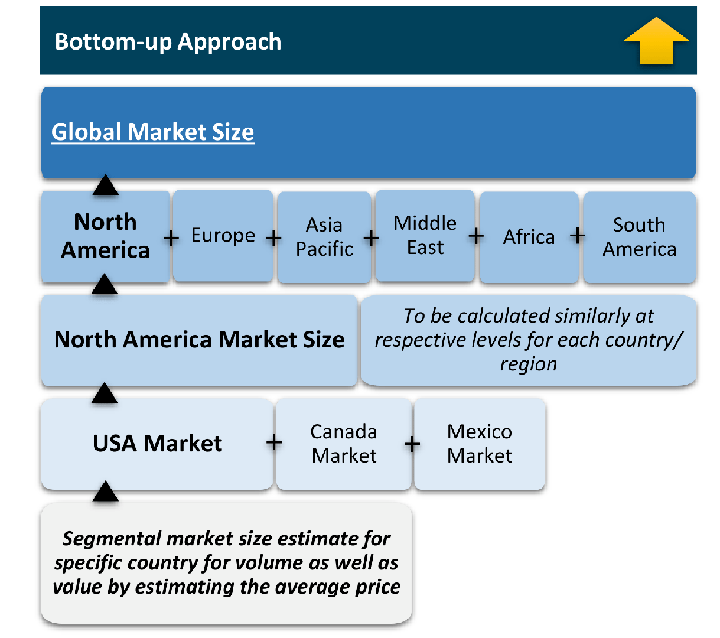
The bottom-up approach builds market estimates by starting with the smallest addressable market units and systematically aggregating them to create comprehensive market size projections.
This method begins with specific, granular data points and builds upward to create the complete market landscape.
Customer Analysis → Segmental Analysis → Geographical Analysis
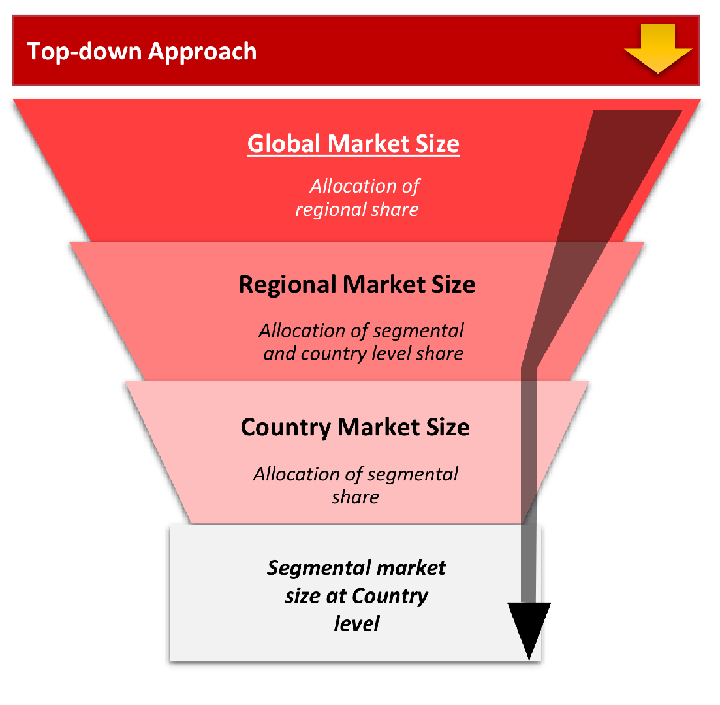
The top-down approach starts with the broadest possible market data and systematically narrows it down through a series of filters and assumptions to arrive at specific market segments or opportunities.
This method begins with the big picture and works downward to increasingly specific market slices.
TAM → SAM → SOM
Research Methods
Desk / Secondary Research
While analysing the market, we extensively study secondary sources, directories, and databases to identify and collect information useful for this technical, market-oriented, and commercial report. Secondary sources that we utilize are not only the public sources, but it is a combination of Open Source, Associations, Paid Databases, MG Repository & Knowledgebase, and others.
- Company websites, annual reports, financial reports, broker reports, and investor presentations
- National government documents, statistical databases and reports
- News articles, press releases and web-casts specific to the companies operating in the market, Magazines, reports, and others
- We gather information from commercial data sources for deriving company specific data such as segmental revenue, share for geography, product revenue, and others
- Internal and external proprietary databases (industry-specific), relevant patent, and regulatory databases
- Governing Bodies, Government Organizations
- Relevant Authorities, Country-specific Associations for Industries
We also employ the model mapping approach to estimate the product level market data through the players' product portfolio
Primary Research
Primary research/ interviews is vital in analyzing the market. Most of the cases involves paid primary interviews. Primary sources include primary interviews through e-mail interactions, telephonic interviews, surveys as well as face-to-face interviews with the different stakeholders across the value chain including several industry experts.
| Type of Respondents | Number of Primaries |
|---|---|
| Tier 2/3 Suppliers | ~20 |
| Tier 1 Suppliers | ~25 |
| End-users | ~25 |
| Industry Expert/ Panel/ Consultant | ~30 |
| Total | ~100 |
MG Knowledgebase
• Repository of industry blog, newsletter and case studies
• Online platform covering detailed market reports, and company profiles
Forecasting Factors and Models
Forecasting Factors
- Historical Trends – Past market patterns, cycles, and major events that shaped how markets behave over time. Understanding past trends helps predict future behavior.
- Industry Factors – Specific characteristics of the industry like structure, regulations, and innovation cycles that affect market dynamics.
- Macroeconomic Factors – Economic conditions like GDP growth, inflation, and employment rates that affect how much money people have to spend.
- Demographic Factors – Population characteristics like age, income, and location that determine who can buy your product.
- Technology Factors – How quickly people adopt new technology and how much technology infrastructure exists.
- Regulatory Factors – Government rules, laws, and policies that can help or restrict market growth.
- Competitive Factors – Analyzing competition structure such as degree of competition and bargaining power of buyers and suppliers.
Forecasting Models / Techniques
Multiple Regression Analysis
- Identify and quantify factors that drive market changes
- Statistical modeling to establish relationships between market drivers and outcomes
Time Series Analysis – Seasonal Patterns
- Understand regular cyclical patterns in market demand
- Advanced statistical techniques to separate trend, seasonal, and irregular components
Time Series Analysis – Trend Analysis
- Identify underlying market growth patterns and momentum
- Statistical analysis of historical data to project future trends
Expert Opinion – Expert Interviews
- Gather deep industry insights and contextual understanding
- In-depth interviews with key industry stakeholders
Multi-Scenario Development
- Prepare for uncertainty by modeling different possible futures
- Creating optimistic, pessimistic, and most likely scenarios
Time Series Analysis – Moving Averages
- Sophisticated forecasting for complex time series data
- Auto-regressive integrated moving average models with seasonal components
Econometric Models
- Apply economic theory to market forecasting
- Sophisticated economic models that account for market interactions
Expert Opinion – Delphi Method
- Harness collective wisdom of industry experts
- Structured, multi-round expert consultation process
Monte Carlo Simulation
- Quantify uncertainty and probability distributions
- Thousands of simulations with varying input parameters
Research Analysis
Our research framework is built upon the fundamental principle of validating market intelligence from both demand and supply perspectives. This dual-sided approach ensures comprehensive market understanding and reduces the risk of single-source bias.
Demand-Side Analysis: We understand end-user/application behavior, preferences, and market needs along with the penetration of the product for specific application.
Supply-Side Analysis: We estimate overall market revenue, analyze the segmental share along with industry capacity, competitive landscape, and market structure.
Validation & Evaluation
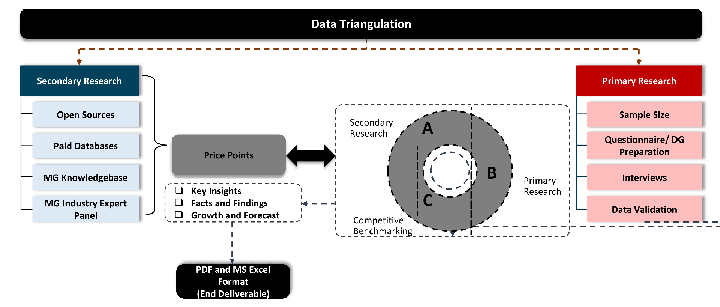
Data triangulation is a validation technique that uses multiple methods, sources, or perspectives to examine the same research question, thereby increasing the credibility and reliability of research findings. In market research, triangulation serves as a quality assurance mechanism that helps identify and minimize bias, validate assumptions, and ensure accuracy in market estimates.
- Data Source Triangulation – Using multiple data sources to examine the same phenomenon
- Methodological Triangulation – Using multiple research methods to study the same research question
- Investigator Triangulation – Using multiple researchers or analysts to examine the same data
- Theoretical Triangulation – Using multiple theoretical perspectives to interpret the same data
Custom Market Research Services
We will customise the research for you, in case the report listed above does not meet your requirements.
Get 10% Free Customisation