Creator Economy Management Platforms Market Size, Share & Trends Analysis Report by Component (Platform Core (Creator dashboards, creator profiles), Creator CRM & Relationship Management, Monetization & Payments Engine, Analytics & Performance Insights, Content Management & Scheduling, Community & Membership Tools, Commerce & Merchandising Modules, API / Integration Layer, Security, Compliance & Moderation Tools, Professional Services (onboarding, success) and Others), Deployment Mode, Service/ Offering, Monetization Model, Creator Type/ Use Case, Technology, Integration/ Ecosystem, End Customer/ Buyer and Geography (North America, Europe, Asia Pacific, Middle East, Africa, and South America) – Global Industry Data, Trends, and Forecasts, 2026–2035
|
Market Structure & Evolution |
|
|
Segmental Data Insights |
|
|
Demand Trends |
|
|
Competitive Landscape |
|
|
Strategic Development |
|
|
Future Outlook & Opportunities |
|
Creator Economy Management Platforms Market Size, Share, and Growth
The global creator economy management platforms market is experiencing robust growth, with its estimated value of USD 167.1 billion in the year 2025 and USD 987.5 billion by the period 2035, registering a CAGR of 19.4% during the forecast period. Creator economy management platforms market is expanding fast worldwide.
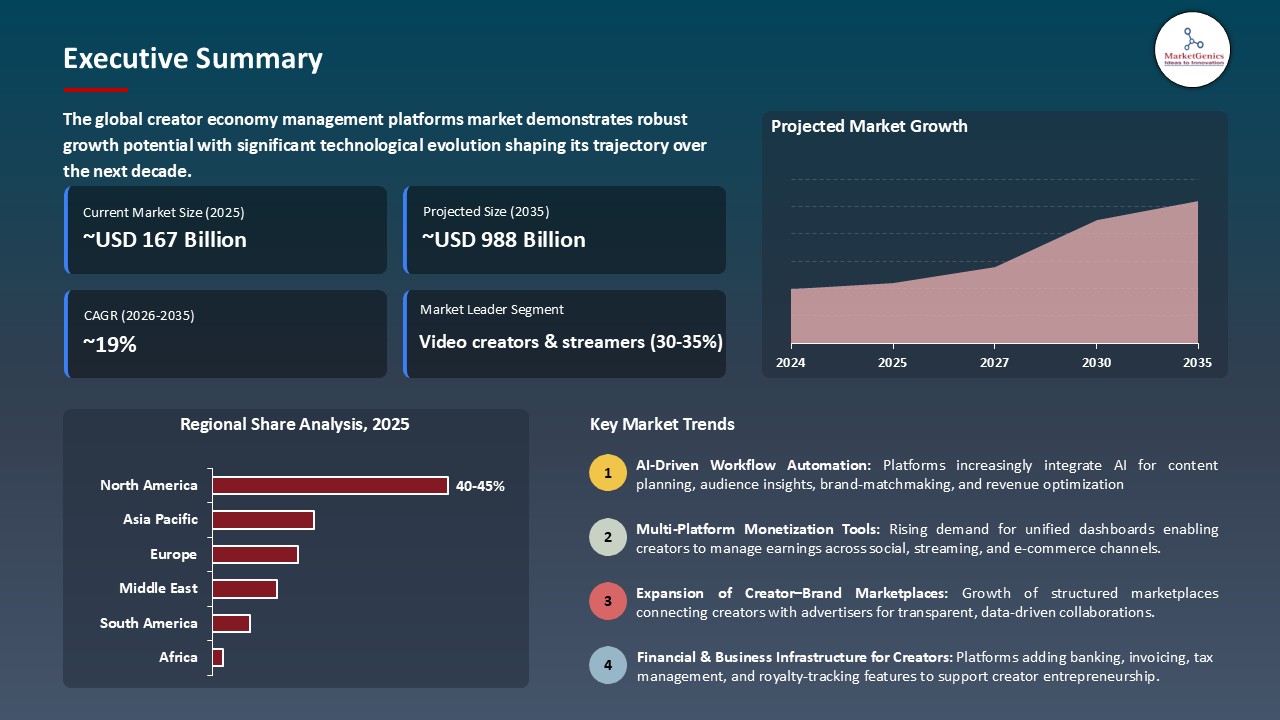
"The future relies on the talented creators, my highest priority is supporting and advocating for our creator community," Adam Presser, Head of Operations & Trust & Safety at TikTok said. He went on to share that TikTok is dedicated in giving creators monetization tools and the educational resources- establishing a place where creative passion and sustainable pay can coexist.
The main factors enhancing monetization, fan engagement, and platform scalability support this expansion. For instance, in May 2025 Patreon changed its iOS app to allow web-based payments. Through this method, fans could pay by credit cards, PayPal, or Venmo instead of being limited to Apple’s in-app purchases. With this update creators got more payment options and transaction friction was lowered.
The growth of digital content creation to which influencer marketing is a major contributor and subscription-based monetization are some of the main factors behind the demand for creator management solutions. Moreover, from August 2025 Patreon has set its platform fee to 10% for new creators thus simplifying monetization and offering content creators clear cost structures.
Besides that, adoption is also supported by the need for compliance with regulations, platform standards, and secure payment processing. These factors are the main reasons why creators and brands are moving towards integrated platforms that not only improve workflow efficiency but also make revenue tracking easier. The market is being driven by a mix of technological improvements, standardized policies, and increasing digital audiences which in turn lead to more monetization opportunities and creators’ operational efficiency improvements.
Besides the global creator economy management platforms market, there are also some adjacent opportunities like influencer analytics tools, brand collaboration marketplaces, subscription management software, fan engagement platforms, and content rights management solutions. By leveraging these adjacent services, platform providers can extend their offerings, encourage innovativeness, and increase revenue streams within the creator economy ecosystem.
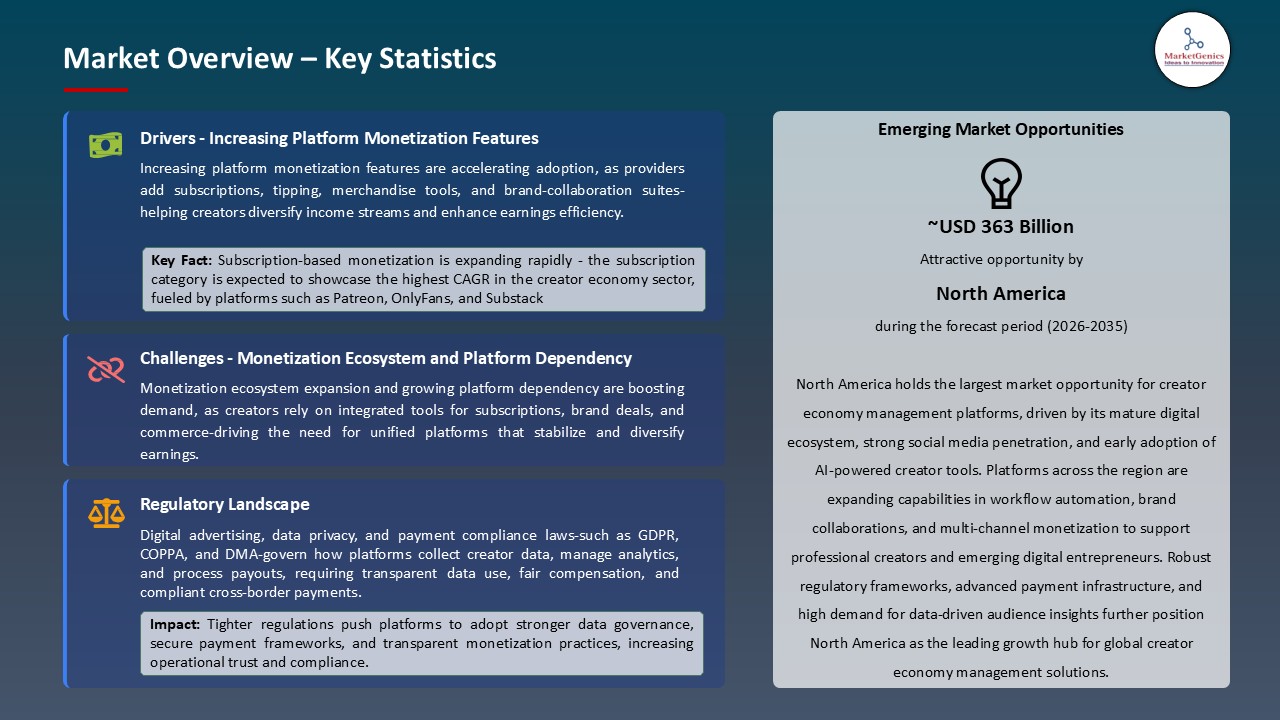
Creator Economy Management platforms Market Dynamics and Trends
Driver: Increasing Platform Monetization Features Driving Adoption of Creator Management Systems
- The creator economy management platforms market is going to be worldwide, a major platform-level monetization upgrade will be the main support. For an instance, in June 2025, YouTube broadened its Creator Music licensing program, thus allowing creators to use popular music tracks in a legal way and at the same time keep a percentage of the ad revenue - thus increasing the demand for rights management, workflow automation, and analytics tools that support cross-platform content monetization.
- The shift to diversified income streams is also another major driver. TikTok’s Creativity Program Beta, which was launched globally in 2024–2025, introduced higher RPM payouts and improved creator dashboards, thus pushing creators to use integrated platforms for revenue tracking, brand collaboration management, and campaign reporting.
- Moreover, the subscription-driven ecosystems such as Patreon, Twitch, and Meta’s creator tools that have become very large in scale are the main reasons why there is a continuous need for platforms providing financial analytics, CRM tools, contract automation, and compliance support across different revenue channels.
Restraint: Fragmented Monetization Ecosystem and Platform Dependency Slowing Broad Adoption
- Even though there has been a rapid growth, the adoption of creator economy management systems on a large scale is still hindered by the existence of different monetization rules that are fragmented for YouTube, Instagram, TikTok, Twitch, and Patreon. Each platform has its own payout models, content policies, and rights rules, which makes the unified management highly complicated and requires a lot of resources.
- Quite a number of creators, particularly small and middle-sized ones, are still heavily dependent on platform-native analytics and manual brand-deal workflows due to the lack of sufficient funds. This in turn lowers the rate of third-party management platform usage that necessitates the payment of subscription fees.
- The frequent changes in the monetization policies, for instance, Twitch's 2023-2024 updates to revenue-share terms and branded content rules, result in the inability to make plans with certainty and thus, investing in management solutions for the long term is done at a very slow pace. The biggest challenge that still exists is the balancing of multi-platform compliance, rights management, and operational costs which is the reason for low adoption.
Opportunity: Expansion Across SMB Creator Agencies, Global Brands, and AI-Assisted Workflow Automation
- To start with, the creator-led businesses, micro-agencies, and brand-creator marketplaces that have come up are huge opportunities for workflow automation, AI-based editing tools, tax/compliance support, and audience analytics.
- One of the major trend’s global brands follows is shifting their focus towards collaborations with creators. This is being facilitated by tools like Meta’s Creator Marketplace (which is going to be available worldwide from 2024) and YouTube BrandConnect. As a result, there is an opening for management platforms that deal with influencer discovery, campaign automation, and cross-platform reporting to gain prominence.
- Furthermore, a substantial amount of potential is present in AI-driven content production and rights management as well. Taking an instance of Adobe’s Firefly (launched in 2023, expanded in 2024–2025), it is a popular tool for generative content creation with the provision of built-in commercial-use rights. This is happening at a fast pace as more and more platforms that integrate AI-assisted editing, tagging, and licensing workflows are being adopted.
Key Trend: Integration of Generative AI, Rights Management, and Cross-Platform Analytics
- The integration of generative AI, audience-behavior models, and rights-management engines directly into creator management platforms is a major trend that is significantly affecting the market. In concise, the prediction of performance at the moment of interaction, the AI-guided editing assistant, and the automated content tagging that is picking up the production, monetization, and growth departments of the company, are some of the ways by which the efficiency is increasing.
- Cross-platform creator identity unification is broadly becoming more effective, a trend which is largely responsible the likes of YouTube’s automated content ID improvements (2024–2025) and Twitch’s brand safety score tools extension enabling creators and agencies to track performance, compliance, and safety across multiple channels.
- The interaction of AI, digital rights management, and automated revenue optimization being the main factors in the market change toward full-stack creator operating systems is the primary reason for the rapid transition of professionalized creator businesses worldwide.
Creator Economy Management Platforms Market Analysis and Segmental Data
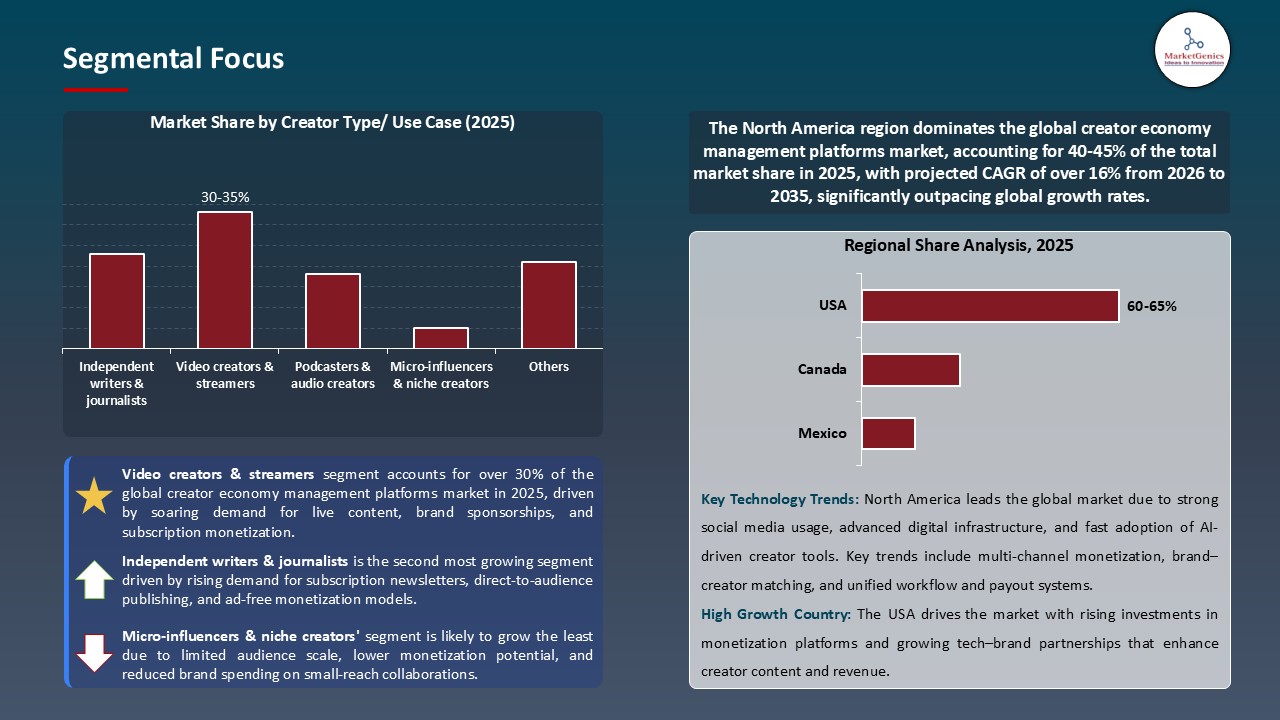
“Video Creators & Streamers Dominates Global Creator Economy Management Platforms Market amid Expanding Monetization Programs and Platform-Driven Revenue Innovations"
- Since, YouTube, TikTok, Twitch, and Instagram roll out new monetization tools, video creators and live streamers are at the forefront of global platform adoption. Examples that can be confirmed are the changes to YouTube's Partner Program (2023-2024), TikTok's Creativity Program Beta (2023), and Twitch's Ad Incentive Program (2024). All of these will be the main vehicles to raise video-first creator growth and thus increase the earning potential considerably.
- The use of AI to produce content quickly leads creators to use more management platforms. Adobe (Premiere Pro AI, 2024), Canva (Magic Studio, 2023), and Descript are some companies that provide fully automated editing, a synthesized voice, and repurposing of content for different platforms by means of which creators' production time is cut down and they are able to scale content across more channels.
- Changes in regulation and platform transparency give video creators more power to dominate the scene. The enforcement in 2024 of the EU Digital Services Act (DSA), among other things, required platforms to improve revenue reporting and data protection which resulted in more trust from creators in platform-linked monetization.
- The rise of monetization strategies that are deeply integrated with each other acts as a video creator power play. A streamer, for instance, can integrate ads, subscriptions and commerce, and donations into one revenue stream through such partnerships as Shopify x YouTube Shopping, Patreon memberships, Streamlabs tipping, and Ko-fi fan engagement.
“Strengthened Creator Economy Management Platforms Elevate North American Market Demand amid Expanding Monetization Infrastructure"
- North America remains the main driver of the creator economy management platforms market on the back of a fully digital infrastructure of the region. The digital infrastructure, high adoption by creators, and heavy investments of major tech firms have been North America’s main assets for the creator management platforms market. Platforms such as YouTube, TikTok, Instagram, Twitch, and Patreon have added new monetization pathways-such as ad-revenue sharing, fan subscriptions, branded content hubs, and tipping systems-that, in turn, have attracted a huge number of creators in the U.S. and Canada.
- The expansion of YouTube Shorts monetization and the TikTok Creator Rewards Program have, for instance, led to a drastic increase of earnings potential, thus, a large number of creators have started to use management platforms for analytics, rights management, and workflow automation.
- The region is also a good place for the existence of such ecosystems as Jellysmack, Linktree, Kajabi, and Spotter, which are all scaling the supply of creator services from financing to multi-platform distribution. On top of that, the brand investment in influencer marketing, together with the use of AI-based content optimization and CRM tools, is quite a catalyst for the sector of integrated creator management solutions. North America with its solid platform and monetization infrastructure has become, therefore, the region with the highest growth rate of creator economy management technologies.
- Organizations like the Cybersecurity and Infrastructure Security Agency (CISA) and the National Institute of Standards and Technology (NIST) are behind the continued adoption of security operations centers (SOC) facilities by promoting the usage of standards such as Zero Trust and Continuous Diagnostics and Mitigation. North America is still leading the global creator economy management platforms market with its technological innovations and high-speed reaction capabilities.
Creator-Economy-Management-Platforms-Market Ecosystem
The creator economy management platforms market is seeing a trend where fewer and fewer companies hold the power. The top companies like Patreon, Kajabi, CreatorIQ, Linktree, Shopify, and Substack are leading the way by using advanced monetization, analytics, and workflow-automation technologies. These companies are raising their stakes by providing more and more specialized tools-covering everything from fan-subscription infrastructure and CRM dashboards to brand-safety analytics and multi-platform distribution systems-that respond to the creators' increasing operational requirements.
The majority of these platforms, on the other hand, are diverting their attention towards niche innovations. To cite an instance, CreatorIQ and Traackr concentrate on providing influencer marketing intelligence, whereas Kajabi and Teachable prioritize aspects like digital course creation and community-based revenue models. Authorities and regulatory bodies are also playing a part in the market's transition. The U.S. Federal Trade Commission's revised Endorsement Guidelines (June 2023) put more emphasis on the necessity for transparency and disclosure in influencer marketing, which in turn made platforms improve their compliance tools and brand-safety tracking.
Besides, the central characters in the industry are investing in the future by adding features such as integrated content-creation suites, financial dashboards, and AI-driven recommendation engines to their product lines. These improvements aim at creators' productivity and monetization efficiency.
For instance, YouTube's introduction of AI-powered Dream Screen in February 2024, through which creators can now effortlessly produce backgrounds utilizing generative AI, thus greatly shortening the time needed to create Shorts and at the same time, enabling higher engagement rates for the creators' channels.
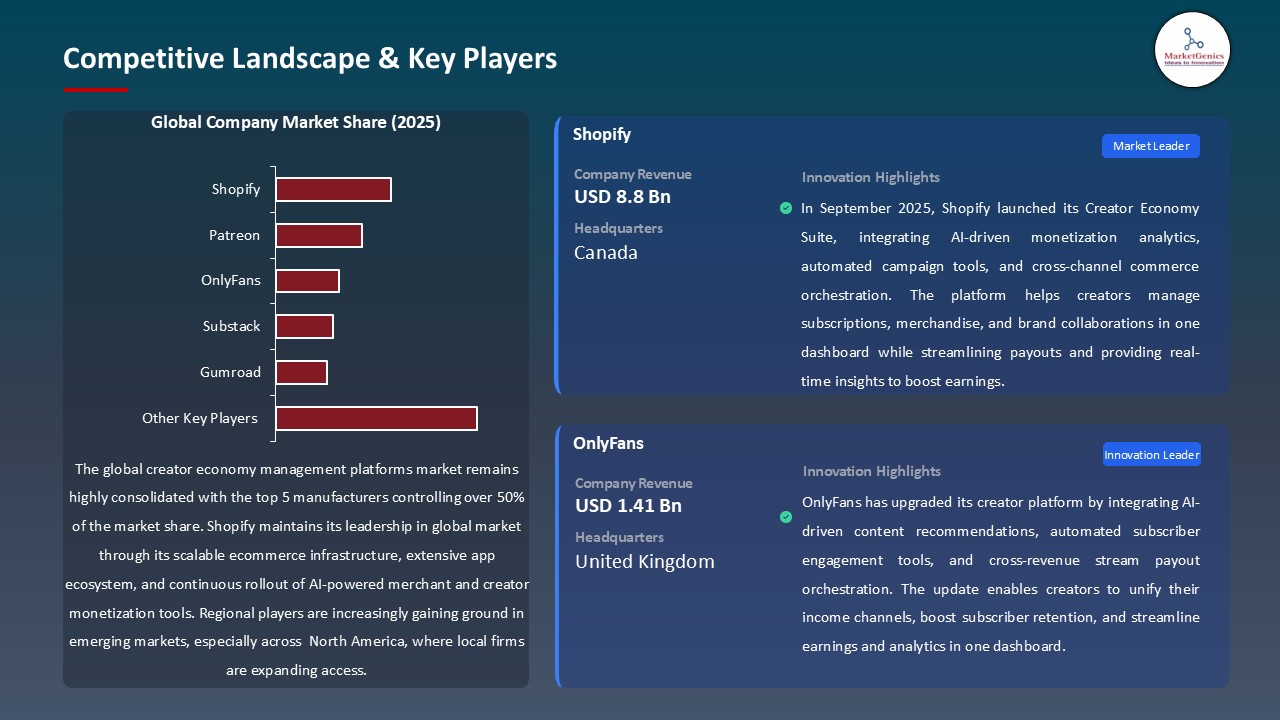
Recent Development and Strategic Overview:
- In April 2025, YouTube unveiled its Creator Monetization Hub, a single-window reporting tool that merges ad revenue analytics, fan funding insights, brand-collaboration workflows, and creator commerce tools, thus enabling content creators to handle money-making activities more efficiently and simultaneously to increase the level of transparency across Shorts, livestreams, and long-form content.
- In September 2025, Meta launched its Creator Professional Suite, a consolidated Instagram and Facebook platform equipped with AI-powered content performance diagnostics, automated rights management, cross-platform audience tracking, and subscription features enhancements which gave creators the power to optimize engagement, protect assets, and scale monetization opportunities in interoperable Meta ecosystems.
Report Scope
|
Attribute |
Detail |
|
Market Size in 2025 |
USD 167.1 Bn |
|
Market Forecast Value in 2035 |
USD 987.5 Bn |
|
Growth Rate (CAGR) |
19.4% |
|
Forecast Period |
2026 – 2035 |
|
Historical Data Available for |
2021 – 2024 |
|
Market Size Units |
USD Bn for Value |
|
Report Format |
Electronic (PDF) + Excel |
|
Regions and Countries Covered |
|||||
|
North America |
Europe |
Asia Pacific |
Middle East |
Africa |
South America |
|
|
|
|
|
|
|
Companies Covered |
|||||
|
|
|
|
|
|
Creator-Economy-Management-Platforms-Market Segmentation and Highlights
|
Segment |
Sub-segment |
|
Creator Economy Management Platforms Market, By Component |
|
|
Creator Economy Management Platforms Market, By Deployment Mode |
|
|
Creator Economy Management Platforms Market By Service/ Offering |
|
|
Creator Economy Management Platforms Market, By Monetization Model |
|
|
Creator Economy Management Platforms Market, By Creator Type/ Use Case |
|
|
Creator Economy Management Platforms Market, By Technology |
|
|
Creator Economy Management Platforms Market, By Integration & Ecosystem |
|
|
Creator Economy Management Platforms Market, By End Customer/ Buyer |
|
Frequently Asked Questions
Table of Contents
- 1. Research Methodology and Assumptions
- 1.1. Definitions
- 1.2. Research Design and Approach
- 1.3. Data Collection Methods
- 1.4. Base Estimates and Calculations
- 1.5. Forecasting Models
- 1.5.1. Key Forecast Factors & Impact Analysis
- 1.6. Secondary Research
- 1.6.1. Open Sources
- 1.6.2. Paid Databases
- 1.6.3. Associations
- 1.7. Primary Research
- 1.7.1. Primary Sources
- 1.7.2. Primary Interviews with Stakeholders across Ecosystem
- 2. Executive Summary
- 2.1. Global Creator Economy Management Platforms Market Outlook
- 2.1.1. Creator Economy Management Platforms Market Size (Value - US$ Bn), and Forecasts, 2021-2035
- 2.1.2. Compounded Annual Growth Rate Analysis
- 2.1.3. Growth Opportunity Analysis
- 2.1.4. Segmental Share Analysis
- 2.1.5. Geographical Share Analysis
- 2.2. Market Analysis and Facts
- 2.3. Supply-Demand Analysis
- 2.4. Competitive Benchmarking
- 2.5. Go-to- Market Strategy
- 2.5.1. Customer/ End-use Industry Assessment
- 2.5.2. Growth Opportunity Data, 2026-2035
- 2.5.2.1. Regional Data
- 2.5.2.2. Country Data
- 2.5.2.3. Segmental Data
- 2.5.3. Identification of Potential Market Spaces
- 2.5.4. GAP Analysis
- 2.5.5. Potential Attractive Price Points
- 2.5.6. Prevailing Market Risks & Challenges
- 2.5.7. Preferred Sales & Marketing Strategies
- 2.5.8. Key Recommendations and Analysis
- 2.5.9. A Way Forward
- 2.1. Global Creator Economy Management Platforms Market Outlook
- 3. Industry Data and Premium Insights
- 3.1. Global Information Technology & Media Ecosystem Overview, 2025
- 3.1.1. Information Technology & Media Industry Analysis
- 3.1.2. Key Trends for Information Technology & Media Industry
- 3.1.3. Regional Distribution for Information Technology & Media Industry
- 3.2. Supplier Customer Data
- 3.3. Technology Roadmap and Developments
- 3.1. Global Information Technology & Media Ecosystem Overview, 2025
- 4. Market Overview
- 4.1. Market Dynamics
- 4.1.1. Drivers
- 4.1.1.1. Rising demand for end-to-end monetization, analytics, and workflow management tools for creators
- 4.1.1.2. Growing adoption of AI- and ML-driven audience engagement, content recommendation, and performance optimization solutions
- 4.1.1.3. Increasing regulatory focus on digital content rights, copyright compliance, and creator revenue transparency
- 4.1.2. Restraints
- 4.1.2.1. High subscription and integration costs of advanced creator management platforms
- 4.1.2.2. Challenges in integrating platforms with diverse social media, e-commerce, and content distribution systems
- 4.1.1. Drivers
- 4.2. Key Trend Analysis
- 4.3. Regulatory Framework
- 4.3.1. Key Regulations, Norms, and Subsidies, by Key Countries
- 4.3.2. Tariffs and Standards
- 4.3.3. Impact Analysis of Regulations on the Market
- 4.4. Value Chain Analysis
- 4.4.1. Component/ Platform Suppliers
- 4.4.2. System Integrators/ Technology Providers
- 4.4.3. Creator Economy Management Platforms Providers
- 4.4.4. End Users
- 4.5. Cost Structure Analysis
- 4.5.1. Parameter’s Share for Cost Associated
- 4.5.2. COGP vs COGS
- 4.5.3. Profit Margin Analysis
- 4.6. Pricing Analysis
- 4.6.1. Regional Pricing Analysis
- 4.6.2. Segmental Pricing Trends
- 4.6.3. Factors Influencing Pricing
- 4.7. Porter’s Five Forces Analysis
- 4.8. PESTEL Analysis
- 4.9. Global Creator Economy Management Platforms Market Demand
- 4.9.1. Historical Market Size –Value (US$ Bn), 2020-2024
- 4.9.2. Current and Future Market Size –Value (US$ Bn), 2026–2035
- 4.9.2.1. Y-o-Y Growth Trends
- 4.9.2.2. Absolute $ Opportunity Assessment
- 4.1. Market Dynamics
- 5. Competition Landscape
- 5.1. Competition structure
- 5.1.1. Fragmented v/s consolidated
- 5.2. Company Share Analysis, 2025
- 5.2.1. Global Company Market Share
- 5.2.2. By Region
- 5.2.2.1. North America
- 5.2.2.2. Europe
- 5.2.2.3. Asia Pacific
- 5.2.2.4. Middle East
- 5.2.2.5. Africa
- 5.2.2.6. South America
- 5.3. Product Comparison Matrix
- 5.3.1. Specifications
- 5.3.2. Market Positioning
- 5.3.3. Pricing
- 5.1. Competition structure
- 6. Global Creator Economy Management Platforms Market Analysis, by Component
- 6.1. Key Segment Analysis
- 6.2. Creator Economy Management Platforms Market Size (Value - US$ Bn), Analysis, and Forecasts, by Component, 2021-2035
- 6.2.1. Platform Core (Creator dashboards, creator profiles)
- 6.2.2. Creator CRM & Relationship Management
- 6.2.3. Monetization & Payments Engine
- 6.2.4. Analytics & Performance Insights
- 6.2.5. Content Management & Scheduling
- 6.2.6. Community & Membership Tools
- 6.2.7. Commerce & Merchandising Modules
- 6.2.8. API / Integration Layer
- 6.2.9. Security, Compliance & Moderation Tools
- 6.2.10. Professional Services (onboarding, success)
- 6.2.11. Others
- 7. Global Creator Economy Management Platforms Market Analysis, by Deployment Mode
- 7.1. Key Segment Analysis
- 7.2. Creator Economy Management Platforms Market Size (Value - US$ Bn), Analysis, and Forecasts, by Deployment Mode, 2021-2035
- 7.2.1. Cloud-Based
- 7.2.2. On-Premises
- 7.2.3. Hybrid
- 8. Global Creator Economy Management Platforms Market Analysis, by Service/ Offering
- 8.1. Key Segment Analysis
- 8.2. Creator Economy Management Platforms Market Size (Value - US$ Bn), Analysis, and Forecasts, by Service/ Offering, 2021-2035
- 8.2.1. Creator Monetization Platforms (subscriptions, tips)
- 8.2.2. Course & Digital Product Platforms (courses, ebooks)
- 8.2.3. Fan engagement & membership platforms
- 8.2.4. Influencer / Campaign Management platforms
- 8.2.5. Marketplace & gig-based creator platforms
- 8.2.6. Link-in-bio & discovery tools
- 8.2.7. Creator e-commerce & storefront solutions
- 8.2.8. Analytics, fraud & audience verification services
- 8.2.9. Others
- 9. Global Creator Economy Management Platforms Market Analysis, by Monetization Model
- 9.1. Key Segment Analysis
- 9.2. Creator Economy Management Platforms Market Size (Value - US$ Bn), Analysis, and Forecasts, by Monetization Model, 2021-2035
- 9.2.1. Subscriptions / recurring payments
- 9.2.2. One-time purchases / paywalls
- 9.2.3. Tips / micropayments
- 9.2.4. Paid direct messaging / shoutouts
- 9.2.5. Affiliate / revenue share models
- 9.2.6. Ad revenue / programmatic monetization
- 9.2.7. Merchandise & physical product sales
- 9.2.8. Sponsored content / brand deals facilitation
- 9.2.9. Others
- 10. Global Creator Economy Management Platforms Market Analysis, by Creator Type/ Use Case
- 10.1. Key Segment Analysis
- 10.2. Creator Economy Management Platforms Market Size (Value - US$ Bn), Analysis, and Forecasts, by Creator Type/ Use Case, 2021-2035
- 10.2.1. Independent writers & journalists
- 10.2.2. Video creators & streamers
- 10.2.3. Podcasters & audio creators
- 10.2.4. Educators & course creators
- 10.2.5. Musicians & performers
- 10.2.6. Visual artists & photographers
- 10.2.7. Gamers & esports creators
- 10.2.8. Micro-influencers & niche creators
- 10.2.9. Others
- 11. Global Creator Economy Management Platforms Market Analysis, by Technology
- 11.1. Key Segment Analysis
- 11.2. Creator Economy Management Platforms Market Size (Value - US$ Bn), Analysis, and Forecasts, by Technology, 2021-2035
- 11.2.1. AI-driven content & audience recommendations
- 11.2.2. Creator attribution & rights management (watermarking, DRM)
- 11.2.3. Fraud detection & audience authenticity scoring
- 11.2.4. Blockchain / NFT support for monetization
- 11.2.5. Real-time chat / tipping engines
- 11.2.6. Scalable cloud infrastructure & CDN support
- 11.2.7. Others
- 12. Global Creator Economy Management Platforms Market Analysis, by Integration / Ecosystem
- 12.1. Key Segment Analysis
- 12.2. Creator Economy Management Platforms Market Size (Value - US$ Bn), Analysis, and Forecasts, by Integration / Ecosystem, 2021-2035
- 12.2.1. Social network connectors (TikTok, YouTube, IG, X)
- 12.2.2. Payment gateways & local payout partners
- 12.2.3. Email & newsletter integrations (SMTP, ESPs)
- 12.2.4. LMS & course marketplaces integrations
- 12.2.5. Ad networks & affiliate program integrations
- 12.2.6. Plugin / marketplace for third-party apps
- 12.2.7. Analytics & BI tool connectors
- 12.2.8. Others
- 13. Global Creator Economy Management Platforms Market Analysis, by End Customer/ Buyer
- 13.1. Key Segment Analysis
- 13.2. Creator Economy Management Platforms Market Size (Value - US$ Bn), Analysis, and Forecasts, by End Customer/ Buyer, 2021-2035
- 13.2.1. Individual creators / solopreneurs
- 13.2.2. Creator collectives & studios
- 13.2.3. Agencies & talent managers
- 13.2.4. Brands & advertiser buyers
- 13.2.5. Media companies & publishers
- 13.2.6. Educational institutions
- 13.2.7. Others
- 14. Global Creator Economy Management Platforms Market Analysis and Forecasts, by Region
- 14.1. Key Findings
- 14.2. Creator Economy Management Platforms Market Size (Value - US$ Bn), Analysis, and Forecasts, by Region, 2021-2035
- 14.2.1. North America
- 14.2.2. Europe
- 14.2.3. Asia Pacific
- 14.2.4. Middle East
- 14.2.5. Africa
- 14.2.6. South America
- 15. North America Creator Economy Management Platforms Market Analysis
- 15.1. Key Segment Analysis
- 15.2. Regional Snapshot
- 15.3. North America Creator Economy Management Platforms Market Size Value - US$ Bn), Analysis, and Forecasts, 2021-2035
- 15.3.1. Component
- 15.3.2. Deployment Mode
- 15.3.3. Service/ Offering
- 15.3.4. Monetization Model
- 15.3.5. Creator Type/ Use Case
- 15.3.6. Technology
- 15.3.7. Integration / Ecosystem
- 15.3.8. End Customer/ Buyer
- 15.3.9. Country
- 15.3.9.1. USA
- 15.3.9.2. Canada
- 15.3.9.3. Mexico
- 15.4. USA Creator Economy Management Platforms Market
- 15.4.1. Country Segmental Analysis
- 15.4.2. Component
- 15.4.3. Deployment Mode
- 15.4.4. Service/ Offering
- 15.4.5. Monetization Model
- 15.4.6. Creator Type/ Use Case
- 15.4.7. Technology
- 15.4.8. Integration / Ecosystem
- 15.4.9. End Customer/ Buyer
- 15.5. Canada Creator Economy Management Platforms Market
- 15.5.1. Country Segmental Analysis
- 15.5.2. Component
- 15.5.3. Deployment Mode
- 15.5.4. Service/ Offering
- 15.5.5. Monetization Model
- 15.5.6. Creator Type/ Use Case
- 15.5.7. Technology
- 15.5.8. Integration / Ecosystem
- 15.5.9. End Customer/ Buyer
- 15.6. Mexico Creator Economy Management Platforms Market
- 15.6.1. Country Segmental Analysis
- 15.6.2. Component
- 15.6.3. Deployment Mode
- 15.6.4. Service/ Offering
- 15.6.5. Monetization Model
- 15.6.6. Creator Type/ Use Case
- 15.6.7. Technology
- 15.6.8. Integration / Ecosystem
- 15.6.9. End Customer/ Buyer
- 16. Europe Creator Economy Management Platforms Market Analysis
- 16.1. Key Segment Analysis
- 16.2. Regional Snapshot
- 16.3. Europe Creator Economy Management Platforms Market Size (Value - US$ Bn), Analysis, and Forecasts, 2021-2035
- 16.3.1. Component
- 16.3.2. Deployment Mode
- 16.3.3. Service/ Offering
- 16.3.4. Monetization Model
- 16.3.5. Creator Type/ Use Case
- 16.3.6. Technology
- 16.3.7. Integration / Ecosystem
- 16.3.8. End Customer/ Buyer
- 16.3.9. Country
- 16.3.9.1. Germany
- 16.3.9.2. United Kingdom
- 16.3.9.3. France
- 16.3.9.4. Italy
- 16.3.9.5. Spain
- 16.3.9.6. Netherlands
- 16.3.9.7. Nordic Countries
- 16.3.9.8. Poland
- 16.3.9.9. Russia & CIS
- 16.3.9.10. Rest of Europe
- 16.4. Germany Creator Economy Management Platforms Market
- 16.4.1. Country Segmental Analysis
- 16.4.2. Component
- 16.4.3. Deployment Mode
- 16.4.4. Service/ Offering
- 16.4.5. Monetization Model
- 16.4.6. Creator Type/ Use Case
- 16.4.7. Technology
- 16.4.8. Integration / Ecosystem
- 16.4.9. End Customer/ Buyer
- 16.5. United Kingdom Creator Economy Management Platforms Market
- 16.5.1. Country Segmental Analysis
- 16.5.2. Component
- 16.5.3. Deployment Mode
- 16.5.4. Service/ Offering
- 16.5.5. Monetization Model
- 16.5.6. Creator Type/ Use Case
- 16.5.7. Technology
- 16.5.8. Integration / Ecosystem
- 16.5.9. End Customer/ Buyer
- 16.6. France Creator Economy Management Platforms Market
- 16.6.1. Country Segmental Analysis
- 16.6.2. Component
- 16.6.3. Deployment Mode
- 16.6.4. Service/ Offering
- 16.6.5. Monetization Model
- 16.6.6. Creator Type/ Use Case
- 16.6.7. Technology
- 16.6.8. Integration / Ecosystem
- 16.6.9. End Customer/ Buyer
- 16.7. Italy Creator Economy Management Platforms Market
- 16.7.1. Country Segmental Analysis
- 16.7.2. Component
- 16.7.3. Deployment Mode
- 16.7.4. Service/ Offering
- 16.7.5. Monetization Model
- 16.7.6. Creator Type/ Use Case
- 16.7.7. Technology
- 16.7.8. Integration / Ecosystem
- 16.7.9. End Customer/ Buyer
- 16.8. Spain Creator Economy Management Platforms Market
- 16.8.1. Country Segmental Analysis
- 16.8.2. Component
- 16.8.3. Deployment Mode
- 16.8.4. Service/ Offering
- 16.8.5. Monetization Model
- 16.8.6. Creator Type/ Use Case
- 16.8.7. Technology
- 16.8.8. Integration / Ecosystem
- 16.8.9. End Customer/ Buyer
- 16.9. Netherlands Creator Economy Management Platforms Market
- 16.9.1. Country Segmental Analysis
- 16.9.2. Component
- 16.9.3. Deployment Mode
- 16.9.4. Service/ Offering
- 16.9.5. Monetization Model
- 16.9.6. Creator Type/ Use Case
- 16.9.7. Technology
- 16.9.8. Integration / Ecosystem
- 16.9.9. End Customer/ Buyer
- 16.10. Nordic Countries Creator Economy Management Platforms Market
- 16.10.1. Country Segmental Analysis
- 16.10.2. Component
- 16.10.3. Deployment Mode
- 16.10.4. Service/ Offering
- 16.10.5. Monetization Model
- 16.10.6. Creator Type/ Use Case
- 16.10.7. Technology
- 16.10.8. Integration / Ecosystem
- 16.10.9. End Customer/ Buyer
- 16.11. Poland Creator Economy Management Platforms Market
- 16.11.1. Country Segmental Analysis
- 16.11.2. Component
- 16.11.3. Deployment Mode
- 16.11.4. Service/ Offering
- 16.11.5. Monetization Model
- 16.11.6. Creator Type/ Use Case
- 16.11.7. Technology
- 16.11.8. Integration / Ecosystem
- 16.11.9. End Customer/ Buyer
- 16.12. Russia & CIS Creator Economy Management Platforms Market
- 16.12.1. Country Segmental Analysis
- 16.12.2. Component
- 16.12.3. Deployment Mode
- 16.12.4. Service/ Offering
- 16.12.5. Monetization Model
- 16.12.6. Creator Type/ Use Case
- 16.12.7. Technology
- 16.12.8. Integration / Ecosystem
- 16.12.9. End Customer/ Buyer
- 16.13. Rest of Europe Creator Economy Management Platforms Market
- 16.13.1. Country Segmental Analysis
- 16.13.2. Component
- 16.13.3. Deployment Mode
- 16.13.4. Service/ Offering
- 16.13.5. Monetization Model
- 16.13.6. Creator Type/ Use Case
- 16.13.7. Technology
- 16.13.8. Integration / Ecosystem
- 16.13.9. End Customer/ Buyer
- 17. Asia Pacific Creator Economy Management Platforms Market Analysis
- 17.1. Key Segment Analysis
- 17.2. Regional Snapshot
- 17.3. Asia Pacific Creator Economy Management Platforms Market Size (Value - US$ Bn), Analysis, and Forecasts, 2021-2035
- 17.3.1. Component
- 17.3.2. Deployment Mode
- 17.3.3. Service/ Offering
- 17.3.4. Monetization Model
- 17.3.5. Creator Type/ Use Case
- 17.3.6. Technology
- 17.3.7. Integration / Ecosystem
- 17.3.8. End Customer/ Buyer
- 17.3.9. Country
- 17.3.9.1. China
- 17.3.9.2. India
- 17.3.9.3. Japan
- 17.3.9.4. South Korea
- 17.3.9.5. Australia and New Zealand
- 17.3.9.6. Indonesia
- 17.3.9.7. Malaysia
- 17.3.9.8. Thailand
- 17.3.9.9. Vietnam
- 17.3.9.10. Rest of Asia Pacific
- 17.4. China Creator Economy Management Platforms Market
- 17.4.1. Country Segmental Analysis
- 17.4.2. Component
- 17.4.3. Deployment Mode
- 17.4.4. Service/ Offering
- 17.4.5. Monetization Model
- 17.4.6. Creator Type/ Use Case
- 17.4.7. Technology
- 17.4.8. Integration / Ecosystem
- 17.4.9. End Customer/ Buyer
- 17.5. India Creator Economy Management Platforms Market
- 17.5.1. Country Segmental Analysis
- 17.5.2. Component
- 17.5.3. Deployment Mode
- 17.5.4. Service/ Offering
- 17.5.5. Monetization Model
- 17.5.6. Creator Type/ Use Case
- 17.5.7. Technology
- 17.5.8. Integration / Ecosystem
- 17.5.9. End Customer/ Buyer
- 17.6. Japan Creator Economy Management Platforms Market
- 17.6.1. Country Segmental Analysis
- 17.6.2. Component
- 17.6.3. Deployment Mode
- 17.6.4. Service/ Offering
- 17.6.5. Monetization Model
- 17.6.6. Creator Type/ Use Case
- 17.6.7. Technology
- 17.6.8. Integration / Ecosystem
- 17.6.9. End Customer/ Buyer
- 17.7. South Korea Creator Economy Management Platforms Market
- 17.7.1. Country Segmental Analysis
- 17.7.2. Component
- 17.7.3. Deployment Mode
- 17.7.4. Service/ Offering
- 17.7.5. Monetization Model
- 17.7.6. Creator Type/ Use Case
- 17.7.7. Technology
- 17.7.8. Integration / Ecosystem
- 17.7.9. End Customer/ Buyer
- 17.8. Australia and New Zealand Creator Economy Management Platforms Market
- 17.8.1. Country Segmental Analysis
- 17.8.2. Component
- 17.8.3. Deployment Mode
- 17.8.4. Service/ Offering
- 17.8.5. Monetization Model
- 17.8.6. Creator Type/ Use Case
- 17.8.7. Technology
- 17.8.8. Integration / Ecosystem
- 17.8.9. End Customer/ Buyer
- 17.9. Indonesia Creator Economy Management Platforms Market
- 17.9.1. Country Segmental Analysis
- 17.9.2. Component
- 17.9.3. Deployment Mode
- 17.9.4. Service/ Offering
- 17.9.5. Monetization Model
- 17.9.6. Creator Type/ Use Case
- 17.9.7. Technology
- 17.9.8. Integration / Ecosystem
- 17.9.9. End Customer/ Buyer
- 17.10. Malaysia Creator Economy Management Platforms Market
- 17.10.1. Country Segmental Analysis
- 17.10.2. Component
- 17.10.3. Deployment Mode
- 17.10.4. Service/ Offering
- 17.10.5. Monetization Model
- 17.10.6. Creator Type/ Use Case
- 17.10.7. Technology
- 17.10.8. Integration / Ecosystem
- 17.10.9. End Customer/ Buyer
- 17.11. Thailand Creator Economy Management Platforms Market
- 17.11.1. Country Segmental Analysis
- 17.11.2. Component
- 17.11.3. Deployment Mode
- 17.11.4. Service/ Offering
- 17.11.5. Monetization Model
- 17.11.6. Creator Type/ Use Case
- 17.11.7. Technology
- 17.11.8. Integration / Ecosystem
- 17.11.9. End Customer/ Buyer
- 17.12. Vietnam Creator Economy Management Platforms Market
- 17.12.1. Country Segmental Analysis
- 17.12.2. Component
- 17.12.3. Deployment Mode
- 17.12.4. Service/ Offering
- 17.12.5. Monetization Model
- 17.12.6. Creator Type/ Use Case
- 17.12.7. Technology
- 17.12.8. Integration / Ecosystem
- 17.12.9. End Customer/ Buyer
- 17.13. Rest of Asia Pacific Creator Economy Management Platforms Market
- 17.13.1. Country Segmental Analysis
- 17.13.2. Component
- 17.13.3. Deployment Mode
- 17.13.4. Service/ Offering
- 17.13.5. Monetization Model
- 17.13.6. Creator Type/ Use Case
- 17.13.7. Technology
- 17.13.8. Integration / Ecosystem
- 17.13.9. End Customer/ Buyer
- 18. Middle East Creator Economy Management Platforms Market Analysis
- 18.1. Key Segment Analysis
- 18.2. Regional Snapshot
- 18.3. Middle East Creator Economy Management Platforms Market Size (Value - US$ Bn), Analysis, and Forecasts, 2021-2035
- 18.3.1. Component
- 18.3.2. Deployment Mode
- 18.3.3. Service/ Offering
- 18.3.4. Monetization Model
- 18.3.5. Creator Type/ Use Case
- 18.3.6. Technology
- 18.3.7. Integration / Ecosystem
- 18.3.8. End Customer/ Buyer
- 18.3.9. Country
- 18.3.9.1. Turkey
- 18.3.9.2. UAE
- 18.3.9.3. Saudi Arabia
- 18.3.9.4. Israel
- 18.3.9.5. Rest of Middle East
- 18.4. Turkey Creator Economy Management Platforms Market
- 18.4.1. Country Segmental Analysis
- 18.4.2. Component
- 18.4.3. Deployment Mode
- 18.4.4. Service/ Offering
- 18.4.5. Monetization Model
- 18.4.6. Creator Type/ Use Case
- 18.4.7. Technology
- 18.4.8. Integration / Ecosystem
- 18.4.9. End Customer/ Buyer
- 18.5. UAE Creator Economy Management Platforms Market
- 18.5.1. Country Segmental Analysis
- 18.5.2. Component
- 18.5.3. Deployment Mode
- 18.5.4. Service/ Offering
- 18.5.5. Monetization Model
- 18.5.6. Creator Type/ Use Case
- 18.5.7. Technology
- 18.5.8. Integration / Ecosystem
- 18.5.9. End Customer/ Buyer
- 18.6. Saudi Arabia Creator Economy Management Platforms Market
- 18.6.1. Country Segmental Analysis
- 18.6.2. Component
- 18.6.3. Deployment Mode
- 18.6.4. Service/ Offering
- 18.6.5. Monetization Model
- 18.6.6. Creator Type/ Use Case
- 18.6.7. Technology
- 18.6.8. Integration / Ecosystem
- 18.6.9. End Customer/ Buyer
- 18.7. Israel Creator Economy Management Platforms Market
- 18.7.1. Country Segmental Analysis
- 18.7.2. Component
- 18.7.3. Deployment Mode
- 18.7.4. Service/ Offering
- 18.7.5. Monetization Model
- 18.7.6. Creator Type/ Use Case
- 18.7.7. Technology
- 18.7.8. Integration / Ecosystem
- 18.7.9. End Customer/ Buyer
- 18.8. Rest of Middle East Creator Economy Management Platforms Market
- 18.8.1. Country Segmental Analysis
- 18.8.2. Component
- 18.8.3. Deployment Mode
- 18.8.4. Service/ Offering
- 18.8.5. Monetization Model
- 18.8.6. Creator Type/ Use Case
- 18.8.7. Technology
- 18.8.8. Integration / Ecosystem
- 18.8.9. End Customer/ Buyer
- 19. Africa Creator Economy Management Platforms Market Analysis
- 19.1. Key Segment Analysis
- 19.2. Regional Snapshot
- 19.3. Africa Creator Economy Management Platforms Market Size (Value - US$ Bn), Analysis, and Forecasts, 2021-2035
- 19.3.1. Component
- 19.3.2. Deployment Mode
- 19.3.3. Service/ Offering
- 19.3.4. Monetization Model
- 19.3.5. Creator Type/ Use Case
- 19.3.6. Technology
- 19.3.7. Integration / Ecosystem
- 19.3.8. End Customer/ Buyer
- 19.3.9. Country
- 19.3.9.1. South Africa
- 19.3.9.2. Egypt
- 19.3.9.3. Nigeria
- 19.3.9.4. Algeria
- 19.3.9.5. Rest of Africa
- 19.4. South Africa Creator Economy Management Platforms Market
- 19.4.1. Country Segmental Analysis
- 19.4.2. Component
- 19.4.3. Deployment Mode
- 19.4.4. Service/ Offering
- 19.4.5. Monetization Model
- 19.4.6. Creator Type/ Use Case
- 19.4.7. Technology
- 19.4.8. Integration / Ecosystem
- 19.4.9. End Customer/ Buyer
- 19.5. Egypt Creator Economy Management Platforms Market
- 19.5.1. Country Segmental Analysis
- 19.5.2. Component
- 19.5.3. Deployment Mode
- 19.5.4. Service/ Offering
- 19.5.5. Monetization Model
- 19.5.6. Creator Type/ Use Case
- 19.5.7. Technology
- 19.5.8. Integration / Ecosystem
- 19.5.9. End Customer/ Buyer
- 19.6. Nigeria Creator Economy Management Platforms Market
- 19.6.1. Country Segmental Analysis
- 19.6.2. Component
- 19.6.3. Deployment Mode
- 19.6.4. Service/ Offering
- 19.6.5. Monetization Model
- 19.6.6. Creator Type/ Use Case
- 19.6.7. Technology
- 19.6.8. Integration / Ecosystem
- 19.6.9. End Customer/ Buyer
- 19.7. Algeria Creator Economy Management Platforms Market
- 19.7.1. Country Segmental Analysis
- 19.7.2. Component
- 19.7.3. Deployment Mode
- 19.7.4. Service/ Offering
- 19.7.5. Monetization Model
- 19.7.6. Creator Type/ Use Case
- 19.7.7. Technology
- 19.7.8. Integration / Ecosystem
- 19.7.9. End Customer/ Buyer
- 19.8. Rest of Africa Creator Economy Management Platforms Market
- 19.8.1. Country Segmental Analysis
- 19.8.2. Component
- 19.8.3. Deployment Mode
- 19.8.4. Service/ Offering
- 19.8.5. Monetization Model
- 19.8.6. Creator Type/ Use Case
- 19.8.7. Technology
- 19.8.8. Integration / Ecosystem
- 19.8.9. End Customer/ Buyer
- 20. South America Creator Economy Management Platforms Market Analysis
- 20.1. Key Segment Analysis
- 20.2. Regional Snapshot
- 20.3. South America Creator Economy Management Platforms Market Size (Value - US$ Bn), Analysis, and Forecasts, 2021-2035
- 20.3.1. Component
- 20.3.2. Deployment Mode
- 20.3.3. Service/ Offering
- 20.3.4. Monetization Model
- 20.3.5. Creator Type/ Use Case
- 20.3.6. Technology
- 20.3.7. Integration / Ecosystem
- 20.3.8. End Customer/ Buyer
- 20.3.9. Country
- 20.3.9.1. Brazil
- 20.3.9.2. Argentina
- 20.3.9.3. Rest of South America
- 20.4. Brazil Creator Economy Management Platforms Market
- 20.4.1. Country Segmental Analysis
- 20.4.2. Component
- 20.4.3. Deployment Mode
- 20.4.4. Service/ Offering
- 20.4.5. Monetization Model
- 20.4.6. Creator Type/ Use Case
- 20.4.7. Technology
- 20.4.8. Integration / Ecosystem
- 20.4.9. End Customer/ Buyer
- 20.5. Argentina Creator Economy Management Platforms Market
- 20.5.1. Country Segmental Analysis
- 20.5.2. Component
- 20.5.3. Deployment Mode
- 20.5.4. Service/ Offering
- 20.5.5. Monetization Model
- 20.5.6. Creator Type/ Use Case
- 20.5.7. Technology
- 20.5.8. Integration / Ecosystem
- 20.5.9. End Customer/ Buyer
- 20.6. Rest of South America Creator Economy Management Platforms Market
- 20.6.1. Country Segmental Analysis
- 20.6.2. Component
- 20.6.3. Deployment Mode
- 20.6.4. Service/ Offering
- 20.6.5. Monetization Model
- 20.6.6. Creator Type/ Use Case
- 20.6.7. Technology
- 20.6.8. Integration / Ecosystem
- 20.6.9. End Customer/ Buyer
- 21. Key Players/ Company Profile
- 21.1. Buy Me a Coffee
- 21.1.1. Company Details/ Overview
- 21.1.2. Company Financials
- 21.1.3. Key Customers and Competitors
- 21.1.4. Business/ Industry Portfolio
- 21.1.5. Product Portfolio/ Specification Details
- 21.1.6. Pricing Data
- 21.1.7. Strategic Overview
- 21.1.8. Recent Developments
- 21.2. Cameo
- 21.3. CreatorIQ
- 21.4. Fanhouse
- 21.5. Grin
- 21.6. Gumroad
- 21.7. HypeAuditor
- 21.8. Kajabi
- 21.9. Ko-fi
- 21.10. Linktree
- 21.11. Memberful
- 21.12. OnlyFans
- 21.13. Patreon
- 21.14. Podia
- 21.15. Shopify
- 21.16. Substack
- 21.17. Teachable
- 21.18. Thinkific
- 21.19. Traackr
- 21.20. Upfluence
- 21.21. Others Key Players
- 21.1. Buy Me a Coffee
Note* - This is just tentative list of players. While providing the report, we will cover more number of players based on their revenue and share for each geography
Research Design
Our research design integrates both demand-side and supply-side analysis through a balanced combination of primary and secondary research methodologies. By utilizing both bottom-up and top-down approaches alongside rigorous data triangulation methods, we deliver robust market intelligence that supports strategic decision-making.
MarketGenics' comprehensive research design framework ensures the delivery of accurate, reliable, and actionable market intelligence. Through the integration of multiple research approaches, rigorous validation processes, and expert analysis, we provide our clients with the insights needed to make informed strategic decisions and capitalize on market opportunities.
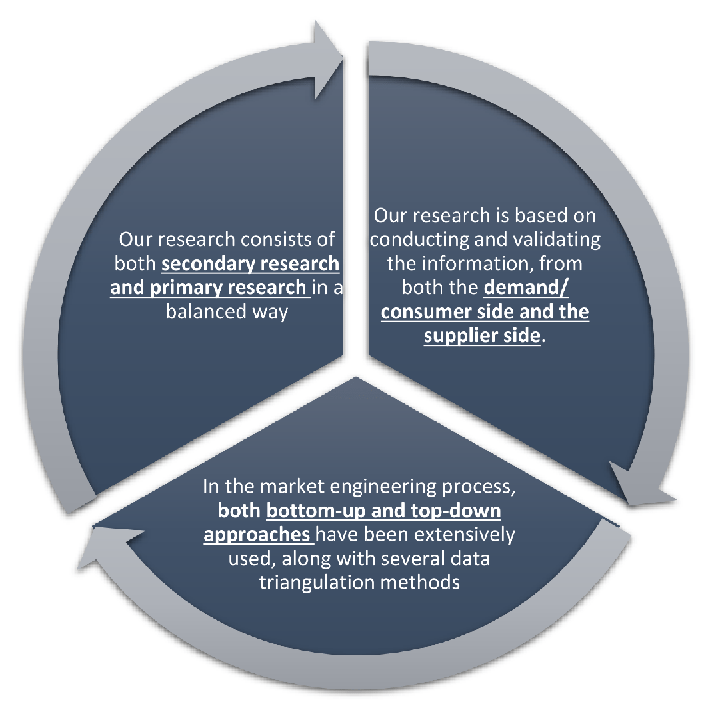
MarketGenics leverages a dedicated industry panel of experts and a comprehensive suite of paid databases to effectively collect, consolidate, and analyze market intelligence.
Our approach has consistently proven to be reliable and effective in generating accurate market insights, identifying key industry trends, and uncovering emerging business opportunities.
Through both primary and secondary research, we capture and analyze critical company-level data such as manufacturing footprints, including technical centers, R&D facilities, sales offices, and headquarters.
Our expert panel further enhances our ability to estimate market size for specific brands based on validated field-level intelligence.
Our data mining techniques incorporate both parametric and non-parametric methods, allowing for structured data collection, sorting, processing, and cleaning.
Demand projections are derived from large-scale data sets analyzed through proprietary algorithms, culminating in robust and reliable market sizing.
Research Approach
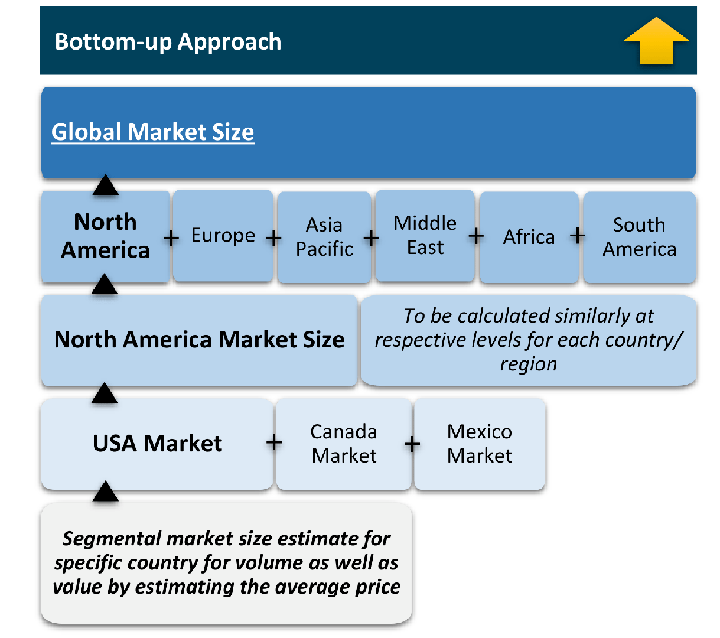
The bottom-up approach builds market estimates by starting with the smallest addressable market units and systematically aggregating them to create comprehensive market size projections.
This method begins with specific, granular data points and builds upward to create the complete market landscape.
Customer Analysis → Segmental Analysis → Geographical Analysis
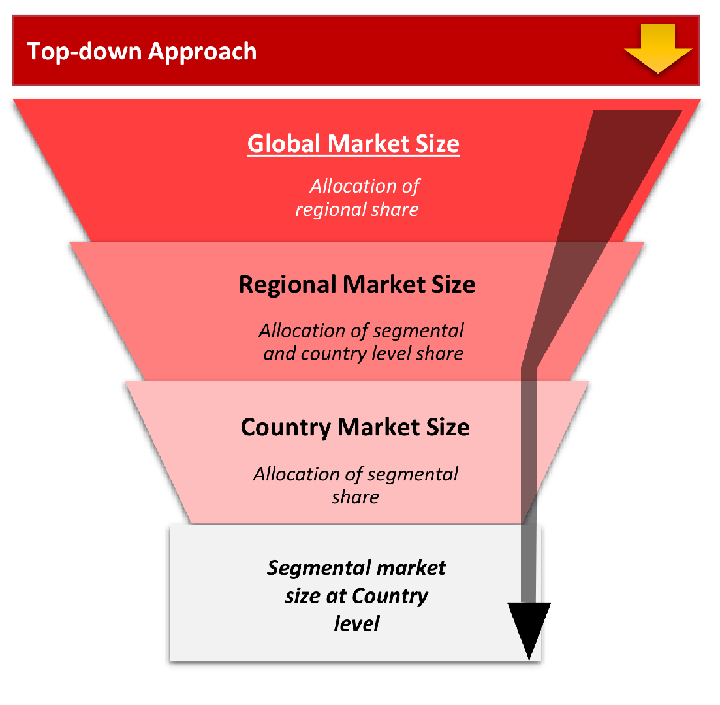
The top-down approach starts with the broadest possible market data and systematically narrows it down through a series of filters and assumptions to arrive at specific market segments or opportunities.
This method begins with the big picture and works downward to increasingly specific market slices.
TAM → SAM → SOM
Research Methods
Desk / Secondary Research
While analysing the market, we extensively study secondary sources, directories, and databases to identify and collect information useful for this technical, market-oriented, and commercial report. Secondary sources that we utilize are not only the public sources, but it is a combination of Open Source, Associations, Paid Databases, MG Repository & Knowledgebase, and others.
- Company websites, annual reports, financial reports, broker reports, and investor presentations
- National government documents, statistical databases and reports
- News articles, press releases and web-casts specific to the companies operating in the market, Magazines, reports, and others
- We gather information from commercial data sources for deriving company specific data such as segmental revenue, share for geography, product revenue, and others
- Internal and external proprietary databases (industry-specific), relevant patent, and regulatory databases
- Governing Bodies, Government Organizations
- Relevant Authorities, Country-specific Associations for Industries
We also employ the model mapping approach to estimate the product level market data through the players' product portfolio
Primary Research
Primary research/ interviews is vital in analyzing the market. Most of the cases involves paid primary interviews. Primary sources include primary interviews through e-mail interactions, telephonic interviews, surveys as well as face-to-face interviews with the different stakeholders across the value chain including several industry experts.
| Type of Respondents | Number of Primaries |
|---|---|
| Tier 2/3 Suppliers | ~20 |
| Tier 1 Suppliers | ~25 |
| End-users | ~25 |
| Industry Expert/ Panel/ Consultant | ~30 |
| Total | ~100 |
MG Knowledgebase
• Repository of industry blog, newsletter and case studies
• Online platform covering detailed market reports, and company profiles
Forecasting Factors and Models
Forecasting Factors
- Historical Trends – Past market patterns, cycles, and major events that shaped how markets behave over time. Understanding past trends helps predict future behavior.
- Industry Factors – Specific characteristics of the industry like structure, regulations, and innovation cycles that affect market dynamics.
- Macroeconomic Factors – Economic conditions like GDP growth, inflation, and employment rates that affect how much money people have to spend.
- Demographic Factors – Population characteristics like age, income, and location that determine who can buy your product.
- Technology Factors – How quickly people adopt new technology and how much technology infrastructure exists.
- Regulatory Factors – Government rules, laws, and policies that can help or restrict market growth.
- Competitive Factors – Analyzing competition structure such as degree of competition and bargaining power of buyers and suppliers.
Forecasting Models / Techniques
Multiple Regression Analysis
- Identify and quantify factors that drive market changes
- Statistical modeling to establish relationships between market drivers and outcomes
Time Series Analysis – Seasonal Patterns
- Understand regular cyclical patterns in market demand
- Advanced statistical techniques to separate trend, seasonal, and irregular components
Time Series Analysis – Trend Analysis
- Identify underlying market growth patterns and momentum
- Statistical analysis of historical data to project future trends
Expert Opinion – Expert Interviews
- Gather deep industry insights and contextual understanding
- In-depth interviews with key industry stakeholders
Multi-Scenario Development
- Prepare for uncertainty by modeling different possible futures
- Creating optimistic, pessimistic, and most likely scenarios
Time Series Analysis – Moving Averages
- Sophisticated forecasting for complex time series data
- Auto-regressive integrated moving average models with seasonal components
Econometric Models
- Apply economic theory to market forecasting
- Sophisticated economic models that account for market interactions
Expert Opinion – Delphi Method
- Harness collective wisdom of industry experts
- Structured, multi-round expert consultation process
Monte Carlo Simulation
- Quantify uncertainty and probability distributions
- Thousands of simulations with varying input parameters
Research Analysis
Our research framework is built upon the fundamental principle of validating market intelligence from both demand and supply perspectives. This dual-sided approach ensures comprehensive market understanding and reduces the risk of single-source bias.
Demand-Side Analysis: We understand end-user/application behavior, preferences, and market needs along with the penetration of the product for specific application.
Supply-Side Analysis: We estimate overall market revenue, analyze the segmental share along with industry capacity, competitive landscape, and market structure.
Validation & Evaluation
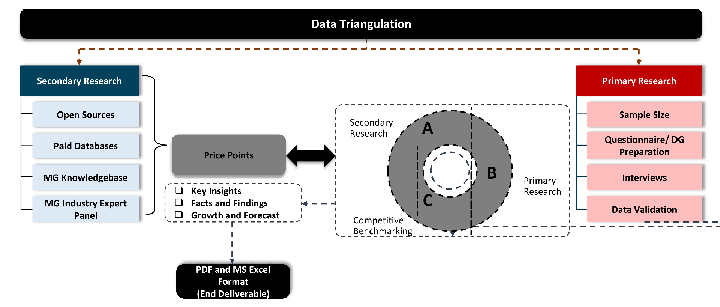
Data triangulation is a validation technique that uses multiple methods, sources, or perspectives to examine the same research question, thereby increasing the credibility and reliability of research findings. In market research, triangulation serves as a quality assurance mechanism that helps identify and minimize bias, validate assumptions, and ensure accuracy in market estimates.
- Data Source Triangulation – Using multiple data sources to examine the same phenomenon
- Methodological Triangulation – Using multiple research methods to study the same research question
- Investigator Triangulation – Using multiple researchers or analysts to examine the same data
- Theoretical Triangulation – Using multiple theoretical perspectives to interpret the same data
Custom Market Research Services
We will customise the research for you, in case the report listed above does not meet your requirements.
Get 10% Free Customisation