Secure Multi-Party Computation (SMPC) Market Size, Share & Trends Analysis Report by Component (SMPC Platforms and Frameworks, SMPC Libraries and Software Development Kits (SDKs), Middleware and Integration Tools, APIs and Connectors, Professional Services and Others), Deployment Type, Protocol/ Technique, Solution Type, Integration Technology, Application, Industry Vertical and Geography (North America, Europe, Asia Pacific, Middle East, Africa, and South America) – Global Industry Data, Trends, and Forecasts, 2026–2035
Market Overview:
As per MarketGenics, the global secure multi-party computation (SMPC) market is experiencing significant growth, valued at USD 0.8 billion in 2025 and projected to reach USD 2.0 billion by 2035, expanding at a CAGR of 9.5% during the forecast period.
|
Market Structure & Evolution |
|
|
Segmental Data Insights |
|
|
Demand Trends |
|
|
Competitive Landscape |
|
|
Strategic Development |
|
|
Future Outlook & Opportunities |
|
Secure Multi-Party Computation (SMPC) Market Size, Share, and Growth
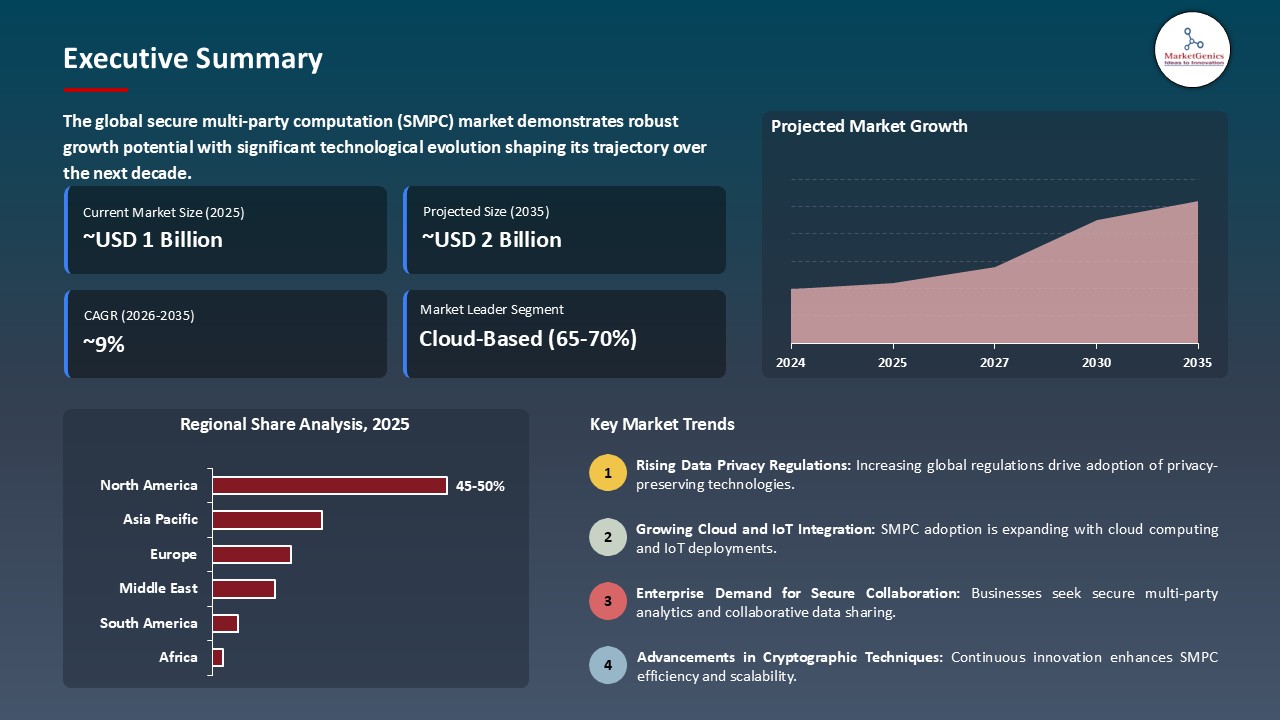
"Multi-Party Computation (SMPC) is not just about computation - it's about revolution," said Ivan Damgård, co-founder of Partisia. He emphasized the revolutionary potential of privacy-preserving technologies while also pointing out that, like digital signatures, SMPC has the potential to change safe collaboration and data sharing across industries.
SMPC is picking up steam, mostly because people care more than ever about data privacy. There’s a real push for secure ways to work together on analytics, especially in places like finance, healthcare, and government where regulations keep getting tighter. Take the Worldcoin Foundation, for example - they just rolled out an open-source SMPC system to keep biometric and identity data safe, while still letting folks run big computations.
Cloud, AI, and blockchain are coming together to make SMPC easier to scale and cheaper to run. Banks and healthcare groups are already using these frameworks to work together on analytics and research, and they don’t have to risk exposing anyone’s private info. On the innovation side, tech startups and cybersecurity companies are adding all sorts of new tricks: real-time secure computations, privacy-friendly machine learning, even multi-party data verification. These solutions really matter in places with tough privacy laws and booming digital economies, like Europe and Asia-Pacific.
Secure Multi-Party Computation (SMPC) Market Dynamics and Trends
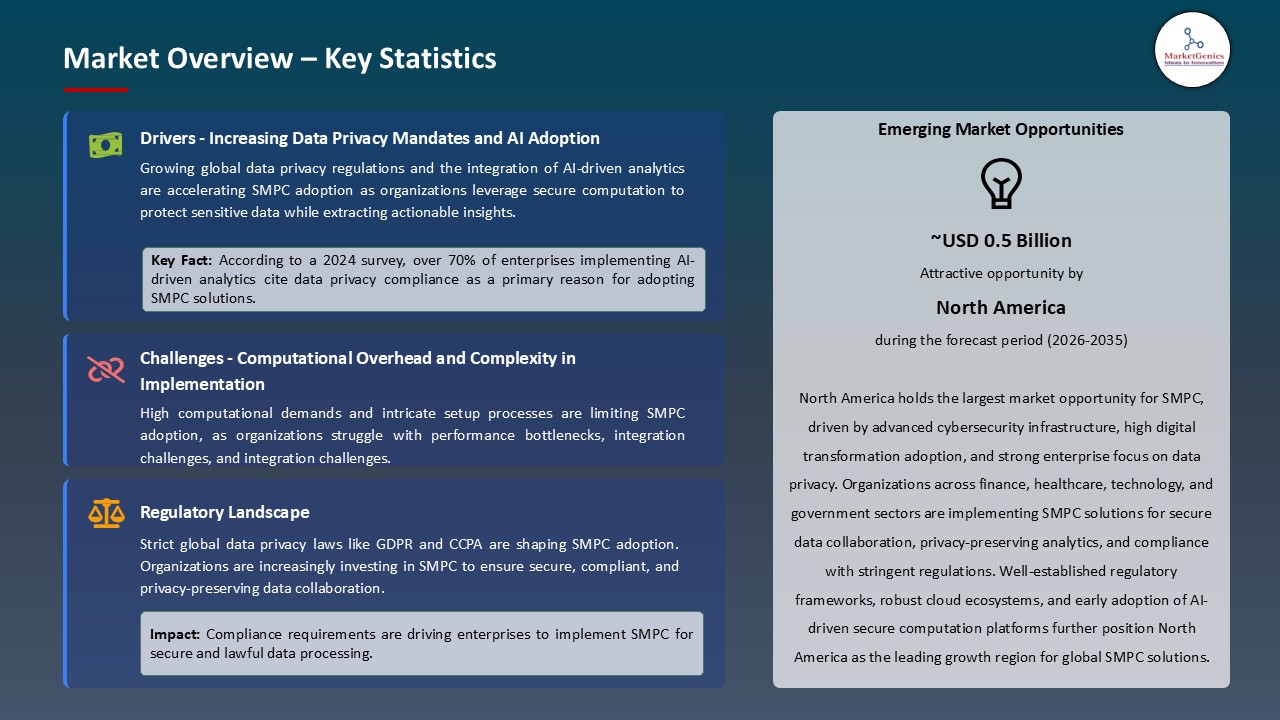
Driver: Increasing Data Privacy Mandates and AI Adoption Driving SMPC Market Growth
- The rapid advancement of data-sharing ecosystems and AI analytics across sectors including finance, healthcare, and government is causing organizations to increasingly adopt secure multi-party computation (SMPC) solutions. As new global regulation of data protection is developing — including the EU’s General Data Protection Regulation (GDPR) of 2018, the U.S. AI Executive Order (2024), and China’s Personal Information Protection Law (PIPL) of 2021 - organizations are also being required to implement strict data privacy targets while enabling multi-party and trusted analytics.
- Alongside existing and emerging global data protection regulation, new data regulations like the EU Data Act (2024) and OECD’s Global Data Free Flow with Trust Principles, have emerged establishing legal requirements to support privacy-preserving computation while unlocking value of sensitive data. Owing to which, enterprises and data processors are starting to embed SMPC protocols into their digital trust and compliance frameworks.
- The ongoing growth of AI and ML workflows utilizing confidential datasets is also driving demand for privacy-preserving technologies. SMPC allows for model training and inference on encrypted or distributed data, thereby supporting compliance and trust in AI governance - a growing and critical requirement under new global AI assurance standards.
Restraint: Computational Overhead and Complexity in Implementation Limiting SMPC Adoption
- Interest in secure multi-party computation (SMPC) has surged recently, as organizations increasingly recognize the value of privacy-preserving technologies. However, despite the growing attention, SMPC still encounters significant barriers that hinder its widespread adoption. Additionally, deploying these protocols is far from straightforward, calling for specialized cryptographic knowledge, meaning organizations must either upskill their existing teams or bring in external experts, both of which add to operational expenses.
- The complexities multiply for organizations relying on legacy IT environments. Many of these systems were never designed with distributed cryptography in mind. Integrating SMPC into such environments can reveal incompatibilities and inefficiencies, requiring extensive re-engineering or middleware solutions. This fragmentation can lead to synchronization issues and increased risk of data breaches or misconfigurations.
- Another major hurdle is the need for seamless collaboration among diverse teams. Cryptographers, data scientists, and IT professionals must work in close coordination throughout the project lifecycle, from initial design and prototyping to deployment and maintenance. The lack of mature, standardized APIs and robust developer tools exacerbates these challenges, making it difficult to integrate SMPC solutions into existing data pipelines or business applications. Attributed to which, organizations often find that moving from a promising proof-of-concept to a scalable, production-ready system is a slow, costly, and sometimes frustrating journey.
- Moreover, the broader ecosystem around SMPC is still maturing. There is a shortage of comprehensive documentation, community support, and off-the-shelf libraries that meet enterprise-grade requirements. Until these technical and organizational challenges are addressed through better tooling, standardization efforts, and greater industry collaboration, SMPC is likely to remain a niche technology, deployed only in organizations with the resources and expertise to manage its complexities.
Opportunity: Expansion in Federated Analytics, Cross-Border Collaboration, and Regulated Industries
- The adoption of secure multi-party computation (SMPC) is increasing significantly in financial services, healthcare, and national statistics, where institutions want to share and analyze sensitive data with others but must remain compliant with data privacy obligations. Federated analytics initiatives, such as GAIA-X, the European Health Data Space (EHDS), and Open Finance, are emerging as sections of opportunity for SMPC-enabled data sharing and collaboration.
- Emerging markets are also considering SMPC to support cross-border data sharing and sovereign data governance. Countries in Africa, Southeast Asia, and Latin America are at the forefront of this innovation. Governments and consortia are using privacy-preserving computation to support anti-money laundering (AML), credit risk scoring, and fraud detection analytics while remaining compliant with their regulatory obligations.
- These are opportunities that are attracting the attention of cloud providers, cybersecurity providers, and infrastructure firms, each of whom are exploring how to offer SMPC-using confidential computing platforms, and clean rooms that offer privacy-first monetization models for sharing data.
Key Trend: Convergence of SMPC with Federated Learning, Zero-Knowledge Proofs, and Confidential Computing
- The secure multi-party computation (SMPC) market is evolving with the intersection of federated learning, zero knowledge proofs (ZKPs), and hardware enabled confidential computing. This hybrid architecture enables private computation on decentralized data while providing proof of integrity and regulatory auditability.
- Leading vendors are building secure multi-party computation (SMPC) into AI pipelines to enable privacy preserving model training across multiple institutions like banks or hospitals without having to share data centrally. This is aligned with the growing demand for trustworthy AI, under the scope of a global compliance regimen.
- Standardization initiatives, including work by ISO/IEC JTC 1/SC 27 and the NIST Privacy-Enhancing Technologies Working Group, are underway to respond to the interoperability requirements of SMPC protocols. The emergence of blockchain-based data markets and tokenized data ecosystems online also created new use cases for SMPC to secure multi-party, computation in decentralized time, bilingual space.
- The secure multi-party computation (SMPC) market is evolving from esoteric cryptography research to mainstream adoption, and secure multi-party computation (SMPC) is potentially the foundation for preserving privacy, as we pivot to the world of digital economy and AI.
Secure Multi Party Computation Market Analysis and Segmental Data
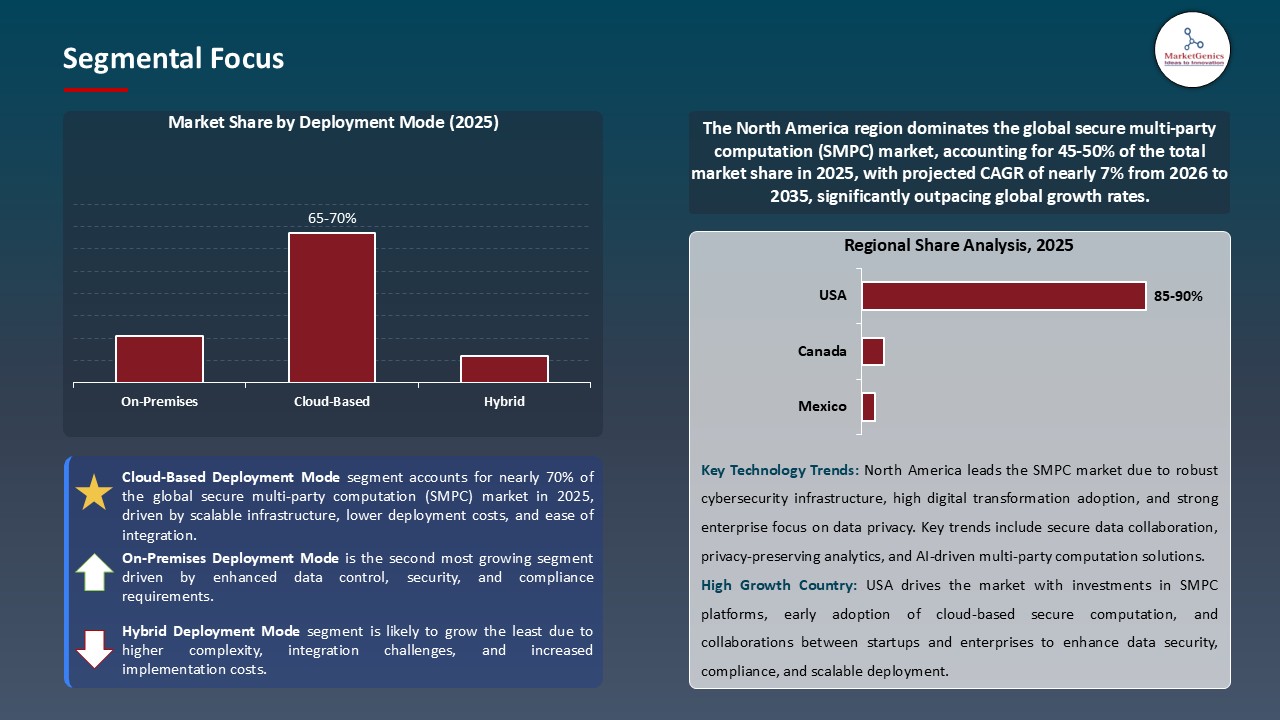
Cloud-Based Deployed Services Dominates Global Secure Multi-Party Computation (SMPC) Market amid Rising Demand for Scalable, Privacy-Preserving Data Collaboration
- Services deployed in the cloud currently represent the largest share in the secure multi-party computation (SMPC) market due to their scalability, flexibility, and simplified integration with enterprise data systems. Since, the demand for real-time, privacy-preserving analytics spreads into organizations and borders, cloud deployment has become the more favorable model for finance, healthcare, and government sectors.
- In February 2025, Google Cloud launched the Confidential Computing and SMPC toolkit, facilitating secure multi-party analytics and federated AI training in encrypted environments within the cloud. Advances like these have improved speed, interoperability, and compliance with global data protection controls (GDPR and HIPAA).
- With the stricter prevalence of privacy mandates and AI governance, the enterprise is transitioning toward an SMPC-as-a-Service platform that includes automated key management and compliance monitoring. Cloud vendors also work to impress data security practices and simplify deployment through zero-trust and confidential computing architectures.
- Overall, the continued strong growth of multi-party data collaborations, the AI-driven context, and digital transformation projects reinforces how cloud deployment will persistently dominate as the leading deployment model, taking a strong position at the top of the secure multi-party computation (SMPC) market.
North America Leads Secure Multi-Party Computation (SMPC) Market with Robust Cloud Ecosystems and Stringent Data Compliance Standards
- The secure multi-party computation (SMPC) market is currently predominated by North America, which can be attributed to the fact that North America leads the world in cloud computing infrastructure, possesses a solid regulatory structure, and is at the forefront of always adopting privacy-enhancing technologies. SMPC technologies have now become part of major cloud services providers (like AWS, Microsoft Azure, and Google Cloud) for the development of their platforms around confidential computing and data sharing systems, which enables secure, compliant data collaborations that do not violate current privacy regulations in either the U.S. or Canada.
- The urgency of building data governance framework, such as the California Consumer Privacy Act (CCPA) in the U.S. and the U.S. AI Executive Order (2024), the investments into a privacy-preserving technology, SMPC, will accelerate, regardless of whether regulation is enacted in the market. Enterprises are rapidly deploying secure multi-party computation (SMPC) for secure AI model training, fraud analytics, and secure data sharing across institutions.
- Collaboration between tech companies, research institutions, and financial institutions will continue to showcase innovation, especially in the fields of federated analytics and data sharing in health. In Canada, the Pan-Canadian Artificial Intelligence Strategy continues to support the responsible and ethical research and development of secure multi-party computation (SMPC) technologies and methods, further establishing North America as a leader in ‘privacy-first’ digital transformation.
Secure-Multi-Party-Computation-Market Ecosystem
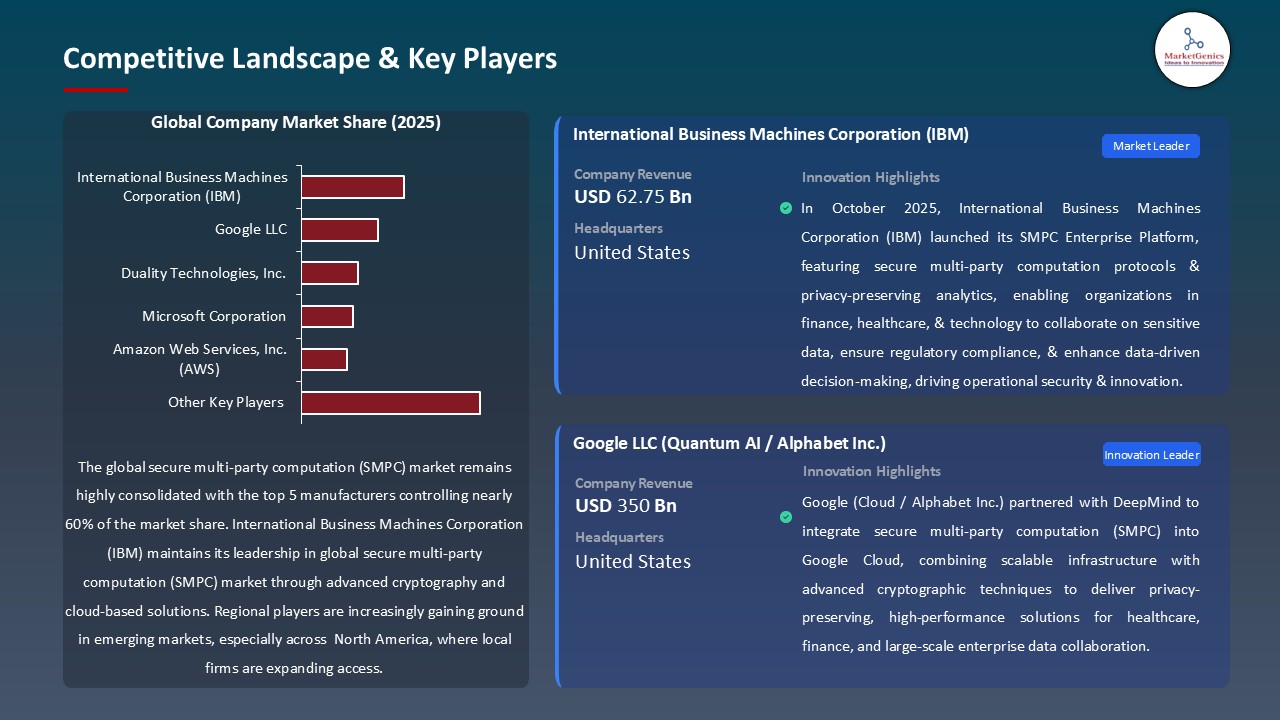
The global secure multi-party computation (SMPC) market is highly consolidating, led by industry titans such as Amazon Web Services, Microsoft, Google, and IBM, alongside newer entrants like Duality Technologies and Inpher. These entities harness the latest in cryptography and cloud technology to offer more scalable, privacy-first, computing frameworks for applied AP across a range of sectors, including finance, healthcare, and defense.
Leaders are putting a premium on cryptographic protocols and privacy enhancing technologies. For example, Duality Technologies and Cape Privacy provide an integrated SMPC and federated learning platform for secure data collaboration; Cybernetica AS is working to build distributed cryptography to secure government and telco analytics around the world.
Governmental and institutional support have further increased momentum. In April 2025 the European Commission launched Horizon Europe with a 60m Euro investment to further SMPC and homomorphic encryption, expanding secure AI training, collaborative learning, and cross-border data sharing.
Top vendors continue to diversify their product lines and provide integrated cloud solutions for enterprises seeking to improve efficiency and remain compliant. In February 2025 IBM Research and Intel launched an AI enhanced SMPC for speed and performance that increased accuracy of processing results by 28%. All new developments run to key themes of performance, scalability, and trust in computation.
Recent Development and Strategic Overview:
- In March 2025, Microsoft Corporation launched its Confidential Collaboration Suite as part of its Azure Confidential Computing initiative, which integrates secure multi-party computation (SMPC) within federated analytics and AI model training. This update enables organizations to process sensitive data in a joint capacity across multiple jurisdictions while not having to expose raw sensitive data.
- In January 2025, Duality Technologies, Inc. launched its SecureAI Workbench, a modular toolkit enabling secure multi-party computation (SMPC), homomorphic encryption, and differential privacy for its analysts and AI developers, offering further capabilities for product solutions for secure AI development. Their solution improved secure model development process efficiency and reduced computation time by 35% in comparison to its previous privacy-enhancing technologies (PET) workflows.
Report Scope
|
Attribute |
Detail |
|
Market Size in 2025 |
USD 0.8 Bn |
|
Market Forecast Value in 2035 |
USD 2 Bn |
|
Growth Rate (CAGR) |
9.5% |
|
Forecast Period |
2026 – 2035 |
|
Historical Data Available for |
2021 – 2024 |
|
Market Size Units |
USD Bn for Value |
|
Report Format |
Electronic (PDF) + Excel |
|
Regions and Countries Covered |
|||||
|
North America |
Europe |
Asia Pacific |
Middle East |
Africa |
South America |
|
|
|
|
|
|
|
Companies Covered |
|||||
|
|
|
|
|
|
Secure-Multi-Party-Computation-Market Segmentation and Highlights
|
Segment |
Sub-segment |
|
Secure Multi-Party Computation (SMPC) Market, By Component |
|
|
Secure Multi-Party Computation (SMPC) Market, By Deployment Mode |
|
|
Secure Multi-Party Computation (SMPC) Market, By Protocol / Technique |
|
|
Secure Multi-Party Computation (SMPC) Market, By Solution Type |
|
|
Secure Multi-Party Computation (SMPC) Market, By Integration Technology |
|
|
Secure Multi-Party Computation (SMPC) Market, By Application |
|
|
Secure Multi-Party Computation (SMPC) Market, By Industry Vertical |
|
Frequently Asked Questions
Table of Contents
- 1. Research Methodology and Assumptions
- 1.1. Definitions
- 1.2. Research Design and Approach
- 1.3. Data Collection Methods
- 1.4. Base Estimates and Calculations
- 1.5. Forecasting Models
- 1.5.1. Key Forecast Factors & Impact Analysis
- 1.6. Secondary Research
- 1.6.1. Open Sources
- 1.6.2. Paid Databases
- 1.6.3. Associations
- 1.7. Primary Research
- 1.7.1. Primary Sources
- 1.7.2. Primary Interviews with Stakeholders across Ecosystem
- 2. Executive Summary
- 2.1. Global Secure Multi-Party Computation (SMPC) Market Outlook
- 2.1.1. Secure Multi-Party Computation (SMPC) Market Size (Value - US$ Bn), and Forecasts, 2021-2035
- 2.1.2. Compounded Annual Growth Rate Analysis
- 2.1.3. Growth Opportunity Analysis
- 2.1.4. Segmental Share Analysis
- 2.1.5. Geographical Share Analysis
- 2.2. Market Analysis and Facts
- 2.3. Supply-Demand Analysis
- 2.4. Competitive Benchmarking
- 2.5. Go-to- Market Strategy
- 2.5.1. Customer/ End-use Industry Assessment
- 2.5.2. Growth Opportunity Data, 2026-2035
- 2.5.2.1. Regional Data
- 2.5.2.2. Country Data
- 2.5.2.3. Segmental Data
- 2.5.3. Identification of Potential Market Spaces
- 2.5.4. GAP Analysis
- 2.5.5. Potential Attractive Price Points
- 2.5.6. Prevailing Market Risks & Challenges
- 2.5.7. Preferred Sales & Marketing Strategies
- 2.5.8. Key Recommendations and Analysis
- 2.5.9. A Way Forward
- 2.1. Global Secure Multi-Party Computation (SMPC) Market Outlook
- 3. Industry Data and Premium Insights
- 3.1. Global Information Technology & Media Ecosystem Overview, 2025
- 3.1.1. Information Technology & Media Industry Analysis
- 3.1.2. Key Trends for Information Technology & Media Industry
- 3.1.3. Regional Distribution for Information Technology & Media Industry
- 3.2. Supplier Customer Data
- 3.3. Technology Roadmap and Developments
- 3.1. Global Information Technology & Media Ecosystem Overview, 2025
- 4. Market Overview
- 4.1. Market Dynamics
- 4.1.1. Drivers
- 4.1.1.1. Rising demand for privacy-preserving data collaboration and secure analytics
- 4.1.1.2. Growing adoption of SMPC solutions across finance, healthcare, and technology sectors
- 4.1.1.3. Increasing regulatory focus on data privacy, cybersecurity, and compliance
- 4.1.2. Restraints
- 4.1.2.1. High computational overhead and implementation costs of SMPC solutions
- 4.1.2.2. Integration challenges with legacy systems and complex enterprise infrastructures
- 4.1.1. Drivers
- 4.2. Key Trend Analysis
- 4.3. Regulatory Framework
- 4.3.1. Key Regulations, Norms, and Subsidies, by Key Countries
- 4.3.2. Tariffs and Standards
- 4.3.3. Impact Analysis of Regulations on the Market
- 4.4. Value Chain Analysis
- 4.4.1. Cryptographic Protocol and Algorithm Developers
- 4.4.2. System Integrators/ Technology Providers
- 4.4.3. SMPC Solution Providers
- 4.4.4. End Users
- 4.5. Cost Structure Analysis
- 4.5.1. Parameter’s Share for Cost Associated
- 4.5.2. COGP vs COGS
- 4.5.3. Profit Margin Analysis
- 4.6. Pricing Analysis
- 4.6.1. Regional Pricing Analysis
- 4.6.2. Segmental Pricing Trends
- 4.6.3. Factors Influencing Pricing
- 4.7. Porter’s Five Forces Analysis
- 4.8. PESTEL Analysis
- 4.9. Global Secure Multi-Party Computation (SMPC) Market Demand
- 4.9.1. Historical Market Size –Value (US$ Bn), 2020-2024
- 4.9.2. Current and Future Market Size –Value (US$ Bn), 2026–2035
- 4.9.2.1. Y-o-Y Growth Trends
- 4.9.2.2. Absolute $ Opportunity Assessment
- 4.1. Market Dynamics
- 5. Competition Landscape
- 5.1. Competition structure
- 5.1.1. Fragmented v/s consolidated
- 5.2. Company Share Analysis, 2025
- 5.2.1. Global Company Market Share
- 5.2.2. By Region
- 5.2.2.1. North America
- 5.2.2.2. Europe
- 5.2.2.3. Asia Pacific
- 5.2.2.4. Middle East
- 5.2.2.5. Africa
- 5.2.2.6. South America
- 5.3. Product Comparison Matrix
- 5.3.1. Specifications
- 5.3.2. Market Positioning
- 5.3.3. Pricing
- 5.1. Competition structure
- 6. Global Secure Multi-Party Computation (SMPC) Market Analysis, by Component
- 6.1. Key Segment Analysis
- 6.2. Secure Multi-Party Computation (SMPC) Market Size (Value - US$ Bn), Analysis, and Forecasts, by Component, 2021-2035
- 6.2.1. SMPC Platforms and Frameworks
- 6.2.2. SMPC Libraries and Software Development Kits (SDKs)
- 6.2.3. Middleware and Integration Tools
- 6.2.4. APIs and Connectors
- 6.2.5. Professional Services
- 6.2.6. Others
- 7. Global Secure Multi-Party Computation (SMPC) Market Analysis, by Deployment Mode
- 7.1. Key Segment Analysis
- 7.2. Secure Multi-Party Computation (SMPC) Market Size (Value - US$ Bn), Analysis, and Forecasts, by Deployment Mode, 2021-2035
- 7.2.1. Cloud-Based
- 7.2.2. On-Premises
- 7.2.3. Hybrid
- 8. Global Secure Multi-Party Computation (SMPC) Market Analysis, by Protocol / Technique
- 8.1. Key Segment Analysis
- 8.2. Secure Multi-Party Computation (SMPC) Market Size (Value - US$ Bn), Analysis, and Forecasts, by Protocol / Technique, 2021-2035
- 8.2.1. Secret Sharing Schemes
- 8.2.2. Garbled Circuits
- 8.2.3. Oblivious Transfer Protocols
- 8.2.4. Threshold Cryptography
- 8.2.5. Hybrid SMPC with Homomorphic Encryption
- 8.2.6. Others
- 9. Global Secure Multi-Party Computation (SMPC) Market Analysis, by Solution Type
- 9.1. Key Segment Analysis
- 9.2. Secure Multi-Party Computation (SMPC) Market Size (Value - US$ Bn), Analysis, and Forecasts, by Solution Type, 2021-2035
- 9.2.1. Privacy-Preserving Analytics
- 9.2.2. Secure Federated Learning
- 9.2.3. Secure Identity and Authentication
- 9.2.4. Secure Data Collaboration
- 9.2.5. Privacy-Preserving Advertising and Marketing
- 9.2.6. Others
- 10. Global Secure Multi-Party Computation (SMPC) Market Analysis, by Integration Technology
- 10.1. Key Segment Analysis
- 10.2. Secure Multi-Party Computation (SMPC) Market Size (Value - US$ Bn), Analysis, and Forecasts, by Integration Technology, 2021-2035
- 10.2.1. API-Based Integration
- 10.2.2. On-Device SMPC Clients
- 10.2.3. Enterprise Application Integration (ERP, CRM)
- 10.2.4. Federated Learning and AI Framework Integration
- 10.2.5. Others
- 11. Global Secure Multi-Party Computation (SMPC) Market Analysis, by Application
- 11.1. Key Segment Analysis
- 11.2. Secure Multi-Party Computation (SMPC) Market Size (Value - US$ Bn), Analysis, and Forecasts, by Application, 2021-2035
- 11.2.1. Fraud Detection and Risk Management
- 11.2.2. Collaborative Data Analysis
- 11.2.3. Secure Credit Scoring and Financial Modeling
- 11.2.4. Genomic Data Analysis
- 11.2.5. Marketing Data Attribution
- 11.2.6. Others
- 12. Global Secure Multi-Party Computation (SMPC) Market Analysis, by Industry Vertical
- 12.1. Key Segment Analysis
- 12.2. Secure Multi-Party Computation (SMPC) Market Size (Value - US$ Bn), Analysis, and Forecasts, by Industry Vertical, 2021-2035
- 12.2.1. Banking, Financial Services and Insurance (BFSI)
- 12.2.2. Healthcare and Life Sciences
- 12.2.3. Government and Defense
- 12.2.4. Retail and E-Commerce
- 12.2.5. IT and Telecommunications
- 12.2.6. Manufacturing
- 12.2.7. Energy and Utilities
- 12.2.8. Others
- 13. Global Secure Multi-Party Computation (SMPC) Market Analysis and Forecasts, by Region
- 13.1. Key Findings
- 13.2. Secure Multi-Party Computation (SMPC) Market Size (Value - US$ Bn), Analysis, and Forecasts, by Region, 2021-2035
- 13.2.1. North America
- 13.2.2. Europe
- 13.2.3. Asia Pacific
- 13.2.4. Middle East
- 13.2.5. Africa
- 13.2.6. South America
- 14. North America Secure Multi-Party Computation (SMPC) Market Analysis
- 14.1. Key Segment Analysis
- 14.2. Regional Snapshot
- 14.3. North America Secure Multi-Party Computation (SMPC) Market Size Value - US$ Bn), Analysis, and Forecasts, 2021-2035
- 14.3.1. Component
- 14.3.2. Deployment Mode
- 14.3.3. Protocol / Technique
- 14.3.4. Solution Type
- 14.3.5. Integration Technology
- 14.3.6. Application
- 14.3.7. Industry Vertical
- 14.3.8. Country
- 14.3.8.1. USA
- 14.3.8.2. Canada
- 14.3.8.3. Mexico
- 14.4. USA Secure Multi-Party Computation (SMPC) Market
- 14.4.1. Country Segmental Analysis
- 14.4.2. Component
- 14.4.3. Deployment Mode
- 14.4.4. Protocol / Technique
- 14.4.5. Solution Type
- 14.4.6. Integration Technology
- 14.4.7. Application
- 14.4.8. Industry Vertical
- 14.5. Canada Secure Multi-Party Computation (SMPC) Market
- 14.5.1. Country Segmental Analysis
- 14.5.2. Component
- 14.5.3. Deployment Mode
- 14.5.4. Protocol / Technique
- 14.5.5. Solution Type
- 14.5.6. Integration Technology
- 14.5.7. Application
- 14.5.8. Industry Vertical
- 14.6. Mexico Secure Multi-Party Computation (SMPC) Market
- 14.6.1. Country Segmental Analysis
- 14.6.2. Component
- 14.6.3. Deployment Mode
- 14.6.4. Protocol / Technique
- 14.6.5. Solution Type
- 14.6.6. Integration Technology
- 14.6.7. Application
- 14.6.8. Industry Vertical
- 15. Europe Secure Multi-Party Computation (SMPC) Market Analysis
- 15.1. Key Segment Analysis
- 15.2. Regional Snapshot
- 15.3. Europe Secure Multi-Party Computation (SMPC) Market Size (Value - US$ Bn), Analysis, and Forecasts, 2021-2035
- 15.3.1. Component
- 15.3.2. Deployment Mode
- 15.3.3. Protocol / Technique
- 15.3.4. Solution Type
- 15.3.5. Integration Technology
- 15.3.6. Application
- 15.3.7. Industry Vertical
- 15.3.8. Country
- 15.3.8.1. Germany
- 15.3.8.2. United Kingdom
- 15.3.8.3. France
- 15.3.8.4. Italy
- 15.3.8.5. Spain
- 15.3.8.6. Netherlands
- 15.3.8.7. Nordic Countries
- 15.3.8.8. Poland
- 15.3.8.9. Russia & CIS
- 15.3.8.10. Rest of Europe
- 15.4. Germany Secure Multi-Party Computation (SMPC) Market
- 15.4.1. Country Segmental Analysis
- 15.4.2. Component
- 15.4.3. Deployment Mode
- 15.4.4. Protocol / Technique
- 15.4.5. Solution Type
- 15.4.6. Integration Technology
- 15.4.7. Application
- 15.4.8. Industry Vertical
- 15.5. United Kingdom Secure Multi-Party Computation (SMPC) Market
- 15.5.1. Country Segmental Analysis
- 15.5.2. Component
- 15.5.3. Deployment Mode
- 15.5.4. Protocol / Technique
- 15.5.5. Solution Type
- 15.5.6. Integration Technology
- 15.5.7. Application
- 15.5.8. Industry Vertical
- 15.6. France Secure Multi-Party Computation (SMPC) Market
- 15.6.1. Country Segmental Analysis
- 15.6.2. Component
- 15.6.3. Deployment Mode
- 15.6.4. Protocol / Technique
- 15.6.5. Solution Type
- 15.6.6. Integration Technology
- 15.6.7. Application
- 15.6.8. Industry Vertical
- 15.7. Italy Secure Multi-Party Computation (SMPC) Market
- 15.7.1. Country Segmental Analysis
- 15.7.2. Component
- 15.7.3. Deployment Mode
- 15.7.4. Protocol / Technique
- 15.7.5. Solution Type
- 15.7.6. Integration Technology
- 15.7.7. Application
- 15.7.8. Industry Vertical
- 15.8. Spain Secure Multi-Party Computation (SMPC) Market
- 15.8.1. Country Segmental Analysis
- 15.8.2. Component
- 15.8.3. Deployment Mode
- 15.8.4. Protocol / Technique
- 15.8.5. Solution Type
- 15.8.6. Integration Technology
- 15.8.7. Application
- 15.8.8. Industry Vertical
- 15.9. Netherlands Secure Multi-Party Computation (SMPC) Market
- 15.9.1. Country Segmental Analysis
- 15.9.2. Component
- 15.9.3. Deployment Mode
- 15.9.4. Protocol / Technique
- 15.9.5. Solution Type
- 15.9.6. Integration Technology
- 15.9.7. Application
- 15.9.8. Industry Vertical
- 15.10. Nordic Countries Secure Multi-Party Computation (SMPC) Market
- 15.10.1. Country Segmental Analysis
- 15.10.2. Component
- 15.10.3. Deployment Mode
- 15.10.4. Protocol / Technique
- 15.10.5. Solution Type
- 15.10.6. Integration Technology
- 15.10.7. Application
- 15.10.8. Industry Vertical
- 15.11. Poland Secure Multi-Party Computation (SMPC) Market
- 15.11.1. Country Segmental Analysis
- 15.11.2. Component
- 15.11.3. Deployment Mode
- 15.11.4. Protocol / Technique
- 15.11.5. Solution Type
- 15.11.6. Integration Technology
- 15.11.7. Application
- 15.11.8. Industry Vertical
- 15.12. Russia & CIS Secure Multi-Party Computation (SMPC) Market
- 15.12.1. Country Segmental Analysis
- 15.12.2. Component
- 15.12.3. Deployment Mode
- 15.12.4. Protocol / Technique
- 15.12.5. Solution Type
- 15.12.6. Integration Technology
- 15.12.7. Application
- 15.12.8. Industry Vertical
- 15.13. Rest of Europe Secure Multi-Party Computation (SMPC) Market
- 15.13.1. Country Segmental Analysis
- 15.13.2. Component
- 15.13.3. Deployment Mode
- 15.13.4. Protocol / Technique
- 15.13.5. Solution Type
- 15.13.6. Integration Technology
- 15.13.7. Application
- 15.13.8. Industry Vertical
- 16. Asia Pacific Secure Multi-Party Computation (SMPC) Market Analysis
- 16.1. Key Segment Analysis
- 16.2. Regional Snapshot
- 16.3. Asia Pacific Secure Multi-Party Computation (SMPC) Market Size (Value - US$ Bn), Analysis, and Forecasts, 2021-2035
- 16.3.1. Component
- 16.3.2. Deployment Mode
- 16.3.3. Protocol / Technique
- 16.3.4. Solution Type
- 16.3.5. Integration Technology
- 16.3.6. Application
- 16.3.7. Industry Vertical
- 16.3.8. Country
- 16.3.8.1. China
- 16.3.8.2. India
- 16.3.8.3. Japan
- 16.3.8.4. South Korea
- 16.3.8.5. Australia and New Zealand
- 16.3.8.6. Indonesia
- 16.3.8.7. Malaysia
- 16.3.8.8. Thailand
- 16.3.8.9. Vietnam
- 16.3.8.10. Rest of Asia Pacific
- 16.4. China Secure Multi-Party Computation (SMPC) Market
- 16.4.1. Country Segmental Analysis
- 16.4.2. Component
- 16.4.3. Deployment Mode
- 16.4.4. Protocol / Technique
- 16.4.5. Solution Type
- 16.4.6. Integration Technology
- 16.4.7. Application
- 16.4.8. Industry Vertical
- 16.5. India Secure Multi-Party Computation (SMPC) Market
- 16.5.1. Country Segmental Analysis
- 16.5.2. Component
- 16.5.3. Deployment Mode
- 16.5.4. Protocol / Technique
- 16.5.5. Solution Type
- 16.5.6. Integration Technology
- 16.5.7. Application
- 16.5.8. Industry Vertical
- 16.6. Japan Secure Multi-Party Computation (SMPC) Market
- 16.6.1. Country Segmental Analysis
- 16.6.2. Component
- 16.6.3. Deployment Mode
- 16.6.4. Protocol / Technique
- 16.6.5. Solution Type
- 16.6.6. Integration Technology
- 16.6.7. Application
- 16.6.8. Industry Vertical
- 16.7. South Korea Secure Multi-Party Computation (SMPC) Market
- 16.7.1. Country Segmental Analysis
- 16.7.2. Component
- 16.7.3. Deployment Mode
- 16.7.4. Protocol / Technique
- 16.7.5. Solution Type
- 16.7.6. Integration Technology
- 16.7.7. Application
- 16.7.8. Industry Vertical
- 16.8. Australia and New Zealand Secure Multi-Party Computation (SMPC) Market
- 16.8.1. Country Segmental Analysis
- 16.8.2. Component
- 16.8.3. Deployment Mode
- 16.8.4. Protocol / Technique
- 16.8.5. Solution Type
- 16.8.6. Integration Technology
- 16.8.7. Application
- 16.8.8. Industry Vertical
- 16.9. Indonesia Secure Multi-Party Computation (SMPC) Market
- 16.9.1. Country Segmental Analysis
- 16.9.2. Component
- 16.9.3. Deployment Mode
- 16.9.4. Protocol / Technique
- 16.9.5. Solution Type
- 16.9.6. Integration Technology
- 16.9.7. Application
- 16.9.8. Industry Vertical
- 16.10. Malaysia Secure Multi-Party Computation (SMPC) Market
- 16.10.1. Country Segmental Analysis
- 16.10.2. Component
- 16.10.3. Deployment Mode
- 16.10.4. Protocol / Technique
- 16.10.5. Solution Type
- 16.10.6. Integration Technology
- 16.10.7. Application
- 16.10.8. Industry Vertical
- 16.11. Thailand Secure Multi-Party Computation (SMPC) Market
- 16.11.1. Country Segmental Analysis
- 16.11.2. Component
- 16.11.3. Deployment Mode
- 16.11.4. Protocol / Technique
- 16.11.5. Solution Type
- 16.11.6. Integration Technology
- 16.11.7. Application
- 16.11.8. Industry Vertical
- 16.12. Vietnam Secure Multi-Party Computation (SMPC) Market
- 16.12.1. Country Segmental Analysis
- 16.12.2. Component
- 16.12.3. Deployment Mode
- 16.12.4. Protocol / Technique
- 16.12.5. Solution Type
- 16.12.6. Integration Technology
- 16.12.7. Application
- 16.12.8. Industry Vertical
- 16.13. Rest of Asia Pacific Secure Multi-Party Computation (SMPC) Market
- 16.13.1. Country Segmental Analysis
- 16.13.2. Component
- 16.13.3. Deployment Mode
- 16.13.4. Protocol / Technique
- 16.13.5. Solution Type
- 16.13.6. Integration Technology
- 16.13.7. Application
- 16.13.8. Industry Vertical
- 17. Middle East Secure Multi-Party Computation (SMPC) Market Analysis
- 17.1. Key Segment Analysis
- 17.2. Regional Snapshot
- 17.3. Middle East Secure Multi-Party Computation (SMPC) Market Size (Value - US$ Bn), Analysis, and Forecasts, 2021-2035
- 17.3.1. Component
- 17.3.2. Deployment Mode
- 17.3.3. Protocol / Technique
- 17.3.4. Solution Type
- 17.3.5. Integration Technology
- 17.3.6. Application
- 17.3.7. Industry Vertical
- 17.3.8. Country
- 17.3.8.1. Turkey
- 17.3.8.2. UAE
- 17.3.8.3. Saudi Arabia
- 17.3.8.4. Israel
- 17.3.8.5. Rest of Middle East
- 17.4. Turkey Secure Multi-Party Computation (SMPC) Market
- 17.4.1. Country Segmental Analysis
- 17.4.2. Component
- 17.4.3. Deployment Mode
- 17.4.4. Protocol / Technique
- 17.4.5. Solution Type
- 17.4.6. Integration Technology
- 17.4.7. Application
- 17.4.8. Industry Vertical
- 17.5. UAE Secure Multi-Party Computation (SMPC) Market
- 17.5.1. Country Segmental Analysis
- 17.5.2. Component
- 17.5.3. Deployment Mode
- 17.5.4. Protocol / Technique
- 17.5.5. Solution Type
- 17.5.6. Integration Technology
- 17.5.7. Application
- 17.5.8. Industry Vertical
- 17.6. Saudi Arabia Secure Multi-Party Computation (SMPC) Market
- 17.6.1. Country Segmental Analysis
- 17.6.2. Component
- 17.6.3. Deployment Mode
- 17.6.4. Protocol / Technique
- 17.6.5. Solution Type
- 17.6.6. Integration Technology
- 17.6.7. Application
- 17.6.8. Industry Vertical
- 17.7. Israel Secure Multi-Party Computation (SMPC) Market
- 17.7.1. Country Segmental Analysis
- 17.7.2. Component
- 17.7.3. Deployment Mode
- 17.7.4. Protocol / Technique
- 17.7.5. Solution Type
- 17.7.6. Integration Technology
- 17.7.7. Application
- 17.7.8. Industry Vertical
- 17.8. Rest of Middle East Secure Multi-Party Computation (SMPC) Market
- 17.8.1. Country Segmental Analysis
- 17.8.2. Component
- 17.8.3. Deployment Mode
- 17.8.4. Protocol / Technique
- 17.8.5. Solution Type
- 17.8.6. Integration Technology
- 17.8.7. Application
- 17.8.8. Industry Vertical
- 18. Africa Secure Multi-Party Computation (SMPC) Market Analysis
- 18.1. Key Segment Analysis
- 18.2. Regional Snapshot
- 18.3. Africa Secure Multi-Party Computation (SMPC) Market Size (Value - US$ Bn), Analysis, and Forecasts, 2021-2035
- 18.3.1. Component
- 18.3.2. Deployment Mode
- 18.3.3. Protocol / Technique
- 18.3.4. Solution Type
- 18.3.5. Integration Technology
- 18.3.6. Application
- 18.3.7. Industry Vertical
- 18.3.8. Country
- 18.3.8.1. South Africa
- 18.3.8.2. Egypt
- 18.3.8.3. Nigeria
- 18.3.8.4. Algeria
- 18.3.8.5. Rest of Africa
- 18.4. South Africa Secure Multi-Party Computation (SMPC) Market
- 18.4.1. Country Segmental Analysis
- 18.4.2. Component
- 18.4.3. Deployment Mode
- 18.4.4. Protocol / Technique
- 18.4.5. Solution Type
- 18.4.6. Integration Technology
- 18.4.7. Application
- 18.4.8. Industry Vertical
- 18.5. Egypt Secure Multi-Party Computation (SMPC) Market
- 18.5.1. Country Segmental Analysis
- 18.5.2. Component
- 18.5.3. Deployment Mode
- 18.5.4. Protocol / Technique
- 18.5.5. Solution Type
- 18.5.6. Integration Technology
- 18.5.7. Application
- 18.5.8. Industry Vertical
- 18.6. Nigeria Secure Multi-Party Computation (SMPC) Market
- 18.6.1. Country Segmental Analysis
- 18.6.2. Component
- 18.6.3. Deployment Mode
- 18.6.4. Protocol / Technique
- 18.6.5. Solution Type
- 18.6.6. Integration Technology
- 18.6.7. Application
- 18.6.8. Industry Vertical
- 18.7. Algeria Secure Multi-Party Computation (SMPC) Market
- 18.7.1. Country Segmental Analysis
- 18.7.2. Component
- 18.7.3. Deployment Mode
- 18.7.4. Protocol / Technique
- 18.7.5. Solution Type
- 18.7.6. Integration Technology
- 18.7.7. Application
- 18.7.8. Industry Vertical l
- 18.8. Rest of Africa Secure Multi-Party Computation (SMPC) Market
- 18.8.1. Country Segmental Analysis
- 18.8.2. Component
- 18.8.3. Deployment Mode
- 18.8.4. Protocol / Technique
- 18.8.5. Solution Type
- 18.8.6. Integration Technology
- 18.8.7. Application
- 18.8.8. Industry Vertical
- 19. South America Secure Multi-Party Computation (SMPC) Market Analysis
- 19.1. Key Segment Analysis
- 19.2. Regional Snapshot
- 19.3. South America Secure Multi-Party Computation (SMPC) Market Size (Value - US$ Bn), Analysis, and Forecasts, 2021-2035
- 19.3.1. Component
- 19.3.2. Deployment Mode
- 19.3.3. Protocol / Technique
- 19.3.4. Solution Type
- 19.3.5. Integration Technology
- 19.3.6. Application
- 19.3.7. Industry Vertical
- 19.3.8. Country
- 19.3.8.1. Brazil
- 19.3.8.2. Argentina
- 19.3.8.3. Rest of South America
- 19.4. Brazil Secure Multi-Party Computation (SMPC) Market
- 19.4.1. Country Segmental Analysis
- 19.4.2. Component
- 19.4.3. Deployment Mode
- 19.4.4. Protocol / Technique
- 19.4.5. Solution Type
- 19.4.6. Integration Technology
- 19.4.7. Application
- 19.4.8. Industry Vertical
- 19.5. Argentina Secure Multi-Party Computation (SMPC) Market
- 19.5.1. Country Segmental Analysis
- 19.5.2. Component
- 19.5.3. Deployment Mode
- 19.5.4. Protocol / Technique
- 19.5.5. Solution Type
- 19.5.6. Integration Technology
- 19.5.7. Application
- 19.5.8. Industry Vertical
- 19.6. Rest of South America Secure Multi-Party Computation (SMPC) Market
- 19.6.1. Country Segmental Analysis
- 19.6.2. Component
- 19.6.3. Deployment Mode
- 19.6.4. Protocol / Technique
- 19.6.5. Solution Type
- 19.6.6. Integration Technology
- 19.6.7. Application
- 19.6.8. Industry Vertical
- 20. Key Players/ Company Profile
- 20.1. Amazon Web Services, Inc.
- 20.1.1. Company Details/ Overview
- 20.1.2. Company Financials
- 20.1.3. Key Customers and Competitors
- 20.1.4. Business/ Industry Portfolio
- 20.1.5. Product Portfolio/ Specification Details
- 20.1.6. Pricing Data
- 20.1.7. Strategic Overview
- 20.1.8. Recent Developments
- 20.2. Anjuna Security, Inc.
- 20.3. Cape Privacy, Inc.
- 20.4. Cybernetica AS
- 20.5. Duality Technologies, Inc.
- 20.6. Enveil, Inc.
- 20.7. Google LLC
- 20.8. Inpher, Inc.
- 20.9. Intel Corporation
- 20.10. International Business Machines Corporation (IBM)
- 20.11. Microsoft Corporation
- 20.12. NuCypher, Inc.
- 20.13. Oasis Labs, Inc.
- 20.14. OpenMined, Inc.
- 20.15. Partisia ApS
- 20.16. Secretarium Ltd.
- 20.17. Sepior ApS
- 20.18. Thales Group
- 20.19. Unbound Security Ltd.
- 20.20. Zama SAS
- 20.21. Others Key Players
- 20.22. Others Key Players
- 20.1. Amazon Web Services, Inc.
Note* - This is just tentative list of players. While providing the report, we will cover more number of players based on their revenue and share for each geography
Research Design
Our research design integrates both demand-side and supply-side analysis through a balanced combination of primary and secondary research methodologies. By utilizing both bottom-up and top-down approaches alongside rigorous data triangulation methods, we deliver robust market intelligence that supports strategic decision-making.
MarketGenics' comprehensive research design framework ensures the delivery of accurate, reliable, and actionable market intelligence. Through the integration of multiple research approaches, rigorous validation processes, and expert analysis, we provide our clients with the insights needed to make informed strategic decisions and capitalize on market opportunities.
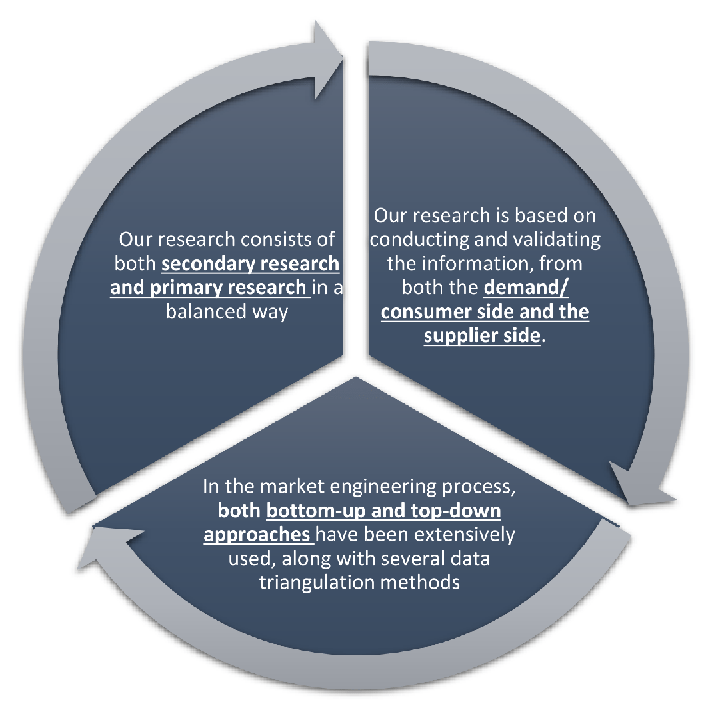
MarketGenics leverages a dedicated industry panel of experts and a comprehensive suite of paid databases to effectively collect, consolidate, and analyze market intelligence.
Our approach has consistently proven to be reliable and effective in generating accurate market insights, identifying key industry trends, and uncovering emerging business opportunities.
Through both primary and secondary research, we capture and analyze critical company-level data such as manufacturing footprints, including technical centers, R&D facilities, sales offices, and headquarters.
Our expert panel further enhances our ability to estimate market size for specific brands based on validated field-level intelligence.
Our data mining techniques incorporate both parametric and non-parametric methods, allowing for structured data collection, sorting, processing, and cleaning.
Demand projections are derived from large-scale data sets analyzed through proprietary algorithms, culminating in robust and reliable market sizing.
Research Approach
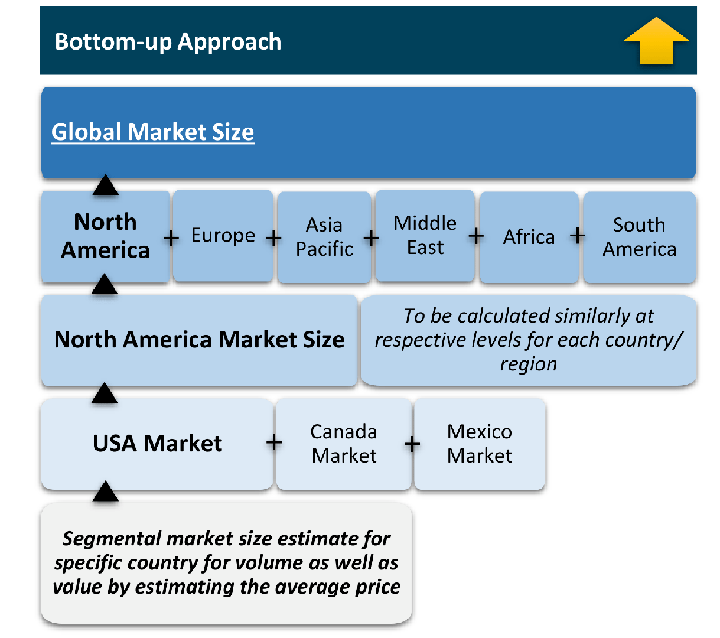
The bottom-up approach builds market estimates by starting with the smallest addressable market units and systematically aggregating them to create comprehensive market size projections.
This method begins with specific, granular data points and builds upward to create the complete market landscape.
Customer Analysis → Segmental Analysis → Geographical Analysis
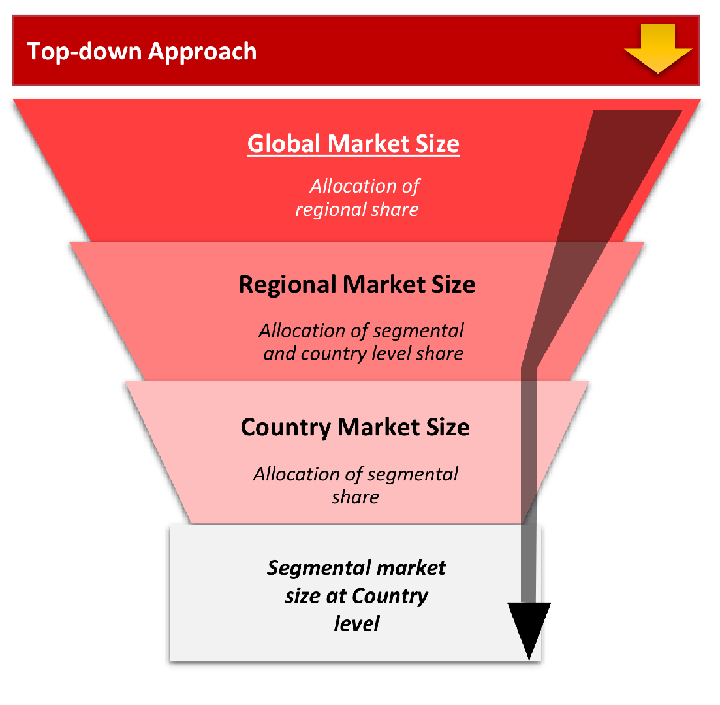
The top-down approach starts with the broadest possible market data and systematically narrows it down through a series of filters and assumptions to arrive at specific market segments or opportunities.
This method begins with the big picture and works downward to increasingly specific market slices.
TAM → SAM → SOM
Research Methods
Desk / Secondary Research
While analysing the market, we extensively study secondary sources, directories, and databases to identify and collect information useful for this technical, market-oriented, and commercial report. Secondary sources that we utilize are not only the public sources, but it is a combination of Open Source, Associations, Paid Databases, MG Repository & Knowledgebase, and others.
- Company websites, annual reports, financial reports, broker reports, and investor presentations
- National government documents, statistical databases and reports
- News articles, press releases and web-casts specific to the companies operating in the market, Magazines, reports, and others
- We gather information from commercial data sources for deriving company specific data such as segmental revenue, share for geography, product revenue, and others
- Internal and external proprietary databases (industry-specific), relevant patent, and regulatory databases
- Governing Bodies, Government Organizations
- Relevant Authorities, Country-specific Associations for Industries
We also employ the model mapping approach to estimate the product level market data through the players' product portfolio
Primary Research
Primary research/ interviews is vital in analyzing the market. Most of the cases involves paid primary interviews. Primary sources include primary interviews through e-mail interactions, telephonic interviews, surveys as well as face-to-face interviews with the different stakeholders across the value chain including several industry experts.
| Type of Respondents | Number of Primaries |
|---|---|
| Tier 2/3 Suppliers | ~20 |
| Tier 1 Suppliers | ~25 |
| End-users | ~25 |
| Industry Expert/ Panel/ Consultant | ~30 |
| Total | ~100 |
MG Knowledgebase
• Repository of industry blog, newsletter and case studies
• Online platform covering detailed market reports, and company profiles
Forecasting Factors and Models
Forecasting Factors
- Historical Trends – Past market patterns, cycles, and major events that shaped how markets behave over time. Understanding past trends helps predict future behavior.
- Industry Factors – Specific characteristics of the industry like structure, regulations, and innovation cycles that affect market dynamics.
- Macroeconomic Factors – Economic conditions like GDP growth, inflation, and employment rates that affect how much money people have to spend.
- Demographic Factors – Population characteristics like age, income, and location that determine who can buy your product.
- Technology Factors – How quickly people adopt new technology and how much technology infrastructure exists.
- Regulatory Factors – Government rules, laws, and policies that can help or restrict market growth.
- Competitive Factors – Analyzing competition structure such as degree of competition and bargaining power of buyers and suppliers.
Forecasting Models / Techniques
Multiple Regression Analysis
- Identify and quantify factors that drive market changes
- Statistical modeling to establish relationships between market drivers and outcomes
Time Series Analysis – Seasonal Patterns
- Understand regular cyclical patterns in market demand
- Advanced statistical techniques to separate trend, seasonal, and irregular components
Time Series Analysis – Trend Analysis
- Identify underlying market growth patterns and momentum
- Statistical analysis of historical data to project future trends
Expert Opinion – Expert Interviews
- Gather deep industry insights and contextual understanding
- In-depth interviews with key industry stakeholders
Multi-Scenario Development
- Prepare for uncertainty by modeling different possible futures
- Creating optimistic, pessimistic, and most likely scenarios
Time Series Analysis – Moving Averages
- Sophisticated forecasting for complex time series data
- Auto-regressive integrated moving average models with seasonal components
Econometric Models
- Apply economic theory to market forecasting
- Sophisticated economic models that account for market interactions
Expert Opinion – Delphi Method
- Harness collective wisdom of industry experts
- Structured, multi-round expert consultation process
Monte Carlo Simulation
- Quantify uncertainty and probability distributions
- Thousands of simulations with varying input parameters
Research Analysis
Our research framework is built upon the fundamental principle of validating market intelligence from both demand and supply perspectives. This dual-sided approach ensures comprehensive market understanding and reduces the risk of single-source bias.
Demand-Side Analysis: We understand end-user/application behavior, preferences, and market needs along with the penetration of the product for specific application.
Supply-Side Analysis: We estimate overall market revenue, analyze the segmental share along with industry capacity, competitive landscape, and market structure.
Validation & Evaluation
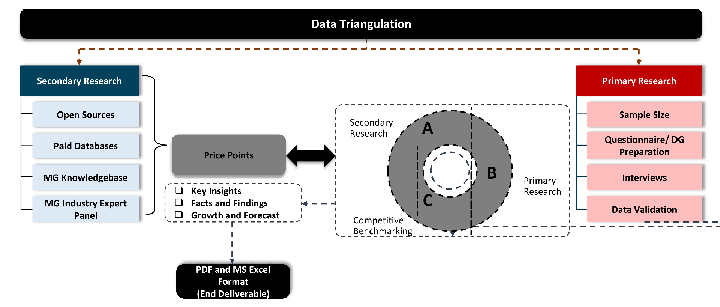
Data triangulation is a validation technique that uses multiple methods, sources, or perspectives to examine the same research question, thereby increasing the credibility and reliability of research findings. In market research, triangulation serves as a quality assurance mechanism that helps identify and minimize bias, validate assumptions, and ensure accuracy in market estimates.
- Data Source Triangulation – Using multiple data sources to examine the same phenomenon
- Methodological Triangulation – Using multiple research methods to study the same research question
- Investigator Triangulation – Using multiple researchers or analysts to examine the same data
- Theoretical Triangulation – Using multiple theoretical perspectives to interpret the same data
Custom Market Research Services
We will customise the research for you, in case the report listed above does not meet your requirements.
Get 10% Free Customisation