Seed Treatment Market Size, Share & Trends Analysis Report by Seed Type (Cereals & Grains, Oilseeds & Pulses, Fruits & Vegetables, Flowers & Ornamentals, Forage & Turf Grass, Others), Product Type, Function, Treatment Method/Technology, Formulation, Mode of Application, Farm Size, Crop Type/Cultivation Method, Distribution Channel, Active Ingredient, End-users, and Geography (North America, Europe, Asia Pacific, Middle East, Africa, and South America) – Global Industry Data, Trends, and Forecasts, 2026–2035
|
|
|
Segmental Data Insights |
|
|
Demand Trends |
|
|
Competitive Landscape |
|
|
Strategic Development |
|
|
Future Outlook & Opportunities |
|
Seed Treatment Market Size, Share, and Growth
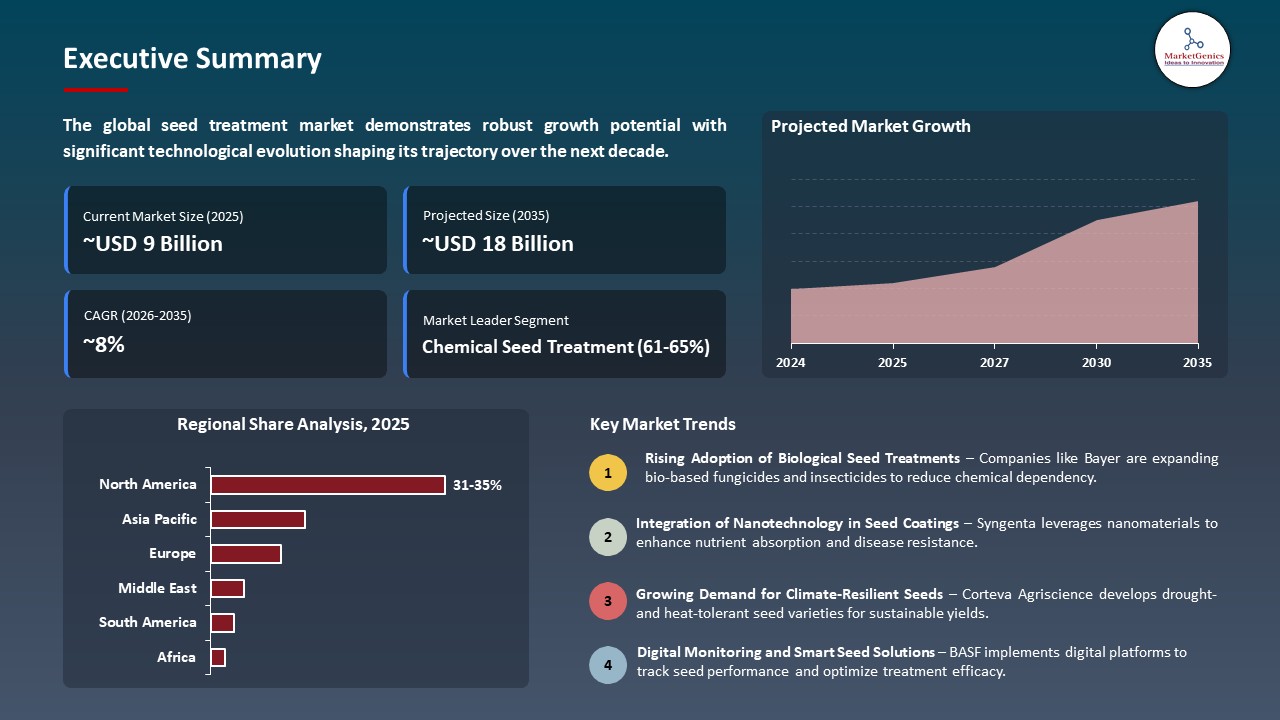
The global seed treatment market is experiencing robust growth, with its estimated value of USD 8.7 billion in the year 2025 and USD 18.1 billion by the period 2035, registering a CAGR of 7.6%, during the forecast period. The global seed treatment market demand is driven by the need to enhance crop yield, protect seeds from pests and diseases, improve seed germination, and support sustainable farming practices amid increasing global food demand.
Jonathan Brown, global head of Syngenta Biologicals and Seedcare, the collaboration reflects Syngenta’s said, “transforming the future of agriculture, with innovations that improve the sustainability of farming. We’re particularly excited to offer a broad range of formulations that will help farmers take the care of young plants to the next level, while protecting the health of their soil.”
The global seed treatment market is motivated by increased demand of high crop yields and timely resistance against soil borne pests as farmers seek to minimize the use of pesticides and maximize germination of seeds under adverse conditions. For instance, in August 2025, Bayer launched Yoalo which is a biostimulant seed treatment of corn based on Bacillus velezensis to stimulate increased early growth. This technology is set to boost marketed bio-based seed treatments, which will promote sustainable agricultural practices and avert increased productivity in major crop segments.
Additionally, the seed treatment market is being propelled by the introduction to more sustainable and eco-friendly farming methods, as more farmers and agribusinesses seek solutions that will limit the use of chemicals and yet deliver them healthy and productive crop. For instance, in July 2024, Syngenta collaborated with Intrinsyx Bio to introduce proprietary endophyte-based seed treatment to improve fixation of nitrogen and minimize the need for synthetic fertilizers. This partnership helps in rapid adoption of sustainable seed treatments in favour of environmentally friendly farming and enhanced crop production.
The global seed treatment market presents adjacent opportunities in bio-stimulants, biopesticides, microbial inoculants, precision agriculture technologies, and coated fertilizers, as these sectors complement seed protection and yield enhancement strategies. These areas have innovations that companies can take advantage of to provide integrated crop solutions, enhance sustainability, and increase farmer adoption. These adjacent market segments will enhance the total demand of seed treatment and increase revenues.
Seed Treatment Market Dynamics and Trends
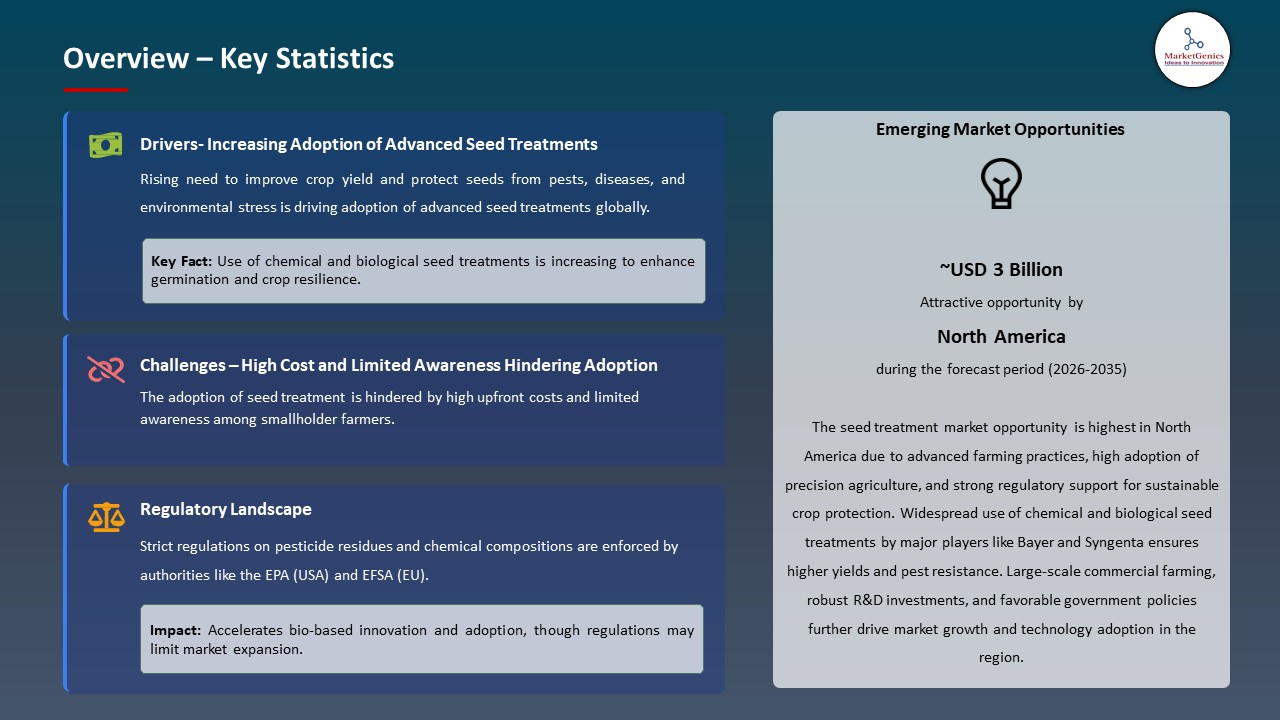
Driver: Growing Demand for Biologically-Based Seed Solutions to Boost Early Vigor
-
The global seed treatment market is accelerating as the agricultural practice is shifting towards more sophisticated biological treatment. These treatments improve the vigor of crops at early stages and increase the ability to deal with abiotic stress. In addition, enhance stress resilience, and provide objective yield improvements and facilitate long-term sustainability goals.
- Major ag-input firms are extending biological solutions and merging them with seed platforms in order to add value. For instance, in May 2024, FMC has expanded its biological portfolio with Accudo and Avodigen products and increased the channels of distribution to boost adoption in the major markets.
- Biological solutions reduce the need for calendar pesticide bait programs, improve establishment during abiotic stress, simplify input bait programs for growers, and increase the value of treated seed. Likewise, strong field validation, stable formulations, and scalable supply chains are required for commercialization; enterprises that invest in multi-year trials and targeted regulatory initiatives are best positioned toward converting performance outcomes into broader market adoption.
- The large scale implementation of biological seed treatments will expand the market opportunity and push towards high quality, sustainability-oriented seed products.
Restraint: Complex Regulatory Pathways Increase Time and Cost to Commercialize Innovations
-
The global seed treatment market expansion is hampered by the complicated regulatory channels that lengthen the process and complex commercialization. New chemical, biological and microbial formulas have to be subjected to years of comprehensive testing and trial on safety, environmental and effectiveness, subject to multi-jurisdictional testing and extensive documentation. These inconsistent regional standards prevent product approvals faster, and lead to a slow entry into the market and a restriction in the rate of innovation.
- Moreover, the low cost of regulatory compliance also limits innovation, particularly in the case of small companies that cannot afford to invest in a long approval cycle. The development costs are further increased through mandatory data packages, toxicology studies, stewardship programs and post-approval monitoring.
- As a result, numerous businesses focus solely on high value markets or postpone investment in new mechanisms. The financial load limits innovation in seed treatment solutions available in the market and access to state-of-the-art, innovative and sustainable technologies by growers.
- These cost and regulatory hurdles will likely lead to product innovation slowdown, decreased market diversification and reduced access to advanced seed treatment technologies in growers on time.
Opportunity: Development of Scalable Biological Distribution Networks to Capture Emerging Markets
-
The global seed treatment market growth is enhanced by the expansion of biological distribution channels in growing regions where strategic alliances with local seed companies, ag-retailers and distributors allow promoting the product faster, gaining better market positions and getting more expediency in adopting modern biological seed solutions.
- For instance, in September 2024, FMC signed a distribution deal with Ballagro Agro Tecnologia (Brazil), where Funci would franchise Ballagro biosolutions based on fungi to provide access to growers. Such alliances can enhance speed to enter the market and enhance the presence of biological seed-treatment systems in the world.
- Additionally, instituting consolidated supply and distribution systems of biological seed treatments would allow quicker commercialization and reach more farmers, and companies have the ability to tap new demand, expand service provision, and gain long-term competitive edge in emerging agricultural markets.
- These developments are set to drive a faster adoption of biological seed treatments, a broader market presence in rapidly expanding markets, and competitive positioning of those companies that invest in scalable, partnership-based distribution patterns.
Key Trend: Convergence of Digital Diagnostics with Precision Seed Treatment Application Platforms
-
The global seed treatment market trends increasingly toward the combination of digital diagnostics and precision application platform, allowing to evaluate the conditions of seed and fields based on the data and create treatment packages more accurately and efficiently.
- For instance, in March 2025, Syngenta renewed its alliance with Planet Labs to add images on its Cropwise platform daily at high-frequency 3-meter resolution satellite views to improve its advanced crop monitoring and earlier anomaly detection services. The integration enhances real-time field intelligence at Syngenta and the basis of agronomic decisions based on data.
- Additionally, new developments in remote sensing, seed-lot software, and farm management are enabling seed treatment providers to offer targeted, variable-rate applications that increase the effectiveness of treatments and minimize waste, as well as overall crop performance.
- For instance, the BASF uses its xarvio FIELD MANAGER platform to combine AI, satellite images, and weather data to provide accurate and zone-specific crop protection and seed treatment recommendations. This increases accuracy of treatment, optimizes the use of input and improves the overall productivity of the field.
- The digital diagnostics, remote sensing and precision convergence are creating more efficient data-driven application of seed treatment, enhancing crop performance, lessening input waste and rapidly implementing more advanced agricultural technologies adoption.
 Seed-Treatment-Market Analysis and Segmental Data
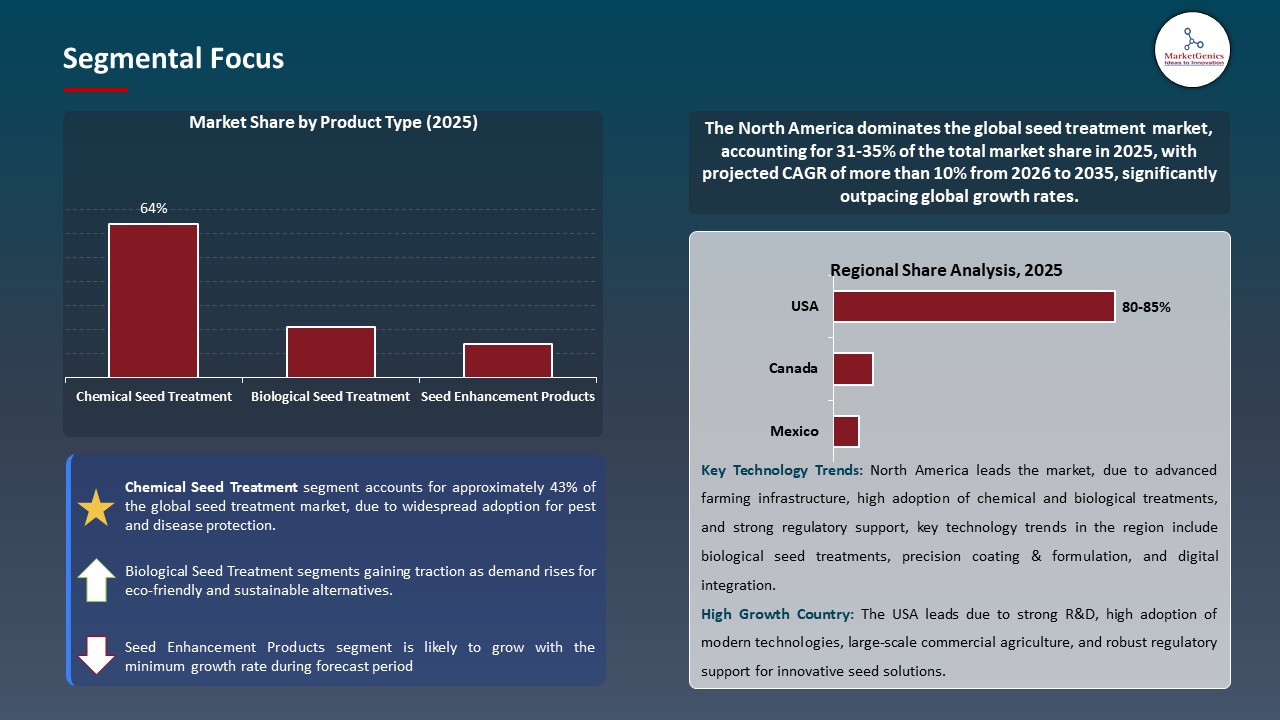
Chemical Seed Treatment Dominate Global Seed Treatment Market
-
The chemical seed treatment segment dominates the global seed treatment market because of they offer quick, broad-spectrum protection against fungal, insecticides, and nematodes, which is uniform germination and good early-stage crop development. For instance, in June 2024, BASF introduced Mibelya and Vinquo to supplement its line of high-efficacy, broad-spectrum chemical seed treatment.
- Additionally, chemical seed treatment offers uniform and dependable performance in a wide range of climates and soils and is, therefore, the solution of choice to growers who just want to know the outcome and reduce losses. As an example, the Acceleron portfolio on DEKALB hybrids by Bayer is a coating of several chemical actives together with a polymer to shield the seeds against fungi, insects, and nematodes that can happen early in the season.
- The market dominant stance of chemical seed treatments ensures crop protection, uniform germination in diverse settings, and promotes market expansion through high-efficacy and broad-spectrum solutions.
North America Leads Global Seed Treatment Market Demand
-
North America leads the global seed treatment market is due to the high implementation of modern agricultural technologies since growers aim to maximize output and crop protection as pests and diseases continue to mount pressure on crops. For instance, in 2024, BASF rolled out xarvio FIELD MANAGER to the U.S. corn and soybean territories, which employs AI and remote sensing to allow seed treatment and crop protection to be done with precision.
- Additionally, the government policies and subsidies that foster sustainable agricultural practices and use of technologies that support crop protection on the farms encourages growers to invest in seed treatments in order to stimulate more market demand. For instance, in 2024, the U.S. Department of Agriculture (USDA) has extended its Sustainable Agriculture Incentives Program, which offers funds to farmers that implement innovative seed treatments and integrated crop protection technology to increase productivity and environmental sustainability.
- Furthermore, North America has a high concentration of key seed treatment suppliers and good distribution channels, which make innovative seed treatment solutions readily available and adoption rates accelerate. The strong distribution channels and presence of numerous manufacturers in North America increase its adoption and expansion speed.
- This has led to continuous industry expansion and the implementation of novel solutions.
Seed-Treatment-Market Ecosystem
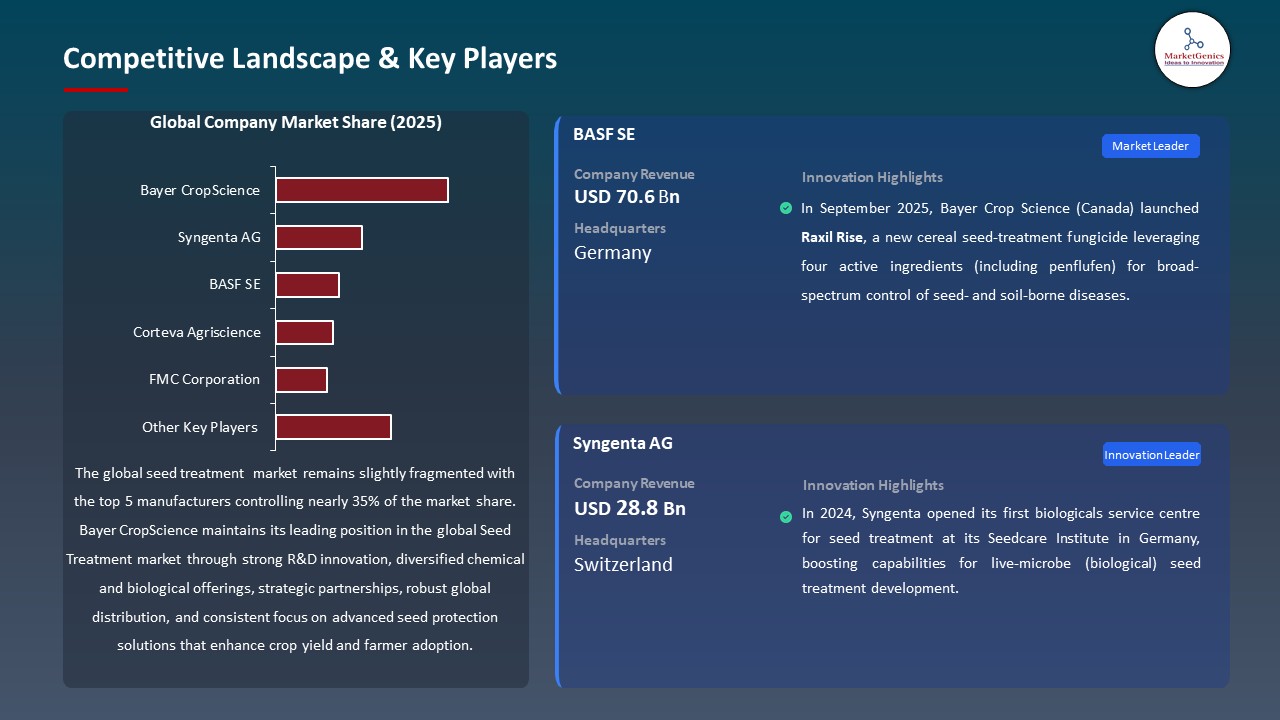
The global seed treatment market is slightly consolited, with high concentration among key players such as Bayer CropScience, Syngenta AG, BASF SE, Corteva Agriscience, FMC Corporation, who dominate through high rates of R&D investments, good product portfolio, proper strategic alliances, and large market coverage by adequate distribution channels. As an example, Corteva Agriscience released improved Pioneer brand seed treatments that have better nematode and fungal protection.
This is because of the concentration of key players and their strategic emphasis on R&D, product innovation and broad distribution networks makes the markets stable, creates technological change and widespread usage of efficient seed treatment solutions globally.
 Recent Development and Strategic Overview:
-
In October 2025, Corteva revealed that it intends to divest its seed and pesticide business resulting in a publicly-traded seed company by H2 2026 to focus its strategy and realize value in the high growth seed treatment business.
- In April 2025, , Bayer declared it will dispose of seed-treatment equipment plant in Shakopee, Minnesota, leaving business in the U.S. equipment manufacturing and concentrate on its seed-treatment chemicals, as well as positioning itself better financially.
Report Scope
|
Detail |
|
|
Market Size in 2025 |
USD 8.7 Bn |
|
Market Forecast Value in 2035 |
USD 18.1 Bn |
|
Growth Rate (CAGR) |
7.6% |
|
Forecast Period |
2026 – 2035 |
|
Historical Data Available for |
2021 – 2024 |
|
Market Size Units |
US$ Billion for Value |
|
Report Format |
Electronic (PDF) + Excel |
|
North America |
Europe |
Asia Pacific |
Middle East |
Africa |
South America |
|
|
|
|
|
|
|
Companies Covered |
|||||
|
|
|
|
|
|
Seed-Treatment-Market Segmentation and Highlights
|
Segment |
Sub-segment |
|
Seed Treatment Market, By Seed Type |
|
|
Seed Treatment Market, By Product Type |
|
|
Seed Treatment Market, By Function |
|
|
Seed Treatment Market, By Treatment Method/Technology |
|
|
Seed Treatment Market, By Formulation
|
|
|
Seed Treatment Market, By Mode of Application
|
|
|
Seed Treatment Market, By Farm Size |
|
|
Seed Treatment Market, By Crop Type/Cultivation Method |
|
|
Seed Treatment Market, By Crop Distribution Channel |
|
|
Seed Treatment Market, By Crop Active Ingredient |
|
|
Seed Treatment Market, By Crop End-users |
|
Frequently Asked Questions
Table of Contents
- 1. Research Methodology and Assumptions
- 1.1. Definitions
- 1.2. Research Design and Approach
- 1.3. Data Collection Methods
- 1.4. Base Estimates and Calculations
- 1.5. Forecasting Models
- 1.5.1. Key Forecast Factors & Impact Analysis
- 1.6. Secondary Research
- 1.6.1. Open Sources
- 1.6.2. Paid Databases
- 1.6.3. Associations
- 1.7. Primary Research
- 1.7.1. Primary Sources
- 1.7.2. Primary Interviews with Stakeholders across Ecosystem
- 2. Executive Summary
- 2.1. Global Seed Treatment Market Outlook
- 2.1.1. Seed Treatment Market Size (Value - US$ Bn), and Forecasts, 2021-2035
- 2.1.2. Compounded Annual Growth Rate Analysis
- 2.1.3. Growth Opportunity Analysis
- 2.1.4. Segmental Share Analysis
- 2.1.5. Geographical Share Analysis
- 2.2. Market Analysis and Facts
- 2.3. Supply-Demand Analysis
- 2.4. Competitive Benchmarking
- 2.5. Go-to- Market Strategy
- 2.5.1. Customer/ End-use Industry Assessment
- 2.5.2. Growth Opportunity Data, 2026-2035
- 2.5.2.1. Regional Data
- 2.5.2.2. Country Data
- 2.5.2.3. Segmental Data
- 2.5.3. Identification of Potential Market Spaces
- 2.5.4. GAP Analysis
- 2.5.5. Potential Attractive Price Points
- 2.5.6. Prevailing Market Risks & Challenges
- 2.5.7. Preferred Sales & Marketing Strategies
- 2.5.8. Key Recommendations and Analysis
- 2.5.9. A Way Forward
- 2.1. Global Seed Treatment Market Outlook
- 3. Industry Data and Premium Insights
- 3.1. Global Agriculture Industry Overview, 2025
- 3.1.1. Agriculture Industry Ecosystem Analysis
- 3.1.2. Key Trends for Agriculture Industry
- 3.1.3. Regional Distribution for Agriculture Industry
- 3.2. Supplier Customer Data
- 3.3. Technology Roadmap and Developments
- 3.4. Trade Analysis
- 3.4.1. Import & Export Analysis, 2025
- 3.4.2. Top Importing Countries
- 3.4.3. Top Exporting Countries
- 3.5. Trump Tariff Impact Analysis
- 3.5.1. Manufacturer
- 3.5.1.1. Based on the component & Raw material
- 3.5.2. Supply Chain
- 3.5.3. End Consumer
- 3.5.1. Manufacturer
- 3.6. Raw Material Analysis
- 3.1. Global Agriculture Industry Overview, 2025
- 4. Market Overview
- 4.1. Market Dynamics
- 4.1.1. Drivers
- 4.1.1.1. Increasing demand for higher crop yields and food security
- 4.1.1.2. Growing pest and disease pressure on seeds
- 4.1.1.3. Shift toward sustainable agriculture and regulatory support for biological treatments
- 4.1.2. Restraints
- 4.1.2.1. High cost of seed treatment solutions
- 4.1.2.2. Short shelf life and limited stability of biological seed treatments
- 4.1.1. Drivers
- 4.2. Key Trend Analysis
- 4.3. Regulatory Framework
- 4.3.1. Key Regulations, Norms, and Subsidies, by Key Countries
- 4.3.2. Tariffs and Standards
- 4.3.3. Impact Analysis of Regulations on the Market
- 4.4. Value Chain Analysis
- 4.4.1. Raw Material Suppliers
- 4.4.2. Seed Treatment Manufacturers
- 4.4.3. Distribution & Logistics
- 4.4.4. End-Users/ Customers
- 4.5. Porter’s Five Forces Analysis
- 4.6. PESTEL Analysis
- 4.7. Global Seed Treatment Market Demand
- 4.7.1. Historical Market Size –Value (US$ Bn), 2020-2024
- 4.7.2. Current and Future Market Size –Value (US$ Bn), 2026–2035
- 4.7.2.1. Y-o-Y Growth Trends
- 4.7.2.2. Absolute $ Opportunity Assessment
- 4.1. Market Dynamics
- 5. Competition Landscape
- 5.1. Competition structure
- 5.1.1. Fragmented v/s consolidated
- 5.2. Company Share Analysis, 2025
- 5.2.1. Global Company Market Share
- 5.2.2. By Region
- 5.2.2.1. North America
- 5.2.2.2. Europe
- 5.2.2.3. Asia Pacific
- 5.2.2.4. Middle East
- 5.2.2.5. Africa
- 5.2.2.6. South America
- 5.3. Product Comparison Matrix
- 5.3.1. Specifications
- 5.3.2. Market Positioning
- 5.3.3. Pricing
- 5.1. Competition structure
- 6. Global Seed Treatment Market Analysis, by Seed Type
- 6.1. Key Segment Analysis
- 6.2. Seed Treatment Market Size (Value - US$ Bn), Analysis, and Forecasts, by Seed Type, 2021-2035
- 6.2.1. Cereals & Grains
- 6.2.1.1. Corn/Maize
- 6.2.1.2. Wheat
- 6.2.1.3. Rice
- 6.2.1.4. Barley
- 6.2.1.5. Others
- 6.2.2. Oilseeds & Pulses
- 6.2.2.1. Soybean
- 6.2.2.2. Sunflower
- 6.2.2.3. Canola/Rapeseed
- 6.2.2.4. Groundnut/Peanut
- 6.2.2.5. Others
- 6.2.3. Fruits & Vegetables
- 6.2.4. Flowers & Ornamentals
- 6.2.5. Forage & Turf Grass
- 6.2.6. Others
- 6.2.1. Cereals & Grains
- 7. Global Seed Treatment Market Analysis, by Product Type
- 7.1. Key Segment Analysis
- 7.2. Seed Treatment Market Size (Value - US$ Bn), Analysis, and Forecasts, by Product Type, 2021-2035
- 7.2.1. Chemical Seed Treatment
- 7.2.1.1. Insecticides
- 7.2.1.1.1. Neonicotinoids
- 7.2.1.1.2. Pyrethroids
- 7.2.1.1.3. Organophosphates
- 7.2.1.1.4. Others
- 7.2.1.2. Fungicides
- 7.2.1.2.1. Triazoles
- 7.2.1.2.2. Strobilurins
- 7.2.1.2.3. Carboxamides (SDHI)
- 7.2.1.2.4. Phenylamides
- 7.2.1.2.5. Others
- 7.2.1.3. Other Chemicals
- 7.2.1.1. Insecticides
- 7.2.2. Biological Seed Treatment
- 7.2.2.1. Biofungicides
- 7.2.2.2. Bioinsecticides
- 7.2.2.3. Bionematicides
- 7.2.2.4. Others
- 7.2.3. Seed Enhancement Products
- 7.2.3.1. Seed Coating Materials
- 7.2.3.2. Seed Colorants
- 7.2.3.3. Seed Polymers
- 7.2.3.4. Others
- 7.2.1. Chemical Seed Treatment
- 8. Global Seed Treatment Market Analysis, by Function
- 8.1. Key Segment Analysis
- 8.2. Seed Treatment Market Size (Value - US$ Bn), Analysis, and Forecasts, by Function, 2021-2035
- 8.2.1. Seed Protection
- 8.2.1.1. Disease Protection
- 8.2.1.2. Pest Protection
- 8.2.1.3. Nematode Protection
- 8.2.1.4. Others
- 8.2.2. Seed Enhancement
- 8.2.2.1. Germination Improvement
- 8.2.2.2. Nutrient Uptake Enhancement
- 8.2.2.3. Stress Tolerance
- 8.2.2.4. Others
- 8.2.3. Seed Performance
- 8.2.3.1. Yield Improvement
- 8.2.3.2. Plant Health Enhancement
- 8.2.3.3. Others
- 8.2.1. Seed Protection
- 9. Global Seed Treatment Market Analysis, by Treatment Method/Technology
- 9.1. Key Segment Analysis
- 9.2. Seed Treatment Market Size (Value - US$ Bn), Analysis, and Forecasts, by Treatment Method/Technology, 2021-2035
- 9.2.1. Seed Dressing
- 9.2.2. Seed Coating
- 9.2.2.1. Film Coating
- 9.2.2.2. Encrusting
- 9.2.2.3. Pelleting
- 9.2.2.4. Others
- 9.2.3. Seed Priming
- 9.2.4. Seed Soaking
- 10. Global Seed Treatment Market Analysis, by Formulation
- 10.1. Key Segment Analysis
- 10.2. Seed Treatment Market Size (Value - US$ Bn), Analysis, and Forecasts, by Formulation, 2021-2035
- 10.2.1. Liquid Formulations
- 10.2.1.1. Suspension Concentrate (SC)
- 10.2.1.2. Emulsifiable Concentrate (EC)
- 10.2.1.3. Flowable Concentrate (FS)
- 10.2.1.4. Others
- 10.2.2. Dry Formulations
- 10.2.2.1. Wettable Powder (WP)
- 10.2.2.2. Dry Powder (DP)
- 10.2.2.3. Water Dispersible Granule (WG)
- 10.2.2.4. Others
- 10.2.1. Liquid Formulations
- 11. Global Seed Treatment Market Analysis, by Mode of Application
- 11.1. Key Segment Analysis
- 11.2. Seed Treatment Market Size (Value - US$ Bn), Analysis, and Forecasts, by Mode of Application, 2021-2035
- 11.2.1. Commercial Applicators
- 11.2.2. On-Farm Application
- 11.2.3. Seed Company Application
- 12. Global Seed Treatment Market Analysis, by Farm Size
- 12.1. Key Segment Analysis
- 12.2. Seed Treatment Market Size (Value - US$ Bn), Analysis, and Forecasts, by Farm Size, 2021-2035
- 12.2.1. Large Farms
- 12.2.2. Medium Farms
- 12.2.3. Small Farms
- 13. Global Seed Treatment Market Analysis, by Crop Type/Cultivation Method
- 13.1. Key Segment Analysis
- 13.2. Seed Treatment Market Size (Value - US$ Bn), Analysis, and Forecasts, by Crop Type/Cultivation Method, 2021-2035
- 13.2.1. Conventional Crops
- 13.2.2. Organic Crops
- 13.2.3. Genetically Modified (GM) Crops
- 13.2.4. Non-GM Crops
- 14. Global Seed Treatment Market Analysis, by Distribution Channel
- 14.1. Key Segment Analysis
- 14.2. Seed Treatment Market Size (Value - US$ Bn), Analysis, and Forecasts, by Distribution Channel, 2021-2035
- 14.2.1. Direct Sales
- 14.2.2. Distributors & Wholesalers
- 14.2.3. Retailers
- 14.2.4. Online Platforms
- 15. Global Seed Treatment Market Analysis, by Active Ingredient
- 15.1. Key Segment Analysis
- 15.2. Seed Treatment Market Size (Value - US$ Bn), Analysis, and Forecasts, by Active Ingredient, 2021-2035
- 15.2.1. Synthetic Active Ingredients
- 15.2.2. Biological Active Ingredients
- 15.2.3. Hybrid/Combination
- 16. Global Seed Treatment Market Analysis, by End-users
- 16.1. Key Segment Analysis
- 16.2. Seed Treatment Market Size (Value - US$ Bn), Analysis, and Forecasts, by End-users, 2021-2035
- 16.2.1. Agriculture Sector
- 16.2.1.1. Field Crops
- 16.2.1.2. Horticulture
- 16.2.1.3. Turf & Forage
- 16.2.1.4. Specialty Crops
- 16.2.1.5. Others
- 16.2.2. Commercial Seed Companies
- 16.2.2.1. Seed Processing
- 16.2.2.2. Seed Packaging
- 16.2.2.3. Research & Development
- 16.2.2.4. Others
- 16.2.1. Agriculture Sector
- 17. Global Seed Treatment Market Analysis and Forecasts, by Region
- 17.1. Key Findings
- 17.2. Seed Treatment Market Size (Value - US$ Bn), Analysis, and Forecasts, by Region, 2021-2035
- 17.2.1. North America
- 17.2.2. Europe
- 17.2.3. Asia Pacific
- 17.2.4. Middle East
- 17.2.5. Africa
- 17.2.6. South America
- 18. North America Seed Treatment Market Analysis
- 18.1. Key Segment Analysis
- 18.2. Regional Snapshot
- 18.3. North America Seed Treatment Market Size (Value - US$ Bn), Analysis, and Forecasts, 2021-2035
- 18.3.1. Seed Type
- 18.3.2. Product Type
- 18.3.3. Function
- 18.3.4. Treatment Method/Technology
- 18.3.5. Formulation
- 18.3.6. Mode of Application
- 18.3.7. Farm Size
- 18.3.8. Crop Type/Cultivation Method
- 18.3.9. Distribution Channel
- 18.3.10. Active Ingredient
- 18.3.11. End-users
- 18.3.12. Country
- 18.3.12.1. USA
- 18.3.12.2. Canada
- 18.3.12.3. Mexico
- 18.4. USA Seed Treatment Market
- 18.4.1. Country Segmental Analysis
- 18.4.2. Seed Type
- 18.4.3. Product Type
- 18.4.4. Function
- 18.4.5. Treatment Method/Technology
- 18.4.6. Formulation
- 18.4.7. Mode of Application
- 18.4.8. Farm Size
- 18.4.9. Crop Type/Cultivation Method
- 18.4.10. Distribution Channel
- 18.4.11. Active Ingredient
- 18.4.12. End-users
- 18.5. Canada Seed Treatment Market
- 18.5.1. Country Segmental Analysis
- 18.5.2. Seed Type
- 18.5.3. Product Type
- 18.5.4. Function
- 18.5.5. Treatment Method/Technology
- 18.5.6. Formulation
- 18.5.7. Mode of Application
- 18.5.8. Farm Size
- 18.5.9. Crop Type/Cultivation Method
- 18.5.10. Distribution Channel
- 18.5.11. Active Ingredient
- 18.5.12. End-users
- 18.6. Mexico Seed Treatment Market
- 18.6.1. Country Segmental Analysis
- 18.6.2. Seed Type
- 18.6.3. Product Type
- 18.6.4. Function
- 18.6.5. Treatment Method/Technology
- 18.6.6. Formulation
- 18.6.7. Mode of Application
- 18.6.8. Farm Size
- 18.6.9. Crop Type/Cultivation Method
- 18.6.10. Distribution Channel
- 18.6.11. Active Ingredient
- 18.6.12. End-users
- 19. Europe Seed Treatment Market Analysis
- 19.1. Key Segment Analysis
- 19.2. Regional Snapshot
- 19.3. Europe Seed Treatment Market Size (Value - US$ Bn), Analysis, and Forecasts, 2021-2035
- 19.3.1. Seed Type
- 19.3.2. Product Type
- 19.3.3. Function
- 19.3.4. Treatment Method/Technology
- 19.3.5. Formulation
- 19.3.6. Mode of Application
- 19.3.7. Farm Size
- 19.3.8. Crop Type/Cultivation Method
- 19.3.9. Distribution Channel
- 19.3.10. Active Ingredient
- 19.3.11. End-users
- 19.3.12. Country
- 19.3.12.1. Germany
- 19.3.12.2. United Kingdom
- 19.3.12.3. France
- 19.3.12.4. Italy
- 19.3.12.5. Spain
- 19.3.12.6. Netherlands
- 19.3.12.7. Nordic Countries
- 19.3.12.8. Poland
- 19.3.12.9. Russia & CIS
- 19.3.12.10. Rest of Europe
- 19.4. Germany Seed Treatment Market
- 19.4.1. Country Segmental Analysis
- 19.4.2. Seed Type
- 19.4.3. Product Type
- 19.4.4. Function
- 19.4.5. Treatment Method/Technology
- 19.4.6. Formulation
- 19.4.7. Mode of Application
- 19.4.8. Farm Size
- 19.4.9. Crop Type/Cultivation Method
- 19.4.10. Distribution Channel
- 19.4.11. Active Ingredient
- 19.4.12. End-users
- 19.5. United Kingdom Seed Treatment Market
- 19.5.1. Country Segmental Analysis
- 19.5.2. Seed Type
- 19.5.3. Product Type
- 19.5.4. Function
- 19.5.5. Treatment Method/Technology
- 19.5.6. Formulation
- 19.5.7. Mode of Application
- 19.5.8. Farm Size
- 19.5.9. Crop Type/Cultivation Method
- 19.5.10. Distribution Channel
- 19.5.11. Active Ingredient
- 19.5.12. End-users
- 19.6. France Seed Treatment Market
- 19.6.1. Country Segmental Analysis
- 19.6.2. Seed Type
- 19.6.3. Product Type
- 19.6.4. Function
- 19.6.5. Treatment Method/Technology
- 19.6.6. Formulation
- 19.6.7. Mode of Application
- 19.6.8. Farm Size
- 19.6.9. Crop Type/Cultivation Method
- 19.6.10. Distribution Channel
- 19.6.11. Active Ingredient
- 19.6.12. End-users
- 19.7. Italy Seed Treatment Market
- 19.7.1. Country Segmental Analysis
- 19.7.2. Seed Type
- 19.7.3. Product Type
- 19.7.4. Function
- 19.7.5. Treatment Method/Technology
- 19.7.6. Formulation
- 19.7.7. Mode of Application
- 19.7.8. Farm Size
- 19.7.9. Crop Type/Cultivation Method
- 19.7.10. Distribution Channel
- 19.7.11. Active Ingredient
- 19.7.12. End-users
- 19.8. Spain Seed Treatment Market
- 19.8.1. Country Segmental Analysis
- 19.8.2. Seed Type
- 19.8.3. Product Type
- 19.8.4. Function
- 19.8.5. Treatment Method/Technology
- 19.8.6. Formulation
- 19.8.7. Mode of Application
- 19.8.8. Farm Size
- 19.8.9. Crop Type/Cultivation Method
- 19.8.10. Distribution Channel
- 19.8.11. Active Ingredient
- 19.8.12. End-users
- 19.9. Netherlands Seed Treatment Market
- 19.9.1. Country Segmental Analysis
- 19.9.2. Seed Type
- 19.9.3. Product Type
- 19.9.4. Function
- 19.9.5. Treatment Method/Technology
- 19.9.6. Formulation
- 19.9.7. Mode of Application
- 19.9.8. Farm Size
- 19.9.9. Crop Type/Cultivation Method
- 19.9.10. Distribution Channel
- 19.9.11. Active Ingredient
- 19.9.12. End-users
- 19.10. Nordic Countries Seed Treatment Market
- 19.10.1. Country Segmental Analysis
- 19.10.2. Seed Type
- 19.10.3. Product Type
- 19.10.4. Function
- 19.10.5. Treatment Method/Technology
- 19.10.6. Formulation
- 19.10.7. Mode of Application
- 19.10.8. Farm Size
- 19.10.9. Crop Type/Cultivation Method
- 19.10.10. Distribution Channel
- 19.10.11. Active Ingredient
- 19.10.12. End-users
- 19.11. Poland Seed Treatment Market
- 19.11.1. Country Segmental Analysis
- 19.11.2. Seed Type
- 19.11.3. Product Type
- 19.11.4. Function
- 19.11.5. Treatment Method/Technology
- 19.11.6. Formulation
- 19.11.7. Mode of Application
- 19.11.8. Farm Size
- 19.11.9. Crop Type/Cultivation Method
- 19.11.10. Distribution Channel
- 19.11.11. Active Ingredient
- 19.11.12. End-users
- 19.12. Russia & CIS Seed Treatment Market
- 19.12.1. Country Segmental Analysis
- 19.12.2. Seed Type
- 19.12.3. Product Type
- 19.12.4. Function
- 19.12.5. Treatment Method/Technology
- 19.12.6. Formulation
- 19.12.7. Mode of Application
- 19.12.8. Farm Size
- 19.12.9. Crop Type/Cultivation Method
- 19.12.10. Distribution Channel
- 19.12.11. Active Ingredient
- 19.12.12. End-users
- 19.13. Rest of Europe Seed Treatment Market
- 19.13.1. Country Segmental Analysis
- 19.13.2. Seed Type
- 19.13.3. Product Type
- 19.13.4. Function
- 19.13.5. Treatment Method/Technology
- 19.13.6. Formulation
- 19.13.7. Mode of Application
- 19.13.8. Farm Size
- 19.13.9. Crop Type/Cultivation Method
- 19.13.10. Distribution Channel
- 19.13.11. Active Ingredient
- 19.13.12. End-users
- 20. Asia Pacific Seed Treatment Market Analysis
- 20.1. Key Segment Analysis
- 20.2. Regional Snapshot
- 20.3. Asia Pacific Seed Treatment Market Size (Value - US$ Bn), Analysis, and Forecasts, 2021-2035
- 20.3.1. Seed Type
- 20.3.2. Product Type
- 20.3.3. Function
- 20.3.4. Treatment Method/Technology
- 20.3.5. Formulation
- 20.3.6. Mode of Application
- 20.3.7. Farm Size
- 20.3.8. Crop Type/Cultivation Method
- 20.3.9. Distribution Channel
- 20.3.10. Active Ingredient
- 20.3.11. End-users
- 20.3.12. Country
- 20.3.12.1. China
- 20.3.12.2. India
- 20.3.12.3. Japan
- 20.3.12.4. South Korea
- 20.3.12.5. Australia and New Zealand
- 20.3.12.6. Indonesia
- 20.3.12.7. Malaysia
- 20.3.12.8. Thailand
- 20.3.12.9. Vietnam
- 20.3.12.10. Rest of Asia Pacific
- 20.4. China Seed Treatment Market
- 20.4.1. Country Segmental Analysis
- 20.4.2. Seed Type
- 20.4.3. Product Type
- 20.4.4. Function
- 20.4.5. Treatment Method/Technology
- 20.4.6. Formulation
- 20.4.7. Mode of Application
- 20.4.8. Farm Size
- 20.4.9. Crop Type/Cultivation Method
- 20.4.10. Distribution Channel
- 20.4.11. Active Ingredient
- 20.4.12. End-users
- 20.5. India Seed Treatment Market
- 20.5.1. Country Segmental Analysis
- 20.5.2. Seed Type
- 20.5.3. Product Type
- 20.5.4. Function
- 20.5.5. Treatment Method/Technology
- 20.5.6. Formulation
- 20.5.7. Mode of Application
- 20.5.8. Farm Size
- 20.5.9. Crop Type/Cultivation Method
- 20.5.10. Distribution Channel
- 20.5.11. Active Ingredient
- 20.5.12. End-users
- 20.6. Japan Seed Treatment Market
- 20.6.1. Country Segmental Analysis
- 20.6.2. Seed Type
- 20.6.3. Product Type
- 20.6.4. Function
- 20.6.5. Treatment Method/Technology
- 20.6.6. Formulation
- 20.6.7. Mode of Application
- 20.6.8. Farm Size
- 20.6.9. Crop Type/Cultivation Method
- 20.6.10. Distribution Channel
- 20.6.11. Active Ingredient
- 20.6.12. End-users
- 20.7. South Korea Seed Treatment Market
- 20.7.1. Country Segmental Analysis
- 20.7.2. Seed Type
- 20.7.3. Product Type
- 20.7.4. Function
- 20.7.5. Treatment Method/Technology
- 20.7.6. Formulation
- 20.7.7. Mode of Application
- 20.7.8. Farm Size
- 20.7.9. Crop Type/Cultivation Method
- 20.7.10. Distribution Channel
- 20.7.11. Active Ingredient
- 20.7.12. End-users
- 20.8. Australia and New Zealand Seed Treatment Market
- 20.8.1. Country Segmental Analysis
- 20.8.2. Seed Type
- 20.8.3. Product Type
- 20.8.4. Function
- 20.8.5. Treatment Method/Technology
- 20.8.6. Formulation
- 20.8.7. Mode of Application
- 20.8.8. Farm Size
- 20.8.9. Crop Type/Cultivation Method
- 20.8.10. Distribution Channel
- 20.8.11. Active Ingredient
- 20.8.12. End-users
- 20.9. Indonesia Seed Treatment Market
- 20.9.1. Country Segmental Analysis
- 20.9.2. Seed Type
- 20.9.3. Product Type
- 20.9.4. Function
- 20.9.5. Treatment Method/Technology
- 20.9.6. Formulation
- 20.9.7. Mode of Application
- 20.9.8. Farm Size
- 20.9.9. Crop Type/Cultivation Method
- 20.9.10. Distribution Channel
- 20.9.11. Active Ingredient
- 20.9.12. End-users
- 20.10. Malaysia Seed Treatment Market
- 20.10.1. Country Segmental Analysis
- 20.10.2. Seed Type
- 20.10.3. Product Type
- 20.10.4. Function
- 20.10.5. Treatment Method/Technology
- 20.10.6. Formulation
- 20.10.7. Mode of Application
- 20.10.8. Farm Size
- 20.10.9. Crop Type/Cultivation Method
- 20.10.10. Distribution Channel
- 20.10.11. Active Ingredient
- 20.10.12. End-users
- 20.11. Thailand Seed Treatment Market
- 20.11.1. Country Segmental Analysis
- 20.11.2. Seed Type
- 20.11.3. Product Type
- 20.11.4. Function
- 20.11.5. Treatment Method/Technology
- 20.11.6. Formulation
- 20.11.7. Mode of Application
- 20.11.8. Farm Size
- 20.11.9. Crop Type/Cultivation Method
- 20.11.10. Distribution Channel
- 20.11.11. Active Ingredient
- 20.11.12. End-users
- 20.12. Vietnam Seed Treatment Market
- 20.12.1. Country Segmental Analysis
- 20.12.2. Seed Type
- 20.12.3. Product Type
- 20.12.4. Function
- 20.12.5. Treatment Method/Technology
- 20.12.6. Formulation
- 20.12.7. Mode of Application
- 20.12.8. Farm Size
- 20.12.9. Crop Type/Cultivation Method
- 20.12.10. Distribution Channel
- 20.12.11. Active Ingredient
- 20.12.12. End-users
- 20.13. Rest of Asia Pacific Seed Treatment Market
- 20.13.1. Country Segmental Analysis
- 20.13.2. Seed Type
- 20.13.3. Product Type
- 20.13.4. Function
- 20.13.5. Treatment Method/Technology
- 20.13.6. Formulation
- 20.13.7. Mode of Application
- 20.13.8. Farm Size
- 20.13.9. Crop Type/Cultivation Method
- 20.13.10. Distribution Channel
- 20.13.11. Active Ingredient
- 20.13.12. End-users
- 21. Middle East Seed Treatment Market Analysis
- 21.1. Key Segment Analysis
- 21.2. Regional Snapshot
- 21.3. Middle East Seed Treatment Market Size (Value - US$ Bn), Analysis, and Forecasts, 2021-2035
- 21.3.1. Seed Type
- 21.3.2. Product Type
- 21.3.3. Function
- 21.3.4. Treatment Method/Technology
- 21.3.5. Formulation
- 21.3.6. Mode of Application
- 21.3.7. Farm Size
- 21.3.8. Crop Type/Cultivation Method
- 21.3.9. Distribution Channel
- 21.3.10. Active Ingredient
- 21.3.11. End-users
- 21.3.12. Country
- 21.3.12.1. Turkey
- 21.3.12.2. UAE
- 21.3.12.3. Saudi Arabia
- 21.3.12.4. Israel
- 21.3.12.5. Rest of Middle East
- 21.4. Turkey Seed Treatment Market
- 21.4.1. Country Segmental Analysis
- 21.4.2. Seed Type
- 21.4.3. Product Type
- 21.4.4. Function
- 21.4.5. Treatment Method/Technology
- 21.4.6. Formulation
- 21.4.7. Mode of Application
- 21.4.8. Farm Size
- 21.4.9. Crop Type/Cultivation Method
- 21.4.10. Distribution Channel
- 21.4.11. Active Ingredient
- 21.4.12. End-users
- 21.5. UAE Seed Treatment Market
- 21.5.1. Country Segmental Analysis
- 21.5.2. Seed Type
- 21.5.3. Product Type
- 21.5.4. Function
- 21.5.5. Treatment Method/Technology
- 21.5.6. Formulation
- 21.5.7. Mode of Application
- 21.5.8. Farm Size
- 21.5.9. Crop Type/Cultivation Method
- 21.5.10. Distribution Channel
- 21.5.11. Active Ingredient
- 21.5.12. End-users
- 21.6. Saudi Arabia Seed Treatment Market
- 21.6.1. Country Segmental Analysis
- 21.6.2. Seed Type
- 21.6.3. Product Type
- 21.6.4. Function
- 21.6.5. Treatment Method/Technology
- 21.6.6. Formulation
- 21.6.7. Mode of Application
- 21.6.8. Farm Size
- 21.6.9. Crop Type/Cultivation Method
- 21.6.10. Distribution Channel
- 21.6.11. Active Ingredient
- 21.6.12. End-users
- 21.7. Israel Seed Treatment Market
- 21.7.1. Country Segmental Analysis
- 21.7.2. Seed Type
- 21.7.3. Product Type
- 21.7.4. Function
- 21.7.5. Treatment Method/Technology
- 21.7.6. Formulation
- 21.7.7. Mode of Application
- 21.7.8. Farm Size
- 21.7.9. Crop Type/Cultivation Method
- 21.7.10. Distribution Channel
- 21.7.11. Active Ingredient
- 21.7.12. End-users
- 21.8. Rest of Middle East Seed Treatment Market
- 21.8.1. Country Segmental Analysis
- 21.8.2. Seed Type
- 21.8.3. Product Type
- 21.8.4. Function
- 21.8.5. Treatment Method/Technology
- 21.8.6. Formulation
- 21.8.7. Mode of Application
- 21.8.8. Farm Size
- 21.8.9. Crop Type/Cultivation Method
- 21.8.10. Distribution Channel
- 21.8.11. Active Ingredient
- 21.8.12. End-users
- 22. Africa Seed Treatment Market Analysis
- 22.1. Key Segment Analysis
- 22.2. Regional Snapshot
- 22.3. Africa Seed Treatment Market Size (Value - US$ Bn), Analysis, and Forecasts, 2021-2035
- 22.3.1. Seed Type
- 22.3.2. Product Type
- 22.3.3. Function
- 22.3.4. Treatment Method/Technology
- 22.3.5. Formulation
- 22.3.6. Mode of Application
- 22.3.7. Farm Size
- 22.3.8. Crop Type/Cultivation Method
- 22.3.9. Distribution Channel
- 22.3.10. Active Ingredient
- 22.3.11. End-users
- 22.3.12. Country
- 22.3.12.1. South Africa
- 22.3.12.2. Egypt
- 22.3.12.3. Nigeria
- 22.3.12.4. Algeria
- 22.3.12.5. Rest of Africa
- 22.4. South Africa Seed Treatment Market
- 22.4.1. Country Segmental Analysis
- 22.4.2. Seed Type
- 22.4.3. Product Type
- 22.4.4. Function
- 22.4.5. Treatment Method/Technology
- 22.4.6. Formulation
- 22.4.7. Mode of Application
- 22.4.8. Farm Size
- 22.4.9. Crop Type/Cultivation Method
- 22.4.10. Distribution Channel
- 22.4.11. Active Ingredient
- 22.4.12. End-users
- 22.5. Egypt Seed Treatment Market
- 22.5.1. Country Segmental Analysis
- 22.5.2. Seed Type
- 22.5.3. Product Type
- 22.5.4. Function
- 22.5.5. Treatment Method/Technology
- 22.5.6. Formulation
- 22.5.7. Mode of Application
- 22.5.8. Farm Size
- 22.5.9. Crop Type/Cultivation Method
- 22.5.10. Distribution Channel
- 22.5.11. Active Ingredient
- 22.5.12. End-users
- 22.6. Nigeria Seed Treatment Market
- 22.6.1. Country Segmental Analysis
- 22.6.2. Seed Type
- 22.6.3. Product Type
- 22.6.4. Function
- 22.6.5. Treatment Method/Technology
- 22.6.6. Formulation
- 22.6.7. Mode of Application
- 22.6.8. Farm Size
- 22.6.9. Crop Type/Cultivation Method
- 22.6.10. Distribution Channel
- 22.6.11. Active Ingredient
- 22.6.12. End-users
- 22.7. Algeria Seed Treatment Market
- 22.7.1. Country Segmental Analysis
- 22.7.2. Seed Type
- 22.7.3. Product Type
- 22.7.4. Function
- 22.7.5. Treatment Method/Technology
- 22.7.6. Formulation
- 22.7.7. Mode of Application
- 22.7.8. Farm Size
- 22.7.9. Crop Type/Cultivation Method
- 22.7.10. Distribution Channel
- 22.7.11. Active Ingredient
- 22.7.12. End-users
- 22.8. Rest of Africa Seed Treatment Market
- 22.8.1. Country Segmental Analysis
- 22.8.2. Seed Type
- 22.8.3. Product Type
- 22.8.4. Function
- 22.8.5. Treatment Method/Technology
- 22.8.6. Formulation
- 22.8.7. Mode of Application
- 22.8.8. Farm Size
- 22.8.9. Crop Type/Cultivation Method
- 22.8.10. Distribution Channel
- 22.8.11. Active Ingredient
- 22.8.12. End-users
- 23. South America Seed Treatment Market Analysis
- 23.1. Key Segment Analysis
- 23.2. Regional Snapshot
- 23.3. South America Seed Treatment Market Size (Value - US$ Bn), Analysis, and Forecasts, 2021-2035
- 23.3.1. Seed Type
- 23.3.2. Product Type
- 23.3.3. Function
- 23.3.4. Treatment Method/Technology
- 23.3.5. Formulation
- 23.3.6. Mode of Application
- 23.3.7. Farm Size
- 23.3.8. Crop Type/Cultivation Method
- 23.3.9. Distribution Channel
- 23.3.10. Active Ingredient
- 23.3.11. End-users
- 23.3.12. Country
- 23.3.12.1. Brazil
- 23.3.12.2. Argentina
- 23.3.12.3. Rest of South America
- 23.4. Brazil Seed Treatment Market
- 23.4.1. Country Segmental Analysis
- 23.4.2. Seed Type
- 23.4.3. Product Type
- 23.4.4. Function
- 23.4.5. Treatment Method/Technology
- 23.4.6. Formulation
- 23.4.7. Mode of Application
- 23.4.8. Farm Size
- 23.4.9. Crop Type/Cultivation Method
- 23.4.10. Distribution Channel
- 23.4.11. Active Ingredient
- 23.4.12. End-users
- 23.5. Argentina Seed Treatment Market
- 23.5.1. Country Segmental Analysis
- 23.5.2. Seed Type
- 23.5.3. Product Type
- 23.5.4. Function
- 23.5.5. Treatment Method/Technology
- 23.5.6. Formulation
- 23.5.7. Mode of Application
- 23.5.8. Farm Size
- 23.5.9. Crop Type/Cultivation Method
- 23.5.10. Distribution Channel
- 23.5.11. Active Ingredient
- 23.5.12. End-users
- 23.6. Rest of South America Seed Treatment Market
- 23.6.1. Country Segmental Analysis
- 23.6.2. Seed Type
- 23.6.3. Product Type
- 23.6.4. Function
- 23.6.5. Treatment Method/Technology
- 23.6.6. Formulation
- 23.6.7. Mode of Application
- 23.6.8. Farm Size
- 23.6.9. Crop Type/Cultivation Method
- 23.6.10. Distribution Channel
- 23.6.11. Active Ingredient
- 23.6.12. End-users
- 24. Key Players/ Company Profile
- 24.1. ADAMA Agricultural Solutions
- 24.1.1. Company Details/ Overview
- 24.1.2. Company Financials
- 24.1.3. Key Customers and Competitors
- 24.1.4. Business/ Industry Portfolio
- 24.1.5. Product Portfolio/ Specification Details
- 24.1.6. Pricing Data
- 24.1.7. Strategic Overview
- 24.1.8. Recent Developments
- 24.2. BASF SE
- 24.3. Bayer CropScience
- 24.4. Biolchim SpA
- 24.5. Certis USA
- 24.6. Cheminova A/S
- 24.7. Corteva Agriscience
- 24.8. Croda International
- 24.9. FMC Corporation
- 24.10. Germains Seed Technology
- 24.11. Groundwork BioAg
- 24.12. Incotec Group (Croda)
- 24.13. Novozymes A/S
- 24.14. Nufarm Limited
- 24.15. Precision Laboratories
- 24.16. Sumitomo Chemical
- 24.17. Syngenta AG
- 24.18. UPL Limited
- 24.19. Valent BioSciences
- 24.20. Verdesian Life Sciences
- 24.21. Other Key Players
- 24.1. ADAMA Agricultural Solutions
Note* - This is just tentative list of players. While providing the report, we will cover more number of players based on their revenue and share for each geography
Research Design
Our research design integrates both demand-side and supply-side analysis through a balanced combination of primary and secondary research methodologies. By utilizing both bottom-up and top-down approaches alongside rigorous data triangulation methods, we deliver robust market intelligence that supports strategic decision-making.
MarketGenics' comprehensive research design framework ensures the delivery of accurate, reliable, and actionable market intelligence. Through the integration of multiple research approaches, rigorous validation processes, and expert analysis, we provide our clients with the insights needed to make informed strategic decisions and capitalize on market opportunities.
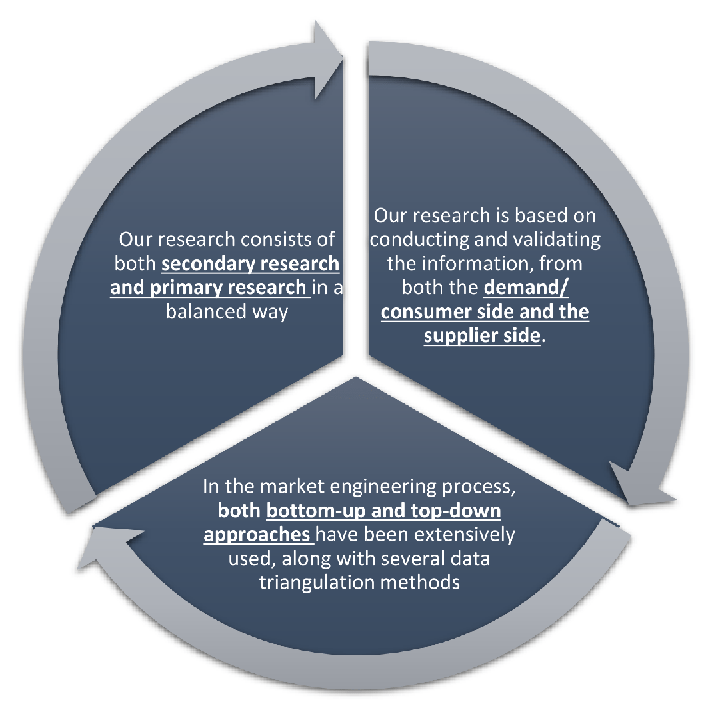
MarketGenics leverages a dedicated industry panel of experts and a comprehensive suite of paid databases to effectively collect, consolidate, and analyze market intelligence.
Our approach has consistently proven to be reliable and effective in generating accurate market insights, identifying key industry trends, and uncovering emerging business opportunities.
Through both primary and secondary research, we capture and analyze critical company-level data such as manufacturing footprints, including technical centers, R&D facilities, sales offices, and headquarters.
Our expert panel further enhances our ability to estimate market size for specific brands based on validated field-level intelligence.
Our data mining techniques incorporate both parametric and non-parametric methods, allowing for structured data collection, sorting, processing, and cleaning.
Demand projections are derived from large-scale data sets analyzed through proprietary algorithms, culminating in robust and reliable market sizing.
Research Approach
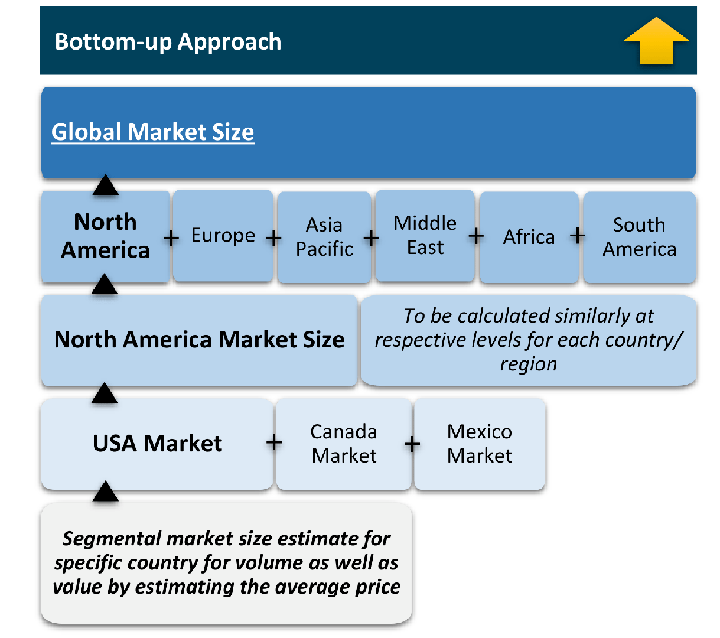
The bottom-up approach builds market estimates by starting with the smallest addressable market units and systematically aggregating them to create comprehensive market size projections.
This method begins with specific, granular data points and builds upward to create the complete market landscape.
Customer Analysis → Segmental Analysis → Geographical Analysis
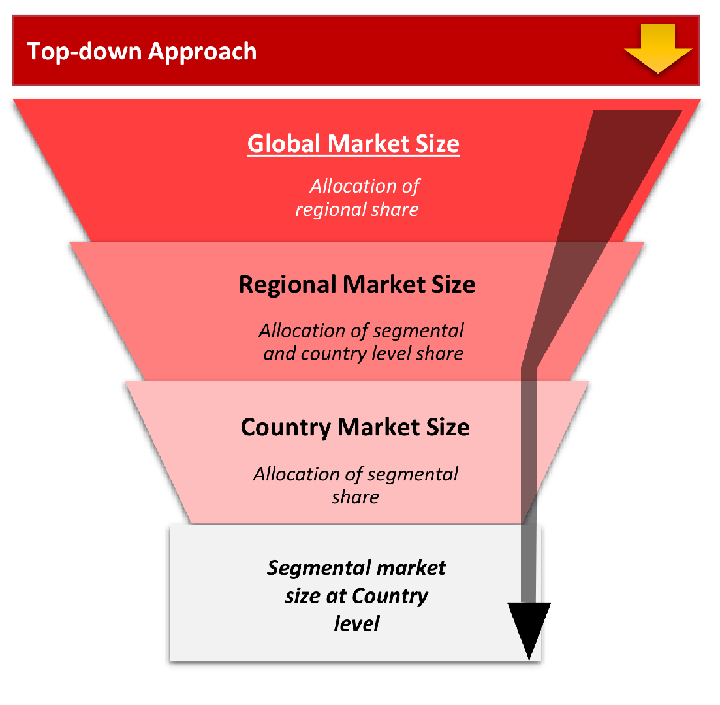
The top-down approach starts with the broadest possible market data and systematically narrows it down through a series of filters and assumptions to arrive at specific market segments or opportunities.
This method begins with the big picture and works downward to increasingly specific market slices.
TAM → SAM → SOM
Research Methods
Desk / Secondary Research
While analysing the market, we extensively study secondary sources, directories, and databases to identify and collect information useful for this technical, market-oriented, and commercial report. Secondary sources that we utilize are not only the public sources, but it is a combination of Open Source, Associations, Paid Databases, MG Repository & Knowledgebase, and others.
- Company websites, annual reports, financial reports, broker reports, and investor presentations
- National government documents, statistical databases and reports
- News articles, press releases and web-casts specific to the companies operating in the market, Magazines, reports, and others
- We gather information from commercial data sources for deriving company specific data such as segmental revenue, share for geography, product revenue, and others
- Internal and external proprietary databases (industry-specific), relevant patent, and regulatory databases
- Governing Bodies, Government Organizations
- Relevant Authorities, Country-specific Associations for Industries
We also employ the model mapping approach to estimate the product level market data through the players' product portfolio
Primary Research
Primary research/ interviews is vital in analyzing the market. Most of the cases involves paid primary interviews. Primary sources include primary interviews through e-mail interactions, telephonic interviews, surveys as well as face-to-face interviews with the different stakeholders across the value chain including several industry experts.
| Type of Respondents | Number of Primaries |
|---|---|
| Tier 2/3 Suppliers | ~20 |
| Tier 1 Suppliers | ~25 |
| End-users | ~25 |
| Industry Expert/ Panel/ Consultant | ~30 |
| Total | ~100 |
MG Knowledgebase
• Repository of industry blog, newsletter and case studies
• Online platform covering detailed market reports, and company profiles
Forecasting Factors and Models
Forecasting Factors
- Historical Trends – Past market patterns, cycles, and major events that shaped how markets behave over time. Understanding past trends helps predict future behavior.
- Industry Factors – Specific characteristics of the industry like structure, regulations, and innovation cycles that affect market dynamics.
- Macroeconomic Factors – Economic conditions like GDP growth, inflation, and employment rates that affect how much money people have to spend.
- Demographic Factors – Population characteristics like age, income, and location that determine who can buy your product.
- Technology Factors – How quickly people adopt new technology and how much technology infrastructure exists.
- Regulatory Factors – Government rules, laws, and policies that can help or restrict market growth.
- Competitive Factors – Analyzing competition structure such as degree of competition and bargaining power of buyers and suppliers.
Forecasting Models / Techniques
Multiple Regression Analysis
- Identify and quantify factors that drive market changes
- Statistical modeling to establish relationships between market drivers and outcomes
Time Series Analysis – Seasonal Patterns
- Understand regular cyclical patterns in market demand
- Advanced statistical techniques to separate trend, seasonal, and irregular components
Time Series Analysis – Trend Analysis
- Identify underlying market growth patterns and momentum
- Statistical analysis of historical data to project future trends
Expert Opinion – Expert Interviews
- Gather deep industry insights and contextual understanding
- In-depth interviews with key industry stakeholders
Multi-Scenario Development
- Prepare for uncertainty by modeling different possible futures
- Creating optimistic, pessimistic, and most likely scenarios
Time Series Analysis – Moving Averages
- Sophisticated forecasting for complex time series data
- Auto-regressive integrated moving average models with seasonal components
Econometric Models
- Apply economic theory to market forecasting
- Sophisticated economic models that account for market interactions
Expert Opinion – Delphi Method
- Harness collective wisdom of industry experts
- Structured, multi-round expert consultation process
Monte Carlo Simulation
- Quantify uncertainty and probability distributions
- Thousands of simulations with varying input parameters
Research Analysis
Our research framework is built upon the fundamental principle of validating market intelligence from both demand and supply perspectives. This dual-sided approach ensures comprehensive market understanding and reduces the risk of single-source bias.
Demand-Side Analysis: We understand end-user/application behavior, preferences, and market needs along with the penetration of the product for specific application.
Supply-Side Analysis: We estimate overall market revenue, analyze the segmental share along with industry capacity, competitive landscape, and market structure.
Validation & Evaluation
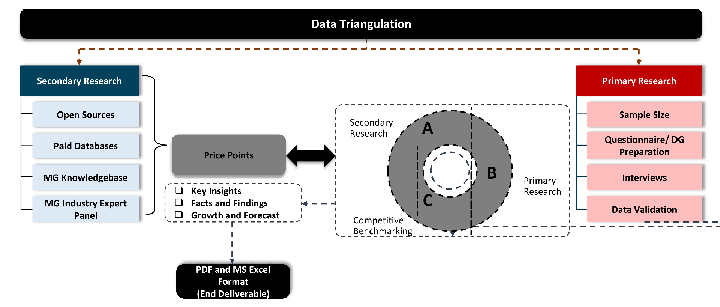
Data triangulation is a validation technique that uses multiple methods, sources, or perspectives to examine the same research question, thereby increasing the credibility and reliability of research findings. In market research, triangulation serves as a quality assurance mechanism that helps identify and minimize bias, validate assumptions, and ensure accuracy in market estimates.
- Data Source Triangulation – Using multiple data sources to examine the same phenomenon
- Methodological Triangulation – Using multiple research methods to study the same research question
- Investigator Triangulation – Using multiple researchers or analysts to examine the same data
- Theoretical Triangulation – Using multiple theoretical perspectives to interpret the same data
Custom Market Research Services
We will customise the research for you, in case the report listed above does not meet your requirements.
Get 10% Free Customisation