Postpartum Care Product Market Size, Share & Trends Analysis Report by Product Type (Breast Care Products, Perineal Care Products, Maternity Pads & Underwear, Belly Wraps & Support, Stretch Mark Care, Pain Relief Products, Nutritional Supplements, Skin Care Products, Others), Distribution Channel, Material Type, Consumer Type, End-users, Formulation Type (for Topical Products), and Geography (North America, Europe, Asia Pacific, Middle East, Africa, and South America) – Global Industry Data, Trends, and Forecasts, 2026–2035
Market Overview:
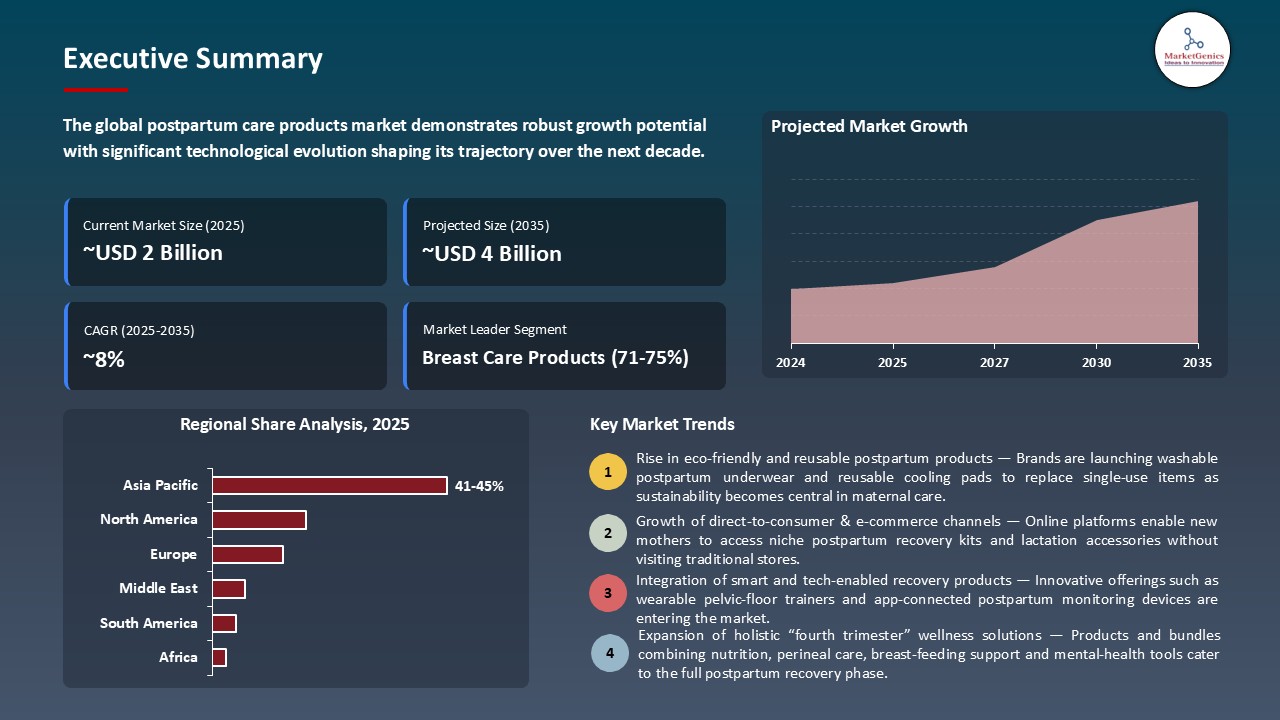
As per MarketGenics analysis, the global Postpartum Care Product market is projected to grow from USD 2.1 billion in 2025 to approximately USD 4.5 billion by 2035, registering a CAGR of 7.8% during the forecast period.
|
|
|
Segmental Data Insights |
|
|
Demand Trends |
|
|
Competitive Landscape |
|
|
Strategic Development |
|
|
Future Outlook & Opportunities |
|
Postpartum Care Product Market Size, Share, and Growth
The global postpartum care product market is becoming more consumer-oriented in terms of wellness, comfort, and skin-friendly products. The increase in the awareness of maternal health, the preference to natural or organic ingredients, the desire to find products that are sustainable, safe, and convenient, stimulates brands to continue innovating and improving the quality of the products.
Sarah Gabel Seifert, CEO of EveryLife, said,
"In a world that often tries to redefine womanhood, we stand firm in the truth that women are created with beauty, dignity, and strength exactly as God intended. With the launch of EveryLife Women, we celebrate God’s unique and intentional design for women. Our products reflect that same intentionality, made with clean materials to serve women from their first period through motherhood and beyond."
The postpartum care products market is experiencing high growth as the consumers are interested in wellness-oriented, sustainable and personalized solutions. There is a growing trend by women towards more values-oriented products, with a focus on ingredient transparency, ethical sourcing, and clinically- validated effectiveness, which extends to increased informed health, beauty, and environmental decisions in the overall society.
The response of market leaders is to redefine portfolios, embrace sustainable packaging, and use digital media to reach consumers in an authentic way. Clean beauty principles are also being applied by brands, they are being certified and benefits are communicated through educational content. For instance, in August 2025, the new postpartum solutions of T.N. Dickinson, Witch Hazel, were launched a Medicated Cooling Foam and Medicated Cooling Pads using 100% natural, clinical-grade witch hazel and without harsh chemicals. These tactics are appropriate to the requirements of the knowledgeable and value-focused customers, increasing the level of trust, loyalty, and lasting interaction.
The adjacent opportunities include subscription delivery, individualized beauty technologies, telehealth integration, and complementary wellness categories, including pregnancy skincare products. Such domains allow organizations to diversify income, increase the customer lifetime value, and create unified ecosystems focusing on a variety of women health and personal care issues.
Postpartum Care Product Market Dynamics and Trends
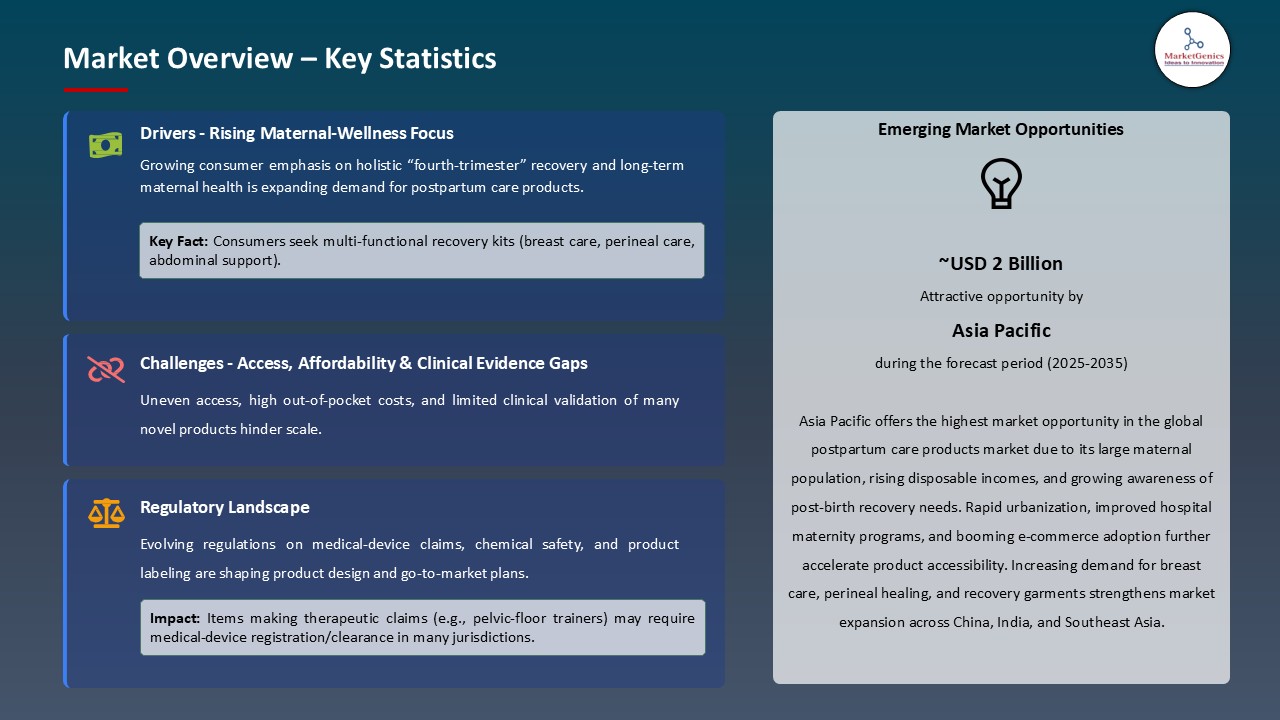
Driver: Increasing Awareness of Postpartum Health and Recovery Needs
- The growing consumer awareness about the postpartum health and recovery is transforming the market, changing the purchasing behavior, brand loyalty and product development priorities. Gen Z and millennials, in this case, want a product that matches authenticity, transparency, and personal values. Market leaders are reacting through resolving portfolios, third party certification, sustainable packaging and brand values articulation through targeted marketing.
- Consumer awareness and expectations of high-quality, safe postpartum care are increasing due to government programs such as the SUMAN project in India which ensures safe and quality postpartum care, leading to increased demand and supply of more effective and responsible postpartum care products. Such efforts improve differentiation, trust building as well as developing competitive advantages in those markets where sustainability and efficacy lead to premium buying habits. These developments are driving market growth, especially in developed markets where buyers prioritize product efficacy, security, sustainability, and social impact.
- This climate creates opportunity for innovators while also pressuring traditional businesses to adapt and modify their business models to meet changing demands.
Restraint: Social Stigma and Inadequate Healthcare Provider Education
- Social stigma and low awareness of healthcare providers are some of the main growth barriers in the postpartum care products industry, which influence adoption, market penetration, and business performance. These issues are associated with cultural expectations, knowledge-based challenges, financial limitations, and regulatory issues, which jointly slow down the scalability of various regions and consumer groups.
- Companies are overcoming these obstacles by means of educational programs, involvement of influencers, clinical validation, and customized pricing models. Mitigation needs long-term investment, cultural sensitivity, adaptive strategies in accordance with the local market environment and consumer trends.
- Premium products benefit from strong value propositions and customer retention, while mass-market products require increased efficiency, marketing innovation, and value-based approaches to remain competitive.
Opportunity: Expansion of Telehealth and Postpartum Support Services
- The telehealth and postpartum support services segment has a high growth potential in the providers of postpartum care products and services as they provide differentiated solutions to changing consumer needs. To seize these new opportunities, companies are investing in narrow product development, channel growth, strategic alliances and building capabilities.
- The growth strategies are expanding geographically into high potential markets, venturing into adjacent product line, creating premium products, and direct-to-consumer business model that does not have to go through the traditional retail outlets. For instance, in 2025, SecondMedic widened its telehealth to offer increased women-focused services, such as postpartum care, virtual gynecology, online lactation and nutrition support. The key success factors are strong consumer understanding, digital expertise, speed of execution, and incessant innovation based on market trends and feedback.
- Alliances with complementary brands, technology partners, influencers, and content creators can accelerate expansion, optimize resource distribution, and reduce investment risk. Organizations that successfully recognize, focus on, and use such opportunities can achieve above-market growth, competitive positioning, and stakeholder sustainable value.
Key Trend: Development of Comprehensive Postpartum Recovery Kits and Subscriptions
- Product range, consumer expectation, and competitiveness in the postpartum care market are evolving because of the emergence of extensive postpartum recovery kits and subscription services. This movement is associated with the unity of technological advancement, scientific investigation, sustainability, and the demand of the consumer in safe, efficient, and convenient products. Leaders of the market are forming and developing competitive advantages that are hard to imitate.
- The benefits of adopting this trend include higher product performance, better brand differentiation, consumer satisfaction, and pricing power in companies that adopt this trend. For instance, in March 2025, Happy Kat released its Post-Birth Recovery Pack, a pharmacy-ready postpartum kit with perineal ice/heat pads and other necessities to aid in post-birth recovery. Markets have high levels of innovation rewarded and high levels of consumer sophistication which are supported by R&D, clinical validation, and consumer education which support adoption.
- These solutions offer customisation, subscription alternatives, and outcome-based guarantees to increase client loyalty and lifetime value.
Postpartum-Care-Product-Market Analysis and Segmental Data
Breast Care Products Dominate Global Postpartum Care Product Market
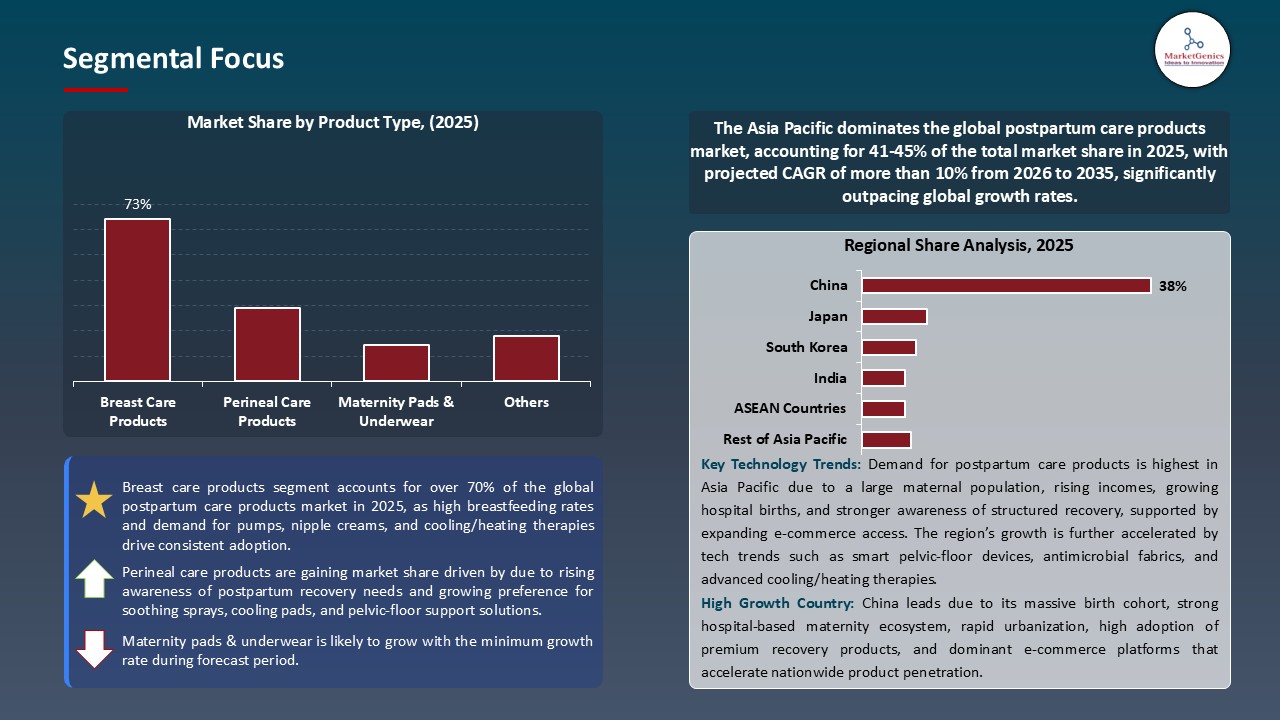
- The breast care products segments leads the postpartum care products market, which is fueled by the growing maternal health awareness, higher rates of breastfeeding, and high demand of the necessary nursing devices. Breast pumps, nursing pads, nipple creams, and milk-storage solutions are some of the commonly used products, as they help mothers to stay comfortable and functional in cities and in some new markets.
- Technology is moving fast, better absorbent cores, hypoallergenic envelopings, nonleaky nursing paddowns, even ergonomically designed breast-pumps, are helping in to add to product quality. In October 2025, Medela introduced Motion InBra, a hands-free in-bra wearable breast pump that combines portability with an ergonomic design to advance comfort and pumping performance among new mothers. Manufacturers in turn are responding by innovating to provide better performance and comfort.
- The market is expanding through e-commerce, subscription postpartum care packages, and partnerships with healthcare providers and non-governmental groups. These collaborations raise awareness, facilitate uptake, and establish the excellence of breast-care products in the entire postpartum-product market.
Asia Pacific Leads Global Postpartum Care Product Market Demand
- Asia Pacific dominates the global postpartum care products market due to rising maternal health awareness, expanding healthcare facilities, and consumer tastes and preferences. The increase in education and urbanization of women and the change in cultural attitudes towards modern postnatal care are also promoting the use of specialized post-partum products, including recovery aids, health supplements, and breastfeeding accessories.
- Government programs and NGO programs are also contributing to the development of the market. Organizations are implementing postnatal education campaigns and making recovery care products available in underserved regions, which can make it easier to break traditional obstacles and distribute healthier postnatal behaviors. For instance, In October 2025, Kimberly-Clark strengthened its collaboration with Project HOPE and UNICEF to increase access to respectful maternity care, menstrual hygiene education, and mental health care of women in such nations as China, India, Indonesia, and Vietnam.
- Regional players are innovating to meet the consumer demand. The breastfeeding accessories business is increasing, and new goods for new mothers include enhanced storage options, pumps, and recovery devices.
Postpartum-Care-Product-Market Ecosystem
The global postpartum care products market is moderately fragmented, with well-known producers like Medela AG, Lansinoh Laboratories, Frida Mom, The Honest Company, and Earth Mama Organics competing with new D2C startups of various prices and products. Tier-1 is a business model that uses scale advantages, well-developed R&D product pipeline, and established retail distribution to conquer mainstream categories, where specialty brands use high-end positioning, natural product, and interest-based marketing to reach high-end, health-conscious consumers.
The value chain includes ingredient procurement, product formulation, contract manufacturing, packaging, distribution networks, and omnichannel retail. To solidify market position, boost profit margins, and build stronger consumer relationships that underpin personalization and innovation in postpartum wellness offerings, the major players are now considering vertical integration, an expanded direct-to-consumer approach, and increased digital marketing capabilities.

Recent Development and Strategic Overview:
- In January 2025, LOLA revealed that it was expanding into the postpartum care category, launching organic-cotton postpartum pads, stretch-mark cream and hot/cold perineal gel pads at other main retailers such as Walmart and Target. The entire product range is being introduced in more than 1,800 stores, providing increased access to postpartum solutions based on clean ingredients.
- In July 2025, Trellis Health launched the first FDA-cleared at-home postpartum lab test, delivering over 30 biomarkers covering hormones, inflammation, nutrient levels and organ health directly to new mothers ahead of their routine six-week check-up.
Report Scope
|
Detail |
|
|
Market Size in 2025 |
USD 2.1 Bn |
|
Market Forecast Value in 2035 |
USD 4.5 Bn |
|
Growth Rate (CAGR) |
7.8% |
|
Forecast Period |
2026 – 2035 |
|
Historical Data Available for |
2021 – 2024 |
|
Market Size Units |
US$ Billion for Value Volume Units for Volume |
|
Report Format |
Electronic (PDF) + Excel |
|
North America |
Europe |
Asia Pacific |
Middle East |
Africa |
South America |
|
|
|
|
|
|
|
Companies Covered |
|||||
|
|
|
|
|
|
Postpartum-Care-Product-Market Segmentation and Highlights
|
Segment |
Sub-segment |
|
Postpartum Care Product Market, By Product Type |
|
|
Postpartum Care Product Market, By Distribution Channel |
|
|
Postpartum Care Product Market, By Material Type |
|
|
Postpartum Care Product Market, By Consumer Type |
|
|
Postpartum Care Product Market, By End-users |
|
|
Postpartum Care Product Market, By Formulation Type (for Topical Products) |
|
Frequently Asked Questions
Table of Contents
- 1. Research Methodology and Assumptions
- 1.1. Definitions
- 1.2. Research Design and Approach
- 1.3. Data Collection Methods
- 1.4. Base Estimates and Calculations
- 1.5. Forecasting Models
- 1.5.1. Key Forecast Factors & Impact Analysis
- 1.6. Secondary Research
- 1.6.1. Open Sources
- 1.6.2. Paid Databases
- 1.6.3. Associations
- 1.7. Primary Research
- 1.7.1. Primary Sources
- 1.7.2. Primary Interviews with Stakeholders across Ecosystem
- 2. Executive Summary
- 2.1. Global Postpartum Care Products Market Outlook
- 2.1.1. Postpartum Care Products Market Size Volume (Million Units) and Value (US$ Bn), and Forecasts, 2021-2035
- 2.1.2. Compounded Annual Growth Rate Analysis
- 2.1.3. Growth Opportunity Analysis
- 2.1.4. Segmental Share Analysis
- 2.1.5. Geographical Share Analysis
- 2.2. Market Analysis and Facts
- 2.3. Supply-Demand Analysis
- 2.4. Competitive Benchmarking
- 2.5. Go-to- Market Strategy
- 2.5.1. Customer/ End-use Industry Assessment
- 2.5.2. Growth Opportunity Data, 2026-2035
- 2.5.2.1. Regional Data
- 2.5.2.2. Country Data
- 2.5.2.3. Segmental Data
- 2.5.3. Identification of Potential Market Spaces
- 2.5.4. GAP Analysis
- 2.5.5. Potential Attractive Price Points
- 2.5.6. Prevailing Market Risks & Challenges
- 2.5.7. Preferred Sales & Marketing Strategies
- 2.5.8. Key Recommendations and Analysis
- 2.5.9. A Way Forward
- 2.1. Global Postpartum Care Products Market Outlook
- 3. Industry Data and Premium Insights
- 3.1. Global Consumer Goods & Services Industry Overview, 2025
- 3.1.1. Consumer Goods & Services Industry Ecosystem Analysis
- 3.1.2. Key Trends for Consumer Goods & Services Industry
- 3.1.3. Regional Distribution for Consumer Goods & Services Industry
- 3.2. Supplier Customer Data
- 3.3. Technology Roadmap and Developments
- 3.4. Trade Analysis
- 3.4.1. Import & Export Analysis, 2025
- 3.4.2. Top Importing Countries
- 3.4.3. Top Exporting Countries
- 3.5. Trump Tariff Impact Analysis
- 3.5.1. Manufacturer
- 3.5.1.1. Based on the component & Raw material
- 3.5.2. Supply Chain
- 3.5.3. End Consumer
- 3.5.1. Manufacturer
- 3.6. Raw Material Analysis
- 3.1. Global Consumer Goods & Services Industry Overview, 2025
- 4. Market Overview
- 4.1. Market Dynamics
- 4.1.1. Drivers
- 4.1.1.1. Increasing number of childbirths and growing focus on maternal health.
- 4.1.1.2. Rising awareness of postpartum recovery solutions through e-commerce and digital health platforms.
- 4.1.1.3. Product innovation in pain relief, lactation support, and hygiene-focused postpartum kits.
- 4.1.2. Restraints
- 4.1.2.1. Limited access and affordability in low-income regions.
- 4.1.2.2. Cultural stigma and low awareness regarding postpartum recovery needs.
- 4.1.1. Drivers
- 4.2. Key Trend Analysis
- 4.3. Regulatory Framework
- 4.3.1. Key Regulations, Norms, and Subsidies, by Key Countries
- 4.3.2. Tariffs and Standards
- 4.3.3. Impact Analysis of Regulations on the Market
- 4.4. Value Chain Analysis
- 4.4.1. Raw Material Suppliers
- 4.4.2. Manufacturing
- 4.4.3. Distribution
- 4.4.4. End-Use
- 4.5. Cost Structure Analysis
- 4.5.1. Parameter’s Share for Cost Associated
- 4.5.2. COGP vs COGS
- 4.5.3. Profit Margin Analysis
- 4.6. Pricing Analysis
- 4.6.1. Regional Pricing Analysis
- 4.6.2. Segmental Pricing Trends
- 4.6.3. Factors Influencing Pricing
- 4.7. Porter’s Five Forces Analysis
- 4.8. PESTEL Analysis
- 4.9. Global Postpartum Care Products Market Demand
- 4.9.1. Historical Market Size – Volume (Million Units) and Value (US$ Bn), 2020-2024
- 4.9.2. Current and Future Market Size – Volume (Million Units) and Value (US$ Bn), 2026–2035
- 4.9.2.1. Y-o-Y Growth Trends
- 4.9.2.2. Absolute $ Opportunity Assessment
- 4.1. Market Dynamics
- 5. Competition Landscape
- 5.1. Competition structure
- 5.1.1. Fragmented v/s consolidated
- 5.2. Company Share Analysis, 2025
- 5.2.1. Global Company Market Share
- 5.2.2. By Region
- 5.2.2.1. North America
- 5.2.2.2. Europe
- 5.2.2.3. Asia Pacific
- 5.2.2.4. Middle East
- 5.2.2.5. Africa
- 5.2.2.6. South America
- 5.3. Product Comparison Matrix
- 5.3.1. Specifications
- 5.3.2. Market Positioning
- 5.3.3. Pricing
- 5.1. Competition structure
- 6. Global Postpartum Care Products Market Analysis, by Product Type
- 6.1. Key Segment Analysis
- 6.2. Postpartum Care Products Market Size Volume (Million Units) and Value (US$ Bn), Analysis, and Forecasts, by Product Type, 2021-2035
- 6.2.1. Breast Care Products
- 6.2.1.1. Nursing Bras
- 6.2.1.2. Breast Pads
- 6.2.1.3. Nipple Creams
- 6.2.1.4. Others
- 6.2.2. Perineal Care Products
- 6.2.2.1. Perineal Spray
- 6.2.2.2. Perineal Cooling Pads
- 6.2.2.3. Sitz Bath Products
- 6.2.2.4. Others
- 6.2.3. Maternity Pads & Underwear
- 6.2.3.1. Disposable Maternity Pads
- 6.2.3.2. Reusable Maternity Pads
- 6.2.3.3. Postpartum Underwear
- 6.2.3.4. Others
- 6.2.4. Belly Wraps & Support
- 6.2.5. Stretch Mark Care
- 6.2.6. Pain Relief Products
- 6.2.7. Nutritional Supplements
- 6.2.8. Skin Care Products
- 6.2.9. Others
- 6.2.1. Breast Care Products
- 7. Global Postpartum Care Products Market Analysis, by Distribution Channel
- 7.1. Key Segment Analysis
- 7.2. Postpartum Care Products Market Size Volume (Million Units) and Value (US$ Bn), Analysis, and Forecasts, by Distribution Channel, 2021-2035
- 7.2.1. Online Channels
- 7.2.1.1. E-commerce Platforms
- 7.2.1.2. Company Websites
- 7.2.1.3. Online Pharmacies
- 7.2.1.4. Others
- 7.2.2. Offline Channels
- 7.2.2.1. Supermarkets/Hypermarkets
- 7.2.2.2. Pharmacies/Drugstores
- 7.2.2.3. Convenience Stores
- 7.2.2.4. Specialty Stores
- 7.2.2.5. Others
- 7.2.1. Online Channels
- 8. Global Postpartum Care Products Market Analysis, by Material Type
- 8.1. Key Segment Analysis
- 8.2. Postpartum Care Products Market Size Volume (Million Units) and Value (US$ Bn), Analysis, and Forecasts, by Material Type, 2021-2035
- 8.2.1. Organic Materials
- 8.2.2. Synthetic Materials
- 8.2.3. Hybrid Materials
- 9. Global Postpartum Care Products Market Analysis, by Consumer Type
- 9.1. Key Segment Analysis
- 9.2. Postpartum Care Products Market Size Volume (Million Units) and Value (US$ Bn), Analysis, and Forecasts, by Consumer Type, 2021-2035
- 9.2.1. First-Time Mothers
- 9.2.2. Experienced Mothers
- 9.2.3. C-Section Recovery
- 9.2.4. Vaginal Birth Recovery
- 9.2.5. High-Risk Pregnancy Recovery
- 10. Global Postpartum Care Products Market Analysis, by End-users
- 10.1. Key Segment Analysis
- 10.2. Postpartum Care Products Market Size Volume (Million Units) and Value (US$ Bn), Analysis, and Forecasts, by End Users, 2021-2035
- 10.2.1. Healthcare Facilities
- 10.2.1.1. Hospital Maternity Wards
- 10.2.1.1.1. Post-Delivery Care
- 10.2.1.1.2. C-Section Recovery
- 10.2.1.1.3. Lactation Support
- 10.2.1.1.4. Others
- 10.2.1.2. Birthing Centers
- 10.2.1.2.1. Natural Birth Recovery
- 10.2.1.2.2. Midwife-Assisted Care
- 10.2.1.2.3. Others
- 10.2.1.3. Clinics
- 10.2.1.3.1. Postpartum Check-ups
- 10.2.1.3.2. Wound Care Management
- 10.2.1.3.3. Others
- 10.2.1.1. Hospital Maternity Wards
- 10.2.2. Retail & Consumer
- 10.2.2.1. Home Care
- 10.2.2.1.1. Daily Postpartum Recovery
- 10.2.2.1.2. Self-Care Routines
- 10.2.2.1.3. Long-Term Recovery
- 10.2.2.1.4. Others
- 10.2.2.2. Personal Hygiene
- 10.2.2.2.1. Incontinence Management
- 10.2.2.2.2. Perineal Care
- 10.2.2.2.3. Breast Hygiene
- 10.2.2.2.4. Others
- 10.2.2.1. Home Care
- 10.2.3. Wellness Centers
- 10.2.3.1. Postpartum Rehabilitation
- 10.2.3.1.1. Physical Therapy
- 10.2.3.1.2. Pelvic Floor Recovery
- 10.2.3.1.3. Others
- 10.2.3.2. Lactation Consulting
- 10.2.3.2.1. Breastfeeding Support
- 10.2.3.2.2. Milk Supply Management
- 10.2.3.2.3. Others
- 10.2.3.1. Postpartum Rehabilitation
- 10.2.1. Healthcare Facilities
- 11. Global Postpartum Care Products Market Analysis, by Formulation Type (for Topical Products)
- 11.1. Key Segment Analysis
- 11.2. Postpartum Care Products Market Size Volume (Million Units) and Value (US$ Bn), Analysis, and Forecasts, by Formulation Type (for Topical Products), 2021-2035
- 11.2.1. Cream-Based
- 11.2.2. Gel-Based
- 11.2.3. Oil-Based
- 11.2.4. Spray Formulation
- 11.2.5. Powder Formulation
- 11.2.6. Foam-Based
- 12. Global Postpartum Care Products Market Analysis and Forecasts, by Region
- 12.1. Key Findings
- 12.2. Postpartum Care Products Market Size Volume (Million Units) and Value (US$ Bn), Analysis, and Forecasts, by Region, 2021-2035
- 12.2.1. North America
- 12.2.2. Europe
- 12.2.3. Asia Pacific
- 12.2.4. Middle East
- 12.2.5. Africa
- 12.2.6. South America
- 13. North America Postpartum Care Products Market Analysis
- 13.1. Key Segment Analysis
- 13.2. Regional Snapshot
- 13.3. North America Postpartum Care Products Market Size Volume (Million Units) and Value (US$ Bn), Analysis, and Forecasts, 2021-2035
- 13.3.1. Product Type
- 13.3.2. Distribution Channel
- 13.3.3. Material Type
- 13.3.4. Consumer Type
- 13.3.5. End-users
- 13.3.6. Formulation Type (for Topical Products)
- 13.3.7. Country
- 13.3.7.1. USA
- 13.3.7.2. Canada
- 13.3.7.3. Mexico
- 13.4. USA Postpartum Care Products Market
- 13.4.1. Country Segmental Analysis
- 13.4.2. Product Type
- 13.4.3. Distribution Channel
- 13.4.4. Material Type
- 13.4.5. Consumer Type
- 13.4.6. End-users
- 13.4.7. Formulation Type (for Topical Products)
- 13.5. Canada Postpartum Care Products Market
- 13.5.1. Country Segmental Analysis
- 13.5.2. Product Type
- 13.5.3. Distribution Channel
- 13.5.4. Material Type
- 13.5.5. Consumer Type
- 13.5.6. End-users
- 13.5.7. Formulation Type (for Topical Products)
- 13.6. Mexico Postpartum Care Products Market
- 13.6.1. Country Segmental Analysis
- 13.6.2. Product Type
- 13.6.3. Distribution Channel
- 13.6.4. Material Type
- 13.6.5. Consumer Type
- 13.6.6. End-users
- 13.6.7. Formulation Type (for Topical Products)
- 14. Europe Postpartum Care Products Market Analysis
- 14.1. Key Segment Analysis
- 14.2. Regional Snapshot
- 14.3. Europe Postpartum Care Products Market Size Volume (Million Units) and Value (US$ Bn), Analysis, and Forecasts, 2021-2035
- 14.3.1. Product Type
- 14.3.2. Distribution Channel
- 14.3.3. Material Type
- 14.3.4. Consumer Type
- 14.3.5. End-users
- 14.3.6. Formulation Type (for Topical Products)
- 14.3.7. Country
- 14.3.7.1. Germany
- 14.3.7.2. United Kingdom
- 14.3.7.3. France
- 14.3.7.4. Italy
- 14.3.7.5. Spain
- 14.3.7.6. Netherlands
- 14.3.7.7. Nordic Countries
- 14.3.7.8. Poland
- 14.3.7.9. Russia & CIS
- 14.3.7.10. Rest of Europe
- 14.4. Germany Postpartum Care Products Market
- 14.4.1. Country Segmental Analysis
- 14.4.2. Product Type
- 14.4.3. Distribution Channel
- 14.4.4. Material Type
- 14.4.5. Consumer Type
- 14.4.6. End-users
- 14.4.7. Formulation Type (for Topical Products)
- 14.5. United Kingdom Postpartum Care Products Market
- 14.5.1. Country Segmental Analysis
- 14.5.2. Product Type
- 14.5.3. Distribution Channel
- 14.5.4. Material Type
- 14.5.5. Consumer Type
- 14.5.6. End-users
- 14.5.7. Formulation Type (for Topical Products)
- 14.6. France Postpartum Care Products Market
- 14.6.1. Country Segmental Analysis
- 14.6.2. Product Type
- 14.6.3. Distribution Channel
- 14.6.4. Material Type
- 14.6.5. Consumer Type
- 14.6.6. End-users
- 14.6.7. Formulation Type (for Topical Products)
- 14.7. Italy Postpartum Care Products Market
- 14.7.1. Country Segmental Analysis
- 14.7.2. Product Type
- 14.7.3. Distribution Channel
- 14.7.4. Material Type
- 14.7.5. Consumer Type
- 14.7.6. End-users
- 14.7.7. Formulation Type (for Topical Products)
- 14.8. Spain Postpartum Care Products Market
- 14.8.1. Country Segmental Analysis
- 14.8.2. Product Type
- 14.8.3. Distribution Channel
- 14.8.4. Material Type
- 14.8.5. Consumer Type
- 14.8.6. End-users
- 14.8.7. Formulation Type (for Topical Products)
- 14.9. Netherlands Postpartum Care Products Market
- 14.9.1. Country Segmental Analysis
- 14.9.2. Product Type
- 14.9.3. Distribution Channel
- 14.9.4. Material Type
- 14.9.5. Consumer Type
- 14.9.6. End-users
- 14.9.7. Formulation Type (for Topical Products)
- 14.10. Nordic Countries Postpartum Care Products Market
- 14.10.1. Country Segmental Analysis
- 14.10.2. Product Type
- 14.10.3. Distribution Channel
- 14.10.4. Material Type
- 14.10.5. Consumer Type
- 14.10.6. End-users
- 14.10.7. Formulation Type (for Topical Products)
- 14.11. Poland Postpartum Care Products Market
- 14.11.1. Country Segmental Analysis
- 14.11.2. Product Type
- 14.11.3. Distribution Channel
- 14.11.4. Material Type
- 14.11.5. Consumer Type
- 14.11.6. End-users
- 14.11.7. Formulation Type (for Topical Products)
- 14.12. Russia & CIS Postpartum Care Products Market
- 14.12.1. Country Segmental Analysis
- 14.12.2. Product Type
- 14.12.3. Distribution Channel
- 14.12.4. Material Type
- 14.12.5. Consumer Type
- 14.12.6. End-users
- 14.12.7. Formulation Type (for Topical Products)
- 14.13. Rest of Europe Postpartum Care Products Market
- 14.13.1. Country Segmental Analysis
- 14.13.2. Product Type
- 14.13.3. Distribution Channel
- 14.13.4. Material Type
- 14.13.5. Consumer Type
- 14.13.6. End-users
- 14.13.7. Formulation Type (for Topical Products)
- 15. Asia Pacific Postpartum Care Products Market Analysis
- 15.1. Key Segment Analysis
- 15.2. Regional Snapshot
- 15.3. Asia Pacific Postpartum Care Products Market Size Volume (Million Units) and Value (US$ Bn), Analysis, and Forecasts, 2021-2035
- 15.3.1. Product Type
- 15.3.2. Distribution Channel
- 15.3.3. Material Type
- 15.3.4. Consumer Type
- 15.3.5. End-users
- 15.3.6. Formulation Type (for Topical Products)
- 15.3.7. Country
- 15.3.7.1. China
- 15.3.7.2. India
- 15.3.7.3. Japan
- 15.3.7.4. South Korea
- 15.3.7.5. Australia and New Zealand
- 15.3.7.6. Indonesia
- 15.3.7.7. Malaysia
- 15.3.7.8. Thailand
- 15.3.7.9. Vietnam
- 15.3.7.10. Rest of Asia Pacific
- 15.4. China Postpartum Care Products Market
- 15.4.1. Country Segmental Analysis
- 15.4.2. Product Type
- 15.4.3. Distribution Channel
- 15.4.4. Material Type
- 15.4.5. Consumer Type
- 15.4.6. End-users
- 15.4.7. Formulation Type (for Topical Products)
- 15.5. India Postpartum Care Products Market
- 15.5.1. Country Segmental Analysis
- 15.5.2. Product Type
- 15.5.3. Distribution Channel
- 15.5.4. Material Type
- 15.5.5. Consumer Type
- 15.5.6. End-users
- 15.5.7. Formulation Type (for Topical Products)
- 15.6. Japan Postpartum Care Products Market
- 15.6.1. Country Segmental Analysis
- 15.6.2. Product Type
- 15.6.3. Distribution Channel
- 15.6.4. Material Type
- 15.6.5. Consumer Type
- 15.6.6. End-users
- 15.6.7. Formulation Type (for Topical Products)
- 15.7. South Korea Postpartum Care Products Market
- 15.7.1. Country Segmental Analysis
- 15.7.2. Product Type
- 15.7.3. Distribution Channel
- 15.7.4. Material Type
- 15.7.5. Consumer Type
- 15.7.6. End-users
- 15.7.7. Formulation Type (for Topical Products)
- 15.8. Australia and New Zealand Postpartum Care Products Market
- 15.8.1. Country Segmental Analysis
- 15.8.2. Product Type
- 15.8.3. Distribution Channel
- 15.8.4. Material Type
- 15.8.5. Consumer Type
- 15.8.6. End-users
- 15.8.7. Formulation Type (for Topical Products)
- 15.9. Indonesia Postpartum Care Products Market
- 15.9.1. Country Segmental Analysis
- 15.9.2. Product Type
- 15.9.3. Distribution Channel
- 15.9.4. Material Type
- 15.9.5. Consumer Type
- 15.9.6. End-users
- 15.9.7. Formulation Type (for Topical Products)
- 15.10. Malaysia Postpartum Care Products Market
- 15.10.1. Country Segmental Analysis
- 15.10.2. Product Type
- 15.10.3. Distribution Channel
- 15.10.4. Material Type
- 15.10.5. Consumer Type
- 15.10.6. End-users
- 15.10.7. Formulation Type (for Topical Products)
- 15.11. Thailand Postpartum Care Products Market
- 15.11.1. Country Segmental Analysis
- 15.11.2. Product Type
- 15.11.3. Distribution Channel
- 15.11.4. Material Type
- 15.11.5. Consumer Type
- 15.11.6. End-users
- 15.11.7. Formulation Type (for Topical Products)
- 15.12. Vietnam Postpartum Care Products Market
- 15.12.1. Country Segmental Analysis
- 15.12.2. Product Type
- 15.12.3. Distribution Channel
- 15.12.4. Material Type
- 15.12.5. Consumer Type
- 15.12.6. End-users
- 15.12.7. Formulation Type (for Topical Products)
- 15.13. Rest of Asia Pacific Postpartum Care Products Market
- 15.13.1. Country Segmental Analysis
- 15.13.2. Product Type
- 15.13.3. Distribution Channel
- 15.13.4. Material Type
- 15.13.5. Consumer Type
- 15.13.6. End-users
- 15.13.7. Formulation Type (for Topical Products)
- 16. Middle East Postpartum Care Products Market Analysis
- 16.1. Key Segment Analysis
- 16.2. Regional Snapshot
- 16.3. Middle East Postpartum Care Products Market Size Volume (Million Units) and Value (US$ Bn), Analysis, and Forecasts, 2021-2035
- 16.3.1. Product Type
- 16.3.2. Distribution Channel
- 16.3.3. Material Type
- 16.3.4. Consumer Type
- 16.3.5. End-users
- 16.3.6. Formulation Type (for Topical Products)
- 16.3.7. Country
- 16.3.7.1. Turkey
- 16.3.7.2. UAE
- 16.3.7.3. Saudi Arabia
- 16.3.7.4. Israel
- 16.3.7.5. Rest of Middle East
- 16.4. Turkey Postpartum Care Products Market
- 16.4.1. Country Segmental Analysis
- 16.4.2. Product Type
- 16.4.3. Distribution Channel
- 16.4.4. Material Type
- 16.4.5. Consumer Type
- 16.4.6. End-users
- 16.4.7. Formulation Type (for Topical Products)
- 16.5. UAE Postpartum Care Products Market
- 16.5.1. Country Segmental Analysis
- 16.5.2. Product Type
- 16.5.3. Distribution Channel
- 16.5.4. Material Type
- 16.5.5. Consumer Type
- 16.5.6. End-users
- 16.5.7. Formulation Type (for Topical Products)
- 16.6. Saudi Arabia Postpartum Care Products Market
- 16.6.1. Country Segmental Analysis
- 16.6.2. Product Type
- 16.6.3. Distribution Channel
- 16.6.4. Material Type
- 16.6.5. Consumer Type
- 16.6.6. End-users
- 16.6.7. Formulation Type (for Topical Products)
- 16.7. Israel Postpartum Care Products Market
- 16.7.1. Country Segmental Analysis
- 16.7.2. Product Type
- 16.7.3. Distribution Channel
- 16.7.4. Material Type
- 16.7.5. Consumer Type
- 16.7.6. End-users
- 16.7.7. Formulation Type (for Topical Products)
- 16.8. Rest of Middle East Postpartum Care Products Market
- 16.8.1. Country Segmental Analysis
- 16.8.2. Product Type
- 16.8.3. Distribution Channel
- 16.8.4. Material Type
- 16.8.5. Consumer Type
- 16.8.6. End-users
- 16.8.7. Formulation Type (for Topical Products)
- 17. Africa Postpartum Care Products Market Analysis
- 17.1. Key Segment Analysis
- 17.2. Regional Snapshot
- 17.3. Africa Postpartum Care Products Market Size Volume (Million Units) and Value (US$ Bn), Analysis, and Forecasts, 2021-2035
- 17.3.1. Product Type
- 17.3.2. Distribution Channel
- 17.3.3. Material Type
- 17.3.4. Consumer Type
- 17.3.5. End-users
- 17.3.6. Formulation Type (for Topical Products)
- 17.3.7. End-user/ Customer Type
- 17.3.7.1. South Africa
- 17.3.7.2. Egypt
- 17.3.7.3. Nigeria
- 17.3.7.4. Algeria
- 17.3.7.5. Rest of Africa
- 17.4. South Africa Postpartum Care Products Market
- 17.4.1. Country Segmental Analysis
- 17.4.2. Product Type
- 17.4.3. Distribution Channel
- 17.4.4. Material Type
- 17.4.5. Consumer Type
- 17.4.6. End-users
- 17.4.7. Formulation Type (for Topical Products)
- 17.5. Egypt Postpartum Care Products Market
- 17.5.1. Country Segmental Analysis
- 17.5.2. Product Type
- 17.5.3. Distribution Channel
- 17.5.4. Material Type
- 17.5.5. Consumer Type
- 17.5.6. End-users
- 17.5.7. Formulation Type (for Topical Products)
- 17.6. Nigeria Postpartum Care Products Market
- 17.6.1. Country Segmental Analysis
- 17.6.2. Product Type
- 17.6.3. Distribution Channel
- 17.6.4. Material Type
- 17.6.5. Consumer Type
- 17.6.6. End-users
- 17.6.7. Formulation Type (for Topical Products)
- 17.7. Algeria Postpartum Care Products Market
- 17.7.1. Country Segmental Analysis
- 17.7.2. Product Type
- 17.7.3. Distribution Channel
- 17.7.4. Material Type
- 17.7.5. Consumer Type
- 17.7.6. End-users
- 17.7.7. Formulation Type (for Topical Products)
- 17.8. Rest of Africa Postpartum Care Products Market
- 17.8.1. Country Segmental Analysis
- 17.8.2. Product Type
- 17.8.3. Distribution Channel
- 17.8.4. Material Type
- 17.8.5. Consumer Type
- 17.8.6. End-users
- 17.8.7. Formulation Type (for Topical Products)
- 18. South America Postpartum Care Products Market Analysis
- 18.1. Key Segment Analysis
- 18.2. Regional Snapshot
- 18.3. South America Postpartum Care Products Market Size Volume (Million Units) and Value (US$ Bn), Analysis, and Forecasts, 2021-2035
- 18.3.1. Product Type
- 18.3.2. Distribution Channel
- 18.3.3. Material Type
- 18.3.4. Consumer Type
- 18.3.5. End-users
- 18.3.6. Formulation Type (for Topical Products)
- 18.3.7. Country
- 18.3.7.1. Brazil
- 18.3.7.2. Argentina
- 18.3.7.3. Rest of South America
- 18.4. Brazil Postpartum Care Products Market
- 18.4.1. Country Segmental Analysis
- 18.4.2. Product Type
- 18.4.3. Distribution Channel
- 18.4.4. Material Type
- 18.4.5. Consumer Type
- 18.4.6. End-users
- 18.4.7. Formulation Type (for Topical Products)
- 18.5. Argentina Postpartum Care Products Market
- 18.5.1. Country Segmental Analysis
- 18.5.2. Product Type
- 18.5.3. Distribution Channel
- 18.5.4. Material Type
- 18.5.5. Consumer Type
- 18.5.6. End-users
- 18.5.7. Formulation Type (for Topical Products)
- 18.6. Rest of South America Postpartum Care Products Market
- 18.6.1. Country Segmental Analysis
- 18.6.2. Product Type
- 18.6.3. Distribution Channel
- 18.6.4. Material Type
- 18.6.5. Consumer Type
- 18.6.6. End-users
- 18.6.7. Formulation Type (for Topical Products)
- 19. Key Players/ Company Profile
- 19.1. Ameda Inc.
- 19.1.1. Company Details/ Overview
- 19.1.2. Company Financials
- 19.1.3. Key Customers and Competitors
- 19.1.4. Business/ Industry Portfolio
- 19.1.5. Product Portfolio/ Specification Details
- 19.1.6. Pricing Data
- 19.1.7. Strategic Overview
- 19.1.8. Recent Developments
- 19.2. Bamboobies
- 19.3. Belly Bandit
- 19.4. Bravado Designs
- 19.5. Earth Mama Organics
- 19.6. Frida Mom
- 19.7. Haakaa
- 19.8. Kindred Bravely
- 19.9. Lansinoh Laboratories
- 19.10. Medela AG
- 19.11. Momcozy
- 19.12. Mommy's Bliss
- 19.13. Motherhood Maternity
- 19.14. Motherlove Herbal Company
- 19.15. Mustela
- 19.16. NUK (Gerber Childrenswear)
- 19.17. Palmer's (E.T. Browne Drug Company)
- 19.18. Philips Avent
- 19.19. Spectra Baby USA
- 19.20. The Honest Company
- 19.21. Upspring Baby
- 19.22. Other Key Players
- 19.1. Ameda Inc.
Note* - This is just tentative list of players. While providing the report, we will cover more number of players based on their revenue and share for each geography
Research Design
Our research design integrates both demand-side and supply-side analysis through a balanced combination of primary and secondary research methodologies. By utilizing both bottom-up and top-down approaches alongside rigorous data triangulation methods, we deliver robust market intelligence that supports strategic decision-making.
MarketGenics' comprehensive research design framework ensures the delivery of accurate, reliable, and actionable market intelligence. Through the integration of multiple research approaches, rigorous validation processes, and expert analysis, we provide our clients with the insights needed to make informed strategic decisions and capitalize on market opportunities.
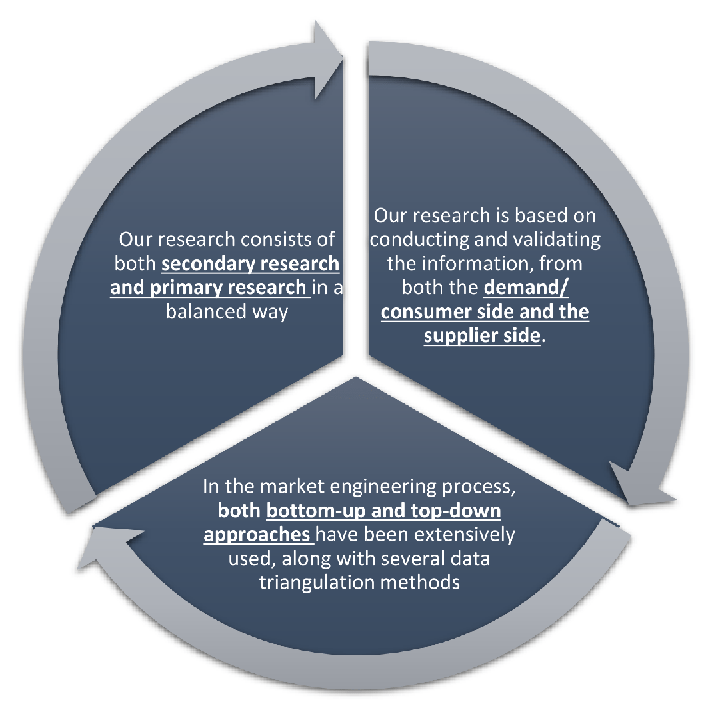
MarketGenics leverages a dedicated industry panel of experts and a comprehensive suite of paid databases to effectively collect, consolidate, and analyze market intelligence.
Our approach has consistently proven to be reliable and effective in generating accurate market insights, identifying key industry trends, and uncovering emerging business opportunities.
Through both primary and secondary research, we capture and analyze critical company-level data such as manufacturing footprints, including technical centers, R&D facilities, sales offices, and headquarters.
Our expert panel further enhances our ability to estimate market size for specific brands based on validated field-level intelligence.
Our data mining techniques incorporate both parametric and non-parametric methods, allowing for structured data collection, sorting, processing, and cleaning.
Demand projections are derived from large-scale data sets analyzed through proprietary algorithms, culminating in robust and reliable market sizing.
Research Approach
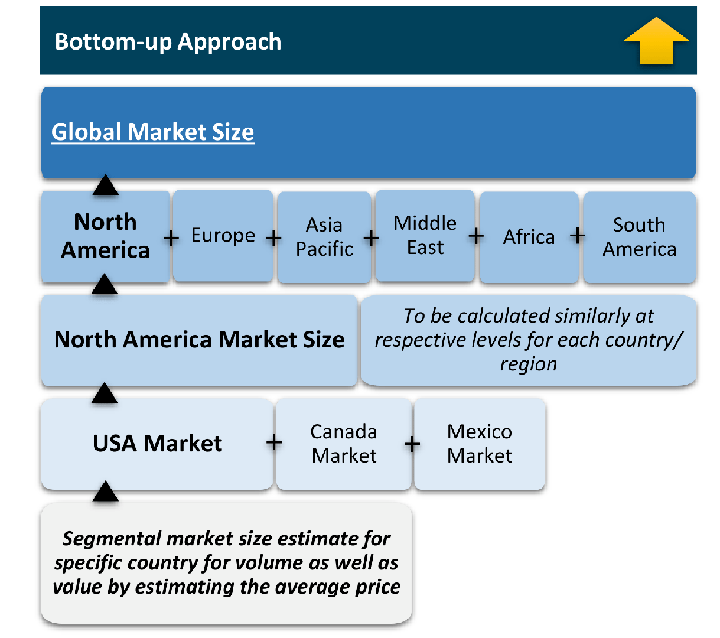
The bottom-up approach builds market estimates by starting with the smallest addressable market units and systematically aggregating them to create comprehensive market size projections.
This method begins with specific, granular data points and builds upward to create the complete market landscape.
Customer Analysis → Segmental Analysis → Geographical Analysis
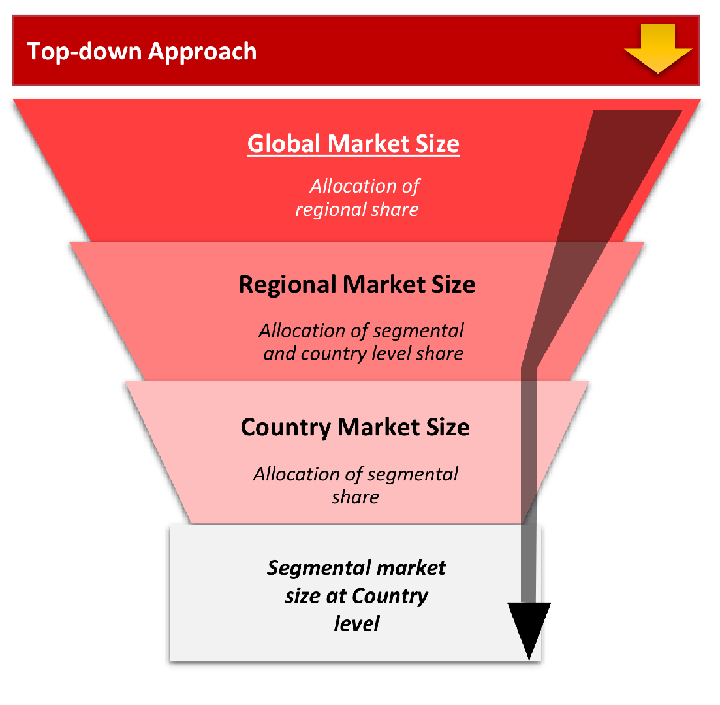
The top-down approach starts with the broadest possible market data and systematically narrows it down through a series of filters and assumptions to arrive at specific market segments or opportunities.
This method begins with the big picture and works downward to increasingly specific market slices.
TAM → SAM → SOM
Research Methods
Desk / Secondary Research
While analysing the market, we extensively study secondary sources, directories, and databases to identify and collect information useful for this technical, market-oriented, and commercial report. Secondary sources that we utilize are not only the public sources, but it is a combination of Open Source, Associations, Paid Databases, MG Repository & Knowledgebase, and others.
- Company websites, annual reports, financial reports, broker reports, and investor presentations
- National government documents, statistical databases and reports
- News articles, press releases and web-casts specific to the companies operating in the market, Magazines, reports, and others
- We gather information from commercial data sources for deriving company specific data such as segmental revenue, share for geography, product revenue, and others
- Internal and external proprietary databases (industry-specific), relevant patent, and regulatory databases
- Governing Bodies, Government Organizations
- Relevant Authorities, Country-specific Associations for Industries
We also employ the model mapping approach to estimate the product level market data through the players' product portfolio
Primary Research
Primary research/ interviews is vital in analyzing the market. Most of the cases involves paid primary interviews. Primary sources include primary interviews through e-mail interactions, telephonic interviews, surveys as well as face-to-face interviews with the different stakeholders across the value chain including several industry experts.
| Type of Respondents | Number of Primaries |
|---|---|
| Tier 2/3 Suppliers | ~20 |
| Tier 1 Suppliers | ~25 |
| End-users | ~25 |
| Industry Expert/ Panel/ Consultant | ~30 |
| Total | ~100 |
MG Knowledgebase
• Repository of industry blog, newsletter and case studies
• Online platform covering detailed market reports, and company profiles
Forecasting Factors and Models
Forecasting Factors
- Historical Trends – Past market patterns, cycles, and major events that shaped how markets behave over time. Understanding past trends helps predict future behavior.
- Industry Factors – Specific characteristics of the industry like structure, regulations, and innovation cycles that affect market dynamics.
- Macroeconomic Factors – Economic conditions like GDP growth, inflation, and employment rates that affect how much money people have to spend.
- Demographic Factors – Population characteristics like age, income, and location that determine who can buy your product.
- Technology Factors – How quickly people adopt new technology and how much technology infrastructure exists.
- Regulatory Factors – Government rules, laws, and policies that can help or restrict market growth.
- Competitive Factors – Analyzing competition structure such as degree of competition and bargaining power of buyers and suppliers.
Forecasting Models / Techniques
Multiple Regression Analysis
- Identify and quantify factors that drive market changes
- Statistical modeling to establish relationships between market drivers and outcomes
Time Series Analysis – Seasonal Patterns
- Understand regular cyclical patterns in market demand
- Advanced statistical techniques to separate trend, seasonal, and irregular components
Time Series Analysis – Trend Analysis
- Identify underlying market growth patterns and momentum
- Statistical analysis of historical data to project future trends
Expert Opinion – Expert Interviews
- Gather deep industry insights and contextual understanding
- In-depth interviews with key industry stakeholders
Multi-Scenario Development
- Prepare for uncertainty by modeling different possible futures
- Creating optimistic, pessimistic, and most likely scenarios
Time Series Analysis – Moving Averages
- Sophisticated forecasting for complex time series data
- Auto-regressive integrated moving average models with seasonal components
Econometric Models
- Apply economic theory to market forecasting
- Sophisticated economic models that account for market interactions
Expert Opinion – Delphi Method
- Harness collective wisdom of industry experts
- Structured, multi-round expert consultation process
Monte Carlo Simulation
- Quantify uncertainty and probability distributions
- Thousands of simulations with varying input parameters
Research Analysis
Our research framework is built upon the fundamental principle of validating market intelligence from both demand and supply perspectives. This dual-sided approach ensures comprehensive market understanding and reduces the risk of single-source bias.
Demand-Side Analysis: We understand end-user/application behavior, preferences, and market needs along with the penetration of the product for specific application.
Supply-Side Analysis: We estimate overall market revenue, analyze the segmental share along with industry capacity, competitive landscape, and market structure.
Validation & Evaluation
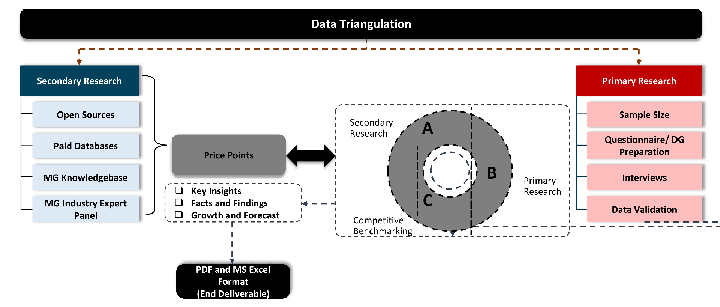
Data triangulation is a validation technique that uses multiple methods, sources, or perspectives to examine the same research question, thereby increasing the credibility and reliability of research findings. In market research, triangulation serves as a quality assurance mechanism that helps identify and minimize bias, validate assumptions, and ensure accuracy in market estimates.
- Data Source Triangulation – Using multiple data sources to examine the same phenomenon
- Methodological Triangulation – Using multiple research methods to study the same research question
- Investigator Triangulation – Using multiple researchers or analysts to examine the same data
- Theoretical Triangulation – Using multiple theoretical perspectives to interpret the same data
Custom Market Research Services
We will customise the research for you, in case the report listed above does not meet your requirements.
Get 10% Free Customisation