Decorative Rugs Market Size, Share & Trends Analysis Report by Product Type (Hand-Tufted Rugs, Hand-Knotted Rugs, Flat-Woven Rugs, Hooked Rugs, Machine-Made Rugs, Braided Rugs, Shag Rugs, Kilim Rugs, Others), Material Type, Weaving Technique, Pile Height, End-users, Distribution Channel, and Geography (North America, Europe, Asia Pacific, Middle East, Africa, and South America) – Global Industry Data, Trends, and Forecasts, 2026–2035
|
|
|
Segmental Data Insights |
|
|
Demand Trends |
|
|
Competitive Landscape |
|
|
Strategic Development |
|
|
Future Outlook & Opportunities |
|
Decorative Rugs Market Size, Share, and Growth
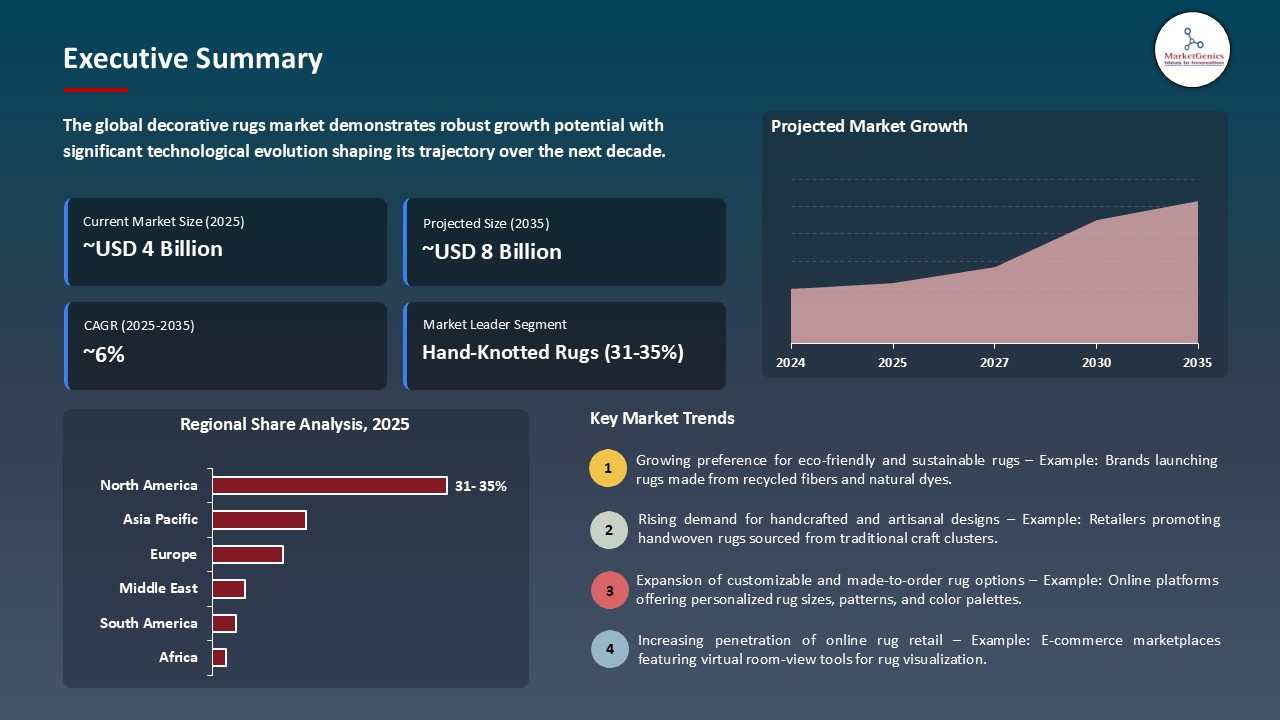
The global decorative rugs market is experiencing robust growth, with its estimated value of USD 4.3 billion in the year 2025 and USD 7.6 billion by 2035, registering a CAGR of 5.8%, during the forecast period. Wellness-oriented consumer tastes are becoming a growing force in the decorative rugs segment, as customers are buying rugs that add comfort, acoustics, and interior style. The increased demand of natural and low-VOC materials as well as tactile fabrics is compelling brands to create health-conscious and serene-living oriented collections of rugs.
Daniel Stromborg, Gensler’s product development design director, stated that the collection was created by tapping into the global Gensler network to incorporate modern, contemporary, organic, and industrial design perspectives. He added that the goal was to deliver sophisticated, memorable designs that introduce rich layers of color and pattern into both commercial and residential spaces.
The increasing demand of decorative rugs across the world is intensified by the increasing affordability of the emerging markets and the rising power of the digital culture of design. Now consumers perceive rugs as multi-task design items that not only add beauty to the space but also space definition and comfort and this led to the influence of preference of the higher quality that is product-focused on style. For instance, in January 2025, Ruggabled and Architectural Digest launched a trend-setting line that incorporated Archaic, Industrial and Art Deco influences, highlighting the market is moving to a more design-oriented, culturally entertaining floor coverings.
The decorative rugs market is shifting to the traditional one-time purchase to the model of recurrent engagement including seasonal style drops, curated subscription boxes of decor and loyalty-based home styling services. These programs allow revenue streams to be predictable, develop brand loyalty, repeat buying, and allow companies to plan assortment and inventory movements.
The adjacent opportunities contribute the market growth such as sustainable textile innovations, digitally controlled interior staging tools, and modular home decor ecosystems that combine rugs with complementary elements such as curtains and window blinds, creating more cohesive interior styling solutions. As consumer purchasing increases, trend-based adoption and diversified design solutions gain prominence, the global decorative rugs market positioned for good and multiple growth opportunities.
Decorative Rugs Market Dynamics and Trends
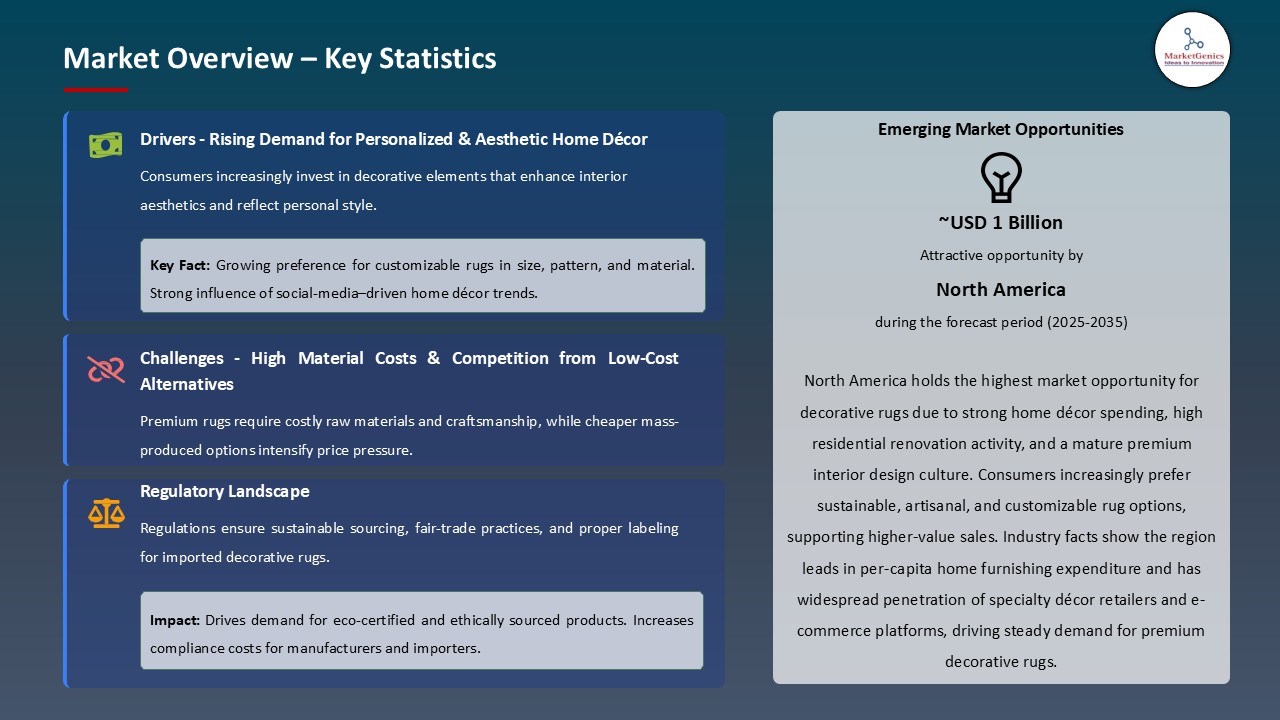
Driver: Growth in Home Renovation and Interior Design Investments
- The increased use of household budgets on renovation and interior redesign is reinforcing the demand of the decorative rugs as important aesthetic and functional features in contemporary home settings. The changes in lifestyle during the post-pandemic period have anchored long-term desires to comfort-oriented environments in which rugs provide a quick and affordable method of enhancing visual appeal, spatial integrity, and the overall atmosphere without the requirement of structural alterations.
- Before highlighting a recent industry development that reflects this shift, it is useful to note how design-led collaborations are influencing consumer purchasing behaviour. For instance, in April 2025, Rugs USA launched a 16-piece designer line designed with Nate Berkus, inspired by vintage motives, natural textures, and both machine-washable and wool constructions as examples of curated and trend-oriented assortments could stimulate increased engagement and high-end adoption in the category.
- Also, the impact of the social media design trends and availability of digital decoration education has helped the consumer to improve the knowledge about the rug size, laying, and color coordination. Such a broad-based design literacy makes decorative rugs essential aspects of the current renovation activity, which supports the continued expansion of categories at a wide range of prices.
Restraint: Competition from Hard Surface Flooring and Lower-Maintenance Alternatives
- The decorative rugs market is experiencing a competitive pressure due to hard-surface flooring products including luxury vinyl plank, engineered wood, and porcelain tile which are increasingly imitating the visual warmth and feel of textile floor covering products. These materials are more durable, less in the maintenance, and more resilient to the factors of stains, moisture and allergens which are more dominant determinants in the purchasing decisions of contemporary household.
- Also contributing to the same effect is a change in interior design tastes, as customers are becoming more attracted to clean, minimalist designs in which rugs are used as accessories, but not as flooring material. The increasing trend towards convenience in the busy, time-starved, dual-income households, only adds weight to the popularity of hard floors that require less maintenance as compared to traditional carpets.
- As a result, the demand of large-format decorative rugs is limited and manufacturers have been turning to smaller accent pieces, washable constructions, and advanced stain-resistance technologies to keep up with low-maintenance hard-surface options.
Opportunity: E-Commerce Expansion and Direct-to-Consumer Models
- The home decoration industry is rapidly digitalizing and providing great opportunities to the decorative rug brands to grow in scale through e-commerce and direct-to-consumer (D2C) platforms. Reduced distribution fees, expanded reach to markets and capability to roll out data-driven, trend-driven collections enhance competitiveness in both entrants and established players. Further improved online visualization and AI-based recommendation engines minimize purchase hesitation and are all-too-close to the experience of selecting items in the store.
- By brands leveraging quick fulfilment, tailored online collections and pricing platforms, competitive positions are getting stronger in the digital decor environment. For instance, in September 2025, Ruggable expanded this momentum by launching its All-in-One washable rug system, a single-piece format with built-in non-slip backing that enhances ease of use and increases conversion rates across online channels. The innovation also promotes quicker replenishment cycles and ability to strengthen the scalability of digital-only product lines.
- Moreover, the efficient consumer acquisition is facilitated with social-commerce ecosystems, performance-led advertising, and discovery driven by influencers. The direct interaction with the purchasers allows generating behavioral insights continuously, have a quick design turnover, and make updates to the collection swiftly, redefining competitive forces throughout the global decorative rugs market.
Key Trend: Sustainable Materials and Ethical Production Practices
- The global decorative rugs market is experiencing an excellent move towards sustainable production with the consumers progressively focusing on greener production materials, ethical production, and clear value lines. Rising concern about waste production, the use of chemicals in intensive processing, and polluting the environment by synthetic fibers is leading to the demand of rugs manufactured with the use of natural, recycled, and low-impact material. Brands are answering with circular design systems, eco-certified fibers, and low-emission production systems that meet the environmental sustainability standards across the world.
- In line with this adoption, the market is recording impressive progress in the innovation of carbon-neutral and carbon-negative products. For instance, in April 2025, FLOR, released its Terra Nova rug model, which is a carbon-negative area rug that is designed to store more carbon than it emits through manufacturing. The introduction strengthens the regeneration of the industry, life-cycle visibility, and climate-positive design.
- Other trends among manufacturers include reviving jute and sisal collections as well as hemp and seagrass collections, increasing recycled-PET collections, and incorporating artisan-crafted collections to strike a balance between high-end look and ecological responsibility. Such developments distinguish brands, facilitate higher prices and enhanced competitive standing over time and strengthen long-term competitiveness as sustainability becomes a defining market criterion globally.
Decorative-Rugs-Market Analysis and Segmental Data

Hand-Knotted Rugs Dominate Global Decorative Rugs Market
- The hand-knotted rugs segment leads the decorative rugs market because it is made with high craftsmanship, long product life cycle and high perceived value among high-end consumer segments. The segment gains the advantages of increasing popularity of artisanal, culturally-inspired decor and continued attention on the traditions of heritage weaving. Aesthetic differentiation and low production levels give rise to a luxury image, and the manufacturers achieve high pricing of their products both in residential and commercial uses.
- Design mapping, material improvement, and custom orders digital platforms technological improvements are also increasing the competitiveness of the segment. For instance, in January 2025, showcase by SH Rugs, which introduced innovative sustainable hand-knotted collections made with eco-friendly fibers and ethically sourced materials. This demonstrates the increasing industry focus on sustainability, craftsmanship transparency, and environmentally conscious luxury.
- The popularity of individual, investment-quality rugs and tailor-made interior decoration is only adding to the strength of hand-knotted products in the high end decorative rugs market.
North America Leads Global Decorative Rugs Market Demand
- North America leads the decorative rugs market, with high home renovation rates, high end interior style and high consumer expenditure on home decor designs. The continued increase in the demand in the U.S. and Canada is driven by the emergence of home upgrades that are more lifestyle oriented and the consistent rise in residential building and home remodelling.
- Market momentum is further strengthened by the strategic product innovations and brand revamps. For instance, in September 2025, Mohawk Home has reformulated its Karastan Rugs collection, where almost 80 new high-end designs have been launched with luxury fibers and high craftsmanship. The action emphasizes the high-end, performance-focused, and design-oriented outlook of the region of textile solutions.
- Also, North American consumers are becoming more and more active in the preferences of durable, washable, sustainable and digitally visualizable decor, which makes brands increase eco-friendly collections, introduce new technologies in the field of weaving and consolidate the work of their omnichannel retail activity.
- Such competitive environment makes North America one of the main sources of innovation that define trends in decorative carpets worldwide.
Decorative-Rugs-Market Ecosystem
The global decorative rugs market is moderately fragmented, with the major Tier 1 industry participants, including Mohawk industries, Oriental weavers, Balta industries, Safavieh and Beaulieu international group, continuing scale with vertically integrated manufacturing, large product portfolio and established global distribution channel. Tier 2 competitors such as design-focused and localized brands differentiate with their innovations of the material, modern design, and targeted positioning , often aligning decorative rugs with broader interior categories such as wooden furniture to reinforce premium, lifestyle-oriented brand narratives. Whereas Tier 3 is a group of many private-label suppliers and artisan-oriented producers that focus on localized and specialty markets.
The value chain includes the sourcing of the fibers, processing of the yarns, preparation of the rugs, finishing of the rugs, and the distribution of the products through the multi-channel retail stores. The ability to control proprietary technologies, enhance coordination of the supply chain, and product development based on data is becoming competitive advantage. Such innovation in materials and construction methods and customer experience remains supported by integrated operational models and strategies of strategic alliances to allow brands to support the various consumer demands, including those of value, mid-range, and premium.

Recent Development and Strategic Overview:
- In May 2025, Joanna Gaines launched a new 25-piece decorative new collection of rugs and pillows, with Loloi under the Magnolia Home brand. The introduction includes natural motifs, vintage elements of texture, and universal dimensions aimed at the contemporary, high-traffic interiors. The range focuses on practicalized beauty, incorporating traditional patterns into modern design to satisfy the increasing consumer expectations of affordable but high quality decorative rugs.
- In October 2025, Leanne Ford launched first-ever collection of rugs with Loloi that included organic textures, neutral color schemes, and nature-inspired designs that were made to merge artistic minimalism with practicality. The introduction coincided with a broader line of new interior design launches, such as Sunbrella’s interior design Sunbrella Interiors sub-brand of durable and washable indoor fabrics.
Report Scope
|
Detail |
|
|
Market Size in 2025 |
USD 4.3 Bn |
|
Market Forecast Value in 2035 |
USD 7.6 Bn |
|
Growth Rate (CAGR) |
5.8% |
|
Forecast Period |
2026 – 2035 |
|
Historical Data Available for |
2021 – 2024 |
|
Market Size Units |
US$ Billion for Value Thousand Units for Volume |
|
Report Format |
Electronic (PDF) + Excel |
|
North America |
Europe |
Asia Pacific |
Middle East |
Africa |
South America |
|
|
|
|
|
|
|
Companies Covered |
|||||
|
|
|
|
|
|
Decorative-Rugs-Market Segmentation and Highlights
|
Segment |
Sub-segment |
|
Decorative Rugs Market, By Product Type |
|
|
Decorative Rugs Market, By Material Type |
|
|
Decorative Rugs Market, By Weaving Technique |
|
|
Decorative Rugs Market, By Pile Height |
|
|
Decorative Rugs Market, By End-users |
|
|
Decorative Rugs Market, By Distribution Channel |
|
Frequently Asked Questions
Table of Contents
- 1. Research Methodology and Assumptions
- 1.1. Definitions
- 1.2. Research Design and Approach
- 1.3. Data Collection Methods
- 1.4. Base Estimates and Calculations
- 1.5. Forecasting Models
- 1.5.1. Key Forecast Factors & Impact Analysis
- 1.6. Secondary Research
- 1.6.1. Open Sources
- 1.6.2. Paid Databases
- 1.6.3. Associations
- 1.7. Primary Research
- 1.7.1. Primary Sources
- 1.7.2. Primary Interviews with Stakeholders across Ecosystem
- 2. Executive Summary
- 2.1. Global Decorative Rugs Market Outlook
- 2.1.1. Decorative Rugs Market Size Volume (Thousand Units) and Value (US$ Bn), and Forecasts, 2021-2035
- 2.1.2. Compounded Annual Growth Rate Analysis
- 2.1.3. Growth Opportunity Analysis
- 2.1.4. Segmental Share Analysis
- 2.1.5. Geographical Share Analysis
- 2.2. Market Analysis and Facts
- 2.3. Supply-Demand Analysis
- 2.4. Competitive Benchmarking
- 2.5. Go-to- Market Strategy
- 2.5.1. Customer/ End-use Industry Assessment
- 2.5.2. Growth Opportunity Data, 2026-2035
- 2.5.2.1. Regional Data
- 2.5.2.2. Country Data
- 2.5.2.3. Segmental Data
- 2.5.3. Identification of Potential Market Spaces
- 2.5.4. GAP Analysis
- 2.5.5. Potential Attractive Price Points
- 2.5.6. Prevailing Market Risks & Challenges
- 2.5.7. Preferred Sales & Marketing Strategies
- 2.5.8. Key Recommendations and Analysis
- 2.5.9. A Way Forward
- 2.1. Global Decorative Rugs Market Outlook
- 3. Industry Data and Premium Insights
- 3.1. Global Consumer Goods & Services Industry Overview, 2025
- 3.1.1. Industry Ecosystem Analysis
- 3.1.2. Key Trends for Consumer Goods & Services Industry
- 3.1.3. Regional Distribution for Consumer Goods & Services Industry
- 3.2. Supplier Customer Data
- 3.3. Technology Roadmap and Developments
- 3.4. Trade Analysis
- 3.4.1. Import & Export Analysis, 2025
- 3.4.2. Top Importing Countries
- 3.4.3. Top Exporting Countries
- 3.5. Trump Tariff Impact Analysis
- 3.5.1. Manufacturer
- 3.5.1.1. Based on the component & Raw material
- 3.5.2. Supply Chain
- 3.5.3. End Consumer
- 3.5.1. Manufacturer
- 3.6. Raw Material Analysis
- 3.1. Global Consumer Goods & Services Industry Overview, 2025
- 4. Market Overview
- 4.1. Market Dynamics
- 4.1.1. Drivers
- 4.1.1.1. Rising demand for home décor customization and aesthetic interiors.
- 4.1.1.2. Growth in residential construction and renovation activities.
- 4.1.1.3. Increasing availability of premium, eco-friendly, and artisanal rug designs.
- 4.1.2. Restraints
- 4.1.2.1. High costs of premium materials and handcrafted products.
- 4.1.2.2. Fluctuating raw material prices and import/export dependency.
- 4.1.1. Drivers
- 4.2. Key Trend Analysis
- 4.3. Regulatory Framework
- 4.3.1. Key Regulations, Norms, and Subsidies, by Key Countries
- 4.3.2. Tariffs and Standards
- 4.3.3. Impact Analysis of Regulations on the Market
- 4.4. Value Chain Analysis
- 4.4.1. Raw Material Suppliers
- 4.4.2. Manufacturing
- 4.4.3. Distribution
- 4.4.4. End-Use
- 4.5. Cost Structure Analysis
- 4.5.1. Parameter’s Share for Cost Associated
- 4.5.2. COGP vs COGS
- 4.5.3. Profit Margin Analysis
- 4.6. Pricing Analysis
- 4.6.1. Regional Pricing Analysis
- 4.6.2. Segmental Pricing Trends
- 4.6.3. Factors Influencing Pricing
- 4.7. Porter’s Five Forces Analysis
- 4.8. PESTEL Analysis
- 4.9. Global Decorative Rugs Market Demand
- 4.9.1. Historical Market Size – Value (US$ Bn), 2020-2024
- 4.9.2. Current and Future Market Size – Value (US$ Bn), 2026–2035
- 4.9.2.1. Y-o-Y Growth Trends
- 4.9.2.2. Absolute $ Opportunity Assessment
- 4.1. Market Dynamics
- 5. Competition Landscape
- 5.1. Competition structure
- 5.1.1. Fragmented v/s consolidated
- 5.2. Company Share Analysis, 2025
- 5.2.1. Global Company Market Share
- 5.2.2. By Region
- 5.2.2.1. North America
- 5.2.2.2. Europe
- 5.2.2.3. Asia Pacific
- 5.2.2.4. Middle East
- 5.2.2.5. Africa
- 5.2.2.6. South America
- 5.3. Product Comparison Matrix
- 5.3.1. Specifications
- 5.3.2. Market Positioning
- 5.3.3. Pricing
- 5.1. Competition structure
- 6. Global Decorative Rugs Market Analysis, by Product Type
- 6.1. Key Segment Analysis
- 6.2. Decorative Rugs Market Size Volume (Thousand Units) and Value (US$ Bn), Analysis, and Forecasts, by Product Type, 2021-2035
- 6.2.1. Hand-Tufted Rugs
- 6.2.2. Hand-Knotted Rugs
- 6.2.3. Flat-Woven Rugs
- 6.2.4. Hooked Rugs
- 6.2.5. Machine-Made Rugs
- 6.2.6. Braided Rugs
- 6.2.7. Shag Rugs
- 6.2.8. Kilim Rugs
- 6.2.9. Others
- 7. Global Decorative Rugs Market Analysis, by Material Type
- 7.1. Key Segment Analysis
- 7.2. Decorative Rugs Market Size Volume (Thousand Units) and Value (US$ Bn), Analysis, and Forecasts, by Material Type, 2021-2035
- 7.2.1. Wool
- 7.2.1.1. Pure Wool
- 7.2.1.2. Wool Blends
- 7.2.2. Cotton
- 7.2.3. Silk
- 7.2.4. Jute
- 7.2.5. Synthetic Fibers
- 7.2.6. Leather & Hide
- 7.2.7. Mixed Materials
- 7.2.1. Wool
- 8. Global Decorative Rugs Market Analysis, by Weaving Technique
- 8.1. Key Segment Analysis
- 8.2. Decorative Rugs Market Size Volume (Thousand Units) and Value (US$ Bn), Analysis, and Forecasts, by Weaving Technique, 2021-2035
- 8.2.1. Hand-Woven
- 8.2.2. Machine-Woven
- 8.2.3. Power-Loomed
- 8.2.4. Hand-Hooked
- 8.2.5. Dhurrie Weaving
- 8.2.6. Hand-Braided
- 8.2.7. Others
- 9. Global Decorative Rugs Market Analysis, by Pile Height
- 9.1. Key Segment Analysis
- 9.2. Decorative Rugs Market Size Volume (Thousand Units) and Value (US$ Bn), Analysis, and Forecasts, by Pile Height, 2021-2035
- 9.2.1. Low Pile (Less than 0.25 inches)
- 9.2.2. Medium Pile (0.25 - 0.5 inches)
- 9.2.3. High Pile (Above 0.5 inches)
- 10. Global Decorative Rugs Market Analysis, by End-users
- 10.1. Key Segment Analysis
- 10.2. Decorative Rugs Market Size Volume (Thousand Units) and Value (US$ Bn), Analysis, and Forecasts, by End-users, 2021-2035
- 10.2.1. Residential
- 10.2.2. Living Room
- 10.2.2.1. Bedroom
- 10.2.2.2. Entryway/Hallway
- 10.2.2.3. Outdoor/Patio
- 10.2.2.4. Others
- 10.2.3. Commercial
- 10.2.3.1. Hospitality
- 10.2.3.2. Corporate Offices
- 10.2.3.3. Retail Spaces
- 10.2.3.4. Healthcare Facilities
- 10.2.3.5. Educational Institutions
- 10.2.3.6. Entertainment Venues
- 10.2.3.7. Others
- 10.2.4. Institutional
- 10.2.4.1. Government Buildings
- 10.2.4.2. Religious Institutions
- 10.2.4.3. Community Centers
- 10.2.4.4. Public Libraries
- 10.2.4.5. Others
- 11. Global Decorative Rugs Market Analysis, by Distribution Channel
- 11.1. Key Segment Analysis
- 11.2. Decorative Rugs Market Size Volume (Thousand Units) and Value (US$ Bn), Analysis, and Forecasts, by Distribution Channel, 2021-2035
- 11.2.1. Online
- 11.2.1.1. E-commerce Platforms
- 11.2.1.2. Company Websites
- 11.2.2. Offline
- 11.2.2.1. Direct Sales
- 11.2.2.2. Home Improvement Stores
- 11.2.2.3. Department Stores
- 11.2.2.4. Furniture Stores
- 11.2.2.5. Supermarkets/Hypermarkets
- 11.2.2.6. Others
- 11.2.1. Online
- 12. Global Decorative Rugs Market Analysis and Forecasts, by Region
- 12.1. Key Findings
- 12.2. Decorative Rugs Market Size Volume (Thousand Units) and Value (US$ Bn), Analysis, and Forecasts, by Region, 2021-2035
- 12.2.1. North America
- 12.2.2. Europe
- 12.2.3. Asia Pacific
- 12.2.4. Middle East
- 12.2.5. Africa
- 12.2.6. South America
- 13. North America Decorative Rugs Market Analysis
- 13.1. Key Segment Analysis
- 13.2. Regional Snapshot
- 13.3. North America Decorative Rugs Market Size Volume (Thousand Units) and Value (US$ Bn), Analysis, and Forecasts, 2021-2035
- 13.3.1. Product Type
- 13.3.2. Material Type
- 13.3.3. Weaving Technique
- 13.3.4. Pile Height
- 13.3.5. End-users
- 13.3.6. Country
- 13.3.6.1. USA
- 13.3.6.2. Canada
- 13.3.6.3. Mexico
- 13.4. USA Decorative Rugs Market
- 13.4.1. Country Segmental Analysis
- 13.4.2. Product Type
- 13.4.3. Material Type
- 13.4.4. Weaving Technique
- 13.4.5. Pile Height
- 13.4.6. End-users
- 13.5. Canada Decorative Rugs Market
- 13.5.1. Country Segmental Analysis
- 13.5.2. Product Type
- 13.5.3. Material Type
- 13.5.4. Weaving Technique
- 13.5.5. Pile Height
- 13.5.6. End-users
- 13.6. Mexico Decorative Rugs Market
- 13.6.1. Country Segmental Analysis
- 13.6.2. Product Type
- 13.6.3. Material Type
- 13.6.4. Weaving Technique
- 13.6.5. Pile Height
- 13.6.6. End-users
- 14. Europe Decorative Rugs Market Analysis
- 14.1. Key Segment Analysis
- 14.2. Regional Snapshot
- 14.3. Europe Decorative Rugs Market Size Volume (Thousand Units) and Value (US$ Bn), Analysis, and Forecasts, 2021-2035
- 14.3.1. Product Type
- 14.3.2. Material Type
- 14.3.3. Weaving Technique
- 14.3.4. Pile Height
- 14.3.5. End-users
- 14.3.5.1. Germany
- 14.3.5.2. United Kingdom
- 14.3.5.3. France
- 14.3.5.4. Italy
- 14.3.5.5. Spain
- 14.3.5.6. Netherlands
- 14.3.5.7. Nordic Countries
- 14.3.5.8. Poland
- 14.3.5.9. Russia & CIS
- 14.3.5.10. Rest of Europe
- 14.4. Germany Decorative Rugs Market
- 14.4.1. Country Segmental Analysis
- 14.4.2. Product Type
- 14.4.3. Material Type
- 14.4.4. Weaving Technique
- 14.4.5. Pile Height
- 14.4.6. End-users
- 14.5. United Kingdom Decorative Rugs Market
- 14.5.1. Country Segmental Analysis
- 14.5.2. Product Type
- 14.5.3. Material Type
- 14.5.4. Weaving Technique
- 14.5.5. Pile Height
- 14.5.6. End-users
- 14.6. France Decorative Rugs Market
- 14.6.1. Country Segmental Analysis
- 14.6.2. Product Type
- 14.6.3. Material Type
- 14.6.4. Weaving Technique
- 14.6.5. Pile Height
- 14.6.6. End-users
- 14.7. Italy Decorative Rugs Market
- 14.7.1. Country Segmental Analysis
- 14.7.2. Product Type
- 14.7.3. Material Type
- 14.7.4. Weaving Technique
- 14.7.5. Pile Height
- 14.7.6. End-users
- 14.8. Spain Decorative Rugs Market
- 14.8.1. Country Segmental Analysis
- 14.8.2. Product Type
- 14.8.3. Material Type
- 14.8.4. Weaving Technique
- 14.8.5. Pile Height
- 14.8.6. End-users
- 14.9. Netherlands Decorative Rugs Market
- 14.9.1. Country Segmental Analysis
- 14.9.2. Product Type
- 14.9.3. Material Type
- 14.9.4. Weaving Technique
- 14.9.5. Pile Height
- 14.9.6. End-users
- 14.10. Nordic Countries Decorative Rugs Market
- 14.10.1. Country Segmental Analysis
- 14.10.2. Product Type
- 14.10.3. Material Type
- 14.10.4. Weaving Technique
- 14.10.5. Pile Height
- 14.10.6. End-users
- 14.11. Poland Decorative Rugs Market
- 14.11.1. Country Segmental Analysis
- 14.11.2. Product Type
- 14.11.3. Material Type
- 14.11.4. Weaving Technique
- 14.11.5. Pile Height
- 14.11.6. End-users
- 14.12. Russia & CIS Decorative Rugs Market
- 14.12.1. Country Segmental Analysis
- 14.12.2. Product Type
- 14.12.3. Material Type
- 14.12.4. Weaving Technique
- 14.12.5. Pile Height
- 14.12.6. End-users
- 14.13. Rest of Europe Decorative Rugs Market
- 14.13.1. Country Segmental Analysis
- 14.13.2. Product Type
- 14.13.3. Material Type
- 14.13.4. Weaving Technique
- 14.13.5. Pile Height
- 14.13.6. End-users
- 15. Asia Pacific Decorative Rugs Market Analysis
- 15.1. Key Segment Analysis
- 15.2. Regional Snapshot
- 15.3. Asia Pacific Decorative Rugs Market Size Volume (Thousand Units) and Value (US$ Bn), Analysis, and Forecasts, 2021-2035
- 15.3.1. Product Type
- 15.3.2. Material Type
- 15.3.3. Weaving Technique
- 15.3.4. Pile Height
- 15.3.5. End-users
- 15.3.6. Country
- 15.3.6.1. China
- 15.3.6.2. India
- 15.3.6.3. Japan
- 15.3.6.4. South Korea
- 15.3.6.5. Australia and New Zealand
- 15.3.6.6. Indonesia
- 15.3.6.7. Malaysia
- 15.3.6.8. Thailand
- 15.3.6.9. Vietnam
- 15.3.6.10. Rest of Asia Pacific
- 15.4. China Decorative Rugs Market
- 15.4.1. Country Segmental Analysis
- 15.4.2. Product Type
- 15.4.3. Material Type
- 15.4.4. Weaving Technique
- 15.4.5. Pile Height
- 15.4.6. End-users
- 15.5. India Decorative Rugs Market
- 15.5.1. Country Segmental Analysis
- 15.5.2. Product Type
- 15.5.3. Material Type
- 15.5.4. Weaving Technique
- 15.5.5. Pile Height
- 15.5.6. End-users
- 15.6. Japan Decorative Rugs Market
- 15.6.1. Country Segmental Analysis
- 15.6.2. Product Type
- 15.6.3. Material Type
- 15.6.4. Weaving Technique
- 15.6.5. Pile Height
- 15.6.6. End-users
- 15.7. South Korea Decorative Rugs Market
- 15.7.1. Country Segmental Analysis
- 15.7.2. Product Type
- 15.7.3. Material Type
- 15.7.4. Weaving Technique
- 15.7.5. Pile Height
- 15.7.6. End-users
- 15.8. Australia and New Zealand Decorative Rugs Market
- 15.8.1. Country Segmental Analysis
- 15.8.2. Product Type
- 15.8.3. Material Type
- 15.8.4. Weaving Technique
- 15.8.5. Pile Height
- 15.8.6. End-users
- 15.9. Indonesia Decorative Rugs Market
- 15.9.1. Country Segmental Analysis
- 15.9.2. Product Type
- 15.9.3. Material Type
- 15.9.4. Weaving Technique
- 15.9.5. Pile Height
- 15.9.6. End-users
- 15.10. Malaysia Decorative Rugs Market
- 15.10.1. Country Segmental Analysis
- 15.10.2. Product Type
- 15.10.3. Material Type
- 15.10.4. Weaving Technique
- 15.10.5. Pile Height
- 15.10.6. End-users
- 15.11. Thailand Decorative Rugs Market
- 15.11.1. Country Segmental Analysis
- 15.11.2. Product Type
- 15.11.3. Material Type
- 15.11.4. Weaving Technique
- 15.11.5. Pile Height
- 15.11.6. End-users
- 15.12. Vietnam Decorative Rugs Market
- 15.12.1. Country Segmental Analysis
- 15.12.2. Product Type
- 15.12.3. Material Type
- 15.12.4. Weaving Technique
- 15.12.5. Pile Height
- 15.12.6. End-users
- 15.13. Rest of Asia Pacific Decorative Rugs Market
- 15.13.1. Country Segmental Analysis
- 15.13.2. Product Type
- 15.13.3. Material Type
- 15.13.4. Weaving Technique
- 15.13.5. Pile Height
- 15.13.6. End-users
- 16. Middle East Decorative Rugs Market Analysis
- 16.1. Key Segment Analysis
- 16.2. Regional Snapshot
- 16.3. Middle East Decorative Rugs Market Size Volume (Thousand Units) and Value (US$ Bn), Analysis, and Forecasts, 2021-2035
- 16.3.1. Product Type
- 16.3.2. Material Type
- 16.3.3. Weaving Technique
- 16.3.4. Pile Height
- 16.3.5. End-users
- 16.3.6. Country
- 16.3.6.1. Turkey
- 16.3.6.2. UAE
- 16.3.6.3. Saudi Arabia
- 16.3.6.4. Israel
- 16.3.6.5. Rest of Middle East
- 16.4. Turkey Decorative Rugs Market
- 16.4.1. Country Segmental Analysis
- 16.4.2. Product Type
- 16.4.3. Material Type
- 16.4.4. Weaving Technique
- 16.4.5. Pile Height
- 16.4.6. End-users
- 16.5. UAE Decorative Rugs Market
- 16.5.1. Country Segmental Analysis
- 16.5.2. Product Type
- 16.5.3. Material Type
- 16.5.4. Weaving Technique
- 16.5.5. Pile Height
- 16.5.6. End-users
- 16.6. Saudi Arabia Decorative Rugs Market
- 16.6.1. Country Segmental Analysis
- 16.6.2. Product Type
- 16.6.3. Material Type
- 16.6.4. Weaving Technique
- 16.6.5. Pile Height
- 16.6.6. End-users
- 16.7. Israel Decorative Rugs Market
- 16.7.1. Country Segmental Analysis
- 16.7.2. Product Type
- 16.7.3. Material Type
- 16.7.4. Weaving Technique
- 16.7.5. Pile Height
- 16.7.6. End-users
- 16.8. Rest of Middle East Decorative Rugs Market
- 16.8.1. Country Segmental Analysis
- 16.8.2. Product Type
- 16.8.3. Material Type
- 16.8.4. Weaving Technique
- 16.8.5. Pile Height
- 16.8.6. End-users
- 17. Africa Decorative Rugs Market Analysis
- 17.1. Key Segment Analysis
- 17.2. Regional Snapshot
- 17.3. Africa Decorative Rugs Market Size Volume (Thousand Units) and Value (US$ Bn), Analysis, and Forecasts, 2021-2035
- 17.3.1. Product Type
- 17.3.2. Material Type
- 17.3.3. Weaving Technique
- 17.3.4. Pile Height
- 17.3.5. End-users
- 17.3.6. Country
- 17.3.6.1. South Africa
- 17.3.6.2. Egypt
- 17.3.6.3. Nigeria
- 17.3.6.4. Algeria
- 17.3.6.5. Rest of Africa
- 17.4. South Africa Decorative Rugs Market
- 17.4.1. Country Segmental Analysis
- 17.4.2. Product Type
- 17.4.3. Material Type
- 17.4.4. Weaving Technique
- 17.4.5. Pile Height
- 17.4.6. End-users
- 17.5. Egypt Decorative Rugs Market
- 17.5.1. Country Segmental Analysis
- 17.5.2. Product Type
- 17.5.3. Material Type
- 17.5.4. Weaving Technique
- 17.5.5. Pile Height
- 17.5.6. End-users
- 17.6. Nigeria Decorative Rugs Market
- 17.6.1. Country Segmental Analysis
- 17.6.2. Product Type
- 17.6.3. Material Type
- 17.6.4. Weaving Technique
- 17.6.5. Pile Height
- 17.6.6. End-users
- 17.7. Algeria Decorative Rugs Market
- 17.7.1. Country Segmental Analysis
- 17.7.2. Product Type
- 17.7.3. Material Type
- 17.7.4. Weaving Technique
- 17.7.5. Pile Height
- 17.7.6. End-users
- 17.8. Rest of Africa Decorative Rugs Market
- 17.8.1. Country Segmental Analysis
- 17.8.2. Product Type
- 17.8.3. Material Type
- 17.8.4. Weaving Technique
- 17.8.5. Pile Height
- 17.8.6. End-users
- 18. South America Decorative Rugs Market Analysis
- 18.1. Key Segment Analysis
- 18.2. Regional Snapshot
- 18.3. South America Decorative Rugs Market Size Volume (Thousand Units) and Value (US$ Bn), Analysis, and Forecasts, 2021-2035
- 18.3.1. Product Type
- 18.3.2. Material Type
- 18.3.3. Weaving Technique
- 18.3.4. Pile Height
- 18.3.5. End-users
- 18.3.6. Country
- 18.3.6.1. Brazil
- 18.3.6.2. Argentina
- 18.3.6.3. Rest of South America
- 18.4. Brazil Decorative Rugs Market
- 18.4.1. Country Segmental Analysis
- 18.4.2. Product Type
- 18.4.3. Material Type
- 18.4.4. Weaving Technique
- 18.4.5. Pile Height
- 18.4.6. End-users
- 18.5. Argentina Decorative Rugs Market
- 18.5.1. Country Segmental Analysis
- 18.5.2. Product Type
- 18.5.3. Material Type
- 18.5.4. Weaving Technique
- 18.5.5. Pile Height
- 18.5.6. End-users
- 18.6. Rest of South America Decorative Rugs Market
- 18.6.1. Country Segmental Analysis
- 18.6.2. Product Type
- 18.6.3. Material Type
- 18.6.4. Weaving Technique
- 18.6.5. Pile Height
- 18.6.6. End-users
- 19. Key Players/ Company Profile
- 19.1. Balta Industries.
- 19.1.1. Company Details/ Overview
- 19.1.2. Company Financials
- 19.1.3. Key Customers and Competitors
- 19.1.4. Business/ Industry Portfolio
- 19.1.5. Product Portfolio/ Specification Details
- 19.1.6. Pricing Data
- 19.1.7. Strategic Overview
- 19.1.8. Recent Developments
- 19.2. Beaulieu International Group
- 19.3. Capel Rugs
- 19.4. Couristan Inc.
- 19.5. Interface Inc.
- 19.6. Jaipur Living
- 19.7. Loloi Rugs
- 19.8. Milliken & Company
- 19.9. Mohawk Industries
- 19.10. Nourison Industries
- 19.11. nuLOOM
- 19.12. Oriental Weavers
- 19.13. Rizzy Home
- 19.14. Rugs USA
- 19.15. Safavieh
- 19.16. Shaw Industries Group
- 19.17. Tarkett
- 19.18. The Dixie Group
- 19.19. Trans-Ocean
- 19.20. Other Key Players
- 19.1. Balta Industries.
Note* - This is just tentative list of players. While providing the report, we will cover more number of players based on their revenue and share for each geography
Research Design
Our research design integrates both demand-side and supply-side analysis through a balanced combination of primary and secondary research methodologies. By utilizing both bottom-up and top-down approaches alongside rigorous data triangulation methods, we deliver robust market intelligence that supports strategic decision-making.
MarketGenics' comprehensive research design framework ensures the delivery of accurate, reliable, and actionable market intelligence. Through the integration of multiple research approaches, rigorous validation processes, and expert analysis, we provide our clients with the insights needed to make informed strategic decisions and capitalize on market opportunities.
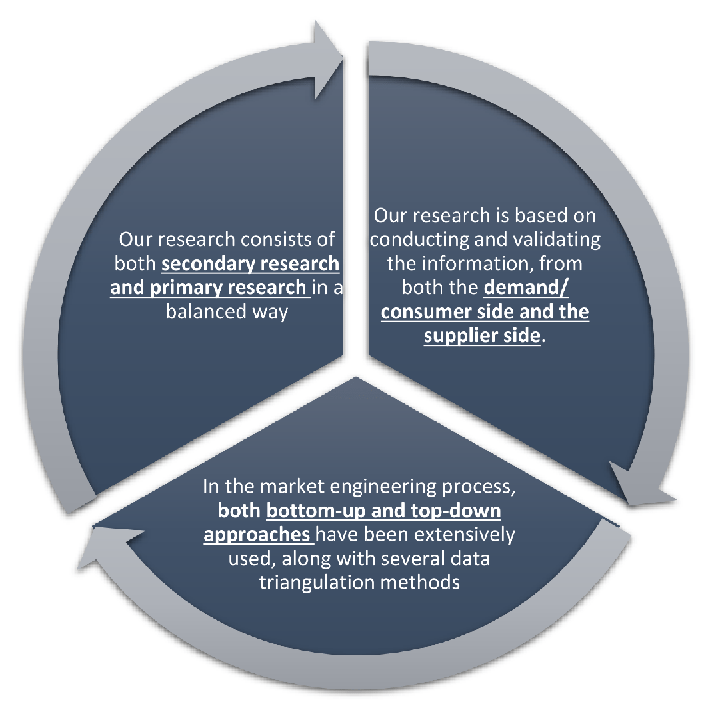
MarketGenics leverages a dedicated industry panel of experts and a comprehensive suite of paid databases to effectively collect, consolidate, and analyze market intelligence.
Our approach has consistently proven to be reliable and effective in generating accurate market insights, identifying key industry trends, and uncovering emerging business opportunities.
Through both primary and secondary research, we capture and analyze critical company-level data such as manufacturing footprints, including technical centers, R&D facilities, sales offices, and headquarters.
Our expert panel further enhances our ability to estimate market size for specific brands based on validated field-level intelligence.
Our data mining techniques incorporate both parametric and non-parametric methods, allowing for structured data collection, sorting, processing, and cleaning.
Demand projections are derived from large-scale data sets analyzed through proprietary algorithms, culminating in robust and reliable market sizing.
Research Approach
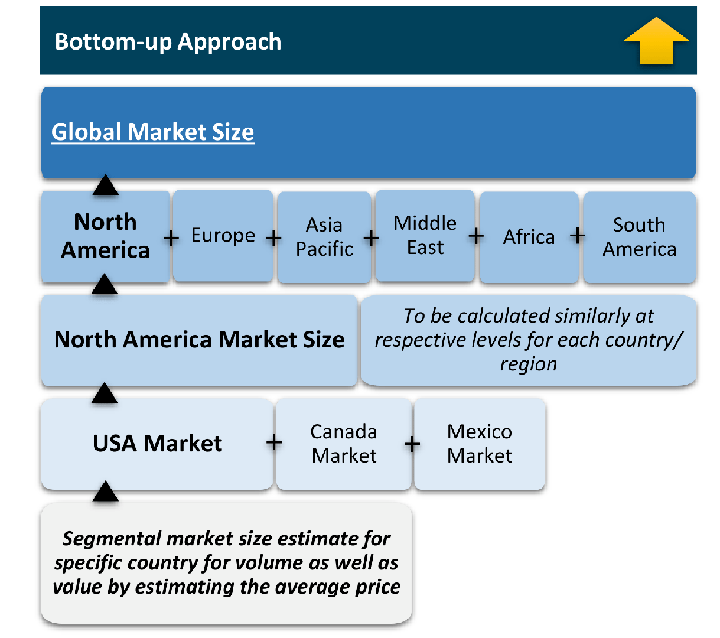
The bottom-up approach builds market estimates by starting with the smallest addressable market units and systematically aggregating them to create comprehensive market size projections.
This method begins with specific, granular data points and builds upward to create the complete market landscape.
Customer Analysis → Segmental Analysis → Geographical Analysis
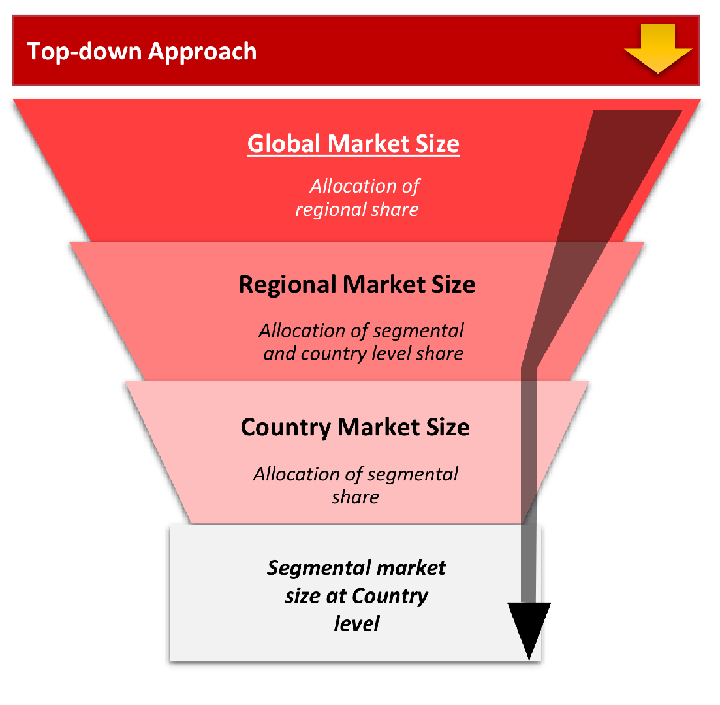
The top-down approach starts with the broadest possible market data and systematically narrows it down through a series of filters and assumptions to arrive at specific market segments or opportunities.
This method begins with the big picture and works downward to increasingly specific market slices.
TAM → SAM → SOM
Research Methods
Desk / Secondary Research
While analysing the market, we extensively study secondary sources, directories, and databases to identify and collect information useful for this technical, market-oriented, and commercial report. Secondary sources that we utilize are not only the public sources, but it is a combination of Open Source, Associations, Paid Databases, MG Repository & Knowledgebase, and others.
- Company websites, annual reports, financial reports, broker reports, and investor presentations
- National government documents, statistical databases and reports
- News articles, press releases and web-casts specific to the companies operating in the market, Magazines, reports, and others
- We gather information from commercial data sources for deriving company specific data such as segmental revenue, share for geography, product revenue, and others
- Internal and external proprietary databases (industry-specific), relevant patent, and regulatory databases
- Governing Bodies, Government Organizations
- Relevant Authorities, Country-specific Associations for Industries
We also employ the model mapping approach to estimate the product level market data through the players' product portfolio
Primary Research
Primary research/ interviews is vital in analyzing the market. Most of the cases involves paid primary interviews. Primary sources include primary interviews through e-mail interactions, telephonic interviews, surveys as well as face-to-face interviews with the different stakeholders across the value chain including several industry experts.
| Type of Respondents | Number of Primaries |
|---|---|
| Tier 2/3 Suppliers | ~20 |
| Tier 1 Suppliers | ~25 |
| End-users | ~25 |
| Industry Expert/ Panel/ Consultant | ~30 |
| Total | ~100 |
MG Knowledgebase
• Repository of industry blog, newsletter and case studies
• Online platform covering detailed market reports, and company profiles
Forecasting Factors and Models
Forecasting Factors
- Historical Trends – Past market patterns, cycles, and major events that shaped how markets behave over time. Understanding past trends helps predict future behavior.
- Industry Factors – Specific characteristics of the industry like structure, regulations, and innovation cycles that affect market dynamics.
- Macroeconomic Factors – Economic conditions like GDP growth, inflation, and employment rates that affect how much money people have to spend.
- Demographic Factors – Population characteristics like age, income, and location that determine who can buy your product.
- Technology Factors – How quickly people adopt new technology and how much technology infrastructure exists.
- Regulatory Factors – Government rules, laws, and policies that can help or restrict market growth.
- Competitive Factors – Analyzing competition structure such as degree of competition and bargaining power of buyers and suppliers.
Forecasting Models / Techniques
Multiple Regression Analysis
- Identify and quantify factors that drive market changes
- Statistical modeling to establish relationships between market drivers and outcomes
Time Series Analysis – Seasonal Patterns
- Understand regular cyclical patterns in market demand
- Advanced statistical techniques to separate trend, seasonal, and irregular components
Time Series Analysis – Trend Analysis
- Identify underlying market growth patterns and momentum
- Statistical analysis of historical data to project future trends
Expert Opinion – Expert Interviews
- Gather deep industry insights and contextual understanding
- In-depth interviews with key industry stakeholders
Multi-Scenario Development
- Prepare for uncertainty by modeling different possible futures
- Creating optimistic, pessimistic, and most likely scenarios
Time Series Analysis – Moving Averages
- Sophisticated forecasting for complex time series data
- Auto-regressive integrated moving average models with seasonal components
Econometric Models
- Apply economic theory to market forecasting
- Sophisticated economic models that account for market interactions
Expert Opinion – Delphi Method
- Harness collective wisdom of industry experts
- Structured, multi-round expert consultation process
Monte Carlo Simulation
- Quantify uncertainty and probability distributions
- Thousands of simulations with varying input parameters
Research Analysis
Our research framework is built upon the fundamental principle of validating market intelligence from both demand and supply perspectives. This dual-sided approach ensures comprehensive market understanding and reduces the risk of single-source bias.
Demand-Side Analysis: We understand end-user/application behavior, preferences, and market needs along with the penetration of the product for specific application.
Supply-Side Analysis: We estimate overall market revenue, analyze the segmental share along with industry capacity, competitive landscape, and market structure.
Validation & Evaluation
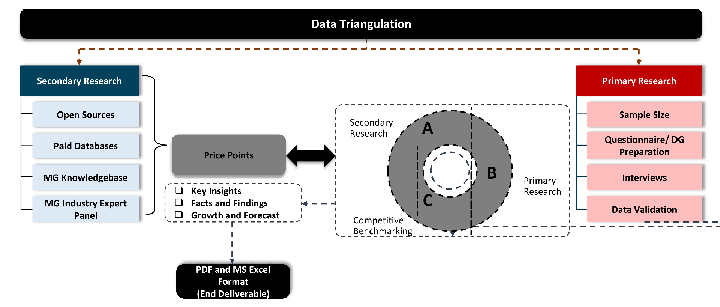
Data triangulation is a validation technique that uses multiple methods, sources, or perspectives to examine the same research question, thereby increasing the credibility and reliability of research findings. In market research, triangulation serves as a quality assurance mechanism that helps identify and minimize bias, validate assumptions, and ensure accuracy in market estimates.
- Data Source Triangulation – Using multiple data sources to examine the same phenomenon
- Methodological Triangulation – Using multiple research methods to study the same research question
- Investigator Triangulation – Using multiple researchers or analysts to examine the same data
- Theoretical Triangulation – Using multiple theoretical perspectives to interpret the same data
Custom Market Research Services
We will customise the research for you, in case the report listed above does not meet your requirements.
Get 10% Free Customisation