Dermal Filler Market Size, Share & Trends Analysis Report by Product Type (Hyaluronic Acid Fillers, Calcium Hydroxylapatite Fillers, Poly-L-Lactic Acid Fillers, Polymethyl Methacrylate Fillers, Collagen-Based Fillers, Autologous Fat Fillers, Others), Duration of Effect, Application Area, Injection Depth, Age Group, Gender, Formulation, End-Use, and Geography (North America, Europe, Asia Pacific, Middle East, Africa, and South America) – Global Industry Data, Trends, and Forecasts, 2026–2035
|
|
|
Segmental Data Insights |
|
|
Demand Trends |
|
|
Competitive Landscape |
|
|
Strategic Development |
|
|
Future Outlook & Opportunities |
|
Dermal Filler Market Size, Share, and Growth
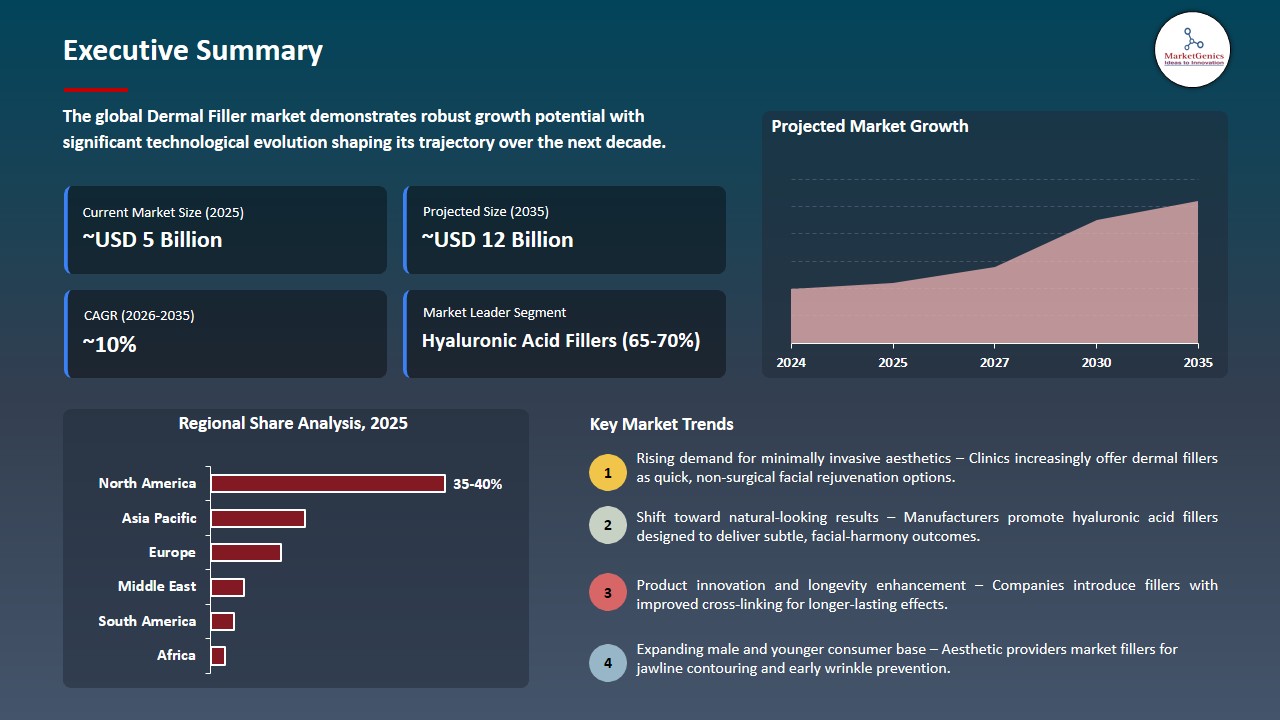
The global dermal filler market is witnessing strong growth, valued at USD 4.5 billion in 2025 and projected to reach USD 11.5 billion by 2035, expanding at a CAGR of 9.8% during the forecast period. Asia Pacific is the fastest-growing region in the dermal filler market due to rising beauty and anti-aging awareness among younger consumers, increasing disposable incomes, rapid urbanization, growing availability of aesthetic clinics and medspas, and the influence of social media trends promoting facial enhancement and cosmetic procedures.
Darin Messina, Ph.D., senior vice president, aesthetics R&D, AbbVie, said, “SKINVIVE by JUVÉDERM is an injectable version of hyaluronic acid, a naturally occurring molecule found in the skin and important for skin hydration, The submission of SKINVIVE by JUVÉDERM to treat neck lines demonstrates our continued focus on developing new indications for comprehensive lower face and neck treatment as part of our market-leading portfolio of products, including BOTOX Cosmetic and SkinMedica”.
The dermal filler market is being driven by the global population's aging demographic, which is becoming more and more concerned about skin laxity, loss of facial volume, and wrinkles. As life expectancy rises and the aging population seeks to maintain a youthful appearance, there is a growing demand for aesthetic surgical procedures, including straightforward options like dermal fillers. This consumer trend promotes the creation and implementation of superior filler formulations to meet the requirements of ageing changes to the face to maintain market expansion.
With the number of men undergoing facial aesthetic surgeries continuing to rise, the dermal filler market presents a significant opportunity. Men are becoming more consumer-diverse, with some seeking treatments like jawline shaping, cheek-plumping, and wrinkle elimination. This increased demand motivates manufacturers and aesthetic clinics to devise a specific marketing strategy, male-focused products, and custom treatment options, which contributes to the increasing involvement and extends revenue opportunities on the market.
The adjacent opportunities to the dermal filler market include development of multifunctional and longer-lasting filler formulations, branching out into male aesthetic applications, utilizing digital tools for consultation and treatment planning, employing sustainable and biodegradable materials, and partnering with medspas and aesthetic clinics to enhance access, personalization, and consumer involvement. These initiatives can facilitate adoption and boost revenue in both emerging and established markets.
Dermal Filler Market Dynamics and Trends
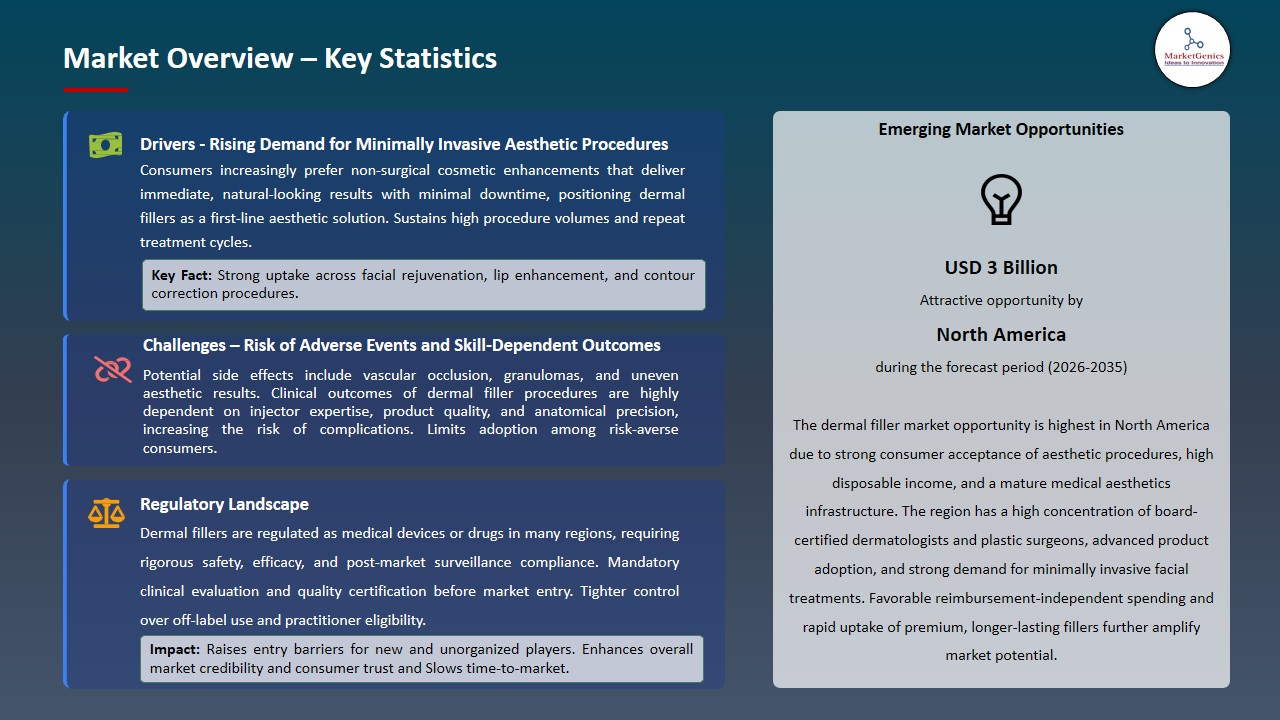
Driver: Growing Preference for Minimally Invasive Aesthetic Procedures
-
The dermal filler market is highly motivated by the rising demand of the non-surgical cosmetic procedures that provide successful aesthetic improvement without the dangers and healing period of surgery. The immediate appearance and natural look of dermal fillers with less down time makes it very attractive to working professionals and younger consumers who want quick aesthetic appearance.
- Moreover, the introduction of new filler recipes and competent aesthetic surgeons has enhanced the safety and efficacy of the treatment, increasing the transition into the minimally invasive sphere and contributing greatly to the long-term development of the dermal filler market across the globe.
- In June 2025, Allergan Aesthetics (AbbVie) declared that the U.S. FDA accepted submission of its supplemental premarket approval form to SKINVIVE by JUVADERM, a hyaluronic acid injectable, to alleviate neck lines and enhance the appearance of the neck.
- This advancement reinforces the growing signs of non-surgical aesthetic procedures, demonstrates optimism in the high safety rates, and indicates a rise in consumer interest in minimally invasive modalities outside of the traditional use of the facial application.
Restraint: Safety Concerns & Adverse Effects
-
The dermal filler market experiences significant limitations in the security issues relating to the aesthetic injectable procedure. The typical side effects including bruising, swelling, redness, pain, and allergies may demoralize first-time users and create an apprehension among the risk-averse consumers. Even though these effects tend to be short-lived, patient discontent or observable complications can decrease the trust in dermal filler procedures.
- Also, uncommon but severe complications, such as vascular occlusion, tissue necrosis, and visual impairment due to inappropriate injection procedures, only increase the safety worries. The risks mentioned above emphasize the great significance of medicine administered by qualified and trained staff. The risks of negative results are more likely to occur in markets where unregulated service providers or low levels of training are concerned, and the reputation of dermal filler procedures in general might suffer.
- Consequently, the concept of safety, regulatory oversight, and practitioner competence are still huge obstacles that could restrict adoption and inhibit the development of the worldwide dermal filler market
Opportunity: Technology Integration
-
The dermal filler market is characterized by high-growth rates with the incorporation of modern technologies, including artificial intelligence (AI), 3D technology, and augmented or virtual reality (AR/VR) into the process of planning an aesthetic treatment. These technologies facilitate accurate evaluation of the face, simulation of individual treatment and accurate visualization of the results, which increases patient confidence and satisfaction.
- In injector decision-making, AI-based tools can be employed to optimize filler placement and dosage, minimize risks in the procedures, and enhance consistency of outcomes. Moreover, AR/VR consultations can be designed as forms of immersion enabling patients to become more educated and engaged, which will allow clinics to stand out with their services.
- In July 2025, eMI Aesthetics announced the launch of an aesthetic simulation platform based on AI, which enables customers to visualize possible results of non-invasive cosmetic procedures, such as dermal fillers, with only one self-portrait. The platform helps to increase patient confidence and decision-making by providing life-like treatment previews, customized learning materials.
- Collectively, these advances demonstrate that technology integration is one of the major growth facilitators in the dermal filler sector, which increases precision, personalization, patient confidence, and generalization of non-surgical aesthetic procedures.
Key Trend: Integration with Complementary Aesthetic Services
-
The increasing consolidation of dermal fillers with non-surgical aesthetic treatments, including botulinum toxin injections, microneedling, laser therapies, and other energy-based procedures, is a major trend in the dermal filler market. The combination of this two will enable the practitioner to provide a complete facial rejuvenation by treating a myriad of aging and aging symptoms such as wrinkles, loss of volume, skin texture, and tone integrated into one treatment plan.
- Patients are more inclined to non-surgical, personalized aesthetic interventions to have better and more effective long-term effects. The trend is also prompting clinics and medspas to provide bundling packages of treatment that enhance patient satisfaction, treatment outcomes and revisiting, which enhances long term growth in the global dermal filler market.
- In March 2025, Sinclair Pharma made its product range more holistic with a new offering known as Ellansé collagen stimulators plus MaiLi hyaluronic acid fillers, a technique also known as stacking. This innovation facilitates full-face rejuvenation and layered treatments using personalized treatment, which improves the harmony of the face, providing natural-like and lasting outcomes.
- This trend supports the market pull in the direction of customized, combined aesthetic solutions, leading to higher results, patient satisfaction, and long-term expansion in the global dermal filler industry.
Dermal-Filler-Market Analysis and Segmental Data
Hyaluronic Acid Fillers Dominate Global Dermal Filler Market
-
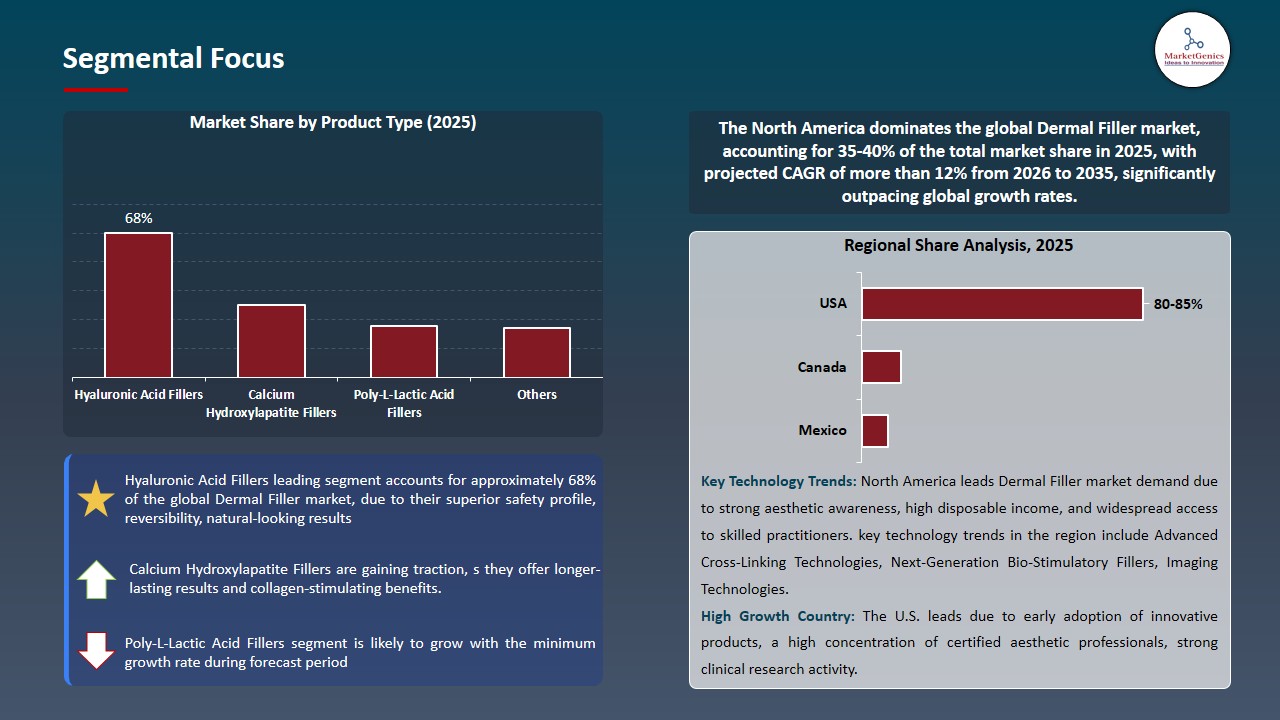
The hyaluronic acid fillers is the leading segment in the global dermal filler market, accounting for a significant share due to its high safety, biocompatibility, and natural compatibility with the skin. HA fillers are widely preferred for their effectiveness in reducing wrinkles, restoring facial volume, and enhancing contour, while offering minimally invasive treatment with quick recovery and immediate results
- Additionally, continuous innovations in cross-linked and longer-lasting HA formulations, along with rising demand for non-surgical facial rejuvenation procedures, further strengthen the segment’s leadership and drive sustained growth in the global dermal filler market.
- In November 2025, Galderma’s Restylane Lyft hyaluronic acid filler received U.S. FDA approval for chin augmentation, demonstrating high safety, effectiveness, and patient satisfaction, with natural-looking results maintained up to 12 months and no serious adverse events reported.
- These factors collectively reinforce the hyaluronic acid fillers segment as the leading and fastest-growing category in the global dermal filler market.
North America Leads Global Dermal Filler Market Demand
-
The North American is leading region in dermal filler market globally, driven by high consumer awareness of aesthetic procedures and a strong preference for minimally invasive treatments. Growing focus on facial aesthetics and anti-aging solutions among both younger and older populations is contributing to the increasing adoption of dermal fillers. Consumers in the region are seeking safe, effective, and quick cosmetic solutions, which has encouraged the expansion of advanced filler formulations and treatment options.
- The presence of well-established healthcare infrastructure, specialized aesthetic clinics, and medspas provides easy accessibility to treatments, further boosting market growth. Additionally, increasing disposable incomes and the influence of social media trends promoting youthful appearance and facial enhancement are encouraging a larger demographic to opt for these procedures.
- Continuous innovations, improved safety profiles, and effective marketing strategies by key players are strengthening consumer confidence, ensuring sustained growth and leadership of North America in the global dermal filler market.
Dermal-Filler-Market Ecosystem
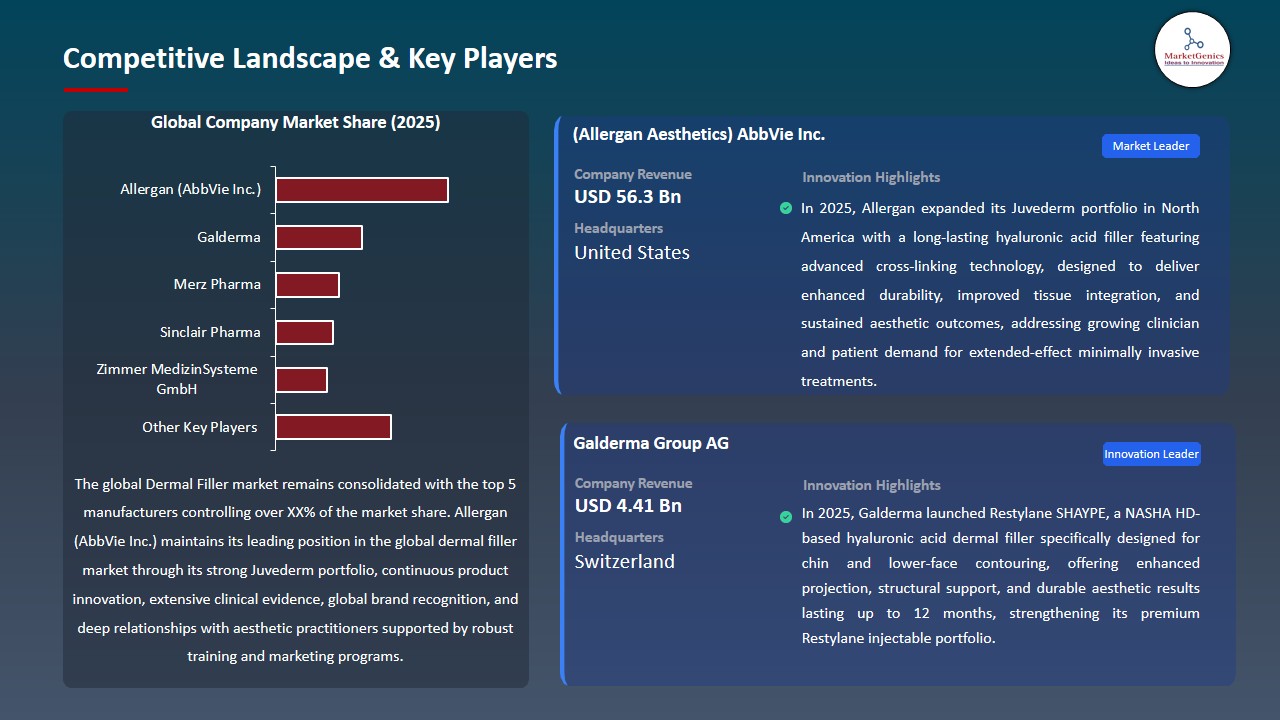
The global dermal filler market is consolidated, with key players including Allergan (AbbVie Inc.), Galderma, Merz Pharma, Sinclair Pharma, and Zimmer MedizinSysteme GmbH. These companies maintain competitive strength through strong research and development capabilities in aesthetic and anti-aging solutions, broad product portfolios covering hyaluronic acid, collagen, and biostimulatory fillers, well-established relationships with dermatologists, plastic surgeons, and aesthetic clinics, and extensive distribution through specialty clinics, medspas, and online channels.
The dermal filler value chain spans raw material sourcing and formulation development, product design and manufacturing under strict quality and safety standards, clinical validation and regulatory compliance, branding and packaging, multi-channel distribution via aesthetic clinics, medspas, and healthcare providers, and post-market activities including patient education, practitioner training programs, and treatment lifecycle management.
Entry barriers remain high due to stringent regulatory approvals, the requirement for clinical evidence and safety validation, brand reputation, technological expertise, and competition from established manufacturers. Ongoing innovations in minimally invasive procedures, multifunctional and long-lasting filler products, personalized treatment planning, and integration with digital aesthetic platforms continue to drive differentiation and adoption across the global market.
Recent Development and Strategic Overview:
-
In February 2025, Evolus, Inc announced that the U.S. FDA has approved Evolysse Form and Evolysse Smooth, the first products in its Evolysse hyaluronic acid filler collection. Featuring innovative Cold-X technology, these injectables provide long-lasting, natural-looking results, marking Evolus’ entry into the U.S. HA dermal filler market and expanding its addressable market by 78%.
- In November 2025, Merz Aesthetics launched a redesigned BELOTERO syringe for its hyaluronic acid fillers, engineered for greater precision, comfort, and ease of use. The ergonomic, patent-protected design enhances control, safety, and practitioner experience, supporting improved administration of BELOTERO products and reinforcing the company’s leadership in the global dermal filler market.
Report Scope
|
Detail |
|
|
Market Size in 2025 |
USD 4.5 Bn |
|
Market Forecast Value in 2035 |
USD 11.5 Bn |
|
Growth Rate (CAGR) |
9.8% |
|
Forecast Period |
2026 – 2035 |
|
Historical Data Available for |
2021 – 2024 |
|
Market Size Units |
US$ Billion for Value Thousand Units for Volume |
|
Report Format |
Electronic (PDF) + Excel |
|
North America |
Europe |
Asia Pacific |
Middle East |
Africa |
South America |
|
|
|
|
|
|
|
Companies Covered |
|||||
|
|
|
|
|
|
Dermal-Filler-Market Segmentation and Highlights
|
Segment |
Sub-segment |
|
Dermal Filler Market, By Product Type |
|
|
Dermal Filler Market, By Duration of Effect |
|
|
Dermal Filler Market, By Application Area |
|
|
Dermal Filler Market, By Injection Depth |
|
|
Dermal Filler Market, By Age Group |
|
|
Dermal Filler Market, By Gender |
|
|
Dermal Filler Market, By Formulation |
|
|
Dermal Filler Market, By End-Use |
|
Frequently Asked Questions
Table of Contents
- 1. Research Methodology and Assumptions
- 1.1. Definitions
- 1.2. Research Design and Approach
- 1.3. Data Collection Methods
- 1.4. Base Estimates and Calculations
- 1.5. Forecasting Models
- 1.5.1. Key Forecast Factors & Impact Analysis
- 1.6. Secondary Research
- 1.6.1. Open Sources
- 1.6.2. Paid Databases
- 1.6.3. Associations
- 1.7. Primary Research
- 1.7.1. Primary Sources
- 1.7.2. Primary Interviews with Stakeholders across Ecosystem
- 2. Executive Summary
- 2.1. Global Dermal Filler Market Outlook
- 2.1.1. Dermal Filler Market Size Volume (Thousand Units) and Value (US$ Bn), and Forecasts, 2021-2035
- 2.1.2. Compounded Annual Growth Rate Analysis
- 2.1.3. Growth Opportunity Analysis
- 2.1.4. Segmental Share Analysis
- 2.1.5. Geographical Share Analysis
- 2.2. Market Analysis and Facts
- 2.3. Supply-Demand Analysis
- 2.4. Competitive Benchmarking
- 2.5. Go-to- Market Strategy
- 2.5.1. Customer/ End-use Industry Assessment
- 2.5.2. Growth Opportunity Data, 2026-2035
- 2.5.2.1. Regional Data
- 2.5.2.2. Country Data
- 2.5.2.3. Segmental Data
- 2.5.3. Identification of Potential Market Spaces
- 2.5.4. GAP Analysis
- 2.5.5. Potential Attractive Price Points
- 2.5.6. Prevailing Market Risks & Challenges
- 2.5.7. Preferred Sales & Marketing Strategies
- 2.5.8. Key Recommendations and Analysis
- 2.5.9. A Way Forward
- 2.1. Global Dermal Filler Market Outlook
- 3. Industry Data and Premium Insights
- 3.1. Global Healthcare & Pharmaceutical Industry Overview, 2025
- 3.1.1. Healthcare & Pharmaceutical Industry Ecosystem Analysis
- 3.1.2. Key Trends for Healthcare & Pharmaceutical Industry
- 3.1.3. Regional Distribution for Healthcare & Pharmaceutical Industry
- 3.2. Supplier Customer Data
- 3.3. Technology Roadmap and Developments
- 3.4. Trade Analysis
- 3.4.1. Import & Export Analysis, 2025
- 3.4.2. Top Importing Countries
- 3.4.3. Top Exporting Countries
- 3.5. Trump Tariff Impact Analysis
- 3.5.1. Manufacturer
- 3.5.1.1. Based on the component & Raw material
- 3.5.2. Supply Chain
- 3.5.3. End Consumer
- 3.5.1. Manufacturer
- 3.6. Raw Material Analysis
- 3.1. Global Healthcare & Pharmaceutical Industry Overview, 2025
- 4. Market Overview
- 4.1. Market Dynamics
- 4.1.1. Drivers
- 4.1.1.1. Rising demand for minimally invasive cosmetic procedures.
- 4.1.1.2. Growing aging population seeking anti-aging treatments.
- 4.1.1.3. Increasing availability of advanced dermal filler products.
- 4.1.2. Restraints
- 4.1.2.1. High cost of dermal filler treatments.
- 4.1.2.2. Risk of side effects and complications limiting adoption.
- 4.1.1. Drivers
- 4.2. Key Trend Analysis
- 4.3. Regulatory Framework
- 4.3.1. Key Regulations, Norms, and Subsidies, by Key Countries
- 4.3.2. Tariffs and Standards
- 4.3.3. Impact Analysis of Regulations on the Market
- 4.4. Value Chain Analysis
- 4.4.1. Raw Material Suppliers
- 4.4.2. Manufacturing & Formulation
- 4.4.3. Distribution & Sales Channels
- 4.4.4. Healthcare Providers / Clinics
- 4.5. Porter’s Five Forces Analysis
- 4.6. PESTEL Analysis
- 4.7. Global Dermal Filler Market Demand
- 4.7.1. Historical Market Size – Volume (Thousand Units) and Value (US$ Bn), 2020-2024
- 4.7.2. Current and Future Market Size – Volume (Thousand Units) and Value (US$ Bn), 2026–2035
- 4.7.2.1. Y-o-Y Growth Trends
- 4.7.2.2. Absolute $ Opportunity Assessment
- 4.1. Market Dynamics
- 5. Competition Landscape
- 5.1. Competition structure
- 5.1.1. Fragmented v/s consolidated
- 5.2. Company Share Analysis, 2025
- 5.2.1. Global Company Market Share
- 5.2.2. By Region
- 5.2.2.1. North America
- 5.2.2.2. Europe
- 5.2.2.3. Asia Pacific
- 5.2.2.4. Middle East
- 5.2.2.5. Africa
- 5.2.2.6. South America
- 5.3. Product Comparison Matrix
- 5.3.1. Specifications
- 5.3.2. Market Positioning
- 5.3.3. Pricing
- 5.1. Competition structure
- 6. Global Dermal Filler Market Analysis, by Product Type
- 6.1. Key Segment Analysis
- 6.2. Dermal Filler Market Size (Volume (Thousand Units) and Value (US$ Bn), Analysis, and Forecasts, by Product Type, 2021-2035
- 6.2.1. Hyaluronic Acid Fillers
- 6.2.2. Calcium Hydroxylapatite Fillers
- 6.2.3. Poly-L-Lactic Acid Fillers
- 6.2.4. Polymethyl Methacrylate Fillers
- 6.2.5. Collagen-Based Fillers
- 6.2.6. Autologous Fat Fillers
- 6.2.7. Others
- 7. Global Dermal Filler Market Analysis, by Duration of Effect
- 7.1. Key Segment Analysis
- 7.2. Dermal Filler Market Size (Volume (Thousand Units) and Value (US$ Bn), Analysis, and Forecasts, by Duration of Effect, 2021-2035
- 7.2.1. 6-12 months
- 7.2.2. 12-24 months
- 7.2.3. 24+ months
- 8. Global Dermal Filler Market Analysis, by Application Area
- 8.1. Key Segment Analysis
- 8.2. Dermal Filler Market Size (Volume (Thousand Units) and Value (US$ Bn), Analysis, and Forecasts, by Application Area, 2021-2035
- 8.2.1. Nasolabial Folds
- 8.2.2. Marionette Lines
- 8.2.3. Lip Enhancement
- 8.2.4. Cheek Augmentation
- 8.2.5. Chin Augmentation
- 8.2.6. Tear Troughs
- 8.2.7. Jawline Contouring
- 8.2.8. Hand Rejuvenation
- 8.2.9. Acne Scar Treatment
- 8.2.10. Nose Reshaping (Non-Surgical Rhinoplasty)
- 9. Global Dermal Filler Market Analysis, by Injection Depth
- 9.1. Key Segment Analysis
- 9.2. Dermal Filler Market Size (Volume (Thousand Units) and Value (US$ Bn), Analysis, and Forecasts, by Injection Depth, 2021-2035
- 9.2.1. Subcutaneous Injection
- 9.2.2. Intradermal Injection
- 9.2.3. Supraperiosteal Injection
- 10. Global Dermal Filler Market Analysis, by Age Group
- 10.1. Key Segment Analysis
- 10.2. Dermal Filler Market Size (Volume (Thousand Units) and Value (US$ Bn), Analysis, and Forecasts, by Age Group, 2021-2035
- 10.2.1. 18-30 Years
- 10.2.2. 31-40 Years
- 10.2.3. 41-50 Years
- 10.2.4. 51-60 Years
- 10.2.5. Above 60 Years
- 11. Global Dermal Filler Market Analysis, by Gender
- 11.1. Key Segment Analysis
- 11.2. Dermal Filler Market Size (Volume (Thousand Units) and Value (US$ Bn), Analysis, and Forecasts, by Gender 2021-2035
- 11.2.1. Male
- 11.2.2. Female
- 12. Global Dermal Filler Market Analysis and Forecasts, by Formulation
- 12.1. Key Findings
- 12.2. Dermal Filler Market Size (Volume (Thousand Units) and Value (US$ Bn), Analysis, and Forecasts, by Formulation, 2021-2035
- 12.2.1. Monophasic Formulation
- 12.2.2. Biphasic Formulation
- 13. Global Dermal Filler Market Analysis and Forecasts, by End-Use
- 13.1. Key Findings
- 13.2. Dermal Filler Market Size (Volume (Thousand Units) and Value (US$ Bn), Analysis, and Forecasts, by End-Use, 2021-2035
- 13.2.1. Healthcare/Medical Facilities
- 13.2.2. Aesthetic/Cosmetic Industry
- 13.2.3. Wellness Industry
- 13.2.4. Anti-Aging Clinics
- 13.2.5. Holistic Beauty Centers
- 13.2.6. Others
- 14. Global Dermal Filler Market Analysis and Forecasts, by Region
- 14.1. Key Findings
- 14.2. Dermal Filler Market Size (Volume (Thousand Units) and Value (US$ Bn), Analysis, and Forecasts, by Region, 2021-2035
- 14.2.1. North America
- 14.2.2. Europe
- 14.2.3. Asia Pacific
- 14.2.4. Middle East
- 14.2.5. Africa
- 14.2.6. South America
- 15. North America Dermal Filler Market Analysis
- 15.1. Key Segment Analysis
- 15.2. Regional Snapshot
- 15.3. North America Dermal Filler Market Size Volume (Thousand Units) and Value (US$ Bn), Analysis, and Forecasts, 2021-2035
- 15.3.1. Product Type
- 15.3.2. Duration of Effect
- 15.3.3. Application Area
- 15.3.4. Injection Depth
- 15.3.5. Age Group
- 15.3.6. Gender
- 15.3.7. Formulation
- 15.3.8. End-Use
- 15.3.9. Country
- 15.3.9.1. USA
- 15.3.9.2. Canada
- 15.3.9.3. Mexico
- 15.4. USA Dermal Filler Market
- 15.4.1. Country Segmental Analysis
- 15.4.2. Product Type
- 15.4.3. Duration of Effect
- 15.4.4. Application Area
- 15.4.5. Injection Depth
- 15.4.6. Age Group
- 15.4.7. Gender
- 15.4.8. Formulation
- 15.4.9. End-Use
- 15.5. Canada Dermal Filler Market
- 15.5.1. Country Segmental Analysis
- 15.5.2. Product Type
- 15.5.3. Duration of Effect
- 15.5.4. Application Area
- 15.5.5. Injection Depth
- 15.5.6. Age Group
- 15.5.7. Gender
- 15.5.8. Formulation
- 15.5.9. End-Use
- 15.6. Mexico Dermal Filler Market
- 15.6.1. Country Segmental Analysis
- 15.6.2. Product Type
- 15.6.3. Duration of Effect
- 15.6.4. Application Area
- 15.6.5. Injection Depth
- 15.6.6. Age Group
- 15.6.7. Gender
- 15.6.8. Formulation
- 15.6.9. End-Use
- 16. Europe Dermal Filler Market Analysis
- 16.1. Key Segment Analysis
- 16.2. Regional Snapshot
- 16.3. Europe Dermal Filler Market Size (Volume (Thousand Units) and Value (US$ Bn), Analysis, and Forecasts, 2021-2035
- 16.3.1. Product Type
- 16.3.2. Duration of Effect
- 16.3.3. Application Area
- 16.3.4. Injection Depth
- 16.3.5. Age Group
- 16.3.6. Gender
- 16.3.7. Formulation
- 16.3.8. End-Use
- 16.3.9. Country
- 16.3.9.1. Germany
- 16.3.9.2. United Kingdom
- 16.3.9.3. France
- 16.3.9.4. Italy
- 16.3.9.5. Spain
- 16.3.9.6. Netherlands
- 16.3.9.7. Nordic Countries
- 16.3.9.8. Poland
- 16.3.9.9. Russia & CIS
- 16.3.9.10. Rest of Europe
- 16.4. Germany Dermal Filler Market
- 16.4.1. Country Segmental Analysis
- 16.4.2. Product Type
- 16.4.3. Duration of Effect
- 16.4.4. Application Area
- 16.4.5. Injection Depth
- 16.4.6. Age Group
- 16.4.7. Gender
- 16.4.8. Formulation
- 16.4.9. End-Use
- 16.5. United Kingdom Dermal Filler Market
- 16.5.1. Country Segmental Analysis
- 16.5.2. Product Type
- 16.5.3. Duration of Effect
- 16.5.4. Application Area
- 16.5.5. Injection Depth
- 16.5.6. Age Group
- 16.5.7. Gender
- 16.5.8. Formulation
- 16.5.9. End-Use
- 16.6. France Dermal Filler Market
- 16.6.1. Country Segmental Analysis
- 16.6.2. Product Type
- 16.6.3. Duration of Effect
- 16.6.4. Application Area
- 16.6.5. Injection Depth
- 16.6.6. Age Group
- 16.6.7. Gender
- 16.6.8. Formulation
- 16.6.9. End-Use
- 16.7. Italy Dermal Filler Market
- 16.7.1. Country Segmental Analysis
- 16.7.2. Product Type
- 16.7.3. Duration of Effect
- 16.7.4. Application Area
- 16.7.5. Injection Depth
- 16.7.6. Age Group
- 16.7.7. Gender
- 16.7.8. Formulation
- 16.7.9. End-Use
- 16.8. Spain Dermal Filler Market
- 16.8.1. Country Segmental Analysis
- 16.8.2. Product Type
- 16.8.3. Duration of Effect
- 16.8.4. Application Area
- 16.8.5. Injection Depth
- 16.8.6. Age Group
- 16.8.7. Gender
- 16.8.8. Formulation
- 16.8.9. End-Use
- 16.9. Netherlands Dermal Filler Market
- 16.9.1. Country Segmental Analysis
- 16.9.2. Product Type
- 16.9.3. Duration of Effect
- 16.9.4. Application Area
- 16.9.5. Injection Depth
- 16.9.6. Age Group
- 16.9.7. Gender
- 16.9.8. Formulation
- 16.9.9. End-Use
- 16.10. Nordic Countries Dermal Filler Market
- 16.10.1. Country Segmental Analysis
- 16.10.2. Product Type
- 16.10.3. Duration of Effect
- 16.10.4. Application Area
- 16.10.5. Injection Depth
- 16.10.6. Age Group
- 16.10.7. Gender
- 16.10.8. Formulation
- 16.10.9. End-Use
- 16.11. Poland Dermal Filler Market
- 16.11.1. Country Segmental Analysis
- 16.11.2. Product Type
- 16.11.3. Duration of Effect
- 16.11.4. Application Area
- 16.11.5. Injection Depth
- 16.11.6. Age Group
- 16.11.7. Gender
- 16.11.8. Formulation
- 16.11.9. End-Use
- 16.12. Russia & CIS Dermal Filler Market
- 16.12.1. Country Segmental Analysis
- 16.12.2. Product Type
- 16.12.3. Duration of Effect
- 16.12.4. Application Area
- 16.12.5. Injection Depth
- 16.12.6. Age Group
- 16.12.7. Gender
- 16.12.8. Formulation
- 16.12.9. End-Use
- 16.13. Rest of Europe Dermal Filler Market
- 16.13.1. Country Segmental Analysis
- 16.13.2. Product Type
- 16.13.3. Duration of Effect
- 16.13.4. Application Area
- 16.13.5. Injection Depth
- 16.13.6. Age Group
- 16.13.7. Gender
- 16.13.8. Formulation
- 16.13.9. End-Use
- 17. Asia Pacific Dermal Filler Market Analysis
- 17.1. Key Segment Analysis
- 17.2. Regional Snapshot
- 17.3. Asia Pacific Dermal Filler Market Size (Volume (Thousand Units) and Value (US$ Bn), Analysis, and Forecasts, 2021-2035
- 17.3.1. Product Type
- 17.3.2. Duration of Effect
- 17.3.3. Application Area
- 17.3.4. Injection Depth
- 17.3.5. Age Group
- 17.3.6. Gender
- 17.3.7. Formulation
- 17.3.8. End-Use
- 17.3.9. Country
- 17.3.9.1. China
- 17.3.9.2. India
- 17.3.9.3. Japan
- 17.3.9.4. South Korea
- 17.3.9.5. Australia and New Zealand
- 17.3.9.6. Indonesia
- 17.3.9.7. Malaysia
- 17.3.9.8. Thailand
- 17.3.9.9. Vietnam
- 17.3.9.10. Rest of Asia Pacific
- 17.4. China Dermal Filler Market
- 17.4.1. Country Segmental Analysis
- 17.4.2. Product Type
- 17.4.3. Duration of Effect
- 17.4.4. Application Area
- 17.4.5. Injection Depth
- 17.4.6. Age Group
- 17.4.7. Gender
- 17.4.8. Formulation
- 17.4.9. End-Use
- 17.5. India Dermal Filler Market
- 17.5.1. Country Segmental Analysis
- 17.5.2. Product Type
- 17.5.3. Duration of Effect
- 17.5.4. Application Area
- 17.5.5. Injection Depth
- 17.5.6. Age Group
- 17.5.7. Gender
- 17.5.8. Formulation
- 17.5.9. End-Use
- 17.6. Japan Dermal Filler Market
- 17.6.1. Country Segmental Analysis
- 17.6.2. Product Type
- 17.6.3. Duration of Effect
- 17.6.4. Application Area
- 17.6.5. Injection Depth
- 17.6.6. Age Group
- 17.6.7. Gender
- 17.6.8. Formulation
- 17.6.9. End-Use
- 17.7. South Korea Dermal Filler Market
- 17.7.1. Country Segmental Analysis
- 17.7.2. Product Type
- 17.7.3. Duration of Effect
- 17.7.4. Application Area
- 17.7.5. Injection Depth
- 17.7.6. Age Group
- 17.7.7. Gender
- 17.7.8. Formulation
- 17.7.9. End-Use
- 17.8. Australia and New Zealand Dermal Filler Market
- 17.8.1. Country Segmental Analysis
- 17.8.2. Product Type
- 17.8.3. Duration of Effect
- 17.8.4. Application Area
- 17.8.5. Injection Depth
- 17.8.6. Age Group
- 17.8.7. Gender
- 17.8.8. Formulation
- 17.8.9. End-Use
- 17.9. Indonesia Dermal Filler Market
- 17.9.1. Country Segmental Analysis
- 17.9.2. Product Type
- 17.9.3. Duration of Effect
- 17.9.4. Application Area
- 17.9.5. Injection Depth
- 17.9.6. Age Group
- 17.9.7. Gender
- 17.9.8. Formulation
- 17.9.9. End-Use
- 17.10. Malaysia Dermal Filler Market
- 17.10.1. Country Segmental Analysis
- 17.10.2. Product Type
- 17.10.3. Duration of Effect
- 17.10.4. Application Area
- 17.10.5. Injection Depth
- 17.10.6. Age Group
- 17.10.7. Gender
- 17.10.8. Formulation
- 17.10.9. End-Use
- 17.11. Thailand Dermal Filler Market
- 17.11.1. Country Segmental Analysis
- 17.11.2. Product Type
- 17.11.3. Duration of Effect
- 17.11.4. Application Area
- 17.11.5. Injection Depth
- 17.11.6. Age Group
- 17.11.7. Gender
- 17.11.8. Formulation
- 17.11.9. End-Use
- 17.12. Vietnam Dermal Filler Market
- 17.12.1. Country Segmental Analysis
- 17.12.2. Product Type
- 17.12.3. Duration of Effect
- 17.12.4. Application Area
- 17.12.5. Injection Depth
- 17.12.6. Age Group
- 17.12.7. Gender
- 17.12.8. Formulation
- 17.12.9. End-Use
- 17.13. Rest of Asia Pacific Dermal Filler Market
- 17.13.1. Country Segmental Analysis
- 17.13.2. Product Type
- 17.13.3. Duration of Effect
- 17.13.4. Application Area
- 17.13.5. Injection Depth
- 17.13.6. Age Group
- 17.13.7. Gender
- 17.13.8. Formulation
- 17.13.9. End-Use
- 18. Middle East Dermal Filler Market Analysis
- 18.1. Key Segment Analysis
- 18.2. Regional Snapshot
- 18.3. Middle East Dermal Filler Market Size (Volume (Thousand Units) and Value (US$ Bn), Analysis, and Forecasts, 2021-2035
- 18.3.1. Product Type
- 18.3.2. Duration of Effect
- 18.3.3. Application Area
- 18.3.4. Injection Depth
- 18.3.5. Age Group
- 18.3.6. Gender
- 18.3.7. Formulation
- 18.3.8. End-Use
- 18.3.9. Country
- 18.3.9.1. Turkey
- 18.3.9.2. UAE
- 18.3.9.3. Saudi Arabia
- 18.3.9.4. Israel
- 18.3.9.5. Rest of Middle East
- 18.4. Turkey Dermal Filler Market
- 18.4.1. Country Segmental Analysis
- 18.4.2. Product Type
- 18.4.3. Duration of Effect
- 18.4.4. Application Area
- 18.4.5. Injection Depth
- 18.4.6. Age Group
- 18.4.7. Gender
- 18.4.8. Formulation
- 18.4.9. End-Use
- 18.5. UAE Dermal Filler Market
- 18.5.1. Country Segmental Analysis
- 18.5.2. Product Type
- 18.5.3. Duration of Effect
- 18.5.4. Application Area
- 18.5.5. Injection Depth
- 18.5.6. Age Group
- 18.5.7. Gender
- 18.5.8. Formulation
- 18.5.9. End-Use
- 18.6. Saudi Arabia Dermal Filler Market
- 18.6.1. Country Segmental Analysis
- 18.6.2. Product Type
- 18.6.3. Duration of Effect
- 18.6.4. Application Area
- 18.6.5. Injection Depth
- 18.6.6. Age Group
- 18.6.7. Gender
- 18.6.8. Formulation
- 18.6.9. End-Use
- 18.7. Israel Dermal Filler Market
- 18.7.1. Country Segmental Analysis
- 18.7.2. Product Type
- 18.7.3. Duration of Effect
- 18.7.4. Application Area
- 18.7.5. Injection Depth
- 18.7.6. Age Group
- 18.7.7. Gender
- 18.7.8. Formulation
- 18.7.9. End-Use
- 18.8. Rest of Middle East Dermal Filler Market
- 18.8.1. Country Segmental Analysis
- 18.8.2. Product Type
- 18.8.3. Duration of Effect
- 18.8.4. Application Area
- 18.8.5. Injection Depth
- 18.8.6. Age Group
- 18.8.7. Gender
- 18.8.8. Formulation
- 18.8.9. End-Use
- 19. Africa Dermal Filler Market Analysis
- 19.1. Key Segment Analysis
- 19.2. Regional Snapshot
- 19.3. Africa Dermal Filler Market Size (Volume (Thousand Units) and Value (US$ Bn), Analysis, and Forecasts, 2021-2035
- 19.3.1. Product Type
- 19.3.2. Duration of Effect
- 19.3.3. Application Area
- 19.3.4. Injection Depth
- 19.3.5. Age Group
- 19.3.6. Gender
- 19.3.7. Formulation
- 19.3.8. End-Use
- 19.3.9. Country
- 19.3.9.1. South Africa
- 19.3.9.2. Egypt
- 19.3.9.3. Nigeria
- 19.3.9.4. Algeria
- 19.3.9.5. Rest of Africa
- 19.4. South Africa Dermal Filler Market
- 19.4.1. Country Segmental Analysis
- 19.4.2. Product Type
- 19.4.3. Duration of Effect
- 19.4.4. Application Area
- 19.4.5. Injection Depth
- 19.4.6. Age Group
- 19.4.7. Gender
- 19.4.8. Formulation
- 19.4.9. End-Use
- 19.5. Egypt Dermal Filler Market
- 19.5.1. Country Segmental Analysis
- 19.5.2. Product Type
- 19.5.3. Duration of Effect
- 19.5.4. Application Area
- 19.5.5. Injection Depth
- 19.5.6. Age Group
- 19.5.7. Gender
- 19.5.8. Formulation
- 19.5.9. End-Use
- 19.6. Nigeria Dermal Filler Market
- 19.6.1. Country Segmental Analysis
- 19.6.2. Product Type
- 19.6.3. Duration of Effect
- 19.6.4. Application Area
- 19.6.5. Injection Depth
- 19.6.6. Age Group
- 19.6.7. Gender
- 19.6.8. Formulation
- 19.6.9. End-Use
- 19.7. Algeria Dermal Filler Market
- 19.7.1. Country Segmental Analysis
- 19.7.2. Product Type
- 19.7.3. Duration of Effect
- 19.7.4. Application Area
- 19.7.5. Injection Depth
- 19.7.6. Age Group
- 19.7.7. Gender
- 19.7.8. Formulation
- 19.7.9. End-Use
- 19.8. Rest of Africa Dermal Filler Market
- 19.8.1. Country Segmental Analysis
- 19.8.2. Product Type
- 19.8.3. Duration of Effect
- 19.8.4. Application Area
- 19.8.5. Injection Depth
- 19.8.6. Age Group
- 19.8.7. Gender
- 19.8.8. Formulation
- 19.8.9. End-Use
- 20. South America Dermal Filler Market Analysis
- 20.1. Key Segment Analysis
- 20.2. Regional Snapshot
- 20.3. South America Dermal Filler Market Size (Volume (Thousand Units) and Value (US$ Bn), Analysis, and Forecasts, 2021-2035
- 20.3.1. Product Type
- 20.3.2. Duration of Effect
- 20.3.3. Application Area
- 20.3.4. Injection Depth
- 20.3.5. Age Group
- 20.3.6. Gender
- 20.3.7. Formulation
- 20.3.8. End-Use
- 20.3.9. Country
- 20.3.9.1. Brazil
- 20.3.9.2. Argentina
- 20.3.9.3. Rest of South America
- 20.4. Brazil Dermal Filler Market
- 20.4.1. Country Segmental Analysis
- 20.4.2. Product Type
- 20.4.3. Duration of Effect
- 20.4.4. Application Area
- 20.4.5. Injection Depth
- 20.4.6. Age Group
- 20.4.7. Gender
- 20.4.8. Formulation
- 20.4.9. End-Use
- 20.5. Argentina Dermal Filler Market
- 20.5.1. Country Segmental Analysis
- 20.5.2. Product Type
- 20.5.3. Duration of Effect
- 20.5.4. Application Area
- 20.5.5. Injection Depth
- 20.5.6. Age Group
- 20.5.7. Gender
- 20.5.8. Formulation
- 20.5.9. End-Use
- 20.6. Rest of South America Dermal Filler Market
- 20.6.1. Country Segmental Analysis
- 20.6.2. Product Type
- 20.6.3. Duration of Effect
- 20.6.4. Application Area
- 20.6.5. Injection Depth
- 20.6.6. Age Group
- 20.6.7. Gender
- 20.6.8. Formulation
- 20.6.9. End-Use
- 21. Key Players/ Company Profile
- 21.1. Allergan (AbbVie Inc.)
- 21.1.1. Company Details/ Overview
- 21.1.2. Company Financials
- 21.1.3. Key Customers and Competitors
- 21.1.4. Business/ Industry Portfolio
- 21.1.5. Product Portfolio/ Specification Details
- 21.1.6. Pricing Data
- 21.1.7. Strategic Overview
- 21.1.8. Recent Developments
- 21.2. Bioxis Pharmaceuticals
- 21.3. Bloomega BioTechnology
- 21.4. Bohus BioTech
- 21.5. Croma-Pharma GmbH
- 21.6. DR. Korman Laboratories
- 21.7. Galderma
- 21.8. Haohai Biological Technology
- 21.9. Hugel Inc.
- 21.10. Integra LifeSciences
- 21.11. Jingjia Medical
- 21.12. Laboratoires Vivacy
- 21.13. LG Chem Life Sciences
- 21.14. Medytox Inc.
- 21.15. Merz Pharma
- 21.16. Prollenium Medical Technologies
- 21.17. Sculpta Clinic
- 21.18. Sinclair Pharma
- 21.19. Suneva Medical
- 21.20. Teoxane
- 21.21. Zimmer MedizinSysteme GmbH
- 21.22. Other Key Players
- 21.1. Allergan (AbbVie Inc.)
Note* - This is just tentative list of players. While providing the report, we will cover more number of players based on their revenue and share for each geography
Research Design
Our research design integrates both demand-side and supply-side analysis through a balanced combination of primary and secondary research methodologies. By utilizing both bottom-up and top-down approaches alongside rigorous data triangulation methods, we deliver robust market intelligence that supports strategic decision-making.
MarketGenics' comprehensive research design framework ensures the delivery of accurate, reliable, and actionable market intelligence. Through the integration of multiple research approaches, rigorous validation processes, and expert analysis, we provide our clients with the insights needed to make informed strategic decisions and capitalize on market opportunities.
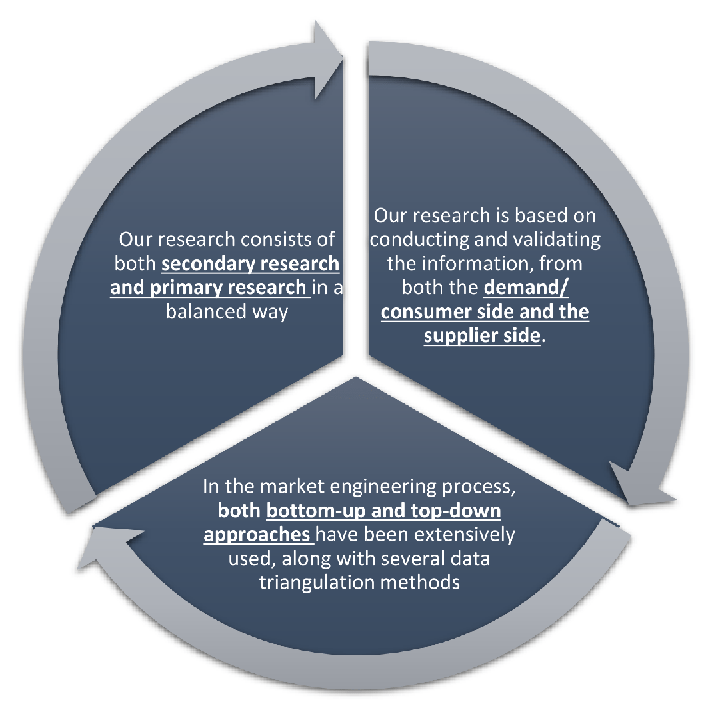
MarketGenics leverages a dedicated industry panel of experts and a comprehensive suite of paid databases to effectively collect, consolidate, and analyze market intelligence.
Our approach has consistently proven to be reliable and effective in generating accurate market insights, identifying key industry trends, and uncovering emerging business opportunities.
Through both primary and secondary research, we capture and analyze critical company-level data such as manufacturing footprints, including technical centers, R&D facilities, sales offices, and headquarters.
Our expert panel further enhances our ability to estimate market size for specific brands based on validated field-level intelligence.
Our data mining techniques incorporate both parametric and non-parametric methods, allowing for structured data collection, sorting, processing, and cleaning.
Demand projections are derived from large-scale data sets analyzed through proprietary algorithms, culminating in robust and reliable market sizing.
Research Approach
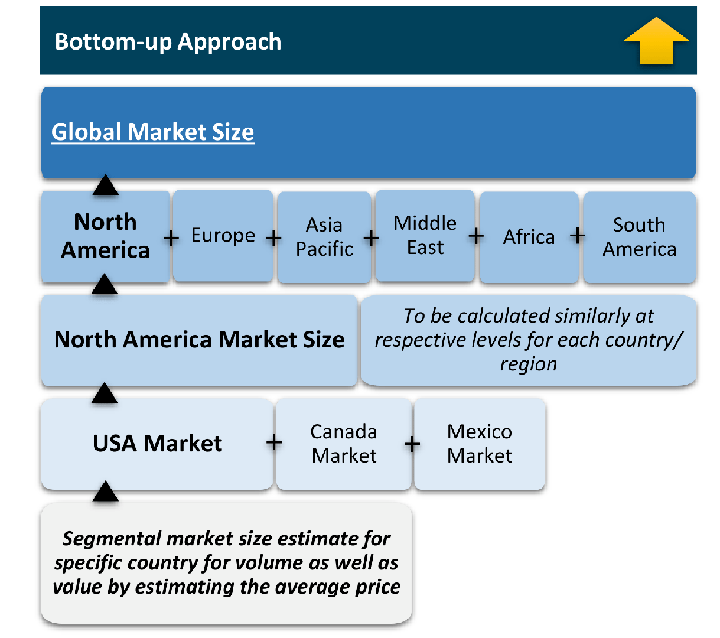
The bottom-up approach builds market estimates by starting with the smallest addressable market units and systematically aggregating them to create comprehensive market size projections.
This method begins with specific, granular data points and builds upward to create the complete market landscape.
Customer Analysis → Segmental Analysis → Geographical Analysis
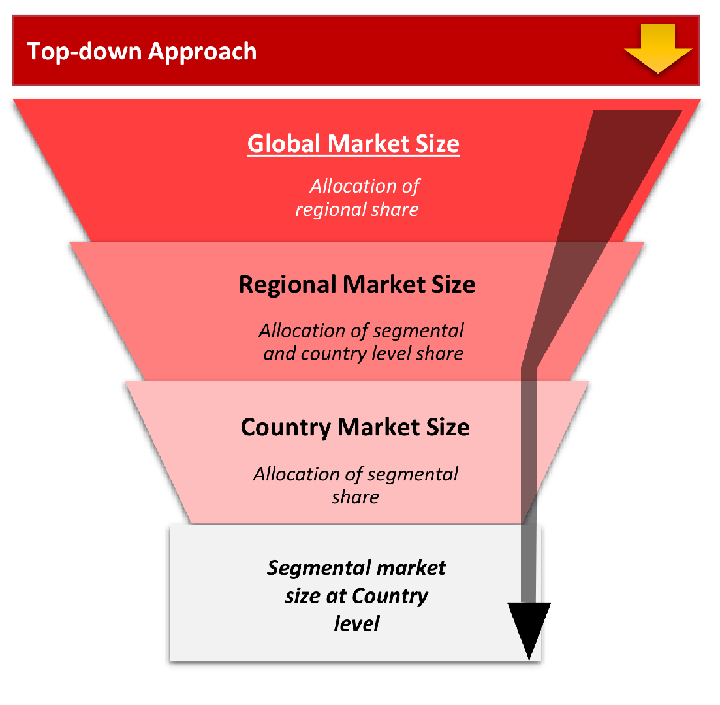
The top-down approach starts with the broadest possible market data and systematically narrows it down through a series of filters and assumptions to arrive at specific market segments or opportunities.
This method begins with the big picture and works downward to increasingly specific market slices.
TAM → SAM → SOM
Research Methods
Desk / Secondary Research
While analysing the market, we extensively study secondary sources, directories, and databases to identify and collect information useful for this technical, market-oriented, and commercial report. Secondary sources that we utilize are not only the public sources, but it is a combination of Open Source, Associations, Paid Databases, MG Repository & Knowledgebase, and others.
- Company websites, annual reports, financial reports, broker reports, and investor presentations
- National government documents, statistical databases and reports
- News articles, press releases and web-casts specific to the companies operating in the market, Magazines, reports, and others
- We gather information from commercial data sources for deriving company specific data such as segmental revenue, share for geography, product revenue, and others
- Internal and external proprietary databases (industry-specific), relevant patent, and regulatory databases
- Governing Bodies, Government Organizations
- Relevant Authorities, Country-specific Associations for Industries
We also employ the model mapping approach to estimate the product level market data through the players' product portfolio
Primary Research
Primary research/ interviews is vital in analyzing the market. Most of the cases involves paid primary interviews. Primary sources include primary interviews through e-mail interactions, telephonic interviews, surveys as well as face-to-face interviews with the different stakeholders across the value chain including several industry experts.
| Type of Respondents | Number of Primaries |
|---|---|
| Tier 2/3 Suppliers | ~20 |
| Tier 1 Suppliers | ~25 |
| End-users | ~25 |
| Industry Expert/ Panel/ Consultant | ~30 |
| Total | ~100 |
MG Knowledgebase
• Repository of industry blog, newsletter and case studies
• Online platform covering detailed market reports, and company profiles
Forecasting Factors and Models
Forecasting Factors
- Historical Trends – Past market patterns, cycles, and major events that shaped how markets behave over time. Understanding past trends helps predict future behavior.
- Industry Factors – Specific characteristics of the industry like structure, regulations, and innovation cycles that affect market dynamics.
- Macroeconomic Factors – Economic conditions like GDP growth, inflation, and employment rates that affect how much money people have to spend.
- Demographic Factors – Population characteristics like age, income, and location that determine who can buy your product.
- Technology Factors – How quickly people adopt new technology and how much technology infrastructure exists.
- Regulatory Factors – Government rules, laws, and policies that can help or restrict market growth.
- Competitive Factors – Analyzing competition structure such as degree of competition and bargaining power of buyers and suppliers.
Forecasting Models / Techniques
Multiple Regression Analysis
- Identify and quantify factors that drive market changes
- Statistical modeling to establish relationships between market drivers and outcomes
Time Series Analysis – Seasonal Patterns
- Understand regular cyclical patterns in market demand
- Advanced statistical techniques to separate trend, seasonal, and irregular components
Time Series Analysis – Trend Analysis
- Identify underlying market growth patterns and momentum
- Statistical analysis of historical data to project future trends
Expert Opinion – Expert Interviews
- Gather deep industry insights and contextual understanding
- In-depth interviews with key industry stakeholders
Multi-Scenario Development
- Prepare for uncertainty by modeling different possible futures
- Creating optimistic, pessimistic, and most likely scenarios
Time Series Analysis – Moving Averages
- Sophisticated forecasting for complex time series data
- Auto-regressive integrated moving average models with seasonal components
Econometric Models
- Apply economic theory to market forecasting
- Sophisticated economic models that account for market interactions
Expert Opinion – Delphi Method
- Harness collective wisdom of industry experts
- Structured, multi-round expert consultation process
Monte Carlo Simulation
- Quantify uncertainty and probability distributions
- Thousands of simulations with varying input parameters
Research Analysis
Our research framework is built upon the fundamental principle of validating market intelligence from both demand and supply perspectives. This dual-sided approach ensures comprehensive market understanding and reduces the risk of single-source bias.
Demand-Side Analysis: We understand end-user/application behavior, preferences, and market needs along with the penetration of the product for specific application.
Supply-Side Analysis: We estimate overall market revenue, analyze the segmental share along with industry capacity, competitive landscape, and market structure.
Validation & Evaluation
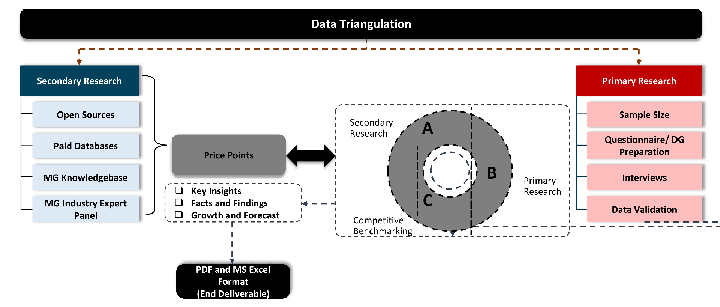
Data triangulation is a validation technique that uses multiple methods, sources, or perspectives to examine the same research question, thereby increasing the credibility and reliability of research findings. In market research, triangulation serves as a quality assurance mechanism that helps identify and minimize bias, validate assumptions, and ensure accuracy in market estimates.
- Data Source Triangulation – Using multiple data sources to examine the same phenomenon
- Methodological Triangulation – Using multiple research methods to study the same research question
- Investigator Triangulation – Using multiple researchers or analysts to examine the same data
- Theoretical Triangulation – Using multiple theoretical perspectives to interpret the same data
Custom Market Research Services
We will customise the research for you, in case the report listed above does not meet your requirements.
Get 10% Free Customisation