Food Grade Emulsifiers Market Size, Share & Trends Analysis Report by Product Type (Natural Emulsifiers, Synthetic Emulsifiers), Source, Form, Function, Application, Production Technology, Distribution Channel, Packaging Type, Customer Type, and Geography (North America, Europe, Asia Pacific, Middle East, Africa, and South America) – Global Industry Data, Trends, and Forecasts, 2026–2035
|
|
|
Segmental Data Insights |
|
|
Demand Trends |
|
|
Competitive Landscape |
|
|
Strategic Development |
|
|
Future Outlook & Opportunities |
|
Food-Grade-Emulsifiers-Market Size, Share, and Growth
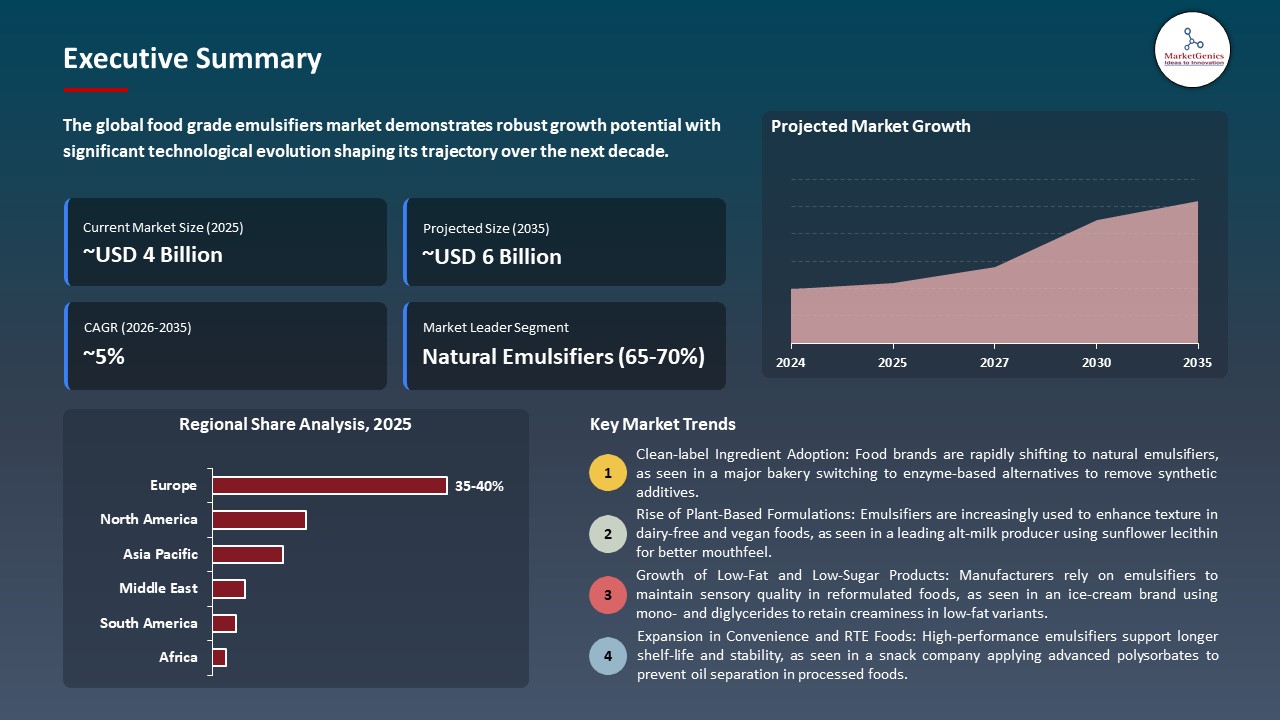
The global food grade emulsifiers market is experiencing robust growth, with its estimated value of USD 3.9 billion in the year 2025 and USD 6.5 billion by the period 2035, registering a CAGR of 5.2%, during the forecast period. The global food grade emulsifiers market is growing with manufacturers, regulators and brand owners paying more attention on product safety, traceability and consumer trust. Increasing concern over contamination, accidental ingestion and use of ingredients is compelling the need of secure, tamper-evident and controlled-dosage emulsifier systems.
Madeleine Gielens, founder of MaGie Creations, says, This innovation is more than just a new ingredient; it’s a glimpse of the future of food. We’re showing how the food system can be both circular and clean without compromising on functionality or flavor.
Food grade emulsifiers market is shifting away to a more regulatory-driven safety factor to a strategic brand differentiator, risk control and premium positioning of the product across pharmaceuticals, nutraceuticals, plant-based foods, functional beverages and household formulations. The pressure of regulation, the threat of litigation, and greater consumer access to more formulations of high potency is pushing manufacturers to reformulate packaging, emulsifier addition and dosing systems in multi-step, controlled-release formats instead of the usual, basic forms. Such innovations are having more impacts on consumer perception, product trust and purchase decisions.
The food grade emulsifier market is being driven by material innovation that is balancing safety, performance and sustainability. Organisations are replacing petrochemical-based plastics, recyclable films and fiber-reinforced systems with bio-based polymers, recyclable films, and fiber-reinforced buildings to guarantee quality products and compliance to regulations. These solutions improve its efficiency, portability, and cost-effectiveness to food processors and export-oriented producers and contribute to the objectives of the circular-economy.
High-speed compatible emulsifier formats that are automation ready are changing the scale of production. Less human intervention and line-change time will allow greater rollout in new regulatory markets where manual packaging is the main package. Global safety standards, sustainable material replacement, and intelligent, automated formulations intersect food grade emulsifiers as compliance provisions, strategy facilitators of global commerce, brand loyalty and efficiency in operations.
Food Grade Emulsifiers Market Dynamics and Trends
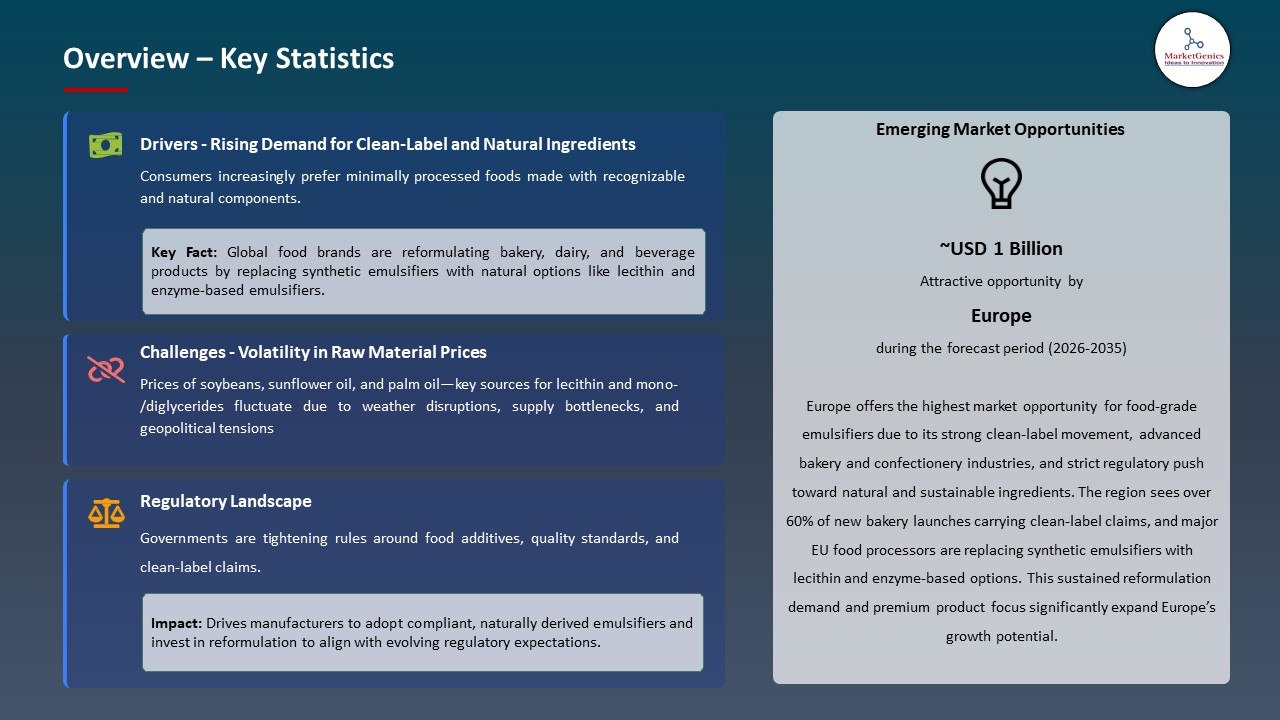
Driver: Rising Demand for Clean-Label & Natural Ingredients
-
Global food grade emulsifiers is witnessing a booming market due to the rising popularity of the clean-label, natural, and minimally processed food ingredients among consumers and manufacturers alike. The increased health awareness and the trends to consume plant-based, allergen-free and non-GMO food and beverage products are forcing the food and beverage manufacturers to reformulate using natural emulsifiers, which preserve the stability and texture of the products.
- The manufacturers can respond to this demand by designing multifunctional emulsifiers with a combination of natural source and functions. For instance, InnovoPro launched its chickpea-protein CP -Pro 70 clean-label emulsification solution in bakery, beverages and plant-based foods, which allowed stable emulsions to be achieved without using synthetic food additives. These systems provide consistent emulsions in bakery, dairy alternatives, beverages and confectionery and comply with consumer demands to know the ingredients.
- Food grade emulsifiers market is being driven by the combined effect of consumer awareness, increased labeling demands and the move toward sustainable and plant-based diets. The clean-label and functional foods trend is being propelled on the wings of the natural, transparent, and high-performing emulsifier solutions the main tool in product formulation strategies.
Restraint: Increasing Regulatory Scrutiny on Additives
-
The food grade emulsifiers market is faced by a huge regulatory challenge with various countries having different regulations towards the types of emulsifiers that should be used, the concentration of the emulsifier and the labeling and the clean-label statements. Such regulatory mosaic provides compliance risk to international manufacturers particularly when it comes to exporting to various regions.
- Documents on origin, non-GMO or allergen, and batch-by-batch traceability requirements, and stringent safety testing all create extra operational load. In smaller food and beverage manufacturers or start-ups, a deficiency in in-house regulatory knowledge increases dependency on third party formulators or consultants, increases the cost of formulation and increases time-to-market.
- In addition, non-compliance which may include additive-limit violation, lack of labeling components or poor documentation may attract recalls, fines, consumer loss of trust, and regulation. This risk, and compliance costs, is a powerful inhibitor to wider use of innovative emulsifier systems, or multifunctional systems, particularly on cost conscious manufacturers and on new players in the market.
Opportunity: Expansion in Plant-Based & Functional Foods
-
The food grade emulsifiers market has been growing at an alarming rate with manufacturers taking measures in accordance with the increasing demand of consumers on plant-based, vegan, and functional food products. Firms are investing in clean-label, allergen-free, and protein-enriched emulsifier systems which improve texture, stability, and nutritional functionality in bakery, beverages and dairy-alternative products.
- Manufacturers too are doing the same by innovating to make products functional and sustainable. For instance, EVANESSE CB6194, a clean-label emulsifier made of chickpea-broth that was introduced by Ingredion Incorporated to be used in vegan dressings and sauces that can be made stable with the help of a plant-based emulsifier instead of a synthetic or egg emulsifier. This shows the support of the trend of plant-forward and functional food by legacy and new products.
- Also, the developments in plant-protein isolates, enzyme-emulsifiers, and multi-purpose biopolymers are making cost-effective high-performance emulsifiers. The increasing popularity of fortified, functional, plant-based diets, combined with governmental incentive of sustainable food ingredients, is generating robust growth prospects of natural and bio-based food-grade emulsifiers on a worldwide basis.
Key Trend: Shift toward Sustainable, Bio-Based Emulsifier Systems
-
The food grade emulsifiers market is fast shifting to bio-based, fermentation-based and upcycling system of emulsifiers which substantially reduce the intensity of carbon. Manufacturers consider enzymatic treated lipids, plant-protein fractions, and natural polysaccharides that provide functional stability with limited environmental impact in large-scale food processing.
- Producers are also embracing precision-fermentation platforms as a way of developing next-generation bio-emulsifiers. For instance, in November 2025, Ingredion increased its collaboration with an American biotechnology company to commercially scale fermentation-based emulsifiers of dairy substitutes and performance beverages to allow cleaner labels, resource savings, and batch-to-batch performance.
- Sustainability-based formulation is emerging as a key point of difference, traceable sourcing, circular production, and less reliance on petrochemical or synthetic ingredients. This trend is encouraging a wider use of renewable emulsifier systems that result in improved quality, less ecological footprint, and meet with international regulatory and consumer demands of greener food technologies.
Food-Grade-Emulsifiers-Market Analysis and Segmental Data
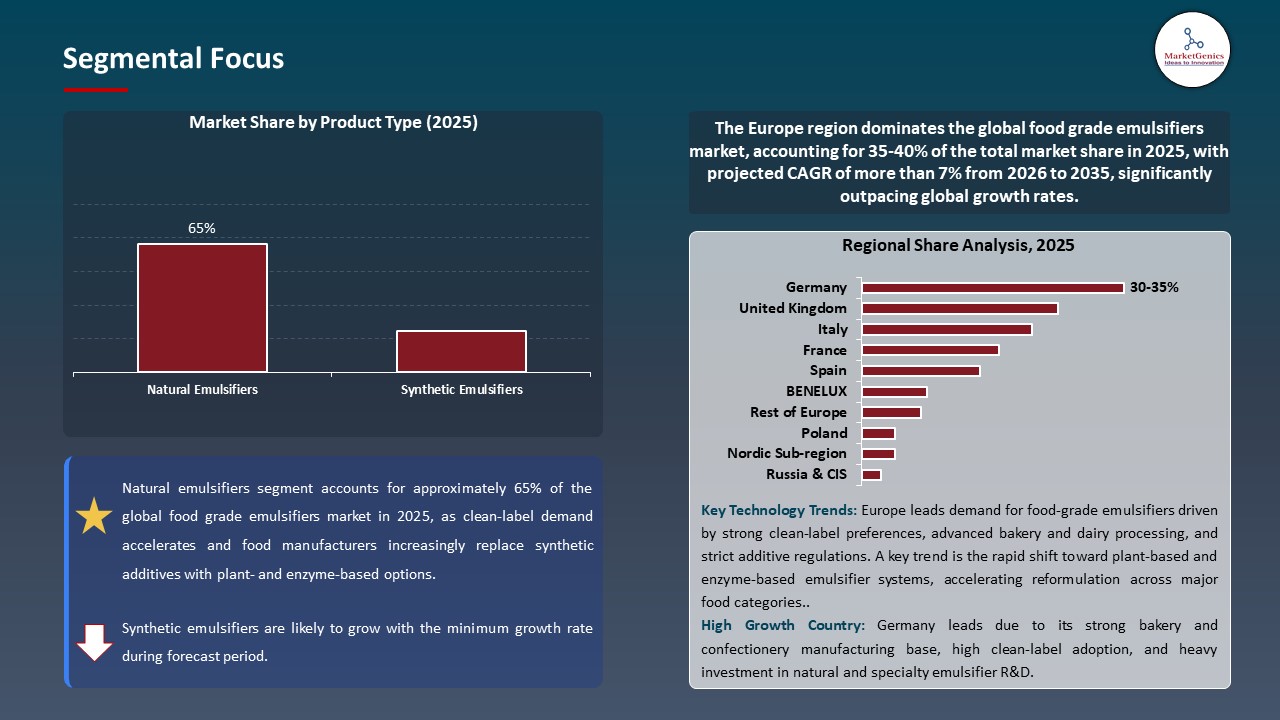
Natural Emulsifiers Dominate Global Food Grade Emulsifiers Market
-
Natural emulsifiers leads the food grade emulsifiers market with brands making product transparency, repackaging portfolios with plant-based, minimally processed ingredients. They are seen to be the choice in dairy replacers, dairy drinks, and functional nutrition products as their capacity to stabilize emulsions under conditions that do not require any synthetic additives makes them a choice.
- Natural emulsifier applications remain to grow owing to the developments of new product innovations. For instance, in October 2025, Palsgaard A/S, which started to manufacture its plant-based Emulpals cake-mix emulsifiers in Brazil, to increase the supply of the region to the clean-label bakery formulations and assist manufacturers that are interested in sustainable, high-aeration emulsification functionality across the food markets.
- Natural emulsifiers are now required due to their versatility, renewability, and conformity with environmental goals. Their capacity to provide uniform textures, improved mouthfeel, and variable formulation properties is increasing their use in food processing businesses around the world, as well as novel plant-based products.
Europe Leads Global Food Grade Emulsifiers Market Demand
-
Europe continued to dominate the global food grade emulsifiers market because of its well-established food manufacturing foundation, rigorous EFSA-imposed regulations on food additives, and rapidly expanding demand of texture-enhancing and shelf-life extending emulsifiers in the bakery, confectionary and dairy market. Market adoption was further enhanced by the push of the region towards traceable formulations free of allergens.
- Manufacturers further increased in intensity of innovation with clean-label and plant-based emulsifiers. For instance, Kerry Group increased the PureMul clean-label emulsifier system rollout in major European markets, which provides better stability, mouthfeel and natural alternative to traditional emulsifiers in bakery and beverage use. The solution assists big food brands in the quest to meet the tightening EU regulations on additives and transparency.
- Europe's leadership benefited from the following strengths. European producers provided high-performance, sustainable, and regulation-compliant emulsifier solutions to global food processors through investments in local research and development facilities, ingredient digitalization, and new cutting-edge application facilities.
Food-Grade-Emulsifiers-Market Ecosystem
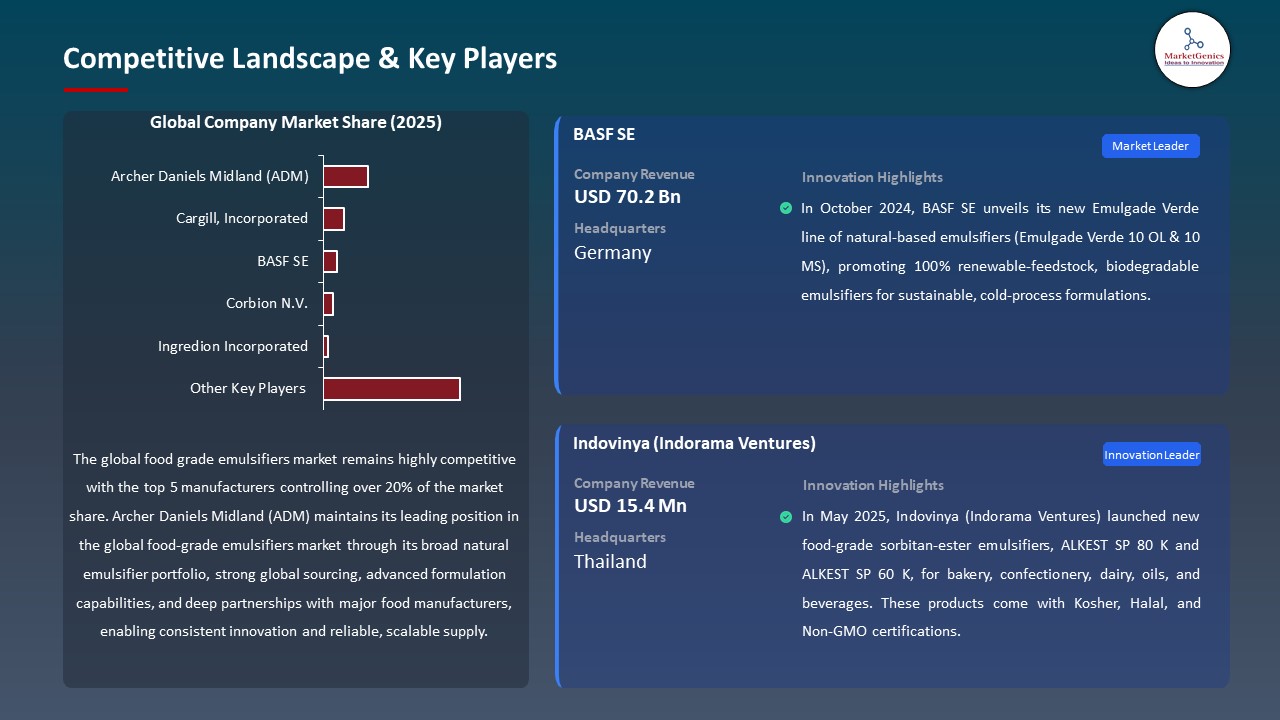
The global food grade emulsifiers market is moderately fragmented due to the presence of multinational ingredients and solution providers of food, beverage, bakery, dairy, and plant based products. The market is dominated by major participants, Archer Daniels Midland (ADM), Cargill, Incorporated, BASF SE, Corbion N.V., and Ingredion Incorporated, which are performing well in terms of the emulsifiers, lecithins and stabilizer systems. Being able to provide consistent quality, clean-label solutions, regulatory knowledge, and end-user diversified, allow them to provide consistent quality and application-specific formulations in large quantities, thereby empowering them to innovate continuously and manufacture products worldwide.
The value chain of the food grade emulsifier includes the suppliers of raw materials (plant oils, starches, lecithin, and fatty acids), formulation and processing experts, ingredient supplier, and the food and beverage brand owners, and retailing and e-commerce. Evolution of the ecosystem in terms of investments in sustainable plant-based emulsifiers, enzyme-modified and multi-functional emulsifier systems, special solutions in the field of low-fat and plant-based use, and online quality assurance systems. The major companies are also targeting vertical integration, traceable sourcing, eco-friendly processing, and compliance-optimised formulations, value addition through improved product functioning, regulatory fit, and clean-label appeal markets across the globe.
Recent Development and Strategic Overview
- In June 2025, MaGie Creations introduced PowerBond, the first food-grade emulsifier in the world constructed of upcycled brewer’s grain. The technology offers a clean-label, sustainable, synthetic emulsifier alternative, and helps food manufacturing companies to adopt circular-economy.
- In October 2025, Palsgaard A/S started the production of Emulpals cake-mix emulsifiers in Brazil, which increased the local production and shortened the supply chain time to Latin American bakery producers. This growth serves the regional demand and consolidates the market of the company.
Report Scope
|
Detail |
|
|
Market Size in 2025 |
USD 3.9 Bn |
|
Market Forecast Value in 2035 |
USD 6.6 Bn |
|
Growth Rate (CAGR) |
5.2% |
|
Forecast Period |
2026 – 2035 |
|
Historical Data Available for |
2021 – 2024 |
|
Market Size Units |
US$ Billion for Value Tons for Volume |
|
Report Format |
Electronic (PDF) + Excel |
|
North America |
Europe |
Asia Pacific |
Middle East |
Africa |
South America |
|
|
|
|
|
|
|
Companies Covered |
|||||
|
|
|
|
|
|
Food-Grade-Emulsifiers-Market Segmentation and Highlights
|
Segment |
Sub-segment |
|
Food Grade Emulsifiers Market, By Product Type |
|
|
Food Grade Emulsifiers Market, By Source |
|
|
Food Grade Emulsifiers Market, By Form |
|
|
Food Grade Emulsifiers Market, By Function |
|
|
Food Grade Emulsifiers Market, By Application |
|
|
Food Grade Emulsifiers Market, By Production Technology |
|
|
Food Grade Emulsifiers Market, By Distribution Channel |
|
|
Food Grade Emulsifiers Market, By Packaging Type |
|
|
Food Grade Emulsifiers Market, By Customer Type |
|
Frequently Asked Questions
Table of Contents
- 1. Research Methodology and Assumptions
- 1.1. Definitions
- 1.2. Research Design and Approach
- 1.3. Data Collection Methods
- 1.4. Base Estimates and Calculations
- 1.5. Forecasting Models
- 1.5.1. Key Forecast Factors & Impact Analysis
- 1.6. Secondary Research
- 1.6.1. Open Sources
- 1.6.2. Paid Databases
- 1.6.3. Associations
- 1.7. Primary Research
- 1.7.1. Primary Sources
- 1.7.2. Primary Interviews with Stakeholders across Ecosystem
- 2. Executive Summary
- 2.1. Global Food Grade Emulsifiers Market Outlook
- 2.1.1. Food Grade Emulsifiers Market Size Volume (Tons) and Value (US$ Bn), and Forecasts, 2021-2035
- 2.1.2. Compounded Annual Growth Rate Analysis
- 2.1.3. Growth Opportunity Analysis
- 2.1.4. Segmental Share Analysis
- 2.1.5. Geographical Share Analysis
- 2.2. Market Analysis and Facts
- 2.3. Supply-Demand Analysis
- 2.4. Competitive Benchmarking
- 2.5. Go-to- Market Strategy
- 2.5.1. Customer/ End-use Industry Assessment
- 2.5.2. Growth Opportunity Data, 2026-2035
- 2.5.2.1. Regional Data
- 2.5.2.2. Country Data
- 2.5.2.3. Segmental Data
- 2.5.3. Identification of Potential Market Spaces
- 2.5.4. GAP Analysis
- 2.5.5. Potential Attractive Price Points
- 2.5.6. Prevailing Market Risks & Challenges
- 2.5.7. Preferred Sales & Marketing Strategies
- 2.5.8. Key Recommendations and Analysis
- 2.5.9. A Way Forward
- 2.1. Global Food Grade Emulsifiers Market Outlook
- 3. Industry Data and Premium Insights
- 3.1. Global Food & Beverages Industry Overview, 2025
- 3.1.1. Food & Beverages Industry Ecosystem Analysis
- 3.1.2. Key Trends for Food & Beverages Industry
- 3.1.3. Regional Distribution for Food & Beverages Industry
- 3.2. Supplier Customer Data
- 3.3. Technology Roadmap and Developments
- 3.4. Trade Analysis
- 3.4.1. Import & Export Analysis, 2025
- 3.4.2. Top Importing Countries
- 3.4.3. Top Exporting Countries
- 3.5. Trump Tariff Impact Analysis
- 3.5.1. Manufacturer
- 3.5.1.1. Based on the component & Raw material
- 3.5.2. Supply Chain
- 3.5.3. End Consumer
- 3.5.1. Manufacturer
- 3.6. Raw Material Analysis
- 3.1. Global Food & Beverages Industry Overview, 2025
- 4. Market Overview
- 4.1. Market Dynamics
- 4.1.1. Drivers
- 4.1.1.1. Rising demand for processed, convenience, ready-to-eat foods worldwide.
- 4.1.1.2. Growing consumer preference for clean-label / natural / plant-based emulsifiers and healthier food choices.
- 4.1.1.3. Expansion of bakery, confectionery, dairy and other food & beverage sectors increasing applications requiring improved texture, shelf-life and stability.
- 4.1.2. Restraints
- 4.1.2.1. Volatility and high cost of raw materials (e.g. oils, natural sources) for emulsifier production.
- 4.1.2.2. Stringent regulatory requirements, food-safety standards, and growing health-consciousness that limit use of synthetic emulsifiers or require costly compliance.
- 4.1.1. Drivers
- 4.2. Key Trend Analysis
- 4.3. Regulatory Framework
- 4.3.1. Key Regulations, Norms, and Subsidies, by Key Countries
- 4.3.2. Tariffs and Standards
- 4.3.3. Impact Analysis of Regulations on the Market
- 4.4. Value Chain Analysis
- 4.4.1. Raw Material Suppliers
- 4.4.2. Manufacturing
- 4.4.3. Distribution
- 4.4.4. End-Use
- 4.5. Cost Structure Analysis
- 4.5.1. Parameter’s Share for Cost Associated
- 4.5.2. COGP vs COGS
- 4.5.3. Profit Margin Analysis
- 4.6. Pricing Analysis
- 4.6.1. Regional Pricing Analysis
- 4.6.2. Segmental Pricing Trends
- 4.6.3. Factors Influencing Pricing
- 4.7. Porter’s Five Forces Analysis
- 4.8. PESTEL Analysis
- 4.9. Global Food Grade Emulsifiers Market Demand
- 4.9.1. Historical Market Size – Volume (Tons) and Value (US$ Bn), 2020-2024
- 4.9.2. Current and Future Market Size – Volume (Tons) and Value (US$ Bn), 2026–2035
- 4.9.2.1. Y-o-Y Growth Trends
- 4.9.2.2. Absolute $ Opportunity Assessment
- 4.1. Market Dynamics
- 5. Competition Landscape
- 5.1. Competition structure
- 5.1.1. Fragmented v/s consolidated
- 5.2. Company Share Analysis, 2025
- 5.2.1. Global Company Market Share
- 5.2.2. By Region
- 5.2.2.1. North America
- 5.2.2.2. Europe
- 5.2.2.3. Asia Pacific
- 5.2.2.4. Middle East
- 5.2.2.5. Africa
- 5.2.2.6. South America
- 5.3. Product Comparison Matrix
- 5.3.1. Specifications
- 5.3.2. Market Positioning
- 5.3.3. Pricing
- 5.1. Competition structure
- 6. Global Food Grade Emulsifiers Market Analysis, by Product Type
- 6.1. Key Segment Analysis
- 6.2. Food Grade Emulsifiers Market Size Volume (Tons) and Value (US$ Bn), Analysis, and Forecasts, by Product Type, 2021-2035
- 6.2.1. Natural Emulsifiers
- 6.2.1.1. Lecithin
- 6.2.1.1.1. Soy Lecithin
- 6.2.1.1.2. Sunflower Lecithin
- 6.2.1.1.3. Rapeseed Lecithin
- 6.2.1.1.4. Others
- 6.2.1.2. Proteins
- 6.2.1.2.1. Whey Protein
- 6.2.1.2.2. Casein
- 6.2.1.2.3. Soy Protein
- 6.2.1.2.4. Others
- 6.2.1.3. Gums
- 6.2.1.3.1. Guar Gum
- 6.2.1.3.2. Xanthan Gum
- 6.2.1.3.3. Arabic Gum
- 6.2.1.3.4. Others
- 6.2.1.4. Other Natural Emulsifiers
- 6.2.1.1. Lecithin
- 6.2.2. Synthetic Emulsifiers
- 6.2.2.1. Mono- and Diglycerides (MDG)
- 6.2.2.2. Stearoyl Lactylates
- 6.2.2.3. Polyglycerol Esters
- 6.2.2.4. Sorbitan Esters
- 6.2.2.5. Polysorbates
- 6.2.2.6. Other Synthetic Emulsifiers
- 6.2.1. Natural Emulsifiers
- 7. Global Food Grade Emulsifiers Market Analysis, by Source
- 7.1. Key Segment Analysis
- 7.2. Food Grade Emulsifiers Market Size Volume (Tons) and Value (US$ Bn), Analysis, and Forecasts, by Source, 2021-2035
- 7.2.1. Plant-Based
- 7.2.1.1. Soy-Based
- 7.2.1.2. Sunflower-Based
- 7.2.1.3. Palm-Based
- 7.2.1.4. Canola-Based
- 7.2.1.5. Others
- 7.2.2. Animal-Based
- 7.2.2.1. Egg-Based
- 7.2.2.2. Dairy-Based
- 7.2.2.3. Others
- 7.2.3. Microbial-Based
- 7.2.1. Plant-Based
- 8. Global Food Grade Emulsifiers Market Analysis, by Form
- 8.1. Key Segment Analysis
- 8.2. Food Grade Emulsifiers Market Size Volume (Tons) and Value (US$ Bn), Analysis, and Forecasts, by Form, 2021-2035
- 8.2.1. Liquid
- 8.2.2. Powder
- 8.2.3. Paste/Gel
- 8.2.4. Granules
- 8.2.5. Others
- 9. Global Food Grade Emulsifiers Market Analysis, by Function
- 9.1. Key Segment Analysis
- 9.2. Food Grade Emulsifiers Market Size Volume (Tons) and Value (US$ Bn), Analysis, and Forecasts, by Function, 2021-2035
- 9.2.1. Emulsification
- 9.2.2. Stabilization
- 9.2.3. Texturizing
- 9.2.4. Foaming
- 9.2.5. Anti-Staling
- 9.2.6. Crystallization Control
- 9.2.7. Others
- 10. Global Food Grade Emulsifiers Market Analysis, by Application
- 10.1. Key Segment Analysis
- 10.2. Food Grade Emulsifiers Market Size Volume (Tons) and Value (US$ Bn), Analysis, and Forecasts, by Application, 2021-2035
- 10.2.1. Bakery Products
- 10.2.1.1. Bread
- 10.2.1.2. Cakes
- 10.2.1.3. Pastries
- 10.2.1.4. Biscuits & Cookies
- 10.2.1.5. Others
- 10.2.2. Confectionery
- 10.2.2.1. Chocolate
- 10.2.2.2. Candies
- 10.2.2.3. Chewing Gum
- 10.2.2.4. Others
- 10.2.3. Dairy & Frozen Desserts
- 10.2.3.1. Ice Cream
- 10.2.3.2. Yogurt
- 10.2.3.3. Cheese Products
- 10.2.3.4. Cream
- 10.2.3.5. Others
- 10.2.4. Beverages
- 10.2.4.1. Soft Drinks
- 10.2.4.2. Alcoholic Beverages
- 10.2.4.3. Nutritional Drinks
- 10.2.4.4. Coffee & Tea Beverages
- 10.2.4.5. Others
- 10.2.5. Convenience Foods
- 10.2.5.1. Ready-to-Eat Meals
- 10.2.5.2. Instant Soups
- 10.2.5.3. Sauces & Dressings
- 10.2.5.4. Others
- 10.2.6. Meat & Poultry Products
- 10.2.7. Oil & Fats
- 10.2.8. Other Applications
- 10.2.1. Bakery Products
- 11. Global Food Grade Emulsifiers Market Analysis, by Production Technology
- 11.1. Key Segment Analysis
- 11.2. Food Grade Emulsifiers Market Size Volume (Tons) and Value (US$ Bn), Analysis, and Forecasts, by Production Technology, 2021-2035
- 11.2.1. Chemical Synthesis
- 11.2.2. Enzymatic Process
- 11.2.3. Extraction Method
- 11.2.4. Fermentation Technology
- 11.2.5. Others
- 12. Global Food Grade Emulsifiers Market Analysis, by Distribution Channel
- 12.1. Key Segment Analysis
- 12.2. Food Grade Emulsifiers Market Size Volume (Tons) and Value (US$ Bn), Analysis, and Forecasts, by Distribution Channel, 2021-2035
- 12.2.1. Direct Sales/B2B
- 12.2.2. Distributors
- 12.2.3. Online Channels
- 12.2.4. Specialty Stores
- 13. Global Food Grade Emulsifiers Market Analysis, by Packaging Type
- 13.1. Key Segment Analysis
- 13.2. Food Grade Emulsifiers Market Size Volume (Tons) and Value (US$ Bn), Analysis, and Forecasts, by Packaging Type, 2021-2035
- 13.2.1. Bulk Packaging
- 13.2.1.1. Drums (50-200 kg)
- 13.2.1.2. IBCs (Intermediate Bulk Containers)
- 13.2.1.3. Tankers
- 13.2.1.4. Others
- 13.2.2. Retail Packaging
- 13.2.2.1. Bags (1-25 kg)
- 13.2.2.2. Bottles
- 13.2.2.3. Pouches
- 13.2.2.4. Others
- 13.2.1. Bulk Packaging
- 14. Global Food Grade Emulsifiers Market Analysis, by Customer Type
- 14.1. Key Segment Analysis
- 14.2. Food Grade Emulsifiers Market Size Volume (Tons) and Value (US$ Bn), Analysis, and Forecasts, by Customer Type, 2021-2035
- 14.2.1. Large-Scale Manufacturers
- 14.2.2. Medium-Scale Manufacturers
- 14.2.3. Small-Scale Manufacturers/Artisanal Producers
- 14.2.4. Food Service Providers
- 15. Global Food Grade Emulsifiers Market Analysis and Forecasts, by Region
- 15.1. Key Findings
- 15.2. Food Grade Emulsifiers Market Size Volume (Tons) and Value (US$ Bn), Analysis, and Forecasts, by Region, 2021-2035
- 15.2.1. North America
- 15.2.2. Europe
- 15.2.3. Asia Pacific
- 15.2.4. Middle East
- 15.2.5. Africa
- 15.2.6. South America
- 16. North America Food Grade Emulsifiers Market Analysis
- 16.1. Key Segment Analysis
- 16.2. Regional Snapshot
- 16.3. North America Food Grade Emulsifiers Market Size- Volume (Tons) and Value (US$ Bn), Analysis, and Forecasts, 2021-2035
- 16.3.1. Product Type
- 16.3.2. Source
- 16.3.3. Form
- 16.3.4. Function
- 16.3.5. Application
- 16.3.6. Production Technology
- 16.3.7. Distribution Channel
- 16.3.8. Packaging Type
- 16.3.9. Customer Type
- 16.3.10. Country
- 16.3.10.1. USA
- 16.3.10.2. Canada
- 16.3.10.3. Mexico
- 16.4. USA Food Grade Emulsifiers Market
- 16.4.1. Country Segmental Analysis
- 16.4.2. Product Type
- 16.4.3. Source
- 16.4.4. Form
- 16.4.5. Function
- 16.4.6. Application
- 16.4.7. Production Technology
- 16.4.8. Distribution Channel
- 16.4.9. Packaging Type
- 16.4.10. Customer Type
- 16.5. Canada Food Grade Emulsifiers Market
- 16.5.1. Country Segmental Analysis
- 16.5.2. Product Type
- 16.5.3. Source
- 16.5.4. Form
- 16.5.5. Function
- 16.5.6. Application
- 16.5.7. Production Technology
- 16.5.8. Distribution Channel
- 16.5.9. Packaging Type
- 16.5.10. Customer Type
- 16.6. Mexico Food Grade Emulsifiers Market
- 16.6.1. Country Segmental Analysis
- 16.6.2. Product Type
- 16.6.3. Source
- 16.6.4. Form
- 16.6.5. Function
- 16.6.6. Application
- 16.6.7. Production Technology
- 16.6.8. Distribution Channel
- 16.6.9. Packaging Type
- 16.6.10. Customer Type
- 17. Europe Food Grade Emulsifiers Market Analysis
- 17.1. Key Segment Analysis
- 17.2. Regional Snapshot
- 17.3. Europe Food Grade Emulsifiers Market Size Volume (Tons) and Value (US$ Bn), Analysis, and Forecasts, 2021-2035
- 17.3.1. Product Type
- 17.3.2. Source
- 17.3.3. Form
- 17.3.4. Function
- 17.3.5. Application
- 17.3.6. Production Technology
- 17.3.7. Distribution Channel
- 17.3.8. Packaging Type
- 17.3.9. Customer Type
- 17.3.10. Country
- 17.3.10.1. Germany
- 17.3.10.2. United Kingdom
- 17.3.10.3. France
- 17.3.10.4. Italy
- 17.3.10.5. Spain
- 17.3.10.6. Netherlands
- 17.3.10.7. Nordic Countries
- 17.3.10.8. Poland
- 17.3.10.9. Russia & CIS
- 17.3.10.10. Rest of Europe
- 17.4. Germany Food Grade Emulsifiers Market
- 17.4.1. Country Segmental Analysis
- 17.4.2. Product Type
- 17.4.3. Source
- 17.4.4. Form
- 17.4.5. Function
- 17.4.6. Application
- 17.4.7. Production Technology
- 17.4.8. Distribution Channel
- 17.4.9. Packaging Type
- 17.4.10. Customer Type
- 17.5. United Kingdom Food Grade Emulsifiers Market
- 17.5.1. Country Segmental Analysis
- 17.5.2. Product Type
- 17.5.3. Source
- 17.5.4. Form
- 17.5.5. Function
- 17.5.6. Application
- 17.5.7. Production Technology
- 17.5.8. Distribution Channel
- 17.5.9. Packaging Type
- 17.5.10. Customer Type
- 17.6. France Food Grade Emulsifiers Market
- 17.6.1. Country Segmental Analysis
- 17.6.2. Product Type
- 17.6.3. Source
- 17.6.4. Form
- 17.6.5. Function
- 17.6.6. Application
- 17.6.7. Production Technology
- 17.6.8. Distribution Channel
- 17.6.9. Packaging Type
- 17.6.10. Customer Type
- 17.7. Italy Food Grade Emulsifiers Market
- 17.7.1. Country Segmental Analysis
- 17.7.2. Product Type
- 17.7.3. Source
- 17.7.4. Form
- 17.7.5. Function
- 17.7.6. Application
- 17.7.7. Production Technology
- 17.7.8. Distribution Channel
- 17.7.9. Packaging Type
- 17.7.10. Customer Type
- 17.8. Spain Food Grade Emulsifiers Market
- 17.8.1. Country Segmental Analysis
- 17.8.2. Product Type
- 17.8.3. Source
- 17.8.4. Form
- 17.8.5. Function
- 17.8.6. Application
- 17.8.7. Production Technology
- 17.8.8. Distribution Channel
- 17.8.9. Packaging Type
- 17.8.10. Customer Type
- 17.9. Netherlands Food Grade Emulsifiers Market
- 17.9.1. Country Segmental Analysis
- 17.9.2. Product Type
- 17.9.3. Source
- 17.9.4. Form
- 17.9.5. Function
- 17.9.6. Application
- 17.9.7. Production Technology
- 17.9.8. Distribution Channel
- 17.9.9. Packaging Type
- 17.9.10. Customer Type
- 17.10. Nordic Countries Food Grade Emulsifiers Market
- 17.10.1. Country Segmental Analysis
- 17.10.2. Product Type
- 17.10.3. Source
- 17.10.4. Form
- 17.10.5. Function
- 17.10.6. Application
- 17.10.7. Production Technology
- 17.10.8. Distribution Channel
- 17.10.9. Packaging Type
- 17.10.10. Customer Type
- 17.11. Poland Food Grade Emulsifiers Market
- 17.11.1. Country Segmental Analysis
- 17.11.2. Product Type
- 17.11.3. Source
- 17.11.4. Form
- 17.11.5. Function
- 17.11.6. Application
- 17.11.7. Production Technology
- 17.11.8. Distribution Channel
- 17.11.9. Packaging Type
- 17.11.10. Customer Type
- 17.12. Russia & CIS Food Grade Emulsifiers Market
- 17.12.1. Country Segmental Analysis
- 17.12.2. Product Type
- 17.12.3. Source
- 17.12.4. Form
- 17.12.5. Function
- 17.12.6. Application
- 17.12.7. Production Technology
- 17.12.8. Distribution Channel
- 17.12.9. Packaging Type
- 17.12.10. Customer Type
- 17.13. Rest of Europe Food Grade Emulsifiers Market
- 17.13.1. Country Segmental Analysis
- 17.13.2. Product Type
- 17.13.3. Source
- 17.13.4. Form
- 17.13.5. Function
- 17.13.6. Application
- 17.13.7. Production Technology
- 17.13.8. Distribution Channel
- 17.13.9. Packaging Type
- 17.13.10. Customer Type
- 18. Asia Pacific Food Grade Emulsifiers Market Analysis
- 18.1. Key Segment Analysis
- 18.2. Regional Snapshot
- 18.3. Asia Pacific Food Grade Emulsifiers Market Size Volume (Tons) and Value (US$ Bn), Analysis, and Forecasts, 2021-2035
- 18.3.1. Product Type
- 18.3.2. Source
- 18.3.3. Form
- 18.3.4. Function
- 18.3.5. Application
- 18.3.6. Production Technology
- 18.3.7. Distribution Channel
- 18.3.8. Packaging Type
- 18.3.9. Customer Type
- 18.3.10. Country
- 18.3.10.1. China
- 18.3.10.2. India
- 18.3.10.3. Japan
- 18.3.10.4. South Korea
- 18.3.10.5. Australia and New Zealand
- 18.3.10.6. Indonesia
- 18.3.10.7. Malaysia
- 18.3.10.8. Thailand
- 18.3.10.9. Vietnam
- 18.3.10.10. Rest of Asia Pacific
- 18.4. China Food Grade Emulsifiers Market
- 18.4.1. Country Segmental Analysis
- 18.4.2. Product Type
- 18.4.3. Source
- 18.4.4. Form
- 18.4.5. Function
- 18.4.6. Application
- 18.4.7. Production Technology
- 18.4.8. Distribution Channel
- 18.4.9. Packaging Type
- 18.4.10. Customer Type
- 18.5. India Food Grade Emulsifiers Market
- 18.5.1. Country Segmental Analysis
- 18.5.2. Product Type
- 18.5.3. Source
- 18.5.4. Form
- 18.5.5. Function
- 18.5.6. Application
- 18.5.7. Production Technology
- 18.5.8. Distribution Channel
- 18.5.9. Packaging Type
- 18.5.10. Customer Type
- 18.6. Japan Food Grade Emulsifiers Market
- 18.6.1. Country Segmental Analysis
- 18.6.2. Product Type
- 18.6.3. Source
- 18.6.4. Form
- 18.6.5. Function
- 18.6.6. Application
- 18.6.7. Production Technology
- 18.6.8. Distribution Channel
- 18.6.9. Packaging Type
- 18.6.10. Customer Type
- 18.7. South Korea Food Grade Emulsifiers Market
- 18.7.1. Country Segmental Analysis
- 18.7.2. Product Type
- 18.7.3. Source
- 18.7.4. Form
- 18.7.5. Function
- 18.7.6. Application
- 18.7.7. Production Technology
- 18.7.8. Distribution Channel
- 18.7.9. Packaging Type
- 18.7.10. Customer Type
- 18.8. Australia and New Zealand Food Grade Emulsifiers Market
- 18.8.1. Country Segmental Analysis
- 18.8.2. Product Type
- 18.8.3. Source
- 18.8.4. Form
- 18.8.5. Function
- 18.8.6. Application
- 18.8.7. Production Technology
- 18.8.8. Distribution Channel
- 18.8.9. Packaging Type
- 18.8.10. Customer Type
- 18.9. Indonesia Food Grade Emulsifiers Market
- 18.9.1. Country Segmental Analysis
- 18.9.2. Product Type
- 18.9.3. Source
- 18.9.4. Form
- 18.9.5. Function
- 18.9.6. Application
- 18.9.7. Production Technology
- 18.9.8. Distribution Channel
- 18.9.9. Packaging Type
- 18.9.10. Customer Type
- 18.10. Malaysia Food Grade Emulsifiers Market
- 18.10.1. Country Segmental Analysis
- 18.10.2. Product Type
- 18.10.3. Source
- 18.10.4. Form
- 18.10.5. Function
- 18.10.6. Application
- 18.10.7. Production Technology
- 18.10.8. Distribution Channel
- 18.10.9. Packaging Type
- 18.10.10. Customer Type
- 18.11. Thailand Food Grade Emulsifiers Market
- 18.11.1. Country Segmental Analysis
- 18.11.2. Product Type
- 18.11.3. Source
- 18.11.4. Form
- 18.11.5. Function
- 18.11.6. Application
- 18.11.7. Production Technology
- 18.11.8. Distribution Channel
- 18.11.9. Packaging Type
- 18.11.10. Customer Type
- 18.12. Vietnam Food Grade Emulsifiers Market
- 18.12.1. Country Segmental Analysis
- 18.12.2. Product Type
- 18.12.3. Source
- 18.12.4. Form
- 18.12.5. Function
- 18.12.6. Application
- 18.12.7. Production Technology
- 18.12.8. Distribution Channel
- 18.12.9. Packaging Type
- 18.12.10. Customer Type
- 18.13. Rest of Asia Pacific Food Grade Emulsifiers Market
- 18.13.1. Country Segmental Analysis
- 18.13.2. Product Type
- 18.13.3. Source
- 18.13.4. Form
- 18.13.5. Function
- 18.13.6. Application
- 18.13.7. Production Technology
- 18.13.8. Distribution Channel
- 18.13.9. Packaging Type
- 18.13.10. Customer Type
- 19. Middle East Food Grade Emulsifiers Market Analysis
- 19.1. Key Segment Analysis
- 19.2. Regional Snapshot
- 19.3. Middle East Food Grade Emulsifiers Market Size Volume (Tons) and Value (US$ Bn), Analysis, and Forecasts, 2021-2035
- 19.3.1. Product Type
- 19.3.2. Source
- 19.3.3. Form
- 19.3.4. Function
- 19.3.5. Application
- 19.3.6. Production Technology
- 19.3.7. Distribution Channel
- 19.3.8. Packaging Type
- 19.3.9. Customer Type
- 19.3.10. Country
- 19.3.10.1. Turkey
- 19.3.10.2. UAE
- 19.3.10.3. Saudi Arabia
- 19.3.10.4. Israel
- 19.3.10.5. Rest of Middle East
- 19.4. Turkey Food Grade Emulsifiers Market
- 19.4.1. Country Segmental Analysis
- 19.4.2. Product Type
- 19.4.3. Source
- 19.4.4. Form
- 19.4.5. Function
- 19.4.6. Application
- 19.4.7. Production Technology
- 19.4.8. Distribution Channel
- 19.4.9. Packaging Type
- 19.4.10. Customer Type
- 19.5. UAE Food Grade Emulsifiers Market
- 19.5.1. Country Segmental Analysis
- 19.5.2. Product Type
- 19.5.3. Source
- 19.5.4. Form
- 19.5.5. Function
- 19.5.6. Application
- 19.5.7. Production Technology
- 19.5.8. Distribution Channel
- 19.5.9. Packaging Type
- 19.5.10. Customer Type
- 19.6. Saudi Arabia Food Grade Emulsifiers Market
- 19.6.1. Country Segmental Analysis
- 19.6.2. Product Type
- 19.6.3. Source
- 19.6.4. Form
- 19.6.5. Function
- 19.6.6. Application
- 19.6.7. Production Technology
- 19.6.8. Distribution Channel
- 19.6.9. Packaging Type
- 19.6.10. Customer Type
- 19.7. Israel Food Grade Emulsifiers Market
- 19.7.1. Country Segmental Analysis
- 19.7.2. Product Type
- 19.7.3. Source
- 19.7.4. Form
- 19.7.5. Function
- 19.7.6. Application
- 19.7.7. Production Technology
- 19.7.8. Distribution Channel
- 19.7.9. Packaging Type
- 19.7.10. Customer Type
- 19.8. Rest of Middle East Food Grade Emulsifiers Market
- 19.8.1. Country Segmental Analysis
- 19.8.2. Product Type
- 19.8.3. Source
- 19.8.4. Form
- 19.8.5. Function
- 19.8.6. Application
- 19.8.7. Production Technology
- 19.8.8. Distribution Channel
- 19.8.9. Packaging Type
- 19.8.10. Customer Type
- 20. Africa Food Grade Emulsifiers Market Analysis
- 20.1. Key Segment Analysis
- 20.2. Regional Snapshot
- 20.3. Africa Food Grade Emulsifiers Market Size Volume (Tons) and Value (US$ Bn), Analysis, and Forecasts, 2021-2035
- 20.3.1. Product Type
- 20.3.2. Source
- 20.3.3. Form
- 20.3.4. Function
- 20.3.5. Application
- 20.3.6. Production Technology
- 20.3.7. Distribution Channel
- 20.3.8. Packaging Type
- 20.3.9. Customer Type
- 20.3.10. country
- 20.3.10.1. South Africa
- 20.3.10.2. Egypt
- 20.3.10.3. Nigeria
- 20.3.10.4. Algeria
- 20.3.10.5. Rest of Africa
- 20.4. South Africa Food Grade Emulsifiers Market
- 20.4.1. Country Segmental Analysis
- 20.4.2. Product Type
- 20.4.3. Source
- 20.4.4. Form
- 20.4.5. Function
- 20.4.6. Application
- 20.4.7. Production Technology
- 20.4.8. Distribution Channel
- 20.4.9. Packaging Type
- 20.4.10. Customer Type
- 20.5. Egypt Food Grade Emulsifiers Market
- 20.5.1. Country Segmental Analysis
- 20.5.2. Product Type
- 20.5.3. Source
- 20.5.4. Form
- 20.5.5. Function
- 20.5.6. Application
- 20.5.7. Production Technology
- 20.5.8. Distribution Channel
- 20.5.9. Packaging Type
- 20.5.10. Customer Type
- 20.6. Nigeria Food Grade Emulsifiers Market
- 20.6.1. Country Segmental Analysis
- 20.6.2. Product Type
- 20.6.3. Source
- 20.6.4. Form
- 20.6.5. Function
- 20.6.6. Application
- 20.6.7. Production Technology
- 20.6.8. Distribution Channel
- 20.6.9. Packaging Type
- 20.6.10. Customer Type
- 20.7. Algeria Food Grade Emulsifiers Market
- 20.7.1. Country Segmental Analysis
- 20.7.2. Product Type
- 20.7.3. Source
- 20.7.4. Form
- 20.7.5. Function
- 20.7.6. Application
- 20.7.7. Production Technology
- 20.7.8. Distribution Channel
- 20.7.9. Packaging Type
- 20.7.10. Customer Type
- 20.8. Rest of Africa Food Grade Emulsifiers Market
- 20.8.1. Country Segmental Analysis
- 20.8.2. Product Type
- 20.8.3. Source
- 20.8.4. Form
- 20.8.5. Function
- 20.8.6. Application
- 20.8.7. Production Technology
- 20.8.8. Distribution Channel
- 20.8.9. Packaging Type
- 20.8.10. Customer Type
- 21. South America Food Grade Emulsifiers Market Analysis
- 21.1. Key Segment Analysis
- 21.2. Regional Snapshot
- 21.3. South America Food Grade Emulsifiers Market Size Volume (Tons) and Value (US$ Bn), Analysis, and Forecasts, 2021-2035
- 21.3.1. Product Type
- 21.3.2. Source
- 21.3.3. Form
- 21.3.4. Function
- 21.3.5. Application
- 21.3.6. Production Technology
- 21.3.7. Distribution Channel
- 21.3.8. Packaging Type
- 21.3.9. Customer Type
- 21.3.10. Country
- 21.3.10.1. Brazil
- 21.3.10.2. Argentina
- 21.3.10.3. Rest of South America
- 21.4. Brazil Food Grade Emulsifiers Market
- 21.4.1. Country Segmental Analysis
- 21.4.2. Product Type
- 21.4.3. Source
- 21.4.4. Form
- 21.4.5. Function
- 21.4.6. Application
- 21.4.7. Production Technology
- 21.4.8. Distribution Channel
- 21.4.9. Packaging Type
- 21.4.10. Customer Type
- 21.5. Argentina Food Grade Emulsifiers Market
- 21.5.1. Country Segmental Analysis
- 21.5.2. Product Type
- 21.5.3. Source
- 21.5.4. Form
- 21.5.5. Function
- 21.5.6. Application
- 21.5.7. Production Technology
- 21.5.8. Distribution Channel
- 21.5.9. Packaging Type
- 21.5.10. Customer Type
- 21.6. Rest of South America Food Grade Emulsifiers Market
- 21.6.1. Country Segmental Analysis
- 21.6.2. Product Type
- 21.6.3. Source
- 21.6.4. Form
- 21.6.5. Function
- 21.6.6. Application
- 21.6.7. Production Technology
- 21.6.8. Distribution Channel
- 21.6.9. Packaging Type
- 21.6.10. Customer Type
- 22. Key Players/ Company Profile
- 22.1. AAK AB
- 22.1.1. Company Details/ Overview
- 22.1.2. Company Financials
- 22.1.3. Key Customers and Competitors
- 22.1.4. Business/ Industry Portfolio
- 22.1.5. Product Portfolio/ Specification Details
- 22.1.6. Pricing Data
- 22.1.7. Strategic Overview
- 22.1.8. Recent Developments
- 22.2. Archer Daniels Midland Company (ADM)
- 22.3. BASF SE
- 22.4. Beldem S.A.
- 22.5. Cargill, Incorporated
- 22.6. Corbion N.V.
- 22.7. Croda International Plc
- 22.8. DuPont de Nemours, Inc.
- 22.9. Estelle Chemicals Pvt. Ltd.
- 22.10. Flowers Foods, Inc.
- 22.11. ILKO Ingredientes S.L.
- 22.12. Ingredion Incorporated
- 22.13. Ivanhoe Industries
- 22.14. Kerry Group plc
- 22.15. Lasenor Emulsionantes, S.L.
- 22.16. Lonza Group AG
- 22.17. Münzing Corporation
- 22.18. Oleon NV
- 22.19. Palsgaard A/S
- 22.20. Puratos Group
- 22.21. Riken Vitamin Co., Ltd.
- 22.22. Solvay S.A.
- 22.23. Stepan Company
- 22.24. Other Key Players
- 22.1. AAK AB
Note* - This is just tentative list of players. While providing the report, we will cover more number of players based on their revenue and share for each geography
Research Design
Our research design integrates both demand-side and supply-side analysis through a balanced combination of primary and secondary research methodologies. By utilizing both bottom-up and top-down approaches alongside rigorous data triangulation methods, we deliver robust market intelligence that supports strategic decision-making.
MarketGenics' comprehensive research design framework ensures the delivery of accurate, reliable, and actionable market intelligence. Through the integration of multiple research approaches, rigorous validation processes, and expert analysis, we provide our clients with the insights needed to make informed strategic decisions and capitalize on market opportunities.
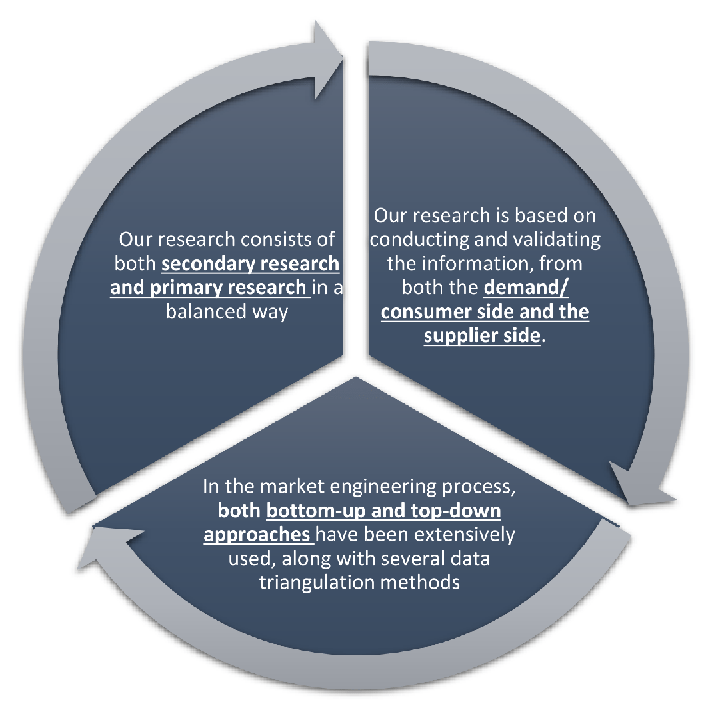
MarketGenics leverages a dedicated industry panel of experts and a comprehensive suite of paid databases to effectively collect, consolidate, and analyze market intelligence.
Our approach has consistently proven to be reliable and effective in generating accurate market insights, identifying key industry trends, and uncovering emerging business opportunities.
Through both primary and secondary research, we capture and analyze critical company-level data such as manufacturing footprints, including technical centers, R&D facilities, sales offices, and headquarters.
Our expert panel further enhances our ability to estimate market size for specific brands based on validated field-level intelligence.
Our data mining techniques incorporate both parametric and non-parametric methods, allowing for structured data collection, sorting, processing, and cleaning.
Demand projections are derived from large-scale data sets analyzed through proprietary algorithms, culminating in robust and reliable market sizing.
Research Approach
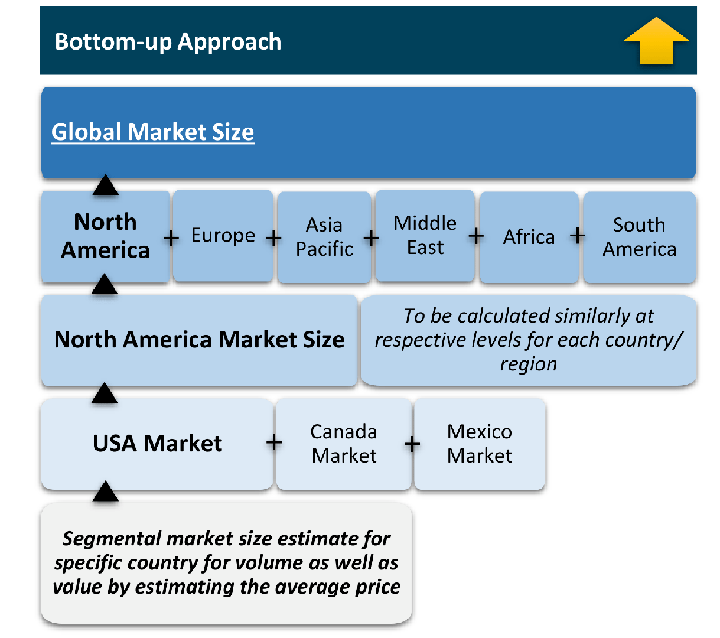
The bottom-up approach builds market estimates by starting with the smallest addressable market units and systematically aggregating them to create comprehensive market size projections.
This method begins with specific, granular data points and builds upward to create the complete market landscape.
Customer Analysis → Segmental Analysis → Geographical Analysis
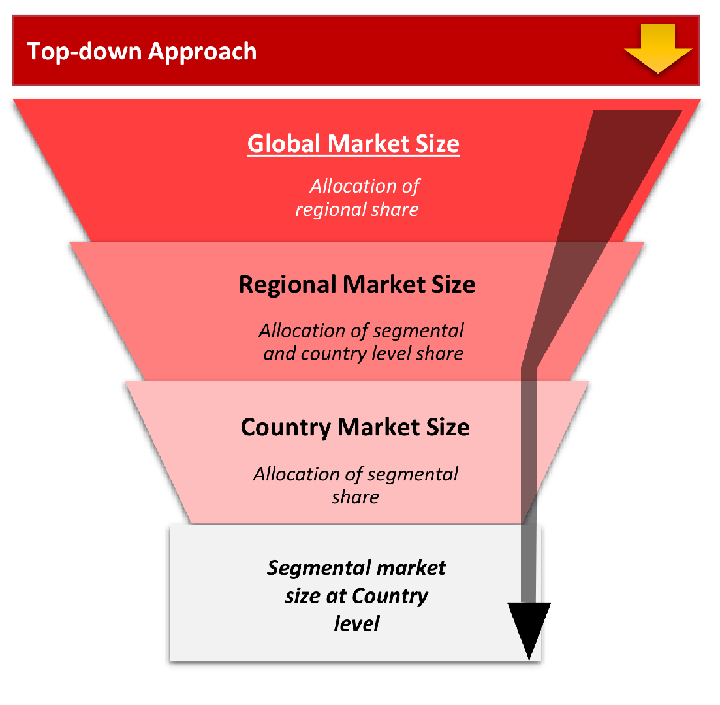
The top-down approach starts with the broadest possible market data and systematically narrows it down through a series of filters and assumptions to arrive at specific market segments or opportunities.
This method begins with the big picture and works downward to increasingly specific market slices.
TAM → SAM → SOM
Research Methods
Desk / Secondary Research
While analysing the market, we extensively study secondary sources, directories, and databases to identify and collect information useful for this technical, market-oriented, and commercial report. Secondary sources that we utilize are not only the public sources, but it is a combination of Open Source, Associations, Paid Databases, MG Repository & Knowledgebase, and others.
- Company websites, annual reports, financial reports, broker reports, and investor presentations
- National government documents, statistical databases and reports
- News articles, press releases and web-casts specific to the companies operating in the market, Magazines, reports, and others
- We gather information from commercial data sources for deriving company specific data such as segmental revenue, share for geography, product revenue, and others
- Internal and external proprietary databases (industry-specific), relevant patent, and regulatory databases
- Governing Bodies, Government Organizations
- Relevant Authorities, Country-specific Associations for Industries
We also employ the model mapping approach to estimate the product level market data through the players' product portfolio
Primary Research
Primary research/ interviews is vital in analyzing the market. Most of the cases involves paid primary interviews. Primary sources include primary interviews through e-mail interactions, telephonic interviews, surveys as well as face-to-face interviews with the different stakeholders across the value chain including several industry experts.
| Type of Respondents | Number of Primaries |
|---|---|
| Tier 2/3 Suppliers | ~20 |
| Tier 1 Suppliers | ~25 |
| End-users | ~25 |
| Industry Expert/ Panel/ Consultant | ~30 |
| Total | ~100 |
MG Knowledgebase
• Repository of industry blog, newsletter and case studies
• Online platform covering detailed market reports, and company profiles
Forecasting Factors and Models
Forecasting Factors
- Historical Trends – Past market patterns, cycles, and major events that shaped how markets behave over time. Understanding past trends helps predict future behavior.
- Industry Factors – Specific characteristics of the industry like structure, regulations, and innovation cycles that affect market dynamics.
- Macroeconomic Factors – Economic conditions like GDP growth, inflation, and employment rates that affect how much money people have to spend.
- Demographic Factors – Population characteristics like age, income, and location that determine who can buy your product.
- Technology Factors – How quickly people adopt new technology and how much technology infrastructure exists.
- Regulatory Factors – Government rules, laws, and policies that can help or restrict market growth.
- Competitive Factors – Analyzing competition structure such as degree of competition and bargaining power of buyers and suppliers.
Forecasting Models / Techniques
Multiple Regression Analysis
- Identify and quantify factors that drive market changes
- Statistical modeling to establish relationships between market drivers and outcomes
Time Series Analysis – Seasonal Patterns
- Understand regular cyclical patterns in market demand
- Advanced statistical techniques to separate trend, seasonal, and irregular components
Time Series Analysis – Trend Analysis
- Identify underlying market growth patterns and momentum
- Statistical analysis of historical data to project future trends
Expert Opinion – Expert Interviews
- Gather deep industry insights and contextual understanding
- In-depth interviews with key industry stakeholders
Multi-Scenario Development
- Prepare for uncertainty by modeling different possible futures
- Creating optimistic, pessimistic, and most likely scenarios
Time Series Analysis – Moving Averages
- Sophisticated forecasting for complex time series data
- Auto-regressive integrated moving average models with seasonal components
Econometric Models
- Apply economic theory to market forecasting
- Sophisticated economic models that account for market interactions
Expert Opinion – Delphi Method
- Harness collective wisdom of industry experts
- Structured, multi-round expert consultation process
Monte Carlo Simulation
- Quantify uncertainty and probability distributions
- Thousands of simulations with varying input parameters
Research Analysis
Our research framework is built upon the fundamental principle of validating market intelligence from both demand and supply perspectives. This dual-sided approach ensures comprehensive market understanding and reduces the risk of single-source bias.
Demand-Side Analysis: We understand end-user/application behavior, preferences, and market needs along with the penetration of the product for specific application.
Supply-Side Analysis: We estimate overall market revenue, analyze the segmental share along with industry capacity, competitive landscape, and market structure.
Validation & Evaluation
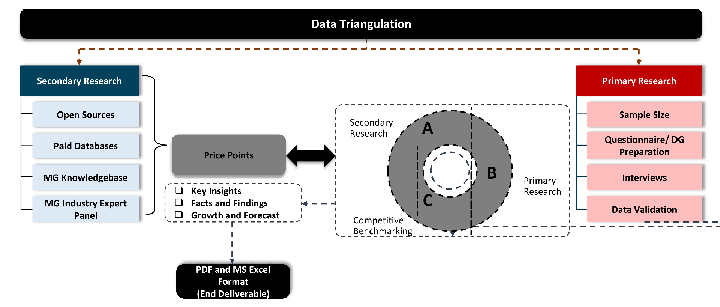
Data triangulation is a validation technique that uses multiple methods, sources, or perspectives to examine the same research question, thereby increasing the credibility and reliability of research findings. In market research, triangulation serves as a quality assurance mechanism that helps identify and minimize bias, validate assumptions, and ensure accuracy in market estimates.
- Data Source Triangulation – Using multiple data sources to examine the same phenomenon
- Methodological Triangulation – Using multiple research methods to study the same research question
- Investigator Triangulation – Using multiple researchers or analysts to examine the same data
- Theoretical Triangulation – Using multiple theoretical perspectives to interpret the same data
Custom Market Research Services
We will customise the research for you, in case the report listed above does not meet your requirements.
Get 10% Free Customisation