Hair Growth Supplements and Treatments Market Size, Share & Trends Analysis Report by Product Type (Supplements, Topical Treatments, Device-based Treatments, Other Product Types), Ingredient Type, Gender, Treatment Duration/Frequency, Prescription Requirement, End-Use, Distribution Channel, and Geography (North America, Europe, Asia Pacific, Middle East, Africa, and South America) – Global Industry Data, Trends, and Forecasts, 2026–2035
Market Overview:
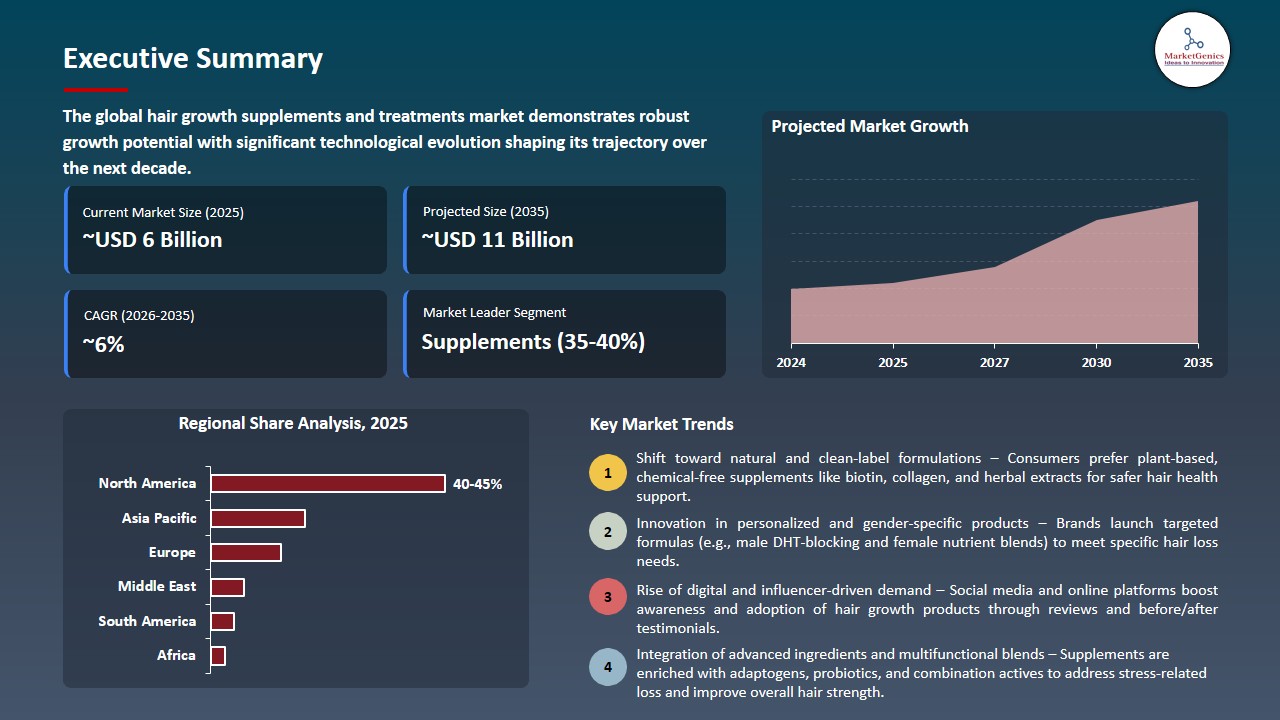
According to Marketgenics analysis, the global hair growth supplements and treatments market is witnessing steady growth, with a valuation of approximately USD 6.1 billion in 2025 and is expected to reach nearly USD 11.3 billion by 2035, expanding at a CAGR of around 6.4% during the forecast period.
|
|
|
Segmental Data Insights |
|
|
Demand Trends |
|
|
Competitive Landscape |
|
|
Strategic Development |
|
|
Future Outlook & Opportunities |
|
Hair Growth Supplements and Treatments Market Size, Share, and Growth
Asia Pacific is the fastest-growing region in the hair-growth-supplements-and-treatments-market due to rising disposable incomes, increasing prevalence of hair loss linked to urban lifestyles and pollution, growing beauty and wellness awareness, and rapid expansion of e-commerce and influencer-driven product adoption.
Cindy Gustafson, Chief Executive Officer at Nutrafol, said, “Partnering with Major League Baseball is a natural fit for Nutrafol, as we are both laser-focused on serving our customers and fans as well as meeting the highest standards in all that we do - as now seen by our hair growth supplements earning the top level of certification from NSF, as leaders in hair health, we can't wait to begin our partnership during one of the most exhilarating times of the season, bringing hair wellness into the national conversation in a way that's both impactful and inspiring”.
The aging population in the world is becoming more susceptible to hair thinning and hair loss as a result of hormonal imbalance, decreased absorption of nutrients, and a slower regeneration of hair follicles. This demographic trend is creating a long-term need of hair growth supplements and treatments that promote hair density, strength, and scalp health. Since the elderly focus more on the desire to look younger and healthy, the uptake of long-term, preventative, and medically approved hair growth products is on the increase.
The male-targeted and niche segments to the hair growth supplements and treatments market have been showing increasing opportunities. The market has traditionally been women-oriented, but now it faces a high demand of the male hair health products, post-partum products, and specialized therapeutic products. Firms can exploit this trend by making special formulations, specific marketing programs and individual treatment plans, which will serve the hitherto underserved consumer groups and increase the overall market coverage.
Key adjacent opportunities for the hair growth supplements and treatments market include development of a holistic wellness platform combining hair, skin, and nail health, the shift to preventative and lifestyle-oriented nutraceuticals, the inclusion of personalized diagnostics and genetic testing, and the introduction of complementary digital health solutions, including teleconsultations and mobile applications.

Hair Growth Supplements and Treatments Market Dynamics and Trends
Driver: Increasing Prevalence of Hair Loss
-
The growth of hair supplements and treatments market is witnessing a big push with the increasing rate of hair thinning and hair loss in various demographic. Stress, hormone imbalance, nutrition deficiencies, aging, and lifestyle habits in modern lifestyle are among the factors that are causing extensive hair health issues.
- This increasing number is prompting consumers to turn to preventive and curative options, such as nutraceutical supplements, topical care, and more high-level clinical care. The increased awareness of the problem of hair loss, as well as the willingness to have aesthetic and personal grooming, is an additional driver of demand.
- Hims Health Hers in June 2025 launched the Biotin + Minoxidil Gummy the first prescription hair regrowth gummy created specifically to support women. Integrating prescription-strength minoxidil with biotin, the product provides a convenient once-a-day effect, which helps to adhere to the prescription and have personalized hair care.
- The firms are putting funds in new formulations and treatment options to cover the multifactorial etiology of hair loss and strengthen the market growth in the world.
Restraint: Regulatory and Safety Concerns
-
The hair growth supplements and treatments market is very problematic since there are strict regulatory systems that govern the nutraceuticals as well as the hair loss therapeutic solutions. Adherence to various regulations in various areas such as labeling, safety testing, and standard of manufacturing makes new product operational complex and time consuming to bring them to market.
- Formulations have to pass through stringent quality and safety tests which sometimes require a lot of clinical research, third-party testing, and documentation. There is also the restraint on market growth due to the safety issues. The consumers are more sensitive toward the potential side effects, adverse reactions, and contraindications of hair growth supplements and treatments.
- Negative publicity or low product quality may hurt brand recognition, decrease consumer confidence and inhibit uptake. This means that businesses will have to invest in strong safety measures, continuous surveillance, and open communication, which further increase the cost of operations and reduce the speed of the new product introduction.
- All these regulatory and safety complexities serve as a substantial deterrent, especially to those new to the market and smaller market participants.
Opportunity: E-commerce & Digital Engagement
-
The growth of online platforms, subscription services, and teleconsultation services is a good growth opportunity to the hair growth supplements and treatments market. Online platforms can help in accessing a variety of products conveniently, after all, personalized treatment prescriptions by means of online testing, and inertia in demand through automated refill and subscription services.
- Teleconsultations and virtual hair health assessment enhance the consumer trust and compliance to treatment. Moreover, improved engagement via mobile applications, social media, influencer marketing, and data-based targeting increases brand loyalty, enhances customer retention, and enables firms to scale with ease, as well as, reach more consumers, digitally-active consumers.
- In 2025, Hims & Hers Health used its subscription model to spur digital adoption in the Hair Growth Supplements and Treatments Market and grew its subscriber base to 2.5 million by Q3. The use of automated recurring billing, virtual consultations, and personalized care programs enhanced the customer retention, repeat purchases, and brand loyalty.
- The solution will meet radiologist burnout, staffing shortages, and high imaging volumes and will allow scaling to develop technology-based growth in the hair growth supplements and treatments market.
Key Trend: Personalized Diagnostics & Tech Integration
-
The use of AI-based diagnostics and digital health technologies in the consumer purchase process is a new trend in the hair growth supplements and treatments market. Scalp app, virtual dermatologist and hair health AI applications enable users to be provided with customized advice on supplements and treatments based on their individual hair health, lifestyle and genetics.
- These technologies not only provide better consumer interaction but also increase the adherence and satisfaction of treatment, as the information is used to decide. The businesses that utilize such types of digital technologies will be able to distinguish their products, develop a long-term customer base, and introduce the possibilities of subscriptions, telehealth, and integrated care solutions, as the market is oriented towards personalized and tech-oriented hair health management.
- In April 2025, Cureskin introduced the first AI-powered hair analyser on the planet which is built into its mobile app and it is able to detect male pattern baldness and hair thinning early in its development by using advanced image processing and machine learning. The tool offers individual, dermatologist-recommended treatment.
- This innovation highlights the trend that is increasingly on tech-enabled and personalized diagnostics of the hair growth supplements and treatments market.
Hair-Growth-Supplements-and-Treatments-Market Analysis and Segmental Data
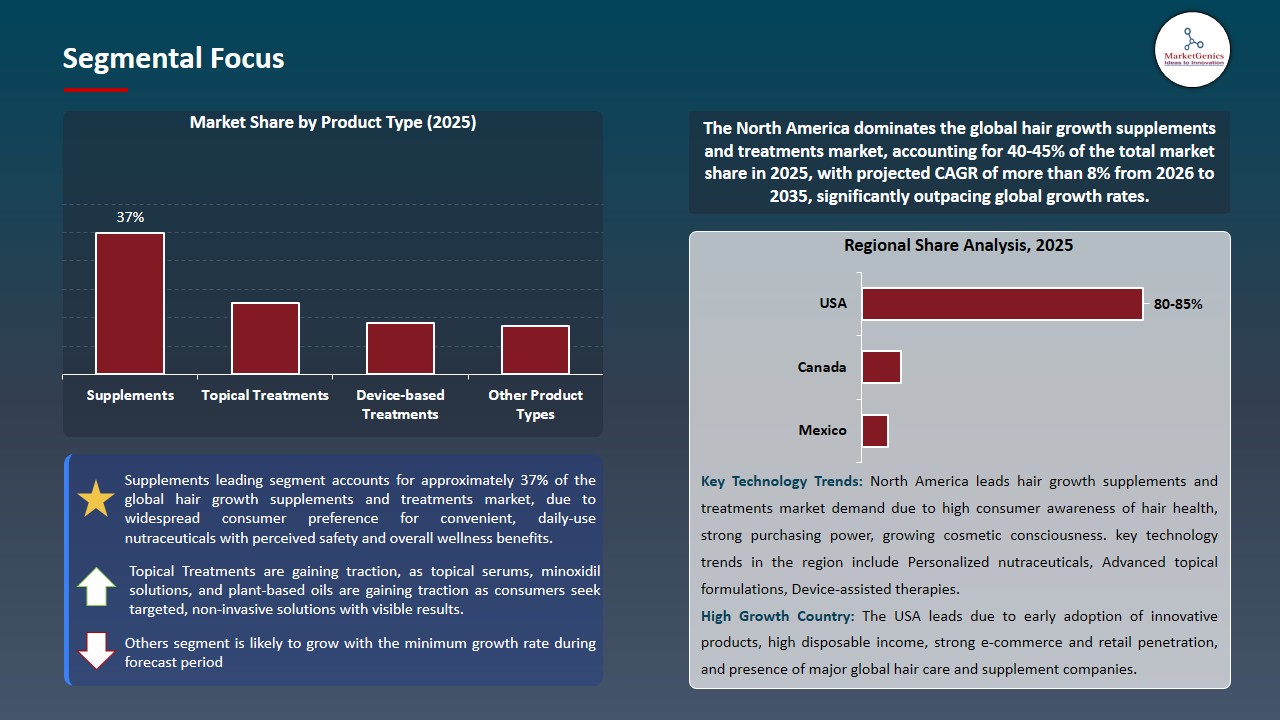
Supplements Dominate Global Hair Growth Supplements and Treatments Market
-
Supplements represent the leading segment in the global hair growth supplements and treatments market, driven by their ease of consumption, preventive benefits, and growing consumer preference for non-invasive solutions. Hair growth supplements formulated with vitamins, minerals, amino acids, and botanical extracts are widely adopted to address nutritional deficiencies linked to hair thinning and hair loss.
- Rising awareness of holistic wellness and long-term hair health encourages regular supplement use as part of daily routines. Additionally, the availability of diverse formats such as capsules, gummies, and powders enhance consumer compliance.
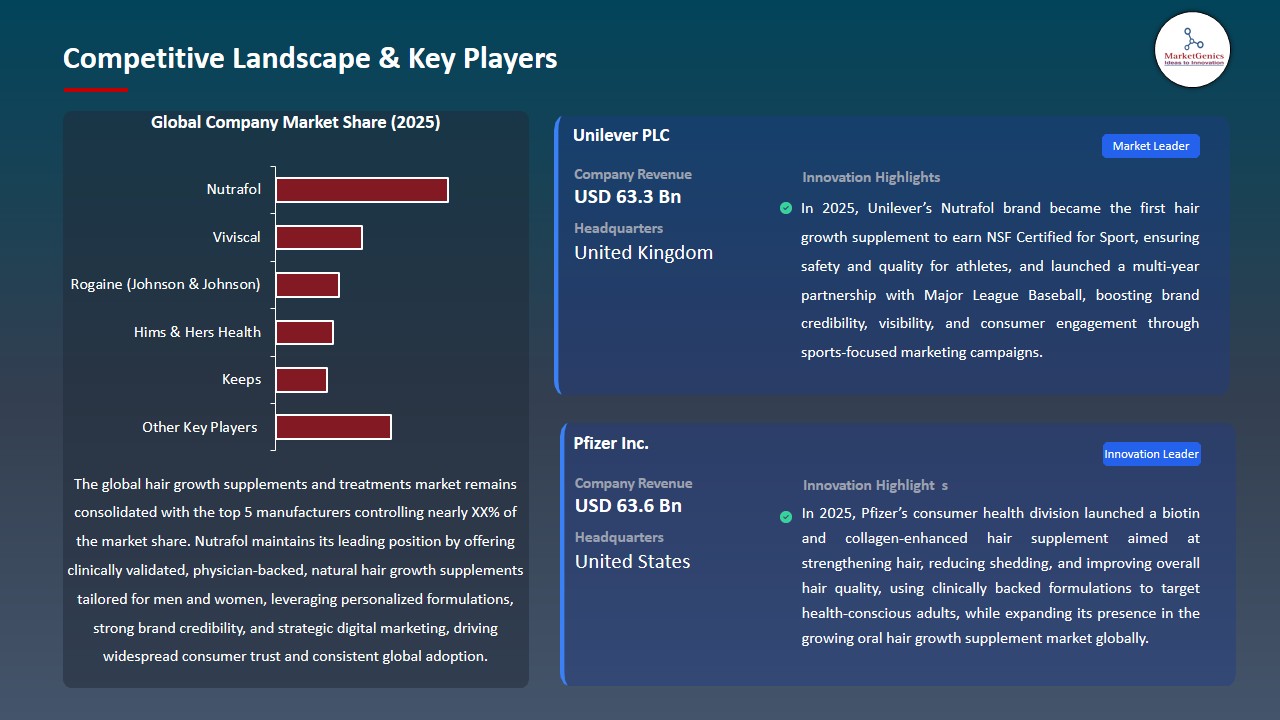
- In 2025, Nutrafol strengthened its leadership in the hair growth supplements and treatments market by becoming the first and only hair growth supplement brand to earn NSF Certified for Sport, the highest standard for safety and quality testing recognized by Major League Baseball (MLB)
- Strong marketing visibility, online accessibility, and increasing trust in clinically supported nutraceuticals further reinforce the dominance of the supplements segment globally.
North America Leads Global Hair Growth Supplements and Treatments Market Demand
-
North America leads global demand for hair growth supplements and treatments due to high consumer awareness of personal grooming, wellness, and preventive healthcare. A strong culture of self-care, combined with growing concerns over hair thinning and hair loss across different age groups, is driving consistent adoption of both nutritional supplements and advanced treatment options. Consumers in the region are also more receptive to long-term usage and subscription-based solutions.
- The region benefits from a well-established retail and e-commerce ecosystem that ensures wide product accessibility and convenience. Strong digital penetration, influencer marketing, and telehealth platforms have further enhanced consumer engagement and product discovery. Additionally, higher disposable incomes allow consumers to invest in premium, clinically backed formulations and personalized treatment plans.
- Continuous innovation in formulations, delivery formats, and personalization strategies continues to reinforce North America’s leadership in the global hair growth supplements and treatments market.
Hair-Growth-Supplements-and-Treatments-Market Ecosystem
The global hair growth supplements and treatments market is consolidated, with key players such as Nutrafol, Viviscal, Rogaine (Johnson & Johnson), Hims & Hers Health, and Keeps holding strong competitive positions. These companies compete through clinically backed formulations, strong brand credibility, direct-to-consumer business models, and broad product portfolios covering supplements, topical treatments, and prescription-based solutions. Their market strength is further supported by digital platforms, subscription services, personalized treatment plans, and extensive consumer education initiatives that enhance trust and long-term customer engagement.
The market value chain comprises raw material sourcing (vitamins, minerals, botanical extracts, and active pharmaceutical ingredients), product formulation and manufacturing, quality testing and regulatory compliance, branding and packaging, and multi-channel distribution through e-commerce, pharmacies, and clinics. Post-sale activities such as customer consultation, subscription management, adherence tracking, and ongoing product innovation play a crucial role in differentiation and retention.
High entry barriers exist due to regulatory scrutiny, the need for clinical validation, strong brand loyalty, and significant marketing investments. Continuous innovation in personalized nutrition, combination therapies, and digital health integration is driving sustained adoption and competitive differentiation in the global hair growth supplements and treatments market.
Recent Development and Strategic Overview:
-
In July 2025, Viviscal launched the 4D Hair Growth Cycle Supplement, a clinically tested formulation combining soluble keratin, biotin, zinc, copper, and essential vitamins to support fuller, stronger, and healthier hair. Clinical trials demonstrated a 17% improvement in hair brightness within 30 days and a 34.5% reduction in hair shedding within 60 days.
- In February 2025, Nutrafol announced positive results from a 6-month, multi-center, randomized, double-blind, placebo-controlled trial demonstrating that Nutrafol Men significantly improves hair growth and quality. The study showed that 85% of participants in the treatment group reported visible improvements in hair thickness and reduced thinning, compared to 55% in the placebo group.
Report Scope
|
Detail |
|
|
Market Size in 2025 |
USD 6.1 Bn |
|
Market Forecast Value in 2035 |
USD 11.3 Bn |
|
Growth Rate (CAGR) |
6.4% |
|
Forecast Period |
2026 – 2035 |
|
Historical Data Available for |
2021 – 2024 |
|
Market Size Units |
US$ Billion for Value |
|
Report Format |
Electronic (PDF) + Excel |
|
North America |
Europe |
Asia Pacific |
Middle East |
Africa |
South America |
|
|
|
|
|
|
|
Companies Covered |
|||||
|
|
|
|
|
|
Hair-Growth-Supplements-and-Treatments-Market Segmentation and Highlights
|
Segment |
Sub-segment |
|
Hair Growth Supplements and Treatments Market, By Product Type |
|
|
Hair Growth Supplements and Treatments Market, By Ingredient Type |
|
|
Hair Growth Supplements and Treatments Market, By Gender |
|
|
Hair Growth Supplements and Treatments Market, By Treatment Duration/Frequency |
|
|
Hair Growth Supplements and Treatments Market, By Prescription Requirement |
|
|
Hair Growth Supplements and Treatments Market, By End-Use |
|
|
Hair Growth Supplements and Treatments Market, By Distribution Channel |
|
Frequently Asked Questions
Table of Contents
- 1. Research Methodology and Assumptions
- 1.1. Definitions
- 1.2. Research Design and Approach
- 1.3. Data Collection Methods
- 1.4. Base Estimates and Calculations
- 1.5. Forecasting Models
- 1.5.1. Key Forecast Factors & Impact Analysis
- 1.6. Secondary Research
- 1.6.1. Open Sources
- 1.6.2. Paid Databases
- 1.6.3. Associations
- 1.7. Primary Research
- 1.7.1. Primary Sources
- 1.7.2. Primary Interviews with Stakeholders across Ecosystem
- 2. Executive Summary
- 2.1. Global Hair Growth Supplements and Treatments Market Outlook
- 2.1.1. Hair Growth Supplements and Treatments Market Size Value (US$ Bn), and Forecasts, 2021-2035
- 2.1.2. Compounded Annual Growth Rate Analysis
- 2.1.3. Growth Opportunity Analysis
- 2.1.4. Segmental Share Analysis
- 2.1.5. Geographical Share Analysis
- 2.2. Market Analysis and Facts
- 2.3. Supply-Demand Analysis
- 2.4. Competitive Benchmarking
- 2.5. Go-to- Market Strategy
- 2.5.1. Customer/ End-use Industry Assessment
- 2.5.2. Growth Opportunity Data, 2026-2035
- 2.5.2.1. Regional Data
- 2.5.2.2. Country Data
- 2.5.2.3. Segmental Data
- 2.5.3. Identification of Potential Market Spaces
- 2.5.4. GAP Analysis
- 2.5.5. Potential Attractive Price Points
- 2.5.6. Prevailing Market Risks & Challenges
- 2.5.7. Preferred Sales & Marketing Strategies
- 2.5.8. Key Recommendations and Analysis
- 2.5.9. A Way Forward
- 2.1. Global Hair Growth Supplements and Treatments Market Outlook
- 3. Industry Data and Premium Insights
- 3.1. Global Healthcare & Pharmaceutical Industry Overview, 2025
- 3.1.1. Healthcare & Pharmaceutical Industry Ecosystem Analysis
- 3.1.2. Key Trends for Healthcare & Pharmaceutical Industry
- 3.1.3. Regional Distribution for Healthcare & Pharmaceutical Industry
- 3.2. Supplier Customer Data
- 3.3. Technology Roadmap and Developments
- 3.4. Trade Analysis
- 3.4.1. Import & Export Analysis, 2025
- 3.4.2. Top Importing Countries
- 3.4.3. Top Exporting Countries
- 3.5. Trump Tariff Impact Analysis
- 3.5.1. Manufacturer
- 3.5.1.1. Based on the component & Raw material
- 3.5.2. Supply Chain
- 3.5.3. End Consumer
- 3.5.1. Manufacturer
- 3.6. Raw Material Analysis
- 3.1. Global Healthcare & Pharmaceutical Industry Overview, 2025
- 4. Market Overview
- 4.1. Market Dynamics
- 4.1.1. Drivers
- 4.1.1.1. Increasing prevalence of hair loss and alopecia globally.
- 4.1.1.2. Growing awareness and adoption of preventive hair care solutions.
- 4.1.1.3. Rising popularity of natural and herbal hair growth supplements.
- 4.1.2. Restraints
- 4.1.2.1. High cost of advanced hair growth treatments.
- 4.1.2.2. Limited efficacy and variability of results among consumers.
- 4.1.1. Drivers
- 4.2. Key Trend Analysis
- 4.3. Regulatory Framework
- 4.3.1. Key Regulations, Norms, and Subsidies, by Key Countries
- 4.3.2. Tariffs and Standards
- 4.3.3. Impact Analysis of Regulations on the Market
- 4.4. Ecosystem Analysis
- 4.5. Porter’s Five Forces Analysis
- 4.6. PESTEL Analysis
- 4.7. Global Hair Growth Supplements and Treatments Market Demand
- 4.7.1. Historical Market Size – Value (US$ Bn), 2020-2024
- 4.7.2. Current and Future Market Size – Value (US$ Bn), 2026–2035
- 4.7.2.1. Y-o-Y Growth Trends
- 4.7.2.2. Absolute $ Opportunity Assessment
- 4.1. Market Dynamics
- 5. Competition Landscape
- 5.1. Competition structure
- 5.1.1. Fragmented v/s consolidated
- 5.2. Company Share Analysis, 2025
- 5.2.1. Global Company Market Share
- 5.2.2. By Region
- 5.2.2.1. North America
- 5.2.2.2. Europe
- 5.2.2.3. Asia Pacific
- 5.2.2.4. Middle East
- 5.2.2.5. Africa
- 5.2.2.6. South America
- 5.3. Product Comparison Matrix
- 5.3.1. Specifications
- 5.3.2. Market Positioning
- 5.3.3. Pricing
- 5.1. Competition structure
- 6. Global Hair Growth Supplements and Treatments Market Analysis, by Product Type
- 6.1. Key Segment Analysis
- 6.2. Hair Growth Supplements and Treatments Market Size Value (US$ Bn), Analysis, and Forecasts, by Product Type, 2021-2035
- 6.2.1. Supplements
- 6.2.1.1. Vitamins
- 6.2.1.1.1. Biotin (Vitamin B7)
- 6.2.1.1.2. Vitamin D
- 6.2.1.1.3. Vitamin E
- 6.2.1.1.4. Vitamin A
- 6.2.1.1.5. B-Complex Vitamins
- 6.2.1.1.6. Others
- 6.2.1.2. Minerals
- 6.2.1.2.1. Iron Supplements
- 6.2.1.2.2. Zinc Supplements
- 6.2.1.2.3. Selenium Supplements
- 6.2.1.2.4. Magnesium Supplements
- 6.2.1.2.5. Others
- 6.2.1.3. Proteins & Amino Acids
- 6.2.1.3.1. Collagen Supplements
- 6.2.1.3.2. Keratin Supplements
- 6.2.1.3.3. L-Cysteine
- 6.2.1.3.4. L-Methionine
- 6.2.1.3.5. Others
- 6.2.1.4. Herbal & Botanical Supplements
- 6.2.1.4.1. Saw Palmetto
- 6.2.1.4.2. Ginseng
- 6.2.1.4.3. Horsetail Extract
- 6.2.1.4.4. Fenugreek
- 6.2.1.4.5. Ashwagandha
- 6.2.1.4.6. Others
- 6.2.1.5. Omega Fatty Acids
- 6.2.1.5.1. Omega-3 Supplements
- 6.2.1.5.2. Omega-6 Supplements
- 6.2.1.5.3. Others
- 6.2.1.6. Others Supplements
- 6.2.1.1. Vitamins
- 6.2.2. Topical Treatments
- 6.2.2.1. Medicated Solutions
- 6.2.2.1.1. Minoxidil-based Products
- 6.2.2.1.2. Finasteride Solutions
- 6.2.2.1.3. Other Prescription Treatments
- 6.2.2.2. Shampoos & Conditioners
- 6.2.2.2.1. DHT-Blocking Shampoos
- 6.2.2.2.2. Caffeine-Infused Shampoos
- 6.2.2.2.3. Ketoconazole Shampoos
- 6.2.2.2.4. Biotin Shampoos
- 6.2.2.2.5. Others
- 6.2.2.3. Serums & Oils
- 6.2.2.3.1. Hair Growth Serums
- 6.2.2.3.2. Essential Oil Blends
- 6.2.2.3.3. Peptide-based Serums
- 6.2.2.3.4. Castor Oil Products
- 6.2.2.3.5. Others
- 6.2.2.4. Foams & Gels
- 6.2.2.5. Other Topical Treatments
- 6.2.2.1. Medicated Solutions
- 6.2.3. Device-based Treatments
- 6.2.3.1. Low-Level Laser Therapy (LLLT) Devices
- 6.2.3.1.1. Laser Caps
- 6.2.3.1.2. Laser Combs
- 6.2.3.1.3. Laser Helmets
- 6.2.3.2. Microneedling Devices
- 6.2.3.3. LED Light Therapy Devices
- 6.2.3.4. Scalp Massagers
- 6.2.3.5. Other Device-based Treatments
- 6.2.3.1. Low-Level Laser Therapy (LLLT) Devices
- 6.2.4. Other Product Types
- 6.2.1. Supplements
- 7. Global Hair Growth Supplements and Treatments Market Analysis, by Ingredient Type
- 7.1. Key Segment Analysis
- 7.2. Hair Growth Supplements and Treatments Market Size Value (US$ Bn), Analysis, and Forecasts, by Ingredient Type, 2021-2035
- 7.2.1. Synthetic/Chemical-based
- 7.2.2. Natural/Organic
- 7.2.2.1. Certified Organic
- 7.2.2.2. Natural (Non-certified)
- 7.2.3. Combination (Natural + Synthetic)
- 7.2.4. Vegan
- 7.2.5. Clean Label
- 8. Global Hair Growth Supplements and Treatments Market Analysis, by Gender
- 8.1. Key Segment Analysis
- 8.2. Hair Growth Supplements and Treatments Market Size Value (US$ Bn), Analysis, and Forecasts, by Gender, 2021-2035
- 8.2.1. Male
- 8.2.1.1. Male Pattern Baldness
- 8.2.1.2. Androgenetic Alopecia (Male)
- 8.2.2. Female
- 8.2.2.1. Female Pattern Hair Loss
- 8.2.2.2. Androgenetic Alopecia (Female)
- 8.2.2.3. Postpartum Hair Loss
- 8.2.2.4. Unisex Products
- 8.2.1. Male
- 9. Global Hair Growth Supplements and Treatments Market Analysis, by Treatment Duration/Frequency
- 9.1. Key Segment Analysis
- 9.2. Hair Growth Supplements and Treatments Market Size Value (US$ Bn), Analysis, and Forecasts, by Treatment Duration/Frequency, 2021-2035
- 9.2.1. Short-term (1-3 Months)
- 9.2.2. Medium-term (3-6 Months)
- 9.2.3. Long-term (6-12 Months)
- 9.2.4. Continuous/Maintenance
- 10. Global Hair Growth Supplements and Treatments Market Analysis, by Prescription Requirement
- 10.1. Key Segment Analysis
- 10.2. Hair Growth Supplements and Treatments Market Size Value (US$ Bn), Analysis, and Forecasts, by Prescription Requirement, 2021-2035
- 10.2.1. Over-the-Counter (OTC)
- 10.2.2. Prescription-Based
- 10.2.3. Medical Supervision Required
- 11. Global Hair Growth Supplements and Treatments Market Analysis, by End-Use
- 11.1. Key Segment Analysis
- 11.2. Hair Growth Supplements and Treatments Market Size Value (US$ Bn), Analysis, and Forecasts, by End-Use, 2021-2035
- 11.2.1. Personal Care & Cosmetics
- 11.2.2. Pharmaceutical & Medical
- 11.2.3. Wellness & Nutraceuticals
- 11.2.4. Dermatology & Trichology
- 11.2.5. Spa & Salon Services
- 12. Global Hair Growth Supplements and Treatments Market Analysis, by Distribution Channel
- 12.1. Key Segment Analysis
- 12.2. Hair Growth Supplements and Treatments Market Size Value (US$ Bn), Analysis, and Forecasts, by Distribution Channel, 2021-2035
- 12.2.1. Online Retail
- 12.2.1.1. E-commerce Platforms
- 12.2.1.2. Company Websites
- 12.2.1.3. Online Pharmacies
- 12.2.2. Offline Retail
- 12.2.2.1. Pharmacies & Drugstores
- 12.2.2.2. Supermarkets & Hypermarkets
- 12.2.2.3. Specialty Stores
- 12.2.2.3.1. Health & Wellness Stores
- 12.2.2.3.2. Beauty Supply Stores
- 12.2.2.4. Departmental Stores
- 12.2.3. Medical Channels
- 12.2.3.1. Dermatology Clinics
- 12.2.3.2. Hair Transplant Centers
- 12.2.3.3. Hospitals
- 12.2.3.4. Medical Spas
- 12.2.1. Online Retail
- 13. Global Hair Growth Supplements and Treatments Market Analysis and Forecasts, by Region
- 13.1. Key Findings
- 13.2. Hair Growth Supplements and Treatments Market Size Value (US$ Bn), Analysis, and Forecasts, by Region, 2021-2035
- 13.2.1. North America
- 13.2.2. Europe
- 13.2.3. Asia Pacific
- 13.2.4. Middle East
- 13.2.5. Africa
- 13.2.6. South America
- 14. North America Hair Growth Supplements and Treatments Market Analysis
- 14.1. Key Segment Analysis
- 14.2. Regional Snapshot
- 14.3. North America Hair Growth Supplements and Treatments Market Size Value (US$ Bn), Analysis, and Forecasts, 2021-2035
- 14.3.1. Product Type
- 14.3.2. Ingredient Type
- 14.3.3. Gender
- 14.3.4. Treatment Duration/Frequency
- 14.3.5. Prescription Requirement
- 14.3.6. End-Use
- 14.3.7. Distribution Channel
- 14.3.8. Country
- 14.3.8.1. USA
- 14.3.8.2. Canada
- 14.3.8.3. Mexico
- 14.4. USA Hair Growth Supplements and Treatments Market
- 14.4.1. Country Segmental Analysis
- 14.4.2. Product Type
- 14.4.3. Ingredient Type
- 14.4.4. Gender
- 14.4.5. Treatment Duration/Frequency
- 14.4.6. Prescription Requirement
- 14.4.7. End-Use
- 14.4.8. Distribution Channel
- 14.5. Canada Hair Growth Supplements and Treatments Market
- 14.5.1. Country Segmental Analysis
- 14.5.2. Product Type
- 14.5.3. Ingredient Type
- 14.5.4. Gender
- 14.5.5. Treatment Duration/Frequency
- 14.5.6. Prescription Requirement
- 14.5.7. End-Use
- 14.5.8. Distribution Channel
- 14.6. Mexico Hair Growth Supplements and Treatments Market
- 14.6.1. Country Segmental Analysis
- 14.6.2. Product Type
- 14.6.3. Ingredient Type
- 14.6.4. Gender
- 14.6.5. Treatment Duration/Frequency
- 14.6.6. Prescription Requirement
- 14.6.7. End-Use
- 14.6.8. Distribution Channel
- 15. Europe Hair Growth Supplements and Treatments Market Analysis
- 15.1. Key Segment Analysis
- 15.2. Regional Snapshot
- 15.3. Europe Hair Growth Supplements and Treatments Market Size Value (US$ Bn), Analysis, and Forecasts, 2021-2035
- 15.3.1. Product Type
- 15.3.2. Ingredient Type
- 15.3.3. Gender
- 15.3.4. Treatment Duration/Frequency
- 15.3.5. Prescription Requirement
- 15.3.6. End-Use
- 15.3.7. Distribution Channel
- 15.3.8. Country
- 15.3.8.1. Germany
- 15.3.8.2. United Kingdom
- 15.3.8.3. France
- 15.3.8.4. Italy
- 15.3.8.5. Spain
- 15.3.8.6. Netherlands
- 15.3.8.7. Nordic Countries
- 15.3.8.8. Poland
- 15.3.8.9. Russia & CIS
- 15.3.8.10. Rest of Europe
- 15.4. Germany Hair Growth Supplements and Treatments Market
- 15.4.1. Country Segmental Analysis
- 15.4.2. Product Type
- 15.4.3. Ingredient Type
- 15.4.4. Gender
- 15.4.5. Treatment Duration/Frequency
- 15.4.6. Prescription Requirement
- 15.4.7. End-Use
- 15.4.8. Distribution Channel
- 15.5. United Kingdom Hair Growth Supplements and Treatments Market
- 15.5.1. Country Segmental Analysis
- 15.5.2. Product Type
- 15.5.3. Ingredient Type
- 15.5.4. Gender
- 15.5.5. Treatment Duration/Frequency
- 15.5.6. Prescription Requirement
- 15.5.7. End-Use
- 15.5.8. Distribution Channel
- 15.6. France Hair Growth Supplements and Treatments Market
- 15.6.1. Country Segmental Analysis
- 15.6.2. Product Type
- 15.6.3. Ingredient Type
- 15.6.4. Gender
- 15.6.5. Treatment Duration/Frequency
- 15.6.6. Prescription Requirement
- 15.6.7. End-Use
- 15.6.8. Distribution Channel
- 15.7. Italy Hair Growth Supplements and Treatments Market
- 15.7.1. Country Segmental Analysis
- 15.7.2. Product Type
- 15.7.3. Ingredient Type
- 15.7.4. Gender
- 15.7.5. Treatment Duration/Frequency
- 15.7.6. Prescription Requirement
- 15.7.7. End-Use
- 15.7.8. Distribution Channel
- 15.8. Spain Hair Growth Supplements and Treatments Market
- 15.8.1. Country Segmental Analysis
- 15.8.2. Product Type
- 15.8.3. Ingredient Type
- 15.8.4. Gender
- 15.8.5. Treatment Duration/Frequency
- 15.8.6. Prescription Requirement
- 15.8.7. End-Use
- 15.8.8. Distribution Channel
- 15.9. Netherlands Hair Growth Supplements and Treatments Market
- 15.9.1. Country Segmental Analysis
- 15.9.2. Product Type
- 15.9.3. Ingredient Type
- 15.9.4. Gender
- 15.9.5. Treatment Duration/Frequency
- 15.9.6. Prescription Requirement
- 15.9.7. End-Use
- 15.9.8. Distribution Channel
- 15.10. Nordic Countries Hair Growth Supplements and Treatments Market
- 15.10.1. Country Segmental Analysis
- 15.10.2. Product Type
- 15.10.3. Ingredient Type
- 15.10.4. Gender
- 15.10.5. Treatment Duration/Frequency
- 15.10.6. Prescription Requirement
- 15.10.7. End-Use
- 15.10.8. Distribution Channel
- 15.11. Poland Hair Growth Supplements and Treatments Market
- 15.11.1. Country Segmental Analysis
- 15.11.2. Product Type
- 15.11.3. Ingredient Type
- 15.11.4. Gender
- 15.11.5. Treatment Duration/Frequency
- 15.11.6. Prescription Requirement
- 15.11.7. End-Use
- 15.11.8. Distribution Channel
- 15.12. Russia & CIS Hair Growth Supplements and Treatments Market
- 15.12.1. Country Segmental Analysis
- 15.12.2. Product Type
- 15.12.3. Ingredient Type
- 15.12.4. Gender
- 15.12.5. Treatment Duration/Frequency
- 15.12.6. Prescription Requirement
- 15.12.7. End-Use
- 15.12.8. Distribution Channel
- 15.13. Rest of Europe Hair Growth Supplements and Treatments Market
- 15.13.1. Country Segmental Analysis
- 15.13.2. Product Type
- 15.13.3. Ingredient Type
- 15.13.4. Gender
- 15.13.5. Treatment Duration/Frequency
- 15.13.6. Prescription Requirement
- 15.13.7. End-Use
- 15.13.8. Distribution Channel
- 16. Asia Pacific Hair Growth Supplements and Treatments Market Analysis
- 16.1. Key Segment Analysis
- 16.2. Regional Snapshot
- 16.3. Asia Pacific Hair Growth Supplements and Treatments Market Size Value (US$ Bn), Analysis, and Forecasts, 2021-2035
- 16.3.1. Product Type
- 16.3.2. Ingredient Type
- 16.3.3. Gender
- 16.3.4. Treatment Duration/Frequency
- 16.3.5. Prescription Requirement
- 16.3.6. End-Use
- 16.3.7. Distribution Channel
- 16.3.8. Country
- 16.3.8.1. China
- 16.3.8.2. India
- 16.3.8.3. Japan
- 16.3.8.4. South Korea
- 16.3.8.5. Australia and New Zealand
- 16.3.8.6. Indonesia
- 16.3.8.7. Malaysia
- 16.3.8.8. Thailand
- 16.3.8.9. Vietnam
- 16.3.8.10. Rest of Asia Pacific
- 16.4. China Hair Growth Supplements and Treatments Market
- 16.4.1. Country Segmental Analysis
- 16.4.2. Product Type
- 16.4.3. Ingredient Type
- 16.4.4. Gender
- 16.4.5. Treatment Duration/Frequency
- 16.4.6. Prescription Requirement
- 16.4.7. End-Use
- 16.4.8. Distribution Channel
- 16.5. India Hair Growth Supplements and Treatments Market
- 16.5.1. Country Segmental Analysis
- 16.5.2. Product Type
- 16.5.3. Ingredient Type
- 16.5.4. Gender
- 16.5.5. Treatment Duration/Frequency
- 16.5.6. Prescription Requirement
- 16.5.7. End-Use
- 16.5.8. Distribution Channel
- 16.6. Japan Hair Growth Supplements and Treatments Market
- 16.6.1. Country Segmental Analysis
- 16.6.2. Modality Type
- 16.6.3. Product Type
- 16.6.4. Ingredient Type
- 16.6.5. Gender
- 16.6.6. Treatment Duration/Frequency
- 16.6.7. Prescription Requirement
- 16.6.8. End-Use
- 16.6.9. Distribution Channel
- 16.7. South Korea Hair Growth Supplements and Treatments Market
- 16.7.1. Country Segmental Analysis
- 16.7.2. Product Type
- 16.7.3. Ingredient Type
- 16.7.4. Gender
- 16.7.5. Treatment Duration/Frequency
- 16.7.6. Prescription Requirement
- 16.7.7. End-Use
- 16.7.8. Distribution Channel
- 16.8. Australia and New Zealand Hair Growth Supplements and Treatments Market
- 16.8.1. Country Segmental Analysis
- 16.8.2. Product Type
- 16.8.3. Ingredient Type
- 16.8.4. Gender
- 16.8.5. Treatment Duration/Frequency
- 16.8.6. Prescription Requirement
- 16.8.7. End-Use
- 16.8.8. Distribution Channel
- 16.9. Indonesia Hair Growth Supplements and Treatments Market
- 16.9.1. Country Segmental Analysis
- 16.9.2. Product Type
- 16.9.3. Ingredient Type
- 16.9.4. Gender
- 16.9.5. Treatment Duration/Frequency
- 16.9.6. Prescription Requirement
- 16.9.7. End-Use
- 16.9.8. Distribution Channel
- 16.10. Malaysia Hair Growth Supplements and Treatments Market
- 16.10.1. Country Segmental Analysis
- 16.10.2. Product Type
- 16.10.3. Ingredient Type
- 16.10.4. Gender
- 16.10.5. Treatment Duration/Frequency
- 16.10.6. Prescription Requirement
- 16.10.7. End-Use
- 16.10.8. Distribution Channel
- 16.11. Thailand Hair Growth Supplements and Treatments Market
- 16.11.1. Country Segmental Analysis
- 16.11.2. Product Type
- 16.11.3. Ingredient Type
- 16.11.4. Gender
- 16.11.5. Treatment Duration/Frequency
- 16.11.6. Prescription Requirement
- 16.11.7. End-Use
- 16.11.8. Distribution Channel
- 16.12. Vietnam Hair Growth Supplements and Treatments Market
- 16.12.1. Country Segmental Analysis
- 16.12.2. Product Type
- 16.12.3. Ingredient Type
- 16.12.4. Gender
- 16.12.5. Treatment Duration/Frequency
- 16.12.6. Prescription Requirement
- 16.12.7. End-Use
- 16.12.8. Distribution Channel
- 16.13. Rest of Asia Pacific Hair Growth Supplements and Treatments Market
- 16.13.1. Country Segmental Analysis
- 16.13.2. Product Type
- 16.13.3. Ingredient Type
- 16.13.4. Gender
- 16.13.5. Treatment Duration/Frequency
- 16.13.6. Prescription Requirement
- 16.13.7. End-Use
- 16.13.8. Distribution Channel
- 17. Middle East Hair Growth Supplements and Treatments Market Analysis
- 17.1. Key Segment Analysis
- 17.2. Regional Snapshot
- 17.3. Middle East Hair Growth Supplements and Treatments Market Size Value (US$ Bn), Analysis, and Forecasts, 2021-2035
- 17.3.1. Product Type
- 17.3.2. Ingredient Type
- 17.3.3. Gender
- 17.3.4. Treatment Duration/Frequency
- 17.3.5. Prescription Requirement
- 17.3.6. End-Use
- 17.3.7. Distribution Channel
- 17.3.8. Country
- 17.3.8.1. Turkey
- 17.3.8.2. UAE
- 17.3.8.3. Saudi Arabia
- 17.3.8.4. Israel
- 17.3.8.5. Rest of Middle East
- 17.4. Turkey Hair Growth Supplements and Treatments Market
- 17.4.1. Country Segmental Analysis
- 17.4.2. Product Type
- 17.4.3. Ingredient Type
- 17.4.4. Gender
- 17.4.5. Treatment Duration/Frequency
- 17.4.6. Prescription Requirement
- 17.4.7. End-Use
- 17.4.8. Distribution Channel
- 17.5. UAE Hair Growth Supplements and Treatments Market
- 17.5.1. Country Segmental Analysis
- 17.5.2. Product Type
- 17.5.3. Ingredient Type
- 17.5.4. Gender
- 17.5.5. Treatment Duration/Frequency
- 17.5.6. Prescription Requirement
- 17.5.7. End-Use
- 17.5.8. Distribution Channel
- 17.6. Saudi Arabia Hair Growth Supplements and Treatments Market
- 17.6.1. Country Segmental Analysis
- 17.6.2. Product Type
- 17.6.3. Ingredient Type
- 17.6.4. Gender
- 17.6.5. Treatment Duration/Frequency
- 17.6.6. Prescription Requirement
- 17.6.7. End-Use
- 17.6.8. Distribution Channel
- 17.7. Israel Hair Growth Supplements and Treatments Market
- 17.7.1. Country Segmental Analysis
- 17.7.2. Product Type
- 17.7.3. Ingredient Type
- 17.7.4. Gender
- 17.7.5. Treatment Duration/Frequency
- 17.7.6. Prescription Requirement
- 17.7.7. End-Use
- 17.7.8. Distribution Channel
- 17.8. Rest of Middle East Hair Growth Supplements and Treatments Market
- 17.8.1. Country Segmental Analysis
- 17.8.2. Product Type
- 17.8.3. Ingredient Type
- 17.8.4. Gender
- 17.8.5. Treatment Duration/Frequency
- 17.8.6. Prescription Requirement
- 17.8.7. End-Use
- 17.8.8. Distribution Channel
- 18. Africa Hair Growth Supplements and Treatments Market Analysis
- 18.1. Key Segment Analysis
- 18.2. Regional Snapshot
- 18.3. Africa Hair Growth Supplements and Treatments Market Size Value (US$ Bn), Analysis, and Forecasts, 2021-2035
- 18.3.1. Product Type
- 18.3.2. Ingredient Type
- 18.3.3. Gender
- 18.3.4. Treatment Duration/Frequency
- 18.3.5. Prescription Requirement
- 18.3.6. End-Use
- 18.3.7. Distribution Channel
- 18.3.8. Country
- 18.3.8.1. South Africa
- 18.3.8.2. Egypt
- 18.3.8.3. Nigeria
- 18.3.8.4. Algeria
- 18.3.8.5. Rest of Africa
- 18.4. South Africa Hair Growth Supplements and Treatments Market
- 18.4.1. Country Segmental Analysis
- 18.4.2. Product Type
- 18.4.3. Ingredient Type
- 18.4.4. Gender
- 18.4.5. Treatment Duration/Frequency
- 18.4.6. Prescription Requirement
- 18.4.7. End-Use
- 18.4.8. Distribution Channel
- 18.5. Egypt Hair Growth Supplements and Treatments Market
- 18.5.1. Country Segmental Analysis
- 18.5.2. Product Type
- 18.5.3. Ingredient Type
- 18.5.4. Gender
- 18.5.5. Treatment Duration/Frequency
- 18.5.6. Prescription Requirement
- 18.5.7. End-Use
- 18.5.8. Distribution Channel
- 18.6. Nigeria Hair Growth Supplements and Treatments Market
- 18.6.1. Country Segmental Analysis
- 18.6.2. Product Type
- 18.6.3. Ingredient Type
- 18.6.4. Gender
- 18.6.5. Treatment Duration/Frequency
- 18.6.6. Prescription Requirement
- 18.6.7. End-Use
- 18.6.8. Distribution Channel
- 18.7. Algeria Hair Growth Supplements and Treatments Market
- 18.7.1. Country Segmental Analysis
- 18.7.2. Product Type
- 18.7.3. Ingredient Type
- 18.7.4. Gender
- 18.7.5. Treatment Duration/Frequency
- 18.7.6. Prescription Requirement
- 18.7.7. End-Use
- 18.7.8. Distribution Channel
- 18.8. Rest of Africa Hair Growth Supplements and Treatments Market
- 18.8.1. Country Segmental Analysis
- 18.8.2. Product Type
- 18.8.3. Ingredient Type
- 18.8.4. Gender
- 18.8.5. Treatment Duration/Frequency
- 18.8.6. Prescription Requirement
- 18.8.7. End-Use
- 18.8.8. Distribution Channel
- 19. South America Hair Growth Supplements and Treatments Market Analysis
- 19.1. Key Segment Analysis
- 19.2. Regional Snapshot
- 19.3. South America Hair Growth Supplements and Treatments Market Size Value (US$ Bn), Analysis, and Forecasts, 2021-2035
- 19.3.1. Product Type
- 19.3.2. Ingredient Type
- 19.3.3. Gender
- 19.3.4. Treatment Duration/Frequency
- 19.3.5. Prescription Requirement
- 19.3.6. End-Use
- 19.3.7. Distribution Channel
- 19.3.8. Country
- 19.3.8.1. Brazil
- 19.3.8.2. Argentina
- 19.3.8.3. Rest of South America
- 19.4. Brazil Hair Growth Supplements and Treatments Market
- 19.4.1. Country Segmental Analysis
- 19.4.2. Product Type
- 19.4.3. Ingredient Type
- 19.4.4. Gender
- 19.4.5. Treatment Duration/Frequency
- 19.4.6. Prescription Requirement
- 19.4.7. End-Use
- 19.4.8. Distribution Channel
- 19.5. Argentina Hair Growth Supplements and Treatments Market
- 19.5.1. Country Segmental Analysis
- 19.5.2. Product Type
- 19.5.3. Ingredient Type
- 19.5.4. Gender
- 19.5.5. Treatment Duration/Frequency
- 19.5.6. Prescription Requirement
- 19.5.7. End-Use
- 19.5.8. Distribution Channel
- 19.6. Rest of South America Hair Growth Supplements and Treatments Market
- 19.6.1. Country Segmental Analysis
- 19.6.2. Product Type
- 19.6.3. Ingredient Type
- 19.6.4. Gender
- 19.6.5. Treatment Duration/Frequency
- 19.6.6. Prescription Requirement
- 19.6.7. End-Use
- 19.6.8. Distribution Channel
- 20. Key Players/ Company Profile
- 20.1. Amorepacific Corporation
- 20.1.1. Company Details/ Overview
- 20.1.2. Company Financials
- 20.1.3. Key Customers and Competitors
- 20.1.4. Business/ Industry Portfolio
- 20.1.5. Product Portfolio/ Specification Details
- 20.1.6. Pricing Data
- 20.1.7. Strategic Overview
- 20.1.8. Recent Developments
- 20.2. DS Healthcare Group
- 20.3. GlaxoSmithKline plc
- 20.4. Hair La Vie
- 20.5. Henkel AG & Co. KGaA
- 20.6. Hims & Hers Health
- 20.7. Keeps
- 20.8. Keranique
- 20.9. L'Oréal S.A.
- 20.10. Merck & Co., Inc.
- 20.11. Nutrafol
- 20.12. Pfizer Inc.
- 20.13. Pharma Medico
- 20.14. Procter & Gamble
- 20.15. Rogaine (Johnson & Johnson)
- 20.16. Shiseido Company Limited
- 20.17. SugarBearHair
- 20.18. Unilever
- 20.19. Virtue Labs
- 20.20. Viviscal
- 20.21. Other Key Players
- 20.1. Amorepacific Corporation
Note* - This is just tentative list of players. While providing the report, we will cover more number of players based on their revenue and share for each geography
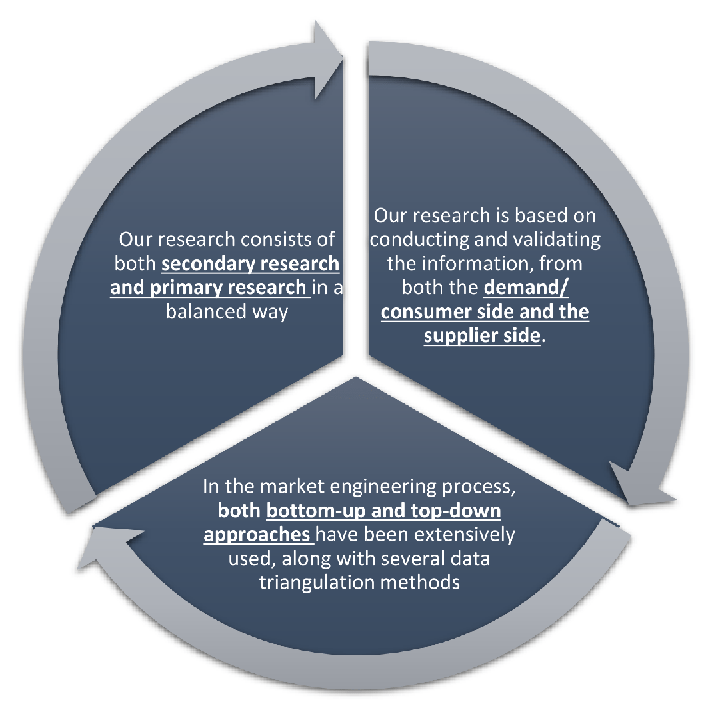
Research Design
Our research design integrates both demand-side and supply-side analysis through a balanced combination of primary and secondary research methodologies. By utilizing both bottom-up and top-down approaches alongside rigorous data triangulation methods, we deliver robust market intelligence that supports strategic decision-making.
MarketGenics' comprehensive research design framework ensures the delivery of accurate, reliable, and actionable market intelligence. Through the integration of multiple research approaches, rigorous validation processes, and expert analysis, we provide our clients with the insights needed to make informed strategic decisions and capitalize on market opportunities.
MarketGenics leverages a dedicated industry panel of experts and a comprehensive suite of paid databases to effectively collect, consolidate, and analyze market intelligence.
Our approach has consistently proven to be reliable and effective in generating accurate market insights, identifying key industry trends, and uncovering emerging business opportunities.
Through both primary and secondary research, we capture and analyze critical company-level data such as manufacturing footprints, including technical centers, R&D facilities, sales offices, and headquarters.
Our expert panel further enhances our ability to estimate market size for specific brands based on validated field-level intelligence.
Our data mining techniques incorporate both parametric and non-parametric methods, allowing for structured data collection, sorting, processing, and cleaning.
Demand projections are derived from large-scale data sets analyzed through proprietary algorithms, culminating in robust and reliable market sizing.
Research Approach
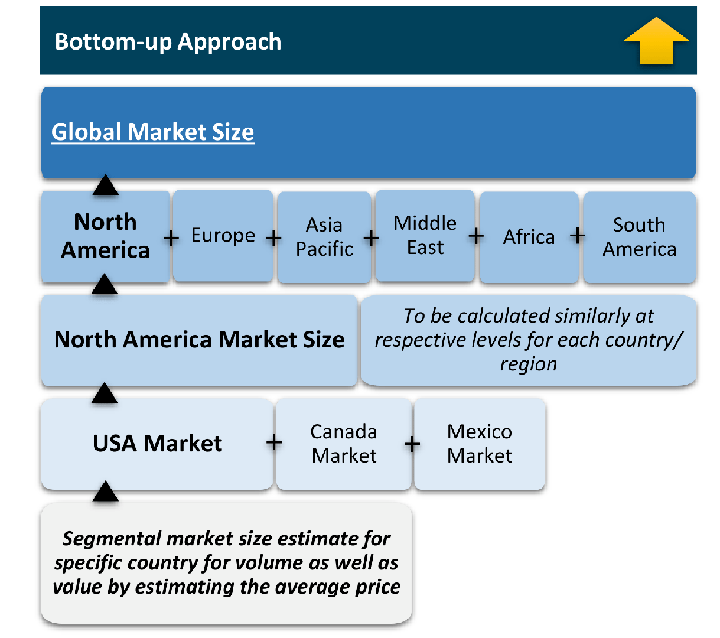
The bottom-up approach builds market estimates by starting with the smallest addressable market units and systematically aggregating them to create comprehensive market size projections.
This method begins with specific, granular data points and builds upward to create the complete market landscape.
Customer Analysis → Segmental Analysis → Geographical Analysis
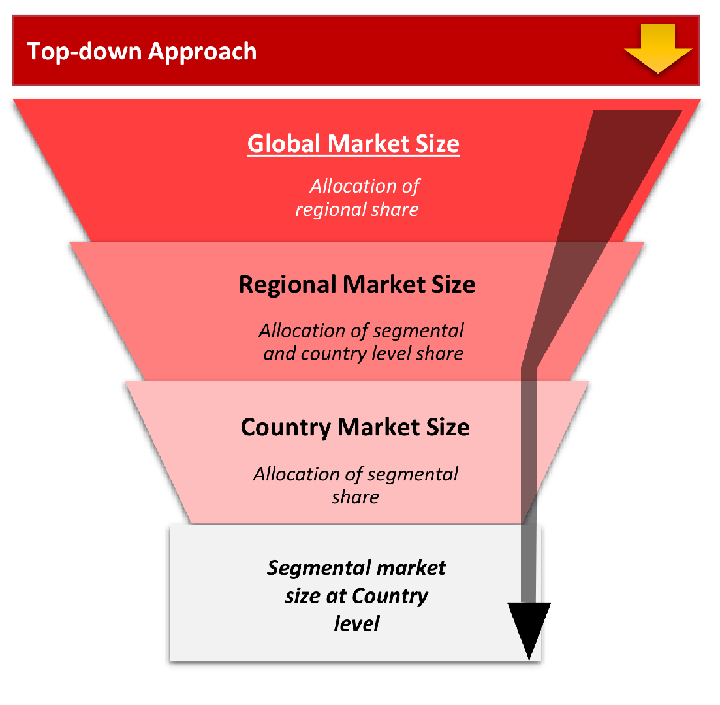
The top-down approach starts with the broadest possible market data and systematically narrows it down through a series of filters and assumptions to arrive at specific market segments or opportunities.
This method begins with the big picture and works downward to increasingly specific market slices.
TAM → SAM → SOM
Research Methods
Desk / Secondary Research
While analysing the market, we extensively study secondary sources, directories, and databases to identify and collect information useful for this technical, market-oriented, and commercial report. Secondary sources that we utilize are not only the public sources, but it is a combination of Open Source, Associations, Paid Databases, MG Repository & Knowledgebase, and others.
- Company websites, annual reports, financial reports, broker reports, and investor presentations
- National government documents, statistical databases and reports
- News articles, press releases and web-casts specific to the companies operating in the market, Magazines, reports, and others
- We gather information from commercial data sources for deriving company specific data such as segmental revenue, share for geography, product revenue, and others
- Internal and external proprietary databases (industry-specific), relevant patent, and regulatory databases
- Governing Bodies, Government Organizations
- Relevant Authorities, Country-specific Associations for Industries
We also employ the model mapping approach to estimate the product level market data through the players' product portfolio
Primary Research
Primary research/ interviews is vital in analyzing the market. Most of the cases involves paid primary interviews. Primary sources include primary interviews through e-mail interactions, telephonic interviews, surveys as well as face-to-face interviews with the different stakeholders across the value chain including several industry experts.
| Type of Respondents | Number of Primaries |
|---|---|
| Tier 2/3 Suppliers | ~20 |
| Tier 1 Suppliers | ~25 |
| End-users | ~25 |
| Industry Expert/ Panel/ Consultant | ~30 |
| Total | ~100 |
MG Knowledgebase
• Repository of industry blog, newsletter and case studies
• Online platform covering detailed market reports, and company profiles
Forecasting Factors and Models
Forecasting Factors
- Historical Trends – Past market patterns, cycles, and major events that shaped how markets behave over time. Understanding past trends helps predict future behavior.
- Industry Factors – Specific characteristics of the industry like structure, regulations, and innovation cycles that affect market dynamics.
- Macroeconomic Factors – Economic conditions like GDP growth, inflation, and employment rates that affect how much money people have to spend.
- Demographic Factors – Population characteristics like age, income, and location that determine who can buy your product.
- Technology Factors – How quickly people adopt new technology and how much technology infrastructure exists.
- Regulatory Factors – Government rules, laws, and policies that can help or restrict market growth.
- Competitive Factors – Analyzing competition structure such as degree of competition and bargaining power of buyers and suppliers.
Forecasting Models / Techniques
Multiple Regression Analysis
- Identify and quantify factors that drive market changes
- Statistical modeling to establish relationships between market drivers and outcomes
Time Series Analysis – Seasonal Patterns
- Understand regular cyclical patterns in market demand
- Advanced statistical techniques to separate trend, seasonal, and irregular components
Time Series Analysis – Trend Analysis
- Identify underlying market growth patterns and momentum
- Statistical analysis of historical data to project future trends
Expert Opinion – Expert Interviews
- Gather deep industry insights and contextual understanding
- In-depth interviews with key industry stakeholders
Multi-Scenario Development
- Prepare for uncertainty by modeling different possible futures
- Creating optimistic, pessimistic, and most likely scenarios
Time Series Analysis – Moving Averages
- Sophisticated forecasting for complex time series data
- Auto-regressive integrated moving average models with seasonal components
Econometric Models
- Apply economic theory to market forecasting
- Sophisticated economic models that account for market interactions
Expert Opinion – Delphi Method
- Harness collective wisdom of industry experts
- Structured, multi-round expert consultation process
Monte Carlo Simulation
- Quantify uncertainty and probability distributions
- Thousands of simulations with varying input parameters
Research Analysis
Our research framework is built upon the fundamental principle of validating market intelligence from both demand and supply perspectives. This dual-sided approach ensures comprehensive market understanding and reduces the risk of single-source bias.
Demand-Side Analysis: We understand end-user/application behavior, preferences, and market needs along with the penetration of the product for specific application.
Supply-Side Analysis: We estimate overall market revenue, analyze the segmental share along with industry capacity, competitive landscape, and market structure.
Validation & Evaluation
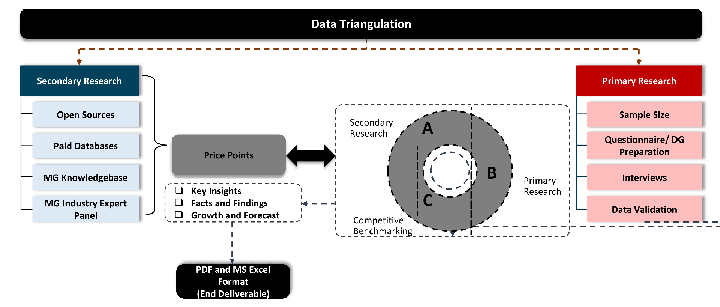
Data triangulation is a validation technique that uses multiple methods, sources, or perspectives to examine the same research question, thereby increasing the credibility and reliability of research findings. In market research, triangulation serves as a quality assurance mechanism that helps identify and minimize bias, validate assumptions, and ensure accuracy in market estimates.
- Data Source Triangulation – Using multiple data sources to examine the same phenomenon
- Methodological Triangulation – Using multiple research methods to study the same research question
- Investigator Triangulation – Using multiple researchers or analysts to examine the same data
- Theoretical Triangulation – Using multiple theoretical perspectives to interpret the same data
Custom Market Research Services
We will customise the research for you, in case the report listed above does not meet your requirements.
Get 10% Free Customisation