Home Standby Gensets Market Size, Share & Trends Analysis Report by Rated Power (Below 10 kW, 10-30 kW, 30-50 kW, Above 50 kW), Voltage Rating, Fuel Type, Cooling System, Phase Type, Enclosure Type, Installation Type, Application, Technology/Control System, End-Users, and Geography (North America, Europe, Asia Pacific, Middle East, Africa, and South America) – Global Industry Data, Trends, and Forecasts, 2026–2035
|
|
|
Segmental Data Insights |
|
|
Demand Trends |
|
|
Competitive Landscape |
|
|
Strategic Development |
|
|
Future Outlook & Opportunities |
|
Home Standby Gensets Market Size, Share, and Growth
The global home standby gensets market is experiencing robust growth, with its estimated value of USD 9.1 billion in the year 2025 and USD 17.4 billion by the period 2035, registering a CAGR of 6.7%, during the forecast period. The global home standby gensets market demand is driven by increasing power outages, rising adoption of smart homes, growing reliance on electrical appliances, and the need for uninterrupted power supply, alongside advancements in fuel-efficient, low-emission, and hybrid backup solutions.

Generac CEO Aaron Jagdfeld said, "The new design incorporates years of feedback from customers and dealers and is another bold step forward for the home standby generator category. Not only do these products help protect our customers in the event of a storm or outage, but they also integrate across our product ecosystem, empowering them to take control of their power needs as they continue to navigate mounting energy challenges."
The global home standby gensets market is supported by the rising grid instability and rising rate of long-term power interruption, which still continue to foster a demand of reliable and uninterrupted residential backup power. As an example, in January 2025 Generac Holdings, Inc. launched a new 28 kW air-cooled standby generator and emphasized the introduction by stating that there was a record of about 1.5 billion hours of power outages in 2024. The trend will to reinforce the need to have high-capacity and advanced home standby power solutions.
Additionally, the home standby gensets market is reinforced by the growing need in the cleaner, more energy-efficient, backup power systems in correspondence with the emerging environmental and regulatory requirements. For instance, in February 2025, this is reflected in Rolls-Royce Power Systems enhancement of its mtu Series 1600 gensets for the 50 Hz market, delivering higher power density and reduced emissions. This development should enhance the uptake of performance and environmentally compliant home standby power systems in the market.
Adjacent opportunities in the global home standby gensets market include hybrid solar-generator backup systems, residential battery energy storage, smart home energy-management platforms, low-emission micro-cogeneration units, and residential-scale fuel-cell backup solutions. Increasing electrification and resilience requirements place these segments in the fast-tracked investment and collaboration with back-up power systems. These adjacencies will diversify income and strengthen the market standing in the long run.

Home Standby Gensets Market Dynamics and Trends
Driver: Escalating Grid Unreliability Increases Demand for Reliable Residential Standby Capacity
-
The global home standby gensets market is increasingly shaped by the declining grid reliability, as it is wrought by extreme weather events, aging transmission networks, and variable generation capacity, which is exacerbating the need to have reliable residential backup systems that can meet the essential loads during prolonged outages.
- For instance, in August 2025, Caterpillar Inc. released the Cat D1500 diesel generator, which produces 1.5MW using a small 32.1-liter engine, a smaller footprint by 13% and 32% less weight, in a tight-space installation. The introduction is set to spearhead the high-capacity residential standby solutions with great capacity.
- Additionally, OEMs are focusing on quick start-capability, remote monitoring, and robust dealer service networks to minimize downtime, which has helped people to move away to portable units to permanently fixed standby systems and speed up the turnover of old backup resources.
- The increased short-term demand of the higher capacity, serviceable standby solutions and the increased aftermarket revenues.
Restraint: High Upfront Capital Cost and Regulatory Compliance Raise Adoption Barriers
-
The global home standby gensets market faces adoption constraints because of high initial cost of the equipment, professional installation, emission compliance, and maintenance, further complicated by stricter and stricter local emissions and noise rules, despite the obvious benefit of having reliable residential backup power.
- Additionally, the major equipment manufacturers have highlighted these cost and supply issues within investor disclosures. For example, Caterpillar’s regulatory filings and quarterly reports for 2024–2025 cite rising input costs, logistical delays, and component shortages, which may elevate prices and extend delivery timelines for end customers.
- For many homeowners Because of the high total ownership cost, such as equipment, permits, installation, and maintenance, reach in the market is restricted, and the necessity to comply with low-NOx and acoustic requirements further increases the complexity and cost, and OEMs have to balance regulation with competitive prices.
- Adoption will remain concentrated among higher-income segments and regions with high outage risk unless costs decrease or incentives are provided.
Opportunity: Integration of Solar and Storage Creates Hybrid Residential Backup Markets
-
The global home standby gensets market is expanding into the adjacent segment of hybrid solar-plus-generator solutions due to the incorporation of photovoltaic generation, battery storage, and smart load management, all of which decrease the amount of time spent on the generator operation, lessen fuel use, and decrease emissions during power outages.
- For instance, in September 2024, Eaton has introduced the AbleEdge home energy management system, which provides a highly integrated, simple-to-install solution that allows energy flexibility and resilience to both retrofit and new constructions, with smart breakers, microgrid interconnect devices and intelligent panels.
- Additionally, these hybrid systems minimize genset operating hours, fuel expenses, higher standards of emissions and allow energy arbitrage and channel partners switch the sales to the integrated energy system provider instead of the traditional dealers.
- Hybrid solar-plus-generator solutions are expected to boost the market, create new income opportunities for OEMs and channel partners, and promote sustainable and efficient residential backup power systems.
Key Trend: Digitalization and Remote Telematics Enable Predictive Maintenance and Seamless Monitoring
-
The global home standby gensets market is moving towards a more active use of telematics, IoT sensors, and cloud analytics to switch to condition-based, predictive service models rather than being reactive to reduce the number of unplanned downtimes and also reduce operational costs.
- Additionally, industry demonstrations in 2025 highlight the integrated building and energy management systems, which introduce remote monitoring, fault-diagnostics, and over-the-air updates as part of the standby power systems to provide fleet-level uptime guarantees and allow pay-for-performance service contracts.
- For instance, in March 2025, Siemens Smart Infrastructure will showcase a range of innovative, easily deployable building products and systems for integrators, installers, and OEMs under the theme “Technology to Transform Buildings.” These digital capabilities allow manufacturers to differentiate products, offer subscription services, and generate recurring revenue through telematics-based maintenance and warranties.
- The integration of telematics and digital building solutions is expected to enhance system reliability, drive service-based revenue models, and accelerate the adoption of advanced, connected home standby genset solutions.

Home-Standby-Gensets-Market Analysis and Segmental Data
Whole House Backup Dominate Global Home Standby Gensets Market
-
The whole house backup segment dominates the home standby gensets market, due to a rise in the frequency of power outages and strong dependence on residential electrical equipment is driving the market in whole-house backup systems to provide reliable power supply.
- For instance, in July 2024, Kohler launched the Command PRO EFI residential standby generator series, featuring 25% lower emissions, improved cold-start performance, and sufficient power to support full-home loads under strict environmental and noise standards. This release enhances the use of whole-home backup systems with high performance coupled with regulatory compliance and environmental friendliness.
- Additionally, increasing the use of smart homes and connected devices is creating the demand to have a highly structured backup system that can serve the whole household during grid outages. This tendency will probably boost the need in integrated and high capacity home standby gensets in intelligent residential settings.
- The increased use of smart homes and large capacity backup solutions will lead to healthy growth of the entire house standby gensets market.
North America Leads Global Home Standby Gensets Market Demand
-
North America leads the global home standby gensets market is owing to the combination of frequent power outages, extreme weather events, and well-developed residential electrification. The dependence on electric devices and appliances, as well as on HVAC systems and smart homes, has in households has provided the high demand of the reliable backup solution which can provide continuous power supply to whole houses.
- For instance, in October 2024, Generac Holdings, Inc. reported a 28 % year‑on‑year increase in its residential generator sales during Q3, driven largely by soaring power‑outage activity across the U.S. Rising power outages are driving strong growth in U.S. residential generator sales.
- Furthermore, there are government incentives and energy policies within the area that has stimulated the use of energy efficient and low-emission generators, which further supports the growth of the market.
- The major brands such as Generac, Cummins and Kohler with strong distribution and after sales channels entrench the supremacy of North America, and increasing consumer awareness and innovation around hybrid and interconnected generators is facilitating their mass adoption.
- The strong growth and leadership in the global home standby gensets market is being fuelled by frequent outages, supportive policies, and technological innovations, which are contributing to the robust growth and continuous leadership in North America.
Home-Standby-Gensets-Market Ecosystem
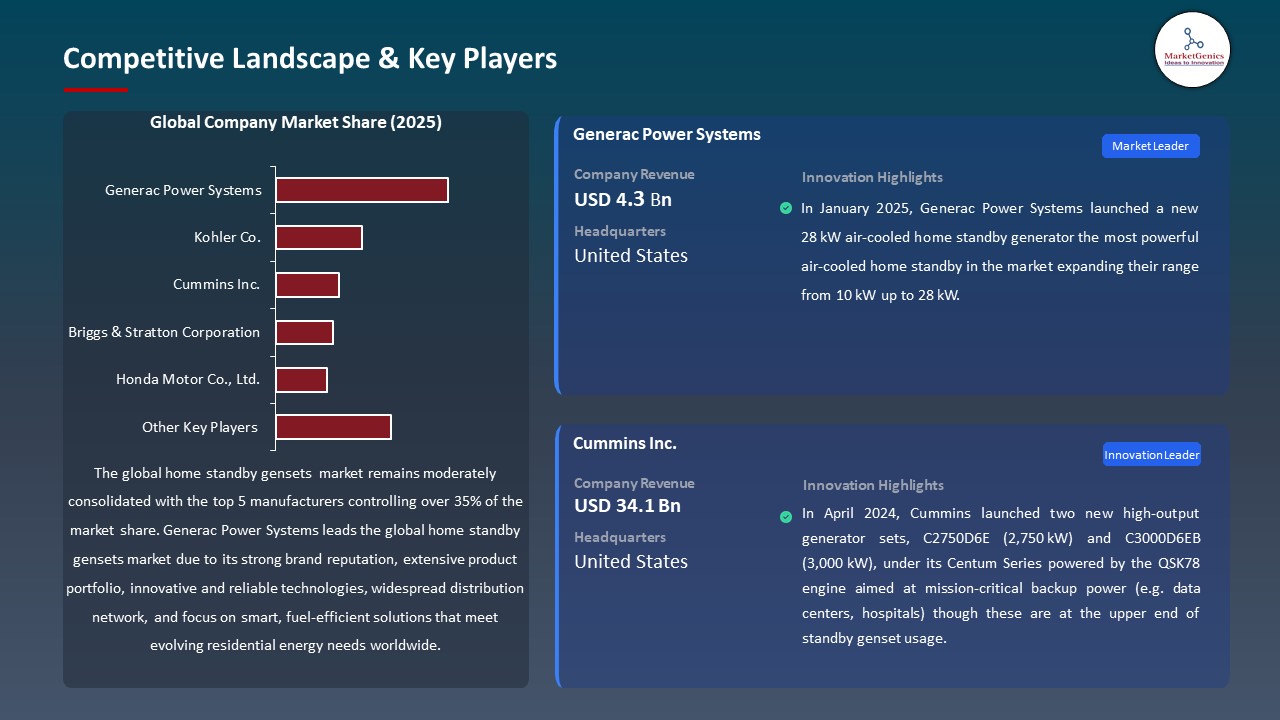
The global home standby gensets market is moderately consolidated, with high concentration among key players such as Generac Power Systems, Kohler Co., Cummins Inc., Briggs & Stratton Corporation, and Honda Motor Co., Ltd., who dominate through large distribution networks, dominant brand recognition, constant product innovation and after sales and services, which offer dominance with large market share and power on the price, technology uptake, and consumer preference in major.
Recent Development and Strategic Overview:
-
In January 2025, Generac has introduced its most powerful air‑cooled home standby generator to date, a 28kW model, thereby broadening its residential standby portfolio, which now spans 10–28 kW. The new unit features an enhanced engine design, integrated cellular connectivity, advanced electronic fuel and ignition control, and increased load-handling capacity, supporting applications such as a 5‑ton air conditioning system.
- In April 2024, Cummins has launched two new high-output generator sets, the C2750D6E (2,750 kW) and C3000D6EB (3,000 kW), as part of its Centum Series, powered by the QSK78 engine. These units are designed to deliver mission-critical backup power for applications such as data centers and hospitals, representing the upper echelon of standby generator capacity.
Report Scope
|
Detail |
|
|
Market Size in 2025 |
USD 9.1 Bn |
|
Market Forecast Value in 2035 |
USD 17.4 Bn |
|
Growth Rate (CAGR) |
6.7% |
|
Forecast Period |
2026 – 2035 |
|
Historical Data Available for |
2021 – 2024 |
|
Market Size Units |
US$ Billion for Value |
|
Report Format |
Electronic (PDF) + Excel |
|
North America |
Europe |
Asia Pacific |
Middle East |
Africa |
South America |
|
|
|
|
|
|
|
Companies Covered |
|||||
|
|
|
|
|
|
Home-Standby-Gensets-Market Segmentation and Highlights
|
Segment |
Sub-segment |
|
Home Standby Gensets Market, By Rated Power |
|
|
Home Standby Gensets Market, By Voltage Rating |
|
|
Home Standby Gensets Market, By Fuel Type |
|
|
Home Standby Gensets Market, By Cooling System |
|
|
Home Standby Gensets Market, By Phase Type |
|
|
Home Standby Gensets Market, By Enclosure Type
|
|
|
Home Standby Gensets Market, By Installation Type |
|
|
Home Standby Gensets Market, By Application
|
|
|
Home Standby Gensets Market, By Technology/Control System |
|
|
Home Standby Gensets Market, By End-Users |
|
Frequently Asked Questions
Table of Contents
- 1. Research Methodology and Assumptions
- 1.1. Definitions
- 1.2. Research Design and Approach
- 1.3. Data Collection Methods
- 1.4. Base Estimates and Calculations
- 1.5. Forecasting Models
- 1.5.1. Key Forecast Factors & Impact Analysis
- 1.6. Secondary Research
- 1.6.1. Open Sources
- 1.6.2. Paid Databases
- 1.6.3. Associations
- 1.7. Primary Research
- 1.7.1. Primary Sources
- 1.7.2. Primary Interviews with Stakeholders across Ecosystem
- 2. Executive Summary
- 2.1. Global Home Standby Gensets Market Outlook
- 2.1.1. Home Standby Gensets Market Size (Value - US$ Bn), and Forecasts, 2021-2035
- 2.1.2. Compounded Annual Growth Rate Analysis
- 2.1.3. Growth Opportunity Analysis
- 2.1.4. Segmental Share Analysis
- 2.1.5. Geographical Share Analysis
- 2.2. Market Analysis and Facts
- 2.3. Supply-Demand Analysis
- 2.4. Competitive Benchmarking
- 2.5. Go-to- Market Strategy
- 2.5.1. Customer/ End-use Industry Assessment
- 2.5.2. Growth Opportunity Data, 2026-2035
- 2.5.2.1. Regional Data
- 2.5.2.2. Country Data
- 2.5.2.3. Segmental Data
- 2.5.3. Identification of Potential Market Spaces
- 2.5.4. GAP Analysis
- 2.5.5. Potential Attractive Price Points
- 2.5.6. Prevailing Market Risks & Challenges
- 2.5.7. Preferred Sales & Marketing Strategies
- 2.5.8. Key Recommendations and Analysis
- 2.5.9. A Way Forward
- 2.1. Global Home Standby Gensets Market Outlook
- 3. Industry Data and Premium Insights
- 3.1. Global Energy & Power Industry Overview, 2025
- 3.1.1. Energy & Power Industry Ecosystem Analysis
- 3.1.2. Key Trends for Energy & Power Industry
- 3.1.3. Regional Distribution for Energy & Power Industry
- 3.2. Supplier Customer Data
- 3.3. Technology Roadmap and Developments
- 3.4. Trade Analysis
- 3.4.1. Import & Export Analysis, 2025
- 3.4.2. Top Importing Countries
- 3.4.3. Top Exporting Countries
- 3.5. Trump Tariff Impact Analysis
- 3.5.1. Manufacturer
- 3.5.1.1. Based on the component & Raw material
- 3.5.2. Supply Chain
- 3.5.3. End Consumer
- 3.5.1. Manufacturer
- 3.6. Raw Material Analysis
- 3.1. Global Energy & Power Industry Overview, 2025
- 4. Market Overview
- 4.1. Market Dynamics
- 4.1.1. Drivers
- 4.1.1.1. Increasing frequency of power outages and need for reliable home backup
- 4.1.1.2. Rising awareness of energy reliability and uninterrupted power supply
- 4.1.1.3. Technological advancements like fuel efficiency, quieter operation, and smart-home integration
- 4.1.2. Restraints
- 4.1.2.1. High initial cost and complex installation
- 4.1.2.2. Noise, emissions, and regulatory restrictions
- 4.1.1. Drivers
- 4.2. Key Trend Analysis
- 4.3. Regulatory Framework
- 4.3.1. Key Regulations, Norms, and Subsidies, by Key Countries
- 4.3.2. Tariffs and Standards
- 4.3.3. Impact Analysis of Regulations on the Market
- 4.4. Value Chain Analysis
- 4.4.1. Component Suppliers
- 4.4.2. Home Standby Gensets Manufacturers
- 4.4.3. Distribution & Logistics
- 4.4.4. End-Users/Application
- 4.5. Porter’s Five Forces Analysis
- 4.6. PESTEL Analysis
- 4.7. Global Home Standby Gensets Market Demand
- 4.7.1. Historical Market Size –Value (US$ Bn), 2020-2024
- 4.7.2. Current and Future Market Size –Value (US$ Bn), 2026–2035
- 4.7.2.1. Y-o-Y Growth Trends
- 4.7.2.2. Absolute $ Opportunity Assessment
- 4.1. Market Dynamics
- 5. Competition Landscape
- 5.1. Competition structure
- 5.1.1. Fragmented v/s consolidated
- 5.2. Company Share Analysis, 2025
- 5.2.1. Global Company Market Share
- 5.2.2. By Region
- 5.2.2.1. North America
- 5.2.2.2. Europe
- 5.2.2.3. Asia Pacific
- 5.2.2.4. Middle East
- 5.2.2.5. Africa
- 5.2.2.6. South America
- 5.3. Product Comparison Matrix
- 5.3.1. Specifications
- 5.3.2. Market Positioning
- 5.3.3. Pricing
- 5.1. Competition structure
- 6. Global Home Standby Gensets Market Analysis, by Rated Power
- 6.1. Key Segment Analysis
- 6.2. Home Standby Gensets Market Size (Value - US$ Bn), Analysis, and Forecasts, by Rated Power, 2021-2035
- 6.2.1. Below 10 kW
- 6.2.2. 10-30 kW
- 6.2.3. 30-50 kW
- 6.2.4. Above 50 kW
- 7. Global Home Standby Gensets Market Analysis, by Voltage Rating
- 7.1. Key Segment Analysis
- 7.2. Home Standby Gensets Market Size (Value - US$ Bn), Analysis, and Forecasts, by Voltage Rating, 2021-2035
- 7.2.1. 120V
- 7.2.2. 240V
- 7.2.3. 120/240V (Split Phase)
- 7.2.4. 480V
- 8. Global Home Standby Gensets Market Analysis, by Fuel Type
- 8.1. Key Segment Analysis
- 8.2. Home Standby Gensets Market Size (Value - US$ Bn), Analysis, and Forecasts, by Fuel Type, 2021-2035
- 8.2.1. Natural Gas
- 8.2.2. Liquid Propane (LP)
- 8.2.3. Diesel
- 8.2.4. Bi-Fuel (Dual Fuel)
- 8.2.5. Gasoline
- 9. Global Home Standby Gensets Market Analysis, by Cooling System
- 9.1. Key Segment Analysis
- 9.2. Home Standby Gensets Market Size (Value - US$ Bn), Analysis, and Forecasts, by Cooling System, 2021-2035
- 9.2.1. Air-Cooled
- 9.2.2. Liquid-Cooled
- 10. Global Home Standby Gensets Market Analysis, by Phase Type
- 10.1. Key Segment Analysis
- 10.2. Home Standby Gensets Market Size (Value - US$ Bn), Analysis, and Forecasts, by Phase Type, 2021-2035
- 10.2.1. Single Phase
- 10.2.2. Three Phase
- 11. Global Home Standby Gensets Market Analysis, by Enclosure Type
- 11.1. Key Segment Analysis
- 11.2. Home Standby Gensets Market Size (Value - US$ Bn), Analysis, and Forecasts, by Enclosure Type, 2021-2035
- 11.2.1. Open Type
- 11.2.2. Enclosed/Weatherproof Type
- 11.2.3. Soundproof/Acoustic Enclosure
- 12. Global Home Standby Gensets Market Analysis, by Installation Type
- 12.1. Key Segment Analysis
- 12.2. Home Standby Gensets Market Size (Value - US$ Bn), Analysis, and Forecasts, by Installation Type, 2021-2035
- 12.2.1. Portable/Mobile
- 12.2.2. Stationary/Fixed Installation
- 13. Global Home Standby Gensets Market Analysis, by Application
- 13.1. Key Segment Analysis
- 13.2. Home Standby Gensets Market Size (Value - US$ Bn), Analysis, and Forecasts, by Application, 2021-2035
- 13.2.1. Whole House Backup
- 13.2.2. Partial House Backup
- 13.2.3. Essential Circuits Only
- 13.2.4. Critical Appliances Only
- 14. Global Home Standby Gensets Market Analysis, by Technology/Control System
- 14.1. Key Segment Analysis
- 14.2. Home Standby Gensets Market Size (Value - US$ Bn), Analysis, and Forecasts, by Technology/Control System, 2021-2035
- 14.2.1. Conventional/Basic Control
- 14.2.2. Smart/IoT-Enabled
- 14.2.3. Mobile App Connected
- 14.2.4. Remote Monitoring Systems
- 14.2.5. Others
- 15. Global Home Standby Gensets Market Analysis, by End-Users
- 15.1. Key Segment Analysis
- 15.2. Home Standby Gensets Market Size (Value - US$ Bn), Analysis, and Forecasts, by End-Users, 2021-2035
- 15.2.1. Residential Individual Homes
- 15.2.1.1. Single-Family Homes
- 15.2.1.2. Multi-Family Homes
- 15.2.1.3. Luxury Villas/Estates
- 15.2.1.4. Rural/Remote Residences
- 15.2.1.5. Others
- 15.2.2. Residential Complexes
- 15.2.2.1. Apartment Buildings
- 15.2.2.2. Condominiums
- 15.2.2.3. Gated Communities
- 15.2.2.4. Townhouses
- 15.2.2.5. Others
- 15.2.1. Residential Individual Homes
- 16. Global Home Standby Gensets Market Analysis and Forecasts, by Region
- 16.1. Key Findings
- 16.2. Home Standby Gensets Market Size (Value - US$ Bn), Analysis, and Forecasts, by Region, 2021-2035
- 16.2.1. North America
- 16.2.2. Europe
- 16.2.3. Asia Pacific
- 16.2.4. Middle East
- 16.2.5. Africa
- 16.2.6. South America
- 17. North America Home Standby Gensets Market Analysis
- 17.1. Key Segment Analysis
- 17.2. Regional Snapshot
- 17.3. North America Home Standby Gensets Market Size (Value - US$ Bn), Analysis, and Forecasts, 2021-2035
- 17.3.1. Rated Power
- 17.3.2. Voltage Rating
- 17.3.3. Fuel Type
- 17.3.4. Cooling System
- 17.3.5. Phase Type
- 17.3.6. Enclosure Type
- 17.3.7. Installation Type
- 17.3.8. Application
- 17.3.9. Technology/Control System
- 17.3.10. End-Users
- 17.3.11. Country
- 17.3.11.1. USA
- 17.3.11.2. Canada
- 17.3.11.3. Mexico
- 17.4. USA Home Standby Gensets Market
- 17.4.1. Country Segmental Analysis
- 17.4.2. Rated Power
- 17.4.3. Voltage Rating
- 17.4.4. Fuel Type
- 17.4.5. Cooling System
- 17.4.6. Phase Type
- 17.4.7. Enclosure Type
- 17.4.8. Installation Type
- 17.4.9. Application
- 17.4.10. Technology/Control System
- 17.4.11. End-Users
- 17.5. Canada Home Standby Gensets Market
- 17.5.1. Country Segmental Analysis
- 17.5.2. Rated Power
- 17.5.3. Voltage Rating
- 17.5.4. Fuel Type
- 17.5.5. Cooling System
- 17.5.6. Phase Type
- 17.5.7. Enclosure Type
- 17.5.8. Installation Type
- 17.5.9. Application
- 17.5.10. Technology/Control System
- 17.5.11. End-Users
- 17.6. Mexico Home Standby Gensets Market
- 17.6.1. Country Segmental Analysis
- 17.6.2. Rated Power
- 17.6.3. Voltage Rating
- 17.6.4. Fuel Type
- 17.6.5. Cooling System
- 17.6.6. Phase Type
- 17.6.7. Enclosure Type
- 17.6.8. Installation Type
- 17.6.9. Application
- 17.6.10. Technology/Control System
- 17.6.11. End-Users
- 18. Europe Home Standby Gensets Market Analysis
- 18.1. Key Segment Analysis
- 18.2. Regional Snapshot
- 18.3. Europe Home Standby Gensets Market Size (Value - US$ Bn), Analysis, and Forecasts, 2021-2035
- 18.3.1. Rated Power
- 18.3.2. Voltage Rating
- 18.3.3. Fuel Type
- 18.3.4. Cooling System
- 18.3.5. Phase Type
- 18.3.6. Enclosure Type
- 18.3.7. Installation Type
- 18.3.8. Application
- 18.3.9. Technology/Control System
- 18.3.10. End-Users
- 18.3.11. Country
- 18.3.11.1. Germany
- 18.3.11.2. United Kingdom
- 18.3.11.3. France
- 18.3.11.4. Italy
- 18.3.11.5. Spain
- 18.3.11.6. Netherlands
- 18.3.11.7. Nordic Countries
- 18.3.11.8. Poland
- 18.3.11.9. Russia & CIS
- 18.3.11.10. Rest of Europe
- 18.4. Germany Home Standby Gensets Market
- 18.4.1. Country Segmental Analysis
- 18.4.2. Rated Power
- 18.4.3. Voltage Rating
- 18.4.4. Fuel Type
- 18.4.5. Cooling System
- 18.4.6. Phase Type
- 18.4.7. Enclosure Type
- 18.4.8. Installation Type
- 18.4.9. Application
- 18.4.10. Technology/Control System
- 18.4.11. End-Users
- 18.5. United Kingdom Home Standby Gensets Market
- 18.5.1. Country Segmental Analysis
- 18.5.2. Rated Power
- 18.5.3. Voltage Rating
- 18.5.4. Fuel Type
- 18.5.5. Cooling System
- 18.5.6. Phase Type
- 18.5.7. Enclosure Type
- 18.5.8. Installation Type
- 18.5.9. Application
- 18.5.10. Technology/Control System
- 18.5.11. End-Users
- 18.6. France Home Standby Gensets Market
- 18.6.1. Country Segmental Analysis
- 18.6.2. Rated Power
- 18.6.3. Voltage Rating
- 18.6.4. Fuel Type
- 18.6.5. Cooling System
- 18.6.6. Phase Type
- 18.6.7. Enclosure Type
- 18.6.8. Installation Type
- 18.6.9. Application
- 18.6.10. Technology/Control System
- 18.6.11. End-Users
- 18.7. Italy Home Standby Gensets Market
- 18.7.1. Country Segmental Analysis
- 18.7.2. Rated Power
- 18.7.3. Voltage Rating
- 18.7.4. Fuel Type
- 18.7.5. Cooling System
- 18.7.6. Phase Type
- 18.7.7. Enclosure Type
- 18.7.8. Installation Type
- 18.7.9. Application
- 18.7.10. Technology/Control System
- 18.7.11. End-Users
- 18.8. Spain Home Standby Gensets Market
- 18.8.1. Country Segmental Analysis
- 18.8.2. Rated Power
- 18.8.3. Voltage Rating
- 18.8.4. Fuel Type
- 18.8.5. Cooling System
- 18.8.6. Phase Type
- 18.8.7. Enclosure Type
- 18.8.8. Installation Type
- 18.8.9. Application
- 18.8.10. Technology/Control System
- 18.8.11. End-Users
- 18.9. Netherlands Home Standby Gensets Market
- 18.9.1. Country Segmental Analysis
- 18.9.2. Rated Power
- 18.9.3. Voltage Rating
- 18.9.4. Fuel Type
- 18.9.5. Cooling System
- 18.9.6. Phase Type
- 18.9.7. Enclosure Type
- 18.9.8. Installation Type
- 18.9.9. Application
- 18.9.10. Technology/Control System
- 18.9.11. End-Users
- 18.10. Nordic Countries Home Standby Gensets Market
- 18.10.1. Country Segmental Analysis
- 18.10.2. Rated Power
- 18.10.3. Voltage Rating
- 18.10.4. Fuel Type
- 18.10.5. Cooling System
- 18.10.6. Phase Type
- 18.10.7. Enclosure Type
- 18.10.8. Installation Type
- 18.10.9. Application
- 18.10.10. Technology/Control System
- 18.10.11. End-Users
- 18.11. Poland Home Standby Gensets Market
- 18.11.1. Country Segmental Analysis
- 18.11.2. Rated Power
- 18.11.3. Voltage Rating
- 18.11.4. Fuel Type
- 18.11.5. Cooling System
- 18.11.6. Phase Type
- 18.11.7. Enclosure Type
- 18.11.8. Installation Type
- 18.11.9. Application
- 18.11.10. Technology/Control System
- 18.11.11. End-Users
- 18.12. Russia & CIS Home Standby Gensets Market
- 18.12.1. Country Segmental Analysis
- 18.12.2. Rated Power
- 18.12.3. Voltage Rating
- 18.12.4. Fuel Type
- 18.12.5. Cooling System
- 18.12.6. Phase Type
- 18.12.7. Enclosure Type
- 18.12.8. Installation Type
- 18.12.9. Application
- 18.12.10. Technology/Control System
- 18.12.11. End-Users
- 18.13. Rest of Europe Home Standby Gensets Market
- 18.13.1. Country Segmental Analysis
- 18.13.2. Rated Power
- 18.13.3. Voltage Rating
- 18.13.4. Fuel Type
- 18.13.5. Cooling System
- 18.13.6. Phase Type
- 18.13.7. Enclosure Type
- 18.13.8. Installation Type
- 18.13.9. Application
- 18.13.10. Technology/Control System
- 18.13.11. End-Users
- 19. Asia Pacific Home Standby Gensets Market Analysis
- 19.1. Key Segment Analysis
- 19.2. Regional Snapshot
- 19.3. Asia Pacific Home Standby Gensets Market Size (Value - US$ Bn), Analysis, and Forecasts, 2021-2035
- 19.3.1. Rated Power
- 19.3.2. Voltage Rating
- 19.3.3. Fuel Type
- 19.3.4. Cooling System
- 19.3.5. Phase Type
- 19.3.6. Enclosure Type
- 19.3.7. Installation Type
- 19.3.8. Application
- 19.3.9. Technology/Control System
- 19.3.10. End-Users
- 19.3.11. Country
- 19.3.11.1. China
- 19.3.11.2. India
- 19.3.11.3. Japan
- 19.3.11.4. South Korea
- 19.3.11.5. Australia and New Zealand
- 19.3.11.6. Indonesia
- 19.3.11.7. Malaysia
- 19.3.11.8. Thailand
- 19.3.11.9. Vietnam
- 19.3.11.10. Rest of Asia Pacific
- 19.4. China Home Standby Gensets Market
- 19.4.1. Country Segmental Analysis
- 19.4.2. Rated Power
- 19.4.3. Voltage Rating
- 19.4.4. Fuel Type
- 19.4.5. Cooling System
- 19.4.6. Phase Type
- 19.4.7. Enclosure Type
- 19.4.8. Installation Type
- 19.4.9. Application
- 19.4.10. Technology/Control System
- 19.4.11. End-Users
- 19.5. India Home Standby Gensets Market
- 19.5.1. Country Segmental Analysis
- 19.5.2. Rated Power
- 19.5.3. Voltage Rating
- 19.5.4. Fuel Type
- 19.5.5. Cooling System
- 19.5.6. Phase Type
- 19.5.7. Enclosure Type
- 19.5.8. Installation Type
- 19.5.9. Application
- 19.5.10. Technology/Control System
- 19.5.11. End-Users
- 19.6. Japan Home Standby Gensets Market
- 19.6.1. Country Segmental Analysis
- 19.6.2. Rated Power
- 19.6.3. Voltage Rating
- 19.6.4. Fuel Type
- 19.6.5. Cooling System
- 19.6.6. Phase Type
- 19.6.7. Enclosure Type
- 19.6.8. Installation Type
- 19.6.9. Application
- 19.6.10. Technology/Control System
- 19.6.11. End-Users
- 19.7. South Korea Home Standby Gensets Market
- 19.7.1. Country Segmental Analysis
- 19.7.2. Rated Power
- 19.7.3. Voltage Rating
- 19.7.4. Fuel Type
- 19.7.5. Cooling System
- 19.7.6. Phase Type
- 19.7.7. Enclosure Type
- 19.7.8. Installation Type
- 19.7.9. Application
- 19.7.10. Technology/Control System
- 19.7.11. End-Users
- 19.8. Australia and New Zealand Home Standby Gensets Market
- 19.8.1. Country Segmental Analysis
- 19.8.2. Rated Power
- 19.8.3. Voltage Rating
- 19.8.4. Fuel Type
- 19.8.5. Cooling System
- 19.8.6. Phase Type
- 19.8.7. Enclosure Type
- 19.8.8. Installation Type
- 19.8.9. Application
- 19.8.10. Technology/Control System
- 19.8.11. End-Users
- 19.9. Indonesia Home Standby Gensets Market
- 19.9.1. Country Segmental Analysis
- 19.9.2. Rated Power
- 19.9.3. Voltage Rating
- 19.9.4. Fuel Type
- 19.9.5. Cooling System
- 19.9.6. Phase Type
- 19.9.7. Enclosure Type
- 19.9.8. Installation Type
- 19.9.9. Application
- 19.9.10. Technology/Control System
- 19.9.11. End-Users
- 19.10. Malaysia Home Standby Gensets Market
- 19.10.1. Country Segmental Analysis
- 19.10.2. Rated Power
- 19.10.3. Voltage Rating
- 19.10.4. Fuel Type
- 19.10.5. Cooling System
- 19.10.6. Phase Type
- 19.10.7. Enclosure Type
- 19.10.8. Installation Type
- 19.10.9. Application
- 19.10.10. Technology/Control System
- 19.10.11. End-Users
- 19.11. Thailand Home Standby Gensets Market
- 19.11.1. Country Segmental Analysis
- 19.11.2. Rated Power
- 19.11.3. Voltage Rating
- 19.11.4. Fuel Type
- 19.11.5. Cooling System
- 19.11.6. Phase Type
- 19.11.7. Enclosure Type
- 19.11.8. Installation Type
- 19.11.9. Application
- 19.11.10. Technology/Control System
- 19.11.11. End-Users
- 19.12. Vietnam Home Standby Gensets Market
- 19.12.1. Country Segmental Analysis
- 19.12.2. Rated Power
- 19.12.3. Voltage Rating
- 19.12.4. Fuel Type
- 19.12.5. Cooling System
- 19.12.6. Phase Type
- 19.12.7. Enclosure Type
- 19.12.8. Installation Type
- 19.12.9. Application
- 19.12.10. Technology/Control System
- 19.12.11. End-Users
- 19.13. Rest of Asia Pacific Home Standby Gensets Market
- 19.13.1. Country Segmental Analysis
- 19.13.2. Rated Power
- 19.13.3. Voltage Rating
- 19.13.4. Fuel Type
- 19.13.5. Cooling System
- 19.13.6. Phase Type
- 19.13.7. Enclosure Type
- 19.13.8. Installation Type
- 19.13.9. Application
- 19.13.10. Technology/Control System
- 19.13.11. End-Users
- 20. Middle East Home Standby Gensets Market Analysis
- 20.1. Key Segment Analysis
- 20.2. Regional Snapshot
- 20.3. Middle East Home Standby Gensets Market Size (Value - US$ Bn), Analysis, and Forecasts, 2021-2035
- 20.3.1. Rated Power
- 20.3.2. Voltage Rating
- 20.3.3. Fuel Type
- 20.3.4. Cooling System
- 20.3.5. Phase Type
- 20.3.6. Enclosure Type
- 20.3.7. Installation Type
- 20.3.8. Application
- 20.3.9. Technology/Control System
- 20.3.10. End-Users
- 20.3.11. Country
- 20.3.11.1. Turkey
- 20.3.11.2. UAE
- 20.3.11.3. Saudi Arabia
- 20.3.11.4. Israel
- 20.3.11.5. Rest of Middle East
- 20.4. Turkey Home Standby Gensets Market
- 20.4.1. Country Segmental Analysis
- 20.4.2. Rated Power
- 20.4.3. Voltage Rating
- 20.4.4. Fuel Type
- 20.4.5. Cooling System
- 20.4.6. Phase Type
- 20.4.7. Enclosure Type
- 20.4.8. Installation Type
- 20.4.9. Application
- 20.4.10. Technology/Control System
- 20.4.11. End-Users
- 20.5. UAE Home Standby Gensets Market
- 20.5.1. Country Segmental Analysis
- 20.5.2. Rated Power
- 20.5.3. Voltage Rating
- 20.5.4. Fuel Type
- 20.5.5. Cooling System
- 20.5.6. Phase Type
- 20.5.7. Enclosure Type
- 20.5.8. Installation Type
- 20.5.9. Application
- 20.5.10. Technology/Control System
- 20.5.11. End-Users
- 20.6. Saudi Arabia Home Standby Gensets Market
- 20.6.1. Country Segmental Analysis
- 20.6.2. Rated Power
- 20.6.3. Voltage Rating
- 20.6.4. Fuel Type
- 20.6.5. Cooling System
- 20.6.6. Phase Type
- 20.6.7. Enclosure Type
- 20.6.8. Installation Type
- 20.6.9. Application
- 20.6.10. Technology/Control System
- 20.6.11. End-Users
- 20.7. Israel Home Standby Gensets Market
- 20.7.1. Country Segmental Analysis
- 20.7.2. Rated Power
- 20.7.3. Voltage Rating
- 20.7.4. Fuel Type
- 20.7.5. Cooling System
- 20.7.6. Phase Type
- 20.7.7. Enclosure Type
- 20.7.8. Installation Type
- 20.7.9. Application
- 20.7.10. Technology/Control System
- 20.7.11. End-Users
- 20.8. Rest of Middle East Home Standby Gensets Market
- 20.8.1. Country Segmental Analysis
- 20.8.2. Rated Power
- 20.8.3. Voltage Rating
- 20.8.4. Fuel Type
- 20.8.5. Cooling System
- 20.8.6. Phase Type
- 20.8.7. Enclosure Type
- 20.8.8. Installation Type
- 20.8.9. Application
- 20.8.10. Technology/Control System
- 20.8.11. End-Users
- 21. Africa Home Standby Gensets Market Analysis
- 21.1. Key Segment Analysis
- 21.2. Regional Snapshot
- 21.3. Africa Home Standby Gensets Market Size (Value - US$ Bn), Analysis, and Forecasts, 2021-2035
- 21.3.1. Rated Power
- 21.3.2. Voltage Rating
- 21.3.3. Fuel Type
- 21.3.4. Cooling System
- 21.3.5. Phase Type
- 21.3.6. Enclosure Type
- 21.3.7. Installation Type
- 21.3.8. Application
- 21.3.9. Technology/Control System
- 21.3.10. End-Users
- 21.3.11. Country
- 21.3.11.1. South Africa
- 21.3.11.2. Egypt
- 21.3.11.3. Nigeria
- 21.3.11.4. Algeria
- 21.3.11.5. Rest of Africa
- 21.4. South Africa Home Standby Gensets Market
- 21.4.1. Country Segmental Analysis
- 21.4.2. Rated Power
- 21.4.3. Voltage Rating
- 21.4.4. Fuel Type
- 21.4.5. Cooling System
- 21.4.6. Phase Type
- 21.4.7. Enclosure Type
- 21.4.8. Installation Type
- 21.4.9. Application
- 21.4.10. Technology/Control System
- 21.4.11. End-Users
- 21.5. Egypt Home Standby Gensets Market
- 21.5.1. Country Segmental Analysis
- 21.5.2. Rated Power
- 21.5.3. Voltage Rating
- 21.5.4. Fuel Type
- 21.5.5. Cooling System
- 21.5.6. Phase Type
- 21.5.7. Enclosure Type
- 21.5.8. Installation Type
- 21.5.9. Application
- 21.5.10. Technology/Control System
- 21.5.11. End-Users
- 21.6. Nigeria Home Standby Gensets Market
- 21.6.1. Country Segmental Analysis
- 21.6.2. Rated Power
- 21.6.3. Voltage Rating
- 21.6.4. Fuel Type
- 21.6.5. Cooling System
- 21.6.6. Phase Type
- 21.6.7. Enclosure Type
- 21.6.8. Installation Type
- 21.6.9. Application
- 21.6.10. Technology/Control System
- 21.6.11. End-Users
- 21.7. Algeria Home Standby Gensets Market
- 21.7.1. Country Segmental Analysis
- 21.7.2. Rated Power
- 21.7.3. Voltage Rating
- 21.7.4. Fuel Type
- 21.7.5. Cooling System
- 21.7.6. Phase Type
- 21.7.7. Enclosure Type
- 21.7.8. Installation Type
- 21.7.9. Application
- 21.7.10. Technology/Control System
- 21.7.11. End-Users
- 21.8. Rest of Africa Home Standby Gensets Market
- 21.8.1. Country Segmental Analysis
- 21.8.2. Rated Power
- 21.8.3. Voltage Rating
- 21.8.4. Fuel Type
- 21.8.5. Cooling System
- 21.8.6. Phase Type
- 21.8.7. Enclosure Type
- 21.8.8. Installation Type
- 21.8.9. Application
- 21.8.10. Technology/Control System
- 21.8.11. End-Users
- 22. South America Home Standby Gensets Market Analysis
- 22.1. Key Segment Analysis
- 22.2. Regional Snapshot
- 22.3. South America Home Standby Gensets Market Size (Value - US$ Bn), Analysis, and Forecasts, 2021-2035
- 22.3.1. Rated Power
- 22.3.2. Voltage Rating
- 22.3.3. Fuel Type
- 22.3.4. Cooling System
- 22.3.5. Phase Type
- 22.3.6. Enclosure Type
- 22.3.7. Installation Type
- 22.3.8. Application
- 22.3.9. Technology/Control System
- 22.3.10. End-Users
- 22.3.11. Country
- 22.3.11.1. Brazil
- 22.3.11.2. Argentina
- 22.3.11.3. Rest of South America
- 22.4. Brazil Home Standby Gensets Market
- 22.4.1. Country Segmental Analysis
- 22.4.2. Rated Power
- 22.4.3. Voltage Rating
- 22.4.4. Fuel Type
- 22.4.5. Cooling System
- 22.4.6. Phase Type
- 22.4.7. Enclosure Type
- 22.4.8. Installation Type
- 22.4.9. Application
- 22.4.10. Technology/Control System
- 22.4.11. End-Users
- 22.5. Argentina Home Standby Gensets Market
- 22.5.1. Country Segmental Analysis
- 22.5.2. Rated Power
- 22.5.3. Voltage Rating
- 22.5.4. Fuel Type
- 22.5.5. Cooling System
- 22.5.6. Phase Type
- 22.5.7. Enclosure Type
- 22.5.8. Installation Type
- 22.5.9. Application
- 22.5.10. Technology/Control System
- 22.5.11. End-Users
- 22.6. Rest of South America Home Standby Gensets Market
- 22.6.1. Country Segmental Analysis
- 22.6.2. Rated Power
- 22.6.3. Voltage Rating
- 22.6.4. Fuel Type
- 22.6.5. Cooling System
- 22.6.6. Phase Type
- 22.6.7. Enclosure Type
- 22.6.8. Installation Type
- 22.6.9. Application
- 22.6.10. Technology/Control System
- 22.6.11. End-Users
- 23. Key Players/ Company Profile
- 23.1. Ashok Leyland (Hinduja Group)
- 23.1.1. Company Details/ Overview
- 23.1.2. Company Financials
- 23.1.3. Key Customers and Competitors
- 23.1.4. Business/ Industry Portfolio
- 23.1.5. Product Portfolio/ Specification Details
- 23.1.6. Pricing Data
- 23.1.7. Strategic Overview
- 23.1.8. Recent Developments
- 23.2. Atlas Copco AB
- 23.3. Briggs & Stratton Corporation
- 23.4. Caterpillar Inc.
- 23.5. Champion Power Equipment
- 23.6. Cummins Inc.
- 23.7. DuroMax Power Equipment
- 23.8. Eaton Corporation
- 23.9. Firman Power Equipment
- 23.10. Generac Power Systems
- 23.11. General Electric (GE)
- 23.12. Himoinsa
- 23.13. Honda Motor Co., Ltd.
- 23.14. Honeywell International Inc.
- 23.15. Kirloskar Oil Engines Limited
- 23.16. Kohler Co.
- 23.17. Mahindra Powerol
- 23.18. MTU Onsite Energy
- 23.19. Perkins Engines Company Limited
- 23.20. Powerica Limited
- 23.21. Pulsar Products Inc.
- 23.22. Siemens AG
- 23.23. Wacker Neuson SE
- 23.24. Westinghouse Electric Corporation
- 23.25. Winco Inc.
- 23.26. Yamaha Motor Corporation
- 23.27. Yanmar Holdings Co., Ltd.
- 23.28. Other Key Players
- 23.1. Ashok Leyland (Hinduja Group)
Note* - This is just tentative list of players. While providing the report, we will cover more number of players based on their revenue and share for each geography
Research Design
Our research design integrates both demand-side and supply-side analysis through a balanced combination of primary and secondary research methodologies. By utilizing both bottom-up and top-down approaches alongside rigorous data triangulation methods, we deliver robust market intelligence that supports strategic decision-making.
MarketGenics' comprehensive research design framework ensures the delivery of accurate, reliable, and actionable market intelligence. Through the integration of multiple research approaches, rigorous validation processes, and expert analysis, we provide our clients with the insights needed to make informed strategic decisions and capitalize on market opportunities.
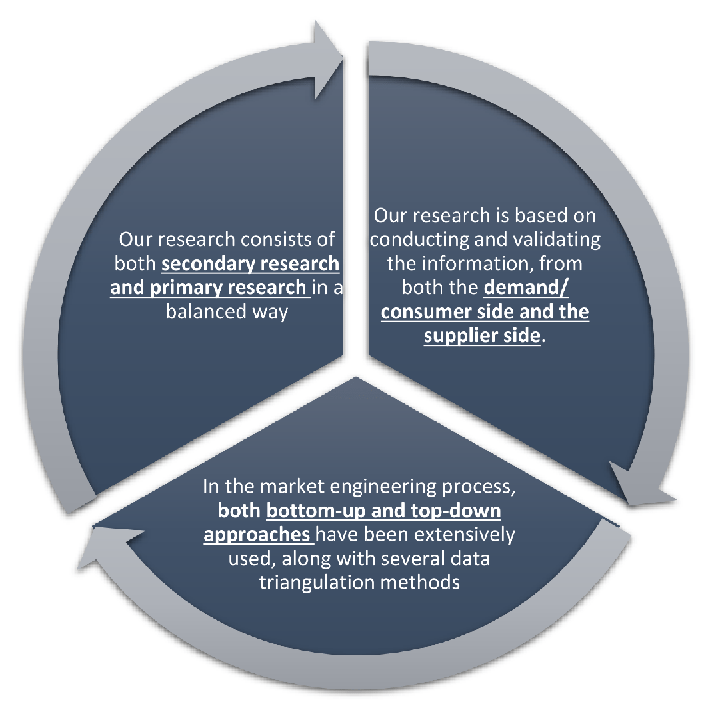
MarketGenics leverages a dedicated industry panel of experts and a comprehensive suite of paid databases to effectively collect, consolidate, and analyze market intelligence.
Our approach has consistently proven to be reliable and effective in generating accurate market insights, identifying key industry trends, and uncovering emerging business opportunities.
Through both primary and secondary research, we capture and analyze critical company-level data such as manufacturing footprints, including technical centers, R&D facilities, sales offices, and headquarters.
Our expert panel further enhances our ability to estimate market size for specific brands based on validated field-level intelligence.
Our data mining techniques incorporate both parametric and non-parametric methods, allowing for structured data collection, sorting, processing, and cleaning.
Demand projections are derived from large-scale data sets analyzed through proprietary algorithms, culminating in robust and reliable market sizing.
Research Approach
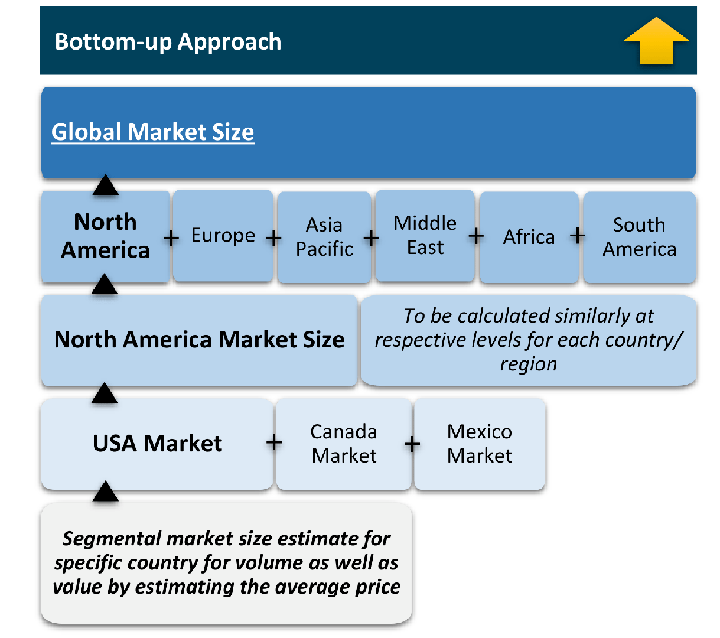
The bottom-up approach builds market estimates by starting with the smallest addressable market units and systematically aggregating them to create comprehensive market size projections.
This method begins with specific, granular data points and builds upward to create the complete market landscape.
Customer Analysis → Segmental Analysis → Geographical Analysis
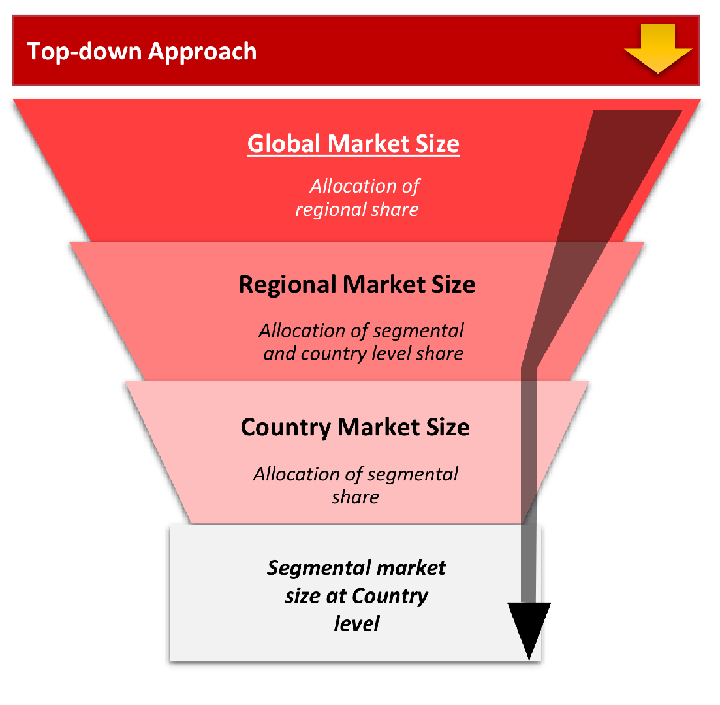
The top-down approach starts with the broadest possible market data and systematically narrows it down through a series of filters and assumptions to arrive at specific market segments or opportunities.
This method begins with the big picture and works downward to increasingly specific market slices.
TAM → SAM → SOM
Research Methods
Desk / Secondary Research
While analysing the market, we extensively study secondary sources, directories, and databases to identify and collect information useful for this technical, market-oriented, and commercial report. Secondary sources that we utilize are not only the public sources, but it is a combination of Open Source, Associations, Paid Databases, MG Repository & Knowledgebase, and others.
- Company websites, annual reports, financial reports, broker reports, and investor presentations
- National government documents, statistical databases and reports
- News articles, press releases and web-casts specific to the companies operating in the market, Magazines, reports, and others
- We gather information from commercial data sources for deriving company specific data such as segmental revenue, share for geography, product revenue, and others
- Internal and external proprietary databases (industry-specific), relevant patent, and regulatory databases
- Governing Bodies, Government Organizations
- Relevant Authorities, Country-specific Associations for Industries
We also employ the model mapping approach to estimate the product level market data through the players' product portfolio
Primary Research
Primary research/ interviews is vital in analyzing the market. Most of the cases involves paid primary interviews. Primary sources include primary interviews through e-mail interactions, telephonic interviews, surveys as well as face-to-face interviews with the different stakeholders across the value chain including several industry experts.
| Type of Respondents | Number of Primaries |
|---|---|
| Tier 2/3 Suppliers | ~20 |
| Tier 1 Suppliers | ~25 |
| End-users | ~25 |
| Industry Expert/ Panel/ Consultant | ~30 |
| Total | ~100 |
MG Knowledgebase
• Repository of industry blog, newsletter and case studies
• Online platform covering detailed market reports, and company profiles
Forecasting Factors and Models
Forecasting Factors
- Historical Trends – Past market patterns, cycles, and major events that shaped how markets behave over time. Understanding past trends helps predict future behavior.
- Industry Factors – Specific characteristics of the industry like structure, regulations, and innovation cycles that affect market dynamics.
- Macroeconomic Factors – Economic conditions like GDP growth, inflation, and employment rates that affect how much money people have to spend.
- Demographic Factors – Population characteristics like age, income, and location that determine who can buy your product.
- Technology Factors – How quickly people adopt new technology and how much technology infrastructure exists.
- Regulatory Factors – Government rules, laws, and policies that can help or restrict market growth.
- Competitive Factors – Analyzing competition structure such as degree of competition and bargaining power of buyers and suppliers.
Forecasting Models / Techniques
Multiple Regression Analysis
- Identify and quantify factors that drive market changes
- Statistical modeling to establish relationships between market drivers and outcomes
Time Series Analysis – Seasonal Patterns
- Understand regular cyclical patterns in market demand
- Advanced statistical techniques to separate trend, seasonal, and irregular components
Time Series Analysis – Trend Analysis
- Identify underlying market growth patterns and momentum
- Statistical analysis of historical data to project future trends
Expert Opinion – Expert Interviews
- Gather deep industry insights and contextual understanding
- In-depth interviews with key industry stakeholders
Multi-Scenario Development
- Prepare for uncertainty by modeling different possible futures
- Creating optimistic, pessimistic, and most likely scenarios
Time Series Analysis – Moving Averages
- Sophisticated forecasting for complex time series data
- Auto-regressive integrated moving average models with seasonal components
Econometric Models
- Apply economic theory to market forecasting
- Sophisticated economic models that account for market interactions
Expert Opinion – Delphi Method
- Harness collective wisdom of industry experts
- Structured, multi-round expert consultation process
Monte Carlo Simulation
- Quantify uncertainty and probability distributions
- Thousands of simulations with varying input parameters
Research Analysis
Our research framework is built upon the fundamental principle of validating market intelligence from both demand and supply perspectives. This dual-sided approach ensures comprehensive market understanding and reduces the risk of single-source bias.
Demand-Side Analysis: We understand end-user/application behavior, preferences, and market needs along with the penetration of the product for specific application.
Supply-Side Analysis: We estimate overall market revenue, analyze the segmental share along with industry capacity, competitive landscape, and market structure.
Validation & Evaluation
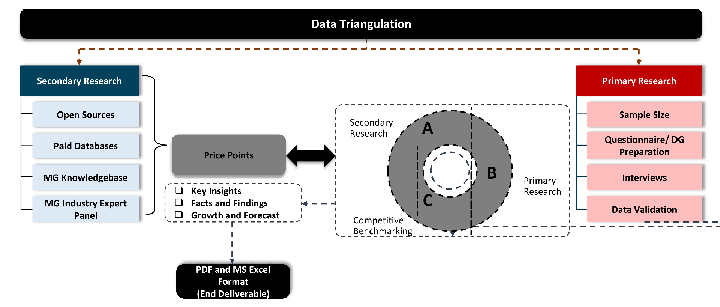
Data triangulation is a validation technique that uses multiple methods, sources, or perspectives to examine the same research question, thereby increasing the credibility and reliability of research findings. In market research, triangulation serves as a quality assurance mechanism that helps identify and minimize bias, validate assumptions, and ensure accuracy in market estimates.
- Data Source Triangulation – Using multiple data sources to examine the same phenomenon
- Methodological Triangulation – Using multiple research methods to study the same research question
- Investigator Triangulation – Using multiple researchers or analysts to examine the same data
- Theoretical Triangulation – Using multiple theoretical perspectives to interpret the same data
Custom Market Research Services
We will customise the research for you, in case the report listed above does not meet your requirements.
Get 10% Free Customisation