Industrial Equipment Market Size, Share & Trends Analysis Report by Product Type (Machinery & Mechanical Equipment, Power & Energy Equipment, Pumping & Fluid Handling Equipment, Thermal & Climate Control Equipment, Separation & Filtration Equipment, Size Reduction & Material Processing, Mixing & Blending Equipment, Packaging & Filling Equipment), Power Source Type, Degree of Automation, Operational Configuration, End-Customer Size, Sales Channel, End-use Industry, and Geography (North America, Europe, Asia Pacific, Middle East, Africa, and South America) – Global Industry Data, Trends, and Forecasts, 2026–2035
|
|
|
Segmental Data Insights |
|
|
Demand Trends |
|
|
Competitive Landscape |
|
|
Strategic Development |
|
|
Future Outlook & Opportunities |
|
Industrial-Equipment-Market Size, Share, and Growth
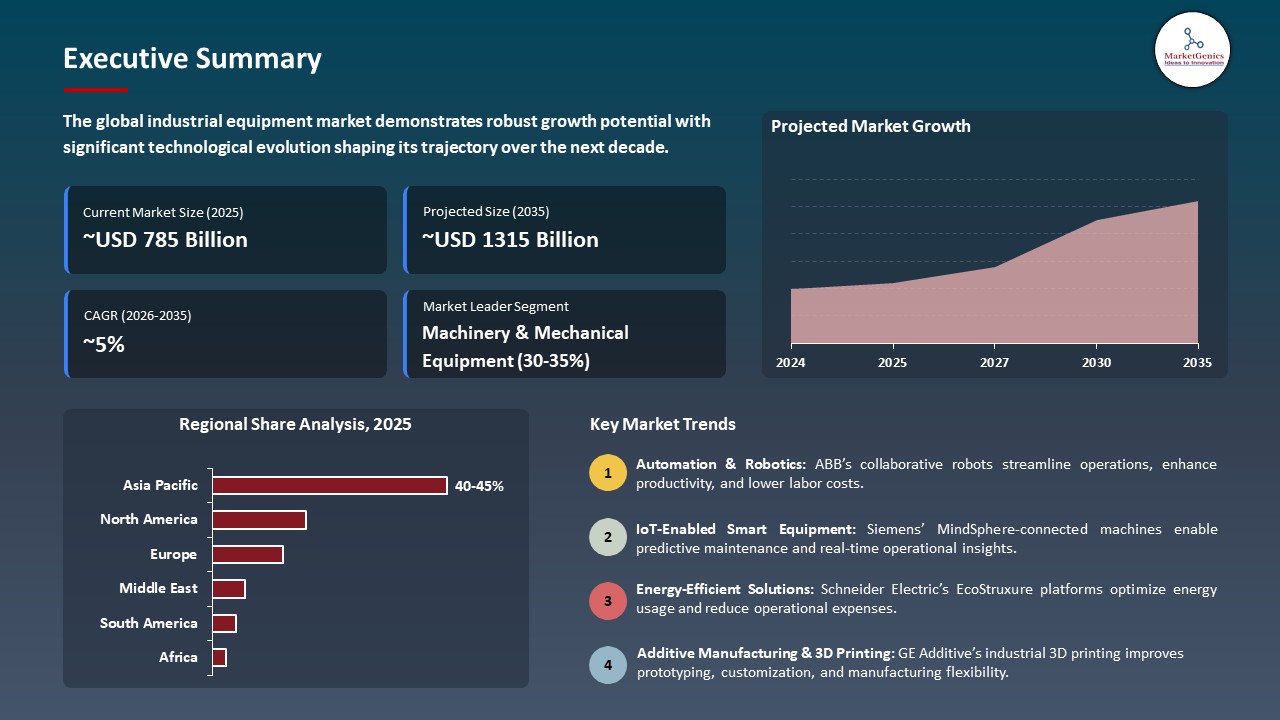
The global industrial equipment market is witnessing strong growth, valued at USD 784.7 billion in 2025 and projected to reach USD 1315.2 billion by 2035, expanding at a CAGR of 5.3% during the forecast period. North America is the fastest-growing region for the industrial equipment market due to rising adoption of advanced automation, smart manufacturing technologies, and ongoing modernization of industrial infrastructure.
Sanjeev Arora, President, Motion Business & IEC Low Voltage Motors, ABB India, said, “These motors combine the reliability of proven induction technology with ultra-premium efficiency - without relying on rare-earth metals, this milestone reflects our commitment to supporting Indian industries with sustainable, high-performance solutions that are built for local conditions and aligned with the nation’s push toward industrial decarbonization”
The industrial equipment market is influenced by the growth and the rise in infrastructure development and growth of heavy industries like construction, mining, and the energy industry which need strong and high capacity machinery to operate efficiently. The increase in investments in renewable energy and massive industrial development investments across the world is also causing increased equipment demand.
Komatsu Ltd. unveiled hi-tech hydraulic excavators that incorporate a digital guidance system to improve productivity in the infrastructure works and Caterpillar Inc. provided next-generation demolition excavators that offered more safety and operational features in urban construction. These new designs indicate an increase in the demand of durable and high-performance equipment that is suited to the complex industry applications.
Adjacent opportunities include industrial automation and robotics, predictive maintenance software, energy-efficient equipment retrofitting, additive manufacturing systems, and industrial IoT platforms, all extending equipment lifecycle and productivity. These segments complement core machinery demand by enabling digital transformation, efficiency gains, and sustainability.
 Industrial Equipment Market Dynamics and Trends
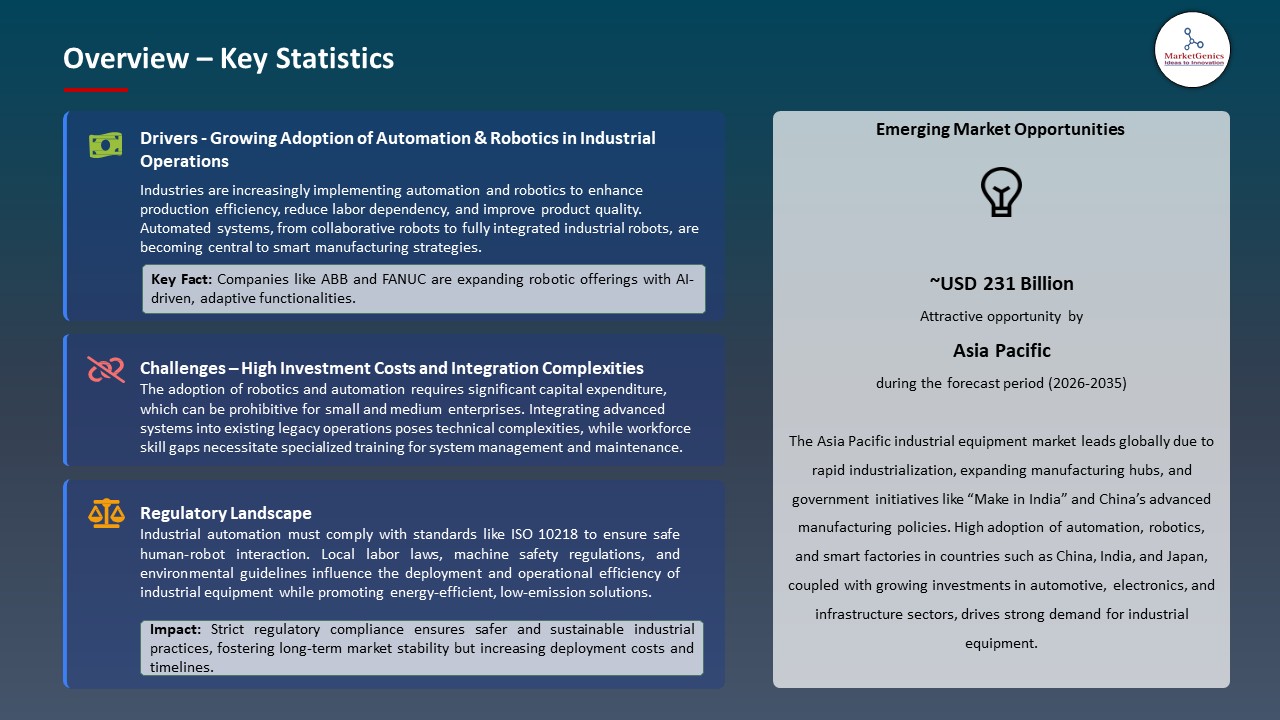
Driver: Accelerating Adoption of AI-Driven Smart Equipment Enhances Industrial Productivity Globally
-
The industrial equipment market is also moving towards the adoption of AI-powered smart technologies in machines to allow real-time monitoring, predictive maintenance, and autonomous optimization of operations. The capabilities are important in minimizing downtimes, increasing precision, as well as increasing overall equipment efficiency in industries.
- Manufacturers are already moving to intelligent systems at an accelerated pace to stay competitive, with AI-enabled equipment helping companies make decisions based on data and automate their production processes, especially in the high-value markets such as the automotive and electronics industries.
- In March 2026, ABB Ltd. collaborated with NVIDIA to help create AI-enabled autonomous robots through simulation-based training based on Omniverse, which can also support self-learning, deploying robots faster, and at lower costs, which means that advanced industrial robotics are now more affordable and accessible to small and medium producers.
- Smart equipment based on AI are promptly boosting productivity, lowering operational expenses, and influencing the high uptake of sophisticated industrial machinery in the manufacturing industries of the world.
Restraint: Supply Chain Disruptions and Component Shortages Impact Equipment Production and Delivery Timelines
-
The industrial equipment market is heavily curtailed with continued supply chain disruptions such as semiconductor shortages, shortages of electronic components and raw materials needed to manufacture high-tech equipment. Geopolitical tensions, trade restrictions, and logistics bottlenecks further increase these limitations, causing delays in the procurement and manufacturing cycle.
- The manufactures are experiencing longer lead times and high operational costs, which are increasing the demand and making it hard to fulfill the demand and promise delivery. These challenges are only exacerbated by the fact that modern equipment is becoming more complex, requiring a high level of precision components and global supply chains, which restricts the overall growth and efficiency of the market.
- The disruption of the supply chain and shortages of components are slowing down production, raising prices and limiting the ability to deliver industrial equipment on time all over the world.
Opportunity: Increasing Demand for Customized and Modular Machinery
-
The industrial equipment market is also experiencing increased demand of customized and modularized machinery because the manufacturers need flexible solutions to fit to specific production needs. The industries are more willing to use equipment which can be simply re-configured or simply scaled to suit new product design and different production volume.
- Modular systems allow quicker deployment, minimized downtimes and cost effectiveness through the ability to upgrade without the need to replace the whole system. This flexibility is same especially in electronics, automobile and precision manufacturing.
- In 2025, Siemens AG introduced the MACHINUM digitalization portfolio, which allows the optimization of machine tools in a modular and scalable way that includes the digital twin, minimizing the setup time by up to 20 percent and enhancing the energy efficiency, which allows flexible, customized, and high-precise manufacturing processes.
- Increased demand of modular and customizable machinery is increasing production flexibility, lowering operation costs, and increasing the rate at which more and more industrial-advanced equipment is adopted in various manufacturing industries.
Key Trend: Focus on Circular Economy and Equipment Lifecycle Management
-
The market of industrial equipment is moving more towards a circular economy, including reuse, remanufacturing, and recycling of equipment to increase the life span of equipment and reduce environmental impact. Manufacturers are also coming up with equipment that has modular components which are easy to repair, refurbish and upgrade.
- There are lifecycle management solutions such as predictive maintenance and asset tracking which optimizes performance and reduce wastes. The trend will help to sustainability objectives and lower the overall cost of ownership to end users in all the industries.
- Caterpillar India reinforced the efforts of the circular economy by buyback and remodeling programs with the help of remanufactured parts, which were complemented by AI-based predictive maintenance and end-to-end lifecycle services as a way to increase efficiency and equipment life.
- The industrial equipment market is changing towards more sustainable, cost-efficient, and long-term use of assets, with an increasing trend in the use of circular economy strategies that can be complemented by the use of AI to determine their lifecycle.
 Industrial Equipment Market Analysis and Segmental Data
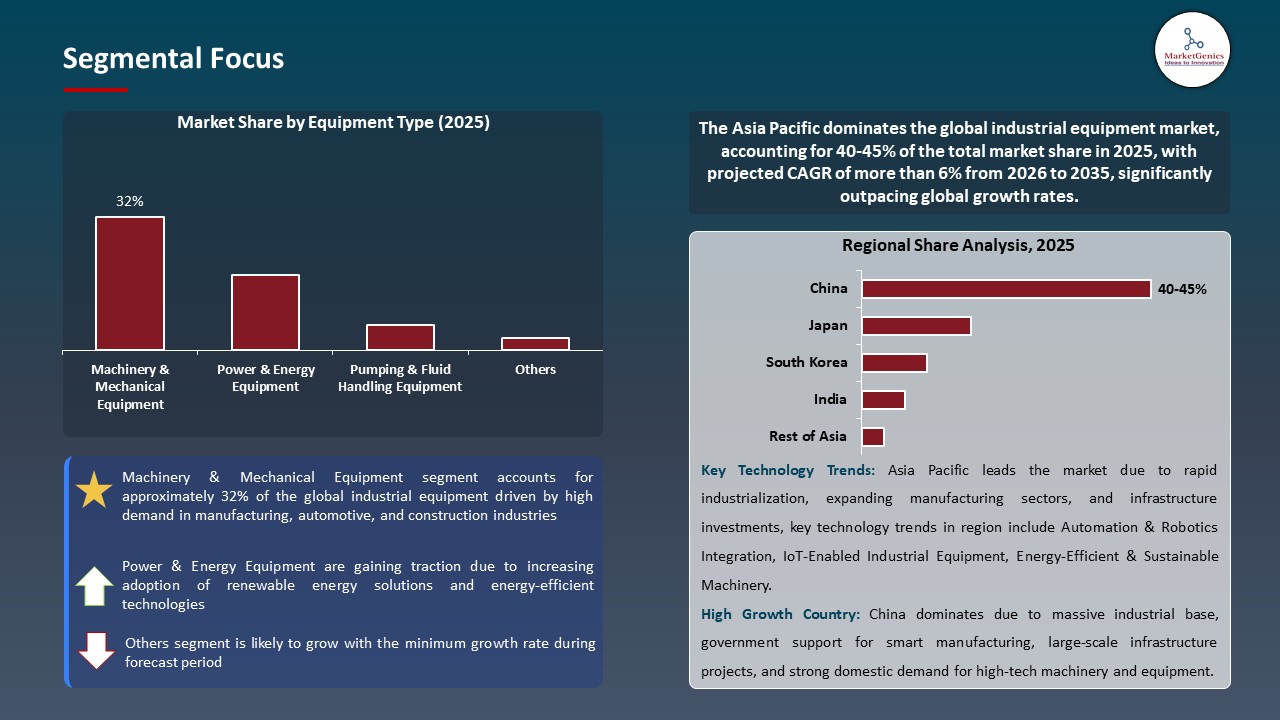
Machinery & Mechanical Equipment Dominate Global Industrial Equipment Market
-
The machinery & mechanical equipment segment dominates the global industrial equipment market due to its extensive application across core industries such as manufacturing, construction, mining, agriculture, and energy. These machines form the backbone of industrial operations, enabling material handling, processing, assembly, and infrastructure development, thereby driving consistent demand worldwide.
- Moreover, the further automation of industries, the development of infrastructure, and substitution of outdated equipment also augment the growth of its segments. The installation of innovative systems like the use of IoT-based monitoring, energy-saving systems, and modularity contributes to the increase of productivity and operational efficiency. In addition, the increasing emphasis on longevity, the lifecycle element, and cost-efficiency remains to make machinery and mechanical equipment the most preferred segment on the market.
- The prevalence of machinery and mechanical equipment plays a significant role in fueling the overall growth of the market as it facilitates industrial productivity, hastens infrastructure growth, and helps to maintain operational efficiency in the long term.
Asia Pacific Leads Global Industrial Equipment Market Demand
-
The Asia Pacific region leads the global industrial equipment market due to rapid industrialization, expanding manufacturing bases, and strong infrastructure development across emerging economies such as China and India. Government initiatives supporting industrial growth, urbanization, and investments in sectors like construction, energy, and transportation continue to drive robust demand for industrial equipment.
- Additionally, it is true that the local supremacy is enhanced by the existence of industries of large-scale production, cheap labor and the rise in the use of automation technology. The increasing rates of foreign direct investments and the development of industries within the country are also increasing equipment demand, and the increased attention to smart manufacturing and sustainability increases the growth rates in the long term. Consequently, Asia Pacific continues to be the engine of growth of the world market of industrial equipment.
- The dominance of the Asian Pacific enhances the growth of the world market through the high demand of equipment, increased production and the strengthening of the region as the major industrial growth centre.
Industrial Equipment Market Ecosystem
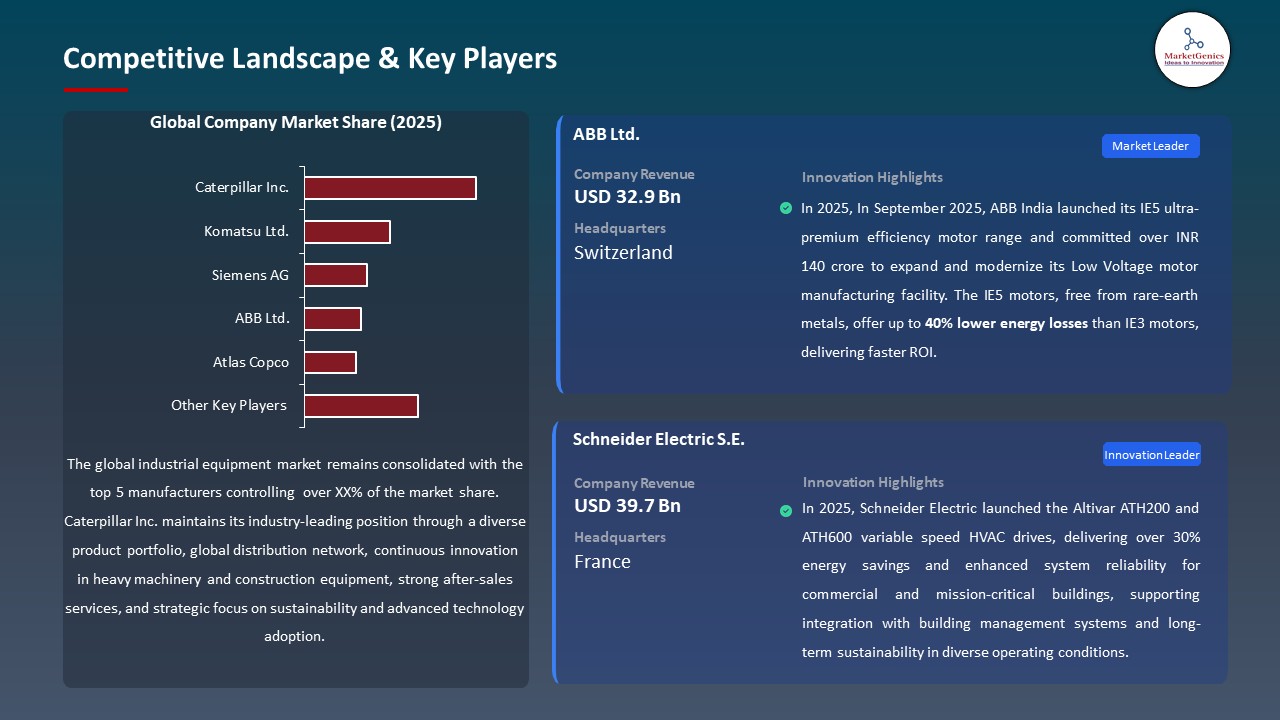
The global industrial equipment market is moderately consolidated, with leading players including Caterpillar Inc., Komatsu Ltd., Siemens AG, ABB Ltd., and Atlas Copco. These firms reinforce their market shares with sophisticated machine solutions, high levels of research and development and strategic alliances in construction, manufacturing, energy and mining industries. They also have an edge of competitive advantage due to automation and electrification innovations, energy-saving systems, the introduction of the IoT-enabling smart equipment to enable the transformation to Industry 4.0.
Industrial equipment market has a value chain that goes through the sourcing of raw materials, components, assembly, system integration, and digital solutions then installation and after sales services like maintenance, predictive analytics, and performance optimization. Every phase focuses on the durability, effectiveness of operation, scalability, and uninterrupted connectivity with digital industrial ecosystems.
Entry barriers are high due to high capital requirements, complexity of technology, safety and environmental regulations and powerful OEM networks. Simultaneously, the product differentiation, scalability of operations and long-term expansion of the industrial equipment market are being spontaneously driven by constant improvements in the sphere of automation, AI-assisted maintenance, and sustainable equipment solutions.
 Recent Development and Strategic Overview:
- In September 2025, ABB India launched its IE5 ultra-premium efficiency motor range and committed over INR 140 crore to expand and modernize its Low Voltage motor manufacturing facility. The IE5 motors, free from rare-earth metals, offer up to 40% lower energy losses than IE3 motors, delivering faster ROI, reduced total cost of ownership, and enhanced reliability for industries.
- In March 2026, Schneider Electric launched the Altivar ATH200 and ATH600 variable speed HVAC drives, delivering over 30% energy savings and enhanced system reliability for commercial and mission-critical buildings, supporting integration with building management systems and long-term sustainability in diverse operating conditions.
Report Scope
|
Detail |
|
|
Market Size in 2025 |
USD 784.7 Bn |
|
Market Forecast Value in 2035 |
USD 1315.2 Bn |
|
Growth Rate (CAGR) |
5.3% |
|
Forecast Period |
2026 – 2035 |
|
Historical Data Available for |
2021 – 2024 |
|
Market Size Units |
US$ Billion for Value Thousand Units for Volume |
|
Report Format |
Electronic (PDF) + Excel |
|
North America |
Europe |
Asia Pacific |
Middle East |
Africa |
South America |
|
|
|
|
|
|
|
Companies Covered |
|||||
|
|
|
|
|
|
Industrial Equipment Market Segmentation and Highlights
|
Segment |
Sub-segment |
|
Industrial Equipment Market, By Equipment Type |
|
|
Industrial Equipment Market, By Power Source Type |
|
|
Industrial Equipment Market, By Degree of Automation |
|
|
Industrial Equipment Market, By Operational Configuration |
|
|
Industrial Equipment Market, By End-Customer Size |
|
|
Industrial Equipment Market, By Sales Channel |
|
|
Industrial Equipment Market, By End-use Industry |
|
Frequently Asked Questions
Table of Contents
- 1. Research Methodology and Assumptions
- 1.1. Definitions
- 1.2. Research Design and Approach
- 1.3. Data Collection Methods
- 1.4. Base Estimates and Calculations
- 1.5. Forecasting Models
- 1.5.1. Key Forecast Factors & Impact Analysis
- 1.6. Secondary Research
- 1.6.1. Open Sources
- 1.6.2. Paid Databases
- 1.6.3. Associations
- 1.7. Primary Research
- 1.7.1. Primary Sources
- 1.7.2. Primary Interviews with Stakeholders across Ecosystem
- 2. Executive Summary
- 2.1. Global Industrial Equipment Market Outlook
- 2.1.1. Industrial Equipment Market Size (Volume - Thousand Units & Value - US$ Bn), and Forecasts, 2021-2035
- 2.1.2. Compounded Annual Growth Rate Analysis
- 2.1.3. Growth Opportunity Analysis
- 2.1.4. Segmental Share Analysis
- 2.1.5. Geographical Share Analysis
- 2.2. Market Analysis and Facts
- 2.3. Supply-Demand Analysis
- 2.4. Competitive Benchmarking
- 2.5. Go-to- Market Strategy
- 2.5.1. Customer/ End-use Industry Assessment
- 2.5.2. Growth Opportunity Data, 2026-2035
- 2.5.2.1. Regional Data
- 2.5.2.2. Country Data
- 2.5.2.3. Segmental Data
- 2.5.3. Identification of Potential Market Spaces
- 2.5.4. GAP Analysis
- 2.5.5. Potential Attractive Price Points
- 2.5.6. Prevailing Market Risks & Challenges
- 2.5.7. Preferred Sales & Marketing Strategies
- 2.5.8. Key Recommendations and Analysis
- 2.5.9. A Way Forward
- 2.1. Global Industrial Equipment Market Outlook
- 3. Industry Data and Premium Insights
- 3.1. Global Industrial Machinery Industry Overview, 2025
- 3.1.1. Industrial Machinery Industry Ecosystem Analysis
- 3.1.2. Key Trends for Industrial Machinery Industry
- 3.1.3. Regional Distribution for Industrial Machinery Industry
- 3.2. Supplier Customer Data
- 3.3. Technology Roadmap and Developments
- 3.4. Trade Analysis
- 3.4.1. Import & Export Analysis, 2025
- 3.4.2. Top Importing Countries
- 3.4.3. Top Exporting Countries
- 3.5. Trump Tariff Impact Analysis
- 3.5.1. Manufacturer
- 3.5.1.1. Based on the component & Raw material
- 3.5.2. Supply Chain
- 3.5.3. End Consumer
- 3.5.1. Manufacturer
- 3.6. Raw Material Analysis
- 3.1. Global Industrial Machinery Industry Overview, 2025
- 4. Market Overview
- 4.1. Market Dynamics
- 4.1.1. Drivers
- 4.1.1.1. Rising adoption of automation and Industry 4.0 technologies in manufacturing.
- 4.1.1.2. Growing demand for energy-efficient and high-performance industrial machinery.
- 4.1.1.3. Expansion of infrastructure and industrial projects in emerging economies.
- 4.1.2. Restraints
- 4.1.2.1. High initial capital investment and maintenance costs of industrial equipment.
- 4.1.2.2. Supply chain disruptions and shortage of skilled labor affecting production and deployment.
- 4.1.1. Drivers
- 4.2. Key Trend Analysis
- 4.3. Regulatory Framework
- 4.3.1. Key Regulations, Norms, and Subsidies, by Key Countries
- 4.3.2. Tariffs and Standards
- 4.3.3. Impact Analysis of Regulations on the Market
- 4.4. Value Chain Analysis
- 4.4.1. Component Suppliers
- 4.4.2. Manufacturers
- 4.4.3. Distribution & Logistics
- 4.4.4. End-User Applications
- 4.5. Porter’s Five Forces Analysis
- 4.6. PESTEL Analysis
- 4.7. Global Industrial Equipment Market Demand
- 4.7.1. Historical Market Size – (Volume - Thousand Units & Value - US$ Bn), 2020-2024
- 4.7.2. Current and Future Market Size – (Volume - Thousand Units & Value - US$ Bn), 2026–2035
- 4.7.2.1. Y-o-Y Growth Trends
- 4.7.2.2. Absolute $ Opportunity Assessment
- 4.1. Market Dynamics
- 5. Competition Landscape
- 5.1. Competition structure
- 5.1.1. Fragmented v/s consolidated
- 5.2. Company Share Analysis, 2025
- 5.2.1. Global Company Market Share
- 5.2.2. By Region
- 5.2.2.1. North America
- 5.2.2.2. Europe
- 5.2.2.3. Asia Pacific
- 5.2.2.4. Middle East
- 5.2.2.5. Africa
- 5.2.2.6. South America
- 5.3. Product Comparison Matrix
- 5.3.1. Specifications
- 5.3.2. Market Positioning
- 5.3.3. Pricing
- 5.1. Competition structure
- 6. Global Industrial Equipment Market Analysis, by Equipment Type
- 6.1. Key Segment Analysis
- 6.2. Industrial Equipment Market Size (Volume - Thousand Units & Value - US$ Bn), Analysis, and Forecasts, by Equipment Type, 2021-2035
- 6.2.1. Machinery & Mechanical Equipment
- 6.2.1.1. Heavy Machinery
- 6.2.1.1.1. Excavators
- 6.2.1.1.1.1. Hydraulic Excavators
- 6.2.1.1.1.2. Mini Excavators
- 6.2.1.1.1.3. Wheeled Excavators
- 6.2.1.1.1.4. Others
- 6.2.1.1.2. Loaders
- 6.2.1.1.2.1. Wheel Loaders
- 6.2.1.1.2.2. Skid Steer Loaders
- 6.2.1.1.2.3. Compact Track Loaders
- 6.2.1.1.2.4. Others
- 6.2.1.1.3. Dozers
- 6.2.1.1.3.1. Crawler Dozers
- 6.2.1.1.3.2. Wheel Dozers
- 6.2.1.1.3.3. Others
- 6.2.1.1.4. Other Equipment
- 6.2.1.1.1. Excavators
- 6.2.1.2. Material Handling Equipment
- 6.2.1.2.1. Forklifts
- 6.2.1.2.1.1. Counter Balance Forklifts
- 6.2.1.2.1.2. Reach Trucks
- 6.2.1.2.1.3. Pallet Jacks
- 6.2.1.2.1.4. Others
- 6.2.1.2.2. Cranes
- 6.2.1.2.2.1. Tower Cranes
- 6.2.1.2.2.2. Mobile Cranes
- 6.2.1.2.2.3. Gantry Cranes
- 6.2.1.2.2.4. Others
- 6.2.1.2.3. Conveyor Systems
- 6.2.1.2.3.1. Belt Conveyors
- 6.2.1.2.3.2. Roller Conveyors
- 6.2.1.2.3.3. Overhead Conveyors
- 6.2.1.2.3.4. Others
- 6.2.1.2.4. Other Equipment
- 6.2.1.2.1. Forklifts
- 6.2.1.1. Heavy Machinery
- 6.2.2. Power & Energy Equipment
- 6.2.2.1. Generators
- 6.2.2.1.1. Diesel Generators
- 6.2.2.1.2. Gas Generators
- 6.2.2.1.3. Renewable Energy Generators
- 6.2.2.1.4. Others
- 6.2.2.2. Compressors
- 6.2.2.2.1. Reciprocating Compressors
- 6.2.2.2.2. Rotary Screw Compressors
- 6.2.2.2.3. Centrifugal Compressors
- 6.2.2.2.4. Others
- 6.2.2.3. Transformers
- 6.2.2.3.1. Power Transformers
- 6.2.2.3.2. Distribution Transformers
- 6.2.2.3.3. Specialty Transformers
- 6.2.2.3.4. Others
- 6.2.2.4. Other Equipment
- 6.2.2.1. Generators
- 6.2.3. Pumping & Fluid Handling Equipment
- 6.2.3.1. Centrifugal Pumps
- 6.2.3.1.1. Horizontal Split Case Pumps
- 6.2.3.1.2. Vertical Turbine Pumps
- 6.2.3.1.3. Submersible Pumps
- 6.2.3.1.4. Others
- 6.2.3.2. Positive Displacement Pumps
- 6.2.3.2.1. Gear Pumps
- 6.2.3.2.2. Screw Pumps
- 6.2.3.2.3. Vane Pumps
- 6.2.3.2.4. Others
- 6.2.3.3. Valves & Flow Control
- 6.2.3.3.1. Gate Valves
- 6.2.3.3.2. Globe Valves
- 6.2.3.3.3. Check Valves
- 6.2.3.3.4. Others
- 6.2.3.4. Other Equipment
- 6.2.3.1. Centrifugal Pumps
- 6.2.4. Thermal & Climate Control Equipment
- 6.2.4.1. Boilers
- 6.2.4.1.1. Fire-tube Boilers
- 6.2.4.1.2. Water-tube Boilers
- 6.2.4.1.3. Electric Boilers
- 6.2.4.1.4. Others
- 6.2.4.2. Heat Exchangers
- 6.2.4.2.1. Plate Heat Exchangers
- 6.2.4.2.2. Shell & Tube Heat Exchangers
- 6.2.4.2.3. Air-cooled Heat Exchangers
- 6.2.4.2.4. Others
- 6.2.4.3. Cooling Systems
- 6.2.4.3.1. Industrial Chillers
- 6.2.4.3.2. Cooling Towers
- 6.2.4.3.3. Refrigeration Units
- 6.2.4.3.4. Others
- 6.2.4.4. Other Equipment
- 6.2.4.1. Boilers
- 6.2.5. Separation & Filtration Equipment
- 6.2.5.1. Filters & Filtration Systems
- 6.2.5.1.1. Air Filters
- 6.2.5.1.2. Liquid Filters
- 6.2.5.1.3. Cartridge Filters
- 6.2.5.1.4. Others
- 6.2.5.2. Separators
- 6.2.5.2.1. Centrifugal Separators
- 6.2.5.2.2. Magnetic Separators
- 6.2.5.2.3. Hydrocyclones
- 6.2.5.3. Clarifiers & Thickeners
- 6.2.5.3.1. Plate Clarifiers
- 6.2.5.3.2. Tank Thickeners
- 6.2.5.4. Other Equipment
- 6.2.5.1. Filters & Filtration Systems
- 6.2.6. Size Reduction & Material Processing
- 6.2.6.1. Crushers
- 6.2.6.1.1. Jaw Crushers
- 6.2.6.1.2. Cone Crushers
- 6.2.6.1.3. Impact Crushers
- 6.2.6.1.4. Others
- 6.2.6.2. Mills & Grinders
- 6.2.6.2.1. Ball Mills
- 6.2.6.2.2. Rod Mills
- 6.2.6.2.3. Vertical Roller Mills
- 6.2.6.3. Shredders
- 6.2.6.3.1. Single Shaft Shredders
- 6.2.6.3.2. Dual Shaft Shredders
- 6.2.6.4. Other Equipment
- 6.2.6.1. Crushers
- 6.2.7. Mixing & Blending Equipment
- 6.2.7.1. Industrial Mixers
- 6.2.7.1.1. Ribbon Blenders
- 6.2.7.1.2. Paddle Mixers
- 6.2.7.1.3. Tumble Blenders
- 6.2.7.1.4. Others
- 6.2.7.2. Reactors
- 6.2.7.2.1. Jacketed Reactors
- 6.2.7.2.2. Stirred Tank Reactors
- 6.2.7.2.3. Others
- 6.2.7.3. Agitators
- 6.2.7.3.1. Top-entry Agitators
- 6.2.7.3.2. Side-entry Agitators
- 6.2.7.3.3. Bottom-entry Agitators
- 6.2.7.4. Other Equipment
- 6.2.7.1. Industrial Mixers
- 6.2.8. Packaging & Filling Equipment
- 6.2.8.1. Filling Machines
- 6.2.8.1.1. Volumetric Fillers
- 6.2.8.1.2. Weight Fillers
- 6.2.8.1.3. Dosing Fillers
- 6.2.8.1.4. Others
- 6.2.8.2. Sealing Equipment
- 6.2.8.2.1. Heat Sealers
- 6.2.8.2.2. Ultrasonic Sealers
- 6.2.8.2.3. Others
- 6.2.8.3. Labeling & Coding
- 6.2.8.3.1. Labeling Machines
- 6.2.8.3.2. Inkjet Printers
- 6.2.8.3.3. Laser Coders
- 6.2.8.3.4. Others
- 6.2.8.4. Other Equipment
- 6.2.8.1. Filling Machines
- 6.2.1. Machinery & Mechanical Equipment
- 7. Global Industrial Equipment Market Analysis, by Power Source Type
- 7.1. Key Segment Analysis
- 7.2. Industrial Equipment Market Size (Volume - Thousand Units & Value - US$ Bn), Analysis, and Forecasts, by Power Source Type, 2021-2035
- 7.2.1. Electric-Powered Equipment
- 7.2.2. Fuel-Powered Equipment
- 7.2.3. Hybrid Power Systems
- 8. Global Industrial Equipment Market Analysis, Degree of Automation
- 8.1. Key Segment Analysis
- 8.2. Industrial Equipment Market Size (Volume - Thousand Units & Value - US$ Bn), Analysis, and Forecasts, by Degree of Automation, 2021-2035
- 8.2.1. Manual Equipment
- 8.2.2. Semi-Automated
- 8.2.3. Fully Automated
- 8.2.4. IoT-Enabled & Smart Equipment
- 8.2.5. AI-Integrated Systems
- 9. Global Industrial Equipment Market Analysis, by Operational Configuration
- 9.1. Key Segment Analysis
- 9.2. Industrial Equipment Market Size (Volume - Thousand Units & Value - US$ Bn), Analysis, and Forecasts, by Operational Configuration, 2021-2035
- 9.2.1. Stationary/Fixed Equipment
- 9.2.2. Mobile Equipment
- 9.2.3. Portable Equipment
- 10. Global Industrial Equipment Market Analysis, by End-Customer Size
- 10.1. Key Segment Analysis
- 10.2. Industrial Equipment Market Size (Volume - Thousand Units & Value - US$ Bn), Analysis, and Forecasts, by End-Customer Size, 2021-2035
- 10.2.1. Large Enterprises
- 10.2.2. Small & Medium Enterprises (SMEs)
- 10.2.3. Startups
- 11. Global Industrial Equipment Market Analysis, by Sales Channel
- 11.1. Key Segment Analysis
- 11.2. Industrial Equipment Market Size (Volume - Thousand Units & Value - US$ Bn), Analysis, and Forecasts, by Sales Channel, 2021-2035
- 11.2.1. Direct Sales
- 11.2.2. Distributor Networks
- 11.2.3. Online/E-commerce
- 11.2.4. Rental/Leasing
- 12. Global Industrial Equipment Market Analysis and Forecasts, by End-use Industry
- 12.1. Key Findings
- 12.2. Industrial Equipment Market Size (Volume - Thousand Units & Value - US$ Bn), Analysis, and Forecasts, by End-use Industry, 2021-2035
- 12.2.1. T Chemical & Petrochemical
- 12.2.1.1. Basic Chemicals Production
- 12.2.1.2. Specialty Chemicals Manufacturing
- 12.2.1.3. Petroleum Refining
- 12.2.1.4. Polymer & Plastic Production
- 12.2.1.5. Fertilizer Manufacturing
- 12.2.1.6. Others
- 12.2.2. Oil & Gas
- 12.2.2.1. Exploration & Drilling
- 12.2.2.2. Production & Extraction
- 12.2.2.3. Transportation & Distribution
- 12.2.2.4. Refining & Processing
- 12.2.2.5. Storage & Logistics
- 12.2.2.6. Others
- 12.2.3. Manufacturing & Industrial Production
- 12.2.4. Food & Beverage Processing
- 12.2.5. Pharmaceutical & Biotechnology
- 12.2.5.1. Active Pharmaceutical Ingredients (API) Manufacturing
- 12.2.5.2. Finished Dose Manufacturing
- 12.2.5.3. Vaccine Manufacturing
- 12.2.5.4. Medical Device Manufacturing
- 12.2.5.5. Others
- 12.2.6. Power Generation & Utilities
- 12.2.7. Construction & Infrastructure
- 12.2.7.1. Residential Construction
- 12.2.7.2. Commercial Construction
- 12.2.7.3. Civil Infrastructure Development
- 12.2.7.4. Road & Highway Construction
- 12.2.7.5. Bridge & Tunnel Construction
- 12.2.7.6. Others
- 12.2.8. Mining & Mineral Processing
- 12.2.8.1. Mining Equipment
- 12.2.8.2. Mineral Beneficiation & Processing
- 12.2.8.3. Ore Concentration
- 12.2.8.4. Others
- 12.2.9. Automotive
- 12.2.9.1. Vehicle Manufacturing
- 12.2.9.2. Vehicle Assembly
- 12.2.9.3. Component Manufacturing
- 12.2.9.4. Others
- 12.2.10. Aerospace & Defense
- 12.2.10.1. Aircraft Assembly
- 12.2.10.2. Aircraft Component Manufacturing
- 12.2.10.3. Defense Equipment Production
- 12.2.10.4. Space Equipment Production
- 12.2.10.5. Avionics Manufacturing
- 12.2.10.6. Others
- 12.2.11. Textile & Apparel
- 12.2.11.1. Fabric Manufacturing
- 12.2.11.2. Garment Manufacturing
- 12.2.11.3. Textiles Production
- 12.2.11.4. Others
- 12.2.12. Paper & Pulp
- 12.2.12.1. Pulp Manufacturing
- 12.2.12.2. Paper Manufacturing
- 12.2.12.3. Recycled Production
- 12.2.12.4. Others
- 12.2.13. Metals & Metallurgy
- 12.2.13.1. Smelting & Refining Equipment
- 12.2.13.2. Metal Fabrication
- 12.2.13.3. Foundries & Casting
- 12.2.13.4. Others
- 12.2.14. Wood & Furniture
- 12.2.14.1. Lumber Production
- 12.2.14.2. Furniture Manufacturing
- 12.2.14.3. Plywood Manufacturing
- 12.2.14.4. Others
- 12.2.15. Cement & Building Materials
- 12.2.16. Other Industries
- 12.2.1. T Chemical & Petrochemical
- 13. Global Industrial Equipment Market Analysis and Forecasts, by Region
- 13.1. Key Findings
- 13.2. Industrial Equipment Market Size (Volume - Thousand Units & Value - US$ Bn), Analysis, and Forecasts, by Region, 2021-2035
- 13.2.1. North America
- 13.2.2. Europe
- 13.2.3. Asia Pacific
- 13.2.4. Middle East
- 13.2.5. Africa
- 13.2.6. South America
- 14. North America Industrial Equipment Market Analysis
- 14.1. Key Segment Analysis
- 14.2. Regional Snapshot
- 14.3. North America Industrial Equipment Market Size (Volume - Thousand Units & Value - US$ Bn), Analysis, and Forecasts, 2021-2035
- 14.3.1. Equipment Type
- 14.3.2. Power Source Type
- 14.3.3. Degree of Automation
- 14.3.4. Operational Configuration
- 14.3.5. End-Customer Size
- 14.3.6. Sales Channel
- 14.3.7. End-use Industry
- 14.3.8. Country
- 14.3.8.1. USA
- 14.3.8.2. Canada
- 14.3.8.3. Mexico
- 14.4. USA Industrial Equipment Market
- 14.4.1. Country Segmental Analysis
- 14.4.2. Equipment Type
- 14.4.3. Power Source Type
- 14.4.4. Degree of Automation
- 14.4.5. Operational Configuration
- 14.4.6. End-Customer Size
- 14.4.7. Sales Channel
- 14.4.8. End-use Industry
- 14.5. Canada Industrial Equipment Market
- 14.5.1. Country Segmental Analysis
- 14.5.2. Equipment Type
- 14.5.3. Power Source Type
- 14.5.4. Degree of Automation
- 14.5.5. Operational Configuration
- 14.5.6. End-Customer Size
- 14.5.7. Sales Channel
- 14.5.8. End-use Industry
- 14.6. Mexico Industrial Equipment Market
- 14.6.1. Country Segmental Analysis
- 14.6.2. Equipment Type
- 14.6.3. Power Source Type
- 14.6.4. Degree of Automation
- 14.6.5. Operational Configuration
- 14.6.6. End-Customer Size
- 14.6.7. Sales Channel
- 14.6.8. End-use Industry
- 15. Europe Industrial Equipment Market Analysis
- 15.1. Key Segment Analysis
- 15.2. Regional Snapshot
- 15.3. Europe Industrial Equipment Market Size (Volume - Thousand Units & Value - US$ Bn), Analysis, and Forecasts, 2021-2035
- 15.3.1. Equipment Type
- 15.3.2. Power Source Type
- 15.3.3. Degree of Automation
- 15.3.4. Operational Configuration
- 15.3.5. End-Customer Size
- 15.3.6. Sales Channel
- 15.3.7. End-use Industry
- 15.3.8. Country
- 15.3.8.1. Germany
- 15.3.8.2. United Kingdom
- 15.3.8.3. France
- 15.3.8.4. Italy
- 15.3.8.5. Spain
- 15.3.8.6. Netherlands
- 15.3.8.7. Nordic Countries
- 15.3.8.8. Poland
- 15.3.8.9. Russia & CIS
- 15.3.8.10. Rest of Europe
- 15.4. Germany Industrial Equipment Market
- 15.4.1. Country Segmental Analysis
- 15.4.2. Equipment Type
- 15.4.3. Power Source Type
- 15.4.4. Degree of Automation
- 15.4.5. Operational Configuration
- 15.4.6. End-Customer Size
- 15.4.7. Sales Channel
- 15.4.8. End-use Industry
- 15.5. United Kingdom Industrial Equipment Market
- 15.5.1. Country Segmental Analysis
- 15.5.2. Equipment Type
- 15.5.3. Power Source Type
- 15.5.4. Degree of Automation
- 15.5.5. Operational Configuration
- 15.5.6. End-Customer Size
- 15.5.7. Sales Channel
- 15.5.8. End-use Industry
- 15.6. France Industrial Equipment Market
- 15.6.1. Country Segmental Analysis
- 15.6.2. Equipment Type
- 15.6.3. Power Source Type
- 15.6.4. Degree of Automation
- 15.6.5. Operational Configuration
- 15.6.6. End-Customer Size
- 15.6.7. Sales Channel
- 15.6.8. End-use Industry
- 15.7. Italy Industrial Equipment Market
- 15.7.1. Country Segmental Analysis
- 15.7.2. Equipment Type
- 15.7.3. Power Source Type
- 15.7.4. Degree of Automation
- 15.7.5. Operational Configuration
- 15.7.6. End-Customer Size
- 15.7.7. Sales Channel
- 15.7.8. End-use Industry
- 15.8. Spain Industrial Equipment Market
- 15.8.1. Country Segmental Analysis
- 15.8.2. Equipment Type
- 15.8.3. Power Source Type
- 15.8.4. Degree of Automation
- 15.8.5. Operational Configuration
- 15.8.6. End-Customer Size
- 15.8.7. Sales Channel
- 15.8.8. End-use Industry
- 15.9. Netherlands Industrial Equipment Market
- 15.9.1. Country Segmental Analysis
- 15.9.2. Equipment Type
- 15.9.3. Power Source Type
- 15.9.4. Degree of Automation
- 15.9.5. Operational Configuration
- 15.9.6. End-Customer Size
- 15.9.7. Sales Channel
- 15.9.8. End-use Industry
- 15.10. Nordic Countries Industrial Equipment Market
- 15.10.1. Country Segmental Analysis
- 15.10.2. Equipment Type
- 15.10.3. Power Source Type
- 15.10.4. Degree of Automation
- 15.10.5. Operational Configuration
- 15.10.6. End-Customer Size
- 15.10.7. Sales Channel
- 15.10.8. End-use Industry
- 15.11. Poland Industrial Equipment Market
- 15.11.1. Country Segmental Analysis
- 15.11.2. Equipment Type
- 15.11.3. Power Source Type
- 15.11.4. Degree of Automation
- 15.11.5. Operational Configuration
- 15.11.6. End-Customer Size
- 15.11.7. Sales Channel
- 15.11.8. End-use Industry
- 15.12. Russia & CIS Industrial Equipment Market
- 15.12.1. Country Segmental Analysis
- 15.12.2. Equipment Type
- 15.12.3. Power Source Type
- 15.12.4. Degree of Automation
- 15.12.5. Operational Configuration
- 15.12.6. End-Customer Size
- 15.12.7. Sales Channel
- 15.12.8. End-use Industry
- 15.13. Rest of Europe Industrial Equipment Market
- 15.13.1. Country Segmental Analysis
- 15.13.2. Equipment Type
- 15.13.3. Power Source Type
- 15.13.4. Degree of Automation
- 15.13.5. Operational Configuration
- 15.13.6. End-Customer Size
- 15.13.7. Sales Channel
- 15.13.8. End-use Industry
- 16. Asia Pacific Industrial Equipment Market Analysis
- 16.1. Key Segment Analysis
- 16.2. Regional Snapshot
- 16.3. Asia Pacific Industrial Equipment Market Size (Volume - Thousand Units & Value - US$ Bn), Analysis, and Forecasts, 2021-2035
- 16.3.1. Equipment Type
- 16.3.2. Power Source Type
- 16.3.3. Degree of Automation
- 16.3.4. Operational Configuration
- 16.3.5. End-Customer Size
- 16.3.6. Sales Channel
- 16.3.7. End-use Industry
- 16.3.8. Country
- 16.3.8.1. China
- 16.3.8.2. India
- 16.3.8.3. Japan
- 16.3.8.4. South Korea
- 16.3.8.5. Australia and New Zealand
- 16.3.8.6. Indonesia
- 16.3.8.7. Malaysia
- 16.3.8.8. Thailand
- 16.3.8.9. Vietnam
- 16.3.8.10. Rest of Asia Pacific
- 16.4. China Industrial Equipment Market
- 16.4.1. Country Segmental Analysis
- 16.4.2. Equipment Type
- 16.4.3. Power Source Type
- 16.4.4. Degree of Automation
- 16.4.5. Operational Configuration
- 16.4.6. End-Customer Size
- 16.4.7. Sales Channel
- 16.4.8. End-use Industry
- 16.5. India Industrial Equipment Market
- 16.5.1. Country Segmental Analysis
- 16.5.2. Equipment Type
- 16.5.3. Power Source Type
- 16.5.4. Degree of Automation
- 16.5.5. Operational Configuration
- 16.5.6. End-Customer Size
- 16.5.7. Sales Channel
- 16.5.8. End-use Industry
- 16.6. Japan Industrial Equipment Market
- 16.6.1. Country Segmental Analysis
- 16.6.2. Equipment Type
- 16.6.3. Power Source Type
- 16.6.4. Degree of Automation
- 16.6.5. Operational Configuration
- 16.6.6. End-Customer Size
- 16.6.7. Sales Channel
- 16.6.8. End-use Industry
- 16.7. South Korea Industrial Equipment Market
- 16.7.1. Country Segmental Analysis
- 16.7.2. Equipment Type
- 16.7.3. Power Source Type
- 16.7.4. Degree of Automation
- 16.7.5. Operational Configuration
- 16.7.6. End-Customer Size
- 16.7.7. Sales Channel
- 16.7.8. End-use Industry
- 16.8. Australia and New Zealand Industrial Equipment Market
- 16.8.1. Country Segmental Analysis
- 16.8.2. Equipment Type
- 16.8.3. Power Source Type
- 16.8.4. Degree of Automation
- 16.8.5. Operational Configuration
- 16.8.6. End-Customer Size
- 16.8.7. Sales Channel
- 16.8.8. End-use Industry
- 16.9. Indonesia Industrial Equipment Market
- 16.9.1. Country Segmental Analysis
- 16.9.2. Equipment Type
- 16.9.3. Power Source Type
- 16.9.4. Degree of Automation
- 16.9.5. Operational Configuration
- 16.9.6. End-Customer Size
- 16.9.7. Sales Channel
- 16.9.8. End-use Industry
- 16.10. Malaysia Industrial Equipment Market
- 16.10.1. Country Segmental Analysis
- 16.10.2. Equipment Type
- 16.10.3. Power Source Type
- 16.10.4. Degree of Automation
- 16.10.5. Operational Configuration
- 16.10.6. End-Customer Size
- 16.10.7. Sales Channel
- 16.10.8. End-use Industry
- 16.11. Thailand Industrial Equipment Market
- 16.11.1. Country Segmental Analysis
- 16.11.2. Equipment Type
- 16.11.3. Power Source Type
- 16.11.4. Degree of Automation
- 16.11.5. Operational Configuration
- 16.11.6. End-Customer Size
- 16.11.7. Sales Channel
- 16.11.8. End-use Industry
- 16.12. Vietnam Industrial Equipment Market
- 16.12.1. Country Segmental Analysis
- 16.12.2. Equipment Type
- 16.12.3. Power Source Type
- 16.12.4. Degree of Automation
- 16.12.5. Operational Configuration
- 16.12.6. End-Customer Size
- 16.12.7. Sales Channel
- 16.12.8. End-use Industry
- 16.13. Rest of Asia Pacific Industrial Equipment Market
- 16.13.1. Country Segmental Analysis
- 16.13.2. Equipment Type
- 16.13.3. Power Source Type
- 16.13.4. Degree of Automation
- 16.13.5. Operational Configuration
- 16.13.6. End-Customer Size
- 16.13.7. Sales Channel
- 16.13.8. End-use Industry
- 17. Middle East Industrial Equipment Market Analysis
- 17.1. Key Segment Analysis
- 17.2. Regional Snapshot
- 17.3. Middle East Industrial Equipment Market Size (Volume - Thousand Units & Value - US$ Bn), Analysis, and Forecasts, 2021-2035
- 17.3.1. Equipment Type
- 17.3.2. Power Source Type
- 17.3.3. Degree of Automation
- 17.3.4. Operational Configuration
- 17.3.5. End-Customer Size
- 17.3.6. Sales Channel
- 17.3.7. End-use Industry
- 17.3.8. Country
- 17.3.8.1. Turkey
- 17.3.8.2. UAE
- 17.3.8.3. Saudi Arabia
- 17.3.8.4. Israel
- 17.3.8.5. Rest of Middle East
- 17.4. Turkey Industrial Equipment Market
- 17.4.1. Country Segmental Analysis
- 17.4.2. Equipment Type
- 17.4.3. Power Source Type
- 17.4.4. Degree of Automation
- 17.4.5. Operational Configuration
- 17.4.6. End-Customer Size
- 17.4.7. Sales Channel
- 17.4.8. End-use Industry
- 17.5. UAE Industrial Equipment Market
- 17.5.1. Country Segmental Analysis
- 17.5.2. Equipment Type
- 17.5.3. Power Source Type
- 17.5.4. Degree of Automation
- 17.5.5. Operational Configuration
- 17.5.6. End-Customer Size
- 17.5.7. Sales Channel
- 17.5.8. End-use Industry
- 17.6. Saudi Arabia Industrial Equipment Market
- 17.6.1. Country Segmental Analysis
- 17.6.2. Equipment Type
- 17.6.3. Power Source Type
- 17.6.4. Degree of Automation
- 17.6.5. Operational Configuration
- 17.6.6. End-Customer Size
- 17.6.7. Sales Channel
- 17.6.8. End-use Industry
- 17.7. Israel Industrial Equipment Market
- 17.7.1. Country Segmental Analysis
- 17.7.2. Equipment Type
- 17.7.3. Power Source Type
- 17.7.4. Degree of Automation
- 17.7.5. Operational Configuration
- 17.7.6. End-Customer Size
- 17.7.7. Sales Channel
- 17.7.8. End-use Industry
- 17.8. Rest of Middle East Industrial Equipment Market
- 17.8.1. Country Segmental Analysis
- 17.8.2. Equipment Type
- 17.8.3. Power Source Type
- 17.8.4. Degree of Automation
- 17.8.5. Operational Configuration
- 17.8.6. End-Customer Size
- 17.8.7. Sales Channel
- 17.8.8. End-use Industry
- 18. Africa Industrial Equipment Market Analysis
- 18.1. Key Segment Analysis
- 18.2. Regional Snapshot
- 18.3. Africa Industrial Equipment Market Size (Volume - Thousand Units & Value - US$ Bn), Analysis, and Forecasts, 2021-2035
- 18.3.1. Equipment Type
- 18.3.2. Power Source Type
- 18.3.3. Degree of Automation
- 18.3.4. Operational Configuration
- 18.3.5. End-Customer Size
- 18.3.6. Sales Channel
- 18.3.7. End-use Industry
- 18.3.8. Country
- 18.3.8.1. South Africa
- 18.3.8.2. Egypt
- 18.3.8.3. Nigeria
- 18.3.8.4. Algeria
- 18.3.8.5. Rest of Africa
- 18.4. South Africa Industrial Equipment Market
- 18.4.1. Country Segmental Analysis
- 18.4.2. Equipment Type
- 18.4.3. Power Source Type
- 18.4.4. Degree of Automation
- 18.4.5. Operational Configuration
- 18.4.6. End-Customer Size
- 18.4.7. Sales Channel
- 18.4.8. End-use Industry
- 18.5. Egypt Industrial Equipment Market
- 18.5.1. Country Segmental Analysis
- 18.5.2. Equipment Type
- 18.5.3. Power Source Type
- 18.5.4. Degree of Automation
- 18.5.5. Operational Configuration
- 18.5.6. End-Customer Size
- 18.5.7. Sales Channel
- 18.5.8. End-use Industry
- 18.6. Nigeria Industrial Equipment Market
- 18.6.1. Country Segmental Analysis
- 18.6.2. Equipment Type
- 18.6.3. Power Source Type
- 18.6.4. Degree of Automation
- 18.6.5. Operational Configuration
- 18.6.6. End-Customer Size
- 18.6.7. Sales Channel
- 18.6.8. End-use Industry
- 18.7. Algeria Industrial Equipment Market
- 18.7.1. Country Segmental Analysis
- 18.7.2. Equipment Type
- 18.7.3. Power Source Type
- 18.7.4. Degree of Automation
- 18.7.5. Operational Configuration
- 18.7.6. End-Customer Size
- 18.7.7. Sales Channel
- 18.7.8. End-use Industry
- 18.8. Rest of Africa Industrial Equipment Market
- 18.8.1. Country Segmental Analysis
- 18.8.2. Equipment Type
- 18.8.3. Power Source Type
- 18.8.4. Degree of Automation
- 18.8.5. Operational Configuration
- 18.8.6. End-Customer Size
- 18.8.7. Sales Channel
- 18.8.8. End-use Industry
- 19. South America Industrial Equipment Market Analysis
- 19.1. Key Segment Analysis
- 19.2. Regional Snapshot
- 19.3. South America Industrial Equipment Market Size (Volume - Thousand Units & Value - US$ Bn), Analysis, and Forecasts, 2021-2035
- 19.3.1. Equipment Type
- 19.3.2. Power Source Type
- 19.3.3. Degree of Automation
- 19.3.4. Operational Configuration
- 19.3.5. End-Customer Size
- 19.3.6. Sales Channel
- 19.3.7. End-use Industry
- 19.3.8. Country
- 19.3.8.1. Brazil
- 19.3.8.2. Argentina
- 19.3.8.3. Rest of South America
- 19.4. Brazil Industrial Equipment Market
- 19.4.1. Country Segmental Analysis
- 19.4.2. Equipment Type
- 19.4.3. Power Source Type
- 19.4.4. Degree of Automation
- 19.4.5. Operational Configuration
- 19.4.6. End-Customer Size
- 19.4.7. Sales Channel
- 19.4.8. End-use Industry
- 19.5. Argentina Industrial Equipment Market
- 19.5.1. Country Segmental Analysis
- 19.5.2. Equipment Type
- 19.5.3. Power Source Type
- 19.5.4. Degree of Automation
- 19.5.5. Operational Configuration
- 19.5.6. End-Customer Size
- 19.5.7. Sales Channel
- 19.5.8. End-use Industry
- 19.6. Rest of South America Industrial Equipment Market
- 19.6.1. Country Segmental Analysis
- 19.6.2. Equipment Type
- 19.6.3. Power Source Type
- 19.6.4. Degree of Automation
- 19.6.5. Operational Configuration
- 19.6.6. End-Customer Size
- 19.6.7. Sales Channel
- 19.6.8. End-use Industry
- 20. Key Players/ Company Profile
- 20.1. ABB Ltd.
- 20.1.1. Company Details/ Overview
- 20.1.2. Company Financials
- 20.1.3. Key Customers and Competitors
- 20.1.4. Business/ Industry Portfolio
- 20.1.5. Product Portfolio/ Specification Details
- 20.1.6. Pricing Data
- 20.1.7. Strategic Overview
- 20.1.8. Recent Developments
- 20.2. Atlas Copco
- 20.3. Caterpillar Inc.
- 20.4. Daifuku Co., Ltd.
- 20.5. Danfoss A/S
- 20.6. Doosan Corporation
- 20.7. Eaton Corporation
- 20.8. General Electric
- 20.9. General Electric Company
- 20.10. Hyosung Heavy Industries
- 20.11. Johnson Controls International
- 20.12. Komatsu Ltd.
- 20.13. KUKA AG
- 20.14. Liebherr Group
- 20.15. Mitsubishi Heavy Industries
- 20.16. Parker Hannifin
- 20.17. Sany Heavy Industry
- 20.18. Schneider Electric SE
- 20.19. Siemens AG
- 20.20. SSI Schäfer
- 20.21. Toshiba Corporation
- 20.22. Vanderlande Industries
- 20.23. Other Key Players
- 20.1. ABB Ltd.
Note* - This is just tentative list of players. While providing the report, we will cover more number of players based on their revenue and share for each geography
Research Design
Our research design integrates both demand-side and supply-side analysis through a balanced combination of primary and secondary research methodologies. By utilizing both bottom-up and top-down approaches alongside rigorous data triangulation methods, we deliver robust market intelligence that supports strategic decision-making.
MarketGenics' comprehensive research design framework ensures the delivery of accurate, reliable, and actionable market intelligence. Through the integration of multiple research approaches, rigorous validation processes, and expert analysis, we provide our clients with the insights needed to make informed strategic decisions and capitalize on market opportunities.
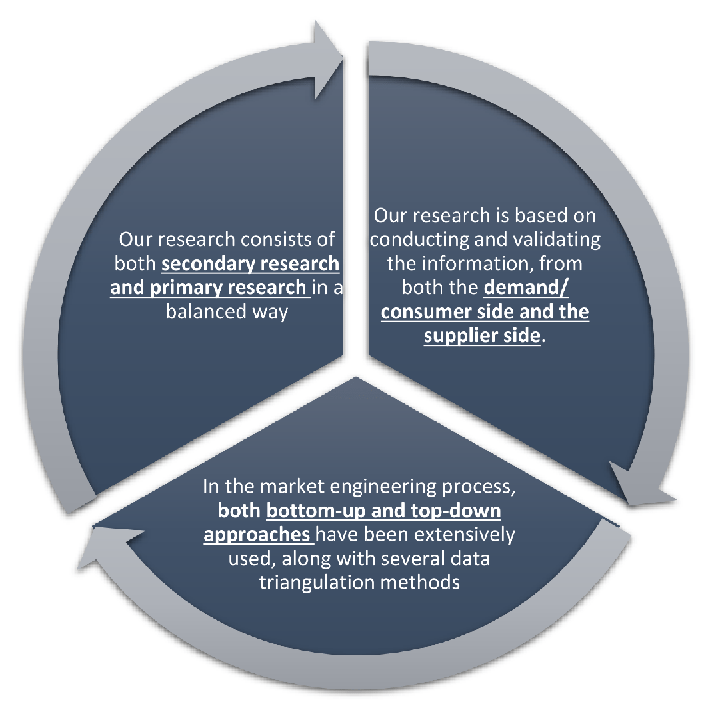
MarketGenics leverages a dedicated industry panel of experts and a comprehensive suite of paid databases to effectively collect, consolidate, and analyze market intelligence.
Our approach has consistently proven to be reliable and effective in generating accurate market insights, identifying key industry trends, and uncovering emerging business opportunities.
Through both primary and secondary research, we capture and analyze critical company-level data such as manufacturing footprints, including technical centers, R&D facilities, sales offices, and headquarters.
Our expert panel further enhances our ability to estimate market size for specific brands based on validated field-level intelligence.
Our data mining techniques incorporate both parametric and non-parametric methods, allowing for structured data collection, sorting, processing, and cleaning.
Demand projections are derived from large-scale data sets analyzed through proprietary algorithms, culminating in robust and reliable market sizing.
Research Approach
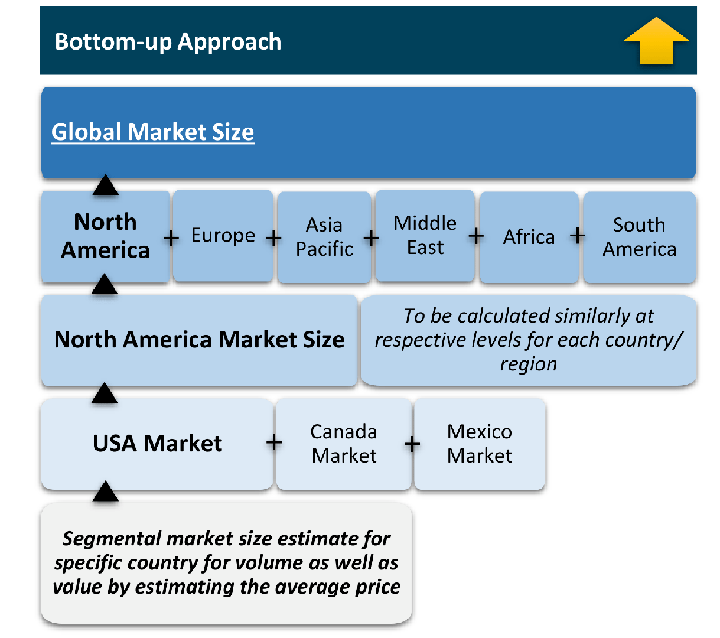
The bottom-up approach builds market estimates by starting with the smallest addressable market units and systematically aggregating them to create comprehensive market size projections.
This method begins with specific, granular data points and builds upward to create the complete market landscape.
Customer Analysis → Segmental Analysis → Geographical Analysis
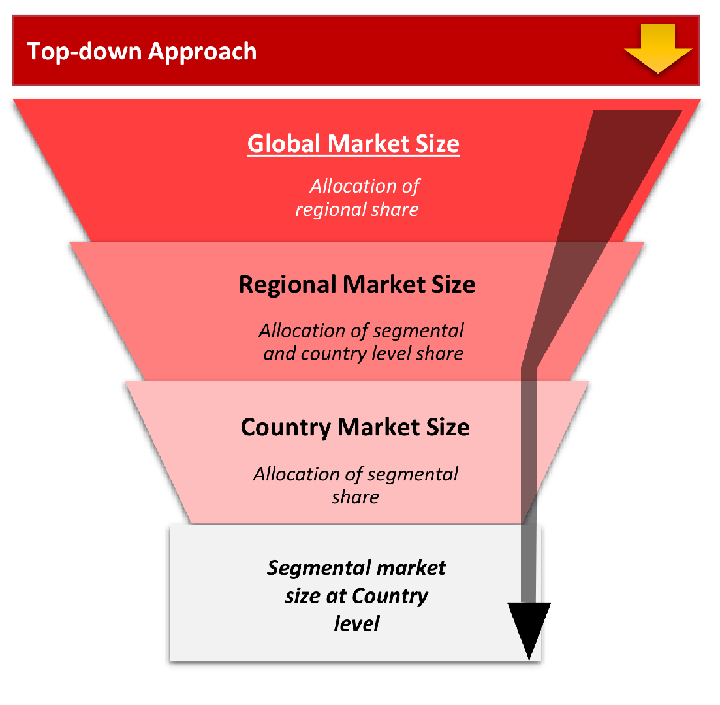
The top-down approach starts with the broadest possible market data and systematically narrows it down through a series of filters and assumptions to arrive at specific market segments or opportunities.
This method begins with the big picture and works downward to increasingly specific market slices.
TAM → SAM → SOM
Research Methods
Desk / Secondary Research
While analysing the market, we extensively study secondary sources, directories, and databases to identify and collect information useful for this technical, market-oriented, and commercial report. Secondary sources that we utilize are not only the public sources, but it is a combination of Open Source, Associations, Paid Databases, MG Repository & Knowledgebase, and others.
- Company websites, annual reports, financial reports, broker reports, and investor presentations
- National government documents, statistical databases and reports
- News articles, press releases and web-casts specific to the companies operating in the market, Magazines, reports, and others
- We gather information from commercial data sources for deriving company specific data such as segmental revenue, share for geography, product revenue, and others
- Internal and external proprietary databases (industry-specific), relevant patent, and regulatory databases
- Governing Bodies, Government Organizations
- Relevant Authorities, Country-specific Associations for Industries
We also employ the model mapping approach to estimate the product level market data through the players' product portfolio
Primary Research
Primary research/ interviews is vital in analyzing the market. Most of the cases involves paid primary interviews. Primary sources include primary interviews through e-mail interactions, telephonic interviews, surveys as well as face-to-face interviews with the different stakeholders across the value chain including several industry experts.
| Type of Respondents | Number of Primaries |
|---|---|
| Tier 2/3 Suppliers | ~20 |
| Tier 1 Suppliers | ~25 |
| End-users | ~25 |
| Industry Expert/ Panel/ Consultant | ~30 |
| Total | ~100 |
MG Knowledgebase
• Repository of industry blog, newsletter and case studies
• Online platform covering detailed market reports, and company profiles
Forecasting Factors and Models
Forecasting Factors
- Historical Trends – Past market patterns, cycles, and major events that shaped how markets behave over time. Understanding past trends helps predict future behavior.
- Industry Factors – Specific characteristics of the industry like structure, regulations, and innovation cycles that affect market dynamics.
- Macroeconomic Factors – Economic conditions like GDP growth, inflation, and employment rates that affect how much money people have to spend.
- Demographic Factors – Population characteristics like age, income, and location that determine who can buy your product.
- Technology Factors – How quickly people adopt new technology and how much technology infrastructure exists.
- Regulatory Factors – Government rules, laws, and policies that can help or restrict market growth.
- Competitive Factors – Analyzing competition structure such as degree of competition and bargaining power of buyers and suppliers.
Forecasting Models / Techniques
Multiple Regression Analysis
- Identify and quantify factors that drive market changes
- Statistical modeling to establish relationships between market drivers and outcomes
Time Series Analysis – Seasonal Patterns
- Understand regular cyclical patterns in market demand
- Advanced statistical techniques to separate trend, seasonal, and irregular components
Time Series Analysis – Trend Analysis
- Identify underlying market growth patterns and momentum
- Statistical analysis of historical data to project future trends
Expert Opinion – Expert Interviews
- Gather deep industry insights and contextual understanding
- In-depth interviews with key industry stakeholders
Multi-Scenario Development
- Prepare for uncertainty by modeling different possible futures
- Creating optimistic, pessimistic, and most likely scenarios
Time Series Analysis – Moving Averages
- Sophisticated forecasting for complex time series data
- Auto-regressive integrated moving average models with seasonal components
Econometric Models
- Apply economic theory to market forecasting
- Sophisticated economic models that account for market interactions
Expert Opinion – Delphi Method
- Harness collective wisdom of industry experts
- Structured, multi-round expert consultation process
Monte Carlo Simulation
- Quantify uncertainty and probability distributions
- Thousands of simulations with varying input parameters
Research Analysis
Our research framework is built upon the fundamental principle of validating market intelligence from both demand and supply perspectives. This dual-sided approach ensures comprehensive market understanding and reduces the risk of single-source bias.
Demand-Side Analysis: We understand end-user/application behavior, preferences, and market needs along with the penetration of the product for specific application.
Supply-Side Analysis: We estimate overall market revenue, analyze the segmental share along with industry capacity, competitive landscape, and market structure.
Validation & Evaluation
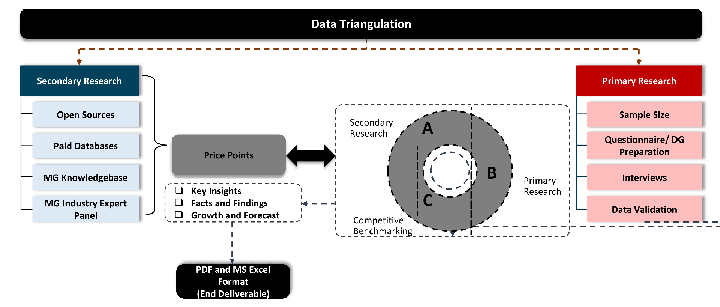
Data triangulation is a validation technique that uses multiple methods, sources, or perspectives to examine the same research question, thereby increasing the credibility and reliability of research findings. In market research, triangulation serves as a quality assurance mechanism that helps identify and minimize bias, validate assumptions, and ensure accuracy in market estimates.
- Data Source Triangulation – Using multiple data sources to examine the same phenomenon
- Methodological Triangulation – Using multiple research methods to study the same research question
- Investigator Triangulation – Using multiple researchers or analysts to examine the same data
- Theoretical Triangulation – Using multiple theoretical perspectives to interpret the same data
Custom Market Research Services
We will customise the research for you, in case the report listed above does not meet your requirements.
Get 10% Free Customisation