Pet Eye Care Products Market Size, Share & Trends Analysis Report by Product Type (Eye Drops & Ointments, Medicated Solutions, Tear Stimulants, Eye Cleansers & Wipes, Anti‑Inflammatory Eye Products, Antibacterial/Antifungal Eye Treatments, Protective Eye Gels, Nutritional Eye Supplements, Others), Animal Type, Formulation/ Form, Purpose/Indication, Ingredient Type, Packaging Type, End User, Distribution Channel, and Geography (North America, Europe, Asia Pacific, Middle East, Africa, and South America) – Global Industry Data, Trends, and Forecasts, 2026–2035
|
|
|
Segmental Data Insights |
|
|
Demand Trends |
|
|
Competitive Landscape |
|
|
Strategic Development |
|
|
Future Outlook & Opportunities |
|
Pet Eye Care Products Market Size, Share, and Growth
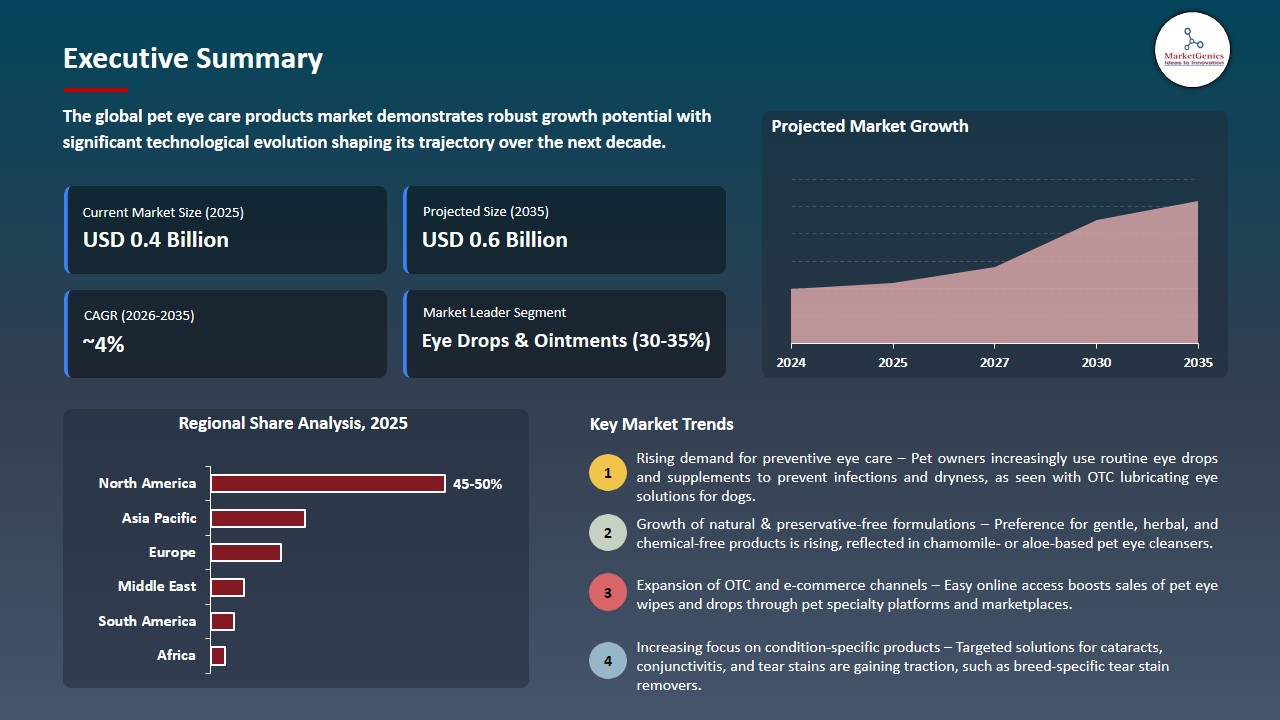
The global pet eye care products market is witnessing strong growth, valued at USD 0.4 billion in 2025 and projected to reach USD 0.6 billion by 2035, expanding at a CAGR of 3.7% during the forecast period. Asia Pacific is the fastest-growing region in the pet eye care products market due to rising pet ownership, increasing awareness of companion animal eye health, improving veterinary infrastructure, and growing disposable incomes across emerging economies.
Dr. Jennifer Merlo, Vice President of Veterinary Affairs, Fear Free, said, “Fear Free is grounded in education that empowers veterinary professionals to deliver care that prioritizes both physical and emotional wellbeing. Dômes Pharma’s dedication to developing ophthalmic solutions that enhance patient comfort and treatment compliance aligns seamlessly with our mission. We’re proud to highlight their innovative contribution to advancing more effective, emotionally considerate eye care for pets and the teams who care for them”.
The prevalence of increasing awareness of overall pet wellness and the need of caring about pets eyes in the pet owners is the primary force of pet eye care products market. Eye cleaning routines, early infections, and proactive control of allergies and dryness are becoming a priority, which attributed to the increased demand of routine eye care products and prophylaxis.
The e-commerce and online stores market is expanding very fast, which will create a great opportunity in the pet eye care products market. Products have increased availability through the online channels, it is more convenient, and it has more product information and reviews. This is especially useful in regions with fewer physical veterinary or pet retail outlets, which means that it can be used to reach a broader market and be adopted more by the consumers.
Adjacent opportunities within the pet eye care products market are the creation of pet ophthalmic supplements, eye-health, supporting nutraceutical, smart diagnostic, and monitoring devices, prescription-to-OTC line extensions, and bundled preventive care packages. Expansion in the tele-veterinary business, the adoption of pet insurance on eye care, the addition of grooming and hygiene product offerings, and custom or breed specific eye care packages further open up the cross-selling and long-term revenue prospects.
Pet Eye Care Products Market Dynamics and Trends
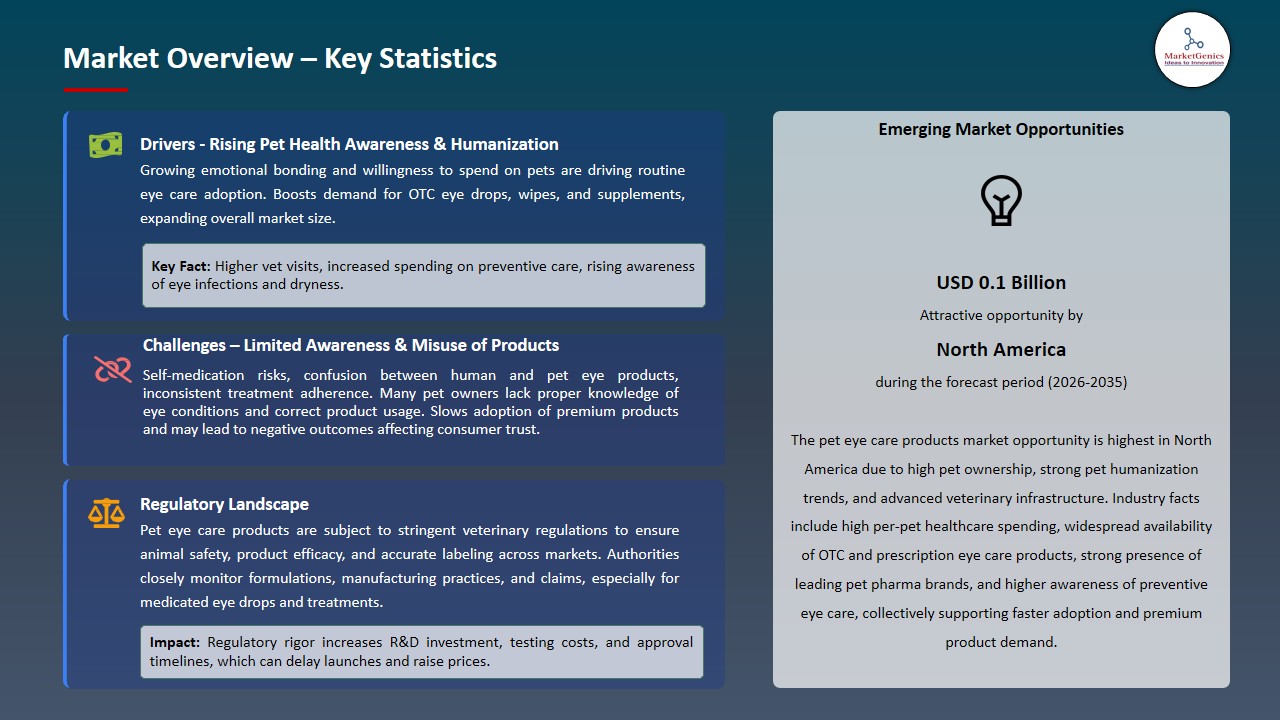
Driver: Prevalence of Ocular Disorders
-
The expanding occurrence of eye diseases in pets such as conjunctivitis, dry eye, cataracts, glaucoma and other age-related diseases of the eye constitutes a significant factor behind the pet eye care products market. The increased lifespan of pets owing to better nutritional and medical care leads to the risk of acquiring eye related health complications and this is the reason why owners are ready to have preventive and treatment measures.
- Regular eye care routines, lubricants, medicated drops, and specialized supplements are becoming more and more used in order to cope and reduce the symptoms and make the process more comfortable and keep the vision intact. The increasing education on pet owners and veterinarians about early detection and treatment also stimulates the demand of diverse products of ocular care to pets.
- Domes Pharma collaborated with Fear Free and joined its Preferred Product Program in July 2025 to minimize stress in pets during eye care. The partnership also emphasized three flagship products such as Oculenis, which is a preservative-free gel that treat corneal ulcers; Ocunovis, which is a long-lasting hydration gel that treats dry eye; and Fluodrop, which is a single-use urea-fluorescein gel used to diagnose eye problems.
- These aspects emphasize robust and long-term growth opportunities in the global pet eye care products industry.
Restraint: Regulatory Complexity & Approval Barriers
-
Existence of strict regulatory standards is also an important drawback in the pet eye care products market. Before approval, new ophthalmic formulations in pets have to meet strict safety, efficacy, and quality criteria, possibly through extensive preclinical and clinical trials. Such processes are usually lengthy and expensive, slowing down the product releases and putting more development expenses on producers.
- Moreover, varied regulatory system in different countries or areas further complicates business in the world in case a business aims to sell their products in other regions. Adherence to various guidelines necessitates the provision of more documentation and tests and the process of consultations with local authorities, which will further extend timelines and increase the cost of conducting the operations.
- These regulatory requirements may restrict the entrance of new or smaller players into the market because they might not have the financial resources or technical skills to navigate regulatory procedures effectively.
- Consequently, regulatory and approval hurdles remain a major limitation, and impact on product innovation, speed-to-market, and market growth overall.
Opportunity: Product Diversification & Subscription Models
-
Introduction of a wide variety of product formats like gels, wipes, preservative-free solutions and breed specific eye care products are also a great opportunity in the pet eye care products market. The innovations are designed to meet the interests of the particular pets and increase the comfort and ease of use in addition to the compliance of the treatment.
- Moreover, subscription models of frequent delivery of eye care products are becoming more and more common among the owners of pets, providing convenience, affordability, and reliable preventive care. These types of recurring revenue models do not only increase customer loyalty but also provide long term usage of the products.
- Product diversification and new distribution and subscription strategies will help the companies to increase their market coverage, enhance brand loyalty, and spur future growth in the pet eye care market.
- In October 2025, HICC Pet introduced its Eye Relief Gel with an Oral Care Gel with easy, rinse-free formulations that run on Hypochlorous Acid to take care of daily pet care. The Eye Relief Gel is also used to relieve pain and clean up tear stains and discharge; promote ocular wellbeing in dogs and cats, which is why eye care is never a stressful experience and is easy to add to daily routines.
- These innovations indicate that the growth and penetration of pet eye care products market is sustainable and supported by product innovation and convenient delivery models.
Key Trend: Technological Integration Enhances Pet Eye Care Through Remote Monitoring, Telemedicine, and AI-Driven Solutions
-
The use of technology integration is becoming one of the major trends in the market of eye care products as smartphone-compatible diagnostics, telemedicine platforms, and digital monitoring devices are improving the pet eye health management. These developments enable pet owners and veterinarians to monitor the ocular conditions remotely, identify the onset of diseases, and provide prompt timely interventions.
- The mobile apps and connected devices can inform correct use of eye care products, track compliance of treatment, and tell real-time information on pet eye health. Such technologies enhance preventive care, early diagnosis, and overall compliance to treatment by enhancing convenience, precision, and remote access, becoming more popular in both clinical and home environments due to higher adoption of new and advanced solutions in the field of pet eye care.
- In 2025, PetPace started its AI Smart Collar V3.0 which provides real-time biometrics, 24/7 telehealth, and AI-based pain recognition. This wearable will allow early diagnosing, tele-vet appointments, and proactive care of the eyes and overall health of a pet, which indicates the technological integration as one of the trends in the market of pet eye care products.
- These developments highlight the increasing influence of technology in improving the care of horses and cats through better diagnostics and treatment adherence as well as the general acceptance of the technology in the market.
Pet-Eye-Care-Products-Market Analysis and Segmental Data
Eye Drops & Ointments Dominate Global Pet Eye Care Products Market
-
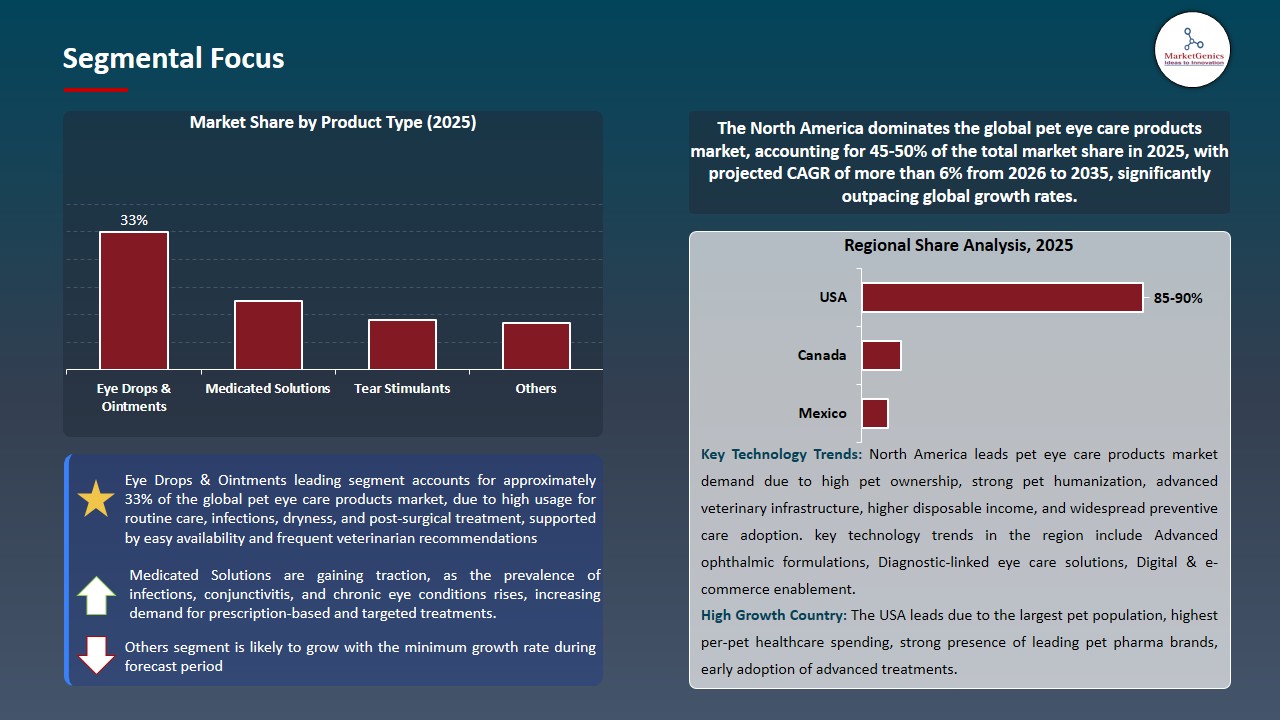
Eye drops and ointments continue to dominate the global pet eye care products market, owing to their versatility, ease of application, and proven effectiveness in managing a wide range of ocular conditions. These products are extensively used for the treatment of conjunctivitis, dry eye, cataracts, infections, and allergies, making them indispensable for both preventive and therapeutic care. Their ability to provide targeted relief and maintain eye health across various age groups contributes significantly to their high adoption among pet owners and veterinarians.
- Prescription-based formulations, over-the-counter lubricating drops, and medicated ointments cater to diverse pet needs, ensuring comprehensive care. The convenience of at-home administration, combined with professional veterinary recommendations, further drives widespread usage. Continuous innovation in preservative-free, breed-specific, and combination formulations enhances treatment efficacy, comfort, and compliance.
- These factors collectively reinforce the leading position of eye drops and ointments in the overall pet eye care products market, solidifying their pivotal role in sustaining market growth.
North America Leads Global Pet Eye Care Products Market Demand
-
North America is the leading region in the global pet eye care products market, driven by high pet ownership rates, strong consumer awareness of pet health, and a well-established veterinary infrastructure. Pet owners in this region increasingly prioritize preventive and therapeutic eye care, ensuring regular visits to veterinarians and consistent use of eye care products such as drops, ointments, and supplements. The combination of disposable income and willingness to invest in premium pet healthcare products further fuels demand.
- The presence of advanced veterinary clinics, specialized ophthalmologists, and widespread availability of prescription and over-the-counter ophthalmic products enhances accessibility and adoption. Additionally, ongoing product innovation including preservative-free, breed-specific, and multi-functional eye care solutions caters to the growing expectations of pet owners for safe and effective treatments.
- North America’s robust pet healthcare ecosystem, high awareness levels, and adoption of innovative eye care solutions consolidate its position as the leading market, supporting sustained growth in the global Pet Eye Care Products sector.
Pet-Eye-Care-Products-Market Ecosystem
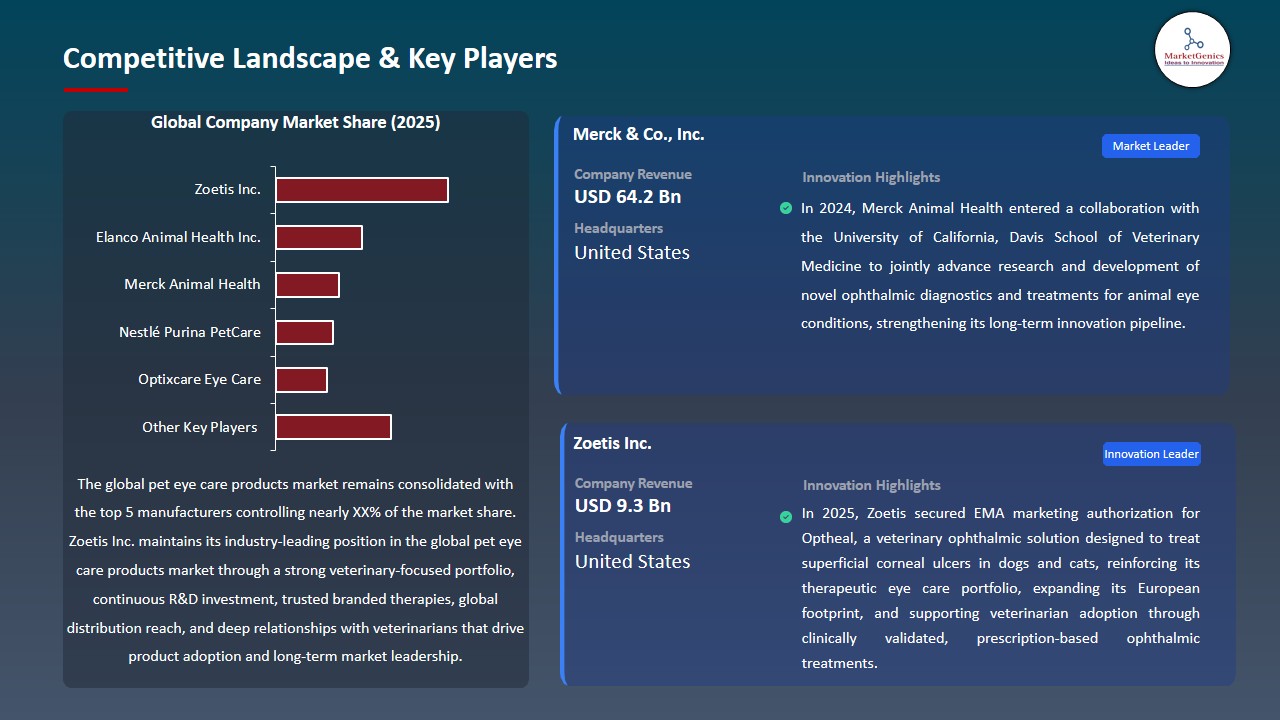
The global pet eye care products market is consolidated, with key players including Zoetis Inc., Elanco Animal Health Inc., Merck Animal Health, Nestlé Purina PetCare, and Optixcare Eye Care. These companies maintain strong competitive positions through robust research and development capabilities, broad portfolios of prescription and over-the-counter ophthalmic solutions, veterinarian-backed formulations, and established global distribution networks. Continuous innovation in gentle, preservative-free, and condition-specific eye care products, along with strong brand trust and regulatory expertise, further reinforces their market presence.
The market value chain includes research and formulation of ophthalmic products, testing for safety and efficacy, regulatory approvals, large-scale manufacturing under strict quality standards, and distribution through veterinary clinics, pet specialty stores, and online platforms. Post-market activities such as veterinary education, customer support, and product awareness initiatives play a critical role in driving adoption.
High entry barriers exist due to regulatory requirements, formulation expertise, brand credibility, and the need for established veterinary relationships. Ongoing innovation in preventive eye care, natural formulations, and digital-enabled product access continues to shape competitive differentiation globally.
Recent Development and Strategic Overview:
-
In April 2024, Millpledge Veterinary launched Oculeze, a phosphate-free, pH-neutral ocular lubricant for dogs, cats, horses, and rabbits. Formulated with glycerine, aloe vera, chamomile, and propolis extract, it provides prolonged hydration, supports corneal health, reduces inflammation, and enhances compliance with fewer administrations.
- In 2025, veterinarians and researchers, including Dr. Sara Thomasy from the University of California, Davis, and Singapore-based ophthalmologist Dr. Gladys Boo, raised concerns over lanosterol eye drops marketed to treat canine cataracts. Studies showed the compound cannot effectively penetrate the lens, delaying surgery the only proven treatment and risking vision loss, despite continued online availability under brands like Lanomax, CatarClear, and LumenPro.
Report Scope
|
Detail |
|
|
Market Size in 2025 |
USD 0.4 Bn |
|
Market Forecast Value in 2035 |
USD 0.6 Bn |
|
Growth Rate (CAGR) |
3.7% |
|
Forecast Period |
2026 – 2035 |
|
Historical Data Available for |
2021 – 2024 |
|
Market Size Units |
US$ Billion for Value Thousand Units for Volume |
|
Report Format |
Electronic (PDF) + Excel |
|
North America |
Europe |
Asia Pacific |
Middle East |
Africa |
South America |
|
|
|
|
|
|
|
Companies Covered |
|||||
|
|
|
|
|
|
Pet-Eye-Care-Products-Market Segmentation and Highlights
|
Segment |
Sub-segment |
|
Pet Eye Care Products Market, By Product Type |
|
|
Pet Eye Care Products Market, By Animal Type |
|
|
Pet Eye Care Products Market, By Formulation/ Form |
|
|
Pet Eye Care Products Market, By Purpose/Indication |
|
|
Pet Eye Care Products Market, By Ingredient Type |
|
|
Pet Eye Care Products Market, By Packaging Type |
|
|
Pet Eye Care Products Market, By End User |
|
|
Pet Eye Care Products Market, By Distribution Channel |
|
Frequently Asked Questions
Table of Contents
- 1. Research Methodology and Assumptions
- 1.1. Definitions
- 1.2. Research Design and Approach
- 1.3. Data Collection Methods
- 1.4. Base Estimates and Calculations
- 1.5. Forecasting Models
- 1.5.1. Key Forecast Factors & Impact Analysis
- 1.6. Secondary Research
- 1.6.1. Open Sources
- 1.6.2. Paid Databases
- 1.6.3. Associations
- 1.7. Primary Research
- 1.7.1. Primary Sources
- 1.7.2. Primary Interviews with Stakeholders across Ecosystem
- 2. Executive Summary
- 2.1. Global Pet Eye Care Products Market Outlook
- 2.1.1. Pet Eye Care Products Market Size (Volume (Thousand Units) & Value (US$ Bn)), and Forecasts, 2021-2035
- 2.1.2. Compounded Annual Growth Rate Analysis
- 2.1.3. Growth Opportunity Analysis
- 2.1.4. Segmental Share Analysis
- 2.1.5. Geographical Share Analysis
- 2.2. Market Analysis and Facts
- 2.3. Supply-Demand Analysis
- 2.4. Competitive Benchmarking
- 2.5. Go-to- Market Strategy
- 2.5.1. Customer/ End-use Industry Assessment
- 2.5.2. Growth Opportunity Data, 2026-2035
- 2.5.2.1. Regional Data
- 2.5.2.2. Country Data
- 2.5.2.3. Segmental Data
- 2.5.3. Identification of Potential Market Spaces
- 2.5.4. GAP Analysis
- 2.5.5. Potential Attractive Price Points
- 2.5.6. Prevailing Market Risks & Challenges
- 2.5.7. Preferred Sales & Marketing Strategies
- 2.5.8. Key Recommendations and Analysis
- 2.5.9. A Way Forward
- 2.1. Global Pet Eye Care Products Market Outlook
- 3. Industry Data and Premium Insights
- 3.1. Global Healthcare & Pharmaceutical Industry Overview, 2025
- 3.1.1. Healthcare & Pharmaceutical Industry Ecosystem Analysis
- 3.1.2. Key Trends for Healthcare & Pharmaceutical Industry
- 3.1.3. Regional Distribution for Healthcare & Pharmaceutical Industry
- 3.2. Supplier Customer Data
- 3.3. Technology Roadmap and Developments
- 3.4. Trade Analysis
- 3.4.1. Import & Export Analysis, 2025
- 3.4.2. Top Importing Countries
- 3.4.3. Top Exporting Countries
- 3.5. Trump Tariff Impact Analysis
- 3.5.1. Manufacturer
- 3.5.1.1. Based on the component & Raw material
- 3.5.2. Supply Chain
- 3.5.3. End Consumer
- 3.5.1. Manufacturer
- 3.6. Raw Material Analysis
- 3.1. Global Healthcare & Pharmaceutical Industry Overview, 2025
- 4. Market Overview
- 4.1. Market Dynamics
- 4.1.1. Drivers
- 4.1.1.1. Rising pet ownership and increasing humanization of companion animals
- 4.1.1.2. Growing prevalence of eye disorders in pets due to aging and breed-related conditions
- 4.1.1.3. Increasing awareness and spending on preventive veterinary eye care products
- 4.1.2. Restraints
- 4.1.2.1. High cost of advanced pet eye care treatments and products
- 4.1.2.2. Limited awareness and access to veterinary ophthalmology services in developing regions
- 4.1.1. Drivers
- 4.2. Key Trend Analysis
- 4.3. Regulatory Framework
- 4.3.1. Key Regulations, Norms, and Subsidies, by Key Countries
- 4.3.2. Tariffs and Standards
- 4.3.3. Impact Analysis of Regulations on the Market
- 4.4. Value Chain Analysis
- 4.4.1. Raw Material Suppliers
- 4.4.2. Manufacturing & Production
- 4.4.3. Distribution & Logistics
- 4.4.4. End-users
- 4.5. Porter’s Five Forces Analysis
- 4.6. PESTEL Analysis
- 4.7. Global Pet Eye Care Products Market Demand
- 4.7.1. Historical Market Size – Volume (Thousand Units) & Size (Volume (Thousand Units) & Value (US$ Bn)),2020-2024
- 4.7.2. Current and Future Market Size – Volume (Thousand Units) & Size (Volume (Thousand Units) & Value (US$ Bn)),2026–2035
- 4.7.2.1. Y-o-Y Growth Trends
- 4.7.2.2. Absolute $ Opportunity Assessment
- 4.1. Market Dynamics
- 5. Competition Landscape
- 5.1. Competition structure
- 5.1.1. Fragmented v/s consolidated
- 5.2. Company Share Analysis, 2025
- 5.2.1. Global Company Market Share
- 5.2.2. By Region
- 5.2.2.1. North America
- 5.2.2.2. Europe
- 5.2.2.3. Asia Pacific
- 5.2.2.4. Middle East
- 5.2.2.5. Africa
- 5.2.2.6. South America
- 5.3. Product Comparison Matrix
- 5.3.1. Specifications
- 5.3.2. Market Positioning
- 5.3.3. Pricing
- 5.1. Competition structure
- 6. Global Pet Eye Care Products Market Analysis, by Product Type
- 6.1. Key Segment Analysis
- 6.2. Pet Eye Care Products Market Size Volume (Thousand Units) & Value (US$ Bn), Analysis, and Forecasts, by Product Type, 2021-2035
- 6.2.1. Eye Drops & Ointments
- 6.2.2. Medicated Solutions
- 6.2.3. Tear Stimulants
- 6.2.4. Eye Cleansers & Wipes
- 6.2.5. Anti‑Inflammatory Eye Products
- 6.2.6. Antibacterial/Antifungal Eye Treatments
- 6.2.7. Protective Eye Gels
- 6.2.8. Nutritional Eye Supplements
- 6.2.9. Others
- 7. Global Pet Eye Care Products Market Analysis, by Animal Type
- 7.1. Key Segment Analysis
- 7.2. Pet Eye Care Products Market Size Volume (Thousand Units) & Value (US$ Bn), Analysis, and Forecasts, by Animal Type, 2021-2035
- 7.2.1. Dogs
- 7.2.1.1. Small Breed Dogs
- 7.2.1.2. Medium Breed Dogs
- 7.2.1.3. Large Breed Dogs
- 7.2.2. Cats
- 7.2.2.1. Domestic Shorthair
- 7.2.2.2. Domestic Longhair
- 7.2.2.3. Purebred Cats
- 7.2.3. Other Pets
- 7.2.3.1. Rabbits
- 7.2.3.2. Ferrets
- 7.2.3.3. Birds
- 7.2.1. Dogs
- 8. Global Pet Eye Care Products Market Analysis, by Formulation/ Form
- 8.1. Key Segment Analysis
- 8.2. Pet Eye Care Products Market Size Volume (Thousand Units) & Value (US$ Bn), Analysis, and Forecasts, by Formulation/ Form, 2021-2035
- 8.2.1. Liquids
- 8.2.2. Gels
- 8.2.3. Tablets & Capsules (Supplements)
- 8.2.4. Wipes & Towelettes
- 8.2.5. Aerosols
- 8.2.6. Others
- 9. Global Pet Eye Care Products Market Analysis, by Purpose/Indication
- 9.1. Key Segment Analysis
- 9.2. Pet Eye Care Products Market Size Volume (Thousand Units) & Value (US$ Bn), Analysis, and Forecasts, by Purpose/Indication 2021-2035
- 9.2.1. Dry Eye Treatment
- 9.2.2. Conjunctivitis Care
- 9.2.3. Cataract Support
- 9.2.4. Allergic Eye Relief
- 9.2.5. Redness & Irritation Relief
- 9.2.6. Eye Injury Care
- 9.2.7. Post‑Surgical Eye Care
- 9.2.8. Others
- 10. Global Pet Eye Care Products Market Analysis, by Ingredient Type
- 10.1. Key Segment Analysis
- 10.2. Pet Eye Care Products Market Size Volume (Thousand Units) & Value (US$ Bn), Analysis, and Forecasts, by Ingredient Type, 2021-2035
- 10.2.1. Natural/Herbal Ingredients
- 10.2.2. Synthetic Ingredients
- 10.2.3. Combination Formulations
- 11. Global Pet Eye Care Products Market Analysis, by Packaging Type
- 11.1. Key Segment Analysis
- 11.2. Pet Eye Care Products Market Size Volume (Thousand Units) & Value (US$ Bn), Analysis, and Forecasts, by Packaging Type, 2021-2035
- 11.2.1. Bottles
- 11.2.2. Tubes
- 11.2.3. Sachets
- 11.2.4. Spray Containers
- 11.2.5. Jars
- 11.2.6. Others
- 12. Global Pet Eye Care Products Market Analysis, by End User
- 12.1. Key Segment Analysis
- 12.2. Pet Eye Care Products Market Size Volume (Thousand Units) & Value (US$ Bn), Analysis, and Forecasts, by End User, 2021-2035
- 12.2.1. Pet Owners
- 12.2.2. Veterinary Professionals
- 12.2.3. Pet Grooming Centers
- 12.2.4. Others
- 13. Global Pet Eye Care Products Market Analysis and Forecasts, by Distribution Channel
- 13.1. Key Findings
- 13.2. Pet Eye Care Products Market Size Volume (Thousand Units) & Value (US$ Bn), Analysis, and Forecasts, by Distribution Channel, 2021-2035
- 13.2.1. Veterinary Clinics & Hospitals
- 13.2.2. Pet Specialty Stores
- 13.2.3. Online Retail / E-commerce
- 13.2.4. Pharmacies & Drug Stores
- 13.2.5. Supermarkets & Hypermarkets
- 14. Global Pet Eye Care Products Market Analysis and Forecasts, by Region
- 14.1. Key Findings
- 14.2. Pet Eye Care Products Market Size Volume (Thousand Units) & Value (US$ Bn), Analysis, and Forecasts, by Region, 2021-2035
- 14.2.1. North America
- 14.2.2. Europe
- 14.2.3. Asia Pacific
- 14.2.4. Middle East
- 14.2.5. Africa
- 14.2.6. South America
- 15. North America Pet Eye Care Products Market Analysis
- 15.1. Key Segment Analysis
- 15.2. Regional Snapshot
- 15.3. North America Pet Eye Care Products Market Size Volume (Thousand Units) & Value (US$ Bn), Analysis, and Forecasts, 2021-2035
- 15.3.1. Product Type
- 15.3.2. Animal Type
- 15.3.3. Formulation/ Form
- 15.3.4. Purpose/Indication
- 15.3.5. Ingredient Type
- 15.3.6. Packaging Type
- 15.3.7. End User
- 15.3.8. Distribution Channel
- 15.3.9. Country
- 15.3.9.1. USA
- 15.3.9.2. Canada
- 15.3.9.3. Mexico
- 15.4. USA Pet Eye Care Products Market
- 15.4.1. Country Segmental Analysis
- 15.4.2. Product Type
- 15.4.3. Animal Type
- 15.4.4. Formulation/ Form
- 15.4.5. Purpose/Indication
- 15.4.6. Ingredient Type
- 15.4.7. Packaging Type
- 15.4.8. End User
- 15.4.9. Distribution Channel
- 15.5. Canada Pet Eye Care Products Market
- 15.5.1. Country Segmental Analysis
- 15.5.2. Product Type
- 15.5.3. Animal Type
- 15.5.4. Formulation/ Form
- 15.5.5. Purpose/Indication
- 15.5.6. Ingredient Type
- 15.5.7. Packaging Type
- 15.5.8. End User
- 15.5.9. Distribution Channel
- 15.6. Mexico Pet Eye Care Products Market
- 15.6.1. Country Segmental Analysis
- 15.6.2. Product Type
- 15.6.3. Animal Type
- 15.6.4. Formulation/ Form
- 15.6.5. Purpose/Indication
- 15.6.6. Ingredient Type
- 15.6.7. Packaging Type
- 15.6.8. End User
- 15.6.9. Distribution Channel
- 16. Europe Pet Eye Care Products Market Analysis
- 16.1. Key Segment Analysis
- 16.2. Regional Snapshot
- 16.3. Europe Pet Eye Care Products Market Size Volume (Thousand Units) & Value (US$ Bn), Analysis, and Forecasts, 2021-2035
- 16.3.1. Product Type
- 16.3.2. Animal Type
- 16.3.3. Formulation/ Form
- 16.3.4. Purpose/Indication
- 16.3.5. Ingredient Type
- 16.3.6. Packaging Type
- 16.3.7. End User
- 16.3.8. Distribution Channel
- 16.3.9. Country
- 16.3.9.1. Germany
- 16.3.9.2. United Kingdom
- 16.3.9.3. France
- 16.3.9.4. Italy
- 16.3.9.5. Spain
- 16.3.9.6. Netherlands
- 16.3.9.7. Nordic Countries
- 16.3.9.8. Poland
- 16.3.9.9. Russia & CIS
- 16.3.9.10. Rest of Europe
- 16.4. Germany Pet Eye Care Products Market
- 16.4.1. Country Segmental Analysis
- 16.4.2. Product Type
- 16.4.3. Animal Type
- 16.4.4. Formulation/ Form
- 16.4.5. Purpose/Indication
- 16.4.6. Ingredient Type
- 16.4.7. Packaging Type
- 16.4.8. End User
- 16.4.9. Distribution Channel
- 16.5. United Kingdom Pet Eye Care Products Market
- 16.5.1. Country Segmental Analysis
- 16.5.2. Product Type
- 16.5.3. Animal Type
- 16.5.4. Formulation/ Form
- 16.5.5. Purpose/Indication
- 16.5.6. Ingredient Type
- 16.5.7. Packaging Type
- 16.5.8. End User
- 16.5.9. Distribution Channel
- 16.6. France Pet Eye Care Products Market
- 16.6.1. Country Segmental Analysis
- 16.6.2. Product Type
- 16.6.3. Animal Type
- 16.6.4. Formulation/ Form
- 16.6.5. Purpose/Indication
- 16.6.6. Ingredient Type
- 16.6.7. Packaging Type
- 16.6.8. End User
- 16.6.9. Distribution Channel
- 16.7. Italy Pet Eye Care Products Market
- 16.7.1. Country Segmental Analysis
- 16.7.2. Product Type
- 16.7.3. Animal Type
- 16.7.4. Formulation/ Form
- 16.7.5. Purpose/Indication
- 16.7.6. Ingredient Type
- 16.7.7. Packaging Type
- 16.7.8. End User
- 16.7.9. Distribution Channel
- 16.8. Spain Pet Eye Care Products Market
- 16.8.1. Country Segmental Analysis
- 16.8.2. Product Type
- 16.8.3. Animal Type
- 16.8.4. Formulation/ Form
- 16.8.5. Purpose/Indication
- 16.8.6. Ingredient Type
- 16.8.7. Packaging Type
- 16.8.8. End User
- 16.8.9. Distribution Channel
- 16.9. Netherlands Pet Eye Care Products Market
- 16.9.1. Country Segmental Analysis
- 16.9.2. Product Type
- 16.9.3. Animal Type
- 16.9.4. Formulation/ Form
- 16.9.5. Purpose/Indication
- 16.9.6. Ingredient Type
- 16.9.7. Packaging Type
- 16.9.8. End User
- 16.9.9. Distribution Channel
- 16.10. Nordic Countries Pet Eye Care Products Market
- 16.10.1. Country Segmental Analysis
- 16.10.2. Product Type
- 16.10.3. Animal Type
- 16.10.4. Formulation/ Form
- 16.10.5. Purpose/Indication
- 16.10.6. Ingredient Type
- 16.10.7. Packaging Type
- 16.10.8. End User
- 16.10.9. Distribution Channel
- 16.11. Poland Pet Eye Care Products Market
- 16.11.1. Country Segmental Analysis
- 16.11.2. Product Type
- 16.11.3. Animal Type
- 16.11.4. Formulation/ Form
- 16.11.5. Purpose/Indication
- 16.11.6. Ingredient Type
- 16.11.7. Packaging Type
- 16.11.8. End User
- 16.11.9. Distribution Channel
- 16.12. Russia & CIS Pet Eye Care Products Market
- 16.12.1. Country Segmental Analysis
- 16.12.2. Product Type
- 16.12.3. Animal Type
- 16.12.4. Formulation/ Form
- 16.12.5. Purpose/Indication
- 16.12.6. Ingredient Type
- 16.12.7. Packaging Type
- 16.12.8. End User
- 16.12.9. Distribution Channel
- 16.13. Rest of Europe Pet Eye Care Products Market
- 16.13.1. Country Segmental Analysis
- 16.13.2. Product Type
- 16.13.3. Animal Type
- 16.13.4. Formulation/ Form
- 16.13.5. Purpose/Indication
- 16.13.6. Ingredient Type
- 16.13.7. Packaging Type
- 16.13.8. End User
- 16.13.9. Distribution Channel
- 17. Asia Pacific Pet Eye Care Products Market Analysis
- 17.1. Key Segment Analysis
- 17.2. Regional Snapshot
- 17.3. Asia Pacific Pet Eye Care Products Market Size Volume (Thousand Units) & Value (US$ Bn), Analysis, and Forecasts, 2021-2035
- 17.3.1. Product Type
- 17.3.2. Animal Type
- 17.3.3. Formulation/ Form
- 17.3.4. Purpose/Indication
- 17.3.5. Ingredient Type
- 17.3.6. Packaging Type
- 17.3.7. End User
- 17.3.8. Distribution Channel
- 17.3.9. Country
- 17.3.9.1. China
- 17.3.9.2. India
- 17.3.9.3. Japan
- 17.3.9.4. South Korea
- 17.3.9.5. Australia and New Zealand
- 17.3.9.6. Indonesia
- 17.3.9.7. Malaysia
- 17.3.9.8. Thailand
- 17.3.9.9. Vietnam
- 17.3.9.10. Rest of Asia Pacific
- 17.4. China Pet Eye Care Products Market
- 17.4.1. Country Segmental Analysis
- 17.4.2. Product Type
- 17.4.3. Animal Type
- 17.4.4. Formulation/ Form
- 17.4.5. Purpose/Indication
- 17.4.6. Ingredient Type
- 17.4.7. Packaging Type
- 17.4.8. End User
- 17.4.9. Distribution Channel
- 17.5. India Pet Eye Care Products Market
- 17.5.1. Country Segmental Analysis
- 17.5.2. Product Type
- 17.5.3. Animal Type
- 17.5.4. Formulation/ Form
- 17.5.5. Purpose/Indication
- 17.5.6. Ingredient Type
- 17.5.7. Packaging Type
- 17.5.8. End User
- 17.5.9. Distribution Channel
- 17.6. Japan Pet Eye Care Products Market
- 17.6.1. Country Segmental Analysis
- 17.6.2. Product Type
- 17.6.3. Animal Type
- 17.6.4. Formulation/ Form
- 17.6.5. Purpose/Indication
- 17.6.6. Ingredient Type
- 17.6.7. Packaging Type
- 17.6.8. End User
- 17.6.9. Distribution Channel
- 17.7. South Korea Pet Eye Care Products Market
- 17.7.1. Country Segmental Analysis
- 17.7.2. Product Type
- 17.7.3. Animal Type
- 17.7.4. Formulation/ Form
- 17.7.5. Purpose/Indication
- 17.7.6. Ingredient Type
- 17.7.7. Packaging Type
- 17.7.8. End User
- 17.7.9. Distribution Channel
- 17.8. Australia and New Zealand Pet Eye Care Products Market
- 17.8.1. Country Segmental Analysis
- 17.8.2. Product Type
- 17.8.3. Animal Type
- 17.8.4. Formulation/ Form
- 17.8.5. Purpose/Indication
- 17.8.6. Ingredient Type
- 17.8.7. Packaging Type
- 17.8.8. End User
- 17.8.9. Distribution Channel
- 17.9. Indonesia Pet Eye Care Products Market
- 17.9.1. Country Segmental Analysis
- 17.9.2. Product Type
- 17.9.3. Animal Type
- 17.9.4. Formulation/ Form
- 17.9.5. Purpose/Indication
- 17.9.6. Ingredient Type
- 17.9.7. Packaging Type
- 17.9.8. End User
- 17.9.9. Distribution Channel
- 17.10. Malaysia Pet Eye Care Products Market
- 17.10.1. Country Segmental Analysis
- 17.10.2. Product Type
- 17.10.3. Animal Type
- 17.10.4. Formulation/ Form
- 17.10.5. Purpose/Indication
- 17.10.6. Ingredient Type
- 17.10.7. Packaging Type
- 17.10.8. End User
- 17.10.9. Distribution Channel
- 17.11. Thailand Pet Eye Care Products Market
- 17.11.1. Country Segmental Analysis
- 17.11.2. Product Type
- 17.11.3. Animal Type
- 17.11.4. Formulation/ Form
- 17.11.5. Purpose/Indication
- 17.11.6. Ingredient Type
- 17.11.7. Packaging Type
- 17.11.8. End User
- 17.11.9. Distribution Channel
- 17.12. Vietnam Pet Eye Care Products Market
- 17.12.1. Country Segmental Analysis
- 17.12.2. Product Type
- 17.12.3. Animal Type
- 17.12.4. Formulation/ Form
- 17.12.5. Purpose/Indication
- 17.12.6. Ingredient Type
- 17.12.7. Packaging Type
- 17.12.8. End User
- 17.12.9. Distribution Channel
- 17.13. Rest of Asia Pacific Pet Eye Care Products Market
- 17.13.1. Country Segmental Analysis
- 17.13.2. Product Type
- 17.13.3. Animal Type
- 17.13.4. Formulation/ Form
- 17.13.5. Purpose/Indication
- 17.13.6. Ingredient Type
- 17.13.7. Packaging Type
- 17.13.8. End User
- 17.13.9. Distribution Channel
- 18. Middle East Pet Eye Care Products Market Analysis
- 18.1. Key Segment Analysis
- 18.2. Regional Snapshot
- 18.3. Middle East Pet Eye Care Products Market Size Volume (Thousand Units) & Value (US$ Bn), Analysis, and Forecasts, 2021-2035
- 18.3.1. Product Type
- 18.3.2. Animal Type
- 18.3.3. Formulation/ Form
- 18.3.4. Purpose/Indication
- 18.3.5. Ingredient Type
- 18.3.6. Packaging Type
- 18.3.7. End User
- 18.3.8. Distribution Channel
- 18.3.9. Country
- 18.3.9.1. Turkey
- 18.3.9.2. UAE
- 18.3.9.3. Saudi Arabia
- 18.3.9.4. Israel
- 18.3.9.5. Rest of Middle East
- 18.4. Turkey Pet Eye Care Products Market
- 18.4.1. Country Segmental Analysis
- 18.4.2. Product Type
- 18.4.3. Animal Type
- 18.4.4. Formulation/ Form
- 18.4.5. Purpose/Indication
- 18.4.6. Ingredient Type
- 18.4.7. Packaging Type
- 18.4.8. End User
- 18.4.9. Distribution Channel
- 18.5. UAE Pet Eye Care Products Market
- 18.5.1. Country Segmental Analysis
- 18.5.2. Product Type
- 18.5.3. Animal Type
- 18.5.4. Formulation/ Form
- 18.5.5. Purpose/Indication
- 18.5.6. Ingredient Type
- 18.5.7. Packaging Type
- 18.5.8. End User
- 18.5.9. Distribution Channel
- 18.6. Saudi Arabia Pet Eye Care Products Market
- 18.6.1. Country Segmental Analysis
- 18.6.2. Product Type
- 18.6.3. Animal Type
- 18.6.4. Formulation/ Form
- 18.6.5. Purpose/Indication
- 18.6.6. Ingredient Type
- 18.6.7. Packaging Type
- 18.6.8. End User
- 18.6.9. Distribution Channel
- 18.7. Israel Pet Eye Care Products Market
- 18.7.1. Country Segmental Analysis
- 18.7.2. Product Type
- 18.7.3. Animal Type
- 18.7.4. Formulation/ Form
- 18.7.5. Purpose/Indication
- 18.7.6. Ingredient Type
- 18.7.7. Packaging Type
- 18.7.8. End User
- 18.7.9. Distribution Channel
- 18.8. Rest of Middle East Pet Eye Care Products Market
- 18.8.1. Country Segmental Analysis
- 18.8.2. Product Type
- 18.8.3. Animal Type
- 18.8.4. Formulation/ Form
- 18.8.5. Purpose/Indication
- 18.8.6. Ingredient Type
- 18.8.7. Packaging Type
- 18.8.8. End User
- 18.8.9. Distribution Channel
- 19. Africa Pet Eye Care Products Market Analysis
- 19.1. Key Segment Analysis
- 19.2. Regional Snapshot
- 19.3. Africa Pet Eye Care Products Market Size Volume (Thousand Units) & Value (US$ Bn), Analysis, and Forecasts, 2021-2035
- 19.3.1. Product Type
- 19.3.2. Animal Type
- 19.3.3. Formulation/ Form
- 19.3.4. Purpose/Indication
- 19.3.5. Ingredient Type
- 19.3.6. Packaging Type
- 19.3.7. End User
- 19.3.8. Distribution Channel
- 19.3.9. Country
- 19.3.9.1. South Africa
- 19.3.9.2. Egypt
- 19.3.9.3. Nigeria
- 19.3.9.4. Algeria
- 19.3.9.5. Rest of Africa
- 19.4. South Africa Pet Eye Care Products Market
- 19.4.1. Country Segmental Analysis
- 19.4.2. Product Type
- 19.4.3. Animal Type
- 19.4.4. Formulation/ Form
- 19.4.5. Purpose/Indication
- 19.4.6. Ingredient Type
- 19.4.7. Packaging Type
- 19.4.8. End User
- 19.4.9. Distribution Channel
- 19.5. Egypt Pet Eye Care Products Market
- 19.5.1. Country Segmental Analysis
- 19.5.2. Product Type
- 19.5.3. Animal Type
- 19.5.4. Formulation/ Form
- 19.5.5. Purpose/Indication
- 19.5.6. Ingredient Type
- 19.5.7. Packaging Type
- 19.5.8. End User
- 19.5.9. Distribution Channel
- 19.6. Nigeria Pet Eye Care Products Market
- 19.6.1. Country Segmental Analysis
- 19.6.2. Product Type
- 19.6.3. Animal Type
- 19.6.4. Formulation/ Form
- 19.6.5. Purpose/Indication
- 19.6.6. Ingredient Type
- 19.6.7. Packaging Type
- 19.6.8. End User
- 19.6.9. Distribution Channel
- 19.7. Algeria Pet Eye Care Products Market
- 19.7.1. Country Segmental Analysis
- 19.7.2. Product Type
- 19.7.3. Animal Type
- 19.7.4. Formulation/ Form
- 19.7.5. Purpose/Indication
- 19.7.6. Ingredient Type
- 19.7.7. Packaging Type
- 19.7.8. End User
- 19.7.9. Distribution Channel
- 19.8. Rest of Africa Pet Eye Care Products Market
- 19.8.1. Country Segmental Analysis
- 19.8.2. Product Type
- 19.8.3. Animal Type
- 19.8.4. Formulation/ Form
- 19.8.5. Purpose/Indication
- 19.8.6. Ingredient Type
- 19.8.7. Packaging Type
- 19.8.8. End User
- 19.8.9. Distribution Channel
- 20. South America Pet Eye Care Products Market Analysis
- 20.1. Key Segment Analysis
- 20.2. Regional Snapshot
- 20.3. South America Pet Eye Care Products Market Size Volume (Thousand Units) & Value (US$ Bn), Analysis, and Forecasts, 2021-2035
- 20.3.1. Product Type
- 20.3.2. Animal Type
- 20.3.3. Formulation/ Form
- 20.3.4. Purpose/Indication
- 20.3.5. Ingredient Type
- 20.3.6. Packaging Type
- 20.3.7. End User
- 20.3.8. Distribution Channel
- 20.3.9. Country
- 20.3.9.1. Brazil
- 20.3.9.2. Argentina
- 20.3.9.3. Rest of South America
- 20.4. Brazil Pet Eye Care Products Market
- 20.4.1. Country Segmental Analysis
- 20.4.2. Product Type
- 20.4.3. Animal Type
- 20.4.4. Formulation/ Form
- 20.4.5. Purpose/Indication
- 20.4.6. Ingredient Type
- 20.4.7. Packaging Type
- 20.4.8. End User
- 20.4.9. Distribution Channel
- 20.5. Argentina Pet Eye Care Products Market
- 20.5.1. Country Segmental Analysis
- 20.5.2. Product Type
- 20.5.3. Animal Type
- 20.5.4. Formulation/ Form
- 20.5.5. Purpose/Indication
- 20.5.6. Ingredient Type
- 20.5.7. Packaging Type
- 20.5.8. End User
- 20.5.9. Distribution Channel
- 20.6. Rest of South America Pet Eye Care Products Market
- 20.6.1. Country Segmental Analysis
- 20.6.2. Product Type
- 20.6.3. Animal Type
- 20.6.4. Formulation/ Form
- 20.6.5. Purpose/Indication
- 20.6.6. Ingredient Type
- 20.6.7. Packaging Type
- 20.6.8. End User
- 20.6.9. Distribution Channel
- 21. Key Players/ Company Profile
- 21.1. Ark Naturals (Eye Care Solutions)
- 21.1.1. Company Details/ Overview
- 21.1.2. Company Financials
- 21.1.3. Key Customers and Competitors
- 21.1.4. Business/ Industry Portfolio
- 21.1.5. Product Portfolio/ Specification Details
- 21.1.6. Pricing Data
- 21.1.7. Strategic Overview
- 21.1.8. Recent Developments
- 21.2. Bayer Animal Health (now part of Elanco)
- 21.3. Burt’s Bees for Pets
- 21.4. Ceva Santé Animale
- 21.5. Dechra Pharmaceuticals PLC
- 21.6. Earthborn Holistic
- 21.7. Elanco Animal Health Inc.
- 21.8. Henry Schein Animal Health
- 21.9. Hills Pet Nutrition, Inc.
- 21.10. Merck Animal Health
- 21.11. Nestlé Purina PetCare
- 21.12. Nutramax Laboratories Veterinary Sciences, Inc.
- 21.13. Optixcare Eye Care
- 21.14. PetHonesty
- 21.15. TropiClean (Eye & Ear Care Division)
- 21.16. Vetoquinol SA
- 21.17. VetriScience Laboratories
- 21.18. Virbac
- 21.19. Zesty Paws, LLC
- 21.20. Zoetis Inc.
- 21.21. Other Key Players
- 21.1. Ark Naturals (Eye Care Solutions)
Note* - This is just tentative list of players. While providing the report, we will cover more number of players based on their revenue and share for each geography
Research Design
Our research design integrates both demand-side and supply-side analysis through a balanced combination of primary and secondary research methodologies. By utilizing both bottom-up and top-down approaches alongside rigorous data triangulation methods, we deliver robust market intelligence that supports strategic decision-making.
MarketGenics' comprehensive research design framework ensures the delivery of accurate, reliable, and actionable market intelligence. Through the integration of multiple research approaches, rigorous validation processes, and expert analysis, we provide our clients with the insights needed to make informed strategic decisions and capitalize on market opportunities.
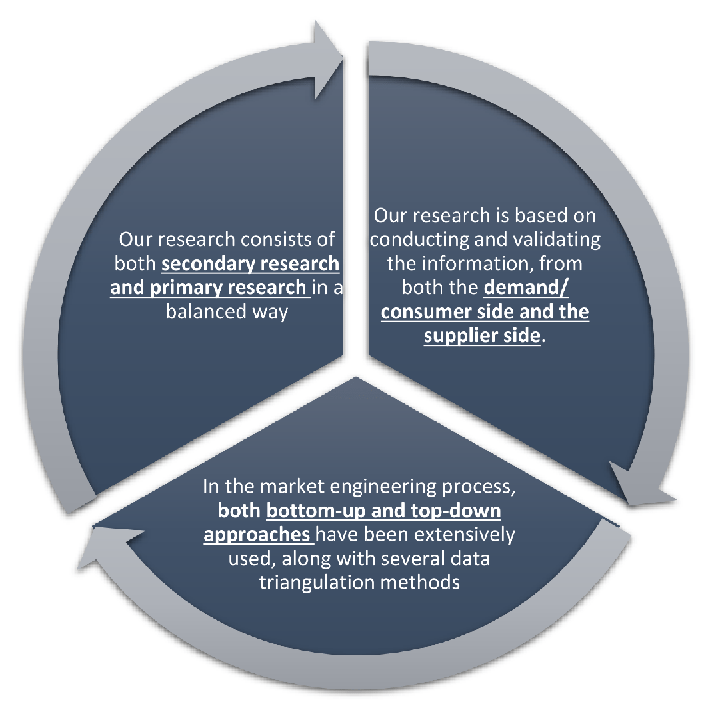
MarketGenics leverages a dedicated industry panel of experts and a comprehensive suite of paid databases to effectively collect, consolidate, and analyze market intelligence.
Our approach has consistently proven to be reliable and effective in generating accurate market insights, identifying key industry trends, and uncovering emerging business opportunities.
Through both primary and secondary research, we capture and analyze critical company-level data such as manufacturing footprints, including technical centers, R&D facilities, sales offices, and headquarters.
Our expert panel further enhances our ability to estimate market size for specific brands based on validated field-level intelligence.
Our data mining techniques incorporate both parametric and non-parametric methods, allowing for structured data collection, sorting, processing, and cleaning.
Demand projections are derived from large-scale data sets analyzed through proprietary algorithms, culminating in robust and reliable market sizing.
Research Approach
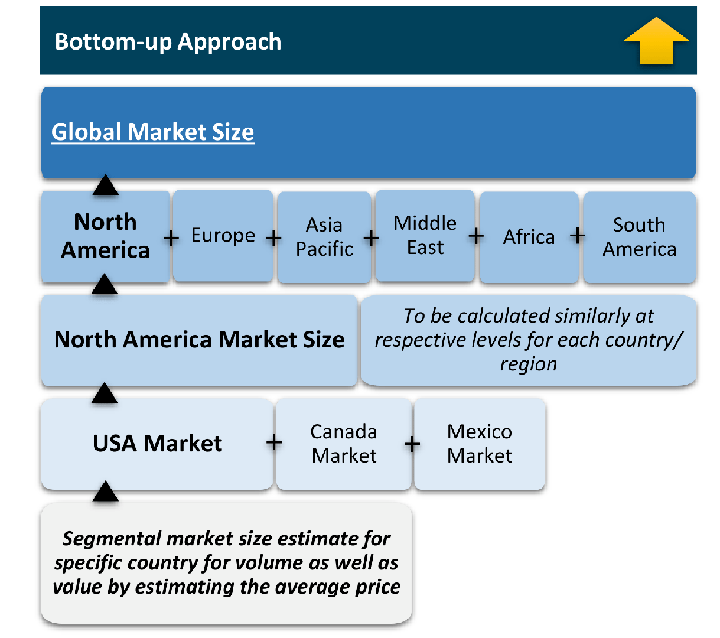
The bottom-up approach builds market estimates by starting with the smallest addressable market units and systematically aggregating them to create comprehensive market size projections.
This method begins with specific, granular data points and builds upward to create the complete market landscape.
Customer Analysis → Segmental Analysis → Geographical Analysis
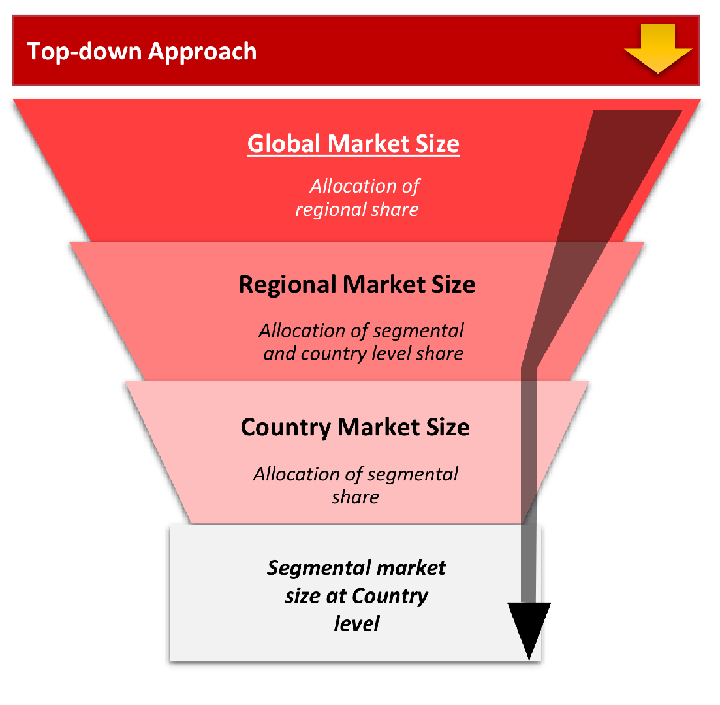
The top-down approach starts with the broadest possible market data and systematically narrows it down through a series of filters and assumptions to arrive at specific market segments or opportunities.
This method begins with the big picture and works downward to increasingly specific market slices.
TAM → SAM → SOM
Research Methods
Desk / Secondary Research
While analysing the market, we extensively study secondary sources, directories, and databases to identify and collect information useful for this technical, market-oriented, and commercial report. Secondary sources that we utilize are not only the public sources, but it is a combination of Open Source, Associations, Paid Databases, MG Repository & Knowledgebase, and others.
- Company websites, annual reports, financial reports, broker reports, and investor presentations
- National government documents, statistical databases and reports
- News articles, press releases and web-casts specific to the companies operating in the market, Magazines, reports, and others
- We gather information from commercial data sources for deriving company specific data such as segmental revenue, share for geography, product revenue, and others
- Internal and external proprietary databases (industry-specific), relevant patent, and regulatory databases
- Governing Bodies, Government Organizations
- Relevant Authorities, Country-specific Associations for Industries
We also employ the model mapping approach to estimate the product level market data through the players' product portfolio
Primary Research
Primary research/ interviews is vital in analyzing the market. Most of the cases involves paid primary interviews. Primary sources include primary interviews through e-mail interactions, telephonic interviews, surveys as well as face-to-face interviews with the different stakeholders across the value chain including several industry experts.
| Type of Respondents | Number of Primaries |
|---|---|
| Tier 2/3 Suppliers | ~20 |
| Tier 1 Suppliers | ~25 |
| End-users | ~25 |
| Industry Expert/ Panel/ Consultant | ~30 |
| Total | ~100 |
MG Knowledgebase
• Repository of industry blog, newsletter and case studies
• Online platform covering detailed market reports, and company profiles
Forecasting Factors and Models
Forecasting Factors
- Historical Trends – Past market patterns, cycles, and major events that shaped how markets behave over time. Understanding past trends helps predict future behavior.
- Industry Factors – Specific characteristics of the industry like structure, regulations, and innovation cycles that affect market dynamics.
- Macroeconomic Factors – Economic conditions like GDP growth, inflation, and employment rates that affect how much money people have to spend.
- Demographic Factors – Population characteristics like age, income, and location that determine who can buy your product.
- Technology Factors – How quickly people adopt new technology and how much technology infrastructure exists.
- Regulatory Factors – Government rules, laws, and policies that can help or restrict market growth.
- Competitive Factors – Analyzing competition structure such as degree of competition and bargaining power of buyers and suppliers.
Forecasting Models / Techniques
Multiple Regression Analysis
- Identify and quantify factors that drive market changes
- Statistical modeling to establish relationships between market drivers and outcomes
Time Series Analysis – Seasonal Patterns
- Understand regular cyclical patterns in market demand
- Advanced statistical techniques to separate trend, seasonal, and irregular components
Time Series Analysis – Trend Analysis
- Identify underlying market growth patterns and momentum
- Statistical analysis of historical data to project future trends
Expert Opinion – Expert Interviews
- Gather deep industry insights and contextual understanding
- In-depth interviews with key industry stakeholders
Multi-Scenario Development
- Prepare for uncertainty by modeling different possible futures
- Creating optimistic, pessimistic, and most likely scenarios
Time Series Analysis – Moving Averages
- Sophisticated forecasting for complex time series data
- Auto-regressive integrated moving average models with seasonal components
Econometric Models
- Apply economic theory to market forecasting
- Sophisticated economic models that account for market interactions
Expert Opinion – Delphi Method
- Harness collective wisdom of industry experts
- Structured, multi-round expert consultation process
Monte Carlo Simulation
- Quantify uncertainty and probability distributions
- Thousands of simulations with varying input parameters
Research Analysis
Our research framework is built upon the fundamental principle of validating market intelligence from both demand and supply perspectives. This dual-sided approach ensures comprehensive market understanding and reduces the risk of single-source bias.
Demand-Side Analysis: We understand end-user/application behavior, preferences, and market needs along with the penetration of the product for specific application.
Supply-Side Analysis: We estimate overall market revenue, analyze the segmental share along with industry capacity, competitive landscape, and market structure.
Validation & Evaluation
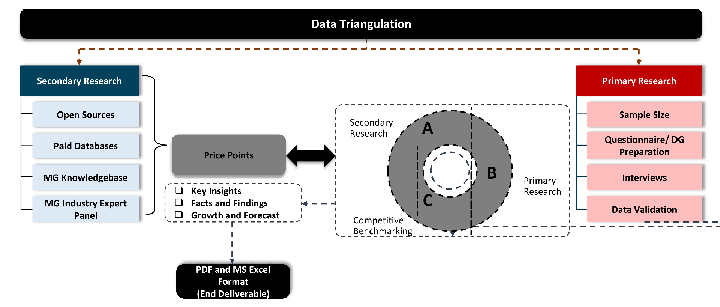
Data triangulation is a validation technique that uses multiple methods, sources, or perspectives to examine the same research question, thereby increasing the credibility and reliability of research findings. In market research, triangulation serves as a quality assurance mechanism that helps identify and minimize bias, validate assumptions, and ensure accuracy in market estimates.
- Data Source Triangulation – Using multiple data sources to examine the same phenomenon
- Methodological Triangulation – Using multiple research methods to study the same research question
- Investigator Triangulation – Using multiple researchers or analysts to examine the same data
- Theoretical Triangulation – Using multiple theoretical perspectives to interpret the same data
Custom Market Research Services
We will customise the research for you, in case the report listed above does not meet your requirements.
Get 10% Free Customisation