Powder Metallurgy Processing Equipment Market Size, Share & Trends Analysis Report by Equipment Type (Powder Production Equipment, Mixing & Blending Equipment, Compacting Presses, Sintering Furnaces, Secondary Processing Equipment, Auxiliary Equipment), Technology, Material Type, Automation Level, Pressing Type, Sintering Atmosphere, Control System, Production Method, End-Use Industry, Geography (North America, Europe, Asia Pacific, Middle East, Africa, and South America) – Global Industry Data, Trends, and Forecasts, 2026–2035
|
|
|
Segmental Data Insights |
|
|
Demand Trends |
|
|
Competitive Landscape |
|
|
Strategic Development |
|
|
Future Outlook & Opportunities |
|
Powder-Metallurgy-Processing-Equipment-Market Size, Share, and Growth
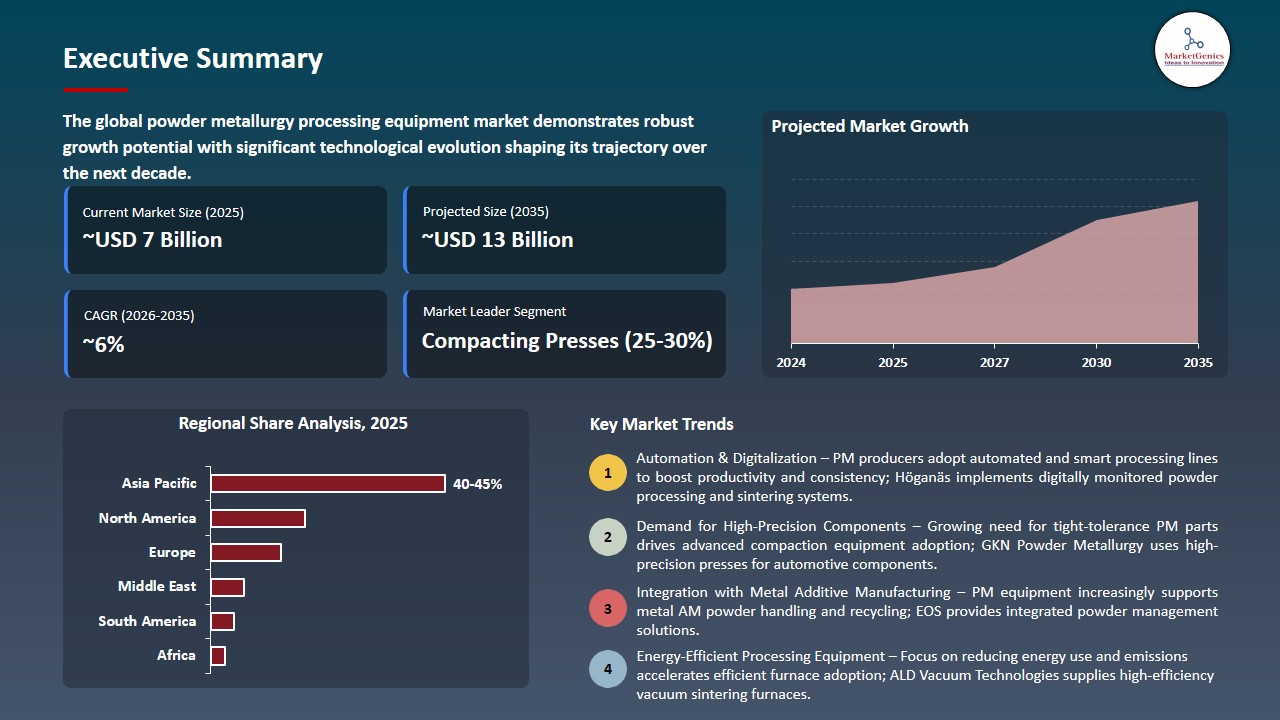
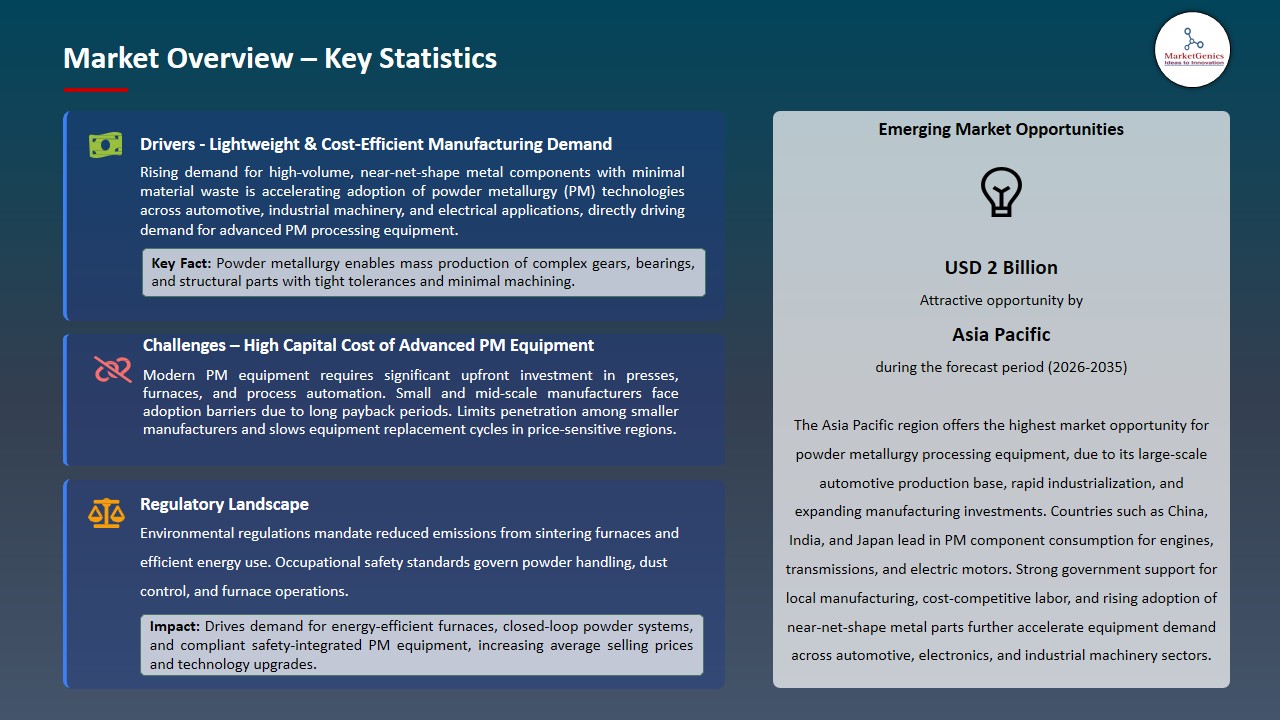
The global powder metallurgy processing equipment market is witnessing strong growth, valued at USD 7.1 billion in 2025 and projected to reach USD 12.6 billion by 2035, expanding at a CAGR of 5.9% during the forecast period. North America is the fastest-growing region in the powder metallurgy processing equipment market due to increasing adoption of advanced manufacturing technologies, rising demand for lightweight and high-performance metal components, and growing investments in automotive, aerospace, and defense industries.
Jähnke Division President, Powder Metallurgy Technologies, Höganäs, said, “We are excited to partner with Porite in this groundbreaking initiative. Our near zero sponge iron powder represents a significant step towards sustainable manufacturing, and we are proud to support Porite in their commitment to reducing carbon emissions”.
The increasing popularity of lightweight and fuel-efficient cars, and specifically electric cars (EVs) are driving the powder metallurgy processing equipment market with the added pressure on the PM components gears, bearings, and structural components. The use of state-of-the-art powder metallurgy equipments enables production of high strength, precise and low material components with minimal material wastes. The automotive needs are increasing the investment in the advanced PM equipment rapidly because of the attention paid to the efficiency, performance and durability by the automakers.
Aerospace and medical industries have a high growth potential in power metallurgy processing equipment market. The aerospace industry demands precision components which are lightweight and in high strength whereas the medical devices demand biocompatible and complex implants. The advanced PM equipment allows the manufactures to meet such high demands successfully, and manufacture reliable, high performance components. Further development of these sectors will lead to the development of the market and investment in special technologies of powder metallurgy.
Additional future prospects in the powder metallurgy processing equipment sector are the increased attention to sustainability and environmentally-friendly production, like energy-efficient sintering and recycling of metal powders, minimizing waste and operational expenses. Potential market growth opportunities also exist in expansion into electric car parts, high-performance tooling and specialized industrial applications. Moreover, the prospects of increasing the productivity, quality and scalability of operations in the field of powder metallurgy include digitalization and the introduction of Industry 4.0 solutions, such as IoT-based monitoring and intelligent process control.
Powder Metallurgy Processing Equipment Market Dynamics and Trends
Driver: Growth in Additive Manufacturing (AM)
-
The increasing utilization of additive manufacturing technologies in metal processing, such as laser sintering, electron beam melting, and binder jetting, is among the leading drivers of the powder metallurgy processing equipment market. These AM processes are attributed to the high quality of the metal powders with controlled particle size, flowability and purity, which directly increases the demand of advanced powder production and processing equipment.
- In addition, the fact that AM is able to manufacture high-technology, light-weight and customized components with minimal material waste, is improving its use in aerospace, automobile, medical and industrial markets. The increasing base of use facilitates the further investment on powder metallurgy equipment so as to ensure that supply of powder is sustained constantly, optimization of the involved processes and production that can be scaled.
- In 2025, HP Additive Manufacturing Solutions proclaimed new material credentials and global collaborations, including OptiPowder Ni718 and development of OptiPowder M247LC to its HP Metal Jet. The advances indicate the greater dependence of metal additive manufacturing on large-scale and high-density metal additive manufacturing part that is dependent on the use of advanced powder metallurgy processing equipment.
- This heightened additive manufacturing of metals is placing a demand of high-technological machineries in the processing of powder metallurgy.
Restraint: Material & Design Limitations
-
The shortage of materials in the powder metallurgy processing equipment market is a significant phenomenon because some of the high-performance alloys like the nickel- and titanium-based powders are difficult to handle. These materials can be of low flowability, unevenly distributed particles or can be sensitive to contamination therefore they cannot easily form uniform compaction and sintering. These material complexities limit the number of components that can be produced in an efficient and reliable form restricting the plasticity of the powder metallurgy processes in relation to the advanced industrial activity.
- The design also has limitations that deter market expansion. Large parts, complex or thin in their wall thickness, geometries are troublesome in respect of dimensional accuracy and structural integrity. Conventional powder metallurgy techniques might also be incapable of providing the necessary tolerances, uniform density and mechanical properties on such complex parts and may require special equipment or additional treatment. All this and material and design issues contribute to higher production costs, extended lead times, and certain components being hard to scale.
- The implication is that the processing equipment of powder metallurgy might take a longer period of time before it can be adopted in the processes that have material or design specifications that necessitate use of the equipment that restricts the expansion of the market as a whole.
Opportunity: Robotics & Automation
-
The significant opportunity to the powder metallurgy processing equipment market is the introduction of robotics and automation. The efficiency of the production is facilitated through automated compaction, sintering system, material handling system in order to ensure uniformity in quality, reduce human error and enhance total throughput. The technologies also lessen the use of skilled labor, which can be limited and expensive in any developed powder metallurgy processes.
- Additionally, high level of control of complex manufacturing is achievable through automation and this source helps to produce complex parts with high level of tolerances. As the automotive, aerospace, and medical sectors require a high quantity of components in quality and at low prices, the innovation of robotics and automated machines is a chance to increase the number of producers within the market by providing them with the opportunity to increase production, be cost-efficient, and apply more flexible methods to the work.
- Rivelin Robotics partnered with Solukon to remain in the development of automated post-processing of metal additive production. Using SFM-AT800-S in combination with Rivelin robotic arms, the process can be used to remove powder autonomously, support removal, and surface finish at a definite rate.
- This innovation demonstrates that robotics and automation could reduce complex PM processes, enhance throughput, reduce the dependence on labor, and enhance uniformity in high-volume metal additive manufacturing processes.
Key Trend: Advanced Powder Characterization & Quality Assurance
-
Powder characterization and quality assurance are emerging as the new trend in the powder metallurgy processing equipment market. Measuring instruments of the particle size, morphology and chemical composition are real-time monitoring instruments which consist of laser diffraction, in-line spectrometry as well as automated imaging systems which ensure consistency of the quality of the powder.
- The automated inspection systems detect contamination, density, and flowability issues and are important in high-performance applications in such fields as aerospace, automotive, and medical. These technologies reduce the production process defects, raise the reliability of the components, and utilize the materials in an efficient manner.
- With the manufacturers showing more attention to accuracy, process stability and conformity than the regulations, the adoption of advanced powder characterization and quality control systems will accelerate resulting in the overall efficiency and competitiveness in the powder metallurgy operations.
- In 2025, AM partnered with Gränges Powder Metallurgy to share the use of the equipment to characterize materials in AM in Luxembourg. The cooperation gives the skill to examine the size of particles, the thermal behaviour, and the mechanical characteristics all united and enhance the performance of powders to be utilized in additive manufacturing and powder metallurgy processes.
- The introduction of enhanced characterization and quality assurance has also facilitated the promotion of high precision, efficiency, and reliability in the market of the powder metallurgy processing equipment.
Powder-Metallurgy-Processing-Equipment-Market Analysis and Segmental Data

Compacting Presses Dominate Global Powder Metallurgy Processing Equipment Market
-
Compacting presses continue to dominate the global powder metallurgy processing equipment market due to their critical role in shaping high-precision metal components. These presses enable the uniform compaction of metal powders into complex geometries with consistent density, ensuring superior mechanical properties and dimensional accuracy.
- Their versatility allows production of automotive gears, bearings, structural parts, and specialized components for aerospace, medical, and industrial applications. Advances in hydraulic and mechanical press technologies, along with automation integration, have further enhanced throughput, repeatability, and energy efficiency.
- In 2025, HLT Industry Co., Ltd. unveiled its second‑generation metal powder presses, including the YPM1500 and YPM630 models. These advanced compacting presses offer precise control, stable operation, and wide applicability across ferrous, non‑ferrous, and magnetic powders, underscoring ongoing innovation and leadership of compacting presses in powder metallurgy production equipment.
- Therefore, the continued innovation and versatility of compacting presses solidify their dominant position in the global powder metallurgy processing equipment market.
Asia Pacific Leads Global Powder Metallurgy Processing Equipment Market Demand
-
The Asia Pacific region is emerging as the leading region for powder metallurgy processing equipment market, driven by rapid industrialization, strong automotive and electronics manufacturing sectors, and increasing adoption of advanced manufacturing technologies.
- Countries such as China, Japan, South Korea, and India are witnessing significant investment in high-performance powder metallurgy solutions to produce automotive gears, bearings, and precision components for aerospace, medical, and industrial applications. The region’s growing electric vehicle (EV) market further fuels demand for lightweight, high-strength PM components, creating opportunities for equipment suppliers.
- Additionally, supportive government policies, favorable labor costs, and the expansion of local manufacturing ecosystems are encouraging both domestic and international companies to establish production facilities in Asia Pacific. Technological advancements, including automation, digitalization, and hybrid sintering solutions, are being rapidly adopted to enhance productivity and process efficiency.
- These factors collectively position Asia Pacific as the most dynamic and high-growth region for powder metallurgy processing equipment globally.
Powder-Metallurgy-Processing-Equipment-Market Ecosystem
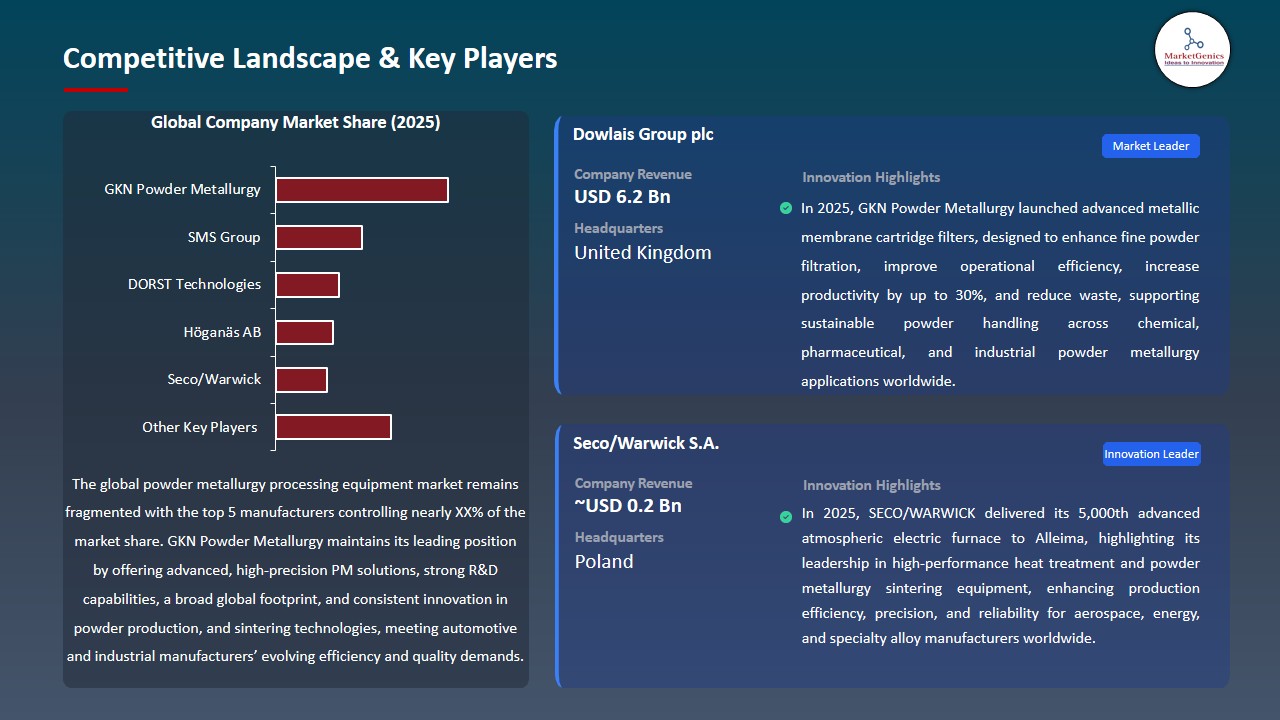
The global powder metallurgy processing equipment market is fragmented, with leading players including GKN Powder Metallurgy, SMS Group, DORST Technologies, Höganäs AB, and Seco/Warwick. These companies maintain competitive advantages through high-precision compaction and sintering systems, automated and hybrid processing solutions, IoT-enabled monitoring, energy-efficient equipment designs, corrosion- and wear-resistant components, and advanced digital integration for automotive, aerospace, industrial, and medical applications.
The market value chain encompasses the design and R&D of powder metallurgy equipment, manufacturing of compacting presses, sintering furnaces, and additive manufacturing-compatible systems, development of smart and IoT-enabled control platforms, testing and calibration, deployment across automotive, aerospace, medical, and industrial sectors, compliance with safety and environmental standards, and after-sales services including predictive maintenance, remote monitoring, and performance optimization.
Entry barriers remain high due to the capital-intensive nature of equipment manufacturing, specialized technical expertise required for advanced compaction, sintering, and hybrid systems, customization for diverse applications, and strict adherence to efficiency and regulatory standards.
Ongoing technological innovations such as IoT-connected powder metallurgy equipment, AI-driven predictive maintenance, energy-efficient sintering and compaction systems, corrosion- and wear-resistant designs, and integration with digital manufacturing platforms continue to drive differentiation, adoption, and global market growth.
Recent Development and Strategic Overview:
-
In June 2025, GKN Powder Metallurgy launched its new Metallic Membrane cartridge filters to enhance fine filtration efficiency and sustainability for chemical, pharmaceutical, and food & beverage applications. The filters feature improved cake release, reduced downtime, and increased flow rates, delivering up to 30% higher productivity than conventional solutions.
- In March 2025, Höganäs AB partnered with Porite Taiwan Co., Ltd. to supply its newly developed near zero sponge iron powder, designed to minimize carbon emissions while maintaining high performance and quality standards. This strategic collaboration supports sustainable manufacturing practices and reflects both companies’ commitment to innovation and environmental responsibility in the powder metallurgy industry.
Report Scope
|
Detail |
|
|
Market Size in 2025 |
USD 7.1 Bn |
|
Market Forecast Value in 2035 |
USD 12.6 Bn |
|
Growth Rate (CAGR) |
5.9% |
|
Forecast Period |
2026 – 2035 |
|
Historical Data Available for |
2021 – 2024 |
|
Market Size Units |
US$ Billion for Value Thousand Units for Volume |
|
Report Format |
Electronic (PDF) + Excel |
|
North America |
Europe |
Asia Pacific |
Middle East |
Africa |
South America |
|
|
|
|
|
|
|
Companies Covered |
|||||
|
|
|
|
|
|
Powder-Metallurgy-Processing-Equipment-Market Segmentation and Highlights
|
Segment |
Sub-segment |
|
Powder Metallurgy Processing Equipment Market, By Equipment Type |
|
|
Powder Metallurgy Processing Equipment Market, By Technology |
|
|
Powder Metallurgy Processing Equipment Market, By Material Type |
|
|
Powder Metallurgy Processing Equipment Market, By Automation Level |
|
|
Powder Metallurgy Processing Equipment Market, By Pressing Type |
|
|
Powder Metallurgy Processing Equipment Market, By Sintering Atmosphere |
|
|
Powder Metallurgy Processing Equipment Market, By Control System |
|
|
Powder Metallurgy Processing Equipment Market, By Production Method |
|
|
Powder Metallurgy Processing Equipment Market, By End-Use Industry |
|
Frequently Asked Questions
Table of Contents
- 1. Research Methodology and Assumptions
- 1.1. Definitions
- 1.2. Research Design and Approach
- 1.3. Data Collection Methods
- 1.4. Base Estimates and Calculations
- 1.5. Forecasting Models
- 1.5.1. Key Forecast Factors & Impact Analysis
- 1.6. Secondary Research
- 1.6.1. Open Sources
- 1.6.2. Paid Databases
- 1.6.3. Associations
- 1.7. Primary Research
- 1.7.1. Primary Sources
- 1.7.2. Primary Interviews with Stakeholders across Ecosystem
- 2. Executive Summary
- 2.1. Global Powder Metallurgy Processing Equipment Market Outlook
- 2.1.1. Powder Metallurgy Processing Equipment Market Size Volume (Thousand Units) and Value (US$ Bn), and Forecasts, 2021-2035
- 2.1.2. Compounded Annual Growth Rate Analysis
- 2.1.3. Growth Opportunity Analysis
- 2.1.4. Segmental Share Analysis
- 2.1.5. Geographical Share Analysis
- 2.2. Market Analysis and Facts
- 2.3. Supply-Demand Analysis
- 2.4. Competitive Benchmarking
- 2.5. Go-to- Market Strategy
- 2.5.1. Customer/ End-use Industry Assessment
- 2.5.2. Growth Opportunity Data, 2026-2035
- 2.5.2.1. Regional Data
- 2.5.2.2. Country Data
- 2.5.2.3. Segmental Data
- 2.5.3. Identification of Potential Market Spaces
- 2.5.4. GAP Analysis
- 2.5.5. Potential Attractive Price Points
- 2.5.6. Prevailing Market Risks & Challenges
- 2.5.7. Preferred Sales & Marketing Strategies
- 2.5.8. Key Recommendations and Analysis
- 2.5.9. A Way Forward
- 2.1. Global Powder Metallurgy Processing Equipment Market Outlook
- 3. Industry Data and Premium Insights
- 3.1. Global Industrial Machinery Overview, 2025
- 3.1.1. Industrial Machinery Ecosystem Analysis
- 3.1.2. Key Trends for Industrial Machinery
- 3.1.3. Regional Distribution for Industrial Machinery
- 3.2. Supplier Customer Data
- 3.3. Technology Roadmap and Developments
- 3.4. Trade Analysis
- 3.4.1. Import & Export Analysis, 2025
- 3.4.2. Top Importing Countries
- 3.4.3. Top Exporting Countries
- 3.5. Trump Tariff Impact Analysis
- 3.5.1. Manufacturer
- 3.5.1.1. Based on the component & Raw material
- 3.5.2. Supply Chain
- 3.5.3. End Consumer
- 3.5.1. Manufacturer
- 3.6. Raw Material Analysis
- 3.1. Global Industrial Machinery Overview, 2025
- 4. Market Overview
- 4.1. Market Dynamics
- 4.1.1. Drivers
- 4.1.1.1. Growing demand for lightweight, high-strength components in automotive and aerospace industries.
- 4.1.1.2. Increasing adoption of electric vehicles requiring precision metal parts.
- 4.1.1.3. Advancements in powder metallurgy technologies enabling complex part manufacturing.
- 4.1.2. Restraints
- 4.1.2.1. High capital investment required for advanced processing equipment.
- 4.1.2.2. Limited availability of skilled operators and technical expertise.
- 4.1.1. Drivers
- 4.2. Key Trend Analysis
- 4.3. Regulatory Framework
- 4.3.1. Key Regulations, Norms, and Subsidies, by Key Countries
- 4.3.2. Tariffs and Standards
- 4.3.3. Impact Analysis of Regulations on the Market
- 4.4. Value Chain Analysis
- 4.4.1. Raw Material Suppliers
- 4.4.2. Equipment & Machinery Manufacturers
- 4.4.3. Technology & R&D Providers
- 4.4.4. Distribution & Sales Channels
- 4.4.5. End-Use Industries
- 4.5. Cost Structure Analysis
- 4.6. Pricing Analysis
- 4.7. Porter’s Five Forces Analysis
- 4.8. PESTEL Analysis
- 4.9. Global Powder Metallurgy Processing Equipment Market Demand
- 4.9.1. Historical Market Size – Volume (Thousand Units) and Value (US$ Bn), 2020-2024
- 4.9.2. Current and Future Market Size – Volume (Thousand Units) and Value (US$ Bn), 2026–2035
- 4.9.2.1. Y-o-Y Growth Trends
- 4.9.2.2. Absolute $ Opportunity Assessment
- 4.1. Market Dynamics
- 5. Competition Landscape
- 5.1. Competition structure
- 5.1.1. Fragmented v/s consolidated
- 5.2. Company Share Analysis, 2025
- 5.2.1. Global Company Market Share
- 5.2.2. By Region
- 5.2.2.1. North America
- 5.2.2.2. Europe
- 5.2.2.3. Asia Pacific
- 5.2.2.4. Middle East
- 5.2.2.5. Africa
- 5.2.2.6. South America
- 5.3. Product Comparison Matrix
- 5.3.1. Specifications
- 5.3.2. Market Positioning
- 5.3.3. Pricing
- 5.1. Competition structure
- 6. Global Powder Metallurgy Processing Equipment Market Analysis, by Equipment Type
- 6.1. Key Segment Analysis
- 6.2. Powder Metallurgy Processing Equipment Market Size Volume (Thousand Units) and Value (US$ Bn), Analysis, and Forecasts, by Equipment Type, 2021-2035
- 6.2.1. Powder Production Equipment
- 6.2.1.1. Atomization Systems
- 6.2.1.2. Mechanical Alloying Equipment
- 6.2.1.3. Electrolytic Deposition Systems
- 6.2.1.4. Chemical Reduction Equipment
- 6.2.1.5. Others
- 6.2.2. Mixing & Blending Equipment
- 6.2.2.1. Tumble Blenders
- 6.2.2.2. High-Shear Mixers
- 6.2.2.3. V-Blenders
- 6.2.2.4. Double Cone Blenders
- 6.2.2.5. Others
- 6.2.3. Compacting Presses
- 6.2.3.1. Mechanical Presses
- 6.2.3.2. Hydraulic Presses
- 6.2.3.3. Isostatic Presses (CIP/HIP)
- 6.2.3.4. Powder Injection Molding Machines
- 6.2.3.5. Others
- 6.2.4. Sintering Furnaces
- 6.2.4.1. Continuous Furnaces
- 6.2.4.2. Batch Furnaces
- 6.2.4.3. Vacuum Furnaces
- 6.2.4.4. Atmosphere Controlled Furnaces
- 6.2.4.5. Others
- 6.2.5. Secondary Processing Equipment
- 6.2.5.1. Heat Treatment Furnaces
- 6.2.5.2. Sizing Presses
- 6.2.5.3. Machining Equipment
- 6.2.5.4. Others
- 6.2.6. Auxiliary Equipment
- 6.2.6.1. Screening & Classification Systems
- 6.2.6.2. Powder Feeders
- 6.2.6.3. Material Handling Systems
- 6.2.6.4. Others
- 6.2.1. Powder Production Equipment
- 7. Global Powder Metallurgy Processing Equipment Market Analysis, by Technology
- 7.1. Key Segment Analysis
- 7.2. Powder Metallurgy Processing Equipment Market Size Volume (Thousand Units) and Value (US$ Bn), Analysis, and Forecasts, by Technology, 2021-2035
- 7.2.1. Conventional Powder Metallurgy
- 7.2.2. Metal Injection Molding (MIM)
- 7.2.3. Hot Isostatic Pressing (HIP)
- 7.2.4. Cold Isostatic Pressing (CIP)
- 7.2.5. Additive Manufacturing/3D Printing
- 7.2.6. Spark Plasma Sintering (SPS)
- 7.2.7. Selective Laser Sintering (SLS)
- 7.2.8. Others
- 8. Global Powder Metallurgy Processing Equipment Market Analysis, by Material Type
- 8.1. Key Segment Analysis
- 8.2. Powder Metallurgy Processing Equipment Market Size Volume (Thousand Units) and Value (US$ Bn), Analysis, and Forecasts, by Material Type, 2021-2035
- 8.2.1. Ferrous Metals
- 8.2.1.1. Iron & Steel Powders
- 8.2.1.2. Stainless Steel Powders
- 8.2.1.3. Tool Steel Powders
- 8.2.1.4. Others
- 8.2.2. Non-Ferrous Metals
- 8.2.2.1. Aluminum Powders
- 8.2.2.2. Copper Powders
- 8.2.2.3. Titanium Powders
- 8.2.2.4. Nickel Powders
- 8.2.2.5. Others
- 8.2.3. Refractory Metals
- 8.2.3.1. Tungsten
- 8.2.3.2. Molybdenum
- 8.2.3.3. Tantalum
- 8.2.3.4. Others
- 8.2.4. Precious Metals
- 8.2.5. Metal Matrix Composites
- 8.2.6. Ceramic Powders
- 8.2.1. Ferrous Metals
- 9. Global Powder Metallurgy Processing Equipment Market Analysis, by Automation Level
- 9.1. Key Segment Analysis
- 9.2. Powder Metallurgy Processing Equipment Market Size Volume (Thousand Units) and Value (US$ Bn), Analysis, and Forecasts, by Automation Level, 2021-2035
- 9.2.1. Fully Automated Systems
- 9.2.2. Semi-Automated Systems
- 9.2.3. Manual Systems
- 9.2.4. Robotic Integrated Systems
- 10. Global Powder Metallurgy Processing Equipment Market Analysis, by Pressing Type
- 10.1. Key Segment Analysis
- 10.2. Powder Metallurgy Processing Equipment Market Size Volume (Thousand Units) and Value (US$ Bn), Analysis, and Forecasts, by Pressing Type, 2021-2035
- 10.2.1. Single Action Pressing
- 10.2.2. Double Action Pressing
- 10.2.3. Multi-Level Pressing
- 10.2.4. Isostatic Pressing
- 10.2.5. Powder Forging
- 11. Global Powder Metallurgy Processing Equipment Market Analysis, by Sintering Atmosphere
- 11.1. Key Segment Analysis
- 11.2. Powder Metallurgy Processing Equipment Market Size Volume (Thousand Units) and Value (US$ Bn), Analysis, and Forecasts, by Sintering Atmosphere, 2021-2035
- 11.2.1. Hydrogen Atmosphere
- 11.2.2. Nitrogen Atmosphere
- 11.2.3. Vacuum Atmosphere
- 11.2.4. Argon Atmosphere
- 11.2.5. Dissociated Ammonia
- 11.2.6. Mixed Gas Atmosphere
- 12. Global Powder Metallurgy Processing Equipment Market Analysis, by Control System
- 12.1. Key Segment Analysis
- 12.2. Powder Metallurgy Processing Equipment Market Size Volume (Thousand Units) and Value (US$ Bn), Analysis, and Forecasts, by Control System, 2021-2035
- 12.2.1. PLC-Based Systems
- 12.2.2. CNC-Based Systems
- 12.2.3. IoT-Enabled Smart Systems
- 12.2.4. Conventional Control Systems
- 13. Global Powder Metallurgy Processing Equipment Market Analysis and Forecasts, by Production Method
- 13.1. Key Findings
- 13.2. Powder Metallurgy Processing Equipment Market Size Volume (Thousand Units) and Value (US$ Bn), Analysis, and Forecasts, by Production Method, 2021-2035
- 13.2.1. Batch Production
- 13.2.2. Continuous Production
- 13.2.3. Hybrid Production
- 14. Global Powder Metallurgy Processing Equipment Market Analysis and Forecasts, by End-Use Industry
- 14.1. Key Findings
- 14.2. Powder Metallurgy Processing Equipment Market Size Volume (Thousand Units) and Value (US$ Bn), Analysis, and Forecasts, by End-Use Industry, 2021-2035
- 14.2.1. Automotive
- 14.2.1.1. Engine Components
- 14.2.1.2. Transmission Parts
- 14.2.1.3. Structural Components
- 14.2.1.4. Electric Vehicle Components
- 14.2.1.5. Others
- 14.2.2. Aerospace & Defense
- 14.2.2.1. Aircraft Engine Components
- 14.2.2.2. Structural Aerospace Parts
- 14.2.2.3. Defense Equipment Components
- 14.2.2.4. Satellite & Space Components
- 14.2.2.5. Others
- 14.2.3. Industrial Machinery
- 14.2.3.1. Hydraulic Components
- 14.2.3.2. Pneumatic Parts
- 14.2.3.3. Machine Tool Components
- 14.2.3.4. Industrial Bearings & Gears
- 14.2.3.5. Others
- 14.2.4. Electronics & Electrical
- 14.2.4.1. Magnetic Components
- 14.2.4.2. Electrical Contacts
- 14.2.4.3. Heat Sinks
- 14.2.4.4. Shielding Components
- 14.2.4.5. Others
- 14.2.5. Medical & Dental
- 14.2.5.1. Surgical Instruments
- 14.2.5.2. Dental Implants
- 14.2.5.3. Orthopedic Implants
- 14.2.5.4. Medical Device Components
- 14.2.5.5. Others
- 14.2.6. Consumer Goods
- 14.2.6.1. Power Tools
- 14.2.6.2. Home Appliances
- 14.2.6.3. Sports Equipment
- 14.2.6.4. Hardware & Fasteners
- 14.2.6.5. Others
- 14.2.7. Energy & Power Generation
- 14.2.7.1. Turbine Components
- 14.2.7.2. Nuclear Fuel Elements
- 14.2.7.3. Solar Panel Components
- 14.2.7.4. Battery Components
- 14.2.7.5. Others
- 14.2.8. Oil & Gas
- 14.2.8.1. Drilling Equipment
- 14.2.8.2. Valve Components
- 14.2.8.3. Pump Parts
- 14.2.8.4. Wear-Resistant Components
- 14.2.8.5. Others
- 14.2.9. Mining & Construction
- 14.2.9.1. Cutting Tools
- 14.2.9.2. Wear Parts
- 14.2.9.3. Heavy Equipment Components
- 14.2.9.4. Drilling Tools
- 14.2.9.5. Others
- 14.2.10. Chemical Processing
- 14.2.10.1. Filtration Components
- 14.2.10.2. Catalyst Supports
- 14.2.10.3. Corrosion-Resistant Parts
- 14.2.10.4. Reactor Components
- 14.2.10.5. Others
- 14.2.11. Other Industries
- 14.2.1. Automotive
- 15. Global Powder Metallurgy Processing Equipment Market Analysis and Forecasts, by Region
- 15.1. Key Findings
- 15.2. Powder Metallurgy Processing Equipment Market Size Volume (Thousand Units) and Value (US$ Bn), Analysis, and Forecasts, by Region, 2021-2035
- 15.2.1. North America
- 15.2.2. Europe
- 15.2.3. Asia Pacific
- 15.2.4. Middle East
- 15.2.5. Africa
- 15.2.6. South America
- 16. North America Powder Metallurgy Processing Equipment Market Analysis
- 16.1. Key Segment Analysis
- 16.2. Regional Snapshot
- 16.3. North America Powder Metallurgy Processing Equipment Market Size Volume (Thousand Units) and Value (US$ Bn), Analysis, and Forecasts, 2021-2035
- 16.3.1. Equipment Type
- 16.3.2. Technology
- 16.3.3. Material Type
- 16.3.4. Automation Level
- 16.3.5. Pressing Type
- 16.3.6. Sintering Atmosphere
- 16.3.7. Control System
- 16.3.8. Production Method
- 16.3.9. End-Use Industry
- 16.3.10. Country
- 16.3.10.1. USA
- 16.3.10.2. Canada
- 16.3.10.3. Mexico
- 16.4. USA Powder Metallurgy Processing Equipment Market
- 16.4.1. Country Segmental Analysis
- 16.4.2. Equipment Type
- 16.4.3. Technology
- 16.4.4. Material Type
- 16.4.5. Automation Level
- 16.4.6. Pressing Type
- 16.4.7. Sintering Atmosphere
- 16.4.8. Control System
- 16.4.9. Production Method
- 16.4.10. End-Use Industry
- 16.5. Canada Powder Metallurgy Processing Equipment Market
- 16.5.1. Country Segmental Analysis
- 16.5.2. Equipment Type
- 16.5.3. Technology
- 16.5.4. Material Type
- 16.5.5. Automation Level
- 16.5.6. Pressing Type
- 16.5.7. Sintering Atmosphere
- 16.5.8. Control System
- 16.5.9. Production Method
- 16.5.10. End-Use Industry
- 16.6. Mexico Powder Metallurgy Processing Equipment Market
- 16.6.1. Equipment Type
- 16.6.2. Technology
- 16.6.3. Material Type
- 16.6.4. Automation Level
- 16.6.5. Pressing Type
- 16.6.6. Sintering Atmosphere
- 16.6.7. Control System
- 16.6.8. Production Method
- 16.6.9. End-Use Industry
- 17. Europe Powder Metallurgy Processing Equipment Market Analysis
- 17.1. Key Segment Analysis
- 17.2. Regional Snapshot
- 17.3. Europe Powder Metallurgy Processing Equipment Market Size Volume (Thousand Units) and Value (US$ Bn), Analysis, and Forecasts, 2021-2035
- 17.3.1. Equipment Type
- 17.3.2. Technology
- 17.3.3. Material Type
- 17.3.4. Automation Level
- 17.3.5. Pressing Type
- 17.3.6. Sintering Atmosphere
- 17.3.7. Control System
- 17.3.8. Production Method
- 17.3.9. End-Use Industry
- 17.3.10. Country
- 17.3.10.1. Germany
- 17.3.10.2. United Kingdom
- 17.3.10.3. France
- 17.3.10.4. Italy
- 17.3.10.5. Spain
- 17.3.10.6. Netherlands
- 17.3.10.7. Nordic Countries
- 17.3.10.8. Poland
- 17.3.10.9. Russia & CIS
- 17.3.10.10. Rest of Europe
- 17.4. Germany Powder Metallurgy Processing Equipment Market
- 17.4.1. Country Segmental Analysis
- 17.4.2. Equipment Type
- 17.4.3. Technology
- 17.4.4. Material Type
- 17.4.5. Automation Level
- 17.4.6. Pressing Type
- 17.4.7. Sintering Atmosphere
- 17.4.8. Control System
- 17.4.9. Production Method
- 17.4.10. End-Use Industry
- 17.5. United Kingdom Powder Metallurgy Processing Equipment Market
- 17.5.1. Country Segmental Analysis
- 17.5.2. Equipment Type
- 17.5.3. Technology
- 17.5.4. Material Type
- 17.5.5. Automation Level
- 17.5.6. Pressing Type
- 17.5.7. Sintering Atmosphere
- 17.5.8. Control System
- 17.5.9. Production Method
- 17.5.10. End-Use Industry
- 17.6. France Powder Metallurgy Processing Equipment Market
- 17.6.1. Country Segmental Analysis
- 17.6.2. Equipment Type
- 17.6.3. Technology
- 17.6.4. Material Type
- 17.6.5. Automation Level
- 17.6.6. Pressing Type
- 17.6.7. Sintering Atmosphere
- 17.6.8. Control System
- 17.6.9. Production Method
- 17.6.10. End-Use Industry
- 17.7. Italy Powder Metallurgy Processing Equipment Market
- 17.7.1. Country Segmental Analysis
- 17.7.2. Equipment Type
- 17.7.3. Technology
- 17.7.4. Material Type
- 17.7.5. Automation Level
- 17.7.6. Pressing Type
- 17.7.7. Sintering Atmosphere
- 17.7.8. Control System
- 17.7.9. Production Method
- 17.7.10. End-Use Industry
- 17.8. Spain Powder Metallurgy Processing Equipment Market
- 17.8.1. Country Segmental Analysis
- 17.8.2. Equipment Type
- 17.8.3. Technology
- 17.8.4. Material Type
- 17.8.5. Automation Level
- 17.8.6. Pressing Type
- 17.8.7. Sintering Atmosphere
- 17.8.8. Control System
- 17.8.9. Production Method
- 17.8.10. End-Use Industry
- 17.9. Netherlands Powder Metallurgy Processing Equipment Market
- 17.9.1. Country Segmental Analysis
- 17.9.2. Equipment Type
- 17.9.3. Technology
- 17.9.4. Material Type
- 17.9.5. Automation Level
- 17.9.6. Pressing Type
- 17.9.7. Sintering Atmosphere
- 17.9.8. Control System
- 17.9.9. Production Method
- 17.9.10. End-Use Industry
- 17.10. Nordic Countries Powder Metallurgy Processing Equipment Market
- 17.10.1. Country Segmental Analysis
- 17.10.2. Equipment Type
- 17.10.3. Technology
- 17.10.4. Material Type
- 17.10.5. Automation Level
- 17.10.6. Pressing Type
- 17.10.7. Sintering Atmosphere
- 17.10.8. Control System
- 17.10.9. Production Method
- 17.10.10. End-Use Industry
- 17.11. Poland Powder Metallurgy Processing Equipment Market
- 17.11.1. Country Segmental Analysis
- 17.11.2. Equipment Type
- 17.11.3. Technology
- 17.11.4. Material Type
- 17.11.5. Automation Level
- 17.11.6. Pressing Type
- 17.11.7. Sintering Atmosphere
- 17.11.8. Control System
- 17.11.9. Production Method
- 17.11.10. End-Use Industry
- 17.12. Russia & CIS Powder Metallurgy Processing Equipment Market
- 17.12.1. Country Segmental Analysis
- 17.12.2. Equipment Type
- 17.12.3. Technology
- 17.12.4. Material Type
- 17.12.5. Automation Level
- 17.12.6. Pressing Type
- 17.12.7. Sintering Atmosphere
- 17.12.8. Control System
- 17.12.9. Production Method
- 17.12.10. End-Use Industry
- 17.13. Rest of Europe Powder Metallurgy Processing Equipment Market
- 17.13.1. Country Segmental Analysis
- 17.13.2. Equipment Type
- 17.13.3. Technology
- 17.13.4. Material Type
- 17.13.5. Automation Level
- 17.13.6. Pressing Type
- 17.13.7. Sintering Atmosphere
- 17.13.8. Control System
- 17.13.9. Production Method
- 17.13.10. End-Use Industry
- 18. Asia Pacific Powder Metallurgy Processing Equipment Market Analysis
- 18.1. Key Segment Analysis
- 18.2. Regional Snapshot
- 18.3. Asia Pacific Powder Metallurgy Processing Equipment Market Size Volume (Thousand Units) and Value (US$ Bn), Analysis, and Forecasts, 2021-2035
- 18.3.1. Equipment Type
- 18.3.2. Technology
- 18.3.3. Material Type
- 18.3.4. Automation Level
- 18.3.5. Pressing Type
- 18.3.6. Sintering Atmosphere
- 18.3.7. Control System
- 18.3.8. Production Method
- 18.3.9. End-Use Industry
- 18.3.10. Country
- 18.3.10.1. China
- 18.3.10.2. India
- 18.3.10.3. Japan
- 18.3.10.4. South Korea
- 18.3.10.5. Australia and New Zealand
- 18.3.10.6. Indonesia
- 18.3.10.7. Malaysia
- 18.3.10.8. Thailand
- 18.3.10.9. Vietnam
- 18.3.10.10. Rest of Asia Pacific
- 18.4. China Powder Metallurgy Processing Equipment Market
- 18.4.1. Country Segmental Analysis
- 18.4.2. Equipment Type
- 18.4.3. Technology
- 18.4.4. Material Type
- 18.4.5. Automation Level
- 18.4.6. Pressing Type
- 18.4.7. Sintering Atmosphere
- 18.4.8. Control System
- 18.4.9. Production Method
- 18.4.10. End-Use Industry
- 18.5. India Powder Metallurgy Processing Equipment Market
- 18.5.1. Country Segmental Analysis
- 18.5.2. Equipment Type
- 18.5.3. Technology
- 18.5.4. Material Type
- 18.5.5. Automation Level
- 18.5.6. Pressing Type
- 18.5.7. Sintering Atmosphere
- 18.5.8. Control System
- 18.5.9. Production Method
- 18.5.10. End-Use Industry
- 18.6. Japan Powder Metallurgy Processing Equipment Market
- 18.6.1. Country Segmental Analysis
- 18.6.2. Equipment Type
- 18.6.3. Technology
- 18.6.4. Material Type
- 18.6.5. Automation Level
- 18.6.6. Pressing Type
- 18.6.7. Sintering Atmosphere
- 18.6.8. Control System
- 18.6.9. Production Method
- 18.6.10. End-Use Industry
- 18.7. South Korea Powder Metallurgy Processing Equipment Market
- 18.7.1. Country Segmental Analysis
- 18.7.2. Equipment Type
- 18.7.3. Technology
- 18.7.4. Material Type
- 18.7.5. Automation Level
- 18.7.6. Pressing Type
- 18.7.7. Sintering Atmosphere
- 18.7.8. Control System
- 18.7.9. Production Method
- 18.7.10. End-Use Industry
- 18.8. Australia and New Zealand Powder Metallurgy Processing Equipment Market
- 18.8.1. Country Segmental Analysis
- 18.8.2. Equipment Type
- 18.8.3. Technology
- 18.8.4. Material Type
- 18.8.5. Automation Level
- 18.8.6. Pressing Type
- 18.8.7. Sintering Atmosphere
- 18.8.8. Control System
- 18.8.9. Production Method
- 18.8.10. End-Use Industry
- 18.9. Indonesia Powder Metallurgy Processing Equipment Market
- 18.9.1. Country Segmental Analysis
- 18.9.2. Equipment Type
- 18.9.3. Technology
- 18.9.4. Material Type
- 18.9.5. Automation Level
- 18.9.6. Pressing Type
- 18.9.7. Sintering Atmosphere
- 18.9.8. Control System
- 18.9.9. Production Method
- 18.9.10. End-Use Industry
- 18.10. Malaysia Powder Metallurgy Processing Equipment Market
- 18.10.1. Country Segmental Analysis
- 18.10.2. Equipment Type
- 18.10.3. Technology
- 18.10.4. Material Type
- 18.10.5. Automation Level
- 18.10.6. Pressing Type
- 18.10.7. Sintering Atmosphere
- 18.10.8. Control System
- 18.10.9. Production Method
- 18.10.10. End-Use Industry
- 18.11. Thailand Powder Metallurgy Processing Equipment Market
- 18.11.1. Country Segmental Analysis
- 18.11.2. Equipment Type
- 18.11.3. Technology
- 18.11.4. Material Type
- 18.11.5. Automation Level
- 18.11.6. Pressing Type
- 18.11.7. Sintering Atmosphere
- 18.11.8. Control System
- 18.11.9. Production Method
- 18.11.10. End-Use Industry
- 18.12. Vietnam Powder Metallurgy Processing Equipment Market
- 18.12.1. Country Segmental Analysis
- 18.12.2. Equipment Type
- 18.12.3. Technology
- 18.12.4. Material Type
- 18.12.5. Automation Level
- 18.12.6. Pressing Type
- 18.12.7. Sintering Atmosphere
- 18.12.8. Control System
- 18.12.9. Production Method
- 18.12.10. End-Use Industry
- 18.13. Rest of Asia Pacific Powder Metallurgy Processing Equipment Market
- 18.13.1. Country Segmental Analysis
- 18.13.2. Equipment Type
- 18.13.3. Technology
- 18.13.4. Material Type
- 18.13.5. Automation Level
- 18.13.6. Pressing Type
- 18.13.7. Sintering Atmosphere
- 18.13.8. Control System
- 18.13.9. Production Method
- 18.13.10. End-Use Industry
- 19. Middle East Powder Metallurgy Processing Equipment Market Analysis
- 19.1. Key Segment Analysis
- 19.2. Regional Snapshot
- 19.3. Middle East Powder Metallurgy Processing Equipment Market Size Volume (Thousand Units) and Value (US$ Bn), Analysis, and Forecasts, 2021-2035
- 19.3.1. Equipment Type
- 19.3.2. Technology
- 19.3.3. Material Type
- 19.3.4. Automation Level
- 19.3.5. Pressing Type
- 19.3.6. Sintering Atmosphere
- 19.3.7. Control System
- 19.3.8. Production Method
- 19.3.9. End-Use Industry
- 19.3.10. Country
- 19.3.10.1. Turkey
- 19.3.10.2. UAE
- 19.3.10.3. Saudi Arabia
- 19.3.10.4. Israel
- 19.3.10.5. Rest of Middle East
- 19.4. Turkey Powder Metallurgy Processing Equipment Market
- 19.4.1. Country Segmental Analysis
- 19.4.2. Equipment Type
- 19.4.3. Technology
- 19.4.4. Material Type
- 19.4.5. Automation Level
- 19.4.6. Pressing Type
- 19.4.7. Sintering Atmosphere
- 19.4.8. Control System
- 19.4.9. Production Method
- 19.4.10. End-Use Industry
- 19.5. UAE Powder Metallurgy Processing Equipment Market
- 19.5.1. Country Segmental Analysis
- 19.5.2. Equipment Type
- 19.5.3. Technology
- 19.5.4. Material Type
- 19.5.5. Automation Level
- 19.5.6. Pressing Type
- 19.5.7. Sintering Atmosphere
- 19.5.8. Control System
- 19.5.9. Production Method
- 19.5.10. End-Use Industry
- 19.6. Saudi Arabia Powder Metallurgy Processing Equipment Market
- 19.6.1. Country Segmental Analysis
- 19.6.2. Equipment Type
- 19.6.3. Technology
- 19.6.4. Material Type
- 19.6.5. Automation Level
- 19.6.6. Pressing Type
- 19.6.7. Sintering Atmosphere
- 19.6.8. Control System
- 19.6.9. Production Method
- 19.6.10. End-Use Industry
- 19.7. Israel Powder Metallurgy Processing Equipment Market
- 19.7.1. Country Segmental Analysis
- 19.7.2. Equipment Type
- 19.7.3. Technology
- 19.7.4. Material Type
- 19.7.5. Automation Level
- 19.7.6. Pressing Type
- 19.7.7. Sintering Atmosphere
- 19.7.8. Control System
- 19.7.9. Production Method
- 19.7.10. End-Use Industry
- 19.8. Rest of Middle East Powder Metallurgy Processing Equipment Market
- 19.8.1. Country Segmental Analysis
- 19.8.2. Equipment Type
- 19.8.3. Technology
- 19.8.4. Material Type
- 19.8.5. Automation Level
- 19.8.6. Pressing Type
- 19.8.7. Sintering Atmosphere
- 19.8.8. Control System
- 19.8.9. Production Method
- 19.8.10. End-Use Industry
- 20. Africa Powder Metallurgy Processing Equipment Market Analysis
- 20.1. Key Segment Analysis
- 20.2. Regional Snapshot
- 20.3. Africa Powder Metallurgy Processing Equipment Market Size Volume (Thousand Units) and Value (US$ Bn), Analysis, and Forecasts, 2021-2035
- 20.3.1. Pump Equipment Type
- 20.3.2. Technology
- 20.3.3. Material Type
- 20.3.4. Automation Level
- 20.3.5. Pressing Type
- 20.3.6. Sintering Atmosphere
- 20.3.7. Control System
- 20.3.8. Production Method
- 20.3.9. End-Use Industry
- 20.3.10. Country
- 20.3.10.1. South Africa
- 20.3.10.2. Egypt
- 20.3.10.3. Nigeria
- 20.3.10.4. Algeria
- 20.3.10.5. Rest of Africa
- 20.4. South Africa Powder Metallurgy Processing Equipment Market
- 20.4.1. Country Segmental Analysis
- 20.4.2. Equipment Type
- 20.4.3. Technology
- 20.4.4. Material Type
- 20.4.5. Automation Level
- 20.4.6. Pressing Type
- 20.4.7. Sintering Atmosphere
- 20.4.8. Control System
- 20.4.9. Production Method
- 20.4.10. End-Use Industry
- 20.5. Egypt Powder Metallurgy Processing Equipment Market
- 20.5.1. Country Segmental Analysis
- 20.5.2. Equipment Type
- 20.5.3. Technology
- 20.5.4. Material Type
- 20.5.5. Automation Level
- 20.5.6. Pressing Type
- 20.5.7. Sintering Atmosphere
- 20.5.8. Control System
- 20.5.9. Production Method
- 20.5.10. End-Use Industry
- 20.6. Nigeria Powder Metallurgy Processing Equipment Market
- 20.6.1. Country Segmental Analysis
- 20.6.2. Equipment Type
- 20.6.3. Technology
- 20.6.4. Material Type
- 20.6.5. Automation Level
- 20.6.6. Pressing Type
- 20.6.7. Sintering Atmosphere
- 20.6.8. Control System
- 20.6.9. Production Method
- 20.6.10. End-Use Industry
- 20.7. Algeria Powder Metallurgy Processing Equipment Market
- 20.7.1. Country Segmental Analysis
- 20.7.2. Equipment Type
- 20.7.3. Technology
- 20.7.4. Material Type
- 20.7.5. Automation Level
- 20.7.6. Pressing Type
- 20.7.7. Sintering Atmosphere
- 20.7.8. Control System
- 20.7.9. Production Method
- 20.7.10. End-Use Industry
- 20.8. Rest of Africa Powder Metallurgy Processing Equipment Market
- 20.8.1. Country Segmental Analysis
- 20.8.2. Equipment Type
- 20.8.3. Technology
- 20.8.4. Material Type
- 20.8.5. Automation Level
- 20.8.6. Pressing Type
- 20.8.7. Sintering Atmosphere
- 20.8.8. Control System
- 20.8.9. Production Method
- 20.8.10. End-Use Industry
- 21. South America Powder Metallurgy Processing Equipment Market Analysis
- 21.1. Key Segment Analysis
- 21.2. Regional Snapshot
- 21.3. South America Powder Metallurgy Processing Equipment Market Size Volume (Thousand Units) and Value (US$ Bn), Analysis, and Forecasts, 2021-2035
- 21.3.1. Equipment Type
- 21.3.2. Technology
- 21.3.3. Material Type
- 21.3.4. Automation Level
- 21.3.5. Pressing Type
- 21.3.6. Sintering Atmosphere
- 21.3.7. Control System
- 21.3.8. Production Method
- 21.3.9. End-Use Industry
- 21.3.10. Country
- 21.3.10.1. Brazil
- 21.3.10.2. Argentina
- 21.3.10.3. Rest of South America
- 21.4. Brazil Powder Metallurgy Processing Equipment Market
- 21.4.1. Country Segmental Analysis
- 21.4.2. Equipment Type
- 21.4.3. Technology
- 21.4.4. Material Type
- 21.4.5. Automation Level
- 21.4.6. Pressing Type
- 21.4.7. Sintering Atmosphere
- 21.4.8. Control System
- 21.4.9. Production Method
- 21.4.10. End-Use Industry
- 21.5. Argentina Powder Metallurgy Processing Equipment Market
- 21.5.1. Country Segmental Analysis
- 21.5.2. Equipment Type
- 21.5.3. Technology
- 21.5.4. Material Type
- 21.5.5. Automation Level
- 21.5.6. Pressing Type
- 21.5.7. Sintering Atmosphere
- 21.5.8. Control System
- 21.5.9. Production Method
- 21.5.10. End-Use Industry
- 21.6. Rest of South America Powder Metallurgy Processing Equipment Market
- 21.6.1. Country Segmental Analysis
- 21.6.2. Equipment Type
- 21.6.3. Technology
- 21.6.4. Material Type
- 21.6.5. Automation Level
- 21.6.6. Pressing Type
- 21.6.7. Sintering Atmosphere
- 21.6.8. Control System
- 21.6.9. Production Method
- 21.6.10. End-Use Industry
- 22. Key Players/ Company Profile
- 22.1. Abbott Furnace Company
- 22.1.1. Company Details/ Overview
- 22.1.2. Company Financials
- 22.1.3. Key Customers and Competitors
- 22.1.4. Business/ Industry Portfolio
- 22.1.5. Product Portfolio/ Specification Details
- 22.1.6. Pricing Data
- 22.1.7. Strategic Overview
- 22.1.8. Recent Developments
- 22.2. Ajax TOCCO Magnethermic
- 22.3. Carbolite Gero
- 22.4. Cincinnati Incorporated
- 22.5. CREMER Thermoprozessanlagen
- 22.6. DORST Technologies
- 22.7. ECM Technologies
- 22.8. Gasbarre Products
- 22.9. Gasbarre Thermal Processing Systems
- 22.10. GKN Powder Metallurgy
- 22.11. Höganäs AB
- 22.12. Inductotherm Group
- 22.13. Ipsen International
- 22.14. Lindberg/MPH
- 22.15. Loomis Products Corporation
- 22.16. Nachi-Fujikoshi Corp
- 22.17. Seco/Warwick
- 22.18. Shimadzu Corporation
- 22.19. SMS Group
- 22.20. Stack Metallurgical Group
- 22.21. Thermal Technology LLC
- 22.22. Other Key Players
- 22.1. Abbott Furnace Company
Note* - This is just tentative list of players. While providing the report, we will cover more number of players based on their revenue and share for each geography
Research Design
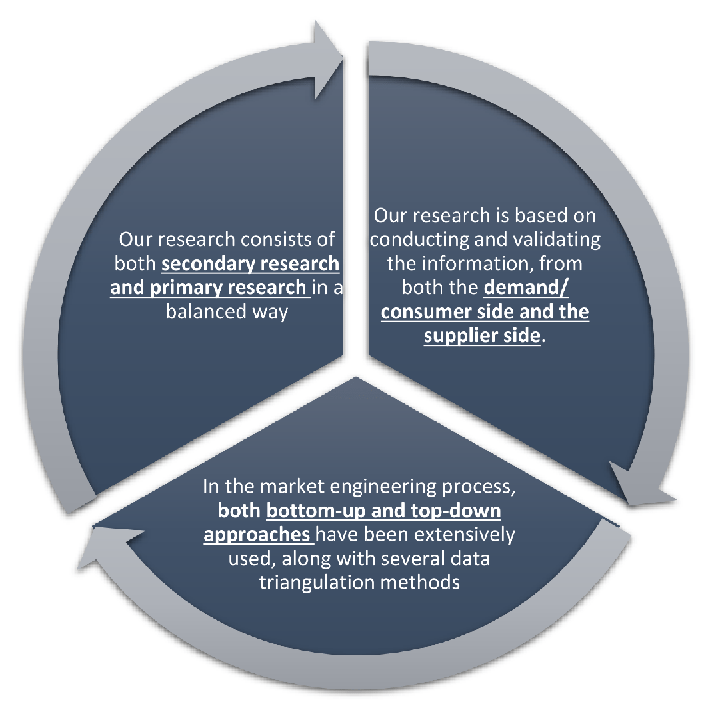
Our research design integrates both demand-side and supply-side analysis through a balanced combination of primary and secondary research methodologies. By utilizing both bottom-up and top-down approaches alongside rigorous data triangulation methods, we deliver robust market intelligence that supports strategic decision-making.
MarketGenics' comprehensive research design framework ensures the delivery of accurate, reliable, and actionable market intelligence. Through the integration of multiple research approaches, rigorous validation processes, and expert analysis, we provide our clients with the insights needed to make informed strategic decisions and capitalize on market opportunities.
MarketGenics leverages a dedicated industry panel of experts and a comprehensive suite of paid databases to effectively collect, consolidate, and analyze market intelligence.
Our approach has consistently proven to be reliable and effective in generating accurate market insights, identifying key industry trends, and uncovering emerging business opportunities.
Through both primary and secondary research, we capture and analyze critical company-level data such as manufacturing footprints, including technical centers, R&D facilities, sales offices, and headquarters.
Our expert panel further enhances our ability to estimate market size for specific brands based on validated field-level intelligence.
Our data mining techniques incorporate both parametric and non-parametric methods, allowing for structured data collection, sorting, processing, and cleaning.
Demand projections are derived from large-scale data sets analyzed through proprietary algorithms, culminating in robust and reliable market sizing.
Research Approach
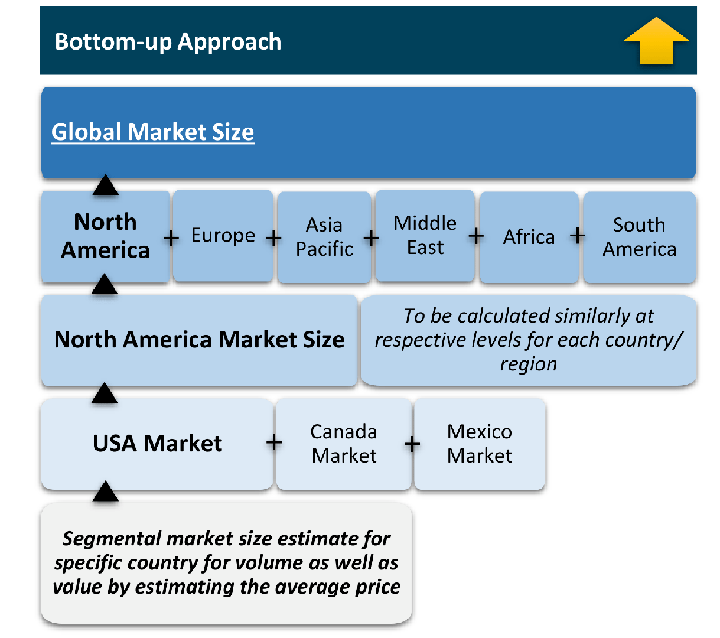
The bottom-up approach builds market estimates by starting with the smallest addressable market units and systematically aggregating them to create comprehensive market size projections.
This method begins with specific, granular data points and builds upward to create the complete market landscape.
Customer Analysis → Segmental Analysis → Geographical Analysis
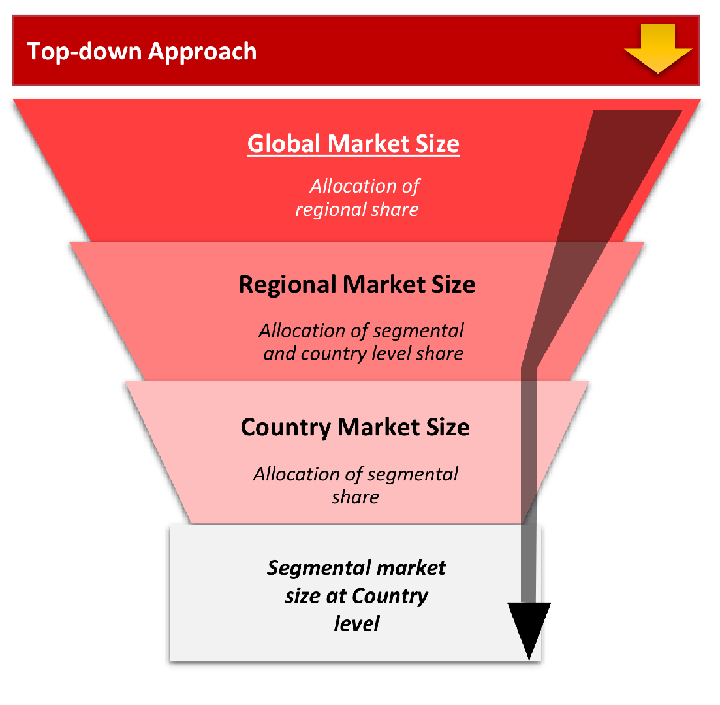
The top-down approach starts with the broadest possible market data and systematically narrows it down through a series of filters and assumptions to arrive at specific market segments or opportunities.
This method begins with the big picture and works downward to increasingly specific market slices.
TAM → SAM → SOM
Research Methods
Desk / Secondary Research
While analysing the market, we extensively study secondary sources, directories, and databases to identify and collect information useful for this technical, market-oriented, and commercial report. Secondary sources that we utilize are not only the public sources, but it is a combination of Open Source, Associations, Paid Databases, MG Repository & Knowledgebase, and others.
- Company websites, annual reports, financial reports, broker reports, and investor presentations
- National government documents, statistical databases and reports
- News articles, press releases and web-casts specific to the companies operating in the market, Magazines, reports, and others
- We gather information from commercial data sources for deriving company specific data such as segmental revenue, share for geography, product revenue, and others
- Internal and external proprietary databases (industry-specific), relevant patent, and regulatory databases
- Governing Bodies, Government Organizations
- Relevant Authorities, Country-specific Associations for Industries
We also employ the model mapping approach to estimate the product level market data through the players' product portfolio
Primary Research
Primary research/ interviews is vital in analyzing the market. Most of the cases involves paid primary interviews. Primary sources include primary interviews through e-mail interactions, telephonic interviews, surveys as well as face-to-face interviews with the different stakeholders across the value chain including several industry experts.
| Type of Respondents | Number of Primaries |
|---|---|
| Tier 2/3 Suppliers | ~20 |
| Tier 1 Suppliers | ~25 |
| End-users | ~25 |
| Industry Expert/ Panel/ Consultant | ~30 |
| Total | ~100 |
MG Knowledgebase
• Repository of industry blog, newsletter and case studies
• Online platform covering detailed market reports, and company profiles
Forecasting Factors and Models
Forecasting Factors
- Historical Trends – Past market patterns, cycles, and major events that shaped how markets behave over time. Understanding past trends helps predict future behavior.
- Industry Factors – Specific characteristics of the industry like structure, regulations, and innovation cycles that affect market dynamics.
- Macroeconomic Factors – Economic conditions like GDP growth, inflation, and employment rates that affect how much money people have to spend.
- Demographic Factors – Population characteristics like age, income, and location that determine who can buy your product.
- Technology Factors – How quickly people adopt new technology and how much technology infrastructure exists.
- Regulatory Factors – Government rules, laws, and policies that can help or restrict market growth.
- Competitive Factors – Analyzing competition structure such as degree of competition and bargaining power of buyers and suppliers.
Forecasting Models / Techniques
Multiple Regression Analysis
- Identify and quantify factors that drive market changes
- Statistical modeling to establish relationships between market drivers and outcomes
Time Series Analysis – Seasonal Patterns
- Understand regular cyclical patterns in market demand
- Advanced statistical techniques to separate trend, seasonal, and irregular components
Time Series Analysis – Trend Analysis
- Identify underlying market growth patterns and momentum
- Statistical analysis of historical data to project future trends
Expert Opinion – Expert Interviews
- Gather deep industry insights and contextual understanding
- In-depth interviews with key industry stakeholders
Multi-Scenario Development
- Prepare for uncertainty by modeling different possible futures
- Creating optimistic, pessimistic, and most likely scenarios
Time Series Analysis – Moving Averages
- Sophisticated forecasting for complex time series data
- Auto-regressive integrated moving average models with seasonal components
Econometric Models
- Apply economic theory to market forecasting
- Sophisticated economic models that account for market interactions
Expert Opinion – Delphi Method
- Harness collective wisdom of industry experts
- Structured, multi-round expert consultation process
Monte Carlo Simulation
- Quantify uncertainty and probability distributions
- Thousands of simulations with varying input parameters
Research Analysis
Our research framework is built upon the fundamental principle of validating market intelligence from both demand and supply perspectives. This dual-sided approach ensures comprehensive market understanding and reduces the risk of single-source bias.
Demand-Side Analysis: We understand end-user/application behavior, preferences, and market needs along with the penetration of the product for specific application.
Supply-Side Analysis: We estimate overall market revenue, analyze the segmental share along with industry capacity, competitive landscape, and market structure.
Validation & Evaluation
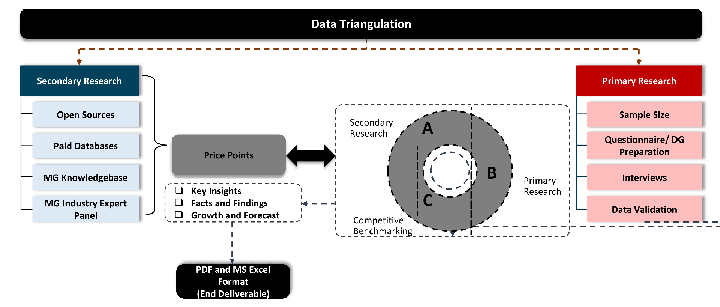
Data triangulation is a validation technique that uses multiple methods, sources, or perspectives to examine the same research question, thereby increasing the credibility and reliability of research findings. In market research, triangulation serves as a quality assurance mechanism that helps identify and minimize bias, validate assumptions, and ensure accuracy in market estimates.
- Data Source Triangulation – Using multiple data sources to examine the same phenomenon
- Methodological Triangulation – Using multiple research methods to study the same research question
- Investigator Triangulation – Using multiple researchers or analysts to examine the same data
- Theoretical Triangulation – Using multiple theoretical perspectives to interpret the same data
Custom Market Research Services
We will customise the research for you, in case the report listed above does not meet your requirements.
Get 10% Free Customisation