Robotic Welding System Market Size, Share & Trends Analysis Report by Welding Type (Arc Welding, Spot Welding, Laser Welding, Friction Stir Welding, Ultrasonic Welding, and Others), Robot Type, Payload Capacity, Rated Power, Automation Level, Component, Technology, Working Range/Reach, End-Use Industry, and Geography (North America, Europe, Asia Pacific, Middle East, Africa, and South America) – Global Industry Data, Trends, and Forecasts, 2026–2035
|
|
|
Segmental Data Insights |
|
|
Demand Trends |
|
|
Competitive Landscape |
|
|
Strategic Development |
|
|
Future Outlook & Opportunities |
|
Robotic Welding System Market Size, Share, and Growth
The global robotic welding system market is witnessing strong growth, valued at USD 8.9 billion in 2025 and projected to reach USD 25.7 billion by 2035, expanding at a CAGR of 11.2% during the forecast period. North America is the fastest-growing region in the robotic welding system market due to rapid EV manufacturing expansion, increasing reshoring of industrial production, rising adoption of smart factories, and strong investments in advanced automation and AI-enabled welding technologies.

Soroush Karimzadeh, CEO of Novarc Technologies, said, “The introduction of NovAI is extremely exciting for us; its development is based on two decades of research and practical industrial grade deployments of our award-winning Spool Welding Robot (SWR). Our solution promises to transform welding automation by bringing the precision of human expertise through AI to articulated robots, cobots and mechanized welders, which will help manufacturers to automate difficult welding jobs that could not be automated before and reduce manufacturing waste such as overwelding and post weld grinding while improving the finished weld quality”.
Automobile manufacturers, heavy machinery manufacturers, and shipbuilding manufactures are under increasing pressure to produce more output with reduced costs and shorter production time. The Robotic Welding System Market is advantageous because the robot welding systems provide fast and accurate continuous operations, less production cycle and time wastage. These systems increase throughput, optimize resource use and assist manufacturers to deliver high quality products within strict delivery timelines by automating repetitive welding operations.
The partnerships increase the speed of innovation, improve automation functionality, and broaden applications, leading to the growth of the robotic welding system market. An example is that of In February 2025, Miller Electric MFG. LLC entered into a joint venture with Novarc Technologies to develop AI-based automated welding technology, integrating the arc welding capabilities of Miller with real-time adaptive welding of Novarc AI robotics. The partnership will increase the ability to be productive, quality and automated in fabrication, shipbuilding, construction and heavy equipment sectors.
The market of robotic welding systems is facing a high growth opportunity due to integrating robotic welding and digital twin and simulation platforms. Examples include designing virtual cells, offline programming, and real-time optimization of processes through these technologies, which made the KUKA welding robots with digital twin technology in use in Germany and automated the manufacturing of the stove, allowing high-quality flexible welding of a wide range of products, reducing commissioning time, trial-and-error expenses, and manufacturing cost.
Robotic Welding System Market Dynamics and Trends
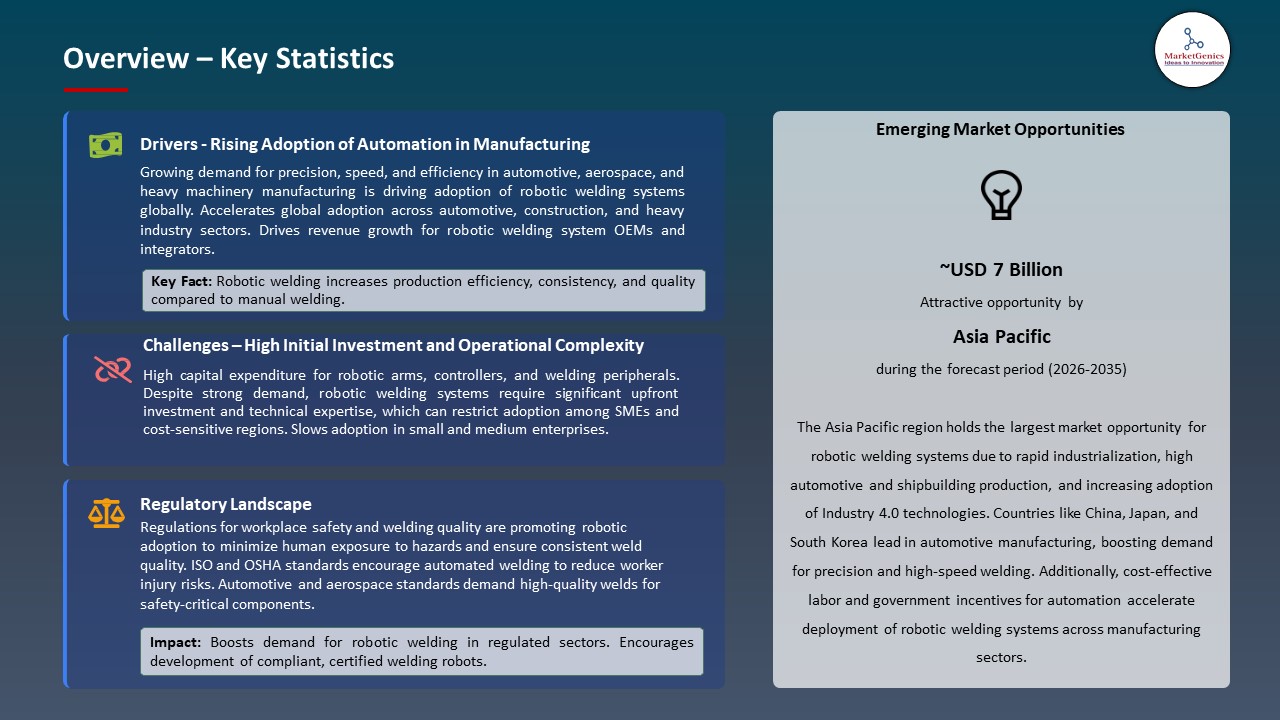
Driver: Accelerating Automation in Automotive and Heavy Manufacturing
-
Robotic welding system market has a significant growth impetus through the aggressive momentum toward automation in automotive and heavy manufacturing. The increase of vehicle production, scalability of the electric vehicle platform, and mass production of fabrics in ships, railways, and the industrial equipment require high-speed, error-free, and repeatable welding processes.
- Manufacturers are focusing on robotic welding to remove human variation, increase productivity in the line, and prevent zero-defect production. Moreover, the pressures of global costs as well as the necessity to work 24/7 are hastening capital investments in automated welding cells. Robotic welding is emerging as a fundamental support of intelligent manufacturing in high throughput factories as digital, smart production lines expand.
- In July 2025, KUKA received a follow-up order of a large U.S. automotive manufacturer with 12 more friction stir welding (FSW) robotic cells, and an initial 23 cells in scale electric vehicle manufacturing were formerly deployed. They utilize KR FORTEC ultra robots to automate the battery case and cooling jacket welding, and can produce high-force and high-precision and flexible multi-powertrain production, which contributes significantly to the robotic welding system market growth based on automation.
- This shows that sustained growth and innovation in robot welding system market is being fueled by increasing automation and uptake of advanced robotic welding.
Restraint: High Capital Investment and Programming Complexity
-
The robotic welding systems market has significant limitations because of the large initial capital investment. Buying robotic welding cells, special purpose tooling and installing them in current production lines require significant financial resources to be adopted, particularly by small and medium-sized manufacturers. There are also costs of installation and commission, maintenance, and operator training, which increase the overall cost of ownership.
- Furthermore, the process of programming and configurating robotic welding systems is extremely intricate and demands professionals who will possess the knowledge of robots, automation programs, and process optimization. High-pressure uses of welding like friction stir welding, multi-pass welding, and mixed-material joining require accurate programming and constant feedback, which is to provide quality and consistency. Defects, delay in production, and higher costs of operation may be the result of errors in the setup or programming.
- These technical and financial issues impede adoption especially to economic sensitive areas and in smaller manufacturing facilities and hinder the robotic welding systems market.
Opportunity: Growth in Electric Vehicle Battery Assembly
-
The fast growth of electric vehicle (EV) industry is presenting a big opportunity in the robotic welding system market, especially in the battery welding. Battery packs and EV batteries demand high strength, accurate and free of defects welds of battery cases, busbars and cooling systems, commonly of aluminum, copper and steel.
- Robotic welding systems, such as friction stir welding (FSW) and laser welding, are used to offer the necessary accuracy, repeatability, and high throughput in welding and minimize human error. Increased production of EVs worldwide is prompting manufacturers to consider automated welding systems to improve production, safety, and quality consistency, making robotic welding one of the catalysts of the emerging EV battery manufacturing sector.
- In 2025, EXOM Engineering tested the validation of the MSA-Five-Battery Welding robotic cell which has an ABB IRB-1300 robot, machine vision and a high-quality laser technology to be used in welding EV batteries precisely, repeatability, and flexibly. The successful industrial application of the system highlights the growing need of robotic welding systems in high-throughput battery manufacturing of electric vehicles and in high-energy storage manufacturing.
- The intense demand of robotic welding systems in the market due to the current high rate of EV battery production is making it a crucial enabler of high precision, efficient, and scalable manufacturing.
Key Trend: Integration of AI-Powered Seam Tracking and Adaptive Control
-
The implementation of AI-based seam tracking and adaptive control solutions has become one of the significant trends in the robotic welding system market. These systems are based on machine learning, computer vision, and real-time sensor feedback to continuously monitor and control weld seam changes and automatically control welding parameters to provide consistent quality and precision through the complex geometries and high-speed processes.
- The technology reduces defects, rework and enables robot to be used with dissimilar material, assembly variances of the joint tolerance, and fluctuating production conditions with minimum human involvement. Intelligent, self-optimizing welding AI-enabled robotic welding is increasingly being demanded in the automotive, aerospace, and heavy manufacturing industries in search of more flexible, more accurate, and throughput welding capabilities.
- In May 2025, Novarc Technologies introduced NovAI, a machine vision and real-time adaptive control robotic and mechanized welding system powered by AI. The NovAI allows robots and cobots to adapt themselves to welding parameters automatically, follow seams and manage any variation in fits, producing a uniform and high quality weld with complete traceability.
- The AI-assisted seam tracking and adaptive control is facilitating the use of intelligent and highly accurate robots in the welding process of the major manufacturing industries.
Robotic-Welding-System-Market Analysis and Segmental Data
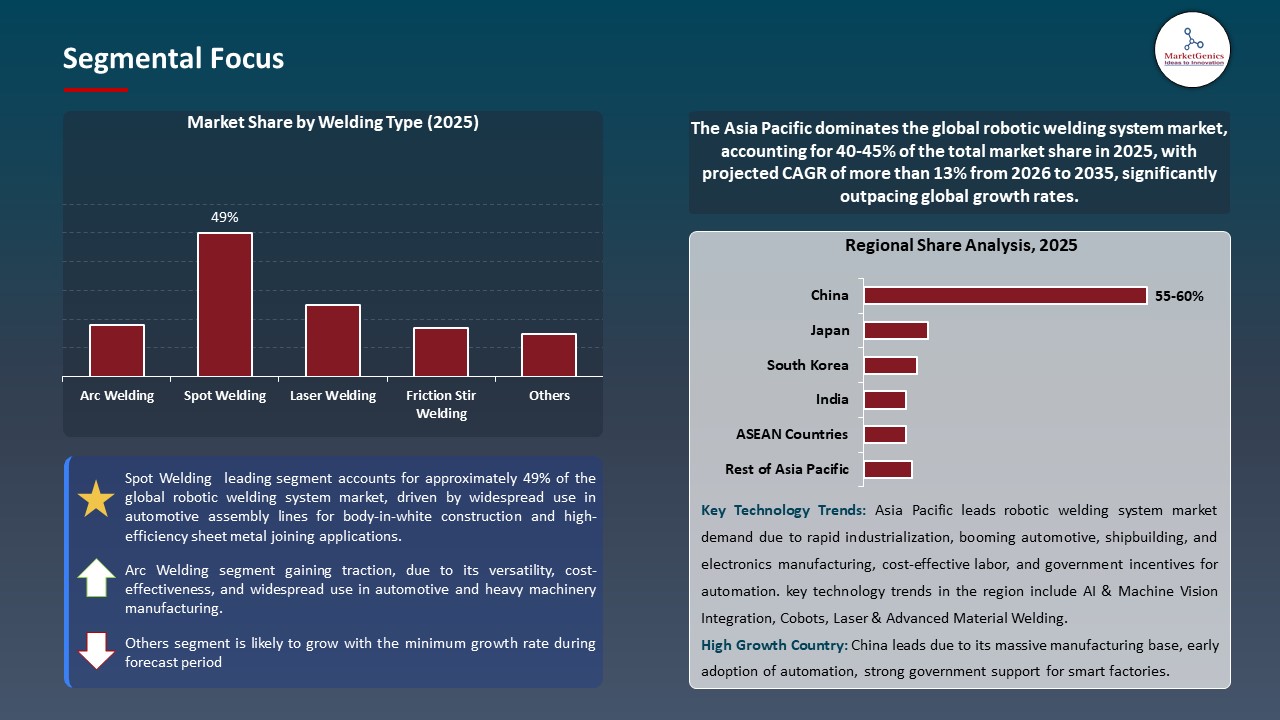
Spot Welding Dominate Global Robotic Welding System Market
-
Spot welding continues to dominate the robotic welding system market due to its widespread adoption in automotive, aerospace, and heavy manufacturing industries. This welding method is highly efficient for joining sheet metals, making it ideal for high-volume production lines such as car body assembly.
- High-quality and speed of robotic spot welding, as well as low dependence on labor, is important in ensuring that production schedules and quality meet high standards. The development of sensor integration, adaptive control and automation software has also made robotic spot-welding precision and reliable.
- Yaskawa highlighted compact, high-speed, and flexible robotic welding solutions with simulation software support to reinforce its position at the forefront of automated spot welding in automotive and industrial systems with in August 2025, the MOTOMAN SP series spot welding robots and Weld4Me CE cobot cell at Welding and Cutting 2025.
- Scalability, compatibility with line, and volume capacity of uniaxial welding reinforce its claim as the best segment in the world welding systems robotic market.
Asia Pacific Leads Global Robotic Welding System Market Demand
-
The Asia Pacific region continues to lead the global robotic welding system market due to rapid industrialization, robust automotive manufacturing, and expanding heavy industries. Countries such as China, Japan, South Korea, and India are witnessing high adoption of robotic welding solutions in automotive assembly, shipbuilding, and electronics manufacturing to meet growing demand for high-volume, high-quality production.
- Siasun Robotics provides high-end welding automation solutions that have been used in automotive body-in-white, auto parts, specialized vehicles, construction machinery, ships, and hydrogen equipment. Its systems entail spot, arc, and laser welding, all of which are offered as turnkey factory-level systems that integrate engineering design, implementation, as well as, information integration. Intelligent welding solutions Siasun has an intelligent 2,000+ strong R&D team and the global after sales support to improve the efficiency of production, quality control and flexible automation to strengthen the position of robotic welding adoption in China.
- Government heavy campaigns in favour of automation, industrial robotics and smart factories further augment market growth. Also, the high number of skilled labor force, inexpensive manufacturing hub and the increased investment in EV and battery manufacturing in the region contribute to the adoption of advanced robotic welding infrastructure.
- The convergence of industrialization, skilled labor force and high level of automation in Asia Pacific makes it the leading region in the world robotic welding system market.
Robotic-Welding-System-Market Ecosystem
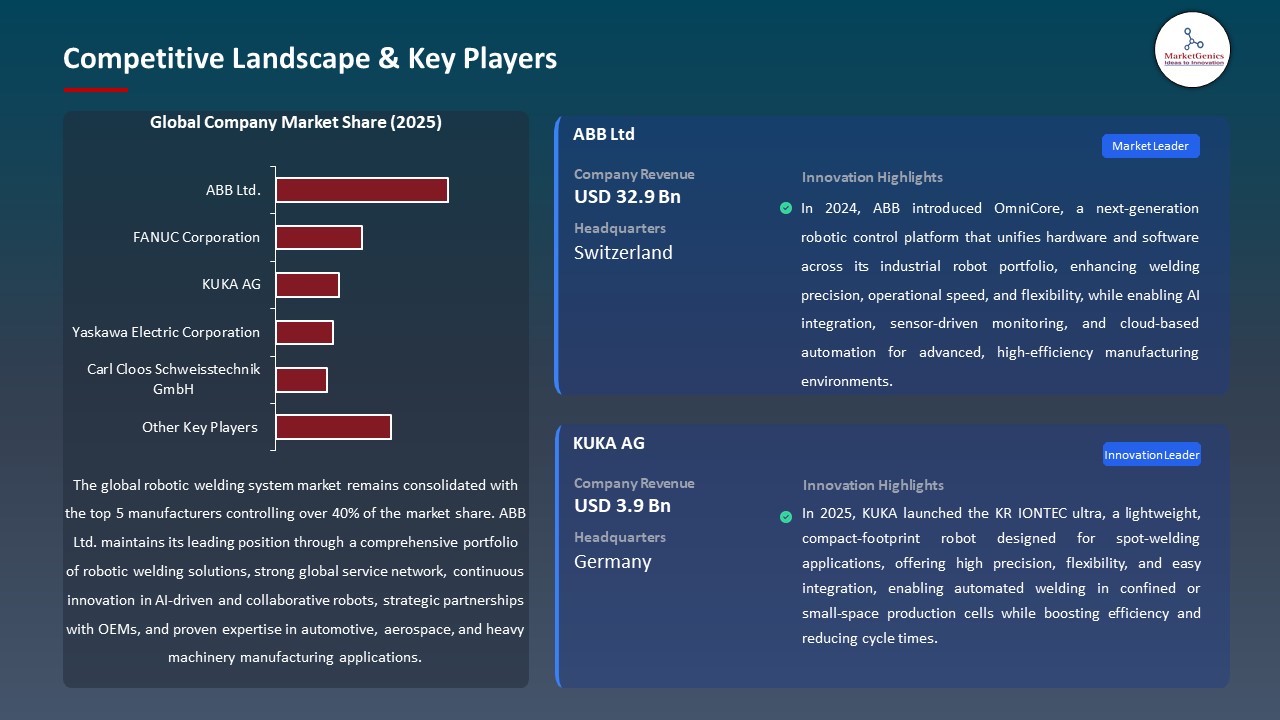
The global robotic welding system market is consolidated, with a high concentration among key players such as ABB Ltd., FANUC Corporation, KUKA AG, Yaskawa Electric Corporation, Carl Cloos Schweisstechnik GmbH. The companies sustain market leadership with large worldwide distribution networks, high-precision robotic platforms, high-level control of the welding processes, real-time diagnostics, and a smooth connectivity to the industrial automation and intelligent manufacturing systems.
The chain of market values consists of the manufacture of robots and controllers, welding power sources and torches, sensors and vision systems, AI-based program code, system integration, installation and commissioning, safety validation and certification, and after-sales services, i.e. predictive maintenance, remote monitoring, simulation of a digital twin, and performance analytics.
Entry barriers are great because capital intensive robotic platforms, certified safety compliance, application specific welding knowledge and customer confidence requires. The market has remained fuelled by fast technological innovation, and narrow players are innovating in fields like AI-assisted seam tracking, laser welding, collaborative welding robots, and Industry 4.0-empowered smart welding systems.
Recent Development and Strategic Overview:
-
In June 2024, ABB introduced its new OmniCore robotics control platform based on a single, AI-enabled architecture that provides up to 25 percent faster robot operation, less than 0.6 mm path accuracy, and 20 percent reduced energy usage. OmniCore is intended to be used in highly precise applications, like arc welding, laser cutting, and advanced manufacturing, to enable fully synchronized multi-robot welding processes, which are extremely productive, flexible, and autonomous in automotive and industrial welding lines.
- In April 2025, Techman robot collaborated with Welding Systems Division of Panasonic connect in promoting automation of welding in Japan. The partnership will use AI-powered collaborative robots of Techman along with Panasonic digital welding machine to simplify the process of robot welding installation and deal with the shortage of labor. Their combined solution, with the new Welding Node module, is more automation, flexibility, and easy to operate, increasing the application of AI-enhanced robotic welding to industrial lines.
Report Scope
|
Detail |
|
|
Market Size in 2025 |
USD 8.9 Bn |
|
Market Forecast Value in 2035 |
USD 25.7 Bn |
|
Growth Rate (CAGR) |
11.2% |
|
Forecast Period |
2026 – 2035 |
|
Historical Data Available for |
2021 – 2024 |
|
Market Size Units |
US$ Billion for Value Million Units for Volume |
|
Report Format |
Electronic (PDF) + Excel |
|
North America |
Europe |
Asia Pacific |
Middle East |
Africa |
South America |
|
|
|
|
|
|
|
Companies Covered |
|||||
|
|
|
|
|
|
Robotic-Welding-System-Market Segmentation and Highlights
|
Segment |
Sub-segment |
|
Robotic Welding System Market, By Welding Type |
|
|
Robotic Welding System Market, By Robot Type |
|
|
Robotic Welding System Market, By Payload Capacity |
|
|
Robotic Welding System Market, By Rated Power |
|
|
Robotic Welding System Market, By Automation Level |
|
|
Robotic Welding System Market, By Component |
|
|
Robotic Welding System Market, By Technology |
|
|
Robotic Welding System Market, By Working Range/Reach |
|
|
Robotic Welding System Market, By End-Use Industry |
|
Frequently Asked Questions
Table of Contents
- 1. Research Methodology and Assumptions
- 1.1. Definitions
- 1.2. Research Design and Approach
- 1.3. Data Collection Methods
- 1.4. Base Estimates and Calculations
- 1.5. Forecasting Models
- 1.5.1. Key Forecast Factors & Impact Analysis
- 1.6. Secondary Research
- 1.6.1. Open Sources
- 1.6.2. Paid Databases
- 1.6.3. Associations
- 1.7. Primary Research
- 1.7.1. Primary Sources
- 1.7.2. Primary Interviews with Stakeholders across Ecosystem
- 2. Executive Summary
- 2.1. Global Flow Meters and Controllers Market Outlook
- 2.1.1. Flow Meters and Controllers Market Size Volume (Million units) and Value (US$ Bn), and Forecasts, 2021-2035
- 2.1.2. Compounded Annual Growth Rate Analysis
- 2.1.3. Growth Opportunity Analysis
- 2.1.4. Segmental Share Analysis
- 2.1.5. Geographical Share Analysis
- 2.2. Market Analysis and Facts
- 2.3. Supply-Demand Analysis
- 2.4. Competitive Benchmarking
- 2.5. Go-to- Market Strategy
- 2.5.1. Customer/ End-use Industry Assessment
- 2.5.2. Growth Opportunity Data, 2026-2035
- 2.5.2.1. Regional Data
- 2.5.2.2. Country Data
- 2.5.2.3. Segmental Data
- 2.5.3. Identification of Potential Market Spaces
- 2.5.4. GAP Analysis
- 2.5.5. Potential Attractive Price Points
- 2.5.6. Prevailing Market Risks & Challenges
- 2.5.7. Preferred Sales & Marketing Strategies
- 2.5.8. Key Recommendations and Analysis
- 2.5.9. A Way Forward
- 2.1. Global Flow Meters and Controllers Market Outlook
- 3. Industry Data and Premium Insights
- 3.1. Global Automation & Process Control Industry Overview, 2025
- 3.1.1. Automation & Process Control Industry Ecosystem Analysis
- 3.1.2. Key Trends for Automation & Process Control Industry
- 3.1.3. Regional Distribution for Automation & Process Control Industry
- 3.2. Supplier Customer Data
- 3.3. Technology Roadmap and Developments
- 3.4. Trade Analysis
- 3.4.1. Import & Export Analysis, 2025
- 3.4.2. Top Importing Countries
- 3.4.3. Top Exporting Countries
- 3.5. Trump Tariff Impact Analysis
- 3.5.1. Manufacturer
- 3.5.1.1. Based on the component & Raw material
- 3.5.2. Supply Chain
- 3.5.3. End Consumer
- 3.5.1. Manufacturer
- 3.6. Raw Material Analysis
- 3.1. Global Automation & Process Control Industry Overview, 2025
- 4. Market Overview
- 4.1. Market Dynamics
- 4.1.1. Drivers
- 4.1.1.1. Increasing adoption of automation in automotive and manufacturing industries.
- 4.1.1.2. Rising demand for precision and high-quality welding in complex applications.
- 4.1.1.3. Labor cost reduction and improved production efficiency through robotic systems.
- 4.1.2. Restraints
- 4.1.2.1. High initial investment and maintenance costs.
- 4.1.2.2. Limited skilled workforce for programming and operation.
- 4.1.1. Drivers
- 4.2. Key Trend Analysis
- 4.3. Regulatory Framework
- 4.3.1. Key Regulations, Norms, and Subsidies, by Key Countries
- 4.3.2. Tariffs and Standards
- 4.3.3. Impact Analysis of Regulations on the Market
- 4.4. Value Chain Analysis
- 4.4.1. Component Suppliers
- 4.4.2. Manufacturers
- 4.4.3. System Integrators / OEMs
- 4.4.4. Distributors & Dealers
- 4.4.5. End-Users
- 4.5. Cost Structure Analysis
- 4.5.1. Parameter’s Share for Cost Associated
- 4.5.2. COGP vs COGS
- 4.5.3. Profit Margin Analysis
- 4.6. Pricing Analysis
- 4.6.1. Regional Pricing Analysis
- 4.6.2. Segmental Pricing Trends
- 4.6.3. Factors Influencing Pricing
- 4.7. Porter’s Five Forces Analysis
- 4.8. PESTEL Analysis
- 4.9. Global Flow Meters and Controllers Market Demand
- 4.9.1. Historical Market Size –Volume (Million units) and Value (US$ Bn), 2020-2024
- 4.9.2. Current and Future Market Size - Value (US$ Bn), 2026–2035
- 4.9.2.1. Y-o-Y Growth Trends
- 4.9.2.2. Absolute $ Opportunity Assessment
- 4.1. Market Dynamics
- 5. Competition Landscape
- 5.1. Competition structure
- 5.1.1. Fragmented v/s consolidated
- 5.2. Company Share Analysis, 2025
- 5.2.1. Global Company Market Share
- 5.2.2. By Region
- 5.2.2.1. North America
- 5.2.2.2. Europe
- 5.2.2.3. Asia Pacific
- 5.2.2.4. Middle East
- 5.2.2.5. Africa
- 5.2.2.6. South America
- 5.3. Product Comparison Matrix
- 5.3.1. Specifications
- 5.3.2. Market Positioning
- 5.3.3. Pricing
- 5.1. Competition structure
- 6. Global Flow Meters and Controllers Market Analysis, by Welding Type
- 6.1. Key Segment Analysis
- 6.2. Flow Meters and Controllers Market Size Volume (Million units) and Value (US$ Bn), Analysis, and Forecasts, by Welding Type, 2021-2035
- 6.2.1. Arc Welding
- 6.2.1.1. Gas Metal Arc Welding (GMAW/MIG)
- 6.2.1.2. Gas Tungsten Arc Welding (GTAW/TIG)
- 6.2.1.3. Plasma Arc Welding (PAW)
- 6.2.1.4. Submerged Arc Welding (SAW)
- 6.2.2. Spot Welding
- 6.2.2.1. Resistance Spot Welding
- 6.2.2.2. Projection Welding
- 6.2.3. Laser Welding
- 6.2.4. Friction Stir Welding
- 6.2.5. Ultrasonic Welding
- 6.2.6. Others
- 6.2.1. Arc Welding
- 7. Global Flow Meters and Controllers Market Analysis, by Robot Type
- 7.1. Key Segment Analysis
- 7.2. Flow Meters and Controllers Market Size Volume (Million units) and Value (US$ Bn), Analysis, and Forecasts, by Robot Type, 2021-2035
- 7.2.1. Articulated Robots
- 7.2.1.1. 4-Axis
- 7.2.1.2. 5-Axis
- 7.2.1.3. 6-Axis
- 7.2.1.4. 7-Axis and Above
- 7.2.2. Cartesian Robots
- 7.2.3. SCARA Robots
- 7.2.4. Cylindrical Robots
- 7.2.5. Collaborative Robots (Cobots)
- 7.2.6. Others
- 7.2.1. Articulated Robots
- 8. Global Flow Meters and Controllers Market Analysis, by Payload Capacity
- 8.1. Key Segment Analysis
- 8.2. Flow Meters and Controllers Market Size Volume (Million units) and Value (US$ Bn), Analysis, and Forecasts, by Payload Capacity, 2021-2035
- 8.2.1. Less than 50 kg
- 8.2.2. 50-150 kg
- 8.2.3. 150-300 kg
- 8.2.4. Above 300 kg
- 9. Global Flow Meters and Controllers Market Analysis, by Rated Power
- 9.1. Key Segment Analysis
- 9.2. Flow Meters and Controllers Market Size Volume (Million units) and Value (US$ Bn), Analysis, and Forecasts, by Rated Power, 2021-2035
- 9.2.1. Less than 5 kW
- 9.2.2. 5-15 kW
- 9.2.3. 15-30 kW
- 9.2.4. Above 30 kW
- 10. Global Flow Meters and Controllers Market Analysis, by Automation Level
- 10.1. Key Segment Analysis
- 10.2. Flow Meters and Controllers Market Size Volume (Million units) and Value (US$ Bn), Analysis, and Forecasts, by Automation Level, 2021-2035
- 10.2.1. Fully Automated Systems
- 10.2.2. Semi-Automated Systems
- 10.2.3. Collaborative Automation Systems
- 11. Global Flow Meters and Controllers Market Analysis, by Component
- 11.1. Key Segment Analysis
- 11.2. Flow Meters and Controllers Market Size Volume (Million units) and Value (US$ Bn), Analysis, and Forecasts, by Component, 2021-2035
- 11.2.1. Hardware
- 11.2.1.1. Robotic Arms
- 11.2.1.2. Controllers
- 11.2.1.3. Welding Torches
- 11.2.1.4. Power Supply Units
- 11.2.1.5. Sensors
- 11.2.1.6. Positioners
- 11.2.1.7. Others
- 11.2.2. Software
- 11.2.2.1. Programming Software
- 11.2.2.2. Simulation Software
- 11.2.2.3. Quality Control Software
- 11.2.2.4. Others
- 11.2.3. Services
- 11.2.3.1. Installation & Integration
- 11.2.3.2. Training
- 11.2.3.3. Maintenance & Support
- 11.2.3.4. Others
- 11.2.1. Hardware
- 12. Global Flow Meters and Controllers Market Analysis, by Technology
- 12.1. Key Segment Analysis
- 12.2. Flow Meters and Controllers Market Size Volume (Million units) and Value (US$ Bn), Analysis, and Forecasts, by Technology, 2021-2035
- 12.2.1. Conventional Robotic Welding
- 12.2.2. AI-Enabled Robotic Welding
- 12.2.3. IoT-Integrated Robotic Welding
- 12.2.4. Vision-Guided Robotic Welding
- 12.2.5. Adaptive Robotic Welding
- 13. Global Flow Meters and Controllers Market Analysis, by Working Range/Reach
- 13.1. Key Segment Analysis
- 13.2. Flow Meters and Controllers Market Size Volume (Million units) and Value (US$ Bn), Analysis, and Forecasts, by Working Range/Reach, 2021-2035
- 13.2.1. Short Reach (Less than 1000 mm)
- 13.2.2. Medium Reach (1000-2000 mm)
- 13.2.3. Long Reach (2000-3000 mm)
- 13.2.4. Extended Reach (Above 3000 mm)
- 14. Global Flow Meters and Controllers Market Analysis, by End-Use Industry
- 14.1. Key Segment Analysis
- 14.2. Flow Meters and Controllers Market Size Volume (Million units) and Value (US$ Bn), Analysis, and Forecasts, by End-Use Industry, 2021-2035
- 14.2.1. Automotive Industry
- 14.2.1.1. Body-in-White Assembly
- 14.2.1.2. Chassis Welding
- 14.2.1.3. Exhaust System Welding
- 14.2.1.4. Engine Component Welding
- 14.2.1.5. Battery Pack Welding (EV)
- 14.2.1.6. Frame Welding
- 14.2.1.7. Others
- 14.2.2. Aerospace & Defense
- 14.2.2.1. Airframe Component Welding
- 14.2.2.2. Engine Component Assembly
- 14.2.2.3. Fuel Tank Welding
- 14.2.2.4. Landing Gear Components
- 14.2.2.5. Structural Assembly
- 14.2.2.6. Others
- 14.2.3. Electrical & Electronics
- 14.2.3.1. Enclosure Welding
- 14.2.3.2. PCB Assembly
- 14.2.3.3. Battery Manufacturing
- 14.2.3.4. Connector Welding
- 14.2.3.5. Component Assembly
- 14.2.3.6. Others
- 14.2.4. Heavy Machinery & Equipment
- 14.2.4.1. Construction Equipment
- 14.2.4.2. Agricultural Equipment
- 14.2.4.3. Mining Equipment
- 14.2.4.4. Material Handling Equipment
- 14.2.4.5. Others
- 14.2.5. Metal Fabrication & Manufacturing
- 14.2.5.1. Structural Steel Fabrication
- 14.2.5.2. Sheet Metal Welding
- 14.2.5.3. Pipe and Tube Welding
- 14.2.5.4. Custom Fabrication
- 14.2.5.5. Others
- 14.2.6. Shipbuilding & Marine
- 14.2.6.1. Hull Assembly
- 14.2.6.2. Deck Structure Welding
- 14.2.6.3. Bulkhead Welding
- 14.2.6.4. Pipe System Welding
- 14.2.6.5. Others
- 14.2.7. Energy & Power
- 14.2.7.1. Oil & Gas Pipeline Welding
- 14.2.7.2. Wind Turbine Component Welding
- 14.2.7.3. Solar Panel Frame Welding
- 14.2.7.4. Nuclear Component Welding
- 14.2.7.5. Power Plant Equipment
- 14.2.7.6. Others
- 14.2.8. Railway & Transportation
- 14.2.8.1. Railcar Body Welding
- 14.2.8.2. Bogie Frame Welding
- 14.2.8.3. Coupler Assembly
- 14.2.8.4. Interior Component Welding
- 14.2.8.5. Others
- 14.2.9. Consumer Goods
- 14.2.9.1. Appliance Manufacturing
- 14.2.9.2. Furniture Manufacturing
- 14.2.9.3. Bicycle & Motorcycle Manufacturing
- 14.2.9.4. Others
- 14.2.10. Construction & Infrastructure
- 14.2.10.1. Steel Structure Welding
- 14.2.10.2. Bridge Component Fabrication
- 14.2.10.3. Building Framework
- 14.2.10.4. Others
- 14.2.1. Automotive Industry
- 15. Global Flow Meters and Controllers Market Analysis and Forecasts, by Region
- 15.1. Key Findings
- 15.2. Flow Meters and Controllers Market Size Volume (Million units) and Value (US$ Bn), Analysis, and Forecasts, by Region, 2021-2035
- 15.2.1. North America
- 15.2.2. Europe
- 15.2.3. Asia Pacific
- 15.2.4. Middle East
- 15.2.5. Africa
- 15.2.6. South America
- 16. North America Flow Meters and Controllers Market Analysis
- 16.1. Key Segment Analysis
- 16.2. Regional Snapshot
- 16.3. North America Flow Meters and Controllers Market Size- Volume (Million units) and Value (US$ Bn), Analysis, and Forecasts, 2021-2035
- 16.3.1. Welding Type
- 16.3.2. Robot Type
- 16.3.3. Payload Capacity
- 16.3.4. Rated Power
- 16.3.5. Automation Level
- 16.3.6. Component
- 16.3.7. Technology
- 16.3.8. Working Range/Reach
- 16.3.9. End-Use Industry
- 16.3.10. Country
- 16.3.10.1. USA
- 16.3.10.2. Canada
- 16.3.10.3. Mexico
- 16.4. USA Flow Meters and Controllers Market
- 16.4.1. Country Segmental Analysis
- 16.4.2. Welding Type
- 16.4.3. Robot Type
- 16.4.4. Payload Capacity
- 16.4.5. Rated Power
- 16.4.6. Automation Level
- 16.4.7. Component
- 16.4.8. Technology
- 16.4.9. Working Range/Reach
- 16.4.10. End-Use Industry
- 16.5. Canada Flow Meters and Controllers Market
- 16.5.1. Country Segmental Analysis
- 16.5.2. Welding Type
- 16.5.3. Robot Type
- 16.5.4. Payload Capacity
- 16.5.5. Rated Power
- 16.5.6. Automation Level
- 16.5.7. Component
- 16.5.8. Technology
- 16.5.9. Working Range/Reach
- 16.5.10. End-Use Industry
- 16.6. Mexico Flow Meters and Controllers Market
- 16.6.1. Country Segmental Analysis
- 16.6.2. Welding Type
- 16.6.3. Robot Type
- 16.6.4. Payload Capacity
- 16.6.5. Rated Power
- 16.6.6. Automation Level
- 16.6.7. Component
- 16.6.8. Technology
- 16.6.9. Working Range/Reach
- 16.6.10. End-Use Industry
- 17. Europe Flow Meters and Controllers Market Analysis
- 17.1. Key Segment Analysis
- 17.2. Regional Snapshot
- 17.3. Europe Flow Meters and Controllers Market Size Volume (Million units) and Value (US$ Bn), Analysis, and Forecasts, 2021-2035
- 17.3.1. Welding Type
- 17.3.2. Robot Type
- 17.3.3. Payload Capacity
- 17.3.4. Rated Power
- 17.3.5. Automation Level
- 17.3.6. Component
- 17.3.7. Technology
- 17.3.8. Working Range/Reach
- 17.3.9. End-Use Industry
- 17.3.10. Country
- 17.3.10.1. Germany
- 17.3.10.2. United Kingdom
- 17.3.10.3. France
- 17.3.10.4. Italy
- 17.3.10.5. Spain
- 17.3.10.6. Netherlands
- 17.3.10.7. Nordic Countries
- 17.3.10.8. Poland
- 17.3.10.9. Russia & CIS
- 17.3.10.10. Rest of Europe
- 17.4. Germany Flow Meters and Controllers Market
- 17.4.1. Country Segmental Analysis
- 17.4.2. Welding Type
- 17.4.3. Robot Type
- 17.4.4. Payload Capacity
- 17.4.5. Rated Power
- 17.4.6. Automation Level
- 17.4.7. Component
- 17.4.8. Technology
- 17.4.9. Working Range/Reach
- 17.4.10. End-Use Industry
- 17.5. United Kingdom Flow Meters and Controllers Market
- 17.5.1. Country Segmental Analysis
- 17.5.2. Welding Type
- 17.5.3. Robot Type
- 17.5.4. Payload Capacity
- 17.5.5. Rated Power
- 17.5.6. Automation Level
- 17.5.7. Component
- 17.5.8. Technology
- 17.5.9. Working Range/Reach
- 17.5.10. End-Use Industry
- 17.6. France Flow Meters and Controllers Market
- 17.6.1. Country Segmental Analysis
- 17.6.2. Welding Type
- 17.6.3. Robot Type
- 17.6.4. Payload Capacity
- 17.6.5. Rated Power
- 17.6.6. Automation Level
- 17.6.7. Component
- 17.6.8. Technology
- 17.6.9. Working Range/Reach
- 17.6.10. End-Use Industry
- 17.7. Italy Flow Meters and Controllers Market
- 17.7.1. Country Segmental Analysis
- 17.7.2. Welding Type
- 17.7.3. Robot Type
- 17.7.4. Payload Capacity
- 17.7.5. Rated Power
- 17.7.6. Automation Level
- 17.7.7. Component
- 17.7.8. Technology
- 17.7.9. Working Range/Reach
- 17.7.10. End-Use Industry
- 17.8. Spain Flow Meters and Controllers Market
- 17.8.1. Country Segmental Analysis
- 17.8.2. Welding Type
- 17.8.3. Robot Type
- 17.8.4. Payload Capacity
- 17.8.5. Rated Power
- 17.8.6. Automation Level
- 17.8.7. Component
- 17.8.8. Technology
- 17.8.9. Working Range/Reach
- 17.8.10. End-Use Industry
- 17.9. Netherlands Flow Meters and Controllers Market
- 17.9.1. Country Segmental Analysis
- 17.9.2. Welding Type
- 17.9.3. Robot Type
- 17.9.4. Payload Capacity
- 17.9.5. Rated Power
- 17.9.6. Automation Level
- 17.9.7. Component
- 17.9.8. Technology
- 17.9.9. Working Range/Reach
- 17.9.10. End-Use Industry
- 17.10. Nordic Countries Flow Meters and Controllers Market
- 17.10.1. Country Segmental Analysis
- 17.10.2. Welding Type
- 17.10.3. Robot Type
- 17.10.4. Payload Capacity
- 17.10.5. Rated Power
- 17.10.6. Automation Level
- 17.10.7. Component
- 17.10.8. Technology
- 17.10.9. Working Range/Reach
- 17.10.10. End-Use Industry
- 17.11. Poland Flow Meters and Controllers Market
- 17.11.1. Country Segmental Analysis
- 17.11.2. Welding Type
- 17.11.3. Robot Type
- 17.11.4. Payload Capacity
- 17.11.5. Rated Power
- 17.11.6. Automation Level
- 17.11.7. Component
- 17.11.8. Technology
- 17.11.9. Working Range/Reach
- 17.11.10. End-Use Industry
- 17.12. Russia & CIS Flow Meters and Controllers Market
- 17.12.1. Country Segmental Analysis
- 17.12.2. Welding Type
- 17.12.3. Robot Type
- 17.12.4. Payload Capacity
- 17.12.5. Rated Power
- 17.12.6. Automation Level
- 17.12.7. Component
- 17.12.8. Technology
- 17.12.9. Working Range/Reach
- 17.12.10. End-Use Industry
- 17.13. Rest of Europe Flow Meters and Controllers Market
- 17.13.1. Country Segmental Analysis
- 17.13.2. Welding Type
- 17.13.3. Robot Type
- 17.13.4. Payload Capacity
- 17.13.5. Rated Power
- 17.13.6. Automation Level
- 17.13.7. Component
- 17.13.8. Technology
- 17.13.9. Working Range/Reach
- 17.13.10. End-Use Industry
- 18. Asia Pacific Flow Meters and Controllers Market Analysis
- 18.1. Key Segment Analysis
- 18.2. Regional Snapshot
- 18.3. Asia Pacific Flow Meters and Controllers Market Size Volume (Million units) and Value (US$ Bn), Analysis, and Forecasts, 2021-2035
- 18.3.1. Welding Type
- 18.3.2. Robot Type
- 18.3.3. Payload Capacity
- 18.3.4. Rated Power
- 18.3.5. Automation Level
- 18.3.6. Component
- 18.3.7. Technology
- 18.3.8. Working Range/Reach
- 18.3.9. End-Use Industry
- 18.3.10. Country
- 18.3.10.1. China
- 18.3.10.2. India
- 18.3.10.3. Japan
- 18.3.10.4. South Korea
- 18.3.10.5. Australia and New Zealand
- 18.3.10.6. Indonesia
- 18.3.10.7. Malaysia
- 18.3.10.8. Thailand
- 18.3.10.9. Vietnam
- 18.3.10.10. Rest of Asia Pacific
- 18.4. China Flow Meters and Controllers Market
- 18.4.1. Country Segmental Analysis
- 18.4.2. Welding Type
- 18.4.3. Robot Type
- 18.4.4. Payload Capacity
- 18.4.5. Rated Power
- 18.4.6. Automation Level
- 18.4.7. Component
- 18.4.8. Technology
- 18.4.9. Working Range/Reach
- 18.4.10. End-Use Industry
- 18.5. India Flow Meters and Controllers Market
- 18.5.1. Country Segmental Analysis
- 18.5.2. Welding Type
- 18.5.3. Robot Type
- 18.5.4. Payload Capacity
- 18.5.5. Rated Power
- 18.5.6. Automation Level
- 18.5.7. Component
- 18.5.8. Technology
- 18.5.9. Working Range/Reach
- 18.5.10. End-Use Industry
- 18.6. Japan Flow Meters and Controllers Market
- 18.6.1. Country Segmental Analysis
- 18.6.2. Welding Type
- 18.6.3. Robot Type
- 18.6.4. Payload Capacity
- 18.6.5. Rated Power
- 18.6.6. Automation Level
- 18.6.7. Component
- 18.6.8. Technology
- 18.6.9. Working Range/Reach
- 18.6.10. End-Use Industry
- 18.7. South Korea Flow Meters and Controllers Market
- 18.7.1. Country Segmental Analysis
- 18.7.2. Welding Type
- 18.7.3. Robot Type
- 18.7.4. Payload Capacity
- 18.7.5. Rated Power
- 18.7.6. Automation Level
- 18.7.7. Component
- 18.7.8. Technology
- 18.7.9. Working Range/Reach
- 18.7.10. End-Use Industry
- 18.8. Australia and New Zealand Flow Meters and Controllers Market
- 18.8.1. Country Segmental Analysis
- 18.8.2. Welding Type
- 18.8.3. Robot Type
- 18.8.4. Payload Capacity
- 18.8.5. Rated Power
- 18.8.6. Automation Level
- 18.8.7. Component
- 18.8.8. Technology
- 18.8.9. Working Range/Reach
- 18.8.10. End-Use Industry
- 18.9. Indonesia Flow Meters and Controllers Market
- 18.9.1. Country Segmental Analysis
- 18.9.2. Welding Type
- 18.9.3. Robot Type
- 18.9.4. Payload Capacity
- 18.9.5. Rated Power
- 18.9.6. Automation Level
- 18.9.7. Component
- 18.9.8. Technology
- 18.9.9. Working Range/Reach
- 18.9.10. End-Use Industry
- 18.10. Malaysia Flow Meters and Controllers Market
- 18.10.1. Country Segmental Analysis
- 18.10.2. Welding Type
- 18.10.3. Robot Type
- 18.10.4. Payload Capacity
- 18.10.5. Rated Power
- 18.10.6. Automation Level
- 18.10.7. Component
- 18.10.8. Technology
- 18.10.9. Working Range/Reach
- 18.10.10. End-Use Industry
- 18.11. Thailand Flow Meters and Controllers Market
- 18.11.1. Country Segmental Analysis
- 18.11.2. Welding Type
- 18.11.3. Robot Type
- 18.11.4. Payload Capacity
- 18.11.5. Rated Power
- 18.11.6. Automation Level
- 18.11.7. Component
- 18.11.8. Technology
- 18.11.9. Working Range/Reach
- 18.11.10. End-Use Industry
- 18.12. Vietnam Flow Meters and Controllers Market
- 18.12.1. Country Segmental Analysis
- 18.12.2. Welding Type
- 18.12.3. Robot Type
- 18.12.4. Payload Capacity
- 18.12.5. Rated Power
- 18.12.6. Automation Level
- 18.12.7. Component
- 18.12.8. Technology
- 18.12.9. Working Range/Reach
- 18.12.10. End-Use Industry
- 18.13. Rest of Asia Pacific Flow Meters and Controllers Market
- 18.13.1. Country Segmental Analysis
- 18.13.2. Welding Type
- 18.13.3. Robot Type
- 18.13.4. Payload Capacity
- 18.13.5. Rated Power
- 18.13.6. Automation Level
- 18.13.7. Component
- 18.13.8. Technology
- 18.13.9. Working Range/Reach
- 18.13.10. End-Use Industry
- 19. Middle East Flow Meters and Controllers Market Analysis
- 19.1. Key Segment Analysis
- 19.2. Regional Snapshot
- 19.3. Middle East Flow Meters and Controllers Market Size Volume (Million units) and Value (US$ Bn), Analysis, and Forecasts, 2021-2035
- 19.3.1. Welding Type
- 19.3.2. Robot Type
- 19.3.3. Payload Capacity
- 19.3.4. Rated Power
- 19.3.5. Automation Level
- 19.3.6. Component
- 19.3.7. Technology
- 19.3.8. Working Range/Reach
- 19.3.9. End-Use Industry
- 19.3.10. Country
- 19.3.10.1. Turkey
- 19.3.10.2. UAE
- 19.3.10.3. Saudi Arabia
- 19.3.10.4. Israel
- 19.3.10.5. Rest of Middle East
- 19.4. Turkey Flow Meters and Controllers Market
- 19.4.1. Country Segmental Analysis
- 19.4.2. Welding Type
- 19.4.3. Robot Type
- 19.4.4. Payload Capacity
- 19.4.5. Rated Power
- 19.4.6. Automation Level
- 19.4.7. Component
- 19.4.8. Technology
- 19.4.9. Working Range/Reach
- 19.4.10. End-Use Industry
- 19.5. UAE Flow Meters and Controllers Market
- 19.5.1. Country Segmental Analysis
- 19.5.2. Welding Type
- 19.5.3. Robot Type
- 19.5.4. Payload Capacity
- 19.5.5. Rated Power
- 19.5.6. Automation Level
- 19.5.7. Component
- 19.5.8. Technology
- 19.5.9. Working Range/Reach
- 19.5.10. End-Use Industry
- 19.6. Saudi Arabia Flow Meters and Controllers Market
- 19.6.1. Country Segmental Analysis
- 19.6.2. Welding Type
- 19.6.3. Robot Type
- 19.6.4. Payload Capacity
- 19.6.5. Rated Power
- 19.6.6. Automation Level
- 19.6.7. Component
- 19.6.8. Technology
- 19.6.9. Working Range/Reach
- 19.6.10. End-Use Industry
- 19.7. Israel Flow Meters and Controllers Market
- 19.7.1. Country Segmental Analysis
- 19.7.2. Welding Type
- 19.7.3. Robot Type
- 19.7.4. Payload Capacity
- 19.7.5. Rated Power
- 19.7.6. Automation Level
- 19.7.7. Component
- 19.7.8. Technology
- 19.7.9. Working Range/Reach
- 19.7.10. End-Use Industry
- 19.8. Rest of Middle East Flow Meters and Controllers Market
- 19.8.1. Country Segmental Analysis
- 19.8.2. Welding Type
- 19.8.3. Robot Type
- 19.8.4. Payload Capacity
- 19.8.5. Rated Power
- 19.8.6. Automation Level
- 19.8.7. Component
- 19.8.8. Technology
- 19.8.9. Working Range/Reach
- 19.8.10. End-Use Industry
- 20. Africa Flow Meters and Controllers Market Analysis
- 20.1. Key Segment Analysis
- 20.2. Regional Snapshot
- 20.3. Africa Flow Meters and Controllers Market Size Volume (Million units) and Value (US$ Bn), Analysis, and Forecasts, 2021-2035
- 20.3.1. Welding Type
- 20.3.2. Robot Type
- 20.3.3. Payload Capacity
- 20.3.4. Rated Power
- 20.3.5. Automation Level
- 20.3.6. Component
- 20.3.7. Technology
- 20.3.8. Working Range/Reach
- 20.3.9. End-Use Industry
- 20.3.10. Country
- 20.3.10.1. South Africa
- 20.3.10.2. Egypt
- 20.3.10.3. Nigeria
- 20.3.10.4. Algeria
- 20.3.10.5. Rest of Africa
- 20.4. South Africa Flow Meters and Controllers Market
- 20.4.1. Country Segmental Analysis
- 20.4.2. Welding Type
- 20.4.3. Robot Type
- 20.4.4. Payload Capacity
- 20.4.5. Rated Power
- 20.4.6. Automation Level
- 20.4.7. Component
- 20.4.8. Technology
- 20.4.9. Working Range/Reach
- 20.4.10. End-Use Industry
- 20.5. Egypt Flow Meters and Controllers Market
- 20.5.1. Country Segmental Analysis
- 20.5.2. Welding Type
- 20.5.3. Robot Type
- 20.5.4. Payload Capacity
- 20.5.5. Rated Power
- 20.5.6. Automation Level
- 20.5.7. Component
- 20.5.8. Technology
- 20.5.9. Working Range/Reach
- 20.5.10. End-Use Industry
- 20.6. Nigeria Flow Meters and Controllers Market
- 20.6.1. Country Segmental Analysis
- 20.6.2. Welding Type
- 20.6.3. Robot Type
- 20.6.4. Payload Capacity
- 20.6.5. Rated Power
- 20.6.6. Automation Level
- 20.6.7. Component
- 20.6.8. Technology
- 20.6.9. Working Range/Reach
- 20.6.10. End-Use Industry
- 20.7. Algeria Flow Meters and Controllers Market
- 20.7.1. Country Segmental Analysis
- 20.7.2. Welding Type
- 20.7.3. Robot Type
- 20.7.4. Payload Capacity
- 20.7.5. Rated Power
- 20.7.6. Automation Level
- 20.7.7. Component
- 20.7.8. Technology
- 20.7.9. Working Range/Reach
- 20.7.10. End-Use Industry
- 20.8. Rest of Africa Flow Meters and Controllers Market
- 20.8.1. Country Segmental Analysis
- 20.8.2. Welding Type
- 20.8.3. Robot Type
- 20.8.4. Payload Capacity
- 20.8.5. Rated Power
- 20.8.6. Automation Level
- 20.8.7. Component
- 20.8.8. Technology
- 20.8.9. Working Range/Reach
- 20.8.10. End-Use Industry
- 21. South America Flow Meters and Controllers Market Analysis
- 21.1. Key Segment Analysis
- 21.2. Regional Snapshot
- 21.3. South America Flow Meters and Controllers Market Size Volume (Million units) and Value (US$ Bn), Analysis, and Forecasts, 2021-2035
- 21.3.1. Welding Type
- 21.3.2. Robot Type
- 21.3.3. Payload Capacity
- 21.3.4. Rated Power
- 21.3.5. Automation Level
- 21.3.6. Component
- 21.3.7. Technology
- 21.3.8. Working Range/Reach
- 21.3.9. End-Use Industry
- 21.3.10. Country
- 21.3.10.1. Brazil
- 21.3.10.2. Argentina
- 21.3.10.3. Rest of South America
- 21.4. Brazil Flow Meters and Controllers Market
- 21.4.1. Country Segmental Analysis
- 21.4.2. Welding Type
- 21.4.3. Robot Type
- 21.4.4. Payload Capacity
- 21.4.5. Rated Power
- 21.4.6. Automation Level
- 21.4.7. Component
- 21.4.8. Technology
- 21.4.9. Working Range/Reach
- 21.4.10. End-Use Industry
- 21.5. Argentina Flow Meters and Controllers Market
- 21.5.1. Country Segmental Analysis
- 21.5.2. Welding Type
- 21.5.3. Robot Type
- 21.5.4. Payload Capacity
- 21.5.5. Rated Power
- 21.5.6. Automation Level
- 21.5.7. Component
- 21.5.8. Technology
- 21.5.9. Working Range/Reach
- 21.5.10. End-Use Industry
- 21.6. Rest of South America Flow Meters and Controllers Market
- 21.6.1. Country Segmental Analysis
- 21.6.2. Welding Type
- 21.6.3. Robot Type
- 21.6.4. Payload Capacity
- 21.6.5. Rated Power
- 21.6.6. Automation Level
- 21.6.7. Component
- 21.6.8. Technology
- 21.6.9. Working Range/Reach
- 21.6.10. End-Use Industry
- 22. Key Players/ Company Profile
- 22.1. ABB Ltd.
- 22.1.1. Company Details/ Overview
- 22.1.2. Company Financials
- 22.1.3. Key Customers and Competitors
- 22.1.4. Business/ Industry Portfolio
- 22.1.5. Product Portfolio/ Specification Details
- 22.1.6. Pricing Data
- 22.1.7. Strategic Overview
- 22.1.8. Recent Developments
- 22.2. Acieta LLC
- 22.3. Carl Cloos Schweisstechnik GmbH
- 22.4. Comau S.p.A.
- 22.5. Denso Wave Incorporated
- 22.6. ESAB Welding & Cutting Products
- 22.7. FANUC Corporation
- 22.8. Fronius International GmbH
- 22.9. Genesis Systems Group
- 22.10. Hyundai Robotics
- 22.11. IGM Robotersysteme AG
- 22.12. Kawasaki Heavy Industries
- 22.13. Kemppi Oy
- 22.14. KUKA AG
- 22.15. Lincoln Electric Holdings Inc.
- 22.16. Miller Electric Mfg. LLC
- 22.17. Mitsubishi Electric Corporation
- 22.18. Nachi-Fujikoshi Corp.
- 22.19. OTC Daihen Inc.
- 22.20. Panasonic Corporation
- 22.21. Siasun Robot & Automation Co. Ltd.
- 22.22. Staubli International AG
- 22.23. Universal Robots A/S
- 22.24. Yaskawa Electric Corporation
- 22.25. Other Key Players
- 22.1. ABB Ltd.
Note* - This is just tentative list of players. While providing the report, we will cover more number of players based on their revenue and share for each geography
Research Design
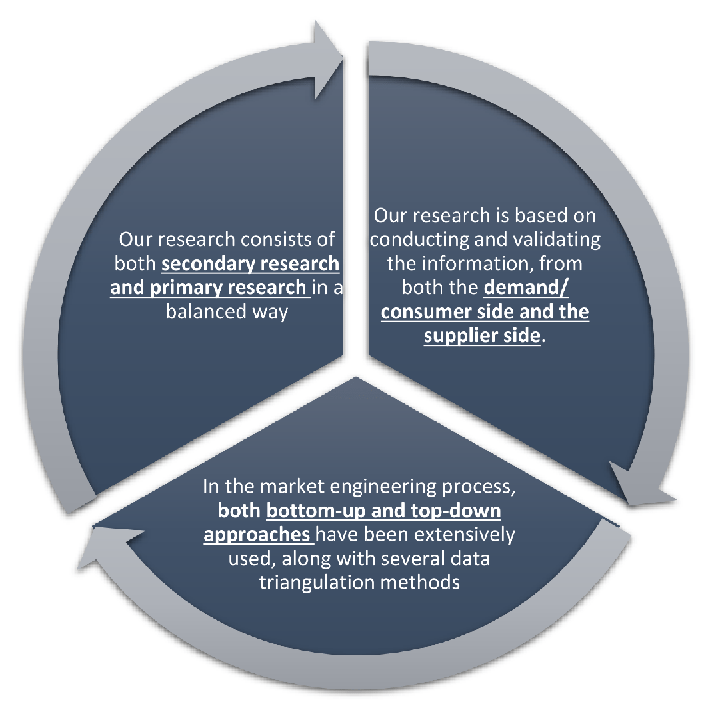
Our research design integrates both demand-side and supply-side analysis through a balanced combination of primary and secondary research methodologies. By utilizing both bottom-up and top-down approaches alongside rigorous data triangulation methods, we deliver robust market intelligence that supports strategic decision-making.
MarketGenics' comprehensive research design framework ensures the delivery of accurate, reliable, and actionable market intelligence. Through the integration of multiple research approaches, rigorous validation processes, and expert analysis, we provide our clients with the insights needed to make informed strategic decisions and capitalize on market opportunities.
MarketGenics leverages a dedicated industry panel of experts and a comprehensive suite of paid databases to effectively collect, consolidate, and analyze market intelligence.
Our approach has consistently proven to be reliable and effective in generating accurate market insights, identifying key industry trends, and uncovering emerging business opportunities.
Through both primary and secondary research, we capture and analyze critical company-level data such as manufacturing footprints, including technical centers, R&D facilities, sales offices, and headquarters.
Our expert panel further enhances our ability to estimate market size for specific brands based on validated field-level intelligence.
Our data mining techniques incorporate both parametric and non-parametric methods, allowing for structured data collection, sorting, processing, and cleaning.
Demand projections are derived from large-scale data sets analyzed through proprietary algorithms, culminating in robust and reliable market sizing.
Research Approach
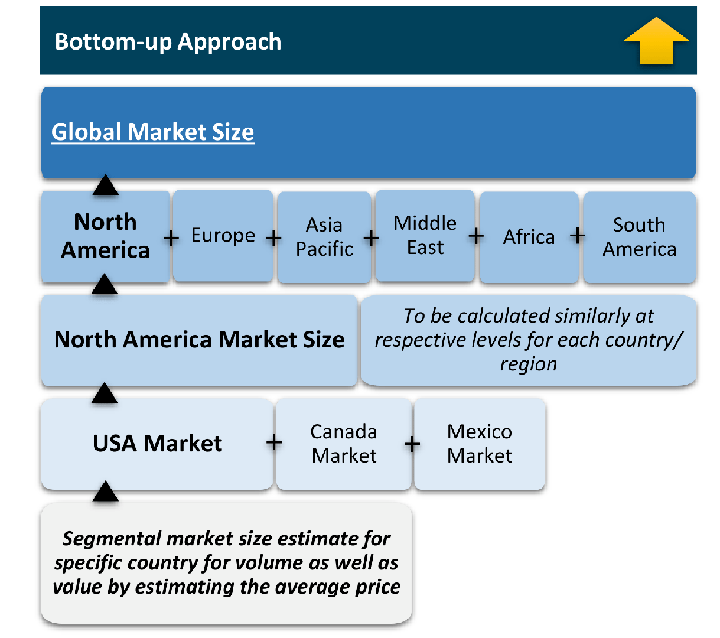
The bottom-up approach builds market estimates by starting with the smallest addressable market units and systematically aggregating them to create comprehensive market size projections.
This method begins with specific, granular data points and builds upward to create the complete market landscape.
Customer Analysis → Segmental Analysis → Geographical Analysis
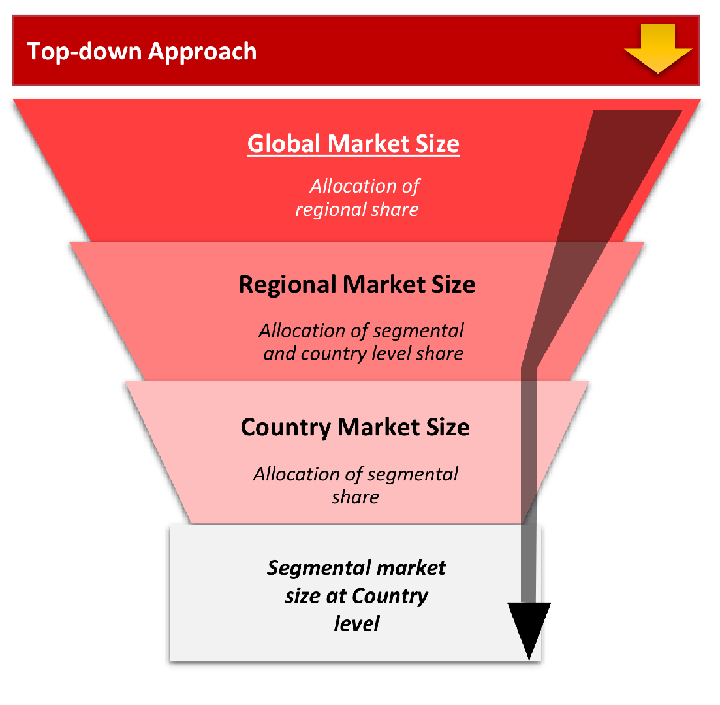
The top-down approach starts with the broadest possible market data and systematically narrows it down through a series of filters and assumptions to arrive at specific market segments or opportunities.
This method begins with the big picture and works downward to increasingly specific market slices.
TAM → SAM → SOM
Research Methods
Desk / Secondary Research
While analysing the market, we extensively study secondary sources, directories, and databases to identify and collect information useful for this technical, market-oriented, and commercial report. Secondary sources that we utilize are not only the public sources, but it is a combination of Open Source, Associations, Paid Databases, MG Repository & Knowledgebase, and others.
- Company websites, annual reports, financial reports, broker reports, and investor presentations
- National government documents, statistical databases and reports
- News articles, press releases and web-casts specific to the companies operating in the market, Magazines, reports, and others
- We gather information from commercial data sources for deriving company specific data such as segmental revenue, share for geography, product revenue, and others
- Internal and external proprietary databases (industry-specific), relevant patent, and regulatory databases
- Governing Bodies, Government Organizations
- Relevant Authorities, Country-specific Associations for Industries
We also employ the model mapping approach to estimate the product level market data through the players' product portfolio
Primary Research
Primary research/ interviews is vital in analyzing the market. Most of the cases involves paid primary interviews. Primary sources include primary interviews through e-mail interactions, telephonic interviews, surveys as well as face-to-face interviews with the different stakeholders across the value chain including several industry experts.
| Type of Respondents | Number of Primaries |
|---|---|
| Tier 2/3 Suppliers | ~20 |
| Tier 1 Suppliers | ~25 |
| End-users | ~25 |
| Industry Expert/ Panel/ Consultant | ~30 |
| Total | ~100 |
MG Knowledgebase
• Repository of industry blog, newsletter and case studies
• Online platform covering detailed market reports, and company profiles
Forecasting Factors and Models
Forecasting Factors
- Historical Trends – Past market patterns, cycles, and major events that shaped how markets behave over time. Understanding past trends helps predict future behavior.
- Industry Factors – Specific characteristics of the industry like structure, regulations, and innovation cycles that affect market dynamics.
- Macroeconomic Factors – Economic conditions like GDP growth, inflation, and employment rates that affect how much money people have to spend.
- Demographic Factors – Population characteristics like age, income, and location that determine who can buy your product.
- Technology Factors – How quickly people adopt new technology and how much technology infrastructure exists.
- Regulatory Factors – Government rules, laws, and policies that can help or restrict market growth.
- Competitive Factors – Analyzing competition structure such as degree of competition and bargaining power of buyers and suppliers.
Forecasting Models / Techniques
Multiple Regression Analysis
- Identify and quantify factors that drive market changes
- Statistical modeling to establish relationships between market drivers and outcomes
Time Series Analysis – Seasonal Patterns
- Understand regular cyclical patterns in market demand
- Advanced statistical techniques to separate trend, seasonal, and irregular components
Time Series Analysis – Trend Analysis
- Identify underlying market growth patterns and momentum
- Statistical analysis of historical data to project future trends
Expert Opinion – Expert Interviews
- Gather deep industry insights and contextual understanding
- In-depth interviews with key industry stakeholders
Multi-Scenario Development
- Prepare for uncertainty by modeling different possible futures
- Creating optimistic, pessimistic, and most likely scenarios
Time Series Analysis – Moving Averages
- Sophisticated forecasting for complex time series data
- Auto-regressive integrated moving average models with seasonal components
Econometric Models
- Apply economic theory to market forecasting
- Sophisticated economic models that account for market interactions
Expert Opinion – Delphi Method
- Harness collective wisdom of industry experts
- Structured, multi-round expert consultation process
Monte Carlo Simulation
- Quantify uncertainty and probability distributions
- Thousands of simulations with varying input parameters
Research Analysis
Our research framework is built upon the fundamental principle of validating market intelligence from both demand and supply perspectives. This dual-sided approach ensures comprehensive market understanding and reduces the risk of single-source bias.
Demand-Side Analysis: We understand end-user/application behavior, preferences, and market needs along with the penetration of the product for specific application.
Supply-Side Analysis: We estimate overall market revenue, analyze the segmental share along with industry capacity, competitive landscape, and market structure.
Validation & Evaluation
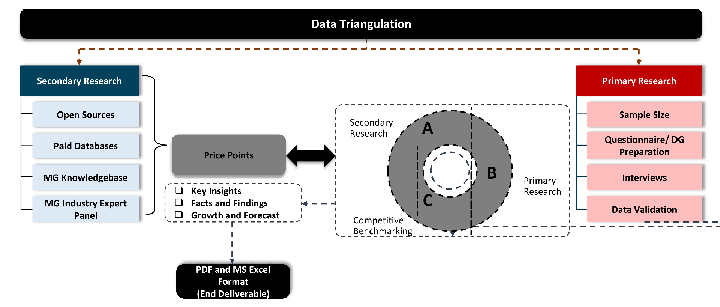
Data triangulation is a validation technique that uses multiple methods, sources, or perspectives to examine the same research question, thereby increasing the credibility and reliability of research findings. In market research, triangulation serves as a quality assurance mechanism that helps identify and minimize bias, validate assumptions, and ensure accuracy in market estimates.
- Data Source Triangulation – Using multiple data sources to examine the same phenomenon
- Methodological Triangulation – Using multiple research methods to study the same research question
- Investigator Triangulation – Using multiple researchers or analysts to examine the same data
- Theoretical Triangulation – Using multiple theoretical perspectives to interpret the same data
Custom Market Research Services
We will customise the research for you, in case the report listed above does not meet your requirements.
Get 10% Free Customisation