Solar Light Tower Market Size, Share & Trends Analysis Report by Rated Power (Wattage) (Less than 500W, 500W - 1,000W, 1,001W - 2,000W, 2,001W - 3,000W, Above 3,000W), Rated Capacity (Battery Storage), Tower Height, Panel Type, Battery Type, Light Source, Mobility Type, Operation Mode, Mast Type, Number of Lamp Heads, Runtime Capacity, End-use Industry X Application, and Geography (North America, Europe, Asia Pacific, Middle East, Africa, and South America) – Global Industry Data, Trends, and Forecasts, 2026–2035
|
|
|
Segmental Data Insights |
|
|
Demand Trends |
|
|
Competitive Landscape |
|
|
Strategic Development |
|
|
Future Outlook & Opportunities |
|
Solar-Light-Tower-Market Size, Share, and Growth
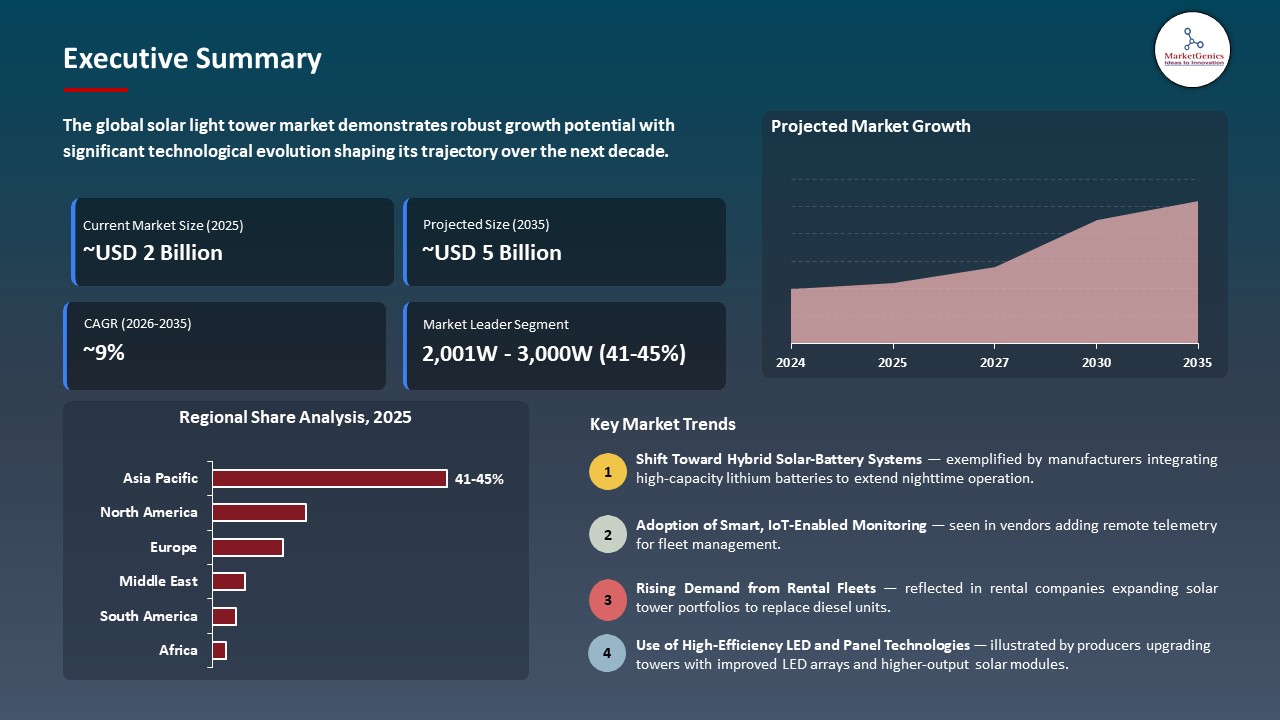
The global solar light tower market is experiencing robust growth, with its estimated value of USD 2.1 billion in the year 2025 and USD 5.2 billion by the period 2035, registering a CAGR of 9.5%, during the forecast period. The global solar light tower market is driven by increasing adoption of sustainable and low-emission lighting solutions, rising off-grid construction and mining activities, cost advantages over diesel-powered towers, and growing infrastructure and event-management projects requiring reliable, portable, and energy-efficient illumination.
Allmand Sales Director Paul Daly said, “Over the last few years, we’ve focused on designing and building products based on customer feedback. Our collaboration with Vanguard made us agile enough to react quickly and meet the needs of our customers with this hybrid light tower, which complements our expansive product portfolio.”
The global solar light tower market growth is primarily driven by the increased use of sustainable and low-carbon lighting systems in the construction, mining and social infrastructure projects. For instance, in January 2024, Generac Holdings Inc. launched a new GLT Series of hybrid and solar light towers, to provide better energy economy and less noise when used off-grid. This tendency promotes the adoption in the market and encourages global growth.
Moreover, the global light tower market growth is further boosted by the increased demand of cost effective and portable lighting systems to be used in the temporary and remote project sites. For instance, in March 2025, Atlas Copco AB released the HiLight MS 4 and MS 5 light towers that provide high-lumen LED light along with long battery duration to effectively meet the demands of the large-scale construction industry and emergency response. This introduction enhances market adoption through offering effective, dependable and high-performance lighting solutions to large scale and remote projects.
The global solar light tower market presents adjacent opportunities include off-grid solar generators, portable LED lighting systems, hybrid construction equipment, temporary event power solutions, and remote mining illumination. These industries capitalize on the similar technologies and models of deployment, allowing manufacturers to increase the range of services and capture into the new sources of revenues. The exploration of these adjacent markets can be used to grow faster, diversify revenues, and reinforce the competitive position.
Solar Light Tower Market Dynamics and Trends
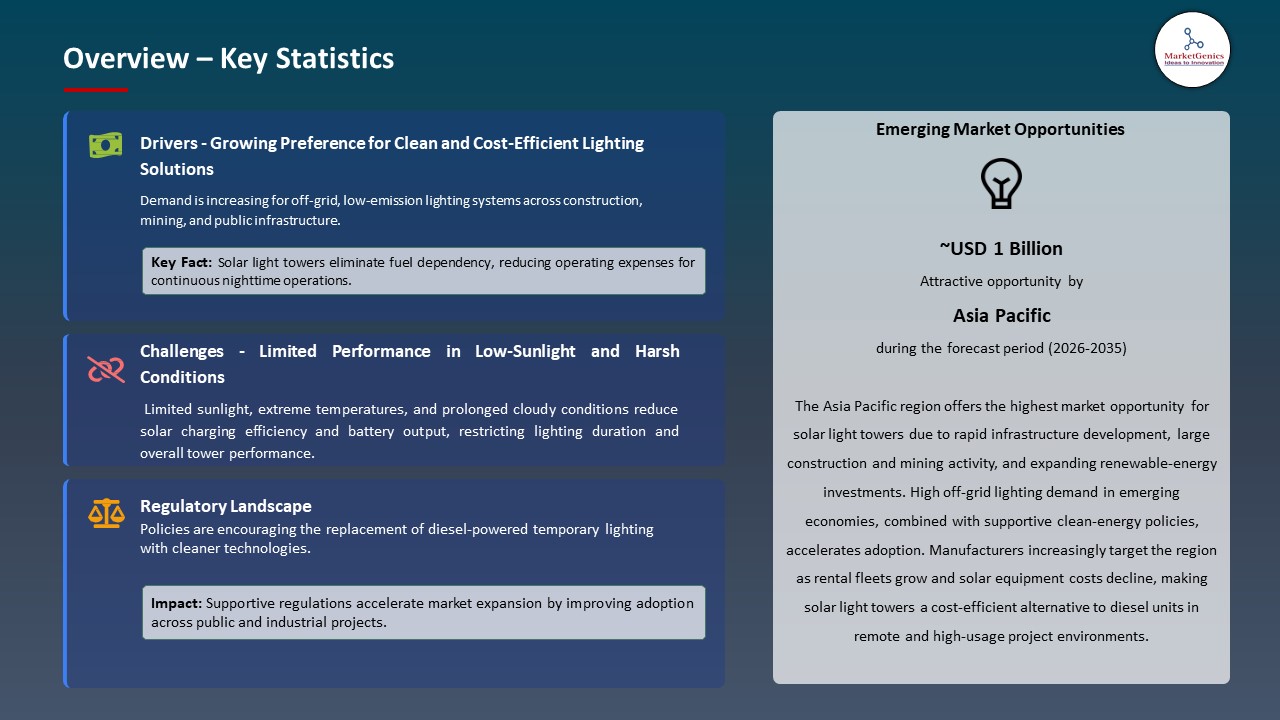
Driver: Surge in Global Infrastructure and Construction Projects Driving Demand
-
The global solar light tower market growth is experiencing a significant growth in the increased global infrastructure and construction development. The high rate of urbanization, highway networks, bridge constructions, industries, and energy related projects in emerging economies are demanding high demand of the portable, reliable, and high-performance lights.
- In addition, the construction and mining activities are becoming more dependent on off-grid lightings to provide security, efficiency and adherence to working hours especially in remote or night workplaces.
- Moreover, manufacturers are also countering by designing superior solar and hybrid light towers that provide deliver long operating hours, high-lumen LED, and strong durability to endure harsh conditions. For instance, in March 2025, Wacker Neuson SE improved its LTN4 and LTN5 light tower models, providing them with increased energy efficiency and performance to serve massive construction and industrial projects.
- The increasing infrastructure and construction projects, in conjunction to the innovations of improved products are accelerating the adoption of solar light towers, increasing the market coverage, and ensuring a sustained growth globally.
Restraint: Higher Upfront Costs Relative to Conventional Diesel Towers
-
The global solar light tower market growth is restrained because of the high initial investments of the superior solar and hybrid systems over the conventional diesel units. Increased capacity batteries, LED arrays and smart controls add to startup costs, making small contractors and rental operators an obstacle to adoption regardless of cost savings in the long term.
- Even though the manufacturers such as Doosan Portable Power have launched energy-saving LED models with better performance in 2024, the high cost is still a significant obstacle to the penetration of the market into some segments. Customers are still apprehensive to replace traditional diesel towers with more expensive solar or hybrid models, and cost-sensitivity has continued to increase the rate of adoption in regions with constrained budgets.
- The technological transition is hampered, as the price difference between solar and diesel towers continues to discourage market growth especially in more price sensitive areas.
Opportunity: Expansion of Rental and Service‑Based Light Tower Models Worldwide
-
The global Solar light tower market growth is increasingly with the global trend of moving to a rental and service-based deployment model, which offers a major opportunity to manufacturers and fleet operators.
- Construction, mining, emergency response, and infrastructure projects prefer flexible, short-term access to lighting assets without the burden of upfront capital expenditure. This shift brings better access to the market, especially to small and middle-size contractors who would want to find off-grid light sources that are cost efficient.
- Major equipment rental companies making more investment in solar and hybrid light towers as demand increases in sustainable and low-maintenance options. For instance, in February 2025, United Rentals enhanced its eco-equipment fleet, with next-generation solar-powered towers with longer run time and more sophisticated telematics to optimize its fleet. The adoption is shifting towards rental with increased rapid penetration and expansion to customers.
- This growth of rental-oriented models will dramatically speed up the adoption, lower barriers to entry, and spur long-term market growth in the major industrial sectors.
Key Trend: Rapid Technology Shift toward Battery‑Powered, Zero‑Emission Light Towers
-
The global solar light tower market dynamics are increasingly shaped by a rapid shift toward battery-powered, zero-emission lighting systems, driven by stricter environmental regulations and the global push for decarbonization. Construction, mining, and public infrastructure industries are also going to fuel-free, low-noise lighting solutions much faster than the diesel towers are being phased out in favor of cleaner and more efficient fully electric or hybrid solar-battery towers.
- Manufacturers are reacting to this with high capacity lithium battery packs, progressive LED optics and intelligent energy management systems. For instance, Trime UK developed its zero-emission portfolio by upgrading its X-Solar Hybrid tower with longer battery autonomy and more intelligent charging controls to accommodate long-term, off-grid software. The trend is transforming performance standards in the industry.
- The rapid growing trend in new technology is likely to boost market demand, improve regulatory compliance, and make zero-emission solar light towers the choice in both industrial and infrastructure practices.
Solar-Light-Tower-Market Analysis and Segmental Data
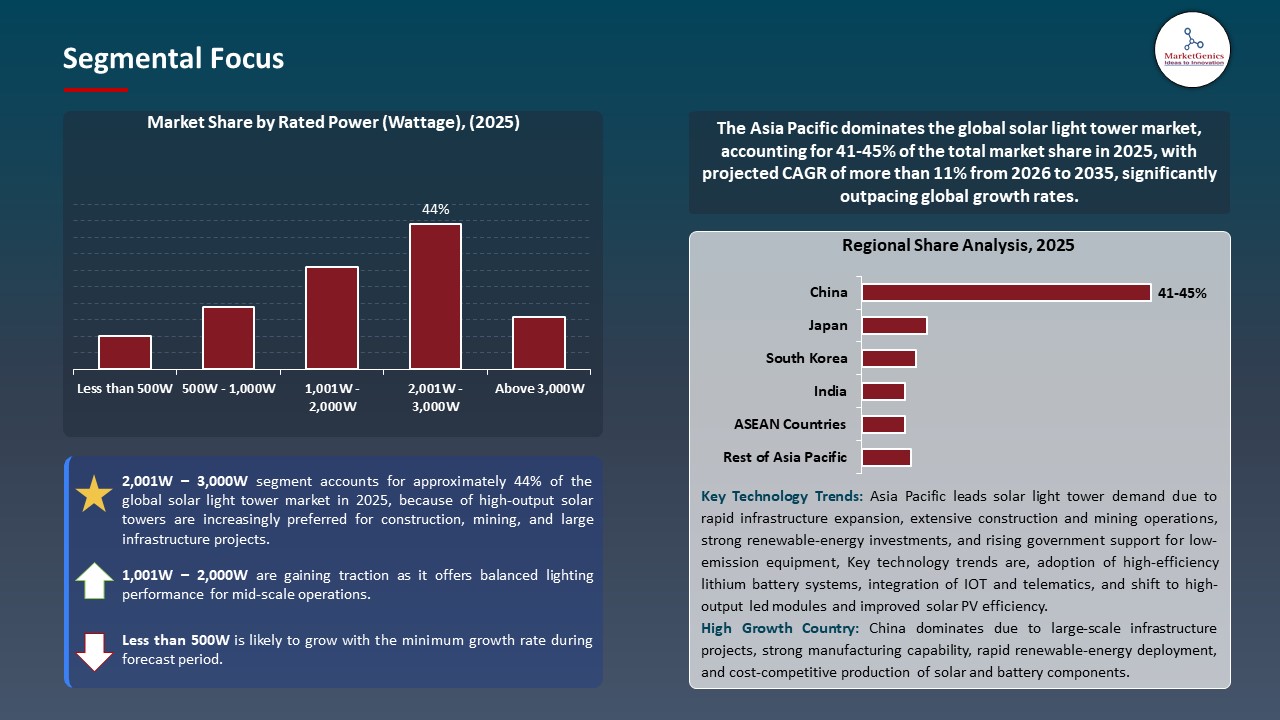
2,001W - 3,000W Dominate Global Solar Light Tower Market
-
The 2,001W - 3,000W segment dominates the global solar light tower market because of which offers the optimal power output, operating time and operational capability in large construction, mining and infrastructure projects. These units have increased light output and low energy usage, which makes them applicable in high-intensity and long-term, off-grid applications.
- The high performance, operation in harsh environments and the compatibility with enhanced battery and hybrid solar systems have made their adoption accelerated in industrial sectors. This category of lighting is becoming a priority to manufacturers of high-lumen, dependable, and low-emission solutions, thus solidifying its dominance as the most powerful category in the global market.
- This dominance is expected to accelerate large-scale adoption, strengthen fleet modernization, and solidify the 2,001W–3,000W segment as the preferred choice for high-performance, off-grid industrial lighting.
Asia Pacific Leads Global Solar Light Tower Market Demand
-
Asia Pacific leads the solar light tower market, because of the rapid growth of infrastructure, massive construction works and high expenditure in transportation, mining and energy developments. The rate of urbanization and industrialization in countries in the region are increasing and this is significant needs in portable, off-grid and high-efficiency light sources that can be used in rural or undeveloped regions.
- The region’s strong push toward renewable and low-emission technologies also contribute to adoption, since the governments pay more attention to sustainable construction procedures and compliance with the environment. The need is also strengthened by increasing utilization of solar equipment and hybrid equipment fleets by key rental corporations and contractors.
- For instance, in February 2024, Wanco Inc. expanded its product line an addition of programmable solar and hybrid light towers with lithium-ion batteries, dimmable LED lights, and smart charge controllers that allow 360-degree, high-lumen lighting with automatic solar charging and optional diesel backup to ensure a longer operating time.
- The Asia Pacific area is leading currently in solar and hybrid light tower adoption, market expansion, and sustainable infrastructure, making it the fastest expanding market internationally.
Solar-Light-Tower-Market Ecosystem
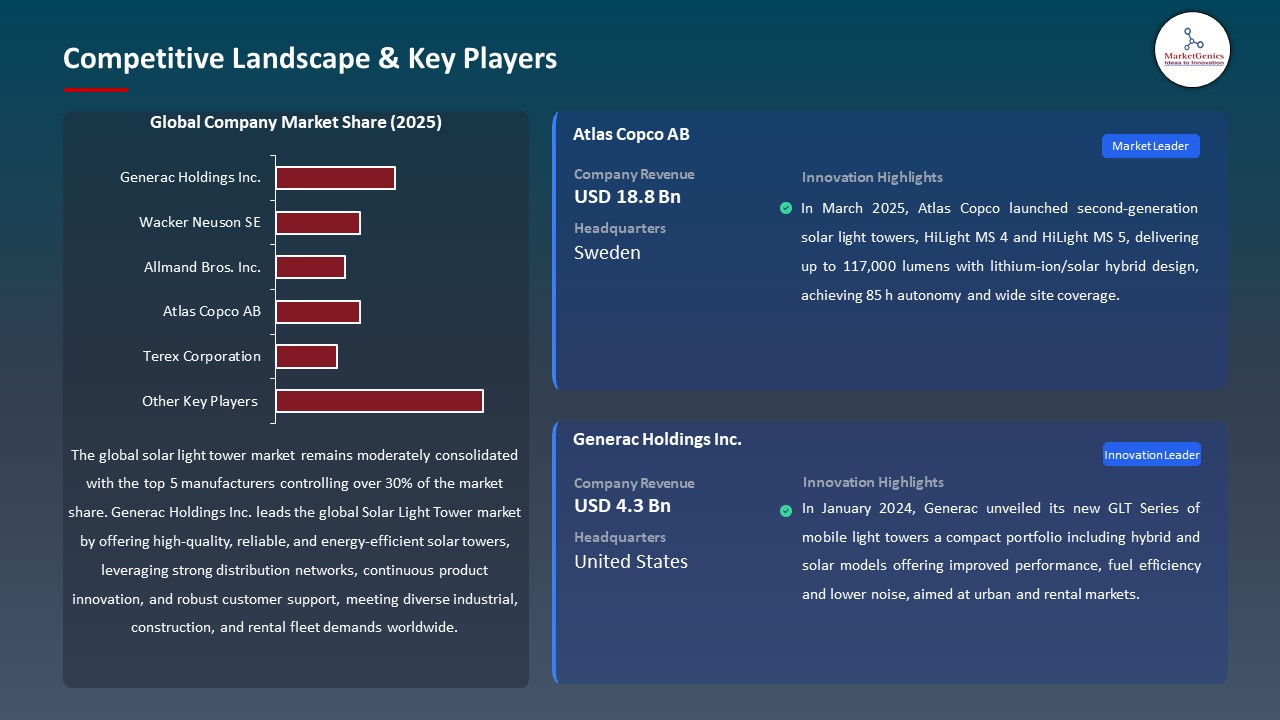
The global solar light tower market is moderately consolidated, with high concentration among key players such as Generac Holdings Inc., Wacker Neuson SE, Allmand Bros. Inc., Atlas Copco AB, and Terex Corporation, who dominate through strategic efforts as sustained product creation, development of hybrid and solar-powered tower product lines, robust distribution channels, mergers and acquisitions and partnerships with rental service providers. Their emphasis on energy efficient, high luminance as well as robust lighting solutions can make them serve massive construction, mining as well as infrastructure developments across the globe.
This concentration allows leading manufacturers to influence pricing, technology standards, and customer preferences, reinforcing their competitive advantage in a market increasingly driven by sustainability and off-grid lighting requirements.
Recent Development and Strategic Overview:
-
In March 2025, Atlas Copco enhanced its portfolio of solar- and battery-powered electric light towers, targeting construction and disaster-response applications with 48-hour operational runtime and environmentally friendly, low-emission lighting solutions.
- In February 2024, Allmand Bros., Inc. announced its Hybrid LT-Series light tower, integrating a diesel engine with dual 7 kWh batteries to provide extended operational runtime while significantly reducing emissions, catering to sustainable and efficient lighting requirements across industrial and construction applications.
Report Scope
|
Detail |
|
|
Market Size in 2025 |
USD 2.1 Bn |
|
Market Forecast Value in 2035 |
USD 5.2 Bn |
|
Growth Rate (CAGR) |
9.5% |
|
Forecast Period |
2026 – 2035 |
|
Historical Data Available for |
2021 – 2024 |
|
Market Size Units |
US$ Billion for Value Thousand Units for Volume |
|
Report Format |
Electronic (PDF) + Excel |
|
North America |
Europe |
Asia Pacific |
Middle East |
Africa |
South America |
|
|
|
|
|
|
|
Companies Covered |
|||||
|
|
|
|
|
|
Solar-Light-Tower-Market Segmentation and Highlights
|
Segment |
Sub-segment |
|
Solar Light Tower Market, By Rated Power (Wattage) |
|
|
Solar Light Tower Market, By Rated Capacity (Battery Storage) |
|
|
Solar Light Tower Market, By Tower Height |
|
|
Solar Light Tower Market, By Panel Type |
|
|
Solar Light Tower Market, By Battery Type
|
|
|
Solar Light Tower Market, By Light Source
|
|
|
Solar Light Tower Market, By Mobility Type |
|
|
Solar Light Tower Market, By Operation Mode |
|
|
Solar Light Tower Market, By Mast Type |
|
|
Solar Light Tower Market, By Number of Lamp Heads |
|
|
Solar Light Tower Market, By Runtime Capacity |
|
|
Solar Light Tower Market, By End-use Industry X Application |
|
Frequently Asked Questions
Table of Contents
- 1. Research Methodology and Assumptions
- 1.1. Definitions
- 1.2. Research Design and Approach
- 1.3. Data Collection Methods
- 1.4. Base Estimates and Calculations
- 1.5. Forecasting Models
- 1.5.1. Key Forecast Factors & Impact Analysis
- 1.6. Secondary Research
- 1.6.1. Open Sources
- 1.6.2. Paid Databases
- 1.6.3. Associations
- 1.7. Primary Research
- 1.7.1. Primary Sources
- 1.7.2. Primary Interviews with Stakeholders across Ecosystem
- 2. Executive Summary
- 2.1. Global Solar Light Tower Market Outlook
- 2.1.1. Solar Light Tower Market Size (Volume – Thousand Units and Value - US$ Bn), and Forecasts, 2021-2035
- 2.1.2. Compounded Annual Growth Rate Analysis
- 2.1.3. Growth Opportunity Analysis
- 2.1.4. Segmental Share Analysis
- 2.1.5. Geographical Share Analysis
- 2.2. Market Analysis and Facts
- 2.3. Supply-Demand Analysis
- 2.4. Competitive Benchmarking
- 2.5. Go-to- Market Strategy
- 2.5.1. Customer/ End-use Industry Assessment
- 2.5.2. Growth Opportunity Data, 2026-2035
- 2.5.2.1. Regional Data
- 2.5.2.2. Country Data
- 2.5.2.3. Segmental Data
- 2.5.3. Identification of Potential Market Spaces
- 2.5.4. GAP Analysis
- 2.5.5. Potential Attractive Price Points
- 2.5.6. Prevailing Market Risks & Challenges
- 2.5.7. Preferred Sales & Marketing Strategies
- 2.5.8. Key Recommendations and Analysis
- 2.5.9. A Way Forward
- 2.1. Global Solar Light Tower Market Outlook
- 3. Industry Data and Premium Insights
- 3.1. Global Energy & Power Industry Overview, 2025
- 3.1.1. Energy & Power Industry Ecosystem Analysis
- 3.1.2. Key Trends for Energy & Power Industry
- 3.1.3. Regional Distribution for Energy & Power Industry
- 3.2. Supplier Customer Data
- 3.3. Technology Roadmap and Developments
- 3.4. Trade Analysis
- 3.4.1. Import & Export Analysis, 2025
- 3.4.2. Top Importing Countries
- 3.4.3. Top Exporting Countries
- 3.5. Trump Tariff Impact Analysis
- 3.5.1. Manufacturer
- 3.5.1.1. Based on the component & Raw material
- 3.5.2. Supply Chain
- 3.5.3. End Consumer
- 3.5.1. Manufacturer
- 3.6. Raw Material Analysis
- 3.1. Global Energy & Power Industry Overview, 2025
- 4. Market Overview
- 4.1. Market Dynamics
- 4.1.1. Drivers
- 4.1.1.1. Growing demand for sustainable, zero-emission lighting solutions
- 4.1.1.2. Reduced operating costs compared to diesel-based towers
- 4.1.1.3. Expanding use in construction, mining, events, and rental applications
- 4.1.2. Restraints
- 4.1.2.1. High initial investment for solar panels and battery systems
- 4.1.2.2. Performance limitations in low sunlight and harsh weather conditions
- 4.1.1. Drivers
- 4.2. Key Trend Analysis
- 4.3. Regulatory Framework
- 4.3.1. Key Regulations, Norms, and Subsidies, by Key Countries
- 4.3.2. Tariffs and Standards
- 4.3.3. Impact Analysis of Regulations on the Market
- 4.4. Value Chain Analysis
- 4.4.1. Component Suppliers
- 4.4.2. Solar Light Tower Manufacturers
- 4.4.3. Distributors / Retailers
- 4.4.4. End-Users/Application
- 4.5. Porter’s Five Forces Analysis
- 4.6. PESTEL Analysis
- 4.7. Global Solar Light Tower Market Demand
- 4.7.1. Historical Market Size – Volume – Thousand Units and Value (US$ Bn), 2020-2024
- 4.7.2. Current and Future Market Size – Volume – Thousand Units and Value (US$ Bn), 2026–2035
- 4.7.2.1. Y-o-Y Growth Trends
- 4.7.2.2. Absolute $ Opportunity Assessment
- 4.1. Market Dynamics
- 5. Competition Landscape
- 5.1. Competition structure
- 5.1.1. Fragmented v/s consolidated
- 5.2. Company Share Analysis, 2025
- 5.2.1. Global Company Market Share
- 5.2.2. By Region
- 5.2.2.1. North America
- 5.2.2.2. Europe
- 5.2.2.3. Asia Pacific
- 5.2.2.4. Middle East
- 5.2.2.5. Africa
- 5.2.2.6. South America
- 5.3. Product Comparison Matrix
- 5.3.1. Specifications
- 5.3.2. Market Positioning
- 5.3.3. Pricing
- 5.1. Competition structure
- 6. Global Solar Light Tower Market Analysis, by Rated Power (Wattage)
- 6.1. Key Segment Analysis
- 6.2. Solar Light Tower Market Size (Volume – Thousand Units and Value - US$ Bn), Analysis, and Forecasts, by Rated Power (Wattage), 2021-2035
- 6.2.1. Less than 500W
- 6.2.2. 500W - 1,000W
- 6.2.3. 1,001W - 2,000W
- 6.2.4. 2,001W - 3,000W
- 6.2.5. Above 3,000W
- 7. Global Solar Light Tower Market Analysis, by Rated Capacity (Battery Storage)
- 7.1. Key Segment Analysis
- 7.2. Solar Light Tower Market Size (Volume – Thousand Units and Value - US$ Bn), Analysis, and Forecasts, by Rated Capacity (Battery Storage), 2021-2035
- 7.2.1. Less than 100Ah
- 7.2.2. 100Ah - 200Ah
- 7.2.3. 201Ah - 300Ah
- 7.2.4. 301Ah - 500Ah
- 7.2.5. Above 500Ah
- 8. Global Solar Light Tower Market Analysis, by Tower Height
- 8.1. Key Segment Analysis
- 8.2. Solar Light Tower Market Size (Volume – Thousand Units and Value - US$ Bn), Analysis, and Forecasts, by Tower Height, 2021-2035
- 8.2.1. Up to 4 meters
- 8.2.2. 4 - 6 meters
- 8.2.3. 6 - 8 meters
- 8.2.4. 8 - 10 meters
- 8.2.5. Above 10 meters
- 9. Global Solar Light Tower Market Analysis, by Panel Type
- 9.1. Key Segment Analysis
- 9.2. Solar Light Tower Market Size (Volume – Thousand Units and Value - US$ Bn), Analysis, and Forecasts, by Panel Type, 2021-2035
- 9.2.1. Monocrystalline Solar Panels
- 9.2.2. Polycrystalline Solar Panels
- 9.2.3. Thin-Film Solar Panels
- 9.2.4. Hybrid Solar Panels
- 10. Global Solar Light Tower Market Analysis, by Battery Type
- 10.1. Key Segment Analysis
- 10.2. Solar Light Tower Market Size (Volume – Thousand Units and Value - US$ Bn), Analysis, and Forecasts, by Battery Type, 2021-2035
- 10.2.1. Lithium-ion Batteries
- 10.2.2. Lead-acid Batteries
- 10.2.3. Gel Batteries
- 10.2.4. AGM (Absorbent Glass Mat) Batteries
- 10.2.5. Others
- 11. Global Solar Light Tower Market Analysis, by Light Source
- 11.1. Key Segment Analysis
- 11.2. Solar Light Tower Market Size (Volume – Thousand Units and Value - US$ Bn), Analysis, and Forecasts, by Light Source, 2021-2035
- 11.2.1. LED Lights
- 11.2.2. Metal Halide Lights
- 11.2.3. Fluorescent Lights
- 11.2.4. Sodium Vapor Lights
- 12. Global Solar Light Tower Market Analysis, by Mobility Type
- 12.1. Key Segment Analysis
- 12.2. Solar Light Tower Market Size (Volume – Thousand Units and Value - US$ Bn), Analysis, and Forecasts, by Mobility Type, 2021-2035
- 12.2.1. Stationary/Fixed Solar Light Towers
- 12.2.2. Portable/Mobile Solar Light Towers
- 12.2.3. Trailer-mounted Solar Light Towers
- 12.2.4. Skid-mounted Solar Light Towers
- 13. Global Solar Light Tower Market Analysis, by Operation Mode
- 13.1. Key Segment Analysis
- 13.2. Solar Light Tower Market Size (Volume – Thousand Units and Value - US$ Bn), Analysis, and Forecasts, by Operation Mode, 2021-2035
- 13.2.1. Manual Operation
- 13.2.2. Remote Control Operation
- 13.2.3. Automated/Smart Operation
- 13.2.4. Hybrid Operation
- 14. Global Solar Light Tower Market Analysis and Forecasts, by Mast Type
- 14.1. Key Findings
- 14.2. Solar Light Tower Market Size (Volume – Thousand Units and Value - US$ Bn), Analysis, and Forecasts, by Mast Type, 2021-2035
- 14.2.1. Manual Mast
- 14.2.2. Hydraulic Mast
- 14.2.3. Pneumatic Mast
- 14.2.4. Electric Mast
- 15. Global Solar Light Tower Market Analysis and Forecasts, by Number of Lamp Heads
- 15.1. Key Findings
- 15.2. Solar Light Tower Market Size (Volume – Thousand Units and Value - US$ Bn), Analysis, and Forecasts, by Number of Lamp Heads, 2021-2035
- 15.2.1. Single Lamp Head
- 15.2.2. 2-4 Lamp Heads
- 15.2.3. 5-6 Lamp Heads
- 15.2.4. More than 6 Lamp Heads
- 16. Global Solar Light Tower Market Analysis and Forecasts, by Runtime Capacity
- 16.1. Key Findings
- 16.2. Solar Light Tower Market Size (Volume – Thousand Units and Value - US$ Bn), Analysis, and Forecasts, by Runtime Capacity, 2021-2035
- 16.2.1. Up to 8 hours
- 16.2.2. 8 - 12 hours
- 16.2.3. 12 - 24 hours
- 16.2.4. 24 - 48 hours
- 16.2.5. Above 48 hours
- 17. Global Solar Light Tower Market Analysis and Forecasts, by End-use Industry X Application
- 17.1. Key Findings
- 17.2. Solar Light Tower Market Size (Volume – Thousand Units and Value - US$ Bn), Analysis, and Forecasts, by End-use Industry X Application, 2021-2035
- 17.2.1. Construction & Infrastructure
- 17.2.1.1. Road Construction & Highway Projects
- 17.2.1.2. Building Construction Sites
- 17.2.1.3. Bridge & Tunnel Construction
- 17.2.1.4. Railway Construction
- 17.2.1.5. Underground Construction
- 17.2.1.6. Others
- 17.2.2. Oil & Gas
- 17.2.2.1. Drilling Operations
- 17.2.2.2. Refineries
- 17.2.2.3. Pipeline Construction & Maintenance
- 17.2.2.4. Offshore Platforms
- 17.2.2.5. Storage Facilities
- 17.2.2.6. Others
- 17.2.3. Mining
- 17.2.3.1. Surface Mining Operations
- 17.2.3.2. Underground Mining
- 17.2.3.3. Quarrying Operations
- 17.2.3.4. Exploration Sites
- 17.2.3.5. Material Processing Areas
- 17.2.3.6. Others
- 17.2.4. Events & Entertainment
- 17.2.4.1. Outdoor Concerts & Festivals
- 17.2.4.2. Sports Events
- 17.2.4.3. Corporate Events
- 17.2.4.4. Wedding & Social Events
- 17.2.4.5. Film & Video Production
- 17.2.4.6. Others
- 17.2.5. Emergency & Disaster Relief
- 17.2.5.1. Disaster Recovery Operations
- 17.2.5.2. Emergency Response Sites
- 17.2.5.3. Temporary Relief Camps
- 17.2.5.4. Search & Rescue Operations
- 17.2.5.5. Military & Defense Operations
- 17.2.5.6. Others
- 17.2.6. Utilities & Maintenance
- 17.2.6.1. Power Line Maintenance
- 17.2.6.2. Telecommunications Infrastructure
- 17.2.6.3. Water & Wastewater Treatment
- 17.2.6.4. Road & Highway Maintenance
- 17.2.6.5. Municipal Maintenance
- 17.2.6.6. Others
- 17.2.7. Agriculture
- 17.2.7.1. Farm Operations
- 17.2.7.2. Livestock Management
- 17.2.7.3. Irrigation Projects
- 17.2.7.4. Harvesting Operations
- 17.2.7.5. Storage Facilities
- 17.2.7.6. Others
- 17.2.8. Commercial & Industrial
- 17.2.8.1. Warehouses & Logistics Centers
- 17.2.8.2. Parking Lots & Outdoor Areas
- 17.2.8.3. Manufacturing Facilities
- 17.2.8.4. Shipyards & Ports
- 17.2.8.5. Airports & Airfields
- 17.2.8.6. Others
- 17.2.9. Government & Public Sector
- 17.2.9.1. Military Bases & Training Grounds
- 17.2.9.2. Border Security
- 17.2.9.3. Public Parks & Recreational Areas
- 17.2.9.4. Municipal Projects
- 17.2.9.5. Law Enforcement Operations
- 17.2.9.6. Others
- 17.2.10. Rental Services
- 17.2.10.1. Equipment Rental Companies
- 17.2.10.2. Event Rental Services
- 17.2.10.3. Construction Equipment Rental
- 17.2.10.4. Emergency Equipment Rental
- 17.2.10.5. Others
- 17.2.1. Construction & Infrastructure
- 18. Global Solar Light Tower Market Analysis and Forecasts, by Region
- 18.1. Key Findings
- 18.2. Solar Light Tower Market Size (Volume – Thousand Units and Value - US$ Bn), Analysis, and Forecasts, by Region, 2021-2035
- 18.2.1. North America
- 18.2.2. Europe
- 18.2.3. Asia Pacific
- 18.2.4. Middle East
- 18.2.5. Africa
- 18.2.6. South America
- 19. North America Solar Light Tower Market Analysis
- 19.1. Key Segment Analysis
- 19.2. Regional Snapshot
- 19.3. North America Solar Light Tower Market Size (Volume – Thousand Units and Value - US$ Bn), Analysis, and Forecasts, 2021-2035
- 19.3.1. Rated Power (Wattage)
- 19.3.2. Rated Capacity (Battery Storage)
- 19.3.3. Tower Height
- 19.3.4. Panel Type
- 19.3.5. Battery Type
- 19.3.6. Light Source
- 19.3.7. Mobility Type
- 19.3.8. Operation Mode
- 19.3.9. Mast Type
- 19.3.10. Number of Lamp Heads
- 19.3.11. Runtime Capacity
- 19.3.12. End-use Industry X Application
- 19.3.13. Country
- 19.3.13.1. USA
- 19.3.13.2. Canada
- 19.3.13.3. Mexico
- 19.4. USA Solar Light Tower Market
- 19.4.1. Country Segmental Analysis
- 19.4.2. Rated Power (Wattage)
- 19.4.3. Rated Capacity (Battery Storage)
- 19.4.4. Tower Height
- 19.4.5. Panel Type
- 19.4.6. Battery Type
- 19.4.7. Light Source
- 19.4.8. Mobility Type
- 19.4.9. Operation Mode
- 19.4.10. Mast Type
- 19.4.11. Number of Lamp Heads
- 19.4.12. Runtime Capacity
- 19.4.13. End-use Industry X Application
- 19.5. Canada Solar Light Tower Market
- 19.5.1. Country Segmental Analysis
- 19.5.2. Rated Power (Wattage)
- 19.5.3. Rated Capacity (Battery Storage)
- 19.5.4. Tower Height
- 19.5.5. Panel Type
- 19.5.6. Battery Type
- 19.5.7. Light Source
- 19.5.8. Mobility Type
- 19.5.9. Operation Mode
- 19.5.10. Mast Type
- 19.5.11. Number of Lamp Heads
- 19.5.12. Runtime Capacity
- 19.5.13. End-use Industry X Application
- 19.6. Mexico Solar Light Tower Market
- 19.6.1. Country Segmental Analysis
- 19.6.2. Rated Power (Wattage)
- 19.6.3. Rated Capacity (Battery Storage)
- 19.6.4. Tower Height
- 19.6.5. Panel Type
- 19.6.6. Battery Type
- 19.6.7. Light Source
- 19.6.8. Mobility Type
- 19.6.9. Operation Mode
- 19.6.10. Mast Type
- 19.6.11. Number of Lamp Heads
- 19.6.12. Runtime Capacity
- 19.6.13. End-use Industry X Application
- 20. Europe Solar Light Tower Market Analysis
- 20.1. Key Segment Analysis
- 20.2. Regional Snapshot
- 20.3. Europe Solar Light Tower Market Size (Volume – Thousand Units and Value - US$ Bn), Analysis, and Forecasts, 2021-2035
- 20.3.1. Rated Power (Wattage)
- 20.3.2. Rated Capacity (Battery Storage)
- 20.3.3. Tower Height
- 20.3.4. Panel Type
- 20.3.5. Battery Type
- 20.3.6. Light Source
- 20.3.7. Mobility Type
- 20.3.8. Operation Mode
- 20.3.9. Mast Type
- 20.3.10. Number of Lamp Heads
- 20.3.11. Runtime Capacity
- 20.3.12. End-use Industry X Application
- 20.3.13. Country
- 20.3.13.1. Germany
- 20.3.13.2. United Kingdom
- 20.3.13.3. France
- 20.3.13.4. Italy
- 20.3.13.5. Spain
- 20.3.13.6. Netherlands
- 20.3.13.7. Nordic Countries
- 20.3.13.8. Poland
- 20.3.13.9. Russia & CIS
- 20.3.13.10. Rest of Europe
- 20.4. Germany Solar Light Tower Market
- 20.4.1. Country Segmental Analysis
- 20.4.2. Rated Power (Wattage)
- 20.4.3. Rated Capacity (Battery Storage)
- 20.4.4. Tower Height
- 20.4.5. Panel Type
- 20.4.6. Battery Type
- 20.4.7. Light Source
- 20.4.8. Mobility Type
- 20.4.9. Operation Mode
- 20.4.10. Mast Type
- 20.4.11. Number of Lamp Heads
- 20.4.12. Runtime Capacity
- 20.4.13. End-use Industry X Application
- 20.5. United Kingdom Solar Light Tower Market
- 20.5.1. Country Segmental Analysis
- 20.5.2. Rated Power (Wattage)
- 20.5.3. Rated Capacity (Battery Storage)
- 20.5.4. Tower Height
- 20.5.5. Panel Type
- 20.5.6. Battery Type
- 20.5.7. Light Source
- 20.5.8. Mobility Type
- 20.5.9. Operation Mode
- 20.5.10. Mast Type
- 20.5.11. Number of Lamp Heads
- 20.5.12. Runtime Capacity
- 20.5.13. End-use Industry X Application
- 20.6. France Solar Light Tower Market
- 20.6.1. Country Segmental Analysis
- 20.6.2. Rated Power (Wattage)
- 20.6.3. Rated Capacity (Battery Storage)
- 20.6.4. Tower Height
- 20.6.5. Panel Type
- 20.6.6. Battery Type
- 20.6.7. Light Source
- 20.6.8. Mobility Type
- 20.6.9. Operation Mode
- 20.6.10. Mast Type
- 20.6.11. Number of Lamp Heads
- 20.6.12. Runtime Capacity
- 20.6.13. End-use Industry X Application
- 20.7. Italy Solar Light Tower Market
- 20.7.1. Country Segmental Analysis
- 20.7.2. Rated Power (Wattage)
- 20.7.3. Rated Capacity (Battery Storage)
- 20.7.4. Tower Height
- 20.7.5. Panel Type
- 20.7.6. Battery Type
- 20.7.7. Light Source
- 20.7.8. Mobility Type
- 20.7.9. Operation Mode
- 20.7.10. Mast Type
- 20.7.11. Number of Lamp Heads
- 20.7.12. Runtime Capacity
- 20.7.13. End-use Industry X Application
- 20.8. Spain Solar Light Tower Market
- 20.8.1. Country Segmental Analysis
- 20.8.2. Rated Power (Wattage)
- 20.8.3. Rated Capacity (Battery Storage)
- 20.8.4. Tower Height
- 20.8.5. Panel Type
- 20.8.6. Battery Type
- 20.8.7. Light Source
- 20.8.8. Mobility Type
- 20.8.9. Operation Mode
- 20.8.10. Mast Type
- 20.8.11. Number of Lamp Heads
- 20.8.12. Runtime Capacity
- 20.8.13. End-use Industry X Application
- 20.9. Netherlands Solar Light Tower Market
- 20.9.1. Country Segmental Analysis
- 20.9.2. Rated Power (Wattage)
- 20.9.3. Rated Capacity (Battery Storage)
- 20.9.4. Tower Height
- 20.9.5. Panel Type
- 20.9.6. Battery Type
- 20.9.7. Light Source
- 20.9.8. Mobility Type
- 20.9.9. Operation Mode
- 20.9.10. Mast Type
- 20.9.11. Number of Lamp Heads
- 20.9.12. Runtime Capacity
- 20.9.13. End-use Industry X Application
- 20.10. Nordic Countries Solar Light Tower Market
- 20.10.1. Country Segmental Analysis
- 20.10.2. Rated Power (Wattage)
- 20.10.3. Rated Capacity (Battery Storage)
- 20.10.4. Tower Height
- 20.10.5. Panel Type
- 20.10.6. Battery Type
- 20.10.7. Light Source
- 20.10.8. Mobility Type
- 20.10.9. Operation Mode
- 20.10.10. Mast Type
- 20.10.11. Number of Lamp Heads
- 20.10.12. Runtime Capacity
- 20.10.13. End-use Industry X Application
- 20.11. Poland Solar Light Tower Market
- 20.11.1. Country Segmental Analysis
- 20.11.2. Rated Power (Wattage)
- 20.11.3. Rated Capacity (Battery Storage)
- 20.11.4. Tower Height
- 20.11.5. Panel Type
- 20.11.6. Battery Type
- 20.11.7. Light Source
- 20.11.8. Mobility Type
- 20.11.9. Operation Mode
- 20.11.10. Mast Type
- 20.11.11. Number of Lamp Heads
- 20.11.12. Runtime Capacity
- 20.11.13. End-use Industry X Application
- 20.12. Russia & CIS Solar Light Tower Market
- 20.12.1. Country Segmental Analysis
- 20.12.2. Rated Power (Wattage)
- 20.12.3. Rated Capacity (Battery Storage)
- 20.12.4. Tower Height
- 20.12.5. Panel Type
- 20.12.6. Battery Type
- 20.12.7. Light Source
- 20.12.8. Mobility Type
- 20.12.9. Operation Mode
- 20.12.10. Mast Type
- 20.12.11. Number of Lamp Heads
- 20.12.12. Runtime Capacity
- 20.12.13. End-use Industry X Application
- 20.13. Rest of Europe Solar Light Tower Market
- 20.13.1. Country Segmental Analysis
- 20.13.2. Rated Power (Wattage)
- 20.13.3. Rated Capacity (Battery Storage)
- 20.13.4. Tower Height
- 20.13.5. Panel Type
- 20.13.6. Battery Type
- 20.13.7. Light Source
- 20.13.8. Mobility Type
- 20.13.9. Operation Mode
- 20.13.10. Mast Type
- 20.13.11. Number of Lamp Heads
- 20.13.12. Runtime Capacity
- 20.13.13. End-use Industry X Application
- 21. Asia Pacific Solar Light Tower Market Analysis
- 21.1. Key Segment Analysis
- 21.2. Regional Snapshot
- 21.3. Asia Pacific Solar Light Tower Market Size (Volume – Thousand Units and Value - US$ Bn), Analysis, and Forecasts, 2021-2035
- 21.3.1. Rated Power (Wattage)
- 21.3.2. Rated Capacity (Battery Storage)
- 21.3.3. Tower Height
- 21.3.4. Panel Type
- 21.3.5. Battery Type
- 21.3.6. Light Source
- 21.3.7. Mobility Type
- 21.3.8. Operation Mode
- 21.3.9. Mast Type
- 21.3.10. Number of Lamp Heads
- 21.3.11. Runtime Capacity
- 21.3.12. End-use Industry X Application
- 21.3.13. Country
- 21.3.13.1. China
- 21.3.13.2. India
- 21.3.13.3. Japan
- 21.3.13.4. South Korea
- 21.3.13.5. Australia and New Zealand
- 21.3.13.6. Indonesia
- 21.3.13.7. Malaysia
- 21.3.13.8. Thailand
- 21.3.13.9. Vietnam
- 21.3.13.10. Rest of Asia Pacific
- 21.4. China Solar Light Tower Market
- 21.4.1. Country Segmental Analysis
- 21.4.2. Rated Power (Wattage)
- 21.4.3. Rated Capacity (Battery Storage)
- 21.4.4. Tower Height
- 21.4.5. Panel Type
- 21.4.6. Battery Type
- 21.4.7. Light Source
- 21.4.8. Mobility Type
- 21.4.9. Operation Mode
- 21.4.10. Mast Type
- 21.4.11. Number of Lamp Heads
- 21.4.12. Runtime Capacity
- 21.4.13. End-use Industry X Application
- 21.5. India Solar Light Tower Market
- 21.5.1. Country Segmental Analysis
- 21.5.2. Rated Power (Wattage)
- 21.5.3. Rated Capacity (Battery Storage)
- 21.5.4. Tower Height
- 21.5.5. Panel Type
- 21.5.6. Battery Type
- 21.5.7. Light Source
- 21.5.8. Mobility Type
- 21.5.9. Operation Mode
- 21.5.10. Mast Type
- 21.5.11. Number of Lamp Heads
- 21.5.12. Runtime Capacity
- 21.5.13. End-use Industry X Application
- 21.6. Japan Solar Light Tower Market
- 21.6.1. Country Segmental Analysis
- 21.6.2. Rated Power (Wattage)
- 21.6.3. Rated Capacity (Battery Storage)
- 21.6.4. Tower Height
- 21.6.5. Panel Type
- 21.6.6. Battery Type
- 21.6.7. Light Source
- 21.6.8. Mobility Type
- 21.6.9. Operation Mode
- 21.6.10. Mast Type
- 21.6.11. Number of Lamp Heads
- 21.6.12. Runtime Capacity
- 21.6.13. End-use Industry X Application
- 21.7. South Korea Solar Light Tower Market
- 21.7.1. Country Segmental Analysis
- 21.7.2. Rated Power (Wattage)
- 21.7.3. Rated Capacity (Battery Storage)
- 21.7.4. Tower Height
- 21.7.5. Panel Type
- 21.7.6. Battery Type
- 21.7.7. Light Source
- 21.7.8. Mobility Type
- 21.7.9. Operation Mode
- 21.7.10. Mast Type
- 21.7.11. Number of Lamp Heads
- 21.7.12. Runtime Capacity
- 21.7.13. End-use Industry X Application
- 21.8. Australia and New Zealand Solar Light Tower Market
- 21.8.1. Country Segmental Analysis
- 21.8.2. Rated Power (Wattage)
- 21.8.3. Rated Capacity (Battery Storage)
- 21.8.4. Tower Height
- 21.8.5. Panel Type
- 21.8.6. Battery Type
- 21.8.7. Light Source
- 21.8.8. Mobility Type
- 21.8.9. Operation Mode
- 21.8.10. Mast Type
- 21.8.11. Number of Lamp Heads
- 21.8.12. Runtime Capacity
- 21.8.13. End-use Industry X Application
- 21.9. Indonesia Solar Light Tower Market
- 21.9.1. Country Segmental Analysis
- 21.9.2. Rated Power (Wattage)
- 21.9.3. Rated Capacity (Battery Storage)
- 21.9.4. Tower Height
- 21.9.5. Panel Type
- 21.9.6. Battery Type
- 21.9.7. Light Source
- 21.9.8. Mobility Type
- 21.9.9. Operation Mode
- 21.9.10. Mast Type
- 21.9.11. Number of Lamp Heads
- 21.9.12. Runtime Capacity
- 21.9.13. End-use Industry X Application
- 21.10. Malaysia Solar Light Tower Market
- 21.10.1. Country Segmental Analysis
- 21.10.2. Rated Power (Wattage)
- 21.10.3. Rated Capacity (Battery Storage)
- 21.10.4. Tower Height
- 21.10.5. Panel Type
- 21.10.6. Battery Type
- 21.10.7. Light Source
- 21.10.8. Mobility Type
- 21.10.9. Operation Mode
- 21.10.10. Mast Type
- 21.10.11. Number of Lamp Heads
- 21.10.12. Runtime Capacity
- 21.10.13. End-use Industry X Application
- 21.11. Thailand Solar Light Tower Market
- 21.11.1. Country Segmental Analysis
- 21.11.2. Rated Power (Wattage)
- 21.11.3. Rated Capacity (Battery Storage)
- 21.11.4. Tower Height
- 21.11.5. Panel Type
- 21.11.6. Battery Type
- 21.11.7. Light Source
- 21.11.8. Mobility Type
- 21.11.9. Operation Mode
- 21.11.10. Mast Type
- 21.11.11. Number of Lamp Heads
- 21.11.12. Runtime Capacity
- 21.11.13. End-use Industry X Application
- 21.12. Vietnam Solar Light Tower Market
- 21.12.1. Country Segmental Analysis
- 21.12.2. Rated Power (Wattage)
- 21.12.3. Rated Capacity (Battery Storage)
- 21.12.4. Tower Height
- 21.12.5. Panel Type
- 21.12.6. Battery Type
- 21.12.7. Light Source
- 21.12.8. Mobility Type
- 21.12.9. Operation Mode
- 21.12.10. Mast Type
- 21.12.11. Number of Lamp Heads
- 21.12.12. Runtime Capacity
- 21.12.13. End-use Industry X Application
- 21.13. Rest of Asia Pacific Solar Light Tower Market
- 21.13.1. Country Segmental Analysis
- 21.13.2. Rated Power (Wattage)
- 21.13.3. Rated Capacity (Battery Storage)
- 21.13.4. Tower Height
- 21.13.5. Panel Type
- 21.13.6. Battery Type
- 21.13.7. Light Source
- 21.13.8. Mobility Type
- 21.13.9. Operation Mode
- 21.13.10. Mast Type
- 21.13.11. Number of Lamp Heads
- 21.13.12. Runtime Capacity
- 21.13.13. End-use Industry X Application
- 22. Middle East Solar Light Tower Market Analysis
- 22.1. Key Segment Analysis
- 22.2. Regional Snapshot
- 22.3. Middle East Solar Light Tower Market Size (Volume – Thousand Units and Value - US$ Bn), Analysis, and Forecasts, 2021-2035
- 22.3.1. Rated Power (Wattage)
- 22.3.2. Rated Capacity (Battery Storage)
- 22.3.3. Tower Height
- 22.3.4. Panel Type
- 22.3.5. Battery Type
- 22.3.6. Light Source
- 22.3.7. Mobility Type
- 22.3.8. Operation Mode
- 22.3.9. Mast Type
- 22.3.10. Number of Lamp Heads
- 22.3.11. Runtime Capacity
- 22.3.12. End-use Industry X Application
- 22.3.13. Country
- 22.3.13.1. Turkey
- 22.3.13.2. UAE
- 22.3.13.3. Saudi Arabia
- 22.3.13.4. Israel
- 22.3.13.5. Rest of Middle East
- 22.4. Turkey Solar Light Tower Market
- 22.4.1. Country Segmental Analysis
- 22.4.2. Rated Power (Wattage)
- 22.4.3. Rated Capacity (Battery Storage)
- 22.4.4. Tower Height
- 22.4.5. Panel Type
- 22.4.6. Battery Type
- 22.4.7. Light Source
- 22.4.8. Mobility Type
- 22.4.9. Operation Mode
- 22.4.10. Mast Type
- 22.4.11. Number of Lamp Heads
- 22.4.12. Runtime Capacity
- 22.4.13. End-use Industry X Application
- 22.5. UAE Solar Light Tower Market
- 22.5.1. Country Segmental Analysis
- 22.5.2. Rated Power (Wattage)
- 22.5.3. Rated Capacity (Battery Storage)
- 22.5.4. Tower Height
- 22.5.5. Panel Type
- 22.5.6. Battery Type
- 22.5.7. Light Source
- 22.5.8. Mobility Type
- 22.5.9. Operation Mode
- 22.5.10. Mast Type
- 22.5.11. Number of Lamp Heads
- 22.5.12. Runtime Capacity
- 22.5.13. End-use Industry X Application
- 22.6. Saudi Arabia Solar Light Tower Market
- 22.6.1. Country Segmental Analysis
- 22.6.2. Rated Power (Wattage)
- 22.6.3. Rated Capacity (Battery Storage)
- 22.6.4. Tower Height
- 22.6.5. Panel Type
- 22.6.6. Battery Type
- 22.6.7. Light Source
- 22.6.8. Mobility Type
- 22.6.9. Operation Mode
- 22.6.10. Mast Type
- 22.6.11. Number of Lamp Heads
- 22.6.12. Runtime Capacity
- 22.6.13. End-use Industry X Application
- 22.7. Israel Solar Light Tower Market
- 22.7.1. Country Segmental Analysis
- 22.7.2. Rated Power (Wattage)
- 22.7.3. Rated Capacity (Battery Storage)
- 22.7.4. Tower Height
- 22.7.5. Panel Type
- 22.7.6. Battery Type
- 22.7.7. Light Source
- 22.7.8. Mobility Type
- 22.7.9. Operation Mode
- 22.7.10. Mast Type
- 22.7.11. Number of Lamp Heads
- 22.7.12. Runtime Capacity
- 22.7.13. End-use Industry X Application
- 22.8. Rest of Middle East Solar Light Tower Market
- 22.8.1. Country Segmental Analysis
- 22.8.2. Rated Power (Wattage)
- 22.8.3. Rated Capacity (Battery Storage)
- 22.8.4. Tower Height
- 22.8.5. Panel Type
- 22.8.6. Battery Type
- 22.8.7. Light Source
- 22.8.8. Mobility Type
- 22.8.9. Operation Mode
- 22.8.10. Mast Type
- 22.8.11. Number of Lamp Heads
- 22.8.12. Runtime Capacity
- 22.8.13. End-use Industry X Application
- 23. Africa Solar Light Tower Market Analysis
- 23.1. Key Segment Analysis
- 23.2. Regional Snapshot
- 23.3. Africa Solar Light Tower Market Size (Volume – Thousand Units and Value - US$ Bn), Analysis, and Forecasts, 2021-2035
- 23.3.1. Rated Power (Wattage)
- 23.3.2. Rated Capacity (Battery Storage)
- 23.3.3. Tower Height
- 23.3.4. Panel Type
- 23.3.5. Battery Type
- 23.3.6. Light Source
- 23.3.7. Mobility Type
- 23.3.8. Operation Mode
- 23.3.9. Mast Type
- 23.3.10. Number of Lamp Heads
- 23.3.11. Runtime Capacity
- 23.3.12. End-use Industry X Application
- 23.3.13. Country
- 23.3.13.1. South Africa
- 23.3.13.2. Egypt
- 23.3.13.3. Nigeria
- 23.3.13.4. Algeria
- 23.3.13.5. Rest of Africa
- 23.4. South Africa Solar Light Tower Market
- 23.4.1. Country Segmental Analysis
- 23.4.2. Rated Power (Wattage)
- 23.4.3. Rated Capacity (Battery Storage)
- 23.4.4. Tower Height
- 23.4.5. Panel Type
- 23.4.6. Battery Type
- 23.4.7. Light Source
- 23.4.8. Mobility Type
- 23.4.9. Operation Mode
- 23.4.10. Mast Type
- 23.4.11. Number of Lamp Heads
- 23.4.12. Runtime Capacity
- 23.4.13. End-use Industry X Application
- 23.5. Egypt Solar Light Tower Market
- 23.5.1. Country Segmental Analysis
- 23.5.2. Rated Power (Wattage)
- 23.5.3. Rated Capacity (Battery Storage)
- 23.5.4. Tower Height
- 23.5.5. Panel Type
- 23.5.6. Battery Type
- 23.5.7. Light Source
- 23.5.8. Mobility Type
- 23.5.9. Operation Mode
- 23.5.10. Mast Type
- 23.5.11. Number of Lamp Heads
- 23.5.12. Runtime Capacity
- 23.5.13. End-use Industry X Application
- 23.6. Nigeria Solar Light Tower Market
- 23.6.1. Country Segmental Analysis
- 23.6.2. Rated Power (Wattage)
- 23.6.3. Rated Capacity (Battery Storage)
- 23.6.4. Tower Height
- 23.6.5. Panel Type
- 23.6.6. Battery Type
- 23.6.7. Light Source
- 23.6.8. Mobility Type
- 23.6.9. Operation Mode
- 23.6.10. Mast Type
- 23.6.11. Number of Lamp Heads
- 23.6.12. Runtime Capacity
- 23.6.13. End-use Industry X Application
- 23.7. Algeria Solar Light Tower Market
- 23.7.1. Country Segmental Analysis
- 23.7.2. Rated Power (Wattage)
- 23.7.3. Rated Capacity (Battery Storage)
- 23.7.4. Tower Height
- 23.7.5. Panel Type
- 23.7.6. Battery Type
- 23.7.7. Light Source
- 23.7.8. Mobility Type
- 23.7.9. Operation Mode
- 23.7.10. Mast Type
- 23.7.11. Number of Lamp Heads
- 23.7.12. Runtime Capacity
- 23.7.13. End-use Industry X Application
- 23.8. Rest of Africa Solar Light Tower Market
- 23.8.1. Country Segmental Analysis
- 23.8.2. Rated Power (Wattage)
- 23.8.3. Rated Capacity (Battery Storage)
- 23.8.4. Tower Height
- 23.8.5. Panel Type
- 23.8.6. Battery Type
- 23.8.7. Light Source
- 23.8.8. Mobility Type
- 23.8.9. Operation Mode
- 23.8.10. Mast Type
- 23.8.11. Number of Lamp Heads
- 23.8.12. Runtime Capacity
- 23.8.13. End-use Industry X Application
- 24. South America Solar Light Tower Market Analysis
- 24.1. Key Segment Analysis
- 24.2. Regional Snapshot
- 24.3. South America Solar Light Tower Market Size (Volume – Thousand Units and Value - US$ Bn), Analysis, and Forecasts, 2021-2035
- 24.3.1. Rated Power (Wattage)
- 24.3.2. Rated Capacity (Battery Storage)
- 24.3.3. Tower Height
- 24.3.4. Panel Type
- 24.3.5. Battery Type
- 24.3.6. Light Source
- 24.3.7. Mobility Type
- 24.3.8. Operation Mode
- 24.3.9. Mast Type
- 24.3.10. Number of Lamp Heads
- 24.3.11. Runtime Capacity
- 24.3.12. End-use Industry X Application
- 24.3.13. Country
- 24.3.13.1. Brazil
- 24.3.13.2. Argentina
- 24.3.13.3. Rest of South America
- 24.4. Brazil Solar Light Tower Market
- 24.4.1. Country Segmental Analysis
- 24.4.2. Rated Power (Wattage)
- 24.4.3. Rated Capacity (Battery Storage)
- 24.4.4. Tower Height
- 24.4.5. Panel Type
- 24.4.6. Battery Type
- 24.4.7. Light Source
- 24.4.8. Mobility Type
- 24.4.9. Operation Mode
- 24.4.10. Mast Type
- 24.4.11. Number of Lamp Heads
- 24.4.12. Runtime Capacity
- 24.4.13. End-use Industry X Application
- 24.5. Argentina Solar Light Tower Market
- 24.5.1. Country Segmental Analysis
- 24.5.2. Rated Power (Wattage)
- 24.5.3. Rated Capacity (Battery Storage)
- 24.5.4. Tower Height
- 24.5.5. Panel Type
- 24.5.6. Battery Type
- 24.5.7. Light Source
- 24.5.8. Mobility Type
- 24.5.9. Operation Mode
- 24.5.10. Mast Type
- 24.5.11. Number of Lamp Heads
- 24.5.12. Runtime Capacity
- 24.5.13. End-use Industry X Application
- 24.6. Rest of South America Solar Light Tower Market
- 24.6.1. Country Segmental Analysis
- 24.6.2. Rated Power (Wattage)
- 24.6.3. Rated Capacity (Battery Storage)
- 24.6.4. Tower Height
- 24.6.5. Panel Type
- 24.6.6. Battery Type
- 24.6.7. Light Source
- 24.6.8. Mobility Type
- 24.6.9. Operation Mode
- 24.6.10. Mast Type
- 24.6.11. Number of Lamp Heads
- 24.6.12. Runtime Capacity
- 24.6.13. End-use Industry X Application
- 25. Key Players/ Company Profile
- 25.1. Allmand
- 25.1.1. Company Details/ Overview
- 25.1.2. Company Financials
- 25.1.3. Key Customers and Competitors
- 25.1.4. Business/ Industry Portfolio
- 25.1.5. Product Portfolio/ Specification Details
- 25.1.6. Pricing Data
- 25.1.7. Strategic Overview
- 25.1.8. Recent Developments
- 25.2. Allmand Bros. Inc.
- 25.3. Aska Equipments
- 25.4. Atlas Copco
- 25.5. Chicago Pneumatic
- 25.6. Doosan Portable Power
- 25.7. Generac Mobile Products
- 25.8. Greenshine New Energy
- 25.9. Helioz
- 25.10. Larson Electronics
- 25.11. Multiquip Inc.
- 25.12. Powertek
- 25.13. Progress Solar Solutions
- 25.14. Siteco Lighting
- 25.15. Sunbelt Rentals
- 25.16. Terex Corporation
- 25.17. Trime UK
- 25.18. United Rentals
- 25.19. Wacker Neuson
- 25.20. Wanco Inc.
- 25.21. Other Key Players
- 25.1. Allmand
Note* - This is just tentative list of players. While providing the report, we will cover more number of players based on their revenue and share for each geography
Research Design
Our research design integrates both demand-side and supply-side analysis through a balanced combination of primary and secondary research methodologies. By utilizing both bottom-up and top-down approaches alongside rigorous data triangulation methods, we deliver robust market intelligence that supports strategic decision-making.
MarketGenics' comprehensive research design framework ensures the delivery of accurate, reliable, and actionable market intelligence. Through the integration of multiple research approaches, rigorous validation processes, and expert analysis, we provide our clients with the insights needed to make informed strategic decisions and capitalize on market opportunities.
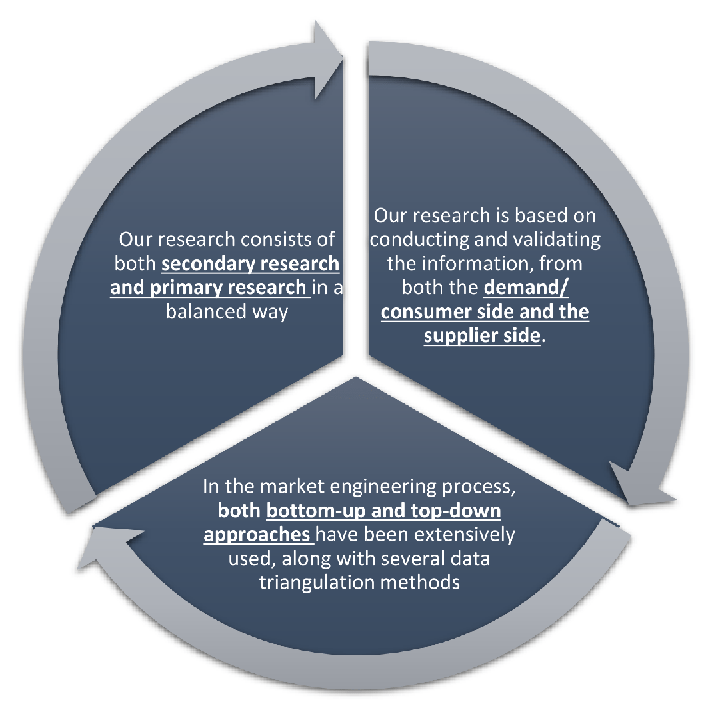
MarketGenics leverages a dedicated industry panel of experts and a comprehensive suite of paid databases to effectively collect, consolidate, and analyze market intelligence.
Our approach has consistently proven to be reliable and effective in generating accurate market insights, identifying key industry trends, and uncovering emerging business opportunities.
Through both primary and secondary research, we capture and analyze critical company-level data such as manufacturing footprints, including technical centers, R&D facilities, sales offices, and headquarters.
Our expert panel further enhances our ability to estimate market size for specific brands based on validated field-level intelligence.
Our data mining techniques incorporate both parametric and non-parametric methods, allowing for structured data collection, sorting, processing, and cleaning.
Demand projections are derived from large-scale data sets analyzed through proprietary algorithms, culminating in robust and reliable market sizing.
Research Approach
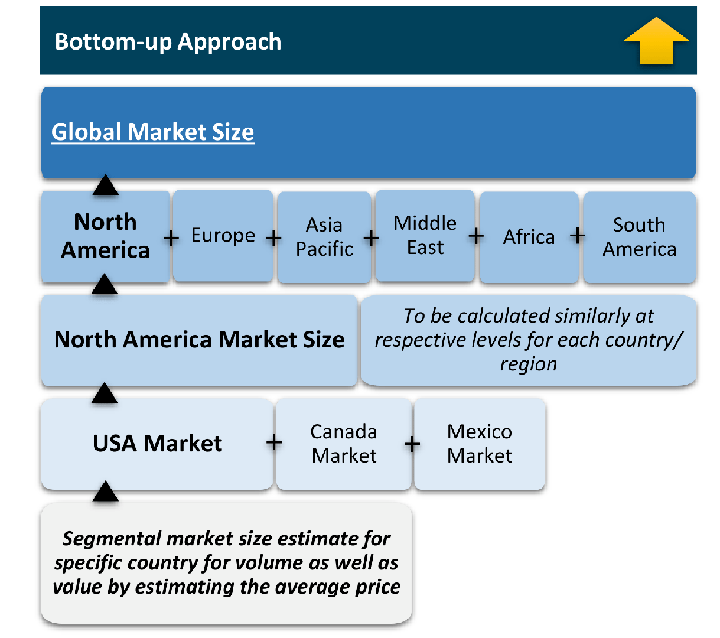
The bottom-up approach builds market estimates by starting with the smallest addressable market units and systematically aggregating them to create comprehensive market size projections.
This method begins with specific, granular data points and builds upward to create the complete market landscape.
Customer Analysis → Segmental Analysis → Geographical Analysis
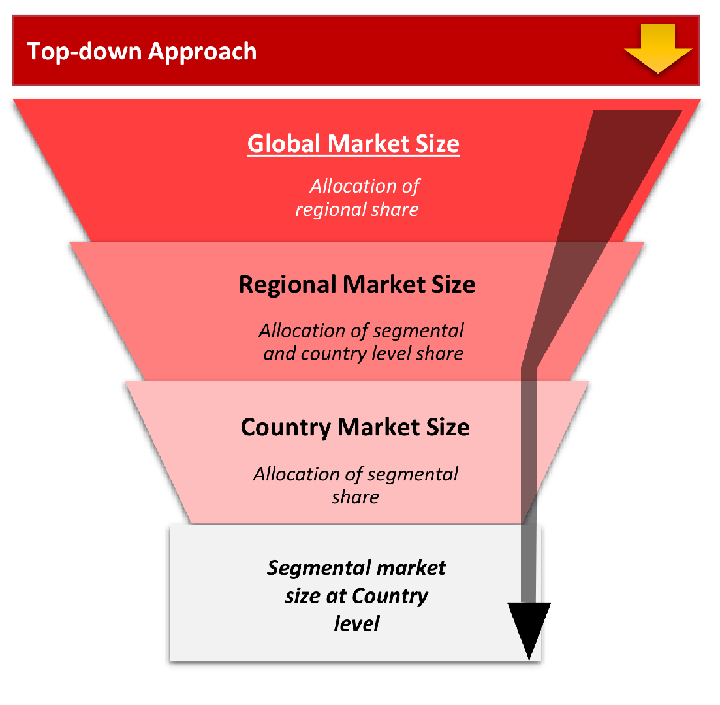
The top-down approach starts with the broadest possible market data and systematically narrows it down through a series of filters and assumptions to arrive at specific market segments or opportunities.
This method begins with the big picture and works downward to increasingly specific market slices.
TAM → SAM → SOM
Research Methods
Desk / Secondary Research
While analysing the market, we extensively study secondary sources, directories, and databases to identify and collect information useful for this technical, market-oriented, and commercial report. Secondary sources that we utilize are not only the public sources, but it is a combination of Open Source, Associations, Paid Databases, MG Repository & Knowledgebase, and others.
- Company websites, annual reports, financial reports, broker reports, and investor presentations
- National government documents, statistical databases and reports
- News articles, press releases and web-casts specific to the companies operating in the market, Magazines, reports, and others
- We gather information from commercial data sources for deriving company specific data such as segmental revenue, share for geography, product revenue, and others
- Internal and external proprietary databases (industry-specific), relevant patent, and regulatory databases
- Governing Bodies, Government Organizations
- Relevant Authorities, Country-specific Associations for Industries
We also employ the model mapping approach to estimate the product level market data through the players' product portfolio
Primary Research
Primary research/ interviews is vital in analyzing the market. Most of the cases involves paid primary interviews. Primary sources include primary interviews through e-mail interactions, telephonic interviews, surveys as well as face-to-face interviews with the different stakeholders across the value chain including several industry experts.
| Type of Respondents | Number of Primaries |
|---|---|
| Tier 2/3 Suppliers | ~20 |
| Tier 1 Suppliers | ~25 |
| End-users | ~25 |
| Industry Expert/ Panel/ Consultant | ~30 |
| Total | ~100 |
MG Knowledgebase
• Repository of industry blog, newsletter and case studies
• Online platform covering detailed market reports, and company profiles
Forecasting Factors and Models
Forecasting Factors
- Historical Trends – Past market patterns, cycles, and major events that shaped how markets behave over time. Understanding past trends helps predict future behavior.
- Industry Factors – Specific characteristics of the industry like structure, regulations, and innovation cycles that affect market dynamics.
- Macroeconomic Factors – Economic conditions like GDP growth, inflation, and employment rates that affect how much money people have to spend.
- Demographic Factors – Population characteristics like age, income, and location that determine who can buy your product.
- Technology Factors – How quickly people adopt new technology and how much technology infrastructure exists.
- Regulatory Factors – Government rules, laws, and policies that can help or restrict market growth.
- Competitive Factors – Analyzing competition structure such as degree of competition and bargaining power of buyers and suppliers.
Forecasting Models / Techniques
Multiple Regression Analysis
- Identify and quantify factors that drive market changes
- Statistical modeling to establish relationships between market drivers and outcomes
Time Series Analysis – Seasonal Patterns
- Understand regular cyclical patterns in market demand
- Advanced statistical techniques to separate trend, seasonal, and irregular components
Time Series Analysis – Trend Analysis
- Identify underlying market growth patterns and momentum
- Statistical analysis of historical data to project future trends
Expert Opinion – Expert Interviews
- Gather deep industry insights and contextual understanding
- In-depth interviews with key industry stakeholders
Multi-Scenario Development
- Prepare for uncertainty by modeling different possible futures
- Creating optimistic, pessimistic, and most likely scenarios
Time Series Analysis – Moving Averages
- Sophisticated forecasting for complex time series data
- Auto-regressive integrated moving average models with seasonal components
Econometric Models
- Apply economic theory to market forecasting
- Sophisticated economic models that account for market interactions
Expert Opinion – Delphi Method
- Harness collective wisdom of industry experts
- Structured, multi-round expert consultation process
Monte Carlo Simulation
- Quantify uncertainty and probability distributions
- Thousands of simulations with varying input parameters
Research Analysis
Our research framework is built upon the fundamental principle of validating market intelligence from both demand and supply perspectives. This dual-sided approach ensures comprehensive market understanding and reduces the risk of single-source bias.
Demand-Side Analysis: We understand end-user/application behavior, preferences, and market needs along with the penetration of the product for specific application.
Supply-Side Analysis: We estimate overall market revenue, analyze the segmental share along with industry capacity, competitive landscape, and market structure.
Validation & Evaluation
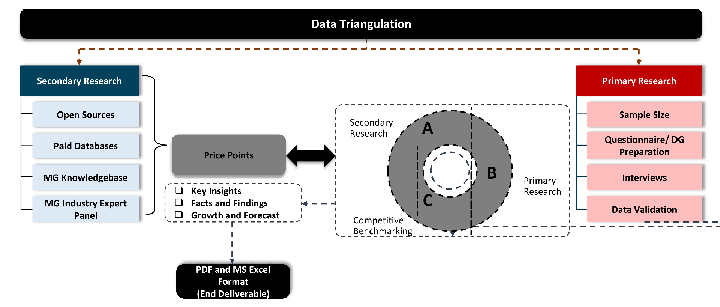
Data triangulation is a validation technique that uses multiple methods, sources, or perspectives to examine the same research question, thereby increasing the credibility and reliability of research findings. In market research, triangulation serves as a quality assurance mechanism that helps identify and minimize bias, validate assumptions, and ensure accuracy in market estimates.
- Data Source Triangulation – Using multiple data sources to examine the same phenomenon
- Methodological Triangulation – Using multiple research methods to study the same research question
- Investigator Triangulation – Using multiple researchers or analysts to examine the same data
- Theoretical Triangulation – Using multiple theoretical perspectives to interpret the same data
Custom Market Research Services
We will customise the research for you, in case the report listed above does not meet your requirements.
Get 10% Free Customisation