AI-Powered Video Editing and Production Software Market Size, Share & Trends Analysis Report by Component (Core Editing Engine (Timeline, NLE), AI/ML Modules (Scene Detection, Upscaling), Generative Video / Synthetic Media Engine, Audio Processing & Speech-to-Text/ Text-to-Speech, Visual Effects (VFX) & Motion Graphics Modules, Rendering & Export Engine, Asset Management & Media Library, Collaboration & Review Tools, Others), Deployment Mode, AI Capability, Feature/ Functionality, Video Type/ Output Use-case, Organization Size, Integration, Automation Level, Industry Vertical and Geography (North America, Europe, Asia Pacific, Middle East, Africa, and South America) – Global Industry Data, Trends, and Forecasts, 2026–2035
Market Overview:
As per MarketGenics, the global AI-powered video editing and production software market is experiencing significant growth, valued at USD 3.1 billion in 2025 and projected to reach USD 12.0 billion by 2035, expanding at a CAGR of 14.4% during the forecast period.
|
Market Structure & Evolution |
|
|
Segmental Data Insights |
|
|
Demand Trends |
|
|
Competitive Landscape |
|
|
Strategic Development |
|
|
Future Outlook & Opportunities |
|
AI-Powered Video Editing and Production Software Market Size, Share, and Growth
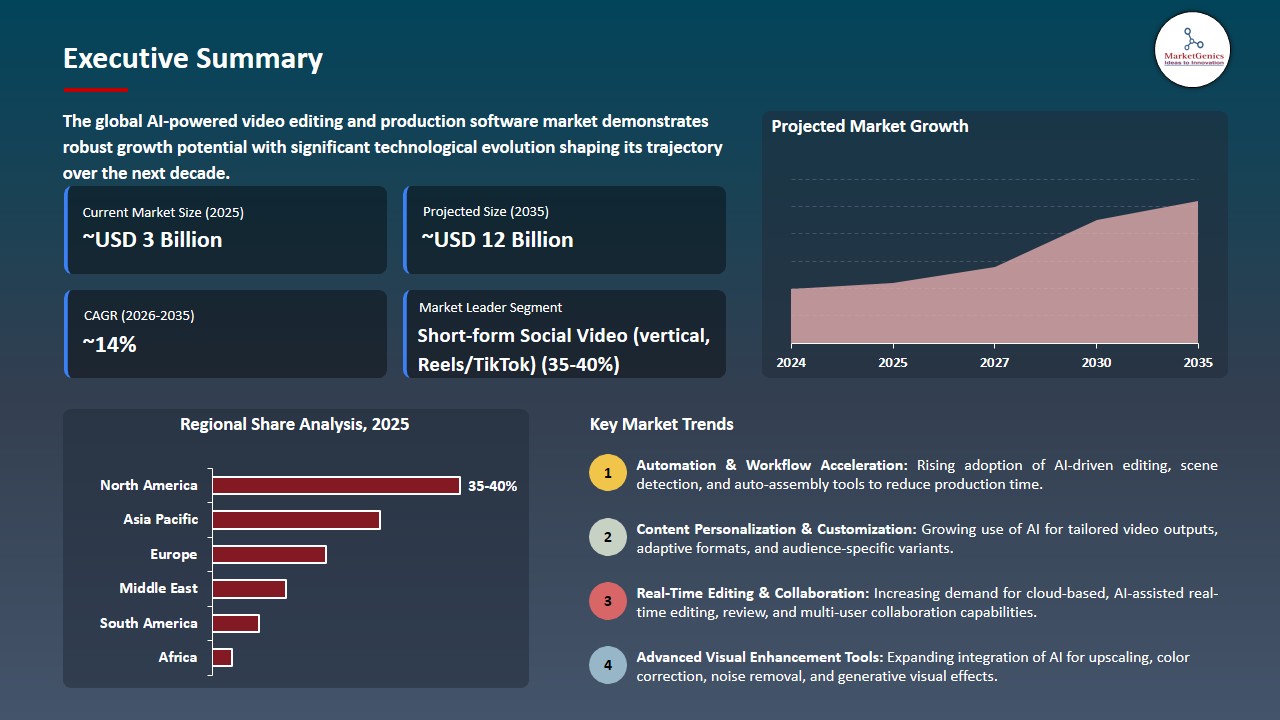
Adobe Premiere Pro’s new AI upgrades, among other things, the Firefly Video Model's "Generative Extend" and AI-powered Media Intelligence, as per a spokesperson of Adobe Premiere Pro, are tools that can be used by video professionals in a very efficient manner to make their clips to be automatically extended, to be able to locate the most relevant footage in huge archives very fast and to be able to localize the content in different languages. As a result, editing workflows are being modernized, production timelines are getting faster and the creative efficiency is being increased tremendously.
The AI-powered-video-editing-and-production-software-market is growing rapidly, thus major advancements in generative AI, automation, and cloud-based editing workflows are the key factors driving this growth. Adobe Premiere Pro launched “Generative Extend” and upgraded AI-based Media Intelligence functionalities in April 2025. These new features allow editors to extend clips automatically, search large footage libraries in a flash, and create multilingual captions - thus, post-production processes are changed to a great extent of their speed.
While the demand for short-form and long-form content to be used in marketing, entertainment, education, and social platforms is skyrocketing, the need for tools that can deliver speed, creative flexibility, and high-quality output with minimal manual intervention is also increasing. At the same time, cloud-native editing suites and integrated generative-AI models such as text-to-video, scene detection, and automated rough-cut generation are leveling the professional video production playing field for creators, agencies, and enterprises.
With the increasing capabilities of AI models, the market enjoys higher production efficiency, lower operational costs, and the ability to scale content creation across teams and geographies, therefore, there is a strong global adoption of AI-powered video editing and production software.
AI-Powered Video Editing and Production Software Market Dynamics and Trends
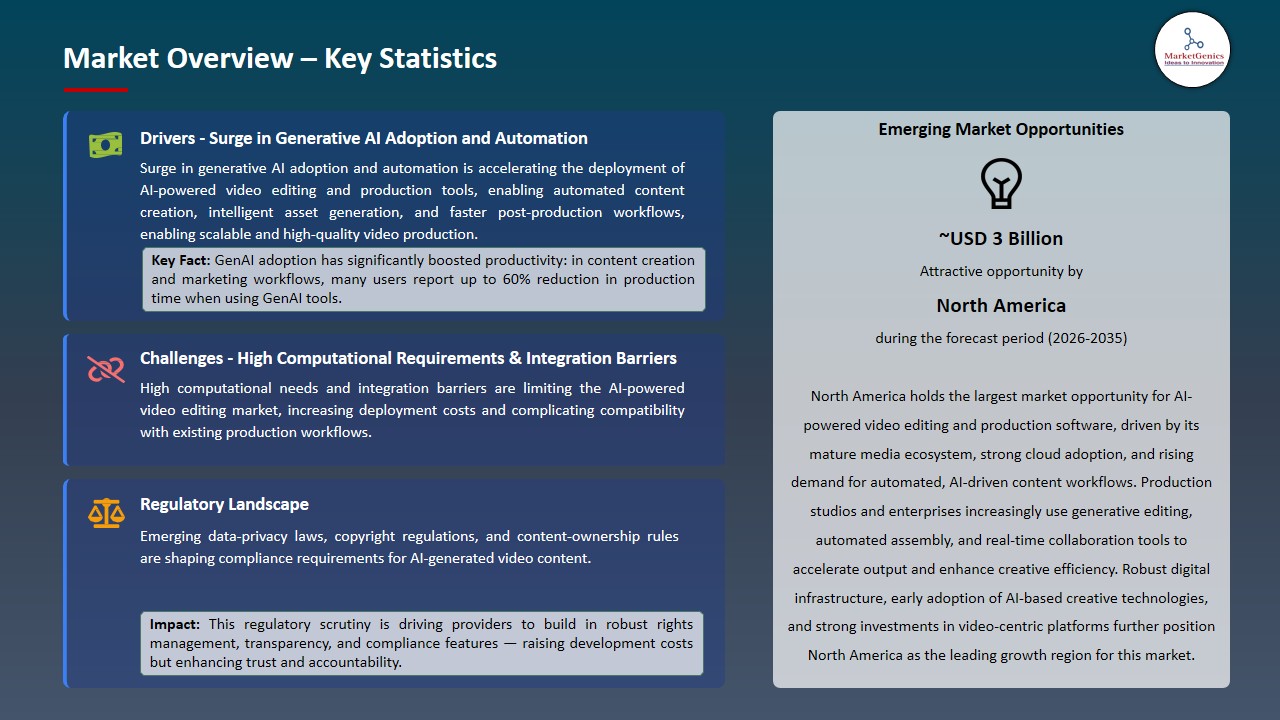
Driver: Surge in Generative AI Adoption and Automation in Content Production Driving AI-Powered Video Editing and Production Software
-
One of the main factors leading to the rapid expansion of the AI-powered video editing market is the adoption of a generative AI introduced by big players such as Adobe, Microsoft, Google, and OpenAI. With the help of these technologies, creators can simply put an end to the most tedious tasks of the editing process by automating them - among others: scene detection, script-based editing, noise reduction, multi-language captioning - hence the production cycles for marketing, entertainment, education, and social media content are cut down drastically.
- Notably, in April 2024, Adobe made it possible for the Premiere Pro users to benefit from AI integration in their projects, by introducing new features like Generative Extend and enhanced Media Intelligence Search. Thus, automated clip extension, content-aware editing, and instant asset discovery are now enabled. By this generative workflow integration, professional and enterprise-grade video production essentially is reformed in terms of speed, accuracy, and creative flexibility.
- The continuously growing need for short videos of the type that can be posted on TikTok, Instagram Reels, and YouTube Shorts has been calling for even more adoption, as businesses want to be provided with content creation pipelines that are high in volume, agile, and powered by AI-driven editing automation.
Restraint: High Computational Requirements and Integration Barriers Limiting AI-powered Video Editing and Production Software Adoption
-
A major limitation that keeps the adoption of AI models at a slow pace despite their quick growth is the fact that these models have heavy computational requirements which in turn require high-end GPUs, large-scale cloud processing, and optimized storage systems - thus, small studios, educators, and individual creators are facing challenges because of this.
- It is still a complicated matter to integrate new AI-powered editing pipelines into old production workflows, especially broadcasters and enterprises that depend on conventional NLE systems. The compatibility issues related to plugins, metadata structures, and storage frameworks are the main reasons for the delay in modernization efforts.
- In addition to that, worries about IP ownership, content hallucination possibility, and the management of AI-generated assets are the reasons that force enterprises to take a conservative approach to the adoption of AI, particularly in the sectors of regulated media.
Opportunity: Expansion of Cloud-Native Editing Platforms and Enterprise Video Demand
-
The move worldwide to remote production, hybrid studios, and cloud-based collaboration is opening up fresh possibilities for video-editing SaaS platforms. By these means, companies like Adobe, Canva, Descript, Runway, and CapCut for Business are extending cloud-native AI workflows that grant distributed teams the facility of real-time editing without the need for costly hardware.
- Large business customers are progressively implementing AI-powered video generation techniques for employee training, internal communications, product demos, and marketing which in turn is creating a strong demand for platforms that are scalable and built with automation-first principles to be able to generate huge volumes of personalized content.
- Along with this, the rise of e-learning, product-led growth strategies, and corporate digital engagement initiatives is substantially increasing the requirement for automated video production and quick editing thereby opening up further long-term possibilities for vendors who have embraced AI.
Key Trend: Integration of AI, Real-Time Personalization, and Microservices Enhancing Composable Commerce
-
Quite soon the industry is likely to be dominated by AI systems that employ several modalities, such as visual, audio, text, and motion understanding, to offer editing assistance in real-time. In short, these systems are capable of performing various functions automatically such as auto-reframing, b-roll generation, voice replacement, color grading, and storyboard creation.
- Attributed to the AI dubbing, speech-to-speech translation, and multi-language subtitle generation, automated localization is turning into a substantial differentiator. In the years 2024–2025, Google, Meta, and OpenAI surged ahead in research on multimodal translation models leading to instant multilingual content generation at broadcast-level quality.
- The leading video platforms along with large media teams of enterprises have already implemented AI-powered real-time compliance tools that help them detect brand risks, regulatory violations, and safety-sensitive content, thus, facilitating the spread of this trend further in the global video distribution ecosystems of various sectors.
AI-Powered-Video-Editing-and-Production-Software-Market Analysis and Segmental Data
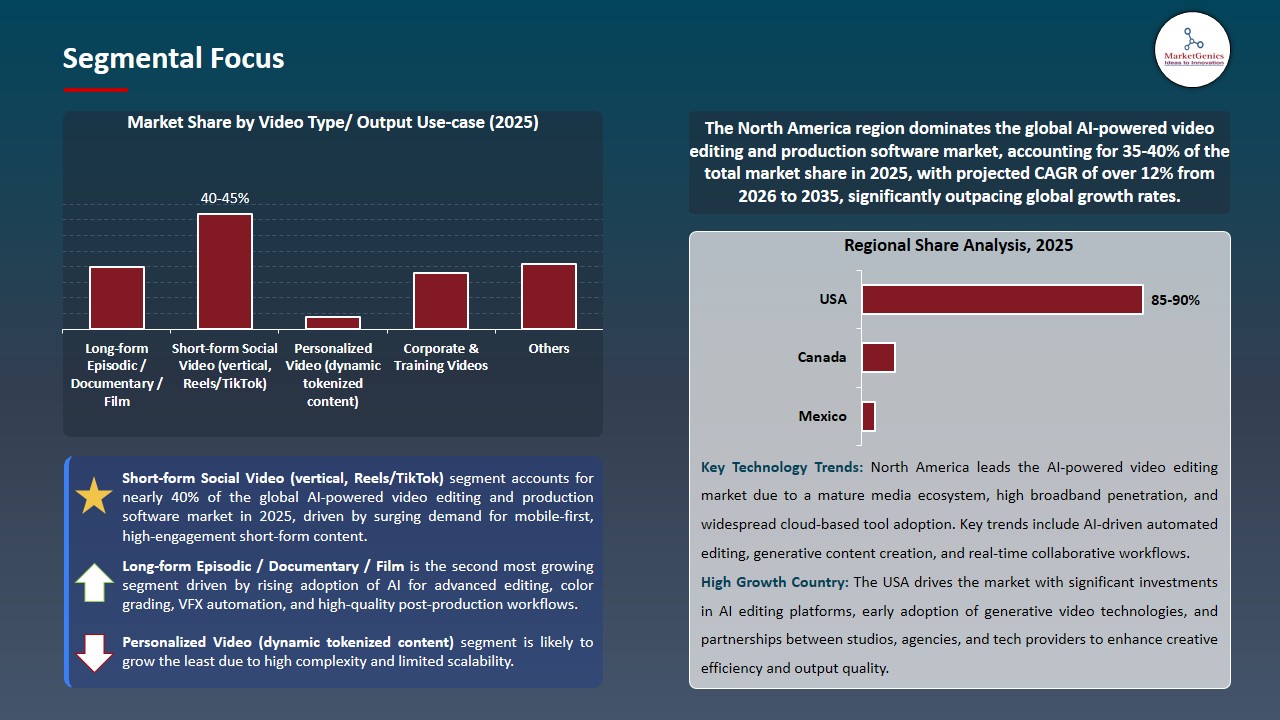
“Short-form Social Video (vertical, Reels/TikTok) Dominates Global AI-Powered Video Editing and Production Software Market"
-
The global AI-powered video editing and production software market is mainly led by the short-form social video segment (vertical formats used in TikTok, Instagram Reels, and YouTube Shorts), which is a result of the mobile-first content consumption trend that has exploded worldwide and the demand for rapid, automated editing workflows. To put it simply, with billions of users engaging daily and short-form videos generating exceptionally high view counts, creators and brands are turning to AI tools more and more as a means of automating reformatting, trimming, captioning, and vertical screen optimization.
- The rise of independent creators, influencers, small businesses, and enterprise social marketing teams is behind the increasing demand for cloud-based, template-driven editing platforms that can be used to cut production time and cost in a dramatic way. In other words, AI features like auto-captioning, smart cropping, lip-sync alignment, real-time style matching, and automated highlight generation are not only speeding up the short-form production process but also making professional-quality content available to people who have no expertise in the field.
- Since platforms keep giving more importance to vertical video as a means of discovery and engagement, AI-powered editing tools have become the key factors that allow the production of high-volume, platform-optimized content to be done at a large scale - thus short-form social video being firmly established as the dominant segment in the market.
“North America Leads the AI-powered Video Editing and Production Software Market"
-
North America is the biggest contributor to the global AI-powered video editing and production software market. This is mainly due to its very advanced digital media ecosystem, a robust creator economy, and fast enterprise adoption of AI-driven content automation in advertising, entertainment, education, and corporate communication. The region is home to major technology companies, cloud providers, and AI research centers that are continuously working on the next-generation video automation capabilities for both consumer and professional editing platforms.
- The massive use of such platforms as TikTok, Instagram Reels, YouTube Shorts, and enterprise video tools has sped up the request for advanced AI capabilities. These capabilities include auto-captioning, intelligent cropping, generative scene creation, and real-time rendering. As a result, there has been a substantial demand for high-performance editing software. Besides, North America is also benefitting from high digital spending, strong subscription uptake, and the early adoption of generative AI models in creative workflows by marketing agencies, production studios, and independent creators.
- Moreover, top enterprises in the area are constantly unveiling new features such as the automated repurposing of long-form videos into short-form formats, voice cloning for content localization, and AI-powered brand compliance tools, thus strengthening the position of North America as the first center of advanced video editing technologies.
AI-Powered-Video-Editing-and-Production-Software-Market Ecosystem
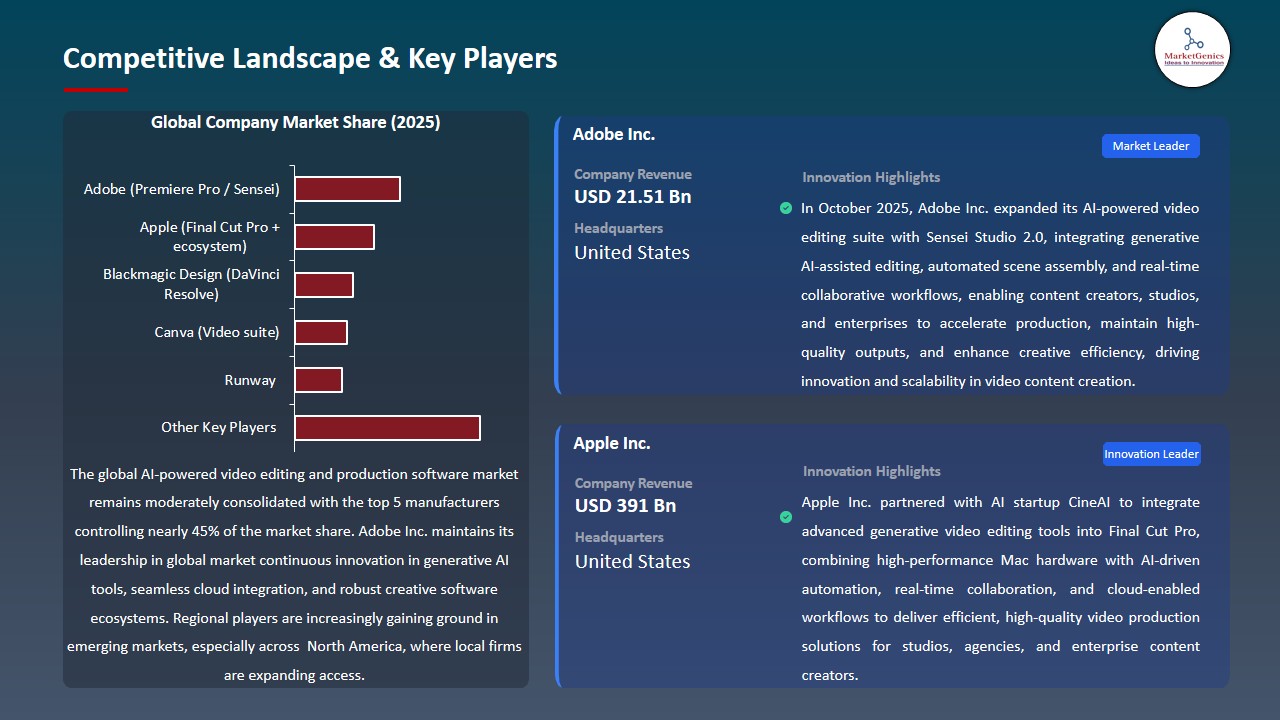
The AI-powered video editing and production software market has largely been monopolized by a few major vendors, viz., Adobe, Apple, Avid Technology, Blackmagic Design, Canva, and Runway, with these front-runners leveraging sophisticated generative-AI models, cloud-based editing workflows, and integrated asset-management ecosystems to maintain their lead.
These firms are progressively moving towards emphasizing specialized, high-value features that deepen professional and creator workflows and substantially speed up the same, e.g., Adobe’s generative video tools for automated clip expansion, Runway’s multimodal video generation and character-consistency models, Canva and Descript’s template-driven automation environments, and Blackmagic/Avid’s broadcast-grade production pipelines for studios and post-production houses.
Besides, they.gov and research institutions are. For example, AI4Media is a project funded by the EU that in February 2024 committed to advancing research on trustworthy and explainable media AI, thus, helping to set standards for content provenance, safety, and reliability across digital media ecosystems. The market leaders simultaneously engage in expanding their product portfolios with cloud collaboration, automated localization, smart editing assistants, compliance analytics, and integrated workflow tools, all of which are aimed at enhancing productivity and lowering production costs.
One such instance of groundbreaking innovation is Synthesia’s June 2024 upgrade that brought to the fore more advanced enterprise-grade generative avatars and multilingual output capabilities thus, very much increasing the scalability of corporate video creation and localization. On the whole, the market is being molded by consolidation, deep specialization, public-sector research, and rapid technological advancement.
Recent Development and Strategic Overview:
-
In April 2024, Adobe launched Firefly-powered generative video tools within Premiere Pro that made it possible to add or remove objects, use generative fill for video frames, and extend scenes instantly, among other features. By these AI capabilities, editors can now do complex VFX work without having to manually rotoscope or use third-party tools, thus their production workflows are accelerated to a great extent.
- In June 2024, Runway unveiled substantial upgrades to its Gen-2 multimodal video generation model that brought about improvements in temporal coherence, subject consistency, and motion stability of the generated footage. Besides, the update extended diffusion-based editing features such as text-based scene transformations and style transfers, thus users are able to generate high-quality video assets with very little manual editing.
Report Scope
|
Attribute |
Detail |
|
Market Size in 2025 |
USD 3.1 Bn |
|
Market Forecast Value in 2035 |
USD 12 Bn |
|
Growth Rate (CAGR) |
14.4% |
|
Forecast Period |
2026 – 2035 |
|
Historical Data Available for |
2021 – 2024 |
|
Market Size Units |
USD Bn for Value |
|
Report Format |
Electronic (PDF) + Excel |
|
Regions and Countries Covered |
|||||
|
North America |
Europe |
Asia Pacific |
Middle East |
Africa |
South America |
|
|
|
|
|
|
|
Companies Covered |
|||||
|
|
|
|
|
|
AI-Powered-Video-Editing-and-Production-Software-Market Segmentation and Highlights
|
Segment |
Sub-segment |
|
AI-Powered Video Editing and Production Software Market, By Component |
|
|
AI-Powered Video Editing and Production Software Market, By Deployment Mode |
|
|
AI-Powered Video Editing and Production Software Market, By AI Capability |
|
|
AI-Powered Video Editing and Production Software Market, By Feature/ Functionality |
|
|
AI-Powered Video Editing and Production Software Market, By Video Type/ Output Use-case |
|
|
AI-Powered Video Editing and Production Software Market, By Organization Size |
|
|
AI-Powered Video Editing and Production Software Market, By Integration |
|
|
AI-Powered Video Editing and Production Software Market, By Automation Level |
|
|
AI-Powered Video Editing and Production Software Market, By Industry Vertical |
|
Frequently Asked Questions
Table of Contents
- 1. Research Methodology and Assumptions
- 1.1. Definitions
- 1.2. Research Design and Approach
- 1.3. Data Collection Methods
- 1.4. Base Estimates and Calculations
- 1.5. Forecasting Models
- 1.5.1. Key Forecast Factors & Impact Analysis
- 1.6. Secondary Research
- 1.6.1. Open Sources
- 1.6.2. Paid Databases
- 1.6.3. Associations
- 1.7. Primary Research
- 1.7.1. Primary Sources
- 1.7.2. Primary Interviews with Stakeholders across Ecosystem
- 2. Executive Summary
- 2.1. Global AI-Powered Video Editing and Production Software Market Outlook
- 2.1.1. AI-Powered Video Editing and Production Software Market Size (Value - US$ Bn), and Forecasts, 2021-2035
- 2.1.2. Compounded Annual Growth Rate Analysis
- 2.1.3. Growth Opportunity Analysis
- 2.1.4. Segmental Share Analysis
- 2.1.5. Geographical Share Analysis
- 2.2. Market Analysis and Facts
- 2.3. Supply-Demand Analysis
- 2.4. Competitive Benchmarking
- 2.5. Go-to- Market Strategy
- 2.5.1. Customer/ End-use Industry Assessment
- 2.5.2. Growth Opportunity Data, 2026-2035
- 2.5.2.1. Regional Data
- 2.5.2.2. Country Data
- 2.5.2.3. Segmental Data
- 2.5.3. Identification of Potential Market Spaces
- 2.5.4. GAP Analysis
- 2.5.5. Potential Attractive Price Points
- 2.5.6. Prevailing Market Risks & Challenges
- 2.5.7. Preferred Sales & Marketing Strategies
- 2.5.8. Key Recommendations and Analysis
- 2.5.9. A Way Forward
- 2.1. Global AI-Powered Video Editing and Production Software Market Outlook
- 3. Industry Data and Premium Insights
- 3.1. Global Information Technology & Media Ecosystem Overview, 2025
- 3.1.1. Information Technology & Media Industry Analysis
- 3.1.2. Key Trends for Information Technology & Media Industry
- 3.1.3. Regional Distribution for Information Technology & Media Industry
- 3.2. Supplier Customer Data
- 3.3. Technology Roadmap and Developments
- 3.1. Global Information Technology & Media Ecosystem Overview, 2025
- 4. Market Overview
- 4.1. Market Dynamics
- 4.1.1. Drivers
- 4.1.1.1. Rising demand for automated editing workflows, AI-driven scene detection, and content optimization to speed up video production.
- 4.1.1.2. Growing adoption of generative AI for color grading, captioning, and style transfer in scalable video output.
- 4.1.1.3. Increasing investment in cloud-based editing platforms and AI-powered collaborative tools for distributed creative teams.
- 4.1.2. Restraints
- 4.1.2.1. High computational and subscription costs of AI-powered video editing software.
- 4.1.2.2. Integration challenges with legacy NLE systems, media libraries, and heterogeneous enterprise workflows.
- 4.1.1. Drivers
- 4.2. Key Trend Analysis
- 4.3. Regulatory Framework
- 4.3.1. Key Regulations, Norms, and Subsidies, by Key Countries
- 4.3.2. Tariffs and Standards
- 4.3.3. Impact Analysis of Regulations on the Market
- 4.4. Value Chain Analysis
- 4.4.1. AI Model Development & Core Technology Infrastructure
- 4.4.2. System Integrators/ Technology Providers
- 4.4.3. AI-Powered Video Editing and Production Software Providers
- 4.4.4. End Users
- 4.5. Cost Structure Analysis
- 4.5.1. Parameter’s Share for Cost Associated
- 4.5.2. COGP vs COGS
- 4.5.3. Profit Margin Analysis
- 4.6. Pricing Analysis
- 4.6.1. Regional Pricing Analysis
- 4.6.2. Segmental Pricing Trends
- 4.6.3. Factors Influencing Pricing
- 4.7. Porter’s Five Forces Analysis
- 4.8. PESTEL Analysis
- 4.9. Global AI-Powered Video Editing and Production Software Market Demand
- 4.9.1. Historical Market Size –Value (US$ Bn), 2020-2024
- 4.9.2. Current and Future Market Size –Value (US$ Bn), 2026–2035
- 4.9.2.1. Y-o-Y Growth Trends
- 4.9.2.2. Absolute $ Opportunity Assessment
- 4.1. Market Dynamics
- 5. Competition Landscape
- 5.1. Competition structure
- 5.1.1. Fragmented v/s consolidated
- 5.2. Company Share Analysis, 2025
- 5.2.1. Global Company Market Share
- 5.2.2. By Region
- 5.2.2.1. North America
- 5.2.2.2. Europe
- 5.2.2.3. Asia Pacific
- 5.2.2.4. Middle East
- 5.2.2.5. Africa
- 5.2.2.6. South America
- 5.3. Product Comparison Matrix
- 5.3.1. Specifications
- 5.3.2. Market Positioning
- 5.3.3. Pricing
- 5.1. Competition structure
- 6. Global AI-Powered Video Editing and Production Software Market Analysis, by Component
- 6.1. Key Segment Analysis
- 6.2. AI-Powered Video Editing and Production Software Market Size (Value - US$ Bn), Analysis, and Forecasts, by Component, 2021-2035
- 6.2.1. Core Editing Engine (timeline, NLE)
- 6.2.2. AI/ML Modules (scene detection, upscaling)
- 6.2.3. Generative Video / Synthetic Media Engine
- 6.2.4. Audio Processing & Speech-to-Text/Text-to-Speech
- 6.2.5. Visual Effects (VFX) & Motion Graphics Modules
- 6.2.6. Rendering & Export Engine
- 6.2.7. Asset Management & Media Library
- 6.2.8. Collaboration & Review Tools
- 6.2.9. Others
- 7. Global AI-Powered Video Editing and Production Software Market Analysis, by Deployment Mode
- 7.1. Key Segment Analysis
- 7.2. AI-Powered Video Editing and Production Software Market Size (Value - US$ Bn), Analysis, and Forecasts, by Deployment Mode, 2021-2035
- 7.2.1. Cloud-Based
- 7.2.2. On-Premises
- 7.2.3. Hybrid
- 8. Global AI-Powered Video Editing and Production Software Market Analysis, by AI Capability
- 8.1. Key Segment Analysis
- 8.2. AI-Powered Video Editing and Production Software Market Size (Value - US$ Bn), Analysis, and Forecasts, by AI Capability, 2021-2035
- 8.2.1. Automated Cutting & Scene Detection
- 8.2.2. Auto-color Grading & LUT Suggestions
- 8.2.3. AI-powered Object Removal / Rotoscoping
- 8.2.4. Upscaling & Super-Resolution (AI)
- 8.2.5. Auto-captioning / Subtitle Generation
- 8.2.6. Voice cloning / TTS & Dubbing
- 8.2.7. Style Transfer & Generative Imagery for Video
- 8.2.8. Auto-transliteration / Localization
- 8.2.9. Others
- 9. Global AI-Powered Video Editing and Production Software Market Analysis, by Feature/ Functionality
- 9.1. Key Segment Analysis
- 9.2. AI-Powered Video Editing and Production Software Market Size (Value - US$ Bn), Analysis, and Forecasts, by Feature/ Functionality, 2021-2035
- 9.2.1. Timeline-based Non-linear Editing
- 9.2.2. Template-driven / Quick-edit Modes
- 9.2.3. Multicam Sync & Editing
- 9.2.4. Motion Tracking & Stabilization
- 9.2.5. Background Replacement (green screen / segmentation)
- 9.2.6. Auto-balance / Audio Cleanup / Noise Reduction
- 9.2.7. Automated Transitions & Scene Suggestion
- 9.2.8. Versioning, Review & Approval Flows
- 9.2.9. Others
- 10. Global AI-Powered Video Editing and Production Software Market Analysis, by Video Type/ Output Use-case
- 10.1. Key Segment Analysis
- 10.2. AI-Powered Video Editing and Production Software Market Size (Value - US$ Bn), Analysis, and Forecasts, by Video Type/ Output Use-case, 2021-2035
- 10.2.1. Short-form Social Video (vertical, Reels/TikTok)
- 10.2.2. Long-form Episodic / Documentary / Film
- 10.2.3. Corporate & Training Videos
- 10.2.4. Marketing & Ad Creatives
- 10.2.5. E-learning & Explainer Videos
- 10.2.6. Product Demos & Unboxings
- 10.2.7. Live/Streamed Video Production (live switching)
- 10.2.8. Personalized Video (dynamic tokenized content)
- 10.2.9. Others
- 11. Global AI-Powered Video Editing and Production Software Market Analysis, by Organization Size
- 11.1. Key Segment Analysis
- 11.2. AI-Powered Video Editing and Production Software Market Size (Value - US$ Bn), Analysis, and Forecasts, by Organization Size, 2021-2035
- 11.2.1. Large Enterprises
- 11.2.2. Small & Medium Enterprises (SMEs)
- 12. Global AI-Powered Video Editing and Production Software Market Analysis, by Integration
- 12.1. Key Segment Analysis
- 12.2. AI-Powered Video Editing and Production Software Market Size (Value - US$ Bn), Analysis, and Forecasts, by Integration, 2021-2035
- 12.2.1. DAM / MAM Integration (media asset management)
- 12.2.2. CMS / Social Platform Direct Publishing
- 12.2.3. Stock Media & Template Marketplaces
- 12.2.4. Collaboration (comments, time-coded feedback)
- 12.2.5. CI/CD-like Media Pipelines & Automation Hooks
- 12.2.6. Transcoding / CDN / Delivery Network Integrations
- 12.2.7. Others
- 13. Global AI-Powered Video Editing and Production Software Market Analysis, by Automation Level
- 13.1. Key Segment Analysis
- 13.2. AI-Powered Video Editing and Production Software Market Size (Value - US$ Bn), Analysis, and Forecasts, by Automation Level, 2021-2035
- 13.2.1. Assisted Workflows (AI suggestions)
- 13.2.2. Semi-automated
- 13.2.3. Fully-automated
- 14. Global AI-Powered Video Editing and Production Software Market Analysis, by Industry Vertical
- 14.1. Key Segment Analysis
- 14.2. AI-Powered Video Editing and Production Software Market Size (Value - US$ Bn), Analysis, and Forecasts, by Industry Vertical, 2021-2035
- 14.2.1. Film & TV Production
- 14.2.2. Advertising & Media Agencies
- 14.2.3. Social Media & Creator Economy
- 14.2.4. Corporate Communications & Training
- 14.2.5. Gaming & Esports Content Production
- 14.2.6. Education & EdTech Video Content
- 14.2.7. Others
- 15. Global AI-Powered Video Editing and Production Software Market Analysis and Forecasts, by Region
- 15.1. Key Findings
- 15.2. AI-Powered Video Editing and Production Software Market Size (Value - US$ Bn), Analysis, and Forecasts, by Region, 2021-2035
- 15.2.1. North America
- 15.2.2. Europe
- 15.2.3. Asia Pacific
- 15.2.4. Middle East
- 15.2.5. Africa
- 15.2.6. South America
- 16. North America AI-Powered Video Editing and Production Software Market Analysis
- 16.1. Key Segment Analysis
- 16.2. Regional Snapshot
- 16.3. North America AI-Powered Video Editing and Production Software Market Size Value - US$ Bn), Analysis, and Forecasts, 2021-2035
- 16.3.1. Component
- 16.3.2. Deployment Mode
- 16.3.3. AI Capability
- 16.3.4. Feature/ Functionality
- 16.3.5. Video Type/ Output Use-case
- 16.3.6. Organization Size
- 16.3.7. Integration
- 16.3.8. Automation Level
- 16.3.9. Industry Vertical
- 16.3.10. Country
- 16.3.10.1. USA
- 16.3.10.2. Canada
- 16.3.10.3. Mexico
- 16.4. USA AI-Powered Video Editing and Production Software Market
- 16.4.1. Country Segmental Analysis
- 16.4.2. Component
- 16.4.3. Deployment Mode
- 16.4.4. AI Capability
- 16.4.5. Feature/ Functionality
- 16.4.6. Video Type/ Output Use-case
- 16.4.7. Organization Size
- 16.4.8. Integration
- 16.4.9. Automation Level
- 16.4.10. Industry Vertical
- 16.5. Canada AI-Powered Video Editing and Production Software Market
- 16.5.1. Country Segmental Analysis
- 16.5.2. Component
- 16.5.3. Deployment Mode
- 16.5.4. AI Capability
- 16.5.5. Feature/ Functionality
- 16.5.6. Video Type/ Output Use-case
- 16.5.7. Organization Size
- 16.5.8. Integration
- 16.5.9. Automation Level
- 16.5.10. Industry Vertical
- 16.6. Mexico AI-Powered Video Editing and Production Software Market
- 16.6.1. Country Segmental Analysis
- 16.6.2. Component
- 16.6.3. Deployment Mode
- 16.6.4. AI Capability
- 16.6.5. Feature/ Functionality
- 16.6.6. Video Type/ Output Use-case
- 16.6.7. Organization Size
- 16.6.8. Integration
- 16.6.9. Automation Level
- 16.6.10. Industry Vertical
- 17. Europe AI-Powered Video Editing and Production Software Market Analysis
- 17.1. Key Segment Analysis
- 17.2. Regional Snapshot
- 17.3. Europe AI-Powered Video Editing and Production Software Market Size (Value - US$ Bn), Analysis, and Forecasts, 2021-2035
- 17.3.1. Component
- 17.3.2. Deployment Mode
- 17.3.3. AI Capability
- 17.3.4. Feature/ Functionality
- 17.3.5. Video Type/ Output Use-case
- 17.3.6. Organization Size
- 17.3.7. Integration
- 17.3.8. Automation Level
- 17.3.9. Industry Vertical
- 17.3.10. Country
- 17.3.10.1. Germany
- 17.3.10.2. United Kingdom
- 17.3.10.3. France
- 17.3.10.4. Italy
- 17.3.10.5. Spain
- 17.3.10.6. Netherlands
- 17.3.10.7. Nordic Countries
- 17.3.10.8. Poland
- 17.3.10.9. Russia & CIS
- 17.3.10.10. Rest of Europe
- 17.4. Germany AI-Powered Video Editing and Production Software Market
- 17.4.1. Country Segmental Analysis
- 17.4.2. Component
- 17.4.3. Deployment Mode
- 17.4.4. AI Capability
- 17.4.5. Feature/ Functionality
- 17.4.6. Video Type/ Output Use-case
- 17.4.7. Organization Size
- 17.4.8. Integration
- 17.4.9. Automation Level
- 17.4.10. Industry Vertical
- 17.5. United Kingdom AI-Powered Video Editing and Production Software Market
- 17.5.1. Country Segmental Analysis
- 17.5.2. Component
- 17.5.3. Deployment Mode
- 17.5.4. AI Capability
- 17.5.5. Feature/ Functionality
- 17.5.6. Video Type/ Output Use-case
- 17.5.7. Organization Size
- 17.5.8. Integration
- 17.5.9. Automation Level
- 17.5.10. Industry Vertical
- 17.6. France AI-Powered Video Editing and Production Software Market
- 17.6.1. Country Segmental Analysis
- 17.6.2. Component
- 17.6.3. Deployment Mode
- 17.6.4. AI Capability
- 17.6.5. Feature/ Functionality
- 17.6.6. Video Type/ Output Use-case
- 17.6.7. Organization Size
- 17.6.8. Integration
- 17.6.9. Automation Level
- 17.6.10. Industry Vertical
- 17.7. Italy AI-Powered Video Editing and Production Software Market
- 17.7.1. Country Segmental Analysis
- 17.7.2. Component
- 17.7.3. Deployment Mode
- 17.7.4. AI Capability
- 17.7.5. Feature/ Functionality
- 17.7.6. Video Type/ Output Use-case
- 17.7.7. Organization Size
- 17.7.8. Integration
- 17.7.9. Automation Level
- 17.7.10. Industry Vertical
- 17.8. Spain AI-Powered Video Editing and Production Software Market
- 17.8.1. Country Segmental Analysis
- 17.8.2. Component
- 17.8.3. Deployment Mode
- 17.8.4. AI Capability
- 17.8.5. Feature/ Functionality
- 17.8.6. Video Type/ Output Use-case
- 17.8.7. Organization Size
- 17.8.8. Integration
- 17.8.9. Automation Level
- 17.8.10. Industry Vertical
- 17.9. Netherlands AI-Powered Video Editing and Production Software Market
- 17.9.1. Country Segmental Analysis
- 17.9.2. Component
- 17.9.3. Deployment Mode
- 17.9.4. AI Capability
- 17.9.5. Feature/ Functionality
- 17.9.6. Video Type/ Output Use-case
- 17.9.7. Organization Size
- 17.9.8. Integration
- 17.9.9. Automation Level
- 17.9.10. Industry Vertical
- 17.10. Nordic Countries AI-Powered Video Editing and Production Software Market
- 17.10.1. Country Segmental Analysis
- 17.10.2. Component
- 17.10.3. Deployment Mode
- 17.10.4. AI Capability
- 17.10.5. Feature/ Functionality
- 17.10.6. Video Type/ Output Use-case
- 17.10.7. Organization Size
- 17.10.8. Integration
- 17.10.9. Automation Level
- 17.10.10. Industry Vertical
- 17.11. Poland AI-Powered Video Editing and Production Software Market
- 17.11.1. Country Segmental Analysis
- 17.11.2. Component
- 17.11.3. Deployment Mode
- 17.11.4. AI Capability
- 17.11.5. Feature/ Functionality
- 17.11.6. Video Type/ Output Use-case
- 17.11.7. Organization Size
- 17.11.8. Integration
- 17.11.9. Automation Level
- 17.11.10. Industry Vertical
- 17.12. Russia & CIS AI-Powered Video Editing and Production Software Market
- 17.12.1. Country Segmental Analysis
- 17.12.2. Component
- 17.12.3. Deployment Mode
- 17.12.4. AI Capability
- 17.12.5. Feature/ Functionality
- 17.12.6. Video Type/ Output Use-case
- 17.12.7. Organization Size
- 17.12.8. Integration
- 17.12.9. Automation Level
- 17.12.10. Industry Vertical
- 17.13. Rest of Europe AI-Powered Video Editing and Production Software Market
- 17.13.1. Country Segmental Analysis
- 17.13.2. Component
- 17.13.3. Deployment Mode
- 17.13.4. AI Capability
- 17.13.5. Feature/ Functionality
- 17.13.6. Video Type/ Output Use-case
- 17.13.7. Organization Size
- 17.13.8. Integration
- 17.13.9. Automation Level
- 17.13.10. Industry Vertical
- 18. Asia Pacific AI-Powered Video Editing and Production Software Market Analysis
- 18.1. Key Segment Analysis
- 18.2. Regional Snapshot
- 18.3. Asia Pacific AI-Powered Video Editing and Production Software Market Size (Value - US$ Bn), Analysis, and Forecasts, 2021-2035
- 18.3.1. Component
- 18.3.2. Deployment Mode
- 18.3.3. AI Capability
- 18.3.4. Feature/ Functionality
- 18.3.5. Video Type/ Output Use-case
- 18.3.6. Organization Size
- 18.3.7. Integration
- 18.3.8. Automation Level
- 18.3.9. Industry Vertical
- 18.3.10. Country
- 18.3.10.1. China
- 18.3.10.2. India
- 18.3.10.3. Japan
- 18.3.10.4. South Korea
- 18.3.10.5. Australia and New Zealand
- 18.3.10.6. Indonesia
- 18.3.10.7. Malaysia
- 18.3.10.8. Thailand
- 18.3.10.9. Vietnam
- 18.3.10.10. Rest of Asia Pacific
- 18.4. China AI-Powered Video Editing and Production Software Market
- 18.4.1. Country Segmental Analysis
- 18.4.2. Component
- 18.4.3. Deployment Mode
- 18.4.4. AI Capability
- 18.4.5. Feature/ Functionality
- 18.4.6. Video Type/ Output Use-case
- 18.4.7. Organization Size
- 18.4.8. Integration
- 18.4.9. Automation Level
- 18.4.10. Industry Vertical
- 18.5. India AI-Powered Video Editing and Production Software Market
- 18.5.1. Country Segmental Analysis
- 18.5.2. Component
- 18.5.3. Deployment Mode
- 18.5.4. AI Capability
- 18.5.5. Feature/ Functionality
- 18.5.6. Video Type/ Output Use-case
- 18.5.7. Organization Size
- 18.5.8. Integration
- 18.5.9. Automation Level
- 18.5.10. Industry Vertical
- 18.6. Japan AI-Powered Video Editing and Production Software Market
- 18.6.1. Country Segmental Analysis
- 18.6.2. Component
- 18.6.3. Deployment Mode
- 18.6.4. AI Capability
- 18.6.5. Feature/ Functionality
- 18.6.6. Video Type/ Output Use-case
- 18.6.7. Organization Size
- 18.6.8. Integration
- 18.6.9. Automation Level
- 18.6.10. Industry Vertical
- 18.7. South Korea AI-Powered Video Editing and Production Software Market
- 18.7.1. Component
- 18.7.2. Deployment Mode
- 18.7.3. AI Capability
- 18.7.4. Feature/ Functionality
- 18.7.5. Video Type/ Output Use-case
- 18.7.6. Organization Size
- 18.7.7. Integration
- 18.7.8. Automation Level
- 18.7.9. Industry Vertical
- 18.8. Australia and New Zealand AI-Powered Video Editing and Production Software Market
- 18.8.1. Country Segmental Analysis
- 18.8.2. Component
- 18.8.3. Deployment Mode
- 18.8.4. AI Capability
- 18.8.5. Feature/ Functionality
- 18.8.6. Video Type/ Output Use-case
- 18.8.7. Organization Size
- 18.8.8. Integration
- 18.8.9. Automation Level
- 18.8.10. Industry Vertical
- 18.9. Indonesia AI-Powered Video Editing and Production Software Market
- 18.9.1. Country Segmental Analysis
- 18.9.2. Component
- 18.9.3. Deployment Mode
- 18.9.4. AI Capability
- 18.9.5. Feature/ Functionality
- 18.9.6. Video Type/ Output Use-case
- 18.9.7. Organization Size
- 18.9.8. Integration
- 18.9.9. Automation Level
- 18.9.10. Industry Vertical
- 18.10. Malaysia AI-Powered Video Editing and Production Software Market
- 18.10.1. Country Segmental Analysis
- 18.10.2. Component
- 18.10.3. Deployment Mode
- 18.10.4. AI Capability
- 18.10.5. Feature/ Functionality
- 18.10.6. Video Type/ Output Use-case
- 18.10.7. Organization Size
- 18.10.8. Integration
- 18.10.9. Automation Level
- 18.10.10. Industry Vertical
- 18.11. Thailand AI-Powered Video Editing and Production Software Market
- 18.11.1. Country Segmental Analysis
- 18.11.2. Component
- 18.11.3. Deployment Mode
- 18.11.4. AI Capability
- 18.11.5. Feature/ Functionality
- 18.11.6. Video Type/ Output Use-case
- 18.11.7. Organization Size
- 18.11.8. Integration
- 18.11.9. Automation Level
- 18.11.10. Industry Vertical
- 18.12. Vietnam AI-Powered Video Editing and Production Software Market
- 18.12.1. Country Segmental Analysis
- 18.12.2. Component
- 18.12.3. Deployment Mode
- 18.12.4. AI Capability
- 18.12.5. Feature/ Functionality
- 18.12.6. Video Type/ Output Use-case
- 18.12.7. Organization Size
- 18.12.8. Integration
- 18.12.9. Automation Level
- 18.12.10. Industry Vertical
- 18.13. Rest of Asia Pacific AI-Powered Video Editing and Production Software Market
- 18.13.1. Country Segmental Analysis
- 18.13.2. Component
- 18.13.3. Deployment Mode
- 18.13.4. AI Capability
- 18.13.5. Feature/ Functionality
- 18.13.6. Video Type/ Output Use-case
- 18.13.7. Organization Size
- 18.13.8. Integration
- 18.13.9. Automation Level
- 18.13.10. Industry Vertical
- 19. Middle East AI-Powered Video Editing and Production Software Market Analysis
- 19.1. Key Segment Analysis
- 19.2. Regional Snapshot
- 19.3. Middle East AI-Powered Video Editing and Production Software Market Size (Value - US$ Bn), Analysis, and Forecasts, 2021-2035
- 19.3.1. Component
- 19.3.2. Deployment Mode
- 19.3.3. AI Capability
- 19.3.4. Feature/ Functionality
- 19.3.5. Video Type/ Output Use-case
- 19.3.6. Organization Size
- 19.3.7. Integration
- 19.3.8. Automation Level
- 19.3.9. Industry Vertical
- 19.3.10. Country
- 19.3.10.1. Turkey
- 19.3.10.2. UAE
- 19.3.10.3. Saudi Arabia
- 19.3.10.4. Israel
- 19.3.10.5. Rest of Middle East
- 19.4. Turkey AI-Powered Video Editing and Production Software Market
- 19.4.1. Country Segmental Analysis
- 19.4.2. Component
- 19.4.3. Deployment Mode
- 19.4.4. AI Capability
- 19.4.5. Feature/ Functionality
- 19.4.6. Video Type/ Output Use-case
- 19.4.7. Organization Size
- 19.4.8. Integration
- 19.4.9. Automation Level
- 19.4.10. Industry Vertical
- 19.5. UAE AI-Powered Video Editing and Production Software Market
- 19.5.1. Country Segmental Analysis
- 19.5.2. Component
- 19.5.3. Deployment Mode
- 19.5.4. AI Capability
- 19.5.5. Feature/ Functionality
- 19.5.6. Video Type/ Output Use-case
- 19.5.7. Organization Size
- 19.5.8. Integration
- 19.5.9. Automation Level
- 19.5.10. Industry Vertical
- 19.6. Saudi Arabia AI-Powered Video Editing and Production Software Market
- 19.6.1. Country Segmental Analysis
- 19.6.2. Component
- 19.6.3. Deployment Mode
- 19.6.4. AI Capability
- 19.6.5. Feature/ Functionality
- 19.6.6. Video Type/ Output Use-case
- 19.6.7. Organization Size
- 19.6.8. Integration
- 19.6.9. Automation Level
- 19.6.10. Industry Vertical
- 19.7. Israel AI-Powered Video Editing and Production Software Market
- 19.7.1. Country Segmental Analysis
- 19.7.2. Component
- 19.7.3. Deployment Mode
- 19.7.4. AI Capability
- 19.7.5. Feature/ Functionality
- 19.7.6. Video Type/ Output Use-case
- 19.7.7. Organization Size
- 19.7.8. Integration
- 19.7.9. Automation Level
- 19.7.10. Industry Vertical
- 19.8. Rest of Middle East AI-Powered Video Editing and Production Software Market
- 19.8.1. Country Segmental Analysis
- 19.8.2. Component
- 19.8.3. Deployment Mode
- 19.8.4. AI Capability
- 19.8.5. Feature/ Functionality
- 19.8.6. Video Type/ Output Use-case
- 19.8.7. Organization Size
- 19.8.8. Integration
- 19.8.9. Automation Level
- 19.8.10. Industry Vertical
- 20. Africa AI-Powered Video Editing and Production Software Market Analysis
- 20.1. Key Segment Analysis
- 20.2. Regional Snapshot
- 20.3. Africa AI-Powered Video Editing and Production Software Market Size (Value - US$ Bn), Analysis, and Forecasts, 2021-2035
- 20.3.1. Component
- 20.3.2. Deployment Mode
- 20.3.3. AI Capability
- 20.3.4. Feature/ Functionality
- 20.3.5. Video Type/ Output Use-case
- 20.3.6. Organization Size
- 20.3.7. Integration
- 20.3.8. Automation Level
- 20.3.9. Industry Vertical
- 20.3.10. Country
- 20.3.10.1. South Africa
- 20.3.10.2. Egypt
- 20.3.10.3. Nigeria
- 20.3.10.4. Algeria
- 20.3.10.5. Rest of Africa
- 20.4. South Africa AI-Powered Video Editing and Production Software Market
- 20.4.1. Country Segmental Analysis
- 20.4.2. Component
- 20.4.3. Deployment Mode
- 20.4.4. AI Capability
- 20.4.5. Feature/ Functionality
- 20.4.6. Video Type/ Output Use-case
- 20.4.7. Organization Size
- 20.4.8. Integration
- 20.4.9. Automation Level
- 20.4.10. Industry Vertical
- 20.5. Egypt AI-Powered Video Editing and Production Software Market
- 20.5.1. Country Segmental Analysis
- 20.5.2. Component
- 20.5.3. Deployment Mode
- 20.5.4. AI Capability
- 20.5.5. Feature/ Functionality
- 20.5.6. Video Type/ Output Use-case
- 20.5.7. Organization Size
- 20.5.8. Integration
- 20.5.9. Automation Level
- 20.5.10. Industry Vertical
- 20.6. Nigeria AI-Powered Video Editing and Production Software Market
- 20.6.1. Country Segmental Analysis
- 20.6.2. Component
- 20.6.3. Deployment Mode
- 20.6.4. AI Capability
- 20.6.5. Feature/ Functionality
- 20.6.6. Video Type/ Output Use-case
- 20.6.7. Organization Size
- 20.6.8. Integration
- 20.6.9. Automation Level
- 20.6.10. Industry Vertical
- 20.7. Algeria AI-Powered Video Editing and Production Software Market
- 20.7.1. Country Segmental Analysis
- 20.7.2. Component
- 20.7.3. Deployment Mode
- 20.7.4. AI Capability
- 20.7.5. Feature/ Functionality
- 20.7.6. Video Type/ Output Use-case
- 20.7.7. Organization Size
- 20.7.8. Integration
- 20.7.9. Automation Level
- 20.7.10. Industry Vertical
- 20.8. Rest of Africa AI-Powered Video Editing and Production Software Market
- 20.8.1. Country Segmental Analysis
- 20.8.2. Component
- 20.8.3. Deployment Mode
- 20.8.4. AI Capability
- 20.8.5. Feature/ Functionality
- 20.8.6. Video Type/ Output Use-case
- 20.8.7. Organization Size
- 20.8.8. Integration
- 20.8.9. Automation Level
- 20.8.10. Industry Vertical
- 21. South America AI-Powered Video Editing and Production Software Market Analysis
- 21.1. Key Segment Analysis
- 21.2. Regional Snapshot
- 21.3. South America AI-Powered Video Editing and Production Software Market Size (Value - US$ Bn), Analysis, and Forecasts, 2021-2035
- 21.3.1. Component
- 21.3.2. Deployment Mode
- 21.3.3. AI Capability
- 21.3.4. Feature/ Functionality
- 21.3.5. Video Type/ Output Use-case
- 21.3.6. Organization Size
- 21.3.7. Integration
- 21.3.8. Automation Level
- 21.3.9. Industry Vertical
- 21.3.10. Country
- 21.3.10.1. Brazil
- 21.3.10.2. Argentina
- 21.3.10.3. Rest of South America
- 21.4. Brazil AI-Powered Video Editing and Production Software Market
- 21.4.1. Country Segmental Analysis
- 21.4.2. Component
- 21.4.3. Deployment Mode
- 21.4.4. AI Capability
- 21.4.5. Feature/ Functionality
- 21.4.6. Video Type/ Output Use-case
- 21.4.7. Organization Size
- 21.4.8. Integration
- 21.4.9. Automation Level
- 21.4.10. Industry Vertical
- 21.5. Argentina AI-Powered Video Editing and Production Software Market
- 21.5.1. Country Segmental Analysis
- 21.5.2. Component
- 21.5.3. Deployment Mode
- 21.5.4. AI Capability
- 21.5.5. Feature/ Functionality
- 21.5.6. Video Type/ Output Use-case
- 21.5.7. Organization Size
- 21.5.8. Integration
- 21.5.9. Automation Level
- 21.5.10. Industry Vertical
- 21.6. Rest of South America AI-Powered Video Editing and Production Software Market
- 21.6.1. Country Segmental Analysis
- 21.6.2. Component
- 21.6.3. Deployment Mode
- 21.6.4. AI Capability
- 21.6.5. Feature/ Functionality
- 21.6.6. Video Type/ Output Use-case
- 21.6.7. Organization Size
- 21.6.8. Integration
- 21.6.9. Automation Level
- 21.6.10. Industry Vertical
- 22. Key Players/ Company Profile
- 22.1. Adobe
- 22.1.1. Company Details/ Overview
- 22.1.2. Company Financials
- 22.1.3. Key Customers and Competitors
- 22.1.4. Business/ Industry Portfolio
- 22.1.5. Product Portfolio/ Specification Details
- 22.1.6. Pricing Data
- 22.1.7. Strategic Overview
- 22.1.8. Recent Developments
- 22.2. Apple
- 22.3. Avid Technology
- 22.4. Blackmagic Design
- 22.5. Canva
- 22.6. Clipchamp (Microsoft)
- 22.7. Colossyan
- 22.8. Descript
- 22.9. Elai.io
- 22.10. InVideo
- 22.11. Kapwing
- 22.12. Lumen5
- 22.13. Magisto
- 22.14. Movavi
- 22.15. Pictory
- 22.16. Runway
- 22.17. Synthesia
- 22.18. TechSmith (Camtasia)
- 22.19. Veed.io
- 22.20. Wondershare Filmora
- 22.21. Other Key Players
- 22.1. Adobe
Note* - This is just tentative list of players. While providing the report, we will cover more number of players based on their revenue and share for each geography
Research Design
Our research design integrates both demand-side and supply-side analysis through a balanced combination of primary and secondary research methodologies. By utilizing both bottom-up and top-down approaches alongside rigorous data triangulation methods, we deliver robust market intelligence that supports strategic decision-making.
MarketGenics' comprehensive research design framework ensures the delivery of accurate, reliable, and actionable market intelligence. Through the integration of multiple research approaches, rigorous validation processes, and expert analysis, we provide our clients with the insights needed to make informed strategic decisions and capitalize on market opportunities.
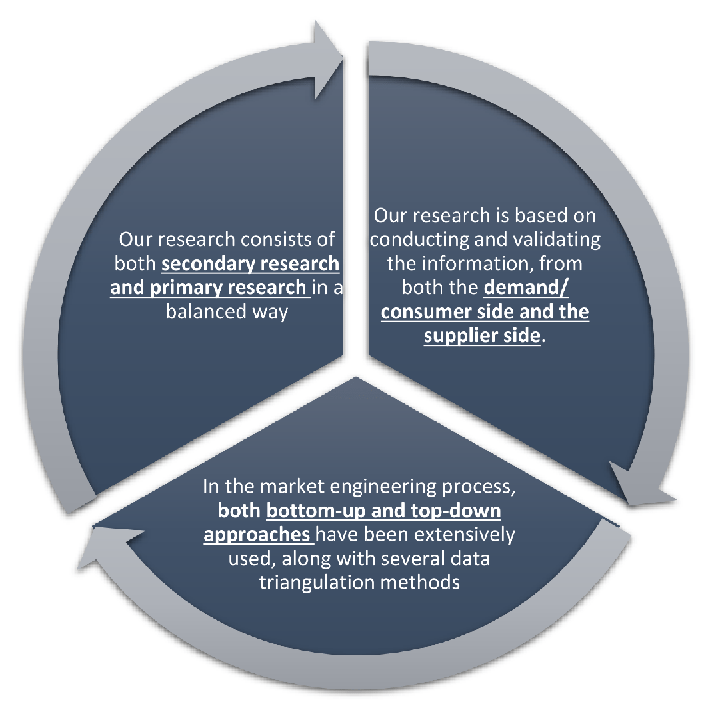
MarketGenics leverages a dedicated industry panel of experts and a comprehensive suite of paid databases to effectively collect, consolidate, and analyze market intelligence.
Our approach has consistently proven to be reliable and effective in generating accurate market insights, identifying key industry trends, and uncovering emerging business opportunities.
Through both primary and secondary research, we capture and analyze critical company-level data such as manufacturing footprints, including technical centers, R&D facilities, sales offices, and headquarters.
Our expert panel further enhances our ability to estimate market size for specific brands based on validated field-level intelligence.
Our data mining techniques incorporate both parametric and non-parametric methods, allowing for structured data collection, sorting, processing, and cleaning.
Demand projections are derived from large-scale data sets analyzed through proprietary algorithms, culminating in robust and reliable market sizing.
Research Approach
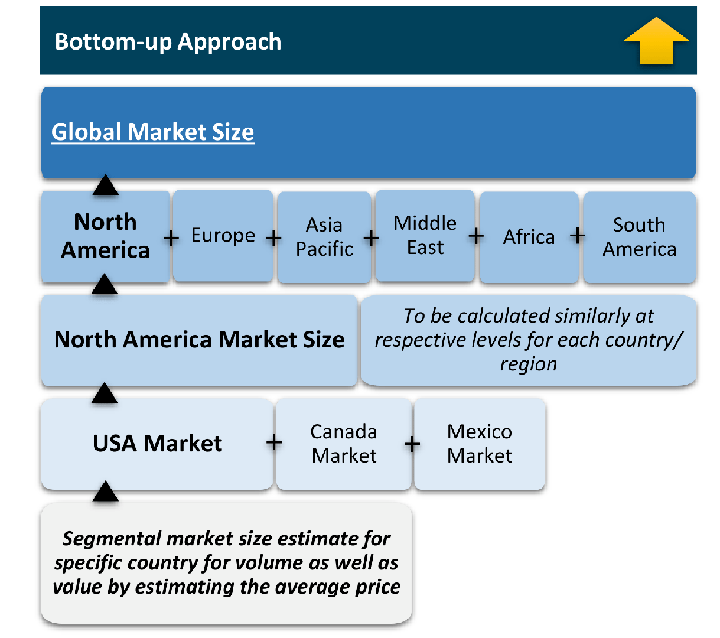
The bottom-up approach builds market estimates by starting with the smallest addressable market units and systematically aggregating them to create comprehensive market size projections.
This method begins with specific, granular data points and builds upward to create the complete market landscape.
Customer Analysis → Segmental Analysis → Geographical Analysis
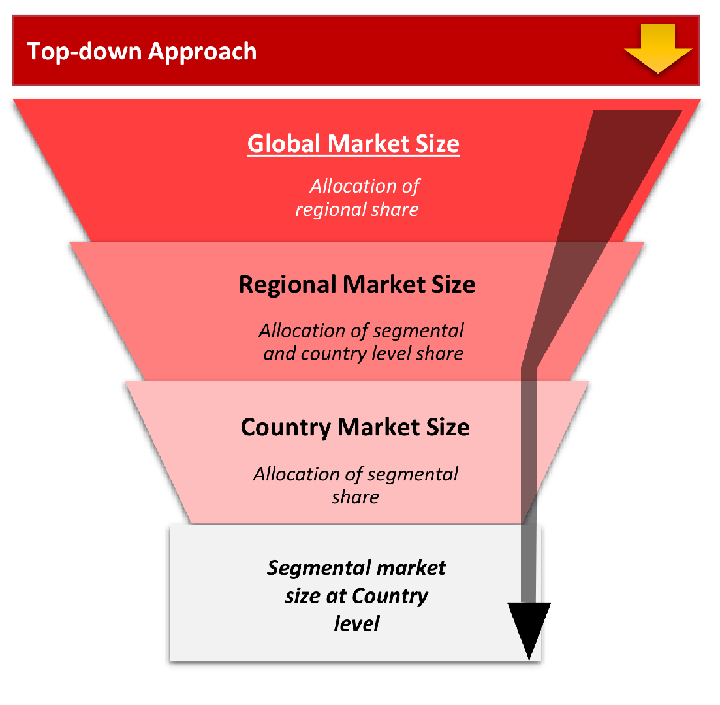
The top-down approach starts with the broadest possible market data and systematically narrows it down through a series of filters and assumptions to arrive at specific market segments or opportunities.
This method begins with the big picture and works downward to increasingly specific market slices.
TAM → SAM → SOM
Research Methods
Desk / Secondary Research
While analysing the market, we extensively study secondary sources, directories, and databases to identify and collect information useful for this technical, market-oriented, and commercial report. Secondary sources that we utilize are not only the public sources, but it is a combination of Open Source, Associations, Paid Databases, MG Repository & Knowledgebase, and others.
- Company websites, annual reports, financial reports, broker reports, and investor presentations
- National government documents, statistical databases and reports
- News articles, press releases and web-casts specific to the companies operating in the market, Magazines, reports, and others
- We gather information from commercial data sources for deriving company specific data such as segmental revenue, share for geography, product revenue, and others
- Internal and external proprietary databases (industry-specific), relevant patent, and regulatory databases
- Governing Bodies, Government Organizations
- Relevant Authorities, Country-specific Associations for Industries
We also employ the model mapping approach to estimate the product level market data through the players' product portfolio
Primary Research
Primary research/ interviews is vital in analyzing the market. Most of the cases involves paid primary interviews. Primary sources include primary interviews through e-mail interactions, telephonic interviews, surveys as well as face-to-face interviews with the different stakeholders across the value chain including several industry experts.
| Type of Respondents | Number of Primaries |
|---|---|
| Tier 2/3 Suppliers | ~20 |
| Tier 1 Suppliers | ~25 |
| End-users | ~25 |
| Industry Expert/ Panel/ Consultant | ~30 |
| Total | ~100 |
MG Knowledgebase
• Repository of industry blog, newsletter and case studies
• Online platform covering detailed market reports, and company profiles
Forecasting Factors and Models
Forecasting Factors
- Historical Trends – Past market patterns, cycles, and major events that shaped how markets behave over time. Understanding past trends helps predict future behavior.
- Industry Factors – Specific characteristics of the industry like structure, regulations, and innovation cycles that affect market dynamics.
- Macroeconomic Factors – Economic conditions like GDP growth, inflation, and employment rates that affect how much money people have to spend.
- Demographic Factors – Population characteristics like age, income, and location that determine who can buy your product.
- Technology Factors – How quickly people adopt new technology and how much technology infrastructure exists.
- Regulatory Factors – Government rules, laws, and policies that can help or restrict market growth.
- Competitive Factors – Analyzing competition structure such as degree of competition and bargaining power of buyers and suppliers.
Forecasting Models / Techniques
Multiple Regression Analysis
- Identify and quantify factors that drive market changes
- Statistical modeling to establish relationships between market drivers and outcomes
Time Series Analysis – Seasonal Patterns
- Understand regular cyclical patterns in market demand
- Advanced statistical techniques to separate trend, seasonal, and irregular components
Time Series Analysis – Trend Analysis
- Identify underlying market growth patterns and momentum
- Statistical analysis of historical data to project future trends
Expert Opinion – Expert Interviews
- Gather deep industry insights and contextual understanding
- In-depth interviews with key industry stakeholders
Multi-Scenario Development
- Prepare for uncertainty by modeling different possible futures
- Creating optimistic, pessimistic, and most likely scenarios
Time Series Analysis – Moving Averages
- Sophisticated forecasting for complex time series data
- Auto-regressive integrated moving average models with seasonal components
Econometric Models
- Apply economic theory to market forecasting
- Sophisticated economic models that account for market interactions
Expert Opinion – Delphi Method
- Harness collective wisdom of industry experts
- Structured, multi-round expert consultation process
Monte Carlo Simulation
- Quantify uncertainty and probability distributions
- Thousands of simulations with varying input parameters
Research Analysis
Our research framework is built upon the fundamental principle of validating market intelligence from both demand and supply perspectives. This dual-sided approach ensures comprehensive market understanding and reduces the risk of single-source bias.
Demand-Side Analysis: We understand end-user/application behavior, preferences, and market needs along with the penetration of the product for specific application.
Supply-Side Analysis: We estimate overall market revenue, analyze the segmental share along with industry capacity, competitive landscape, and market structure.
Validation & Evaluation
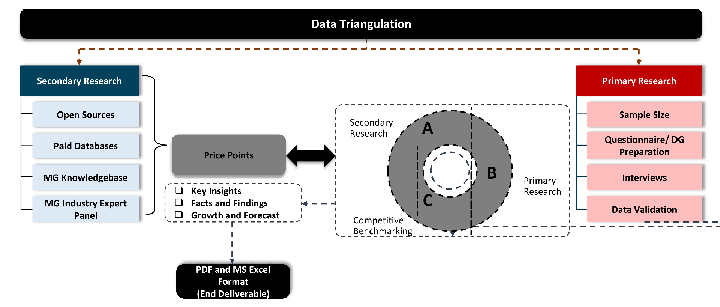
Data triangulation is a validation technique that uses multiple methods, sources, or perspectives to examine the same research question, thereby increasing the credibility and reliability of research findings. In market research, triangulation serves as a quality assurance mechanism that helps identify and minimize bias, validate assumptions, and ensure accuracy in market estimates.
- Data Source Triangulation – Using multiple data sources to examine the same phenomenon
- Methodological Triangulation – Using multiple research methods to study the same research question
- Investigator Triangulation – Using multiple researchers or analysts to examine the same data
- Theoretical Triangulation – Using multiple theoretical perspectives to interpret the same data
Custom Market Research Services
We will customise the research for you, in case the report listed above does not meet your requirements.
Get 10% Free Customisation