Automotive Ethernet Market Size, Share & Trends Analysis Report by Component Type (Switches & Routers, Controllers (ECUs), PHY Transceivers, Cables & Connectors, Software / Protocol Stack, Network Management Modules, Others), Data Rate/ Bandwidth, Connector Type, Transmission Type, Network Topology, Integration Level, Vehicle Type, Propulsion Type, Application, End-User and Geography (North America, Europe, Asia Pacific, Middle East, Africa, and South America) – Global Industry Data, Trends, and Forecasts, 2026–2035
|
Market Structure & Evolution |
|
|
Segmental Data Insights |
|
|
Demand Trends |
|
|
Competitive Landscape |
|
|
Strategic Development |
|
|
Future Outlook & Opportunities |
|
Automotive Ethernet Market Size, Share, and Growth
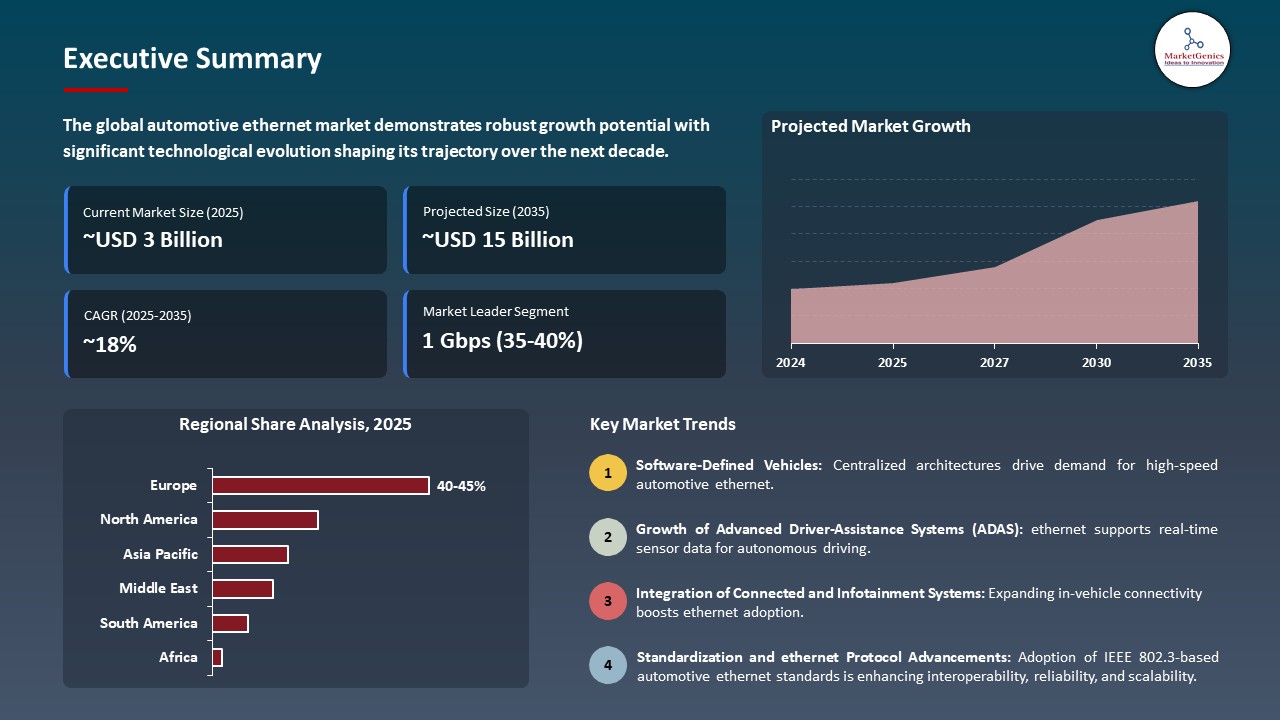
The global automotive ethernet market is experiencing robust growth, with its estimated value of USD 2.7 billion in the year 2025 and USD 14.5 billion by the period 2035, registering a CAGR of 18.2% during the forecast period.
Marvell Technology's Chairman and CEO, Matt Murphy, stated, "We are extremely proud of the way we have naturally expanded our Automotive Ethernet business. By combining our work with Infineon's platform which is specially designed for the automotive industry, both companies' Automotive Ethernet businesses will be ready for further growth and success." The statement was made in the context of the strategic sale of Marvell's Automotive Ethernet division to Infineon, which will enhance Ethernet connectivity solutions for the next generation in vehicle networks.
The increasing use of automotive ethernet system around the globe is attributed to several driving forces including rapidly increasing numbers of high-bandwidth in-vehicle networks that enable next-generation technologies such as advanced driver assistance systems (AD/ADAS), connected infotainment (C-I), and centralized domain and zonal architectures. The launch of multiple next generation solutions with automotive ethernet systems supporting multi-gigabit data transmissions, and time-sensitive networks in 2025 by leading semiconductor suppliers, enhanced the reliability of real-time communications for safety-critical vehicle functions.
The development of Electric Vehicles (EV's), the development of Autonomous Driving (AD), and the growing use of Software Defined Vehicles (SDV), have generated more demand for strong, highly scalable In-Vehicle Communication (IVC) infrastructures.
The widespread adoption of automotive ethernet platforms by major OEMs now serves to demonstrate how automotive ethernet can be used to improve the reduction of wiring complexity, reduce latency, and meet stringent regulations for both cybersecurity and functional safety. Additionally, it has resulted in a rapid acceleration in the adoption of standardized, high-speed Ethernet architectures that support secure data transmission and over-the-air updates.
The combination of technology advancements, the need to comply with regulations, and the increasing levels of vehicle connectivity will continue to drive growth in the automotive ethernet marketplace, thus improving the reliability, scalability, and performance of the automotive marketplace. Additionally, adjacent market opportunities exist in Ethernet switches, Ethernet PHYs, Time-Sensitive Networking (TSN) software, Cybersecurity products, diagnostics, and testing tools enabling suppliers to generate additional sources of income in the developing automotive networking ecosystem.
Automotive Ethernet Market Dynamics and Trends
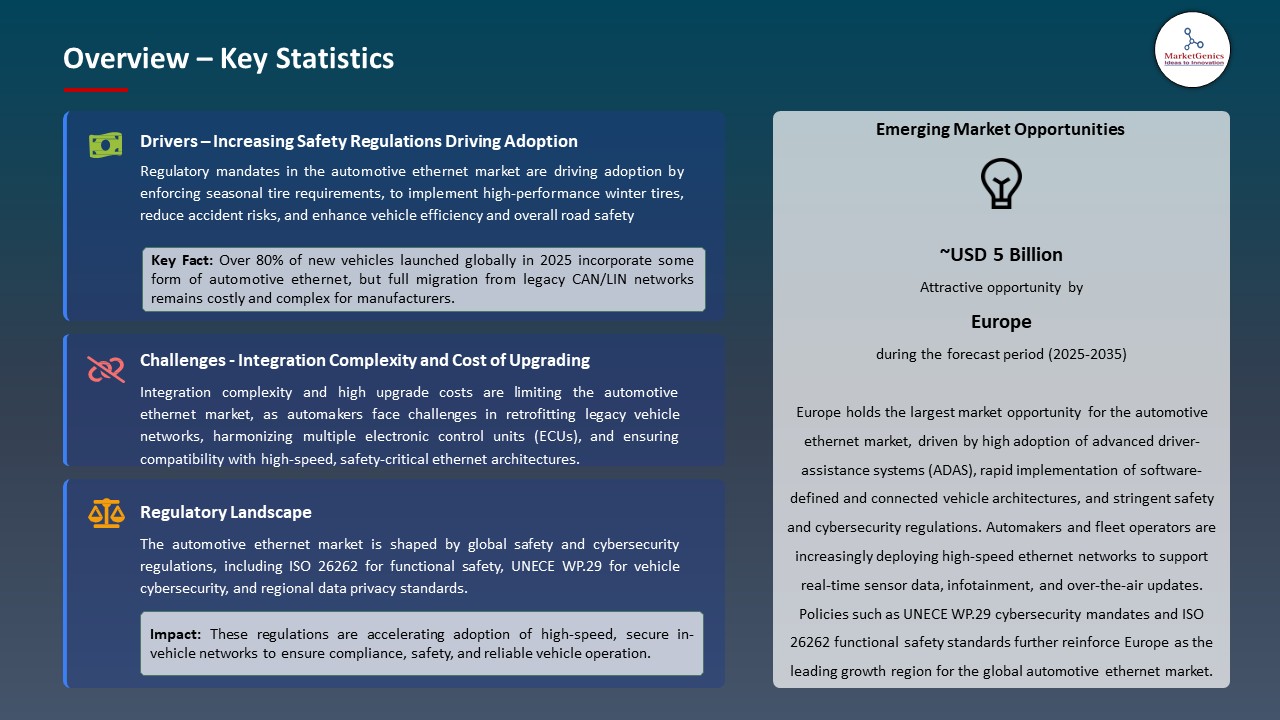
Driver: Increasing Regulatory Mandates Driving Adoption of Automotive Ethernet Networks
-
The rapid expansion of the automotive ethernet market can be attributed to the tightening of global regulations concerning vehicle safety, cybersecurity, and software updates. For instance, compliance with UNECE R155 (Cybersecurity) and UNECE R156 (Software Update Management) necessitates secure, high bandwidth, and standardized in vehicle communication architectures, which are the main reasons why automakers are replacing old CAN and FlexRay networks with ethernet backbones.
- Concurrently, functional safety standards such as ISO 26262 and the ADAS deployment demand are pushing for deterministic, low latency communication, where automotive Ethernet with time sensitive networking is of paramount importance. The recent launch of multi gigabit automotive ethernet solutions by semiconductor companies in 2025 is a clear indication of the entire industry's efforts to comply with regulation compliant vehicle networking.
- The ever-growing demand for connected services, over the air updates, and vehicle to cloud data exchange makes it even more necessary to have scalable and secure ethernet based in vehicle networks. All these factors are likely to boost the growth of the automotive ethernet market.
Restraint: Integration Complexity and Cost of Upgrading Legacy Vehicle Architectures
-
Although regulatory and technological progress provides momentum for automotive ethernet, some aspects of the vehicle's original design around legacy protocols make their integration into the vehicle a complex process that involves substantial changes to electronic architecture.
- The cost of ethernet switches, Physical Layer (PHY) devices, shielding, and validation testing are still an obstacle to widespread adoption of the technology, especially among entry-level vehicles and value-sensitive segments of the automotive market.
- The need to provide high-speed data transmission while also meeting the requirements of electromagnetic compatibility, low power consumption, and overall vehicle cost has slowed adoption in many markets. All these elements are expected to restrict the expansion of the automotive ethernet market.
Opportunity: Expansion of Software-Defined and Electric Vehicles Across Emerging Markets
-
First-time buyers of cars in emerging automotive regions such as Asia-Pacific, Latin America, and the Middle East, are driving demand for software-defined and electric vehicles thus creating a viable opportunity for automotive ethernet to be the primary communication platform.
- More vehicle manufacturers are teaming up with semiconductor manufacturers, and networking companies to create cost-effectively produced ethernet solutions that can be installed on mid-range vehicles, as it allows for increased scalability, and reduced total developmental expenses over time.
- With this expanded opportunity for automotive ethernet solutions to be installed within digitalized vehicles, there is a significant opportunity for the growth and success of Ethernet hardware manufacturers, cybersecurity solutions providers, and in-vehicle network diagnostic solution providers. All these elements are expected to create more opportunities for future in the automotive ethernet market.
Key Trend: Shift Toward Zonal Architectures and Multi-Gigabit Ethernet
-
In the automotive industry, there is an increasing trend toward using a zonal architecture instead of the traditional domain architectures. This shift is taking place as more automotive manufacturers move toward using high-speed Ethernet as the primary means of connecting the zonal controllers and the centralized compute units.
- Multi-gigabit Ethernet (2.5G, 5G, etc.) and Time-Sensitive Networking (TSN) technologies will allow for the continuous streaming of data from ADAS, automated driving systems, and entertainment systems to allow for improved performance during operation.
- As these technologies continue to come together and mature, they will allow for the evolution of the next generation of vehicles globally and the emergence of automotive ethernet as the core enabler of future vehicle platfor1ms. All these elements are expected to influence significant trends in the automotive ethernet market.
Automotive-Ethernet-Market Analysis and Segmental Data
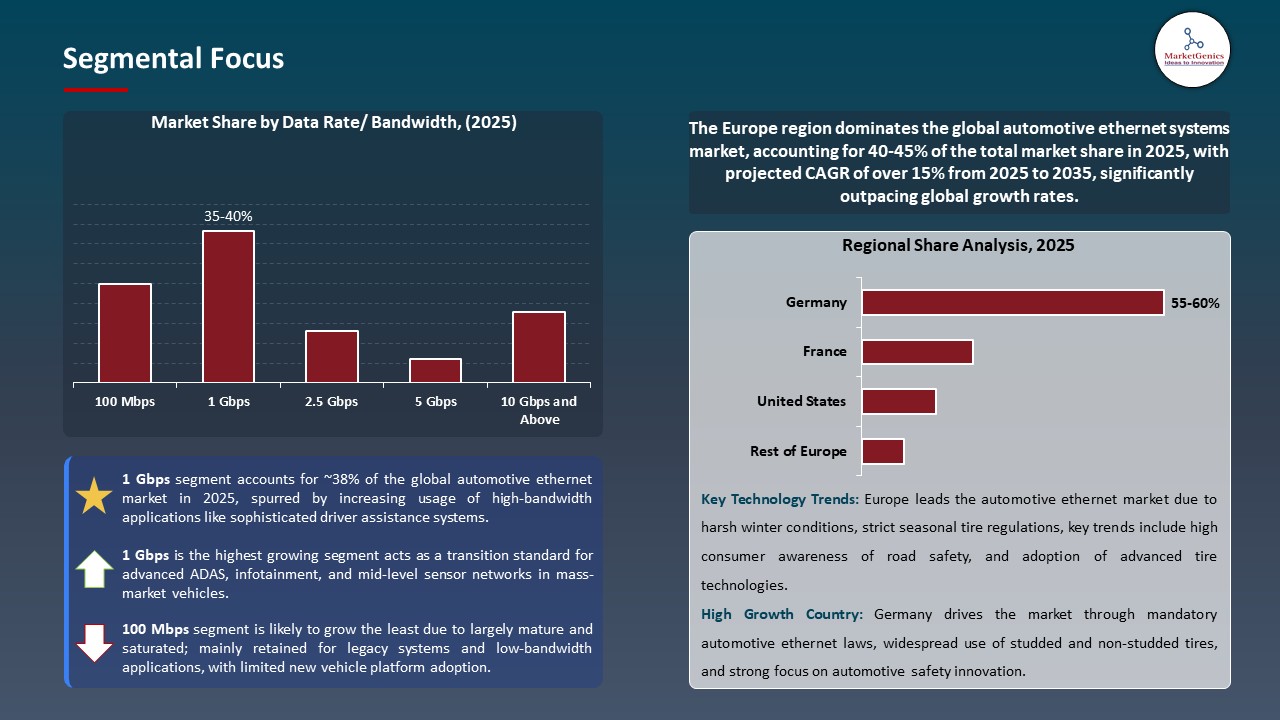
“1 Gbps Data Rate/ Bandwidth Dominate Global Automotive Ethernet Market amid ADAS Adoption and Centralized Vehicle Architectures”
-
1 Gbps data rate segment continues to dominate the overall automotive Ethernet market due to an increase in ADAS implementation and growing centralized vehicle architecture, since it provides a good balance between bandwidth, cost and reliability of in-vehicle networking in meeting today's needs. The continuing implementation of cameras, radar, and lidar sensors required for advanced driver assistance systems has allowed for significant use of 1 Gbps Ethernet to transmit high volumes of sensor data, video streams and control signals while providing low latency and deterministic performance.
- As seen with recent industry activities, most production vehicles using Ethernet at this time utilize 1000BASE-T1 connectivity, a standard established by IEEE and has proven to be the de-facto standard for ADAS and cockpit data communications. More car manufacturers have chosen 1 Gbps Ethernet, as it has the capacity to accommodate time-sensitive networking for safety-critical applications and meets the current automotive-grade cabling and electromagnetic compatibility specifications.
- Moreover, with the push towards software-defined vehicles, 1 Gbps Ethernet will allow for efficient remote updates of software. Hence, this bandwidth segment dominates in terms of volume adoption of automotive ethernet market globally.
“Europe Dominates Automotive Ethernet Market amid Stringent Vehicle Safety Regulations and Rapid Adoption of Software-Defined Vehicle Architectures”
-
With the implementation of strict regulations regarding the safety of vehicles, functional safety, and cybersecurity by the European vehicle regulatory body (regulations UNECE R155 to UNECE R155), the evolution of automotive ethernet architectures from legacy in-vehicle networks to high-speed standardized ethernet technologies has been greatly aided by the need for secure, reliable and fast data transmission.
- The implementation of many auto-manufacturers in Europe, for example Volkswagen Group, BMW Group, Stellantis, and Mercedes-Benz Group illustrates the extent to which the European market is leading in the deployment of ethernet-based backbones that support advanced automobile technologies including centralized domain controllers, advanced driver assistance systems and zonal-based architectures.
- Furthermore, leading Tier 1 suppliers such as Continental, Infineon Technologies, NXP Semiconductors, and Bosch are also manufacturing automotive specifications for Ethernet PHYs, switches and time-sensitive networking in support of European OEMs.
Automotive-Ethernet-Market Ecosystem
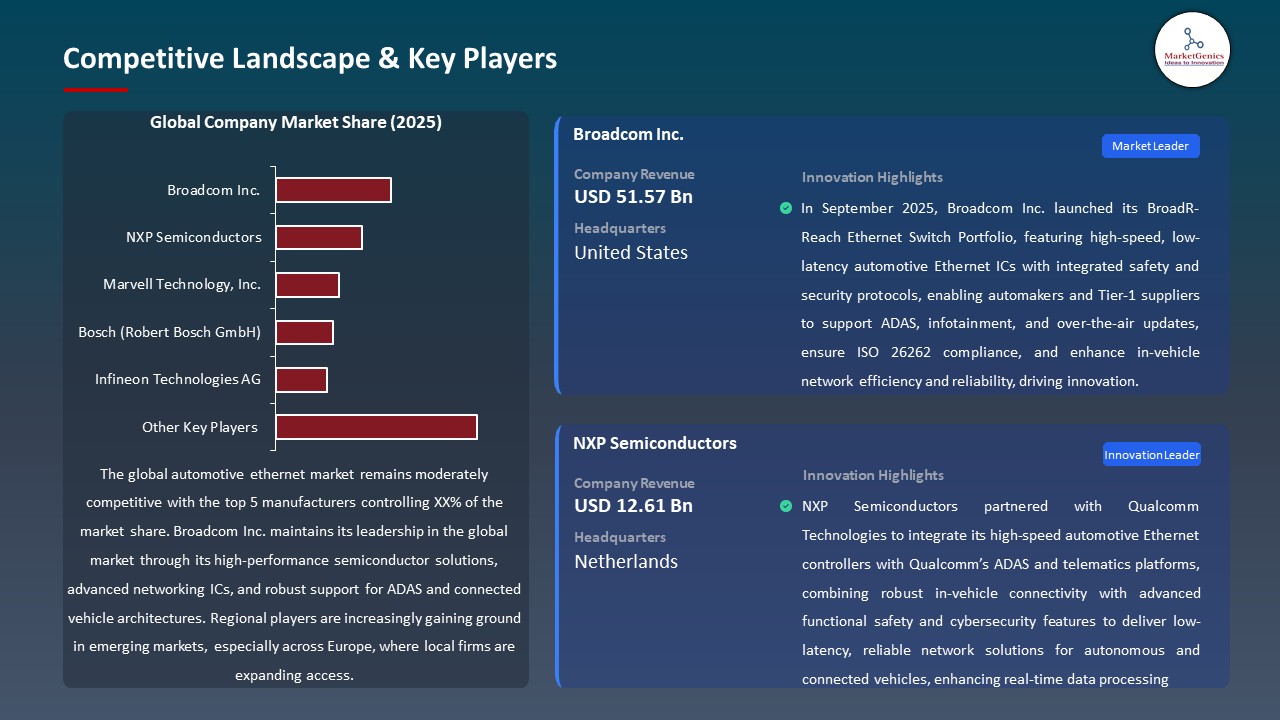
The global automotive ethernet market is dominated by a small number of large organizations and is dominated by a few large companies. The driving forces of the market are Bosch (Robert Bosch GmbH), NXP Semiconductors, Broadcom Inc., Infineon Technologies AG, Qualcomm Technologies Inc., and Marvell Technology Inc. These companies dominate the market by using advanced Ethernet PHYs, switches, and time-sensitive networking solutions, which provide a competitive advantage to make the next-generation vehicle architecture.
Key players within this market segment focus primarily on providing specialized solutions such as the development of 1000BASE-T1 and multi-gigabit Ethernet, TSN, and secure in-vehicle networks that assist in the deployment of ADAS and infotainment, as well as supporting centralized or zonal architectures. As part of this ecosystem, companies such as LEONI Kabel GmbH and TE Connectivity complement it by providing the optimized cabling and connector products they design and manufacture for applications requiring electromagnetic compatibility and weight savings.
Government and standards bodies contribute significantly to the development of the market. In March 2025, a collaborative R&D approach established by the industry in collaboration with IEEE 802.1 TSN standards resulted in a rapid acceleration of the determination of the reliability of deterministic Ethernet communication for safety-critical automotive applications, thereby providing an enhanced level of reliability to communicate time-critical data in real time.
Recent Development and Strategic Overview:
-
In June 2025, NXP Semiconductor launched its newest range of Automotive Ethernet PHYs using several generations of a Multi-Gigabit Ethernet PHY device specifically designed to enable both the zonal as well as centralized architectures within vehicles. These devices will enable deterministic communication and time-sensitive networking (TSN) capabilities for providing reliable transfers of data between sensors and compute platforms on the ADAS systems.
- In September 2025, Broadcom released a new family of ethernet switch products targeted specifically at supporting software-defined vehicles and enabling secure data routing between various vehicle-level domains. Features like integrated functional safety and cybersecurity in these products have made it possible for users to build scalable, high-performing networks in vehicles that support ADAS, Infotainment, and Over-the-air Update capabilities while providing substantial improvements in long-term scalability and bandwidth efficiency for both passenger vehicles and battery electric vehicles.
Report Scope
|
Attribute |
Detail |
|
Market Size in 2025 |
USD 2.7 Bn |
|
Market Forecast Value in 2035 |
USD 14.5 Bn |
|
Growth Rate (CAGR) |
18.2% |
|
Forecast Period |
2026 – 2035 |
|
Historical Data Available for |
2021 – 2024 |
|
Market Size Units |
USD Bn for Value |
|
Report Format |
Electronic (PDF) + Excel |
|
Regions and Countries Covered |
|||||
|
North America |
Europe |
Asia Pacific |
Middle East |
Africa |
South America |
|
|
|
|
|
|
|
Companies Covered |
|||||
|
|
|
|
|
|
Automotive-Ethernet-Market Segmentation and Highlights
|
Segment |
Sub-segment |
|
Automotive Ethernet Market, By Component Type |
|
|
Automotive Ethernet Market, By Data Rate/ Bandwidth |
|
|
Automotive Ethernet Market, By Connector Type |
|
|
Automotive Ethernet Market, By Transmission Type |
|
|
Automotive Ethernet Market, By Network Topology |
|
|
Automotive Ethernet Market, By Integration Level |
|
|
Automotive Ethernet Market, By Vehicle Type |
|
|
Automotive Ethernet Market, By Propulsion Type |
|
|
Automotive Ethernet Market, By Application |
|
|
Automotive Ethernet Market, By End-User |
|
Frequently Asked Questions
Table of Contents
- 1. Research Methodology and Assumptions
- 1.1. Definitions
- 1.2. Research Design and Approach
- 1.3. Data Collection Methods
- 1.4. Base Estimates and Calculations
- 1.5. Forecasting Models
- 1.5.1. Key Forecast Factors & Impact Analysis
- 1.6. Secondary Research
- 1.6.1. Open Sources
- 1.6.2. Paid Databases
- 1.6.3. Associations
- 1.7. Primary Research
- 1.7.1. Primary Sources
- 1.7.2. Primary Interviews with Stakeholders across Ecosystem
- 2. Executive Summary
- 2.1. Global Automotive Ethernet Market Outlook
- 2.1.1. Automotive Ethernet Market Size (Value - US$ Bn), and Forecasts, 2021-2035
- 2.1.2. Compounded Annual Growth Rate Analysis
- 2.1.3. Growth Opportunity Analysis
- 2.1.4. Segmental Share Analysis
- 2.1.5. Geographical Share Analysis
- 2.2. Market Analysis and Facts
- 2.3. Supply-Demand Analysis
- 2.4. Competitive Benchmarking
- 2.5. Go-to- Market Strategy
- 2.5.1. Customer/ End-use Industry Assessment
- 2.5.2. Growth Opportunity Data, 2026-2035
- 2.5.2.1. Regional Data
- 2.5.2.2. Country Data
- 2.5.2.3. Segmental Data
- 2.5.3. Identification of Potential Market Spaces
- 2.5.4. GAP Analysis
- 2.5.5. Potential Attractive Price Points
- 2.5.6. Prevailing Market Risks & Challenges
- 2.5.7. Preferred Sales & Marketing Strategies
- 2.5.8. Key Recommendations and Analysis
- 2.5.9. A Way Forward
- 2.1. Global Automotive Ethernet Market Outlook
- 3. Industry Data and Premium Insights
- 3.1. Global Automotive & Transportation Ecosystem Overview, 2025
- 3.1.1. Automotive & Transportation Industry Analysis
- 3.1.2. Key Trends for Automotive & Transportation Industry
- 3.1.3. Regional Distribution for Automotive & Transportation Industry
- 3.2. Supplier Customer Data
- 3.3. Technology Roadmap and Developments
- 3.1. Global Automotive & Transportation Ecosystem Overview, 2025
- 4. Market Overview
- 4.1. Market Dynamics
- 4.1.1. Drivers
- 4.1.1.1. Rising demand for high-bandwidth, low-latency in-vehicle networks to support ADAS, infotainment, and centralized or zonal E/E architectures.
- 4.1.1.2. Growing adoption of connected, electric, and software-defined vehicles requiring scalable and secure ethernet-based communication.
- 4.1.1.3. Increasing investments in multi-gigabit ethernet PHYs, time-sensitive networking (TSN), and automotive-grade switches to enhance real-time data transfer, safety, and vehicle performance.
- 4.1.2. Restraints
- 4.1.2.1. High implementation and production costs of automotive ethernet components, including switches, PHYs, and specialized cabling.
- 4.1.2.2. Challenges in integrating ethernet networks with legacy CAN, LIN, and FlexRay systems, and ensuring compatibility across heterogeneous vehicle architectures.
- 4.1.1. Drivers
- 4.2. Key Trend Analysis
- 4.3. Regulatory Framework
- 4.3.1. Key Regulations, Norms, and Subsidies, by Key Countries
- 4.3.2. Tariffs and Standards
- 4.3.3. Impact Analysis of Regulations on the Market
- 4.4. Value Chain Analysis
- 4.4.1. Component Suppliers
- 4.4.2. System Integrators/ Technology Providers
- 4.4.3. Automotive Ethernet System Providers
- 4.4.4. End Users/ Customers
- 4.5. Cost Structure Analysis
- 4.6. Porter’s Five Forces Analysis
- 4.7. PESTEL Analysis
- 4.8. Global Automotive Ethernet Market Demand
- 4.8.1. Historical Market Size –Value (US$ Bn), 2020-2024
- 4.8.2. Current and Future Market Size –Value (US$ Bn), 2026–2035
- 4.8.2.1. Y-o-Y Growth Trends
- 4.8.2.2. Absolute $ Opportunity Assessment
- 4.1. Market Dynamics
- 5. Competition Landscape
- 5.1. Competition structure
- 5.1.1. Fragmented v/s consolidated
- 5.2. Company Share Analysis, 2025
- 5.2.1. Global Company Market Share
- 5.2.2. By Region
- 5.2.2.1. North America
- 5.2.2.2. Europe
- 5.2.2.3. Asia Pacific
- 5.2.2.4. Middle East
- 5.2.2.5. Africa
- 5.2.2.6. South America
- 5.3. Product Comparison Matrix
- 5.3.1. Specifications
- 5.3.2. Market Positioning
- 5.3.3. Pricing
- 5.1. Competition structure
- 6. Global Automotive Ethernet Market Analysis, by Component Type
- 6.1. Key Segment Analysis
- 6.2. Automotive Ethernet Market Size (Value - US$ Bn), Analysis, and Forecasts, by Component Type, 2021-2035
- 6.2.1. Switches & Routers
- 6.2.2. Controllers (ECUs)
- 6.2.3. PHY Transceivers
- 6.2.4. Cables & Connectors
- 6.2.5. Software / Protocol Stack
- 6.2.6. Network Management Modules
- 6.2.7. Others
- 7. Global Automotive Ethernet Market Analysis, by Display Type
- 7.1. Key Segment Analysis
- 7.2. Automotive Ethernet Market Size (Value - US$ Bn), Analysis, and Forecasts, by Display Type, 2021-2035
- 7.2.1. Head-Up Display (HUD)
- 7.2.2. Instrument Cluster Display
- 7.2.3. Infotainment Display
- 7.2.4. Central Information Display
- 7.2.5. Augmented/Virtual Displays
- 7.2.6. Others
- 8. Global Automotive Ethernet Market Analysis, by Data Rate/ Bandwidth
- 8.1. Key Segment Analysis
- 8.2. Automotive Ethernet Market Size (Value - US$ Bn), Analysis, and Forecasts, by Data Rate/ Bandwidth, 2021-2035
- 8.2.1. 100 Mbps
- 8.2.2. 1 Gbps
- 8.2.3. 5 Gbps
- 8.2.4. 5 Gbps
- 8.2.5. 10 Gbps and Above
- 9. Global Automotive Ethernet Market Analysis, by Connector Type
- 9.1. Key Segment Analysis
- 9.2. Automotive Ethernet Market Size (Value - US$ Bn), Analysis, and Forecasts, by Connector Type, 2021-2035
- 9.2.1. Shielded Twisted Pair (STP)
- 9.2.2. Unshielded Twisted Pair (UTP)
- 9.2.3. Coaxial
- 9.2.4. Fiber Optic
- 9.2.5. Others
- 10. Global Automotive Ethernet Market Analysis, by Transmission Type
- 10.1. Key Segment Analysis
- 10.2. Automotive Ethernet Market Size (Value - US$ Bn), Analysis, and Forecasts, by Transmission Type, 2021-2035
- 10.2.1. Wired Automotive Ethernet
- 10.2.2. Wireless Automotive Ethernet
- 11. Global Automotive Ethernet Market Analysis, by Network Topology
- 11.1. Key Segment Analysis
- 11.2. Automotive Ethernet Market Size (Value - US$ Bn), Analysis, and Forecasts, by Network Topology, 2021-2035
- 11.2.1. Point-to-Point
- 11.2.2. Multi-Drop
- 11.2.3. Ring / Mesh Network
- 11.2.4. Others
- 12. Global Automotive Ethernet Market Analysis, by Integration Level
- 12.1. Key Segment Analysis
- 12.2. Automotive Ethernet Market Size (Value - US$ Bn), Analysis, and Forecasts, by Integration Level, 2021-2035
- 12.2.1. Standalone Ethernet Modules
- 12.2.2. Integrated SoCs with Ethernet Capabilities
- 13. Global Automotive Ethernet Market Analysis, by Vehicle Type
- 13.1. Key Segment Analysis
- 13.2. Automotive Ethernet Market Size (Value - US$ Bn), Analysis, and Forecasts, by Vehicle Type, 2021-2035
- 13.2.1. Passenger Vehicles
- 13.2.1.1. Hatchback
- 13.2.1.2. Sedan
- 13.2.1.3. SUVs
- 13.2.2. Light Commercial Vehicles
- 13.2.3. Heavy Duty Trucks
- 13.2.4. Buses & Coaches
- 13.2.5. Off-road Vehicles
- 13.2.1. Passenger Vehicles
- 14. Global Automotive Ethernet Market Analysis and Forecasts, by Propulsion Type
- 14.1. Key Findings
- 14.2. Automotive Ethernet Market Size (Value - US$ Bn), Analysis, and Forecasts, by Propulsion Type, 2021-2035
- 14.2.1. ICE Vehicles
- 14.2.1.1. Gasoline
- 14.2.1.2. Diesel
- 14.2.2. Electric Vehicles
- 14.2.2.1. Hybrid Electric Vehicle (HEV)
- 14.2.2.2. Plug-in Hybrid Electric Vehicle (PHEV)
- 14.2.2.3. Battery Electric Vehicle (BEV)
- 14.2.1. ICE Vehicles
- 15. Global Automotive Ethernet Market Analysis and Forecasts, by Application
- 15.1. Key Findings
- 15.2. Automotive Ethernet Market Size (Value - US$ Bn), Analysis, and Forecasts, by Application, 2021-2035
- 15.2.1. Infotainment & Telematics
- 15.2.2. Advanced Driver Assistance Systems (ADAS)
- 15.2.3. Autonomous Driving
- 15.2.4. Body Electronics
- 15.2.5. Powertrain
- 15.2.6. Diagnostics & Maintenance
- 15.2.7. Safety Systems
- 15.2.8. Others
- 16. Global Automotive Ethernet Market Analysis and Forecasts, by End-User
- 16.1. Key Findings
- 16.2. Automotive Ethernet Market Size (Value - US$ Bn), Analysis, and Forecasts, by End-User, 2021-2035
- 16.2.1. OEMs (Original Equipment Manufacturers)
- 16.2.2. Tier-1 Suppliers
- 16.2.3. Aftermarket
- 17. Global Automotive Ethernet Market Analysis and Forecasts, by Region
- 17.1. Key Findings
- 17.2. Automotive Ethernet Market Size (Value - US$ Bn), Analysis, and Forecasts, by Region, 2021-2035
- 17.2.1. North America
- 17.2.2. Europe
- 17.2.3. Asia Pacific
- 17.2.4. Middle East
- 17.2.5. Africa
- 17.2.6. South America
- 18. North America Automotive Ethernet Market Analysis
- 18.1. Key Segment Analysis
- 18.2. Regional Snapshot
- 18.3. North America Automotive Ethernet Market Size Value - US$ Bn), Analysis, and Forecasts, 2021-2035
- 18.3.1. Component Type
- 18.3.2. Data Rate/ Bandwidth
- 18.3.3. Connector Type
- 18.3.4. Transmission Type
- 18.3.5. Network Topology
- 18.3.6. Operating System
- 18.3.7. Integration Level
- 18.3.8. Vehicle Type
- 18.3.9. Propulsion Type
- 18.3.10. Application
- 18.3.11. End-User
- 18.3.12. Country
- 18.3.12.1. USA
- 18.3.12.2. Canada
- 18.3.12.3. Mexico
- 18.4. USA Automotive Ethernet Market
- 18.4.1. Country Segmental Analysis
- 18.4.2. Component Type
- 18.4.3. Data Rate/ Bandwidth
- 18.4.4. Connector Type
- 18.4.5. Transmission Type
- 18.4.6. Network Topology
- 18.4.7. Operating System
- 18.4.8. Integration Level
- 18.4.9. Vehicle Type
- 18.4.10. Propulsion Type
- 18.4.11. Application
- 18.4.12. End-User
- 18.5. Canada Automotive Ethernet Market
- 18.5.1. Country Segmental Analysis
- 18.5.2. Component Type
- 18.5.3. Data Rate/ Bandwidth
- 18.5.4. Connector Type
- 18.5.5. Transmission Type
- 18.5.6. Network Topology
- 18.5.7. Operating System
- 18.5.8. Integration Level
- 18.5.9. Vehicle Type
- 18.5.10. Propulsion Type
- 18.5.11. Application
- 18.5.12. End-User
- 18.6. Mexico Automotive Ethernet Market
- 18.6.1. Country Segmental Analysis
- 18.6.2. Component Type
- 18.6.3. Data Rate/ Bandwidth
- 18.6.4. Connector Type
- 18.6.5. Transmission Type
- 18.6.6. Network Topology
- 18.6.7. Operating System
- 18.6.8. Integration Level
- 18.6.9. Vehicle Type
- 18.6.10. Propulsion Type
- 18.6.11. Application
- 18.6.12. End-User
- 19. Europe Automotive Ethernet Market Analysis
- 19.1. Key Segment Analysis
- 19.2. Regional Snapshot
- 19.3. Europe Automotive Ethernet Market Size (Value - US$ Bn), Analysis, and Forecasts, 2021-2035
- 19.3.1. Component Type
- 19.3.2. Data Rate/ Bandwidth
- 19.3.3. Connector Type
- 19.3.4. Transmission Type
- 19.3.5. Network Topology
- 19.3.6. Operating System
- 19.3.7. Integration Level
- 19.3.8. Vehicle Type
- 19.3.9. Propulsion Type
- 19.3.10. Application
- 19.3.11. End-User
- 19.3.12. Country
- 19.3.12.1. Germany
- 19.3.12.2. United Kingdom
- 19.3.12.3. France
- 19.3.12.4. Italy
- 19.3.12.5. Spain
- 19.3.12.6. Netherlands
- 19.3.12.7. Nordic Countries
- 19.3.12.8. Poland
- 19.3.12.9. Russia & CIS
- 19.3.12.10. Rest of Europe
- 19.4. Germany Automotive Ethernet Market
- 19.4.1. Country Segmental Analysis
- 19.4.2. Component Type
- 19.4.3. Data Rate/ Bandwidth
- 19.4.4. Connector Type
- 19.4.5. Transmission Type
- 19.4.6. Network Topology
- 19.4.7. Operating System
- 19.4.8. Integration Level
- 19.4.9. Vehicle Type
- 19.4.10. Propulsion Type
- 19.4.11. Application
- 19.4.12. End-User
- 19.5. United Kingdom Automotive Ethernet Market
- 19.5.1. Country Segmental Analysis
- 19.5.2. Component Type
- 19.5.3. Data Rate/ Bandwidth
- 19.5.4. Connector Type
- 19.5.5. Transmission Type
- 19.5.6. Network Topology
- 19.5.7. Operating System
- 19.5.8. Integration Level
- 19.5.9. Vehicle Type
- 19.5.10. Propulsion Type
- 19.5.11. Application
- 19.5.12. End-User
- 19.6. France Automotive Ethernet Market
- 19.6.1. Country Segmental Analysis
- 19.6.2. Component Type
- 19.6.3. Data Rate/ Bandwidth
- 19.6.4. Connector Type
- 19.6.5. Transmission Type
- 19.6.6. Network Topology
- 19.6.7. Operating System
- 19.6.8. Integration Level
- 19.6.9. Vehicle Type
- 19.6.10. Propulsion Type
- 19.6.11. Application
- 19.6.12. End-User
- 19.7. Italy Automotive Ethernet Market
- 19.7.1. Country Segmental Analysis
- 19.7.2. Component Type
- 19.7.3. Data Rate/ Bandwidth
- 19.7.4. Connector Type
- 19.7.5. Transmission Type
- 19.7.6. Network Topology
- 19.7.7. Operating System
- 19.7.8. Integration Level
- 19.7.9. Vehicle Type
- 19.7.10. Propulsion Type
- 19.7.11. Application
- 19.7.12. End-User
- 19.8. Spain Automotive Ethernet Market
- 19.8.1. Country Segmental Analysis
- 19.8.2. Component Type
- 19.8.3. Data Rate/ Bandwidth
- 19.8.4. Connector Type
- 19.8.5. Transmission Type
- 19.8.6. Network Topology
- 19.8.7. Operating System
- 19.8.8. Integration Level
- 19.8.9. Vehicle Type
- 19.8.10. Propulsion Type
- 19.8.11. Application
- 19.8.12. End-User
- 19.9. Netherlands Automotive Ethernet Market
- 19.9.1. Country Segmental Analysis
- 19.9.2. Component Type
- 19.9.3. Data Rate/ Bandwidth
- 19.9.4. Connector Type
- 19.9.5. Transmission Type
- 19.9.6. Network Topology
- 19.9.7. Operating System
- 19.9.8. Integration Level
- 19.9.9. Vehicle Type
- 19.9.10. Propulsion Type
- 19.9.11. Application
- 19.9.12. End-User
- 19.10. Nordic Countries Automotive Ethernet Market
- 19.10.1. Country Segmental Analysis
- 19.10.2. Component Type
- 19.10.3. Data Rate/ Bandwidth
- 19.10.4. Connector Type
- 19.10.5. Transmission Type
- 19.10.6. Network Topology
- 19.10.7. Operating System
- 19.10.8. Integration Level
- 19.10.9. Vehicle Type
- 19.10.10. Propulsion Type
- 19.10.11. Application
- 19.10.12. End-User
- 19.11. Poland Automotive Ethernet Market
- 19.11.1. Country Segmental Analysis
- 19.11.2. Component Type
- 19.11.3. Data Rate/ Bandwidth
- 19.11.4. Connector Type
- 19.11.5. Transmission Type
- 19.11.6. Network Topology
- 19.11.7. Operating System
- 19.11.8. Integration Level
- 19.11.9. Vehicle Type
- 19.11.10. Propulsion Type
- 19.11.11. Application
- 19.11.12. End-User
- 19.12. Russia & CIS Automotive Ethernet Market
- 19.12.1. Country Segmental Analysis
- 19.12.2. Component Type
- 19.12.3. Data Rate/ Bandwidth
- 19.12.4. Connector Type
- 19.12.5. Transmission Type
- 19.12.6. Network Topology
- 19.12.7. Operating System
- 19.12.8. Integration Level
- 19.12.9. Vehicle Type
- 19.12.10. Propulsion Type
- 19.12.11. Application
- 19.12.12. End-User
- 19.13. Rest of Europe Automotive Ethernet Market
- 19.13.1. Country Segmental Analysis
- 19.13.2. Component Type
- 19.13.3. Data Rate/ Bandwidth
- 19.13.4. Connector Type
- 19.13.5. Transmission Type
- 19.13.6. Network Topology
- 19.13.7. Operating System
- 19.13.8. Integration Level
- 19.13.9. Vehicle Type
- 19.13.10. Propulsion Type
- 19.13.11. Application
- 19.13.12. End-User
- 20. Asia Pacific Automotive Ethernet Market Analysis
- 20.1. Key Segment Analysis
- 20.2. Regional Snapshot
- 20.3. Asia Pacific Automotive Ethernet Market Size (Value - US$ Bn), Analysis, and Forecasts, 2021-2035
- 20.3.1. Component Type
- 20.3.2. Data Rate/ Bandwidth
- 20.3.3. Connector Type
- 20.3.4. Transmission Type
- 20.3.5. Network Topology
- 20.3.6. Operating System
- 20.3.7. Integration Level
- 20.3.8. Vehicle Type
- 20.3.9. Propulsion Type
- 20.3.10. Application
- 20.3.11. End-User
- 20.3.12. Country
- 20.3.12.1. China
- 20.3.12.2. India
- 20.3.12.3. Japan
- 20.3.12.4. South Korea
- 20.3.12.5. Australia and New Zealand
- 20.3.12.6. Indonesia
- 20.3.12.7. Malaysia
- 20.3.12.8. Thailand
- 20.3.12.9. Vietnam
- 20.3.12.10. Rest of Asia Pacific
- 20.4. China Automotive Ethernet Market
- 20.4.1. Country Segmental Analysis
- 20.4.2. Component Type
- 20.4.3. Data Rate/ Bandwidth
- 20.4.4. Connector Type
- 20.4.5. Transmission Type
- 20.4.6. Network Topology
- 20.4.7. Operating System
- 20.4.8. Integration Level
- 20.4.9. Vehicle Type
- 20.4.10. Propulsion Type
- 20.4.11. Application
- 20.4.12. End-User
- 20.5. India Automotive Ethernet Market
- 20.5.1. Country Segmental Analysis
- 20.5.2. Component Type
- 20.5.3. Data Rate/ Bandwidth
- 20.5.4. Connector Type
- 20.5.5. Transmission Type
- 20.5.6. Network Topology
- 20.5.7. Operating System
- 20.5.8. Integration Level
- 20.5.9. Vehicle Type
- 20.5.10. Propulsion Type
- 20.5.11. Application
- 20.5.12. End-User
- 20.6. Japan Automotive Ethernet Market
- 20.6.1. Country Segmental Analysis
- 20.6.2. Component Type
- 20.6.3. Data Rate/ Bandwidth
- 20.6.4. Connector Type
- 20.6.5. Transmission Type
- 20.6.6. Network Topology
- 20.6.7. Operating System
- 20.6.8. Integration Level
- 20.6.9. Vehicle Type
- 20.6.10. Propulsion Type
- 20.6.11. Application
- 20.6.12. End-User
- 20.7. South Korea Automotive Ethernet Market
- 20.7.1. Country Segmental Analysis
- 20.7.2. Component Type
- 20.7.3. Data Rate/ Bandwidth
- 20.7.4. Connector Type
- 20.7.5. Transmission Type
- 20.7.6. Network Topology
- 20.7.7. Operating System
- 20.7.8. Integration Level
- 20.7.9. Vehicle Type
- 20.7.10. Propulsion Type
- 20.7.11. Application
- 20.7.12. End-User
- 20.8. Australia and New Zealand Automotive Ethernet Market
- 20.8.1. Country Segmental Analysis
- 20.8.2. Component Type
- 20.8.3. Data Rate/ Bandwidth
- 20.8.4. Connector Type
- 20.8.5. Transmission Type
- 20.8.6. Network Topology
- 20.8.7. Operating System
- 20.8.8. Integration Level
- 20.8.9. Vehicle Type
- 20.8.10. Propulsion Type
- 20.8.11. Application
- 20.8.12. End-User
- 20.9. Indonesia Automotive Ethernet Market
- 20.9.1. Country Segmental Analysis
- 20.9.2. Component Type
- 20.9.3. Data Rate/ Bandwidth
- 20.9.4. Connector Type
- 20.9.5. Transmission Type
- 20.9.6. Network Topology
- 20.9.7. Operating System
- 20.9.8. Integration Level
- 20.9.9. Vehicle Type
- 20.9.10. Propulsion Type
- 20.9.11. Application
- 20.9.12. End-User
- 20.10. Malaysia Automotive Ethernet Market
- 20.10.1. Country Segmental Analysis
- 20.10.2. Component Type
- 20.10.3. Data Rate/ Bandwidth
- 20.10.4. Connector Type
- 20.10.5. Transmission Type
- 20.10.6. Network Topology
- 20.10.7. Operating System
- 20.10.8. Integration Level
- 20.10.9. Vehicle Type
- 20.10.10. Propulsion Type
- 20.10.11. Application
- 20.10.12. End-User
- 20.11. Thailand Automotive Ethernet Market
- 20.11.1. Country Segmental Analysis
- 20.11.2. Component Type
- 20.11.3. Data Rate/ Bandwidth
- 20.11.4. Connector Type
- 20.11.5. Transmission Type
- 20.11.6. Network Topology
- 20.11.7. Operating System
- 20.11.8. Integration Level
- 20.11.9. Vehicle Type
- 20.11.10. Propulsion Type
- 20.11.11. Application
- 20.11.12. End-User
- 20.12. Vietnam Automotive Ethernet Market
- 20.12.1. Country Segmental Analysis
- 20.12.2. Component Type
- 20.12.3. Data Rate/ Bandwidth
- 20.12.4. Connector Type
- 20.12.5. Transmission Type
- 20.12.6. Network Topology
- 20.12.7. Operating System
- 20.12.8. Integration Level
- 20.12.9. Vehicle Type
- 20.12.10. Propulsion Type
- 20.12.11. Application
- 20.12.12. End-User
- 20.13. Rest of Asia Pacific Automotive Ethernet Market
- 20.13.1. Country Segmental Analysis
- 20.13.2. Component Type
- 20.13.3. Data Rate/ Bandwidth
- 20.13.4. Connector Type
- 20.13.5. Transmission Type
- 20.13.6. Network Topology
- 20.13.7. Operating System
- 20.13.8. Integration Level
- 20.13.9. Vehicle Type
- 20.13.10. Propulsion Type
- 20.13.11. Application
- 20.13.12. End-User
- 21. Middle East Automotive Ethernet Market Analysis
- 21.1. Key Segment Analysis
- 21.2. Regional Snapshot
- 21.3. Middle East Automotive Ethernet Market Size (Value - US$ Bn), Analysis, and Forecasts, 2021-2035
- 21.3.1. Component Type
- 21.3.2. Data Rate/ Bandwidth
- 21.3.3. Connector Type
- 21.3.4. Transmission Type
- 21.3.5. Network Topology
- 21.3.6. Operating System
- 21.3.7. Integration Level
- 21.3.8. Vehicle Type
- 21.3.9. Propulsion Type
- 21.3.10. Application
- 21.3.11. End-User
- 21.3.12. Country
- 21.3.12.1. Turkey
- 21.3.12.2. UAE
- 21.3.12.3. Saudi Arabia
- 21.3.12.4. Israel
- 21.3.12.5. Rest of Middle East
- 21.4. Turkey Automotive Ethernet Market
- 21.4.1. Country Segmental Analysis
- 21.4.2. Component Type
- 21.4.3. Data Rate/ Bandwidth
- 21.4.4. Connector Type
- 21.4.5. Transmission Type
- 21.4.6. Network Topology
- 21.4.7. Operating System
- 21.4.8. Integration Level
- 21.4.9. Vehicle Type
- 21.4.10. Propulsion Type
- 21.4.11. Application
- 21.4.12. End-User
- 21.5. UAE Automotive Ethernet Market
- 21.5.1. Country Segmental Analysis
- 21.5.2. Component Type
- 21.5.3. Data Rate/ Bandwidth
- 21.5.4. Connector Type
- 21.5.5. Transmission Type
- 21.5.6. Network Topology
- 21.5.7. Operating System
- 21.5.8. Integration Level
- 21.5.9. Vehicle Type
- 21.5.10. Propulsion Type
- 21.5.11. Application
- 21.5.12. End-User
- 21.6. Saudi Arabia Automotive Ethernet Market
- 21.6.1. Country Segmental Analysis
- 21.6.2. Component Type
- 21.6.3. Data Rate/ Bandwidth
- 21.6.4. Connector Type
- 21.6.5. Transmission Type
- 21.6.6. Network Topology
- 21.6.7. Operating System
- 21.6.8. Integration Level
- 21.6.9. Vehicle Type
- 21.6.10. Propulsion Type
- 21.6.11. Application
- 21.6.12. End-User
- 21.7. Israel Automotive Ethernet Market
- 21.7.1. Country Segmental Analysis
- 21.7.2. Component Type
- 21.7.3. Data Rate/ Bandwidth
- 21.7.4. Connector Type
- 21.7.5. Transmission Type
- 21.7.6. Network Topology
- 21.7.7. Operating System
- 21.7.8. Integration Level
- 21.7.9. Vehicle Type
- 21.7.10. Propulsion Type
- 21.7.11. Application
- 21.7.12. End-User
- 21.8. Rest of Middle East Automotive Ethernet Market
- 21.8.1. Country Segmental Analysis
- 21.8.2. Component Type
- 21.8.3. Data Rate/ Bandwidth
- 21.8.4. Connector Type
- 21.8.5. Transmission Type
- 21.8.6. Network Topology
- 21.8.7. Operating System
- 21.8.8. Integration Level
- 21.8.9. Vehicle Type
- 21.8.10. Propulsion Type
- 21.8.11. Application
- 21.8.12. End-User
- 22. Africa Automotive Ethernet Market Analysis
- 22.1. Key Segment Analysis
- 22.2. Regional Snapshot
- 22.3. Africa Automotive Ethernet Market Size (Value - US$ Bn), Analysis, and Forecasts, 2021-2035
- 22.3.1. Component Type
- 22.3.2. Data Rate/ Bandwidth
- 22.3.3. Connector Type
- 22.3.4. Transmission Type
- 22.3.5. Network Topology
- 22.3.6. Operating System
- 22.3.7. Integration Level
- 22.3.8. Vehicle Type
- 22.3.9. Propulsion Type
- 22.3.10. Application
- 22.3.11. End-User
- 22.3.12. Country
- 22.3.12.1. South Africa
- 22.3.12.2. Egypt
- 22.3.12.3. Nigeria
- 22.3.12.4. Algeria
- 22.3.12.5. Rest of Africa
- 22.4. South Africa Automotive Ethernet Market
- 22.4.1. Country Segmental Analysis
- 22.4.2. Component Type
- 22.4.3. Data Rate/ Bandwidth
- 22.4.4. Connector Type
- 22.4.5. Transmission Type
- 22.4.6. Network Topology
- 22.4.7. Operating System
- 22.4.8. Integration Level
- 22.4.9. Vehicle Type
- 22.4.10. Propulsion Type
- 22.4.11. Application
- 22.4.12. End-User
- 22.5. Egypt Automotive Ethernet Market
- 22.5.1. Country Segmental Analysis
- 22.5.2. Component Type
- 22.5.3. Data Rate/ Bandwidth
- 22.5.4. Connector Type
- 22.5.5. Transmission Type
- 22.5.6. Network Topology
- 22.5.7. Operating System
- 22.5.8. Integration Level
- 22.5.9. Vehicle Type
- 22.5.10. Propulsion Type
- 22.5.11. Application
- 22.5.12. End-User
- 22.6. Nigeria Automotive Ethernet Market
- 22.6.1. Country Segmental Analysis
- 22.6.2. Component Type
- 22.6.3. Data Rate/ Bandwidth
- 22.6.4. Connector Type
- 22.6.5. Transmission Type
- 22.6.6. Network Topology
- 22.6.7. Operating System
- 22.6.8. Integration Level
- 22.6.9. Vehicle Type
- 22.6.10. Propulsion Type
- 22.6.11. Application
- 22.6.12. End-User
- 22.7. Algeria Automotive Ethernet Market
- 22.7.1. Country Segmental Analysis
- 22.7.2. Component Type
- 22.7.3. Data Rate/ Bandwidth
- 22.7.4. Connector Type
- 22.7.5. Transmission Type
- 22.7.6. Network Topology
- 22.7.7. Operating System
- 22.7.8. Integration Level
- 22.7.9. Vehicle Type
- 22.7.10. Propulsion Type
- 22.7.11. Application
- 22.7.12. End-User
- 22.8. Rest of Africa Automotive Ethernet Market
- 22.8.1. Country Segmental Analysis
- 22.8.2. Component Type
- 22.8.3. Data Rate/ Bandwidth
- 22.8.4. Connector Type
- 22.8.5. Transmission Type
- 22.8.6. Network Topology
- 22.8.7. Operating System
- 22.8.8. Integration Level
- 22.8.9. Vehicle Type
- 22.8.10. Propulsion Type
- 22.8.11. Application
- 22.8.12. End-User
- 23. South America Automotive Ethernet Market Analysis
- 23.1. Key Segment Analysis
- 23.2. Regional Snapshot
- 23.3. South America Automotive Ethernet Market Size (Value - US$ Bn), Analysis, and Forecasts, 2021-2035
- 23.3.1. Component Type
- 23.3.2. Data Rate/ Bandwidth
- 23.3.3. Connector Type
- 23.3.4. Transmission Type
- 23.3.5. Network Topology
- 23.3.6. Operating System
- 23.3.7. Integration Level
- 23.3.8. Vehicle Type
- 23.3.9. Propulsion Type
- 23.3.10. Application
- 23.3.11. End-User
- 23.3.12. Country
- 23.3.12.1. Brazil
- 23.3.12.2. Argentina
- 23.3.12.3. Rest of South America
- 23.4. Brazil Automotive Ethernet Market
- 23.4.1. Country Segmental Analysis
- 23.4.2. Component Type
- 23.4.3. Data Rate/ Bandwidth
- 23.4.4. Connector Type
- 23.4.5. Transmission Type
- 23.4.6. Network Topology
- 23.4.7. Operating System
- 23.4.8. Integration Level
- 23.4.9. Vehicle Type
- 23.4.10. Propulsion Type
- 23.4.11. Application
- 23.4.12. End-User
- 23.5. Argentina Automotive Ethernet Market
- 23.5.1. Country Segmental Analysis
- 23.5.2. Component Type
- 23.5.3. Data Rate/ Bandwidth
- 23.5.4. Connector Type
- 23.5.5. Transmission Type
- 23.5.6. Network Topology
- 23.5.7. Operating System
- 23.5.8. Integration Level
- 23.5.9. Vehicle Type
- 23.5.10. Propulsion Type
- 23.5.11. Application
- 23.5.12. End-User
- 23.6. Rest of South America Automotive Ethernet Market
- 23.6.1. Country Segmental Analysis
- 23.6.2. Component Type
- 23.6.3. Data Rate/ Bandwidth
- 23.6.4. Connector Type
- 23.6.5. Transmission Type
- 23.6.6. Network Topology
- 23.6.7. Operating System
- 23.6.8. Integration Level
- 23.6.9. Vehicle Type
- 23.6.10. Propulsion Type
- 23.6.11. Application
- 23.6.12. End-User
- 24. Key Players/ Company Profile
- 24.1. Analog Devices, Inc.
- 24.1.1. Company Details/ Overview
- 24.1.2. Company Financials
- 24.1.3. Key Customers and Competitors
- 24.1.4. Business/ Industry Portfolio
- 24.1.5. Product Portfolio/ Specification Details
- 24.1.6. Pricing Data
- 24.1.7. Strategic Overview
- 24.1.8. Recent Developments
- 24.2. Aptiv PLC
- 24.3. Bosch (Robert Bosch GmbH)
- 24.4. Broadcom Inc.
- 24.5. Continental AG
- 24.6. Delphi Technologies
- 24.7. Harman International (Samsung)
- 24.8. Infineon Technologies AG
- 24.9. Intel Corporation
- 24.10. LEONI Kabel GmbH
- 24.11. Marvell Technology, Inc.
- 24.12. Microchip Technology Inc.
- 24.13. Molex LLC
- 24.14. NXP Semiconductors
- 24.15. Qualcomm Technologies, Inc.
- 24.16. Realtek Semiconductor Corp.
- 24.17. Renesas Electronics Corporation
- 24.18. STMicroelectronics N.V.
- 24.19. TE Connectivity Ltd.
- 24.20. Texas Instruments Incorporated
- 24.21. Other Key Players
- 24.1. Analog Devices, Inc.
Note* - This is just tentative list of players. While providing the report, we will cover more number of players based on their revenue and share for each geography
Research Design
Our research design integrates both demand-side and supply-side analysis through a balanced combination of primary and secondary research methodologies. By utilizing both bottom-up and top-down approaches alongside rigorous data triangulation methods, we deliver robust market intelligence that supports strategic decision-making.
MarketGenics' comprehensive research design framework ensures the delivery of accurate, reliable, and actionable market intelligence. Through the integration of multiple research approaches, rigorous validation processes, and expert analysis, we provide our clients with the insights needed to make informed strategic decisions and capitalize on market opportunities.
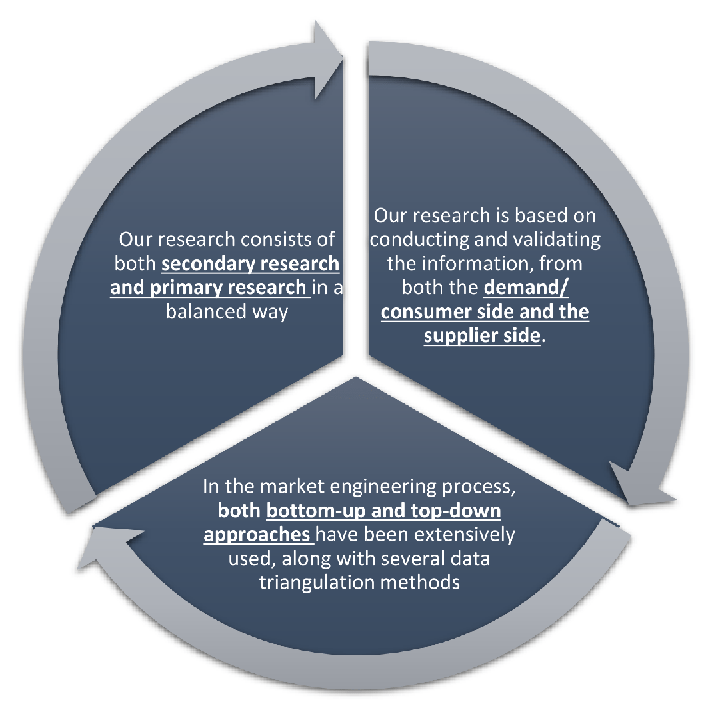
MarketGenics leverages a dedicated industry panel of experts and a comprehensive suite of paid databases to effectively collect, consolidate, and analyze market intelligence.
Our approach has consistently proven to be reliable and effective in generating accurate market insights, identifying key industry trends, and uncovering emerging business opportunities.
Through both primary and secondary research, we capture and analyze critical company-level data such as manufacturing footprints, including technical centers, R&D facilities, sales offices, and headquarters.
Our expert panel further enhances our ability to estimate market size for specific brands based on validated field-level intelligence.
Our data mining techniques incorporate both parametric and non-parametric methods, allowing for structured data collection, sorting, processing, and cleaning.
Demand projections are derived from large-scale data sets analyzed through proprietary algorithms, culminating in robust and reliable market sizing.
Research Approach
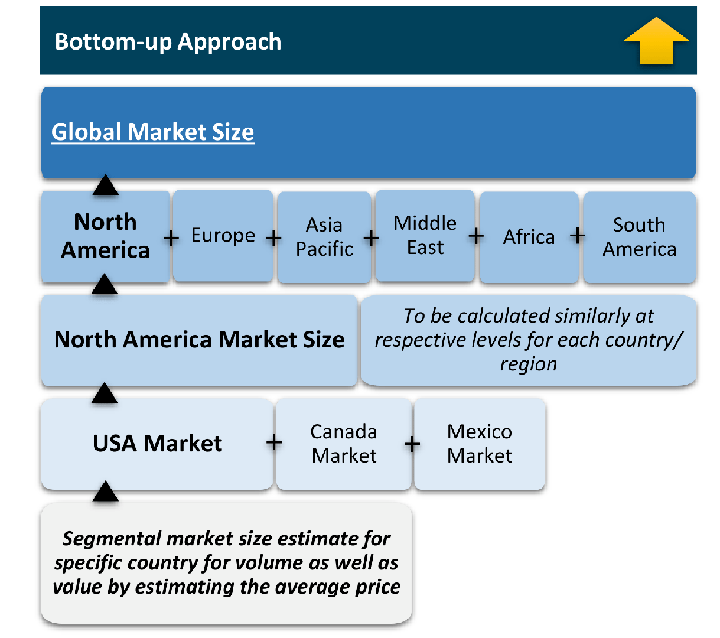
The bottom-up approach builds market estimates by starting with the smallest addressable market units and systematically aggregating them to create comprehensive market size projections.
This method begins with specific, granular data points and builds upward to create the complete market landscape.
Customer Analysis → Segmental Analysis → Geographical Analysis
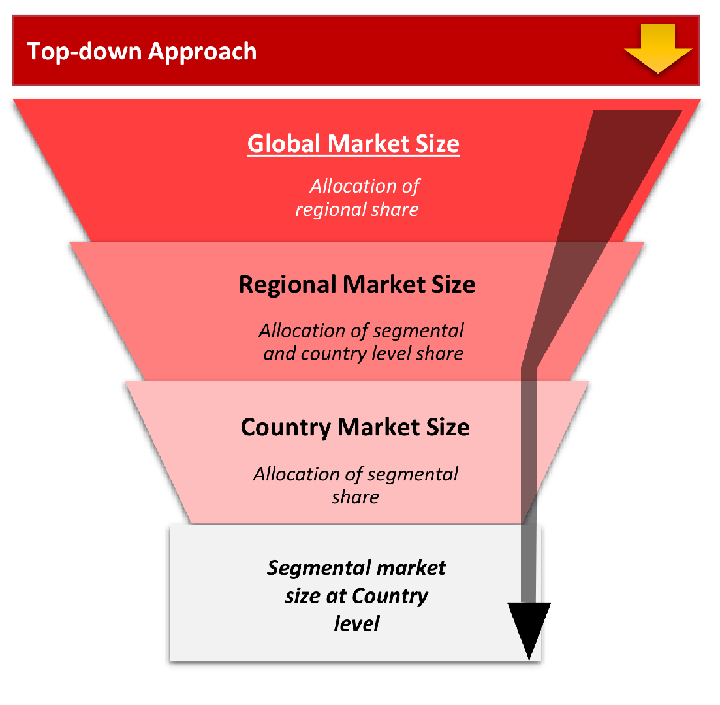
The top-down approach starts with the broadest possible market data and systematically narrows it down through a series of filters and assumptions to arrive at specific market segments or opportunities.
This method begins with the big picture and works downward to increasingly specific market slices.
TAM → SAM → SOM
Research Methods
Desk / Secondary Research
While analysing the market, we extensively study secondary sources, directories, and databases to identify and collect information useful for this technical, market-oriented, and commercial report. Secondary sources that we utilize are not only the public sources, but it is a combination of Open Source, Associations, Paid Databases, MG Repository & Knowledgebase, and others.
- Company websites, annual reports, financial reports, broker reports, and investor presentations
- National government documents, statistical databases and reports
- News articles, press releases and web-casts specific to the companies operating in the market, Magazines, reports, and others
- We gather information from commercial data sources for deriving company specific data such as segmental revenue, share for geography, product revenue, and others
- Internal and external proprietary databases (industry-specific), relevant patent, and regulatory databases
- Governing Bodies, Government Organizations
- Relevant Authorities, Country-specific Associations for Industries
We also employ the model mapping approach to estimate the product level market data through the players' product portfolio
Primary Research
Primary research/ interviews is vital in analyzing the market. Most of the cases involves paid primary interviews. Primary sources include primary interviews through e-mail interactions, telephonic interviews, surveys as well as face-to-face interviews with the different stakeholders across the value chain including several industry experts.
| Type of Respondents | Number of Primaries |
|---|---|
| Tier 2/3 Suppliers | ~20 |
| Tier 1 Suppliers | ~25 |
| End-users | ~25 |
| Industry Expert/ Panel/ Consultant | ~30 |
| Total | ~100 |
MG Knowledgebase
• Repository of industry blog, newsletter and case studies
• Online platform covering detailed market reports, and company profiles
Forecasting Factors and Models
Forecasting Factors
- Historical Trends – Past market patterns, cycles, and major events that shaped how markets behave over time. Understanding past trends helps predict future behavior.
- Industry Factors – Specific characteristics of the industry like structure, regulations, and innovation cycles that affect market dynamics.
- Macroeconomic Factors – Economic conditions like GDP growth, inflation, and employment rates that affect how much money people have to spend.
- Demographic Factors – Population characteristics like age, income, and location that determine who can buy your product.
- Technology Factors – How quickly people adopt new technology and how much technology infrastructure exists.
- Regulatory Factors – Government rules, laws, and policies that can help or restrict market growth.
- Competitive Factors – Analyzing competition structure such as degree of competition and bargaining power of buyers and suppliers.
Forecasting Models / Techniques
Multiple Regression Analysis
- Identify and quantify factors that drive market changes
- Statistical modeling to establish relationships between market drivers and outcomes
Time Series Analysis – Seasonal Patterns
- Understand regular cyclical patterns in market demand
- Advanced statistical techniques to separate trend, seasonal, and irregular components
Time Series Analysis – Trend Analysis
- Identify underlying market growth patterns and momentum
- Statistical analysis of historical data to project future trends
Expert Opinion – Expert Interviews
- Gather deep industry insights and contextual understanding
- In-depth interviews with key industry stakeholders
Multi-Scenario Development
- Prepare for uncertainty by modeling different possible futures
- Creating optimistic, pessimistic, and most likely scenarios
Time Series Analysis – Moving Averages
- Sophisticated forecasting for complex time series data
- Auto-regressive integrated moving average models with seasonal components
Econometric Models
- Apply economic theory to market forecasting
- Sophisticated economic models that account for market interactions
Expert Opinion – Delphi Method
- Harness collective wisdom of industry experts
- Structured, multi-round expert consultation process
Monte Carlo Simulation
- Quantify uncertainty and probability distributions
- Thousands of simulations with varying input parameters
Research Analysis
Our research framework is built upon the fundamental principle of validating market intelligence from both demand and supply perspectives. This dual-sided approach ensures comprehensive market understanding and reduces the risk of single-source bias.
Demand-Side Analysis: We understand end-user/application behavior, preferences, and market needs along with the penetration of the product for specific application.
Supply-Side Analysis: We estimate overall market revenue, analyze the segmental share along with industry capacity, competitive landscape, and market structure.
Validation & Evaluation
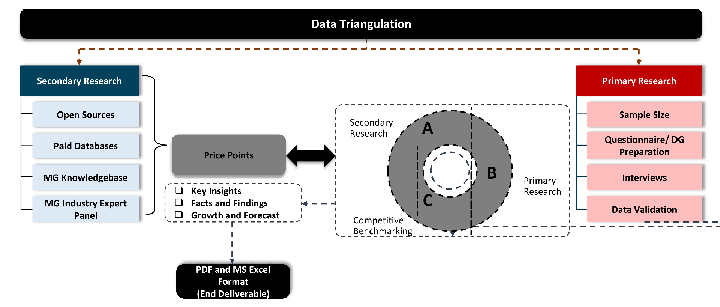
Data triangulation is a validation technique that uses multiple methods, sources, or perspectives to examine the same research question, thereby increasing the credibility and reliability of research findings. In market research, triangulation serves as a quality assurance mechanism that helps identify and minimize bias, validate assumptions, and ensure accuracy in market estimates.
- Data Source Triangulation – Using multiple data sources to examine the same phenomenon
- Methodological Triangulation – Using multiple research methods to study the same research question
- Investigator Triangulation – Using multiple researchers or analysts to examine the same data
- Theoretical Triangulation – Using multiple theoretical perspectives to interpret the same data
Custom Market Research Services
We will customise the research for you, in case the report listed above does not meet your requirements.
Get 10% Free Customisation