E-bike Drive Unit Market Size, Share & Trends Analysis Report by Drive Unit Type (Hub Drive Units, Mid‑Drive Units), Motor Power Rating, E‑Bike Type, Component, Technology, Torque Output, End User, Sales Channel and Geography (North America, Europe, Asia Pacific, Middle East, Africa, and South America) – Global Industry Data, Trends, and Forecasts, 2026–2035
|
Market Structure & Evolution |
|
|
Segmental Data Insights |
|
|
Demand Trends |
|
|
Competitive Landscape |
|
|
Strategic Development |
|
|
Future Outlook & Opportunities |
|
E-bike Drive Unit Market Size, Share, and Growth
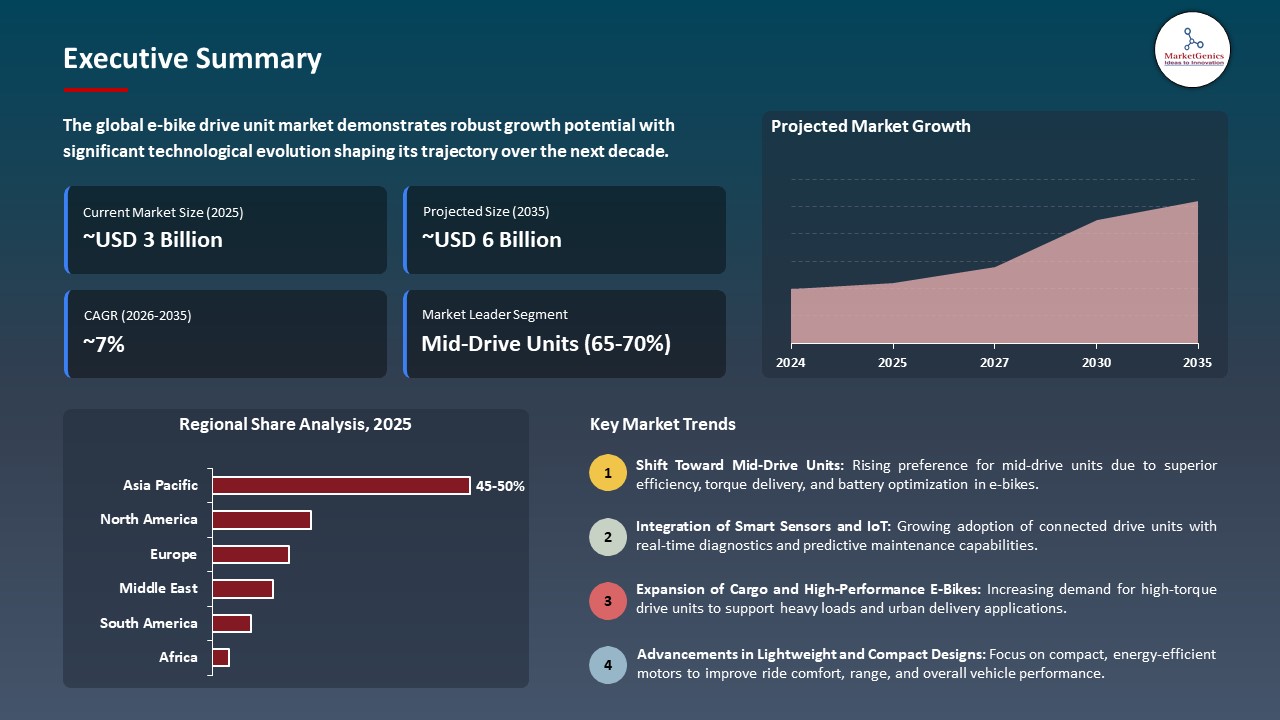
The global E-bike drive unit market is experiencing robust growth, with its estimated value of USD 2.8 billion in the year 2025 and USD 5.7 billion by the period 2035, registering a CAGR of 7.2% during the forecast period.
SEG Automotive and Octagon announced a joint venture in April 2025 to develop a lightweight mid-drive electric bike motor for premium models. This partnership utilizes SEG's experience in automotive electrical machines and Octagon's manufacturing capabilities for drivetrain systems, providing improved power-to-weight ratio and torque delivery on high-performance electric bicycles and increasing the integration of electric bike drive units into many different styles of bicycles.
Driven by various factors, such as the growing development of high-performance mid and hub drive systems that improve rider's experience, reliability, and performance, the global E-bike drive unit market will expand quickly through 2025. An example is Bosch's September 2025 release of its new Performance Line CX Smart System, which features the first Intelligent Torque Sensor combined with an adaptive power control system that determines the amount of assistance the E-bike driver receives based on the terrain and rider input. This new technology improves the overall smoothness of riding while increasing efficiency.
Multiple factors are contributing to increased urbanization and increased use of environment-friendly modes of transportation, plus demand for fitness/recreational cycling by consumers are driving the need for more sophisticated, high-performance drive units. An example of this is Yamaha's new PWseries SE, released on August 20, 2025 and already being used by various European and Asian E-bike manufacturers. This motor has improved torque, less noise, and greater efficiency in its use of battery power.
Regulatory requirements for low-emission mobility, as well as the growing availability of reliable and connected E-bikes, are contributing to the expansion of the global E-bike drive unit market.
The key market opportunities are smart battery management systems, integrated control/display units, IoT-connected ride analytics, regenerative braking systems, and lightweight drivetrain components. The combination of these markets with the pure electric motorcycle manufacturer will provide the most effective means of increasing rider safety, performance, and efficiency while also increasing income opportunities for the E-bike market.
E-bike Drive Unit Market Dynamics and Trends
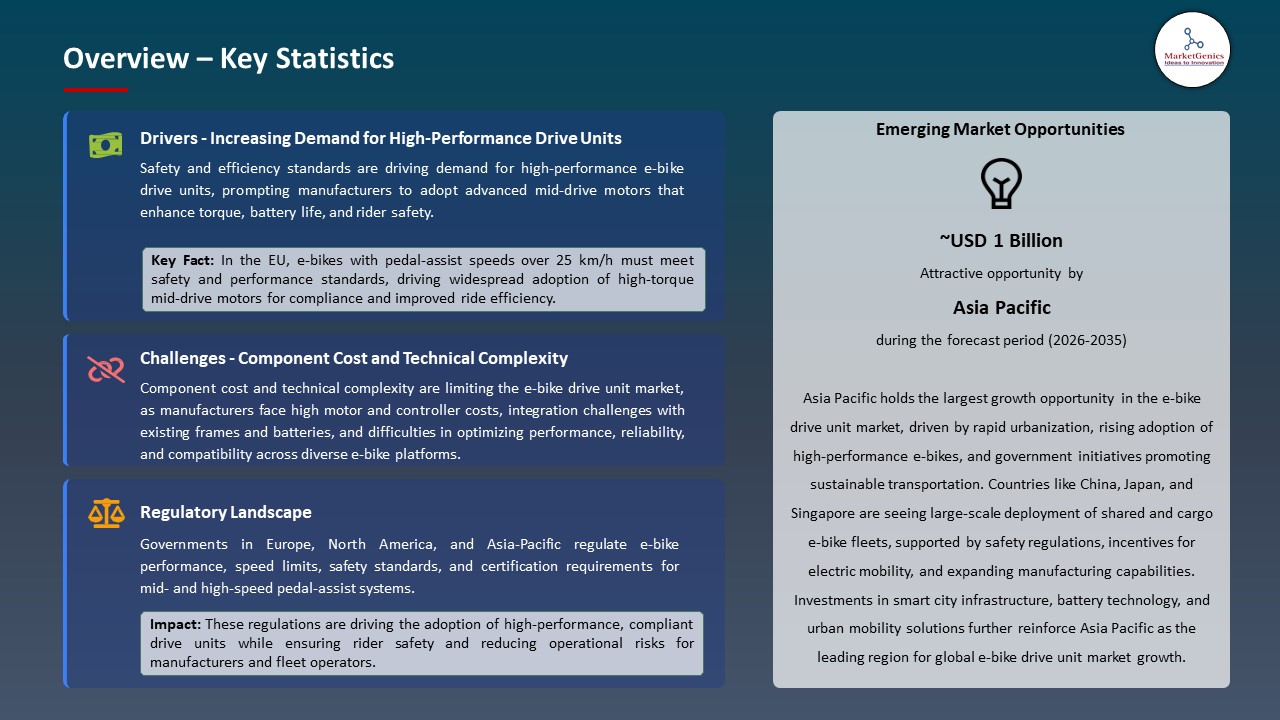
Driver: Increasing Demand for High‑Performance Drive Units Driven by Urban Mobility and Regulatory Push
-
Growing automotive security systems market growth will be primarily driven by tightening regulatory measures pertaining to automotive safety, including UNECE WP.29 (R155/R156), which require manufacturers to implement cybersecurity management systems as well as secure software update systems for newly manufactured vehicles. As a result, automotive designers and manufacturers will be required to implement advanced alarm systems, immobilizers, and intrusion detection technology into their products.
- New regulations requiring more stringent theft prevention, electronic key protection and vehicle tracking, introduced by regulatory authorities in Europe, North America and parts of Asia/Pacific, are anticipated to lead to rapid adoption of encrypted keyless entry systems, secure gateway access and anti-relay attack systems.
- As more automobiles are equipped with increased connectivity and software-defined architecture, manufacturers will have additional incentives to make investments in a physical and digital vehicle security system that is fully integrated with the cybersecurity system. All these factors are likely to boost the growth of the E-bike drive unit market.
Restraint: Component Cost and Technical Complexity Limiting Adoption
-
The cost of a mid-drive system versus the price of a standard hub motor is very much higher in price-sensitive markets, which continues to slow the growth of advanced mid-drive systems into emerging markets.
- The complexity involved with integrating a mid-drive system into an e-bike frame is due to the various components (torque sensor calibration, controller tuning and compatibility). Because of this complexity, many small OEMs face longer development times and higher production costs for a mid-drive system than the standard hub motor.
- The limitations of batteries, such as range anxiety and reduced performance due to cell degradation when under high loads, have a negative effect on the consumer acceptance of high-powered drive systems. All these factors are likely to restrain the growth of the E-bike drive unit market.
Opportunity: Aftermarket Innovation and Emerging Use Cases
-
Advanced mid-drive units, while still significantly more expensive than basic hub motors, remain a barrier for price-sensitive markets, which slow growth in developing markets.
- The complexity of integration - including calibrating and tuning torque sensors and controllers to work with different frames - can create longer development times and increased costs for small OEMs compared to larger manufacturers. As per 2024, the global e-bike drive units’ market has continued to grow dramatically through the sale of aftermarket drive units and retrofit kits. Approximately 450,000 of these drive units were sold globally, which indicates an increasing need for performance and replacement solutions, in addition to OEM installation.
- The limitations of batteries, particularly range anxiety and degradation of battery cells at high load levels continue to limit the ability of consumers to adopt and use high-performing drive units; this indicates that aftermarket suppliers will be able to take advantage of opportunities to create retrofit kits to prolong and expand the capabilities of the existing E-bike drive unit market.
Key Trend: Integration of IoT, AI‑Enhanced Control, and Connected Ecosystems
-
The ride quality, battery optimization and diagnostics are enhanced by using IoT-connectivity and AI-driven torque management in their drive units to create an enhanced overall driving experience. With the introduction of real time power mapping and adaptive support profiles, both the efficiency of E-bikes and the rider's immediacy of feedback have improved significantly.
- TQ-Systems introduced their smart mid-drive platform to the market in July of 2025. Their product utilizes integrated sensors as part of their AI power-delivery optimization solution, which ultimately allows them to measure the improvements in energy used by the rider during riding and allow for a smoother transition in assistance.
- The creation of connected E-bike ecosystems (i.e., smartphones, cloud analytics, software updates over the air) has dramatically changed the way the performance, servibility, and user experience interact and intersect with each other across the greater micromobility space in E-bike drive unit market. E-bike drive unit market.
E-bike-Drive-Unit-Market Analysis and Segmental Data
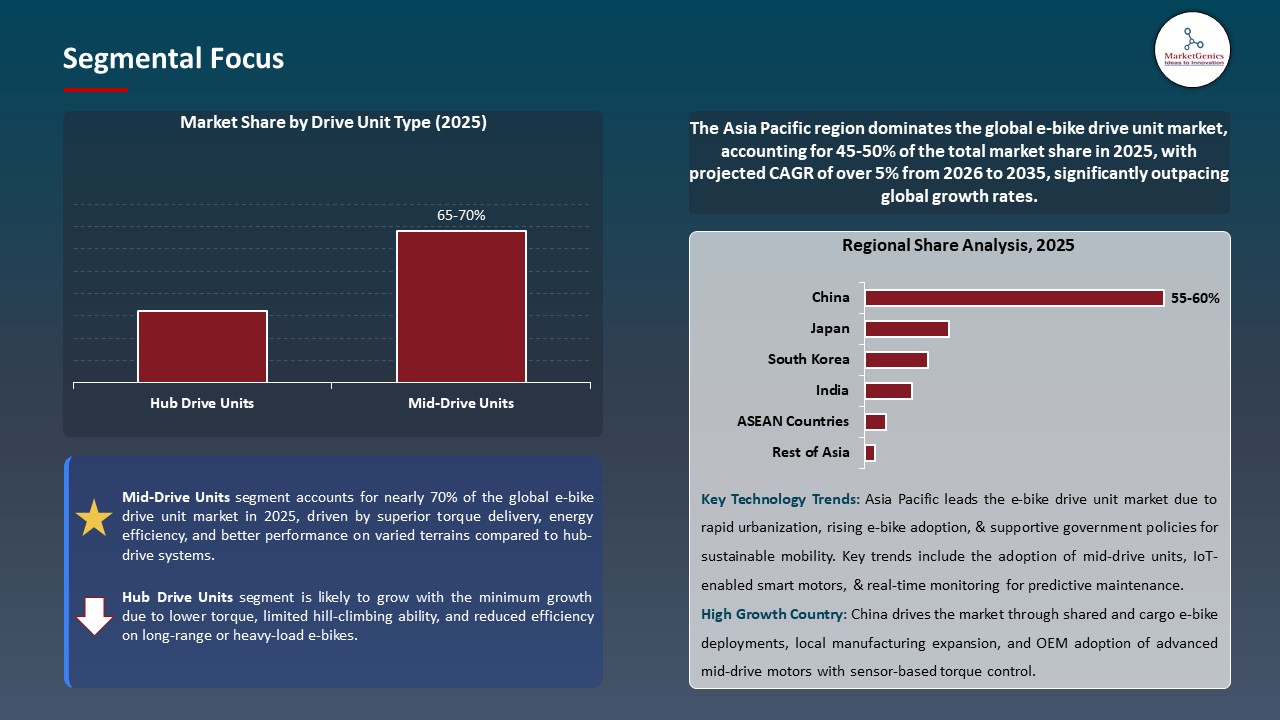
“Mid‑Drive Units Dominate Global E-bike Drive Unit Market amid Superior Efficiency and Performance”
-
The worldwide E-bike drive unit market is primarily composed of mid-drive units because they offer superior torque, power efficiency, and natural riding feel while providing power to the bicycle through the drivetrain. The design of the mid-drive unit allows it to use the bicycle's gear system to enhance hill climbing ability, improve range optimization, and achieve optimal weight distribution. These characteristics make mid-drive units’ essential components of cargo, trekking, and performance E-bikes operating in urban and mixed-terrain environments.
- The e-mobility industry continues to underscore this trend. In 2024, the ultra-lightweight HPR Mid Drive platform produced by TQ-Systems achieved considerable OEM adoption among premium road and gravel E-bikes due to rising consumer interest in compact, high-efficiency motors that maintain the classic riding experience of cycling.
- The scalability of the mid-drive architecture will enhance its versatility across a variety of needs, and the fact that mid-drives comply with regulations from all over the world (Pedelecs) will continue to be the key to mid-drive units retaining and continuing to grow as the leader in E-bike drive unit market.
“Asia Pacific Dominates E-bike Drive Unit Market amid Manufacturing Scale and Urban Mobility Demand”
-
The Asia Pacific region is at the forefront of the E-bike drive unit global market due to the large amount of manufacturing capacity and strong supply chain within the region, with China being the largest producer and exporter of E-bikes and E-bike drive components. The production ecosystem that China has created, with the help of government-funded programs and a well-developed network of suppliers, benefits from high-volume production, resulting in a lower cost of production and a more rapid entry into the market.
- Several cities in Asia Pacific (especially in China, India, Japan, and Southeast Asia) are experiencing extremely rapid urbanization and population growth. Because, the demand for affordable and efficient electric mobility solutions has never been higher, and, therefore, E-bikes are becoming the preferred mode of transport for short-distance travel and commuting to work.
- The E-bike market continues to grow due to the initial adoption of E-bike technology and continued innovation in E-bike motors and drive systems. For example, in March 2025, the government of India announced plans to add 5,000 electric vehicle charging stations to the state of Andhra Pradesh. This is expected to improve the infrastructure for E-bikes and combining large-scale manufacturing and supportive government policy, increasing urban mobility demands, and continuous infrastructure development, the Asia Pacific region holds a dominant position in the global E-bike drive unit market.
E-bike-Drive-Unit-Market Ecosystem
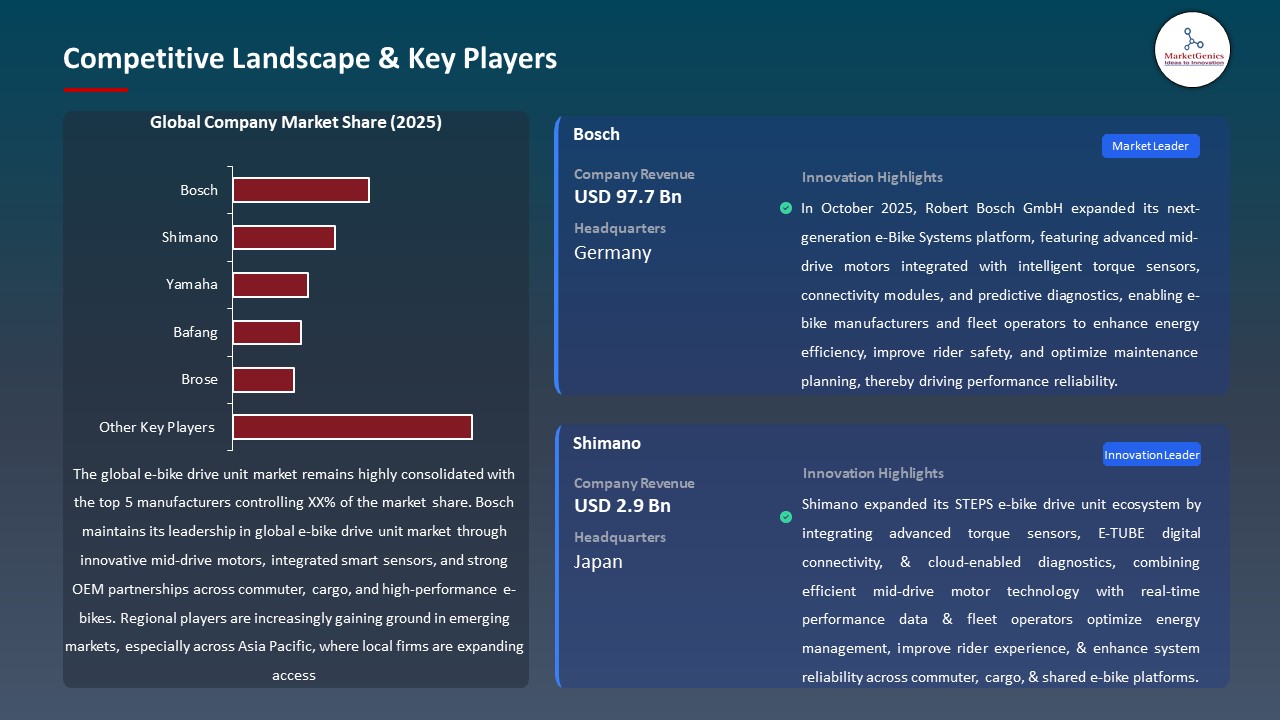
The E-bike drive unit market is highly consolidated, the key players are technologically advanced manufacturers, such as Robert Bosch GmbH, Shimano, Yamaha Motor, Bafang, Mahle eBike Systems and Brose, which dominate by using high-performance, high-efficiency mid-drive architectures, integrated electronics and strong relationships with original equipment manufacturers (OEMs). With proprietary algorithm-based motor controls, integrated torque sensors and compact designs, these companies have set the bar for performance and reliability.
Many leading manufacturers are concentrating on developing niche and specialized products as a means of innovating new products. For example, some companies are focusing on lightweight mid-drive units for road and gravel E-bikes or high-torque systems for cargo and utility E-bikes, while others offer ultra-compact drive systems (e.g., Fazua and TQ-Systems) to improve natural riding feel. Companies such as GoSwissDrive and Xiongda have developed geared hub motors or modular designs that are geared toward specific use cases.
Moreover, government organizations and research institutions are playing an important role in supporting the advancement of E-bike drive units. The European Union has provided funding for mobility research in April 2024 to promote efficiency increases in electric drivetrain systems, leading to decreased energy use and increased range. Manufacturers are also expanding their product offerings with integrated batteries, displays, and connectivity solutions to improve sustainability and operational efficiency.
In June 2024, witnessed the launch of Mahle E-Bike Systems' Smart Transport Solutions that feature connected digital products with smart energy management systems, providing both an increase in range performance as well as increased system efficiency while also demonstrating the continued advancement of technology on the E-Bike market.
Recent Development and Strategic Overview:
-
In March 2025, Yamaha Motor Co., Ltd. completed the acquisition of Brose’s e‑bike drive unit business, expanding its global footprint in mid‑drive systems. This acquisition brings Brose’s advanced drive technologies and engineering team into Yamaha’s e‑bike systems division, enabling Yamaha to accelerate product development and offer a broader range of high‑performance drive units across international markets.
- In October 2024, Shimano added an extension to the STEPS e-Bike Drive Unit Ecosystem that will now feature connected automatic shifting and a new adaptive assist control. This new system integrates Torque sensors, Cadence data, and Real-Time Motor information to provide optimized power transfer based on multiple riding conditions. As with the old system, the Drive Unit and Drivetrain will now work seamlessly together, without requiring any manual adjustments to be made by the rider.
Report Scope
|
Attribute |
Detail |
|
Market Size in 2025 |
USD 2.8 Bn |
|
Market Forecast Value in 2035 |
USD 5.7 Bn |
|
Growth Rate (CAGR) |
7.2% |
|
Forecast Period |
2026 – 2035 |
|
Historical Data Available for |
2021 – 2024 |
|
Market Size Units |
USD Bn for Value Thousand Units for Volume |
|
Report Format |
Electronic (PDF) + Excel |
|
Regions and Countries Covered |
|||||
|
North America |
Europe |
Asia Pacific |
Middle East |
Africa |
South America |
|
|
|
|
|
|
|
Companies Covered |
|||||
|
|
|
|
|
|
E-bike-Drive-Unit-Market Segmentation and Highlights
|
Segment |
Sub-segment |
|
E-bike Drive Unit Market, By Drive Unit Type |
|
|
E-bike Drive Unit Market, By Motor Power Rating |
|
|
E-bike Drive Unit Market, By E‑Bike Type |
|
|
E-bike Drive Unit Market, By Component |
|
|
E-bike Drive Unit Market, By Technology |
|
|
E-bike Drive Unit Market, By Torque Output |
|
|
E-bike Drive Unit Market, By End User |
|
|
E-bike Drive Unit Market, By Sales Channel |
|
Frequently Asked Questions
Table of Contents
- 1. Research Methodology and Assumptions
- 1.1. Definitions
- 1.2. Research Design and Approach
- 1.3. Data Collection Methods
- 1.4. Base Estimates and Calculations
- 1.5. Forecasting Models
- 1.5.1. Key Forecast Factors & Impact Analysis
- 1.6. Secondary Research
- 1.6.1. Open Sources
- 1.6.2. Paid Databases
- 1.6.3. Associations
- 1.7. Primary Research
- 1.7.1. Primary Sources
- 1.7.2. Primary Interviews with Stakeholders across Ecosystem
- 2. Executive Summary
- 2.1. Global E-bike Drive Unit Market Outlook
- 2.1.1. E-bike Drive Unit Market Size (Value - US$ Bn and Volume - Thousand Units), and Forecasts, 2021-2035
- 2.1.2. Compounded Annual Growth Rate Analysis
- 2.1.3. Growth Opportunity Analysis
- 2.1.4. Segmental Share Analysis
- 2.1.5. Geographical Share Analysis
- 2.2. Market Analysis and Facts
- 2.3. Supply-Demand Analysis
- 2.4. Competitive Benchmarking
- 2.5. Go-to- Market Strategy
- 2.5.1. Customer/ End-use Industry Assessment
- 2.5.2. Growth Opportunity Data, 2026-2035
- 2.5.2.1. Regional Data
- 2.5.2.2. Country Data
- 2.5.2.3. Segmental Data
- 2.5.3. Identification of Potential Market Spaces
- 2.5.4. GAP Analysis
- 2.5.5. Potential Attractive Price Points
- 2.5.6. Prevailing Market Risks & Challenges
- 2.5.7. Preferred Sales & Marketing Strategies
- 2.5.8. Key Recommendations and Analysis
- 2.5.9. A Way Forward
- 2.1. Global E-bike Drive Unit Market Outlook
- 3. Industry Data and Premium Insights
- 3.1. Global Automotive & Transportation Ecosystem Overview, 2025
- 3.1.1. Automotive & Transportation Industry Analysis
- 3.1.2. Key Trends for Automotive & Transportation Industry
- 3.1.3. Regional Distribution for Automotive & Transportation Industry
- 3.2. Supplier Customer Data
- 3.3. Technology Roadmap and Developments
- 3.4. Trade Analysis
- 3.4.1. Import & Export Analysis, 2025
- 3.4.2. Top Importing Countries
- 3.4.3. Top Exporting Countries
- 3.5. Trump Tariff Impact Analysis
- 3.5.1. Manufacturer
- 3.5.1.1. Based on the component & Raw material
- 3.5.2. Supply Chain
- 3.5.3. End Consumer
- 3.5.1. Manufacturer
- 3.6. Raw Material Analysis
- 3.1. Global Automotive & Transportation Ecosystem Overview, 2025
- 4. Market Overview
- 4.1. Market Dynamics
- 4.1.1. Drivers
- 4.1.1.1. Rising adoption of e-bikes for urban commuting and last-mile delivery.
- 4.1.1.2. Growing demand for high-torque, energy-efficient, and lightweight drive units.
- 4.1.1.3. Increasing investments in sustainable mobility and cycling infrastructure.
- 4.1.2. Restraints
- 4.1.2.1. High cost of advanced mid-drive and connected drive unit systems.
- 4.1.2.2. Performance limitations across diverse terrains and payload conditions.
- 4.1.1. Drivers
- 4.2. Key Trend Analysis
- 4.3. Regulatory Framework
- 4.3.1. Key Regulations, Norms, and Subsidies, by Key Countries
- 4.3.2. Tariffs and Standards
- 4.3.3. Impact Analysis of Regulations on the Market
- 4.4. Value Chain Analysis
- 4.4.1. Component Suppliers
- 4.4.2. System Integrators
- 4.4.3. Drive Unit Manufacturers
- 4.4.4. E-bike Manufacturers/ OEM
- 4.4.5. Distributors
- 4.4.6. End Users/ Customers
- 4.5. Cost Structure Analysis
- 4.5.1. Parameter’s Share for Cost Associated
- 4.5.2. COGP vs COGS
- 4.5.3. Profit Margin Analysis
- 4.6. Pricing Analysis
- 4.6.1. Regional Pricing Analysis
- 4.6.2. Segmental Pricing Trends
- 4.6.3. Factors Influencing Pricing
- 4.7. Porter’s Five Forces Analysis
- 4.8. PESTEL Analysis
- 4.9. Global E-bike Drive Unit Market Demand
- 4.9.1. Historical Market Size –Value (US$ Bn) and Volume (Thousand Units), 2020-2024
- 4.9.2. Current and Future Market Size –Value (US$ Bn) and Volume (Thousand Units), 2026–2035
- 4.9.2.1. Y-o-Y Growth Trends
- 4.9.2.2. Absolute $ Opportunity Assessment
- 4.1. Market Dynamics
- 5. Competition Landscape
- 5.1. Competition structure
- 5.1.1. Fragmented v/s consolidated
- 5.2. Company Share Analysis, 2025
- 5.2.1. Global Company Market Share
- 5.2.2. By Region
- 5.2.2.1. North America
- 5.2.2.2. Europe
- 5.2.2.3. Asia Pacific
- 5.2.2.4. Middle East
- 5.2.2.5. Africa
- 5.2.2.6. South America
- 5.3. Product Comparison Matrix
- 5.3.1. Specifications
- 5.3.2. Market Positioning
- 5.3.3. Pricing
- 5.1. Competition structure
- 6. Global E-bike Drive Unit Market Analysis, by Drive Unit Type
- 6.1. Key Segment Analysis
- 6.2. E-bike Drive Unit Market Size (Value - US$ Bn and Volume - Thousand Units), Analysis, and Forecasts, by Drive Unit Type, 2021-2035
- 6.2.1. Hub Drive Units
- 6.2.2. Mid‑Drive Units
- 7. Global E-bike Drive Unit Market Analysis, by Motor Power Rating
- 7.1. Key Segment Analysis
- 7.2. E-bike Drive Unit Market Size (Value - US$ Bn and Volume - Thousand Units), Analysis, and Forecasts, by Motor Power Rating, 2021-2035
- 7.2.1. Up to 250 W
- 7.2.2. 251–500 W
- 7.2.3. Above 500 W
- 8. Global E-bike Drive Unit Market Analysis, by E‑Bike Type
- 8.1. Key Segment Analysis
- 8.2. E-bike Drive Unit Market Size (Value - US$ Bn and Volume - Thousand Units), Analysis, and Forecasts, by E‑Bike Type, 2021-2035
- 8.2.1. City/ Commuter E‑Bikes
- 8.2.2. Mountain E‑Bikes
- 8.2.3. Cargo E‑Bikes
- 8.2.4. Folding E‑Bikes
- 8.2.5. Road E‑Bikes
- 8.2.6. Recreational E‑Bikes
- 8.2.7. Others
- 9. Global E-bike Drive Unit Market Analysis, by Component
- 9.1. Key Segment Analysis
- 9.2. E-bike Drive Unit Market Size (Value - US$ Bn and Volume - Thousand Units), Analysis, and Forecasts, by Component, 2021-2035
- 9.2.1. Motors
- 9.2.2. Controllers
- 9.2.3. Sensors
- 9.2.4. Display Systems
- 9.2.5. Battery Interfaces
- 9.2.6. Transmission/Gear Systems
- 9.2.7. Others
- 10. Global E-bike Drive Unit Market Analysis, by Technology
- 10.1. Key Segment Analysis
- 10.2. E-bike Drive Unit Market Size (Value - US$ Bn and Volume - Thousand Units), Analysis, and Forecasts, by Technology, 2021-2035
- 10.2.1. Brushless DC (BLDC) Motor
- 10.2.2. Geared Hub Motor
- 10.2.3. Direct Drive Hub Motor
- 10.2.4. Mid‑Drive Motor with Integrated Sensors
- 10.2.5. Others
- 11. Global E-bike Drive Unit Market Analysis, by Torque Output
- 11.1. Key Segment Analysis
- 11.2. E-bike Drive Unit Market Size (Value - US$ Bn and Volume - Thousand Units), Analysis, and Forecasts, by Torque Output, 2021-2035
- 11.2.1. Low Torque (<50 Nm)
- 11.2.2. Medium Torque (50–80 Nm)
- 11.2.3. High Torque (>80 Nm)
- 12. Global E-bike Drive Unit Market Analysis, by End-User
- 12.1. Key Segment Analysis
- 12.2. E-bike Drive Unit Market Size (Value - US$ Bn and Volume - Thousand Units), Analysis, and Forecasts, by End-User, 2021-2035
- 12.2.1. Individual Consumers
- 12.2.2. Fleet & Shared E‑Bikes
- 12.2.3. Commercial/Delivery E‑Bikes
- 12.2.4. Others
- 13. Global E-bike Drive Unit Market Analysis, by Sales Channel
- 13.1. Key Segment Analysis
- 13.2. E-bike Drive Unit Market Size (Value - US$ Bn and Volume - Thousand Units), Analysis, and Forecasts, by Sales Channel, 2021-2035
- 13.2.1. OEM
- 13.2.2. Aftermarket
- 14. Global E-bike Drive Unit Market Analysis and Forecasts, by Region
- 14.1. Key Findings
- 14.2. E-bike Drive Unit Market Size (Value - US$ Bn and Volume - Thousand Units), Analysis, and Forecasts, by Region, 2021-2035
- 14.2.1. North America
- 14.2.2. Europe
- 14.2.3. Asia Pacific
- 14.2.4. Middle East
- 14.2.5. Africa
- 14.2.6. South America
- 15. North America E-bike Drive Unit Market Analysis
- 15.1. Key Segment Analysis
- 15.2. Regional Snapshot
- 15.3. North America E-bike Drive Unit Market Size Value - US$ Bn and Volume - Thousand Units), Analysis, and Forecasts, 2021-2035
- 15.3.1. Drive Unit Type
- 15.3.2. Motor Power Rating
- 15.3.3. E‑Bike Type
- 15.3.4. Component
- 15.3.5. Technology
- 15.3.6. Torque Output
- 15.3.7. End User
- 15.3.8. Sales Channel
- 15.3.9. Country
- 15.3.9.1. USA
- 15.3.9.2. Canada
- 15.3.9.3. Mexico
- 15.4. USA E-bike Drive Unit Market
- 15.4.1. Country Segmental Analysis
- 15.4.2. Drive Unit Type
- 15.4.3. Motor Power Rating
- 15.4.4. E‑Bike Type
- 15.4.5. Component
- 15.4.6. Technology
- 15.4.7. Torque Output
- 15.4.8. End User
- 15.4.9. Sales Channel
- 15.5. Canada E-bike Drive Unit Market
- 15.5.1. Country Segmental Analysis
- 15.5.2. Drive Unit Type
- 15.5.3. Motor Power Rating
- 15.5.4. E‑Bike Type
- 15.5.5. Component
- 15.5.6. Technology
- 15.5.7. Torque Output
- 15.5.8. End User
- 15.5.9. Sales Channel l
- 15.6. Mexico E-bike Drive Unit Market
- 15.6.1. Country Segmental Analysis
- 15.6.2. Drive Unit Type
- 15.6.3. Motor Power Rating
- 15.6.4. E‑Bike Type
- 15.6.5. Component
- 15.6.6. Technology
- 15.6.7. Torque Output
- 15.6.8. End User
- 15.6.9. Sales Channel
- 16. Europe E-bike Drive Unit Market Analysis
- 16.1. Key Segment Analysis
- 16.2. Regional Snapshot
- 16.3. Europe E-bike Drive Unit Market Size (Value - US$ Bn and Volume - Thousand Units), Analysis, and Forecasts, 2021-2035
- 16.3.1. Drive Unit Type
- 16.3.2. Motor Power Rating
- 16.3.3. E‑Bike Type
- 16.3.4. Component
- 16.3.5. Technology
- 16.3.6. Torque Output
- 16.3.7. End User
- 16.3.8. Sales Channel
- 16.3.9. Country
- 16.3.9.1. Germany
- 16.3.9.2. United Kingdom
- 16.3.9.3. France
- 16.3.9.4. Italy
- 16.3.9.5. Spain
- 16.3.9.6. Netherlands
- 16.3.9.7. Nordic Countries
- 16.3.9.8. Poland
- 16.3.9.9. Russia & CIS
- 16.3.9.10. Rest of Europe
- 16.4. Germany E-bike Drive Unit Market
- 16.4.1. Country Segmental Analysis
- 16.4.2. Drive Unit Type
- 16.4.3. Motor Power Rating
- 16.4.4. E‑Bike Type
- 16.4.5. Component
- 16.4.6. Technology
- 16.4.7. Torque Output
- 16.4.8. End User
- 16.4.9. Sales Channel
- 16.5. United Kingdom E-bike Drive Unit Market
- 16.5.1. Country Segmental Analysis
- 16.5.2. Drive Unit Type
- 16.5.3. Motor Power Rating
- 16.5.4. E‑Bike Type
- 16.5.5. Component
- 16.5.6. Technology
- 16.5.7. Torque Output
- 16.5.8. End User
- 16.5.9. Sales Channel
- 16.6. France E-bike Drive Unit Market
- 16.6.1. Country Segmental Analysis
- 16.6.2. Drive Unit Type
- 16.6.3. Motor Power Rating
- 16.6.4. E‑Bike Type
- 16.6.5. Component
- 16.6.6. Technology
- 16.6.7. Torque Output
- 16.6.8. End User
- 16.6.9. Sales Channel
- 16.7. Italy E-bike Drive Unit Market
- 16.7.1. Country Segmental Analysis
- 16.7.2. Drive Unit Type
- 16.7.3. Motor Power Rating
- 16.7.4. E‑Bike Type
- 16.7.5. Component
- 16.7.6. Technology
- 16.7.7. Torque Output
- 16.7.8. End User
- 16.7.9. Sales Channel
- 16.8. Spain E-bike Drive Unit Market
- 16.8.1. Country Segmental Analysis
- 16.8.2. Drive Unit Type
- 16.8.3. Motor Power Rating
- 16.8.4. E‑Bike Type
- 16.8.5. Component
- 16.8.6. Technology
- 16.8.7. Torque Output
- 16.8.8. End User
- 16.8.9. Sales Channel
- 16.9. Netherlands E-bike Drive Unit Market
- 16.9.1. Country Segmental Analysis
- 16.9.2. Drive Unit Type
- 16.9.3. Motor Power Rating
- 16.9.4. E‑Bike Type
- 16.9.5. Component
- 16.9.6. Technology
- 16.9.7. Torque Output
- 16.9.8. End User
- 16.9.9. Sales Channel
- 16.10. Nordic Countries E-bike Drive Unit Market
- 16.10.1. Country Segmental Analysis
- 16.10.2. Drive Unit Type
- 16.10.3. Motor Power Rating
- 16.10.4. E‑Bike Type
- 16.10.5. Component
- 16.10.6. Technology
- 16.10.7. Torque Output
- 16.10.8. End User
- 16.10.9. Sales Channel
- 16.11. Poland E-bike Drive Unit Market
- 16.11.1. Country Segmental Analysis
- 16.11.2. Drive Unit Type
- 16.11.3. Motor Power Rating
- 16.11.4. E‑Bike Type
- 16.11.5. Component
- 16.11.6. Technology
- 16.11.7. Torque Output
- 16.11.8. End User
- 16.11.9. Sales Channel
- 16.12. Russia & CIS E-bike Drive Unit Market
- 16.12.1. Country Segmental Analysis
- 16.12.2. Drive Unit Type
- 16.12.3. Motor Power Rating
- 16.12.4. E‑Bike Type
- 16.12.5. Component
- 16.12.6. Technology
- 16.12.7. Torque Output
- 16.12.8. End User
- 16.12.9. Sales Channel
- 16.13. Rest of Europe E-bike Drive Unit Market
- 16.13.1. Country Segmental Analysis
- 16.13.2. Drive Unit Type
- 16.13.3. Motor Power Rating
- 16.13.4. E‑Bike Type
- 16.13.5. Component
- 16.13.6. Technology
- 16.13.7. Torque Output
- 16.13.8. End User
- 16.13.9. Sales Channel
- 17. Asia Pacific E-bike Drive Unit Market Analysis
- 17.1. Key Segment Analysis
- 17.2. Regional Snapshot
- 17.3. Asia Pacific E-bike Drive Unit Market Size (Value - US$ Bn and Volume - Thousand Units), Analysis, and Forecasts, 2021-2035
- 17.3.1. Drive Unit Type
- 17.3.2. Motor Power Rating
- 17.3.3. E‑Bike Type
- 17.3.4. Component
- 17.3.5. Technology
- 17.3.6. Torque Output
- 17.3.7. End User
- 17.3.8. Sales Channel
- 17.3.9. Country
- 17.3.9.1. China
- 17.3.9.2. India
- 17.3.9.3. Japan
- 17.3.9.4. South Korea
- 17.3.9.5. Australia and New Zealand
- 17.3.9.6. Indonesia
- 17.3.9.7. Malaysia
- 17.3.9.8. Thailand
- 17.3.9.9. Vietnam
- 17.3.9.10. Rest of Asia Pacific
- 17.4. China E-bike Drive Unit Market
- 17.4.1. Country Segmental Analysis
- 17.4.2. Drive Unit Type
- 17.4.3. Motor Power Rating
- 17.4.4. E‑Bike Type
- 17.4.5. Component
- 17.4.6. Technology
- 17.4.7. Torque Output
- 17.4.8. End User
- 17.4.9. Sales Channel
- 17.5. India E-bike Drive Unit Market
- 17.5.1. Country Segmental Analysis
- 17.5.2. Drive Unit Type
- 17.5.3. Motor Power Rating
- 17.5.4. E‑Bike Type
- 17.5.5. Component
- 17.5.6. Technology
- 17.5.7. Torque Output
- 17.5.8. End User
- 17.5.9. Sales Channel
- 17.6. Japan E-bike Drive Unit Market
- 17.6.1. Country Segmental Analysis
- 17.6.2. Drive Unit Type
- 17.6.3. Motor Power Rating
- 17.6.4. E‑Bike Type
- 17.6.5. Component
- 17.6.6. Technology
- 17.6.7. Torque Output
- 17.6.8. End User
- 17.6.9. Sales Channel
- 17.7. South Korea E-bike Drive Unit Market
- 17.7.1. Country Segmental Analysis
- 17.7.2. Drive Unit Type
- 17.7.3. Motor Power Rating
- 17.7.4. E‑Bike Type
- 17.7.5. Component
- 17.7.6. Technology
- 17.7.7. Torque Output
- 17.7.8. End User
- 17.7.9. Sales Channel
- 17.8. Australia and New Zealand E-bike Drive Unit Market
- 17.8.1. Country Segmental Analysis
- 17.8.2. Drive Unit Type
- 17.8.3. Motor Power Rating
- 17.8.4. E‑Bike Type
- 17.8.5. Component
- 17.8.6. Technology
- 17.8.7. Torque Output
- 17.8.8. End User
- 17.8.9. Sales Channel
- 17.9. Indonesia E-bike Drive Unit Market
- 17.9.1. Country Segmental Analysis
- 17.9.2. Drive Unit Type
- 17.9.3. Motor Power Rating
- 17.9.4. E‑Bike Type
- 17.9.5. Component
- 17.9.6. Technology
- 17.9.7. Torque Output
- 17.9.8. End User
- 17.9.9. Sales Channel
- 17.10. Malaysia E-bike Drive Unit Market
- 17.10.1. Country Segmental Analysis
- 17.10.2. Drive Unit Type
- 17.10.3. Motor Power Rating
- 17.10.4. E‑Bike Type
- 17.10.5. Component
- 17.10.6. Technology
- 17.10.7. Torque Output
- 17.10.8. End User
- 17.10.9. Sales Channel
- 17.11. Thailand E-bike Drive Unit Market
- 17.11.1. Country Segmental Analysis
- 17.11.2. Drive Unit Type
- 17.11.3. Motor Power Rating
- 17.11.4. E‑Bike Type
- 17.11.5. Component
- 17.11.6. Technology
- 17.11.7. Torque Output
- 17.11.8. End User
- 17.11.9. Sales Channel
- 17.12. Vietnam E-bike Drive Unit Market
- 17.12.1. Country Segmental Analysis
- 17.12.2. Drive Unit Type
- 17.12.3. Motor Power Rating
- 17.12.4. E‑Bike Type
- 17.12.5. Component
- 17.12.6. Technology
- 17.12.7. Torque Output
- 17.12.8. End User
- 17.12.9. Sales Channel
- 17.13. Rest of Asia Pacific E-bike Drive Unit Market
- 17.13.1. Country Segmental Analysis
- 17.13.2. Drive Unit Type
- 17.13.3. Motor Power Rating
- 17.13.4. E‑Bike Type
- 17.13.5. Component
- 17.13.6. Technology
- 17.13.7. Torque Output
- 17.13.8. End User
- 17.13.9. Sales Channel
- 18. Middle East E-bike Drive Unit Market Analysis
- 18.1. Key Segment Analysis
- 18.2. Regional Snapshot
- 18.3. Middle East E-bike Drive Unit Market Size (Value - US$ Bn and Volume - Thousand Units), Analysis, and Forecasts, 2021-2035
- 18.3.1. Drive Unit Type
- 18.3.2. Motor Power Rating
- 18.3.3. E‑Bike Type
- 18.3.4. Component
- 18.3.5. Technology
- 18.3.6. Torque Output
- 18.3.7. End User
- 18.3.8. Sales Channel
- 18.3.9. Country
- 18.3.9.1. Turkey
- 18.3.9.2. UAE
- 18.3.9.3. Saudi Arabia
- 18.3.9.4. Israel
- 18.3.9.5. Rest of Middle East
- 18.4. Turkey E-bike Drive Unit Market
- 18.4.1. Country Segmental Analysis
- 18.4.2. Drive Unit Type
- 18.4.3. Motor Power Rating
- 18.4.4. E‑Bike Type
- 18.4.5. Component
- 18.4.6. Technology
- 18.4.7. Torque Output
- 18.4.8. End User
- 18.4.9. Sales Channel
- 18.5. UAE E-bike Drive Unit Market
- 18.5.1. Country Segmental Analysis
- 18.5.2. Drive Unit Type
- 18.5.3. Motor Power Rating
- 18.5.4. E‑Bike Type
- 18.5.5. Component
- 18.5.6. Technology
- 18.5.7. Torque Output
- 18.5.8. End User
- 18.5.9. Sales Channel
- 18.6. Saudi Arabia E-bike Drive Unit Market
- 18.6.1. Country Segmental Analysis
- 18.6.2. Drive Unit Type
- 18.6.3. Motor Power Rating
- 18.6.4. E‑Bike Type
- 18.6.5. Component
- 18.6.6. Technology
- 18.6.7. Torque Output
- 18.6.8. End User
- 18.6.9. Sales Channel
- 18.7. Israel E-bike Drive Unit Market
- 18.7.1. Country Segmental Analysis
- 18.7.2. Drive Unit Type
- 18.7.3. Motor Power Rating
- 18.7.4. E‑Bike Type
- 18.7.5. Component
- 18.7.6. Technology
- 18.7.7. Torque Output
- 18.7.8. End User
- 18.7.9. Sales Channel
- 18.8. Rest of Middle East E-bike Drive Unit Market
- 18.8.1. Country Segmental Analysis
- 18.8.2. Drive Unit Type
- 18.8.3. Motor Power Rating
- 18.8.4. E‑Bike Type
- 18.8.5. Component
- 18.8.6. Technology
- 18.8.7. Torque Output
- 18.8.8. End User
- 18.8.9. Sales Channel
- 19. Africa E-bike Drive Unit Market Analysis
- 19.1. Key Segment Analysis
- 19.2. Regional Snapshot
- 19.3. Africa E-bike Drive Unit Market Size (Value - US$ Bn and Volume - Thousand Units), Analysis, and Forecasts, 2021-2035
- 19.3.1. Drive Unit Type
- 19.3.2. Motor Power Rating
- 19.3.3. E‑Bike Type
- 19.3.4. Component
- 19.3.5. Technology
- 19.3.6. Torque Output
- 19.3.7. End User
- 19.3.8. Sales Channel
- 19.3.9. Country
- 19.3.9.1. South Africa
- 19.3.9.2. Egypt
- 19.3.9.3. Nigeria
- 19.3.9.4. Algeria
- 19.3.9.5. Rest of Africa
- 19.4. South Africa E-bike Drive Unit Market
- 19.4.1. Country Segmental Analysis
- 19.4.2. Drive Unit Type
- 19.4.3. Motor Power Rating
- 19.4.4. E‑Bike Type
- 19.4.5. Component
- 19.4.6. Technology
- 19.4.7. Torque Output
- 19.4.8. End User
- 19.4.9. Sales Channel
- 19.5. Egypt E-bike Drive Unit Market
- 19.5.1. Country Segmental Analysis
- 19.5.2. Drive Unit Type
- 19.5.3. Motor Power Rating
- 19.5.4. E‑Bike Type
- 19.5.5. Component
- 19.5.6. Technology
- 19.5.7. Torque Output
- 19.5.8. End User
- 19.5.9. Sales Channel
- 19.6. Nigeria E-bike Drive Unit Market
- 19.6.1. Country Segmental Analysis
- 19.6.2. Drive Unit Type
- 19.6.3. Motor Power Rating
- 19.6.4. E‑Bike Type
- 19.6.5. Component
- 19.6.6. Technology
- 19.6.7. Torque Output
- 19.6.8. End User
- 19.6.9. Sales Channel
- 19.7. Algeria E-bike Drive Unit Market
- 19.7.1. Country Segmental Analysis
- 19.7.2. Drive Unit Type
- 19.7.3. Motor Power Rating
- 19.7.4. E‑Bike Type
- 19.7.5. Component
- 19.7.6. Technology
- 19.7.7. Torque Output
- 19.7.8. End User
- 19.7.9. Sales Channel
- 19.8. Rest of Africa E-bike Drive Unit Market
- 19.8.1. Country Segmental Analysis
- 19.8.2. Drive Unit Type
- 19.8.3. Motor Power Rating
- 19.8.4. E‑Bike Type
- 19.8.5. Component
- 19.8.6. Technology
- 19.8.7. Torque Output
- 19.8.8. End User
- 19.8.9. Sales Channel
- 20. South America E-bike Drive Unit Market Analysis
- 20.1. Key Segment Analysis
- 20.2. Regional Snapshot
- 20.3. South America E-bike Drive Unit Market Size (Value - US$ Bn and Volume - Thousand Units), Analysis, and Forecasts, 2021-2035
- 20.3.1. Drive Unit Type
- 20.3.2. Motor Power Rating
- 20.3.3. E‑Bike Type
- 20.3.4. Component
- 20.3.5. Technology
- 20.3.6. Torque Output
- 20.3.7. End User
- 20.3.8. Sales Channel
- 20.3.9. Country
- 20.3.9.1. Brazil
- 20.3.9.2. Argentina
- 20.3.9.3. Rest of South America
- 20.4. Brazil E-bike Drive Unit Market
- 20.4.1. Country Segmental Analysis
- 20.4.2. Drive Unit Type
- 20.4.3. Motor Power Rating
- 20.4.4. E‑Bike Type
- 20.4.5. Component
- 20.4.6. Technology
- 20.4.7. Torque Output
- 20.4.8. End User
- 20.4.9. Sales Channel
- 20.5. Argentina E-bike Drive Unit Market
- 20.5.1. Country Segmental Analysis
- 20.5.2. Drive Unit Type
- 20.5.3. Motor Power Rating
- 20.5.4. E‑Bike Type
- 20.5.5. Component
- 20.5.6. Technology
- 20.5.7. Torque Output
- 20.5.8. End User
- 20.5.9. Sales Channel
- 20.6. Rest of South America E-bike Drive Unit Market
- 20.6.1. Country Segmental Analysis
- 20.6.2. Drive Unit Type
- 20.6.3. Motor Power Rating
- 20.6.4. E‑Bike Type
- 20.6.5. Component
- 20.6.6. Technology
- 20.6.7. Torque Output
- 20.6.8. End User
- 20.6.9. Sales Channel
- 21. Key Players/ Company Profile
- 21.1. Ananda
- 21.1.1. Company Details/ Overview
- 21.1.2. Company Financials
- 21.1.3. Key Customers and Competitors
- 21.1.4. Business/ Industry Portfolio
- 21.1.5. Product Portfolio/ Specification Details
- 21.1.6. Pricing Data
- 21.1.7. Strategic Overview
- 21.1.8. Recent Developments
- 21.2. Bafang
- 21.3. Brose
- 21.4. Dapu
- 21.5. Fazua
- 21.6. Giant
- 21.7. GoSwissDrive
- 21.8. HiPower
- 21.9. Mahle eBike Systems
- 21.10. Panasonic
- 21.11. Robert Bosch GmbH
- 21.12. Shengyi Technology
- 21.13. Shimano
- 21.14. SR Suntour
- 21.15. TQ‑Systems
- 21.16. TranzX
- 21.17. Velotech Systems
- 21.18. Xiongda
- 21.19. Yamaha
- 21.20. Other Key Players
- 21.1. Ananda
Note* - This is just tentative list of players. While providing the report, we will cover more number of players based on their revenue and share for each geography
Research Design
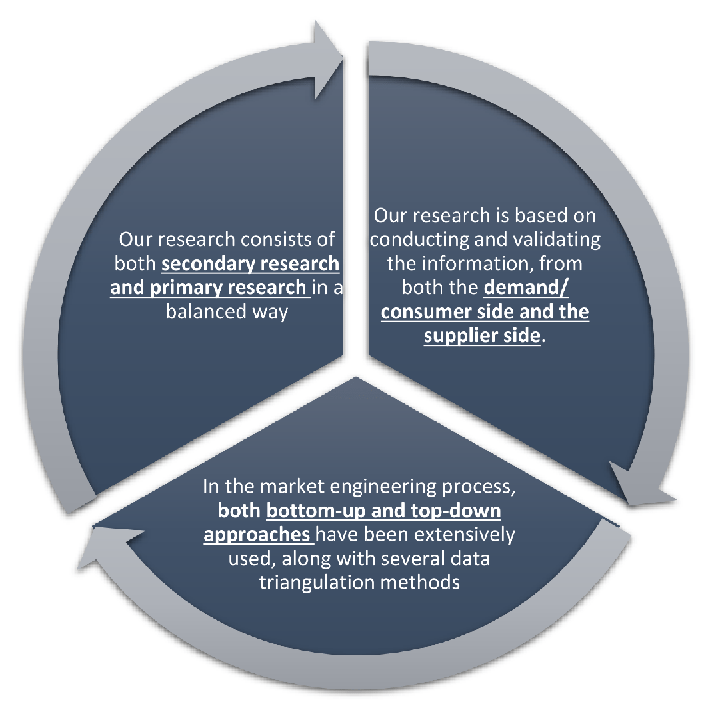
Our research design integrates both demand-side and supply-side analysis through a balanced combination of primary and secondary research methodologies. By utilizing both bottom-up and top-down approaches alongside rigorous data triangulation methods, we deliver robust market intelligence that supports strategic decision-making.
MarketGenics' comprehensive research design framework ensures the delivery of accurate, reliable, and actionable market intelligence. Through the integration of multiple research approaches, rigorous validation processes, and expert analysis, we provide our clients with the insights needed to make informed strategic decisions and capitalize on market opportunities.
MarketGenics leverages a dedicated industry panel of experts and a comprehensive suite of paid databases to effectively collect, consolidate, and analyze market intelligence.
Our approach has consistently proven to be reliable and effective in generating accurate market insights, identifying key industry trends, and uncovering emerging business opportunities.
Through both primary and secondary research, we capture and analyze critical company-level data such as manufacturing footprints, including technical centers, R&D facilities, sales offices, and headquarters.
Our expert panel further enhances our ability to estimate market size for specific brands based on validated field-level intelligence.
Our data mining techniques incorporate both parametric and non-parametric methods, allowing for structured data collection, sorting, processing, and cleaning.
Demand projections are derived from large-scale data sets analyzed through proprietary algorithms, culminating in robust and reliable market sizing.
Research Approach
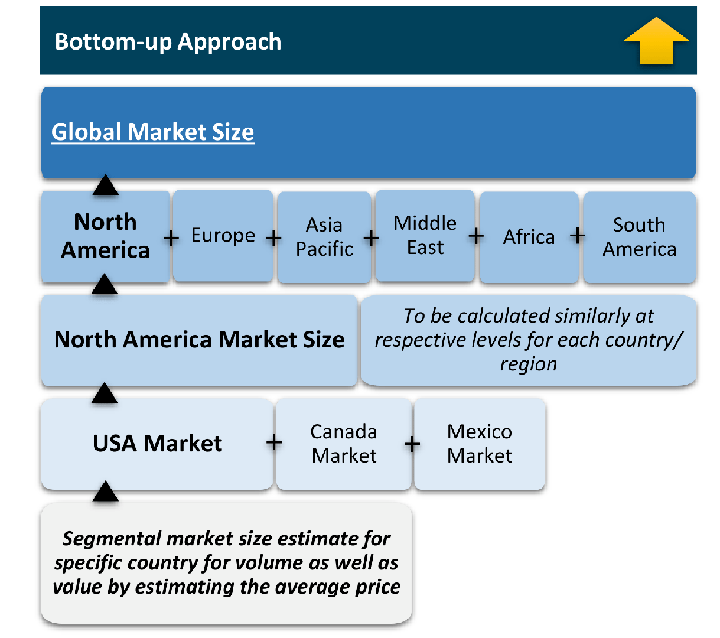
The bottom-up approach builds market estimates by starting with the smallest addressable market units and systematically aggregating them to create comprehensive market size projections.
This method begins with specific, granular data points and builds upward to create the complete market landscape.
Customer Analysis → Segmental Analysis → Geographical Analysis
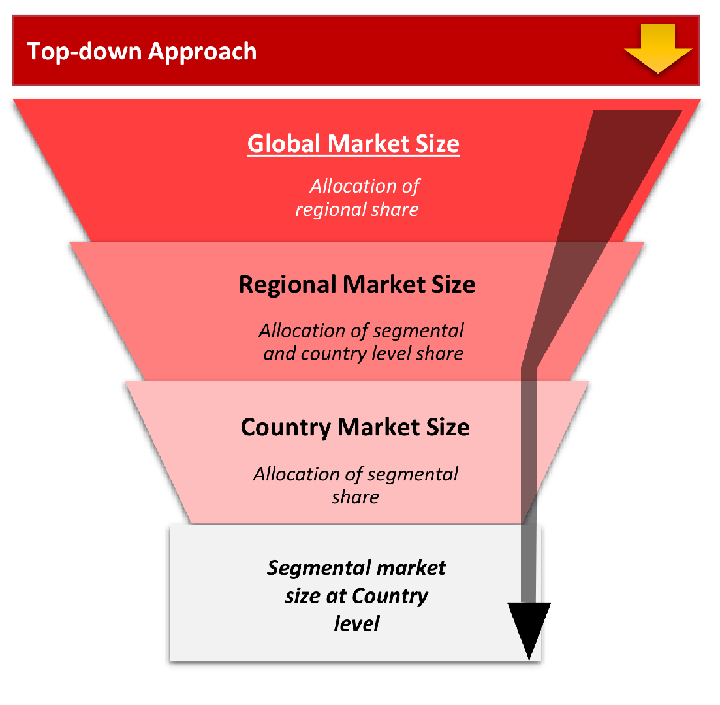
The top-down approach starts with the broadest possible market data and systematically narrows it down through a series of filters and assumptions to arrive at specific market segments or opportunities.
This method begins with the big picture and works downward to increasingly specific market slices.
TAM → SAM → SOM
Research Methods
Desk / Secondary Research
While analysing the market, we extensively study secondary sources, directories, and databases to identify and collect information useful for this technical, market-oriented, and commercial report. Secondary sources that we utilize are not only the public sources, but it is a combination of Open Source, Associations, Paid Databases, MG Repository & Knowledgebase, and others.
- Company websites, annual reports, financial reports, broker reports, and investor presentations
- National government documents, statistical databases and reports
- News articles, press releases and web-casts specific to the companies operating in the market, Magazines, reports, and others
- We gather information from commercial data sources for deriving company specific data such as segmental revenue, share for geography, product revenue, and others
- Internal and external proprietary databases (industry-specific), relevant patent, and regulatory databases
- Governing Bodies, Government Organizations
- Relevant Authorities, Country-specific Associations for Industries
We also employ the model mapping approach to estimate the product level market data through the players' product portfolio
Primary Research
Primary research/ interviews is vital in analyzing the market. Most of the cases involves paid primary interviews. Primary sources include primary interviews through e-mail interactions, telephonic interviews, surveys as well as face-to-face interviews with the different stakeholders across the value chain including several industry experts.
| Type of Respondents | Number of Primaries |
|---|---|
| Tier 2/3 Suppliers | ~20 |
| Tier 1 Suppliers | ~25 |
| End-users | ~25 |
| Industry Expert/ Panel/ Consultant | ~30 |
| Total | ~100 |
MG Knowledgebase
• Repository of industry blog, newsletter and case studies
• Online platform covering detailed market reports, and company profiles
Forecasting Factors and Models
Forecasting Factors
- Historical Trends – Past market patterns, cycles, and major events that shaped how markets behave over time. Understanding past trends helps predict future behavior.
- Industry Factors – Specific characteristics of the industry like structure, regulations, and innovation cycles that affect market dynamics.
- Macroeconomic Factors – Economic conditions like GDP growth, inflation, and employment rates that affect how much money people have to spend.
- Demographic Factors – Population characteristics like age, income, and location that determine who can buy your product.
- Technology Factors – How quickly people adopt new technology and how much technology infrastructure exists.
- Regulatory Factors – Government rules, laws, and policies that can help or restrict market growth.
- Competitive Factors – Analyzing competition structure such as degree of competition and bargaining power of buyers and suppliers.
Forecasting Models / Techniques
Multiple Regression Analysis
- Identify and quantify factors that drive market changes
- Statistical modeling to establish relationships between market drivers and outcomes
Time Series Analysis – Seasonal Patterns
- Understand regular cyclical patterns in market demand
- Advanced statistical techniques to separate trend, seasonal, and irregular components
Time Series Analysis – Trend Analysis
- Identify underlying market growth patterns and momentum
- Statistical analysis of historical data to project future trends
Expert Opinion – Expert Interviews
- Gather deep industry insights and contextual understanding
- In-depth interviews with key industry stakeholders
Multi-Scenario Development
- Prepare for uncertainty by modeling different possible futures
- Creating optimistic, pessimistic, and most likely scenarios
Time Series Analysis – Moving Averages
- Sophisticated forecasting for complex time series data
- Auto-regressive integrated moving average models with seasonal components
Econometric Models
- Apply economic theory to market forecasting
- Sophisticated economic models that account for market interactions
Expert Opinion – Delphi Method
- Harness collective wisdom of industry experts
- Structured, multi-round expert consultation process
Monte Carlo Simulation
- Quantify uncertainty and probability distributions
- Thousands of simulations with varying input parameters
Research Analysis
Our research framework is built upon the fundamental principle of validating market intelligence from both demand and supply perspectives. This dual-sided approach ensures comprehensive market understanding and reduces the risk of single-source bias.
Demand-Side Analysis: We understand end-user/application behavior, preferences, and market needs along with the penetration of the product for specific application.
Supply-Side Analysis: We estimate overall market revenue, analyze the segmental share along with industry capacity, competitive landscape, and market structure.
Validation & Evaluation
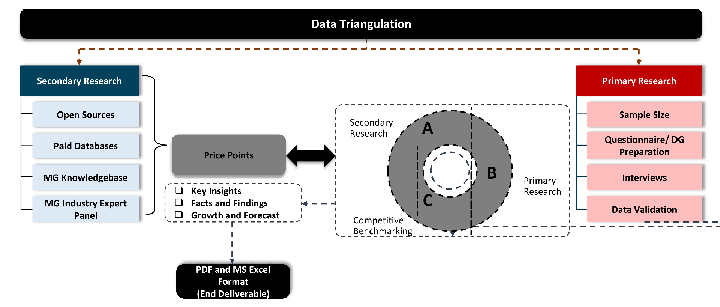
Data triangulation is a validation technique that uses multiple methods, sources, or perspectives to examine the same research question, thereby increasing the credibility and reliability of research findings. In market research, triangulation serves as a quality assurance mechanism that helps identify and minimize bias, validate assumptions, and ensure accuracy in market estimates.
- Data Source Triangulation – Using multiple data sources to examine the same phenomenon
- Methodological Triangulation – Using multiple research methods to study the same research question
- Investigator Triangulation – Using multiple researchers or analysts to examine the same data
- Theoretical Triangulation – Using multiple theoretical perspectives to interpret the same data
Custom Market Research Services
We will customise the research for you, in case the report listed above does not meet your requirements.
Get 10% Free Customisation