On‑Chip Quantum Market Size, Share & Trends Analysis Report by Technology Type (Quantum Dots, Quantum Wells, Quantum Wires, Superconducting Qubits, Trapped Ions, Photonic Quantum Systems, Spin Qubits, Topological Qubits), Component, Qubit Count, Substrate Material, Architecture, Integration Level, Fabrication Technology, Performance Metric, Power Consumption, End-Use Industry, Deployment Mode, and Geography (North America, Europe, Asia Pacific, Middle East, Africa, and South America) – Global Industry Data, Trends, and Forecasts, 2026 – 2035
|
Market Structure & Evolution |
|
|
Segmental Data Insights |
|
|
Demand Trends |
|
|
Competitive Landscape |
|
|
Strategic Development |
|
|
Future Outlook & Opportunities |
|
On‑Chip-Quantum-Market Size, Share, and Growth
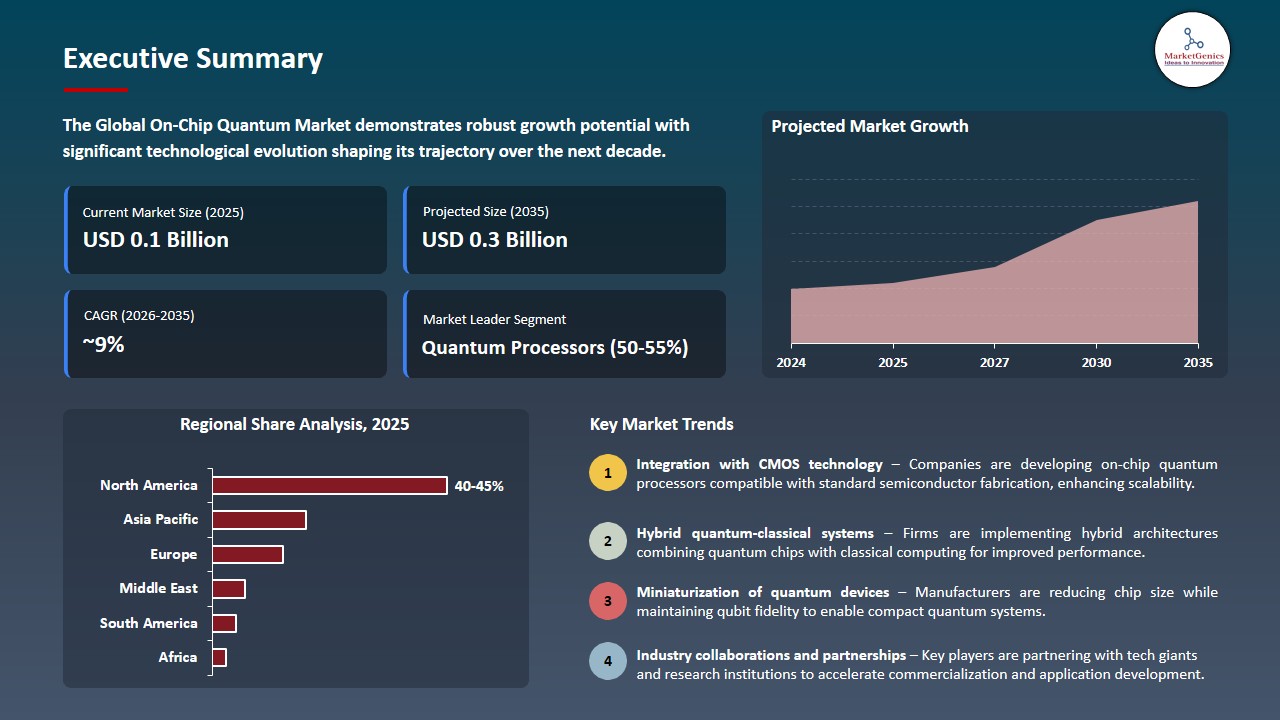
The global on‑chip quantum market is experiencing robust growth, with its estimated value of USD 0.1 billion in the year 2025 and USD 0.3 billion by the period 2035, registering a CAGR of 9.2% during the forecast period.
“Today marks a significant milestone not just for D-Wave, but for the quantum computing industry as a whole, as we bring to market our sixth-generation quantum computer, a system so powerful that it can solve hard problems outside the reach of one of the world’s largest exascale GPU-based classical supercomputers,” said Dr. Alan Baratz, CEO of D-Wave.
The increased R&D spending and ever-evolving technological progress in quantum chip designs is driving the on-chip quantum market. For instance, in February 2025, Amazon Web Services’ launch of the new Ocelot quantum computing chip, which integrates scalable error‑correction using “cat qubits” to reduce correction costs by up to ~90%, highlighting significant progress toward practical, compact quantum systems. This innovation is driving the practice of commercial quantum applications at a faster pace, capturing the interest of additional funding and industry that may reduce the time interval to launch applied useful quantum devices.
Furthermore, markets are expanding with heightened demand of sophisticated computing power and strategic competitive positioning, and leading industry players are extending capabilities and eco systems. For instance, in November 2025, GlobalFoundries had acquired Singapore based Advanced Micro Foundry to become the industry leader in silicon photonics fabrication, adding to on-chip optical and quantum communications bandwidth that will support next-generation quantum and AI data-center workloads. The use of quantum chip market growth is propelled by strategic moves of major industry players to improve supply chains and competitiveness.
Key adjacent opportunities to the global on‑chip quantum market include quantum cryptography, quantum sensors, quantum communication networks, AI-optimized quantum computing platforms, and photonic integrated circuits. These sectors leverage similar technologies, enabling cross-industry applications in cybersecurity, defense, healthcare, and high-performance computing. Expansion into these adjacent markets can accelerate adoption, diversify revenue streams, and strengthen the overall on-chip quantum ecosystem.
On‑Chip Quantum Market Dynamics and Trends
Driver: Technological Integration Advancements in Quantum Processor Architectures Driving Market Growth
-
Intensified technological integration of hybrid quantum‑classical computing architectures and enhanced qubit design innovations are driving growth in the global on‑chip quantum market. These advancements allow the practical performance enhancement and open the path to commercial implementations of quantum systems, beyond purely experimental or research uses of quantum systems.
- For instance, IonQ’s 36‑qubit Forte Enterprise system achieved a record #AQ36 operational milestone in 2024–2025. The system can now be accessed through cloud computing systems such as Microsoft Azure Quantum, which has doubled the computational space in previous generations. This quantum-classical system will allow the creation of tools such as fluid dynamics simulations to be performed more efficiently, and IonQ enterprise Quantum OS and hybrid services will decrease classical overhead and speed up workloads.
- These integration innovations reduce the entry barriers, increase the number of relevant application areas of its use in various industries, including healthcare, logistics, and optimization, and speed up the overall momentum of the market by making quantum computing more accessible and relevant to real-world business problems.
Restraint: High Development Costs and Scalability Challenges Restricting Commercialization Timelines
-
The on-chip quantum market is still struggling with high cost of development and scalability constraints, which represent a huge barrier to commercialization. The resulting capital cost of building fault tolerant scalable quantum processors includes the cost of advanced fabrication plants, cryogenic environments and error correction mechanisms, which require longer to develop, and carry high financial risk.
- These factors usually discourage risk-averse investors to fund large scale projects, reducing the flow of private capital into the industry. Leading companies, including Intel and IBM, continue to prioritize research in qubit stabilization, error-correction protocols, and cryogenic infrastructure rather than immediate revenue-generating applications.
- This focus on technical maturity over commercialization restricts market expansion and delays enterprise adoption, slowing the transition from research-focused development to revenue-driven, large-scale deployment of on-chip quantum solutions.
Opportunity: Quantum‑as‑a‑Service (QaaS) Cloud Platforms Opening New Commercial Frontiers
-
The advent of Quantum-as-a-Service (QaaS) cloud services platforms is generating an excellent growth prospect to the global on-chip quantum market as it allows wider access to advanced quantum computing services without having to invest a considerable amount of capital upfront.
- Major providers such as IBM, Google, and Amazon Web Services (AWS) are offering QaaS solutions that allow enterprises, startups, and academic institutions to leverage high-performance quantum processors and hybrid quantum-classical systems over the cloud.
- For instance, in 2025, IBM has added IBM Quantum Cloud with new 127-qubit Eagle processors and allowed access to complex optimization, chemical simulations, and AI workloads to enterprise remotely. The model sets quantum computing to be democratic so that smaller companies and research groups can experiment with quantum algorithms and implement quantum solutions into a practice.
- QaaS implementation expands the range of users, drives ecosystem, and increases the speed of innovation by expanding experimentation and deployment of real-world applications.
Key Trend: Emergence of Integrated Quantum Security Chips Enhancing Market Relevance
-
The growing requirement to implement post-quantum security solutions is leading to the creation of combined quantum security chips, which makes the on-chip quantum market an essential facilitator of the secure infrastructure of the next generation. These system-on-a-chip offerings include both the capability of true quantum random number generators (QRNGs) and the capability of post-quantum cryptography, which ensure that new threats in quantum-enabled attacks are well defended.
- For example, in 2024, ID Quantique introduced its QRNG-based chip platform to financial and government-level users and provided them with high-speed secure key generation and encryption at the hardware level. Such integrated chips have been especially useful in industries that have high cybersecurity standards such as online banking, governmental networks, and industrial infrastructure.
- On-chip quantum solutions that are security-oriented increase market scope and implementation, cementing the role of quantum hardware past computing to other areas of critical cybersecurity example.
On‑Chip-Quantum-Market Analysis and Segmental Data
Quantum Processors Dominate Global on-Chip Quantum Market
-
The on-chip quantum market continues to be dominated by quantum processors, with high-performance qubit architectures more and more of the technological and commercial focus. The main manufacturers are stretching to have larger, more competent processors to reach sensible quantum benefit.
- For example, IBM announced its 120-qubit Nighthawk processor, which will be available in 2025, but it will have much more qubit connectivity and complexity to support more complex quantum algorithms. Scaling fabrication 300mm and above scales are also used to improve qubit performance throughout its roadmap at IBM. The development makes quantum computing more scalable and leadership-based, accelerating enterprise adoption and increased more complex and real-world quantum computing.
- The preeminence of developed quantum computers increases the rate of ecosystem development and competitiveness, offers enterprise R&D and cloud integrations, and strengthens hardware as the main inducement of realistic quantum computing implementation.
North America Leading On‑Chip Quantum Adoption through Strategic Innovation and Infrastructure
-
North America is leading adoption of on‑chip quantum technologies through strategic innovation, building robust infrastructure and maintaining a solid public-private partnership. The area has the greatest portion of quantum chip market owing to concentrated know-how in superconducting and trapped-ion systems, developed semiconductor fabrication region and positive regulatory frameworks to promote research and commercialization.
- For instance, Government funding efforts, such as the proposed quantum investment program of $2.5 billion by the U.S. Department of Energy and the Phase 1 quantum funding of $92 million by the Canadian Quantum Champions Program, are leading to R&D, human training, industrial-scale development of quantum technologies beyond laboratory demonstrations to commercial implementation.
- These investments will help North American parties construct essential fabrication plants as well as hybrid quantum-classical and specialized cleanrooms, support ecosystem hubs and transnational partnerships with academic and industry partners.
- North American strategic emphasis and infrastructure advantage is improving their competitive edge, which is increasing technology maturity and enterprise preparedness in the global on-chip quantum market.
On‑Chip-Quantum-Market Ecosystem
The global on‑chip quantum market is highly consolidated, with players such as IBM Corporation, Intel Corporation, D-Wave Systems, Rigetti Computing, and IonQ, who dominating through continuous technological innovation, strategic partnerships, intellectual property development, and scaling of fabrication capabilities.
Companies leverage proprietary qubit architectures, hybrid quantum-classical systems, and cloud-based access models to strengthen market share, drive enterprise adoption, and maintain competitive leadership in a rapidly evolving quantum ecosystem. Market consolidation among leading players drives rapid technological advancement, strengthens competitive barriers, and accelerates enterprise adoption of on-chip quantum solutions globally.
Recent Development and Strategic Overview:
-
In November 2025, Quantinuum introduced Helios, a high-precision, general-purpose quantum computing system offering industry-leading qubit fidelity and flexible deployment through cloud-based and on-premise models, thereby strengthening enterprise accessibility and accelerating the commercialization of quantum solutions for real-world business and research applications.
- In May 2025, D‑Wave announced the general availability of its Advantage2 quantum annealing computer, a sixth‑generation system with enhanced qubit connectivity and coherence for real‑world optimization, AI, and materials problems, now accessible via its Leap cloud platform.
Report Scope
|
Attribute |
Detail |
|
Market Size in 2025 |
USD 0.1 Bn |
|
Market Forecast Value in 2035 |
USD 0.3 Bn |
|
Growth Rate (CAGR) |
9.2% |
|
Forecast Period |
2026 – 2035 |
|
Historical Data Available for |
2021 – 2024 |
|
Market Size Units |
US$ Billion for Value |
|
Report Format |
Electronic (PDF) + Excel |
|
Regions and Countries Covered |
|||||
|
North America |
Europe |
Asia Pacific |
Middle East |
Africa |
South America |
|
|
|
|
|
|
|
Companies Covered |
|||||
|
|
|
|
|
|
On‑Chip-Quantum-Market Segmentation and Highlights
|
Segment |
Sub-segment |
|
On‑Chip Quantum Market, By Technology Type |
|
|
On‑Chip Quantum Market, By Component |
|
|
On‑Chip Quantum Market, By Qubit Count |
|
|
On‑Chip Quantum Market, By Substrate Material |
|
|
On‑Chip Quantum Market, By Architecture |
|
|
On‑Chip Quantum Market, By Integration Level |
|
|
On‑Chip Quantum Market, By Fabrication Technology |
|
|
On‑Chip Quantum Market, By Performance Metric |
|
|
On‑Chip Quantum Market, By Power Consumption |
|
|
On‑Chip Quantum Market, By End-Use Industry |
|
|
On‑Chip Quantum Market, By Deployment Mode |
|
Frequently Asked Questions
Table of Contents
- 1. Research Methodology and Assumptions
- 1.1. Definitions
- 1.2. Research Design and Approach
- 1.3. Data Collection Methods
- 1.4. Base Estimates and Calculations
- 1.5. Forecasting Models
- 1.5.1. Key Forecast Factors & Impact Analysis
- 1.6. Secondary Research
- 1.6.1. Open Sources
- 1.6.2. Paid Databases
- 1.6.3. Associations
- 1.7. Primary Research
- 1.7.1. Primary Sources
- 1.7.2. Primary Interviews with Stakeholders across Ecosystem
- 2. Executive Summary
- 2.1. Global On‑Chip Quantum Market Outlook
- 2.1.1. On‑Chip Quantum Market Size (Value - US$ Bn), and Forecasts, 2021-2035
- 2.1.2. Compounded Annual Growth Rate Analysis
- 2.1.3. Growth Opportunity Analysis
- 2.1.4. Segmental Share Analysis
- 2.1.5. Geographical Share Analysis
- 2.2. Market Analysis and Facts
- 2.3. Supply-Demand Analysis
- 2.4. Competitive Benchmarking
- 2.5. Go-to- Market Strategy
- 2.5.1. Customer/ End-use Industry Assessment
- 2.5.2. Growth Opportunity Data, 2025-2035
- 2.5.2.1. Regional Data
- 2.5.2.2. Country Data
- 2.5.2.3. Segmental Data
- 2.5.3. Identification of Potential Market Spaces
- 2.5.4. GAP Analysis
- 2.5.5. Potential Attractive Price Points
- 2.5.6. Prevailing Market Risks & Challenges
- 2.5.7. Preferred Sales & Marketing Strategies
- 2.5.8. Key Recommendations and Analysis
- 2.5.9. A Way Forward
- 2.1. Global On‑Chip Quantum Market Outlook
- 3. Industry Data and Premium Insights
- 3.1. Global On‑Chip Quantum Industry Overview, 2025
- 3.1.1. Semiconductors & Electronics Industry Ecosystem Analysis
- 3.1.2. Key Trends for Semiconductors & Electronics Industry
- 3.1.3. Regional Distribution for Semiconductors & Electronics Industry
- 3.2. Supplier Customer Data
- 3.3. Technology Roadmap and Developments
- 3.4. Trade Analysis
- 3.4.1. Import & Export Analysis, 2025
- 3.4.2. Top Importing Countries
- 3.4.3. Top Exporting Countries
- 3.5. Trump Tariff Impact Analysis
- 3.5.1. Manufacturer
- 3.5.1.1. Based on the component & Raw material
- 3.5.2. Supply Chain
- 3.5.3. End Consumer
- 3.5.1. Manufacturer
- 3.6. Raw Material Analysis
- 3.1. Global On‑Chip Quantum Industry Overview, 2025
- 4. Market Overview
- 4.1. Market Dynamics
- 4.1.1. Drivers
- 4.1.1.1. Increasing demand for advanced computing power and secure communication applications
- 4.1.1.2. Rising investments in R&D and government/private funding accelerating innovation and commercialization
- 4.1.1.3. Advancements in qubit fabrication, error correction techniques, and industry collaborations enhancing technology capabilities
- 4.1.2. Restraints
- 4.1.2.1. High development and operational costs, including cryogenic infrastructure and specialized manufacturing
- 4.1.2.2. Technical challenges such as qubit stability, scalability, and lack of standardized integration approaches
- 4.1.1. Drivers
- 4.2. Key Trend Analysis
- 4.3. Regulatory Framework
- 4.3.1. Key Regulations, Norms, and Subsidies, by Key Countries
- 4.3.2. Tariffs and Standards
- 4.3.3. Impact Analysis of Regulations on the Market
- 4.4. Ecosystem Analysis
- 4.5. Cost Structure Analysis
- 4.6. Pricing Analysis
- 4.7. Porter’s Five Forces Analysis
- 4.8. PESTEL Analysis
- 4.9. Global On‑Chip Quantum Market Demand
- 4.9.1. Historical Market Size – in Value (US$ Bn), 2020-2024
- 4.9.2. Current and Future Market Size – in Value (US$ Bn), 2025–2035
- 4.9.2.1. Y-o-Y Growth Trends
- 4.9.2.2. Absolute $ Opportunity Assessment
- 4.1. Market Dynamics
- 5. Competition Landscape
- 5.1. Competition structure
- 5.1.1. Fragmented v/s consolidated
- 5.2. Company Share Analysis, 2025
- 5.2.1. Global Company Market Share
- 5.2.2. By Region
- 5.2.2.1. North America
- 5.2.2.2. Europe
- 5.2.2.3. Asia Pacific
- 5.2.2.4. Middle East
- 5.2.2.5. Africa
- 5.2.2.6. South America
- 5.3. Product Comparison Matrix
- 5.3.1. Specifications
- 5.3.2. Market Positioning
- 5.3.3. Pricing
- 5.1. Competition structure
- 6. Global On‑Chip Quantum Market Analysis, by Technology Type
- 6.1. Key Segment Analysis
- 6.2. On‑Chip Quantum Market Size (Value - US$ Bn), Analysis, and Forecasts, by Technology Type, 2021-2035
- 6.2.1. Quantum Dots
- 6.2.1.1. Colloidal Quantum Dots
- 6.2.1.2. Epitaxial Quantum Dots
- 6.2.1.3. Self-Assembled Quantum Dots
- 6.2.2. Quantum Wells
- 6.2.2.1. Single Quantum Wells
- 6.2.2.2. Multiple Quantum Wells
- 6.2.3. Quantum Wires
- 6.2.4. Superconducting Qubits
- 6.2.4.1. Transmon Qubits
- 6.2.4.2. Flux Qubits
- 6.2.4.3. Phase Qubits
- 6.2.5. Trapped Ions
- 6.2.6. Photonic Quantum Systems
- 6.2.6.1. Silicon Photonics
- 6.2.6.2. Integrated Photonic Circuits
- 6.2.7. Spin Qubits
- 6.2.7.1. Silicon Spin Qubits
- 6.2.7.2. Germanium Spin Qubits
- 6.2.8. Topological Qubits
- 6.2.1. Quantum Dots
- 7. Global On‑Chip Quantum Market Analysis, by Component
- 7.1. Key Segment Analysis
- 7.2. On‑Chip Quantum Market Size (Value - US$ Bn), Analysis, and Forecasts, by Component, 2021-2035
- 7.2.1. Quantum Processors
- 7.2.1.1. Quantum Processing Units (QPUs)
- 7.2.1.2. Quantum Accelerators
- 7.2.2. Quantum Memory
- 7.2.2.1. Quantum RAM
- 7.2.2.2. Quantum Registers
- 7.2.3. Quantum Controllers
- 7.2.4. Quantum Interconnects
- 7.2.5. Cryogenic Systems
- 7.2.6. Control Electronics
- 7.2.7. Readout Systems
- 7.2.8. Error Correction Hardware
- 7.2.9. Others
- 7.2.1. Quantum Processors
- 8. Global On‑Chip Quantum Market Analysis, by Qubit Count
- 8.1. Key Segment Analysis
- 8.2. On‑Chip Quantum Market Size (Value - US$ Bn), Analysis, and Forecasts, by Qubit Count, 2021-2035
- 8.2.1. 1-10 Qubits
- 8.2.2. 11-50 Qubits
- 8.2.3. 51-100 Qubits
- 8.2.4. 101-500 Qubits
- 8.2.5. 500+ Qubits
- 9. Global On‑Chip Quantum Market Analysis, by Substrate Material
- 9.1. Key Segment Analysis
- 9.2. On‑Chip Quantum Market Size (Value - US$ Bn), Analysis, and Forecasts, by Substrate Material, 2021-2035
- 9.2.1. Silicon-based
- 9.2.2. Gallium Arsenide (GaAs)
- 9.2.3. Indium Phosphide (InP)
- 9.2.4. Silicon Carbide (SiC)
- 9.2.5. Diamond
- 9.2.6. Superconducting Materials
- 9.2.7. Others (Graphene-based, Topological Insulators, etc.)
- 10. Global On‑Chip Quantum Market Analysis, by Architecture
- 10.1. Key Segment Analysis
- 10.2. On‑Chip Quantum Market Size (Value - US$ Bn), Analysis, and Forecasts, by Architecture, 2021-2035
- 10.2.1. Gate-Based Quantum Computing
- 10.2.2. Quantum Annealing
- 10.2.3. Adiabatic Quantum Computing
- 10.2.4. Measurement-Based Quantum Computing
- 10.2.5. Topological Quantum Computing
- 10.2.6. Continuous Variable Quantum Computing
- 10.2.7. Others
- 11. Global On‑Chip Quantum Market Analysis, by Integration Level
- 11.1. Key Segment Analysis
- 11.2. On‑Chip Quantum Market Size (Value - US$ Bn), Analysis, and Forecasts, by Integration Level, 2021-2035
- 11.2.1. Standalone Quantum Chips
- 11.2.2. Hybrid Classical-Quantum Systems
- 11.2.3. Quantum Co-Processors
- 11.2.4. Fully Integrated Quantum Systems
- 12. Global On‑Chip Quantum Market Analysis, by Fabrication Technology
- 12.1. Key Segment Analysis
- 12.2. On‑Chip Quantum Market Size (Value - US$ Bn), Analysis, and Forecasts, by Fabrication Technology, 2021-2035
- 12.2.1. CMOS-Compatible Fabrication
- 12.2.2. Advanced Lithography (EUV)
- 12.2.3. Molecular Beam Epitaxy (MBE)
- 12.2.4. Chemical Vapor Deposition (CVD)
- 12.2.5. Atomic Layer Deposition (ALD)
- 12.2.6. Nanoimprint Lithography
- 12.2.7. Others
- 13. Global On‑Chip Quantum Market Analysis, by Performance Metric
- 13.1. Key Segment Analysis
- 13.2. On‑Chip Quantum Market Size (Value - US$ Bn), Analysis, and Forecasts, by Performance Metric, 2021-2035
- 13.2.1. High Coherence Time
- 13.2.2. High Gate Fidelity
- 13.2.3. Low Error Rate
- 13.2.4. High Connectivity
- 13.2.5. Scalability-Focused
- 14. Global On‑Chip Quantum Market Analysis, by Power Consumption
- 14.1. Key Findings
- 14.2. On‑Chip Quantum Market Size (Value - US$ Mn), Analysis, and Forecasts, by Power Consumption, 2021-2035
- 14.2.1. Ultra-Low Power
- 14.2.2. Low Power
- 14.2.3. Medium Power
- 14.2.4. High Power
- 15. Global On‑Chip Quantum Market Analysis, by End-Use Industry
- 15.1. Key Findings
- 15.2. On‑Chip Quantum Market Size (Value - US$ Mn), Analysis, and Forecasts, by End-Use Industry, 2021-2035
- 15.2.1. Pharmaceuticals & Biotechnology
- 15.2.1.1. Drug Discovery & Molecular Modeling
- 15.2.1.2. Protein Folding Simulation
- 15.2.1.3. Genomics & Personalized Medicine
- 15.2.1.4. Clinical Trial Optimization
- 15.2.1.5. Others
- 15.2.2. Financial Services & Banking
- 15.2.2.1. Portfolio Optimization
- 15.2.2.2. Risk Analysis & Management
- 15.2.2.3. Fraud Detection
- 15.2.2.4. Algorithmic Trading
- 15.2.2.5. Cryptocurrency & Blockchain
- 15.2.2.6. Others
- 15.2.3. Healthcare & Medical
- 15.2.3.1. Medical Imaging Enhancement
- 15.2.3.2. Disease Diagnosis
- 15.2.3.3. Treatment Planning
- 15.2.3.4. Precision Medicine
- 15.2.3.5. Others
- 15.2.4. Telecommunications
- 15.2.4.1. Quantum Communication Networks
- 15.2.4.2. Network Optimization
- 15.2.4.3. Encryption & Security
- 15.2.4.4. 5G/6G Network Planning
- 15.2.4.5. Others
- 15.2.5. Aerospace & Defense
- 15.2.5.1. Cryptography & Secure Communications
- 15.2.5.2. Radar & Sensing Applications
- 15.2.5.3. Mission Planning & Optimization
- 15.2.5.4. Satellite Communication
- 15.2.5.5. Others
- 15.2.6. Automotive
- 15.2.6.1. Autonomous Vehicle Navigation
- 15.2.6.2. Traffic Optimization
- 15.2.6.3. Battery Design & Material Science
- 15.2.6.4. Supply Chain Optimization
- 15.2.6.5. Others
- 15.2.7. Information Technology
- 15.2.7.1. Artificial Intelligence & Machine Learning
- 15.2.7.2. Big Data Analytics
- 15.2.7.3. Cloud Computing Services
- 15.2.7.4. Cybersecurity
- 15.2.7.5. Others
- 15.2.8. Research & Academia
- 15.2.9. Chemical & Materials
- 15.2.10. Manufacturing & Industrial
- 15.2.11. Energy & Utilities
- 15.2.12. Logistics & Transportation
- 15.2.13. Government & Public Sector
- 15.2.14. Other Industries
- 15.2.1. Pharmaceuticals & Biotechnology
- 16. Global On‑Chip Quantum Market Analysis, by Deployment Mode
- 16.1. Key Findings
- 16.2. On‑Chip Quantum Market Size (Value - US$ Mn), Analysis, and Forecasts, by Deployment Mode, 2021-2035
- 16.2.1. On-Premises
- 16.2.2. Cloud-Based Quantum Computing
- 16.2.3. Hybrid Deployment
- 17. Global On‑Chip Quantum Market Analysis, by Region
- 17.1. Key Findings
- 17.2. On‑Chip Quantum Market Size (Value - US$ Mn), Analysis, and Forecasts, by Region, 2021-2035
- 17.2.1. North America
- 17.2.2. Europe
- 17.2.3. Asia Pacific
- 17.2.4. Middle East
- 17.2.5. Africa
- 17.2.6. South America
- 18. North America On‑Chip Quantum Market Analysis
- 18.1. Key Segment Analysis
- 18.2. Regional Snapshot
- 18.3. North America On‑Chip Quantum Market Size Value - US$ Bn), Analysis, and Forecasts, 2021-2035
- 18.3.1. Technology Type
- 18.3.2. Component
- 18.3.3. Qubit Count
- 18.3.4. Substrate Material
- 18.3.5. Architecture
- 18.3.6. Integration Level
- 18.3.7. Fabrication Technology
- 18.3.8. Performance Metric
- 18.3.9. Power Consumption
- 18.3.10. End-Use Industry
- 18.3.11. Deployment Mode
- 18.3.12. Country
- 18.3.12.1. USA
- 18.3.12.2. Canada
- 18.3.12.3. Mexico
- 18.4. USA On‑Chip Quantum Market
- 18.4.1. Country Segmental Analysis
- 18.4.2. Technology Type
- 18.4.3. Component
- 18.4.4. Qubit Count
- 18.4.5. Substrate Material
- 18.4.6. Architecture
- 18.4.7. Integration Level
- 18.4.8. Fabrication Technology
- 18.4.9. Performance Metric
- 18.4.10. Power Consumption
- 18.4.11. End-Use Industry
- 18.4.12. Deployment Mode
- 18.5. Canada On‑Chip Quantum Market
- 18.5.1. Country Segmental Analysis
- 18.5.2. Technology Type
- 18.5.3. Component
- 18.5.4. Qubit Count
- 18.5.5. Substrate Material
- 18.5.6. Architecture
- 18.5.7. Integration Level
- 18.5.8. Fabrication Technology
- 18.5.9. Performance Metric
- 18.5.10. Power Consumption
- 18.5.11. End-Use Industry
- 18.5.12. Deployment Mode
- 18.6. Mexico On‑Chip Quantum Market
- 18.6.1. Country Segmental Analysis
- 18.6.2. Technology Type
- 18.6.3. Component
- 18.6.4. Qubit Count
- 18.6.5. Substrate Material
- 18.6.6. Architecture
- 18.6.7. Integration Level
- 18.6.8. Fabrication Technology
- 18.6.9. Performance Metric
- 18.6.10. Power Consumption
- 18.6.11. End-Use Industry
- 18.6.12. Deployment Mode
- 19. Europe On‑Chip Quantum Market Analysis
- 19.1. Key Segment Analysis
- 19.2. Regional Snapshot
- 19.3. Europe On‑Chip Quantum Market Size (Value - US$ Bn), Analysis, and Forecasts, 2021-2035
- 19.3.1. Technology Type
- 19.3.2. Component
- 19.3.3. Qubit Count
- 19.3.4. Substrate Material
- 19.3.5. Architecture
- 19.3.6. Integration Level
- 19.3.7. Fabrication Technology
- 19.3.8. Performance Metric
- 19.3.9. Power Consumption
- 19.3.10. End-Use Industry
- 19.3.11. Deployment Mode
- 19.3.12. Country
- 19.3.12.1. Germany
- 19.3.12.2. United Kingdom
- 19.3.12.3. France
- 19.3.12.4. Italy
- 19.3.12.5. Spain
- 19.3.12.6. Netherlands
- 19.3.12.7. Nordic Countries
- 19.3.12.8. Poland
- 19.3.12.9. Russia & CIS
- 19.3.12.10. Rest of Europe
- 19.4. Germany On‑Chip Quantum Market
- 19.4.1. Country Segmental Analysis
- 19.4.2. Technology Type
- 19.4.3. Component
- 19.4.4. Qubit Count
- 19.4.5. Substrate Material
- 19.4.6. Architecture
- 19.4.7. Integration Level
- 19.4.8. Fabrication Technology
- 19.4.9. Performance Metric
- 19.4.10. Power Consumption
- 19.4.11. End-Use Industry
- 19.4.12. Deployment Mode
- 19.5. United Kingdom On‑Chip Quantum Market
- 19.5.1. Country Segmental Analysis
- 19.5.2. Technology Type
- 19.5.3. Component
- 19.5.4. Qubit Count
- 19.5.5. Substrate Material
- 19.5.6. Architecture
- 19.5.7. Integration Level
- 19.5.8. Fabrication Technology
- 19.5.9. Performance Metric
- 19.5.10. Power Consumption
- 19.5.11. End-Use Industry
- 19.5.12. Deployment Mode
- 19.6. France On‑Chip Quantum Market
- 19.6.1. Country Segmental Analysis
- 19.6.2. Technology Type
- 19.6.3. Component
- 19.6.4. Qubit Count
- 19.6.5. Substrate Material
- 19.6.6. Architecture
- 19.6.7. Integration Level
- 19.6.8. Fabrication Technology
- 19.6.9. Performance Metric
- 19.6.10. Power Consumption
- 19.6.11. End-Use Industry
- 19.6.12. Deployment Mode
- 19.7. Italy On‑Chip Quantum Market
- 19.7.1. Country Segmental Analysis
- 19.7.2. Technology Type
- 19.7.3. Component
- 19.7.4. Qubit Count
- 19.7.5. Substrate Material
- 19.7.6. Architecture
- 19.7.7. Integration Level
- 19.7.8. Fabrication Technology
- 19.7.9. Performance Metric
- 19.7.10. Power Consumption
- 19.7.11. End-Use Industry
- 19.7.12. Deployment Mode
- 19.8. Spain On‑Chip Quantum Market
- 19.8.1. Country Segmental Analysis
- 19.8.2. Technology Type
- 19.8.3. Component
- 19.8.4. Qubit Count
- 19.8.5. Substrate Material
- 19.8.6. Architecture
- 19.8.7. Integration Level
- 19.8.8. Fabrication Technology
- 19.8.9. Performance Metric
- 19.8.10. Power Consumption
- 19.8.11. End-Use Industry
- 19.8.12. Deployment Mode
- 19.9. Netherlands On‑Chip Quantum Market
- 19.9.1. Country Segmental Analysis
- 19.9.2. Technology Type
- 19.9.3. Component
- 19.9.4. Qubit Count
- 19.9.5. Substrate Material
- 19.9.6. Architecture
- 19.9.7. Integration Level
- 19.9.8. Fabrication Technology
- 19.9.9. Performance Metric
- 19.9.10. Power Consumption
- 19.9.11. End-Use Industry
- 19.9.12. Deployment Mode
- 19.10. Nordic Countries On‑Chip Quantum Market
- 19.10.1. Country Segmental Analysis
- 19.10.2. Technology Type
- 19.10.3. Component
- 19.10.4. Qubit Count
- 19.10.5. Substrate Material
- 19.10.6. Architecture
- 19.10.7. Integration Level
- 19.10.8. Fabrication Technology
- 19.10.9. Performance Metric
- 19.10.10. Power Consumption
- 19.10.11. End-Use Industry
- 19.10.12. Deployment Mode
- 19.11. Poland On‑Chip Quantum Market
- 19.11.1. Country Segmental Analysis
- 19.11.2. Technology Type
- 19.11.3. Component
- 19.11.4. Qubit Count
- 19.11.5. Substrate Material
- 19.11.6. Architecture
- 19.11.7. Integration Level
- 19.11.8. Fabrication Technology
- 19.11.9. Performance Metric
- 19.11.10. Power Consumption
- 19.11.11. End-Use Industry
- 19.11.12. Deployment Mode
- 19.12. Russia & CIS On‑Chip Quantum Market
- 19.12.1. Country Segmental Analysis
- 19.12.2. Technology Type
- 19.12.3. Component
- 19.12.4. Qubit Count
- 19.12.5. Substrate Material
- 19.12.6. Architecture
- 19.12.7. Integration Level
- 19.12.8. Fabrication Technology
- 19.12.9. Performance Metric
- 19.12.10. Power Consumption
- 19.12.11. End-Use Industry
- 19.12.12. Deployment Mode
- 19.13. Rest of Europe On‑Chip Quantum Market
- 19.13.1. Country Segmental Analysis
- 19.13.2. Technology Type
- 19.13.3. Component
- 19.13.4. Qubit Count
- 19.13.5. Substrate Material
- 19.13.6. Architecture
- 19.13.7. Integration Level
- 19.13.8. Fabrication Technology
- 19.13.9. Performance Metric
- 19.13.10. Power Consumption
- 19.13.11. End-Use Industry
- 19.13.12. Deployment Mode
- 20. Asia Pacific On‑Chip Quantum Market Analysis
- 20.1. Key Segment Analysis
- 20.2. Regional Snapshot
- 20.3. Asia Pacific On‑Chip Quantum Market Size (Value - US$ Bn), Analysis, and Forecasts, 2021-2035
- 20.3.1. Technology Type
- 20.3.2. Component
- 20.3.3. Qubit Count
- 20.3.4. Substrate Material
- 20.3.5. Architecture
- 20.3.6. Integration Level
- 20.3.7. Fabrication Technology
- 20.3.8. Performance Metric
- 20.3.9. Power Consumption
- 20.3.10. End-Use Industry
- 20.3.11. Deployment Mode
- 20.3.12. Country
- 20.3.12.1. China
- 20.3.12.2. India
- 20.3.12.3. Japan
- 20.3.12.4. South Korea
- 20.3.12.5. Australia and New Zealand
- 20.3.12.6. Indonesia
- 20.3.12.7. Malaysia
- 20.3.12.8. Thailand
- 20.3.12.9. Vietnam
- 20.3.12.10. Rest of Asia Pacific
- 20.4. China On‑Chip Quantum Market
- 20.4.1. Country Segmental Analysis
- 20.4.2. Technology Type
- 20.4.3. Component
- 20.4.4. Qubit Count
- 20.4.5. Substrate Material
- 20.4.6. Architecture
- 20.4.7. Integration Level
- 20.4.8. Fabrication Technology
- 20.4.9. Performance Metric
- 20.4.10. Power Consumption
- 20.4.11. End-Use Industry
- 20.4.12. Deployment Mode
- 20.5. India On‑Chip Quantum Market
- 20.5.1. Country Segmental Analysis
- 20.5.2. Technology Type
- 20.5.3. Component
- 20.5.4. Qubit Count
- 20.5.5. Substrate Material
- 20.5.6. Architecture
- 20.5.7. Integration Level
- 20.5.8. Fabrication Technology
- 20.5.9. Performance Metric
- 20.5.10. Power Consumption
- 20.5.11. End-Use Industry
- 20.5.12. Deployment Mode
- 20.6. Japan On‑Chip Quantum Market
- 20.6.1. Country Segmental Analysis
- 20.6.2. Technology Type
- 20.6.3. Component
- 20.6.4. Qubit Count
- 20.6.5. Substrate Material
- 20.6.6. Architecture
- 20.6.7. Integration Level
- 20.6.8. Fabrication Technology
- 20.6.9. Performance Metric
- 20.6.10. Power Consumption
- 20.6.11. End-Use Industry
- 20.6.12. Deployment Mode
- 20.7. South Korea On‑Chip Quantum Market
- 20.7.1. Country Segmental Analysis
- 20.7.2. Technology Type
- 20.7.3. Component
- 20.7.4. Qubit Count
- 20.7.5. Substrate Material
- 20.7.6. Architecture
- 20.7.7. Integration Level
- 20.7.8. Fabrication Technology
- 20.7.9. Performance Metric
- 20.7.10. Power Consumption
- 20.7.11. End-Use Industry
- 20.7.12. Deployment Mode
- 20.8. Australia and New Zealand On‑Chip Quantum Market
- 20.8.1. Country Segmental Analysis
- 20.8.2. Technology Type
- 20.8.3. Component
- 20.8.4. Qubit Count
- 20.8.5. Substrate Material
- 20.8.6. Architecture
- 20.8.7. Integration Level
- 20.8.8. Fabrication Technology
- 20.8.9. Performance Metric
- 20.8.10. Power Consumption
- 20.8.11. End-Use Industry
- 20.8.12. Deployment Mode
- 20.9. Indonesia On‑Chip Quantum Market
- 20.9.1. Country Segmental Analysis
- 20.9.2. Technology Type
- 20.9.3. Component
- 20.9.4. Qubit Count
- 20.9.5. Substrate Material
- 20.9.6. Architecture
- 20.9.7. Integration Level
- 20.9.8. Fabrication Technology
- 20.9.9. Performance Metric
- 20.9.10. Power Consumption
- 20.9.11. End-Use Industry
- 20.9.12. Deployment Mode
- 20.10. Malaysia On‑Chip Quantum Market
- 20.10.1. Country Segmental Analysis
- 20.10.2. Technology Type
- 20.10.3. Component
- 20.10.4. Qubit Count
- 20.10.5. Substrate Material
- 20.10.6. Architecture
- 20.10.7. Integration Level
- 20.10.8. Fabrication Technology
- 20.10.9. Performance Metric
- 20.10.10. Power Consumption
- 20.10.11. End-Use Industry
- 20.10.12. Deployment Mode
- 20.11. Thailand On‑Chip Quantum Market
- 20.11.1. Country Segmental Analysis
- 20.11.2. Technology Type
- 20.11.3. Component
- 20.11.4. Qubit Count
- 20.11.5. Substrate Material
- 20.11.6. Architecture
- 20.11.7. Integration Level
- 20.11.8. Fabrication Technology
- 20.11.9. Performance Metric
- 20.11.10. Power Consumption
- 20.11.11. End-Use Industry
- 20.11.12. Deployment Mode
- 20.12. Vietnam On‑Chip Quantum Market
- 20.12.1. Country Segmental Analysis
- 20.12.2. Technology Type
- 20.12.3. Component
- 20.12.4. Qubit Count
- 20.12.5. Substrate Material
- 20.12.6. Architecture
- 20.12.7. Integration Level
- 20.12.8. Fabrication Technology
- 20.12.9. Performance Metric
- 20.12.10. Power Consumption
- 20.12.11. End-Use Industry
- 20.12.12. Deployment Mode
- 20.13. Rest of Asia Pacific On‑Chip Quantum Market
- 20.13.1. Country Segmental Analysis
- 20.13.2. Technology Type
- 20.13.3. Component
- 20.13.4. Qubit Count
- 20.13.5. Substrate Material
- 20.13.6. Architecture
- 20.13.7. Integration Level
- 20.13.8. Fabrication Technology
- 20.13.9. Performance Metric
- 20.13.10. Power Consumption
- 20.13.11. End-Use Industry
- 20.13.12. Deployment Mode
- 21. Middle East On‑Chip Quantum Market Analysis
- 21.1. Key Segment Analysis
- 21.2. Regional Snapshot
- 21.3. Middle East On‑Chip Quantum Market Size (Value - US$ Bn), Analysis, and Forecasts, 2021-2035
- 21.3.1. Technology Type
- 21.3.2. Component
- 21.3.3. Qubit Count
- 21.3.4. Substrate Material
- 21.3.5. Architecture
- 21.3.6. Integration Level
- 21.3.7. Fabrication Technology
- 21.3.8. Performance Metric
- 21.3.9. Power Consumption
- 21.3.10. End-Use Industry
- 21.3.11. Deployment Mode
- 21.3.12. Country
- 21.3.12.1. Turkey
- 21.3.12.2. UAE
- 21.3.12.3. Saudi Arabia
- 21.3.12.4. Israel
- 21.3.12.5. Rest of Middle East
- 21.4. Turkey On‑Chip Quantum Market
- 21.4.1. Country Segmental Analysis
- 21.4.2. Technology Type
- 21.4.3. Component
- 21.4.4. Qubit Count
- 21.4.5. Substrate Material
- 21.4.6. Architecture
- 21.4.7. Integration Level
- 21.4.8. Fabrication Technology
- 21.4.9. Performance Metric
- 21.4.10. Power Consumption
- 21.4.11. End-Use Industry
- 21.4.12. Deployment Mode
- 21.5. UAE On‑Chip Quantum Market
- 21.5.1. Country Segmental Analysis
- 21.5.2. Technology Type
- 21.5.3. Component
- 21.5.4. Qubit Count
- 21.5.5. Substrate Material
- 21.5.6. Architecture
- 21.5.7. Integration Level
- 21.5.8. Fabrication Technology
- 21.5.9. Performance Metric
- 21.5.10. Power Consumption
- 21.5.11. End-Use Industry
- 21.5.12. Deployment Mode
- 21.6. Saudi Arabia On‑Chip Quantum Market
- 21.6.1. Country Segmental Analysis
- 21.6.2. Technology Type
- 21.6.3. Component
- 21.6.4. Qubit Count
- 21.6.5. Substrate Material
- 21.6.6. Architecture
- 21.6.7. Integration Level
- 21.6.8. Fabrication Technology
- 21.6.9. Performance Metric
- 21.6.10. Power Consumption
- 21.6.11. End-Use Industry
- 21.6.12. Deployment Mode
- 21.7. Israel On‑Chip Quantum Market
- 21.7.1. Country Segmental Analysis
- 21.7.2. Technology Type
- 21.7.3. Component
- 21.7.4. Qubit Count
- 21.7.5. Substrate Material
- 21.7.6. Architecture
- 21.7.7. Integration Level
- 21.7.8. Fabrication Technology
- 21.7.9. Performance Metric
- 21.7.10. Power Consumption
- 21.7.11. End-Use Industry
- 21.7.12. Deployment Mode
- 21.8. Rest of Middle East On‑Chip Quantum Market
- 21.8.1. Country Segmental Analysis
- 21.8.2. Technology Type
- 21.8.3. Component
- 21.8.4. Qubit Count
- 21.8.5. Substrate Material
- 21.8.6. Architecture
- 21.8.7. Integration Level
- 21.8.8. Fabrication Technology
- 21.8.9. Performance Metric
- 21.8.10. Power Consumption
- 21.8.11. End-Use Industry
- 21.8.12. Deployment Mode
- 22. Africa On‑Chip Quantum Market Analysis
- 22.1. Key Segment Analysis
- 22.2. Regional Snapshot
- 22.3. Africa On‑Chip Quantum Market Size (Value - US$ Bn), Analysis, and Forecasts, 2021-2035
- 22.3.1. Technology Type
- 22.3.2. Component
- 22.3.3. Qubit Count
- 22.3.4. Substrate Material
- 22.3.5. Architecture
- 22.3.6. Integration Level
- 22.3.7. Fabrication Technology
- 22.3.8. Performance Metric
- 22.3.9. Power Consumption
- 22.3.10. End-Use Industry
- 22.3.11. Deployment Mode
- 22.3.12. Country
- 22.3.12.1. South Africa
- 22.3.12.2. Egypt
- 22.3.12.3. Nigeria
- 22.3.12.4. Algeria
- 22.3.12.5. Rest of Africa
- 22.4. South Africa On‑Chip Quantum Market
- 22.4.1. Country Segmental Analysis
- 22.4.2. Technology Type
- 22.4.3. Component
- 22.4.4. Qubit Count
- 22.4.5. Substrate Material
- 22.4.6. Architecture
- 22.4.7. Integration Level
- 22.4.8. Fabrication Technology
- 22.4.9. Performance Metric
- 22.4.10. Power Consumption
- 22.4.11. End-Use Industry
- 22.4.12. Deployment Mode
- 22.5. Egypt On‑Chip Quantum Market
- 22.5.1. Country Segmental Analysis
- 22.5.2. Technology Type
- 22.5.3. Component
- 22.5.4. Qubit Count
- 22.5.5. Substrate Material
- 22.5.6. Architecture
- 22.5.7. Integration Level
- 22.5.8. Fabrication Technology
- 22.5.9. Performance Metric
- 22.5.10. Power Consumption
- 22.5.11. End-Use Industry
- 22.5.12. Deployment Mode
- 22.6. Nigeria On‑Chip Quantum Market
- 22.6.1. Country Segmental Analysis
- 22.6.2. Technology Type
- 22.6.3. Component
- 22.6.4. Qubit Count
- 22.6.5. Substrate Material
- 22.6.6. Architecture
- 22.6.7. Integration Level
- 22.6.8. Fabrication Technology
- 22.6.9. Performance Metric
- 22.6.10. Power Consumption
- 22.6.11. End-Use Industry
- 22.6.12. Deployment Mode
- 22.7. Algeria On‑Chip Quantum Market
- 22.7.1. Country Segmental Analysis
- 22.7.2. Technology Type
- 22.7.3. Component
- 22.7.4. Qubit Count
- 22.7.5. Substrate Material
- 22.7.6. Architecture
- 22.7.7. Integration Level
- 22.7.8. Fabrication Technology
- 22.7.9. Performance Metric
- 22.7.10. Power Consumption
- 22.7.11. End-Use Industry
- 22.7.12. Deployment Mode
- 22.8. Rest of Africa On‑Chip Quantum Market
- 22.8.1. Country Segmental Analysis
- 22.8.2. Technology Type
- 22.8.3. Component
- 22.8.4. Qubit Count
- 22.8.5. Substrate Material
- 22.8.6. Architecture
- 22.8.7. Integration Level
- 22.8.8. Fabrication Technology
- 22.8.9. Performance Metric
- 22.8.10. Power Consumption
- 22.8.11. End-Use Industry
- 22.8.12. Deployment Mode
- 23. South America On‑Chip Quantum Market Analysis
- 23.1. Key Segment Analysis
- 23.2. Regional Snapshot
- 23.3. South America On‑Chip Quantum Market Size (Value - US$ Bn), Analysis, and Forecasts, 2021-2035
- 23.3.1. Technology Type
- 23.3.2. Component
- 23.3.3. Qubit Count
- 23.3.4. Substrate Material
- 23.3.5. Architecture
- 23.3.6. Integration Level
- 23.3.7. Fabrication Technology
- 23.3.8. Performance Metric
- 23.3.9. Power Consumption
- 23.3.10. End-Use Industry
- 23.3.11. Deployment Mode
- 23.3.12. Country
- 23.3.12.1. Brazil
- 23.3.12.2. Argentina
- 23.3.12.3. Rest of South America
- 23.4. Brazil On‑Chip Quantum Market
- 23.4.1. Country Segmental Analysis
- 23.4.2. Technology Type
- 23.4.3. Component
- 23.4.4. Qubit Count
- 23.4.5. Substrate Material
- 23.4.6. Architecture
- 23.4.7. Integration Level
- 23.4.8. Fabrication Technology
- 23.4.9. Performance Metric
- 23.4.10. Power Consumption
- 23.4.11. End-Use Industry
- 23.4.12. Deployment Mode
- 23.5. Argentina On‑Chip Quantum Market
- 23.5.1. Country Segmental Analysis
- 23.5.2. Technology Type
- 23.5.3. Component
- 23.5.4. Qubit Count
- 23.5.5. Substrate Material
- 23.5.6. Architecture
- 23.5.7. Integration Level
- 23.5.8. Fabrication Technology
- 23.5.9. Performance Metric
- 23.5.10. Power Consumption
- 23.5.11. End-Use Industry
- 23.5.12. Deployment Mode
- 23.6. Rest of South America On‑Chip Quantum Market
- 23.6.1. Country Segmental Analysis
- 23.6.2. Technology Type
- 23.6.3. Component
- 23.6.4. Qubit Count
- 23.6.5. Substrate Material
- 23.6.6. Architecture
- 23.6.7. Integration Level
- 23.6.8. Fabrication Technology
- 23.6.9. Performance Metric
- 23.6.10. Power Consumption
- 23.6.11. End-Use Industry
- 23.6.12. Deployment Mode
- 24. Key Players/ Company Profile
- 24.1. Atom Computing Inc.
- 24.1.1. Company Details/ Overview
- 24.1.2. Company Financials
- 24.1.3. Key Customers and Competitors
- 24.1.4. Business/ Industry Portfolio
- 24.1.5. Product Portfolio/ Specification Details
- 24.1.6. Pricing Data
- 24.1.7. Strategic Overview
- 24.1.8. Recent Developments
- 24.2. D-Wave Systems
- 24.3. Intel Corporation
- 24.4. IonQ
- 24.5. IQM Quantum Computers
- 24.6. Pasqal
- 24.7. PsiQuantum
- 24.8. Quantum Brilliance
- 24.9. Quantum Computing Inc.
- 24.10. Quantumfab Semiconductor Pvt Ltd.
- 24.11. QuantWare
- 24.12. Rigetti Computing
- 24.13. SemiQon
- 24.14. Shenzhen SpinQ Technology Co., Ltd.
- 24.15. Silicon Quantum Computing
- 24.16. SkyWater Technology
- 24.17. Other Key Players
- 24.1. Atom Computing Inc.
Note* - This is just tentative list of players. While providing the report, we will cover more number of players based on their revenue and share for each geography
Research Design
Our research design integrates both demand-side and supply-side analysis through a balanced combination of primary and secondary research methodologies. By utilizing both bottom-up and top-down approaches alongside rigorous data triangulation methods, we deliver robust market intelligence that supports strategic decision-making.
MarketGenics' comprehensive research design framework ensures the delivery of accurate, reliable, and actionable market intelligence. Through the integration of multiple research approaches, rigorous validation processes, and expert analysis, we provide our clients with the insights needed to make informed strategic decisions and capitalize on market opportunities.
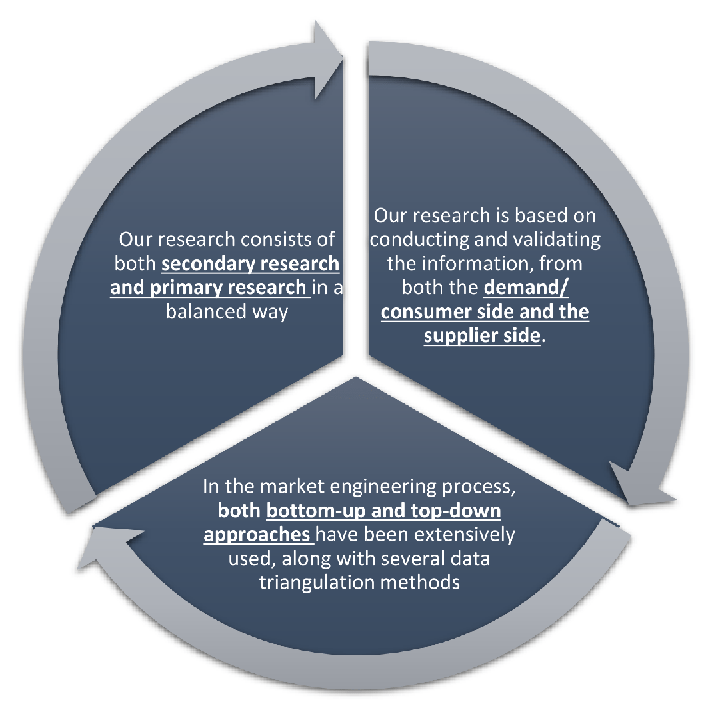
MarketGenics leverages a dedicated industry panel of experts and a comprehensive suite of paid databases to effectively collect, consolidate, and analyze market intelligence.
Our approach has consistently proven to be reliable and effective in generating accurate market insights, identifying key industry trends, and uncovering emerging business opportunities.
Through both primary and secondary research, we capture and analyze critical company-level data such as manufacturing footprints, including technical centers, R&D facilities, sales offices, and headquarters.
Our expert panel further enhances our ability to estimate market size for specific brands based on validated field-level intelligence.
Our data mining techniques incorporate both parametric and non-parametric methods, allowing for structured data collection, sorting, processing, and cleaning.
Demand projections are derived from large-scale data sets analyzed through proprietary algorithms, culminating in robust and reliable market sizing.
Research Approach
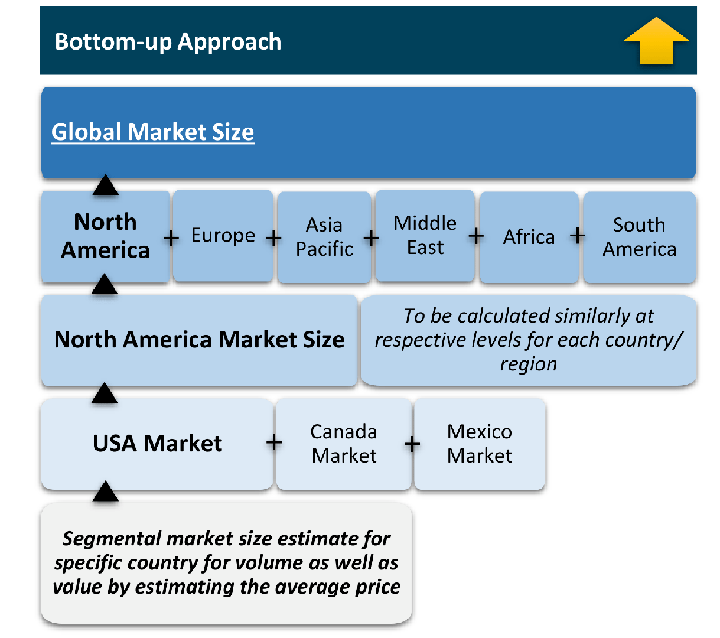
The bottom-up approach builds market estimates by starting with the smallest addressable market units and systematically aggregating them to create comprehensive market size projections.
This method begins with specific, granular data points and builds upward to create the complete market landscape.
Customer Analysis → Segmental Analysis → Geographical Analysis
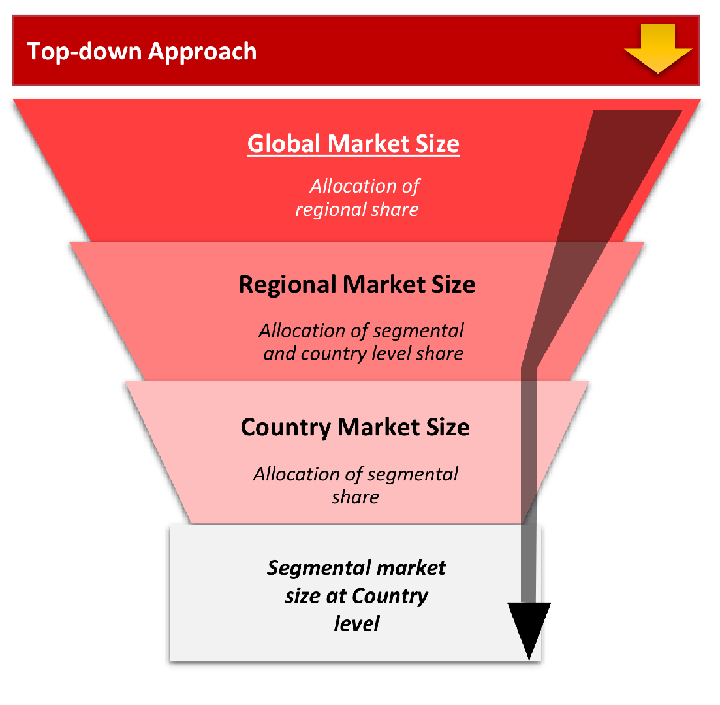
The top-down approach starts with the broadest possible market data and systematically narrows it down through a series of filters and assumptions to arrive at specific market segments or opportunities.
This method begins with the big picture and works downward to increasingly specific market slices.
TAM → SAM → SOM
Research Methods
Desk / Secondary Research
While analysing the market, we extensively study secondary sources, directories, and databases to identify and collect information useful for this technical, market-oriented, and commercial report. Secondary sources that we utilize are not only the public sources, but it is a combination of Open Source, Associations, Paid Databases, MG Repository & Knowledgebase, and others.
- Company websites, annual reports, financial reports, broker reports, and investor presentations
- National government documents, statistical databases and reports
- News articles, press releases and web-casts specific to the companies operating in the market, Magazines, reports, and others
- We gather information from commercial data sources for deriving company specific data such as segmental revenue, share for geography, product revenue, and others
- Internal and external proprietary databases (industry-specific), relevant patent, and regulatory databases
- Governing Bodies, Government Organizations
- Relevant Authorities, Country-specific Associations for Industries
We also employ the model mapping approach to estimate the product level market data through the players' product portfolio
Primary Research
Primary research/ interviews is vital in analyzing the market. Most of the cases involves paid primary interviews. Primary sources include primary interviews through e-mail interactions, telephonic interviews, surveys as well as face-to-face interviews with the different stakeholders across the value chain including several industry experts.
| Type of Respondents | Number of Primaries |
|---|---|
| Tier 2/3 Suppliers | ~20 |
| Tier 1 Suppliers | ~25 |
| End-users | ~25 |
| Industry Expert/ Panel/ Consultant | ~30 |
| Total | ~100 |
MG Knowledgebase
• Repository of industry blog, newsletter and case studies
• Online platform covering detailed market reports, and company profiles
Forecasting Factors and Models
Forecasting Factors
- Historical Trends – Past market patterns, cycles, and major events that shaped how markets behave over time. Understanding past trends helps predict future behavior.
- Industry Factors – Specific characteristics of the industry like structure, regulations, and innovation cycles that affect market dynamics.
- Macroeconomic Factors – Economic conditions like GDP growth, inflation, and employment rates that affect how much money people have to spend.
- Demographic Factors – Population characteristics like age, income, and location that determine who can buy your product.
- Technology Factors – How quickly people adopt new technology and how much technology infrastructure exists.
- Regulatory Factors – Government rules, laws, and policies that can help or restrict market growth.
- Competitive Factors – Analyzing competition structure such as degree of competition and bargaining power of buyers and suppliers.
Forecasting Models / Techniques
Multiple Regression Analysis
- Identify and quantify factors that drive market changes
- Statistical modeling to establish relationships between market drivers and outcomes
Time Series Analysis – Seasonal Patterns
- Understand regular cyclical patterns in market demand
- Advanced statistical techniques to separate trend, seasonal, and irregular components
Time Series Analysis – Trend Analysis
- Identify underlying market growth patterns and momentum
- Statistical analysis of historical data to project future trends
Expert Opinion – Expert Interviews
- Gather deep industry insights and contextual understanding
- In-depth interviews with key industry stakeholders
Multi-Scenario Development
- Prepare for uncertainty by modeling different possible futures
- Creating optimistic, pessimistic, and most likely scenarios
Time Series Analysis – Moving Averages
- Sophisticated forecasting for complex time series data
- Auto-regressive integrated moving average models with seasonal components
Econometric Models
- Apply economic theory to market forecasting
- Sophisticated economic models that account for market interactions
Expert Opinion – Delphi Method
- Harness collective wisdom of industry experts
- Structured, multi-round expert consultation process
Monte Carlo Simulation
- Quantify uncertainty and probability distributions
- Thousands of simulations with varying input parameters
Research Analysis
Our research framework is built upon the fundamental principle of validating market intelligence from both demand and supply perspectives. This dual-sided approach ensures comprehensive market understanding and reduces the risk of single-source bias.
Demand-Side Analysis: We understand end-user/application behavior, preferences, and market needs along with the penetration of the product for specific application.
Supply-Side Analysis: We estimate overall market revenue, analyze the segmental share along with industry capacity, competitive landscape, and market structure.
Validation & Evaluation
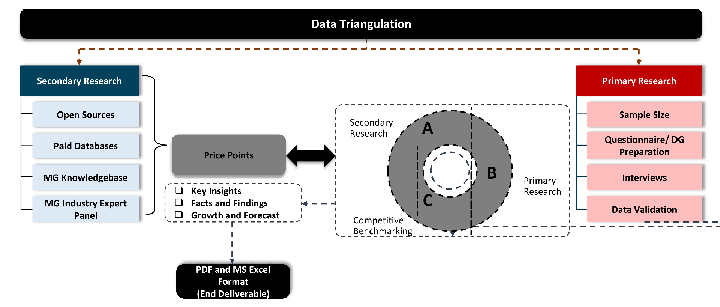
Data triangulation is a validation technique that uses multiple methods, sources, or perspectives to examine the same research question, thereby increasing the credibility and reliability of research findings. In market research, triangulation serves as a quality assurance mechanism that helps identify and minimize bias, validate assumptions, and ensure accuracy in market estimates.
- Data Source Triangulation – Using multiple data sources to examine the same phenomenon
- Methodological Triangulation – Using multiple research methods to study the same research question
- Investigator Triangulation – Using multiple researchers or analysts to examine the same data
- Theoretical Triangulation – Using multiple theoretical perspectives to interpret the same data
Custom Market Research Services
We will customise the research for you, in case the report listed above does not meet your requirements.
Get 10% Free Customisation