Glue Laminated Timber Market Size, Share & Trends Analysis Report by Product Type (Straight Beams, Curved Beams, Columns, Trusses, Arches, Others), Wood Species, Adhesive Type, Grade/Strength Class, Finish Type, Cross-Section Shape, Distribution Channel, End-use, and Geography (North America, Europe, Asia Pacific, Middle East, Africa, and South America) – Global Industry Data, Trends, and Forecasts, 2026–2035
|
|
|
Segmental Data Insights |
|
|
Demand Trends |
|
|
Competitive Landscape |
|
|
Strategic Development |
|
|
Future Outlook & Opportunities |
|
Glue-Laminated-Timber-Market Size, Share, and Growth
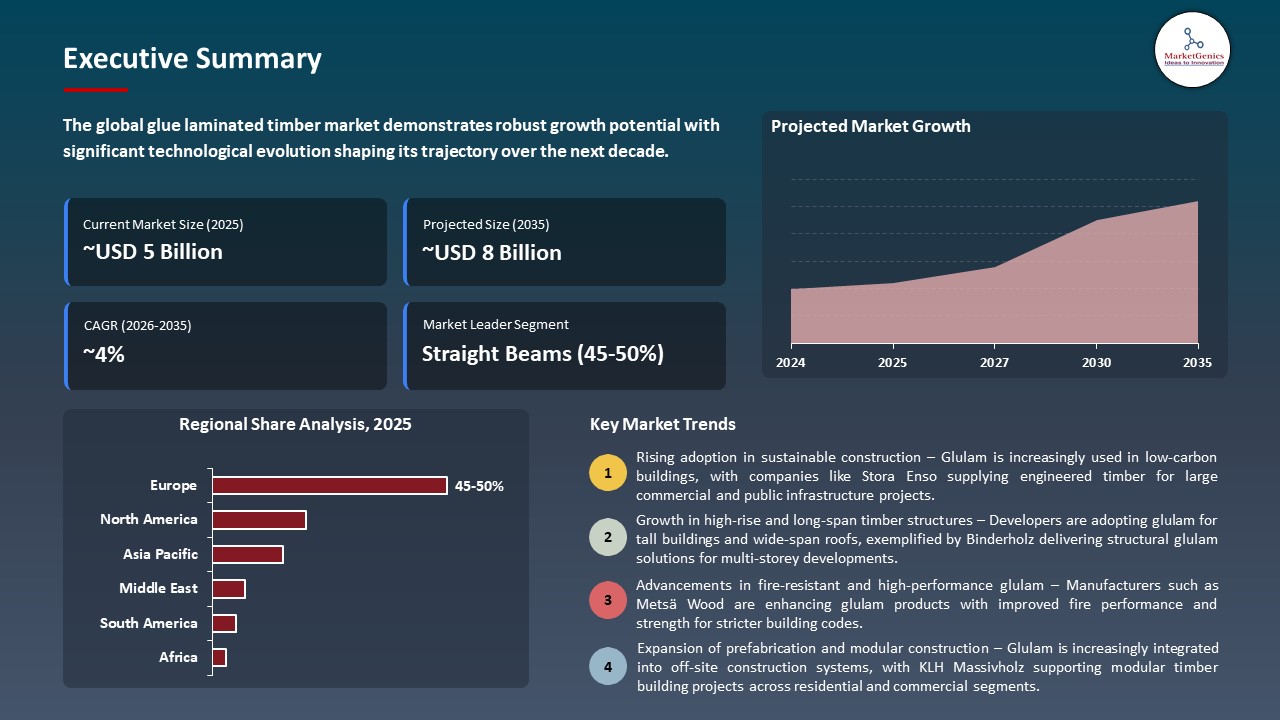
The global glue laminated timber market is witnessing strong growth, valued at USD 5.2 billion in 2025 and projected to reach USD 7.9 billion by 2035, expanding at a CAGR of 4.3% during the forecast period. Asia Pacific is the fastest-growing region in the glue laminated timber market due to rapid urbanization, increasing construction of residential and commercial buildings, government initiatives promoting sustainable and low-carbon construction, and rising awareness of Glulam’s structural strength, design flexibility, and fire-resistant properties.
Olga Golgor, Head of Sales Europe for Engineered Wood at Henkel Adhesive Technologies, said, “With the Loctite HB XE Line, we are setting a new standard in both fire protection and sustainability for the European timber construction market. This product line is the ideal choice for CLT and GLT manufacturers who want to combine high safety standards with efficient production. A true advancement for the future of timber construction”.
The glue laminated timber market is propelled by its high strength-to-weight ratio, substantial load-bearing capacity, and dependable load structural performance. Its capacity to be produced in curvy forms and long spans gives its designers more freedom to design but does not affect the structural integrity. Such aesthetic appearance and performance characteristics enable glue laminated timber to be used in complicated architectural designs, expansive open spaces, and structural demanding applications in construction works in the contemporary world.
The glue laminated timber market boasts high growth potential due to its ability to be used in prefabrication and modular construction. Glue laminated timber can be manufactured in high precision at the factory, which allows to assemble it on-site faster, waste less material and ensure a uniform quality control. Such benefits are especially useful in urban settings and markets with limited supply of labor, where project schedules are being accelerated, cost-effectiveness, and the need to build projects in a sustainable way are gaining importance.
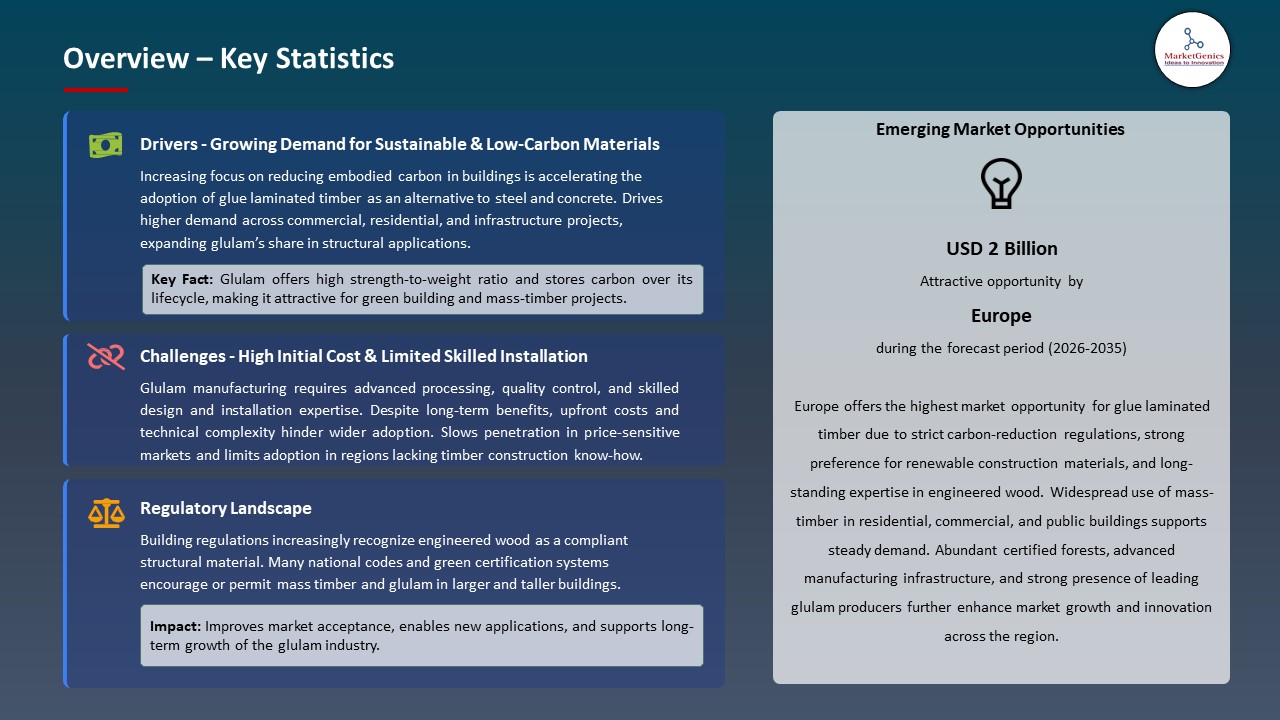
Adjacent opportunities in the glue laminated timber market include expanding use in mass-timber and hybrid construction systems, integration with prefabricated and modular building solutions, and increasing adoption in infrastructure and public buildings such as bridges, transit hubs, and educational facilities. Advancements in fire and moisture-resistant glue laminated timber products are also enabling applications in exterior and high-performance structures, while growing emphasis on sustainable, low-carbon construction continues to open new end-use segments across modern building designs.
Glue Laminated Timber Market Dynamics and Trends
Driver: Advances in Manufacturing Technology
-
Development in technology of manufacturing timber is a major driving force to the glue laminated timber market as it has enhanced the products in terms of performance, uniformity and efficiency in production. The implementation of digital fabrication technology including the CNC machining process allows high accuracy, customization and intricate shapes and reduced wastage of material.
- Automated production lines provide greater scalability, less dependence on labor, and homogeneous quality in large volumes. Parallel to that, adhesive technologies enhance the strength of bonds, durability, and damp and fire resistance.
- In 2025, Element5 in St. Thomas, Ontario, increased production by investing in its mass timber business to the tune of $107 million with the help of Invest Ontario, which increased its capacity to satisfy the growing demand of affordable and modular housing. The growth incorporates an automated production line of Glulam which has improved the efficiency of production and supply of sustainable building materials in the domestic environment.
- Combined, these technological advances reduce errors in production, reduce lead times and add structural reliability, which makes glue laminated timber more competitive than conventional construction products and faster to be implemented in a wide variety of construction uses.
Restraint: Raw Material Price Volatility & Supply Constraints
-
Glue laminated timber market is characterized by significant limitations because the prices of raw materials, mainly structural timber and special adhesives fluctuate significantly. The lumber price volatility due to alterations in forestry rules, harvest quotas, climate and global demand can greatly escalate the cost of production. Likewise, adhesive prices fluctuate due to availability of petrochemical feedstock and the cost of energy, which further increases cost uncertainty by the manufacturers.
- Moreover, there is also the problem of limited availability of sustainably certified timber that Glulam manufacturers need to address in order to meet environmental demands and green building regulations. Production schedules and delivery schedules can be influenced by supply chain disruptions such as transportation delays and regional delivery imbalances in timber availability.
- The limitations lower the stability of prices, restrict capacity usage and could deter long-term project planning, which, in turn, slows the overall acceptance of the glue-laminated timber in construction use.
Opportunity: Mass Timber & Hybrid Construction Systems
-
Mass timber and hybrid construction system is becoming increasingly popular, which is an important opportunity to the glue laminated timber market. Glulam is also gaining popularity when it comes to hybrid structures, being used together with cross-laminated timber, steel, and concrete to provide the benefits of the strength, flexibility and sustainability of three materials.
- This method allows building higher, bigger and more architecturally complicated wooden structures and do not violate the structural and safety demands. With developers in search of low-carbon solutions without performance compromise, the application of Glulam as a primary load bearing component in mass timber and hybrid constructions is growing, which has introduced new opportunities in commercial, institutional, and high-rise construction works.
- In 2025, Blumer Lehmann established its own glue-laminated timber production facility on its Erlenhof production facility. The investment enhances the engineered wood range of the company to in-house the glue laminated timber and CLT production, undergirding the mass timber production system and hybrid construction systems.
- The ongoing shift toward mass timber and hybrid construction techniques is enhancing the importance of glue-laminated timber as a high-performance and sustainable structural system in modern construction projects.
Key Trend: Fire & Moisture‑Resistant Glulam Products
- A major trend in the glue-laminated timber market is the creation of fire- and moisture-resistant glulam products due to increased building safety standards and the growth of use opportunities.
- New adhesive technologies, protective treatments and improved manufacturing processes are allowing Glulam beams to have higher fire ratings and better resistance towards humidity and exposure to moisture. These performance upgrades are bolstering confidence in architects, engineers and the regulators so that Glulam can now be used in commercial structures, constructions in the public domain as well as in other demanding or risky places.
- Henkel introduced the Loctite HB XE product, a high-performance structural adhesive on glued-laminated timber (Glulam) and cross-laminated timber (CLT) and achieving the highest fire protection standards with Eurocode 5, in February 2025. The adhesive reduces the incineration rate, preserves the integrity of glue-lines during fire and permits higher and slimmer timber constructs.
- It is likely that glue laminated timber will be more widely accepted for use in applications that previously relied on steel or concrete, thus making it suitable for larger and more complex construction projects.
 Glue-Laminated-Timber-Market Analysis and Segmental Data
Straight Beams Dominate Global Glue Laminated Timber Market
-
The glue laminated timber market is primarily led by the straight beams segment, owing to their versatile nature, structural efficiency, and extensive use in residential, commercial, and public infrastructure projects. Straight glulam beams provide a high load-bearing capacity, dimensional stability, and ease of integration into prefabricated and modular construction systems.
- To meet the growing demands of construction, manufacturers are keen to produce straight beams in both standard and custom sizes. Their integration into modern sustainable construction practices, along with their ability to reduce project duration without sacrificing quality, further strengthens their market dominance. Additionally, straight glulam beams provide a high level of design flexibility, allowing for free combinations with curved beams, CLT, and other elements to create a more appealing and functional appearance.
- The increasing urbanization, expansion of infrastructure, and a clear movement towards low-carbon and energy-efficient construction have contributed to the growing popularity of straight beams, solidifying their position as the leader in the global glue laminated timber market.
Europe Leads Global Glue Laminated Timber Market Demand
-
Europe is at the forefront of the global glue laminated timber market, driven by a rising demand for sustainable, low-carbon construction materials and an increasing use of timber-based building solutions in residential, commercial, and public infrastructure projects. In countries such as Germany, Austria, Sweden, and Norway, investments in green buildings, bridges, schools, and sports facilities are increasing due to the structural strength, fire resistance, and design options of glulam.
- Further measures that promote the adoption of glue-laminated timber in Europe include government policies and incentives that support eco-friendly building practices. The area exemplifies a well-developed timber processing industry, featuring a skilled labor force and advanced production technologies that enable the creation of high-quality straight and curved glulam beams for use in intricate structures.
- In addition, the cognizance of the long-lasting properties of glue-laminated timber that has an attractive lightweight design and includes prefabrication methods contributes to Europe’s position as the leading market.
- The focus on sustainable construction that is energy-efficient and resilient has positioned the region as the most influential and higher expansion in global glue laminated timber market.
Glue-Laminated-Timber-Market Ecosystem
The global glue laminated timber market is consolidated, with leading players including Stora Enso Oyj, Binderholz GmbH, Mayr-Melnhof Holz Holding AG, Moelven Limtre AS, and Structurlam Mass Timber Corporation. These companies maintain strong competitive positions through extensive manufacturing capabilities, advanced engineering of glulam beams and columns, broad product portfolios for residential, commercial, and infrastructure projects, and the ability to deliver customized, high-quality timber solutions. Their strengths are further reinforced by established relationships with architects, construction companies, and infrastructure developers, integrated supply chains, and compliance with stringent European and North American sustainability and fire-safety standards.
The market value chain of glue laminated timber, involves sourcing of sustainable timber, which is manufactured in managed forests, glulam manufacturing process, quality process and certification, prefabrication, transportation, in-site assembly, and integration with hybrid building systems. Such services as post-installation, such as structural consultation, project maintenance, and lifecycle are very important in client satisfaction and long-term adoption.
Entry barriers remain high because of sophisticated regulatory requirements, certification procedures, and skilled workforce demands and investment in modern technology in manufacturing. Constant innovation, such as fire-resistant glulam products, curved and custom-designed beams, digital fabrication, and low-carbon solutions are contributing to the efficiency, structural performance, and market differentiation to ensure the long-term growth and competitive positioning in the global glue laminated timber market.
 Recent Development and Strategic Overview:
-
In June 2025, Techlam secured a contract to supply glulam timber for the new Palmerston North Airport terminal in New Zealand. The project features straight glulam beams, X-frame structures, and glulam columns for the main terminal, showcasing high-performance, sustainable engineered timber in large-scale public infrastructure and reinforcing glulam’s market leadership.
- In June 2025, Setra Group AB highlighted its advanced glulam timber range from the Långshyttan factory, offering dimensionally stable, fire-resistant, and customizable beams for high-load construction. The production emphasizes sustainability, energy efficiency, and reduced waste, reinforcing Setra’s leadership in engineered timber solutions for commercial, public, and infrastructure projects.
Report Scope
|
Detail |
|
|
Market Size in 2025 |
USD 5.2 Bn |
|
Market Forecast Value in 2035 |
USD 7.9 Bn |
|
Growth Rate (CAGR) |
4.3% |
|
Forecast Period |
2026 – 2035 |
|
Historical Data Available for |
2021 – 2024 |
|
Market Size Units |
US$ Billion for Value |
|
Report Format |
Electronic (PDF) + Excel |
|
North America |
Europe |
Asia Pacific |
Middle East |
Africa |
South America |
|
|
|
|
|
|
|
Companies Covered |
|||||
|
|
|
|
|
|
Glue-Laminated-Timber-Market Segmentation and Highlights
|
Segment |
Sub-segment |
|
Glue Laminated Timber Market, By Product Type |
|
|
Glue Laminated Timber Market, By Wood Species |
|
|
Glue Laminated Timber Market, By Adhesive Type |
|
|
Glue Laminated Timber Market, By Grade/Strength Class |
|
|
Glue Laminated Timber Market, By Finish Type |
|
|
Glue Laminated Timber Market, By Cross-Section Shape |
|
|
Glue Laminated Timber Market, By Distribution Channel |
|
|
Glue Laminated Timber Market, By End-use |
|
Frequently Asked Questions
Table of Contents
- 1. Research Methodology and Assumptions
- 1.1. Definitions
- 1.2. Research Design and Approach
- 1.3. Data Collection Methods
- 1.4. Base Estimates and Calculations
- 1.5. Forecasting Models
- 1.5.1. Key Forecast Factors & Impact Analysis
- 1.6. Secondary Research
- 1.6.1. Open Sources
- 1.6.2. Paid Databases
- 1.6.3. Associations
- 1.7. Primary Research
- 1.7.1. Primary Sources
- 1.7.2. Primary Interviews with Stakeholders across Ecosystem
- 2. Executive Summary
- 2.1. Global Glue Laminated Timber Market Outlook
- 2.1.1. Glue Laminated Timber Market Size Value (US$ Bn), and Forecasts, 2021-2035
- 2.1.2. Compounded Annual Growth Rate Analysis
- 2.1.3. Growth Opportunity Analysis
- 2.1.4. Segmental Share Analysis
- 2.1.5. Geographical Share Analysis
- 2.2. Market Analysis and Facts
- 2.3. Supply-Demand Analysis
- 2.4. Competitive Benchmarking
- 2.5. Go-to- Market Strategy
- 2.5.1. Customer/ End-use Industry Assessment
- 2.5.2. Growth Opportunity Data, 2026-2035
- 2.5.2.1. Regional Data
- 2.5.2.2. Country Data
- 2.5.2.3. Segmental Data
- 2.5.3. Identification of Potential Market Spaces
- 2.5.4. GAP Analysis
- 2.5.5. Potential Attractive Price Points
- 2.5.6. Prevailing Market Risks & Challenges
- 2.5.7. Preferred Sales & Marketing Strategies
- 2.5.8. Key Recommendations and Analysis
- 2.5.9. A Way Forward
- 2.1. Global Glue Laminated Timber Market Outlook
- 3. Industry Data and Premium Insights
- 3.1. Global Chemicals & Materials Industry Overview, 2025
- 3.1.1. Chemicals & Materials Industry Ecosystem Analysis
- 3.1.2. Key Trends for Chemicals & Materials Industry
- 3.1.3. Regional Distribution for Chemicals & Materials Industry
- 3.2. Supplier Customer Data
- 3.3. Technology Roadmap and Developments
- 3.4. Trade Analysis
- 3.4.1. Import & Export Analysis, 2025
- 3.4.2. Top Importing Countries
- 3.4.3. Top Exporting Countries
- 3.5. Trump Tariff Impact Analysis
- 3.5.1. Manufacturer
- 3.5.1.1. Based on the component & Raw material
- 3.5.2. Supply Chain
- 3.5.3. End Consumer
- 3.5.1. Manufacturer
- 3.6. Raw Material Analysis
- 3.1. Global Chemicals & Materials Industry Overview, 2025
- 4. Market Overview
- 4.1. Market Dynamics
- 4.1.1. Drivers
- 4.1.1.1. Growing adoption of sustainable and low-carbon construction materials
- 4.1.1.2. Rising demand for engineered wood in large-span and multi-storey buildings
- 4.1.1.3. Increased focus on prefabrication and off-site construction methods
- 4.1.2. Restraints
- 4.1.2.1. High production and processing costs compared to conventional timber
- 4.1.2.2. Limited availability of quality raw wood and supply chain constraints
- 4.1.1. Drivers
- 4.2. Key Trend Analysis
- 4.3. Regulatory Framework
- 4.3.1. Key Regulations, Norms, and Subsidies, by Key Countries
- 4.3.2. Tariffs and Standards
- 4.3.3. Impact Analysis of Regulations on the Market
- 4.4. Value Chain Analysis
- 4.4.1. Raw Material & Timber Suppliers
- 4.4.2. Glue Laminated Timber Fabricators/Manufacturers
- 4.4.3. Dealers/ Distributors
- 4.4.4. End-users
- 4.5. Cost Structure Analysis
- 4.6. Pricing Analysis
- 4.7. Porter’s Five Forces Analysis
- 4.8. PESTEL Analysis
- 4.9. Global Glue Laminated Timber Market Demand
- 4.9.1. Historical Market Size – Value (US$ Bn), 2020-2024
- 4.9.2. Current and Future Market Size – Value (US$ Bn), 2026–2035
- 4.9.2.1. Y-o-Y Growth Trends
- 4.9.2.2. Absolute $ Opportunity Assessment
- 4.1. Market Dynamics
- 5. Competition Landscape
- 5.1. Competition structure
- 5.1.1. Fragmented v/s consolidated
- 5.2. Company Share Analysis, 2025
- 5.2.1. Global Company Market Share
- 5.2.2. By Region
- 5.2.2.1. North America
- 5.2.2.2. Europe
- 5.2.2.3. Asia Pacific
- 5.2.2.4. Middle East
- 5.2.2.5. Africa
- 5.2.2.6. South America
- 5.3. Product Comparison Matrix
- 5.3.1. Specifications
- 5.3.2. Market Positioning
- 5.3.3. Pricing
- 5.1. Competition structure
- 6. Global Glue Laminated Timber Market Analysis, by Product Type
- 6.1. Key Segment Analysis
- 6.2. Glue Laminated Timber Market Size Value (US$ Bn), Analysis, and Forecasts, by Product Type, 2021-2035
- 6.2.1. Straight Beams
- 6.2.2. Curved Beams
- 6.2.3. Columns
- 6.2.4. Trusses
- 6.2.5. Arches
- 6.2.6. Others
- 7. Global Glue Laminated Timber Market Analysis, by Wood Species
- 7.1. Key Segment Analysis
- 7.2. Glue Laminated Timber Market Size Value (US$ Bn), Analysis, and Forecasts, by Wood Species, 2021-2035
- 7.2.1. Spruce
- 7.2.2. Pine
- 7.2.3. Cedar
- 7.2.4. Other Softwoods
- 8. Global Glue Laminated Timber Market Analysis, by Adhesive Type
- 8.1. Key Segment Analysis
- 8.2. Glue Laminated Timber Market Size Value (US$ Bn), Analysis, and Forecasts, by Adhesive Type, 2021-2035
- 8.2.1. Melamine-based Adhesives
- 8.2.2. Polyurethane-based Adhesives
- 8.2.3. Phenol-Resorcinol Formaldehyde (PRF)
- 8.2.4. Emulsion Polymer Isocyanate (EPI)
- 8.2.5. Others
- 9. Global Glue Laminated Timber Market Analysis, by Grade/Strength Class
- 9.1. Key Segment Analysis
- 9.2. Glue Laminated Timber Market Size Value (US$ Bn), Analysis, and Forecasts, by Grade/Strength Class, 2021-2035
- 9.2.1. Structural Grade
- 9.2.1.1. GL24
- 9.2.1.2. GL28
- 9.2.1.3. GL32
- 9.2.1.4. GL36
- 9.2.2. Architectural Grade
- 9.2.3. Industrial Grade
- 9.2.1. Structural Grade
- 10. Global Glue Laminated Timber Market Analysis, by Finish Type
- 10.1. Key Segment Analysis
- 10.2. Glue Laminated Timber Market Size Value (US$ Bn), Analysis, and Forecasts, by Finish Type, 2021-2035
- 10.2.1. Unfinished/Natural
- 10.2.2. Stained
- 10.2.3. Painted
- 10.2.4. Others
- 11. Global Glue Laminated Timber Market Analysis, by Cross-Section Shape
- 11.1. Key Segment Analysis
- 11.2. Glue Laminated Timber Market Size Value (US$ Bn), Analysis, and Forecasts, by Cross-Section Shape, 2021-2035
- 11.2.1. Rectangular
- 11.2.2. Square
- 11.2.3. Tapered
- 11.2.4. Pitched Cambered
- 11.2.5. Custom Profiles
- 12. Global Glue Laminated Timber Market Analysis, by Distribution Channel
- 12.1. Key Segment Analysis
- 12.2. Glue Laminated Timber Market Size Value (US$ Bn), Analysis, and Forecasts, by Distribution Channel, 2021-2035
- 12.2.1. Direct Sales
- 12.2.2. Distributors
- 12.2.3. Online Channels
- 12.2.4. Retail Outlets
- 13. Global Glue Laminated Timber Market Analysis and Forecasts, by End-use
- 13.1. Key Findings
- 13.2. Glue Laminated Timber Market Size Value (US$ Bn), Analysis, and Forecasts, by End-use, 2021-2035
- 13.2.1. Residential Construction
- 13.2.2. Commercial Construction
- 13.2.3. Industrial Construction
- 13.2.4. Infrastructure & Public Works
- 13.2.5. Institutional Buildings
- 13.2.6. Recreational & Sports Facilities
- 13.2.7. Marine & Coastal Structures
- 13.2.8. Others
- 14. Global Glue Laminated Timber Market Analysis and Forecasts, by Region
- 14.1. Key Findings
- 14.2. Glue Laminated Timber Market Size Value (US$ Bn), Analysis, and Forecasts, by Region, 2021-2035
- 14.2.1. North America
- 14.2.2. Europe
- 14.2.3. Asia Pacific
- 14.2.4. Middle East
- 14.2.5. Africa
- 14.2.6. South America
- 15. North America Glue Laminated Timber Market Analysis
- 15.1. Key Segment Analysis
- 15.2. Regional Snapshot
- 15.3. North America Glue Laminated Timber Market Size Value (US$ Bn), Analysis, and Forecasts, 2021-2035
- 15.3.1. Product Type
- 15.3.2. Wood Species
- 15.3.3. Adhesive Type
- 15.3.4. Grade/Strength Class
- 15.3.5. Finish Type
- 15.3.6. Cross-Section Shape
- 15.3.7. Distribution Channel
- 15.3.8. End-use
- 15.3.9. Country
- 15.3.9.1. USA
- 15.3.9.2. Canada
- 15.3.9.3. Mexico
- 15.4. USA Glue Laminated Timber Market
- 15.4.1. Country Segmental Analysis
- 15.4.2. Product Type
- 15.4.3. Wood Species
- 15.4.4. Adhesive Type
- 15.4.5. Grade/Strength Class
- 15.4.6. Finish Type
- 15.4.7. Cross-Section Shape
- 15.4.8. Distribution Channel
- 15.4.9. End-use
- 15.5. Canada Glue Laminated Timber Market
- 15.5.1. Country Segmental Analysis
- 15.5.2. Product Type
- 15.5.3. Wood Species
- 15.5.4. Adhesive Type
- 15.5.5. Grade/Strength Class
- 15.5.6. Finish Type
- 15.5.7. Cross-Section Shape
- 15.5.8. Distribution Channel
- 15.5.9. End-use
- 15.6. Mexico Glue Laminated Timber Market
- 15.6.1. Country Segmental Analysis
- 15.6.2. Product Type
- 15.6.3. Wood Species
- 15.6.4. Adhesive Type
- 15.6.5. Grade/Strength Class
- 15.6.6. Finish Type
- 15.6.7. Cross-Section Shape
- 15.6.8. Distribution Channel
- 15.6.9. End-use
- 16. Europe Glue Laminated Timber Market Analysis
- 16.1. Key Segment Analysis
- 16.2. Regional Snapshot
- 16.3. Europe Glue Laminated Timber Market Size Value (US$ Bn), Analysis, and Forecasts, 2021-2035
- 16.3.1. Product Type
- 16.3.2. Wood Species
- 16.3.3. Adhesive Type
- 16.3.4. Grade/Strength Class
- 16.3.5. Finish Type
- 16.3.6. Cross-Section Shape
- 16.3.7. Distribution Channel
- 16.3.8. End-use
- 16.3.9. Country
- 16.3.9.1. Germany
- 16.3.9.2. United Kingdom
- 16.3.9.3. France
- 16.3.9.4. Italy
- 16.3.9.5. Spain
- 16.3.9.6. Netherlands
- 16.3.9.7. Nordic Countries
- 16.3.9.8. Poland
- 16.3.9.9. Russia & CIS
- 16.3.9.10. Rest of Europe
- 16.4. Germany Glue Laminated Timber Market
- 16.4.1. Country Segmental Analysis
- 16.4.2. Product Type
- 16.4.3. Wood Species
- 16.4.4. Adhesive Type
- 16.4.5. Grade/Strength Class
- 16.4.6. Finish Type
- 16.4.7. Cross-Section Shape
- 16.4.8. Distribution Channel
- 16.4.9. End-use
- 16.5. United Kingdom Glue Laminated Timber Market
- 16.5.1. Country Segmental Analysis
- 16.5.2. Product Type
- 16.5.3. Wood Species
- 16.5.4. Adhesive Type
- 16.5.5. Grade/Strength Class
- 16.5.6. Finish Type
- 16.5.7. Cross-Section Shape
- 16.5.8. Distribution Channel
- 16.5.9. End-use
- 16.6. France Glue Laminated Timber Market
- 16.6.1. Country Segmental Analysis
- 16.6.2. Product Type
- 16.6.3. Wood Species
- 16.6.4. Adhesive Type
- 16.6.5. Grade/Strength Class
- 16.6.6. Finish Type
- 16.6.7. Cross-Section Shape
- 16.6.8. Distribution Channel
- 16.6.9. End-use
- 16.7. Italy Glue Laminated Timber Market
- 16.7.1. Country Segmental Analysis
- 16.7.2. Product Type
- 16.7.3. Wood Species
- 16.7.4. Adhesive Type
- 16.7.5. Grade/Strength Class
- 16.7.6. Finish Type
- 16.7.7. Cross-Section Shape
- 16.7.8. Distribution Channel
- 16.7.9. End-use
- 16.8. Spain Glue Laminated Timber Market
- 16.8.1. Country Segmental Analysis
- 16.8.2. Product Type
- 16.8.3. Wood Species
- 16.8.4. Adhesive Type
- 16.8.5. Grade/Strength Class
- 16.8.6. Finish Type
- 16.8.7. Cross-Section Shape
- 16.8.8. Distribution Channel
- 16.8.9. End-use
- 16.9. Netherlands Glue Laminated Timber Market
- 16.9.1. Country Segmental Analysis
- 16.9.2. Product Type
- 16.9.3. Wood Species
- 16.9.4. Adhesive Type
- 16.9.5. Grade/Strength Class
- 16.9.6. Finish Type
- 16.9.7. Cross-Section Shape
- 16.9.8. Distribution Channel
- 16.9.9. End-use
- 16.10. Nordic Countries Glue Laminated Timber Market
- 16.10.1. Country Segmental Analysis
- 16.10.2. Product Type
- 16.10.3. Wood Species
- 16.10.4. Adhesive Type
- 16.10.5. Grade/Strength Class
- 16.10.6. Finish Type
- 16.10.7. Cross-Section Shape
- 16.10.8. Distribution Channel
- 16.10.9. End-use
- 16.11. Poland Glue Laminated Timber Market
- 16.11.1. Country Segmental Analysis
- 16.11.2. Product Type
- 16.11.3. Wood Species
- 16.11.4. Adhesive Type
- 16.11.5. Grade/Strength Class
- 16.11.6. Finish Type
- 16.11.7. Cross-Section Shape
- 16.11.8. Distribution Channel
- 16.11.9. End-use
- 16.12. Russia & CIS Glue Laminated Timber Market
- 16.12.1. Country Segmental Analysis
- 16.12.2. Product Type
- 16.12.3. Wood Species
- 16.12.4. Adhesive Type
- 16.12.5. Grade/Strength Class
- 16.12.6. Finish Type
- 16.12.7. Cross-Section Shape
- 16.12.8. Distribution Channel
- 16.12.9. End-use
- 16.13. Rest of Europe Glue Laminated Timber Market
- 16.13.1. Country Segmental Analysis
- 16.13.2. Product Type
- 16.13.3. Wood Species
- 16.13.4. Adhesive Type
- 16.13.5. Grade/Strength Class
- 16.13.6. Finish Type
- 16.13.7. Cross-Section Shape
- 16.13.8. Distribution Channel
- 16.13.9. End-use
- 17. Asia Pacific Glue Laminated Timber Market Analysis
- 17.1. Key Segment Analysis
- 17.2. Regional Snapshot
- 17.3. Asia Pacific Glue Laminated Timber Market Size Value (US$ Bn), Analysis, and Forecasts, 2021-2035
- 17.3.1. Product Type
- 17.3.2. Wood Species
- 17.3.3. Adhesive Type
- 17.3.4. Grade/Strength Class
- 17.3.5. Finish Type
- 17.3.6. Cross-Section Shape
- 17.3.7. Distribution Channel
- 17.3.8. End-use
- 17.3.9. Country
- 17.3.9.1. China
- 17.3.9.2. India
- 17.3.9.3. Japan
- 17.3.9.4. South Korea
- 17.3.9.5. Australia and New Zealand
- 17.3.9.6. Indonesia
- 17.3.9.7. Malaysia
- 17.3.9.8. Thailand
- 17.3.9.9. Vietnam
- 17.3.9.10. Rest of Asia Pacific
- 17.4. China Glue Laminated Timber Market
- 17.4.1. Country Segmental Analysis
- 17.4.2. Product Type
- 17.4.3. Wood Species
- 17.4.4. Adhesive Type
- 17.4.5. Grade/Strength Class
- 17.4.6. Finish Type
- 17.4.7. Cross-Section Shape
- 17.4.8. Distribution Channel
- 17.4.9. End-use
- 17.5. India Glue Laminated Timber Market
- 17.5.1. Country Segmental Analysis
- 17.5.2. Product Type
- 17.5.3. Wood Species
- 17.5.4. Adhesive Type
- 17.5.5. Grade/Strength Class
- 17.5.6. Finish Type
- 17.5.7. Cross-Section Shape
- 17.5.8. Distribution Channel
- 17.5.9. End-use
- 17.6. Japan Glue Laminated Timber Market
- 17.6.1. Country Segmental Analysis
- 17.6.2. Product Type
- 17.6.3. Wood Species
- 17.6.4. Adhesive Type
- 17.6.5. Grade/Strength Class
- 17.6.6. Finish Type
- 17.6.7. Cross-Section Shape
- 17.6.8. Distribution Channel
- 17.6.9. End-use
- 17.7. South Korea Glue Laminated Timber Market
- 17.7.1. Country Segmental Analysis
- 17.7.2. Product Type
- 17.7.3. Wood Species
- 17.7.4. Adhesive Type
- 17.7.5. Grade/Strength Class
- 17.7.6. Finish Type
- 17.7.7. Cross-Section Shape
- 17.7.8. Distribution Channel
- 17.7.9. End-use
- 17.8. Australia and New Zealand Glue Laminated Timber Market
- 17.8.1. Country Segmental Analysis
- 17.8.2. Product Type
- 17.8.3. Wood Species
- 17.8.4. Adhesive Type
- 17.8.5. Grade/Strength Class
- 17.8.6. Finish Type
- 17.8.7. Cross-Section Shape
- 17.8.8. Distribution Channel
- 17.8.9. End-use
- 17.9. Indonesia Glue Laminated Timber Market
- 17.9.1. Country Segmental Analysis
- 17.9.2. Product Type
- 17.9.3. Wood Species
- 17.9.4. Adhesive Type
- 17.9.5. Grade/Strength Class
- 17.9.6. Finish Type
- 17.9.7. Cross-Section Shape
- 17.9.8. Distribution Channel
- 17.9.9. End-use
- 17.10. Malaysia Glue Laminated Timber Market
- 17.10.1. Country Segmental Analysis
- 17.10.2. Product Type
- 17.10.3. Wood Species
- 17.10.4. Adhesive Type
- 17.10.5. Grade/Strength Class
- 17.10.6. Finish Type
- 17.10.7. Cross-Section Shape
- 17.10.8. Distribution Channel
- 17.10.9. End-use
- 17.11. Thailand Glue Laminated Timber Market
- 17.11.1. Country Segmental Analysis
- 17.11.2. Product Type
- 17.11.3. Wood Species
- 17.11.4. Adhesive Type
- 17.11.5. Grade/Strength Class
- 17.11.6. Finish Type
- 17.11.7. Cross-Section Shape
- 17.11.8. Distribution Channel
- 17.11.9. End-use
- 17.12. Vietnam Glue Laminated Timber Market
- 17.12.1. Country Segmental Analysis
- 17.12.2. Product Type
- 17.12.3. Wood Species
- 17.12.4. Adhesive Type
- 17.12.5. Grade/Strength Class
- 17.12.6. Finish Type
- 17.12.7. Cross-Section Shape
- 17.12.8. Distribution Channel
- 17.12.9. End-use
- 17.13. Rest of Asia Pacific Glue Laminated Timber Market
- 17.13.1. Country Segmental Analysis
- 17.13.2. Product Type
- 17.13.3. Wood Species
- 17.13.4. Adhesive Type
- 17.13.5. Grade/Strength Class
- 17.13.6. Finish Type
- 17.13.7. Cross-Section Shape
- 17.13.8. Distribution Channel
- 17.13.9. End-use
- 18. Middle East Glue Laminated Timber Market Analysis
- 18.1. Key Segment Analysis
- 18.2. Regional Snapshot
- 18.3. Middle East Glue Laminated Timber Market Size Value (US$ Bn), Analysis, and Forecasts, 2021-2035
- 18.3.1. Product Type
- 18.3.2. Wood Species
- 18.3.3. Adhesive Type
- 18.3.4. Grade/Strength Class
- 18.3.5. Finish Type
- 18.3.6. Cross-Section Shape
- 18.3.7. Distribution Channel
- 18.3.8. End-use
- 18.3.9. Country
- 18.3.9.1. Turkey
- 18.3.9.2. UAE
- 18.3.9.3. Saudi Arabia
- 18.3.9.4. Israel
- 18.3.9.5. Rest of Middle East
- 18.4. Turkey Glue Laminated Timber Market
- 18.4.1. Country Segmental Analysis
- 18.4.2. Product Type
- 18.4.3. Wood Species
- 18.4.4. Adhesive Type
- 18.4.5. Grade/Strength Class
- 18.4.6. Finish Type
- 18.4.7. Cross-Section Shape
- 18.4.8. Distribution Channel
- 18.4.9. End-use
- 18.5. UAE Glue Laminated Timber Market
- 18.5.1. Country Segmental Analysis
- 18.5.2. Product Type
- 18.5.3. Wood Species
- 18.5.4. Adhesive Type
- 18.5.5. Grade/Strength Class
- 18.5.6. Finish Type
- 18.5.7. Cross-Section Shape
- 18.5.8. Distribution Channel
- 18.5.9. End-use
- 18.6. Saudi Arabia Glue Laminated Timber Market
- 18.6.1. Country Segmental Analysis
- 18.6.2. Product Type
- 18.6.3. Wood Species
- 18.6.4. Adhesive Type
- 18.6.5. Grade/Strength Class
- 18.6.6. Finish Type
- 18.6.7. Cross-Section Shape
- 18.6.8. Distribution Channel
- 18.6.9. End-use
- 18.7. Israel Glue Laminated Timber Market
- 18.7.1. Country Segmental Analysis
- 18.7.2. Product Type
- 18.7.3. Wood Species
- 18.7.4. Adhesive Type
- 18.7.5. Grade/Strength Class
- 18.7.6. Finish Type
- 18.7.7. Cross-Section Shape
- 18.7.8. Distribution Channel
- 18.7.9. End-use
- 18.8. Rest of Middle East Glue Laminated Timber Market
- 18.8.1. Country Segmental Analysis
- 18.8.2. Product Type
- 18.8.3. Wood Species
- 18.8.4. Adhesive Type
- 18.8.5. Grade/Strength Class
- 18.8.6. Finish Type
- 18.8.7. Cross-Section Shape
- 18.8.8. Distribution Channel
- 18.8.9. End-use
- 19. Africa Glue Laminated Timber Market Analysis
- 19.1. Key Segment Analysis
- 19.2. Regional Snapshot
- 19.3. Africa Glue Laminated Timber Market Size Value (US$ Bn), Analysis, and Forecasts, 2021-2035
- 19.3.1. Product Type
- 19.3.2. Wood Species
- 19.3.3. Adhesive Type
- 19.3.4. Grade/Strength Class
- 19.3.5. Finish Type
- 19.3.6. Cross-Section Shape
- 19.3.7. Distribution Channel
- 19.3.8. End-use
- 19.3.9. Country
- 19.3.9.1. South Africa
- 19.3.9.2. Egypt
- 19.3.9.3. Nigeria
- 19.3.9.4. Algeria
- 19.3.9.5. Rest of Africa
- 19.4. South Africa Glue Laminated Timber Market
- 19.4.1. Country Segmental Analysis
- 19.4.2. Product Type
- 19.4.3. Wood Species
- 19.4.4. Adhesive Type
- 19.4.5. Grade/Strength Class
- 19.4.6. Finish Type
- 19.4.7. Cross-Section Shape
- 19.4.8. Distribution Channel
- 19.4.9. End-use
- 19.5. Egypt Glue Laminated Timber Market
- 19.5.1. Country Segmental Analysis
- 19.5.2. Product Type
- 19.5.3. Wood Species
- 19.5.4. Adhesive Type
- 19.5.5. Grade/Strength Class
- 19.5.6. Finish Type
- 19.5.7. Cross-Section Shape
- 19.5.8. Distribution Channel
- 19.5.9. End-use
- 19.6. Nigeria Glue Laminated Timber Market
- 19.6.1. Country Segmental Analysis
- 19.6.2. Product Type
- 19.6.3. Wood Species
- 19.6.4. Adhesive Type
- 19.6.5. Grade/Strength Class
- 19.6.6. Finish Type
- 19.6.7. Cross-Section Shape
- 19.6.8. Distribution Channel
- 19.6.9. End-use
- 19.7. Algeria Glue Laminated Timber Market
- 19.7.1. Country Segmental Analysis
- 19.7.2. Product Type
- 19.7.3. Wood Species
- 19.7.4. Adhesive Type
- 19.7.5. Grade/Strength Class
- 19.7.6. Finish Type
- 19.7.7. Cross-Section Shape
- 19.7.8. Distribution Channel
- 19.7.9. End-use
- 19.8. Rest of Africa Glue Laminated Timber Market
- 19.8.1. Country Segmental Analysis
- 19.8.2. Product Type
- 19.8.3. Wood Species
- 19.8.4. Adhesive Type
- 19.8.5. Grade/Strength Class
- 19.8.6. Finish Type
- 19.8.7. Cross-Section Shape
- 19.8.8. Distribution Channel
- 19.8.9. End-use
- 20. South America Glue Laminated Timber Market Analysis
- 20.1. Key Segment Analysis
- 20.2. Regional Snapshot
- 20.3. South America Glue Laminated Timber Market Size Value (US$ Bn), Analysis, and Forecasts, 2021-2035
- 20.3.1. Product Type
- 20.3.2. Wood Species
- 20.3.3. Adhesive Type
- 20.3.4. Grade/Strength Class
- 20.3.5. Finish Type
- 20.3.6. Cross-Section Shape
- 20.3.7. Distribution Channel
- 20.3.8. End-use
- 20.3.9. Country
- 20.3.9.1. Brazil
- 20.3.9.2. Argentina
- 20.3.9.3. Rest of South America
- 20.4. Brazil Glue Laminated Timber Market
- 20.4.1. Country Segmental Analysis
- 20.4.2. Product Type
- 20.4.3. Wood Species
- 20.4.4. Adhesive Type
- 20.4.5. Grade/Strength Class
- 20.4.6. Finish Type
- 20.4.7. Cross-Section Shape
- 20.4.8. Distribution Channel
- 20.4.9. End-use
- 20.5. Argentina Glue Laminated Timber Market
- 20.5.1. Country Segmental Analysis
- 20.5.2. Product Type
- 20.5.3. Wood Species
- 20.5.4. Adhesive Type
- 20.5.5. Grade/Strength Class
- 20.5.6. Finish Type
- 20.5.7. Cross-Section Shape
- 20.5.8. Distribution Channel
- 20.5.9. End-use
- 20.6. Rest of South America Glue Laminated Timber Market
- 20.6.1. Country Segmental Analysis
- 20.6.2. Product Type
- 20.6.3. Wood Species
- 20.6.4. Adhesive Type
- 20.6.5. Grade/Strength Class
- 20.6.6. Finish Type
- 20.6.7. Cross-Section Shape
- 20.6.8. Distribution Channel
- 20.6.9. End-use
- 21. Key Players/ Company Profile
- 21.1. Alfa-Tec Holzbau GmbH
- 21.1.1. Company Details/ Overview
- 21.1.2. Company Financials
- 21.1.3. Key Customers and Competitors
- 21.1.4. Business/ Industry Portfolio
- 21.1.5. Product Portfolio/ Specification Details
- 21.1.6. Pricing Data
- 21.1.7. Strategic Overview
- 21.1.8. Recent Developments
- 21.2. Ante-Holz GmbH
- 21.3. Binderholz GmbH
- 21.4. Boise Cascade Company
- 21.5. Canfor Corporation
- 21.6. Eugen Decker Holzindustrie KG
- 21.7. Hasslacher Norica Timber
- 21.8. Kalesnikoff Lumber Co. Ltd.
- 21.9. Mayr-Melnhof Holz Holding AG
- 21.10. Moelven Limtre AS
- 21.11. Nordic Structures
- 21.12. Pfeifer Group
- 21.13. Rubner Holzbau
- 21.14. Schaffitzel Holzindustrie GmbH + Co. KG
- 21.15. Schilliger Holz AG
- 21.16. Setra Group
- 21.17. Stora Enso Oyj
- 21.18. Structurlam Mass Timber Corporation
- 21.19. West Fraser Timber Co. Ltd.
- 21.20. Züblin Timber GmbH
- 21.21. Other Key Players
- 21.1. Alfa-Tec Holzbau GmbH
Note* - This is just tentative list of players. While providing the report, we will cover more number of players based on their revenue and share for each geography
Research Design
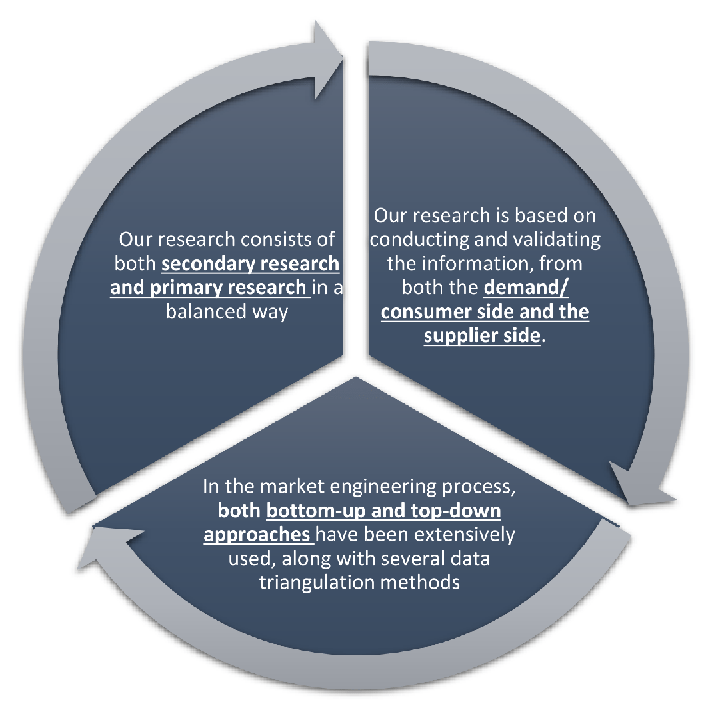
Our research design integrates both demand-side and supply-side analysis through a balanced combination of primary and secondary research methodologies. By utilizing both bottom-up and top-down approaches alongside rigorous data triangulation methods, we deliver robust market intelligence that supports strategic decision-making.
MarketGenics' comprehensive research design framework ensures the delivery of accurate, reliable, and actionable market intelligence. Through the integration of multiple research approaches, rigorous validation processes, and expert analysis, we provide our clients with the insights needed to make informed strategic decisions and capitalize on market opportunities.
MarketGenics leverages a dedicated industry panel of experts and a comprehensive suite of paid databases to effectively collect, consolidate, and analyze market intelligence.
Our approach has consistently proven to be reliable and effective in generating accurate market insights, identifying key industry trends, and uncovering emerging business opportunities.
Through both primary and secondary research, we capture and analyze critical company-level data such as manufacturing footprints, including technical centers, R&D facilities, sales offices, and headquarters.
Our expert panel further enhances our ability to estimate market size for specific brands based on validated field-level intelligence.
Our data mining techniques incorporate both parametric and non-parametric methods, allowing for structured data collection, sorting, processing, and cleaning.
Demand projections are derived from large-scale data sets analyzed through proprietary algorithms, culminating in robust and reliable market sizing.
Research Approach
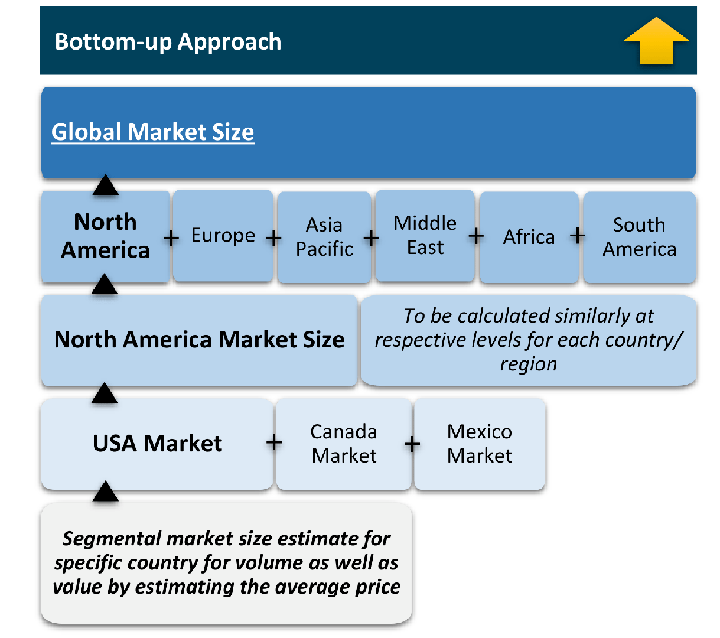
The bottom-up approach builds market estimates by starting with the smallest addressable market units and systematically aggregating them to create comprehensive market size projections.
This method begins with specific, granular data points and builds upward to create the complete market landscape.
Customer Analysis → Segmental Analysis → Geographical Analysis
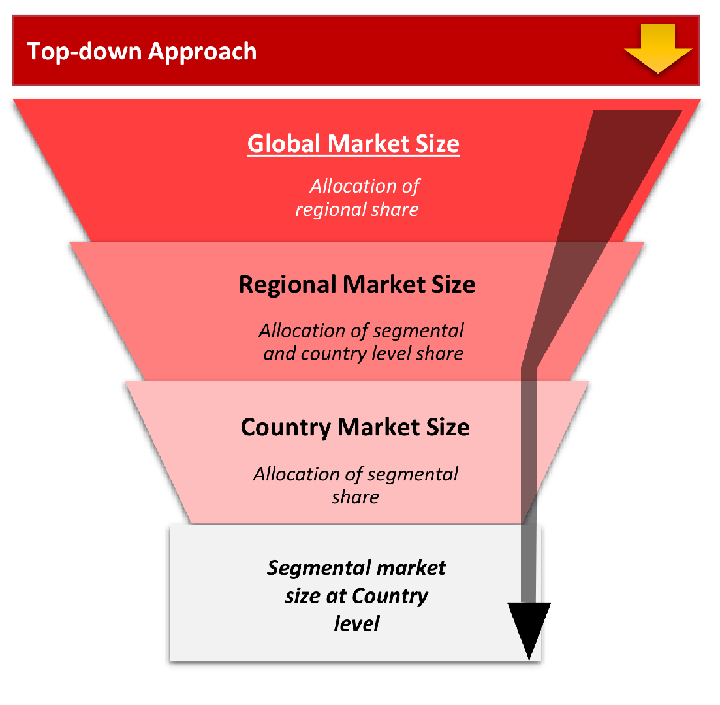
The top-down approach starts with the broadest possible market data and systematically narrows it down through a series of filters and assumptions to arrive at specific market segments or opportunities.
This method begins with the big picture and works downward to increasingly specific market slices.
TAM → SAM → SOM
Research Methods
Desk / Secondary Research
While analysing the market, we extensively study secondary sources, directories, and databases to identify and collect information useful for this technical, market-oriented, and commercial report. Secondary sources that we utilize are not only the public sources, but it is a combination of Open Source, Associations, Paid Databases, MG Repository & Knowledgebase, and others.
- Company websites, annual reports, financial reports, broker reports, and investor presentations
- National government documents, statistical databases and reports
- News articles, press releases and web-casts specific to the companies operating in the market, Magazines, reports, and others
- We gather information from commercial data sources for deriving company specific data such as segmental revenue, share for geography, product revenue, and others
- Internal and external proprietary databases (industry-specific), relevant patent, and regulatory databases
- Governing Bodies, Government Organizations
- Relevant Authorities, Country-specific Associations for Industries
We also employ the model mapping approach to estimate the product level market data through the players' product portfolio
Primary Research
Primary research/ interviews is vital in analyzing the market. Most of the cases involves paid primary interviews. Primary sources include primary interviews through e-mail interactions, telephonic interviews, surveys as well as face-to-face interviews with the different stakeholders across the value chain including several industry experts.
| Type of Respondents | Number of Primaries |
|---|---|
| Tier 2/3 Suppliers | ~20 |
| Tier 1 Suppliers | ~25 |
| End-users | ~25 |
| Industry Expert/ Panel/ Consultant | ~30 |
| Total | ~100 |
MG Knowledgebase
• Repository of industry blog, newsletter and case studies
• Online platform covering detailed market reports, and company profiles
Forecasting Factors and Models
Forecasting Factors
- Historical Trends – Past market patterns, cycles, and major events that shaped how markets behave over time. Understanding past trends helps predict future behavior.
- Industry Factors – Specific characteristics of the industry like structure, regulations, and innovation cycles that affect market dynamics.
- Macroeconomic Factors – Economic conditions like GDP growth, inflation, and employment rates that affect how much money people have to spend.
- Demographic Factors – Population characteristics like age, income, and location that determine who can buy your product.
- Technology Factors – How quickly people adopt new technology and how much technology infrastructure exists.
- Regulatory Factors – Government rules, laws, and policies that can help or restrict market growth.
- Competitive Factors – Analyzing competition structure such as degree of competition and bargaining power of buyers and suppliers.
Forecasting Models / Techniques
Multiple Regression Analysis
- Identify and quantify factors that drive market changes
- Statistical modeling to establish relationships between market drivers and outcomes
Time Series Analysis – Seasonal Patterns
- Understand regular cyclical patterns in market demand
- Advanced statistical techniques to separate trend, seasonal, and irregular components
Time Series Analysis – Trend Analysis
- Identify underlying market growth patterns and momentum
- Statistical analysis of historical data to project future trends
Expert Opinion – Expert Interviews
- Gather deep industry insights and contextual understanding
- In-depth interviews with key industry stakeholders
Multi-Scenario Development
- Prepare for uncertainty by modeling different possible futures
- Creating optimistic, pessimistic, and most likely scenarios
Time Series Analysis – Moving Averages
- Sophisticated forecasting for complex time series data
- Auto-regressive integrated moving average models with seasonal components
Econometric Models
- Apply economic theory to market forecasting
- Sophisticated economic models that account for market interactions
Expert Opinion – Delphi Method
- Harness collective wisdom of industry experts
- Structured, multi-round expert consultation process
Monte Carlo Simulation
- Quantify uncertainty and probability distributions
- Thousands of simulations with varying input parameters
Research Analysis
Our research framework is built upon the fundamental principle of validating market intelligence from both demand and supply perspectives. This dual-sided approach ensures comprehensive market understanding and reduces the risk of single-source bias.
Demand-Side Analysis: We understand end-user/application behavior, preferences, and market needs along with the penetration of the product for specific application.
Supply-Side Analysis: We estimate overall market revenue, analyze the segmental share along with industry capacity, competitive landscape, and market structure.
Validation & Evaluation
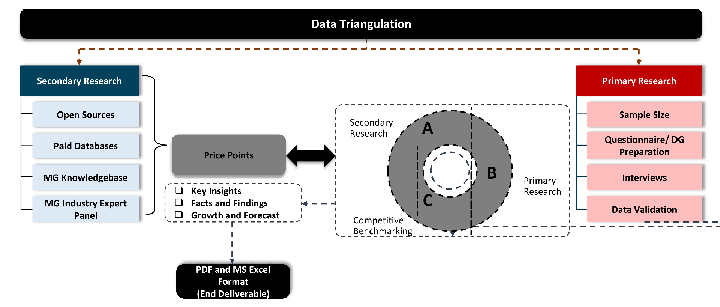
Data triangulation is a validation technique that uses multiple methods, sources, or perspectives to examine the same research question, thereby increasing the credibility and reliability of research findings. In market research, triangulation serves as a quality assurance mechanism that helps identify and minimize bias, validate assumptions, and ensure accuracy in market estimates.
- Data Source Triangulation – Using multiple data sources to examine the same phenomenon
- Methodological Triangulation – Using multiple research methods to study the same research question
- Investigator Triangulation – Using multiple researchers or analysts to examine the same data
- Theoretical Triangulation – Using multiple theoretical perspectives to interpret the same data
Custom Market Research Services
We will customise the research for you, in case the report listed above does not meet your requirements.
Get 10% Free Customisation