Rocket Propulsion Market Size, Share & Trends Analysis Report by Propulsion Type (Solid Propulsion, Liquid Propulsion, Hybrid Propulsion, Electric Propulsion, Nuclear Propulsion), Fuel Type, Thrust Capacity, Stage Application, Cooling System, Orbit Type, Vehicle Type, End-Use Industry, and Geography (North America, Europe, Asia Pacific, Middle East, Africa, and South America) – Global Industry Data, Trends, and Forecasts, 2026–2035
|
|
|
Segmental Data Insights |
|
|
Demand Trends |
|
|
Competitive Landscape |
|
|
Strategic Development |
|
|
Future Outlook & Opportunities |
|
Rocket-Propulsion-Market Size, Share, and Growth
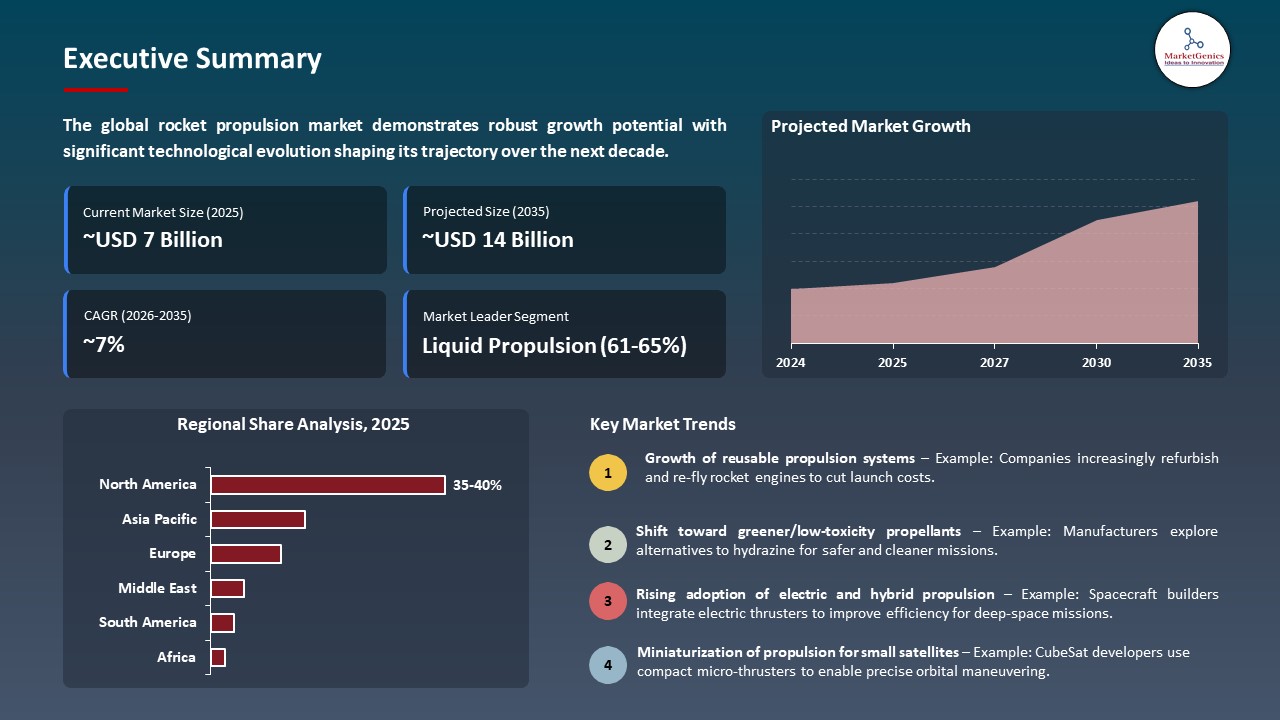
The global rocket propulsion market is experiencing robust growth, with its estimated value of USD 7.2 billion in the year 2025 and USD 13.9 billion by the period 2035, registering a CAGR of 6.8%, during the forecast period. The global rocket propulsion market is propelled by an increase in satellite launches, the growth of commercial space endeavors, the escalation of defense modernization initiatives, and swift progress in reusable and high-efficiency propulsion technologies. This is all bolstered by robust government funding and a rise in private-sector investments in next-generation launch systems.
Rocket Lab founder and CEO, Sir Peter Beck, said, “Neutron brings choice and value to the launch industry and is the ideal rocket to support NASA’s goals with VADR to provide new opportunities for science and technology payloads through commercial best practice. Rocket Lab has been a long trusted and reliable launch partner for NASA missions with Electron, and we’re proud to have been selected to expand on this with Neutron.”
The global rocket propulsion market growth is primarily propelled by the rising need to provide efficient and flexible commercial launch services. For instance, in January 2025, Rocket Lab’s integration of Neutron launch services under NASA’s VADR contract, the increased dependence on medium-lift vehicles in governmental and commercial missions will be reflected. The trend is propelling technological innovation and increasing opportunities in the government as well as commercial space markets and reinforcing the overall market prospect.
Additionally, the global rocket propulsion market growth is further driven by the increasing investment in the reusable technologies of the launch vehicles. As an illustration, in November 2025, Blue Origin was able to recapture the first-stage booster of its New Glenn rocket under NASA ESCAPADE mission, which proved to be a great breakthrough in the field of sustainable and cost-effective propulsion systems. The movement is also increasing the efficiency in operations and cutting the costs of launching, thus strengthening the growth in the long term.
The global rocket propulsion market presents adjacent opportunities such as small satellite launch services, space tourism, satellite servicing and refueling, on-orbit manufacturing, and space-based research platforms. The expansions in these areas lead to innovation, higher demand of sophisticated propulsion systems, and commercial and government spaces, which have a positive impact on the overall growth of the market. These adjacent opportunities are spurring growth in investment, in technology and in diversification of the market making the overall growth prospects of the rocket propulsion market more robust.

Rocket Propulsion Market Dynamics and Trends
Driver: Growing Demand for Satellite-based Defense and Commercial Services Worldwide
-
The global rocket propulsion market is increasingly driven by the creation of satellite launches in the defense and commercial markets. Since operators are introducing more communication, Earth-observation, and broadband satellites with large constellations they need to have a propulsion system with high thrust and frequent launches to deploy them fast and successfully.
- The increasing complexity and quantity of these satellite missions are challenging manufacturers to offer engines and launches vehicle stages which can achieve higher performance demands whilst preserving safety and reliability.
- For instance, in September 2025, SpaceX launched 28 Starlink satellites on a Falcon 9 mission, the latest in a fast-growing broadband -satellite network, which is one more illustration of the increasing demand of high-throughput, higher-quality propulsion systems. This has increased the number of orders of satellites being launched, which is forcing propulsion manufacturers to scale their production and enhance engine reliability.
- This growing need to launch satellites is stimulating creativity, increasing production capacity, and more market opportunities, thus boosting the overall development of the global rocket propulsion market.
Restraint: Environmental and Regulatory Pressures on Chemical Propellant‑Based Propulsion
-
The global rocket propulsion market growth is being constrained by growing environmental and regulatory pressures on chemical propel system. Conventional propulsion technologies usually use highly reactive or toxic propellants, including hydrazine and solid propellants, which are very dangerous to use in the production, storage, and during the process of launching.
- Additionally, governments and global regulators are putting tighter emission caps and environmental standards on compliance, the manufactures are facing the option of investing in cleaner options or the more expensive mitigation strategies. The firms are required to check and regulate exhausts, handle hazardous wastes, and re-engineer systems to conform to sustainability requirements.
- These regulatory restrictions make development and operations more expensive, extend deployment times, and can restrict the use of traditional propulsion technologies.
Opportunity: Expansion of Electric and Hybrid Propulsion Technologies for Cost‑Efficient Space Missions
-
The global rocket propulsion market is increasingly supported by the development of electric and hybrid propulsion technologies, which provide economically and environmentally friendly alternatives to the classical chemical ones. Electric propulsion such as ion, and Hall-effect propellers is very fuel efficient, lightweight and long-lived, which is suited in the case of satellite station-keeping, orbit-raising and deep-space missions.
- For instance, in March 2025, K2 Space was able to test-fly a 20-kW krypton-fed Hall-effect thruster one of the most powerful electric thrusters ever flown allowing its satellite group to exit LEO and efficiently climb to MEO.
- Additionally, hybrid propulsion systems offer chemical and electric benefits and can provide the highest thrust and efficiency over long durations, especially in the case of small and medium-sized satellites. As an example, in 2025, ISRO finished 1,000-hour life test on its 300 mN xenon-based plasma thruster showing that it is ready to work in future satellite missions.
- These developments minimize the mass of fuel, reduce lifecycle costs, increase flexibility of the mission and make more frequent and cost-effective launches, boosting long-term expansion of the global rocket propulsion market.
Key Trend: Increasing Propulsion System Performance Via Next‑Gen High‑Thrust Reusable Engines
-
The global Rocket propulsion market growth is increasingly affected by developments in next-generation, high-thrust reusable engines, which have the benefits of increasing payload capacity, lowering the cost of launch, and improving operational efficiency. They are engines that make rockets undertake multiple missions with little refurbishment, serving both commercial and government space missions.
- For instance, in 2025, Blue Origin was able to upgrade his BE-4 engine to the New Glenn rocket and achieved increased thrust and reusability. This improvement will enable heavier payloads to be deployed to orbit in less time between launches, which is the feasibility of the advantages of reusable propulsion technology.
- The implementation of high-thrust reusable engines contributes to efficiency in costs, flexibility in operations, and competitiveness, which contributes greatly to the overall development of the global rocket propulsion market.
Rocket-Propulsion-Market Analysis and Segmental Data
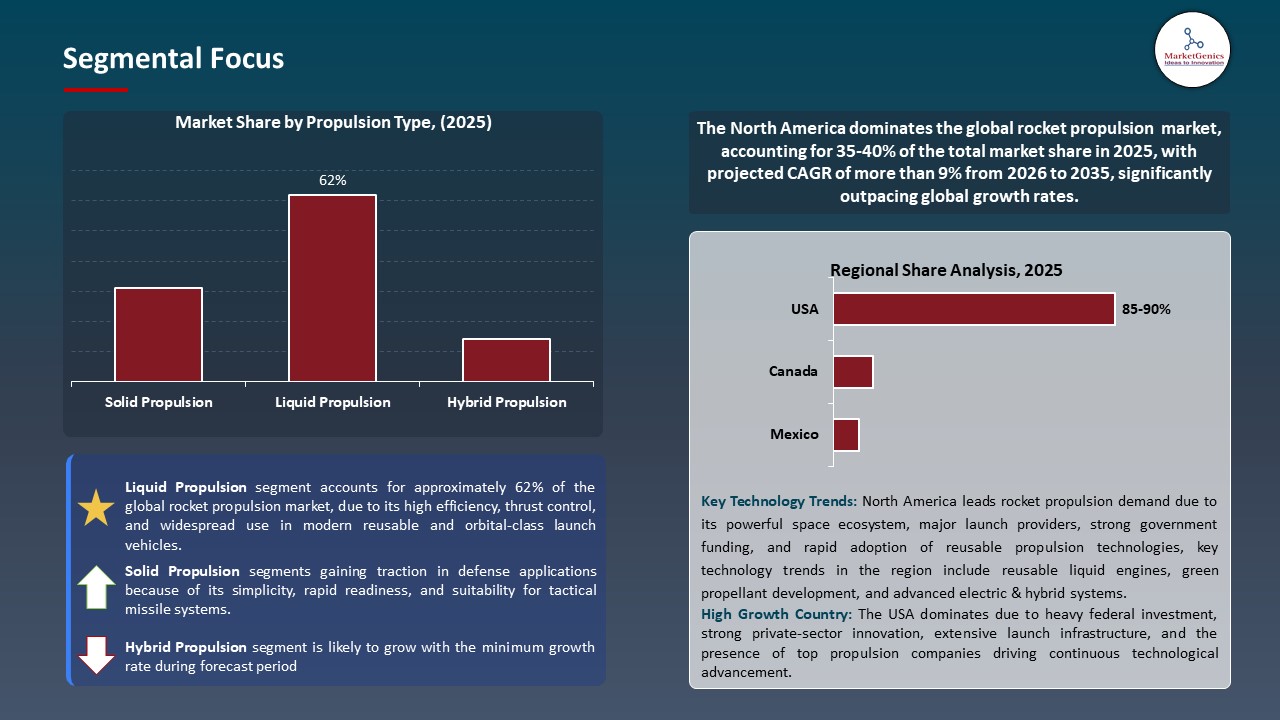
Liquid Propulsion Dominate Global Rocket Propulsion Market
-
The liquid propulsion segment dominates the global rocket propulsion market due to they are the most efficient, controllable and versatile in the market compared to solid and hybrid propulsion systems. The liquid engines enable fine control of thrust, engine rebirth and extend the duration of the burn, which is desirable in both orbital and interplanetary missions.
- Major manufacturers, such as SpaceX and Blue Origin, are still heavily investing in liquid propulsion technology to enable medium- and heavy-lift launch vehicles like Falcon 9 and New Glenn, which have higher payload and can travel to other locations further.
- The versatility of liquid propellants such as kerosene, liquid hydrogen and liquid oxygen mixtures allows a broad performance mission space that covers satellite launches and crewed spacecraft launches.
- The leadership of liquid propulsion stimulates the further development of technology, expands the maneuverability of the missions, and strengthens its market leading role in the global rocket propulsion market.
North America Leads Global Rocket Propulsion Market Demand
-
North America leads the rocket propulsion market, because of robust government funding and the flourishing commercial space industry. The region hosts major manufacturers such as SpaceX, Blue Origin, Aerojet Rocketdyne and Rocket Lab, and is subject to the constant technological development of medium- and heavy-lift launch vehicles, due to the heavy demand on satellites, space exploration missions and defense missions.
- The United States government in the forms of NASA and the Department of Defense have substantially boosted funds towards space missions which has led to a dependable demand pipeline in the development of the advanced rocket engines and propulsion systems. This government assistance stimulates innovation and guarantees the availability of production capacities and underpins the growth of local manufacturers.
- Additionally, the reusable and high-thrust engines have been adopted due to the blistering development of commercial space enterprises in North America. Firms such as SpaceX have shown that the use of cost-efficient, reusable rockets is possible to establish new standards in the industry in terms of performance and operational efficiency.
- The development of rocket propulsion in North America has enabled the country to promote technological innovation, global cooperation, and competitiveness in the market, which has sustained the country leading role in the global space economy.
Rocket-Propulsion-Market Ecosystem
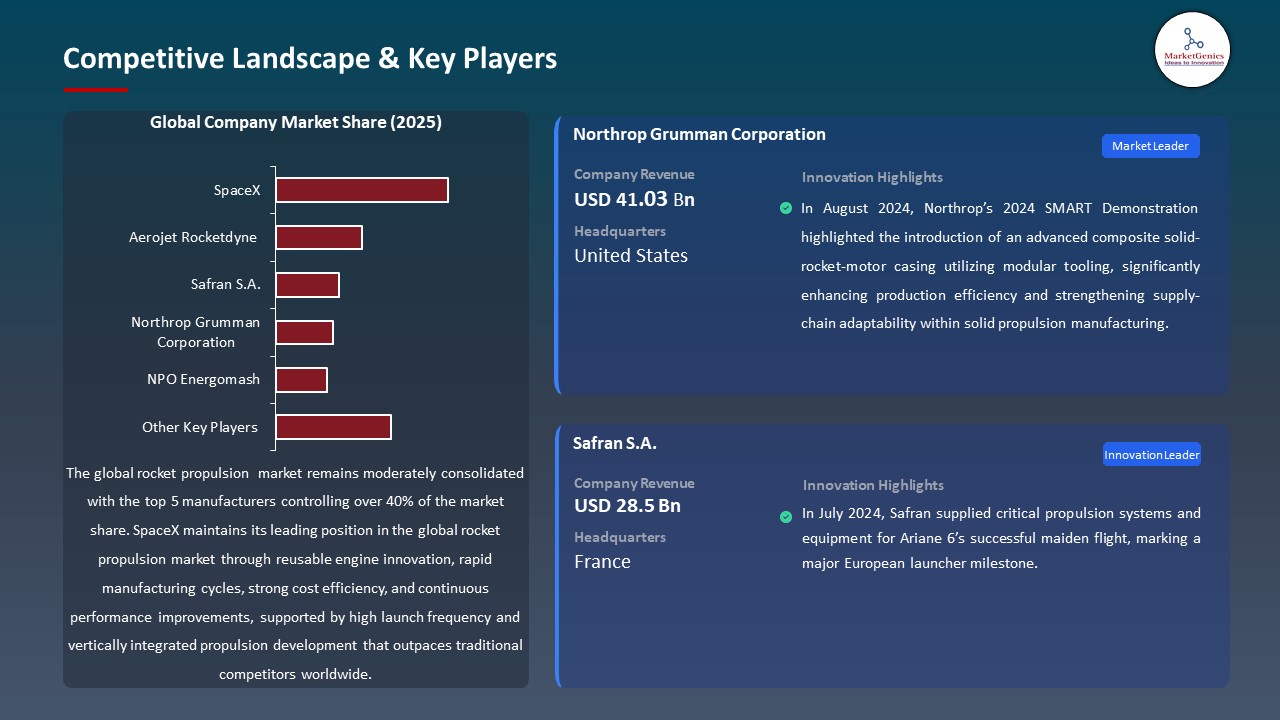
The global rocket propulsion market is moderately consolidated, with high concentration among key players such as SpaceX, Aerojet Rocketdyne, Safran S.A., Northrop Grumman Corporation, and NPO Energomash, who dominate through superior technological capacity, high levels of research and development, merger and acquisition, as well as a well-established portfolio of medium and heavy launch vehicles to serve commercial, defense and governmental space missions globally.
For instance, in 2025, SpaceX successfully launched its Falcon Heavy rocket, which had various commercial and governmental payloads, and this demonstrated its innovative liquid propulsion and the use of the first-stage boosters that were re-usable. This inauguration strengthened the position of SpaceX in the market and it is how players with the most success exploit technological advantage and business effectiveness to conquer the world rocket engine market.
Recent Development and Strategic Overview:
-
In November 2025, Blue Origin successfully launched its New Glenn rocket, deploying NASA’s ESCAPADE spacecraft, and achieved a milestone in reusable propulsion by recovering the first-stage booster on a sea-based platform.
- In January 2025, Rocket Lab USA, Inc. a leading provider of launch services and space systems, announced a mutual agreement with NASA to incorporate Neutron launch services under the Company’s existing VADR (Venture-Class Acquisition of Dedicated and Rideshare) contract.
Report Scope
|
Detail |
|
|
Market Size in 2025 |
USD 7.2 Bn |
|
Market Forecast Value in 2035 |
USD 13.9 Bn |
|
Growth Rate (CAGR) |
6.8% |
|
Forecast Period |
2026 – 2035 |
|
Historical Data Available for |
2021 – 2024 |
|
Market Size Units |
US$ Billion for Value Thousand Units for Volume |
|
Report Format |
Electronic (PDF) + Excel |
|
North America |
Europe |
Asia Pacific |
Middle East |
Africa |
South America |
|
|
|
|
|
|
|
Companies Covered |
|||||
|
|
|
|
|
|
Rocket-Propulsion-Market Segmentation and Highlights
|
Segment |
Sub-segment |
|
Rocket Propulsion Market, By Propulsion Type |
|
|
Rocket Propulsion Market, By Fuel Type |
|
|
Rocket Propulsion Market, By Thrust Capacity |
|
|
Rocket Propulsion Market, By Stage Application |
|
|
Rocket Propulsion Market, By Cooling System
|
|
|
Rocket Propulsion Market, By Orbit Type
|
|
|
Rocket Propulsion Market, By Vehicle Type |
|
|
Rocket Propulsion Market, By End-Use Industry |
|
Frequently Asked Questions
Table of Contents
- 1. Research Methodology and Assumptions
- 1.1. Definitions
- 1.2. Research Design and Approach
- 1.3. Data Collection Methods
- 1.4. Base Estimates and Calculations
- 1.5. Forecasting Models
- 1.5.1. Key Forecast Factors & Impact Analysis
- 1.6. Secondary Research
- 1.6.1. Open Sources
- 1.6.2. Paid Databases
- 1.6.3. Associations
- 1.7. Primary Research
- 1.7.1. Primary Sources
- 1.7.2. Primary Interviews with Stakeholders across Ecosystem
- 2. Executive Summary
- 2.1. Global Rocket Propulsion Market Outlook
- 2.1.1. Rocket Propulsion Market Size (Volume - Thousand Units and Value - US$ Bn), and Forecasts, 2021-2035
- 2.1.2. Compounded Annual Growth Rate Analysis
- 2.1.3. Growth Opportunity Analysis
- 2.1.4. Segmental Share Analysis
- 2.1.5. Geographical Share Analysis
- 2.2. Market Analysis and Facts
- 2.3. Supply-Demand Analysis
- 2.4. Competitive Benchmarking
- 2.5. Go-to- Market Strategy
- 2.5.1. Customer/ End-use Industry Assessment
- 2.5.2. Growth Opportunity Data, 2026-2035
- 2.5.2.1. Regional Data
- 2.5.2.2. Country Data
- 2.5.2.3. Segmental Data
- 2.5.3. Identification of Potential Market Spaces
- 2.5.4. GAP Analysis
- 2.5.5. Potential Attractive Price Points
- 2.5.6. Prevailing Market Risks & Challenges
- 2.5.7. Preferred Sales & Marketing Strategies
- 2.5.8. Key Recommendations and Analysis
- 2.5.9. A Way Forward
- 2.1. Global Rocket Propulsion Market Outlook
- 3. Industry Data and Premium Insights
- 3.1. Global Aerospace & Defense Industry Overview, 2025
- 3.1.1. Aerospace & Defense Industry Ecosystem Analysis
- 3.1.2. Key Trends for Aerospace & Defense Industry
- 3.1.3. Regional Distribution for Aerospace & Defense Industry
- 3.2. Supplier Customer Data
- 3.3. Technology Roadmap and Developments
- 3.4. Trade Analysis
- 3.4.1. Import & Export Analysis, 2025
- 3.4.2. Top Importing Countries
- 3.4.3. Top Exporting Countries
- 3.5. Trump Tariff Impact Analysis
- 3.5.1. Manufacturer
- 3.5.1.1. Based on the component & Raw material
- 3.5.2. Supply Chain
- 3.5.3. End Consumer
- 3.5.1. Manufacturer
- 3.6. Raw Material Analysis
- 3.1. Global Aerospace & Defense Industry Overview, 2025
- 4. Market Overview
- 4.1. Market Dynamics
- 4.1.1. Drivers
- 4.1.1.1. Growing satellite launch demand and space-exploration programs
- 4.1.1.2. Advancements in rocket propulsion technologies (e.g., reusable systems)
- 4.1.1.3. Increased defense and military investment in missile and launch systems
- 4.1.2. Restraints
- 4.1.2.1. High development and manufacturing costs
- 4.1.2.2. Strict regulatory, environmental, and safety requirements
- 4.1.1. Drivers
- 4.2. Key Trend Analysis
- 4.3. Regulatory Framework
- 4.3.1. Key Regulations, Norms, and Subsidies, by Key Countries
- 4.3.2. Tariffs and Standards
- 4.3.3. Impact Analysis of Regulations on the Market
- 4.4. Value Chain Analysis
- 4.4.1. Component Suppliers
- 4.4.2. Propulsion System Manufacturers
- 4.4.3. Technology Integrators
- 4.4.4. End-users
- 4.5. Porter’s Five Forces Analysis
- 4.6. PESTEL Analysis
- 4.7. Global Rocket Propulsion Market Demand
- 4.7.1. Historical Market Size - Volume (Thousand Units) and Value (US$ Bn), 2020-2024
- 4.7.2. Current and Future Market Size - Volume (Thousand Units) and Value (US$ Bn), 2026-2035
- 4.7.2.1. Y-o-Y Growth Trends
- 4.7.2.2. Absolute $ Opportunity Assessment
- 4.1. Market Dynamics
- 5. Competition Landscape
- 5.1. Competition structure
- 5.1.1. Fragmented v/s consolidated
- 5.2. Company Share Analysis, 2025
- 5.2.1. Global Company Market Share
- 5.2.2. By Region
- 5.2.2.1. North America
- 5.2.2.2. Europe
- 5.2.2.3. Asia Pacific
- 5.2.2.4. Middle East
- 5.2.2.5. Africa
- 5.2.2.6. South America
- 5.3. Product Comparison Matrix
- 5.3.1. Specifications
- 5.3.2. Market Positioning
- 5.3.3. Pricing
- 5.1. Competition structure
- 6. Global Rocket Propulsion Market Analysis, by Propulsion Type
- 6.1. Key Segment Analysis
- 6.2. Rocket Propulsion Market Size (Volume - Thousand Units and Value - US$ Bn), Analysis, and Forecasts, by Propulsion Type, 2021-2035
- 6.2.1. Solid Propulsion
- 6.2.2. Liquid Propulsion
- 6.2.2.1. Cryogenic Propulsion
- 6.2.2.2. Storable Propulsion
- 6.2.2.3. Semi-Cryogenic Propulsion
- 6.2.2.4. Others
- 6.2.3. Hybrid Propulsion
- 6.2.4. Electric Propulsion
- 6.2.4.1. Ion Propulsion
- 6.2.4.2. Hall Effect Thrusters
- 6.2.4.3. Pulsed Plasma Thrusters
- 6.2.4.4. Others
- 6.2.5. Nuclear Propulsion
- 7. Global Rocket Propulsion Market Analysis, by Fuel Type
- 7.1. Key Segment Analysis
- 7.2. Rocket Propulsion Market Size (Volume - Thousand Units and Value - US$ Bn), Analysis, and Forecasts, by Fuel Type, 2021-2035
- 7.2.1. Liquid Hydrogen
- 7.2.2. Liquid Oxygen
- 7.2.3. RP-1 (Refined Petroleum)
- 7.2.4. Hydrazine
- 7.2.5. Nitrogen Tetroxide
- 7.2.6. Unsymmetrical Dimethylhydrazine (UDMH)
- 7.2.7. Monomethylhydrazine (MMH)
- 7.2.8. Kerosene-based Fuels
- 7.2.9. Solid Composite Propellants
- 7.2.10. Green Propellants
- 7.2.11. Others
- 8. Global Rocket Propulsion Market Analysis, by Thrust Capacity
- 8.1. Key Segment Analysis
- 8.2. Rocket Propulsion Market Size (Volume - Thousand Units and Value - US$ Bn), Analysis, and Forecasts, by Thrust Capacity, 2021-2035
- 8.2.1. Below 100 kN
- 8.2.2. 100 kN - 1,000 kN
- 8.2.3. 1,000 kN - 5,000 kN
- 8.2.4. Above 5,000 kN
- 9. Global Rocket Propulsion Market Analysis, by Stage Application
- 9.1. Key Segment Analysis
- 9.2. Rocket Propulsion Market Size (Volume - Thousand Units and Value - US$ Bn), Analysis, and Forecasts, by Stage Application, 2021-2035
- 9.2.1. First Stage Propulsion
- 9.2.2. Second Stage Propulsion
- 9.2.3. Third Stage Propulsion
- 9.2.4. Upper Stage Propulsion
- 9.2.5. Kick Stage Propulsion
- 9.2.6. Orbital Maneuvering Propulsion
- 10. Global Rocket Propulsion Market Analysis, by Cooling System
- 10.1. Key Segment Analysis
- 10.2. Rocket Propulsion Market Size (Volume - Thousand Units and Value - US$ Bn), Analysis, and Forecasts, by Cooling System, 2021-2035
- 10.2.1. Regenerative Cooling
- 10.2.2. Film Cooling
- 10.2.3. Ablative Cooling
- 10.2.4. Radiation Cooling
- 10.2.5. Dump Cooling
- 11. Global Rocket Propulsion Market Analysis, by Orbit Type
- 11.1. Key Segment Analysis
- 11.2. Rocket Propulsion Market Size (Volume - Thousand Units and Value - US$ Bn), Analysis, and Forecasts, by Orbit Type, 2021-2035
- 11.2.1. Low Earth Orbit (LEO)
- 11.2.2. Medium Earth Orbit (MEO)
- 11.2.3. Geostationary Orbit (GEO)
- 11.2.4. Highly Elliptical Orbit (HEO)
- 11.2.5. Polar Orbit
- 11.2.6. Sun-Synchronous Orbit
- 12. Global Rocket Propulsion Market Analysis, by Vehicle Type
- 12.1. Key Segment Analysis
- 12.2. Rocket Propulsion Market Size (Volume - Thousand Units and Value - US$ Bn), Analysis, and Forecasts, by Vehicle Type, 2021-2035
- 12.2.1. Launch Vehicles
- 12.2.1.1. Small Launch Vehicles
- 12.2.1.2. Medium Launch Vehicles
- 12.2.1.3. Heavy Launch Vehicles
- 12.2.1.4. Super Heavy Launch Vehicles
- 12.2.1.5. Others
- 12.2.2. Spacecraft
- 12.2.2.1. Satellites
- 12.2.2.2. Space Probes
- 12.2.2.3. Crewed Spacecraft
- 12.2.2.4. Others
- 12.2.3. Missiles
- 12.2.3.1. Ballistic Missiles
- 12.2.3.2. Cruise Missiles
- 12.2.3.3. Tactical Missiles
- 12.2.3.4. Others
- 12.2.1. Launch Vehicles
- 13. Global Rocket Propulsion Market Analysis, by End-Use Industry
- 13.1. Key Segment Analysis
- 13.2. Rocket Propulsion Market Size (Volume - Thousand Units and Value - US$ Bn), Analysis, and Forecasts, by End-Use Industry, 2021-2035
- 13.2.1. Commercial Space Industry
- 13.2.1.1. Satellite Deployment
- 13.2.1.2. Space Tourism
- 13.2.1.3. Cargo Delivery to Space Stations
- 13.2.1.4. Commercial Space Stations
- 13.2.1.5. Orbital Manufacturing
- 13.2.1.6. Others
- 13.2.2. Government & Defense
- 13.2.2.1. Military Satellites Launch
- 13.2.2.2. Reconnaissance Missions
- 13.2.2.3. Ballistic Missile Systems
- 13.2.2.4. Anti-Satellite Weapons
- 13.2.2.5. Strategic Defense Systems
- 13.2.2.6. Others
- 13.2.3. Space Exploration
- 13.2.3.1. Deep Space Missions
- 13.2.3.2. Planetary Exploration
- 13.2.3.3. Lunar Missions
- 13.2.3.4. Mars Missions
- 13.2.3.5. Asteroid Mining
- 13.2.3.6. Others
- 13.2.4. Telecommunications
- 13.2.4.1. Communication Satellite Deployment
- 13.2.4.2. Broadcasting Satellite Launch
- 13.2.4.3. Navigation Satellite Systems
- 13.2.4.4. Earth Observation Satellites
- 13.2.4.5. Others
- 13.2.5. Scientific Research
- 13.2.5.1. Space Telescopes Deployment
- 13.2.5.2. Microgravity Research
- 13.2.5.3. Atmospheric Studies
- 13.2.5.4. Astrophysics Missions
- 13.2.5.5. Climate Monitoring
- 13.2.5.6. Others
- 13.2.6. Cargo & Logistics
- 13.2.6.1. ISS Resupply Missions
- 13.2.6.2. Space Station Logistics
- 13.2.6.3. Satellite Servicing
- 13.2.6.4. Orbital Debris Removal
- 13.2.6.5. Others
- 13.2.1. Commercial Space Industry
- 14. Global Rocket Propulsion Market Analysis and Forecasts, by Region
- 14.1. Key Findings
- 14.2. Rocket Propulsion Market Size (Volume - Thousand Units and Value - US$ Bn), Analysis, and Forecasts, by Region, 2021-2035
- 14.2.1. North America
- 14.2.2. Europe
- 14.2.3. Asia Pacific
- 14.2.4. Middle East
- 14.2.5. Africa
- 14.2.6. South America
- 15. North America Rocket Propulsion Market Analysis
- 15.1. Key Segment Analysis
- 15.2. Regional Snapshot
- 15.3. North America Rocket Propulsion Market Size (Volume - Thousand Units and Value - US$ Bn), Analysis, and Forecasts, 2021-2035
- 15.3.1. Propulsion Type
- 15.3.2. Fuel Type
- 15.3.3. Thrust Capacity
- 15.3.4. Stage Application
- 15.3.5. Cooling System
- 15.3.6. Orbit Type
- 15.3.7. Vehicle Type
- 15.3.8. End-Use Industry
- 15.3.9. Country
- 15.3.9.1. USA
- 15.3.9.2. Canada
- 15.3.9.3. Mexico
- 15.4. USA Rocket Propulsion Market
- 15.4.1. Country Segmental Analysis
- 15.4.2. Propulsion Type
- 15.4.3. Fuel Type
- 15.4.4. Thrust Capacity
- 15.4.5. Stage Application
- 15.4.6. Cooling System
- 15.4.7. Orbit Type
- 15.4.8. Vehicle Type
- 15.4.9. End-Use Industry
- 15.5. Canada Rocket Propulsion Market
- 15.5.1. Country Segmental Analysis
- 15.5.2. Propulsion Type
- 15.5.3. Fuel Type
- 15.5.4. Thrust Capacity
- 15.5.5. Stage Application
- 15.5.6. Cooling System
- 15.5.7. Orbit Type
- 15.5.8. Vehicle Type
- 15.5.9. End-Use Industry
- 15.6. Mexico Rocket Propulsion Market
- 15.6.1. Country Segmental Analysis
- 15.6.2. Propulsion Type
- 15.6.3. Fuel Type
- 15.6.4. Thrust Capacity
- 15.6.5. Stage Application
- 15.6.6. Cooling System
- 15.6.7. Orbit Type
- 15.6.8. Vehicle Type
- 15.6.9. End-Use Industry
- 16. Europe Rocket Propulsion Market Analysis
- 16.1. Key Segment Analysis
- 16.2. Regional Snapshot
- 16.3. Europe Rocket Propulsion Market Size (Volume - Thousand Units and Value - US$ Bn), Analysis, and Forecasts, 2021-2035
- 16.3.1. Propulsion Type
- 16.3.2. Fuel Type
- 16.3.3. Thrust Capacity
- 16.3.4. Stage Application
- 16.3.5. Cooling System
- 16.3.6. Orbit Type
- 16.3.7. Vehicle Type
- 16.3.8. End-Use Industry
- 16.3.9. Country
- 16.3.9.1. Germany
- 16.3.9.2. United Kingdom
- 16.3.9.3. France
- 16.3.9.4. Italy
- 16.3.9.5. Spain
- 16.3.9.6. Netherlands
- 16.3.9.7. Nordic Countries
- 16.3.9.8. Poland
- 16.3.9.9. Russia & CIS
- 16.3.9.10. Rest of Europe
- 16.4. Germany Rocket Propulsion Market
- 16.4.1. Country Segmental Analysis
- 16.4.2. Propulsion Type
- 16.4.3. Fuel Type
- 16.4.4. Thrust Capacity
- 16.4.5. Stage Application
- 16.4.6. Cooling System
- 16.4.7. Orbit Type
- 16.4.8. Vehicle Type
- 16.4.9. End-Use Industry
- 16.5. United Kingdom Rocket Propulsion Market
- 16.5.1. Country Segmental Analysis
- 16.5.2. Propulsion Type
- 16.5.3. Fuel Type
- 16.5.4. Thrust Capacity
- 16.5.5. Stage Application
- 16.5.6. Cooling System
- 16.5.7. Orbit Type
- 16.5.8. Vehicle Type
- 16.5.9. End-Use Industry
- 16.6. France Rocket Propulsion Market
- 16.6.1. Country Segmental Analysis
- 16.6.2. Propulsion Type
- 16.6.3. Fuel Type
- 16.6.4. Thrust Capacity
- 16.6.5. Stage Application
- 16.6.6. Cooling System
- 16.6.7. Orbit Type
- 16.6.8. Vehicle Type
- 16.6.9. End-Use Industry
- 16.7. Italy Rocket Propulsion Market
- 16.7.1. Country Segmental Analysis
- 16.7.2. Propulsion Type
- 16.7.3. Fuel Type
- 16.7.4. Thrust Capacity
- 16.7.5. Stage Application
- 16.7.6. Cooling System
- 16.7.7. Orbit Type
- 16.7.8. Vehicle Type
- 16.7.9. End-Use Industry
- 16.8. Spain Rocket Propulsion Market
- 16.8.1. Country Segmental Analysis
- 16.8.2. Propulsion Type
- 16.8.3. Fuel Type
- 16.8.4. Thrust Capacity
- 16.8.5. Stage Application
- 16.8.6. Cooling System
- 16.8.7. Orbit Type
- 16.8.8. Vehicle Type
- 16.8.9. End-Use Industry
- 16.9. Netherlands Rocket Propulsion Market
- 16.9.1. Country Segmental Analysis
- 16.9.2. Propulsion Type
- 16.9.3. Fuel Type
- 16.9.4. Thrust Capacity
- 16.9.5. Stage Application
- 16.9.6. Cooling System
- 16.9.7. Orbit Type
- 16.9.8. Vehicle Type
- 16.9.9. End-Use Industry
- 16.10. Nordic Countries Rocket Propulsion Market
- 16.10.1. Country Segmental Analysis
- 16.10.2. Propulsion Type
- 16.10.3. Fuel Type
- 16.10.4. Thrust Capacity
- 16.10.5. Stage Application
- 16.10.6. Cooling System
- 16.10.7. Orbit Type
- 16.10.8. Vehicle Type
- 16.10.9. End-Use Industry
- 16.11. Poland Rocket Propulsion Market
- 16.11.1. Country Segmental Analysis
- 16.11.2. Propulsion Type
- 16.11.3. Fuel Type
- 16.11.4. Thrust Capacity
- 16.11.5. Stage Application
- 16.11.6. Cooling System
- 16.11.7. Orbit Type
- 16.11.8. Vehicle Type
- 16.11.9. End-Use Industry
- 16.12. Russia & CIS Rocket Propulsion Market
- 16.12.1. Country Segmental Analysis
- 16.12.2. Propulsion Type
- 16.12.3. Fuel Type
- 16.12.4. Thrust Capacity
- 16.12.5. Stage Application
- 16.12.6. Cooling System
- 16.12.7. Orbit Type
- 16.12.8. Vehicle Type
- 16.12.9. End-Use Industry
- 16.13. Rest of Europe Rocket Propulsion Market
- 16.13.1. Country Segmental Analysis
- 16.13.2. Propulsion Type
- 16.13.3. Fuel Type
- 16.13.4. Thrust Capacity
- 16.13.5. Stage Application
- 16.13.6. Cooling System
- 16.13.7. Orbit Type
- 16.13.8. Vehicle Type
- 16.13.9. End-Use Industry
- 17. Asia Pacific Rocket Propulsion Market Analysis
- 17.1. Key Segment Analysis
- 17.2. Regional Snapshot
- 17.3. Asia Pacific Rocket Propulsion Market Size (Volume - Thousand Units and Value - US$ Bn), Analysis, and Forecasts, 2021-2035
- 17.3.1. Propulsion Type
- 17.3.2. Fuel Type
- 17.3.3. Thrust Capacity
- 17.3.4. Stage Application
- 17.3.5. Cooling System
- 17.3.6. Orbit Type
- 17.3.7. Vehicle Type
- 17.3.8. End-Use Industry
- 17.3.9. Country
- 17.3.9.1. China
- 17.3.9.2. India
- 17.3.9.3. Japan
- 17.3.9.4. South Korea
- 17.3.9.5. Australia and New Zealand
- 17.3.9.6. Indonesia
- 17.3.9.7. Malaysia
- 17.3.9.8. Thailand
- 17.3.9.9. Vietnam
- 17.3.9.10. Rest of Asia Pacific
- 17.4. China Rocket Propulsion Market
- 17.4.1. Country Segmental Analysis
- 17.4.2. Propulsion Type
- 17.4.3. Fuel Type
- 17.4.4. Thrust Capacity
- 17.4.5. Stage Application
- 17.4.6. Cooling System
- 17.4.7. Orbit Type
- 17.4.8. Vehicle Type
- 17.4.9. End-Use Industry
- 17.5. India Rocket Propulsion Market
- 17.5.1. Country Segmental Analysis
- 17.5.2. Propulsion Type
- 17.5.3. Fuel Type
- 17.5.4. Thrust Capacity
- 17.5.5. Stage Application
- 17.5.6. Cooling System
- 17.5.7. Orbit Type
- 17.5.8. Vehicle Type
- 17.5.9. End-Use Industry
- 17.6. Japan Rocket Propulsion Market
- 17.6.1. Country Segmental Analysis
- 17.6.2. Propulsion Type
- 17.6.3. Fuel Type
- 17.6.4. Thrust Capacity
- 17.6.5. Stage Application
- 17.6.6. Cooling System
- 17.6.7. Orbit Type
- 17.6.8. Vehicle Type
- 17.6.9. End-Use Industry
- 17.7. South Korea Rocket Propulsion Market
- 17.7.1. Country Segmental Analysis
- 17.7.2. Propulsion Type
- 17.7.3. Fuel Type
- 17.7.4. Thrust Capacity
- 17.7.5. Stage Application
- 17.7.6. Cooling System
- 17.7.7. Orbit Type
- 17.7.8. Vehicle Type
- 17.7.9. End-Use Industry
- 17.8. Australia and New Zealand Rocket Propulsion Market
- 17.8.1. Country Segmental Analysis
- 17.8.2. Propulsion Type
- 17.8.3. Fuel Type
- 17.8.4. Thrust Capacity
- 17.8.5. Stage Application
- 17.8.6. Cooling System
- 17.8.7. Orbit Type
- 17.8.8. Vehicle Type
- 17.8.9. End-Use Industry
- 17.9. Indonesia Rocket Propulsion Market
- 17.9.1. Country Segmental Analysis
- 17.9.2. Propulsion Type
- 17.9.3. Fuel Type
- 17.9.4. Thrust Capacity
- 17.9.5. Stage Application
- 17.9.6. Cooling System
- 17.9.7. Orbit Type
- 17.9.8. Vehicle Type
- 17.9.9. End-Use Industry
- 17.10. Malaysia Rocket Propulsion Market
- 17.10.1. Country Segmental Analysis
- 17.10.2. Propulsion Type
- 17.10.3. Fuel Type
- 17.10.4. Thrust Capacity
- 17.10.5. Stage Application
- 17.10.6. Cooling System
- 17.10.7. Orbit Type
- 17.10.8. Vehicle Type
- 17.10.9. End-Use Industry
- 17.11. Thailand Rocket Propulsion Market
- 17.11.1. Country Segmental Analysis
- 17.11.2. Propulsion Type
- 17.11.3. Fuel Type
- 17.11.4. Thrust Capacity
- 17.11.5. Stage Application
- 17.11.6. Cooling System
- 17.11.7. Orbit Type
- 17.11.8. Vehicle Type
- 17.11.9. End-Use Industry
- 17.12. Vietnam Rocket Propulsion Market
- 17.12.1. Country Segmental Analysis
- 17.12.2. Propulsion Type
- 17.12.3. Fuel Type
- 17.12.4. Thrust Capacity
- 17.12.5. Stage Application
- 17.12.6. Cooling System
- 17.12.7. Orbit Type
- 17.12.8. Vehicle Type
- 17.12.9. End-Use Industry
- 17.13. Rest of Asia Pacific Rocket Propulsion Market
- 17.13.1. Country Segmental Analysis
- 17.13.2. Propulsion Type
- 17.13.3. Fuel Type
- 17.13.4. Thrust Capacity
- 17.13.5. Stage Application
- 17.13.6. Cooling System
- 17.13.7. Orbit Type
- 17.13.8. Vehicle Type
- 17.13.9. End-Use Industry
- 18. Middle East Rocket Propulsion Market Analysis
- 18.1. Key Segment Analysis
- 18.2. Regional Snapshot
- 18.3. Middle East Rocket Propulsion Market Size (Volume - Thousand Units and Value - US$ Bn), Analysis, and Forecasts, 2021-2035
- 18.3.1. Propulsion Type
- 18.3.2. Fuel Type
- 18.3.3. Thrust Capacity
- 18.3.4. Stage Application
- 18.3.5. Cooling System
- 18.3.6. Orbit Type
- 18.3.7. Vehicle Type
- 18.3.8. End-Use Industry
- 18.3.9. Country
- 18.3.9.1. Turkey
- 18.3.9.2. UAE
- 18.3.9.3. Saudi Arabia
- 18.3.9.4. Israel
- 18.3.9.5. Rest of Middle East
- 18.4. Turkey Rocket Propulsion Market
- 18.4.1. Country Segmental Analysis
- 18.4.2. Propulsion Type
- 18.4.3. Fuel Type
- 18.4.4. Thrust Capacity
- 18.4.5. Stage Application
- 18.4.6. Cooling System
- 18.4.7. Orbit Type
- 18.4.8. Vehicle Type
- 18.4.9. End-Use Industry
- 18.5. UAE Rocket Propulsion Market
- 18.5.1. Country Segmental Analysis
- 18.5.2. Propulsion Type
- 18.5.3. Fuel Type
- 18.5.4. Thrust Capacity
- 18.5.5. Stage Application
- 18.5.6. Cooling System
- 18.5.7. Orbit Type
- 18.5.8. Vehicle Type
- 18.5.9. End-Use Industry
- 18.6. Saudi Arabia Rocket Propulsion Market
- 18.6.1. Country Segmental Analysis
- 18.6.2. Propulsion Type
- 18.6.3. Fuel Type
- 18.6.4. Thrust Capacity
- 18.6.5. Stage Application
- 18.6.6. Cooling System
- 18.6.7. Orbit Type
- 18.6.8. Vehicle Type
- 18.6.9. End-Use Industry
- 18.7. Israel Rocket Propulsion Market
- 18.7.1. Country Segmental Analysis
- 18.7.2. Propulsion Type
- 18.7.3. Fuel Type
- 18.7.4. Thrust Capacity
- 18.7.5. Stage Application
- 18.7.6. Cooling System
- 18.7.7. Orbit Type
- 18.7.8. Vehicle Type
- 18.7.9. End-Use Industry
- 18.8. Rest of Middle East Rocket Propulsion Market
- 18.8.1. Country Segmental Analysis
- 18.8.2. Propulsion Type
- 18.8.3. Fuel Type
- 18.8.4. Thrust Capacity
- 18.8.5. Stage Application
- 18.8.6. Cooling System
- 18.8.7. Orbit Type
- 18.8.8. Vehicle Type
- 18.8.9. End-Use Industry
- 19. Africa Rocket Propulsion Market Analysis
- 19.1. Key Segment Analysis
- 19.2. Regional Snapshot
- 19.3. Africa Rocket Propulsion Market Size (Volume - Thousand Units and Value - US$ Bn), Analysis, and Forecasts, 2021-2035
- 19.3.1. Propulsion Type
- 19.3.2. Fuel Type
- 19.3.3. Thrust Capacity
- 19.3.4. Stage Application
- 19.3.5. Cooling System
- 19.3.6. Orbit Type
- 19.3.7. Vehicle Type
- 19.3.8. End-Use Industry
- 19.3.9. Country
- 19.3.9.1. South Africa
- 19.3.9.2. Egypt
- 19.3.9.3. Nigeria
- 19.3.9.4. Algeria
- 19.3.9.5. Rest of Africa
- 19.4. South Africa Rocket Propulsion Market
- 19.4.1. Country Segmental Analysis
- 19.4.2. Propulsion Type
- 19.4.3. Fuel Type
- 19.4.4. Thrust Capacity
- 19.4.5. Stage Application
- 19.4.6. Cooling System
- 19.4.7. Orbit Type
- 19.4.8. Vehicle Type
- 19.4.9. End-Use Industry
- 19.5. Egypt Rocket Propulsion Market
- 19.5.1. Country Segmental Analysis
- 19.5.2. Propulsion Type
- 19.5.3. Fuel Type
- 19.5.4. Thrust Capacity
- 19.5.5. Stage Application
- 19.5.6. Cooling System
- 19.5.7. Orbit Type
- 19.5.8. Vehicle Type
- 19.5.9. End-Use Industry
- 19.6. Nigeria Rocket Propulsion Market
- 19.6.1. Country Segmental Analysis
- 19.6.2. Propulsion Type
- 19.6.3. Fuel Type
- 19.6.4. Thrust Capacity
- 19.6.5. Stage Application
- 19.6.6. Cooling System
- 19.6.7. Orbit Type
- 19.6.8. Vehicle Type
- 19.6.9. End-Use Industry
- 19.7. Algeria Rocket Propulsion Market
- 19.7.1. Country Segmental Analysis
- 19.7.2. Propulsion Type
- 19.7.3. Fuel Type
- 19.7.4. Thrust Capacity
- 19.7.5. Stage Application
- 19.7.6. Cooling System
- 19.7.7. Orbit Type
- 19.7.8. Vehicle Type
- 19.7.9. End-Use Industry
- 19.8. Rest of Africa Rocket Propulsion Market
- 19.8.1. Country Segmental Analysis
- 19.8.2. Propulsion Type
- 19.8.3. Fuel Type
- 19.8.4. Thrust Capacity
- 19.8.5. Stage Application
- 19.8.6. Cooling System
- 19.8.7. Orbit Type
- 19.8.8. Vehicle Type
- 19.8.9. End-Use Industry
- 20. South America Rocket Propulsion Market Analysis
- 20.1. Key Segment Analysis
- 20.2. Regional Snapshot
- 20.3. South America Rocket Propulsion Market Size (Volume - Thousand Units and Value - US$ Bn), Analysis, and Forecasts, 2021-2035
- 20.3.1. Propulsion Type
- 20.3.2. Fuel Type
- 20.3.3. Thrust Capacity
- 20.3.4. Stage Application
- 20.3.5. Cooling System
- 20.3.6. Orbit Type
- 20.3.7. Vehicle Type
- 20.3.8. End-Use Industry
- 20.3.9. Country
- 20.3.9.1. Brazil
- 20.3.9.2. Argentina
- 20.3.9.3. Rest of South America
- 20.4. Brazil Rocket Propulsion Market
- 20.4.1. Country Segmental Analysis
- 20.4.2. Propulsion Type
- 20.4.3. Fuel Type
- 20.4.4. Thrust Capacity
- 20.4.5. Stage Application
- 20.4.6. Cooling System
- 20.4.7. Orbit Type
- 20.4.8. Vehicle Type
- 20.4.9. End-Use Industry
- 20.5. Argentina Rocket Propulsion Market
- 20.5.1. Country Segmental Analysis
- 20.5.2. Propulsion Type
- 20.5.3. Fuel Type
- 20.5.4. Thrust Capacity
- 20.5.5. Stage Application
- 20.5.6. Cooling System
- 20.5.7. Orbit Type
- 20.5.8. Vehicle Type
- 20.5.9. End-Use Industry
- 20.6. Rest of South America Rocket Propulsion Market
- 20.6.1. Country Segmental Analysis
- 20.6.2. Propulsion Type
- 20.6.3. Fuel Type
- 20.6.4. Thrust Capacity
- 20.6.5. Stage Application
- 20.6.6. Cooling System
- 20.6.7. Orbit Type
- 20.6.8. Vehicle Type
- 20.6.9. End-Use Industry
- 21. Key Players/ Company Profile
- 21.1. ABL Space Systems
- 21.1.1. Company Details/ Overview
- 21.1.2. Company Financials
- 21.1.3. Key Customers and Competitors
- 21.1.4. Business/ Industry Portfolio
- 21.1.5. Product Portfolio/ Specification Details
- 21.1.6. Pricing Data
- 21.1.7. Strategic Overview
- 21.1.8. Recent Developments
- 21.2. Aerojet Rocketdyne
- 21.3. Agnikul Cosmos
- 21.4. Arianespace
- 21.5. Blue Origin
- 21.6. Boeing Defense, Space & Security
- 21.7. Firefly Aerospace
- 21.8. IHI Corporation
- 21.9. Isar Aerospace
- 21.10. Launcher
- 21.11. Lockheed Martin Space
- 21.12. Maxar Technologies
- 21.13. Mitsubishi Heavy Industries
- 21.14. Northrop Grumman Corporation
- 21.15. NPO Energomash
- 21.16. PLD Space
- 21.17. Relativity Space
- 21.18. Rocket Lab USA
- 21.19. Safran S.A.
- 21.20. Skyroot Aerospace
- 21.21. SpaceX
- 21.22. Ursa Major Technologies
- 21.23. Virgin Galactic
- 21.24. Other Key Players
- 21.1. ABL Space Systems
Note* - This is just tentative list of players. While providing the report, we will cover more number of players based on their revenue and share for each geography
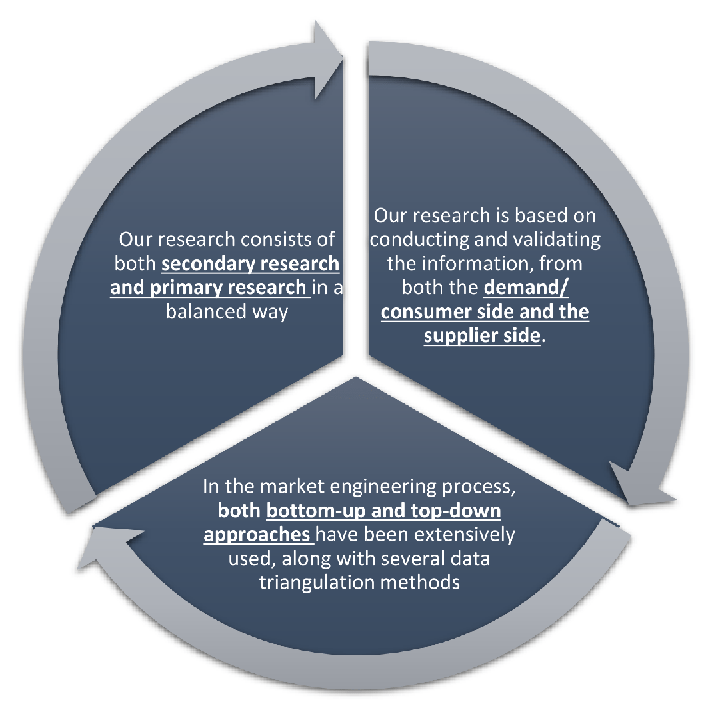
Research Design
Our research design integrates both demand-side and supply-side analysis through a balanced combination of primary and secondary research methodologies. By utilizing both bottom-up and top-down approaches alongside rigorous data triangulation methods, we deliver robust market intelligence that supports strategic decision-making.
MarketGenics' comprehensive research design framework ensures the delivery of accurate, reliable, and actionable market intelligence. Through the integration of multiple research approaches, rigorous validation processes, and expert analysis, we provide our clients with the insights needed to make informed strategic decisions and capitalize on market opportunities.
MarketGenics leverages a dedicated industry panel of experts and a comprehensive suite of paid databases to effectively collect, consolidate, and analyze market intelligence.
Our approach has consistently proven to be reliable and effective in generating accurate market insights, identifying key industry trends, and uncovering emerging business opportunities.
Through both primary and secondary research, we capture and analyze critical company-level data such as manufacturing footprints, including technical centers, R&D facilities, sales offices, and headquarters.
Our expert panel further enhances our ability to estimate market size for specific brands based on validated field-level intelligence.
Our data mining techniques incorporate both parametric and non-parametric methods, allowing for structured data collection, sorting, processing, and cleaning.
Demand projections are derived from large-scale data sets analyzed through proprietary algorithms, culminating in robust and reliable market sizing.
Research Approach
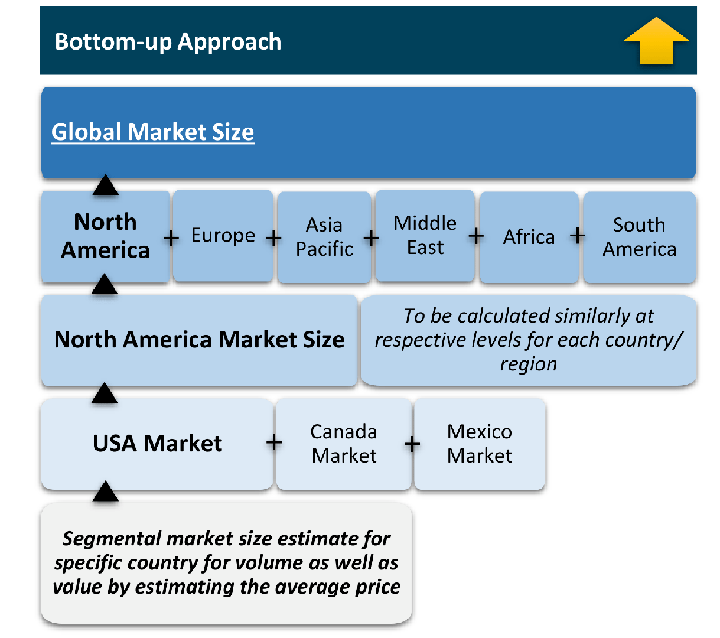
The bottom-up approach builds market estimates by starting with the smallest addressable market units and systematically aggregating them to create comprehensive market size projections.
This method begins with specific, granular data points and builds upward to create the complete market landscape.
Customer Analysis → Segmental Analysis → Geographical Analysis
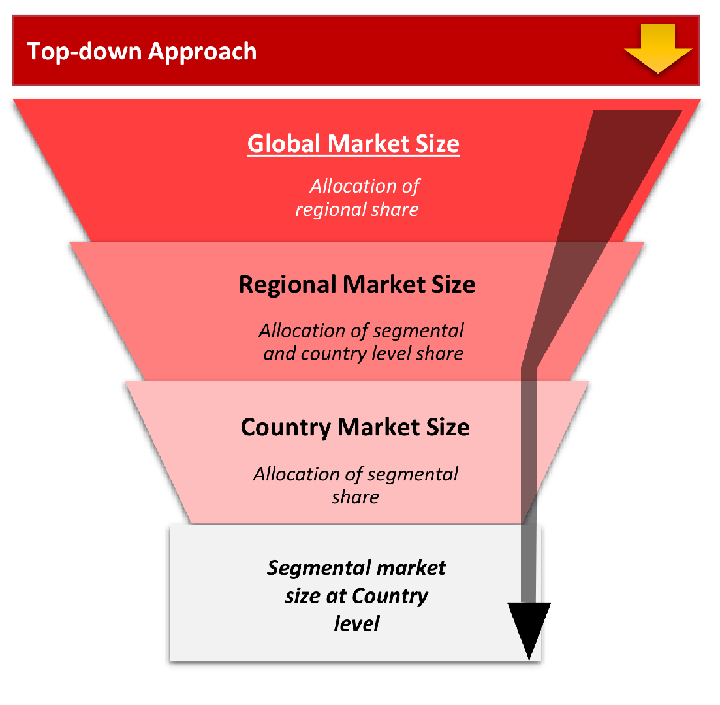
The top-down approach starts with the broadest possible market data and systematically narrows it down through a series of filters and assumptions to arrive at specific market segments or opportunities.
This method begins with the big picture and works downward to increasingly specific market slices.
TAM → SAM → SOM
Research Methods
Desk / Secondary Research
While analysing the market, we extensively study secondary sources, directories, and databases to identify and collect information useful for this technical, market-oriented, and commercial report. Secondary sources that we utilize are not only the public sources, but it is a combination of Open Source, Associations, Paid Databases, MG Repository & Knowledgebase, and others.
- Company websites, annual reports, financial reports, broker reports, and investor presentations
- National government documents, statistical databases and reports
- News articles, press releases and web-casts specific to the companies operating in the market, Magazines, reports, and others
- We gather information from commercial data sources for deriving company specific data such as segmental revenue, share for geography, product revenue, and others
- Internal and external proprietary databases (industry-specific), relevant patent, and regulatory databases
- Governing Bodies, Government Organizations
- Relevant Authorities, Country-specific Associations for Industries
We also employ the model mapping approach to estimate the product level market data through the players' product portfolio
Primary Research
Primary research/ interviews is vital in analyzing the market. Most of the cases involves paid primary interviews. Primary sources include primary interviews through e-mail interactions, telephonic interviews, surveys as well as face-to-face interviews with the different stakeholders across the value chain including several industry experts.
| Type of Respondents | Number of Primaries |
|---|---|
| Tier 2/3 Suppliers | ~20 |
| Tier 1 Suppliers | ~25 |
| End-users | ~25 |
| Industry Expert/ Panel/ Consultant | ~30 |
| Total | ~100 |
MG Knowledgebase
• Repository of industry blog, newsletter and case studies
• Online platform covering detailed market reports, and company profiles
Forecasting Factors and Models
Forecasting Factors
- Historical Trends – Past market patterns, cycles, and major events that shaped how markets behave over time. Understanding past trends helps predict future behavior.
- Industry Factors – Specific characteristics of the industry like structure, regulations, and innovation cycles that affect market dynamics.
- Macroeconomic Factors – Economic conditions like GDP growth, inflation, and employment rates that affect how much money people have to spend.
- Demographic Factors – Population characteristics like age, income, and location that determine who can buy your product.
- Technology Factors – How quickly people adopt new technology and how much technology infrastructure exists.
- Regulatory Factors – Government rules, laws, and policies that can help or restrict market growth.
- Competitive Factors – Analyzing competition structure such as degree of competition and bargaining power of buyers and suppliers.
Forecasting Models / Techniques
Multiple Regression Analysis
- Identify and quantify factors that drive market changes
- Statistical modeling to establish relationships between market drivers and outcomes
Time Series Analysis – Seasonal Patterns
- Understand regular cyclical patterns in market demand
- Advanced statistical techniques to separate trend, seasonal, and irregular components
Time Series Analysis – Trend Analysis
- Identify underlying market growth patterns and momentum
- Statistical analysis of historical data to project future trends
Expert Opinion – Expert Interviews
- Gather deep industry insights and contextual understanding
- In-depth interviews with key industry stakeholders
Multi-Scenario Development
- Prepare for uncertainty by modeling different possible futures
- Creating optimistic, pessimistic, and most likely scenarios
Time Series Analysis – Moving Averages
- Sophisticated forecasting for complex time series data
- Auto-regressive integrated moving average models with seasonal components
Econometric Models
- Apply economic theory to market forecasting
- Sophisticated economic models that account for market interactions
Expert Opinion – Delphi Method
- Harness collective wisdom of industry experts
- Structured, multi-round expert consultation process
Monte Carlo Simulation
- Quantify uncertainty and probability distributions
- Thousands of simulations with varying input parameters
Research Analysis
Our research framework is built upon the fundamental principle of validating market intelligence from both demand and supply perspectives. This dual-sided approach ensures comprehensive market understanding and reduces the risk of single-source bias.
Demand-Side Analysis: We understand end-user/application behavior, preferences, and market needs along with the penetration of the product for specific application.
Supply-Side Analysis: We estimate overall market revenue, analyze the segmental share along with industry capacity, competitive landscape, and market structure.
Validation & Evaluation
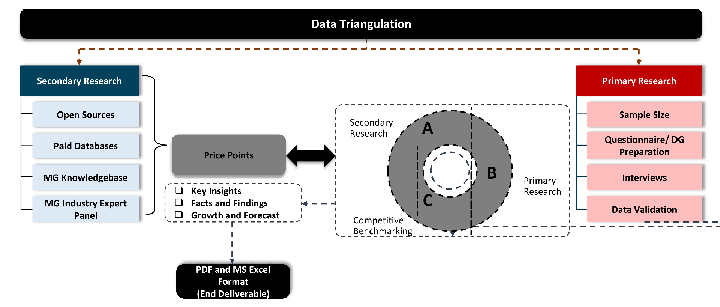
Data triangulation is a validation technique that uses multiple methods, sources, or perspectives to examine the same research question, thereby increasing the credibility and reliability of research findings. In market research, triangulation serves as a quality assurance mechanism that helps identify and minimize bias, validate assumptions, and ensure accuracy in market estimates.
- Data Source Triangulation – Using multiple data sources to examine the same phenomenon
- Methodological Triangulation – Using multiple research methods to study the same research question
- Investigator Triangulation – Using multiple researchers or analysts to examine the same data
- Theoretical Triangulation – Using multiple theoretical perspectives to interpret the same data
Custom Market Research Services
We will customise the research for you, in case the report listed above does not meet your requirements.
Get 10% Free Customisation