Waterproofing Membrane Market Size, Share & Trends Analysis Report by Membrane Type (Sheet Membranes, Liquid Applied Membranes), Membrane Thickness, Installation Method, Application Area, Building Type, Construction Type, Distribution Channel, Pricing Tier, and Geography (North America, Europe, Asia Pacific, Middle East, Africa, and South America) – Global Industry Data, Trends, and Forecasts, 2026–2035
|
|
|
Segmental Data Insights |
|
|
Demand Trends |
|
|
Competitive Landscape |
|
|
Strategic Development |
|
|
Future Outlook & Opportunities |
|
Waterproofing-Membrane-Market Size, Share, and Growth
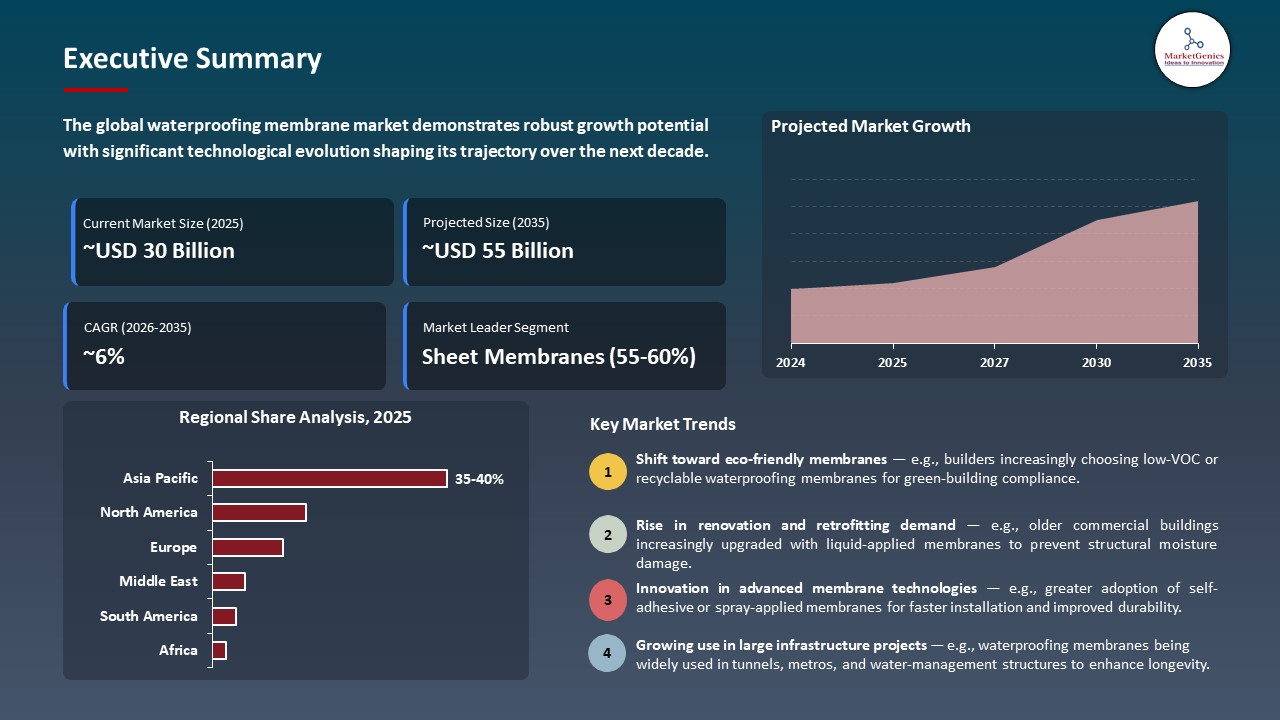
The global waterproofing membrane market is experiencing robust growth, with its estimated value of USD 29.6 billion in the year 2025 and USD 54.5 billion by the period 2035, registering a CAGR of 6.3%, during the forecast period. The global waterproofing membrane market rapid urbanization, rising construction of residential and commercial buildings, and large-scale infrastructure projects requiring durable moisture-protection solutions. Increasing awareness of structural longevity, stricter building codes, growth in renovation activities, and the shift toward environmentally friendly, high-performance membrane technologies further accelerate market adoption globally.
Sjoerd Visser said, “The expansion will enable us to grow with strategically important products to enable a shift in the value chain from plastic to paper-based packaging and with our water-based products to give them a functional property such as barrier properties. In addition, we will have the opportunity to increase the amount of bio-based products in our portfolio in the printing and packaging industry, as well as in the coatings market.”
The global waterproofing membrane market is driven by the surging infrastructure growth and faster urban building activities which are escalating the demand of high-level moisture-protection market solutions in residential, commercial, and civil engineering developments. For instance, in January 2025, Sika commenced the production of new waterproofing manufacturing plants in Singapore and Xi’an, which reinforced its regional production capacity and also facilitated the increasing demand due to large-scale construction and infrastructure development in Asia. This tendency supports market development by increasing the pace of switching to more sophisticated waterproofing systems and adding capacity in the areas of high demand.
Moreover, the waterproofing membrane market is witnessing a faster pace of implementing green systems because of the growing intensification of the sustainability demands and green building standards. As an example, in November 2024, BASF launched a new production line focused on low-VOC, water-based dispersions that could be used in advanced waterproofing membrane applications. This movement is making markets more competitive as it is increasing the amount of sustainable, regulatory compliant membrane technologies and making them more global.
Key adjacent opportunities to the global waterproofing membrane market include green building materials, roofing solutions, sealants and adhesives, insulation systems, and construction chemicals. These industries provide synergy by complementary uses, development of sustainable solutions and widening infrastructure need. These adjacent markets increase the potential of growth, diversifying the revenues and encouraging the increased usage of waterproofing technologies.
Waterproofing Membrane Market Dynamics and Trends
Driver: Increasing Demand for Renovation and Retrofit Waterproofing Solutions
-
The global waterproofing membrane market is experiencing a remarkable growth owing to the rising number of aging structures and old buildings across the world since property owners and developers are currently focusing on increasing the lifespan of their assets and preventing water and structural damages caused by weathering and aging infrastructure.
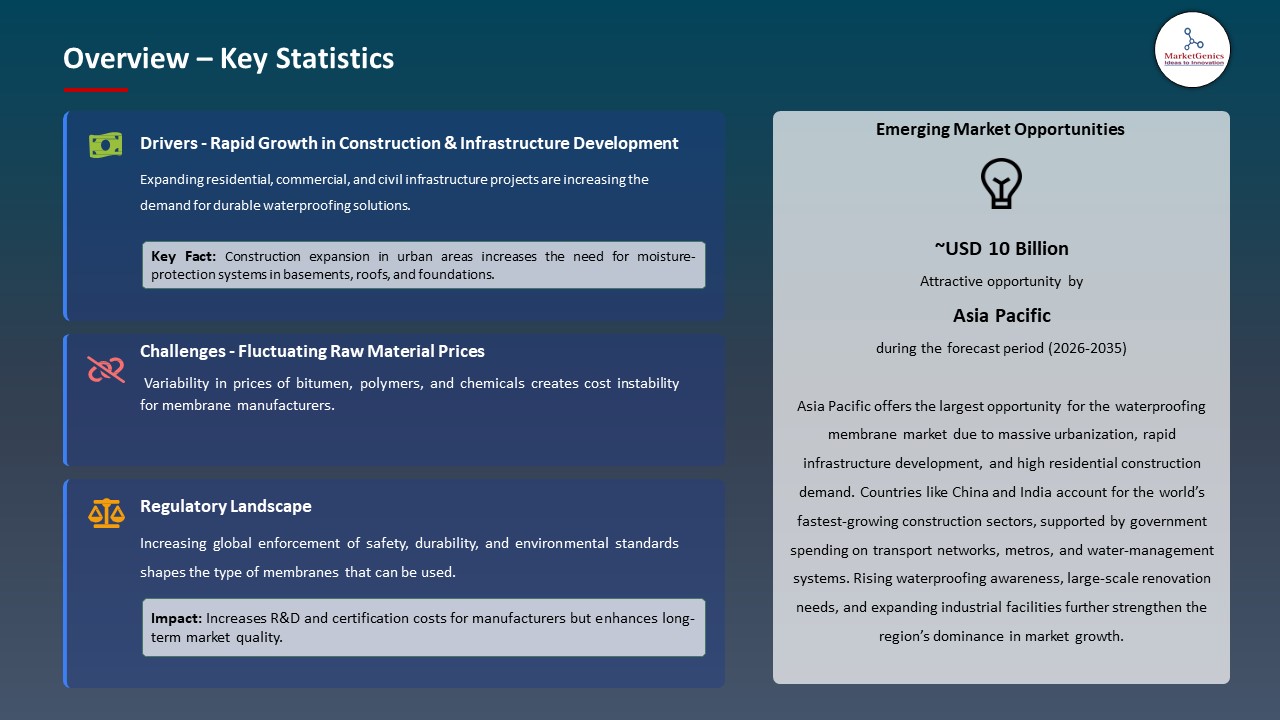
- For instance, in November 2025, Pidilite Industries launched state-of-the-art membranes, acrylic-polymer-based waterproofing, which is specially designed to resist monsoon-prone areas, which offers better elasticity and resistance to the UV factor, making it very adaptable to building retrofits and roof renovation projects. This introduction makes Pidilite a more competitive product in retrofit and renovation sectors, and creates sales that push durable waterproofing products in the market.
- Additionally, the adoption of waterproofing membranes in retrofit of older buildings is picking up in the mature markets through urban redevelopment and infrastructure renovation initiatives by governments, which provide new business opportunities to manufacturers of high-performance, easy-to-install methods of applying waterproofing.
- All these are driving the retrofit waterproofing market, increasing market penetration, and strengthening the demand of high-performance and durable membrane in the global market.
Restraint: Cost Pressure from Traditional Bituminous Membranes Dominance
-
The global waterproofing membrane market faces cost-related restraints due to by the persistence of the old bituminous membranes. Bituminous solutions are commonly used despite polymeric and liquid-applied membranes, which have undergone improvements because of their low initial cost. This pricing strength constrains the use of more performance based, environmentally friendly substitutes, especially in low-end construction projects and new market economies where cost-effectiveness is a major factor in determining material choice.
- Moreover, the dependence on bituminous membranes inhibits the innovations and hinders the market adoption of new technologies. Producers who come up with high-quality membranes with better durability, environmental-friendliness, or self-healing have usually met their resistance because they require more investment needs. This results in low growth in high-performance and sustainable segments yet increased demand of durable and low-maintenance solutions.
- The economic incentive to utilize traditional bituminous membranes stifles innovation, inhibits progress, and precludes universal application of high-performance waterproofing technology.
Opportunity: Shift Toward Advanced Liquid‑Applied and High‑Performance Membrane Technologies
-
The global waterproofing membrane market is experiencing a faster adoption of liquid-applied systems with an increasing demand of a durable, seamless, and easily applied membrane that offers better flexibility, improved crack-bridging, and the quickest installation than the traditional sheet-based technologies.
- For instance, Covestro and Selena in Poland have developed their sustainability-oriented partnership that has led to the introduction of Tytan Professional Adhesive for Bricklaying, which is a product that can dramatically reduce the environmental impact as compared to the existing mortars made of cement and decreasing the carbon emissions by a factor of up to 90%. The developments are necessitating increased use of high-performance and sustainable waterproofing technologies.
- Additionally, increased modernization in infrastructure and severe building codes is leading to the transition of high-performance membrane technologies that provide high levels of chemical durability, UV resistance and long-term structural protection of roofs, basements and industrial facilities.
- The combination of these factors is strengthening the market momentum of high-powered, long-lasting and ecologically friendly waterproofing solutions to global construction industries.
Key Trend: Integration of “smart” waterproofing systems with leak‑detection and self‑healing technologies
-
The global waterproofing membrane market is being propelled by the adoption of smart systems featuring self‑healing and leak‑detection technologies, which minimize maintenance expenses and enhance structural longevity, thereby increasing the appeal of advanced membranes for commercial buildings and critical infrastructure projects.
- For instance, Tremco TREMproof Amphibia is a multi-layered, hydro-reactive, waterproofing membrane that forms an automatic, watertight, and puncture-resistant structure where micro-cracks are automatically sealed, eliminating the necessity of manual repair. The innovation has boosted the expansion of the market since it enhances the demand of high-performance, low maintenance waterproofing products in high performance construction works.
- Moreover, sensor-enabled and self-fixed waterproofing solutions increase the safety and performance of buildings, making the solution attractive to the developers to invest in high-quality and high-performance membranes, thus increasing the growth of market demand.
- The combination of intelligent, sensorized and self-repairing waterproofing mechanisms enhances market growth by framing adoption of superior, trustworthy, and economically efficient technologies in business and key-infrastructure undertakings.
Waterproofing-Membrane Market Analysis and Segmental Data
Sheet Membranes Dominate Global Waterproofing Membrane Market
-
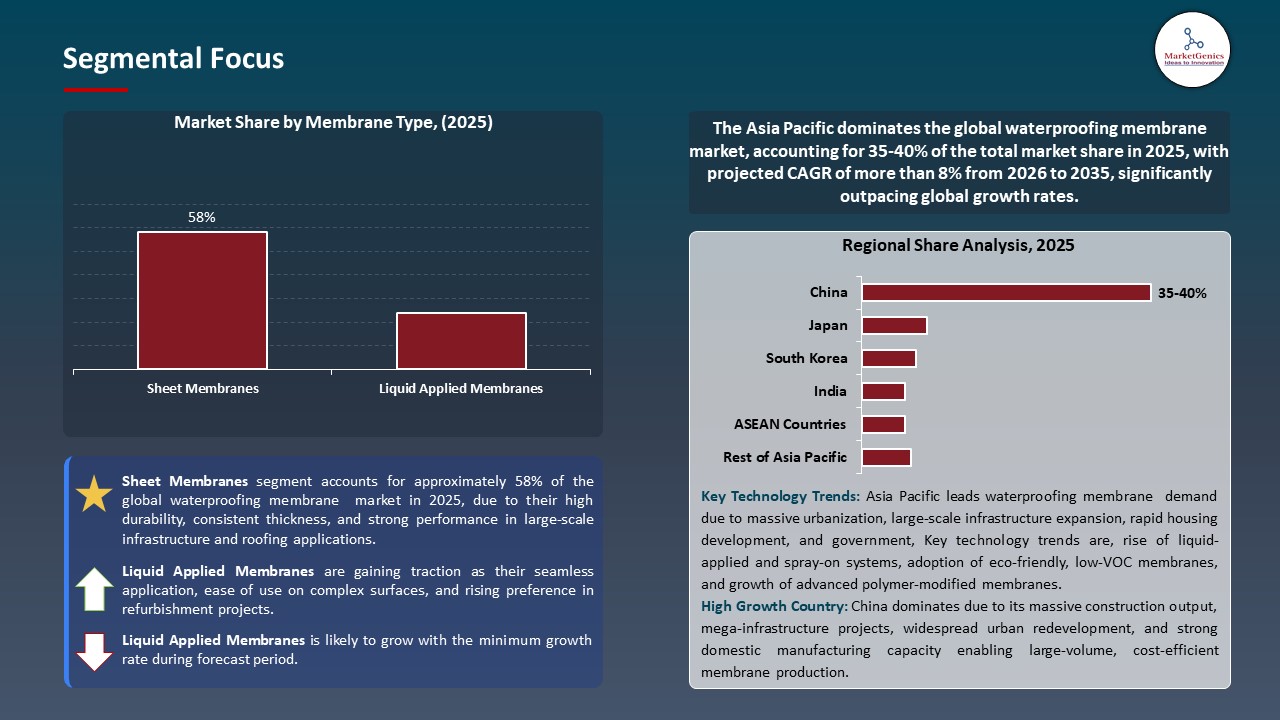
The sheet membranes segment dominates the global waterproofing membrane market since these standardized membranes usually contain bitumen, PVC, TPO or EPDM based sheets that have predictable consistent thickness and high-performance, and are therefore specifically suitable to large scale and high exposure applications as roofing, foundations, tunnels and infrastructure.
- For instance, BASF and Oriental Yuhong, a major producer of Thermoplastic Polyolefin (TPO) roofing membranes in China have entered into a strategic partnership to come up with solar-integrated roofing membranes on buildings. This venture will be aimed at meeting the growing needs in China regarding the use of rooftop solar solutions.
- The sheet membranes dominate the market with their dependable high-performance waterproofing which is bound to grow with solar-integrated roofing inventions to increase the functionality of the product and further expansion in the market.
Asia Pacific Leads Global Waterproofing Membrane Market Demand
-
Asia Pacific leads the global waterproofing membrane market, because of it is experiencing unprecedented urbanization and infrastructure development. The roof construction, basement constructions, tunnels and civil constructions of China, India and Southeast Asia among other countries are expanding rapidly necessitating a large volume of roof and basement waterproofing and construction.
- For instance, MiraiShield Private Limited supplied 250,000 m 2 of PVC membrane with geotextile to the Rishikesh-Karnaprayag Railway tunnel project in Uttarakhand that would ensure long term waterproofing and against the high-pressure aquifer conditions. The high rate of infrastructure development in Asia Pacific creates a high level of demand in advanced water proofing solutions further consolidating its market dominance.
- Moreover, various climate conditions of the region such as tropical monsoon to humid subtropical climate with rising levels of heavy rainfall and extreme weather events require high-performance waterproofing to ensure building longevity and water-resistance.
- Asia Pacific is leading the global market for high-performance waterproofing systems due to rapid infrastructure growth and challenging weather conditions.
Waterproofing-Membrane-Market Ecosystem
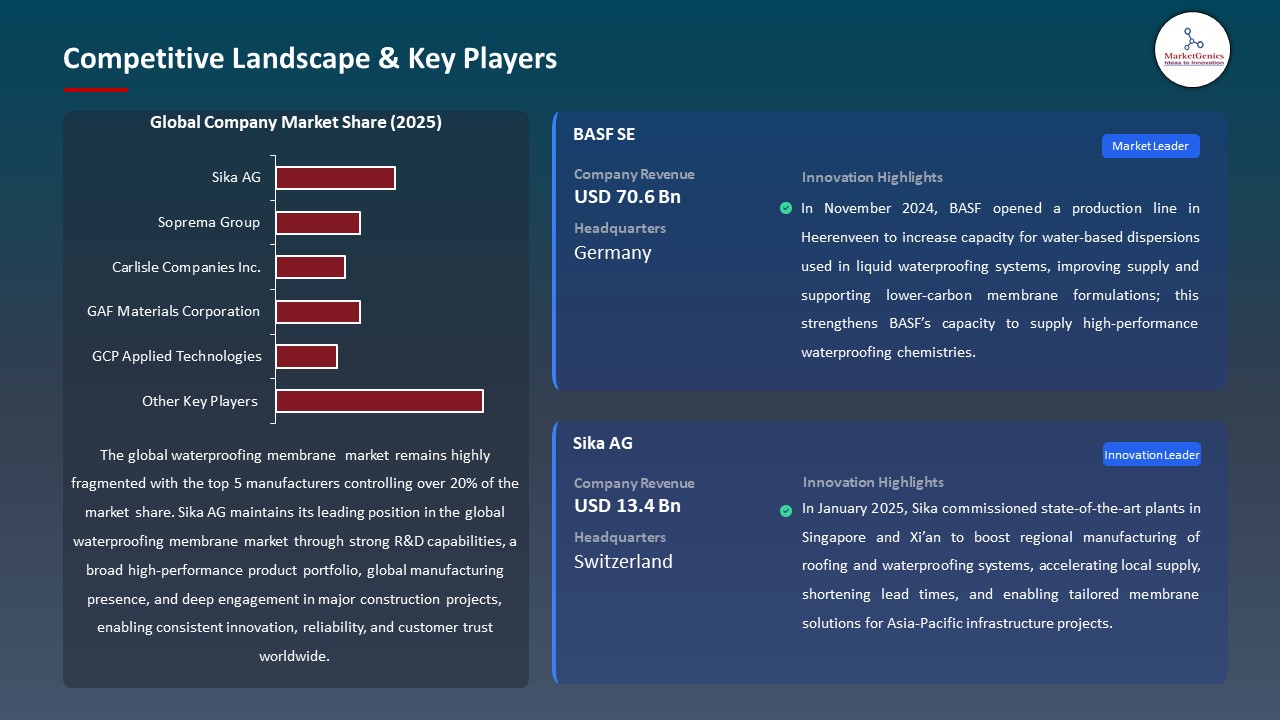
The global waterproofing membrane market is highly fragmented, with high concentration among key players such as Sika AG, Soprema Group, Carlisle Companies Inc., GAF Materials Corporation, and GCP Applied Technologies, who dominate through high level of concentration due to the high level of R&D, product portfolio, advanced manufacturing, and extensive distribution networks in the whole world that allow them to offer high-performing solutions to the residential, commercial, and infrastructure projects. Their innovation emphasis, sustainable materials and strategic alliances enable them to continue to have competitive advantages and to effectively respond to the increased demand of durable, reliable and climate resistant waterproofing membranes globally.
Recent Development and Strategic Overview:
-
In March 2025, H.B. Fuller introduced the Millennium PG-1 EF ECO₂, an innovative, equipment-free canister adhesive designed for efficient bonding of insulation and fleece-backed membranes, positioning it as a sustainable, industry-first solution in the commercial roofing segment.
- In October 2024, Johns Manville launched EPDM FIT SA, a factory-inseamed, self-adhered EPDM roofing membrane engineered to enable up to three times faster installation, featuring a low-VOC, adhesive-free application for enhanced efficiency and environmental compliance in commercial roofing projects.
Report Scope
|
Detail |
|
|
Market Size in 2025 |
USD 29.6 Bn |
|
Market Forecast Value in 2035 |
USD 54.5 Bn |
|
Growth Rate (CAGR) |
6.3% |
|
Forecast Period |
2026 – 2035 |
|
Historical Data Available for |
2021 – 2024 |
|
Market Size Units |
US$ Billion for Value Kilo Tons for Volume |
|
Report Format |
Electronic (PDF) + Excel |
|
North America |
Europe |
Asia Pacific |
Middle East |
Africa |
South America |
|
|
|
|
|
|
|
Companies Covered |
|||||
|
|
|
|
|
|
Waterproofing-Membrane-Market Segmentation and Highlights
|
Segment |
Sub-segment |
|
Waterproofing Membrane Market, By Membrane Type |
|
|
Waterproofing Membrane Market, By Membrane Thickness |
|
|
Waterproofing Membrane Market, By Installation Method |
|
|
Waterproofing Membrane Market, By Application Area |
|
|
Waterproofing Membrane Market, By Building Type
|
|
|
Waterproofing Membrane Market, By Construction Type
|
|
|
Waterproofing Membrane Market, By Distribution Channel |
|
|
Waterproofing Membrane Market, By Pricing Tier |
|
Frequently Asked Questions
Table of Contents
- 1. Research Methodology and Assumptions
- 1.1. Definitions
- 1.2. Research Design and Approach
- 1.3. Data Collection Methods
- 1.4. Base Estimates and Calculations
- 1.5. Forecasting Models
- 1.5.1. Key Forecast Factors & Impact Analysis
- 1.6. Secondary Research
- 1.6.1. Open Sources
- 1.6.2. Paid Databases
- 1.6.3. Associations
- 1.7. Primary Research
- 1.7.1. Primary Sources
- 1.7.2. Primary Interviews with Stakeholders across Ecosystem
- 2. Executive Summary
- 2.1. Global Waterproofing Membrane Market Outlook
- 2.1.1. Waterproofing Membrane Market Size (Volume - Kilo Tons and Value - US$ Bn), and Forecasts, 2021-2035
- 2.1.2. Compounded Annual Growth Rate Analysis
- 2.1.3. Growth Opportunity Analysis
- 2.1.4. Segmental Share Analysis
- 2.1.5. Geographical Share Analysis
- 2.2. Market Analysis and Facts
- 2.3. Supply-Demand Analysis
- 2.4. Competitive Benchmarking
- 2.5. Go-to- Market Strategy
- 2.5.1. Customer/ End-use Industry Assessment
- 2.5.2. Growth Opportunity Data, 2026-2035
- 2.5.2.1. Regional Data
- 2.5.2.2. Country Data
- 2.5.2.3. Segmental Data
- 2.5.3. Identification of Potential Market Spaces
- 2.5.4. GAP Analysis
- 2.5.5. Potential Attractive Price Points
- 2.5.6. Prevailing Market Risks & Challenges
- 2.5.7. Preferred Sales & Marketing Strategies
- 2.5.8. Key Recommendations and Analysis
- 2.5.9. A Way Forward
- 2.1. Global Waterproofing Membrane Market Outlook
- 3. Industry Data and Premium Insights
- 3.1. Global Chemicals & Materials Industry Overview, 2025
- 3.1.1. Chemicals & Materials Industry Ecosystem Analysis
- 3.1.2. Key Trends for Chemicals & Materials Industry
- 3.1.3. Regional Distribution for Chemicals & Materials Industry
- 3.2. Supplier Customer Data
- 3.3. Technology Roadmap and Developments
- 3.4. Trade Analysis
- 3.4.1. Import & Export Analysis, 2025
- 3.4.2. Top Importing Countries
- 3.4.3. Top Exporting Countries
- 3.5. Trump Tariff Impact Analysis
- 3.5.1. Manufacturer
- 3.5.1.1. Based on the component & Raw material
- 3.5.2. Supply Chain
- 3.5.3. End Consumer
- 3.5.1. Manufacturer
- 3.6. Raw Material Analysis
- 3.1. Global Chemicals & Materials Industry Overview, 2025
- 4. Market Overview
- 4.1. Market Dynamics
- 4.1.1. Drivers
- 4.1.1.1. Rapid urbanization and growing construction activities
- 4.1.1.2. Rising awareness of building protection and durability
- Increasing4.1.1.3. demand for sustainable and energy-efficient construction materials
- 4.1.2. Restraints
- 4.1.2.1. High and volatile raw-material costs
- 4.1.2.2. Installation complexity and need for skilled labor
- 4.1.1. Drivers
- 4.2. Key Trend Analysis
- 4.3. Regulatory Framework
- 4.3.1. Key Regulations, Norms, and Subsidies, by Key Countries
- 4.3.2. Tariffs and Standards
- 4.3.3. Impact Analysis of Regulations on the Market
- 4.4. Value Chain Analysis
- 4.4.1. Raw Material Suppliers
- 4.4.2. Waterproofing Membrane Manufacturers
- 4.4.3. Distributors / Retailers
- 4.4.4. End-Users/Application
- 4.5. Cost Structure Analysis
- 4.5.1. Parameter’s Share for Cost Associated
- 4.5.2. COGP vs COGS
- 4.5.3. Profit Margin Analysis
- 4.6. Pricing Analysis
- 4.6.1. Regional Pricing Analysis
- 4.6.2. Segmental Pricing Trends
- 4.6.3. Factors Influencing Pricing
- 4.7. Porter’s Five Forces Analysis
- 4.8. PESTEL Analysis
- 4.9. Global Waterproofing Membrane Market Demand
- 4.9.1. Historical Market Size – Volume (Kilo Tons) and Value (US$ Bn), 2020-2024
- 4.9.2. Current and Future Market Size – Volume (Kilo Tons) and Value (US$ Bn), 2026–2035
- 4.9.2.1. Y-o-Y Growth Trends
- 4.9.2.2. Absolute $ Opportunity Assessment
- 4.1. Market Dynamics
- 5. Competition Landscape
- 5.1. Competition structure
- 5.1.1. Fragmented v/s consolidated
- 5.2. Company Share Analysis, 2025
- 5.2.1. Global Company Market Share
- 5.2.2. By Region
- 5.2.2.1. North America
- 5.2.2.2. Europe
- 5.2.2.3. Asia Pacific
- 5.2.2.4. Middle East
- 5.2.2.5. Africa
- 5.2.2.6. South America
- 5.3. Product Comparison Matrix
- 5.3.1. Specifications
- 5.3.2. Market Positioning
- 5.3.3. Pricing
- 5.1. Competition structure
- 6. Global Waterproofing Membrane Market Analysis, by Membrane Type
- 6.1. Key Segment Analysis
- 6.2. Waterproofing Membrane Market Size (Volume - Kilo Tons and Value - US$ Bn), Analysis, and Forecasts, by Membrane Type, 2021-2035
- 6.2.1. Sheet Membranes
- 6.2.1.1. Bituminous Membranes
- 6.2.1.2. Polyvinyl Chloride (PVC) Membranes
- 6.2.1.3. Thermoplastic Polyolefin (TPO) Membranes
- 6.2.1.4. Ethylene Propylene Diene Monomer (EPDM) Membranes
- 6.2.1.5. Polyethylene (PE) Membranes
- 6.2.1.6. Others
- 6.2.2. Liquid Applied Membranes
- 6.2.2.1. Polyurethane-based
- 6.2.2.2. Acrylic-based
- 6.2.2.3. Cementitious
- 6.2.2.4. Bituminous Coatings
- 6.2.2.5. Others
- 6.2.1. Sheet Membranes
- 7. Global Waterproofing Membrane Market Analysis, by Membrane Thickness
- 7.1. Key Segment Analysis
- 7.2. Waterproofing Membrane Market Size (Volume - Kilo Tons and Value - US$ Bn), Analysis, and Forecasts, by Membrane Thickness, 2021-2035
- 7.2.1. Less than 1mm
- 7.2.2. 1mm - 2mm
- 7.2.3. 2mm - 3mm
- 7.2.4. Above 3mm
- 8. Global Waterproofing Membrane Market Analysis, by Installation Method
- 8.1. Key Segment Analysis
- 8.2. Waterproofing Membrane Market Size (Volume - Kilo Tons and Value - US$ Bn), Analysis, and Forecasts, by Installation Method, 2021-2035
- 8.2.1. Self-Adhesive Membranes
- 8.2.2. Torch-Applied Membranes
- 8.2.3. Hot-Applied Membranes
- 8.2.4. Cold-Applied Membranes
- 8.2.5. Mechanically Fastened Membranes
- 8.2.6. Loose-Laid Membranes
- 9. Global Waterproofing Membrane Market Analysis, by Application Area
- 9.1. Key Segment Analysis
- 9.2. Waterproofing Membrane Market Size (Volume - Kilo Tons and Value - US$ Bn), Analysis, and Forecasts, by Application Area, 2021-2035
- 9.2.1. Roofing
- 9.2.1.1. Flat Roofs
- 9.2.1.2. Pitched Roofs
- 9.2.1.3. Green Roofs
- 9.2.1.4. Others
- 9.2.2. Walls
- 9.2.2.1. Basement Walls
- 9.2.2.2. Exterior Walls
- 9.2.2.3. Retaining Walls
- 9.2.2.4. Others
- 9.2.3. Floors
- 9.2.4. Foundations
- 9.2.5. Tunnels
- 9.2.6. Bridges and Elevated Structures
- 9.2.7. Reservoirs and Water Tanks
- 9.2.8. Parking Decks
- 9.2.1. Roofing
- 10. Global Waterproofing Membrane Market Analysis, by Building Type
- 10.1. Key Segment Analysis
- 10.2. Waterproofing Membrane Market Size (Volume - Kilo Tons and Value - US$ Bn), Analysis, and Forecasts, by Building Type, 2021-2035
- 10.2.1. Residential Buildings
- 10.2.1.1. Single-Family Homes
- 10.2.1.2. Multi-Family Apartments
- 10.2.2. Commercial Buildings
- 10.2.2.1. Office Buildings
- 10.2.2.2. Retail Spaces
- 10.2.2.3. Hospitality
- 10.2.2.4. Others
- 10.2.3. Industrial Buildings
- 10.2.3.1. Manufacturing Facilities
- 10.2.3.2. Warehouses
- 10.2.3.3. Others
- 10.2.4. Infrastructure Projects
- 10.2.5. Others
- 10.2.1. Residential Buildings
- 11. Global Waterproofing Membrane Market Analysis, by Construction Type
- 11.1. Key Segment Analysis
- 11.2. Waterproofing Membrane Market Size (Volume - Kilo Tons and Value - US$ Bn), Analysis, and Forecasts, by Construction Type, 2021-2035
- 11.2.1. New Construction
- 11.2.2. Renovation/Retrofit
- 11.2.3. Repair and Maintenance
- 12. Global Waterproofing Membrane Market Analysis, by Distribution Channel
- 12.1. Key Segment Analysis
- 12.2. Waterproofing Membrane Market Size (Volume - Kilo Tons and Value - US$ Bn), Analysis, and Forecasts, by Distribution Channel, 2021-2035
- 12.2.1. Direct Sales
- 12.2.2. Distributors & Wholesalers
- 12.2.3. Retailers
- 12.2.4. Online Platforms
- 13. Global Waterproofing Membrane Market Analysis, by Pricing Tier
- 13.1. Key Segment Analysis
- 13.2. Waterproofing Membrane Market Size (Volume - Kilo Tons and Value - US$ Bn), Analysis, and Forecasts, by Pricing Tier, 2021-2035
- 13.2.1. Economy Range
- 13.2.2. Mid-Range
- 13.2.3. Premium Range
- 14. Global Waterproofing Membrane Market Analysis and Forecasts, by Region
- 14.1. Key Findings
- 14.2. Waterproofing Membrane Market Size (Volume - Kilo Tons and Value - US$ Bn), Analysis, and Forecasts, by Region, 2021-2035
- 14.2.1. North America
- 14.2.2. Europe
- 14.2.3. Asia Pacific
- 14.2.4. Middle East
- 14.2.5. Africa
- 14.2.6. South America
- 15. North America Waterproofing Membrane Market Analysis
- 15.1. Key Segment Analysis
- 15.2. Regional Snapshot
- 15.3. North America Waterproofing Membrane Market Size (Volume - Kilo Tons and Value - US$ Bn), Analysis, and Forecasts, 2021-2035
- 15.3.1. Membrane Type
- 15.3.2. Membrane Thickness
- 15.3.3. Installation Method
- 15.3.4. Application Area
- 15.3.5. Building Type
- 15.3.6. Construction Type
- 15.3.7. Distribution Channel
- 15.3.8. Pricing Tier
- 15.3.9. Country
- 15.3.9.1. USA
- 15.3.9.2. Canada
- 15.3.9.3. Mexico
- 15.4. USA Waterproofing Membrane Market
- 15.4.1. Country Segmental Analysis
- 15.4.2. Membrane Type
- 15.4.3. Membrane Thickness
- 15.4.4. Installation Method
- 15.4.5. Application Area
- 15.4.6. Building Type
- 15.4.7. Construction Type
- 15.4.8. Distribution Channel
- 15.4.9. Pricing Tier
- 15.5. Canada Waterproofing Membrane Market
- 15.5.1. Country Segmental Analysis
- 15.5.2. Membrane Type
- 15.5.3. Membrane Thickness
- 15.5.4. Installation Method
- 15.5.5. Application Area
- 15.5.6. Building Type
- 15.5.7. Construction Type
- 15.5.8. Distribution Channel
- 15.5.9. Pricing Tier
- 15.6. Mexico Waterproofing Membrane Market
- 15.6.1. Country Segmental Analysis
- 15.6.2. Membrane Type
- 15.6.3. Membrane Thickness
- 15.6.4. Installation Method
- 15.6.5. Application Area
- 15.6.6. Building Type
- 15.6.7. Construction Type
- 15.6.8. Distribution Channel
- 15.6.9. Pricing Tier
- 16. Europe Waterproofing Membrane Market Analysis
- 16.1. Key Segment Analysis
- 16.2. Regional Snapshot
- 16.3. Europe Waterproofing Membrane Market Size (Volume - Kilo Tons and Value - US$ Bn), Analysis, and Forecasts, 2021-2035
- 16.3.1. Membrane Type
- 16.3.2. Membrane Thickness
- 16.3.3. Installation Method
- 16.3.4. Application Area
- 16.3.5. Building Type
- 16.3.6. Construction Type
- 16.3.7. Distribution Channel
- 16.3.8. Pricing Tier
- 16.3.9. Country
- 16.3.9.1. Germany
- 16.3.9.2. United Kingdom
- 16.3.9.3. France
- 16.3.9.4. Italy
- 16.3.9.5. Spain
- 16.3.9.6. Netherlands
- 16.3.9.7. Nordic Countries
- 16.3.9.8. Poland
- 16.3.9.9. Russia & CIS
- 16.3.9.10. Rest of Europe
- 16.4. Germany Waterproofing Membrane Market
- 16.4.1. Country Segmental Analysis
- 16.4.2. Membrane Type
- 16.4.3. Membrane Thickness
- 16.4.4. Installation Method
- 16.4.5. Application Area
- 16.4.6. Building Type
- 16.4.7. Construction Type
- 16.4.8. Distribution Channel
- 16.4.9. Pricing Tier
- 16.5. United Kingdom Waterproofing Membrane Market
- 16.5.1. Country Segmental Analysis
- 16.5.2. Membrane Type
- 16.5.3. Membrane Thickness
- 16.5.4. Installation Method
- 16.5.5. Application Area
- 16.5.6. Building Type
- 16.5.7. Construction Type
- 16.5.8. Distribution Channel
- 16.5.9. Pricing Tier
- 16.6. France Waterproofing Membrane Market
- 16.6.1. Country Segmental Analysis
- 16.6.2. Membrane Type
- 16.6.3. Membrane Thickness
- 16.6.4. Installation Method
- 16.6.5. Application Area
- 16.6.6. Building Type
- 16.6.7. Construction Type
- 16.6.8. Distribution Channel
- 16.6.9. Pricing Tier
- 16.7. Italy Waterproofing Membrane Market
- 16.7.1. Country Segmental Analysis
- 16.7.2. Membrane Type
- 16.7.3. Membrane Thickness
- 16.7.4. Installation Method
- 16.7.5. Application Area
- 16.7.6. Building Type
- 16.7.7. Construction Type
- 16.7.8. Distribution Channel
- 16.7.9. Pricing Tier
- 16.8. Spain Waterproofing Membrane Market
- 16.8.1. Country Segmental Analysis
- 16.8.2. Membrane Type
- 16.8.3. Membrane Thickness
- 16.8.4. Installation Method
- 16.8.5. Application Area
- 16.8.6. Building Type
- 16.8.7. Construction Type
- 16.8.8. Distribution Channel
- 16.8.9. Pricing Tier
- 16.9. Netherlands Waterproofing Membrane Market
- 16.9.1. Country Segmental Analysis
- 16.9.2. Membrane Type
- 16.9.3. Membrane Thickness
- 16.9.4. Installation Method
- 16.9.5. Application Area
- 16.9.6. Building Type
- 16.9.7. Construction Type
- 16.9.8. Distribution Channel
- 16.9.9. Pricing Tier
- 16.10. Nordic Countries Waterproofing Membrane Market
- 16.10.1. Country Segmental Analysis
- 16.10.2. Membrane Type
- 16.10.3. Membrane Thickness
- 16.10.4. Installation Method
- 16.10.5. Application Area
- 16.10.6. Building Type
- 16.10.7. Construction Type
- 16.10.8. Distribution Channel
- 16.10.9. Pricing Tier
- 16.11. Poland Waterproofing Membrane Market
- 16.11.1. Country Segmental Analysis
- 16.11.2. Membrane Type
- 16.11.3. Membrane Thickness
- 16.11.4. Installation Method
- 16.11.5. Application Area
- 16.11.6. Building Type
- 16.11.7. Construction Type
- 16.11.8. Distribution Channel
- 16.11.9. Pricing Tier
- 16.12. Russia & CIS Waterproofing Membrane Market
- 16.12.1. Country Segmental Analysis
- 16.12.2. Membrane Type
- 16.12.3. Membrane Thickness
- 16.12.4. Installation Method
- 16.12.5. Application Area
- 16.12.6. Building Type
- 16.12.7. Construction Type
- 16.12.8. Distribution Channel
- 16.12.9. Pricing Tier
- 16.13. Rest of Europe Waterproofing Membrane Market
- 16.13.1. Country Segmental Analysis
- 16.13.2. Membrane Type
- 16.13.3. Membrane Thickness
- 16.13.4. Installation Method
- 16.13.5. Application Area
- 16.13.6. Building Type
- 16.13.7. Construction Type
- 16.13.8. Distribution Channel
- 16.13.9. Pricing Tier
- 17. Asia Pacific Waterproofing Membrane Market Analysis
- 17.1. Key Segment Analysis
- 17.2. Regional Snapshot
- 17.3. Asia Pacific Waterproofing Membrane Market Size (Volume - Kilo Tons and Value - US$ Bn), Analysis, and Forecasts, 2021-2035
- 17.3.1. Membrane Type
- 17.3.2. Membrane Thickness
- 17.3.3. Installation Method
- 17.3.4. Application Area
- 17.3.5. Building Type
- 17.3.6. Construction Type
- 17.3.7. Distribution Channel
- 17.3.8. Pricing Tier
- 17.3.9. Country
- 17.3.9.1. China
- 17.3.9.2. India
- 17.3.9.3. Japan
- 17.3.9.4. South Korea
- 17.3.9.5. Australia and New Zealand
- 17.3.9.6. Indonesia
- 17.3.9.7. Malaysia
- 17.3.9.8. Thailand
- 17.3.9.9. Vietnam
- 17.3.9.10. Rest of Asia Pacific
- 17.4. China Waterproofing Membrane Market
- 17.4.1. Country Segmental Analysis
- 17.4.2. Membrane Type
- 17.4.3. Membrane Thickness
- 17.4.4. Installation Method
- 17.4.5. Application Area
- 17.4.6. Building Type
- 17.4.7. Construction Type
- 17.4.8. Distribution Channel
- 17.4.9. Pricing Tier
- 17.5. India Waterproofing Membrane Market
- 17.5.1. Country Segmental Analysis
- 17.5.2. Membrane Type
- 17.5.3. Membrane Thickness
- 17.5.4. Installation Method
- 17.5.5. Application Area
- 17.5.6. Building Type
- 17.5.7. Construction Type
- 17.5.8. Distribution Channel
- 17.5.9. Pricing Tier
- 17.6. Japan Waterproofing Membrane Market
- 17.6.1. Country Segmental Analysis
- 17.6.2. Membrane Type
- 17.6.3. Membrane Thickness
- 17.6.4. Installation Method
- 17.6.5. Application Area
- 17.6.6. Building Type
- 17.6.7. Construction Type
- 17.6.8. Distribution Channel
- 17.6.9. Pricing Tier
- 17.7. South Korea Waterproofing Membrane Market
- 17.7.1. Country Segmental Analysis
- 17.7.2. Membrane Type
- 17.7.3. Membrane Thickness
- 17.7.4. Installation Method
- 17.7.5. Application Area
- 17.7.6. Building Type
- 17.7.7. Construction Type
- 17.7.8. Distribution Channel
- 17.7.9. Pricing Tier
- 17.8. Australia and New Zealand Waterproofing Membrane Market
- 17.8.1. Country Segmental Analysis
- 17.8.2. Membrane Type
- 17.8.3. Membrane Thickness
- 17.8.4. Installation Method
- 17.8.5. Application Area
- 17.8.6. Building Type
- 17.8.7. Construction Type
- 17.8.8. Distribution Channel
- 17.8.9. Pricing Tier
- 17.9. Indonesia Waterproofing Membrane Market
- 17.9.1. Country Segmental Analysis
- 17.9.2. Membrane Type
- 17.9.3. Membrane Thickness
- 17.9.4. Installation Method
- 17.9.5. Application Area
- 17.9.6. Building Type
- 17.9.7. Construction Type
- 17.9.8. Distribution Channel
- 17.9.9. Pricing Tier
- 17.10. Malaysia Waterproofing Membrane Market
- 17.10.1. Country Segmental Analysis
- 17.10.2. Membrane Type
- 17.10.3. Membrane Thickness
- 17.10.4. Installation Method
- 17.10.5. Application Area
- 17.10.6. Building Type
- 17.10.7. Construction Type
- 17.10.8. Distribution Channel
- 17.10.9. Pricing Tier
- 17.11. Thailand Waterproofing Membrane Market
- 17.11.1. Country Segmental Analysis
- 17.11.2. Membrane Type
- 17.11.3. Membrane Thickness
- 17.11.4. Installation Method
- 17.11.5. Application Area
- 17.11.6. Building Type
- 17.11.7. Construction Type
- 17.11.8. Distribution Channel
- 17.11.9. Pricing Tier
- 17.12. Vietnam Waterproofing Membrane Market
- 17.12.1. Country Segmental Analysis
- 17.12.2. Membrane Type
- 17.12.3. Membrane Thickness
- 17.12.4. Installation Method
- 17.12.5. Application Area
- 17.12.6. Building Type
- 17.12.7. Construction Type
- 17.12.8. Distribution Channel
- 17.12.9. Pricing Tier
- 17.13. Rest of Asia Pacific Waterproofing Membrane Market
- 17.13.1. Country Segmental Analysis
- 17.13.2. Membrane Type
- 17.13.3. Membrane Thickness
- 17.13.4. Installation Method
- 17.13.5. Application Area
- 17.13.6. Building Type
- 17.13.7. Construction Type
- 17.13.8. Distribution Channel
- 17.13.9. Pricing Tier
- 18. Middle East Waterproofing Membrane Market Analysis
- 18.1. Key Segment Analysis
- 18.2. Regional Snapshot
- 18.3. Middle East Waterproofing Membrane Market Size (Volume - Kilo Tons and Value - US$ Bn), Analysis, and Forecasts, 2021-2035
- 18.3.1. Membrane Type
- 18.3.2. Membrane Thickness
- 18.3.3. Installation Method
- 18.3.4. Application Area
- 18.3.5. Building Type
- 18.3.6. Construction Type
- 18.3.7. Distribution Channel
- 18.3.8. Pricing Tier
- 18.3.9. Country
- 18.3.9.1. Turkey
- 18.3.9.2. UAE
- 18.3.9.3. Saudi Arabia
- 18.3.9.4. Israel
- 18.3.9.5. Rest of Middle East
- 18.4. Turkey Waterproofing Membrane Market
- 18.4.1. Country Segmental Analysis
- 18.4.2. Membrane Type
- 18.4.3. Membrane Thickness
- 18.4.4. Installation Method
- 18.4.5. Application Area
- 18.4.6. Building Type
- 18.4.7. Construction Type
- 18.4.8. Distribution Channel
- 18.4.9. Pricing Tier
- 18.5. UAE Waterproofing Membrane Market
- 18.5.1. Country Segmental Analysis
- 18.5.2. Membrane Type
- 18.5.3. Membrane Thickness
- 18.5.4. Installation Method
- 18.5.5. Application Area
- 18.5.6. Building Type
- 18.5.7. Construction Type
- 18.5.8. Distribution Channel
- 18.5.9. Pricing Tier
- 18.6. Saudi Arabia Waterproofing Membrane Market
- 18.6.1. Country Segmental Analysis
- 18.6.2. Membrane Type
- 18.6.3. Membrane Thickness
- 18.6.4. Installation Method
- 18.6.5. Application Area
- 18.6.6. Building Type
- 18.6.7. Construction Type
- 18.6.8. Distribution Channel
- 18.6.9. Pricing Tier
- 18.7. Israel Waterproofing Membrane Market
- 18.7.1. Country Segmental Analysis
- 18.7.2. Membrane Type
- 18.7.3. Membrane Thickness
- 18.7.4. Installation Method
- 18.7.5. Application Area
- 18.7.6. Building Type
- 18.7.7. Construction Type
- 18.7.8. Distribution Channel
- 18.7.9. Pricing Tier
- 18.8. Rest of Middle East Waterproofing Membrane Market
- 18.8.1. Country Segmental Analysis
- 18.8.2. Membrane Type
- 18.8.3. Membrane Thickness
- 18.8.4. Installation Method
- 18.8.5. Application Area
- 18.8.6. Building Type
- 18.8.7. Construction Type
- 18.8.8. Distribution Channel
- 18.8.9. Pricing Tier
- 19. Africa Waterproofing Membrane Market Analysis
- 19.1. Key Segment Analysis
- 19.2. Regional Snapshot
- 19.3. Africa Waterproofing Membrane Market Size (Volume - Kilo Tons and Value - US$ Bn), Analysis, and Forecasts, 2021-2035
- 19.3.1. Membrane Type
- 19.3.2. Membrane Thickness
- 19.3.3. Installation Method
- 19.3.4. Application Area
- 19.3.5. Building Type
- 19.3.6. Construction Type
- 19.3.7. Distribution Channel
- 19.3.8. Pricing Tier
- 19.3.9. Country
- 19.3.9.1. South Africa
- 19.3.9.2. Egypt
- 19.3.9.3. Nigeria
- 19.3.9.4. Algeria
- 19.3.9.5. Rest of Africa
- 19.4. South Africa Waterproofing Membrane Market
- 19.4.1. Country Segmental Analysis
- 19.4.2. Membrane Type
- 19.4.3. Membrane Thickness
- 19.4.4. Installation Method
- 19.4.5. Application Area
- 19.4.6. Building Type
- 19.4.7. Construction Type
- 19.4.8. Distribution Channel
- 19.4.9. Pricing Tier
- 19.5. Egypt Waterproofing Membrane Market
- 19.5.1. Country Segmental Analysis
- 19.5.2. Membrane Type
- 19.5.3. Membrane Thickness
- 19.5.4. Installation Method
- 19.5.5. Application Area
- 19.5.6. Building Type
- 19.5.7. Construction Type
- 19.5.8. Distribution Channel
- 19.5.9. Pricing Tier
- 19.6. Nigeria Waterproofing Membrane Market
- 19.6.1. Country Segmental Analysis
- 19.6.2. Membrane Type
- 19.6.3. Membrane Thickness
- 19.6.4. Installation Method
- 19.6.5. Application Area
- 19.6.6. Building Type
- 19.6.7. Construction Type
- 19.6.8. Distribution Channel
- 19.6.9. Pricing Tier
- 19.7. Algeria Waterproofing Membrane Market
- 19.7.1. Country Segmental Analysis
- 19.7.2. Membrane Type
- 19.7.3. Membrane Thickness
- 19.7.4. Installation Method
- 19.7.5. Application Area
- 19.7.6. Building Type
- 19.7.7. Construction Type
- 19.7.8. Distribution Channel
- 19.7.9. Pricing Tier
- 19.8. Rest of Africa Waterproofing Membrane Market
- 19.8.1. Country Segmental Analysis
- 19.8.2. Membrane Type
- 19.8.3. Membrane Thickness
- 19.8.4. Installation Method
- 19.8.5. Application Area
- 19.8.6. Building Type
- 19.8.7. Construction Type
- 19.8.8. Distribution Channel
- 19.8.9. Pricing Tier
- 20. South America Waterproofing Membrane Market Analysis
- 20.1. Key Segment Analysis
- 20.2. Regional Snapshot
- 20.3. South America Waterproofing Membrane Market Size (Volume - Kilo Tons and Value - US$ Bn), Analysis, and Forecasts, 2021-2035
- 20.3.1. Membrane Type
- 20.3.2. Membrane Thickness
- 20.3.3. Installation Method
- 20.3.4. Application Area
- 20.3.5. Building Type
- 20.3.6. Construction Type
- 20.3.7. Distribution Channel
- 20.3.8. Pricing Tier
- 20.3.9. Country
- 20.3.9.1. Brazil
- 20.3.9.2. Argentina
- 20.3.9.3. Rest of South America
- 20.4. Brazil Waterproofing Membrane Market
- 20.4.1. Country Segmental Analysis
- 20.4.2. Membrane Type
- 20.4.3. Membrane Thickness
- 20.4.4. Installation Method
- 20.4.5. Application Area
- 20.4.6. Building Type
- 20.4.7. Construction Type
- 20.4.8. Distribution Channel
- 20.4.9. Pricing Tier
- 20.5. Argentina Waterproofing Membrane Market
- 20.5.1. Country Segmental Analysis
- 20.5.2. Membrane Type
- 20.5.3. Membrane Thickness
- 20.5.4. Installation Method
- 20.5.5. Application Area
- 20.5.6. Building Type
- 20.5.7. Construction Type
- 20.5.8. Distribution Channel
- 20.5.9. Pricing Tier
- 20.6. Rest of South America Waterproofing Membrane Market
- 20.6.1. Country Segmental Analysis
- 20.6.2. Membrane Type
- 20.6.3. Membrane Thickness
- 20.6.4. Installation Method
- 20.6.5. Application Area
- 20.6.6. Building Type
- 20.6.7. Construction Type
- 20.6.8. Distribution Channel
- 20.6.9. Pricing Tier
- 21. Key Players/ Company Profile
- 21.1. BASF SE
- 21.1.1. Company Details/ Overview
- 21.1.2. Company Financials
- 21.1.3. Key Customers and Competitors
- 21.1.4. Business/ Industry Portfolio
- 21.1.5. Product Portfolio/ Specification Details
- 21.1.6. Pricing Data
- 21.1.7. Strategic Overview
- 21.1.8. Recent Developments
- 21.2. Carlisle Companies Inc.
- 21.3. Chryso SAS
- 21.4. Dow Chemical Company
- 21.5. Firestone Building Products
- 21.6. Fosroc International Limited
- 21.7. GAF Materials Corporation
- 21.8. GCP Applied Technologies
- 21.9. Henry Company
- 21.10. Johns Manville
- 21.11. Kemper System America Inc.
- 21.12. Laticrete International Inc.
- 21.13. Mapei S.p.A.
- 21.14. Oriental Yuhong Waterproof Technology Co., Ltd.
- 21.15. Paul Bauder GmbH & Co. KG
- 21.16. Pidilite Industries Limited
- 21.17. Polyglass S.p.A.
- 21.18. Schluter Systems
- 21.19. Sika AG
- 21.20. Soprema Group
- 21.21. Tremco Incorporated
- 21.22. Vertex Companies LLC
- 21.23. Other Key Players
- 21.1. BASF SE
Note* - This is just tentative list of players. While providing the report, we will cover more number of players based on their revenue and share for each geography
Research Design
Our research design integrates both demand-side and supply-side analysis through a balanced combination of primary and secondary research methodologies. By utilizing both bottom-up and top-down approaches alongside rigorous data triangulation methods, we deliver robust market intelligence that supports strategic decision-making.
MarketGenics' comprehensive research design framework ensures the delivery of accurate, reliable, and actionable market intelligence. Through the integration of multiple research approaches, rigorous validation processes, and expert analysis, we provide our clients with the insights needed to make informed strategic decisions and capitalize on market opportunities.
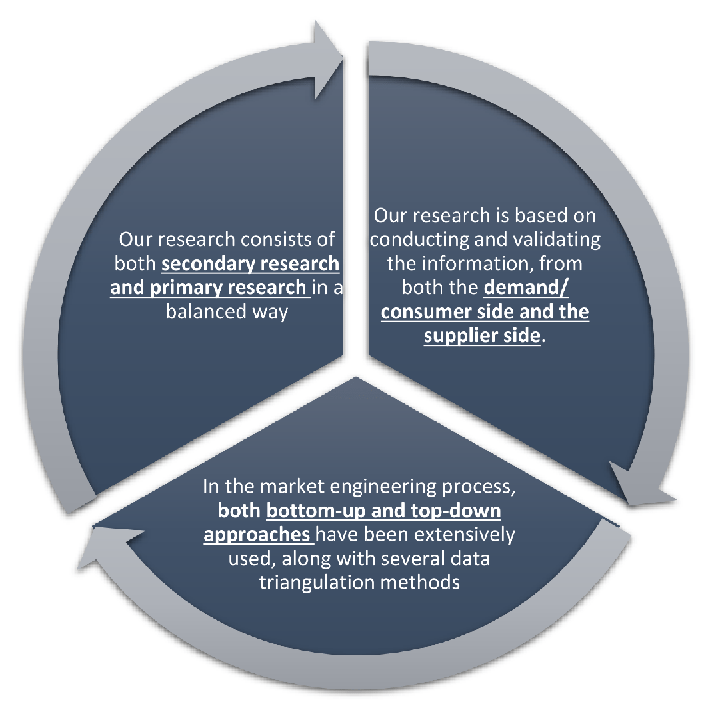
MarketGenics leverages a dedicated industry panel of experts and a comprehensive suite of paid databases to effectively collect, consolidate, and analyze market intelligence.
Our approach has consistently proven to be reliable and effective in generating accurate market insights, identifying key industry trends, and uncovering emerging business opportunities.
Through both primary and secondary research, we capture and analyze critical company-level data such as manufacturing footprints, including technical centers, R&D facilities, sales offices, and headquarters.
Our expert panel further enhances our ability to estimate market size for specific brands based on validated field-level intelligence.
Our data mining techniques incorporate both parametric and non-parametric methods, allowing for structured data collection, sorting, processing, and cleaning.
Demand projections are derived from large-scale data sets analyzed through proprietary algorithms, culminating in robust and reliable market sizing.
Research Approach
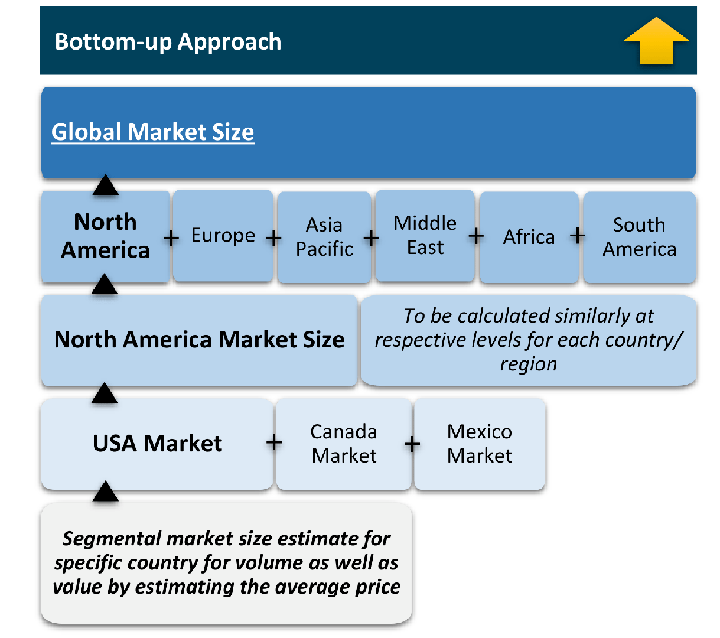
The bottom-up approach builds market estimates by starting with the smallest addressable market units and systematically aggregating them to create comprehensive market size projections.
This method begins with specific, granular data points and builds upward to create the complete market landscape.
Customer Analysis → Segmental Analysis → Geographical Analysis
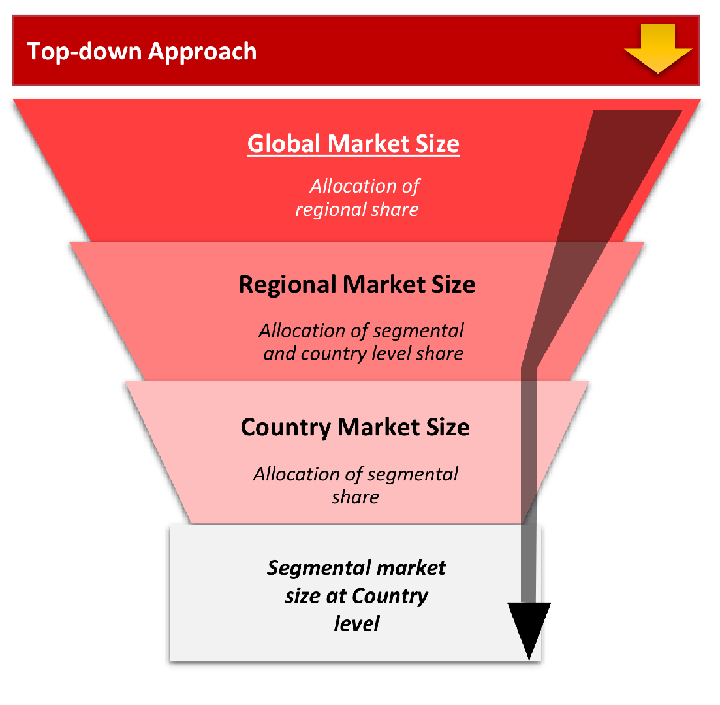
The top-down approach starts with the broadest possible market data and systematically narrows it down through a series of filters and assumptions to arrive at specific market segments or opportunities.
This method begins with the big picture and works downward to increasingly specific market slices.
TAM → SAM → SOM
Research Methods
Desk / Secondary Research
While analysing the market, we extensively study secondary sources, directories, and databases to identify and collect information useful for this technical, market-oriented, and commercial report. Secondary sources that we utilize are not only the public sources, but it is a combination of Open Source, Associations, Paid Databases, MG Repository & Knowledgebase, and others.
- Company websites, annual reports, financial reports, broker reports, and investor presentations
- National government documents, statistical databases and reports
- News articles, press releases and web-casts specific to the companies operating in the market, Magazines, reports, and others
- We gather information from commercial data sources for deriving company specific data such as segmental revenue, share for geography, product revenue, and others
- Internal and external proprietary databases (industry-specific), relevant patent, and regulatory databases
- Governing Bodies, Government Organizations
- Relevant Authorities, Country-specific Associations for Industries
We also employ the model mapping approach to estimate the product level market data through the players' product portfolio
Primary Research
Primary research/ interviews is vital in analyzing the market. Most of the cases involves paid primary interviews. Primary sources include primary interviews through e-mail interactions, telephonic interviews, surveys as well as face-to-face interviews with the different stakeholders across the value chain including several industry experts.
| Type of Respondents | Number of Primaries |
|---|---|
| Tier 2/3 Suppliers | ~20 |
| Tier 1 Suppliers | ~25 |
| End-users | ~25 |
| Industry Expert/ Panel/ Consultant | ~30 |
| Total | ~100 |
MG Knowledgebase
• Repository of industry blog, newsletter and case studies
• Online platform covering detailed market reports, and company profiles
Forecasting Factors and Models
Forecasting Factors
- Historical Trends – Past market patterns, cycles, and major events that shaped how markets behave over time. Understanding past trends helps predict future behavior.
- Industry Factors – Specific characteristics of the industry like structure, regulations, and innovation cycles that affect market dynamics.
- Macroeconomic Factors – Economic conditions like GDP growth, inflation, and employment rates that affect how much money people have to spend.
- Demographic Factors – Population characteristics like age, income, and location that determine who can buy your product.
- Technology Factors – How quickly people adopt new technology and how much technology infrastructure exists.
- Regulatory Factors – Government rules, laws, and policies that can help or restrict market growth.
- Competitive Factors – Analyzing competition structure such as degree of competition and bargaining power of buyers and suppliers.
Forecasting Models / Techniques
Multiple Regression Analysis
- Identify and quantify factors that drive market changes
- Statistical modeling to establish relationships between market drivers and outcomes
Time Series Analysis – Seasonal Patterns
- Understand regular cyclical patterns in market demand
- Advanced statistical techniques to separate trend, seasonal, and irregular components
Time Series Analysis – Trend Analysis
- Identify underlying market growth patterns and momentum
- Statistical analysis of historical data to project future trends
Expert Opinion – Expert Interviews
- Gather deep industry insights and contextual understanding
- In-depth interviews with key industry stakeholders
Multi-Scenario Development
- Prepare for uncertainty by modeling different possible futures
- Creating optimistic, pessimistic, and most likely scenarios
Time Series Analysis – Moving Averages
- Sophisticated forecasting for complex time series data
- Auto-regressive integrated moving average models with seasonal components
Econometric Models
- Apply economic theory to market forecasting
- Sophisticated economic models that account for market interactions
Expert Opinion – Delphi Method
- Harness collective wisdom of industry experts
- Structured, multi-round expert consultation process
Monte Carlo Simulation
- Quantify uncertainty and probability distributions
- Thousands of simulations with varying input parameters
Research Analysis
Our research framework is built upon the fundamental principle of validating market intelligence from both demand and supply perspectives. This dual-sided approach ensures comprehensive market understanding and reduces the risk of single-source bias.
Demand-Side Analysis: We understand end-user/application behavior, preferences, and market needs along with the penetration of the product for specific application.
Supply-Side Analysis: We estimate overall market revenue, analyze the segmental share along with industry capacity, competitive landscape, and market structure.
Validation & Evaluation
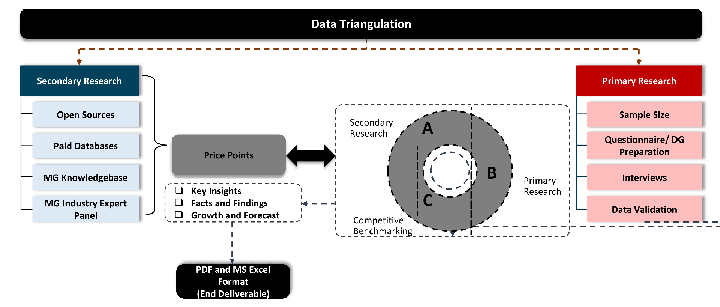
Data triangulation is a validation technique that uses multiple methods, sources, or perspectives to examine the same research question, thereby increasing the credibility and reliability of research findings. In market research, triangulation serves as a quality assurance mechanism that helps identify and minimize bias, validate assumptions, and ensure accuracy in market estimates.
- Data Source Triangulation – Using multiple data sources to examine the same phenomenon
- Methodological Triangulation – Using multiple research methods to study the same research question
- Investigator Triangulation – Using multiple researchers or analysts to examine the same data
- Theoretical Triangulation – Using multiple theoretical perspectives to interpret the same data
Custom Market Research Services
We will customise the research for you, in case the report listed above does not meet your requirements.
Get 10% Free Customisation