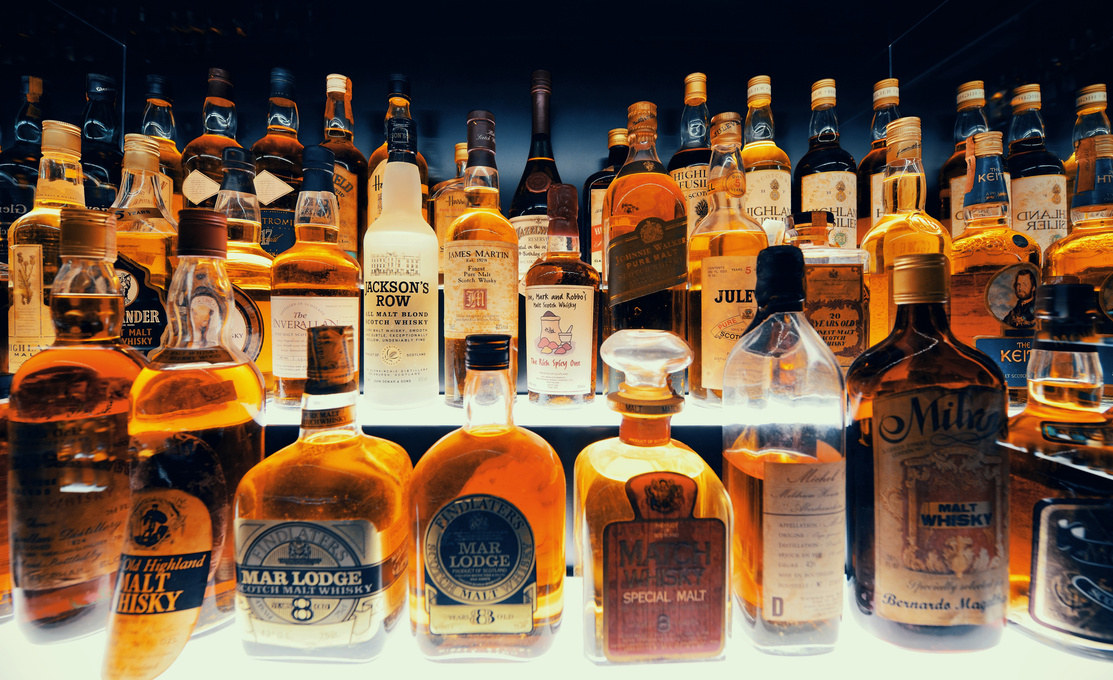
Alcoholic Beverages
- Blend Test - Central location Test
- Bottle Design Test
MarketGenics Food & Beverage Research
MarketGenics helps food and beverage brands, retailers and foodservice companies decide what to launch, how to price it and where it will sell.
From product blends to pack design, brand health to campaign efficacy to service audits — a snapshot of the categories and research studies we have delivered.

Real Consumers | Authentic Insights | Better Decisions
Choose a focus area, then open any category to view the research opportunities and methodologies behind it.
Consumer Insights
Who consumes the product, why, when, how often and in what context?
Understand food habits, consumption occasions, preferences and unmet consumer needs.
Consumer Insights
Who consumes the product, why, when, how often and in what context?
| Research opportunity | Methodologies |
|---|---|
| Usage and Attitude (U&A) study | Large-scale quantitative surveys, qualitative interviews |
| Food consumption habits | Online surveys, consumption diaries |
| Eating and drinking occasions | Occasion-based surveys, ethnography |
| Breakfast, lunch, dinner and snacking behaviour | Surveys, meal diaries, in-home interviews |
| Household food purchase and consumption patterns | Household panels, purchase diaries |
| Food preferences by age and demographic group | Segmentation surveys, focus groups |
| Family decision-making and food choices | Family interviews, household observation |
| Dietary preference and lifestyle research | Surveys, depth interviews |
| Convenience food and ready-to-eat consumption | Surveys, in-home observation |
| Cooking habits and ingredient usage | Kitchen ethnography, video diaries |
| Food waste and leftovers behaviour | Waste diaries, household observation |
| Out-of-home eating and drinking habits | Surveys, interviews, location-based diaries |
| Food motivations, barriers and unmet needs | Focus groups, laddering interviews |
Product Innovation
What should we launch next, and which product idea has the strongest market potential?
Build evidence from early idea generation through prototype development and launch readiness.
Product Innovation
What should we launch next, and which product idea has the strongest market potential?
| Research opportunity | Methodologies |
|---|---|
| New product idea generation | Consumer workshops, co-creation, ethnography |
| New product concept testing | Online quantitative surveys, qualitative interviews |
| Concept screening and prioritisation | Monadic testing, sequential monadic testing |
| Concept optimisation | MaxDiff, conjoint analysis, TURF analysis |
| New flavour or variant testing | Concept surveys, preference ranking |
| Product format testing | Surveys, concept boards, prototype testing |
| New product positioning | Concept testing, perceptual mapping |
| Product benefit prioritisation | MaxDiff, choice-based conjoint |
| Product-market fit assessment | Concept testing, product trials, purchase-intent surveys |
| Concept and product alignment | Concept-product fit testing |
| Line extension assessment | Brand-fit studies, cannibalisation analysis |
| Innovation pipeline and whitespace research | Secondary research, consumer segmentation, competitor mapping |
| Go/no-go launch decisions | Concept benchmarks, demand modelling, decision thresholds |
Product Innovation
Does our product taste, smell and feel better than competitors, and what must improve?
Measure product acceptance, sensory differences and the attributes that drive preference.
Product Innovation
Does our product taste, smell and feel better than competitors, and what must improve?
| Research opportunity | Methodologies |
|---|---|
| Overall product liking | Hedonic scales, consumer acceptance tests |
| Blind taste testing | Blind sensory tests, controlled product comparisons |
| Branded taste testing | Branded and unbranded product evaluations |
| Competitive product benchmarking | Comparative sensory testing |
| Flavour preference research | Paired comparisons, preference ranking |
| Sweetness, saltiness and spice optimisation | Just-About-Right scales, penalty analysis |
| Aroma, taste, texture and mouthfeel | Sensory profiling, descriptive analysis |
| Product differentiation | Triangle tests, duo-trio tests |
| Recipe and formulation comparison | Paired tests, monadic tests |
| Aftertaste and flavour persistence | Temporal sensory testing |
| Product acceptance by consumer segment | Sensory testing combined with segmentation |
| Reformulation testing | Equivalence, discrimination and acceptance tests |
| Plant-based versus animal-based alternatives | Sensory benchmarking, preference mapping |
| Reduced sugar, salt or fat acceptance | Controlled sensory tests, JAR analysis |
| Product quality consistency | Repeat sensory assessments, trained panels |
| Product and brand expectation alignment | Blind versus informed testing, concept-product fit |
Product Innovation
Will the packaging attract attention, communicate value and persuade shoppers to choose it?
Evaluate shelf visibility, design, information clarity, usability and impact on choice.
Product Innovation
Will the packaging attract attention, communicate value and persuade shoppers to choose it?
| Research opportunity | Methodologies |
|---|---|
| New packaging design testing | Online surveys, qualitative interviews |
| Pack attractiveness and appeal | Visual preference tests, rating scales |
| Shelf standout and visibility | Simulated shelf tests, eye-tracking |
| Packaging comparison against competitors | Shelf simulations, comparative tests |
| Logo and brand identity testing | Logo tests, brand attribution studies |
| Colour and design optimisation | A/B tests, experimental design |
| Front-of-pack communication | Comprehension and recall testing |
| Nutrition label understanding | Label comprehension surveys |
| Ingredient and allergen information clarity | Comprehension tests, qualitative interviews |
| Sustainability packaging perceptions | Concept tests, choice experiments |
| Pack size and format preferences | Conjoint analysis, choice-based surveys |
| Convenience and usability | Observational testing, usability interviews |
| Resealability, opening and dispensing | Product-use tests, in-home trials |
| Premium versus economy packaging | Price-pack testing, conjoint analysis |
| Packaging impact on purchase intent | Simulated shelf choice, purchase-intent surveys |
Brand & Growth
How strong is the brand, and where does it stand against competitors?
Track awareness, associations, preference, trust, loyalty and positioning over time.
Brand & Growth
How strong is the brand, and where does it stand against competitors?
| Research opportunity | Methodologies |
|---|---|
| Brand awareness | Unaided and aided awareness surveys |
| Brand recall | Recall and recognition tests |
| Brand consideration | Consideration funnel surveys |
| Brand preference | Preference ranking and choice studies |
| Brand image and associations | Brand attribute ratings, qualitative interviews |
| Brand equity measurement | Multi-dimensional brand equity surveys |
| Brand positioning | Perceptual mapping, correspondence analysis |
| Brand differentiation | Attribute association and competitor comparison |
| Brand trust and credibility | Rating scales, depth interviews |
| Brand loyalty | Repeat-purchase metrics, loyalty surveys |
| Brand switching | Switching behaviour surveys, churn analysis |
| Brand health tracking | Periodic or continuous tracking studies |
| Brand repositioning assessment | Pre/post research, positioning studies |
| Brand extension fit | Concept testing, brand-fit measurement |
| Advertising and brand impact | Ad testing, brand-lift studies |
Brand & Growth
What is the right price, pack size and price-value proposition?
Quantify price sensitivity, trade-offs and the commercial impact of pricing decisions.
Brand & Growth
What is the right price, pack size and price-value proposition?
| Research opportunity | Methodologies |
|---|---|
| Willingness to pay | Van Westendorp Price Sensitivity Meter |
| Acceptable price range | Price sensitivity research |
| Price elasticity | Econometric analysis, price-response modelling |
| Optimal launch price | Conjoint analysis, price experiments |
| Premium pricing acceptance | Choice experiments, price-premium testing |
| Pack size and price trade-offs | Conjoint analysis |
| Price ladder development | Competitive price mapping, consumer surveys |
| Promotional price effectiveness | Controlled experiments, sales analysis |
| Price versus quality perception | Perception studies, price-image testing |
| Price sensitivity by consumer segment | Segmentation and elasticity modelling |
| Good-better-best portfolio pricing | Choice-based conjoint |
| Private-label versus branded price gaps | Price benchmarking, choice studies |
| Discount and multibuy effectiveness | Retail experiments, sales analysis |
| Revenue and share simulations | Demand modelling, conjoint simulations |
Shopper & Retail
How do shoppers decide in stores and online, and what drives conversion at the point of purchase?
Understand journeys, shelf decisions, promotions, formats and barriers to purchase.
Shopper & Retail
How do shoppers decide in stores and online, and what drives conversion at the point of purchase?
| Research opportunity | Methodologies |
|---|---|
| Grocery shopping behaviour | Shopper surveys, ethnography |
| Path-to-purchase analysis | Shopper journey mapping, interviews |
| In-store decision-making | Shop-alongs, observational research |
| Shelf placement and planogram testing | Simulated shelf studies, eye-tracking |
| Point-of-sale display effectiveness | Store experiments, observation |
| In-store promotional effectiveness | Control-versus-test store analysis |
| Impulse purchase behaviour | Observational studies, exit interviews |
| Retailer and store-format preference | Surveys, segmentation |
| Online grocery shopping behaviour | Digital journey analytics, usability tests |
| Digital shelf and product-page optimisation | A/B tests, product-page experiments |
| Product discoverability and search behaviour | Search analytics, user testing |
| Category navigation and assortment | Choice experiments, category analysis |
| Out-of-stock impact | Retail audits, lost-sales analysis |
| Retailer brand versus manufacturer brand | Comparative choice studies |
| Conversion barriers | Shopper interviews, funnel analysis |
| Trade promotions and merchandising | Sales uplift analysis, matched-store tests |
Brand & Growth
Do consumers understand and respond to the communication?
Test messages, creative routes and campaigns before and after launch.
Brand & Growth
Do consumers understand and respond to the communication?
| Research opportunity | Methodologies |
|---|---|
| Advertising concept testing | Qualitative interviews, online surveys |
| Storyboard testing | Sequential monadic tests, video interviews |
| TV commercial and video ad testing | Pre-testing, controlled exposure studies |
| Digital advertising effectiveness | A/B testing, digital campaign analytics |
| Advertising message comprehension | Recall, comprehension and attribution tests |
| Emotional response to advertising | Qualitative research, emotional response scales |
| Brand linkage and attribution | Brand recognition and recall testing |
| Food claims and benefit communication | Claims testing, controlled experiments |
| Celebrity and influencer effectiveness | Comparative concept testing, brand-lift studies |
| Social media content testing | A/B tests, engagement analysis |
| Campaign awareness and recall | Pre/post surveys, brand tracking |
| Advertising impact on purchase intent | Experimental exposure and control groups |
| Packaging and advertising consistency | Message alignment and concept-product fit |
| Creative optimisation | Multivariate testing, qualitative diagnostics |
Market Intelligence
How large is the opportunity, how fast is it growing and where is the whitespace?
Size demand, assess markets and identify the strongest routes to growth.
Market Intelligence
How large is the opportunity, how fast is it growing and where is the whitespace?
| Research opportunity | Methodologies |
|---|---|
| Total addressable market (TAM) | Secondary research, market sizing models |
| Serviceable available market (SAM) | Geographic, channel and segment analysis |
| Category size and growth | Industry reports, retail data, statistical modelling |
| Demand forecasting | Time-series analysis, econometric models |
| Emerging food trends | Desk research, social listening, expert interviews |
| Regional market opportunity | Regional surveys, secondary data analysis |
| Urban versus rural demand | Stratified surveys, market segmentation |
| New category opportunity | Whitespace analysis, consumer needs research |
| New geographic market entry | Market assessment, local consumer research |
| Competitive landscape | Competitor mapping, market intelligence |
| Market share estimation | Retail audits, sales panels, secondary data |
| Import and export opportunity | Trade statistics, customs data, expert interviews |
| Market entry strategy | Market sizing, channel research, stakeholder interviews |
| Long-term category outlook | Scenario planning, forecasting |
| Seasonality and festival demand | Historical sales, seasonal analysis |
Consumer Insights
How do consumers perceive health benefits and trust food claims?
Evaluate demand, comprehension, credibility and the trade-offs consumers make.
Consumer Insights
How do consumers perceive health benefits and trust food claims?
| Research opportunity | Methodologies |
|---|---|
| Healthy eating perceptions | Surveys, qualitative interviews |
| Consumer response to nutritional benefits | Claims testing, choice experiments |
| High-protein product demand | Segmentation, concept testing |
| Low-sugar and sugar-free product appeal | Concept tests, sensory acceptance tests |
| Fortified food and functional beverage demand | Consumer surveys, concept testing |
| Plant-based food acceptance | Consumer studies, sensory tests |
| Organic food perceptions | Attitude surveys, willingness-to-pay studies |
| Natural, clean-label and minimally processed perceptions | Qualitative interviews, CATA, surveys |
| Gluten-free and allergen-free product demand | Consumer segmentation, concept testing |
| Probiotic and gut-health product perceptions | Claims comprehension, concept tests |
| Energy, focus and hydration product appeal | Occasion-based research, concept testing |
| Nutritional label interpretation | Comprehension studies |
| Health versus taste trade-offs | Conjoint analysis, sensory testing |
| Consumer trust in health claims | Credibility studies, qualitative interviews |
| Functional ingredient acceptance | Concept tests, ingredient perception research |
Consumer Insights
What drives satisfaction, repeat purchase and churn?
Identify service and product experiences that strengthen loyalty or cause customers to leave.
Consumer Insights
What drives satisfaction, repeat purchase and churn?
| Research opportunity | Methodologies |
|---|---|
| Customer satisfaction measurement | CSAT surveys |
| Net Promoter Score (NPS) | Recommendation surveys |
| Customer effort and service experience | CES surveys, interviews |
| Product complaint analysis | Complaint data analytics, text analysis |
| Reasons for dissatisfaction | Depth interviews, root-cause analysis |
| Repeat purchase drivers | Shopper panels, longitudinal surveys |
| Customer retention and churn | Cohort analysis, churn modelling |
| Loyalty programme effectiveness | Member surveys, control-group analysis |
| Consumer expectations versus experience | Gap analysis, satisfaction surveys |
| Product returns and refunds | Transaction analysis, interviews |
| Customer feedback mining | Text analytics, thematic analysis |
| Win-back and lapsed buyer research | Recontact surveys, qualitative interviews |
B2B & Foodservice
What influences dining choices, menu preferences, customer satisfaction and foodservice purchasing?
Support menu, pricing, format, location and experience decisions across foodservice.
B2B & Foodservice
What influences dining choices, menu preferences, customer satisfaction and foodservice purchasing?
| Research opportunity | Methodologies |
|---|---|
| Restaurant brand and concept testing | Consumer surveys, focus groups |
| Menu development and item testing | Menu tests, sensory evaluation |
| Menu pricing optimisation | Conjoint analysis, menu experiments |
| Cuisine and dining occasion preferences | Surveys, occasion research |
| Customer dining experience | Intercepts, interviews, satisfaction surveys |
| Restaurant location feasibility | Catchment analysis, footfall research |
| Delivery and takeaway preferences | Online surveys, behavioural analytics |
| Food delivery platform selection | Choice studies, customer interviews |
| Menu engineering | Sales mix, contribution margin analysis |
| Foodservice brand tracking | Brand awareness and usage surveys |
| Institutional food preferences | Interviews and surveys with users and buyers |
| Catering procurement requirements | B2B interviews, procurement analysis |
| Cloud kitchen demand | Market sizing, local consumer surveys |
| Restaurant competitor benchmarking | Mystery shopping, menu audits |
| New restaurant format assessment | Concept testing, feasibility research |
B2B & Foodservice
What do procurement heads, manufacturers, distributors, retailers and foodservice operators need?
Understand buyer requirements, supplier choice, channels and commercial barriers.
B2B & Foodservice
What do procurement heads, manufacturers, distributors, retailers and foodservice operators need?
| Research opportunity | Methodologies |
|---|---|
| B2B customer needs assessment | In-depth interviews, online surveys |
| Ingredient supplier selection | Buyer interviews, conjoint analysis |
| Supplier satisfaction and loyalty | Relationship surveys, stakeholder interviews |
| Brand and ingredient awareness among manufacturers | B2B quantitative surveys |
| Distributor and wholesaler mapping | Desk research, trade interviews |
| Retailer buyer requirements | Expert interviews, category buyer surveys |
| Procurement decision drivers | Decision-maker interviews, choice modelling |
| New ingredient acceptance | Concept testing with technical and commercial buyers |
| Private-label manufacturing opportunities | Industry mapping, buyer interviews |
| Contract manufacturing demand | Secondary research, expert interviews |
| B2B pricing and willingness to pay | Price interviews, conjoint analysis |
| Customer acquisition barriers | Win/loss interviews, sales funnel analysis |
| Market entry for food ingredients | Market mapping, expert consultations |
| Channel partner assessment | Distributor surveys, channel interviews |
| Competitor capability benchmarking | Desk research, expert interviews |
Market Intelligence
How do competitors compare on product, price, pack, positioning and distribution?
Build a fact-based view of competitor strengths, gaps and opportunities to differentiate.
Market Intelligence
How do competitors compare on product, price, pack, positioning and distribution?
| Research opportunity | Methodologies |
|---|---|
| Competitor product portfolio mapping | Desk research, product audits |
| Competitor pricing and promotions | Retail audits, online price monitoring |
| Competitor brand positioning | Perceptual mapping, communications analysis |
| Competitor packaging comparison | Shelf audits, comparative testing |
| Product feature and ingredient comparison | Product audits, label analysis |
| New product launch monitoring | Secondary research, launch databases |
| Competitor advertising analysis | Creative audits, campaign monitoring |
| Market share and competitive intensity | Industry reports, sales data |
| Private-label competitive assessment | Price, product and sensory benchmarking |
| Competitive distribution analysis | Retail audits, channel mapping |
| Competitor digital presence | Digital audits, social listening |
| Consumer switching to competitors | Switching surveys, churn analysis |
| Competitive strengths and weaknesses | SWOT, expert interviews, consumer research |
| Whitespace and differentiation assessment | Competitor mapping, consumer needs analysis |
Market Intelligence
How do tastes, habits and market conditions differ across regions and countries?
Support localisation, market entry and cross-country strategy with locally grounded evidence.
Market Intelligence
How do tastes, habits and market conditions differ across regions and countries?
| Research opportunity | Methodologies |
|---|---|
| Country-level food market entry | Desk research, consumer surveys |
| Cross-country brand comparison | Harmonised multi-country surveys |
| Regional taste preference studies | Sensory testing, regional consumer panels |
| Cultural food habits | Ethnography, depth interviews |
| Regional flavour and spice preferences | Sensory evaluation, preference ranking |
| Local versus global brand acceptance | Brand tracking, concept testing |
| Food localisation for international markets | Concept and product testing |
| Regional packaging and language adaptation | Label comprehension tests |
| Diaspora food consumption | Consumer surveys, community interviews |
| Export-market product acceptance | Local sensory and concept testing |
| Cross-cultural advertising effectiveness | Localised ad testing |
| Country-specific price sensitivity | Price research, conjoint analysis |
| Regional channel and distribution assessment | Trade interviews, market mapping |
| Local food occasion and festival demand | Occasion research, secondary data |
| International competitor benchmarking | Desk research, retail and product audits |
The right combination depends on the business question, product, target audience, market and stage of development.
Focus groups, in-depth interviews, ethnography, shop-alongs, online communities, consumer diaries and co-creation workshops.
Online, telephone and face-to-face surveys, structured questionnaires, brand tracking, U&A studies and segmentation.
Central Location Tests, Home Use Tests, blind testing, hedonic scales, JAR, triangle tests, QDA, CATA and preference mapping.
Retail audits, shop-alongs, mystery shopping, simulated shelf studies, eye-tracking, store experiments and path-to-purchase analysis.
Industry reports, government statistics, trade data, competitor intelligence, company reports, import-export data and market sizing.
Conjoint, MaxDiff, TURF, regression, cluster analysis, factor analysis, price elasticity, forecasting, text analytics and predictive modelling.
Online experiments, digital shelf analytics, social listening, review mining, AI-assisted qualitative coding and video interviews.
Share your research goals, target category, and key requirements. We’ll recommend a research approach tailored to your business needs.