Direct-to-Consumer Brands Market Size, Share & Trends Analysis Report by Business Model (Digitally Native Vertical Brands (DNVBs), Subscription-Based DTC, One-Time Purchase DTC, Hybrid DTC (Online + Offline), Social Commerce DTC, Others), Product Type, Sales Channel, Customer Type, Verticals, and Geography (North America, Europe, Asia Pacific, Middle East, Africa, and South America) – Global Industry Data, Trends, and Forecasts, 2026–2035
Market Overview:
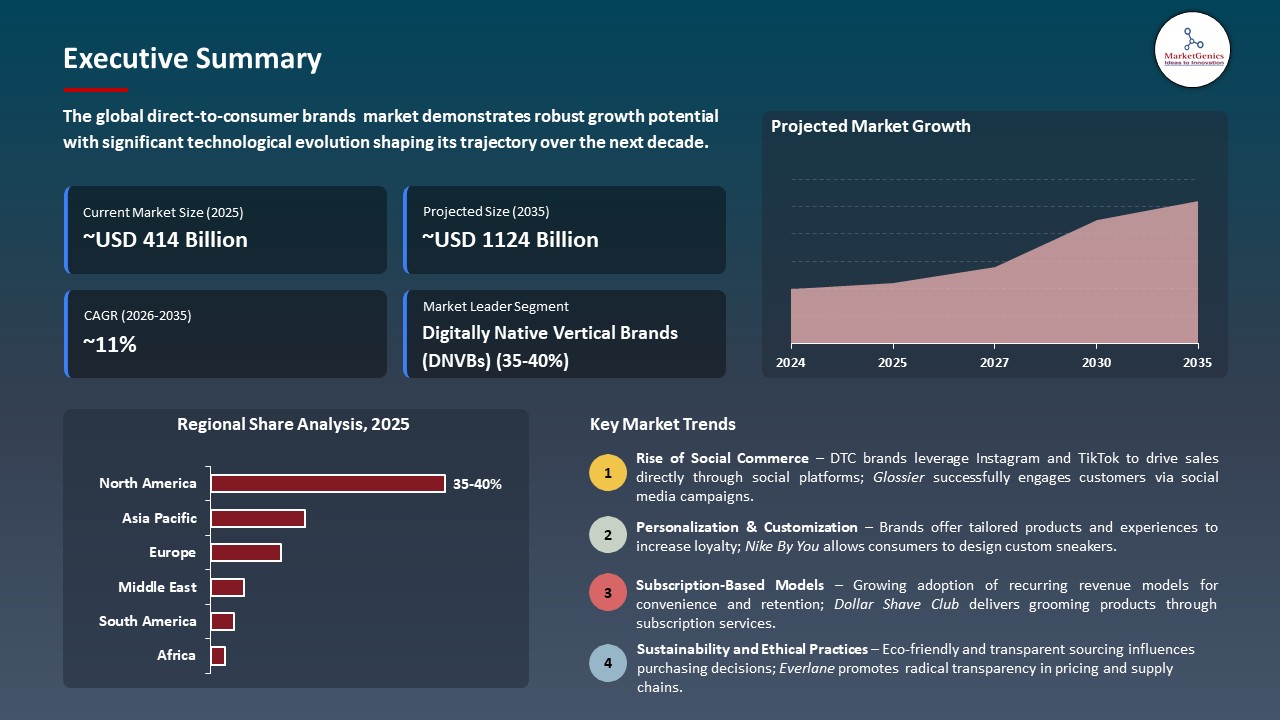
As per MarketGenics analysis, the global Direct-to-Consumer Brands market is projected to grow from USD 414.2 billion in 2025 to approximately USD 1124.2 billion by 2035, registering a CAGR of 10.5% during the forecast period.
|
|
|
Segmental Data Insights |
|
|
Demand Trends |
|
|
Competitive Landscape |
|
|
Strategic Development |
|
|
Future Outlook & Opportunities |
|
Direct-to-Consumer-Brands-Market Size, Share, and Growth
Asia Pacific is the fastest-growing region for the direct-to-consumer market due to rapid e-commerce adoption, rising internet penetration, and increasing consumer preference for online, personalized, and subscription-based shopping experiences.
Garrett Marshall, President of Xponential+, said, “Xponential acknowledges the evolving landscape of the modern fitness consumer, who seeks a seamless blend of digital and in-person workouts that cater to their diverse needs, in line with lululemon's vision, Xponential is dedicated to bridging the gap between digital and in-person fitness experiences”
The direct-to-consumer brands market is growing exponentially because consumers seek more personalized and convenient customer experiences that are digitally oriented, which compels brands to establish direct relationships and maintain complete control over pricing, branding and customer information. The use of social media, influencer marketing, and performance advertising will greatly enhance the acquisition and interaction of customers, whereas data analytics will help the brands customize products and enhance retention.
The speed of product innovation and responsive supply chains enables rapid adaptation to evolving consumer tastes and preferences. As an example, Rhode has scaled its presence by using great online community interactions and then moving on to the offline store business, but Indē Wild has already entered the international market with strategic collaboration, demonstrating global scalability of the D2C models. Moreover, by expanding the omnichannel and subscription, recurring revenue streams and customer loyalty are also reinforced, which is why D2C remains a very competitive and innovating segment of contemporary retail.
Adjacent opportunities for the direct-to-consumer brands market include growth in social commerce platforms, expansion of quick commerce and last-mile delivery, rise of subscription-based services, integration with digital payment ecosystems, and increasing demand for private label and niche product manufacturing.
Direct-to-Consumer Brands Market Dynamics and Trends
Driver: Rising Consumer Preference for Personalized, Data-Driven Digital Shopping Experiences
-
The demand of consumers to have personalized shopping experiences has grown, and direct-to-consumer brands use first-party data, AI, and analytics to offer personalized recommendations of products, targeted promotions, and cohesive user experiences across digital platforms. This increases interaction, turnover and consumer satisfaction.
- Real-time feedback, browsing patterns and purchase history are also used by brands to constantly improve what they can offer and how they market it. This data-based strategy helps to build strong direct relationship, increase retention and innovate products faster according to the new consumer needs.
- Warby Parker is a bright example of e-commerce success, so-called omnichannel D2C, combining the online environment of online shopping with physical stores and mobile application, where it is possible to use such functions as a virtual try-on or a physical showroom, and online and offline touchpoints are in harmony.
- Grows customer loyalty and lifetime value and converts more by promoting personalization across omnichannel touchpoints seamlessly and with the use of data.
Restraint: High Customer Acquisition Costs and Intense Digital Marketing Competition Challenges
-
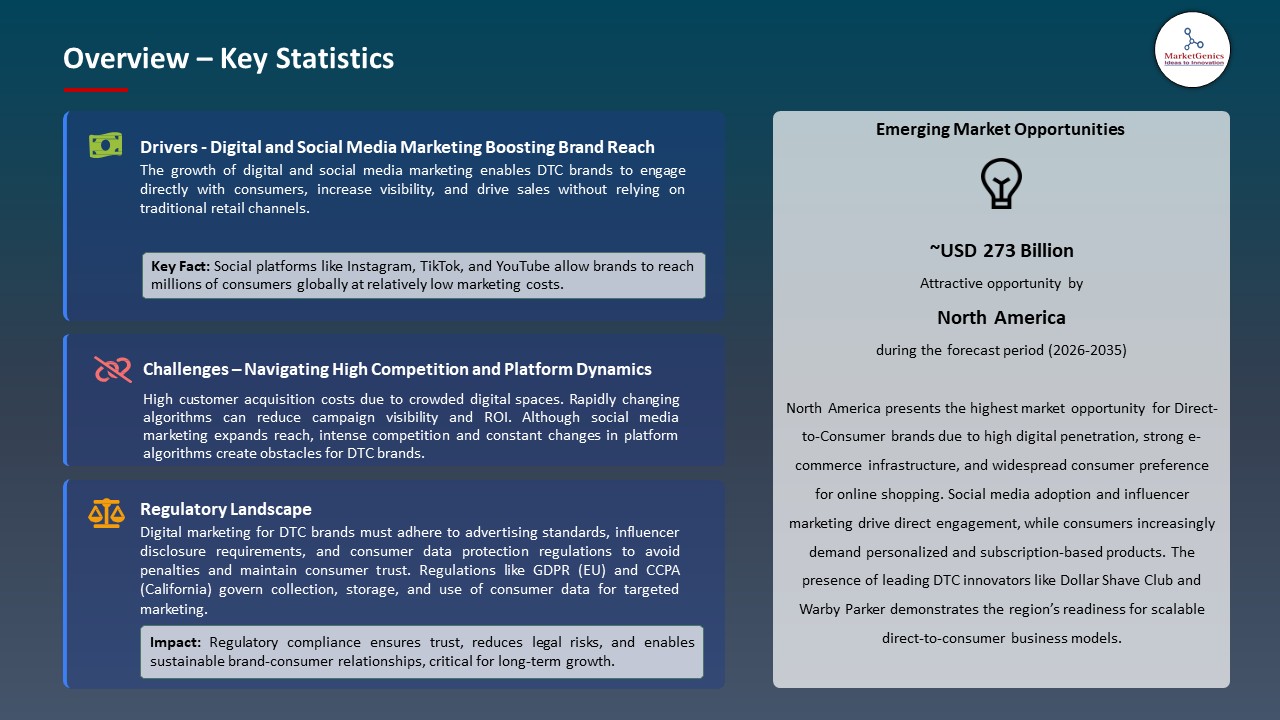
The growing competition in the digital channel has dramatically grown the costs of customer acquisition to direct-to-consumer brands because platforms such as search engines and social networks have been flooded with advertising partners fighting over the same target market. This lowers the ROA and makes emerging brands not to scale at a profitable level.
- The high frequency of the changes of the algorithm and the reliance on third party platforms further restrict the visibility and control of the reach to the customers. Brands are becoming more and more demanded to test content, community building, and retention to the extent of canceling the cost of acquisition. This drift strains the margins and makes business reconsider the long-term growth models on a sustainable basis.
- Reduces profit levels and compels direct-to-consumer brands to abandon paid acquisition in favor of sustainable and retention-based growth tactics.
Opportunity: Expansion into Omnichannel Retail and Strategic Partnerships Unlocking Growth Potential
-
Brands that rely on direct-to-consumer are going outside the digital realm to engage with physical retail and strategic alliances to reach more customers and increase brand awareness. This form of omnichannel approach will facilitate a rich product experience, generate consumer confidence and enhance a higher level of conversion among various customer groups.
- Partnerships with already existing retailers and marketplaces advance even more in penetrating the market and expanding internationally. Combining both online and offline touchpoints, brands will be able to provide seamless experiences as well as receive increased engagement and open new channels of revenue.
- In March 2026, Indide Wild went global with a rollout on Sephora U.S., a move which established 178 stores to show how direct-to-consumer brands can use strategic retail relationships and omnichannel expansion to scale internationally and integrate cultural innovation with science-based skincare.
- Increases availability worldwide, builds brand equity and spurs greater revenue generation via a smooth, omnichannel network and alliances with strategic retailers.
Key Trend: Integration of AI, Social Commerce, and Community-Led Brand Building Strategies
-
Direct-to-consumer brands are also becoming more and more AI-friendly to provide a higher level of personalization, anticipation of demand, and interaction with customers, and social commerce platforms allow making in-app purchases easily by using the content of influencers and conducting in-app shopping.
- Meanwhile, community-based approaches involving user-created content, brand narratives, and creator partnerships are reinforcing emotional relationships with the consumers. This is the combination that stimulates organic growth, scaleable, digitally-centric brands, and retention.
- An example of how AI implementation can improve customer interaction and operational efficiency in direct-to-consumer ecosystems is Gap Inc. collaborating with Google cloud in October 2025 to implement AI-based technologies, such as Gemini and Vertex AI, to achieve hyper-personalized shopping, improved marketing, and accelerated product innovation.
- Scales personalized growth and retention of customers with AI-assisted personalization, engagement, and community-based digital commerce systems.
Direct-to-Consumer Brands Market Analysis and Segmental Data
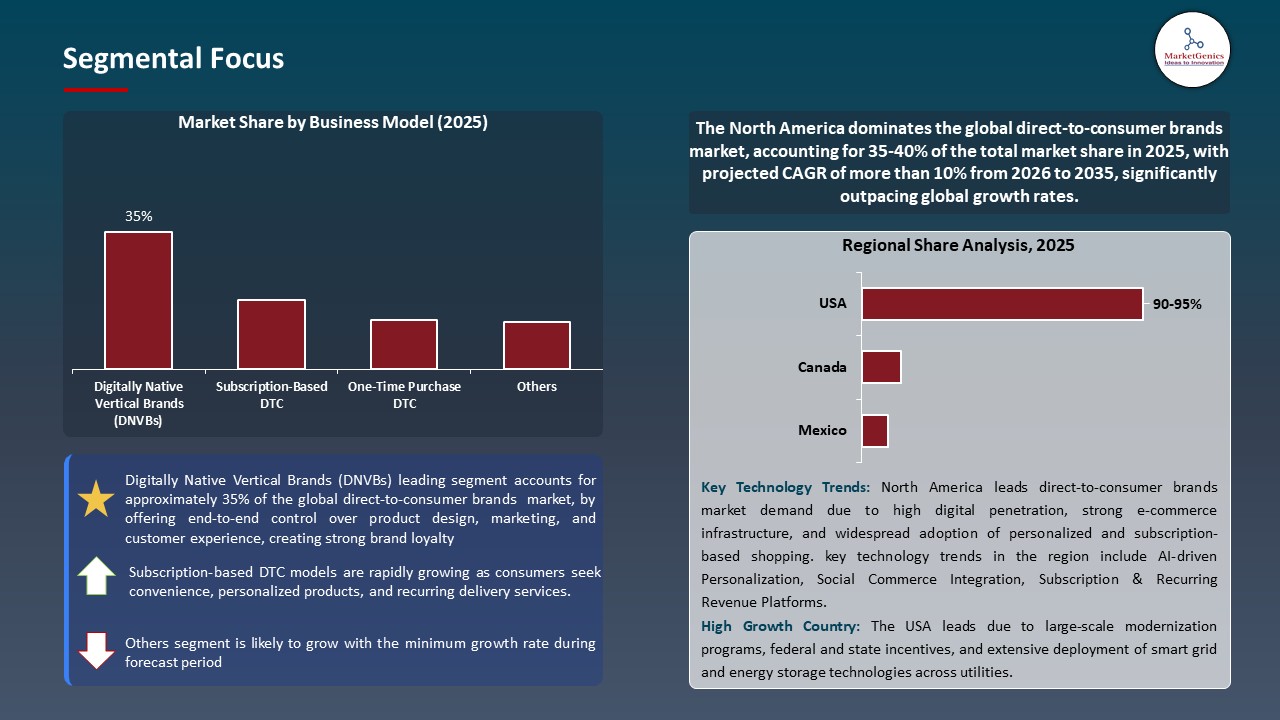
Digitally Native Vertical Brands (DNVBs) Dominate Global Direct-to-Consumer Brands Market
-
Digitally native vertical brands are leading the direct-to-consumer market by building their presence primarily through online channels, allowing full control over branding, pricing, and customer relationships. These brands eliminate intermediaries, enabling better margins and direct access to consumer data for personalized marketing and product development.
- Agile business models allow fast innovation, effective inventory control and fast reaction to the shifting consumer preferences. The brands, using social media, influencer marketing, and data analytics, create strong identities and a community of loyal customers and become outspoken figures in the changing retail environment.
- Enhances market leadership by allowing better margins, quicker innovation and customer engagement through immediate, data-driven brand ecosystems.
North America Leads Global Direct-to-Consumer Brands Market Demand
-
North America dominates the direct-to-consumer brands market due to its highly developed digital ecosystem, widespread internet penetration, and strong adoption of e-commerce platforms. Consumers in the region exhibit high purchasing power and a strong preference for personalized, convenience-driven shopping experiences, encouraging brands to adopt direct engagement models.
- The existence of dominant online-first brands and developed logistics systems are other factors that enhance fast product delivery and effective customer service. Also, the initial implementation of technologies, including AI, data analysis, and social commerce, allow brands to improve customer interaction, streamline their marketing, and expand their functionality successfully throughout the region.
- Drives continued growth of the market by the use of advanced digital infrastructure, high consumer expenditure and early adoption of technology.
Direct-to-Consumer Brands Market Ecosystem
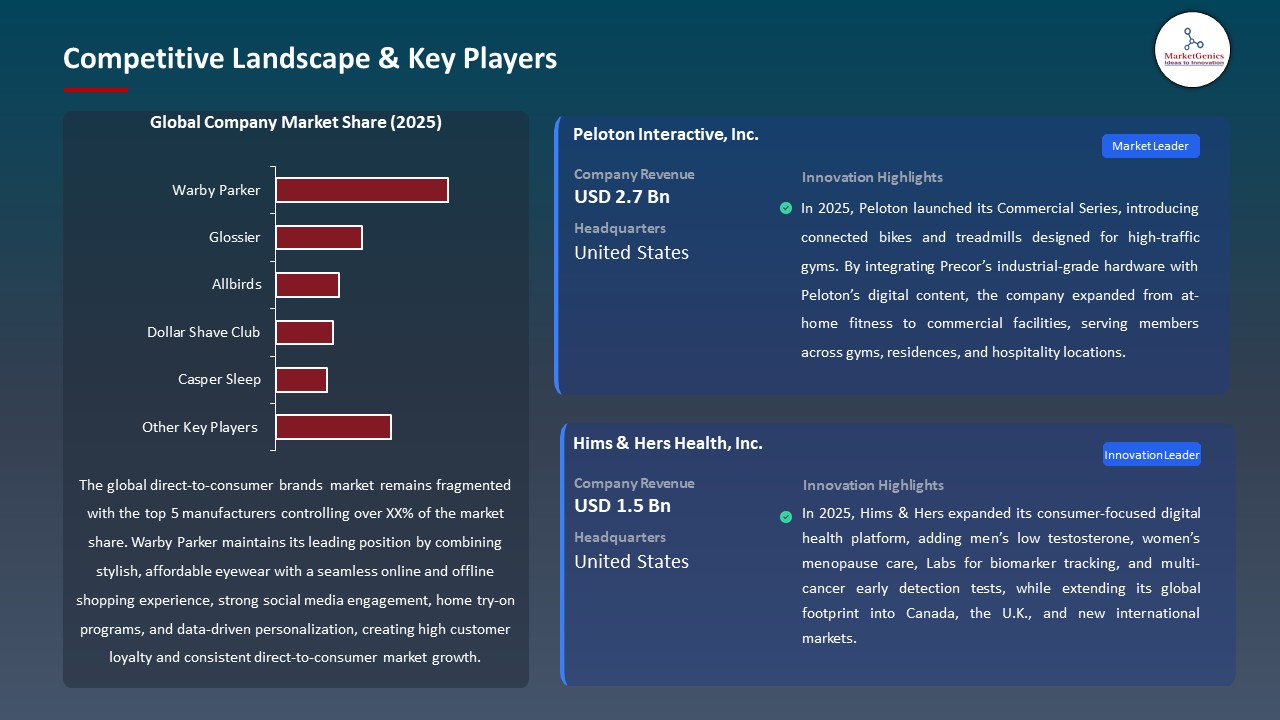
The global direct-to-consumer brands market is highly fragmented, with leading players including Warby Parker, Glossier, Allbirds, Dollar Shave Club, and Casper Sleep. The companies have direct customer interaction, robust digital branding, personalization through data, and responsive supply chains to stay competitive. Their competitive edge is further boosted by their ongoing investment in AI based marketing, subscription-based services, collaboration with influencers and expansion plans of omnichannel to improve customer acquisition and retention.
Value chain also includes product design and sourcing, development of digital platform, marketing and customer acquisition, order fulfillment and logistics, and post sales service including customer service, feedback and loyalty programs. All the stages are concerned with pace, customization, smooth user experience, and effective last-mile delivery in all markets worldwide.
The barriers to entry are high because of the increased costs of customer acquisition, brand loyalty, and the necessity of perpetual digital innovation. The development of AI, social commerce, and community-driven interaction keeps the differentiation, scale, and sustainable expansion of the global direct-to-consumer brands market.
 Recent Development and Strategic Overview:
- In May 2025, Hailey Bieber’s cult beauty brand Rhode made its first major move beyond pure direct‑to‑consumer sales by entering Sephora’s retail ecosystem, launching in U.S. Sephora stores and online, with Canada and the U.K. to follow.
- In June 2025, Lululemon renewed its partnership with Xponential Fitness, expanding lululemon Studio’s digital workouts to include Pure Barre, Rumble, AKT, and YogaSix classes, blending on-demand streaming with in-person fitness experiences to enhance its DTC digital fitness ecosystem.
Report Scope
|
Detail |
|
|
Market Size in 2025 |
USD 414.2 Bn |
|
Market Forecast Value in 2035 |
USD 1124.2 Bn |
|
Growth Rate (CAGR) |
10.5% |
|
Forecast Period |
2026 – 2035 |
|
Historical Data Available for |
2021 – 2024 |
|
Market Size Units |
US$ Billion for Value |
|
Report Format |
Electronic (PDF) + Excel |
|
North America |
Europe |
Asia Pacific |
Middle East |
Africa |
South America |
|
|
|
|
|
|
|
Companies Covered |
|||||
|
|
|
|
|
|
Direct-to-Consumer Brands Market Segmentation and Highlights
|
Segment |
Sub-segment |
|
Direct-to-Consumer Brands Market, By Business Model |
|
|
Direct-to-Consumer Brands Market, By Product Type |
|
|
Direct-to-Consumer Brands Market, By Sales Channel |
|
|
Direct-to-Consumer Brands Market, By Customer Type |
|
|
Direct-to-Consumer Brands Market, By Verticals |
|
Frequently Asked Questions
Table of Contents
- 1. Research Methodology and Assumptions
- 1.1. Definitions
- 1.2. Research Design and Approach
- 1.3. Data Collection Methods
- 1.4. Base Estimates and Calculations
- 1.5. Forecasting Models
- 1.5.1. Key Forecast Factors & Impact Analysis
- 1.6. Secondary Research
- 1.6.1. Open Sources
- 1.6.2. Paid Databases
- 1.6.3. Associations
- 1.7. Primary Research
- 1.7.1. Primary Sources
- 1.7.2. Primary Interviews with Stakeholders across Ecosystem
- 2. Executive Summary
- 2.1. Global Direct-to-Consumer Brands Market Outlook
- 2.1.1. Direct-to-Consumer Brands Market Size Value (US$ Bn), and Forecasts, 2021-2035
- 2.1.2. Compounded Annual Growth Rate Analysis
- 2.1.3. Growth Opportunity Analysis
- 2.1.4. Segmental Share Analysis
- 2.1.5. Geographical Share Analysis
- 2.2. Market Analysis and Facts
- 2.3. Supply-Demand Analysis
- 2.4. Competitive Benchmarking
- 2.5. Go-to- Market Strategy
- 2.5.1. Customer/ End-use Industry Assessment
- 2.5.2. Growth Opportunity Data, 2026-2035
- 2.5.2.1. Regional Data
- 2.5.2.2. Country Data
- 2.5.2.3. Segmental Data
- 2.5.3. Identification of Potential Market Spaces
- 2.5.4. GAP Analysis
- 2.5.5. Potential Attractive Price Points
- 2.5.6. Prevailing Market Risks & Challenges
- 2.5.7. Preferred Sales & Marketing Strategies
- 2.5.8. Key Recommendations and Analysis
- 2.5.9. A Way Forward
- 2.1. Global Direct-to-Consumer Brands Market Outlook
- 3. Industry Data and Premium Insights
- 3.1. Global Consumer Goods & Services Industry Overview, 2025
- 3.1.1. Consumer Goods & Services Ecosystem Analysis
- 3.1.2. Key Trends for Consumer Goods & Services Industry
- 3.1.3. Regional Distribution for Consumer Goods & Services Industry
- 3.2. Supplier Customer Data
- 3.3. Technology Roadmap and Developments
- 3.4. Trade Analysis
- 3.4.1. Import & Export Analysis, 2025
- 3.4.2. Top Importing Countries
- 3.4.3. Top Exporting Countries
- 3.5. Trump Tariff Impact Analysis
- 3.5.1. Manufacturer
- 3.5.1.1. Based on the component & Raw material
- 3.5.2. Supply Chain
- 3.5.3. End Consumer
- 3.5.1. Manufacturer
- 3.6. Raw Material Analysis
- 3.1. Global Consumer Goods & Services Industry Overview, 2025
- 4. Market Overview
- 4.1. Market Dynamics
- 4.1.1. Drivers
- 4.1.1.1. Rising preference for online shopping and direct engagement with brands
- 4.1.1.2. Growth of social media marketing and influencer-driven brand awareness
- 4.1.1.3. Increasing demand for personalized products and customized customer experiences
- 4.1.2. Restraints
- 4.1.2.1. High customer acquisition costs due to competitive digital marketing
- 4.1.2.2. Logistics and supply chain challenges in fulfilling global orders efficiently
- 4.1.1. Drivers
- 4.2. Key Trend Analysis
- 4.3. Regulatory Framework
- 4.3.1. Key Regulations, Norms, and Subsidies, by Key Countries
- 4.3.2. Tariffs and Standards
- 4.3.3. Impact Analysis of Regulations on the Market
- 4.4. Ecosystem Analysis
- 4.5. Cost Structure Analysis
- 4.5.1. Parameter’s Share for Cost Associated
- 4.5.2. COGP vs COGS
- 4.5.3. Profit Margin Analysis
- 4.6. Pricing Analysis
- 4.6.1. Regional Pricing Analysis
- 4.6.2. Segmental Pricing Trends
- 4.6.3. Factors Influencing Pricing
- 4.7. Porter’s Five Forces Analysis
- 4.8. PESTEL Analysis
- 4.9. Global Direct-to-Consumer Brands Market Demand
- 4.9.1. Historical Market Size – Value (US$ Bn), 2020-2024
- 4.9.2. Current and Future Market Size – Value (US$ Bn), 2026–2035
- 4.9.2.1. Y-o-Y Growth Trends
- 4.9.2.2. Absolute $ Opportunity Assessment
- 4.1. Market Dynamics
- 5. Competition Landscape
- 5.1. Competition structure
- 5.1.1. Fragmented v/s consolidated
- 5.2. Company Share Analysis, 2025
- 5.2.1. Global Company Market Share
- 5.2.2. By Region
- 5.2.2.1. North America
- 5.2.2.2. Europe
- 5.2.2.3. Asia Pacific
- 5.2.2.4. Middle East
- 5.2.2.5. Africa
- 5.2.2.6. South America
- 5.3. Product Comparison Matrix
- 5.3.1. Specifications
- 5.3.2. Market Positioning
- 5.3.3. Pricing
- 5.1. Competition structure
- 6. Global Direct-to-Consumer Brands Market Analysis, by Business Model
- 6.1. Key Segment Analysis
- 6.2. Direct-to-Consumer Brands Market Size Value (US$ Bn), Analysis, and Forecasts, by Business Model, 2021-2035
- 6.2.1. Digitally Native Vertical Brands (DNVBs)
- 6.2.2. Subscription-Based DTC
- 6.2.2.1. Monthly Box Subscriptions
- 6.2.2.2. Replenishment Subscriptions
- 6.2.2.3. Membership-Based Models
- 6.2.3. One-Time Purchase DTC
- 6.2.3.1. Direct Online Purchase
- 6.2.3.2. Flash Sales & Limited Drops
- 6.2.4. Hybrid DTC (Online + Offline)
- 6.2.4.1. DTC with Pop-Up Retail
- 6.2.4.2. DTC with Owned Physical Stores
- 6.2.4.3. DTC with Third-Party Retail Partnerships
- 6.2.5. Social Commerce DTC
- 6.2.6. Others
- 7. Global Direct-to-Consumer Brands Market Analysis, by Product Type
- 7.1. Key Segment Analysis
- 7.2. Direct-to-Consumer Brands Market Size Value (US$ Bn), Analysis, and Forecasts, by Product Type, 2021-2035
- 7.2.1. Apparel & Footwear
- 7.2.1.1. Activewear & Athleisure
- 7.2.1.2. Casual & Lifestyle Wear
- 7.2.1.3. Luxury & Premium Fashion
- 7.2.1.4. Footwear & Accessories
- 7.2.1.5. Others
- 7.2.2. Beauty & Personal Care
- 7.2.2.1. Skincare
- 7.2.2.2. Haircare
- 7.2.2.3. Cosmetics & Color
- 7.2.2.4. Fragrances
- 7.2.2.5. Men's Grooming
- 7.2.2.6. Others
- 7.2.3. Health & Wellness
- 7.2.3.1. Nutraceuticals & Supplements
- 7.2.3.2. Fitness Equipment & Accessories
- 7.2.3.3. Mental Wellness Products
- 7.2.3.4. Sexual Wellness
- 7.2.3.5. Others
- 7.2.4. Food & Beverage
- 7.2.4.1. Specialty & Organic Food
- 7.2.4.2. Functional Beverages
- 7.2.4.3. Meal Kits & Ready-to-Eat
- 7.2.4.4. Snacks & Confectionery
- 7.2.4.5. Others
- 7.2.5. Home & Living
- 7.2.5.1. Furniture & Décor
- 7.2.5.2. Kitchenware & Cookware
- 7.2.5.3. Bedding & Textiles
- 7.2.5.4. Cleaning & Homecare
- 7.2.5.5. Others
- 7.2.6. Electronics & Gadgets
- 7.2.6.1. Wearables
- 7.2.6.2. Smart Home Devices
- 7.2.6.3. Personal Audio
- 7.2.6.4. Others
- 7.2.7. Pet Care
- 7.2.7.1. Pet Food & Nutrition
- 7.2.7.2. Pet Accessories & Toys
- 7.2.7.3. Pet Health & Grooming
- 7.2.7.4. Others
- 7.2.8. Baby & Maternity
- 7.2.8.1. Baby Care Products
- 7.2.8.2. Maternity Apparel & Nutrition
- 7.2.8.3. Others
- 7.2.9. Other Products
- 7.2.1. Apparel & Footwear
- 8. Global Direct-to-Consumer Brands Market Analysis, by Sales Channel
- 8.1. Key Segment Analysis
- 8.2. Direct-to-Consumer Brands Market Size Value (US$ Bn), Analysis, and Forecasts, by Sales Channel, 2021-2035
- 8.2.1. Brand-Owned Website / E-Commerce
- 8.2.2. Mobile App-Based Commerce
- 8.2.3. Social Media Storefronts
- 8.2.4. Marketplace-Assisted DTC
- 8.2.5. Physical DTC Retail
- 8.2.6. Others
- 9. Global Direct-to-Consumer Brands Market Analysis, by Customer Type
- 9.1. Key Segment Analysis
- 9.2. Direct-to-Consumer Brands Market Size Value (US$ Bn), Analysis, and Forecasts, by Customer Type, 2021-2035
- 9.2.1. Individual Consumers (B2C)
- 9.2.1.1. Gen Z-Focused
- 9.2.1.2. Millennial-Focused
- 9.2.1.3. Gen X-Focused
- 9.2.1.4. Baby Boomers-Focused
- 9.2.2. Small & Medium Businesses (B2B DTC)
- 9.2.3. Corporate & Enterprise Clients
- 9.2.4. Parents & Caregivers
- 9.2.5. Others
- 9.2.1. Individual Consumers (B2C)
- 10. Global Direct-to-Consumer Brands Market Analysis, by Verticals
- 10.1. Key Segment Analysis
- 10.2. Direct-to-Consumer Brands Market Size Value (US$ Bn), Analysis, and Forecasts, by Verticals, 2021-2035
- 10.2.1. Fashion & Apparel
- 10.2.2. Beauty & Personal Care
- 10.2.3. Health & Wellness
- 10.2.4. Food & Beverage
- 10.2.5. Home & Living / Home Décor
- 10.2.6. Pet Care
- 10.2.7. Baby & Childcare
- 10.2.8. Consumer Electronics & Tech Accessories
- 10.2.9. Sports & Fitness
- 10.2.10. Travel & Lifestyle Accessories
- 10.2.11. Education & Learning Products
- 10.2.12. Automotive Accessories
- 10.2.13. Others
- 11. Global Direct-to-Consumer Brands Market Analysis and Forecasts, by Region
- 11.1. Key Findings
- 11.2. Direct-to-Consumer Brands Market Size Value (US$ Bn), Analysis, and Forecasts, by Region, 2021-2035
- 11.2.1. North America
- 11.2.2. Europe
- 11.2.3. Asia Pacific
- 11.2.4. Middle East
- 11.2.5. Africa
- 11.2.6. South America
- 12. North America Direct-to-Consumer Brands Market Analysis
- 12.1. Key Segment Analysis
- 12.2. Regional Snapshot
- 12.3. North America Direct-to-Consumer Brands Market Size Value (US$ Bn), Analysis, and Forecasts, 2021-2035
- 12.3.1. Business Model
- 12.3.2. Product Type
- 12.3.3. Sales Channel
- 12.3.4. Customer Type
- 12.3.5. Verticals
- 12.3.6. Country
- 12.3.6.1. USA
- 12.3.6.2. Canada
- 12.3.6.3. Mexico
- 12.4. USA Direct-to-Consumer Brands Market
- 12.4.1. Country Segmental Analysis
- 12.4.2. Business Model
- 12.4.3. Product Type
- 12.4.4. Sales Channel
- 12.4.5. Customer Type
- 12.4.6. Verticals
- 12.5. Canada Direct-to-Consumer Brands Market
- 12.5.1. Country Segmental Analysis
- 12.5.2. Business Model
- 12.5.3. Product Type
- 12.5.4. Sales Channel
- 12.5.5. Customer Type
- 12.5.6. Verticals
- 12.6. Mexico Direct-to-Consumer Brands Market
- 12.6.1. Country Segmental Analysis
- 12.6.2. Business Model
- 12.6.3. Product Type
- 12.6.4. Sales Channel
- 12.6.5. Customer Type
- 12.6.6. Verticals
- 13. Europe Direct-to-Consumer Brands Market Analysis
- 13.1. Key Segment Analysis
- 13.2. Regional Snapshot
- 13.3. Europe Direct-to-Consumer Brands Market Size Value (US$ Bn), Analysis, and Forecasts, 2021-2035
- 13.3.1. Business Model
- 13.3.2. Product Type
- 13.3.3. Sales Channel
- 13.3.4. Customer Type
- 13.3.5. Verticals
- 13.3.6. Country
- 13.3.6.1. Germany
- 13.3.6.2. United Kingdom
- 13.3.6.3. France
- 13.3.6.4. Italy
- 13.3.6.5. Spain
- 13.3.6.6. Netherlands
- 13.3.6.7. Nordic Countries
- 13.3.6.8. Poland
- 13.3.6.9. Russia & CIS
- 13.3.6.10. Rest of Europe
- 13.4. Germany Direct-to-Consumer Brands Market
- 13.4.1. Country Segmental Analysis
- 13.4.2. Business Model
- 13.4.3. Product Type
- 13.4.4. Sales Channel
- 13.4.5. Customer Type
- 13.4.6. Verticals
- 13.5. United Kingdom Direct-to-Consumer Brands Market
- 13.5.1. Country Segmental Analysis
- 13.5.2. Business Model
- 13.5.3. Product Type
- 13.5.4. Sales Channel
- 13.5.5. Customer Type
- 13.5.6. Verticals
- 13.6. France Direct-to-Consumer Brands Market
- 13.6.1. Country Segmental Analysis
- 13.6.2. Business Model
- 13.6.3. Product Type
- 13.6.4. Sales Channel
- 13.6.5. Customer Type
- 13.6.6. Verticals
- 13.7. Italy Direct-to-Consumer Brands Market
- 13.7.1. Country Segmental Analysis
- 13.7.2. Business Model
- 13.7.3. Product Type
- 13.7.4. Sales Channel
- 13.7.5. Customer Type
- 13.7.6. Verticals
- 13.8. Spain Direct-to-Consumer Brands Market
- 13.8.1. Country Segmental Analysis
- 13.8.2. Business Model
- 13.8.3. Product Type
- 13.8.4. Sales Channel
- 13.8.5. Customer Type
- 13.8.6. Verticals
- 13.9. Netherlands Direct-to-Consumer Brands Market
- 13.9.1. Country Segmental Analysis
- 13.9.2. Business Model
- 13.9.3. Product Type
- 13.9.4. Sales Channel
- 13.9.5. Customer Type
- 13.9.6. Verticals
- 13.10. Nordic Countries Direct-to-Consumer Brands Market
- 13.10.1. Country Segmental Analysis
- 13.10.2. Business Model
- 13.10.3. Product Type
- 13.10.4. Sales Channel
- 13.10.5. Customer Type
- 13.10.6. Verticals
- 13.11. Poland Direct-to-Consumer Brands Market
- 13.11.1. Country Segmental Analysis
- 13.11.2. Business Model
- 13.11.3. Product Type
- 13.11.4. Sales Channel
- 13.11.5. Customer Type
- 13.11.6. Verticals
- 13.12. Russia & CIS Direct-to-Consumer Brands Market
- 13.12.1. Country Segmental Analysis
- 13.12.2. Business Model
- 13.12.3. Product Type
- 13.12.4. Sales Channel
- 13.12.5. Customer Type
- 13.12.6. Verticals
- 13.13. Rest of Europe Direct-to-Consumer Brands Market
- 13.13.1. Country Segmental Analysis
- 13.13.2. Business Model
- 13.13.3. Product Type
- 13.13.4. Sales Channel
- 13.13.5. Customer Type
- 13.13.6. Verticals
- 14. Asia Pacific Direct-to-Consumer Brands Market Analysis
- 14.1. Key Segment Analysis
- 14.2. Regional Snapshot
- 14.3. Asia Pacific Direct-to-Consumer Brands Market Size Value (US$ Bn), Analysis, and Forecasts, 2021-2035
- 14.3.1. Business Model
- 14.3.2. Product Type
- 14.3.3. Sales Channel
- 14.3.4. Customer Type
- 14.3.5. Verticals
- 14.3.6. Country
- 14.3.6.1. China
- 14.3.6.2. India
- 14.3.6.3. Japan
- 14.3.6.4. South Korea
- 14.3.6.5. Australia and New Zealand
- 14.3.6.6. Indonesia
- 14.3.6.7. Malaysia
- 14.3.6.8. Thailand
- 14.3.6.9. Vietnam
- 14.3.6.10. Rest of Asia Pacific
- 14.4. China Direct-to-Consumer Brands Market
- 14.4.1. Country Segmental Analysis
- 14.4.2. Business Model
- 14.4.3. Product Type
- 14.4.4. Sales Channel
- 14.4.5. Customer Type
- 14.4.6. Verticals
- 14.5. India Direct-to-Consumer Brands Market
- 14.5.1. Country Segmental Analysis
- 14.5.2. Business Model
- 14.5.3. Product Type
- 14.5.4. Sales Channel
- 14.5.5. Customer Type
- 14.5.6. Verticals
- 14.6. Japan Direct-to-Consumer Brands Market
- 14.6.1. Country Segmental Analysis
- 14.6.2. Business Model
- 14.6.3. Product Type
- 14.6.4. Sales Channel
- 14.6.5. Customer Type
- 14.6.6. Verticals
- 14.7. South Korea Direct-to-Consumer Brands Market
- 14.7.1. Country Segmental Analysis
- 14.7.2. Business Model
- 14.7.3. Product Type
- 14.7.4. Sales Channel
- 14.7.5. Customer Type
- 14.7.6. Verticals
- 14.8. Australia and New Zealand Direct-to-Consumer Brands Market
- 14.8.1. Country Segmental Analysis
- 14.8.2. Business Model
- 14.8.3. Product Type
- 14.8.4. Sales Channel
- 14.8.5. Customer Type
- 14.8.6. Verticals
- 14.9. Indonesia Direct-to-Consumer Brands Market
- 14.9.1. Country Segmental Analysis
- 14.9.2. Business Model
- 14.9.3. Product Type
- 14.9.4. Sales Channel
- 14.9.5. Customer Type
- 14.9.6. Verticals
- 14.10. Malaysia Direct-to-Consumer Brands Market
- 14.10.1. Country Segmental Analysis
- 14.10.2. Business Model
- 14.10.3. Product Type
- 14.10.4. Sales Channel
- 14.10.5. Customer Type
- 14.10.6. Verticals
- 14.11. Thailand Direct-to-Consumer Brands Market
- 14.11.1. Country Segmental Analysis
- 14.11.2. Business Model
- 14.11.3. Product Type
- 14.11.4. Sales Channel
- 14.11.5. Customer Type
- 14.11.6. Verticals
- 14.12. Vietnam Direct-to-Consumer Brands Market
- 14.12.1. Country Segmental Analysis
- 14.12.2. Business Model
- 14.12.3. Product Type
- 14.12.4. Sales Channel
- 14.12.5. Customer Type
- 14.12.6. Verticals
- 14.13. Rest of Asia Pacific Direct-to-Consumer Brands Market
- 14.13.1. Country Segmental Analysis
- 14.13.2. Business Model
- 14.13.3. Product Type
- 14.13.4. Sales Channel
- 14.13.5. Customer Type
- 14.13.6. Verticals
- 15. Middle East Direct-to-Consumer Brands Market Analysis
- 15.1. Key Segment Analysis
- 15.2. Regional Snapshot
- 15.3. Middle East Direct-to-Consumer Brands Market Size Value (US$ Bn), Analysis, and Forecasts, 2021-2035
- 15.3.1. Business Model
- 15.3.2. Product Type
- 15.3.3. Sales Channel
- 15.3.4. Customer Type
- 15.3.5. Verticals
- 15.3.6. Country
- 15.3.6.1. Turkey
- 15.3.6.2. UAE
- 15.3.6.3. Saudi Arabia
- 15.3.6.4. Israel
- 15.3.6.5. Rest of Middle East
- 15.4. Turkey Direct-to-Consumer Brands Market
- 15.4.1. Country Segmental Analysis
- 15.4.2. Business Model
- 15.4.3. Product Type
- 15.4.4. Sales Channel
- 15.4.5. Customer Type
- 15.4.6. Verticals
- 15.5. UAE Direct-to-Consumer Brands Market
- 15.5.1. Country Segmental Analysis
- 15.5.2. Business Model
- 15.5.3. Product Type
- 15.5.4. Sales Channel
- 15.5.5. Customer Type
- 15.5.6. Verticals
- 15.6. Saudi Arabia Direct-to-Consumer Brands Market
- 15.6.1. Country Segmental Analysis
- 15.6.2. Business Model
- 15.6.3. Product Type
- 15.6.4. Sales Channel
- 15.6.5. Customer Type
- 15.6.6. Verticals
- 15.7. Israel Direct-to-Consumer Brands Market
- 15.7.1. Country Segmental Analysis
- 15.7.2. Business Model
- 15.7.3. Product Type
- 15.7.4. Sales Channel
- 15.7.5. Customer Type
- 15.7.6. Verticals
- 15.8. Rest of Middle East Direct-to-Consumer Brands Market
- 15.8.1. Country Segmental Analysis
- 15.8.2. Business Model
- 15.8.3. Product Type
- 15.8.4. Sales Channel
- 15.8.5. Customer Type
- 15.8.6. Verticals
- 16. Africa Direct-to-Consumer Brands Market Analysis
- 16.1. Key Segment Analysis
- 16.2. Regional Snapshot
- 16.3. Africa Direct-to-Consumer Brands Market Size Value (US$ Bn), Analysis, and Forecasts, 2021-2035
- 16.3.1. Business Model
- 16.3.2. Product Type
- 16.3.3. Sales Channel
- 16.3.4. Customer Type
- 16.3.5. Verticals
- 16.3.6. Country
- 16.3.6.1. South Africa
- 16.3.6.2. Egypt
- 16.3.6.3. Nigeria
- 16.3.6.4. Algeria
- 16.3.6.5. Rest of Africa
- 16.4. South Africa Direct-to-Consumer Brands Market
- 16.4.1. Country Segmental Analysis
- 16.4.2. Business Model
- 16.4.3. Product Type
- 16.4.4. Sales Channel
- 16.4.5. Customer Type
- 16.4.6. Verticals
- 16.5. Egypt Direct-to-Consumer Brands Market
- 16.5.1. Country Segmental Analysis
- 16.5.2. Business Model
- 16.5.3. Product Type
- 16.5.4. Sales Channel
- 16.5.5. Customer Type
- 16.5.6. Verticals
- 16.6. Nigeria Direct-to-Consumer Brands Market
- 16.6.1. Country Segmental Analysis
- 16.6.2. Business Model
- 16.6.3. Product Type
- 16.6.4. Sales Channel
- 16.6.5. Customer Type
- 16.6.6. Verticals
- 16.7. Algeria Direct-to-Consumer Brands Market
- 16.7.1. Country Segmental Analysis
- 16.7.2. Business Model
- 16.7.3. Product Type
- 16.7.4. Sales Channel
- 16.7.5. Customer Type
- 16.7.6. Verticals
- 16.8. Rest of Africa Direct-to-Consumer Brands Market
- 16.8.1. Country Segmental Analysis
- 16.8.2. Business Model
- 16.8.3. Product Type
- 16.8.4. Sales Channel
- 16.8.5. Customer Type
- 16.8.6. Verticals
- 17. South America Direct-to-Consumer Brands Market Analysis
- 17.1. Key Segment Analysis
- 17.2. Regional Snapshot
- 17.3. South America Direct-to-Consumer Brands Market Size Value (US$ Bn), Analysis, and Forecasts, 2021-2035
- 17.3.1. Business Model
- 17.3.2. Product Type
- 17.3.3. Sales Channel
- 17.3.4. Customer Type
- 17.3.5. Verticals
- 17.3.6. Country
- 17.3.6.1. Brazil
- 17.3.6.2. Argentina
- 17.3.6.3. Rest of South America
- 17.4. Brazil Direct-to-Consumer Brands Market
- 17.4.1. Country Segmental Analysis
- 17.4.2. Business Model
- 17.4.3. Product Type
- 17.4.4. Sales Channel
- 17.4.5. Customer Type
- 17.4.6. Verticals
- 17.5. Argentina Direct-to-Consumer Brands Market
- 17.5.1. Country Segmental Analysis
- 17.5.2. Business Model
- 17.5.3. Product Type
- 17.5.4. Sales Channel
- 17.5.5. Customer Type
- 17.5.6. Verticals
- 17.6. Rest of South America Direct-to-Consumer Brands Market
- 17.6.1. Country Segmental Analysis
- 17.6.2. Business Model
- 17.6.3. Product Type
- 17.6.4. Sales Channel
- 17.6.5. Customer Type
- 17.6.6. Verticals
- 18. Key Players/ Company Profile
- 18.1. Absolute Collagen
- 18.1.1. Company Details/ Overview
- 18.1.2. Company Financials
- 18.1.3. Key Customers and Competitors
- 18.1.4. Business/ Industry Portfolio
- 18.1.5. Product Portfolio/ Specification Details
- 18.1.6. Pricing Data
- 18.1.7. Strategic Overview
- 18.1.8. Recent Developments
- 18.2. Allbirds
- 18.3. Away Travel
- 18.4. Bombas
- 18.5. Brooklinen
- 18.6. Casper Sleep
- 18.7. Combatant Gentlemen
- 18.8. Credo Beauty
- 18.9. Dollar Shave Club
- 18.10. Everlane
- 18.11. Fame and Partners
- 18.12. Glossier
- 18.13. Harry's
- 18.14. Hims & Hers
- 18.15. JustFab
- 18.16. KUIU
- 18.17. Mejuri
- 18.18. Stitch Fix, Inc.
- 18.19. Sugar Cosmetics
- 18.20. ThirdLove
- 18.21. Warby Parker
- 18.22. Zivame
- 18.23. Other Key Players
- 18.1. Absolute Collagen
Note* - This is just tentative list of players. While providing the report, we will cover more number of players based on their revenue and share for each geography
Research Design
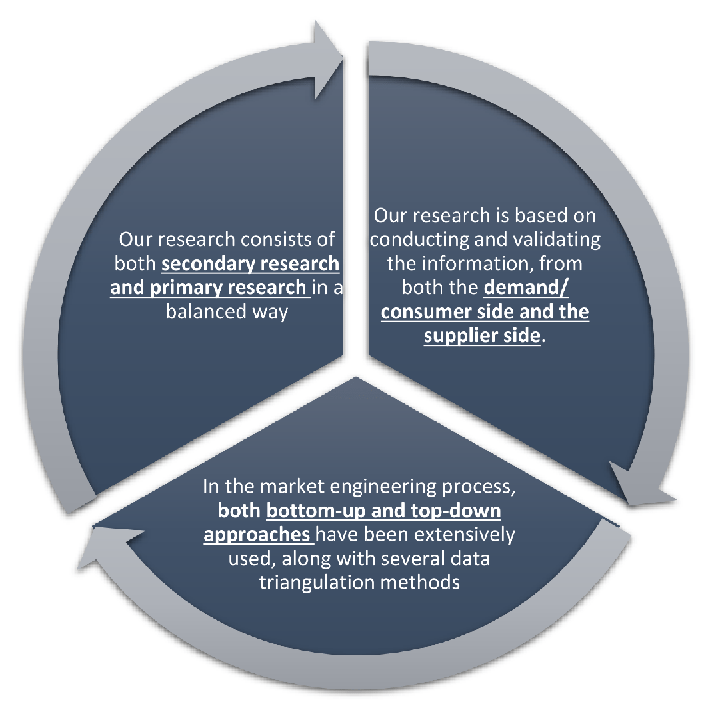
Our research design integrates both demand-side and supply-side analysis through a balanced combination of primary and secondary research methodologies. By utilizing both bottom-up and top-down approaches alongside rigorous data triangulation methods, we deliver robust market intelligence that supports strategic decision-making.
MarketGenics' comprehensive research design framework ensures the delivery of accurate, reliable, and actionable market intelligence. Through the integration of multiple research approaches, rigorous validation processes, and expert analysis, we provide our clients with the insights needed to make informed strategic decisions and capitalize on market opportunities.
MarketGenics leverages a dedicated industry panel of experts and a comprehensive suite of paid databases to effectively collect, consolidate, and analyze market intelligence.
Our approach has consistently proven to be reliable and effective in generating accurate market insights, identifying key industry trends, and uncovering emerging business opportunities.
Through both primary and secondary research, we capture and analyze critical company-level data such as manufacturing footprints, including technical centers, R&D facilities, sales offices, and headquarters.
Our expert panel further enhances our ability to estimate market size for specific brands based on validated field-level intelligence.
Our data mining techniques incorporate both parametric and non-parametric methods, allowing for structured data collection, sorting, processing, and cleaning.
Demand projections are derived from large-scale data sets analyzed through proprietary algorithms, culminating in robust and reliable market sizing.
Research Approach
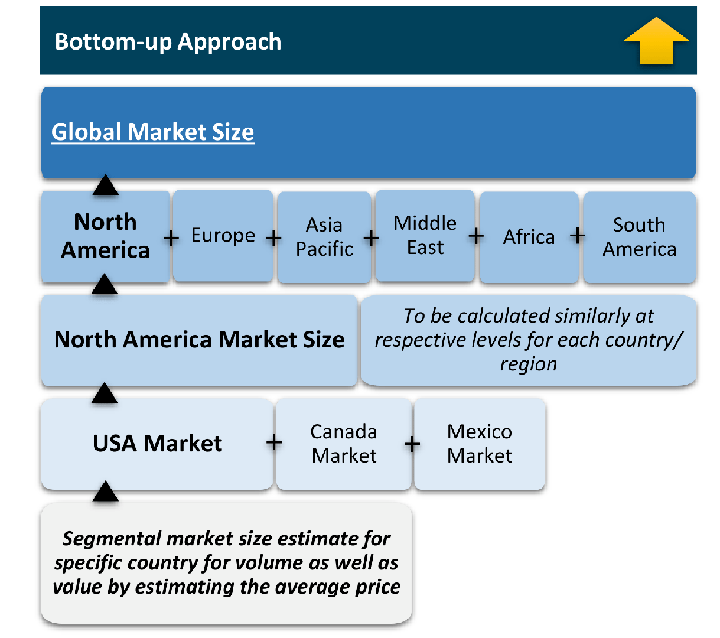
The bottom-up approach builds market estimates by starting with the smallest addressable market units and systematically aggregating them to create comprehensive market size projections.
This method begins with specific, granular data points and builds upward to create the complete market landscape.
Customer Analysis → Segmental Analysis → Geographical Analysis
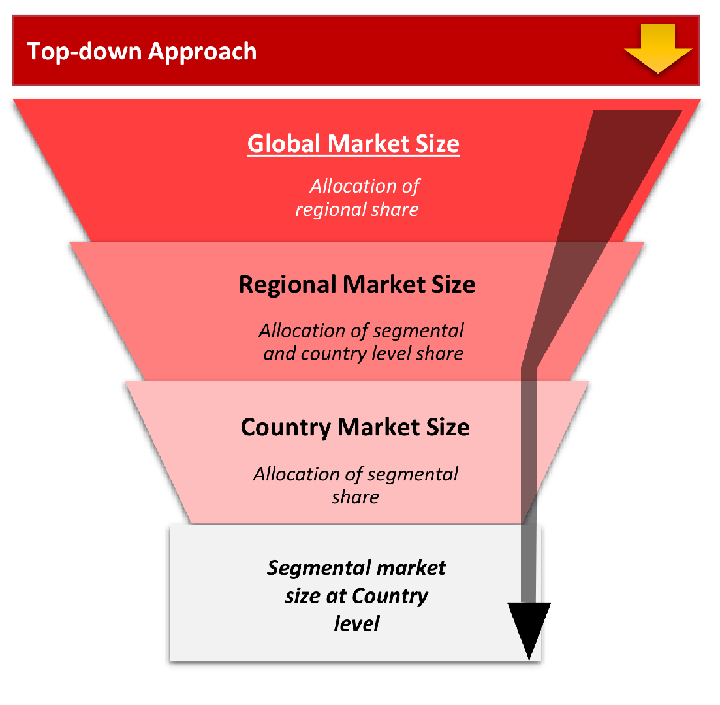
The top-down approach starts with the broadest possible market data and systematically narrows it down through a series of filters and assumptions to arrive at specific market segments or opportunities.
This method begins with the big picture and works downward to increasingly specific market slices.
TAM → SAM → SOM
Research Methods
Desk / Secondary Research
While analysing the market, we extensively study secondary sources, directories, and databases to identify and collect information useful for this technical, market-oriented, and commercial report. Secondary sources that we utilize are not only the public sources, but it is a combination of Open Source, Associations, Paid Databases, MG Repository & Knowledgebase, and others.
- Company websites, annual reports, financial reports, broker reports, and investor presentations
- National government documents, statistical databases and reports
- News articles, press releases and web-casts specific to the companies operating in the market, Magazines, reports, and others
- We gather information from commercial data sources for deriving company specific data such as segmental revenue, share for geography, product revenue, and others
- Internal and external proprietary databases (industry-specific), relevant patent, and regulatory databases
- Governing Bodies, Government Organizations
- Relevant Authorities, Country-specific Associations for Industries
We also employ the model mapping approach to estimate the product level market data through the players' product portfolio
Primary Research
Primary research/ interviews is vital in analyzing the market. Most of the cases involves paid primary interviews. Primary sources include primary interviews through e-mail interactions, telephonic interviews, surveys as well as face-to-face interviews with the different stakeholders across the value chain including several industry experts.
| Type of Respondents | Number of Primaries |
|---|---|
| Tier 2/3 Suppliers | ~20 |
| Tier 1 Suppliers | ~25 |
| End-users | ~25 |
| Industry Expert/ Panel/ Consultant | ~30 |
| Total | ~100 |
MG Knowledgebase
• Repository of industry blog, newsletter and case studies
• Online platform covering detailed market reports, and company profiles
Forecasting Factors and Models
Forecasting Factors
- Historical Trends – Past market patterns, cycles, and major events that shaped how markets behave over time. Understanding past trends helps predict future behavior.
- Industry Factors – Specific characteristics of the industry like structure, regulations, and innovation cycles that affect market dynamics.
- Macroeconomic Factors – Economic conditions like GDP growth, inflation, and employment rates that affect how much money people have to spend.
- Demographic Factors – Population characteristics like age, income, and location that determine who can buy your product.
- Technology Factors – How quickly people adopt new technology and how much technology infrastructure exists.
- Regulatory Factors – Government rules, laws, and policies that can help or restrict market growth.
- Competitive Factors – Analyzing competition structure such as degree of competition and bargaining power of buyers and suppliers.
Forecasting Models / Techniques
Multiple Regression Analysis
- Identify and quantify factors that drive market changes
- Statistical modeling to establish relationships between market drivers and outcomes
Time Series Analysis – Seasonal Patterns
- Understand regular cyclical patterns in market demand
- Advanced statistical techniques to separate trend, seasonal, and irregular components
Time Series Analysis – Trend Analysis
- Identify underlying market growth patterns and momentum
- Statistical analysis of historical data to project future trends
Expert Opinion – Expert Interviews
- Gather deep industry insights and contextual understanding
- In-depth interviews with key industry stakeholders
Multi-Scenario Development
- Prepare for uncertainty by modeling different possible futures
- Creating optimistic, pessimistic, and most likely scenarios
Time Series Analysis – Moving Averages
- Sophisticated forecasting for complex time series data
- Auto-regressive integrated moving average models with seasonal components
Econometric Models
- Apply economic theory to market forecasting
- Sophisticated economic models that account for market interactions
Expert Opinion – Delphi Method
- Harness collective wisdom of industry experts
- Structured, multi-round expert consultation process
Monte Carlo Simulation
- Quantify uncertainty and probability distributions
- Thousands of simulations with varying input parameters
Research Analysis
Our research framework is built upon the fundamental principle of validating market intelligence from both demand and supply perspectives. This dual-sided approach ensures comprehensive market understanding and reduces the risk of single-source bias.
Demand-Side Analysis: We understand end-user/application behavior, preferences, and market needs along with the penetration of the product for specific application.
Supply-Side Analysis: We estimate overall market revenue, analyze the segmental share along with industry capacity, competitive landscape, and market structure.
Validation & Evaluation
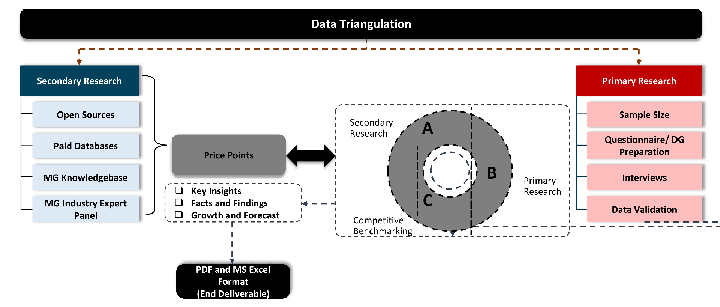
Data triangulation is a validation technique that uses multiple methods, sources, or perspectives to examine the same research question, thereby increasing the credibility and reliability of research findings. In market research, triangulation serves as a quality assurance mechanism that helps identify and minimize bias, validate assumptions, and ensure accuracy in market estimates.
- Data Source Triangulation – Using multiple data sources to examine the same phenomenon
- Methodological Triangulation – Using multiple research methods to study the same research question
- Investigator Triangulation – Using multiple researchers or analysts to examine the same data
- Theoretical Triangulation – Using multiple theoretical perspectives to interpret the same data
Custom Market Research Services
We will customise the research for you, in case the report listed above does not meet your requirements.
Get 10% Free Customisation