Feminine Probiotic Supplements Market Size, Share & Trends Analysis Report by Product Form/Type (Capsules, Tablets, Powders, Gummies, Soft gels Liquids/Drinks, Chewables, Others), Formulation Type, Bacterial Strain Type, CFU Count (Colony Forming Units), Target Health Condition/Application, Age Group, Distribution Channel, End-users, and Geography (North America, Europe, Asia Pacific, Middle East, Africa, and South America) – Global Industry Data, Trends, and Forecasts, 2026–2035
|
|
|
Segmental Data Insights |
|
|
Demand Trends |
|
|
Competitive Landscape |
|
|
Strategic Development |
|
|
Future Outlook & Opportunities |
|
Feminine Probiotic Supplements Market Size, Share, and Growth
The global feminine probiotic supplements market is experiencing robust growth, with its estimated value of USD 0.5 billion in the year 2025 and USD 1.2 billion by the period 2035, registering a CAGR of 9.1%, during the forecast period. The global feminine probiotic supplements market is influenced by the growing consumer interest in preventive well-being, intimate well-being, and microbiome balance. Women are focusing more on the clinical safety, gentleness in using long term, and the effectiveness of their products in promoting vaginal, urinary and gut health and this is leading to high demand of high quality formulations that are supported by scientific evidence.
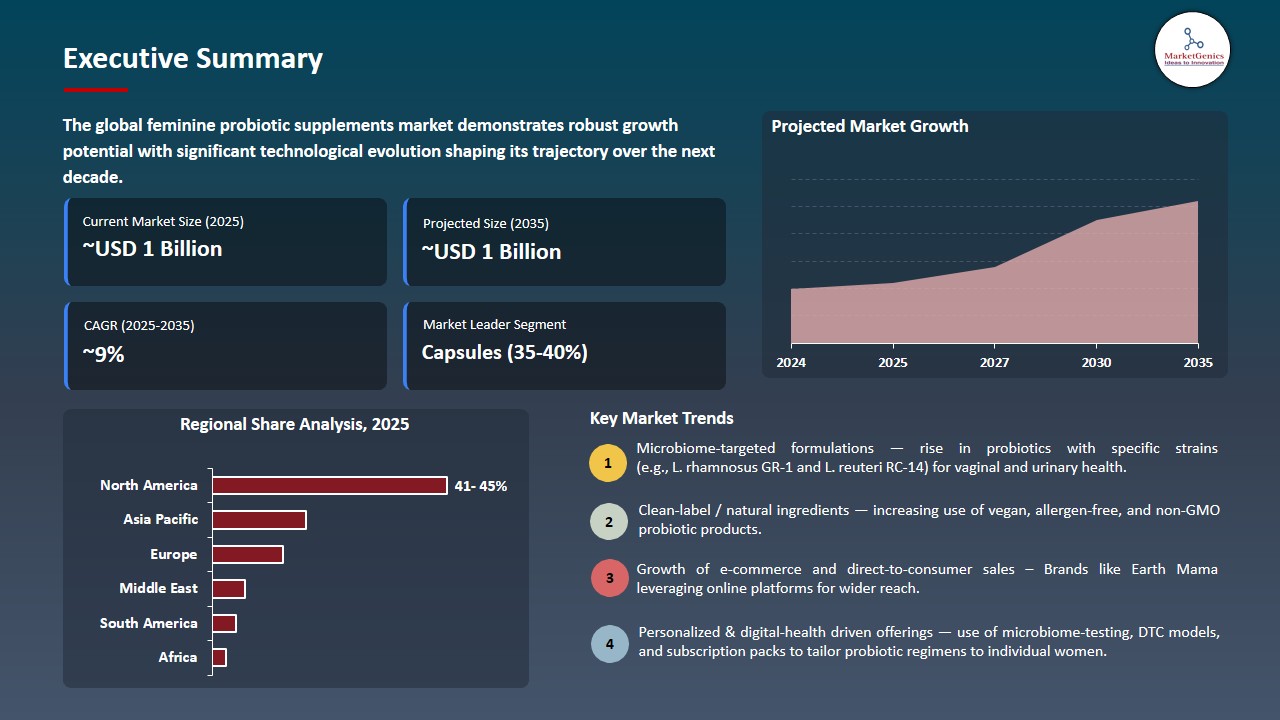
Pita Navarro, Co-founder and Chief Science Officer at Evvy, said, Our research across over 50,000 women has shown just how deeply interconnected the gut, urinary, and vaginal microbiomes are — yet most products continue to treat them in isolation. That’s why we created a formulation that finally reflects the science: a single research-backed capsule that supports the full picture of women’s microbiome health.
The feminine probiotic supplements market is moving out of its general wellness market segment, and into a niche segment of women preventive and intimate healthcare. The demand is becoming more determined by the issues of vaginal microbiome imbalance, frequent infections, hormonal changes, and the long-term consequences of antibiotic use. Women can now use probiotics as an everyday health activity, not as a temporary solution, which is speeding up repeat purchases and category usage.
Product development is shifting quickly towards product specificity of strains, sophisticated delivery systems, and optimization of products to clinical specifications. Products targeted at the various life periods such as menstruation, pregnancy, postpartum and at menopause are on the spotlight of the brands. This is a precision-based model which is enhancing medical credibility and broadening its usage among health conscious consumers who desire evidence based solutions.
The market will be positively impacted by microbiome diagnostics, individual supplementation, and the process of digital health integration. These tendencies are making feminine probiotic supplements an essential constituent of long-term female health-promotion plans as opposed to the non-essential nutrition supplements.
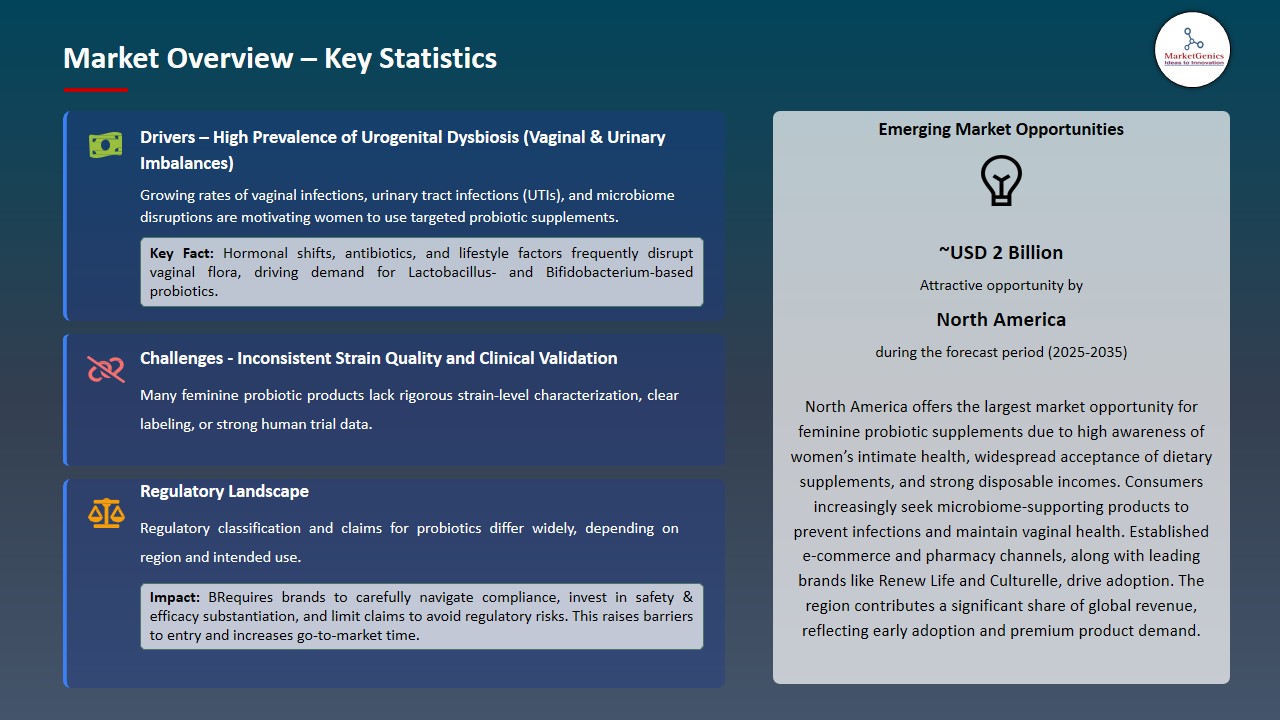
Feminine Probiotic Supplements Market Dynamics and Trends
Driver: Rising Prevalence of Vaginal Infections and UTIs
-
The rising number of cases of Bacterial Vaginosis (BV), yeast infections, urinary tract infections (UTIs) is driving the growth of demands in feminine probiotic products because women are seeking effective, non-antibiotic preventive measures. These are health issues that are known to be a major force behind the vaginal-health probiotic market, which influences buying behavior, product development focus, and brand loyalty among consumers.
- The consumer behavior is changing, and younger population is more likely to purchase microbiome-friendly and reliable products. For instance, in May 2025, Probi introduced Probi Female, a women-specific probiotic, a combination of Lactiplantibacillus plantarum 299v, and iron, folic acid, and vitamin C to support gut, iron absorption, and the overall well-being of women. This product is representative of the market trend into lifestyle-focused, preventative supplements, which addresses multiple areas of the well-being of women.
- More women becoming proactive with their intimate-health options, the premium probiotics with safe and effective and lifestyle-compliant positions are set to adopt well.
Restraint: High Product Costs and Reimbursement Limitations
-
The feminine probiotic supplement market is subject to strong headwinds due to the high cost of high-quality and clinically tested products which is a major limitation in low-end price-sensitive markets. In some nations, such as India, e.g., probiotic supplements tend to be sold at a high price which is not affordable by many consumers who are in the middle or low income groups, so most people are not likely to adopt it outside urban or rich population.
- Regulatory and standardization issues impede growth. Various markets lack a single worldwide strategy to strain efficacy, potency, labeling, and health claims; conflicting rules and quality control raise customer skepticism and limit penetration into overseas markets.
- Inadequate consumer awareness of the benefits of feminine-specific probiotics, strain specificity, and usage guidelines hinders mass-market adoption.
Opportunity: Growth in Personalized and DNA-Based Formulations
-
The emergence of the personalized and DNA-based formulations is an excellent growth opportunity to feminine probiotic supplement vendors that can provide personalized and effective solutions to the needs of the consumers as they continue to evolve. To be able to exploit this opportunity and gain competitive advantage, forward-looking companies are investing in product innovation, channel expansion, strategic partnerships, and building capabilities.
- This opportunity includes geographic expansion to high-growth markets, move to adjacent product segments, creation of higher-end products, and direct-to-consumer approaches that ones can provide personalized customer experiences. To capture this potential, it takes a profound understanding of consumers, digital savvy performance, agile delivery and long-term innovation. Collaborating with complementary brands, technology, healthcare professionals, and influencers can increase growth, reduce investment risk, and provide specialized expertise.
- Companies that excel at detecting, ranking, and pursuing these opportunities may achieve above-market growth, increase competitiveness, and produce long-term stakeholder value by offering differentiated products to attractive niches.
Key Trend: Development of Strain-Specific and Targeted Formulations
-
The feminine probiotic supplements market is undergoing a change as the adaptability of the strain-specific and targeted formulations are altering the market through raising product efficacy, satisfying the changing consumer needs and demands, and redefining competitive trends. This direction is an indicator of the interplay between scientific innovation, technological progress, sustainability concerns and increasing demands on products with demonstrable health effects in terms of safety and reliability. First movers are setting up technological leadership and establishing high competitive advantages.
- Such trend can be seen in the latest innovations in its products that have focused on multi-target and clinically approved probiotic strains. For instance, in January 2025, O Positiv Health introduced its URO Whole Body Probiotic, a daily oral supplement in women that is developed with ten evidence-based strains to help maintain gut microbiomes, skin microbiomes, oral microbiomes, and vaginal microbiomes at once. This underscores the market trend of highly targeted and multi-purpose products that address the holistic wellness of the women.
- With the widening of the adoption, these sophisticated formulations will capture mass-market and price-sensitive markets. The trend promotes product differentiation, high positioning, customisation, and subscription plans, reinforcing customer activity and loyalty.
Feminine-Probiotic-Supplements-Market Analysis and Segmental Data
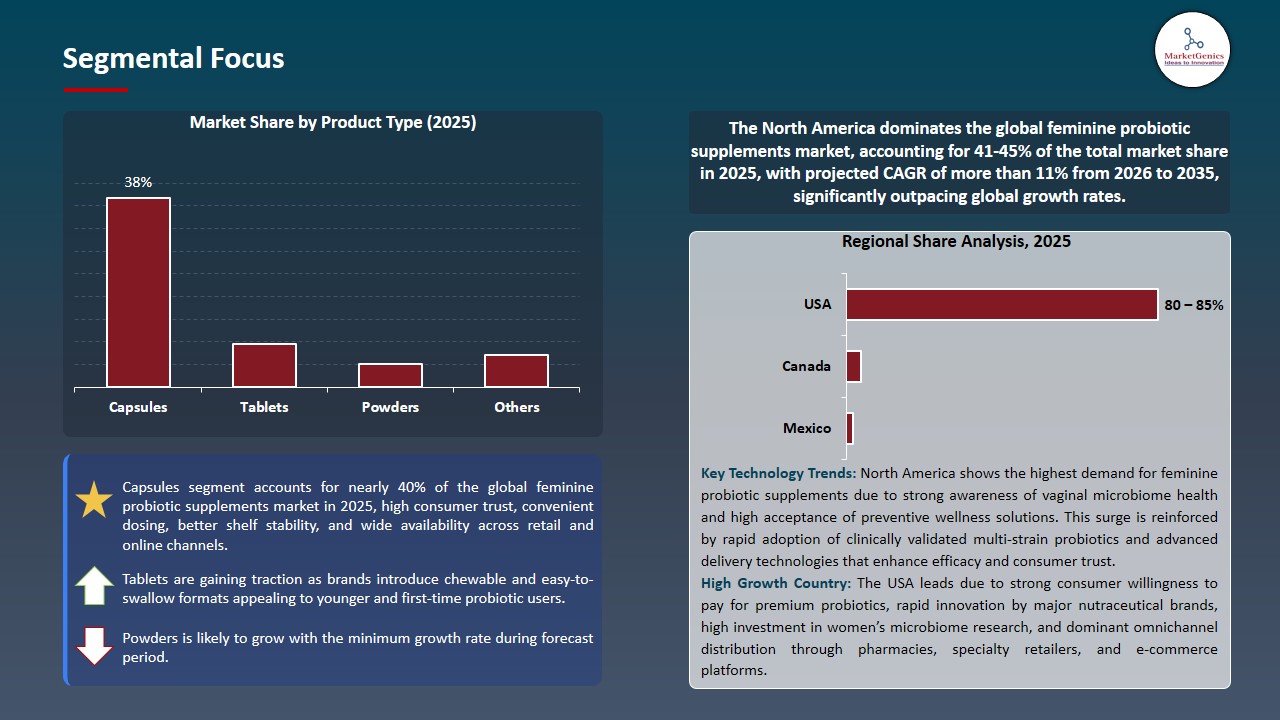
Capsules Dominate Global Feminine Probiotic Supplements Market
-
The global probiotic supplements market among women is dominated by capsules due to their high levels of consistency in the delivery of the dosage, stability of the strain of the probiotics, and convenience in taking them on a daily basis. Their established shape, extended shelf life, and compatibility with sensitive microbiome formulations make them the choice of consumers that want to have a trusted gut, vaginal and urinary health support. Scientifically tested strains and complex multi-benefit blends are also supported by capsule format and therefore require the controlled environment which capsules offer.
- The preference has been shown in the current product developments and targeted launches. For instance, in 2023, TruBiotics released a women-specific product line with Women Capsules designed to address the needs of the digestive, vaginal and bone well-being where the capsule-delivery system still holds the centre stage when brands create female-specific, probiotic solutions. This goes to show that despite the emergence of other forms, large products launches still use capsules due to their technical soundness and trusted delivery system.
- Capsules are a popular choice for feminine probiotic supplementation due to their production expertise and regulatory approval. They are known for their accuracy and efficacy.
North America Leads Global Feminine Probiotic Supplements Market Demand
-
The global feminine probiotic supplements market is dominated by North America as a result of a set of high healthcare awareness, high levels of consumer education on the topic of microbiome and women health, and high intentions to invest in preventive wellness. Consumers in the area are becoming more concerned with clinical-supported, microbiome-specific supplements rather than overall wellness products, which promotes the use of specialized feminine probiotics. Advanced retail and e-commerce facilities guarantee the extensive availability of these products, and the cultural tendencies to proactive handling of intimate and digestive health are supportive.
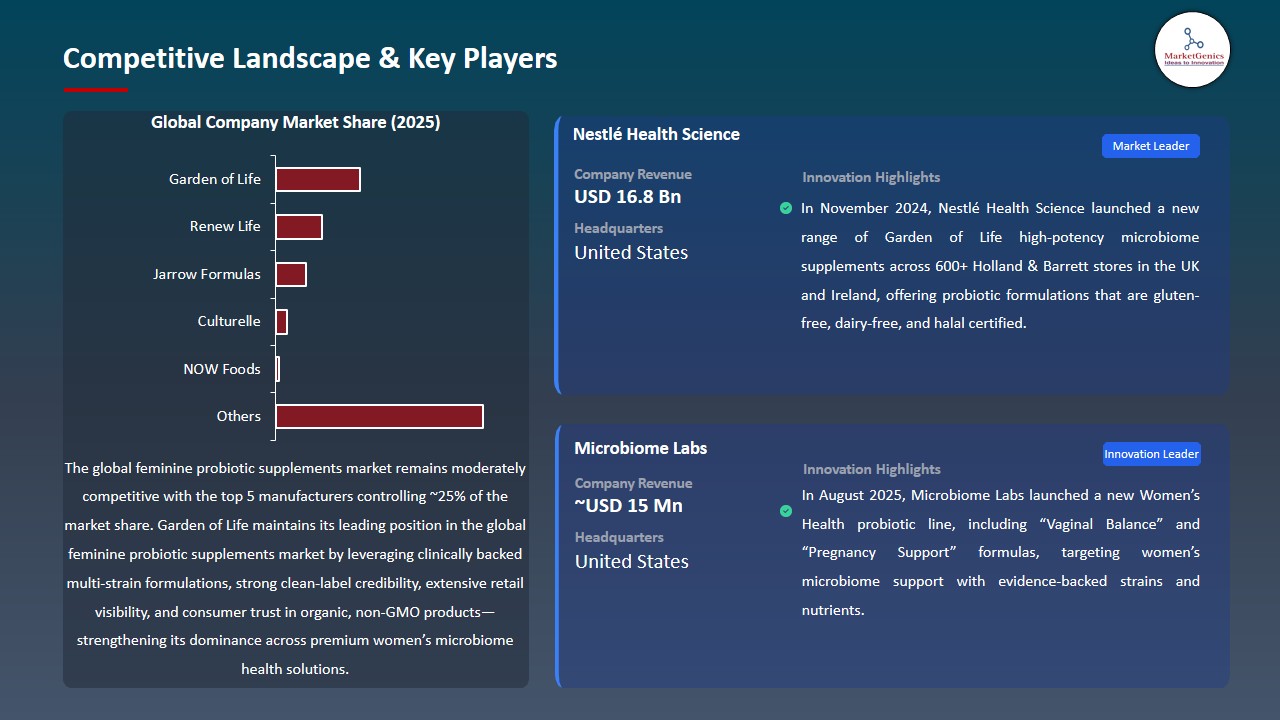
- This leadership is supported with constant product innovation. For instance, in October 2025, Microbiome Labs introduced its Women health line, including vaginal balance and pregnancy support formulations, which demonstrates how the North American brands capitalize on the consumer demand of clinically-validated, microbiome-centered products. The cities are the places of innovation, allowing brands to test new products, demonstrate their effectiveness, and involve influencers before their extensive implementation.
- The region's high adoption of personalized, data-driven solutions positions it for long-term growth as the need for effective, innovative, and wellness-oriented products develops.
Feminine-Probiotic-Supplements-Market Ecosystem
The feminine probiotic supplements market is moderately fragmented as multinational companies, specialty brands, and direct-to-consumer startups compete at many different levels and prices. Understanding research and extensive distribution systems along with brand recognition enable key players, like Garden of Life, Renew Life, Jarrow Formulas, Culturelle, and NOW Foods, to dominate the mass-market and premium markets.
Using targeted formulations, authenticity, and personalized consumer engagement strategies, specialty and niche brands position themselves because of attracting health-conscious and informed consumers. Market value chain represents a complete end-to-end solution providing sourcing of ingredients, formulation, contract manufacture, packaging, and distribution, retail and marketing services.
Vertical integration, direct-to-consumer, and digital marketing capabilities are discussed as some of the new opportunities that leading companies are investing in to enhance competitive positioning, overall margin, and direct relationships with consumers. These approaches allow customized product innovation, innovation with data and enable greater customer loyalty to support continued growth and differentiation in a competitive and changing market.
Recent Development and Strategic Overview
-
In November 2024, Lee Health Domain has introduced V-Ferin, a probiotic supplement containing Lactobacillus acidophilus, lactoferrin peptide and cranberry-extract, which are created to replenish the vaginal microbiome balance and prevent vaginal infections.
- In June 2025, Evvy released its new Women Complete Probiotic, an everyday, once-a-day, finer 3 in 1 supplement that is meant to aid gut, urinary, and vaginal microbiomes. This product is an amalgamation of Lactobacillus strains clinically studied in conjunction with postbiotics alongside the addition of vitamins, which points to the evolving trend of holistic care of the women microbiome in the supplement industry.
Report Scope
|
Detail |
|
|
Market Size in 2025 |
USD 0.5 Bn |
|
Market Forecast Value in 2035 |
USD 1.2 Bn |
|
Growth Rate (CAGR) |
9.1% |
|
Forecast Period |
2026 – 2035 |
|
Historical Data Available for |
2021 – 2024 |
|
Market Size Units |
US$ Billion for Value |
|
Report Format |
Electronic (PDF) + Excel |
|
North America |
Europe |
Asia Pacific |
Middle East |
Africa |
South America |
|
|
|
|
|
|
|
Companies Covered |
|||||
|
|
|
|
|
|
Feminine-Probiotic-Supplements-Market Segmentation and Highlights
|
Segment |
Sub-segment |
|
Feminine Probiotic Supplements Market, By Product Form/Type |
|
|
Feminine Probiotic Supplements Market, By Formulation Type |
|
|
Feminine Probiotic Supplements Market, By Bacterial Strain Type |
|
|
Feminine Probiotic Supplements Market, By CFU Count (Colony Forming Units) |
|
|
Feminine Probiotic Supplements Market, By Target Health Condition/Application |
|
|
Feminine Probiotic Supplements Market, By Age Group |
|
|
Feminine Probiotic Supplements Market, By Distribution Channel |
|
|
Feminine Probiotic Supplements Market, By End-users |
|
Frequently Asked Questions
Table of Contents
- 1. Research Methodology and Assumptions
- 1.1. Definitions
- 1.2. Research Design and Approach
- 1.3. Data Collection Methods
- 1.4. Base Estimates and Calculations
- 1.5. Forecasting Models
- 1.5.1. Key Forecast Factors & Impact Analysis
- 1.6. Secondary Research
- 1.6.1. Open Sources
- 1.6.2. Paid Databases
- 1.6.3. Associations
- 1.7. Primary Research
- 1.7.1. Primary Sources
- 1.7.2. Primary Interviews with Stakeholders across Ecosystem
- 2. Executive Summary
- 2.1. Global Feminine Probiotic Supplements Market Outlook
- 2.1.1. Feminine Probiotic Supplements Market Size (Value - US$ Bn), and Forecasts, 2021-2035
- 2.1.2. Compounded Annual Growth Rate Analysis
- 2.1.3. Growth Opportunity Analysis
- 2.1.4. Segmental Share Analysis
- 2.1.5. Geographical Share Analysis
- 2.2. Market Analysis and Facts
- 2.3. Supply-Demand Analysis
- 2.4. Competitive Benchmarking
- 2.5. Go-to- Market Strategy
- 2.5.1. Customer/ End-use Industry Assessment
- 2.5.2. Growth Opportunity Data, 2026-2035
- 2.5.2.1. Regional Data
- 2.5.2.2. Country Data
- 2.5.2.3. Segmental Data
- 2.5.3. Identification of Potential Market Spaces
- 2.5.4. GAP Analysis
- 2.5.5. Potential Attractive Price Points
- 2.5.6. Prevailing Market Risks & Challenges
- 2.5.7. Preferred Sales & Marketing Strategies
- 2.5.8. Key Recommendations and Analysis
- 2.5.9. A Way Forward
- 2.1. Global Feminine Probiotic Supplements Market Outlook
- 3. Industry Data and Premium Insights
- 3.1. Global Consumer Goods & Services Industry Overview, 2025
- 3.1.1. Consumer Goods & Services Industry Ecosystem Analysis
- 3.1.2. Key Trends for Consumer Goods & Services Industry
- 3.1.3. Regional Distribution for Consumer Goods & Services Industry
- 3.2. Supplier Customer Data
- 3.3. Technology Roadmap and Developments
- 3.4. Trade Analysis
- 3.4.1. Import & Export Analysis, 2025
- 3.4.2. Top Importing Countries
- 3.4.3. Top Exporting Countries
- 3.5. Trump Tariff Impact Analysis
- 3.5.1. Manufacturer
- 3.5.1.1. Based on the component & Raw material
- 3.5.2. Supply Chain
- 3.5.3. End Consumer
- 3.5.1. Manufacturer
- 3.6. Raw Material Analysis
- 3.1. Global Consumer Goods & Services Industry Overview, 2025
- 4. Market Overview
- 4.1. Market Dynamics
- 4.1.1. Drivers
- 4.1.1.1. Rising prevalence of vaginal and urinary tract infections, driving demand for preventive probiotic solutions.
- 4.1.1.2. Increasing awareness of women’s intimate health and the vaginal microbiome.
- 4.1.1.3. Expansion of e‑commerce and direct-to-consumer channels for supplement sales.
- 4.1.2. Restraints
- 4.1.2.1. Stringent and varying regulatory frameworks for probiotic claims across regions.
- 4.1.2.2. High cost and variable quality / strain viability of probiotic supplements leading to consumer trust issues.
- 4.1.1. Drivers
- 4.2. Key Trend Analysis
- 4.3. Regulatory Framework
- 4.3.1. Key Regulations, Norms, and Subsidies, by Key Countries
- 4.3.2. Tariffs and Standards
- 4.3.3. Impact Analysis of Regulations on the Market
- 4.4. Value Chain Analysis
- 4.4.1. Raw Material Suppliers
- 4.4.2. Manufacturers
- 4.4.3. Dealers/ Distributors
- 4.4.4. End-Users/ Customers
- 4.5. Porter’s Five Forces Analysis
- 4.6. PESTEL Analysis
- 4.7. Global Feminine Probiotic Supplements Market Demand
- 4.7.1. Historical Market Size – Value (US$ Bn), 2020-2024
- 4.7.2. Current and Future Market Size – Value (US$ Bn), 2026–2035
- 4.7.2.1. Y-o-Y Growth Trends
- 4.7.2.2. Absolute $ Opportunity Assessment
- 4.1. Market Dynamics
- 5. Competition Landscape
- 5.1. Competition structure
- 5.1.1. Fragmented v/s consolidated
- 5.2. Company Share Analysis, 2025
- 5.2.1. Global Company Market Share
- 5.2.2. By Region
- 5.2.2.1. North America
- 5.2.2.2. Europe
- 5.2.2.3. Asia Pacific
- 5.2.2.4. Middle East
- 5.2.2.5. Africa
- 5.2.2.6. South America
- 5.3. Product Comparison Matrix
- 5.3.1. Specifications
- 5.3.2. Market Positioning
- 5.3.3. Pricing
- 5.1. Competition structure
- 6. Global Feminine Probiotic Supplements Market Analysis, by Product Form/Type
- 6.1. Key Segment Analysis
- 6.2. Feminine Probiotic Supplements Market Size (Value - US$ Bn), Analysis, and Forecasts, by Product Form/Type, 2021-2035
- 6.2.1. Capsules
- 6.2.2. Tablets
- 6.2.3. Powders
- 6.2.4. Gummies
- 6.2.5. Soft gels
- 6.2.6. Liquids/Drinks
- 6.2.7. Chewables
- 6.2.8. Others
- 7. Global Feminine Probiotic Supplements Market Analysis, by Formulation Type
- 7.1. Key Segment Analysis
- 7.2. Feminine Probiotic Supplements Market Size (Value - US$ Bn), Analysis, and Forecasts, by Formulation Type, 2021-2035
- 7.2.1. Single-strain probiotics
- 7.2.2. Multi-strain probiotics
- 7.2.3. Synbiotics (probiotics + prebiotics)
- 7.2.4. Postbiotics
- 8. Global Feminine Probiotic Supplements Market Analysis, by Bacterial Strain Type
- 8.1. Key Segment Analysis
- 8.2. Feminine Probiotic Supplements Market Size (Value - US$ Bn), Analysis, and Forecasts, by Bacterial Strain Type, 2021-2035
- 8.2.1. Lactobacillus
- 8.2.1.1. L. rhamnosus
- 8.2.1.2. L. reuteri
- 8.2.1.3. L. acidophilus
- 8.2.1.4. L. crispatus
- 8.2.2. Bifidobacterium
- 8.2.2.1. B. longum
- 8.2.2.2. B. bifidum
- 8.2.3. Streptococcus thermophilus
- 8.2.4. Other strains
- 8.2.1. Lactobacillus
- 9. Global Feminine Probiotic Supplements Market Analysis, by CFU Count (Colony Forming Units)
- 9.1. Key Segment Analysis
- 9.2. Feminine Probiotic Supplements Market Size (Value - US$ Bn), Analysis, and Forecasts, by CFU Count (Colony Forming Units), 2021-2035
- 9.2.1. Below 1 billion CFU
- 9.2.2. 1-5 billion CFU
- 9.2.3. 5-10 billion CFU
- 9.2.4. 10-25 billion CFU
- 9.2.5. 25-50 billion CFU
- 9.2.6. Above 50 billion CFU
- 10. Global Feminine Probiotic Supplements Market Analysis, by Target Health Condition/Application
- 10.1. Key Segment Analysis
- 10.2. Feminine Probiotic Supplements Market Size (Value - US$ Bn), Analysis, and Forecasts, by Target Health Condition/Application, 2021-2035
- 10.2.1. Vaginal health
- 10.2.2. Urinary tract health
- 10.2.3. Digestive health
- 10.2.4. Immune system support
- 10.2.5. Hormonal balance
- 10.2.6. Yeast infection prevention
- 10.2.7. Bacterial vaginosis management
- 10.2.8. General wellness
- 11. Global Feminine Probiotic Supplements Market Analysis, by Age Group
- 11.1. Key Segment Analysis
- 11.2. Feminine Probiotic Supplements Market Size (Value - US$ Bn), Analysis, and Forecasts, by Age Group, 2021-2035
- 11.2.1. Teenagers (13-19 years)
- 11.2.2. Young adults (20-35 years)
- 11.2.3. Middle-aged (36-50 years)
- 11.2.4. Mature adults (51+ years)
- 12. Global Feminine Probiotic Supplements Market Analysis, by Distribution Channel
- 12.1. Key Segment Analysis
- 12.2. Feminine Probiotic Supplements Market Size (Value - US$ Bn), Analysis, and Forecasts, by Distribution Channel, 2021-2035
- 12.2.1. Online
- 12.2.1.1. E-commerce Platforms
- 12.2.1.2. Company websites
- 12.2.1.3. Health & wellness portals
- 12.2.1.4. Others
- 12.2.2. Offline
- 12.2.2.1. Supermarkets/Hypermarkets
- 12.2.2.2. Pharmacies/Drugstores
- 12.2.2.3. Specialty health stores
- 12.2.2.4. Hospitals/Clinics
- 12.2.2.5. Others
- 12.2.1. Online
- 13. Global Feminine Probiotic Supplements Market Analysis, by End-users
- 13.1. Key Segment Analysis
- 13.2. Feminine Probiotic Supplements Market Size (Value - US$ Bn), Analysis, and Forecasts, by End-users, 2021-2035
- 13.2.1. Healthcare
- 13.2.1.1. Clinical treatment
- 13.2.1.2. Preventive care
- 13.2.1.3. Post-antibiotic therapy
- 13.2.1.4. Post-menopause care
- 13.2.1.5. Others
- 13.2.2. Nutraceuticals
- 13.2.2.1. Daily supplementation
- 13.2.2.2. Wellness programs
- 13.2.2.3. Fitness support
- 13.2.2.4. Others
- 13.2.3. Pharmaceutical
- 13.2.3.1. Prescription supplements
- 13.2.3.2. Over-the-counter (OTC) products
- 13.2.3.3. Adjunct therapy
- 13.2.3.4. Others
- 13.2.4. Personal Care & Wellness
- 13.2.4.1. Beauty-from-within
- 13.2.4.2. Intimate care
- 13.2.4.3. Holistic wellness
- 13.2.4.4. Others
- 13.2.1. Healthcare
- 14. Global Feminine Probiotic Supplements Market Analysis and Forecasts, by Region
- 14.1. Key Findings
- 14.2. Feminine Probiotic Supplements Market Size (Value - US$ Bn), Analysis, and Forecasts, by Region, 2021-2035
- 14.2.1. North America
- 14.2.2. Europe
- 14.2.3. Asia Pacific
- 14.2.4. Middle East
- 14.2.5. Africa
- 14.2.6. South America
- 15. North America Feminine Probiotic Supplements Market Analysis
- 15.1. Key Segment Analysis
- 15.2. Regional Snapshot
- 15.3. North America Feminine Probiotic Supplements Market Size (Value - US$ Bn), Analysis, and Forecasts, 2021-2035
- 15.3.1. Product Form/Type
- 15.3.2. Formulation Type
- 15.3.3. Bacterial Strain Type
- 15.3.4. CFU Count (Colony Forming Units)
- 15.3.5. Target Health Condition/Application
- 15.3.6. Age Group
- 15.3.7. Distribution Channel
- 15.3.8. End-users
- 15.3.9. Country
- 15.3.9.1. USA
- 15.3.9.2. Canada
- 15.3.9.3. Mexico
- 15.4. USA Feminine Probiotic Supplements Market
- 15.4.1. Country Segmental Analysis
- 15.4.2. Product Form/Type
- 15.4.3. Formulation Type
- 15.4.4. Bacterial Strain Type
- 15.4.5. CFU Count (Colony Forming Units)
- 15.4.6. Target Health Condition/Application
- 15.4.7. Age Group
- 15.4.8. Distribution Channel
- 15.4.9. End-users
- 15.5. Canada Feminine Probiotic Supplements Market
- 15.5.1. Country Segmental Analysis
- 15.5.2. Product Form/Type
- 15.5.3. Formulation Type
- 15.5.4. Bacterial Strain Type
- 15.5.5. CFU Count (Colony Forming Units)
- 15.5.6. Target Health Condition/Application
- 15.5.7. Age Group
- 15.5.8. Distribution Channel
- 15.5.9. End-users
- 15.6. Mexico Feminine Probiotic Supplements Market
- 15.6.1. Country Segmental Analysis
- 15.6.2. Product Form/Type
- 15.6.3. Formulation Type
- 15.6.4. Bacterial Strain Type
- 15.6.5. CFU Count (Colony Forming Units)
- 15.6.6. Target Health Condition/Application
- 15.6.7. Age Group
- 15.6.8. Distribution Channel
- 15.6.9. End-users
- 16. Europe Feminine Probiotic Supplements Market Analysis
- 16.1. Key Segment Analysis
- 16.2. Regional Snapshot
- 16.3. Europe Feminine Probiotic Supplements Market Size (Value - US$ Bn), Analysis, and Forecasts, 2021-2035
- 16.3.1. Product Form/Type
- 16.3.2. Formulation Type
- 16.3.3. Bacterial Strain Type
- 16.3.4. CFU Count (Colony Forming Units)
- 16.3.5. Target Health Condition/Application
- 16.3.6. Age Group
- 16.3.7. Distribution Channel
- 16.3.8. End-users
- 16.3.9. Country
- 16.3.9.1. Germany
- 16.3.9.2. United Kingdom
- 16.3.9.3. France
- 16.3.9.4. Italy
- 16.3.9.5. Spain
- 16.3.9.6. Netherlands
- 16.3.9.7. Nordic Countries
- 16.3.9.8. Poland
- 16.3.9.9. Russia & CIS
- 16.3.9.10. Rest of Europe
- 16.4. Germany Feminine Probiotic Supplements Market
- 16.4.1. Country Segmental Analysis
- 16.4.2. Product Form/Type
- 16.4.3. Formulation Type
- 16.4.4. Bacterial Strain Type
- 16.4.5. CFU Count (Colony Forming Units)
- 16.4.6. Target Health Condition/Application
- 16.4.7. Age Group
- 16.4.8. Distribution Channel
- 16.4.9. End-users
- 16.5. United Kingdom Feminine Probiotic Supplements Market
- 16.5.1. Country Segmental Analysis
- 16.5.2. Product Form/Type
- 16.5.3. Formulation Type
- 16.5.4. Bacterial Strain Type
- 16.5.5. CFU Count (Colony Forming Units)
- 16.5.6. Target Health Condition/Application
- 16.5.7. Age Group
- 16.5.8. Distribution Channel
- 16.5.9. End-users
- 16.6. France Feminine Probiotic Supplements Market
- 16.6.1. Country Segmental Analysis
- 16.6.2. Product Form/Type
- 16.6.3. Formulation Type
- 16.6.4. Bacterial Strain Type
- 16.6.5. CFU Count (Colony Forming Units)
- 16.6.6. Target Health Condition/Application
- 16.6.7. Age Group
- 16.6.8. Distribution Channel
- 16.6.9. End-users
- 16.7. Italy Feminine Probiotic Supplements Market
- 16.7.1. Country Segmental Analysis
- 16.7.2. Product Form/Type
- 16.7.3. Formulation Type
- 16.7.4. Bacterial Strain Type
- 16.7.5. CFU Count (Colony Forming Units)
- 16.7.6. Target Health Condition/Application
- 16.7.7. Age Group
- 16.7.8. Distribution Channel
- 16.7.9. End-users
- 16.8. Spain Feminine Probiotic Supplements Market
- 16.8.1. Country Segmental Analysis
- 16.8.2. Product Form/Type
- 16.8.3. Formulation Type
- 16.8.4. Bacterial Strain Type
- 16.8.5. CFU Count (Colony Forming Units)
- 16.8.6. Target Health Condition/Application
- 16.8.7. Age Group
- 16.8.8. Distribution Channel
- 16.8.9. End-users
- 16.9. Netherlands Feminine Probiotic Supplements Market
- 16.9.1. Country Segmental Analysis
- 16.9.2. Product Form/Type
- 16.9.3. Formulation Type
- 16.9.4. Bacterial Strain Type
- 16.9.5. CFU Count (Colony Forming Units)
- 16.9.6. Target Health Condition/Application
- 16.9.7. Age Group
- 16.9.8. Distribution Channel
- 16.9.9. End-users
- 16.10. Nordic Countries Feminine Probiotic Supplements Market
- 16.10.1. Country Segmental Analysis
- 16.10.2. Product Form/Type
- 16.10.3. Formulation Type
- 16.10.4. Bacterial Strain Type
- 16.10.5. CFU Count (Colony Forming Units)
- 16.10.6. Target Health Condition/Application
- 16.10.7. Age Group
- 16.10.8. Distribution Channel
- 16.10.9. End-users
- 16.11. Poland Feminine Probiotic Supplements Market
- 16.11.1. Country Segmental Analysis
- 16.11.2. Product Form/Type
- 16.11.3. Formulation Type
- 16.11.4. Bacterial Strain Type
- 16.11.5. CFU Count (Colony Forming Units)
- 16.11.6. Target Health Condition/Application
- 16.11.7. Age Group
- 16.11.8. Distribution Channel
- 16.11.9. End-users
- 16.12. Russia & CIS Feminine Probiotic Supplements Market
- 16.12.1. Country Segmental Analysis
- 16.12.2. Product Form/Type
- 16.12.3. Formulation Type
- 16.12.4. Bacterial Strain Type
- 16.12.5. CFU Count (Colony Forming Units)
- 16.12.6. Target Health Condition/Application
- 16.12.7. Age Group
- 16.12.8. Distribution Channel
- 16.12.9. End-users
- 16.13. Rest of Europe Feminine Probiotic Supplements Market
- 16.13.1. Country Segmental Analysis
- 16.13.2. Product Form/Type
- 16.13.3. Formulation Type
- 16.13.4. Bacterial Strain Type
- 16.13.5. CFU Count (Colony Forming Units)
- 16.13.6. Target Health Condition/Application
- 16.13.7. Age Group
- 16.13.8. Distribution Channel
- 16.13.9. End-users
- 17. Asia Pacific Feminine Probiotic Supplements Market Analysis
- 17.1. Key Segment Analysis
- 17.2. Regional Snapshot
- 17.3. Asia Pacific Feminine Probiotic Supplements Market Size (Value - US$ Bn), Analysis, and Forecasts, 2021-2035
- 17.3.1. Product Form/Type
- 17.3.2. Formulation Type
- 17.3.3. Bacterial Strain Type
- 17.3.4. CFU Count (Colony Forming Units)
- 17.3.5. Target Health Condition/Application
- 17.3.6. Age Group
- 17.3.7. Distribution Channel
- 17.3.8. End-users
- 17.3.9. Country
- 17.3.9.1. China
- 17.3.9.2. India
- 17.3.9.3. Japan
- 17.3.9.4. South Korea
- 17.3.9.5. Australia and New Zealand
- 17.3.9.6. Indonesia
- 17.3.9.7. Malaysia
- 17.3.9.8. Thailand
- 17.3.9.9. Vietnam
- 17.3.9.10. Rest of Asia Pacific
- 17.4. China Feminine Probiotic Supplements Market
- 17.4.1. Country Segmental Analysis
- 17.4.2. Product Form/Type
- 17.4.3. Formulation Type
- 17.4.4. Bacterial Strain Type
- 17.4.5. CFU Count (Colony Forming Units)
- 17.4.6. Target Health Condition/Application
- 17.4.7. Age Group
- 17.4.8. Distribution Channel
- 17.4.9. End-users
- 17.5. India Feminine Probiotic Supplements Market
- 17.5.1. Country Segmental Analysis
- 17.5.2. Product Form/Type
- 17.5.3. Formulation Type
- 17.5.4. Bacterial Strain Type
- 17.5.5. CFU Count (Colony Forming Units)
- 17.5.6. Target Health Condition/Application
- 17.5.7. Age Group
- 17.5.8. Distribution Channel
- 17.5.9. End-users
- 17.6. Japan Feminine Probiotic Supplements Market
- 17.6.1. Country Segmental Analysis
- 17.6.2. Product Form/Type
- 17.6.3. Formulation Type
- 17.6.4. Bacterial Strain Type
- 17.6.5. CFU Count (Colony Forming Units)
- 17.6.6. Target Health Condition/Application
- 17.6.7. Age Group
- 17.6.8. Distribution Channel
- 17.6.9. End-users
- 17.7. South Korea Feminine Probiotic Supplements Market
- 17.7.1. Country Segmental Analysis
- 17.7.2. Product Form/Type
- 17.7.3. Formulation Type
- 17.7.4. Bacterial Strain Type
- 17.7.5. CFU Count (Colony Forming Units)
- 17.7.6. Target Health Condition/Application
- 17.7.7. Age Group
- 17.7.8. Distribution Channel
- 17.7.9. End-users
- 17.8. Australia and New Zealand Feminine Probiotic Supplements Market
- 17.8.1. Country Segmental Analysis
- 17.8.2. Product Form/Type
- 17.8.3. Formulation Type
- 17.8.4. Bacterial Strain Type
- 17.8.5. CFU Count (Colony Forming Units)
- 17.8.6. Target Health Condition/Application
- 17.8.7. Age Group
- 17.8.8. Distribution Channel
- 17.8.9. End-users
- 17.9. Indonesia Feminine Probiotic Supplements Market
- 17.9.1. Country Segmental Analysis
- 17.9.2. Product Form/Type
- 17.9.3. Formulation Type
- 17.9.4. Bacterial Strain Type
- 17.9.5. CFU Count (Colony Forming Units)
- 17.9.6. Target Health Condition/Application
- 17.9.7. Age Group
- 17.9.8. Distribution Channel
- 17.9.9. End-users
- 17.10. Malaysia Feminine Probiotic Supplements Market
- 17.10.1. Country Segmental Analysis
- 17.10.2. Product Form/Type
- 17.10.3. Formulation Type
- 17.10.4. Bacterial Strain Type
- 17.10.5. CFU Count (Colony Forming Units)
- 17.10.6. Target Health Condition/Application
- 17.10.7. Age Group
- 17.10.8. Distribution Channel
- 17.10.9. End-users
- 17.11. Thailand Feminine Probiotic Supplements Market
- 17.11.1. Country Segmental Analysis
- 17.11.2. Product Form/Type
- 17.11.3. Formulation Type
- 17.11.4. Bacterial Strain Type
- 17.11.5. CFU Count (Colony Forming Units)
- 17.11.6. Target Health Condition/Application
- 17.11.7. Age Group
- 17.11.8. Distribution Channel
- 17.11.9. End-users
- 17.12. Vietnam Feminine Probiotic Supplements Market
- 17.12.1. Country Segmental Analysis
- 17.12.2. Product Form/Type
- 17.12.3. Formulation Type
- 17.12.4. Bacterial Strain Type
- 17.12.5. CFU Count (Colony Forming Units)
- 17.12.6. Target Health Condition/Application
- 17.12.7. Age Group
- 17.12.8. Distribution Channel
- 17.12.9. End-users
- 17.13. Rest of Asia Pacific Feminine Probiotic Supplements Market
- 17.13.1. Country Segmental Analysis
- 17.13.2. Product Form/Type
- 17.13.3. Formulation Type
- 17.13.4. Bacterial Strain Type
- 17.13.5. CFU Count (Colony Forming Units)
- 17.13.6. Target Health Condition/Application
- 17.13.7. Age Group
- 17.13.8. Distribution Channel
- 17.13.9. End-users
- 18. Middle East Feminine Probiotic Supplements Market Analysis
- 18.1. Key Segment Analysis
- 18.2. Regional Snapshot
- 18.3. Middle East Feminine Probiotic Supplements Market Size (Value - US$ Bn), Analysis, and Forecasts, 2021-2035
- 18.3.1. Product Form/Type
- 18.3.2. Formulation Type
- 18.3.3. Bacterial Strain Type
- 18.3.4. CFU Count (Colony Forming Units)
- 18.3.5. Target Health Condition/Application
- 18.3.6. Age Group
- 18.3.7. Distribution Channel
- 18.3.8. End-users
- 18.3.9. Country
- 18.3.9.1. Turkey
- 18.3.9.2. UAE
- 18.3.9.3. Saudi Arabia
- 18.3.9.4. Israel
- 18.3.9.5. Rest of Middle East
- 18.4. Turkey Feminine Probiotic Supplements Market
- 18.4.1. Country Segmental Analysis
- 18.4.2. Product Form/Type
- 18.4.3. Formulation Type
- 18.4.4. Bacterial Strain Type
- 18.4.5. CFU Count (Colony Forming Units)
- 18.4.6. Target Health Condition/Application
- 18.4.7. Age Group
- 18.4.8. Distribution Channel
- 18.4.9. End-users
- 18.5. UAE Feminine Probiotic Supplements Market
- 18.5.1. Country Segmental Analysis
- 18.5.2. Product Form/Type
- 18.5.3. Formulation Type
- 18.5.4. Bacterial Strain Type
- 18.5.5. CFU Count (Colony Forming Units)
- 18.5.6. Target Health Condition/Application
- 18.5.7. Age Group
- 18.5.8. Distribution Channel
- 18.5.9. End-users
- 18.6. Saudi Arabia Feminine Probiotic Supplements Market
- 18.6.1. Country Segmental Analysis
- 18.6.2. Product Form/Type
- 18.6.3. Formulation Type
- 18.6.4. Bacterial Strain Type
- 18.6.5. CFU Count (Colony Forming Units)
- 18.6.6. Target Health Condition/Application
- 18.6.7. Age Group
- 18.6.8. Distribution Channel
- 18.6.9. End-users
- 18.7. Israel Feminine Probiotic Supplements Market
- 18.7.1. Country Segmental Analysis
- 18.7.2. Product Form/Type
- 18.7.3. Formulation Type
- 18.7.4. Bacterial Strain Type
- 18.7.5. CFU Count (Colony Forming Units)
- 18.7.6. Target Health Condition/Application
- 18.7.7. Age Group
- 18.7.8. Distribution Channel
- 18.7.9. End-users
- 18.8. Rest of Middle East Feminine Probiotic Supplements Market
- 18.8.1. Country Segmental Analysis
- 18.8.2. Product Form/Type
- 18.8.3. Formulation Type
- 18.8.4. Bacterial Strain Type
- 18.8.5. CFU Count (Colony Forming Units)
- 18.8.6. Target Health Condition/Application
- 18.8.7. Age Group
- 18.8.8. Distribution Channel
- 18.8.9. End-users
- 19. Africa Feminine Probiotic Supplements Market Analysis
- 19.1. Key Segment Analysis
- 19.2. Regional Snapshot
- 19.3. Africa Feminine Probiotic Supplements Market Size (Value - US$ Bn), Analysis, and Forecasts, 2021-2035
- 19.3.1. Product Form/Type
- 19.3.2. Formulation Type
- 19.3.3. Bacterial Strain Type
- 19.3.4. CFU Count (Colony Forming Units)
- 19.3.5. Target Health Condition/Application
- 19.3.6. Age Group
- 19.3.7. Distribution Channel
- 19.3.8. End-users
- 19.3.9. Country
- 19.3.9.1. South Africa
- 19.3.9.2. Egypt
- 19.3.9.3. Nigeria
- 19.3.9.4. Algeria
- 19.3.9.5. Rest of Africa
- 19.4. South Africa Feminine Probiotic Supplements Market
- 19.4.1. Country Segmental Analysis
- 19.4.2. Product Form/Type
- 19.4.3. Formulation Type
- 19.4.4. Bacterial Strain Type
- 19.4.5. CFU Count (Colony Forming Units)
- 19.4.6. Target Health Condition/Application
- 19.4.7. Age Group
- 19.4.8. Distribution Channel
- 19.4.9. End-users
- 19.5. Egypt Feminine Probiotic Supplements Market
- 19.5.1. Country Segmental Analysis
- 19.5.2. Product Form/Type
- 19.5.3. Formulation Type
- 19.5.4. Bacterial Strain Type
- 19.5.5. CFU Count (Colony Forming Units)
- 19.5.6. Target Health Condition/Application
- 19.5.7. Age Group
- 19.5.8. Distribution Channel
- 19.5.9. End-users
- 19.6. Nigeria Feminine Probiotic Supplements Market
- 19.6.1. Country Segmental Analysis
- 19.6.2. Product Form/Type
- 19.6.3. Formulation Type
- 19.6.4. Bacterial Strain Type
- 19.6.5. CFU Count (Colony Forming Units)
- 19.6.6. Target Health Condition/Application
- 19.6.7. Age Group
- 19.6.8. Distribution Channel
- 19.6.9. End-users
- 19.7. Algeria Feminine Probiotic Supplements Market
- 19.7.1. Country Segmental Analysis
- 19.7.2. Product Form/Type
- 19.7.3. Formulation Type
- 19.7.4. Bacterial Strain Type
- 19.7.5. CFU Count (Colony Forming Units)
- 19.7.6. Target Health Condition/Application
- 19.7.7. Age Group
- 19.7.8. Distribution Channel
- 19.7.9. End-users
- 19.8. Rest of Africa Feminine Probiotic Supplements Market
- 19.8.1. Country Segmental Analysis
- 19.8.2. Product Form/Type
- 19.8.3. Formulation Type
- 19.8.4. Bacterial Strain Type
- 19.8.5. CFU Count (Colony Forming Units)
- 19.8.6. Target Health Condition/Application
- 19.8.7. Age Group
- 19.8.8. Distribution Channel
- 19.8.9. End-users
- 20. South America Feminine Probiotic Supplements Market Analysis
- 20.1. Key Segment Analysis
- 20.2. Regional Snapshot
- 20.3. South America Feminine Probiotic Supplements Market Size (Value - US$ Bn), Analysis, and Forecasts, 2021-2035
- 20.3.1. Product Form/Type
- 20.3.2. Formulation Type
- 20.3.3. Bacterial Strain Type
- 20.3.4. CFU Count (Colony Forming Units)
- 20.3.5. Target Health Condition/Application
- 20.3.6. Age Group
- 20.3.7. Distribution Channel
- 20.3.8. End-users
- 20.3.9. Country
- 20.3.9.1. Brazil
- 20.3.9.2. Argentina
- 20.3.9.3. Rest of South America
- 20.4. Brazil Feminine Probiotic Supplements Market
- 20.4.1. Country Segmental Analysis
- 20.4.2. Product Form/Type
- 20.4.3. Formulation Type
- 20.4.4. Bacterial Strain Type
- 20.4.5. CFU Count (Colony Forming Units)
- 20.4.6. Target Health Condition/Application
- 20.4.7. Age Group
- 20.4.8. Distribution Channel
- 20.4.9. End-users
- 20.5. Argentina Feminine Probiotic Supplements Market
- 20.5.1. Country Segmental Analysis
- 20.5.2. Product Form/Type
- 20.5.3. Formulation Type
- 20.5.4. Bacterial Strain Type
- 20.5.5. CFU Count (Colony Forming Units)
- 20.5.6. Target Health Condition/Application
- 20.5.7. Age Group
- 20.5.8. Distribution Channel
- 20.5.9. End-users
- 20.6. Rest of South America Feminine Probiotic Supplements Market
- 20.6.1. Country Segmental Analysis
- 20.6.2. Product Form/Type
- 20.6.3. Formulation Type
- 20.6.4. Bacterial Strain Type
- 20.6.5. CFU Count (Colony Forming Units)
- 20.6.6. Target Health Condition/Application
- 20.6.7. Age Group
- 20.6.8. Distribution Channel
- 20.6.9. End-users
- 21. Key Players/ Company Profile
- 21.1. Align Probiotics (Procter & Gamble)
- 21.1.1. Company Details/ Overview
- 21.1.2. Company Financials
- 21.1.3. Key Customers and Competitors
- 21.1.4. Business/ Industry Portfolio
- 21.1.5. Product Portfolio/ Specification Details
- 21.1.6. Pricing Data
- 21.1.7. Strategic Overview
- 21.1.8. Recent Developments
- 21.2. AZO (i-Health, Inc.)
- 21.3. BioSchwartz
- 21.4. Culturelle
- 21.5. Enzymedica
- 21.6. Fem-Dophilus (Jarrow Formulas)
- 21.7. Florajen
- 21.8. Garden of Life
- 21.9. HUM Nutrition
- 21.10. Jarrow Formulas
- 21.11. Life Extension
- 21.12. Love Wellness
- 21.13. Nature's Way
- 21.14. Nested Naturals
- 21.15. Nordic Naturals
- 21.16. NOW Foods
- 21.17. Physician's Choice
- 21.18. Rainbow Light
- 21.19. Renew Life
- 21.20. RepHresh
- 21.21. Other Key Players
- 21.1. Align Probiotics (Procter & Gamble)
Note* - This is just tentative list of players. While providing the report, we will cover more number of players based on their revenue and share for each geography
Research Design
Our research design integrates both demand-side and supply-side analysis through a balanced combination of primary and secondary research methodologies. By utilizing both bottom-up and top-down approaches alongside rigorous data triangulation methods, we deliver robust market intelligence that supports strategic decision-making.
MarketGenics' comprehensive research design framework ensures the delivery of accurate, reliable, and actionable market intelligence. Through the integration of multiple research approaches, rigorous validation processes, and expert analysis, we provide our clients with the insights needed to make informed strategic decisions and capitalize on market opportunities.
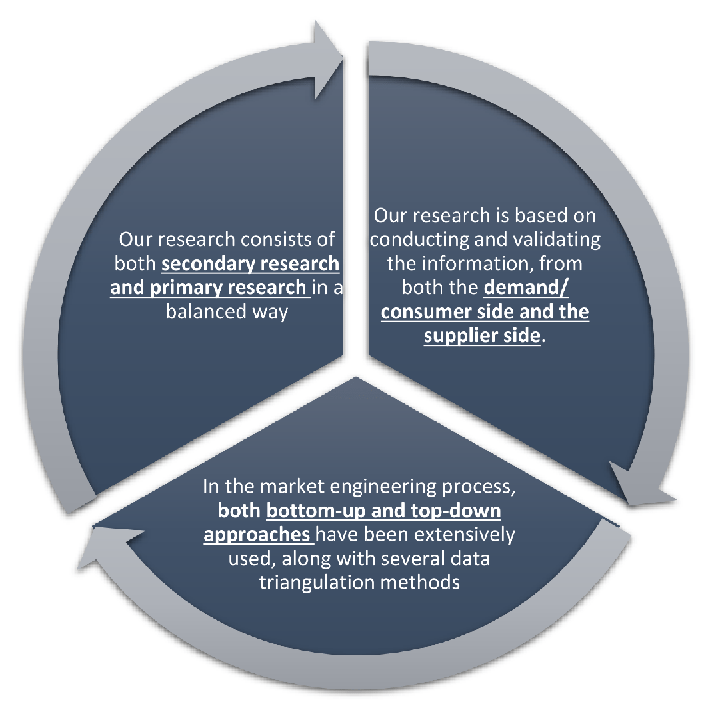
MarketGenics leverages a dedicated industry panel of experts and a comprehensive suite of paid databases to effectively collect, consolidate, and analyze market intelligence.
Our approach has consistently proven to be reliable and effective in generating accurate market insights, identifying key industry trends, and uncovering emerging business opportunities.
Through both primary and secondary research, we capture and analyze critical company-level data such as manufacturing footprints, including technical centers, R&D facilities, sales offices, and headquarters.
Our expert panel further enhances our ability to estimate market size for specific brands based on validated field-level intelligence.
Our data mining techniques incorporate both parametric and non-parametric methods, allowing for structured data collection, sorting, processing, and cleaning.
Demand projections are derived from large-scale data sets analyzed through proprietary algorithms, culminating in robust and reliable market sizing.
Research Approach
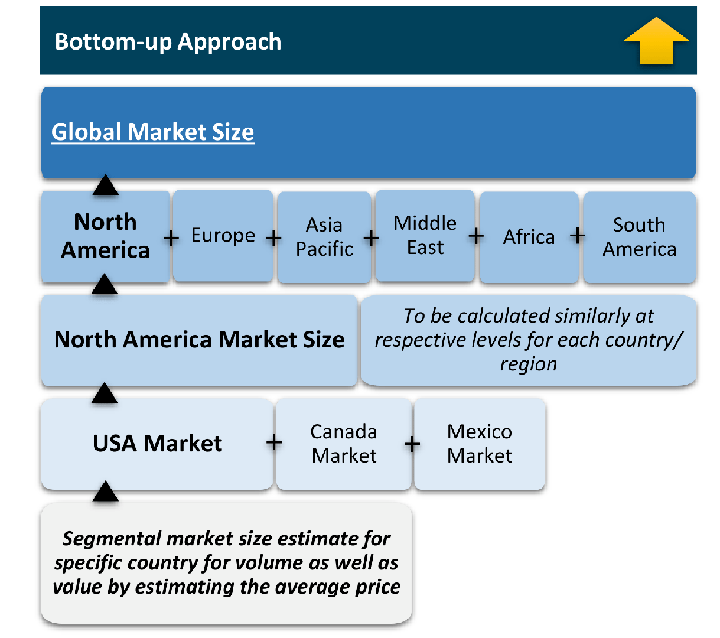
The bottom-up approach builds market estimates by starting with the smallest addressable market units and systematically aggregating them to create comprehensive market size projections.
This method begins with specific, granular data points and builds upward to create the complete market landscape.
Customer Analysis → Segmental Analysis → Geographical Analysis
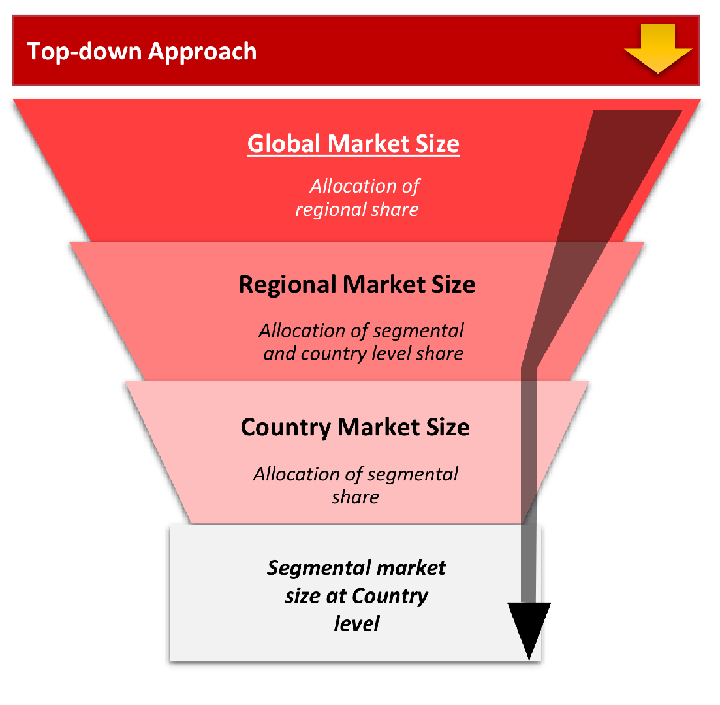
The top-down approach starts with the broadest possible market data and systematically narrows it down through a series of filters and assumptions to arrive at specific market segments or opportunities.
This method begins with the big picture and works downward to increasingly specific market slices.
TAM → SAM → SOM
Research Methods
Desk / Secondary Research
While analysing the market, we extensively study secondary sources, directories, and databases to identify and collect information useful for this technical, market-oriented, and commercial report. Secondary sources that we utilize are not only the public sources, but it is a combination of Open Source, Associations, Paid Databases, MG Repository & Knowledgebase, and others.
- Company websites, annual reports, financial reports, broker reports, and investor presentations
- National government documents, statistical databases and reports
- News articles, press releases and web-casts specific to the companies operating in the market, Magazines, reports, and others
- We gather information from commercial data sources for deriving company specific data such as segmental revenue, share for geography, product revenue, and others
- Internal and external proprietary databases (industry-specific), relevant patent, and regulatory databases
- Governing Bodies, Government Organizations
- Relevant Authorities, Country-specific Associations for Industries
We also employ the model mapping approach to estimate the product level market data through the players' product portfolio
Primary Research
Primary research/ interviews is vital in analyzing the market. Most of the cases involves paid primary interviews. Primary sources include primary interviews through e-mail interactions, telephonic interviews, surveys as well as face-to-face interviews with the different stakeholders across the value chain including several industry experts.
| Type of Respondents | Number of Primaries |
|---|---|
| Tier 2/3 Suppliers | ~20 |
| Tier 1 Suppliers | ~25 |
| End-users | ~25 |
| Industry Expert/ Panel/ Consultant | ~30 |
| Total | ~100 |
MG Knowledgebase
• Repository of industry blog, newsletter and case studies
• Online platform covering detailed market reports, and company profiles
Forecasting Factors and Models
Forecasting Factors
- Historical Trends – Past market patterns, cycles, and major events that shaped how markets behave over time. Understanding past trends helps predict future behavior.
- Industry Factors – Specific characteristics of the industry like structure, regulations, and innovation cycles that affect market dynamics.
- Macroeconomic Factors – Economic conditions like GDP growth, inflation, and employment rates that affect how much money people have to spend.
- Demographic Factors – Population characteristics like age, income, and location that determine who can buy your product.
- Technology Factors – How quickly people adopt new technology and how much technology infrastructure exists.
- Regulatory Factors – Government rules, laws, and policies that can help or restrict market growth.
- Competitive Factors – Analyzing competition structure such as degree of competition and bargaining power of buyers and suppliers.
Forecasting Models / Techniques
Multiple Regression Analysis
- Identify and quantify factors that drive market changes
- Statistical modeling to establish relationships between market drivers and outcomes
Time Series Analysis – Seasonal Patterns
- Understand regular cyclical patterns in market demand
- Advanced statistical techniques to separate trend, seasonal, and irregular components
Time Series Analysis – Trend Analysis
- Identify underlying market growth patterns and momentum
- Statistical analysis of historical data to project future trends
Expert Opinion – Expert Interviews
- Gather deep industry insights and contextual understanding
- In-depth interviews with key industry stakeholders
Multi-Scenario Development
- Prepare for uncertainty by modeling different possible futures
- Creating optimistic, pessimistic, and most likely scenarios
Time Series Analysis – Moving Averages
- Sophisticated forecasting for complex time series data
- Auto-regressive integrated moving average models with seasonal components
Econometric Models
- Apply economic theory to market forecasting
- Sophisticated economic models that account for market interactions
Expert Opinion – Delphi Method
- Harness collective wisdom of industry experts
- Structured, multi-round expert consultation process
Monte Carlo Simulation
- Quantify uncertainty and probability distributions
- Thousands of simulations with varying input parameters
Research Analysis
Our research framework is built upon the fundamental principle of validating market intelligence from both demand and supply perspectives. This dual-sided approach ensures comprehensive market understanding and reduces the risk of single-source bias.
Demand-Side Analysis: We understand end-user/application behavior, preferences, and market needs along with the penetration of the product for specific application.
Supply-Side Analysis: We estimate overall market revenue, analyze the segmental share along with industry capacity, competitive landscape, and market structure.
Validation & Evaluation
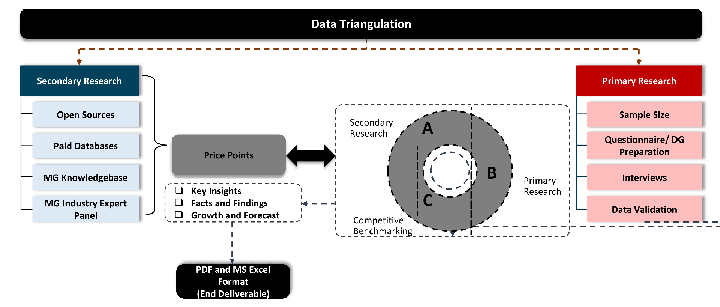
Data triangulation is a validation technique that uses multiple methods, sources, or perspectives to examine the same research question, thereby increasing the credibility and reliability of research findings. In market research, triangulation serves as a quality assurance mechanism that helps identify and minimize bias, validate assumptions, and ensure accuracy in market estimates.
- Data Source Triangulation – Using multiple data sources to examine the same phenomenon
- Methodological Triangulation – Using multiple research methods to study the same research question
- Investigator Triangulation – Using multiple researchers or analysts to examine the same data
- Theoretical Triangulation – Using multiple theoretical perspectives to interpret the same data
Custom Market Research Services
We will customise the research for you, in case the report listed above does not meet your requirements.
Get 10% Free Customisation