Kopi Luwak Coffee Market Size, Share & Trends Analysis Report by Product Type (Wild Kopi Luwak, Cage-free Farm Kopi Luwak, Caged Farm Kopi Luwak), Bean Type, Processing Method, Roast Level, Form, Packaging Type, Distribution Channel, End-Use, and Geography (North America, Europe, Asia Pacific, Middle East, Africa, and South America) – Global Industry Data, Trends, and Forecasts, 2026–2035
|
|
|
Segmental Data Insights |
|
|
Demand Trends |
|
|
Competitive Landscape |
|
|
Strategic Development |
|
|
Future Outlook & Opportunities |
|
Kopi Luwak Coffee Market Size, Share, and Growth
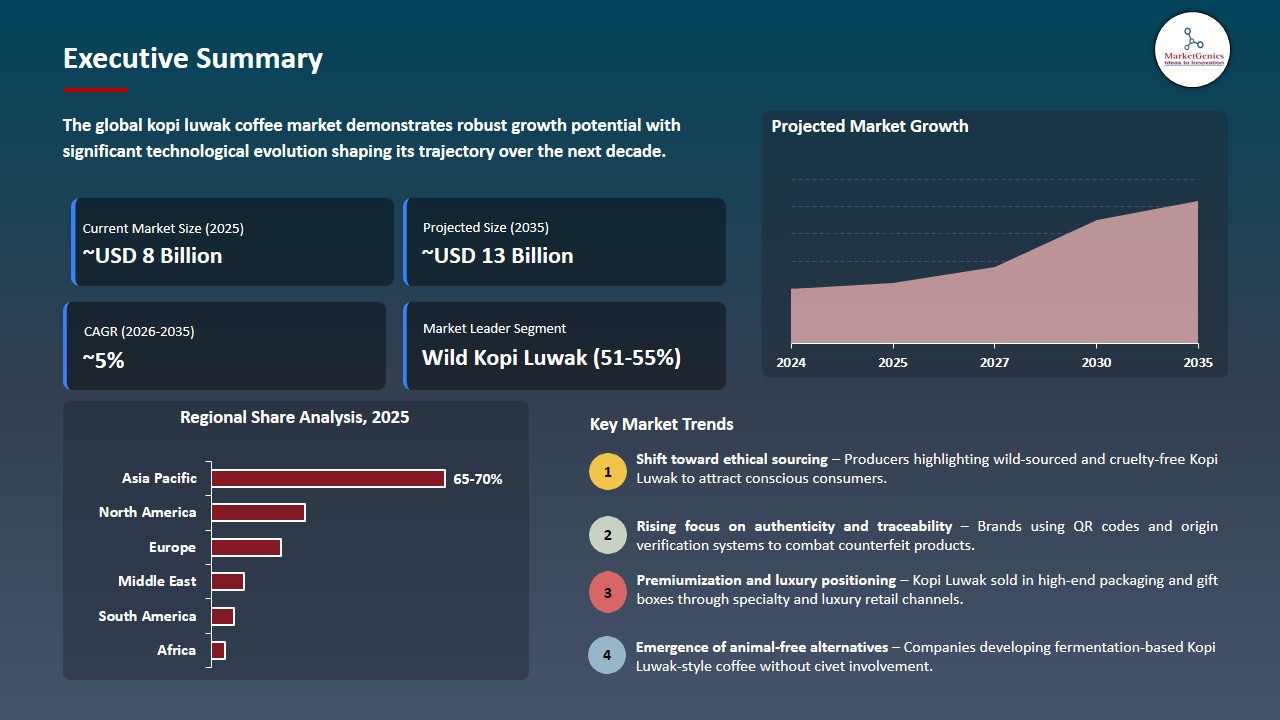
The global kopi luwak coffee market is experiencing robust growth, with its estimated value of USD 8.1 billion in the year 2025 and USD 12.9 billion by 2035, registering a CAGR of 4.8%, during the forecast period. The global kopi luwak coffee market, driven by its rarity and exclusivity, premium and exotic flavor perception, strong luxury positioning, growing specialty coffee culture, and rising interest in authentic, ethically sourced high-end beverages among affluent consumers and tourists worldwide.
Ramit Mitra, the first author of the study, said the two-fatty acid-based substances were commonly used in the food industry as flavouring agents and were likely to impart a dairy-like flavour. “The core taste of coffee develops mainly from roasting and the chemical alterations that occur during that process. Our study focuses on examining the raw form.”
The kopi luwak coffee market is the growing interest in luxury and exotic coffee experiences with consumers increasingly seeking high-end and rare and unique coffee experiences with unique flavor profiles. For instance, Lavanta Coffee Roasters 100% cage-free Kopi Luwak Arabica product, promoted on their official site as one of the most unique and esoteric coffees on earth, sourced in the wild civets in Sumatra and made to appeal to connoisseurs in pursuit of a luxury, exotic coffee experience. The growing popularity of luxury exotic coffees is increasing the Kopi Luwak consumption worldwide, which strengthens the high pricing and promotes expansion of niche markets as well as brand differentiation among the specialty coffee makers.
Moreover, the increasing interest in traceability and authenticity among specialty coffee is also creating a demand toward certified, ethically sourced Kopi Luwak because consumers are becoming more concerned with transparent origin, certified processing, and authentic product provenance. For instance, KopiLuwak.coffee emphasizes the concept of traceability and authenticity by its certification program, demonstrating MPKG ethical sourcing, halal certification, and Specialty Coffee Association scores of cupping to prove the authentic and ethically sourced Kopi Luwak. This emphasis of traceability and authenticity enhances consumer confidence, justifies higher prices, and stimulates demand of certified Kopi Luwak in the competitive premium coffee market of the world.
Adjacent opportunities for the global kopi luwak coffee market include luxury coffee tourism, specialty café franchising, premium ready-to-drink coffee, ethical coffee certification services, and gourmet food gifting and hampers, all leveraging Kopi Luwak’s exclusivity, storytelling, and premium appeal across lifestyle and experiential consumption segments. These adjacent opportunities expand the revenue base, improve brand awareness, and help in long term premium market growth other than conventional coffee sales.
Kopi Luwak Coffee Market Dynamics and Trends
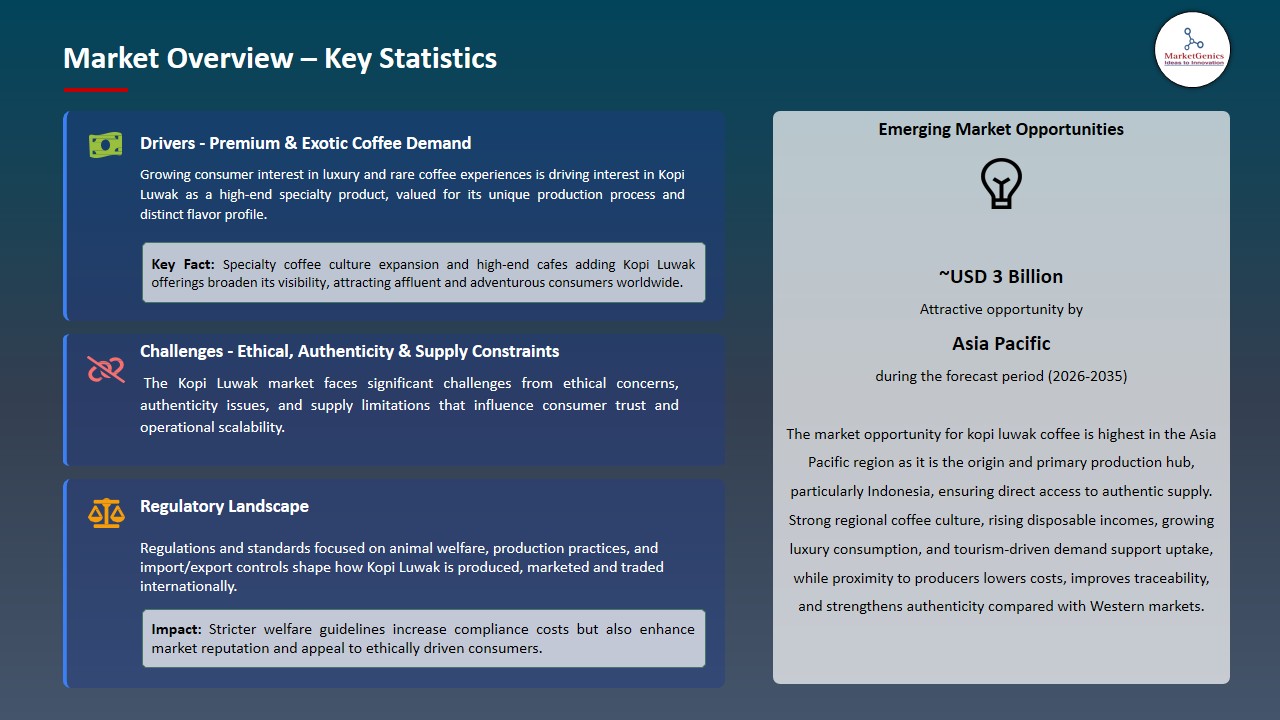
Driver: Increasing Investment in Sustainable and Cruelty-Free Kopi Luwak Production Practices
-
Increased investment in sustainable, cruelty-free production methods is driving the kopi luwak coffee market as producers adjust to rising consumer demand for luxury coffee sourced ethically. The practice of traditional caged civet farming has come under fire and producers have embraced welfare-oriented supply chains that safeguard civets and conserve natural foraging.
- For instance, Kopi Luwak Coffee, an Indonesian producer, collaborated with Black Ivory Coffee of Thailand to launch jointly branded lines of ethical products and a fully traceable platform. The program broadens certified amounts of supplies to the U.S. specialty cafes, deters counterfeit products and ensures real and wildlife-friendly sourcing.
- In addition to, ethical benefits, these practices enhance consumer confidence in product quality, allow premium pricing, and reinforce brand differentiation in the competitive specialty coffee segment. The producers are doing just that by treating ethical and sustainability issues and making Kopi Luwak a responsible luxury product.
- This sustainability and ethics emphasis reinforce brand image, broadens the scope of attracting socially responsible high-end buyers, and contributes to market sustainability.
Restraint: High Production Costs and Limited Scalable Supply
-
The kopi luwak coffee market is highly inhibited by extremely high production costs and insufficient supply that can be expanded. The extraction of the actual caviet-processed beans is labor intensive and relies on small and fragmented groups of wild civets, which restrict production and does not allow large scale production to keep up with the rising demand across the world.
- Conventional artisan roasters have often been found to have limited harvest quantities restricting supply in the specialty and luxury sectors and ensuring that retail price is yet again prohibitively high to larger consumer segments. This all limits the ability to expand to other than small and end markets as high-end, and forces producers to consider new cost-efficient and sustainable production modes to stay profitable to address ethical and quality concerns.
- These supply constraints and cost of entry impediments strengthen the niche of Kopi Luwak, peripheralize its wider adoption and provoke manufacturers to develop cost effective sustainable solutions.
Opportunity: Expansion of E-Commerce and Digital Direct-to-Consumer Platforms
-
The growth of e-commerce and direct-to-consumer (D2C) platforms in which premium and artisanal producers can reach international specialty coffee consumers are representing a huge opportunity to the kopi luwak coffee market. These online platforms enable brands to tell open product stories, emphasize on ethical sourcing, and provide edited and limited-edition products including micro-batch or certified wild-sourced Kopi Luwak.
- The opportunity is in producers through storytelling, online retailing, not needing to meet the traditional distribution limitations but instead of relying on middlemen, can deliver their products to the high-end coffee drinkers around the world. For instance, Lavanta Coffee Roasters actively promotes its certified cage-free Kopi Luwak Arabica using its official site that combines provenance data and ethical sourcing data with scarce batch availability as an inducement to high-value consumers globally.
- Increased online presence expands the market, reinforces contact with the high-end customers and facilitates the ability of specialty kopi luwak producers to sell at higher margins.
Key Trend: Lab‑Fermented and Synthetic Processes Replicating Civet Coffee Ethically
-
The growing use of lab-fermented and synthetic analog processing methods, which are intended to replicate the distinct digestive fermentation typically associated with civet-processed beans while removing ethical and supply-chain restrictions related to animal sourcing, is a significant emerging trend in the kopi luwak coffee market.
- Producers are also investing in sophisticated microbial fermentation technologies to recreate the biochemical effects of civet digestive process in a controlled way as consumers and specialty roasters care increasingly about animal welfare and the issue of authenticity.
- For example, specialist roasters in Indonesia and Europe have also started pilot-launching lab-fermented analogs of Kopi Luwak that use certain bacterial and enzymatic conditions to more or less replicate a similar flavor profile, effectively introducing so-called cruelty-Free civet coffee products that will attract luxury consumers with an ethical concern. This invention is unique in differentiating products, reduces wild civet dependence, and also reduces risks to animal welfare.
- Lab‑fermentation expands the ethical access of the market and facilitates the diversification of premium products at scales.
Kopi-Luwak-Coffee-Market Analysis and Segmental Data
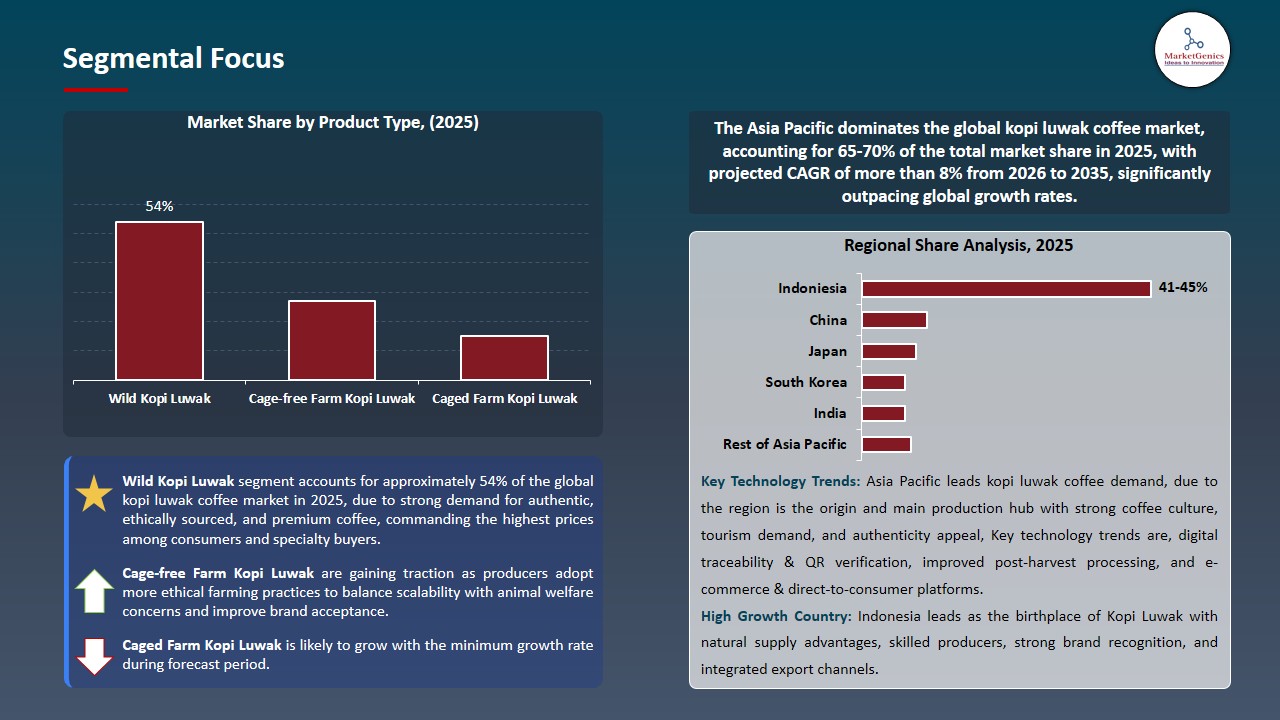
Wild Kopi Luwak Dominate Global Kopi Luwak Coffee Market
-
The wild kopi luwak segment dominates the global kopi luwak Coffee market, because of it is produced in an authentic way, better flavor profile and ethically appealing. The wild Kopi Luwak beans are naturally harvested by free-roaming civets in forests as opposed to farmed civet coffee which maintains the ecological equilibrium and creates beans with a more complex and nuanced taste that specialty roasters and luxury consumers highly appreciate.
- The major producers of Indonesia, including Bali Pulina and Wild Gayo Luwak have used this authenticity to market their products in high-end retail stores and in direct-to-consumer e-commerce by focusing on traceability and cruelty-free sourcing. There is also a growing trend of consumer preference towards products that are ethically sourced and of the wild varieties which continues to strengthen the dominance of wild Kopi Luwak in the world market and is also increasing the premium pricing.
- Wild sourced beans are at the forefront of the market due to their differentiation by authenticity and ethics.
Asia Pacific Leads Global Kopi Luwak Coffee Market Demand
-
Asia Pacific leads the kopi luwak coffee market, owing to increasing middle and upper-income buyers and a rising preference of luxury and high-quality drinks. The exotic coffees are being accepted by countries such as China, Japan and South Korea and Indonesia which is the largest producer receives the advantage of increased production and export. The domination of the Kopi Luwak industry in the region is further enhanced by specialty cafes, upscale retail, and e-commerce outlets.
- Additionally, the geographical proximity of the region to major production centers and a strong culture of coffee consumption contribute to the increase of Kopi Luwak coffee market in Asia Pacific. Kopi Luwak is native to Indonesia, which controls the market of the region with already existing harvesting and processing facilities, producing original products both locally and internationally.
- Furthermore, Government efforts in some countries like Philippines to promote the Kopi Luwak farming by providing training and incentives has further consolidated the production ecosystem in the region, and thus high-quality Kopi Luwak is more accessible and culturally acceptable to the wider coffee industry in Asia Pacific.
- Proximity to source, cultural affinity not only improves the supply efficiencies, but also increases the regional market penetrations.
Kopi-Luwak-Coffee-Market Ecosystem
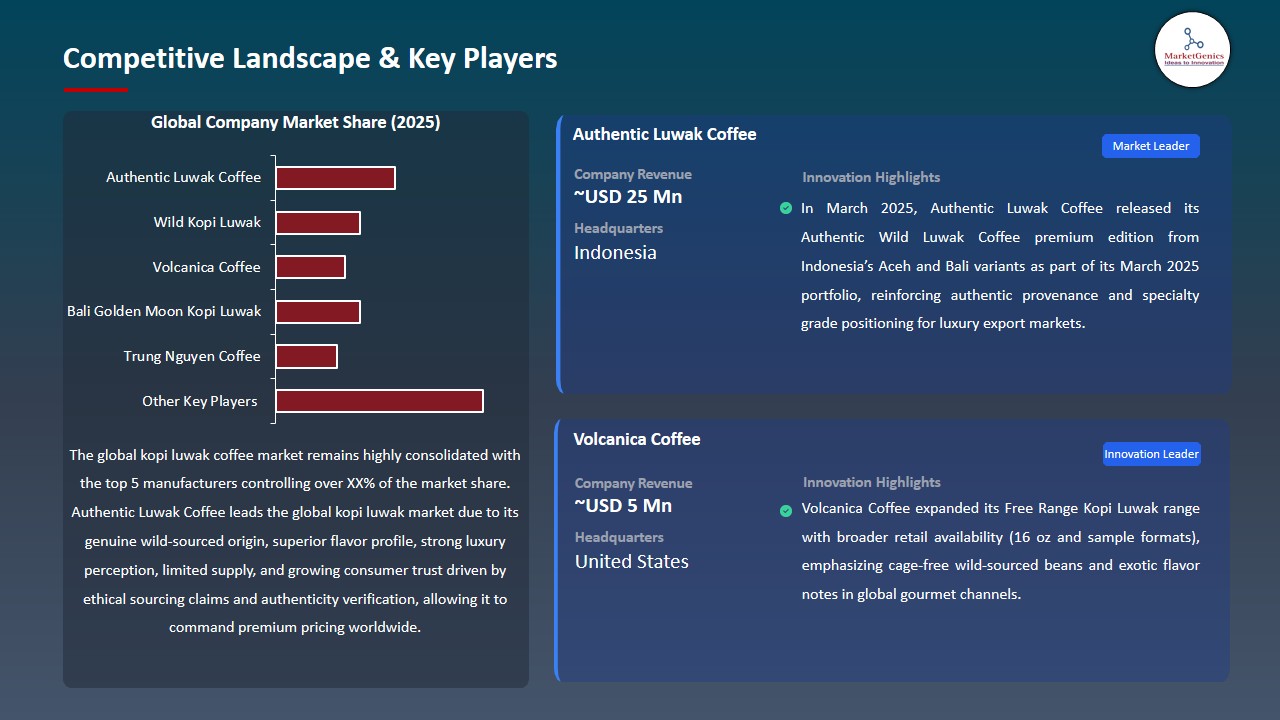
The global kopi luwak coffee market is highly consolidated, with high concentration among key players such as Authentic Luwak Coffee, Wild Kopi Luwak, Volcanica Coffee, Bali Golden Moon Kopi Luwak, and Trung Nguyen Coffee, dominate through strong brand recognition, control over premium supply chains, strategic distribution partnerships, and the promotion of certified, traceable, and ethically sourced products.
The high consolidation of the global kopi luwak coffee market, dominated by a few key players, intensifies competitive barriers for new entrants while reinforcing premium pricing and quality standards. This concentration enhances consumer confidence in traceability and ethical sourcing, but also limits market diversity, shaping industry innovation and strategic collaborations among established brands.
Recent Development and Strategic Overview:
-
In March 2025, Authentic Luwak Coffee launched its premium edition, Authentic Wild Luwak Coffee, featuring select variants from Indonesia’s Aceh and Bali regions, underscoring the brand’s commitment to genuine provenance and specialty-grade positioning for the luxury export market.
- In 2024, Harrods enhanced its ultra-premium coffee assortment by refreshing rare-origin offerings, including Kopi Luwak variants, through curated limited-batch sourcing, strengthening luxury gifting demand and reinforcing Kopi Luwak’s status in high-end global retail.
Report Scope
|
Detail |
|
|
Market Size in 2025 |
USD 8.1 Bn |
|
Market Forecast Value in 2035 |
USD 12.9 Bn |
|
Growth Rate (CAGR) |
4.8% |
|
Forecast Period |
2026 – 2035 |
|
Historical Data Available for |
2021 – 2024 |
|
Market Size Units |
US$ Billion for Value |
|
Report Format |
Electronic (PDF) + Excel |
|
North America |
Europe |
Asia Pacific |
Middle East |
Africa |
South America |
|
|
|
|
|
|
|
Companies Covered |
|||||
|
|
|
|
|
|
Kopi-Luwak-Coffee-Market Segmentation and Highlights
|
Segment |
Sub-segment |
|
Kopi Luwak Coffee Market, By Product Type |
|
|
Kopi Luwak Coffee Market, By Bean Type |
|
|
Kopi Luwak Coffee Market, By Processing Method |
|
|
Kopi Luwak Coffee Market, By Roast Level |
|
|
Kopi Luwak Coffee Market, By Form |
|
|
Kopi Luwak Coffee Market, By Packaging Type |
|
|
Kopi Luwak Coffee Market, By Distribution Channel |
|
|
Kopi Luwak Coffee Market, By End-Use |
|
Frequently Asked Questions
Table of Contents
- 1. Research Methodology and Assumptions
- 1.1. Definitions
- 1.2. Research Design and Approach
- 1.3. Data Collection Methods
- 1.4. Base Estimates and Calculations
- 1.5. Forecasting Models
- 1.5.1. Key Forecast Factors & Impact Analysis
- 1.6. Secondary Research
- 1.6.1. Open Sources
- 1.6.2. Paid Databases
- 1.6.3. Associations
- 1.7. Primary Research
- 1.7.1. Primary Sources
- 1.7.2. Primary Interviews with Stakeholders across Ecosystem
- 2. Executive Summary
- 2.1. Global Kopi Luwak Coffee Market Outlook
- 2.1.1. Kopi Luwak Coffee Market Size (Value - US$ Bn), and Forecasts, 2021-2035
- 2.1.2. Compounded Annual Growth Rate Analysis
- 2.1.3. Growth Opportunity Analysis
- 2.1.4. Segmental Share Analysis
- 2.1.5. Geographical Share Analysis
- 2.2. Market Analysis and Facts
- 2.3. Supply-Demand Analysis
- 2.4. Competitive Benchmarking
- 2.5. Go-to- Market Strategy
- 2.5.1. Customer/ End-use Industry Assessment
- 2.5.2. Growth Opportunity Data, 2026-2035
- 2.5.2.1. Regional Data
- 2.5.2.2. Country Data
- 2.5.2.3. Segmental Data
- 2.5.3. Identification of Potential Market Spaces
- 2.5.4. GAP Analysis
- 2.5.5. Potential Attractive Price Points
- 2.5.6. Prevailing Market Risks & Challenges
- 2.5.7. Preferred Sales & Marketing Strategies
- 2.5.8. Key Recommendations and Analysis
- 2.5.9. A Way Forward
- 2.1. Global Kopi Luwak Coffee Market Outlook
- 3. Industry Data and Premium Insights
- 3.1. Global Consumer Goods & Services Industry Overview, 2025
- 3.1.1. Consumer Goods & Services Industry Ecosystem Analysis
- 3.1.2. Key Trends for Consumer Goods & Services Industry
- 3.1.3. Regional Distribution for Consumer Goods & Services Industry
- 3.2. Supplier Customer Data
- 3.3. Technology Roadmap and Developments
- 3.4. Trade Analysis
- 3.4.1. Import & Export Analysis, 2025
- 3.4.2. Top Importing Countries
- 3.4.3. Top Exporting Countries
- 3.5. Trump Tariff Impact Analysis
- 3.5.1. Manufacturer
- 3.5.1.1. Based on the component & Raw material
- 3.5.2. Supply Chain
- 3.5.3. End Consumer
- 3.5.1. Manufacturer
- 3.6. Raw Material Analysis
- 3.1. Global Consumer Goods & Services Industry Overview, 2025
- 4. Market Overview
- 4.1. Market Dynamics
- 4.1.1. Drivers
- 4.1.1.1. Increasing global demand for premium, exotic, and luxury coffee experiences
- 4.1.1.2. Expansion of specialty coffee culture, tourism, and luxury hospitality outlets boosting visibility and sales
- Growth of e4.1.1.3. ‑commerce and online retail channels expanding market reach and accessibility
- 4.1.2. Restraints
- 4.1.2.1. Ethical concerns and animal welfare issues related to civet treatment
- 4.1.2.2. High price, limited authentic supply, and prevalence of counterfeit/adulterated products
- 4.1.1. Drivers
- 4.2. Key Trend Analysis
- 4.3. Regulatory Framework
- 4.3.1. Key Regulations, Norms, and Subsidies, by Key Countries
- 4.3.2. Tariffs and Standards
- 4.3.3. Impact Analysis of Regulations on the Market
- 4.4. Value Chain Analysis
- 4.4.1. Raw Material Suppliers
- 4.4.2. Kopi Luwak Coffee Manufacturers
- 4.4.3. Distribution & Logistics
- 4.4.4. End-Users/ Customers
- 4.5. Porter’s Five Forces Analysis
- 4.6. PESTEL Analysis
- 4.7. Global Kopi Luwak Coffee Market Demand
- 4.7.1. Historical Market Size – Value (US$ Bn), 2020-2024
- 4.7.2. Current and Future Market Size – Value (US$ Bn), 2026–2035
- 4.7.2.1. Y-o-Y Growth Trends
- 4.7.2.2. Absolute $ Opportunity Assessment
- 4.1. Market Dynamics
- 5. Competition Landscape
- 5.1. Competition structure
- 5.1.1. Fragmented v/s consolidated
- 5.2. Company Share Analysis, 2025
- 5.2.1. Global Company Market Share
- 5.2.2. By Region
- 5.2.2.1. North America
- 5.2.2.2. Europe
- 5.2.2.3. Asia Pacific
- 5.2.2.4. Middle East
- 5.2.2.5. Africa
- 5.2.2.6. South America
- 5.3. Product Comparison Matrix
- 5.3.1. Specifications
- 5.3.2. Market Positioning
- 5.3.3. Pricing
- 5.1. Competition structure
- 6. Global Kopi Luwak Coffee Market Analysis, by Product Type
- 6.1. Key Segment Analysis
- 6.2. Kopi Luwak Coffee Market Size (Value - US$ Bn), Analysis, and Forecasts, by Product Type, 2021-2035
- 6.2.1. Wild Kopi Luwak
- 6.2.2. Cage-free Farm Kopi Luwak
- 6.2.3. Caged Farm Kopi Luwak
- 7. Global Kopi Luwak Coffee Market Analysis, by Bean Type
- 7.1. Key Segment Analysis
- 7.2. Kopi Luwak Coffee Market Size (Value - US$ Bn), Analysis, and Forecasts, by Bean Type, 2021-2035
- 7.2.1. Arabica Kopi Luwak
- 7.2.1.1. Single origin Arabica
- 7.2.1.2. Blended Arabica
- 7.2.2. Robusta Kopi Luwak
- 7.2.2.1. Single origin Robusta
- 7.2.2.2. Blended Robusta
- 7.2.3. Mixed Variety Kopi Luwak
- 7.2.1. Arabica Kopi Luwak
- 8. Global Kopi Luwak Coffee Market Analysis, by Processing Method
- 8.1. Key Segment Analysis
- 8.2. Kopi Luwak Coffee Market Size (Value - US$ Bn), Analysis, and Forecasts, by Processing Method, 2021-2035
- 8.2.1. Wet Processing
- 8.2.2. Dry Processing
- 8.2.3. Semi-washed Processing
- 8.2.4. Natural Processing
- 9. Global Kopi Luwak Coffee Market Analysis, by Roast Level
- 9.1. Key Segment Analysis
- 9.2. Kopi Luwak Coffee Market Size (Value - US$ Bn), Analysis, and Forecasts, by Roast Level, 2021-2035
- 9.2.1. Light Roast
- 9.2.2. Medium Roast
- 9.2.3. Medium-Dark Roast
- 9.2.4. Dark Roast
- 9.2.5. Espresso Roast
- 10. Global Kopi Luwak Coffee Market Analysis, by Form
- 10.1. Key Segment Analysis
- 10.2. Kopi Luwak Coffee Market Size (Value - US$ Bn), Analysis, and Forecasts, by Form, 2021-2035
- 10.2.1. Whole Bean
- 10.2.2. Ground Coffee
- 10.2.3. Coarse grind
- 10.2.4. Medium grind
- 10.2.5. Fine grind
- 10.2.6. Instant Coffee
- 10.2.7. Coffee Pods/Capsules
- 11. Global Kopi Luwak Coffee Market Analysis and Forecasts, by Packaging Type
- 11.1. Key Findings
- 11.2. Kopi Luwak Coffee Market Size (Value - US$ Bn), Analysis, and Forecasts, by Packaging Type, 2021-2035
- 11.2.1. Vacuum-sealed Bags
- 11.2.2. Valve Bags
- 11.2.3. Tin Containers
- 11.2.4. Glass Jars
- 11.2.5. Others
- 12. Global Kopi Luwak Coffee Market Analysis and Forecasts, by Distribution Channel
- 12.1. Key Findings
- 12.2. Kopi Luwak Coffee Market Size (Value - US$ Bn), Analysis, and Forecasts, by Distribution Channel, 2021-2035
- 12.2.1. Online Retail
- 12.2.2. Offline Retail
- 12.2.3. Direct Sales
- 13. Global Kopi Luwak Coffee Market Analysis and Forecasts, by End-Use
- 13.1. Key Findings
- 13.2. Kopi Luwak Coffee Market Size (Value - US$ Bn), Analysis, and Forecasts, by End-Use, 2021-2035
- 13.2.1. Hospitality
- 13.2.1.1. Five-star Hotels
- 13.2.1.2. Luxury Resorts
- 13.2.1.3. Boutique Hotels
- 13.2.1.4. Others
- 13.2.2. Food Service
- 13.2.2.1. Fine Dining Restaurants
- 13.2.2.2. Premium Cafés
- 13.2.2.3. Specialty Coffee Shops
- 13.2.2.4. Gourmet Coffee Chains
- 13.2.2.5. Others
- 13.2.3. Retail
- 13.2.3.1. Luxury Food Retailers
- 13.2.3.2. Gourmet Specialty Stores
- 13.2.3.3. Gift Shops
- 13.2.3.4. Others
- 13.2.4. Corporate Sector
- 13.2.4.1. Tourism
- 13.2.4.2. Agri-tourism
- 13.2.4.3. Coffee Tourism
- 13.2.4.4. Souvenir Products
- 13.2.4.5. Others
- 13.2.5. Personal Consumption
- 13.2.5.1. Coffee Connoisseurs
- 13.2.5.2. Luxury Lifestyle Consumers
- 13.2.5.3. Gift Purchasers
- 13.2.5.4. Collectors
- 13.2.5.5. Others
- 13.2.1. Hospitality
- 14. Global Kopi Luwak Coffee Market Analysis and Forecasts, by Region
- 14.1. Key Findings
- 14.2. Kopi Luwak Coffee Market Size (Value - US$ Bn), Analysis, and Forecasts, by Region, 2021-2035
- 14.2.1. North America
- 14.2.2. Europe
- 14.2.3. Asia Pacific
- 14.2.4. Middle East
- 14.2.5. Africa
- 14.2.6. South America
- 15. North America Kopi Luwak Coffee Market Analysis
- 15.1. Key Segment Analysis
- 15.2. Regional Snapshot
- 15.3. North America Kopi Luwak Coffee Market Size (Value - US$ Bn), Analysis, and Forecasts, 2021-2035
- 15.3.1. Product Type
- 15.3.2. Bean Type
- 15.3.3. Processing Method
- 15.3.4. Roast Level
- 15.3.5. Form
- 15.3.6. Packaging Type
- 15.3.7. Distribution Channel
- 15.3.8. End-Use
- 15.3.9. Country
- 15.3.9.1. USA
- 15.3.9.2. Canada
- 15.3.9.3. Mexico
- 15.4. USA Kopi Luwak Coffee Market
- 15.4.1. Country Segmental Analysis
- 15.4.2. Product Type
- 15.4.3. Bean Type
- 15.4.4. Processing Method
- 15.4.5. Roast Level
- 15.4.6. Form
- 15.4.7. Packaging Type
- 15.4.8. Distribution Channel
- 15.4.9. End-Use
- 15.5. Canada Kopi Luwak Coffee Market
- 15.5.1. Country Segmental Analysis
- 15.5.2. Product Type
- 15.5.3. Bean Type
- 15.5.4. Processing Method
- 15.5.5. Roast Level
- 15.5.6. Form
- 15.5.7. Packaging Type
- 15.5.8. Distribution Channel
- 15.5.9. End-Use
- 15.6. Mexico Kopi Luwak Coffee Market
- 15.6.1. Country Segmental Analysis
- 15.6.2. Product Type
- 15.6.3. Bean Type
- 15.6.4. Processing Method
- 15.6.5. Roast Level
- 15.6.6. Form
- 15.6.7. Packaging Type
- 15.6.8. Distribution Channel
- 15.6.9. End-Use
- 16. Europe Kopi Luwak Coffee Market Analysis
- 16.1. Key Segment Analysis
- 16.2. Regional Snapshot
- 16.3. Europe Kopi Luwak Coffee Market Size (Value - US$ Bn), Analysis, and Forecasts, 2021-2035
- 16.3.1. Product Type
- 16.3.2. Bean Type
- 16.3.3. Processing Method
- 16.3.4. Roast Level
- 16.3.5. Form
- 16.3.6. Packaging Type
- 16.3.7. Distribution Channel
- 16.3.8. End-Use
- 16.3.9. Country
- 16.3.9.1. Germany
- 16.3.9.2. United Kingdom
- 16.3.9.3. France
- 16.3.9.4. Italy
- 16.3.9.5. Spain
- 16.3.9.6. Netherlands
- 16.3.9.7. Nordic Countries
- 16.3.9.8. Poland
- 16.3.9.9. Russia & CIS
- 16.3.9.10. Rest of Europe
- 16.4. Germany Kopi Luwak Coffee Market
- 16.4.1. Country Segmental Analysis
- 16.4.2. Product Type
- 16.4.3. Bean Type
- 16.4.4. Processing Method
- 16.4.5. Roast Level
- 16.4.6. Form
- 16.4.7. Packaging Type
- 16.4.8. Distribution Channel
- 16.4.9. End-Use
- 16.5. United Kingdom Kopi Luwak Coffee Market
- 16.5.1. Country Segmental Analysis
- 16.5.2. Product Type
- 16.5.3. Bean Type
- 16.5.4. Processing Method
- 16.5.5. Roast Level
- 16.5.6. Form
- 16.5.7. Packaging Type
- 16.5.8. Distribution Channel
- 16.5.9. End-Use
- 16.6. France Kopi Luwak Coffee Market
- 16.6.1. Country Segmental Analysis
- 16.6.2. Product Type
- 16.6.3. Bean Type
- 16.6.4. Processing Method
- 16.6.5. Roast Level
- 16.6.6. Form
- 16.6.7. Packaging Type
- 16.6.8. Distribution Channel
- 16.6.9. End-Use
- 16.7. Italy Kopi Luwak Coffee Market
- 16.7.1. Country Segmental Analysis
- 16.7.2. Product Type
- 16.7.3. Bean Type
- 16.7.4. Processing Method
- 16.7.5. Roast Level
- 16.7.6. Form
- 16.7.7. Packaging Type
- 16.7.8. Distribution Channel
- 16.7.9. End-Use
- 16.8. Spain Kopi Luwak Coffee Market
- 16.8.1. Country Segmental Analysis
- 16.8.2. Product Type
- 16.8.3. Bean Type
- 16.8.4. Processing Method
- 16.8.5. Roast Level
- 16.8.6. Form
- 16.8.7. Packaging Type
- 16.8.8. Distribution Channel
- 16.8.9. End-Use
- 16.9. Netherlands Kopi Luwak Coffee Market
- 16.9.1. Country Segmental Analysis
- 16.9.2. Product Type
- 16.9.3. Bean Type
- 16.9.4. Processing Method
- 16.9.5. Roast Level
- 16.9.6. Form
- 16.9.7. Packaging Type
- 16.9.8. Distribution Channel
- 16.9.9. End-Use
- 16.10. Nordic Countries Kopi Luwak Coffee Market
- 16.10.1. Country Segmental Analysis
- 16.10.2. Product Type
- 16.10.3. Bean Type
- 16.10.4. Processing Method
- 16.10.5. Roast Level
- 16.10.6. Form
- 16.10.7. Packaging Type
- 16.10.8. Distribution Channel
- 16.10.9. End-Use
- 16.11. Poland Kopi Luwak Coffee Market
- 16.11.1. Country Segmental Analysis
- 16.11.2. Product Type
- 16.11.3. Bean Type
- 16.11.4. Processing Method
- 16.11.5. Roast Level
- 16.11.6. Form
- 16.11.7. Packaging Type
- 16.11.8. Distribution Channel
- 16.11.9. End-Use
- 16.12. Russia & CIS Kopi Luwak Coffee Market
- 16.12.1. Country Segmental Analysis
- 16.12.2. Product Type
- 16.12.3. Bean Type
- 16.12.4. Processing Method
- 16.12.5. Roast Level
- 16.12.6. Form
- 16.12.7. Packaging Type
- 16.12.8. Distribution Channel
- 16.12.9. End-Use
- 16.13. Rest of Europe Kopi Luwak Coffee Market
- 16.13.1. Country Segmental Analysis
- 16.13.2. Product Type
- 16.13.3. Bean Type
- 16.13.4. Processing Method
- 16.13.5. Roast Level
- 16.13.6. Form
- 16.13.7. Packaging Type
- 16.13.8. Distribution Channel
- 16.13.9. End-Use
- 17. Asia Pacific Kopi Luwak Coffee Market Analysis
- 17.1. Key Segment Analysis
- 17.2. Regional Snapshot
- 17.3. Asia Pacific Kopi Luwak Coffee Market Size (Value - US$ Bn), Analysis, and Forecasts, 2021-2035
- 17.3.1. Product Type
- 17.3.2. Bean Type
- 17.3.3. Processing Method
- 17.3.4. Roast Level
- 17.3.5. Form
- 17.3.6. Packaging Type
- 17.3.7. Distribution Channel
- 17.3.8. End-Use
- 17.3.9. Country
- 17.3.9.1. China
- 17.3.9.2. India
- 17.3.9.3. Japan
- 17.3.9.4. South Korea
- 17.3.9.5. Australia and New Zealand
- 17.3.9.6. Indonesia
- 17.3.9.7. Malaysia
- 17.3.9.8. Thailand
- 17.3.9.9. Vietnam
- 17.3.9.10. Rest of Asia Pacific
- 17.4. China Kopi Luwak Coffee Market
- 17.4.1. Country Segmental Analysis
- 17.4.2. Product Type
- 17.4.3. Bean Type
- 17.4.4. Processing Method
- 17.4.5. Roast Level
- 17.4.6. Form
- 17.4.7. Packaging Type
- 17.4.8. Distribution Channel
- 17.4.9. End-Use
- 17.5. India Kopi Luwak Coffee Market
- 17.5.1. Country Segmental Analysis
- 17.5.2. Product Type
- 17.5.3. Bean Type
- 17.5.4. Processing Method
- 17.5.5. Roast Level
- 17.5.6. Form
- 17.5.7. Packaging Type
- 17.5.8. Distribution Channel
- 17.5.9. End-Use
- 17.6. Japan Kopi Luwak Coffee Market
- 17.6.1. Country Segmental Analysis
- 17.6.2. Product Type
- 17.6.3. Bean Type
- 17.6.4. Processing Method
- 17.6.5. Roast Level
- 17.6.6. Form
- 17.6.7. Packaging Type
- 17.6.8. Distribution Channel
- 17.6.9. End-Use
- 17.7. South Korea Kopi Luwak Coffee Market
- 17.7.1. Country Segmental Analysis
- 17.7.2. Product Type
- 17.7.3. Bean Type
- 17.7.4. Processing Method
- 17.7.5. Roast Level
- 17.7.6. Form
- 17.7.7. Packaging Type
- 17.7.8. Distribution Channel
- 17.7.9. End-Use
- 17.8. Australia and New Zealand Kopi Luwak Coffee Market
- 17.8.1. Country Segmental Analysis
- 17.8.2. Product Type
- 17.8.3. Bean Type
- 17.8.4. Processing Method
- 17.8.5. Roast Level
- 17.8.6. Form
- 17.8.7. Packaging Type
- 17.8.8. Distribution Channel
- 17.8.9. End-Use
- 17.9. Indonesia Kopi Luwak Coffee Market
- 17.9.1. Country Segmental Analysis
- 17.9.2. Product Type
- 17.9.3. Bean Type
- 17.9.4. Processing Method
- 17.9.5. Roast Level
- 17.9.6. Form
- 17.9.7. Packaging Type
- 17.9.8. Distribution Channel
- 17.9.9. End-Use
- 17.10. Malaysia Kopi Luwak Coffee Market
- 17.10.1. Country Segmental Analysis
- 17.10.2. Product Type
- 17.10.3. Bean Type
- 17.10.4. Processing Method
- 17.10.5. Roast Level
- 17.10.6. Form
- 17.10.7. Packaging Type
- 17.10.8. Distribution Channel
- 17.10.9. End-Use
- 17.11. Thailand Kopi Luwak Coffee Market
- 17.11.1. Country Segmental Analysis
- 17.11.2. Product Type
- 17.11.3. Bean Type
- 17.11.4. Processing Method
- 17.11.5. Roast Level
- 17.11.6. Form
- 17.11.7. Packaging Type
- 17.11.8. Distribution Channel
- 17.11.9. End-Use
- 17.12. Vietnam Kopi Luwak Coffee Market
- 17.12.1. Country Segmental Analysis
- 17.12.2. Product Type
- 17.12.3. Bean Type
- 17.12.4. Processing Method
- 17.12.5. Roast Level
- 17.12.6. Form
- 17.12.7. Packaging Type
- 17.12.8. Distribution Channel
- 17.12.9. End-Use
- 17.13. Rest of Asia Pacific Kopi Luwak Coffee Market
- 17.13.1. Country Segmental Analysis
- 17.13.2. Product Type
- 17.13.3. Bean Type
- 17.13.4. Processing Method
- 17.13.5. Roast Level
- 17.13.6. Form
- 17.13.7. Packaging Type
- 17.13.8. Distribution Channel
- 17.13.9. End-Use
- 18. Middle East Kopi Luwak Coffee Market Analysis
- 18.1. Key Segment Analysis
- 18.2. Regional Snapshot
- 18.3. Middle East Kopi Luwak Coffee Market Size (Value - US$ Bn), Analysis, and Forecasts, 2021-2035
- 18.3.1. Product Type
- 18.3.2. Bean Type
- 18.3.3. Processing Method
- 18.3.4. Roast Level
- 18.3.5. Form
- 18.3.6. Packaging Type
- 18.3.7. Distribution Channel
- 18.3.8. End-Use
- 18.3.9. Country
- 18.3.9.1. Turkey
- 18.3.9.2. UAE
- 18.3.9.3. Saudi Arabia
- 18.3.9.4. Israel
- 18.3.9.5. Rest of Middle East
- 18.4. Turkey Kopi Luwak Coffee Market
- 18.4.1. Country Segmental Analysis
- 18.4.2. Product Type
- 18.4.3. Bean Type
- 18.4.4. Processing Method
- 18.4.5. Roast Level
- 18.4.6. Form
- 18.4.7. Packaging Type
- 18.4.8. Distribution Channel
- 18.4.9. End-Use
- 18.5. UAE Kopi Luwak Coffee Market
- 18.5.1. Country Segmental Analysis
- 18.5.2. Product Type
- 18.5.3. Bean Type
- 18.5.4. Processing Method
- 18.5.5. Roast Level
- 18.5.6. Form
- 18.5.7. Packaging Type
- 18.5.8. Distribution Channel
- 18.5.9. End-Use
- 18.6. Saudi Arabia Kopi Luwak Coffee Market
- 18.6.1. Country Segmental Analysis
- 18.6.2. Product Type
- 18.6.3. Bean Type
- 18.6.4. Processing Method
- 18.6.5. Roast Level
- 18.6.6. Form
- 18.6.7. Packaging Type
- 18.6.8. Distribution Channel
- 18.6.9. End-Use
- 18.7. Israel Kopi Luwak Coffee Market
- 18.7.1. Country Segmental Analysis
- 18.7.2. Product Type
- 18.7.3. Bean Type
- 18.7.4. Processing Method
- 18.7.5. Roast Level
- 18.7.6. Form
- 18.7.7. Packaging Type
- 18.7.8. Distribution Channel
- 18.7.9. End-Use
- 18.8. Rest of Middle East Kopi Luwak Coffee Market
- 18.8.1. Country Segmental Analysis
- 18.8.2. Product Type
- 18.8.3. Bean Type
- 18.8.4. Processing Method
- 18.8.5. Roast Level
- 18.8.6. Form
- 18.8.7. Packaging Type
- 18.8.8. Distribution Channel
- 18.8.9. End-Use
- 19. Africa Kopi Luwak Coffee Market Analysis
- 19.1. Key Segment Analysis
- 19.2. Regional Snapshot
- 19.3. Africa Kopi Luwak Coffee Market Size (Value - US$ Bn), Analysis, and Forecasts, 2021-2035
- 19.3.1. Product Type
- 19.3.2. Bean Type
- 19.3.3. Processing Method
- 19.3.4. Roast Level
- 19.3.5. Form
- 19.3.6. Packaging Type
- 19.3.7. Distribution Channel
- 19.3.8. End-Use
- 19.3.9. Country
- 19.3.9.1. South Africa
- 19.3.9.2. Egypt
- 19.3.9.3. Nigeria
- 19.3.9.4. Algeria
- 19.3.9.5. Rest of Africa
- 19.4. South Africa Kopi Luwak Coffee Market
- 19.4.1. Country Segmental Analysis
- 19.4.2. Product Type
- 19.4.3. Bean Type
- 19.4.4. Processing Method
- 19.4.5. Roast Level
- 19.4.6. Form
- 19.4.7. Packaging Type
- 19.4.8. Distribution Channel
- 19.4.9. End-Use
- 19.5. Egypt Kopi Luwak Coffee Market
- 19.5.1. Country Segmental Analysis
- 19.5.2. Product Type
- 19.5.3. Bean Type
- 19.5.4. Processing Method
- 19.5.5. Roast Level
- 19.5.6. Form
- 19.5.7. Packaging Type
- 19.5.8. Distribution Channel
- 19.5.9. End-Use
- 19.6. Nigeria Kopi Luwak Coffee Market
- 19.6.1. Country Segmental Analysis
- 19.6.2. Product Type
- 19.6.3. Bean Type
- 19.6.4. Processing Method
- 19.6.5. Roast Level
- 19.6.6. Form
- 19.6.7. Packaging Type
- 19.6.8. Distribution Channel
- 19.6.9. End-Use
- 19.7. Algeria Kopi Luwak Coffee Market
- 19.7.1. Country Segmental Analysis
- 19.7.2. Product Type
- 19.7.3. Bean Type
- 19.7.4. Processing Method
- 19.7.5. Roast Level
- 19.7.6. Form
- 19.7.7. Packaging Type
- 19.7.8. Distribution Channel
- 19.7.9. End-Use
- 19.8. Rest of Africa Kopi Luwak Coffee Market
- 19.8.1. Country Segmental Analysis
- 19.8.2. Product Type
- 19.8.3. Bean Type
- 19.8.4. Processing Method
- 19.8.5. Roast Level
- 19.8.6. Form
- 19.8.7. Packaging Type
- 19.8.8. Distribution Channel
- 19.8.9. End-Use
- 20. South America Kopi Luwak Coffee Market Analysis
- 20.1. Key Segment Analysis
- 20.2. Regional Snapshot
- 20.3. South America Kopi Luwak Coffee Market Size (Value - US$ Bn), Analysis, and Forecasts, 2021-2035
- 20.3.1. Product Type
- 20.3.2. Bean Type
- 20.3.3. Processing Method
- 20.3.4. Roast Level
- 20.3.5. Form
- 20.3.6. Packaging Type
- 20.3.7. Distribution Channel
- 20.3.8. End-Use
- 20.3.9. Country
- 20.3.9.1. Brazil
- 20.3.9.2. Argentina
- 20.3.9.3. Rest of South America
- 20.4. Brazil Kopi Luwak Coffee Market
- 20.4.1. Country Segmental Analysis
- 20.4.2. Product Type
- 20.4.3. Bean Type
- 20.4.4. Processing Method
- 20.4.5. Roast Level
- 20.4.6. Form
- 20.4.7. Packaging Type
- 20.4.8. Distribution Channel
- 20.4.9. End-Use
- 20.5. Argentina Kopi Luwak Coffee Market
- 20.5.1. Country Segmental Analysis
- 20.5.2. Product Type
- 20.5.3. Bean Type
- 20.5.4. Processing Method
- 20.5.5. Roast Level
- 20.5.6. Form
- 20.5.7. Packaging Type
- 20.5.8. Distribution Channel
- 20.5.9. End-Use
- 20.6. Rest of South America Kopi Luwak Coffee Market
- 20.6.1. Country Segmental Analysis
- 20.6.2. Product Type
- 20.6.3. Bean Type
- 20.6.4. Processing Method
- 20.6.5. Roast Level
- 20.6.6. Form
- 20.6.7. Packaging Type
- 20.6.8. Distribution Channel
- 20.6.9. End-Use
- 21. Key Players/ Company Profile
- 21.1. Animalcoffee
- 21.1.1. Company Details/ Overview
- 21.1.2. Company Financials
- 21.1.3. Key Customers and Competitors
- 21.1.4. Business/ Industry Portfolio
- 21.1.5. Product Portfolio/ Specification Details
- 21.1.6. Pricing Data
- 21.1.7. Strategic Overview
- 21.1.8. Recent Developments
- 21.2. Authentic Luwak Coffee
- 21.3. Bali Golden Moon Kopi Luwak
- 21.4. Civet Coffee Bali
- 21.5. Cluwak
- 21.6. Coffee Beans Direct
- 21.7. Da Lat Coffee
- 21.8. Edgecomb Coffee Roasters
- 21.9. Gayo Kopi
- 21.10. Harrods
- 21.11. Indonesian Kopi Luwak
- 21.12. Luwak Coffee Philippines
- 21.13. Luwak Star Gourmet Coffee
- 21.14. Mocha Java Estate Coffee
- 21.15. Mount Hagen Organic Coffee
- 21.16. Pure Kopi Luwak
- 21.17. Trung Nguyen Coffee
- 21.18. Volcanica Coffee
- 21.19. Weasel Coffee Vietnam
- 21.20. Wild Kopi Luwak
- 21.21. Other Key Players
- 21.1. Animalcoffee
Note* - This is just tentative list of players. While providing the report, we will cover more number of players based on their revenue and share for each geography
Research Design
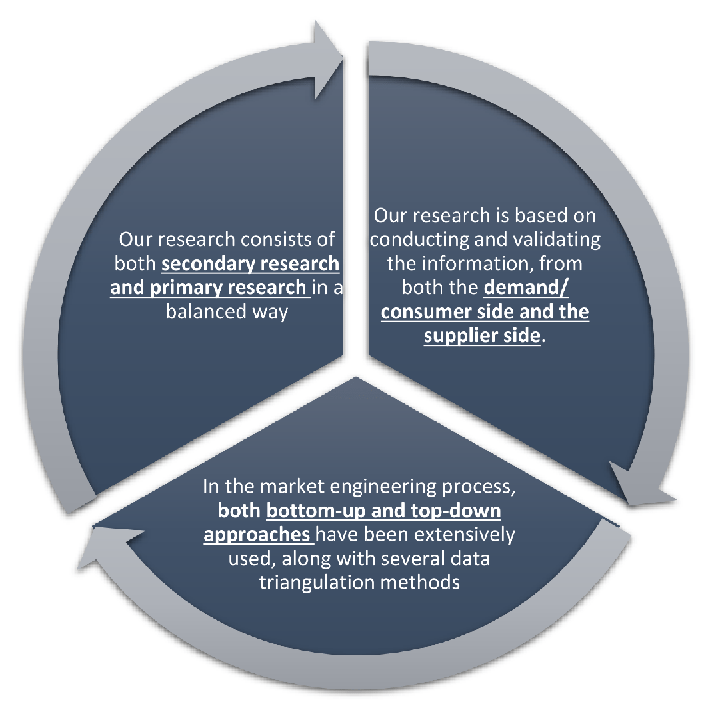
Our research design integrates both demand-side and supply-side analysis through a balanced combination of primary and secondary research methodologies. By utilizing both bottom-up and top-down approaches alongside rigorous data triangulation methods, we deliver robust market intelligence that supports strategic decision-making.
MarketGenics' comprehensive research design framework ensures the delivery of accurate, reliable, and actionable market intelligence. Through the integration of multiple research approaches, rigorous validation processes, and expert analysis, we provide our clients with the insights needed to make informed strategic decisions and capitalize on market opportunities.
MarketGenics leverages a dedicated industry panel of experts and a comprehensive suite of paid databases to effectively collect, consolidate, and analyze market intelligence.
Our approach has consistently proven to be reliable and effective in generating accurate market insights, identifying key industry trends, and uncovering emerging business opportunities.
Through both primary and secondary research, we capture and analyze critical company-level data such as manufacturing footprints, including technical centers, R&D facilities, sales offices, and headquarters.
Our expert panel further enhances our ability to estimate market size for specific brands based on validated field-level intelligence.
Our data mining techniques incorporate both parametric and non-parametric methods, allowing for structured data collection, sorting, processing, and cleaning.
Demand projections are derived from large-scale data sets analyzed through proprietary algorithms, culminating in robust and reliable market sizing.
Research Approach
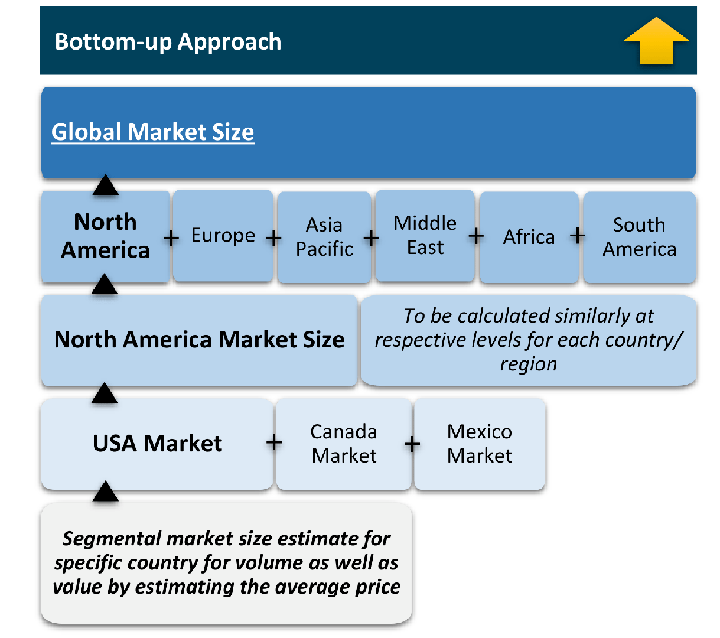
The bottom-up approach builds market estimates by starting with the smallest addressable market units and systematically aggregating them to create comprehensive market size projections.
This method begins with specific, granular data points and builds upward to create the complete market landscape.
Customer Analysis → Segmental Analysis → Geographical Analysis
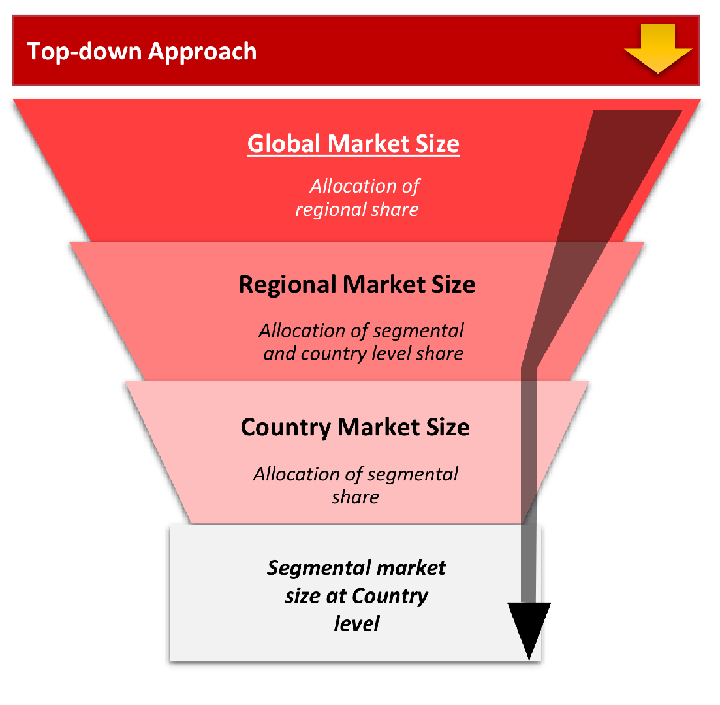
The top-down approach starts with the broadest possible market data and systematically narrows it down through a series of filters and assumptions to arrive at specific market segments or opportunities.
This method begins with the big picture and works downward to increasingly specific market slices.
TAM → SAM → SOM
Research Methods
Desk / Secondary Research
While analysing the market, we extensively study secondary sources, directories, and databases to identify and collect information useful for this technical, market-oriented, and commercial report. Secondary sources that we utilize are not only the public sources, but it is a combination of Open Source, Associations, Paid Databases, MG Repository & Knowledgebase, and others.
- Company websites, annual reports, financial reports, broker reports, and investor presentations
- National government documents, statistical databases and reports
- News articles, press releases and web-casts specific to the companies operating in the market, Magazines, reports, and others
- We gather information from commercial data sources for deriving company specific data such as segmental revenue, share for geography, product revenue, and others
- Internal and external proprietary databases (industry-specific), relevant patent, and regulatory databases
- Governing Bodies, Government Organizations
- Relevant Authorities, Country-specific Associations for Industries
We also employ the model mapping approach to estimate the product level market data through the players' product portfolio
Primary Research
Primary research/ interviews is vital in analyzing the market. Most of the cases involves paid primary interviews. Primary sources include primary interviews through e-mail interactions, telephonic interviews, surveys as well as face-to-face interviews with the different stakeholders across the value chain including several industry experts.
| Type of Respondents | Number of Primaries |
|---|---|
| Tier 2/3 Suppliers | ~20 |
| Tier 1 Suppliers | ~25 |
| End-users | ~25 |
| Industry Expert/ Panel/ Consultant | ~30 |
| Total | ~100 |
MG Knowledgebase
• Repository of industry blog, newsletter and case studies
• Online platform covering detailed market reports, and company profiles
Forecasting Factors and Models
Forecasting Factors
- Historical Trends – Past market patterns, cycles, and major events that shaped how markets behave over time. Understanding past trends helps predict future behavior.
- Industry Factors – Specific characteristics of the industry like structure, regulations, and innovation cycles that affect market dynamics.
- Macroeconomic Factors – Economic conditions like GDP growth, inflation, and employment rates that affect how much money people have to spend.
- Demographic Factors – Population characteristics like age, income, and location that determine who can buy your product.
- Technology Factors – How quickly people adopt new technology and how much technology infrastructure exists.
- Regulatory Factors – Government rules, laws, and policies that can help or restrict market growth.
- Competitive Factors – Analyzing competition structure such as degree of competition and bargaining power of buyers and suppliers.
Forecasting Models / Techniques
Multiple Regression Analysis
- Identify and quantify factors that drive market changes
- Statistical modeling to establish relationships between market drivers and outcomes
Time Series Analysis – Seasonal Patterns
- Understand regular cyclical patterns in market demand
- Advanced statistical techniques to separate trend, seasonal, and irregular components
Time Series Analysis – Trend Analysis
- Identify underlying market growth patterns and momentum
- Statistical analysis of historical data to project future trends
Expert Opinion – Expert Interviews
- Gather deep industry insights and contextual understanding
- In-depth interviews with key industry stakeholders
Multi-Scenario Development
- Prepare for uncertainty by modeling different possible futures
- Creating optimistic, pessimistic, and most likely scenarios
Time Series Analysis – Moving Averages
- Sophisticated forecasting for complex time series data
- Auto-regressive integrated moving average models with seasonal components
Econometric Models
- Apply economic theory to market forecasting
- Sophisticated economic models that account for market interactions
Expert Opinion – Delphi Method
- Harness collective wisdom of industry experts
- Structured, multi-round expert consultation process
Monte Carlo Simulation
- Quantify uncertainty and probability distributions
- Thousands of simulations with varying input parameters
Research Analysis
Our research framework is built upon the fundamental principle of validating market intelligence from both demand and supply perspectives. This dual-sided approach ensures comprehensive market understanding and reduces the risk of single-source bias.
Demand-Side Analysis: We understand end-user/application behavior, preferences, and market needs along with the penetration of the product for specific application.
Supply-Side Analysis: We estimate overall market revenue, analyze the segmental share along with industry capacity, competitive landscape, and market structure.
Validation & Evaluation
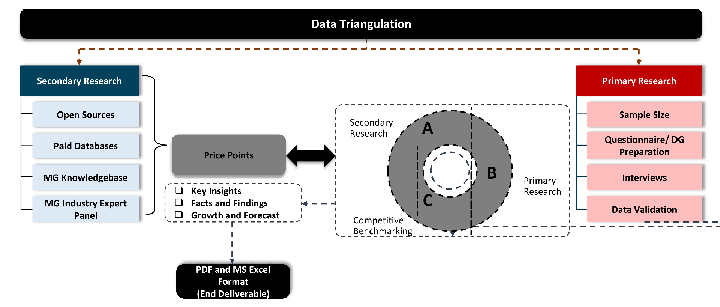
Data triangulation is a validation technique that uses multiple methods, sources, or perspectives to examine the same research question, thereby increasing the credibility and reliability of research findings. In market research, triangulation serves as a quality assurance mechanism that helps identify and minimize bias, validate assumptions, and ensure accuracy in market estimates.
- Data Source Triangulation – Using multiple data sources to examine the same phenomenon
- Methodological Triangulation – Using multiple research methods to study the same research question
- Investigator Triangulation – Using multiple researchers or analysts to examine the same data
- Theoretical Triangulation – Using multiple theoretical perspectives to interpret the same data
Custom Market Research Services
We will customise the research for you, in case the report listed above does not meet your requirements.
Get 10% Free Customisation