Food Grade Glycerin (Glycerol) Market Size, Share & Trends Analysis Report by Source/Origin (Plant-based (Vegetable-derived), Animal-based (Tallow-derived), Synthetic/Petrochemical-based), Purity Level, Form, Packaging Type, Distribution Channel, and Geography (North America, Europe, Asia Pacific, Middle East, Africa, and South America) – Global Industry Data, Trends, and Forecasts, 2026–2035
|
|
|
Segmental Data Insights |
|
|
Demand Trends |
|
|
Competitive Landscape |
|
|
Strategic Development |
|
|
Future Outlook & Opportunities |
|
Food-Grade-Glycerin-(Glycerol)-Market Size, Share, and Growth
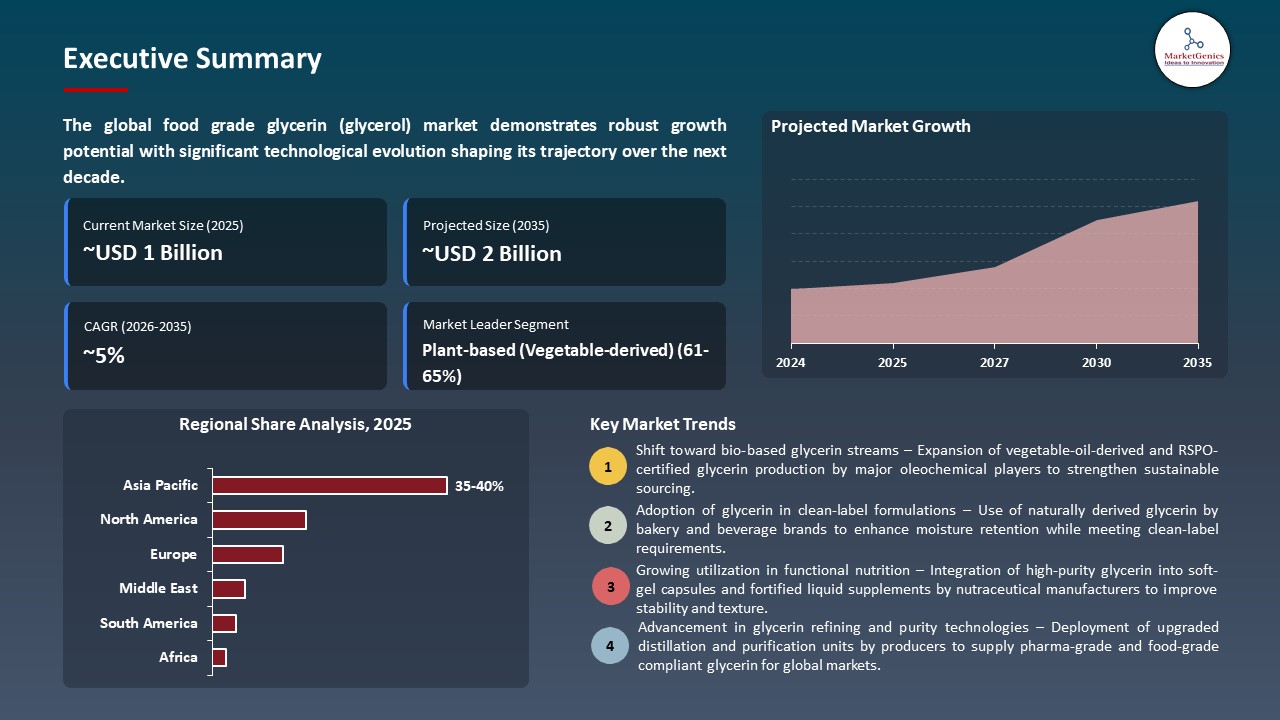
The global food grade glycerin (glycerol) market is experiencing robust growth, with its estimated value of USD 1.3 billion in the year 2025 and ~USD 2 billion by the period 2035, registering a CAGR of 4.5%, during the forecast period. The global food grade glycerine (glycerol) market is growing because companies and regulatory agencies have discovered the importance of using glycerol in preserving stability, safety, and quality of products in the food, beverage, nutraceutical, and confectionary industries.
James Zhou, LDC’s Global Head of Food & Feed Solutions and Chief Commercial Officer for the Group, said, This inauguration marks an important step in the development of our Food & Feed Solutions business. The new plant leverages existing synergies with our existing operations in Lampung, as well as globally in the US and Europe, to expand our capacity and meet the growing needs of our customers for high-quality glycerin.
The global food grade glycerin (glycerol) market is shifting to a commodity ingredient to a strategic multifunctional ingredient that can be used to brand differentiate, product innovate and position products in the premium market segments in food, beverage, nutraceutical and personal care industries. The increasing focus on clean-label, plant-based, and sustainable ingredients, which are promoted by consumers, as well as more demanding international regulatory requirements and product wholesomeness, are compelling manufacturers to re-evaluate production, formulation, and packaging approaches.
The increased consumer preference towards freshness, clean-label ingredients, and plant-based formulations are increasing the demand of glycerin as a multifunction ingredient to manage moisture, provide texture, and extend shelf life in bakery, dairy, beverages, snacks and ready-to-eat meals. Manufacturers are shifting towards using vegetable-derived glycerin, microencapsulation, fermentation-based preparations, and mineral-derived antioxidants to guarantee product freshness, preserve moisture and decrease the use of synthetic additives.
Adjacent opportunities to the food grade glycerin (glycerol) market include nutraceutical formulations where glycerin is used as a carrier, pharmaceutical syrups and oral solutions, cosmetic and personal care humectants, plant-based food texturizers, and functional beverages requiring natural sweetening and moisture retention, collectively expanding cross-industry demand linkages. These adjacencies strengthen demand resilience and position food grade glycerin as a versatile, high-value ingredient across health, wellness, and clean-label industries.
Food Grade Glycerin (Glycerol) Market Dynamics and Trends
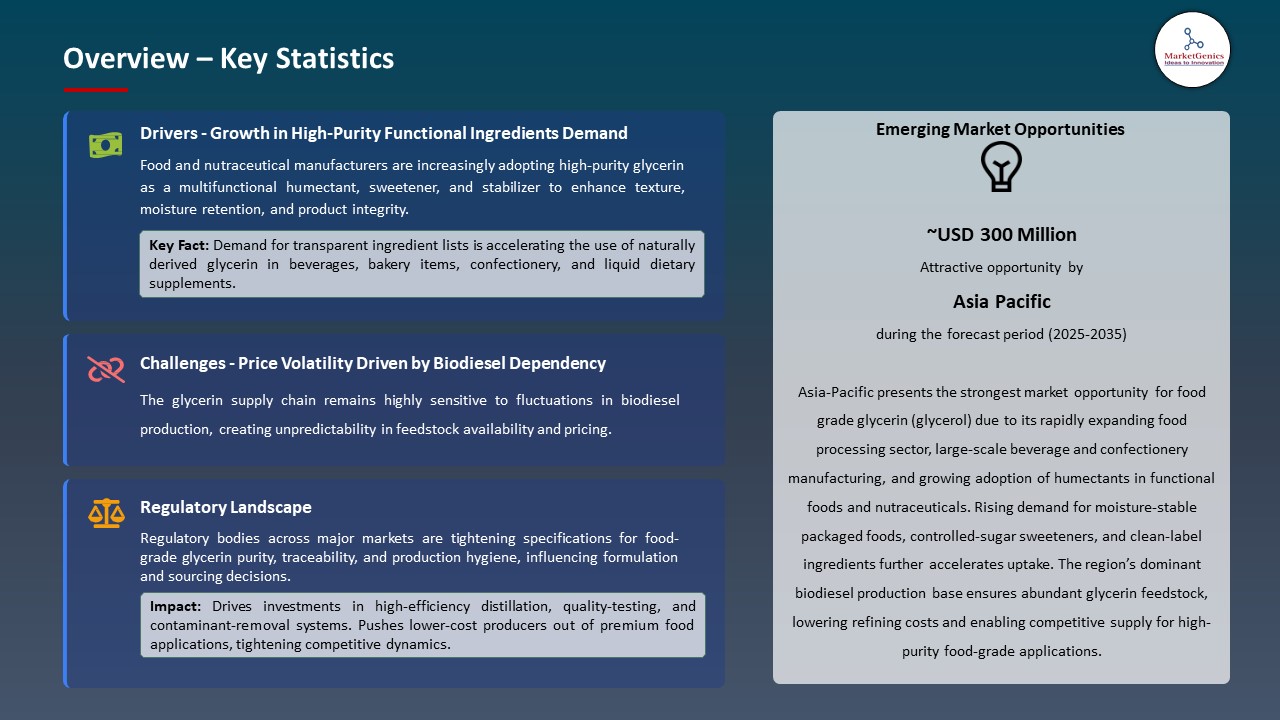
Driver: Growing demand for clean-label, natural & plant‑based ingredients
-
The global food grade glycerin (glycerol) market is growing at a very high pace, because of the increased interest of consumers in natural ingredients, plant-based ingredients and clean-label ingredients in packaged, ready-to-consume and functional foods. The growth of urbanization, hectic lifestyles and the recent emphasis on healthier and minimally processed foods are putting pressure on the need to maintain freshness, texture, and nutritional value of their products during storage and distribution.
- Food manufacturers are also using vegetable-based glycerin in greater quantities as a multipurpose ingredient which is used as a humectant, sweetener and stabilizer to favor natural formulations. Its suitability with clean-label, plant-based, and allergen-free foods can allow manufacturers to comply with the revised regulatory requirements and keep the quality and shelf life of their products intact when using bakery, beverages, dairy alternatives, confectionery, and nutraceutical products.
- The trend of any type of consumer transparency, sustainability and product hygiene is strengthening the use of plant-based glycerin on the planet. Manufacturers are also using glycerin natural and functional characteristics to boost clean-label formula, prolong product shelf life, and improve the commercial appeal of long-shelf-life, high-end, and plant-based food both in the established and new economies.
Restraint: Raw-material price volatility & feedstock supply instability
-
As a major limitation to food grade glycerin (glycerol) market, the fluctuating nature of feedstock costs, especially vegetable oils such as palm, soybean and rapeseed, which are the main sources of plant-based glycerin. The fluctuating costs of raw-materials have a direct effect on production costs and decreases the margins to the manufacturer, most so those providing clean-label and high-purity glycerin to food, beverage and nutraceutical uses.
- Supply-chain risks, such as geopolitical challenges, weather-related changes in crop yields, and transport limitations will also not favour the quality of feedstocks. It will slow down production cycles, escalate inventory expenses, and reduce the reliability of supplying food grade glycerin to the downstream food manufacturing companies in the global markets.
- The cumulative adverse impact of price uncertainty and supply volatility produces a scaling-up obstacle, the preservation of uniform quality and fulfilling an increasing demand in both emerging and developed markets.
Opportunity: Rising Adoption in Vegan, Low-Sugar, and Functional Applications
-
The global food grade glycerol (glycerol) market is performing well as there is growing popularity of both plant-based and low-sugar foods and functional foods in the developed and emerging markets. An emerging need for glycerin as a natural humectant, moisture-retainer, and sweetener in bakery, beverages, dairy alternatives and nutritional products is driven by rising consumer interest in health and sustainable products and ingredients and clean-label products.
- The manufacturers are also innovating to suit these trends. Suppliers of food ingredients provide vegetable-based glycerin, which is designed to meet the needs of vegan and low sugar formulations, allowing to stabilize moisture, texture and increase the shelf-life without compromising on clean-label. These glycerin solutions come in liquid, powdered and blend formats, which can be used in ready-to-eat food, and in plant-based drink, confectionery, and functional snacks.
- Also, as the market continues to move towards healthier and greener, plant-based diets, producers of glycerin can broaden their brands, provide the ability to use it in multiple applications, and tap into new markets in emerging and booming markets worldwide, as well as helping promote clean-label and functional foods.
Key Trend: Natural & Multifunctional Preservative Trends
-
The global food grade glycerin (glycerol) market is experiencing the move toward the trend of natural and multi-purpose preservatives, as food and non-alcoholic beverage producers are converting to a system where vegetable-derived glycerin is used together with plant-based antimicrobial and antioxidant systems. The strategy improves shelf life, preservation capacity, and stability of the product besides satisfying the consumer preference of clean labelling, minimally processed, and plant-based products.
- There are developments of multifunctional glycerin platforms. For instance, glycerin is being utilized in the delivery of polyphenol-rich, vegetable-based antioxidant and antimicrobial combinations that can be used in bakery, dairy, beverages, confectionery, and ready-to-eat items. These blends also aid in preservation of flavour, colour, and texture, shelf life, as well as adherence to international food safety standards.
- The use of natural and multifunctional glycerin-based preservatives is increasing in food industries of various types because they offer both as humectants and natural preservatives, are regulatory approved, and are also consistent with sustainability and clean-label movements. This has been a trend that has continued to support the scalability in operations, product differentiation and consumer confidence in the world.
Food-Grade-Glycerin-(Glycerol)-Market Analysis and Segmental Data
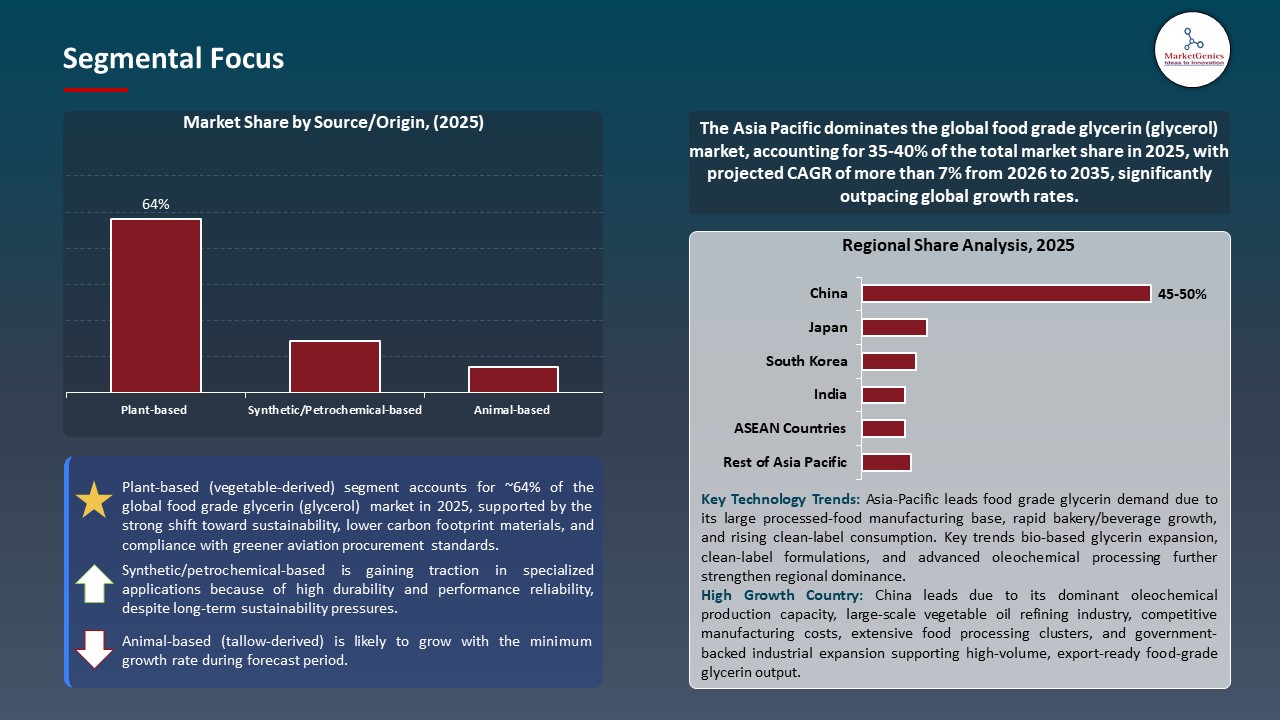
Plant-based (Vegetable-derived) Dominate Global Food Grade Glycerin (Glycerol) Market
-
Plant-based segment leads the market with regard to food grade glycerin (glycerol), as it is sourced sustainably, is natural labeled, and can be used in bakery applications, beverage applications, dairy applications, and even nutraceutical applications because it is accepted by the regulations. Based on the vegetable oils and biodiesel by-products, it offers high-purity, non-GMO, allergen-free substitutes that comply with the global food safety standards and comply with clean-label trends in packaged foods and beverages.
- Plant-based glycerin solutions, next generation, are becoming popular. Cargill has provided high-purification glycerin, which is vegetable derived and bakery, beverage, and other food uses that is optimized to retain moisture, stability, and longer shelf life and also meets the international food-safety regulations. This is in line with the increased consumer preference towards plant and sustainable ingredients.
- Plant-based glycerin is gaining popularity compared to synthetic versions because it has been found to combine natural origin, functional versatility and regulatory compliance.
Asia Pacific Leads Global Food Grade Glycerin (Glycerol) Market Demand
-
Asia Pacific leads the food grade glycerin (glycerol) market, due to excellent source of palm and vegetable oils, extensive biodiesel production and excellent infrastructure in food grade refining. The major markets include China, India, Japan and Indonesia, which control the production in the region and they provide the domestic and export market besides making high-purity glycerin that can be used in food, beverage, nutraceutical as well as pharmaceutical industries.
- The increasing consumption of bakery, confectionery, dairy, processed foods, and beverages is driving the use of glycerin as a humectant, food preservative, a moisture-retainer, and sweetener. Plant-based, vegan, and low-sugar products are in the functional and clean-label category, which is increasing the application of glycerin to other sectors. Market growth is also being greatly enhanced by regulatory compliance and food-safety standards, and the growing demand of consumers to use plant-derived ingredients.
- Developed refining, sustainable production, and integrated supply chains enhance cost-efficiency, scalability and reliability. Some of the innovations that help to improve the shelf-life, stability, and strengthen the Asian-Pacific position in supplying high-quality, compliant, and sustainable food-grade glycerin include microencapsulation, controlled-release systems, and synergistic natural blends.
Food-Grade-Glycerin-(Glycerol)-Market Ecosystem
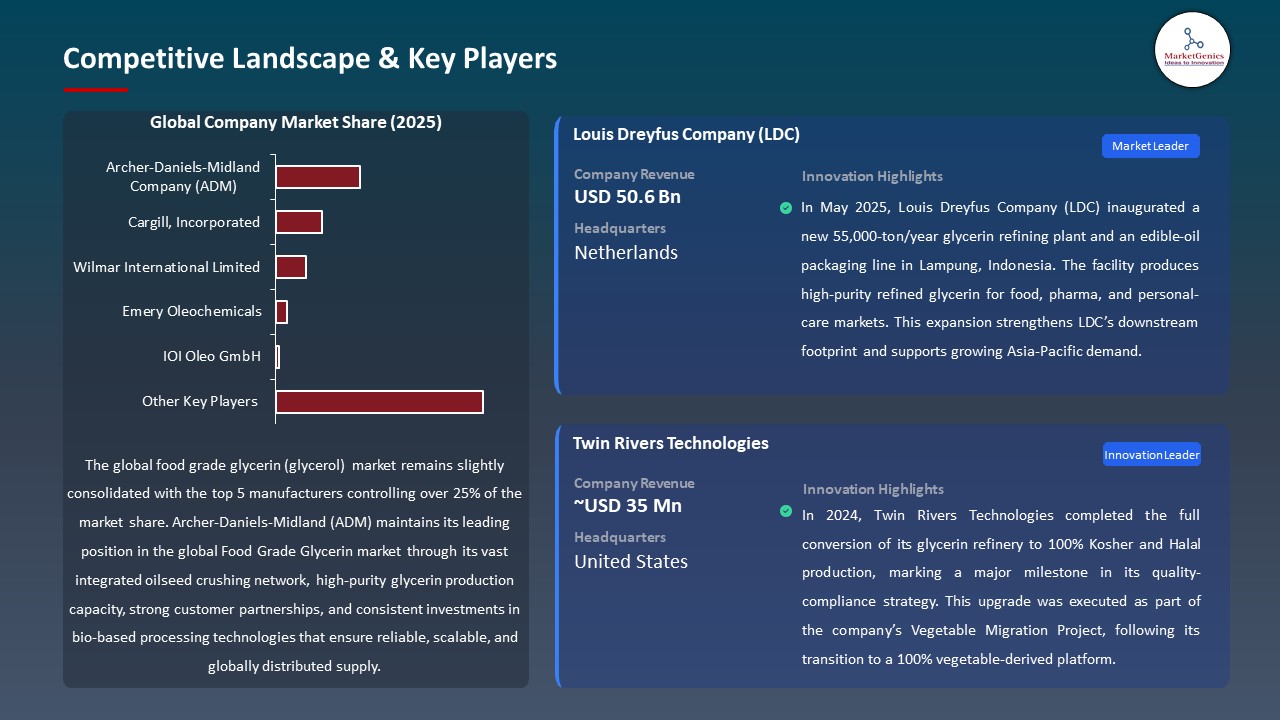
The global food grade glycerin market is moderately fragmented, shaped by multinational ingestible suppliers, oleochemical manufacturers, and regional firms. Tier-1 leaders such as ADM, Cargill, and Wilmar combine global production scale, regulatory expertise, and R&D strength to deliver glycerin products.
The glycerin value chain spans feedstock sourcing, refining, formulation, and downstream food processing and retail. Participants increasingly invest in clean-label, bio-based, and allergen-free solutions, alongside automation, digital quality monitoring, vertical integration, and sustainable packaging, strengthening regulatory compliance and supply resilience.
Recent Development and Strategic Overview
-
In May 2025, Louis Dreyfus Company (LDC) inaugurated a new 55,000-ton/year glycerin refining plant and an edible-oil packaging line in Lampung, Indonesia. The facility produces high-purity refined glycerin for food, pharma, and personal-care markets. This expansion strengthens LDC’s downstream footprint and supports growing Asia-Pacific demand.
- In 2024, Twin Rivers Technologies completed the full conversion of its glycerin refinery to 100% Kosher and Halal production, marking a major milestone in its quality-compliance strategy. This upgrade was executed as part of the company’s Vegetable Migration Project, following its transition to a 100% vegetable-derived platform.
Report Scope
|
Detail |
|
|
Market Size in 2025 |
USD 1.3 Bn |
|
Market Forecast Value in 2035 |
~USD 2 Bn |
|
Growth Rate (CAGR) |
4.5% |
|
Forecast Period |
2026 – 2035 |
|
Historical Data Available for |
2021 – 2024 |
|
Market Size Units |
US$ Billion for Value Tons for Volume |
|
Report Format |
Electronic (PDF) + Excel |
|
North America |
Europe |
Asia Pacific |
Middle East |
Africa |
South America |
|
|
|
|
|
|
|
Companies Covered |
|||||
|
|
|
|
|
|
Food-Grade-Glycerin-(Glycerol)-Market Segmentation and Highlights
|
Segment |
Sub-segment |
|
Food Grade Glycerin (Glycerol) Market, By Source/Origin |
|
|
Food Grade Glycerin (Glycerol) Market, By Purity Level |
|
|
Food Grade Glycerin (Glycerol) Market, By Form |
|
|
Food Grade Glycerin (Glycerol) Market, By Packaging Type |
|
|
Food Grade Glycerin (Glycerol) Market, By Distribution Channel |
|
Frequently Asked Questions
Table of Contents
- 1. Research Methodology and Assumptions
- 1.1. Definitions
- 1.2. Research Design and Approach
- 1.3. Data Collection Methods
- 1.4. Base Estimates and Calculations
- 1.5. Forecasting Models
- 1.5.1. Key Forecast Factors & Impact Analysis
- 1.6. Secondary Research
- 1.6.1. Open Sources
- 1.6.2. Paid Databases
- 1.6.3. Associations
- 1.7. Primary Research
- 1.7.1. Primary Sources
- 1.7.2. Primary Interviews with Stakeholders across Ecosystem
- 2. Executive Summary
- 2.1. Global Food Grade Glycerin (Glycerol) Market Outlook
- 2.1.1. Food Grade Glycerin (Glycerol) Market Size Volume (Tons) and Value (US$ Bn), and Forecasts, 2021-2035
- 2.1.2. Compounded Annual Growth Rate Analysis
- 2.1.3. Growth Opportunity Analysis
- 2.1.4. Segmental Share Analysis
- 2.1.5. Geographical Share Analysis
- 2.2. Market Analysis and Facts
- 2.3. Supply-Demand Analysis
- 2.4. Competitive Benchmarking
- 2.5. Go-to- Market Strategy
- 2.5.1. Customer/ End-use Industry Assessment
- 2.5.2. Growth Opportunity Data, 2026-2035
- 2.5.2.1. Regional Data
- 2.5.2.2. Country Data
- 2.5.2.3. Segmental Data
- 2.5.3. Identification of Potential Market Spaces
- 2.5.4. GAP Analysis
- 2.5.5. Potential Attractive Price Points
- 2.5.6. Prevailing Market Risks & Challenges
- 2.5.7. Preferred Sales & Marketing Strategies
- 2.5.8. Key Recommendations and Analysis
- 2.5.9. A Way Forward
- 2.1. Global Food Grade Glycerin (Glycerol) Market Outlook
- 3. Industry Data and Premium Insights
- 3.1. Global Food & Beverages Industry Overview, 2025
- 3.1.1. Industry Ecosystem Analysis
- 3.1.2. Key Trends for Food & Beverages Industry
- 3.1.3. Regional Distribution for Food & Beverages Industry
- 3.2. Supplier Customer Data
- 3.3. Technology Roadmap and Developments
- 3.4. Trade Analysis
- 3.4.1. Import & Export Analysis, 2025
- 3.4.2. Top Importing Countries
- 3.4.3. Top Exporting Countries
- 3.5. Trump Tariff Impact Analysis
- 3.5.1. Manufacturer
- 3.5.1.1. Based on the component & Raw material
- 3.5.2. Supply Chain
- 3.5.3. End Consumer
- 3.5.1. Manufacturer
- 3.6. Raw Material Analysis
- 3.1. Global Food & Beverages Industry Overview, 2025
- 4. Market Overview
- 4.1. Market Dynamics
- 4.1.1. Drivers
- 4.1.1.1. Rising demand for clean-label, plant-based, and functional foods and beverages.
- 4.1.1.2. Growth in pharmaceuticals, nutraceuticals, and personal-care applications requiring high-purity glycerin.
- 4.1.1.3. Advancements in precision dosing, bio-preservative systems, and automated formulation technologies.
- 4.1.2. Restraints
- 4.1.2.1. Volatility in raw material supply and feedstock prices (vegetable oils, biodiesel byproducts).
- 4.1.2.2. Stringent multi-regional regulatory compliance and certification requirements increasing operational costs.
- 4.1.1. Drivers
- 4.2. Key Trend Analysis
- 4.3. Regulatory Framework
- 4.3.1. Key Regulations, Norms, and Subsidies, by Key Countries
- 4.3.2. Tariffs and Standards
- 4.3.3. Impact Analysis of Regulations on the Market
- 4.4. Value Chain Analysis
- 4.4.1. Raw Material Suppliers
- 4.4.2. Manufacturers
- 4.4.3. Dealers/ Distributors
- 4.4.4. End-Users/ Customers
- 4.5. Cost Structure Analysis
- 4.5.1. Parameter’s Share for Cost Associated
- 4.5.2. COGP vs COGS
- 4.5.3. Profit Margin Analysis
- 4.6. Pricing Analysis
- 4.6.1. Regional Pricing Analysis
- 4.6.2. Segmental Pricing Trends
- 4.6.3. Factors Influencing Pricing
- 4.7. Porter’s Five Forces Analysis
- 4.8. PESTEL Analysis
- 4.9. Global Food Grade Glycerin (Glycerol) Market Demand
- 4.9.1. Historical Market Size – Volume (Tons) and Value (US$ Bn), 2020-2024
- 4.9.2. Current and Future Market Size – Volume (Tons) and Value (US$ Bn), 2026–2035
- 4.9.2.1. Y-o-Y Growth Trends
- 4.9.2.2. Absolute $ Opportunity Assessment
- 4.1. Market Dynamics
- 5. Competition Landscape
- 5.1. Competition structure
- 5.1.1. Fragmented v/s consolidated
- 5.2. Company Share Analysis, 2025
- 5.2.1. Global Company Market Share
- 5.2.2. By Region
- 5.2.2.1. North America
- 5.2.2.2. Europe
- 5.2.2.3. Asia Pacific
- 5.2.2.4. Middle East
- 5.2.2.5. Africa
- 5.2.2.6. South America
- 5.3. Product Comparison Matrix
- 5.3.1. Specifications
- 5.3.2. Market Positioning
- 5.3.3. Pricing
- 5.1. Competition structure
- 6. Global Food Grade Glycerin (Glycerol) Market Analysis, by Source/Origin
- 6.1. Key Segment Analysis
- 6.2. Food Grade Glycerin (Glycerol) Market Size Volume (Tons) and Value (US$ Bn), Analysis, and Forecasts, by Source/Origin, 2021-2035
- 6.2.1. Plant-based (Vegetable-derived)
- 6.2.1.1. Palm oil-derived
- 6.2.1.2. Soybean oil-derived
- 6.2.1.3. Rapeseed oil-derived
- 6.2.1.4. Coconut oil-derived
- 6.2.1.5. Sunflower oil-derived
- 6.2.1.6. Others
- 6.2.2. Animal-based (Tallow-derived)
- 6.2.3. Synthetic/Petrochemical-based
- 6.2.1. Plant-based (Vegetable-derived)
- 7. Global Food Grade Glycerin (Glycerol) Market Analysis, by Purity Level
- 7.1. Key Segment Analysis
- 7.2. Food Grade Glycerin (Glycerol) Market Size Volume (Tons) and Value (US$ Bn), Analysis, and Forecasts, by Purity Level, 2021-2035
- 7.2.1. 95% - 97% Purity
- 7.2.2. 97% - 99% Purity
- 7.2.3. 99% - 99.5% Purity
- 7.2.4. Above 99.5% Purity (USP/EP Grade)
- 8. Global Food Grade Glycerin (Glycerol) Market Analysis, by Form
- 8.1. Key Segment Analysis
- 8.2. Food Grade Glycerin (Glycerol) Market Size Volume (Tons) and Value (US$ Bn), Analysis, and Forecasts, by Form, 2021-2035
- 8.2.1. Liquid Glycerin
- 8.2.2. Powder/Solid Glycerin
- 8.2.3. Paste Form
- 9. Global Food Grade Glycerin (Glycerol) Market Analysis, by Packaging Type
- 9.1. Key Segment Analysis
- 9.2. Food Grade Glycerin (Glycerol) Market Size Volume (Tons) and Value (US$ Bn), Analysis, and Forecasts, by Packaging Type, 2021-2035
- 9.2.1. Bulk Packaging
- 9.2.1.1. ISO Tanks
- 9.2.1.2. Drums (200-220 L)
- 9.2.1.3. Intermediate Bulk Containers (IBC - 1000 L)
- 9.2.2. Small Packaging
- 9.2.2.1. Bottles (1-25 L)
- 9.2.2.2. Jerry Cans (25-50 L)
- 9.2.2.3. Pails (50-100 L)
- 9.2.1. Bulk Packaging
- 10. Global Food Grade Glycerin (Glycerol) Market Analysis, by Distribution Channel
- 10.1. Key Segment Analysis
- 10.2. Food Grade Glycerin (Glycerol) Market Size Volume (Tons) and Value (US$ Bn), Analysis, and Forecasts, by Distribution Channel, 2021-2035
- 10.2.1. Direct Sales (Manufacturer to End-user)
- 10.2.2. Distributors/Wholesalers
- 10.2.3. Online Platforms
- 10.2.4. Specialty Chemical Suppliers
- 11. Global Food Grade Glycerin (Glycerol) Market Analysis and Forecasts, by Region
- 11.1. Key Findings
- 11.2. Food Grade Glycerin (Glycerol) Market Size Volume (Tons) and Value (US$ Bn), Analysis, and Forecasts, by Region, 2021-2035
- 11.2.1. North America
- 11.2.2. Europe
- 11.2.3. Asia Pacific
- 11.2.4. Middle East
- 11.2.5. Africa
- 11.2.6. South America
- 12. North America Food Grade Glycerin (Glycerol) Market Analysis
- 12.1. Key Segment Analysis
- 12.2. Regional Snapshot
- 12.3. North America Food Grade Glycerin (Glycerol) Market Size Volume (Tons) and Value (US$ Bn), Analysis, and Forecasts, 2021-2035
- 12.3.1. Source/Origin
- 12.3.2. Purity Level
- 12.3.3. Form
- 12.3.4. Packaging Type
- 12.3.5. Distribution Channel
- 12.3.6. Country
- 12.3.6.1. USA
- 12.3.6.2. Canada
- 12.3.6.3. Mexico
- 12.4. USA Food Grade Glycerin (Glycerol) Market
- 12.4.1. Country Segmental Analysis
- 12.4.2. Source/Origin
- 12.4.3. Purity Level
- 12.4.4. Form
- 12.4.5. Packaging Type
- 12.4.6. Distribution Channel
- 12.5. Canada Food Grade Glycerin (Glycerol) Market
- 12.5.1. Country Segmental Analysis
- 12.5.2. Source/Origin
- 12.5.3. Purity Level
- 12.5.4. Form
- 12.5.5. Packaging Type
- 12.5.6. Distribution Channel
- 12.6. Mexico Food Grade Glycerin (Glycerol) Market
- 12.6.1. Country Segmental Analysis
- 12.6.2. Source/Origin
- 12.6.3. Purity Level
- 12.6.4. Form
- 12.6.5. Packaging Type
- 12.6.6. Distribution Channel
- 13. Europe Food Grade Glycerin (Glycerol) Market Analysis
- 13.1. Key Segment Analysis
- 13.2. Regional Snapshot
- 13.3. Europe Food Grade Glycerin (Glycerol) Market Size Volume (Tons) and Value (US$ Bn), Analysis, and Forecasts, 2021-2035
- 13.3.1. Source/Origin
- 13.3.2. Purity Level
- 13.3.3. Form
- 13.3.4. Packaging Type
- 13.3.5. Distribution Channel
- 13.3.6. Country
- 13.3.6.1. Germany
- 13.3.6.2. United Kingdom
- 13.3.6.3. France
- 13.3.6.4. Italy
- 13.3.6.5. Spain
- 13.3.6.6. Netherlands
- 13.3.6.7. Nordic Countries
- 13.3.6.8. Poland
- 13.3.6.9. Russia & CIS
- 13.3.6.10. Rest of Europe
- 13.4. Germany Food Grade Glycerin (Glycerol) Market
- 13.4.1. Country Segmental Analysis
- 13.4.2. Source/Origin
- 13.4.3. Purity Level
- 13.4.4. Form
- 13.4.5. Packaging Type
- 13.4.6. Distribution Channel
- 13.5. United Kingdom Food Grade Glycerin (Glycerol) Market
- 13.5.1. Country Segmental Analysis
- 13.5.2. Source/Origin
- 13.5.3. Purity Level
- 13.5.4. Form
- 13.5.5. Packaging Type
- 13.5.6. Distribution Channel
- 13.6. France Food Grade Glycerin (Glycerol) Market
- 13.6.1. Country Segmental Analysis
- 13.6.2. Source/Origin
- 13.6.3. Purity Level
- 13.6.4. Form
- 13.6.5. Packaging Type
- 13.6.6. Distribution Channel
- 13.7. Italy Food Grade Glycerin (Glycerol) Market
- 13.7.1. Country Segmental Analysis
- 13.7.2. Source/Origin
- 13.7.3. Purity Level
- 13.7.4. Form
- 13.7.5. Packaging Type
- 13.7.6. Distribution Channel
- 13.8. Spain Food Grade Glycerin (Glycerol) Market
- 13.8.1. Country Segmental Analysis
- 13.8.2. Source/Origin
- 13.8.3. Purity Level
- 13.8.4. Form
- 13.8.5. Packaging Type
- 13.8.6. Distribution Channel
- 13.9. Netherlands Food Grade Glycerin (Glycerol) Market
- 13.9.1. Country Segmental Analysis
- 13.9.2. Source/Origin
- 13.9.3. Purity Level
- 13.9.4. Form
- 13.9.5. Packaging Type
- 13.9.6. Distribution Channel
- 13.10. Nordic Countries Food Grade Glycerin (Glycerol) Market
- 13.10.1. Country Segmental Analysis
- 13.10.2. Source/Origin
- 13.10.3. Purity Level
- 13.10.4. Form
- 13.10.5. Packaging Type
- 13.10.6. Distribution Channel
- 13.11. Poland Food Grade Glycerin (Glycerol) Market
- 13.11.1. Country Segmental Analysis
- 13.11.2. Source/Origin
- 13.11.3. Purity Level
- 13.11.4. Form
- 13.11.5. Packaging Type
- 13.11.6. Distribution Channel
- 13.12. Russia & CIS Food Grade Glycerin (Glycerol) Market
- 13.12.1. Country Segmental Analysis
- 13.12.2. Source/Origin
- 13.12.3. Purity Level
- 13.12.4. Form
- 13.12.5. Packaging Type
- 13.12.6. Distribution Channel
- 13.13. Rest of Europe Food Grade Glycerin (Glycerol) Market
- 13.13.1. Country Segmental Analysis
- 13.13.2. Source/Origin
- 13.13.3. Purity Level
- 13.13.4. Form
- 13.13.5. Packaging Type
- 13.13.6. Distribution Channel
- 14. Asia Pacific Food Grade Glycerin (Glycerol) Market Analysis
- 14.1. Key Segment Analysis
- 14.2. Regional Snapshot
- 14.3. Asia Pacific Food Grade Glycerin (Glycerol) Market Size Volume (Tons) and Value (US$ Bn), Analysis, and Forecasts, 2021-2035
- 14.3.1. Source/Origin
- 14.3.2. Purity Level
- 14.3.3. Form
- 14.3.4. Packaging Type
- 14.3.5. Distribution Channel
- 14.3.6. Country
- 14.3.6.1. China
- 14.3.6.2. India
- 14.3.6.3. Japan
- 14.3.6.4. South Korea
- 14.3.6.5. Australia and New Zealand
- 14.3.6.6. Indonesia
- 14.3.6.7. Malaysia
- 14.3.6.8. Thailand
- 14.3.6.9. Vietnam
- 14.3.6.10. Rest of Asia Pacific
- 14.4. China Food Grade Glycerin (Glycerol) Market
- 14.4.1. Country Segmental Analysis
- 14.4.2. Source/Origin
- 14.4.3. Purity Level
- 14.4.4. Form
- 14.4.5. Packaging Type
- 14.4.6. Distribution Channel
- 14.5. India Food Grade Glycerin (Glycerol) Market
- 14.5.1. Country Segmental Analysis
- 14.5.2. Source/Origin
- 14.5.3. Purity Level
- 14.5.4. Form
- 14.5.5. Packaging Type
- 14.5.6. Distribution Channel
- 14.6. Japan Food Grade Glycerin (Glycerol) Market
- 14.6.1. Country Segmental Analysis
- 14.6.2. Source/Origin
- 14.6.3. Purity Level
- 14.6.4. Form
- 14.6.5. Packaging Type
- 14.6.6. Distribution Channel
- 14.7. South Korea Food Grade Glycerin (Glycerol) Market
- 14.7.1. Country Segmental Analysis
- 14.7.2. Source/Origin
- 14.7.3. Purity Level
- 14.7.4. Form
- 14.7.5. Packaging Type
- 14.7.6. Distribution Channel
- 14.8. Australia and New Zealand Food Grade Glycerin (Glycerol) Market
- 14.8.1. Country Segmental Analysis
- 14.8.2. Source/Origin
- 14.8.3. Purity Level
- 14.8.4. Form
- 14.8.5. Packaging Type
- 14.8.6. Distribution Channel
- 14.9. Indonesia Food Grade Glycerin (Glycerol) Market
- 14.9.1. Country Segmental Analysis
- 14.9.2. Source/Origin
- 14.9.3. Purity Level
- 14.9.4. Form
- 14.9.5. Packaging Type
- 14.9.6. Distribution Channel
- 14.10. Malaysia Food Grade Glycerin (Glycerol) Market
- 14.10.1. Country Segmental Analysis
- 14.10.2. Source/Origin
- 14.10.3. Purity Level
- 14.10.4. Form
- 14.10.5. Packaging Type
- 14.10.6. Distribution Channel
- 14.11. Thailand Food Grade Glycerin (Glycerol) Market
- 14.11.1. Country Segmental Analysis
- 14.11.2. Source/Origin
- 14.11.3. Purity Level
- 14.11.4. Form
- 14.11.5. Packaging Type
- 14.11.6. Distribution Channel
- 14.12. Vietnam Food Grade Glycerin (Glycerol) Market
- 14.12.1. Country Segmental Analysis
- 14.12.2. Source/Origin
- 14.12.3. Purity Level
- 14.12.4. Form
- 14.12.5. Packaging Type
- 14.12.6. Distribution Channel
- 14.13. Rest of Asia Pacific Food Grade Glycerin (Glycerol) Market
- 14.13.1. Country Segmental Analysis
- 14.13.2. Source/Origin
- 14.13.3. Purity Level
- 14.13.4. Form
- 14.13.5. Packaging Type
- 14.13.6. Distribution Channel
- 15. Middle East Food Grade Glycerin (Glycerol) Market Analysis
- 15.1. Key Segment Analysis
- 15.2. Regional Snapshot
- 15.3. Middle East Food Grade Glycerin (Glycerol) Market Size Volume (Tons) and Value (US$ Bn), Analysis, and Forecasts, 2021-2035
- 15.3.1. Source/Origin
- 15.3.2. Purity Level
- 15.3.3. Form
- 15.3.4. Packaging Type
- 15.3.5. Distribution Channel
- 15.3.6. Country
- 15.3.6.1. Turkey
- 15.3.6.2. UAE
- 15.3.6.3. Saudi Arabia
- 15.3.6.4. Israel
- 15.3.6.5. Rest of Middle East
- 15.4. Turkey Food Grade Glycerin (Glycerol) Market
- 15.4.1. Country Segmental Analysis
- 15.4.2. Source/Origin
- 15.4.3. Purity Level
- 15.4.4. Form
- 15.4.5. Packaging Type
- 15.4.6. Distribution Channel
- 15.5. UAE Food Grade Glycerin (Glycerol) Market
- 15.5.1. Country Segmental Analysis
- 15.5.2. Source/Origin
- 15.5.3. Purity Level
- 15.5.4. Form
- 15.5.5. Packaging Type
- 15.5.6. Distribution Channel
- 15.6. Saudi Arabia Food Grade Glycerin (Glycerol) Market
- 15.6.1. Country Segmental Analysis
- 15.6.2. Source/Origin
- 15.6.3. Purity Level
- 15.6.4. Form
- 15.6.5. Packaging Type
- 15.6.6. Distribution Channel
- 15.7. Israel Food Grade Glycerin (Glycerol) Market
- 15.7.1. Country Segmental Analysis
- 15.7.2. Source/Origin
- 15.7.3. Purity Level
- 15.7.4. Form
- 15.7.5. Packaging Type
- 15.7.6. Distribution Channel
- 15.8. Rest of Middle East Food Grade Glycerin (Glycerol) Market
- 15.8.1. Country Segmental Analysis
- 15.8.2. Source/Origin
- 15.8.3. Purity Level
- 15.8.4. Form
- 15.8.5. Packaging Type
- 15.8.6. Distribution Channel
- 16. Africa Food Grade Glycerin (Glycerol) Market Analysis
- 16.1. Key Segment Analysis
- 16.2. Regional Snapshot
- 16.3. Africa Food Grade Glycerin (Glycerol) Market Size Volume (Tons) and Value (US$ Bn), Analysis, and Forecasts, 2021-2035
- 16.3.1. Source/Origin
- 16.3.2. Purity Level
- 16.3.3. Form
- 16.3.4. Packaging Type
- 16.3.5. Distribution Channel
- 16.3.6. country
- 16.3.6.1. South Africa
- 16.3.6.2. Egypt
- 16.3.6.3. Nigeria
- 16.3.6.4. Algeria
- 16.3.6.5. Rest of Africa
- 16.4. South Africa Food Grade Glycerin (Glycerol) Market
- 16.4.1. Country Segmental Analysis
- 16.4.2. Source/Origin
- 16.4.3. Purity Level
- 16.4.4. Form
- 16.4.5. Packaging Type
- 16.4.6. Distribution Channel
- 16.5. Egypt Food Grade Glycerin (Glycerol) Market
- 16.5.1. Country Segmental Analysis
- 16.5.2. Source/Origin
- 16.5.3. Purity Level
- 16.5.4. Form
- 16.5.5. Packaging Type
- 16.5.6. Distribution Channel
- 16.6. Nigeria Food Grade Glycerin (Glycerol) Market
- 16.6.1. Country Segmental Analysis
- 16.6.2. Source/Origin
- 16.6.3. Purity Level
- 16.6.4. Form
- 16.6.5. Packaging Type
- 16.6.6. Distribution Channel
- 16.7. Algeria Food Grade Glycerin (Glycerol) Market
- 16.7.1. Country Segmental Analysis
- 16.7.2. Source/Origin
- 16.7.3. Purity Level
- 16.7.4. Form
- 16.7.5. Packaging Type
- 16.7.6. Distribution Channel
- 16.8. Rest of Africa Food Grade Glycerin (Glycerol) Market
- 16.8.1. Country Segmental Analysis
- 16.8.2. Source/Origin
- 16.8.3. Purity Level
- 16.8.4. Form
- 16.8.5. Packaging Type
- 16.8.6. Distribution Channel
- 17. South America Food Grade Glycerin (Glycerol) Market Analysis
- 17.1. Key Segment Analysis
- 17.2. Regional Snapshot
- 17.3. South America Food Grade Glycerin (Glycerol) Market Size Volume (Tons) and Value (US$ Bn), Analysis, and Forecasts, 2021-2035
- 17.3.1. Source/Origin
- 17.3.2. Purity Level
- 17.3.3. Form
- 17.3.4. Packaging Type
- 17.3.5. Distribution Channel
- 17.3.6. Country
- 17.3.6.1. Brazil
- 17.3.6.2. Argentina
- 17.3.6.3. Rest of South America
- 17.4. Brazil Food Grade Glycerin (Glycerol) Market
- 17.4.1. Country Segmental Analysis
- 17.4.2. Source/Origin
- 17.4.3. Purity Level
- 17.4.4. Form
- 17.4.5. Packaging Type
- 17.4.6. Distribution Channel
- 17.5. Argentina Food Grade Glycerin (Glycerol) Market
- 17.5.1. Country Segmental Analysis
- 17.5.2. Source/Origin
- 17.5.3. Purity Level
- 17.5.4. Form
- 17.5.5. Packaging Type
- 17.5.6. Distribution Channel
- 17.6. Rest of South America Food Grade Glycerin (Glycerol) Market
- 17.6.1. Country Segmental Analysis
- 17.6.2. Source/Origin
- 17.6.3. Purity Level
- 17.6.4. Form
- 17.6.5. Packaging Type
- 17.6.6. Distribution Channel
- 18. Key Players/ Company Profile
- 18.1. Aemetis Inc.
- 18.1.1. Company Details/ Overview
- 18.1.2. Company Financials
- 18.1.3. Key Customers and Competitors
- 18.1.4. Business/ Industry Portfolio
- 18.1.5. Product Portfolio/ Specification Details
- 18.1.6. Pricing Data
- 18.1.7. Strategic Overview
- 18.1.8. Recent Developments
- 18.2. Archer Daniels Midland Company (ADM)
- 18.3. Avril Group (Sofiprotéol)
- 18.4. Cargill, Incorporated
- 18.5. Croda International Plc
- 18.6. Emery Oleochemicals
- 18.7. Godrej Industries Limited
- 18.8. Hangzhou Oleochemicals Co., Ltd.
- 18.9. IOI Oleo GmbH
- 18.10. KLK OLEO
- 18.11. Louis Dreyfus Company
- 18.12. Natural Sourcing, LLC
- 18.13. Pacific Oleochemicals Sdn Bhd
- 18.14. PMC Biogenix
- 18.15. Procter & Gamble Chemicals
- 18.16. Sakamoto Yakuhin Kogyo Co., Ltd.
- 18.17. Twin Rivers Technologies
- 18.18. Vance Bioenergy
- 18.19. Vitusa Products Inc.
- 18.20. Wilmar International Limited
- 18.21. Other Key Players
- 18.1. Aemetis Inc.
Note* - This is just tentative list of players. While providing the report, we will cover more number of players based on their revenue and share for each geography
Research Design
Our research design integrates both demand-side and supply-side analysis through a balanced combination of primary and secondary research methodologies. By utilizing both bottom-up and top-down approaches alongside rigorous data triangulation methods, we deliver robust market intelligence that supports strategic decision-making.
MarketGenics' comprehensive research design framework ensures the delivery of accurate, reliable, and actionable market intelligence. Through the integration of multiple research approaches, rigorous validation processes, and expert analysis, we provide our clients with the insights needed to make informed strategic decisions and capitalize on market opportunities.
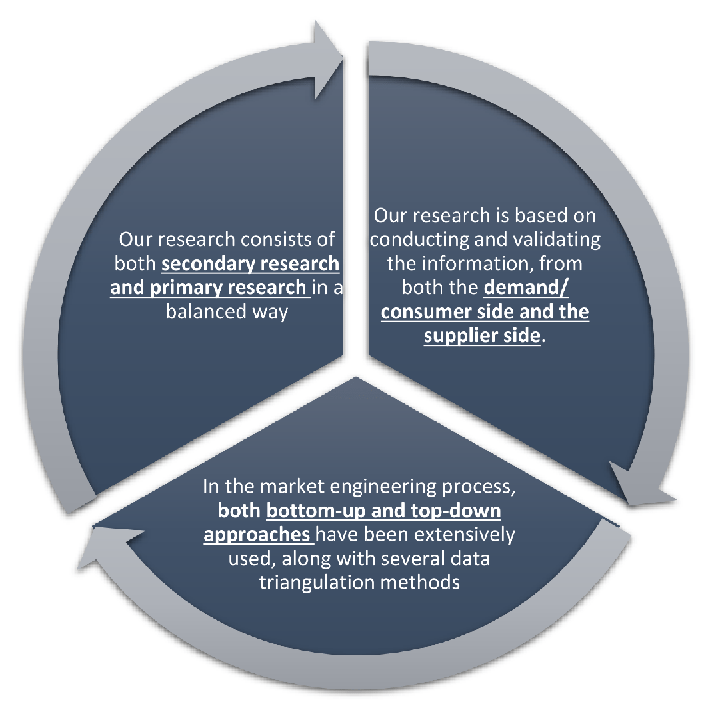
MarketGenics leverages a dedicated industry panel of experts and a comprehensive suite of paid databases to effectively collect, consolidate, and analyze market intelligence.
Our approach has consistently proven to be reliable and effective in generating accurate market insights, identifying key industry trends, and uncovering emerging business opportunities.
Through both primary and secondary research, we capture and analyze critical company-level data such as manufacturing footprints, including technical centers, R&D facilities, sales offices, and headquarters.
Our expert panel further enhances our ability to estimate market size for specific brands based on validated field-level intelligence.
Our data mining techniques incorporate both parametric and non-parametric methods, allowing for structured data collection, sorting, processing, and cleaning.
Demand projections are derived from large-scale data sets analyzed through proprietary algorithms, culminating in robust and reliable market sizing.
Research Approach
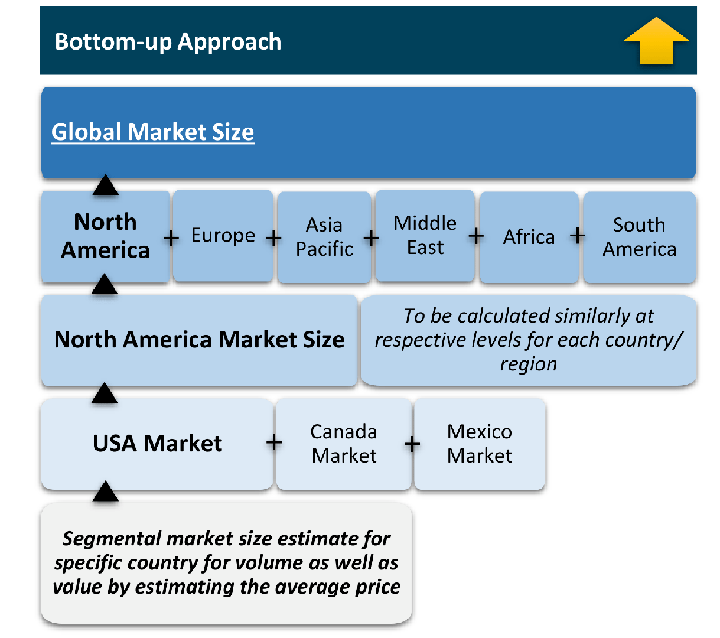
The bottom-up approach builds market estimates by starting with the smallest addressable market units and systematically aggregating them to create comprehensive market size projections.
This method begins with specific, granular data points and builds upward to create the complete market landscape.
Customer Analysis → Segmental Analysis → Geographical Analysis
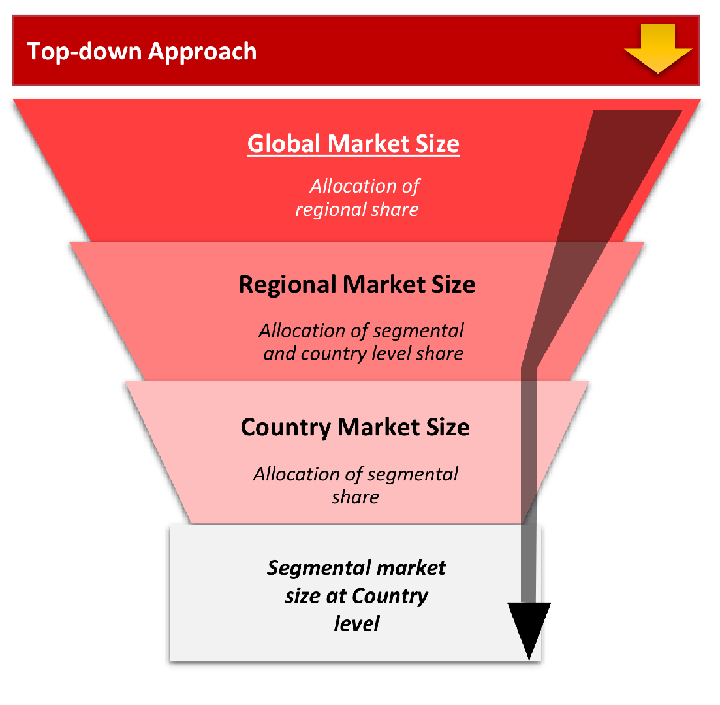
The top-down approach starts with the broadest possible market data and systematically narrows it down through a series of filters and assumptions to arrive at specific market segments or opportunities.
This method begins with the big picture and works downward to increasingly specific market slices.
TAM → SAM → SOM
Research Methods
Desk / Secondary Research
While analysing the market, we extensively study secondary sources, directories, and databases to identify and collect information useful for this technical, market-oriented, and commercial report. Secondary sources that we utilize are not only the public sources, but it is a combination of Open Source, Associations, Paid Databases, MG Repository & Knowledgebase, and others.
- Company websites, annual reports, financial reports, broker reports, and investor presentations
- National government documents, statistical databases and reports
- News articles, press releases and web-casts specific to the companies operating in the market, Magazines, reports, and others
- We gather information from commercial data sources for deriving company specific data such as segmental revenue, share for geography, product revenue, and others
- Internal and external proprietary databases (industry-specific), relevant patent, and regulatory databases
- Governing Bodies, Government Organizations
- Relevant Authorities, Country-specific Associations for Industries
We also employ the model mapping approach to estimate the product level market data through the players' product portfolio
Primary Research
Primary research/ interviews is vital in analyzing the market. Most of the cases involves paid primary interviews. Primary sources include primary interviews through e-mail interactions, telephonic interviews, surveys as well as face-to-face interviews with the different stakeholders across the value chain including several industry experts.
| Type of Respondents | Number of Primaries |
|---|---|
| Tier 2/3 Suppliers | ~20 |
| Tier 1 Suppliers | ~25 |
| End-users | ~25 |
| Industry Expert/ Panel/ Consultant | ~30 |
| Total | ~100 |
MG Knowledgebase
• Repository of industry blog, newsletter and case studies
• Online platform covering detailed market reports, and company profiles
Forecasting Factors and Models
Forecasting Factors
- Historical Trends – Past market patterns, cycles, and major events that shaped how markets behave over time. Understanding past trends helps predict future behavior.
- Industry Factors – Specific characteristics of the industry like structure, regulations, and innovation cycles that affect market dynamics.
- Macroeconomic Factors – Economic conditions like GDP growth, inflation, and employment rates that affect how much money people have to spend.
- Demographic Factors – Population characteristics like age, income, and location that determine who can buy your product.
- Technology Factors – How quickly people adopt new technology and how much technology infrastructure exists.
- Regulatory Factors – Government rules, laws, and policies that can help or restrict market growth.
- Competitive Factors – Analyzing competition structure such as degree of competition and bargaining power of buyers and suppliers.
Forecasting Models / Techniques
Multiple Regression Analysis
- Identify and quantify factors that drive market changes
- Statistical modeling to establish relationships between market drivers and outcomes
Time Series Analysis – Seasonal Patterns
- Understand regular cyclical patterns in market demand
- Advanced statistical techniques to separate trend, seasonal, and irregular components
Time Series Analysis – Trend Analysis
- Identify underlying market growth patterns and momentum
- Statistical analysis of historical data to project future trends
Expert Opinion – Expert Interviews
- Gather deep industry insights and contextual understanding
- In-depth interviews with key industry stakeholders
Multi-Scenario Development
- Prepare for uncertainty by modeling different possible futures
- Creating optimistic, pessimistic, and most likely scenarios
Time Series Analysis – Moving Averages
- Sophisticated forecasting for complex time series data
- Auto-regressive integrated moving average models with seasonal components
Econometric Models
- Apply economic theory to market forecasting
- Sophisticated economic models that account for market interactions
Expert Opinion – Delphi Method
- Harness collective wisdom of industry experts
- Structured, multi-round expert consultation process
Monte Carlo Simulation
- Quantify uncertainty and probability distributions
- Thousands of simulations with varying input parameters
Research Analysis
Our research framework is built upon the fundamental principle of validating market intelligence from both demand and supply perspectives. This dual-sided approach ensures comprehensive market understanding and reduces the risk of single-source bias.
Demand-Side Analysis: We understand end-user/application behavior, preferences, and market needs along with the penetration of the product for specific application.
Supply-Side Analysis: We estimate overall market revenue, analyze the segmental share along with industry capacity, competitive landscape, and market structure.
Validation & Evaluation
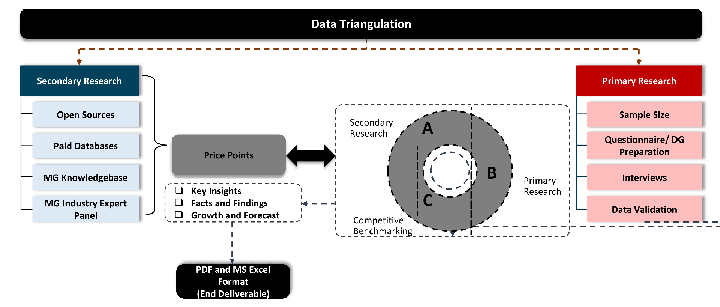
Data triangulation is a validation technique that uses multiple methods, sources, or perspectives to examine the same research question, thereby increasing the credibility and reliability of research findings. In market research, triangulation serves as a quality assurance mechanism that helps identify and minimize bias, validate assumptions, and ensure accuracy in market estimates.
- Data Source Triangulation – Using multiple data sources to examine the same phenomenon
- Methodological Triangulation – Using multiple research methods to study the same research question
- Investigator Triangulation – Using multiple researchers or analysts to examine the same data
- Theoretical Triangulation – Using multiple theoretical perspectives to interpret the same data
Custom Market Research Services
We will customise the research for you, in case the report listed above does not meet your requirements.
Get 10% Free Customisation