Protein Snacks Market Size, Share & Trends Analysis Report by Product Type (Protein Bars, Protein Cookies & Brownies, Jerky & Meat Snacks, Protein Balls & Bites, Roasted Nuts & Seeds, Protein Puffs & Crisps, Protein Puddings & Desserts, Trail Mix & Nut Mixes, Others), Protein Source, Distribution Channel, Packaging Type, Protein Content Level, Age Group, Application, and Geography (North America, Europe, Asia Pacific, Middle East, Africa, and South America) – Global Industry Data, Trends, and Forecasts, 2026–2035
|
|
|
Segmental Data Insights |
|
|
Demand Trends |
|
|
Competitive Landscape |
|
|
Strategic Development |
|
|
Future Outlook & Opportunities |
|
Protein-Snacks-Market Size, Share, and Growth
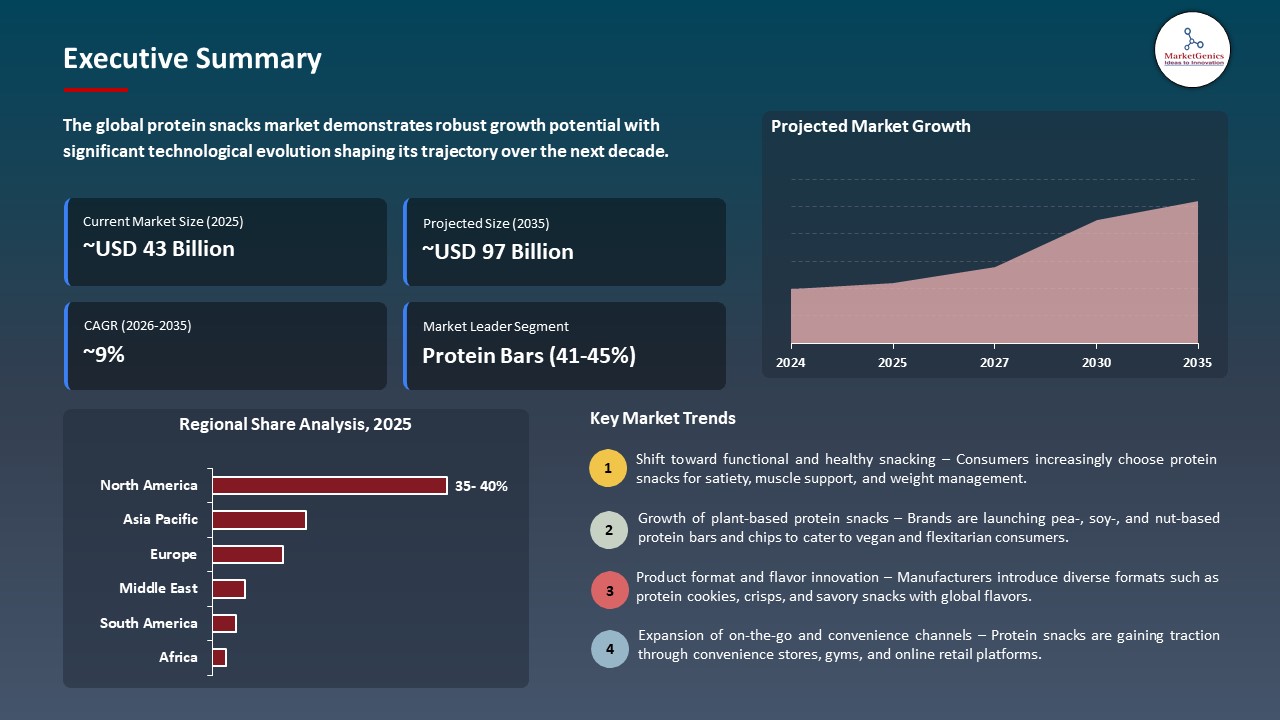
The global protein snacks market is experiencing robust growth, with its estimated value of USD 43.1 billion in the year 2025 and USD 97.4 billion by the period 2035, registering a CAGR of 8.5%, during the forecast period. The global protein snacks market is expanding at a very rapid rate with the brands focusing on the convenient, high protein and nutrient-dense products.
Jen Werle, Brand Director at Optimum Nutrition, said: As the world’s most trusted sports nutrition brand, we continue to innovate our portfolio with trend-forward flavor offerings to further excite the category, elevate industry standards, and appeal to consumers’ taste preferences. Whether consumers seek pre- or post-workout support for muscle recovery, an easy way to hit their daily protein goals, or simply need a boost of energy, Optimum Nutrition has a solution.
The protein snacks market is rapidly evolving from a specialized health niche into a platform for value creation, branding and brand awareness, and customer engagement across the retail, e-communication, and wellness sectors. The current health awareness, the overall increase in the need to have high-protein nutrition that is more convenient, and the overall increase in the popularity of functional foods leads manufacturers to create innovative products that would deliver a compromise of taste and nutrition with portability. On the-go and busy living lifestyles are also contributing to the adoption with protein snacks becoming part of daily nutrition behavior.
Protein snacks have gained multifunctional properties and they are used to recover muscle, to promote immunity and also manage weight. The introduction of varying formats including bars, bites, crisps, and ready-to-drink shakes boosts the attractiveness of consumers without compromising nutritional quality or clean-label claims. Plant-based proteins, collagen, probiotics, and adaptogens are also added as functional ingredients to meet the changing health and wellness needs.
Adjacent opportunities to the protein snacks market include meal replacement bars and shakes, plant-based and allergen-free protein bites, functional snacks with added vitamins or probiotics, sport and endurance nutrition products, and ready-to-eat high-protein savory snacks, leveraging growing health and fitness trends, thereby expanding consumer reach, accelerating adoption across lifestyle segments, and driving innovation in convenient protein-rich options.
Protein Snacks Market Dynamics and Trends
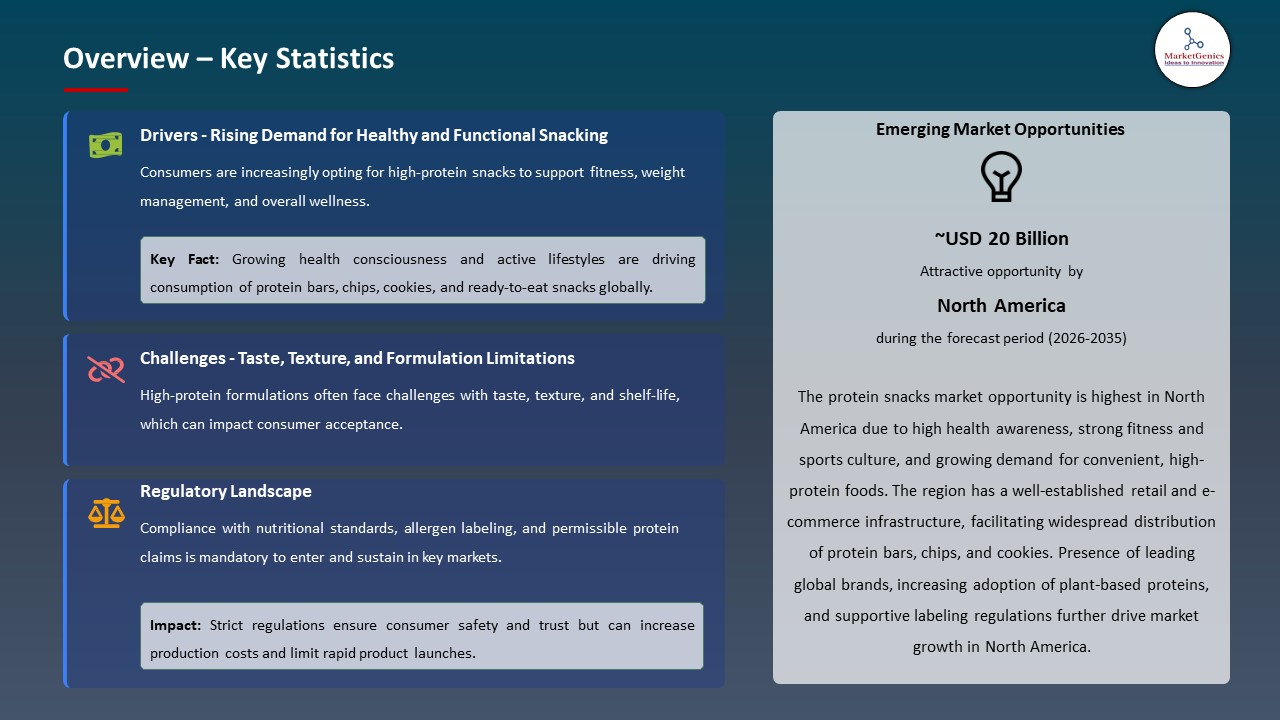
Driver: Growing Consumer Demand for Convenient High-Protein Nutrition
-
The protein snacks market as consumers are becoming more and more health, fitness, and functional nutrition conscious. The increased demand has been due to the lifestyle changes, increased attendance of gyms and wellness facilities and the knowledge of muscle maintenance and weight management which demand convenient, high-protein snacks that one can consume anytime, either before or after a workout or as a substitute to a meal.
- Manufacturers are meeting this demand with a broad selection of protein-dense formats, such as bars, bites, crisps and ready-to-drink shakes, usually enhanced with other functional ingredients, such as probiotics, collagen or adaptogens. For instance, in October 2025, the 2025 NACS Show in Chicago featured protein snack brand Ready promoting a range of high protein snacks, such as protein bars, protein puffs, and protein water that is easy to carry in your bag, due to consumer demand. Protein blends of whey, plant and hybrid are also becoming popular and help to increase the nutritional value and taste to satisfy the changing demands of consumers.
- Innovation is fueled by the need to have customized and multitasking snacks that are becoming a major element of the healthy and on-the-go diets throughout the world.
Restraint: High Production Costs and Premium Pricing
-
The protein snacks market’s major limitation is the high cost of producing quality protein sources, such as whey isolates and plant-protein blends, along with functional additives like probiotics, collagen, and adaptogens. The use of quality raw materials and clean-label production would make the production much more costly, which leads to the higher retail pricing of the product when compared to the traditional snack varieties.
- These price pressures are complicated with specialized manufacturing demands, such as accuracy extrusion, baking, or molding operations in order to preserve protein integrity and functionality advantages. Shorter production run times and less automation compound the cost per unit further making them less competitive in price elastic consumer markets.
- Supply chain limitations such as the variability of plant-based proteins by season and high logistics costs of cold-chain or labile protein components also increase the cost of production further.
- These make large-scale adoption restricted and may decelerate market increase in developing or cost-conscious regions.
Opportunity: Expansion in Plant-Based and Emerging Markets
-
The growing popularity of plant-based nutrition and clean-label snacking in the global market presents an opportunity for the protein snacks market, as people seek healthier and more environmentally friendly alternatives to traditional animal-based foods. Snack bars, chips, and bites are increasingly incorporating plant-based proteins such as pea, soy, brown rice, and lentil.
- This provides brands with an opportunity to diversify their offerings and appeal to vegan, flexitarian, and socially-conscious consumers. The increasing trends of urbanization and heightened health consciousness are also propelling the demand for snacks that are convenient for busy lifestyles, high in protein, and vegetarian.
- For instance, in October 2025, the release of Bio&Me Daily Boost Fiber + Protein Bars, an oats, pumpkin seeds, and carrot-based functional plant-based snack, in a push to meet gut health and protein requirements, as the emerging popularity of functional plant-based snacks. These advancements in plant-based and hybrid proteins not only meet the demands for clean-label products and sustainability, but also resonate with global wellness trends.
- This offers brands the chance to tap into new consumer segments and enter mainstream retail channels.
Key Trend: Clean-Label and Functional Product Innovation
-
The protein snack market is also experiencing a high rate of innovation of clean-label, and functional formulations beyond simple protein enrichment. Products have straightforward ingredient labels and contain few additives and other added value, such as fiber, probiotics, vitamins, and adaptogens. Multifunctional nutrition is also manifested in new launches with claims of gut health, immune support, and energy-enhancing, and so on.
- Manufacturers are pursuing new plant-based and hybrid protein sources, e.g. pea, pumpkin seed and collagen and new formats (including soft protein cake bites and fortified energy spheres). For instnace, at Supplyside Global in November 2025, multi-layer high-protein snack concepts were presented at Prinova, Skinny Bites and Longevi Spheres based on plant and collagen proteins with Vitamin B12 and trehalose and each layer had a specific functional advantage.
- The application of clean-label functional snacks is popular because it satisfies the consumption need to have natural and health-oriented products but with a higher level of nutrition and sensory experience.
Protein-Snacks-Market Analysis and Segmental Data
Protein Bars Dominate Global Protein Snacks Market
-
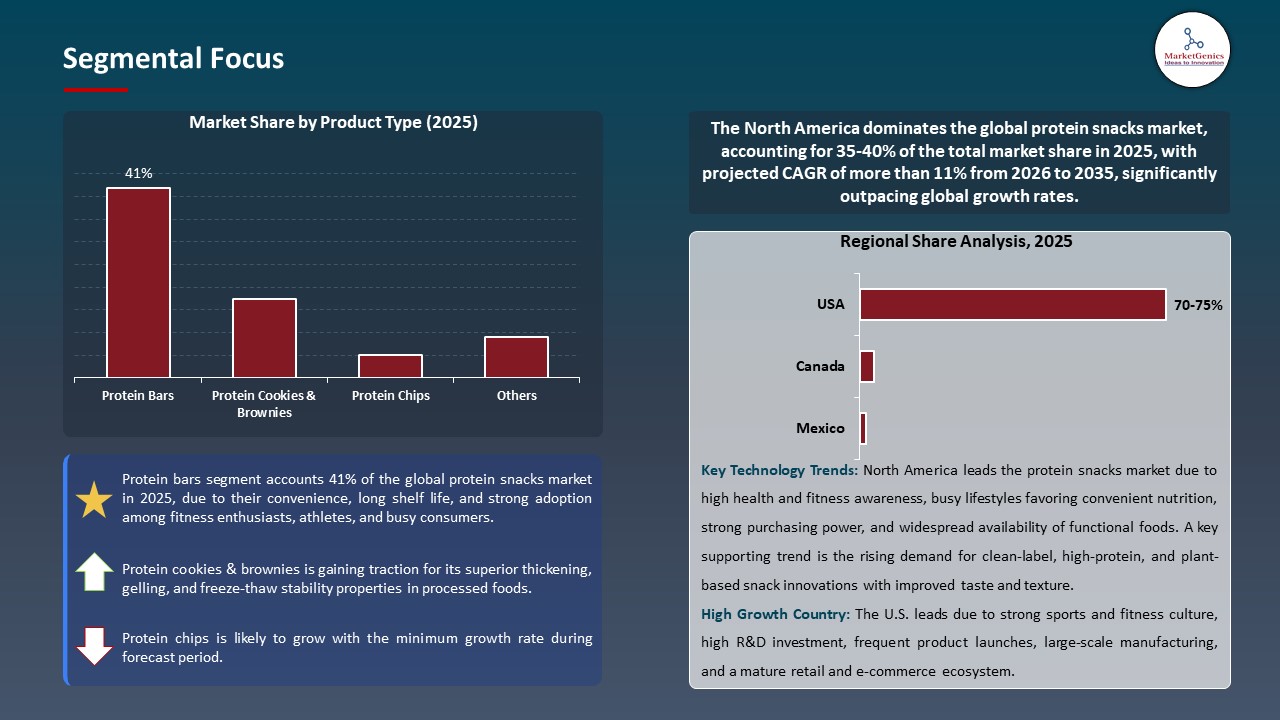
The protein bars dominate the global protein snacks market due to their convenience, high protein content and the presence of numerous functions, including muscle recovery, satiety, and weight management. Protein bars are used in various consumption purposes such as on the go snacks, pre/post workout, and replacements of meals and are a fundamental part of protein diets.
- Protein bar innovation is on the rise all over the world. For instance, CLIF BUILDERS introduced three new high-protein bars such as an OREO-flavored protein bar and lower-sugar crispy bars with 1620g protein in May 2025, which adds to the ever-changing ONTOGO and indulgent but functional snacks offerings.
- Protein bars have been updated with new protein combinations (whey -plant hybrids, collagen, and fermented proteins), functional ingredients such as probiotics, fiber, and adaptogens, extended shelf life and convenient packaging, further securing their dominance in the global market.
North America Leads Global Protein Snacks Market Demand
-
The state of the major proteins snacks demand center is North America, with the support of high levels of fitness oriented consumers, adoption of clinical nutrition and high levels of retail adoptions of functional snacking products in form of bars, bites, and ready-to-eat protein foods. Protein is a daily nutritional need and not a sports drink and that is how the U.S. spurs volume growth.
- Local food producers are hastening the creation of multi-purpose protein snacks, such as high, low-sugar and satiety focussed formulations in line with weight control, GLP-1 lifestyle and active age nutrition. For instance, in December 2025, RXBAR (Kellanova, USA) introduced RXBAR Protein Energy Bites, which provide 8-10g protein serving in easily convenient bites with simple ingredients in response to the increasing North American interest in portable, highly nutritious protein snacks.
- North America is bolstering its position in the global innovation of protein snacks, owing to robust ingredient sourcing, co-manufacturing networks, and omnichannel distribution.
Protein-Snacks-Market Ecosystem
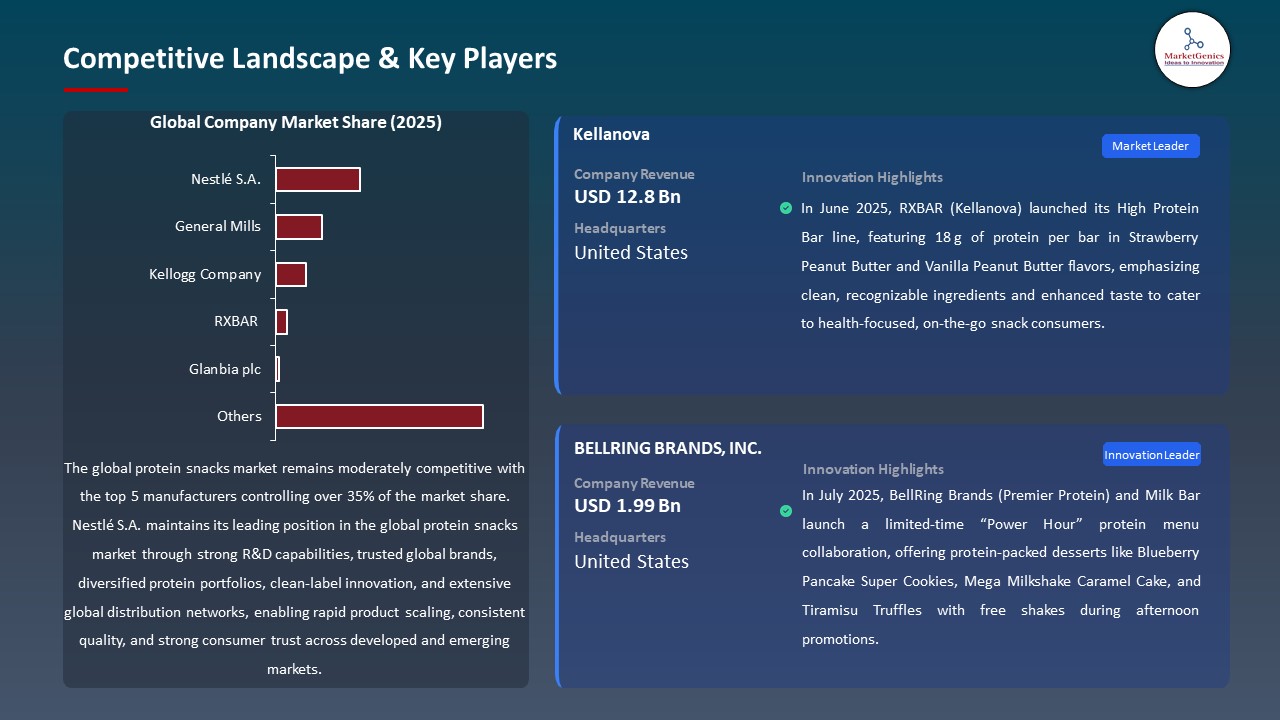
The protein snacks market is a moderately consolidated market in the world where the multinational food and nutrition industries and brand-oriented specialists are leading actors. At Tier-1, both scale and brand equity as well as distribution reach drive market concentration and both Tier-2 and Tier-3 activity are maintained by innovation and niche positioning.
Nestle S.A., General Mills, Kellogg Company, and Glanbia plc are Tier-1 and are market leaders in the ecosystem with diversified portfolios that cover protein bars, RTD shake, cereals, and functional snacks. These businesses are using sophisticated formulation, international manufacturing platforms, and consumer-driven data to grow high-protein, clean-label and functional snack products in mass and premium outlets.
Tier-2, like RXBAR (brand-led specialist) concentrate on minimalistic ingredient list, clear labelling and high-end positioning. They are strong in innovation of products within a short time and consumer loyalty which has been backed by parent company infrastructure.
Tier-3 participants are the contract manufacturers, ingredient suppliers and the co-packers who supply the protein isolates, fortification systems and processing support. In general, the ecosystem is focused on product differentiation, nutritional functionality, and omnichannel growth to maintain competitive advantage.
Recent Development and Strategic Overview
-
In October 2024, Optimum Nutrition (Glanbia plc) introduced 6 new flavor options in its Gold Standard 100% Whey, Gold Standard Protein Shake, and AMINO. ENERGY lines and Micronized Creatine Powder to expand the variety of tastes and ready-to-drink/ready-to-mix options to suit a broad range of protein-snack consumers.
- In November 2024, Origin Nutrition introduced a line of high-protein compression-popped pea chips in its brand Mojo Pops as an entry in the expanding healthy snacking market. These are chips that incorporate a proprietary compression popping technique and plant-based peanuts such as peas, lentils, and vegetables to provide a nutritionally balanced but high protein alternative to conventional snacks, as the demand by consumers is shifting toward flavorful but high protein products.
Report Scope
|
Detail |
|
|
Market Size in 2025 |
USD 43.1 Bn |
|
Market Forecast Value in 2035 |
USD 97.4 Bn |
|
Growth Rate (CAGR) |
8.5% |
|
Forecast Period |
2026 – 2035 |
|
Historical Data Available for |
2021 – 2024 |
|
Market Size Units |
US$ Billion for Value Tons for Volume |
|
Report Format |
Electronic (PDF) + Excel |
|
North America |
Europe |
Asia Pacific |
Middle East |
Africa |
South America |
|
|
|
|
|
|
|
Companies Covered |
|||||
|
|
|
|
|
|
Protein-Snacks-Market Segmentation and Highlights
|
Segment |
Sub-segment |
|
Protein Snacks Market, By Product Type |
|
|
Protein Snacks Market, By Protein Source |
|
|
Protein Snacks Market, By Distribution Channel |
|
|
Protein Snacks Market, By Packaging Type |
|
|
Protein Snacks Market, By Protein Content Level |
|
|
Protein Snacks Market, By Age Group |
|
|
Protein Snacks Market, By Application |
|
Frequently Asked Questions
Table of Contents
- 1. Research Methodology and Assumptions
- 1.1. Definitions
- 1.2. Research Design and Approach
- 1.3. Data Collection Methods
- 1.4. Base Estimates and Calculations
- 1.5. Forecasting Models
- 1.5.1. Key Forecast Factors & Impact Analysis
- 1.6. Secondary Research
- 1.6.1. Open Sources
- 1.6.2. Paid Databases
- 1.6.3. Associations
- 1.7. Primary Research
- 1.7.1. Primary Sources
- 1.7.2. Primary Interviews with Stakeholders across Ecosystem
- 2. Executive Summary
- 2.1. Global Protein Snacks Market Outlook
- 2.1.1. Protein Snacks Market Size (Volume - Tons and Value - US$ Bn), and Forecasts, 2021-2035
- 2.1.2. Compounded Annual Growth Rate Analysis
- 2.1.3. Growth Opportunity Analysis
- 2.1.4. Segmental Share Analysis
- 2.1.5. Geographical Share Analysis
- 2.2. Market Analysis and Facts
- 2.3. Supply-Demand Analysis
- 2.4. Competitive Benchmarking
- 2.5. Go-to- Market Strategy
- 2.5.1. Customer/ End-use Industry Assessment
- 2.5.2. Growth Opportunity Data, 2026-2035
- 2.5.2.1. Regional Data
- 2.5.2.2. Country Data
- 2.5.2.3. Segmental Data
- 2.5.3. Identification of Potential Market Spaces
- 2.5.4. GAP Analysis
- 2.5.5. Potential Attractive Price Points
- 2.5.6. Prevailing Market Risks & Challenges
- 2.5.7. Preferred Sales & Marketing Strategies
- 2.5.8. Key Recommendations and Analysis
- 2.5.9. A Way Forward
- 2.1. Global Protein Snacks Market Outlook
- 3. Industry Data and Premium Insights
- 3.1. Global Food & Beverages Industry Overview, 2025
- 3.1.1. Food & Beverages Industry Ecosystem Analysis
- 3.1.2. Key Trends for Food & Beverages Industry
- 3.1.3. Regional Distribution for Food & Beverages Industry
- 3.2. Supplier Customer Data
- 3.3. Technology Roadmap and Developments
- 3.4. Trade Analysis
- 3.4.1. Import & Export Analysis, 2025
- 3.4.2. Top Importing Countries
- 3.4.3. Top Exporting Countries
- 3.5. Trump Tariff Impact Analysis
- 3.5.1. Manufacturer
- 3.5.1.1. Based on the component & Raw material
- 3.5.2. Supply Chain
- 3.5.3. End Consumer
- 3.5.1. Manufacturer
- 3.6. Raw Material Analysis
- 3.1. Global Food & Beverages Industry Overview, 2025
- 4. Market Overview
- 4.1. Market Dynamics
- 4.1.1. Drivers
- 4.1.1.1. Rising consumer focus on high-protein, healthy snacking options.
- 4.1.1.2. Growing adoption of fitness, sports nutrition, and active lifestyles.
- 4.1.1.3. Expansion of convenient, on-the-go food formats with clean-label claims.
- 4.1.2. Restraints
- 4.1.2.1. Higher product prices compared to conventional snacks.
- 4.1.2.2. Taste, texture, and shelf-life challenges in high-protein formulations.
- 4.1.1. Drivers
- 4.2. Key Trend Analysis
- 4.3. Regulatory Framework
- 4.3.1. Key Regulations, Norms, and Subsidies, by Key Countries
- 4.3.2. Tariffs and Standards
- 4.3.3. Impact Analysis of Regulations on the Market
- 4.4. Value Chain Analysis
- 4.4.1. Raw Material Suppliers
- 4.4.2. Manufacturers
- 4.4.3. Dealers/ Distributors
- 4.4.4. End-Users/ Customers
- 4.5. Porter’s Five Forces Analysis
- 4.6. PESTEL Analysis
- 4.7. Global Protein Snacks Market Demand
- 4.7.1. Historical Market Size – Volume (Tons) and Value (US$ Bn), 2020-2024
- 4.7.2. Current and Future Market Size – Volume (Tons) and Value (US$ Bn), 2026–2035
- 4.7.2.1. Y-o-Y Growth Trends
- 4.7.2.2. Absolute $ Opportunity Assessment
- 4.1. Market Dynamics
- 5. Competition Landscape
- 5.1. Competition structure
- 5.1.1. Fragmented v/s consolidated
- 5.2. Company Share Analysis, 2025
- 5.2.1. Global Company Market Share
- 5.2.2. By Region
- 5.2.2.1. North America
- 5.2.2.2. Europe
- 5.2.2.3. Asia Pacific
- 5.2.2.4. Middle East
- 5.2.2.5. Africa
- 5.2.2.6. South America
- 5.3. Product Comparison Matrix
- 5.3.1. Specifications
- 5.3.2. Market Positioning
- 5.3.3. Pricing
- 5.1. Competition structure
- 6. Global Protein Snacks Market Analysis, by Product Type
- 6.1. Key Segment Analysis
- 6.2. Protein Snacks Market Size (Volume - Tons and Value - US$ Bn), Analysis, and Forecasts, by Product Type, 2021-2035
- 6.2.1. Protein Bars
- 6.2.1.1. Whey Protein Bars
- 6.2.1.2. Plant-Based Protein Bars
- 6.2.1.3. Collagen Protein Bars
- 6.2.1.4. Mixed Protein Bars
- 6.2.1.5. Others
- 6.2.2. Protein Cookies & Brownies
- 6.2.3. Protein Chips
- 6.2.3.1. Potato-Based Protein Chips
- 6.2.3.2. Chickpea-Based Protein Chips
- 6.2.3.3. Lentil-Based Protein Chips
- 6.2.3.4. Others
- 6.2.4. Jerky & Meat Snacks
- 6.2.4.1. Beef Jerky
- 6.2.4.2. Turkey Jerky
- 6.2.4.3. Chicken Jerky
- 6.2.4.4. Plant-Based Jerky
- 6.2.4.5. Others
- 6.2.5. Protein Balls & Bites
- 6.2.6. Roasted Nuts & Seeds
- 6.2.7. Protein Puffs & Crisps
- 6.2.8. Protein Puddings & Desserts
- 6.2.9. Trail Mix & Nut Mixes
- 6.2.10. Others
- 6.2.1. Protein Bars
- 7. Global Protein Snacks Market Analysis, by Protein Source
- 7.1. Key Segment Analysis
- 7.2. Protein Snacks Market Size (Volume - Tons and Value - US$ Bn), Analysis, and Forecasts, by Protein Source, 2021-2035
- 7.2.1. Animal-Based Protein
- 7.2.1.1. Whey Protein
- 7.2.1.2. Casein Protein
- 7.2.1.3. Egg Protein
- 7.2.1.4. Collagen Protein
- 7.2.1.5. Meat Protein
- 7.2.1.6. Others
- 7.2.2. Plant-Based Protein
- 7.2.2.1. Soy Protein
- 7.2.2.2. Pea Protein
- 7.2.2.3. Rice Protein
- 7.2.2.4. Hemp Protein
- 7.2.2.5. Chickpea Protein
- 7.2.2.6. Quinoa Protein
- 7.2.2.7. Others
- 7.2.3. Insect Protein
- 7.2.4. Blended Protein Sources
- 7.2.1. Animal-Based Protein
- 8. Global Protein Snacks Market Analysis, by Distribution Channel
- 8.1. Key Segment Analysis
- 8.2. Protein Snacks Market Size (Volume - Tons and Value - US$ Bn), Analysis, and Forecasts, by Distribution Channel, 2021-2035
- 8.2.1. Online Retail
- 8.2.1.1. E-commerce Websites
- 8.2.1.2. Direct-to-Consumer (D2C) Platforms
- 8.2.1.3. Subscription Services
- 8.2.1.4. Others
- 8.2.2. Offline Retail
- 8.2.2.1. Supermarkets & Hypermarkets
- 8.2.2.2. Convenience Stores
- 8.2.2.3. Specialty Health Stores
- 8.2.2.4. Gyms & Fitness Centers
- 8.2.2.5. Pharmacies & Drugstores
- 8.2.2.6. Vending Machines
- 8.2.2.7. Others
- 8.2.1. Online Retail
- 9. Global Protein Snacks Market Analysis, by Packaging Type
- 9.1. Key Segment Analysis
- 9.2. Protein Snacks Market Size (Volume - Tons and Value - US$ Bn), Analysis, and Forecasts, by Packaging Type, 2021-2035
- 9.2.1. Single-Serve Packaging
- 9.2.1.1. Pouches
- 9.2.1.2. Bars (Wrapped)
- 9.2.1.3. Sachets
- 9.2.1.4. Others
- 9.2.2. Multi-Serve Packaging
- 9.2.2.1. Resealable Bags
- 9.2.2.2. Boxes
- 9.2.2.3. Jars
- 9.2.2.4. Canisters
- 9.2.2.5. Others
- 9.2.3. On-the-Go Packaging
- 9.2.4. Bulk Packaging
- 9.2.1. Single-Serve Packaging
- 10. Global Protein Snacks Market Analysis, by Protein Content Level
- 10.1. Key Segment Analysis
- 10.2. Protein Snacks Market Size (Volume - Tons and Value - US$ Bn), Analysis, and Forecasts, by Protein Content Level, 2021-2035
- 10.2.1. Low Protein (5-10g per serving)
- 10.2.2. Medium Protein (10-20g per serving)
- 10.2.3. High Protein (20-30g per serving)
- 10.2.4. Very High Protein (>30g per serving)
- 11. Global Protein Snacks Market Analysis, by Age Group
- 11.1. Key Segment Analysis
- 11.2. Protein Snacks Market Size (Volume - Tons and Value - US$ Bn), Analysis, and Forecasts, by Age Group, 2021-2035
- 11.2.1. Children (5-12 years)
- 11.2.2. Teenagers (13-18 years)
- 11.2.3. Young Adults (19-35 years)
- 11.2.4. Middle-Aged Adults (36-55 years)
- 11.2.5. Seniors (55+ years)
- 12. Global Protein Snacks Market Analysis, by Application
- 12.1. Key Segment Analysis
- 12.2. Protein Snacks Market Size (Volume - Tons and Value - US$ Bn), Analysis, and Forecasts, by Application, 2021-2035
- 12.2.1. Sports & Fitness
- 12.2.1.1. Muscle Building & Recovery
- 12.2.1.2. Endurance Training
- 12.2.1.3. Weight Management
- 12.2.1.4. Athletic Performance Enhancement
- 12.2.1.5. Pre/Post Workout Nutrition
- 12.2.1.6. Others
- 12.2.2. Health & Wellness
- 12.2.2.1. Weight Loss Programs
- 12.2.2.2. Nutritional Supplementation
- 12.2.2.3. Healthy Aging
- 12.2.2.4. Immune System Support
- 12.2.2.5. Bone & Joint Health
- 12.2.2.6. Others
- 12.2.3. Clinical Nutrition
- 12.2.3.1. Medical Nutrition Therapy
- 12.2.3.2. Post-Surgery Recovery
- 12.2.3.3. Malnutrition Management
- 12.2.3.4. Diabetic Diets
- 12.2.3.5. Geriatric Nutrition
- 12.2.3.6. Others
- 12.2.4. Lifestyle & Convenience
- 12.2.4.1. Busy Professionals
- 12.2.4.2. On-the-Go Nutrition
- 12.2.4.3. Travel & Commuting
- 12.2.4.4. Office Snacking
- 12.2.4.5. Others
- 12.2.5. Specialty Diets
- 12.2.5.1. Vegetarian/Vegan Diets
- 12.2.5.2. Keto Diet Support
- 12.2.5.3. Low-Carb Diets
- 12.2.5.4. Paleo Diet
- 12.2.5.5. Allergen-Free Diets
- 12.2.5.6. Others
- 12.2.1. Sports & Fitness
- 13. Global Protein Snacks Market Analysis and Forecasts, by Region
- 13.1. Key Findings
- 13.2. Protein Snacks Market Size (Volume - Tons and Value - US$ Bn), Analysis, and Forecasts, by Region, 2021-2035
- 13.2.1. North America
- 13.2.2. Europe
- 13.2.3. Asia Pacific
- 13.2.4. Middle East
- 13.2.5. Africa
- 13.2.6. South America
- 14. North America Protein Snacks Market Analysis
- 14.1. Key Segment Analysis
- 14.2. Regional Snapshot
- 14.3. North America Protein Snacks Market Size (Volume - Tons and Value - US$ Bn), Analysis, and Forecasts, 2021-2035
- 14.3.1. Product Type
- 14.3.2. Protein Source
- 14.3.3. Distribution Channel
- 14.3.4. Packaging Type
- 14.3.5. Protein Content Level
- 14.3.6. Age Group
- 14.3.7. Application
- 14.3.8. Country
- 14.3.8.1. USA
- 14.3.8.2. Canada
- 14.3.8.3. Mexico
- 14.4. USA Protein Snacks Market
- 14.4.1. Country Segmental Analysis
- 14.4.2. Product Type
- 14.4.3. Protein Source
- 14.4.4. Distribution Channel
- 14.4.5. Packaging Type
- 14.4.6. Protein Content Level
- 14.4.7. Age Group
- 14.4.8. Application
- 14.5. Canada Protein Snacks Market
- 14.5.1. Country Segmental Analysis
- 14.5.2. Product Type
- 14.5.3. Protein Source
- 14.5.4. Distribution Channel
- 14.5.5. Packaging Type
- 14.5.6. Protein Content Level
- 14.5.7. Age Group
- 14.5.8. Application
- 14.6. Mexico Protein Snacks Market
- 14.6.1. Country Segmental Analysis
- 14.6.2. Product Type
- 14.6.3. Protein Source
- 14.6.4. Distribution Channel
- 14.6.5. Packaging Type
- 14.6.6. Protein Content Level
- 14.6.7. Age Group
- 14.6.8. Application
- 15. Europe Protein Snacks Market Analysis
- 15.1. Key Segment Analysis
- 15.2. Regional Snapshot
- 15.3. Europe Protein Snacks Market Size (Volume - Tons and Value - US$ Bn), Analysis, and Forecasts, 2021-2035
- 15.3.1. Product Type
- 15.3.2. Protein Source
- 15.3.3. Distribution Channel
- 15.3.4. Packaging Type
- 15.3.5. Protein Content Level
- 15.3.6. Age Group
- 15.3.7. Application
- 15.3.8. Country
- 15.3.8.1. Germany
- 15.3.8.2. United Kingdom
- 15.3.8.3. France
- 15.3.8.4. Italy
- 15.3.8.5. Spain
- 15.3.8.6. Netherlands
- 15.3.8.7. Nordic Countries
- 15.3.8.8. Poland
- 15.3.8.9. Russia & CIS
- 15.3.8.10. Rest of Europe
- 15.4. Germany Protein Snacks Market
- 15.4.1. Country Segmental Analysis
- 15.4.2. Product Type
- 15.4.3. Protein Source
- 15.4.4. Distribution Channel
- 15.4.5. Packaging Type
- 15.4.6. Protein Content Level
- 15.4.7. Age Group
- 15.4.8. Application
- 15.5. United Kingdom Protein Snacks Market
- 15.5.1. Country Segmental Analysis
- 15.5.2. Product Type
- 15.5.3. Protein Source
- 15.5.4. Distribution Channel
- 15.5.5. Packaging Type
- 15.5.6. Protein Content Level
- 15.5.7. Age Group
- 15.5.8. Application
- 15.6. France Protein Snacks Market
- 15.6.1. Country Segmental Analysis
- 15.6.2. Product Type
- 15.6.3. Protein Source
- 15.6.4. Distribution Channel
- 15.6.5. Packaging Type
- 15.6.6. Protein Content Level
- 15.6.7. Age Group
- 15.6.8. Application
- 15.7. Italy Protein Snacks Market
- 15.7.1. Country Segmental Analysis
- 15.7.2. Product Type
- 15.7.3. Protein Source
- 15.7.4. Distribution Channel
- 15.7.5. Packaging Type
- 15.7.6. Protein Content Level
- 15.7.7. Age Group
- 15.7.8. Application
- 15.8. Spain Protein Snacks Market
- 15.8.1. Country Segmental Analysis
- 15.8.2. Product Type
- 15.8.3. Protein Source
- 15.8.4. Distribution Channel
- 15.8.5. Packaging Type
- 15.8.6. Protein Content Level
- 15.8.7. Age Group
- 15.8.8. Application
- 15.9. Netherlands Protein Snacks Market
- 15.9.1. Country Segmental Analysis
- 15.9.2. Product Type
- 15.9.3. Protein Source
- 15.9.4. Distribution Channel
- 15.9.5. Packaging Type
- 15.9.6. Protein Content Level
- 15.9.7. Age Group
- 15.9.8. Application
- 15.10. Nordic Countries Protein Snacks Market
- 15.10.1. Country Segmental Analysis
- 15.10.2. Product Type
- 15.10.3. Protein Source
- 15.10.4. Distribution Channel
- 15.10.5. Packaging Type
- 15.10.6. Protein Content Level
- 15.10.7. Age Group
- 15.10.8. Application
- 15.11. Poland Protein Snacks Market
- 15.11.1. Country Segmental Analysis
- 15.11.2. Product Type
- 15.11.3. Protein Source
- 15.11.4. Distribution Channel
- 15.11.5. Packaging Type
- 15.11.6. Protein Content Level
- 15.11.7. Age Group
- 15.11.8. Application
- 15.12. Russia & CIS Protein Snacks Market
- 15.12.1. Country Segmental Analysis
- 15.12.2. Product Type
- 15.12.3. Protein Source
- 15.12.4. Distribution Channel
- 15.12.5. Packaging Type
- 15.12.6. Protein Content Level
- 15.12.7. Age Group
- 15.12.8. Application
- 15.13. Rest of Europe Protein Snacks Market
- 15.13.1. Country Segmental Analysis
- 15.13.2. Product Type
- 15.13.3. Protein Source
- 15.13.4. Distribution Channel
- 15.13.5. Packaging Type
- 15.13.6. Protein Content Level
- 15.13.7. Age Group
- 15.13.8. Application
- 16. Asia Pacific Protein Snacks Market Analysis
- 16.1. Key Segment Analysis
- 16.2. Regional Snapshot
- 16.3. Asia Pacific Protein Snacks Market Size (Volume - Tons and Value - US$ Bn), Analysis, and Forecasts, 2021-2035
- 16.3.1. Product Type
- 16.3.2. Protein Source
- 16.3.3. Distribution Channel
- 16.3.4. Packaging Type
- 16.3.5. Protein Content Level
- 16.3.6. Age Group
- 16.3.7. Application
- 16.3.8. Country
- 16.3.8.1. China
- 16.3.8.2. India
- 16.3.8.3. Japan
- 16.3.8.4. South Korea
- 16.3.8.5. Australia and New Zealand
- 16.3.8.6. Indonesia
- 16.3.8.7. Malaysia
- 16.3.8.8. Thailand
- 16.3.8.9. Vietnam
- 16.3.8.10. Rest of Asia Pacific
- 16.4. China Protein Snacks Market
- 16.4.1. Country Segmental Analysis
- 16.4.2. Product Type
- 16.4.3. Protein Source
- 16.4.4. Distribution Channel
- 16.4.5. Packaging Type
- 16.4.6. Protein Content Level
- 16.4.7. Age Group
- 16.4.8. Application
- 16.5. India Protein Snacks Market
- 16.5.1. Country Segmental Analysis
- 16.5.2. Product Type
- 16.5.3. Protein Source
- 16.5.4. Distribution Channel
- 16.5.5. Packaging Type
- 16.5.6. Protein Content Level
- 16.5.7. Age Group
- 16.5.8. Application
- 16.6. Japan Protein Snacks Market
- 16.6.1. Country Segmental Analysis
- 16.6.2. Product Type
- 16.6.3. Protein Source
- 16.6.4. Distribution Channel
- 16.6.5. Packaging Type
- 16.6.6. Protein Content Level
- 16.6.7. Age Group
- 16.6.8. Application
- 16.7. South Korea Protein Snacks Market
- 16.7.1. Country Segmental Analysis
- 16.7.2. Product Type
- 16.7.3. Protein Source
- 16.7.4. Distribution Channel
- 16.7.5. Packaging Type
- 16.7.6. Protein Content Level
- 16.7.7. Age Group
- 16.7.8. Application
- 16.8. Australia and New Zealand Protein Snacks Market
- 16.8.1. Country Segmental Analysis
- 16.8.2. Product Type
- 16.8.3. Protein Source
- 16.8.4. Distribution Channel
- 16.8.5. Packaging Type
- 16.8.6. Protein Content Level
- 16.8.7. Age Group
- 16.8.8. Application
- 16.9. Indonesia Protein Snacks Market
- 16.9.1. Country Segmental Analysis
- 16.9.2. Product Type
- 16.9.3. Protein Source
- 16.9.4. Distribution Channel
- 16.9.5. Packaging Type
- 16.9.6. Protein Content Level
- 16.9.7. Age Group
- 16.9.8. Application
- 16.10. Malaysia Protein Snacks Market
- 16.10.1. Country Segmental Analysis
- 16.10.2. Product Type
- 16.10.3. Protein Source
- 16.10.4. Distribution Channel
- 16.10.5. Packaging Type
- 16.10.6. Protein Content Level
- 16.10.7. Age Group
- 16.10.8. Application
- 16.11. Thailand Protein Snacks Market
- 16.11.1. Country Segmental Analysis
- 16.11.2. Product Type
- 16.11.3. Protein Source
- 16.11.4. Distribution Channel
- 16.11.5. Packaging Type
- 16.11.6. Protein Content Level
- 16.11.7. Age Group
- 16.11.8. Application
- 16.12. Vietnam Protein Snacks Market
- 16.12.1. Country Segmental Analysis
- 16.12.2. Product Type
- 16.12.3. Protein Source
- 16.12.4. Distribution Channel
- 16.12.5. Packaging Type
- 16.12.6. Protein Content Level
- 16.12.7. Age Group
- 16.12.8. Application
- 16.13. Rest of Asia Pacific Protein Snacks Market
- 16.13.1. Country Segmental Analysis
- 16.13.2. Product Type
- 16.13.3. Protein Source
- 16.13.4. Distribution Channel
- 16.13.5. Packaging Type
- 16.13.6. Protein Content Level
- 16.13.7. Age Group
- 16.13.8. Application
- 17. Middle East Protein Snacks Market Analysis
- 17.1. Key Segment Analysis
- 17.2. Regional Snapshot
- 17.3. Middle East Protein Snacks Market Size (Volume - Tons and Value - US$ Bn), Analysis, and Forecasts, 2021-2035
- 17.3.1. Product Type
- 17.3.2. Protein Source
- 17.3.3. Distribution Channel
- 17.3.4. Packaging Type
- 17.3.5. Protein Content Level
- 17.3.6. Age Group
- 17.3.7. Application
- 17.3.8. Country
- 17.3.8.1. Turkey
- 17.3.8.2. UAE
- 17.3.8.3. Saudi Arabia
- 17.3.8.4. Israel
- 17.3.8.5. Rest of Middle East
- 17.4. Turkey Protein Snacks Market
- 17.4.1. Country Segmental Analysis
- 17.4.2. Product Type
- 17.4.3. Protein Source
- 17.4.4. Distribution Channel
- 17.4.5. Packaging Type
- 17.4.6. Protein Content Level
- 17.4.7. Age Group
- 17.4.8. Application
- 17.5. UAE Protein Snacks Market
- 17.5.1. Country Segmental Analysis
- 17.5.2. Product Type
- 17.5.3. Protein Source
- 17.5.4. Distribution Channel
- 17.5.5. Packaging Type
- 17.5.6. Protein Content Level
- 17.5.7. Age Group
- 17.5.8. Application
- 17.6. Saudi Arabia Protein Snacks Market
- 17.6.1. Country Segmental Analysis
- 17.6.2. Product Type
- 17.6.3. Protein Source
- 17.6.4. Distribution Channel
- 17.6.5. Packaging Type
- 17.6.6. Protein Content Level
- 17.6.7. Age Group
- 17.6.8. Application
- 17.7. Israel Protein Snacks Market
- 17.7.1. Country Segmental Analysis
- 17.7.2. Product Type
- 17.7.3. Protein Source
- 17.7.4. Distribution Channel
- 17.7.5. Packaging Type
- 17.7.6. Protein Content Level
- 17.7.7. Age Group
- 17.7.8. Application
- 17.8. Rest of Middle East Protein Snacks Market
- 17.8.1. Country Segmental Analysis
- 17.8.2. Product Type
- 17.8.3. Protein Source
- 17.8.4. Distribution Channel
- 17.8.5. Packaging Type
- 17.8.6. Protein Content Level
- 17.8.7. Age Group
- 17.8.8. Application
- 18. Africa Protein Snacks Market Analysis
- 18.1. Key Segment Analysis
- 18.2. Regional Snapshot
- 18.3. Africa Protein Snacks Market Size (Volume - Tons and Value - US$ Bn), Analysis, and Forecasts, 2021-2035
- 18.3.1. Product Type
- 18.3.2. Protein Source
- 18.3.3. Distribution Channel
- 18.3.4. Packaging Type
- 18.3.5. Protein Content Level
- 18.3.6. Age Group
- 18.3.7. Application
- 18.3.8. Country
- 18.3.8.1. South Africa
- 18.3.8.2. Egypt
- 18.3.8.3. Nigeria
- 18.3.8.4. Algeria
- 18.3.8.5. Rest of Africa
- 18.4. South Africa Protein Snacks Market
- 18.4.1. Country Segmental Analysis
- 18.4.2. Product Type
- 18.4.3. Protein Source
- 18.4.4. Distribution Channel
- 18.4.5. Packaging Type
- 18.4.6. Protein Content Level
- 18.4.7. Age Group
- 18.4.8. Application
- 18.5. Egypt Protein Snacks Market
- 18.5.1. Country Segmental Analysis
- 18.5.2. Product Type
- 18.5.3. Protein Source
- 18.5.4. Distribution Channel
- 18.5.5. Packaging Type
- 18.5.6. Protein Content Level
- 18.5.7. Age Group
- 18.5.8. Application
- 18.6. Nigeria Protein Snacks Market
- 18.6.1. Country Segmental Analysis
- 18.6.2. Product Type
- 18.6.3. Protein Source
- 18.6.4. Distribution Channel
- 18.6.5. Packaging Type
- 18.6.6. Protein Content Level
- 18.6.7. Age Group
- 18.6.8. Application
- 18.7. Algeria Protein Snacks Market
- 18.7.1. Country Segmental Analysis
- 18.7.2. Product Type
- 18.7.3. Protein Source
- 18.7.4. Distribution Channel
- 18.7.5. Packaging Type
- 18.7.6. Protein Content Level
- 18.7.7. Age Group
- 18.7.8. Application
- 18.8. Rest of Africa Protein Snacks Market
- 18.8.1. Country Segmental Analysis
- 18.8.2. Product Type
- 18.8.3. Protein Source
- 18.8.4. Distribution Channel
- 18.8.5. Packaging Type
- 18.8.6. Protein Content Level
- 18.8.7. Age Group
- 18.8.8. Application
- 19. South America Protein Snacks Market Analysis
- 19.1. Key Segment Analysis
- 19.2. Regional Snapshot
- 19.3. South America Protein Snacks Market Size (Volume - Tons and Value - US$ Bn), Analysis, and Forecasts, 2021-2035
- 19.3.1. Product Type
- 19.3.2. Protein Source
- 19.3.3. Distribution Channel
- 19.3.4. Packaging Type
- 19.3.5. Protein Content Level
- 19.3.6. Age Group
- 19.3.7. Application
- 19.3.8. Country
- 19.3.8.1. Brazil
- 19.3.8.2. Argentina
- 19.3.8.3. Rest of South America
- 19.4. Brazil Protein Snacks Market
- 19.4.1. Country Segmental Analysis
- 19.4.2. Product Type
- 19.4.3. Protein Source
- 19.4.4. Distribution Channel
- 19.4.5. Packaging Type
- 19.4.6. Protein Content Level
- 19.4.7. Age Group
- 19.4.8. Application
- 19.5. Argentina Protein Snacks Market
- 19.5.1. Country Segmental Analysis
- 19.5.2. Product Type
- 19.5.3. Protein Source
- 19.5.4. Distribution Channel
- 19.5.5. Packaging Type
- 19.5.6. Protein Content Level
- 19.5.7. Age Group
- 19.5.8. Application
- 19.6. Rest of South America Protein Snacks Market
- 19.6.1. Country Segmental Analysis
- 19.6.2. Product Type
- 19.6.3. Protein Source
- 19.6.4. Distribution Channel
- 19.6.5. Packaging Type
- 19.6.6. Protein Content Level
- 19.6.7. Age Group
- 19.6.8. Application
- 20. Key Players/ Company Profile
- 20.1. Atkins Nutritionals
- 20.1.1. Company Details/ Overview
- 20.1.2. Company Financials
- 20.1.3. Key Customers and Competitors
- 20.1.4. Business/ Industry Portfolio
- 20.1.5. Product Portfolio/ Specification Details
- 20.1.6. Pricing Data
- 20.1.7. Strategic Overview
- 20.1.8. Recent Developments
- 20.2. Bio-Engineered Supplements & Nutrition, Inc.
- 20.3. Built Bar
- 20.4. Clif Bar & Company
- 20.5. General Mills
- 20.6. Glanbia plc
- 20.7. GoMacro
- 20.8. Kellogg Company
- 20.9. KIND LLC
- 20.10. LÄRABAR
- 20.11. Mars Incorporated
- 20.12. MusclePharm Corporation
- 20.13. Nestlé S.A.
- 20.14. NuGo Nutrition
- 20.15. Optimum Nutrition (Glanbia)
- 20.16. PepsiCo
- 20.17. Premier Nutrition Corporation
- 20.18. Quest Nutrition
- 20.19. RXBAR
- 20.20. The Hershey Company
- 20.21. Other Key Players
- 20.1. Atkins Nutritionals
Note* - This is just tentative list of players. While providing the report, we will cover more number of players based on their revenue and share for each geography
Research Design
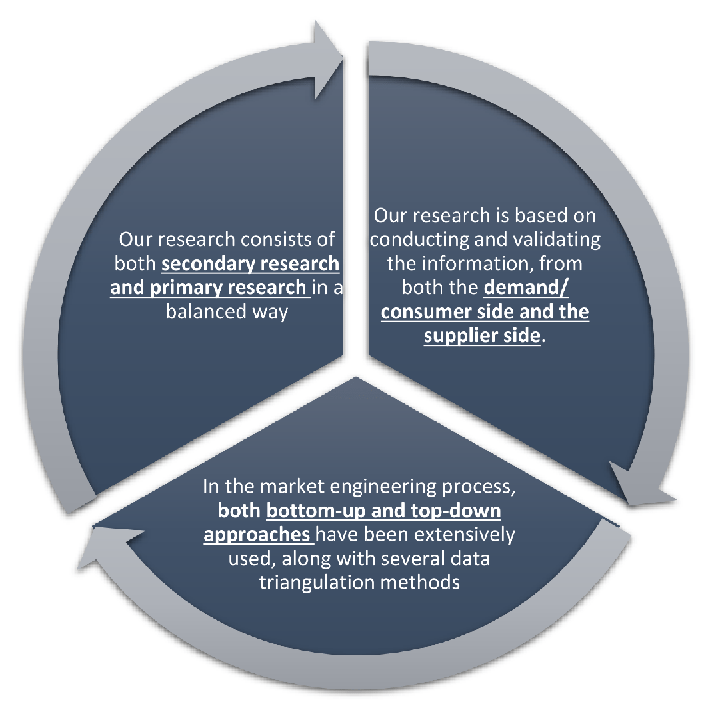
Our research design integrates both demand-side and supply-side analysis through a balanced combination of primary and secondary research methodologies. By utilizing both bottom-up and top-down approaches alongside rigorous data triangulation methods, we deliver robust market intelligence that supports strategic decision-making.
MarketGenics' comprehensive research design framework ensures the delivery of accurate, reliable, and actionable market intelligence. Through the integration of multiple research approaches, rigorous validation processes, and expert analysis, we provide our clients with the insights needed to make informed strategic decisions and capitalize on market opportunities.
MarketGenics leverages a dedicated industry panel of experts and a comprehensive suite of paid databases to effectively collect, consolidate, and analyze market intelligence.
Our approach has consistently proven to be reliable and effective in generating accurate market insights, identifying key industry trends, and uncovering emerging business opportunities.
Through both primary and secondary research, we capture and analyze critical company-level data such as manufacturing footprints, including technical centers, R&D facilities, sales offices, and headquarters.
Our expert panel further enhances our ability to estimate market size for specific brands based on validated field-level intelligence.
Our data mining techniques incorporate both parametric and non-parametric methods, allowing for structured data collection, sorting, processing, and cleaning.
Demand projections are derived from large-scale data sets analyzed through proprietary algorithms, culminating in robust and reliable market sizing.
Research Approach
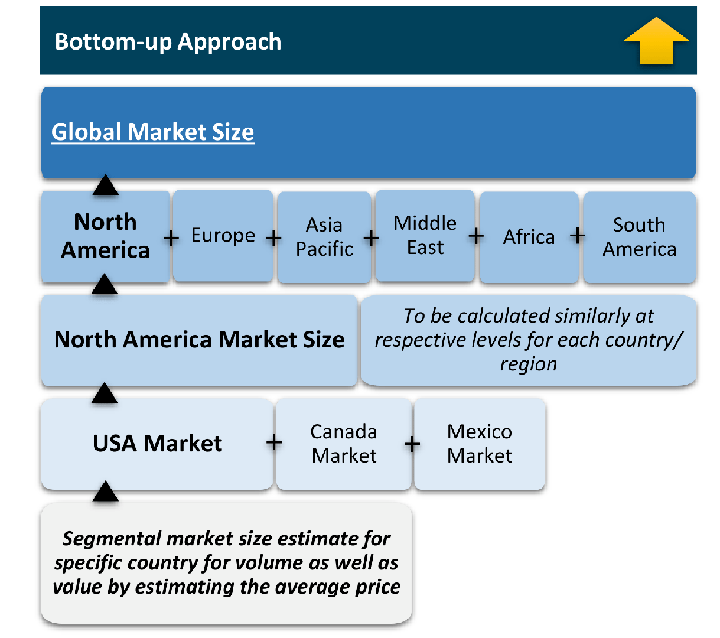
The bottom-up approach builds market estimates by starting with the smallest addressable market units and systematically aggregating them to create comprehensive market size projections.
This method begins with specific, granular data points and builds upward to create the complete market landscape.
Customer Analysis → Segmental Analysis → Geographical Analysis
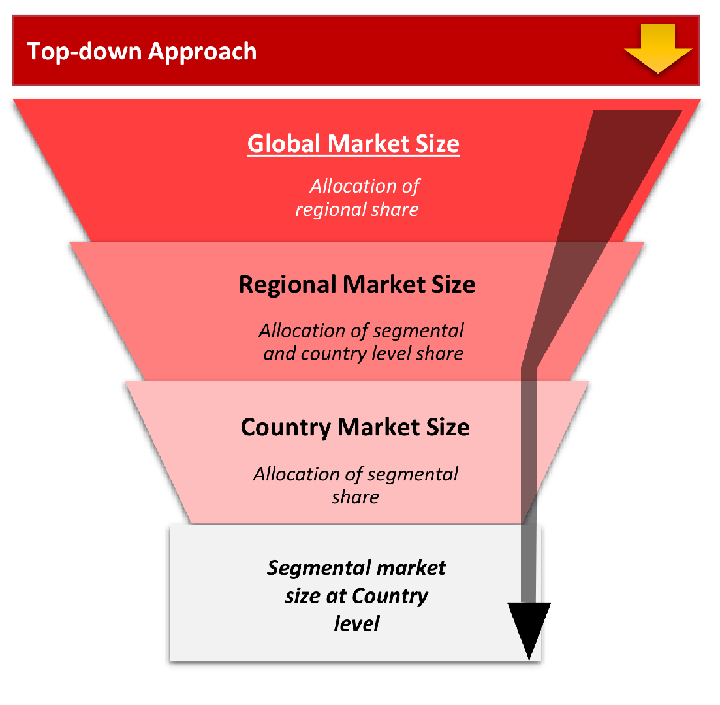
The top-down approach starts with the broadest possible market data and systematically narrows it down through a series of filters and assumptions to arrive at specific market segments or opportunities.
This method begins with the big picture and works downward to increasingly specific market slices.
TAM → SAM → SOM
Research Methods
Desk / Secondary Research
While analysing the market, we extensively study secondary sources, directories, and databases to identify and collect information useful for this technical, market-oriented, and commercial report. Secondary sources that we utilize are not only the public sources, but it is a combination of Open Source, Associations, Paid Databases, MG Repository & Knowledgebase, and others.
- Company websites, annual reports, financial reports, broker reports, and investor presentations
- National government documents, statistical databases and reports
- News articles, press releases and web-casts specific to the companies operating in the market, Magazines, reports, and others
- We gather information from commercial data sources for deriving company specific data such as segmental revenue, share for geography, product revenue, and others
- Internal and external proprietary databases (industry-specific), relevant patent, and regulatory databases
- Governing Bodies, Government Organizations
- Relevant Authorities, Country-specific Associations for Industries
We also employ the model mapping approach to estimate the product level market data through the players' product portfolio
Primary Research
Primary research/ interviews is vital in analyzing the market. Most of the cases involves paid primary interviews. Primary sources include primary interviews through e-mail interactions, telephonic interviews, surveys as well as face-to-face interviews with the different stakeholders across the value chain including several industry experts.
| Type of Respondents | Number of Primaries |
|---|---|
| Tier 2/3 Suppliers | ~20 |
| Tier 1 Suppliers | ~25 |
| End-users | ~25 |
| Industry Expert/ Panel/ Consultant | ~30 |
| Total | ~100 |
MG Knowledgebase
• Repository of industry blog, newsletter and case studies
• Online platform covering detailed market reports, and company profiles
Forecasting Factors and Models
Forecasting Factors
- Historical Trends – Past market patterns, cycles, and major events that shaped how markets behave over time. Understanding past trends helps predict future behavior.
- Industry Factors – Specific characteristics of the industry like structure, regulations, and innovation cycles that affect market dynamics.
- Macroeconomic Factors – Economic conditions like GDP growth, inflation, and employment rates that affect how much money people have to spend.
- Demographic Factors – Population characteristics like age, income, and location that determine who can buy your product.
- Technology Factors – How quickly people adopt new technology and how much technology infrastructure exists.
- Regulatory Factors – Government rules, laws, and policies that can help or restrict market growth.
- Competitive Factors – Analyzing competition structure such as degree of competition and bargaining power of buyers and suppliers.
Forecasting Models / Techniques
Multiple Regression Analysis
- Identify and quantify factors that drive market changes
- Statistical modeling to establish relationships between market drivers and outcomes
Time Series Analysis – Seasonal Patterns
- Understand regular cyclical patterns in market demand
- Advanced statistical techniques to separate trend, seasonal, and irregular components
Time Series Analysis – Trend Analysis
- Identify underlying market growth patterns and momentum
- Statistical analysis of historical data to project future trends
Expert Opinion – Expert Interviews
- Gather deep industry insights and contextual understanding
- In-depth interviews with key industry stakeholders
Multi-Scenario Development
- Prepare for uncertainty by modeling different possible futures
- Creating optimistic, pessimistic, and most likely scenarios
Time Series Analysis – Moving Averages
- Sophisticated forecasting for complex time series data
- Auto-regressive integrated moving average models with seasonal components
Econometric Models
- Apply economic theory to market forecasting
- Sophisticated economic models that account for market interactions
Expert Opinion – Delphi Method
- Harness collective wisdom of industry experts
- Structured, multi-round expert consultation process
Monte Carlo Simulation
- Quantify uncertainty and probability distributions
- Thousands of simulations with varying input parameters
Research Analysis
Our research framework is built upon the fundamental principle of validating market intelligence from both demand and supply perspectives. This dual-sided approach ensures comprehensive market understanding and reduces the risk of single-source bias.
Demand-Side Analysis: We understand end-user/application behavior, preferences, and market needs along with the penetration of the product for specific application.
Supply-Side Analysis: We estimate overall market revenue, analyze the segmental share along with industry capacity, competitive landscape, and market structure.
Validation & Evaluation
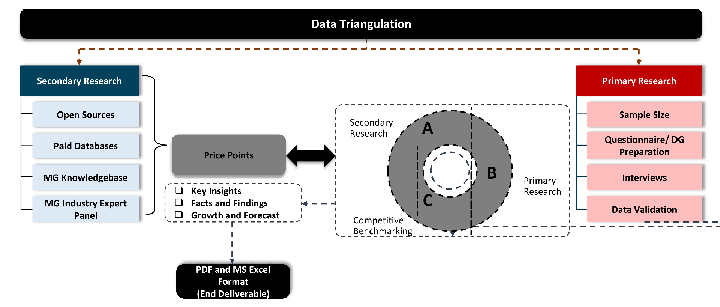
Data triangulation is a validation technique that uses multiple methods, sources, or perspectives to examine the same research question, thereby increasing the credibility and reliability of research findings. In market research, triangulation serves as a quality assurance mechanism that helps identify and minimize bias, validate assumptions, and ensure accuracy in market estimates.
- Data Source Triangulation – Using multiple data sources to examine the same phenomenon
- Methodological Triangulation – Using multiple research methods to study the same research question
- Investigator Triangulation – Using multiple researchers or analysts to examine the same data
- Theoretical Triangulation – Using multiple theoretical perspectives to interpret the same data
Custom Market Research Services
We will customise the research for you, in case the report listed above does not meet your requirements.
Get 10% Free Customisation