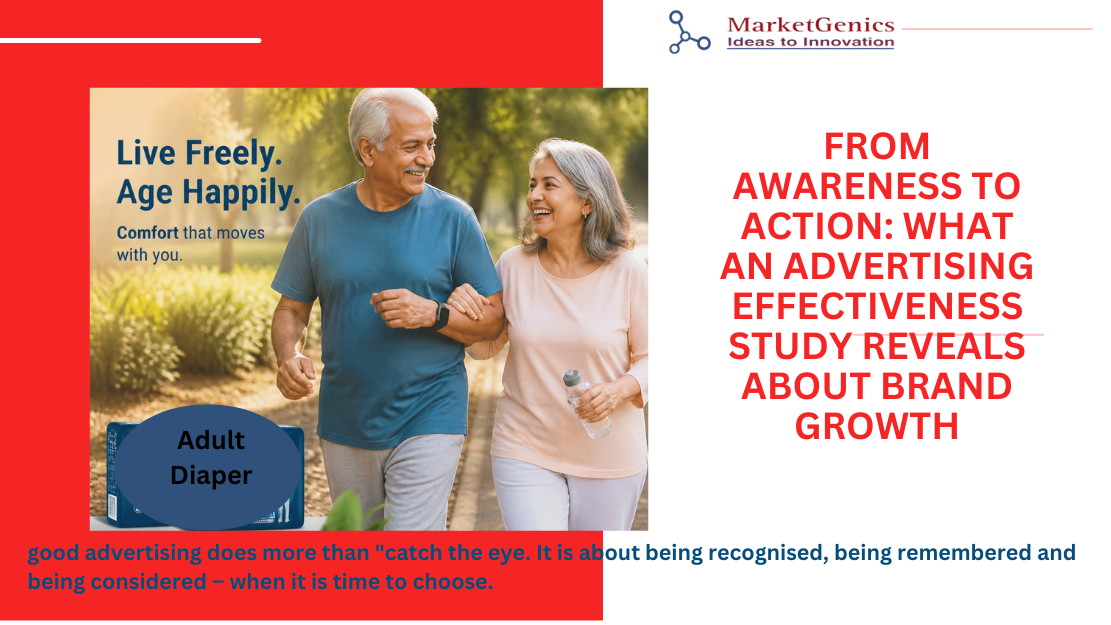
Good advertising can get people’s attention, create confidence, and stir up interest. But how well does this translate into brand recognition, consideration and usage?
Advertising success in a competitive and often sensitive consumer category is more than just being seen. It’s about staying on top of the mind of consumers, so they know what it means to them and they consider it when they’re making purchase decisions.
A recent Brand Pulse study examined the effectiveness of digital advertising within the adult incontinence care category. It compared consumers who had been exposed to digital advertising with those who had not. The results indicate promising signals for brand engagement as well as effective ways to strengthen brand distinctiveness, improve advertising attribution and convert awareness into consideration and preference.
Objective of the study
The objective of the research study was to understand how brand outcomes differ for consumers exposed to digital advertising and not exposed, across key stages of the consumer journey.
Brand awareness and salience : The extent to which consumers are aware of and recall brands in the category.
Consideration and preference: Do consumers consider a brand and actively prefer it to the alternatives?
Recent and regular usage: How much brands are present in consumers’ actual behavior.
Advertising recall and brand attribution: Are consumers able to remember the advertising and correctly attribute it to the advertized brand?
Creative appeal, purchase intent and trust: The extent to which advertising connects with audiences and influences their reported willingness to consider making a purchase.
Methodology & Target Audience
The study was designed as a quantitative and structured interview of 600 respondents from six major cities in India - Delhi, Kolkata, Mumbai, Hyderabad, Bengaluru and Chennai. In each city there were 100 interviews, 300 digitally exposed respondents and 300 non-exposed respondents.
The participants were aged between 36 and 60+ years, men and women, belonging to the SEC A+ and A households. To be eligible, the respondent or someone they cared for had to have used adult diapers or incontinence products in the last 90 days.
Findings
The findings of the ad effectiveness study pointed out towards few relevant points for our client's brand:
- Build a unique brand recognition. Use consistent visual assets and product cues across digital and offline touchpoints.”
- Start branding earlier. Try creative variations that make the brand recognizable from the first moments.
- Bolster reasons to choose. Convey functional benefits and emotional reassurance backed by credible evidence.
- Reiterate confidence at the moment of decision. Provide clarity around product information for pharmacists and healthcare professionals, and standardise communication from channels.
- Measure incremental impact. Optimize the comparison of exposed to non-exposed conditions, understanding the differences in audience and make a better determination of advertising's contribution.
Those priorities must be challenged systemically and decision for future investments should be based on the evaluation of measurable improvements instead of only creative appeal, reach or simple numbers.
Conclusion
The study paints a very positive picture of the performance of advertising. Brand awareness and usage is established and the creative resonates positively on appeal, trust and stated purchase intent. Concurrently, the data highlight valuable differences between awareness, consideration and preference as well as potential for enhancing the relationship between the ad and the brand.
These gaps need to be addressed for further development. With greater brand separateness, more purpose on the choices, ongoing brand acknowledgement and more stringent results measurement, advertising engagement can be better transitioned to more important brand final results.
In the final analysis, good advertising does more than "catch the eye. It is about being recognised, being remembered and being considered – when it is time to choose.