Introduction
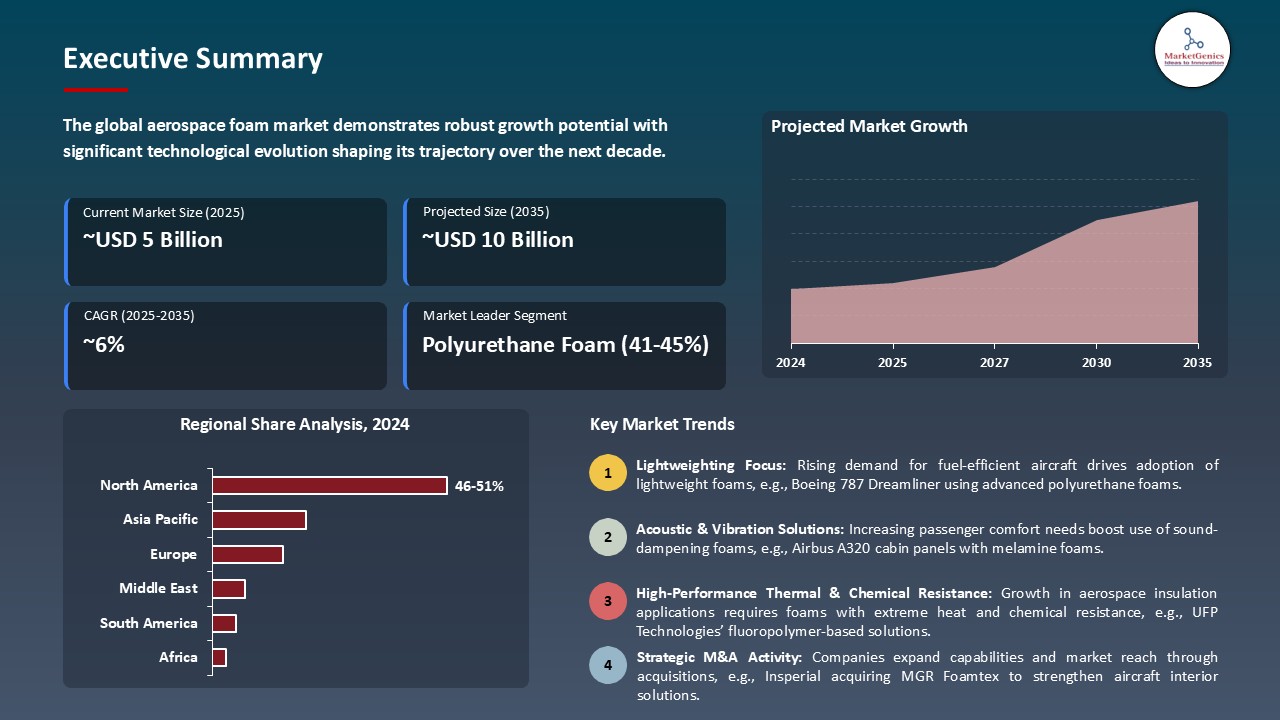
The global Aerospace Foam Market is valued at USD 5.3 billion in 2025. The market is projected to grow at a CAGR of 6.6% during the forecast period of 2025 to 2035.
The aerospace industry is undergoing a significant transformation as manufacturers strive to build lighter, safer, and more fuel-efficient aircraft. While advanced composites and lightweight alloys often dominate industry discussions, aerospace foams have quietly become an essential component in modern aircraft design. From thermal insulation and acoustic dampening to vibration control and passenger comfort, these engineered materials play a critical role in improving aircraft performance while supporting sustainability goals.
Demand Trends
Lightweighting Demand: Increasing need for fuel-efficient aircraft drives adoption of lightweight aerospace foams, exemplified by Boeing using advanced polyurethane foams in 787 Dreamliner interiors.
Noise & Vibration Reduction: Growing focus on passenger comfort boosts demand for acoustic foams, as seen in Airbus incorporating melamine-based foams in A320 cabin panels.
Market Intelligence
Aerospace Foam Market is benefiting from long-term investments in commercial aviation, defense programs, and next-generation aircraft development. Aircraft manufacturers are increasingly adopting lightweight materials to improve fuel efficiency and reduce carbon emissions. Every kilogram removed from an aircraft contributes to lower operating costs over its service life, making advanced foam materials an important element of aircraft design.
The growing production of narrow-body aircraft, rising demand for aircraft cabin retrofits, and increasing defense procurement are creating new opportunities for foam manufacturers. At the same time, sustainability initiatives are encouraging the development of recyclable and low-emission materials that align with the aviation industry’s environmental objectives.
Another important trend is the increasing adoption of advanced polymer technologies capable of delivering superior thermal insulation, impact resistance, vibration absorption, and long-term durability under demanding operating conditions.
Industry Trends Shaping the Market
Lightweight Materials Continue to Gain Importance
Aircraft manufacturers continue to prioritize weight reduction across every component. Aerospace foams are increasingly replacing conventional insulation materials due to their ability to provide excellent mechanical performance while significantly reducing overall aircraft weight. These materials contribute to improved fuel efficiency, lower maintenance requirements, and enhanced passenger comfort.
Sustainability is Driving Material Innovation
The aviation industry has committed to reducing its environmental footprint through improved aircraft efficiency and sustainable manufacturing practices. Material suppliers are responding by developing next-generation foam solutions with lower environmental impact, improved recyclability, and reduced volatile organic compound (VOC) emissions while maintaining the high-performance characteristics required for aerospace applications.
Aerospace Foam Market Ecosystem
Key players in the global Aerospace Foam Market include prominent companies such as:
- BASF SE
- Evonik Industries AG
- Rogers Corporation
- Solvay S.A.
- Boyd Corporation and Other Key Players.
The Aerospace Foam Market is moderately consolidated, with Tier 1 players such as BASF, Rogers Corporation, and SABIC leading due to their advanced material technologies and strong OEM partnerships. Tier 2 and 3 players like Zotefoams and General Plastics serve niche and regional aerospace needs. Buyer concentration is moderate, driven by a limited number of major aircraft manufacturers, while supplier concentration is high due to stringent material certifications, specialty polymers, and regulatory compliance in aerospace applications.
Regional Outlook
North America continues to lead the Aerospace Foam Market, supported by a strong aerospace manufacturing ecosystem, significant defense spending, and ongoing investments in commercial aircraft production.
Europe remains a key innovation hub, driven by stringent environmental regulations and continued investment in next-generation aircraft technologies.
Asia-Pacific is expected to witness robust growth due to expanding commercial aviation fleets, increasing aircraft maintenance activities, and growing investments in domestic aerospace manufacturing capabilities. Countries including China and India continue to strengthen their aerospace supply chains through government-supported initiatives and rising passenger traffic.
Competitive Landscape
Competition within the Aerospace Foam Market is increasingly centered on product innovation, regulatory compliance, and strategic partnerships. Material manufacturers are focusing on developing lightweight, fire-resistant, and environmentally sustainable foam solutions that meet evolving aerospace certification requirements.
Industry participants are also expanding research and development activities to improve mechanical properties, reduce manufacturing costs, and support emerging aircraft platforms, including electric aircraft and advanced air mobility vehicles. Collaborations between aerospace OEMs, material suppliers, and research institutions are accelerating the commercialization of next-generation insulation technologies.
Conclusion
The Aerospace Foam Market is evolving beyond traditional insulation applications to become a strategic enabler of lightweight aircraft design, operational efficiency, and sustainable aviation. As aerospace manufacturers embrace advanced materials to meet stricter environmental standards and improve aircraft performance, demand for innovative foam technologies is expected to grow steadily across commercial, defense, and emerging aviation segments.
Recent Development and Strategic Overview:
In April 2025, Insperial, a portfolio company of Adagia Partners, completed the acquisition of MGR Foamtex, one of the major suppliers in the UK of soft furnishing and foam-based comfort products for aircraft interiors. This strategic move seeks to leverage Insperial's industrial material arm along with MGR Foamtex's aerospace expertise in seating and noise insulation and trim applications.
UFP Technologies, an American leader in aerospace-grade foam and component solutions, acquired Welch Fluorocarbon, a company that provides thin-film welding and thermoforming of high-performance plastics such as fluoropolymers. This acquisition enhances UFP's capacity regarding aerospace insulation and protective packaging, in particular applications where extremely high levels of heat and chemical resistance are demanded.
Recent News states FlightGlobal reported that airlines including Lufthansa, ANA, Wizz Air, and others are expanding cabin refurbishment, premium seating, and interior modernization programs as passenger demand grows. These upgrades require new seating, insulation, sidewalls, flooring, and interior panels that rely on advanced aerospace foams.
In March 2025, Rogers Corporation launched a new lightweight polyurethane foam tailored for electric aircraft thermal management systems, targeting improved insulation and fire resistance. This strategic product development aligns with the growing demand for sustainable aviation solutions. Colin Gouveia, President and CEO of Rogers Corporation, emphasized this move as part of their broader commitment to next-generation aerospace innovations. The launch enhances Rogers’ position in emerging electric aviation markets by addressing both safety and energy efficiency needs.
Find More Information on the Aerospace Foam Market with expert analysis, market forecasts, and strategic insights from MarketGenics @ https://marketgenics.co/reports/aerospace-foam-market-98244