Automotive Headliner Market Size, Share & Trends Analysis Report by Material Type (Fabric Headliner, Foam-Backed Headliner, Vinyl/ Leather Headliner, Composite/ Substrate Headliner, Suede/Alcantara Headliner, Acoustic Headliner), Substrate Type, Product Type, Vehicle Type, Sales Channel and Geography (North America, Europe, Asia Pacific, Middle East, Africa, and South America) – Global Industry Data, Trends, and Forecasts, 2026–2035
Market Overview:
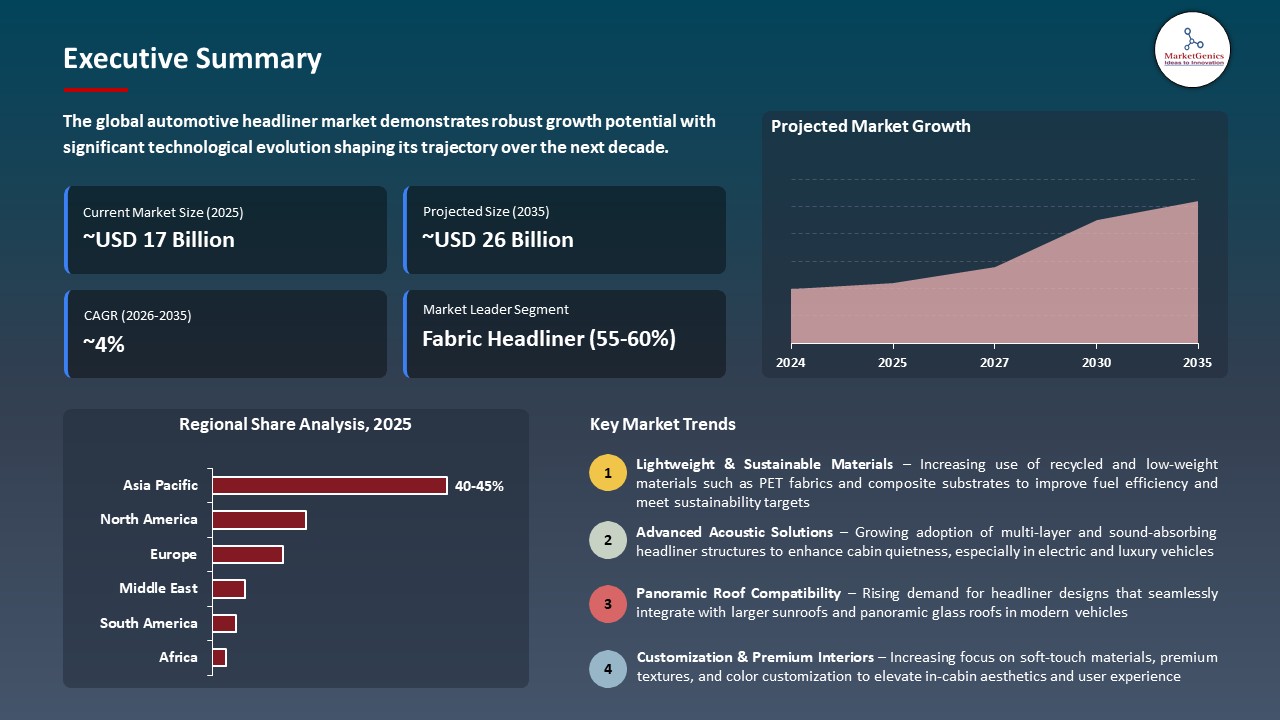
As per MarketGenics, the global Automotive Headliner Market is experiencing significant growth, valued at USD 17.4 billion in 2025 and projected to reach USD 26.0 billion by 2035, registering a CAGR of 4.1% during the forecast period.
|
|
|
Segmental Data Insights |
|
|
Demand Trends |
|
|
Competitive Landscape |
|
|
Strategic Development |
|
|
Future Outlook & Opportunities |
|
Automotive-Headliner-Market Size, Share, and Growth
The global automotive headliner market is driven by increasing adoption of lightweight and sustainable materials, growing consumer preference for premium and comfortable vehicle interiors, rising production of electric and luxury vehicles, and OEM focus on integrating advanced technologies such as ambient lighting, audio systems, and smart sensors.
“We are excited to showcase our latest solutions at the Beijing Auto Show”, commented Jorge Juarez, Group Executive Vice President for Asia of Antolin. "Our roadmap is clear: prioritize profitable growth, particularly in high-potential markets like China, and advance our technological solutions in lighting, HMI, electronics, and sustainability.”
The growing use of lightweight composite materials and recycling in automotive headliners by automotive manufacturers is facilitating the improvement in fuel economy of vehicles and increasing the range of electric vehicles. For example, Toyota Boshoku Corporation is working on lightweight and acoustically designed headliner products that are eco-conscious in nature within its eco-friendly interior innovation efforts. This is leading to the development of innovative materials, prompting automotive OEMs and component makers to focus on lightweight eco-friendly interior designs.
Additionally, the incorporation of ambient lighting, sophisticated sensors, and improved acoustic insulation in automotive headliners is being driven by the growing consumer appetite for high-end in-cabin experiences. For instance, Grupo Antolin has introduced advanced headliner technologies featuring integrated ambient lighting and smart surface systems at major automotive exhibitions, reflecting OEM demand for intelligent and customizable interiors. This is improving headliner functionality and hastening the transition to high-end, technologically advanced car interiors.
Key adjacent market opportunities for the global automotive headliner market include growth in automotive acoustic insulation systems, lightweight interior trim materials, EV cabin interior modules, smart ambient lighting systems, and sustainable recycled textile composites used in vehicle interiors. These adjacent markets are expanding design innovation and accelerating the integration of multifunctional, lightweight, and sustainable automotive interior solutions.
Automotive Headliner Market Dynamics and Trends
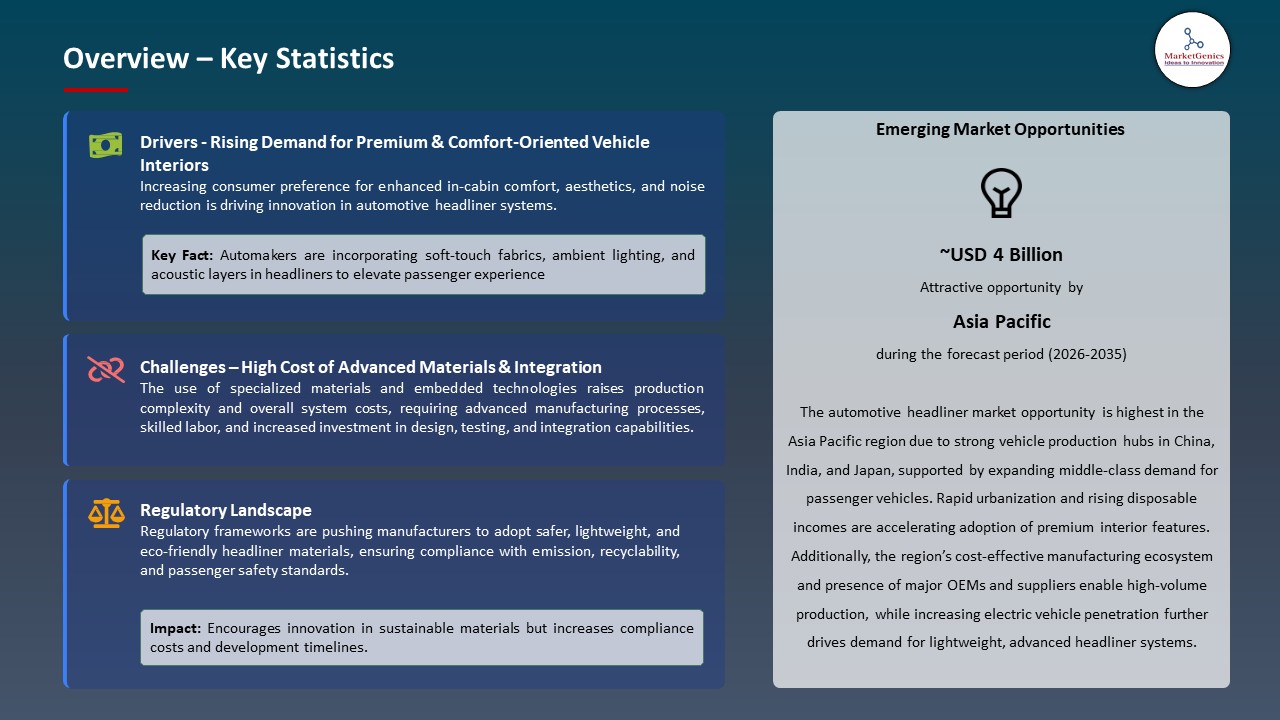
Driver: Rising Electric Vehicle Adoption and Lightweight Interior Demand Expansion
- The growth of automotive headliners market is significantly propelled by rising popularity of electric cars along with a trend towards lightweight designs, which would increase efficiency and range of vehicles. Manufacturers are increasingly focusing on lightweight designs of different elements of the car, such as the headliner, in order to counterbalance the battery and maximize vehicle efficiency.
- This shift is encouraging the use of advanced composite materials, recycled fibers, and thermoplastic substrates in headliner systems. For instance, Toyota Boshoku Corporation is developing lightweight, recyclable headliner solutions aligned with its sustainability roadmap and electrified mobility goals, supporting OEM efforts to meet emission regulations while improving efficiency and comfort. Rising EV production in Asia and Europe is further boosting demand for energy-efficient headliner systems.
- This is strengthening the global trend toward lightweight, energy-efficient car interiors and speeding up material innovation.
Restraint: Volatility in Raw Material Prices Increasing Production Cost Pressure
- The ongoing volatility in raw material prices, particularly for polyurethane foam, adhesives, and specialty textile fibers, is a major barrier to the automotive headliner market. For tier-1 suppliers and OEMs, these variations create cost uncertainty that impedes stable pricing models and reduces profit margins.
- Production prices are also rising due to the rising cost of recyclable and sustainable material inputs, especially for high-end and electric car headliner applications. Manufacturers must strike a compromise between cost effectiveness and the growing demand for high-performance, lightweight, and acoustically enhanced interior systems.
- Additionally, continued logistical inefficiencies and disruptions in petrochemical supply chains are increasing input cost pressures throughout the value chain.
- Profitability and the quick uptake of cutting-edge headlining technology in mass-market automobile segments are being hampered by this cost volatility.
Opportunity: Integration of Smart Cabin Technologies in Headliner Systems
- The growing integration of smart cabin technology, including ambient lighting systems, embedded sensors, infotainment interfaces, and voice-activated control features, creates a significant potential opportunity for the automotive headliner market. Headliners are changing from passive interior components to multipurpose, interactive surfaces as the industry moves toward linked, software-defined, and autonomous vehicle architectures.
- Technology-enabled interior solutions allow providers to increase value. Automakers are gradually incorporating lighting modules and sensing technology directly into headliner assemblies to improve occupant experience, comfort, and customization. In the premium and electric vehicle markets, where unique in-cabin experiences are a crucial competitive aspect, these innovations are especially gaining popularity.
- By reframing automotive headliners as intelligent, technologically integrated cockpit components, this is generating high-value development potential.
Key Trend: Shift Toward Sustainable Recycled Fiber Interior Material Adoption Growth
- The transition to sustainable, recycled fiber-based materials, motivated by OEM sustainability objectives and environmental legislation, is a major trend influencing the automotive headliner market. Automakers are replacing traditional polyurethane systems with recycled PET, bio-based composites, and natural fibers to reduce lifecycle emissions.
- This shift encourages low-emission production and eco-certified sourcing throughout the automotive value chain while supporting carbon neutrality goals and circular economy practices. Recycled polyester-based headliner systems are increasingly being integrated into both passenger and commercial vehicle segments, according to industry trends.
- For example, Toyota Boshoku Corporation is adding recycled and bio-based materials to headliner solutions for next-generation vehicle platforms, especially in EV and hybrid architectures, to broaden its eco-friendly interior range.
- This has changed material selection criteria throughout OEM supply chains and hastening the shift to sustainable automotive interiors.
Automotive Headliner Market Analysis and Segmental Data
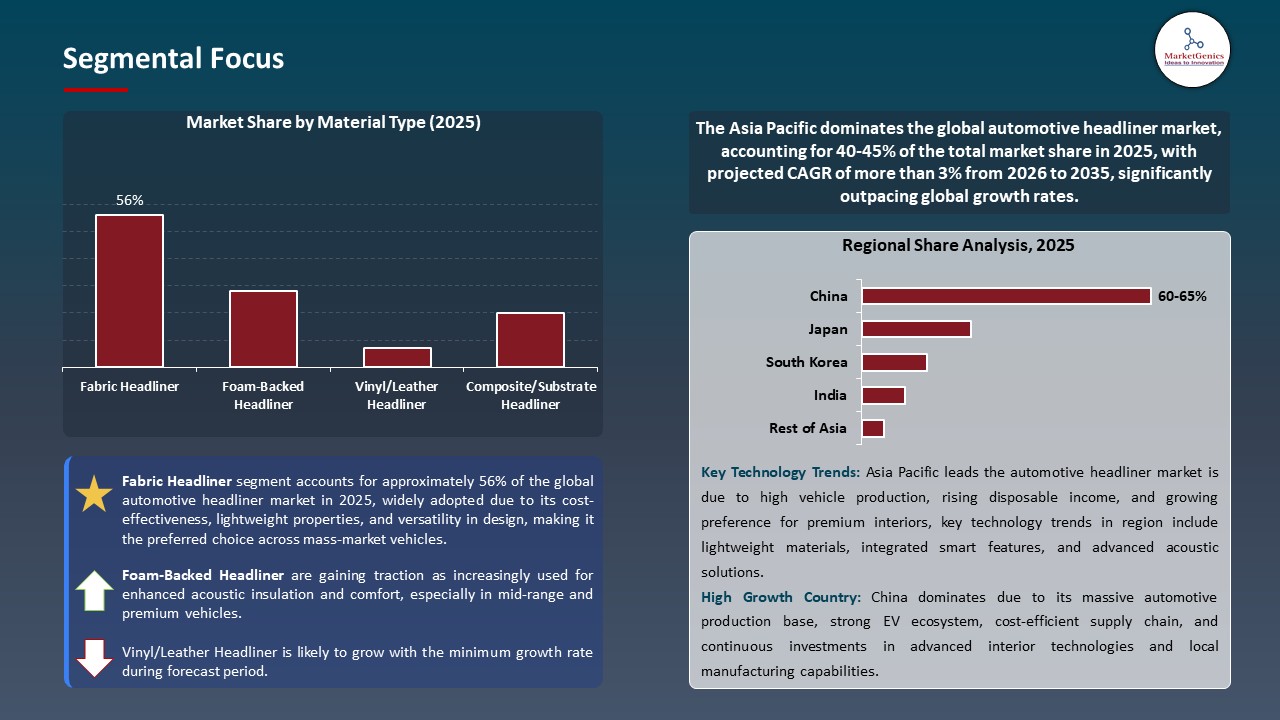
Fabric Headliner Dominate Global Automotive Headliner Market
- The fabric headliner segment dominates the global automotive headliner market owing to their high efficiency concerning cost, acoustic comfort, styling versatility, and lightweight attributes, thus, making them a highly favored option in mass OEM manufacturing processes. Being foam-backed and composed of fabrics, fabric headliners provide better acoustics, styling capabilities, and moldability for forming into unique roof contours in the automotive interior.
- Fabric headliners by major manufacturers like Toyota Boshoku Corporation are specifically designed to enhance cabin comfort and achieve environmental goals through lightweight materials in OEM manufacturing processes.
- This dominance is reinforcing fabric as the industry standard, sustaining large-scale OEM demand and driving continuous innovation in lightweight and sustainable interior textiles.
Asia Pacific Leads Global Automotive Headliner Market Demand
- Asia Pacific leads the automotive headliner market owing to its vast automotive manufacturing sector consisting of China, India, Japan, and Southeast Asian nations. Vehicle manufacturing and ownership in these nations have increased and this helps in meeting a higher demand for headliner components. For instance, Toyota Boshoku Corporation operates in several countries in Asia and develops automotive interior components, including automotive headliners in these regions.
- Additionally, the fast-growing electric vehicle sector along with a greater focus on luxury automotive interiors is leading to an increasing trend toward adopting automotive headliners that are efficient, lightweight, and acoustic.
- This is reinforcing Asia Pacific’s leadership in the global automotive headliner market by sustaining high production volumes and accelerating the adoption of advanced, EV-oriented interior technologies.
Automotive Headliner Market Ecosystem
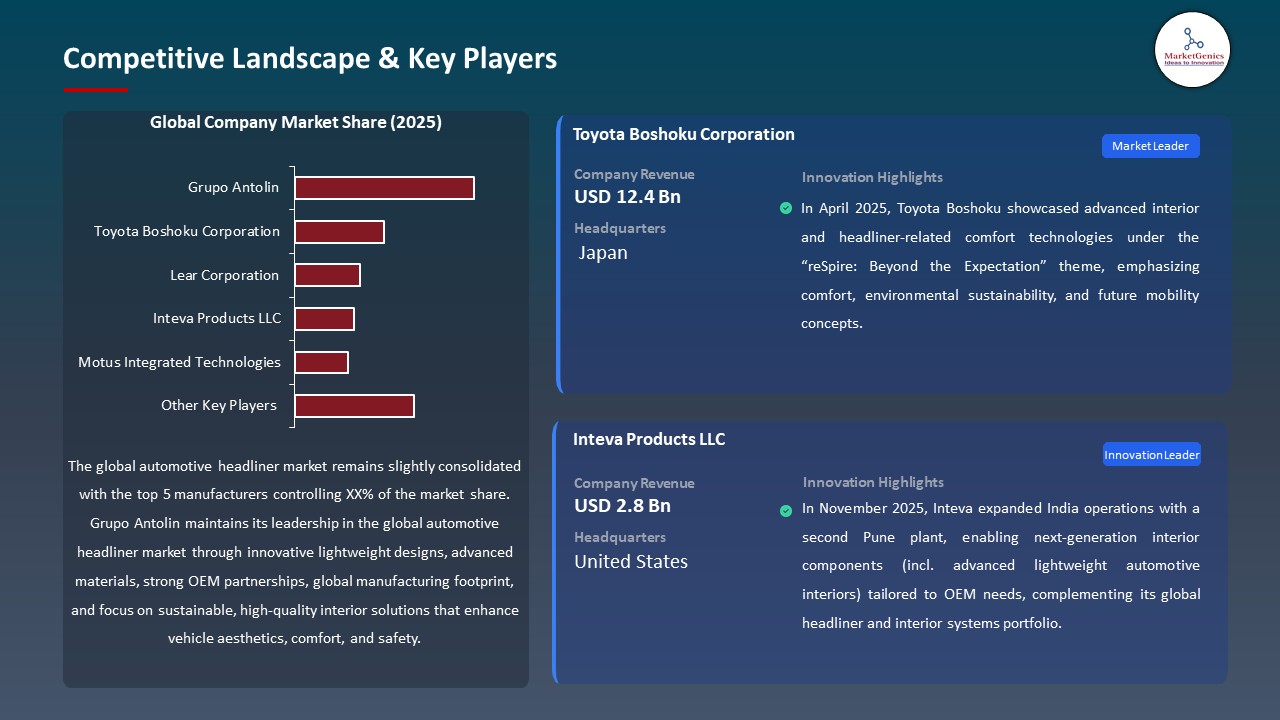
The global automotive headliner market is moderately fragmented, with leading suppliers such as Grupo Antolin, Toyota Boshoku Corporation, Lear Corporation, Inteva Products LLC, and Motus Integrated Technologies dominating through advanced materials, smart integration, and global OEM relationships. These companies leverage cutting‑edge technologies in lightweight composites, acoustic solutions, and multifunctional designs to maintain competitive advantage.
Key players are increasingly focusing on specialized solutions to differentiate in the market. For example, Antolin’s integration of ambient lighting and smart surfaces into headliners enhances interior functionality, while Toyota Boshoku emphasizes high‑acoustic, recyclable polyurethane headliners. Lear and Motus deploy advanced foam and composite systems to improve thermal comfort and insulation, and Inteva expands its portfolio with modular interior systems that support evolving OEM requirements.
These innovations not only improve occupant comfort, safety, and vehicle aesthetics but also enable OEMs to meet regulatory and sustainability targets, strengthen brand differentiation, and drive higher adoption of premium and technologically advanced vehicles globally.
Recent Development and Strategic Overview:
- In November 2025, Grupo Antolin, in collaboration with Mobility Audio Innovations, introduced a next-generation integrated audio headliner, delivering immersive sound without traditional speakers, optimizing weight and wiring, and enhancing acoustic performance and interior design flexibility for OEMs worldwide.
- In 2025, Lear Corporation advanced its strategic emphasis on sustainability by promoting FlexAir and other eco-friendly seating and foam technologies across its interior systems portfolio, leveraging recyclable, lightweight materials to enhance cabin and headliner innovation for OEM applications.
Report Scope
|
Detail |
|
|
Market Size in 2025 |
USD 17.4 Bn |
|
Market Forecast Value in 2035 |
USD 26.0 Bn |
|
Growth Rate (CAGR) |
4.1% |
|
Forecast Period |
2026 – 2035 |
|
Historical Data Available for |
2021 – 2024 |
|
Market Size Units |
US$ Billion for Value Million Units for Volume |
|
Report Format |
Electronic (PDF) + Excel |
|
North America |
Europe |
Asia Pacific |
Middle East |
Africa |
South America |
|
|
|
|
|
|
|
Companies Covered |
|||||
|
|
|
|
|
|
Automotive Headliner Market Segmentation and Highlights
|
Segment |
Sub-segment |
|
Automotive Headliner Market, By Material Type |
|
|
Automotive Headliner Market, By Substrate Type |
|
|
Automotive Headliner Market, By Product Type |
|
|
Automotive Headliner Market, By Vehicle Type |
|
|
Automotive Headliner Market, By Sales Channel |
|
Frequently Asked Questions
Table of Contents
- 1. Research Methodology and Assumptions
- 1.1. Definitions
- 1.2. Research Design and Approach
- 1.3. Data Collection Methods
- 1.4. Base Estimates and Calculations
- 1.5. Forecasting Models
- 1.5.1. Key Forecast Factors & Impact Analysis
- 1.6. Secondary Research
- 1.6.1. Open Sources
- 1.6.2. Paid Databases
- 1.6.3. Associations
- 1.7. Primary Research
- 1.7.1. Primary Sources
- 1.7.2. Primary Interviews with Stakeholders across Ecosystem
- 2. Executive Summary
- 2.1. Global Automotive Headliner Market Outlook
- 2.1.1. Automotive Headliner Market Size (Volume - Million Units and Value - US$ Bn), and Forecasts, 2021-2035
- 2.1.2. Compounded Annual Growth Rate Analysis
- 2.1.3. Growth Opportunity Analysis
- 2.1.4. Segmental Share Analysis
- 2.1.5. Geographical Share Analysis
- 2.2. Market Analysis and Facts
- 2.3. Supply-Demand Analysis
- 2.4. Competitive Benchmarking
- 2.5. Go-to- Market Strategy
- 2.5.1. Customer/ End-use Industry Assessment
- 2.5.2. Growth Opportunity Data, 2026-2035
- 2.5.2.1. Regional Data
- 2.5.2.2. Country Data
- 2.5.2.3. Segmental Data
- 2.5.3. Identification of Potential Market Spaces
- 2.5.4. GAP Analysis
- 2.5.5. Potential Attractive Price Points
- 2.5.6. Prevailing Market Risks & Challenges
- 2.5.7. Preferred Sales & Marketing Strategies
- 2.5.8. Key Recommendations and Analysis
- 2.5.9. A Way Forward
- 2.1. Global Automotive Headliner Market Outlook
- 3. Industry Data and Premium Insights
- 3.1. Global Automotive & Transportation Industry Overview, 2025
- 3.1.1. Automotive & Transportation Ecosystem Analysis
- 3.1.2. Key Trends for Automotive & Transportation Industry
- 3.1.3. Regional Distribution for Automotive & Transportation Industry
- 3.2. Supplier Customer Data
- 3.3. Technology Roadmap and Developments
- 3.4. Trade Analysis
- 3.4.1. Import & Export Analysis, 2025
- 3.4.2. Top Importing Countries
- 3.4.3. Top Exporting Countries
- 3.1. Global Automotive & Transportation Industry Overview, 2025
- 4. Market Overview
- 4.1. Market Dynamics
- 4.1.1. Drivers
- 4.1.1.1. Rising demand for premium, comfortable, and aesthetically enhanced vehicle interiors
- 4.1.1.2. Increasing global vehicle production and growing adoption of electric and passenger vehicles
- 4.1.1.3. Integration of advanced features such as acoustic insulation, ambient lighting, and smart components
- 4.1.2. Restraints
- 4.1.2.1. High cost of advanced materials and integrated headliner systems
- 4.1.2.2. Fluctuating raw material prices and supply chain disruptions
- 4.1.1. Drivers
- 4.2. Key Trend Analysis
- 4.3. Regulatory Framework
- 4.3.1. Key Regulations, Norms, and Subsidies, by Key Countries
- 4.3.2. Tariffs and Standards
- 4.3.3. Impact Analysis of Regulations on the Market
- 4.4. Value Chain Analysis
- 4.4.1. Raw Material/ Substrate Suppliers
- 4.4.2. Automotive Headliner Manufacturers
- 4.4.3. Distributors
- 4.4.4. End User/ Customers
- 4.5. Cost Structure Analysis
- 4.5.1. Parameter’s Share for Cost Associated
- 4.5.2. COGP vs COGS
- 4.5.3. Profit Margin Analysis
- 4.6. Pricing Analysis
- 4.6.1. Regional Pricing Analysis
- 4.6.2. Segmental Pricing Trends
- 4.6.3. Factors Influencing Pricing
- 4.7. Porter’s Five Forces Analysis
- 4.8. PESTEL Analysis
- 4.9. Global Automotive Headliner Market Demand
- 4.9.1. Historical Market Size – in Volume (Million Units) and Value (US$ Bn), 2020-2024
- 4.9.2. Current and Future Market Size – in Volume (Million Units) and Value (US$ Bn), 2026–2035
- 4.9.2.1. Y-o-Y Growth Trends
- 4.9.2.2. Absolute $ Opportunity Assessment
- 4.1. Market Dynamics
- 5. Competition Landscape
- 5.1. Competition structure
- 5.1.1. Fragmented v/s consolidated
- 5.2. Company Share Analysis, 2025
- 5.2.1. Global Company Market Share
- 5.2.2. By Region
- 5.2.2.1. North America
- 5.2.2.2. Europe
- 5.2.2.3. Asia Pacific
- 5.2.2.4. Middle East
- 5.2.2.5. Africa
- 5.2.2.6. South America
- 5.3. Product Comparison Matrix
- 5.3.1. Specifications
- 5.3.2. Market Positioning
- 5.3.3. Pricing
- 5.1. Competition structure
- 6. Global Automotive Headliner Market Analysis, by Material Type
- 6.1. Key Segment Analysis
- 6.2. Automotive Headliner Market Size (Volume - Million Units and Value - US$ Bn), Analysis, and Forecasts, by Material Type, 2021-2035
- 6.2.1. Fabric Headliner
- 6.2.1.1. Woven Fabric
- 6.2.1.2. Non-Woven Fabric
- 6.2.2. Foam-Backed Headliner
- 6.2.2.1. Polyurethane (PU) Foam-Backed
- 6.2.2.2. Polyethylene (PE) Foam-Backed
- 6.2.2.3. Others
- 6.2.3. Vinyl/Leather Headliner
- 6.2.3.1. PVC Vinyl
- 6.2.3.2. Synthetic Leather (PU Leather)
- 6.2.3.3. Genuine Leather
- 6.2.3.4. Others
- 6.2.4. Composite/Substrate Headliner
- 6.2.4.1. Fiberglass Composite
- 6.2.4.2. Natural Fiber Composite (Flax, Hemp, Jute)
- 6.2.4.3. Thermoplastic Composite
- 6.2.4.4. Others
- 6.2.5. Suede/Alcantara Headliner
- 6.2.6. Acoustic Headliner
- 6.2.1. Fabric Headliner
- 7. Global Automotive Headliner Market Analysis, by Substrate Type
- 7.1. Key Segment Analysis
- 7.2. Automotive Headliner Market Size (Volume - Million Units and Value - US$ Bn), Analysis, and Forecasts, by Substrate Type, 2021-2035
- 7.2.1. Polyurethane (PU) Board
- 7.2.2. Fiberglass
- 7.2.3. Polypropylene (PP) Board
- 7.2.4. Wood Fiber / Natural Fiber Board
- 7.2.5. Thermoplastic Polyolefin (TPO)
- 7.2.6. Expanded Polystyrene (EPS)
- 8. Global Automotive Headliner Market Analysis, by Product Type
- 8.1. Key Segment Analysis
- 8.2. Automotive Headliner Market Size (Volume - Million Units and Value - US$ Bn), Analysis, and Forecasts, by Product Type, 2021-2035
- 8.2.1. Soft Headliner
- 8.2.2. Molded / Hard Headliner
- 8.2.2.1. Single-Layer Molded
- 8.2.2.2. Multi-Layer Molded
- 8.2.3. Perforated Headliner
- 8.2.4. Printed / Patterned Headliner
- 8.2.5. Integrated Headliner
- 9. Global Automotive Headliner Market Analysis, by Vehicle Type
- 9.1. Key Segment Analysis
- 9.2. Automotive Headliner Market Size (Volume - Million Units and Value - US$ Bn), Analysis, and Forecasts, by Vehicle Type, 2021-2035
- 9.2.1. Passenger Cars
- 9.2.1.1. Hatchback
- 9.2.1.2. Sedan
- 9.2.1.3. SUV / Crossover
- 9.2.1.4. Coupe
- 9.2.1.5. Convertible / Cabriolet
- 9.2.1.6. MPV / Minivan
- 9.2.2. Light Commercial Vehicles (LCV)
- 9.2.2.1. Pickup Trucks
- 9.2.2.2. Vans
- 9.2.3. Heavy Commercial Vehicles (HCV)
- 9.2.3.1. Trucks
- 9.2.3.2. Buses & Coaches
- 9.2.4. Electric Vehicles (EV)
- 9.2.4.1. Battery Electric Vehicle (BEV)
- 9.2.4.2. Hybrid Electric Vehicle (HEV)
- 9.2.4.3. Plug-in Hybrid Electric Vehicle (PHEV)
- 9.2.5. Luxury & Premium Vehicles
- 9.2.6. Off-Road / Sport Utility Vehicles
- 9.2.1. Passenger Cars
- 10. Global Automotive Headliner Market Analysis, by Sales Channel
- 10.1. Key Segment Analysis
- 10.2. Automotive Headliner Market Size (Volume - Million Units and Value - US$ Bn), Analysis, and Forecasts, by Sales Channel, 2021-2035
- 10.2.1. Original Equipment Manufacturer (OEM)
- 10.2.2. Aftermarket
- 11. Global Automotive Headliner Market Analysis, by Region
- 11.1. Key Findings
- 11.2. Automotive Headliner Market Size (Volume - Million Units and Value - US$ Bn), Analysis, and Forecasts, by Region, 2021-2035
- 11.2.1. North America
- 11.2.2. Europe
- 11.2.3. Asia Pacific
- 11.2.4. Middle East
- 11.2.5. Africa
- 11.2.6. South America
- 12. North America Automotive Headliner Market Analysis
- 12.1. Key Segment Analysis
- 12.2. Regional Snapshot
- 12.3. North America Automotive Headliner Market Size (Volume - Million Units and Value - US$ Bn), Analysis, and Forecasts, 2021-2035
- 12.3.1. Material Type
- 12.3.2. Substrate Type
- 12.3.3. Product Type
- 12.3.4. Vehicle Type
- 12.3.5. Sales Channel
- 12.3.6. Country
- 12.3.6.1. USA
- 12.3.6.2. Canada
- 12.3.6.3. Mexico
- 12.4. USA Automotive Headliner Market
- 12.4.1. Country Segmental Analysis
- 12.4.2. Material Type
- 12.4.3. Substrate Type
- 12.4.4. Product Type
- 12.4.5. Vehicle Type
- 12.4.6. Sales Channel
- 12.5. Canada Automotive Headliner Market
- 12.5.1. Country Segmental Analysis
- 12.5.2. Material Type
- 12.5.3. Substrate Type
- 12.5.4. Product Type
- 12.5.5. Vehicle Type
- 12.5.6. Sales Channel
- 12.6. Mexico Automotive Headliner Market
- 12.6.1. Country Segmental Analysis
- 12.6.2. Material Type
- 12.6.3. Substrate Type
- 12.6.4. Product Type
- 12.6.5. Vehicle Type
- 12.6.6. Sales Channel
- 13. Europe Automotive Headliner Market Analysis
- 13.1. Key Segment Analysis
- 13.2. Regional Snapshot
- 13.3. Europe Automotive Headliner Market Size (Volume - Million Units and Value - US$ Bn), Analysis, and Forecasts, 2021-2035
- 13.3.1. Material Type
- 13.3.2. Substrate Type
- 13.3.3. Product Type
- 13.3.4. Vehicle Type
- 13.3.5. Sales Channel
- 13.3.6. Country
- 13.3.6.1. Germany
- 13.3.6.2. United Kingdom
- 13.3.6.3. France
- 13.3.6.4. Italy
- 13.3.6.5. Spain
- 13.3.6.6. Netherlands
- 13.3.6.7. Nordic Countries
- 13.3.6.8. Poland
- 13.3.6.9. Russia & CIS
- 13.3.6.10. Rest of Europe
- 13.4. Germany Automotive Headliner Market
- 13.4.1. Country Segmental Analysis
- 13.4.2. Material Type
- 13.4.3. Substrate Type
- 13.4.4. Product Type
- 13.4.5. Vehicle Type
- 13.4.6. Sales Channel
- 13.5. United Kingdom Automotive Headliner Market
- 13.5.1. Country Segmental Analysis
- 13.5.2. Material Type
- 13.5.3. Substrate Type
- 13.5.4. Product Type
- 13.5.5. Vehicle Type
- 13.5.6. Sales Channel
- 13.6. France Automotive Headliner Market
- 13.6.1. Country Segmental Analysis
- 13.6.2. Material Type
- 13.6.3. Substrate Type
- 13.6.4. Product Type
- 13.6.5. Vehicle Type
- 13.6.6. Sales Channel
- 13.7. Italy Automotive Headliner Market
- 13.7.1. Country Segmental Analysis
- 13.7.2. Material Type
- 13.7.3. Substrate Type
- 13.7.4. Product Type
- 13.7.5. Vehicle Type
- 13.7.6. Sales Channel
- 13.8. Spain Automotive Headliner Market
- 13.8.1. Country Segmental Analysis
- 13.8.2. Material Type
- 13.8.3. Substrate Type
- 13.8.4. Product Type
- 13.8.5. Vehicle Type
- 13.8.6. Sales Channel
- 13.9. Netherlands Automotive Headliner Market
- 13.9.1. Country Segmental Analysis
- 13.9.2. Material Type
- 13.9.3. Substrate Type
- 13.9.4. Product Type
- 13.9.5. Vehicle Type
- 13.9.6. Sales Channel
- 13.10. Nordic Countries Automotive Headliner Market
- 13.10.1. Country Segmental Analysis
- 13.10.2. Material Type
- 13.10.3. Substrate Type
- 13.10.4. Product Type
- 13.10.5. Vehicle Type
- 13.10.6. Sales Channel
- 13.11. Poland Automotive Headliner Market
- 13.11.1. Country Segmental Analysis
- 13.11.2. Material Type
- 13.11.3. Substrate Type
- 13.11.4. Product Type
- 13.11.5. Vehicle Type
- 13.11.6. Sales Channel
- 13.12. Russia & CIS Automotive Headliner Market
- 13.12.1. Country Segmental Analysis
- 13.12.2. Material Type
- 13.12.3. Substrate Type
- 13.12.4. Product Type
- 13.12.5. Vehicle Type
- 13.12.6. Sales Channel
- 13.13. Rest of Europe Automotive Headliner Market
- 13.13.1. Country Segmental Analysis
- 13.13.2. Material Type
- 13.13.3. Substrate Type
- 13.13.4. Product Type
- 13.13.5. Vehicle Type
- 13.13.6. Sales Channel
- 14. Asia Pacific Automotive Headliner Market Analysis
- 14.1. Key Segment Analysis
- 14.2. Regional Snapshot
- 14.3. Asia Pacific Automotive Headliner Market Size (Volume - Million Units and Value - US$ Bn), Analysis, and Forecasts, 2021-2035
- 14.3.1. Material Type
- 14.3.2. Substrate Type
- 14.3.3. Product Type
- 14.3.4. Vehicle Type
- 14.3.5. Sales Channel
- 14.3.6. Country
- 14.3.6.1. China
- 14.3.6.2. India
- 14.3.6.3. Japan
- 14.3.6.4. South Korea
- 14.3.6.5. Australia and New Zealand
- 14.3.6.6. Indonesia
- 14.3.6.7. Malaysia
- 14.3.6.8. Thailand
- 14.3.6.9. Vietnam
- 14.3.6.10. Rest of Asia Pacific
- 14.4. China Automotive Headliner Market
- 14.4.1. Country Segmental Analysis
- 14.4.2. Material Type
- 14.4.3. Substrate Type
- 14.4.4. Product Type
- 14.4.5. Vehicle Type
- 14.4.6. Sales Channel
- 14.5. India Automotive Headliner Market
- 14.5.1. Country Segmental Analysis
- 14.5.2. Material Type
- 14.5.3. Substrate Type
- 14.5.4. Product Type
- 14.5.5. Vehicle Type
- 14.5.6. Sales Channel
- 14.6. Japan Automotive Headliner Market
- 14.6.1. Country Segmental Analysis
- 14.6.2. Material Type
- 14.6.3. Substrate Type
- 14.6.4. Product Type
- 14.6.5. Vehicle Type
- 14.6.6. Sales Channel
- 14.7. South Korea Automotive Headliner Market
- 14.7.1. Country Segmental Analysis
- 14.7.2. Material Type
- 14.7.3. Substrate Type
- 14.7.4. Product Type
- 14.7.5. Vehicle Type
- 14.7.6. Sales Channel
- 14.8. Australia and New Zealand Automotive Headliner Market
- 14.8.1. Country Segmental Analysis
- 14.8.2. Material Type
- 14.8.3. Substrate Type
- 14.8.4. Product Type
- 14.8.5. Vehicle Type
- 14.8.6. Sales Channel
- 14.9. Indonesia Automotive Headliner Market
- 14.9.1. Country Segmental Analysis
- 14.9.2. Material Type
- 14.9.3. Substrate Type
- 14.9.4. Product Type
- 14.9.5. Vehicle Type
- 14.9.6. Sales Channel
- 14.10. Malaysia Automotive Headliner Market
- 14.10.1. Country Segmental Analysis
- 14.10.2. Material Type
- 14.10.3. Substrate Type
- 14.10.4. Product Type
- 14.10.5. Vehicle Type
- 14.10.6. Sales Channel
- 14.11. Thailand Automotive Headliner Market
- 14.11.1. Country Segmental Analysis
- 14.11.2. Material Type
- 14.11.3. Substrate Type
- 14.11.4. Product Type
- 14.11.5. Vehicle Type
- 14.11.6. Sales Channel
- 14.12. Vietnam Automotive Headliner Market
- 14.12.1. Country Segmental Analysis
- 14.12.2. Material Type
- 14.12.3. Substrate Type
- 14.12.4. Product Type
- 14.12.5. Vehicle Type
- 14.12.6. Sales Channel
- 14.13. Rest of Asia Pacific Automotive Headliner Market
- 14.13.1. Country Segmental Analysis
- 14.13.2. Material Type
- 14.13.3. Substrate Type
- 14.13.4. Product Type
- 14.13.5. Vehicle Type
- 14.13.6. Sales Channel
- 15. Middle East Automotive Headliner Market Analysis
- 15.1. Key Segment Analysis
- 15.2. Regional Snapshot
- 15.3. Middle East Automotive Headliner Market Size (Volume - Million Units and Value - US$ Bn), Analysis, and Forecasts, 2021-2035
- 15.3.1. Material Type
- 15.3.2. Substrate Type
- 15.3.3. Product Type
- 15.3.4. Vehicle Type
- 15.3.5. Sales Channel
- 15.3.6. Country
- 15.3.6.1. Turkey
- 15.3.6.2. UAE
- 15.3.6.3. Saudi Arabia
- 15.3.6.4. Israel
- 15.3.6.5. Rest of Middle East
- 15.4. Turkey Automotive Headliner Market
- 15.4.1. Country Segmental Analysis
- 15.4.2. Material Type
- 15.4.3. Substrate Type
- 15.4.4. Product Type
- 15.4.5. Vehicle Type
- 15.4.6. Sales Channel
- 15.5. UAE Automotive Headliner Market
- 15.5.1. Country Segmental Analysis
- 15.5.2. Material Type
- 15.5.3. Substrate Type
- 15.5.4. Product Type
- 15.5.5. Vehicle Type
- 15.5.6. Sales Channel
- 15.6. Saudi Arabia Automotive Headliner Market
- 15.6.1. Country Segmental Analysis
- 15.6.2. Material Type
- 15.6.3. Substrate Type
- 15.6.4. Product Type
- 15.6.5. Vehicle Type
- 15.6.6. Sales Channel
- 15.7. Israel Automotive Headliner Market
- 15.7.1. Country Segmental Analysis
- 15.7.2. Material Type
- 15.7.3. Substrate Type
- 15.7.4. Product Type
- 15.7.5. Vehicle Type
- 15.7.6. Sales Channel
- 15.8. Rest of Middle East Automotive Headliner Market
- 15.8.1. Country Segmental Analysis
- 15.8.2. Material Type
- 15.8.3. Substrate Type
- 15.8.4. Product Type
- 15.8.5. Vehicle Type
- 15.8.6. Sales Channel
- 16. Africa Automotive Headliner Market Analysis
- 16.1. Key Segment Analysis
- 16.2. Regional Snapshot
- 16.3. Africa Automotive Headliner Market Size (Volume - Million Units and Value - US$ Bn), Analysis, and Forecasts, 2021-2035
- 16.3.1. Material Type
- 16.3.2. Substrate Type
- 16.3.3. Product Type
- 16.3.4. Vehicle Type
- 16.3.5. Sales Channel
- 16.3.6. Country
- 16.3.6.1. South Africa
- 16.3.6.2. Egypt
- 16.3.6.3. Nigeria
- 16.3.6.4. Algeria
- 16.3.6.5. Rest of Africa
- 16.4. South Africa Automotive Headliner Market
- 16.4.1. Country Segmental Analysis
- 16.4.2. Material Type
- 16.4.3. Substrate Type
- 16.4.4. Product Type
- 16.4.5. Vehicle Type
- 16.4.6. Sales Channel
- 16.5. Egypt Automotive Headliner Market
- 16.5.1. Country Segmental Analysis
- 16.5.2. Material Type
- 16.5.3. Substrate Type
- 16.5.4. Product Type
- 16.5.5. Vehicle Type
- 16.5.6. Sales Channel
- 16.6. Nigeria Automotive Headliner Market
- 16.6.1. Country Segmental Analysis
- 16.6.2. Material Type
- 16.6.3. Substrate Type
- 16.6.4. Product Type
- 16.6.5. Vehicle Type
- 16.6.6. Sales Channel
- 16.7. Algeria Automotive Headliner Market
- 16.7.1. Country Segmental Analysis
- 16.7.2. Material Type
- 16.7.3. Substrate Type
- 16.7.4. Product Type
- 16.7.5. Vehicle Type
- 16.7.6. Sales Channel
- 16.8. Rest of Africa Automotive Headliner Market
- 16.8.1. Country Segmental Analysis
- 16.8.2. Material Type
- 16.8.3. Substrate Type
- 16.8.4. Product Type
- 16.8.5. Vehicle Type
- 16.8.6. Sales Channel
- 17. South America Automotive Headliner Market Analysis
- 17.1. Key Segment Analysis
- 17.2. Regional Snapshot
- 17.3. South America Automotive Headliner Market Size (Volume - Million Units and Value - US$ Bn), Analysis, and Forecasts, 2021-2035
- 17.3.1. Material Type
- 17.3.2. Substrate Type
- 17.3.3. Product Type
- 17.3.4. Vehicle Type
- 17.3.5. Sales Channel
- 17.3.6. Country
- 17.3.6.1. Brazil
- 17.3.6.2. Argentina
- 17.3.6.3. Rest of South America
- 17.4. Brazil Automotive Headliner Market
- 17.4.1. Country Segmental Analysis
- 17.4.2. Material Type
- 17.4.3. Substrate Type
- 17.4.4. Product Type
- 17.4.5. Vehicle Type
- 17.4.6. Sales Channel
- 17.5. Argentina Automotive Headliner Market
- 17.5.1. Country Segmental Analysis
- 17.5.2. Material Type
- 17.5.3. Substrate Type
- 17.5.4. Product Type
- 17.5.5. Vehicle Type
- 17.5.6. Sales Channel
- 17.6. Rest of South America Automotive Headliner Market
- 17.6.1. Country Segmental Analysis
- 17.6.2. Material Type
- 17.6.3. Substrate Type
- 17.6.4. Product Type
- 17.6.5. Vehicle Type
- 17.6.6. Sales Channel
- 18. Key Players/ Company Profile
- 18.1. Adient plc
- 18.1.1. Company Details/ Overview
- 18.1.2. Company Financials
- 18.1.3. Key Customers and Competitors
- 18.1.4. Business/ Industry Portfolio
- 18.1.5. Product Portfolio/ Specification Details
- 18.1.6. Pricing Data
- 18.1.7. Strategic Overview
- 18.1.8. Recent Developments
- 18.2. Atlas Roofing Corporation
- 18.3. Borgers SE & Co. KGaA
- 18.4. DiloGroup
- 18.5. Freudenberg Performance Materials
- 18.6. Grupo Antolin
- 18.7. Hayashi Telempu Corporation
- 18.8. Howa Tramico
- 18.9. Industrialesud SpA
- 18.10. Inteva Products LLC
- 18.11. Jason Industries Inc.
- 18.12. Lear Corporation
- 18.13. Motus Integrated Technologies
- 18.14. Owens Corning
- 18.15. Sage Automotive Interiors
- 18.16. Sanko Gosei Ltd.
- 18.17. Suminoe Textile Co. Ltd.
- 18.18. Toray Industries Inc.
- 18.19. Toyota Boshoku Corporation
- 18.20. UGN Inc.
- 18.21. Other Key Players
- 18.1. Adient plc
Note* - This is just tentative list of players. While providing the report, we will cover more number of players based on their revenue and share for each geography
Research Design
Our research design integrates both demand-side and supply-side analysis through a balanced combination of primary and secondary research methodologies. By utilizing both bottom-up and top-down approaches alongside rigorous data triangulation methods, we deliver robust market intelligence that supports strategic decision-making.
MarketGenics' comprehensive research design framework ensures the delivery of accurate, reliable, and actionable market intelligence. Through the integration of multiple research approaches, rigorous validation processes, and expert analysis, we provide our clients with the insights needed to make informed strategic decisions and capitalize on market opportunities.
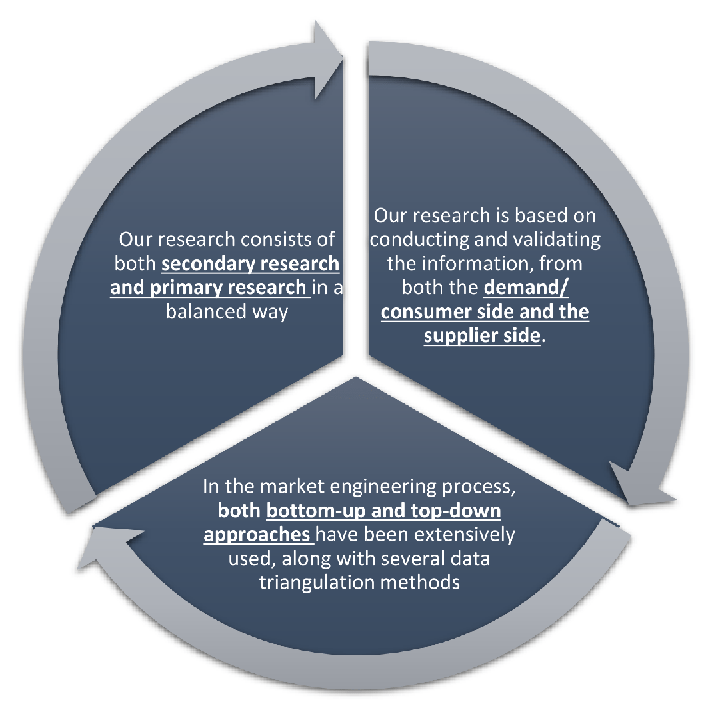
MarketGenics leverages a dedicated industry panel of experts and a comprehensive suite of paid databases to effectively collect, consolidate, and analyze market intelligence.
Our approach has consistently proven to be reliable and effective in generating accurate market insights, identifying key industry trends, and uncovering emerging business opportunities.
Through both primary and secondary research, we capture and analyze critical company-level data such as manufacturing footprints, including technical centers, R&D facilities, sales offices, and headquarters.
Our expert panel further enhances our ability to estimate market size for specific brands based on validated field-level intelligence.
Our data mining techniques incorporate both parametric and non-parametric methods, allowing for structured data collection, sorting, processing, and cleaning.
Demand projections are derived from large-scale data sets analyzed through proprietary algorithms, culminating in robust and reliable market sizing.
Research Approach
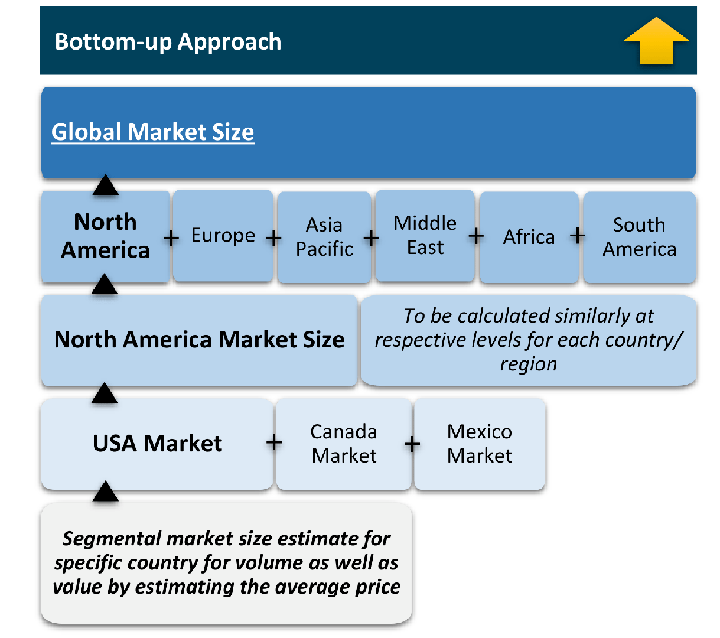
The bottom-up approach builds market estimates by starting with the smallest addressable market units and systematically aggregating them to create comprehensive market size projections.
This method begins with specific, granular data points and builds upward to create the complete market landscape.
Customer Analysis → Segmental Analysis → Geographical Analysis
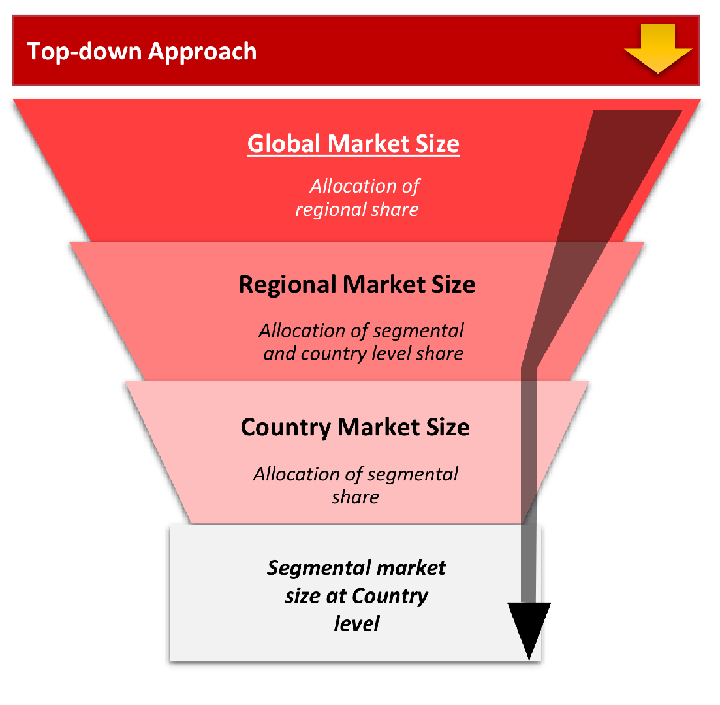
The top-down approach starts with the broadest possible market data and systematically narrows it down through a series of filters and assumptions to arrive at specific market segments or opportunities.
This method begins with the big picture and works downward to increasingly specific market slices.
TAM → SAM → SOM
Research Methods
Desk / Secondary Research
While analysing the market, we extensively study secondary sources, directories, and databases to identify and collect information useful for this technical, market-oriented, and commercial report. Secondary sources that we utilize are not only the public sources, but it is a combination of Open Source, Associations, Paid Databases, MG Repository & Knowledgebase, and others.
- Company websites, annual reports, financial reports, broker reports, and investor presentations
- National government documents, statistical databases and reports
- News articles, press releases and web-casts specific to the companies operating in the market, Magazines, reports, and others
- We gather information from commercial data sources for deriving company specific data such as segmental revenue, share for geography, product revenue, and others
- Internal and external proprietary databases (industry-specific), relevant patent, and regulatory databases
- Governing Bodies, Government Organizations
- Relevant Authorities, Country-specific Associations for Industries
We also employ the model mapping approach to estimate the product level market data through the players' product portfolio
Primary Research
Primary research/ interviews is vital in analyzing the market. Most of the cases involves paid primary interviews. Primary sources include primary interviews through e-mail interactions, telephonic interviews, surveys as well as face-to-face interviews with the different stakeholders across the value chain including several industry experts.
| Type of Respondents | Number of Primaries |
|---|---|
| Tier 2/3 Suppliers | ~20 |
| Tier 1 Suppliers | ~25 |
| End-users | ~25 |
| Industry Expert/ Panel/ Consultant | ~30 |
| Total | ~100 |
MG Knowledgebase
• Repository of industry blog, newsletter and case studies
• Online platform covering detailed market reports, and company profiles
Forecasting Factors and Models
Forecasting Factors
- Historical Trends – Past market patterns, cycles, and major events that shaped how markets behave over time. Understanding past trends helps predict future behavior.
- Industry Factors – Specific characteristics of the industry like structure, regulations, and innovation cycles that affect market dynamics.
- Macroeconomic Factors – Economic conditions like GDP growth, inflation, and employment rates that affect how much money people have to spend.
- Demographic Factors – Population characteristics like age, income, and location that determine who can buy your product.
- Technology Factors – How quickly people adopt new technology and how much technology infrastructure exists.
- Regulatory Factors – Government rules, laws, and policies that can help or restrict market growth.
- Competitive Factors – Analyzing competition structure such as degree of competition and bargaining power of buyers and suppliers.
Forecasting Models / Techniques
Multiple Regression Analysis
- Identify and quantify factors that drive market changes
- Statistical modeling to establish relationships between market drivers and outcomes
Time Series Analysis – Seasonal Patterns
- Understand regular cyclical patterns in market demand
- Advanced statistical techniques to separate trend, seasonal, and irregular components
Time Series Analysis – Trend Analysis
- Identify underlying market growth patterns and momentum
- Statistical analysis of historical data to project future trends
Expert Opinion – Expert Interviews
- Gather deep industry insights and contextual understanding
- In-depth interviews with key industry stakeholders
Multi-Scenario Development
- Prepare for uncertainty by modeling different possible futures
- Creating optimistic, pessimistic, and most likely scenarios
Time Series Analysis – Moving Averages
- Sophisticated forecasting for complex time series data
- Auto-regressive integrated moving average models with seasonal components
Econometric Models
- Apply economic theory to market forecasting
- Sophisticated economic models that account for market interactions
Expert Opinion – Delphi Method
- Harness collective wisdom of industry experts
- Structured, multi-round expert consultation process
Monte Carlo Simulation
- Quantify uncertainty and probability distributions
- Thousands of simulations with varying input parameters
Research Analysis
Our research framework is built upon the fundamental principle of validating market intelligence from both demand and supply perspectives. This dual-sided approach ensures comprehensive market understanding and reduces the risk of single-source bias.
Demand-Side Analysis: We understand end-user/application behavior, preferences, and market needs along with the penetration of the product for specific application.
Supply-Side Analysis: We estimate overall market revenue, analyze the segmental share along with industry capacity, competitive landscape, and market structure.
Validation & Evaluation
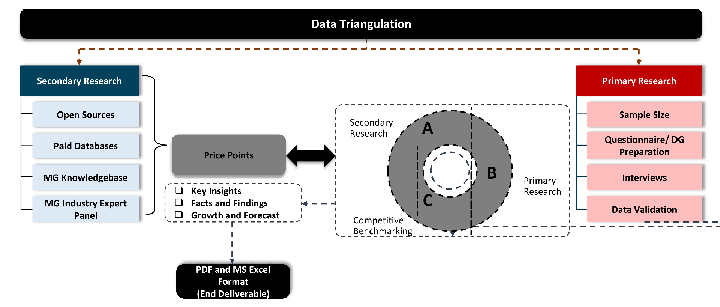
Data triangulation is a validation technique that uses multiple methods, sources, or perspectives to examine the same research question, thereby increasing the credibility and reliability of research findings. In market research, triangulation serves as a quality assurance mechanism that helps identify and minimize bias, validate assumptions, and ensure accuracy in market estimates.
- Data Source Triangulation – Using multiple data sources to examine the same phenomenon
- Methodological Triangulation – Using multiple research methods to study the same research question
- Investigator Triangulation – Using multiple researchers or analysts to examine the same data
- Theoretical Triangulation – Using multiple theoretical perspectives to interpret the same data
Custom Market Research Services
We will customise the research for you, in case the report listed above does not meet your requirements.
Get 10% Free Customisation