Connected Medical Devices Market Size, Share & Trends Analysis Report by Product Type (Vital Sign Monitors, Wearable Devices, Implantable Devices, Diagnostic & Imaging Devices, Therapeutic Devices, Point-of-Care Devices), Connectivity Technology, Application, End-user and Geography (North America, Europe, Asia Pacific, Middle East, Africa and South America) – Global Industry Data, Trends and Forecasts, 2026–2035
|
|
|
Segmental Data Insights |
|
|
Demand Trends |
|
|
Competitive Landscape |
|
|
Strategic Development |
|
|
Future Outlook & Opportunities |
|
Connected Medical Devices Market Size, Share, and Growth
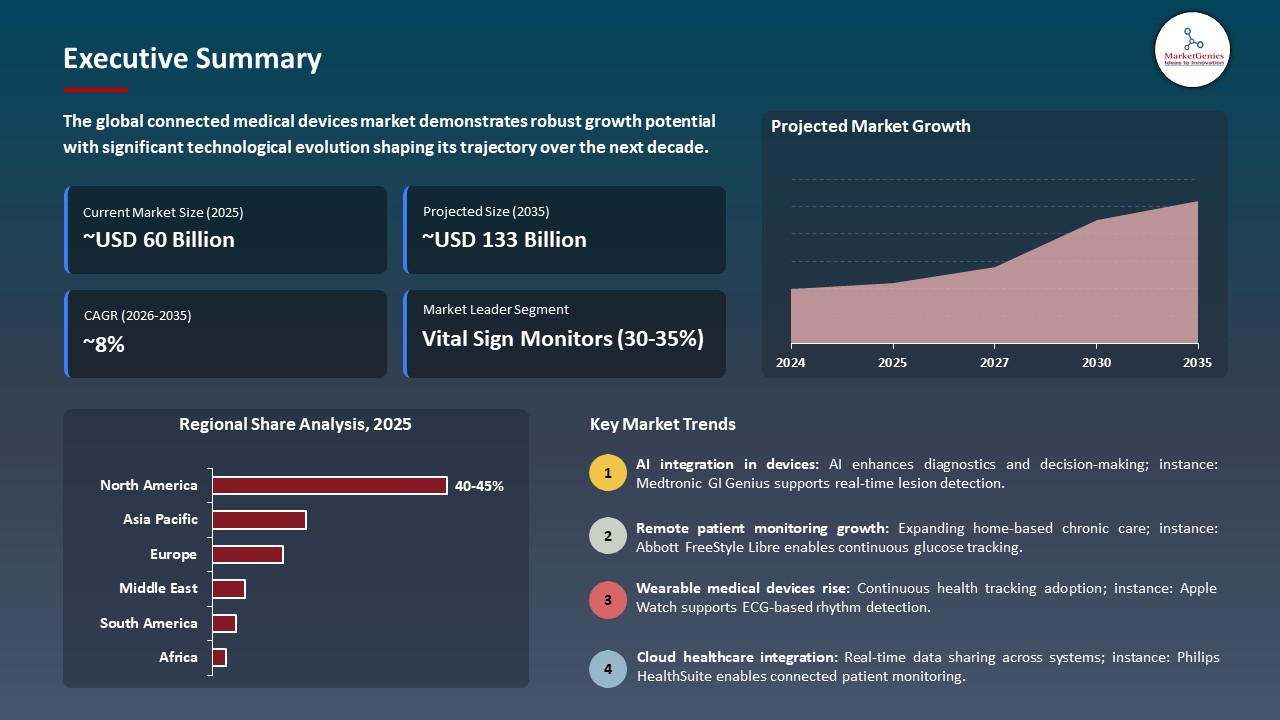
The global connected medical devices market is exhibiting strong growth, with an estimated value of USD 59.2 billion in 2025 and USD 132.6 billion by 2035, achieving a CAGR of 8.4%, during the forecast period.
“We are honored to introduce our AI-powered Zio ECG Recording and Analysis System that provides up to 14 days of continuous, uninterrupted cardiac monitoring to Japan, where we see a meaningful opportunity to help advance arrhythmia detection,” said Quentin Blackford, President and Chief Executive Officer of iRhythm. “Together with our trusted distribution partner, Senko Medical Instrument, we are committed to expanding access to advanced cardiac monitoring that supports clinical excellence and aligns with Japan’s dedication to high-quality, patient-centered care.”
The increasing adoption of remote patient monitoring (RPM) and home-based care is driving demand for connected medical devices that enable continuous real-time patient data collection and clinical intervention. For instance, in August 2024, Masimo was cleared by the U.S. FDA for connectivity between Masimo W1 Medical Watch and Masimo SafetyNet telemonitoring system, which allows patient data to be transmitted from the W1 to remote caregivers and the clinical team at the hospital.
Moreover, the growing demand for AI-powered and cloud-based medical devices is driving the adoption of smart connected healthcare solutions to enhance the management of chronic diseases and clinical decision-making. For instance, in December 2024, Dexcom announced the first glucose biosensing Generative AI platform, powered by Google Cloud Vertex AI, to provide personalization in the connected continuous glucose monitoring (CGM) market. The integration of AI into medical devices is driving market growth with improved real-time monitoring, personalized care, and clinical efficiency.
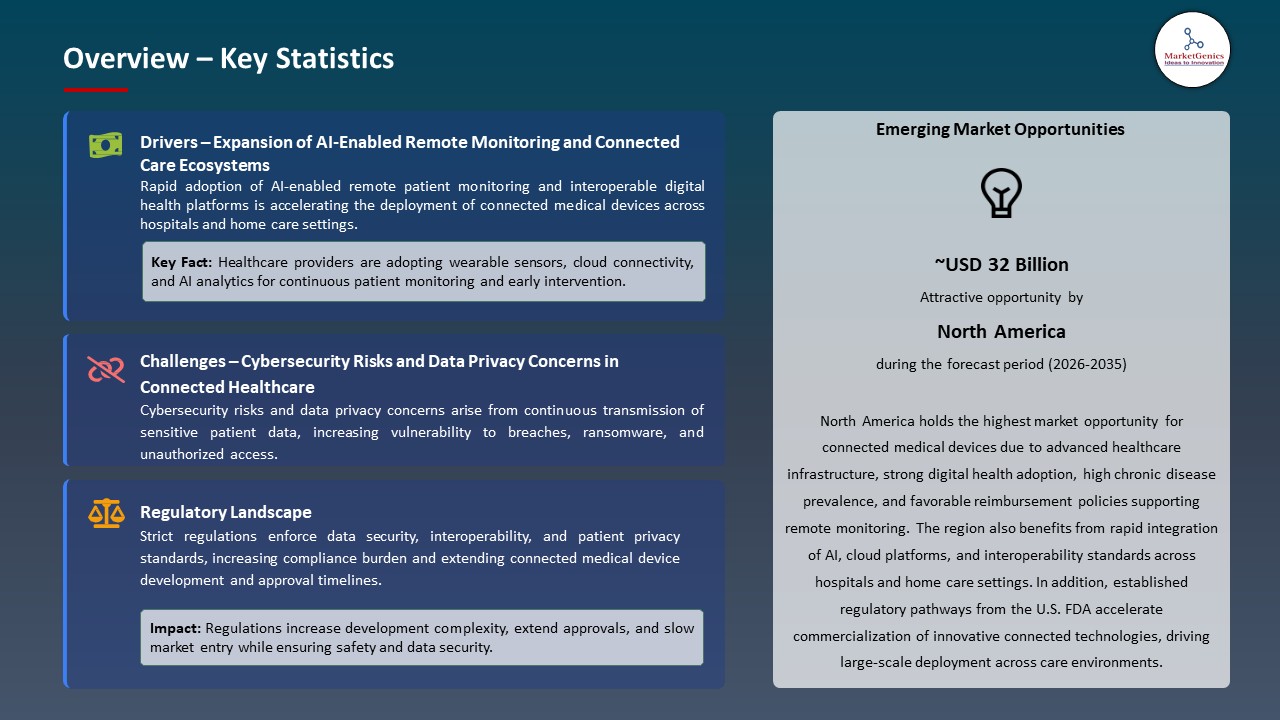
Key adjacent opportunities for the global connected medical devices market include remote patient monitoring (RPM), digital therapeutics (DTx), telehealth platforms, healthcare internet of things (IoMT), and AI-powered clinical decision support systems (CDSS). These complementary markets expand connected care ecosystems, enhance interoperability, and create new revenue opportunities for device manufacturers and digital health providers. Growth across adjacent digital health markets will accelerate adoption of connected medical devices and strengthen long-term market expansion.
Connected Medical Devices Market Dynamics and Trends
Driver: Rising Adoption of AI-Enabled Home Healthcare Monitoring is Accelerating Connected Device Demand
-
AI-powered home monitoring solutions are driving continued growth in the connected medical devices market by facilitating continuous patient engagement and AI-driven clinical decisions. By leveraging AI, connected medical devices enable real-time monitoring, early detection, and better management of chronic diseases, ultimately improving patient outcomes.
- The emphasis in the strategy is on further development of smart connected monitoring technology for preventive and remote healthcare management. For instance, in May 2025, OMRON Healthcare recently released home blood pressure monitors that come with a built-in AI atrial fibrillation (AF) detection system compatible with the OMRON connect mobile application for secure health data sharing with doctors via Bluetooth®.
- The pervasive adoption of the intelligent home monitoring technology is boosting the demand for interoperable connected healthcare ecosystems in cardiovascular, respiratory, and metabolic disease management, and also in the overall shift towards personalized and preventive healthcare delivery.
- AI-powered home monitoring systems are becoming more prevalent, driving the future growth of smart connected medical devices and the digital health market.
Restraint: Limited Interoperability Across Healthcare Infrastructure Continues to Restrict Connected Device Integration
- The lack of standardized interoperability among healthcare systems is a major issue for the connected medical devices market, as it hinders effective communication between medical devices, electronic health records, and hospital information systems and applications. Older systems and multiple communication pathways persist in integration issues and disparate clinical data.
- For instance, in 2025 Philips pointed to ongoing integration issues in the healthcare sector with limited interoperability between patient monitors, ventilators, infusion pumps, and other clinical devices still making it difficult to exchange data and manage alarms.
- These constraints make deployment more expensive, slower, less efficient, and slower to create a fully connected healthcare ecosystem.
- Connected devices deployments remain hampered by interoperability problems and complexity in implementation healthcare systems.
Opportunity: Geographic Expansion of AI-Enabled Cardiac Monitoring Solutions is Creating New Revenue Potential
- Growing the penetration of connected healthcare technologies in new and underpenetrated healthcare markets offers substantial growth opportunities for connected medical device manufacturers. The growth of investments in digital healthcare infrastructure and a surge in the need for long-term cardiac monitoring remotely are driving firms to extend their reach across the globe.
- Advanced connected monitoring platforms enable continuous monitoring of physiology, thus adding to the diagnostic accuracy and access to specialized care. For instance, in May 2025, iRhythm Technologies launched its Zio Long-Term Continuous Monitoring service in Japan, offering up to 14 days of continuous ECG monitoring supported by an AI-powered arrhythmia detection algorithm approved by Japan's PMDA.
- AI-powered connected monitoring platforms are enhancing the access to specialized cardiac care and opening new revenue streams through global commercialization.
- AI-driven connected monitoring solutions are driving significant long-term growth opportunities in global healthcare markets.
Key Trend: Artificial Intelligence Integration is Transforming Connected Medical Devices into Intelligent Clinical Platforms
- Artificial intelligence is becoming a key differentiating capability across connected medical devices as manufacturers integrate advanced analytics, automation, and real-time decision support into next-generation healthcare technologies. AI-enabled connected devices are improving diagnostic precision, automating clinical workflows, and enhancing operational efficiency.
- The changing paradigm integrated medical devices with data-sharing and enabled intelligent medical devices that facilitate predictive and preventive healthcare. For instance, in November 2025, Siemens Healthineers announced the introduction of Optiq AI, a new AI-based imaging solution that is embedded in the company's most recent interventional imaging systems, making it possible to enhance images in real time, optimize workflows and benefit from improved low-dose imaging performance, all within connected clinical environments.
- This shift is enabling connected medical devices from data gatherers to intelligent clinical platforms, featuring predictive analytics, individual treatment, and prevention of disease.
- The adoption of AI is helping to drive innovation and differentiate products in the connected medical devices market.
Connected Medical Devices Market Analysis and Segmental Data

Vital Sign Monitors Dominate Global Connected Medical Devices Market
- The vital sign monitors segment dominates the global connected medical devices market as the segment of vital sign monitors holds the largest share of the market and continues to be in widespread use in hospitals, ambulatory care centers, and home healthcare for continuous monitoring of blood pressure, heart rate, oxygen saturation, respiratory rate, and body temperature. They can be seamlessly integrated with cloud-based platforms, electronic health records (EHRs), and remote patient monitoring systems, which allow for real-time clinical decision-making and early detection of patient deterioration.
- For instance, in September 2025, Masimo extended its strategic collaboration with Philips to more rapidly integrate Masimo's new, state-of-the-art patient monitoring solutions, such as SET pulse oximetry, wearable multi-parameter monitoring solutions and AI-powered monitoring solutions.
- The rising connected vital sign monitor market share is further supported by the spread of remote patient monitoring, the increasing prevalence of chronic diseases, and the rising need for continuous patient monitoring.
- The increasing use of connected vital sign monitors is fueling market growth as they allow round-the-clock patient monitoring and enhances clinical results.
North America Leads Global Connected Medical Devices Market Demand
- North America leads the connected medical devices market is due to the increased uptake on remote patient monitoring, digital healthcare infrastructure and connected care delivery in hospitals and home healthcare. For instance, in January 2025, GE HealthCare unveiled the Portrait VSM vital signs monitor, which allows for continuous wireless patient monitoring and remote detection of patient deterioration, thus enhancing real-time surveillance in hospitals.
- Furthermore, the increasing adoption of AI-driven connected medical technologies is contributing to the advancement of North America's connected medical devices market by enhancing clinical efficiency and interoperability. For instance, in February 2025, Baxter International got U.S. FDA clearance for its Voalte Linq solution, which connects medical device alerts with clinical communication via a single connected platform.
- North America's dominance in the global connected medical devices market continues to be strengthened by continuous innovation of connected healthcare technologies and digital care infrastructure.
Connected Medical Devices Market Ecosystem
The global connected medical devices market is moderately fragmented, with leading players such as Medtronic, Abbott Laboratories, Koninklijke Philips N.V., GE Healthcare, and Apple dominating through advanced integration of AI, IoT, cloud computing, and digital health ecosystems across clinical and consumer healthcare environments. These companies collectively drive large-scale adoption of real-time monitoring, remote diagnostics, and data-driven patient management solutions.
The key market players are looking into specialized technologies like continuous glucose monitoring, AI-based imaging, wireless patient monitoring, and health ecosystems through wearables. Medtronic moves forward with smart insulin delivery, Abbott improves biosensor-based diabetes care, Philips works on interoperable monitoring networks, GE Healthcare improves connected imaging, and Apple pushes wearables to push on health analytics.
The connected medical devices market is propelled by the continuous emergence of innovations in the fields of AI, IoT, and connected ecosystems, as well as the strong presence of global leaders, which are accelerating the adoption rate, enhancing clinical efficiency and supporting sustainable growth in the market.

Recent Development and Strategic Overview:
- In June 2026, Abbott Laboratories launched Libre Assist, a new feature within its Libre app leveraging image recognition and AI to forecast post-meal glucose response, thereby enhancing its connected diabetes ecosystem with personalized, real-time, app-based decision support.
- In February 2026, Medtronic plc commenced the EMEA commercial rollout of its MiniMed Go Smart MDI system with Simplera sensor, a connected diabetes management solution designed to deliver real-time actionable insights through a unified mobile application for individuals on multiple daily insulin injections.
Report Scope
|
Detail |
|
|
Market Size in 2025 |
USD 59.2 Bn |
|
Market Forecast Value in 2035 |
USD 132.6 Bn |
|
Growth Rate (CAGR) |
8.4% |
|
Forecast Period |
2026 – 2035 |
|
Historical Data Available for |
2021 – 2024 |
|
Market Size Units |
US$ Billion for Value |
|
Report Format |
Electronic (PDF) + Excel |
|
North America |
Europe |
Asia Pacific |
Middle East |
Africa |
South America |
|
|
|
|
|
|
|
Companies Covered |
|||||
|
|
|
||||
Connected Medical Devices Market Segmentation and Highlights
|
Segment |
Sub-segment |
|
Connected Medical Devices Market, By Product Type |
|
|
Connected Medical Devices Market, By Connectivity Technology |
|
|
Connected Medical Devices Market, By Application |
|
|
Connected Medical Devices Market, By End-user |
|
Frequently Asked Questions
Table of Contents
- 1. Research Methodology and Assumptions
- 1.1. Definitions
- 1.2. Research Design and Approach
- 1.3. Data Collection Methods
- 1.4. Base Estimates and Calculations
- 1.5. Forecasting Models
- 1.5.1. Key Forecast Factors & Impact Analysis
- 1.6. Secondary Research
- 1.6.1. Open Sources
- 1.6.2. Paid Databases
- 1.6.3. Associations
- 1.7. Primary Research
- 1.7.1. Primary Sources
- 1.7.2. Primary Interviews with Stakeholders across Ecosystem
- 2. Executive Summary
- 2.1. Global Connected Medical Devices Market Outlook
- 2.1.1. Connected Medical Devices Market Size (Value - US$ Bn), and Forecasts, 2021-2035
- 2.1.2. Compounded Annual Growth Rate Analysis
- 2.1.3. Growth Opportunity Analysis
- 2.1.4. Segmental Share Analysis
- 2.1.5. Geographical Share Analysis
- 2.2. Market Analysis and Facts
- 2.3. Supply-Demand Analysis
- 2.4. Competitive Benchmarking
- 2.5. Go-to- Market Strategy
- 2.5.1. Customer/ End-use Industry Assessment
- 2.5.2. Growth Opportunity Data, 2026-2035
- 2.5.2.1. Regional Data
- 2.5.2.2. Country Data
- 2.5.2.3. Segmental Data
- 2.5.3. Identification of Potential Market Spaces
- 2.5.4. GAP Analysis
- 2.5.5. Potential Attractive Price Points
- 2.5.6. Prevailing Market Risks & Challenges
- 2.5.7. Preferred Sales & Marketing Strategies
- 2.5.8. Key Recommendations and Analysis
- 2.5.9. A Way Forward
- 2.1. Global Connected Medical Devices Market Outlook
- 3. Industry Data and Premium Insights
- 3.1. Global Healthcare & Pharmaceutical Industry Overview, 2025
- 3.1.1. Healthcare & Pharmaceutical Ecosystem Analysis
- 3.1.2. Key Trends for Healthcare & Pharmaceutical Industry
- 3.1.3. Regional Distribution for Healthcare & Pharmaceutical Industry
- 3.2. Supplier Customer Data
- 3.3. Technology Roadmap and Developments
- 3.4. Trade Analysis
- 3.4.1. Import & Export Analysis, 2025
- 3.4.2. Top Importing Countries
- 3.4.3. Top Exporting Countries
- 3.1. Global Healthcare & Pharmaceutical Industry Overview, 2025
- 4. Market Overview
- 4.1. Market Dynamics
- 4.1.1. Drivers
- 4.1.1.1. Rising adoption of remote patient monitoring and hospital-at-home care models
- 4.1.1.2. Increasing integration of AI, cloud computing, and IoT in healthcare ecosystems
- 4.1.1.3. Growing prevalence of chronic diseases requiring continuous physiological monitoring
- 4.1.2. Restraints
- 4.1.2.1. Cybersecurity risks and patient data privacy concerns
- 4.1.2.2. Lack of interoperability across healthcare systems and medical devices
- 4.1.1. Drivers
- 4.2. Key Trend Analysis
- 4.3. Regulatory Framework
- 4.3.1. Key Regulations, Norms, and Subsidies, by Key Countries
- 4.3.2. Tariffs and Standards
- 4.3.3. Impact Analysis of Regulations on the Market
- 4.4. Value Chain Analysis/ Ecosystem Analysis
- 4.5. Porter’s Five Forces Analysis
- 4.6. PESTEL Analysis
- 4.7. Global Connected Medical Devices Market Demand
- 4.7.1. Historical Market Size – in Value (US$ Bn), 2020-2024
- 4.7.2. Current and Future Market Size – in Value (US$ Bn), 2026–2035
- 4.7.2.1. Y-o-Y Growth Trends
- 4.7.2.2. Absolute $ Opportunity Assessment
- 4.1. Market Dynamics
- 5. Competition Landscape
- 5.1. Competition structure
- 5.1.1. Fragmented v/s consolidated
- 5.2. Company Share Analysis, 2025
- 5.2.1. Global Company Market Share
- 5.2.2. By Region
- 5.2.2.1. North America
- 5.2.2.2. Europe
- 5.2.2.3. Asia Pacific
- 5.2.2.4. Middle East
- 5.2.2.5. Africa
- 5.2.2.6. South America
- 5.3. Product Comparison Matrix
- 5.3.1. Specifications
- 5.3.2. Market Positioning
- 5.3.3. Pricing
- 5.1. Competition structure
- 6. Global Connected Medical Devices Market Analysis, by Product Type
- 6.1. Key Segment Analysis
- 6.2. Connected Medical Devices Market Size (Value - US$ Bn), Analysis, and Forecasts, by Product Type, 2021-2035
- 6.2.1. Vital Sign Monitors
- 6.2.1.1. Blood Pressure Monitors
- 6.2.1.2. Blood Glucose Monitors
- 6.2.1.3. Pulse Oximeters
- 6.2.1.4. ECG Monitors
- 6.2.1.5. Temperature Monitors
- 6.2.1.6. Others
- 6.2.2. Wearable Devices
- 6.2.2.1. Smartwatches
- 6.2.2.2. Fitness/Activity Trackers
- 6.2.2.3. Smart Patches
- 6.2.2.4. Connected Inhalers
- 6.2.2.5. Others
- 6.2.3. Implantable Devices
- 6.2.3.1. Pacemakers
- 6.2.3.2. Neurostimulators
- 6.2.3.3. Others
- 6.2.4. Diagnostic & Imaging Devices
- 6.2.5. Therapeutic Devices
- 6.2.6. Point-of-Care Devices
- 6.2.1. Vital Sign Monitors
- 7. Global Connected Medical Devices Market Analysis, by Connectivity Technology
- 7.1. Key Segment Analysis
- 7.2. Connected Medical Devices Market Size (Value - US$ Bn), Analysis, and Forecasts, by Connectivity Technology, 2021-2035
- 7.2.1. Bluetooth/BLE
- 7.2.2. Wi-Fi
- 7.2.3. Cellular (3G/4G/5G)
- 7.2.4. NFC
- 7.2.5. Zigbee
- 7.2.6. Others
- 8. Global Connected Medical Devices Market Analysis, by Application
- 8.1. Key Segment Analysis
- 8.2. Connected Medical Devices Market Size (Value - US$ Bn), Analysis, and Forecasts, by Application, 2021-2035
- 8.2.1. Remote Patient Monitoring
- 8.2.1.1. Cardiac Monitoring
- 8.2.1.2. Diabetes Management
- 8.2.1.3. Neurological Monitoring
- 8.2.1.4. Respiratory Monitoring
- 8.2.1.5. Others
- 8.2.2. Diagnostic & Treatment
- 8.2.3. Fitness & Wellness Monitoring
- 8.2.4. Medication Management & Adherence
- 8.2.5. Other Applications
- 8.2.1. Remote Patient Monitoring
- 9. Global Connected Medical Devices Market Analysis, by End-user
- 9.1. Key Segment Analysis
- 9.2. Connected Medical Devices Market Size (Value - US$ Bn), Analysis, and Forecasts, by End-user, 2021-2035
- 9.2.1. Hospitals & Clinics
- 9.2.2. Home Healthcare Settings
- 9.2.3. Ambulatory Surgical Centers
- 9.2.4. Diagnostic & Imaging Centers
- 9.2.5. Long-term Care Facilities/Nursing Homes
- 9.2.6. Fitness & Wellness Centers
- 9.2.7. Other End-users
- 10. Global Connected Medical Devices Market Analysis, by Region
- 10.1. Key Findings
- 10.2. Connected Medical Devices Market Size (Value - US$ Bn), Analysis, and Forecasts, by Region, 2021-2035
- 10.2.1. North America
- 10.2.2. Europe
- 10.2.3. Asia Pacific
- 10.2.4. Middle East
- 10.2.5. Africa
- 10.2.6. South America
- 11. North America Connected Medical Devices Market Analysis
- 11.1. Key Segment Analysis
- 11.2. Regional Snapshot
- 11.3. North America Connected Medical Devices Market Size (Value - US$ Bn), Analysis, and Forecasts, 2021-2035
- 11.3.1. Product Type
- 11.3.2. Connectivity Technology
- 11.3.3. Application
- 11.3.4. End-user
- 11.3.5. Country
- 11.3.5.1. USA
- 11.3.5.2. Canada
- 11.3.5.3. Mexico
- 11.4. USA Connected Medical Devices Market
- 11.4.1. Country Segmental Analysis
- 11.4.2. Product Type
- 11.4.3. Connectivity Technology
- 11.4.4. Application
- 11.4.5. End-user
- 11.5. Canada Connected Medical Devices Market
- 11.5.1. Country Segmental Analysis
- 11.5.2. Product Type
- 11.5.3. Connectivity Technology
- 11.5.4. Application
- 11.5.5. End-user
- 11.6. Mexico Connected Medical Devices Market
- 11.6.1. Country Segmental Analysis
- 11.6.2. Product Type
- 11.6.3. Connectivity Technology
- 11.6.4. Application
- 11.6.5. End-user
- 12. Europe Connected Medical Devices Market Analysis
- 12.1. Key Segment Analysis
- 12.2. Regional Snapshot
- 12.3. Europe Connected Medical Devices Market Size (Value - US$ Bn), Analysis, and Forecasts, 2021-2035
- 12.3.1. Product Type
- 12.3.2. Connectivity Technology
- 12.3.3. Application
- 12.3.4. End-user
- 12.3.5. Country
- 12.3.5.1. Germany
- 12.3.5.2. United Kingdom
- 12.3.5.3. France
- 12.3.5.4. Italy
- 12.3.5.5. Spain
- 12.3.5.6. Netherlands
- 12.3.5.7. Nordic Countries
- 12.3.5.8. Poland
- 12.3.5.9. Russia & CIS
- 12.3.5.10. Rest of Europe
- 12.4. Germany Connected Medical Devices Market
- 12.4.1. Country Segmental Analysis
- 12.4.2. Product Type
- 12.4.3. Connectivity Technology
- 12.4.4. Application
- 12.4.5. End-user
- 12.5. United Kingdom Connected Medical Devices Market
- 12.5.1. Country Segmental Analysis
- 12.5.2. Product Type
- 12.5.3. Connectivity Technology
- 12.5.4. Application
- 12.5.5. End-user
- 12.6. France Connected Medical Devices Market
- 12.6.1. Country Segmental Analysis
- 12.6.2. Product Type
- 12.6.3. Connectivity Technology
- 12.6.4. Application
- 12.6.5. End-user
- 12.7. Italy Connected Medical Devices Market
- 12.7.1. Country Segmental Analysis
- 12.7.2. Product Type
- 12.7.3. Connectivity Technology
- 12.7.4. Application
- 12.7.5. End-user
- 12.8. Spain Connected Medical Devices Market
- 12.8.1. Country Segmental Analysis
- 12.8.2. Product Type
- 12.8.3. Connectivity Technology
- 12.8.4. Application
- 12.8.5. End-user
- 12.9. Netherlands Connected Medical Devices Market
- 12.9.1. Country Segmental Analysis
- 12.9.2. Product Type
- 12.9.3. Connectivity Technology
- 12.9.4. Application
- 12.9.5. End-user
- 12.10. Nordic Countries Connected Medical Devices Market
- 12.10.1. Country Segmental Analysis
- 12.10.2. Product Type
- 12.10.3. Connectivity Technology
- 12.10.4. Application
- 12.10.5. End-user
- 12.11. Poland Connected Medical Devices Market
- 12.11.1. Country Segmental Analysis
- 12.11.2. Product Type
- 12.11.3. Connectivity Technology
- 12.11.4. Application
- 12.11.5. End-user
- 12.12. Russia & CIS Connected Medical Devices Market
- 12.12.1. Country Segmental Analysis
- 12.12.2. Product Type
- 12.12.3. Connectivity Technology
- 12.12.4. Application
- 12.12.5. End-user
- 12.13. Rest of Europe Connected Medical Devices Market
- 12.13.1. Country Segmental Analysis
- 12.13.2. Product Type
- 12.13.3. Connectivity Technology
- 12.13.4. Application
- 12.13.5. End-user
- 13. Asia Pacific Connected Medical Devices Market Analysis
- 13.1. Key Segment Analysis
- 13.2. Regional Snapshot
- 13.3. Asia Pacific Connected Medical Devices Market Size (Value - US$ Bn), Analysis, and Forecasts, 2021-2035
- 13.3.1. Product Type
- 13.3.2. Connectivity Technology
- 13.3.3. Application
- 13.3.4. End-user
- 13.3.5. Country
- 13.3.5.1. China
- 13.3.5.2. India
- 13.3.5.3. Japan
- 13.3.5.4. South Korea
- 13.3.5.5. Australia and New Zealand
- 13.3.5.6. Indonesia
- 13.3.5.7. Malaysia
- 13.3.5.8. Thailand
- 13.3.5.9. Vietnam
- 13.3.5.10. Rest of Asia Pacific
- 13.4. China Connected Medical Devices Market
- 13.4.1. Country Segmental Analysis
- 13.4.2. Product Type
- 13.4.3. Connectivity Technology
- 13.4.4. Application
- 13.4.5. End-user
- 13.5. India Connected Medical Devices Market
- 13.5.1. Country Segmental Analysis
- 13.5.2. Product Type
- 13.5.3. Connectivity Technology
- 13.5.4. Application
- 13.5.5. End-user
- 13.6. Japan Connected Medical Devices Market
- 13.6.1. Country Segmental Analysis
- 13.6.2. Product Type
- 13.6.3. Connectivity Technology
- 13.6.4. Application
- 13.6.5. End-user
- 13.7. South Korea Connected Medical Devices Market
- 13.7.1. Country Segmental Analysis
- 13.7.2. Product Type
- 13.7.3. Connectivity Technology
- 13.7.4. Application
- 13.7.5. End-user
- 13.8. Australia and New Zealand Connected Medical Devices Market
- 13.8.1. Country Segmental Analysis
- 13.8.2. Product Type
- 13.8.3. Connectivity Technology
- 13.8.4. Application
- 13.8.5. End-user
- 13.9. Indonesia Connected Medical Devices Market
- 13.9.1. Country Segmental Analysis
- 13.9.2. Product Type
- 13.9.3. Connectivity Technology
- 13.9.4. Application
- 13.9.5. End-user
- 13.10. Malaysia Connected Medical Devices Market
- 13.10.1. Country Segmental Analysis
- 13.10.2. Product Type
- 13.10.3. Connectivity Technology
- 13.10.4. Application
- 13.10.5. End-user
- 13.11. Thailand Connected Medical Devices Market
- 13.11.1. Country Segmental Analysis
- 13.11.2. Product Type
- 13.11.3. Connectivity Technology
- 13.11.4. Application
- 13.11.5. End-user
- 13.12. Vietnam Connected Medical Devices Market
- 13.12.1. Country Segmental Analysis
- 13.12.2. Product Type
- 13.12.3. Connectivity Technology
- 13.12.4. Application
- 13.12.5. End-user
- 13.13. Rest of Asia Pacific Connected Medical Devices Market
- 13.13.1. Country Segmental Analysis
- 13.13.2. Product Type
- 13.13.3. Connectivity Technology
- 13.13.4. Application
- 13.13.5. End-user
- 14. Middle East Connected Medical Devices Market Analysis
- 14.1. Key Segment Analysis
- 14.2. Regional Snapshot
- 14.3. Middle East Connected Medical Devices Market Size (Value - US$ Bn), Analysis, and Forecasts, 2021-2035
- 14.3.1. Product Type
- 14.3.2. Connectivity Technology
- 14.3.3. Application
- 14.3.4. End-user
- 14.3.5. Country
- 14.3.5.1. Turkey
- 14.3.5.2. UAE
- 14.3.5.3. Saudi Arabia
- 14.3.5.4. Israel
- 14.3.5.5. Rest of Middle East
- 14.4. Turkey Connected Medical Devices Market
- 14.4.1. Country Segmental Analysis
- 14.4.2. Product Type
- 14.4.3. Connectivity Technology
- 14.4.4. Application
- 14.4.5. End-user
- 14.5. UAE Connected Medical Devices Market
- 14.5.1. Country Segmental Analysis
- 14.5.2. Product Type
- 14.5.3. Connectivity Technology
- 14.5.4. Application
- 14.5.5. End-user
- 14.6. Saudi Arabia Connected Medical Devices Market
- 14.6.1. Country Segmental Analysis
- 14.6.2. Product Type
- 14.6.3. Connectivity Technology
- 14.6.4. Application
- 14.6.5. End-user
- 14.7. Israel Connected Medical Devices Market
- 14.7.1. Country Segmental Analysis
- 14.7.2. Product Type
- 14.7.3. Connectivity Technology
- 14.7.4. Application
- 14.7.5. End-user
- 14.8. Rest of Middle East Connected Medical Devices Market
- 14.8.1. Country Segmental Analysis
- 14.8.2. Product Type
- 14.8.3. Connectivity Technology
- 14.8.4. Application
- 14.8.5. End-user
- 15. Africa Connected Medical Devices Market Analysis
- 15.1. Key Segment Analysis
- 15.2. Regional Snapshot
- 15.3. Africa Connected Medical Devices Market Size (Value - US$ Bn), Analysis, and Forecasts, 2021-2035
- 15.3.1. Product Type
- 15.3.2. Connectivity Technology
- 15.3.3. Application
- 15.3.4. End-user
- 15.3.5. Country
- 15.3.5.1. South Africa
- 15.3.5.2. Egypt
- 15.3.5.3. Nigeria
- 15.3.5.4. Algeria
- 15.3.5.5. Rest of Africa
- 15.4. South Africa Connected Medical Devices Market
- 15.4.1. Country Segmental Analysis
- 15.4.2. Product Type
- 15.4.3. Connectivity Technology
- 15.4.4. Application
- 15.4.5. End-user
- 15.5. Egypt Connected Medical Devices Market
- 15.5.1. Country Segmental Analysis
- 15.5.2. Product Type
- 15.5.3. Connectivity Technology
- 15.5.4. Application
- 15.5.5. End-user
- 15.6. Nigeria Connected Medical Devices Market
- 15.6.1. Country Segmental Analysis
- 15.6.2. Product Type
- 15.6.3. Connectivity Technology
- 15.6.4. Application
- 15.6.5. End-user
- 15.7. Algeria Connected Medical Devices Market
- 15.7.1. Country Segmental Analysis
- 15.7.2. Product Type
- 15.7.3. Connectivity Technology
- 15.7.4. Application
- 15.7.5. End-user
- 15.8. Rest of Africa Connected Medical Devices Market
- 15.8.1. Country Segmental Analysis
- 15.8.2. Product Type
- 15.8.3. Connectivity Technology
- 15.8.4. Application
- 15.8.5. End-user
- 16. South America Connected Medical Devices Market Analysis
- 16.1. Key Segment Analysis
- 16.2. Regional Snapshot
- 16.3. South America Connected Medical Devices Market Size (Value - US$ Bn), Analysis, and Forecasts, 2021-2035
- 16.3.1. Product Type
- 16.3.2. Connectivity Technology
- 16.3.3. Application
- 16.3.4. End-user
- 16.3.5. Country
- 16.3.5.1. Brazil
- 16.3.5.2. Argentina
- 16.3.5.3. Rest of South America
- 16.4. Brazil Connected Medical Devices Market
- 16.4.1. Country Segmental Analysis
- 16.4.2. Product Type
- 16.4.3. Connectivity Technology
- 16.4.4. Application
- 16.4.5. End-user
- 16.5. Argentina Connected Medical Devices Market
- 16.5.1. Country Segmental Analysis
- 16.5.2. Product Type
- 16.5.3. Connectivity Technology
- 16.5.4. Application
- 16.5.5. End-user
- 16.6. Rest of South America Connected Medical Devices Market
- 16.6.1. Country Segmental Analysis
- 16.6.2. Product Type
- 16.6.3. Connectivity Technology
- 16.6.4. Application
- 16.6.5. End-user
- 17. Key Players/ Company Profile
- 17.1. A&D Company, Limited
- 17.1.1. Company Details/ Overview
- 17.1.2. Company Financials
- 17.1.3. Key Customers and Competitors
- 17.1.4. Business/ Industry Portfolio
- 17.1.5. Product Portfolio/ Specification Details
- 17.1.6. Pricing Data
- 17.1.7. Strategic Overview
- 17.1.8. Recent Developments
- 17.2. Abbott Laboratories
- 17.3. Apple Inc.
- 17.4. Baxter International Inc.
- 17.5. Becton, Dickinson and Company
- 17.6. Biotronik SE & Co. KG
- 17.7. Boston Scientific Corporation
- 17.8. GE Healthcare
- 17.9. iRhythm Technologies, Inc.
- 17.10. Johnson & Johnson MedTech
- 17.11. Koninklijke Philips N.V.
- 17.12. LivaNova PLC
- 17.13. Medtronic plc
- 17.14. Nihon Kohden Corporation
- 17.15. Omron Healthcare Co., Ltd.
- 17.16. Siemens Healthineers
- 17.17. VivaLNK, Inc.
- 17.18. Other Key Players
- 17.1. A&D Company, Limited
Note* - This is just tentative list of players. While providing the report, we will cover more number of players based on their revenue and share for each geography
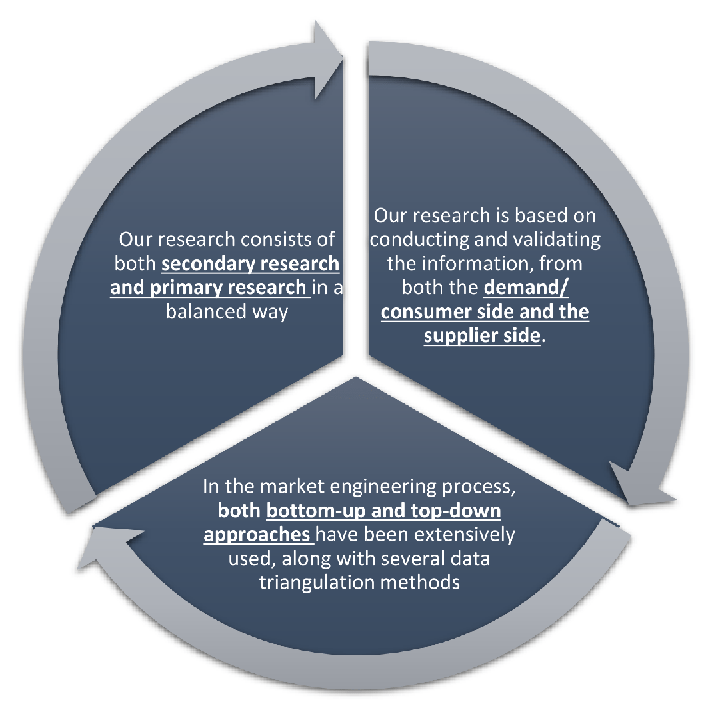
Research Design
Our research design integrates both demand-side and supply-side analysis through a balanced combination of primary and secondary research methodologies. By utilizing both bottom-up and top-down approaches alongside rigorous data triangulation methods, we deliver robust market intelligence that supports strategic decision-making.
MarketGenics' comprehensive research design framework ensures the delivery of accurate, reliable, and actionable market intelligence. Through the integration of multiple research approaches, rigorous validation processes, and expert analysis, we provide our clients with the insights needed to make informed strategic decisions and capitalize on market opportunities.
MarketGenics leverages a dedicated industry panel of experts and a comprehensive suite of paid databases to effectively collect, consolidate, and analyze market intelligence.
Our approach has consistently proven to be reliable and effective in generating accurate market insights, identifying key industry trends, and uncovering emerging business opportunities.
Through both primary and secondary research, we capture and analyze critical company-level data such as manufacturing footprints, including technical centers, R&D facilities, sales offices, and headquarters.
Our expert panel further enhances our ability to estimate market size for specific brands based on validated field-level intelligence.
Our data mining techniques incorporate both parametric and non-parametric methods, allowing for structured data collection, sorting, processing, and cleaning.
Demand projections are derived from large-scale data sets analyzed through proprietary algorithms, culminating in robust and reliable market sizing.
Research Approach
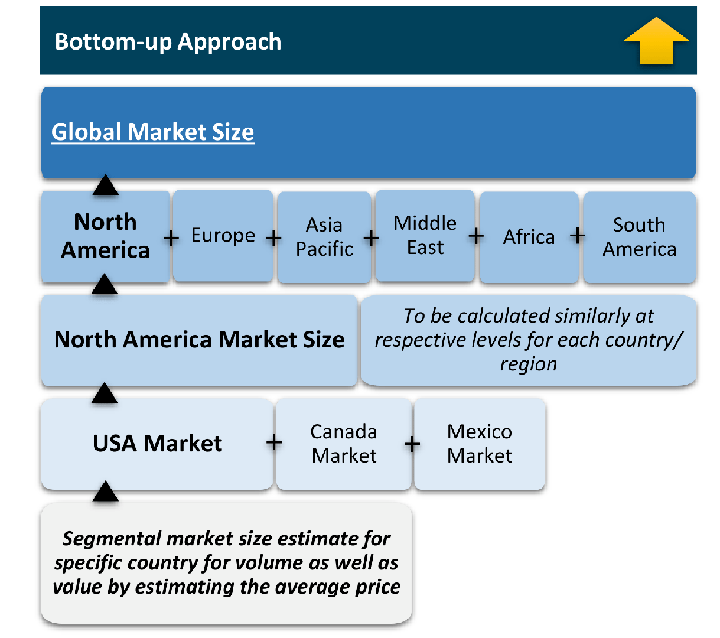
The bottom-up approach builds market estimates by starting with the smallest addressable market units and systematically aggregating them to create comprehensive market size projections.
This method begins with specific, granular data points and builds upward to create the complete market landscape.
Customer Analysis → Segmental Analysis → Geographical Analysis
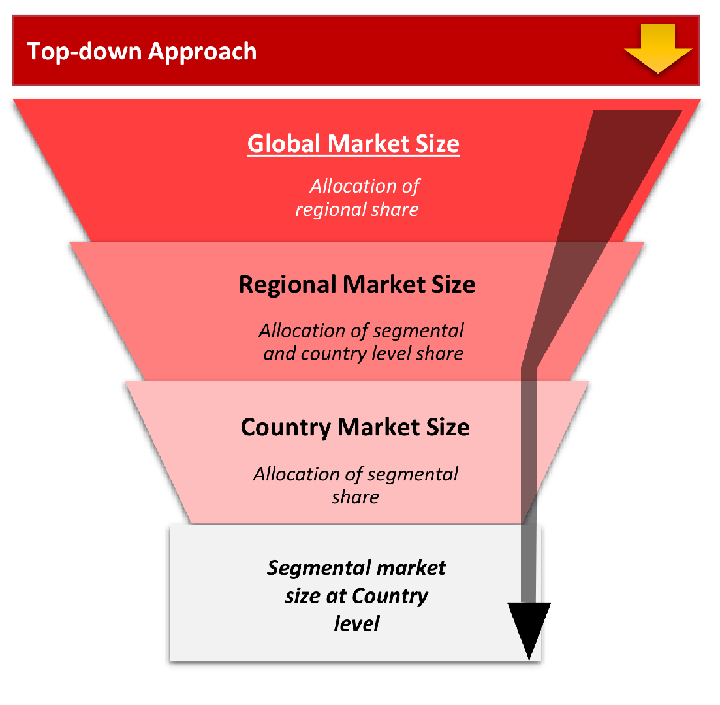
The top-down approach starts with the broadest possible market data and systematically narrows it down through a series of filters and assumptions to arrive at specific market segments or opportunities.
This method begins with the big picture and works downward to increasingly specific market slices.
TAM → SAM → SOM
Research Methods
Desk / Secondary Research
While analysing the market, we extensively study secondary sources, directories, and databases to identify and collect information useful for this technical, market-oriented, and commercial report. Secondary sources that we utilize are not only the public sources, but it is a combination of Open Source, Associations, Paid Databases, MG Repository & Knowledgebase, and others.
- Company websites, annual reports, financial reports, broker reports, and investor presentations
- National government documents, statistical databases and reports
- News articles, press releases and web-casts specific to the companies operating in the market, Magazines, reports, and others
- We gather information from commercial data sources for deriving company specific data such as segmental revenue, share for geography, product revenue, and others
- Internal and external proprietary databases (industry-specific), relevant patent, and regulatory databases
- Governing Bodies, Government Organizations
- Relevant Authorities, Country-specific Associations for Industries
We also employ the model mapping approach to estimate the product level market data through the players' product portfolio
Primary Research
Primary research/ interviews is vital in analyzing the market. Most of the cases involves paid primary interviews. Primary sources include primary interviews through e-mail interactions, telephonic interviews, surveys as well as face-to-face interviews with the different stakeholders across the value chain including several industry experts.
| Type of Respondents | Number of Primaries |
|---|---|
| Tier 2/3 Suppliers | ~20 |
| Tier 1 Suppliers | ~25 |
| End-users | ~25 |
| Industry Expert/ Panel/ Consultant | ~30 |
| Total | ~100 |
MG Knowledgebase
• Repository of industry blog, newsletter and case studies
• Online platform covering detailed market reports, and company profiles
Forecasting Factors and Models
Forecasting Factors
- Historical Trends – Past market patterns, cycles, and major events that shaped how markets behave over time. Understanding past trends helps predict future behavior.
- Industry Factors – Specific characteristics of the industry like structure, regulations, and innovation cycles that affect market dynamics.
- Macroeconomic Factors – Economic conditions like GDP growth, inflation, and employment rates that affect how much money people have to spend.
- Demographic Factors – Population characteristics like age, income, and location that determine who can buy your product.
- Technology Factors – How quickly people adopt new technology and how much technology infrastructure exists.
- Regulatory Factors – Government rules, laws, and policies that can help or restrict market growth.
- Competitive Factors – Analyzing competition structure such as degree of competition and bargaining power of buyers and suppliers.
Forecasting Models / Techniques
Multiple Regression Analysis
- Identify and quantify factors that drive market changes
- Statistical modeling to establish relationships between market drivers and outcomes
Time Series Analysis – Seasonal Patterns
- Understand regular cyclical patterns in market demand
- Advanced statistical techniques to separate trend, seasonal, and irregular components
Time Series Analysis – Trend Analysis
- Identify underlying market growth patterns and momentum
- Statistical analysis of historical data to project future trends
Expert Opinion – Expert Interviews
- Gather deep industry insights and contextual understanding
- In-depth interviews with key industry stakeholders
Multi-Scenario Development
- Prepare for uncertainty by modeling different possible futures
- Creating optimistic, pessimistic, and most likely scenarios
Time Series Analysis – Moving Averages
- Sophisticated forecasting for complex time series data
- Auto-regressive integrated moving average models with seasonal components
Econometric Models
- Apply economic theory to market forecasting
- Sophisticated economic models that account for market interactions
Expert Opinion – Delphi Method
- Harness collective wisdom of industry experts
- Structured, multi-round expert consultation process
Monte Carlo Simulation
- Quantify uncertainty and probability distributions
- Thousands of simulations with varying input parameters
Research Analysis
Our research framework is built upon the fundamental principle of validating market intelligence from both demand and supply perspectives. This dual-sided approach ensures comprehensive market understanding and reduces the risk of single-source bias.
Demand-Side Analysis: We understand end-user/application behavior, preferences, and market needs along with the penetration of the product for specific application.
Supply-Side Analysis: We estimate overall market revenue, analyze the segmental share along with industry capacity, competitive landscape, and market structure.
Validation & Evaluation
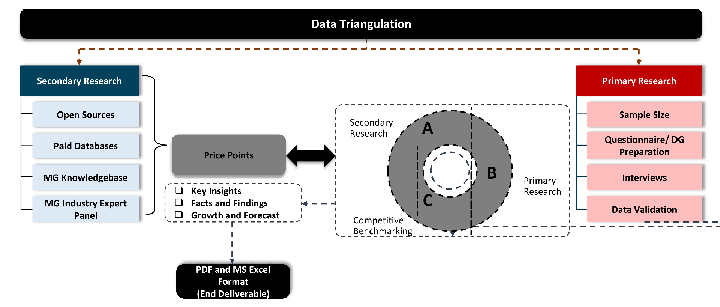
Data triangulation is a validation technique that uses multiple methods, sources, or perspectives to examine the same research question, thereby increasing the credibility and reliability of research findings. In market research, triangulation serves as a quality assurance mechanism that helps identify and minimize bias, validate assumptions, and ensure accuracy in market estimates.
- Data Source Triangulation – Using multiple data sources to examine the same phenomenon
- Methodological Triangulation – Using multiple research methods to study the same research question
- Investigator Triangulation – Using multiple researchers or analysts to examine the same data
- Theoretical Triangulation – Using multiple theoretical perspectives to interpret the same data
Custom Market Research Services
We will customise the research for you, in case the report listed above does not meet your requirements.
Get 10% Free Customisation