Menstrual Pain Relief Patches Market Size, Share & Trends Analysis Report by Product Type (Heat-Based Patches, Medicated Patches, Combination Patches), Technology, Active Ingredient, Form Factor, Distribution Channel, End-Users and Geography (North America, Europe, Asia Pacific, Middle East, Africa, and South America) – Global Industry Data, Trends, and Forecasts, 2026–2035
Market Overview:
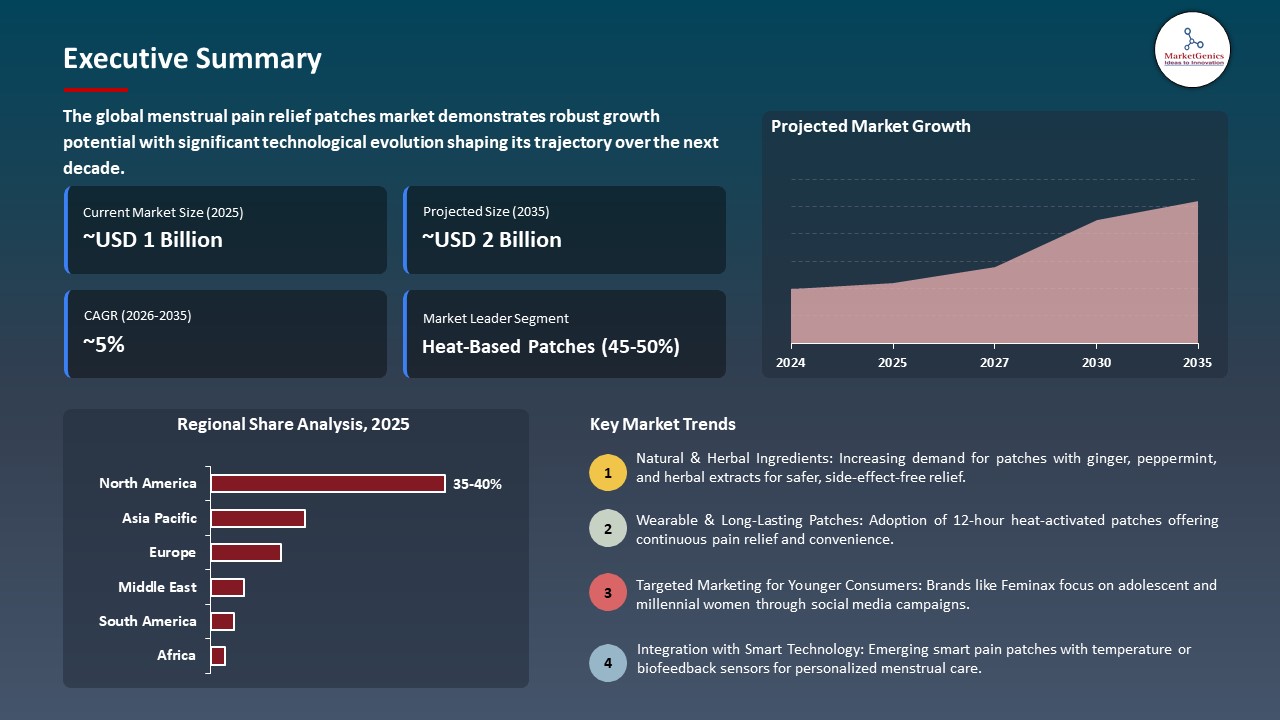
According to Marketgenics analysis, the global menstrual pain relief patches market is witnessing steady growth, with an estimated value of approximately USD 1.4 billion in 2025 and projected to reach nearly USD 2.2 billion by 2035, expanding at a CAGR of around 4.8% during the forecast period.
|
|
|
Segmental Data Insights |
|
|
Demand Trends |
|
|
Competitive Landscape |
|
|
Strategic Development |
|
|
Future Outlook & Opportunities |
|
Menstrual-Pain-Relief-Patches-Market Size, Share, and Growth
Asia Pacific is the fastest-growing menstrual pain relief patches market due to rising awareness of menstrual health, increasing adoption of convenient pain management solutions, expanding female workforce participation, improving access through e-commerce, and growing disposable incomes across emerging economies.
Yanghee Paik, CEO and co-founder of Rael, said, “Our mission has always been to make clean, high-performance cycle care accessible to all, and we’re thrilled to bring our holistic solutions to even more people nationwide – including zip codes where products powered with Korean technology weren’t readily available for purchase before this ‘summer wave’ of retailer launches”.
The rising prevalence of menstrual disorders, especially dysmenorrhea in the world, is becoming a major contributor of the menstrual pain relievers demand. Women of all ages are more and more interested in finding effective non-invasive solutions to this issue to cope with cramps, bloating, and discomfort with no need to use medications exclusively. The increased awareness of health issues, and the rising significance of women and their health, has only enhanced the pace in which convenient and easy-to-use products like heat-based patches, wearable items, and electrostimulation units are starting to be adopted.
The menstrual pain relief patches market has great opportunities by creating a combination of the therapies which involve many treatment methods like heat therapy, herbal extracts and electrostimulation. Through the provision of multifunctional solutions, manufacturers are able to meet the diverse consumer needs, improve product performance as well as differentiate themselves in a competent market place. This strategy can appeal to new market segments of customers in need of holistic, convenient, and individualized sources of menstrual pains management.
Adjacent opportunities for the menstrual pain relief patches market include women’s wearable health devices, TENS and electrotherapy units, herbal and natural pain relief products, digital health and cycle-tracking apps, and wellness and preventive healthcare services. Leveraging these markets can expand product reach, enhance personalization, and drive higher adoption rates.
Menstrual Pain Relief Patches Market Dynamics and Trends
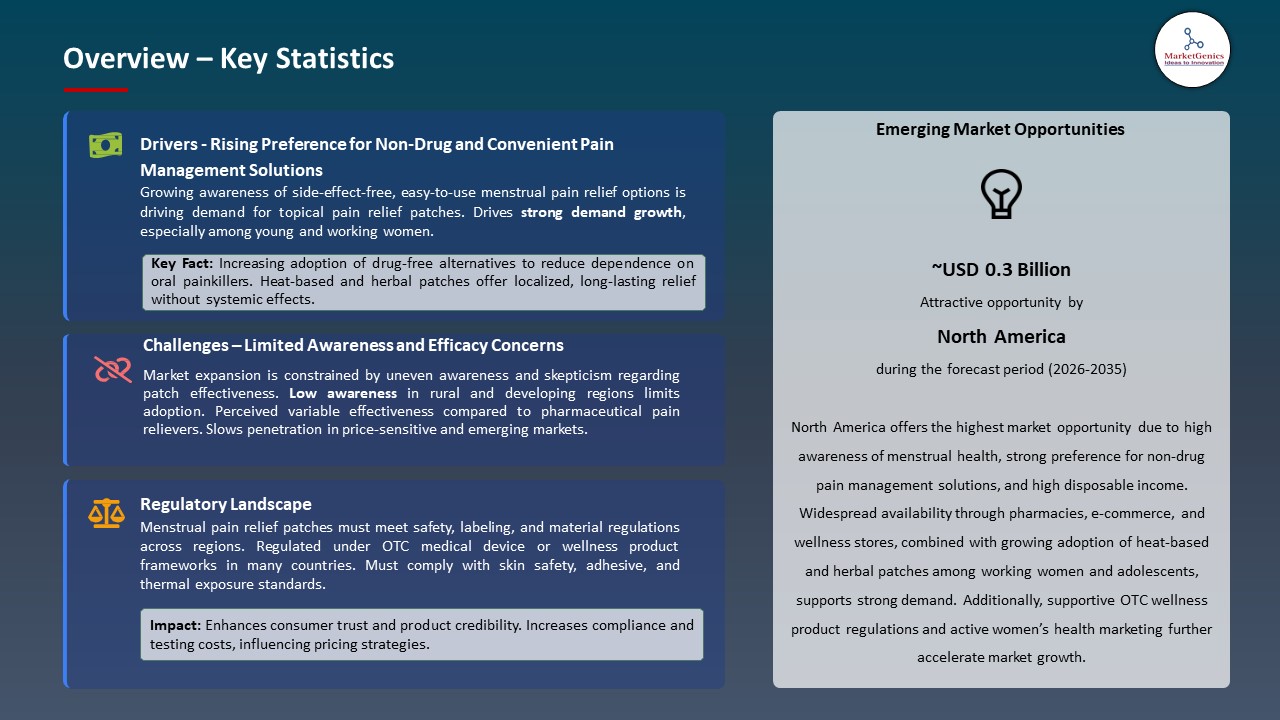
Driver: Mainstream Retail and Pharmacy Channel Expansion Strengthening Consumer Adoption and Visibility
-
The menstrual pain relief patches market has been fueled by the broadening accessibility of product through the mainstream retail and pharmacy outlets, which is enhancing product awareness and making its normalization usage by a wider consumer base. Positioning and a feminine hygiene and pain management products will increase category credibility and trial among first time users who are seeking convenient non-drug remedies.
- Broadcasting helps decrease the dependency on online awareness, allows impulse buying, and enhances the brand memory because of the recurring exposure in stores. Growth of retail is also facilitated in the provision of bundled services and specific promotional plans that enhance returns of the purchases and customer loyalty. With consumers seeking more convenient, discrete, and easily accessible sources of pain relief, improved shelf presence keeps boosting the growth of demand.
- Rael Products, based in Los Angeles, undertook its most significant international retailing venture in 2025 when it entered close to 50,000 retail outlets following strategic launches with Walmart, Ulta Beauty, and Walgreens. This unleashing entailed countrywide stocking of Rael menstrual pain relief heating patches in Walmart and Walgreens shops, which contributed to a series of new and substantial consumers of clean cycle-care products driven by Korean technologies.
- Expansive retail penetration is increasing category maturity and leading to steady growth in revenue.
Restraint: Regulatory Compliance and Quality Assurance Requirements
-
The menstrual pain relief patches market suffers significant limitations under the influence of new regulations and quality standards of development increased development timeframes and the cost burden on developers. With products being developed with more sophisticated features like herbal actives, longer heat-release features and special skin-conformable adhesives, companies are likely to have to go through tricky regulatory systems in order to be certified with ISO quality standards, CE marking, and FDA compliance of safety and efficacy claims.
- These specifications bring about stringent testing measures that include skin sensitivity, thermal stability and performance consistency which delay product arrival, and require substantial investments in clinical validation and manufacturing quality systems. Regulatory supervision is further tightened on delivery systems of transdermal delivery and therapeutic benefit claims, creating documentation and approval layers of complexity.
- Such regulatory requirements have the potential to be especially constraining to smaller or newer players, where they do not have the opportunity to be quick or compete with more established manufacturers that have better regulatory experience and compliance infrastructure.
- Increased compliance demands reduce the rate of innovation diffusion and raise the cost of time to market, which also moderate the short-term market development.
Opportunity: Rising Demand for Eco-Conscious and Sustainable Menstrual Patches Aligns with Consumer Values
-
The menstrual pain relief patches market offers a good opportunity that is fueled by the increased consumer interest in products that are environmentally conscious and sustainability oriented. Eco-conscious consumers, especially of younger age groups, are more and more inclined to use patches created with biodegradable substances, recyclable containers, and therapeutic ingredients of vegetable origin.
- The market is increasing demands in products that are effective in pain management with less environmental impact to back the premium positioning and brand loyalty. The incorporation of natural ingredients and skin friendly adhesives are additional features that increase the popularity of the product with people who are interested in drug free and body safe products.
- Brands that are capable of combining product innovation with sustainability principles without sacrificing efficacy and comfort stand at the forefront to tap into growing demand in developed and emerging wellness-focused markets. New companies such as BeYou have become popular with their biodegradable period-related pain relief patches which are made out of natural and plant-based substances including eucalyptus and peppermint oils and tree-sap adhesives, and targeted specifically at eco-conscious customers looking to find an alternative to traditional menstrual care products.
- The innovation based on sustainability is likely to open new sources of revenue and enhance the competitive position.
Key Trend: Technological Advancements in Transdermal Delivery and Extended Heat Release Elevate Product Efficacy
-
Technology-based delivery systems and heat-retention performance has become a main tendency in the menstrual pain relief patches market, changing the simple heating equipment into complex high-efficiency comfort platforms. Innovations like micro-encapsulation and temperature-reactive materials can afford the onset rate and duration of relief through controlled and sustained release of herbal or medicinal active ingredient.
- The new Smart formulations are able to keep the body warm longer (8-10+ hours) without irritation or overheating, meeting the consumer need to be comfortable longer in their everyday activities. Also, ergonomic, flexible and discreet designs facilitate the comfort under cloth and on-the-go functionality.
- Jiangsu Hanyao introduced a Self-Heating Period Pain Patch in May 2025, which combines self-heating technology with natural plant extracts to offer continuous, battery-free heat to menstrual cramp relief. The very-thin, unobtrusive patch provides the comfort of long shelf-life, enhances blood flow, soothes the muscle, and thus provides safe, painless day use.
- These innovations are encouraging adoption of better-performance patches and raising the standard in the market.
 Menstrual-Pain-Relief-Patches-Market Analysis and Segmental Data
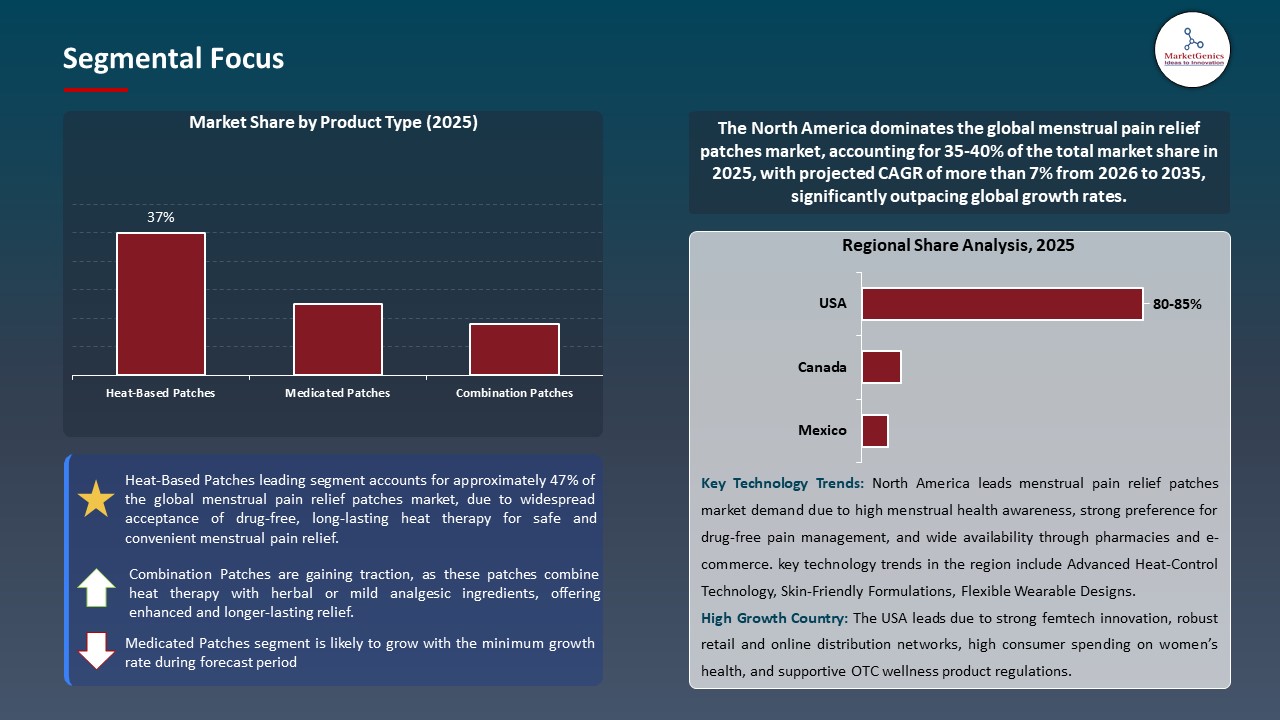
Heat-Based Patches Dominate Global Menstrual Pain Relief Patches Market
-
The inspection and monitoring segment hold a leading position in the global menstrual pain the heat-based patches segment remains the leading category within the global menstrual pain relief patches market, driven by widespread consumer preference for non-drug, convenient pain management solutions.
- These patches are specifically helpful to the lower back and the abdominal area by providing specialized warmth to the muscles, which relax, enhance blood flow, and help relieve menstrual cramps. Their contentment, discreetness and immediate relaxing impact make them really attractive to women who need comfort on-the-go without having to use oral medication.
- And more sophisticated formulae, e.g., prolonged heat-release formulae and combination with herbal actives, can be used to boost their efficacy and consumer experience. With increased awareness on drug-free remedies, heat-based patches still enjoy a huge market share and this reaffirms that they remain the most preferred remedy of menstrual pain around the world.
- In June 2025, Daewoong Pharmaceutical released the EasyN6 Lower Abdomen Heat Patch Extra Wide, a disposable, heat-based menstrual pain relief patch that offers consistent warmth with 45°C up to 12 hours.
- Heat-based patches domination leads to the development of the segment as a whole and consumer assumption on effective, convenient relief.
North America Leads Global Menstrual Pain Relief Patches Market Demand
-
North America is the leading region for menstrual pain relief patches market, driven by high awareness of non-drug pain management solutions and strong consumer adoption of convenient wellness products. Increasing focus on women’s health, coupled with rising disposable incomes and preference for safe, drug-free alternatives, has made heat-based and transdermal menstrual patches highly popular across the region. Retail penetration through pharmacies, mass retailers, and e-commerce platforms further strengthens accessibility and visibility, encouraging trial and repeat usage.
- The presence of established manufacturers, ongoing product innovation, and marketing campaigns emphasizing comfort, effectiveness, and eco-conscious formulations have also contributed to North America’s dominant market position. Additionally, supportive healthcare policies and growing educational initiatives around menstrual health are enhancing awareness and driving demand for reliable, non-invasive pain relief options.
- North America’s leadership fosters innovation, influences global product trends, and sets benchmarks for adoption rates, shaping market strategies in other regions.
Menstrual-Pain-Relief-Patches-Market Ecosystem
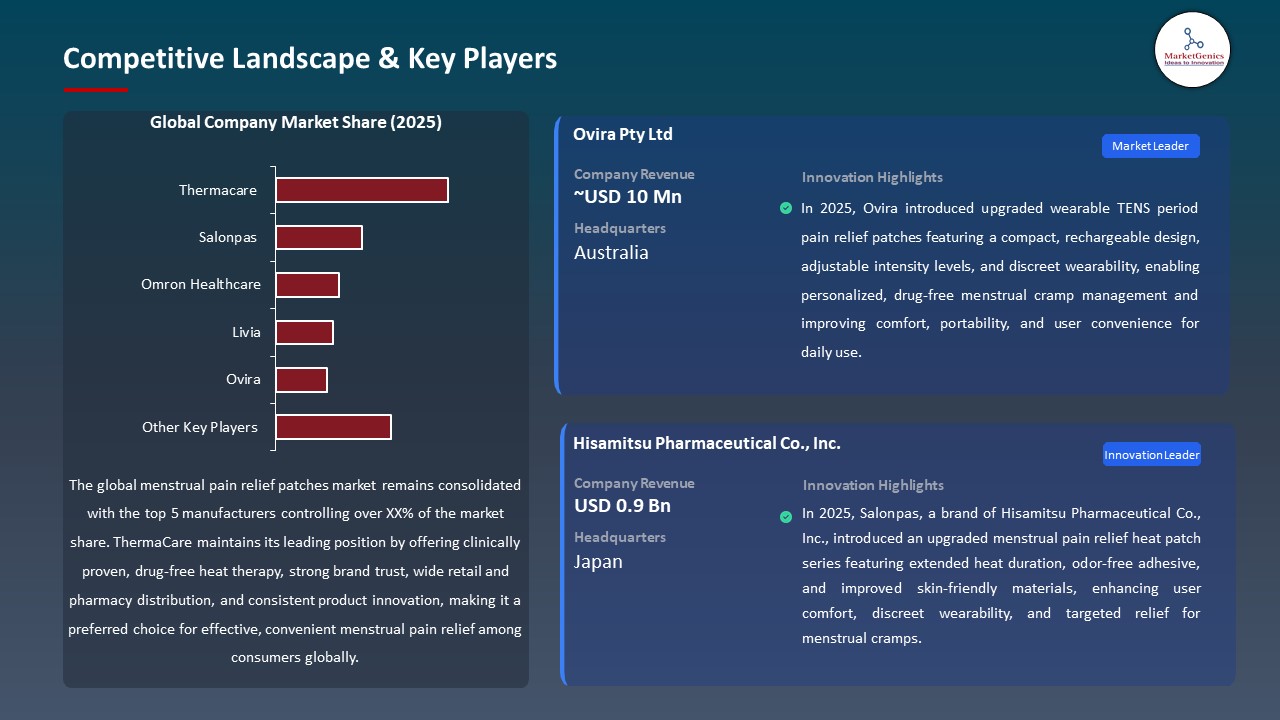
The global menstrual pain relief patches market is consolidated, with key players including Thermacare, Salonpas, Omron Healthcare, Livia, and Ovira. These companies maintain competitive positions through advanced therapeutic technologies, wearable and heat-based patch systems, proprietary formulations, and strong expertise in pain management solutions. Their strengths are reinforced by long-standing relationships with healthcare providers, pharmacies, e-commerce platforms, and regulatory authorities, as well as extensive research and development capabilities focused on user safety, comfort, and efficacy.
The menstrual pain relief patches market value chain encompasses product formulation and development, patch design and manufacturing, integration of wearable or smart technologies, customization for specific pain relief needs, marketing and distribution through retail and online channels, and post-sales support including usage guidance, digital monitoring, and customer service. These stages ensure consistent efficacy, regulatory compliance, and a high-quality user experience.
High entry barriers exist due to the need for specialized biomedical expertise, advanced materials and wearable technologies, clinical validation, and adherence to stringent health and safety regulations. Continuous innovations such as AI-powered electrostimulation devices, temperature-controlled heat patches, IoT-enabled monitoring, and app-integrated solutions are driving product differentiation, improving pain relief efficiency, enhancing user engagement, and supporting sustained market growth globally.
 Recent Development and Strategic Overview:
- In 2025, Meilan expanded its Menstrual Heat Patch portfolio, offering gentle, long-lasting (8–10 hours) iron-powder–based heat therapy for menstrual pain relief without medication. The ultra-thin, body-contouring patches ensure discreet, irritation-free wear for daily use.
- In 2025, HCP offers a Menstrual Cramps Warming Heating Patch delivering instant, long-lasting heat therapy for menstrual and lower back pain. Made with iron powder, activated carbon, and vermiculite, the ultra-thin, OEM/ODM-customizable patch provides safe, drug-free relief, supports private labeling, and meets CE/FDA standards for global markets.
Report Scope
|
Detail |
|
|
Market Size in 2025 |
USD 1.4 Bn |
|
Market Forecast Value in 2035 |
USD 2.2 Bn |
|
Growth Rate (CAGR) |
4.8% |
|
Forecast Period |
2026 – 2035 |
|
Historical Data Available for |
2021 – 2024 |
|
Market Size Units |
US$ Billion for Value |
|
Report Format |
Electronic (PDF) + Excel |
|
North America |
Europe |
Asia Pacific |
Middle East |
Africa |
South America |
|
|
|
|
|
|
|
Companies Covered |
|||||
|
|
|
|
|
|
Menstrual-Pain-Relief-Patches-Market Segmentation and Highlights
|
Segment |
Sub-segment |
|
Menstrual Pain Relief Patches Market, By Product Type |
|
|
Menstrual Pain Relief Patches Market, By Technology |
|
|
Menstrual Pain Relief Patches Market, By Active Ingredient |
|
|
Menstrual Pain Relief Patches Market, By Form Factor |
|
|
Menstrual Pain Relief Patches Market, By Distribution Channel |
|
|
Menstrual Pain Relief Patches Market, By End-Users |
|
Frequently Asked Questions
Table of Contents
- 1. Research Methodology and Assumptions
- 1.1. Definitions
- 1.2. Research Design and Approach
- 1.3. Data Collection Methods
- 1.4. Base Estimates and Calculations
- 1.5. Forecasting Models
- 1.5.1. Key Forecast Factors & Impact Analysis
- 1.6. Secondary Research
- 1.6.1. Open Sources
- 1.6.2. Paid Databases
- 1.6.3. Associations
- 1.7. Primary Research
- 1.7.1. Primary Sources
- 1.7.2. Primary Interviews with Stakeholders across Ecosystem
- 2. Executive Summary
- 2.1. Global Menstrual Pain Relief Patches Market Outlook
- 2.1.1. Menstrual Pain Relief Patches Market Size Value (US$ Bn), and Forecasts, 2021-2035
- 2.1.2. Compounded Annual Growth Rate Analysis
- 2.1.3. Growth Opportunity Analysis
- 2.1.4. Segmental Share Analysis
- 2.1.5. Geographical Share Analysis
- 2.2. Market Analysis and Facts
- 2.3. Supply-Demand Analysis
- 2.4. Competitive Benchmarking
- 2.5. Go-to- Market Strategy
- 2.5.1. Customer/ End-use Industry Assessment
- 2.5.2. Growth Opportunity Data, 2026-2035
- 2.5.2.1. Regional Data
- 2.5.2.2. Country Data
- 2.5.2.3. Segmental Data
- 2.5.3. Identification of Potential Market Spaces
- 2.5.4. GAP Analysis
- 2.5.5. Potential Attractive Price Points
- 2.5.6. Prevailing Market Risks & Challenges
- 2.5.7. Preferred Sales & Marketing Strategies
- 2.5.8. Key Recommendations and Analysis
- 2.5.9. A Way Forward
- 2.1. Global Menstrual Pain Relief Patches Market Outlook
- 3. Industry Data and Premium Insights
- 3.1. Global Consumer Goods & Services Industry Overview, 2025
- 3.1.1. Consumer Goods & Services Industry Ecosystem Analysis
- 3.1.2. Key Trends for Consumer Goods & Services Industry
- 3.1.3. Regional Distribution for Consumer Goods & Services Industry
- 3.2. Supplier Customer Data
- 3.3. Technology Roadmap and Developments
- 3.4. Trade Analysis
- 3.4.1. Import & Export Analysis, 2025
- 3.4.2. Top Importing Countries
- 3.4.3. Top Exporting Countries
- 3.5. Trump Tariff Impact Analysis
- 3.5.1. Manufacturer
- 3.5.1.1. Based on the component & Raw material
- 3.5.2. Supply Chain
- 3.5.3. End Consumer
- 3.5.1. Manufacturer
- 3.6. Raw Material Analysis
- 3.1. Global Consumer Goods & Services Industry Overview, 2025
- 4. Market Overview
- 4.1. Market Dynamics
- 4.1.1. Drivers
- 4.1.1.1. Growing awareness of menstrual health and demand for non-drug pain management solutions.
- 4.1.1.2. Preference for convenient, discreet, and easy-to-use alternatives to oral analgesics.
- 4.1.1.3. Expansion of e-commerce and direct-to-consumer channels improving product accessibility.
- 4.1.2. Restraints
- 4.1.2.1. Limited awareness and cultural stigma around menstrual products in certain regions.
- 4.1.2.2. Risk of skin irritation or allergies and varying regulatory requirements across markets.
- 4.1.1. Drivers
- 4.2. Key Trend Analysis
- 4.3. Regulatory Framework
- 4.3.1. Key Regulations, Norms, and Subsidies, by Key Countries
- 4.3.2. Tariffs and Standards
- 4.3.3. Impact Analysis of Regulations on the Market
- 4.4. Value Chain Analysis
- 4.4.1. Raw Material Suppliers
- 4.4.2. Menstrual Pain Relief Patch Manufacturers
- 4.4.3. Distribution & Supply Channel Partners
- 4.4.4. End-use Channels & Consumers
- 4.5. Porter’s Five Forces Analysis
- 4.6. PESTEL Analysis
- 4.7. Global Menstrual Pain Relief Patches Market Demand
- 4.7.1. Historical Market Size – Value (US$ Bn), 2020-2024
- 4.7.2. Current and Future Market Size – Value (US$ Bn), 2026–2035
- 4.7.2.1. Y-o-Y Growth Trends
- 4.7.2.2. Absolute $ Opportunity Assessment
- 4.1. Market Dynamics
- 5. Competition Landscape
- 5.1. Competition structure
- 5.1.1. Fragmented v/s consolidated
- 5.2. Company Share Analysis, 2025
- 5.2.1. Global Company Market Share
- 5.2.2. By Region
- 5.2.2.1. North America
- 5.2.2.2. Europe
- 5.2.2.3. Asia Pacific
- 5.2.2.4. Middle East
- 5.2.2.5. Africa
- 5.2.2.6. South America
- 5.3. Product Comparison Matrix
- 5.3.1. Specifications
- 5.3.2. Market Positioning
- 5.3.3. Pricing
- 5.1. Competition structure
- 6. Global Menstrual Pain Relief Patches Market Analysis, by Product Type
- 6.1. Key Segment Analysis
- 6.2. Menstrual Pain Relief Patches Market Size Value (US$ Bn), Analysis, and Forecasts, by Product Type, 2021-2035
- 6.2.1. Heat-Based Patches
- 6.2.1.1. Disposable heat patches
- 6.2.1.2. Reusable heat patches
- 6.2.1.3. Adhesive heat wraps
- 6.2.1.4. Non-adhesive heat pads
- 6.2.2. Medicated Patches
- 6.2.2.1. TENS (Transcutaneous Electrical Nerve Stimulation) patches
- 6.2.2.2. Herbal/natural ingredient patches
- 6.2.2.3. Pharmaceutical drug-infused patches
- 6.2.2.4. Essential oil-based patches
- 6.2.3. Combination Patches
- 6.2.3.1. Heat and medication combined
- 6.2.3.2. TENS and heat combined
- 6.2.3.3. Multi-layer therapeutic patches
- 6.2.1. Heat-Based Patches
- 7. Global Menstrual Pain Relief Patches Market Analysis, by Technology
- 7.1. Key Segment Analysis
- 7.2. Menstrual Pain Relief Patches Market Size Value (US$ Bn), Analysis, and Forecasts, by Technology, 2021-2035
- 7.2.1. Conventional Heat Technology
- 7.2.1.1. Air-activated heating
- 7.2.1.2. Chemical reaction-based heating
- 7.2.1.3. Infrared heat technology
- 7.2.2. Advanced Technology
- 7.2.2.1. Smart temperature-controlled patches
- 7.2.2.2. Wearable electronic patches
- 7.2.2.3. App-connected patches
- 7.2.2.4. Programmable TENS patches
- 7.2.1. Conventional Heat Technology
- 8. Global Menstrual Pain Relief Patches Market Analysis, by Active Ingredient
- 8.1. Key Segment Analysis
- 8.2. Menstrual Pain Relief Patches Market Size Value (US$ Bn), Analysis, and Forecasts, by Active Ingredient, 2021-2035
- 8.2.1. Natural/Herbal Ingredients
- 8.2.2. Pharmaceutical Ingredients
- 8.2.2.1. NSAIDs (Non-steroidal anti-inflammatory drugs)
- 8.2.2.2. Lidocaine
- 8.2.2.3. Capsaicin
- 8.2.2.4. Methyl salicylate
- 8.2.2.5. Others
- 8.2.3. No Active Ingredient
- 9. Global Menstrual Pain Relief Patches Market Analysis, by Form Factor
- 9.1. Key Segment Analysis
- 9.2. Menstrual Pain Relief Patches Market Size Value (US$ Bn), Analysis, and Forecasts, by Form Factor, 2021-2035
- 9.2.1. Adhesive Patches
- 9.2.2. Non-Adhesive Wraps
- 9.2.3. Wearable Devices
- 10. Global Menstrual Pain Relief Patches Market Analysis, by Distribution Channel
- 10.1. Key Segment Analysis
- 10.2. Menstrual Pain Relief Patches Market Size Value (US$ Bn), Analysis, and Forecasts, by Distribution Channel, 2021-2035
- 10.2.1. Online Channels
- 10.2.1.1. E-commerce platforms
- 10.2.1.2. Company websites
- 10.2.1.3. Online pharmacies
- 10.2.1.4. Others
- 10.2.2. Offline Channels
- 10.2.2.1. Pharmacies and drugstores
- 10.2.2.2. Supermarkets and hypermarkets
- 10.2.2.3. Specialty health stores
- 10.2.2.4. Others
- 10.2.1. Online Channels
- 11. Global Menstrual Pain Relief Patches Market Analysis, by End-Users
- 11.1. Key Segment Analysis
- 11.2. Menstrual Pain Relief Patches Market Size Value (US$ Bn), Analysis, and Forecasts, by End-Users, 2021-2035
- 11.2.1. Residential/Individual Consumers
- 11.2.2. Healthcare Facilities
- 11.2.3. Workplace/Corporate
- 11.2.4. Sports and Fitness Centers
- 11.2.5. Others
- 12. Global Menstrual Pain Relief Patches Market Analysis and Forecasts, by Region
- 12.1. Key Findings
- 12.2. Menstrual Pain Relief Patches Market Size Value (US$ Bn), Analysis, and Forecasts, by Region, 2021-2035
- 12.2.1. North America
- 12.2.2. Europe
- 12.2.3. Asia Pacific
- 12.2.4. Middle East
- 12.2.5. Africa
- 12.2.6. South America
- 13. North America Menstrual Pain Relief Patches Market Analysis
- 13.1. Key Segment Analysis
- 13.2. Regional Snapshot
- 13.3. North America Menstrual Pain Relief Patches Market Size Value (US$ Bn), Analysis, and Forecasts, 2021-2035
- 13.3.1. Product Type
- 13.3.2. Technology
- 13.3.3. Active Ingredient
- 13.3.4. Form Factor
- 13.3.5. Distribution Channel
- 13.3.6. End-users
- 13.3.7. Country
- 13.3.7.1. USA
- 13.3.7.2. Canada
- 13.3.7.3. Mexico
- 13.4. USA Menstrual Pain Relief Patches Market
- 13.4.1. Country Segmental Analysis
- 13.4.2. Product Type
- 13.4.3. Technology
- 13.4.4. Active Ingredient
- 13.4.5. Form Factor
- 13.4.6. Distribution Channel
- 13.4.7. End-users
- 13.5. Canada Menstrual Pain Relief Patches Market
- 13.5.1. Country Segmental Analysis
- 13.5.2. Product Type
- 13.5.3. Technology
- 13.5.4. Active Ingredient
- 13.5.5. Form Factor
- 13.5.6. Distribution Channel
- 13.5.7. End-users
- 13.6. Mexico Menstrual Pain Relief Patches Market
- 13.6.1. Country Segmental Analysis
- 13.6.2. Product Type
- 13.6.3. Technology
- 13.6.4. Active Ingredient
- 13.6.5. Form Factor
- 13.6.6. Distribution Channel
- 13.6.7. End-users
- 14. Europe Menstrual Pain Relief Patches Market Analysis
- 14.1. Key Segment Analysis
- 14.2. Regional Snapshot
- 14.3. Europe Menstrual Pain Relief Patches Market Size Value (US$ Bn), Analysis, and Forecasts, 2021-2035
- 14.3.1. Product Type
- 14.3.2. Technology
- 14.3.3. Active Ingredient
- 14.3.4. Form Factor
- 14.3.5. Distribution Channel
- 14.3.6. End-users
- 14.3.7. Country
- 14.3.7.1. Germany
- 14.3.7.2. United Kingdom
- 14.3.7.3. France
- 14.3.7.4. Italy
- 14.3.7.5. Spain
- 14.3.7.6. Netherlands
- 14.3.7.7. Nordic Countries
- 14.3.7.8. Poland
- 14.3.7.9. Russia & CIS
- 14.3.7.10. Rest of Europe
- 14.4. Germany Menstrual Pain Relief Patches Market
- 14.4.1. Country Segmental Analysis
- 14.4.2. Product Type
- 14.4.3. Technology
- 14.4.4. Active Ingredient
- 14.4.5. Form Factor
- 14.4.6. Distribution Channel
- 14.4.7. End-users
- 14.5. United Kingdom Menstrual Pain Relief Patches Market
- 14.5.1. Country Segmental Analysis
- 14.5.2. Product Type
- 14.5.3. Technology
- 14.5.4. Active Ingredient
- 14.5.5. Form Factor
- 14.5.6. Distribution Channel
- 14.5.7. End-users
- 14.6. France Menstrual Pain Relief Patches Market
- 14.6.1. Country Segmental Analysis
- 14.6.2. Product Type
- 14.6.3. Technology
- 14.6.4. Active Ingredient
- 14.6.5. Form Factor
- 14.6.6. Distribution Channel
- 14.6.7. End-users
- 14.7. Italy Menstrual Pain Relief Patches Market
- 14.7.1. Country Segmental Analysis
- 14.7.2. Product Type
- 14.7.3. Technology
- 14.7.4. Active Ingredient
- 14.7.5. Form Factor
- 14.7.6. Distribution Channel
- 14.7.7. End-users
- 14.8. Spain Menstrual Pain Relief Patches Market
- 14.8.1. Country Segmental Analysis
- 14.8.2. Product Type
- 14.8.3. Technology
- 14.8.4. Active Ingredient
- 14.8.5. Form Factor
- 14.8.6. Distribution Channel
- 14.8.7. End-users
- 14.9. Netherlands Menstrual Pain Relief Patches Market
- 14.9.1. Country Segmental Analysis
- 14.9.2. Product Type
- 14.9.3. Technology
- 14.9.4. Active Ingredient
- 14.9.5. Form Factor
- 14.9.6. Distribution Channel
- 14.9.7. End-users
- 14.10. Nordic Countries Menstrual Pain Relief Patches Market
- 14.10.1. Country Segmental Analysis
- 14.10.2. Product Type
- 14.10.3. Technology
- 14.10.4. Active Ingredient
- 14.10.5. Form Factor
- 14.10.6. Distribution Channel
- 14.10.7. End-users
- 14.11. Poland Menstrual Pain Relief Patches Market
- 14.11.1. Country Segmental Analysis
- 14.11.2. Product Type
- 14.11.3. Technology
- 14.11.4. Active Ingredient
- 14.11.5. Form Factor
- 14.11.6. Distribution Channel
- 14.11.7. End-users
- 14.12. Russia & CIS Menstrual Pain Relief Patches Market
- 14.12.1. Country Segmental Analysis
- 14.12.2. Product Type
- 14.12.3. Technology
- 14.12.4. Active Ingredient
- 14.12.5. Form Factor
- 14.12.6. Distribution Channel
- 14.12.7. End-users
- 14.13. Rest of Europe Menstrual Pain Relief Patches Market
- 14.13.1. Country Segmental Analysis
- 14.13.2. Product Type
- 14.13.3. Technology
- 14.13.4. Active Ingredient
- 14.13.5. Form Factor
- 14.13.6. Distribution Channel
- 14.13.7. End-users
- 15. Asia Pacific Menstrual Pain Relief Patches Market Analysis
- 15.1. Key Segment Analysis
- 15.2. Regional Snapshot
- 15.3. Asia Pacific Menstrual Pain Relief Patches Market Size Value (US$ Bn), Analysis, and Forecasts, 2021-2035
- 15.3.1. Product Type
- 15.3.2. Technology
- 15.3.3. Active Ingredient
- 15.3.4. Form Factor
- 15.3.5. Distribution Channel
- 15.3.6. End-users
- 15.3.7. Country
- 15.3.7.1. China
- 15.3.7.2. India
- 15.3.7.3. Japan
- 15.3.7.4. South Korea
- 15.3.7.5. Australia and New Zealand
- 15.3.7.6. Indonesia
- 15.3.7.7. Malaysia
- 15.3.7.8. Thailand
- 15.3.7.9. Vietnam
- 15.3.7.10. Rest of Asia Pacific
- 15.4. China Menstrual Pain Relief Patches Market
- 15.4.1. Country Segmental Analysis
- 15.4.2. Product Type
- 15.4.3. Technology
- 15.4.4. Active Ingredient
- 15.4.5. Form Factor
- 15.4.6. Distribution Channel
- 15.4.7. End-users
- 15.5. India Menstrual Pain Relief Patches Market
- 15.5.1. Country Segmental Analysis
- 15.5.2. Product Type
- 15.5.3. Technology
- 15.5.4. Active Ingredient
- 15.5.5. Form Factor
- 15.5.6. Distribution Channel
- 15.5.7. End-users
- 15.6. Japan Menstrual Pain Relief Patches Market
- 15.6.1. Country Segmental Analysis
- 15.6.2. Product Type
- 15.6.3. Technology
- 15.6.4. Active Ingredient
- 15.6.5. Form Factor
- 15.6.6. Distribution Channel
- 15.6.7. End-users
- 15.7. South Korea Menstrual Pain Relief Patches Market
- 15.7.1. Country Segmental Analysis
- 15.7.2. Product Type
- 15.7.3. Technology
- 15.7.4. Active Ingredient
- 15.7.5. Form Factor
- 15.7.6. Distribution Channel
- 15.7.7. End-users
- 15.8. Australia and New Zealand Menstrual Pain Relief Patches Market
- 15.8.1. Country Segmental Analysis
- 15.8.2. Product Type
- 15.8.3. Technology
- 15.8.4. Active Ingredient
- 15.8.5. Form Factor
- 15.8.6. Distribution Channel
- 15.8.7. End-users
- 15.9. Indonesia Menstrual Pain Relief Patches Market
- 15.9.1. Country Segmental Analysis
- 15.9.2. Product Type
- 15.9.3. Technology
- 15.9.4. Active Ingredient
- 15.9.5. Form Factor
- 15.9.6. Distribution Channel
- 15.9.7. End-users
- 15.10. Malaysia Menstrual Pain Relief Patches Market
- 15.10.1. Country Segmental Analysis
- 15.10.2. Product Type
- 15.10.3. Technology
- 15.10.4. Active Ingredient
- 15.10.5. Form Factor
- 15.10.6. Distribution Channel
- 15.10.7. End-users
- 15.11. Thailand Menstrual Pain Relief Patches Market
- 15.11.1. Country Segmental Analysis
- 15.11.2. Product Type
- 15.11.3. Technology
- 15.11.4. Active Ingredient
- 15.11.5. Form Factor
- 15.11.6. Distribution Channel
- 15.11.7. End-users
- 15.12. Vietnam Menstrual Pain Relief Patches Market
- 15.12.1. Country Segmental Analysis
- 15.12.2. Product Type
- 15.12.3. Technology
- 15.12.4. Active Ingredient
- 15.12.5. Form Factor
- 15.12.6. Distribution Channel
- 15.12.7. End-users
- 15.13. Rest of Asia Pacific Menstrual Pain Relief Patches Market
- 15.13.1. Country Segmental Analysis
- 15.13.2. Product Type
- 15.13.3. Technology
- 15.13.4. Active Ingredient
- 15.13.5. Form Factor
- 15.13.6. Distribution Channel
- 15.13.7. End-users
- 16. Middle East Menstrual Pain Relief Patches Market Analysis
- 16.1. Key Segment Analysis
- 16.2. Regional Snapshot
- 16.3. Middle East Menstrual Pain Relief Patches Market Size Value (US$ Bn), Analysis, and Forecasts, 2021-2035
- 16.3.1. Product Type
- 16.3.2. Technology
- 16.3.3. Active Ingredient
- 16.3.4. Form Factor
- 16.3.5. Distribution Channel
- 16.3.6. End-users
- 16.3.7. Country
- 16.3.7.1. Turkey
- 16.3.7.2. UAE
- 16.3.7.3. Saudi Arabia
- 16.3.7.4. Israel
- 16.3.7.5. Rest of Middle East
- 16.4. Turkey Menstrual Pain Relief Patches Market
- 16.4.1. Country Segmental Analysis
- 16.4.2. Product Type
- 16.4.3. Technology
- 16.4.4. Active Ingredient
- 16.4.5. Form Factor
- 16.4.6. Distribution Channel
- 16.4.7. End-users
- 16.5. UAE Menstrual Pain Relief Patches Market
- 16.5.1. Country Segmental Analysis
- 16.5.2. Product Type
- 16.5.3. Technology
- 16.5.4. Active Ingredient
- 16.5.5. Form Factor
- 16.5.6. Distribution Channel
- 16.5.7. End-users
- 16.6. Saudi Arabia Menstrual Pain Relief Patches Market
- 16.6.1. Country Segmental Analysis
- 16.6.2. Product Type
- 16.6.3. Technology
- 16.6.4. Active Ingredient
- 16.6.5. Form Factor
- 16.6.6. Distribution Channel
- 16.6.7. End-users
- 16.7. Israel Menstrual Pain Relief Patches Market
- 16.7.1. Country Segmental Analysis
- 16.7.2. Product Type
- 16.7.3. Technology
- 16.7.4. Active Ingredient
- 16.7.5. Form Factor
- 16.7.6. Distribution Channel
- 16.7.7. End-users
- 16.8. Rest of Middle East Menstrual Pain Relief Patches Market
- 16.8.1. Country Segmental Analysis
- 16.8.2. Product Type
- 16.8.3. Technology
- 16.8.4. Active Ingredient
- 16.8.5. Form Factor
- 16.8.6. Distribution Channel
- 16.8.7. End-users
- 17. Africa Menstrual Pain Relief Patches Market Analysis
- 17.1. Key Segment Analysis
- 17.2. Regional Snapshot
- 17.3. Africa Menstrual Pain Relief Patches Market Size Value (US$ Bn), Analysis, and Forecasts, 2021-2035
- 17.3.1. Product Type
- 17.3.2. Technology
- 17.3.3. Active Ingredient
- 17.3.4. Form Factor
- 17.3.5. Distribution Channel
- 17.3.6. End-users
- 17.3.7. Country
- 17.3.7.1. South Africa
- 17.3.7.2. Egypt
- 17.3.7.3. Nigeria
- 17.3.7.4. Algeria
- 17.3.7.5. Rest of Africa
- 17.4. South Africa Menstrual Pain Relief Patches Market
- 17.4.1. Country Segmental Analysis
- 17.4.2. Product Type
- 17.4.3. Technology
- 17.4.4. Active Ingredient
- 17.4.5. Form Factor
- 17.4.6. Distribution Channel
- 17.4.7. End-users
- 17.5. Egypt Menstrual Pain Relief Patches Market
- 17.5.1. Country Segmental Analysis
- 17.5.2. Product Type
- 17.5.3. Technology
- 17.5.4. Active Ingredient
- 17.5.5. Form Factor
- 17.5.6. Distribution Channel
- 17.5.7. End-users
- 17.6. Nigeria Menstrual Pain Relief Patches Market
- 17.6.1. Country Segmental Analysis
- 17.6.2. Product Type
- 17.6.3. Technology
- 17.6.4. Active Ingredient
- 17.6.5. Form Factor
- 17.6.6. Distribution Channel
- 17.6.7. End-users
- 17.7. Algeria Menstrual Pain Relief Patches Market
- 17.7.1. Country Segmental Analysis
- 17.7.2. Product Type
- 17.7.3. Technology
- 17.7.4. Active Ingredient
- 17.7.5. Form Factor
- 17.7.6. Distribution Channel
- 17.7.7. End-users
- 17.8. Rest of Africa Menstrual Pain Relief Patches Market
- 17.8.1. Country Segmental Analysis
- 17.8.2. Product Type
- 17.8.3. Technology
- 17.8.4. Active Ingredient
- 17.8.5. Form Factor
- 17.8.6. Distribution Channel
- 17.8.7. End-users
- 18. South America Menstrual Pain Relief Patches Market Analysis
- 18.1. Key Segment Analysis
- 18.2. Regional Snapshot
- 18.3. South America Menstrual Pain Relief Patches Market Size Value (US$ Bn), Analysis, and Forecasts, 2021-2035
- 18.3.1. Product Type
- 18.3.2. Technology
- 18.3.3. Active Ingredient
- 18.3.4. Form Factor
- 18.3.5. Distribution Channel
- 18.3.6. End-users
- 18.3.7. Country
- 18.3.7.1. Brazil
- 18.3.7.2. Argentina
- 18.3.7.3. Rest of South America
- 18.4. Brazil Menstrual Pain Relief Patches Market
- 18.4.1. Country Segmental Analysis
- 18.4.2. Product Type
- 18.4.3. Technology
- 18.4.4. Active Ingredient
- 18.4.5. Form Factor
- 18.4.6. Distribution Channel
- 18.4.7. End-users
- 18.5. Argentina Menstrual Pain Relief Patches Market
- 18.5.1. Country Segmental Analysis
- 18.5.2. Product Type
- 18.5.3. Technology
- 18.5.4. Active Ingredient
- 18.5.5. Form Factor
- 18.5.6. Distribution Channel
- 18.5.7. End-users
- 18.6. Rest of South America Menstrual Pain Relief Patches Market
- 18.6.1. Country Segmental Analysis
- 18.6.2. Product Type
- 18.6.3. Technology
- 18.6.4. Active Ingredient
- 18.6.5. Form Factor
- 18.6.6. Distribution Channel
- 18.6.7. End-users
- 19. Key Players/ Company Profile
- 19.1. AccuRelief
- 19.1.1. Company Details/ Overview
- 19.1.2. Company Financials
- 19.1.3. Key Customers and Competitors
- 19.1.4. Business/ Industry Portfolio
- 19.1.5. Product Portfolio/ Specification Details
- 19.1.6. Pricing Data
- 19.1.7. Strategic Overview
- 19.1.8. Recent Developments
- 19.2. BeKoool
- 19.3. Bengay
- 19.4. Comfier
- 19.5. HealthmateForever
- 19.6. Icy Hot
- 19.7. InnovaGoods
- 19.8. iReliev
- 19.9. Kailo
- 19.10. Livia
- 19.11. Menastil
- 19.12. Midol
- 19.13. Nurofen
- 19.14. Omron Healthcare
- 19.15. Ovira
- 19.16. PowerDot
- 19.17. PurePulse
- 19.18. Salonpas (Hisamitsu Pharmaceutical)
- 19.19. Thermacare (Pfizer)
- 19.20. Vive Health
- 19.21. Other Key Players
- 19.1. AccuRelief
Note* - This is just tentative list of players. While providing the report, we will cover more number of players based on their revenue and share for each geography
Research Design
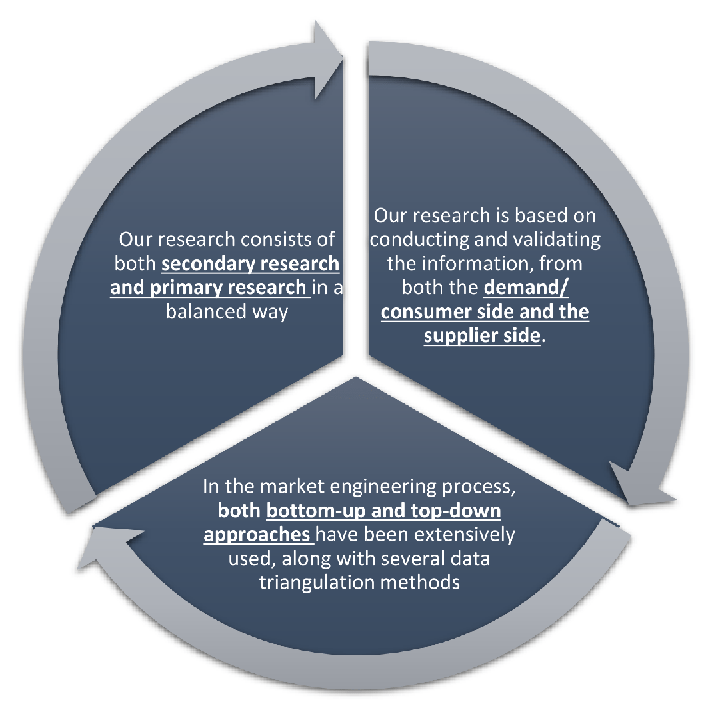
Our research design integrates both demand-side and supply-side analysis through a balanced combination of primary and secondary research methodologies. By utilizing both bottom-up and top-down approaches alongside rigorous data triangulation methods, we deliver robust market intelligence that supports strategic decision-making.
MarketGenics' comprehensive research design framework ensures the delivery of accurate, reliable, and actionable market intelligence. Through the integration of multiple research approaches, rigorous validation processes, and expert analysis, we provide our clients with the insights needed to make informed strategic decisions and capitalize on market opportunities.
MarketGenics leverages a dedicated industry panel of experts and a comprehensive suite of paid databases to effectively collect, consolidate, and analyze market intelligence.
Our approach has consistently proven to be reliable and effective in generating accurate market insights, identifying key industry trends, and uncovering emerging business opportunities.
Through both primary and secondary research, we capture and analyze critical company-level data such as manufacturing footprints, including technical centers, R&D facilities, sales offices, and headquarters.
Our expert panel further enhances our ability to estimate market size for specific brands based on validated field-level intelligence.
Our data mining techniques incorporate both parametric and non-parametric methods, allowing for structured data collection, sorting, processing, and cleaning.
Demand projections are derived from large-scale data sets analyzed through proprietary algorithms, culminating in robust and reliable market sizing.
Research Approach
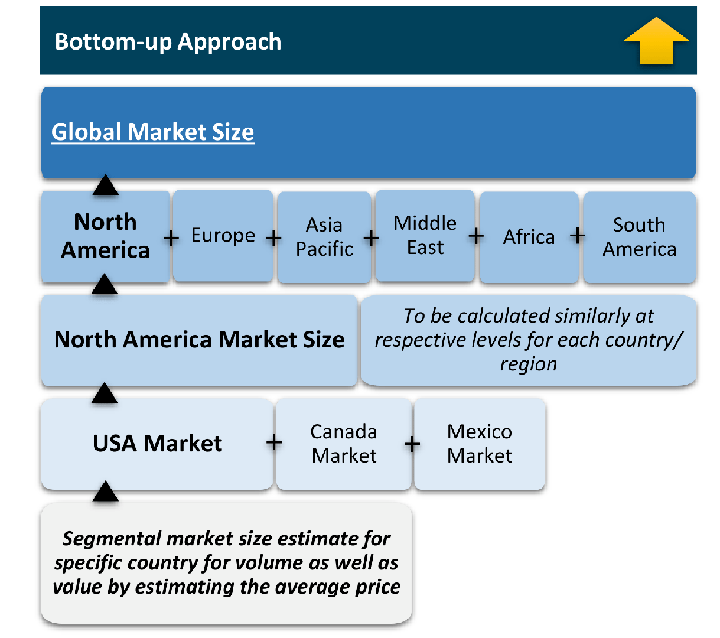
The bottom-up approach builds market estimates by starting with the smallest addressable market units and systematically aggregating them to create comprehensive market size projections.
This method begins with specific, granular data points and builds upward to create the complete market landscape.
Customer Analysis → Segmental Analysis → Geographical Analysis
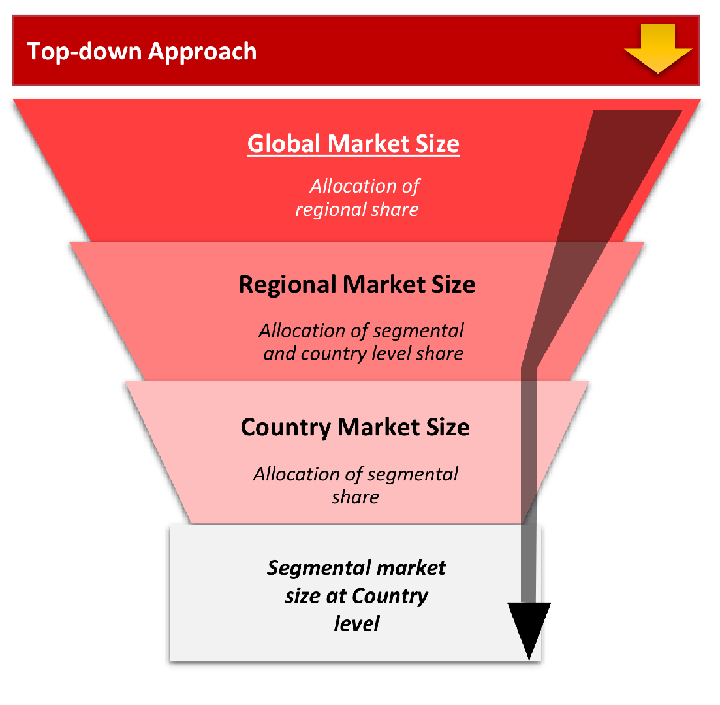
The top-down approach starts with the broadest possible market data and systematically narrows it down through a series of filters and assumptions to arrive at specific market segments or opportunities.
This method begins with the big picture and works downward to increasingly specific market slices.
TAM → SAM → SOM
Research Methods
Desk / Secondary Research
While analysing the market, we extensively study secondary sources, directories, and databases to identify and collect information useful for this technical, market-oriented, and commercial report. Secondary sources that we utilize are not only the public sources, but it is a combination of Open Source, Associations, Paid Databases, MG Repository & Knowledgebase, and others.
- Company websites, annual reports, financial reports, broker reports, and investor presentations
- National government documents, statistical databases and reports
- News articles, press releases and web-casts specific to the companies operating in the market, Magazines, reports, and others
- We gather information from commercial data sources for deriving company specific data such as segmental revenue, share for geography, product revenue, and others
- Internal and external proprietary databases (industry-specific), relevant patent, and regulatory databases
- Governing Bodies, Government Organizations
- Relevant Authorities, Country-specific Associations for Industries
We also employ the model mapping approach to estimate the product level market data through the players' product portfolio
Primary Research
Primary research/ interviews is vital in analyzing the market. Most of the cases involves paid primary interviews. Primary sources include primary interviews through e-mail interactions, telephonic interviews, surveys as well as face-to-face interviews with the different stakeholders across the value chain including several industry experts.
| Type of Respondents | Number of Primaries |
|---|---|
| Tier 2/3 Suppliers | ~20 |
| Tier 1 Suppliers | ~25 |
| End-users | ~25 |
| Industry Expert/ Panel/ Consultant | ~30 |
| Total | ~100 |
MG Knowledgebase
• Repository of industry blog, newsletter and case studies
• Online platform covering detailed market reports, and company profiles
Forecasting Factors and Models
Forecasting Factors
- Historical Trends – Past market patterns, cycles, and major events that shaped how markets behave over time. Understanding past trends helps predict future behavior.
- Industry Factors – Specific characteristics of the industry like structure, regulations, and innovation cycles that affect market dynamics.
- Macroeconomic Factors – Economic conditions like GDP growth, inflation, and employment rates that affect how much money people have to spend.
- Demographic Factors – Population characteristics like age, income, and location that determine who can buy your product.
- Technology Factors – How quickly people adopt new technology and how much technology infrastructure exists.
- Regulatory Factors – Government rules, laws, and policies that can help or restrict market growth.
- Competitive Factors – Analyzing competition structure such as degree of competition and bargaining power of buyers and suppliers.
Forecasting Models / Techniques
Multiple Regression Analysis
- Identify and quantify factors that drive market changes
- Statistical modeling to establish relationships between market drivers and outcomes
Time Series Analysis – Seasonal Patterns
- Understand regular cyclical patterns in market demand
- Advanced statistical techniques to separate trend, seasonal, and irregular components
Time Series Analysis – Trend Analysis
- Identify underlying market growth patterns and momentum
- Statistical analysis of historical data to project future trends
Expert Opinion – Expert Interviews
- Gather deep industry insights and contextual understanding
- In-depth interviews with key industry stakeholders
Multi-Scenario Development
- Prepare for uncertainty by modeling different possible futures
- Creating optimistic, pessimistic, and most likely scenarios
Time Series Analysis – Moving Averages
- Sophisticated forecasting for complex time series data
- Auto-regressive integrated moving average models with seasonal components
Econometric Models
- Apply economic theory to market forecasting
- Sophisticated economic models that account for market interactions
Expert Opinion – Delphi Method
- Harness collective wisdom of industry experts
- Structured, multi-round expert consultation process
Monte Carlo Simulation
- Quantify uncertainty and probability distributions
- Thousands of simulations with varying input parameters
Research Analysis
Our research framework is built upon the fundamental principle of validating market intelligence from both demand and supply perspectives. This dual-sided approach ensures comprehensive market understanding and reduces the risk of single-source bias.
Demand-Side Analysis: We understand end-user/application behavior, preferences, and market needs along with the penetration of the product for specific application.
Supply-Side Analysis: We estimate overall market revenue, analyze the segmental share along with industry capacity, competitive landscape, and market structure.
Validation & Evaluation
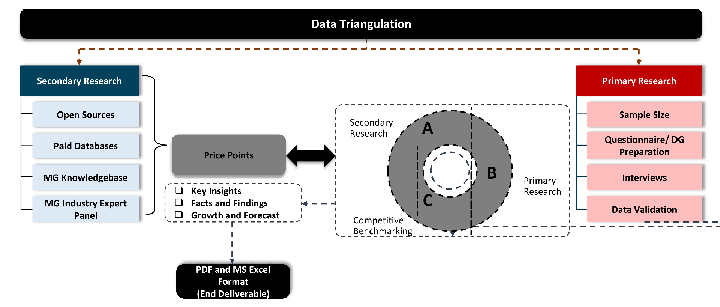
Data triangulation is a validation technique that uses multiple methods, sources, or perspectives to examine the same research question, thereby increasing the credibility and reliability of research findings. In market research, triangulation serves as a quality assurance mechanism that helps identify and minimize bias, validate assumptions, and ensure accuracy in market estimates.
- Data Source Triangulation – Using multiple data sources to examine the same phenomenon
- Methodological Triangulation – Using multiple research methods to study the same research question
- Investigator Triangulation – Using multiple researchers or analysts to examine the same data
- Theoretical Triangulation – Using multiple theoretical perspectives to interpret the same data
Custom Market Research Services
We will customise the research for you, in case the report listed above does not meet your requirements.
Get 10% Free Customisation